Tag Archives: harrisburg

Fresh Feed: Harrisburg arts community finds new home in a hashtag.

Instagram users can find some very Harrisburg scenes on the HburgMade feed, pictured here.

Harrisburg’s ever-expanding arts community now has another home, this time on Instagram.

The account and hashtag, both under the name HburgMade, pull together photos shared by Harrisburg’s makers, creatives and artists, featuring their objects, creations and works of art.

With less than two weeks on Instagram, the curator behind @hburgmade, Drew Lawrence, said he’s learned a lot about Harrisburg’s arts community.

“It’s opened my eyes to different artists, events and photographers, not only in Harrisburg, but the West Shore and even Dillsburg,” he said.

Lawrence, 30, spent his 20s working in social media management and advertising in Washington, D.C., after graduating from Shippensburg University.

In D.C., he discovered @ACreativeDC on Instagram and loved the idea of a feed for the city’s arts communities.

“There was a creative movement down there that wanted to showcase D.C.’s creative community a little bit more and make it seem like [D.C.] was more than a government town,” he said.

When the Hanover native moved back to central PA last summer, he kicked around the idea of bringing the concept to his new community. When someone in Baltimore created a similar account, he decided to take the plunge.

He started the project March 28, and the community has latched on. The account has 366 followers and 152 posts fill the hashtag. The account posts and reposts aesthetically-pleasing and community-oriented photos from local creatives.

“I want to show people that there is a creative side of this town,” he said.

He encourages people to use #HburgMade to create a stream of local art.

“It’s not limited to people who make physical objects,” Lawrence said. “Professional photographers, street photographers—anyone can fill the feed.”

Managing the account is easy for the former social media manager, now advertising copywriter. Each day, he goes through the feed and picks a good photo from that day, he said.

“It’s not too complicated,” Lawrence said. “It’s a lot of monitoring, engaging, commenting.”

His only challenge is one faced by many with a side passion project.

“Just trying to not do it during office hours,” he said.

Author: Danielle Roth

Continue Reading

Burg Blog: The Price of Protection

The scene from a horrific fire last night on the 300-block of Maclay Street in Harrisburg.

Last night, shortly after 10 p.m., sirens began to wail in my neighborhood, getting nearer to my house until they seemed to be almost on top of it.

In Harrisburg, this sound is not unusual, but these sirens seemed to combine into a single force, coming at me from all directions. And as the volume increased, so did my concern.

I looked out my back window and could see a plume of smoke rising, maybe a block or two away. I put on shoes, grabbed a jacket and hurried out the door.

The fire was actually three blocks away, with two houses already engulfed, a wall of flame at their backs, and, in front, a stiff wind drove embers and acrid smoke across Maclay Street. I took some video, posted it to Twitter, then took in the scene around me: the onlookers, the neighborhood kids who had gathered, the trucks and hoses up and down the street, the many blinking lights. I was impressed, as I always am, by the precision work and professionalism of Chief Enterline’s men, who bravely beat back the flames, saving the entire block from certain incineration.

As I stood there, several other thoughts ran through my head: the safety of the people who lived in these rowhouses, what caused the fire, what the block would look like afterwards, if the houses were owned by “investors” and if they were up to code.

I also thought of a story that had broken several hours earlier—that the state legislature is trying to eliminate “Capitol fire protection” funding from the 2017-18 state budget. This is the money—$5 million in recent years—provided to Harrisburg to protect the Capitol complex’s 40 buildings, a sort of payment in lieu of taxes since the state pays no property tax on its massive holdings in the city.

This payment has been something of a political football over the years. Under former Mayor Steve Reed, it ranged from nothing to a few hundred thousand dollars a year. Former city receiver William Lynch and his people tried to standardize the compensation, arriving at the $5 million figure as a fair price for a year’s fire protection and, let’s be honest, a host of other services the city provides.

Several years ago, when Harrisburg’s financial recovery agreement was hammered out, I was surprised that this payment was not an explicit part of the deal, duly inked and signed. I asked Lynch about it, and he said that he had received assurances from the state that it would continue. I thought it was misplaced hope, and, as it turns out, it didn’t take long for state legislators to renege on whatever gentleman’s agreement Lynch thought he had.

Without a signed deal, this problem was inevitable. For Republicans, the fire protection payment is an easy cut to make, since it doesn’t affect their constituents, and they can even boast back home that they stuck it to Harrisburg (even if, in a weird meta, “Harrisburg,” to their constituents, doesn’t really refer to the city but to the loathed politicians that they themselves elect and send here).

And maybe the payment became even more precarious after the city, denied a commuter tax by the legislature, upped both the earned income tax and the local services tax. However, these taxes shouldn’t be conflated. Workers, not the state itself, pay the LST and EIT. The fire protection payment is really a substitute for a property tax, helping to fund the city’s Fire Bureau (and other vital services) so that the state can safely and confidently go about its business each and every day, including within the priceless Capitol building. That’s no small matter, and it’s not cheap.

In any case, Harrisburg’s representatives are now in the terrible position of having to re-secure that money every year, using every mode of influence they have. And the city is in the terrible position of not knowing if it will receive those funds, which threatens both its fiscal sustainability and its ability to provide high-quality emergency services.

Meanwhile, it’s not like Harrisburg is living large. This money is going to the most basic of services, ensuring that, when that terrible day comes (and it will) that a fire breaks out in a state-owned building, the Harrisburg Fire Bureau will be there, on site, within minutes, with the resources to do its job. Without those state funds, Harrisburg will have to lay off firefighters, Mayor Eric Papenfuse said.

Last night, I watched the fire on Maclay Street with a number of my neighbors, some from Midtown and some from Uptown. One woman cried as she spoke on her phone, describing the horrifying scene to a friend. She later told me that she lived in a house at the end of the row that was on fire.

I thought it was unfortunate that powerful people—members of the state legislature—weren’t also there to witness this tragedy. Then maybe fire protection wouldn’t be some abstraction or a number on a budget spreadsheet that can just get crossed out. They could see for themselves how high the stakes are—what is really at risk—and witness the heroic, critical work of Harrisburg’s firefighters.

Author: Lawrance Binda

Continue Reading

Weekend Roundup with Sara Bozich


I’m spending this morning with the GK Visual crew at St. Boniface Brewing Company in Ephrata for another Poured in Pa shoot.

»» Learn more about Poured in Pa. and find out how YOU can help!

Friday, I think I’m not leaving the house, not once. Deliver me food, feed me popcorn, crank up the Amazon Prime.

Saturday morning, of course, I’m hitting the gym then the market, but this time I’ll be setting up a Harrisburg Beer Week table with event guides and information on Battle of the Homebrewers — Buy tickets on-site (cash or credit) – just $25 (or $10 for Designated Driver, who scores not just boring water but nonalcoholic craft sodas from Boneshire Brew Works), benefiting Harrisburg River Rescue & Emergency Services.

I don’t remember what Sunday is, but I’m thinking brunch. I am dying for lemon ricotta pancakes. Anyone serve them? Or do I have to make them myself?

What are you doing this weekend?

(more…)

Continue Reading

Burg Blog: Tax & Send

A dancer with the Central Pennsylvania Youth Ballet

“Elections have consequences.”

So said a rather resigned Harrisburg Mayor Eric Papenfuse, speaking to a few reporters following Tuesday night’s City Council meeting.

Papenfuse may have used an old political cliché, but his point was well taken. If the Trump administration gets its way on the federal budget, the city soon may run out of money to complete the remediation of a sinkhole-ravaged block of south Harrisburg, as those funds largely originate from federal programs targeted for cuts and elimination.

Papenfuse was making the point that the loss of federal funding locally is no longer theoretical—it’s real. So, a voter probably never thought about the sinkholes on S. 14th Street when casting a ballot for president last November. However, as the mayor said, elections have consequences, and an abandoned, half-done sinkhole project—leaving behind a street of empty, rotting houses that invite crime and blight—may be one of those consequences.

The Trump administration also has targeted for elimination the National Endowment for the Arts, the National Endowment for the Humanities and the Corporation for Public Broadcasting.

Nearly every major arts organization in central PA receives funding that originates from these sources, including such regionally important groups as Jump Street, the Central PA Youth Ballet, the Harrisburg Symphony, Gamut Theatre, Open Stage, the Susquehanna Art Museum and the Susquehanna Folk Music Society. The area’s public broadcaster, WITF, would be especially hard hit, facing the loss of 10 percent of its annual budget, about $1 million.

But perhaps you’re no fan of high culture, folk music, youth programs or “Morning Edition.” Maybe you really don’t care about the people who live in houses on what turned out to be dangerously porous ground on Allison Hill. Then I’ll make another argument, an economic one.

The cuts would harm not just the people directly affected—the artists, the kids, the beleaguered residents of S. 14 Street. Each year, those federal funds set in motion a virtuous cycle that pulses through the local economy: the folks who sell tickets to shows, who run nearby restaurants, who build the stunning sets, who supply labor and materials, who do engineering and construction work for housing projects. They then take their pay and purchase groceries, get their hair done, have their cars serviced, fix their houses and buy a thousand other things in and around central PA.

If the Trump administration has its way, this money will still get spent—it’s not going for deficit reduction—but spent elsewhere, for other things. It will be sent far out of the area, to giant concrete and construction firms in Texas and California, for instance, or to the likes of enormous military contractors like Lockheed Martin or Northrup Grumman, both based outside of Washington, D.C. These are the administration’s priorities.

Money once used to help house people and enrich our civic lives may go instead to Bechtel (San Francisco) or Martin Marietta (Raleigh, N.C.) or even to Houston-based Cemex, ironically the U.S. subsidiary of a Mexican materials giant, to pay for a few square meters of a $21 billion border wall of questionable utility (Mexico, it seems, won’t be paying for it after all) or to help finance upper-class tax cuts, another Trump priority.

Due to gerrymandering by the state legislature, six Republican-controlled congressional districts sit within about 20 miles of Harrisburg, including two that run right through our small city. We call on those members—Reps. Scott Perry, Lou Barletta, Tom Marino, Ryan Costello, Charlie Dent and Lloyd Smucker—to choose the interests of our people, our cultural assets and our economy over those of corporate behemoths located hundreds or thousands of miles away, many foreign-owned.

Our tax money should stay in central Pennsylvania, dedicated to good and necessary causes, then recycled throughout the local economy, over and over again. A benefit would accrue to us all, even if you don’t know a sinkhole from a black hole, whether you own your own opera glasses or can’t tell an arabesque from a plié.

Lawrance Binda is editor-in-chief of TheBurg.

Continue Reading

Weekend Roundup with Sara Bozich


And just like that, March is gone. Out like a lamb? Mm, lamb.

Tonight I’m with the GK Visual crew at the Brewers of Pennsylvania’s Meeting of the Malts! We’ll be shooting, so if you’re around, stop and say hi. We’ll also be promoting our upcoming film, Poured in Pa.

The weekend is busy for me, compared to much of the last month. I’ve got a few shopping trips planned (hey, Stash, welcome back!), and on Sunday, we’re shooting our first interview for Poured.

What are you doing this weekend?

(more…)

Continue Reading

Weekend Roundup with Sara Bozich

Thanks to everyone who came out for our Pop-Up Happy Hour at Strawberry Square last night! We had a great time with great vendors. Keep missing these? Get on my mailing list — we host every month!

I haven’t quite yet finalized my weekend plans (a Harrisburg Beer Week volunteer meeting kicks things off), but you know my usual market-gym plans stand. There may be fewer events happening this weekend than with the bustle of the last, but there are a lot of really great options, no matter what you’re in the mood for.

Look for: Midnight Angel bottle release from ZerØday – a late night party for this barrel-aged beauty. Also — if it’s not yet sold out already — The Art of Wine Pairing at The Vineyard at Hershey looks to be a great Sunday afternoon event.

What are you doing this weekend?

(more…)

Continue Reading

Idea Factory: Blackberry Technology Center Opens Downtown

Harristown CEO Brad Jones, state Sen. John DiSanto, Mayor Eric Papenfuse and Harrisburg University President Eric Darr were among those cutting the ribbon today on the new Blackberry Technology Center.

At one time, downtown Harrisburg had a warren of narrow streets and alleys populated by small businesses, warehouses, bars and even homes.

Many of those snug streets are gone or have had their character destroyed by imposing buildings. However, tiny Blackberry Street remains, and today marked a new chapter in its 200-year history.

Officials from Harristown Enterprises, Harrisburg University and the city cut the ribbon on the newly christened Blackberry Technology Center, a fully renovated, three-story building that stood vacant for more than three decades.

“This is really incredible,” said Mayor Eric Papenfuse. “If you haven’t already realized it, we’re in the middle of a tech boom here in Harrisburg.”

First floor of the Blackberry Technology Center

The building is populated by three companies, one on each floor: Bio HiTech Global, which develops and deploys waste management technology, Harrisburg University’s Geospatial Technology Center, which focuses on unique mapping solutions, and high-tech startup MistIQ Technologies.

“This project further solidifies Harrisburg University’s role in creating technology-based companies in the city and the region as all three tenants in this building are a product of HU’s technology accelerator and incubator focus,” said HU President Eric Darr.

Second floor of the Blackberry Technology Center

For decades, the 4,500-square-foot brick building housed the Martz Hardware store, but has been vacant for about 30 years as the area fell into dilapidation. The redevelopment was undertaken by local developer Mayur Patel.

Third floor of the Blackberry Technology Center

“This city is open for business,” said Brad Jones, CEO of Harristown Enterprises, which has redeveloped surrounding blocks. “There’s one exciting project after another, and there are many more ribbon-cuttings to come.”

The Blackberry Technology Center is located at 316 Blackberry St., Harrisburg.

Author: Lawrance Binda

Continue Reading

Here It Comes: Pending Storm Prompts Snow Emergency

If forecasters have it right, we’re in for a repeat tomorrow of this wintry scene along Reily Street in Harrisburg from January 2016.

In a few hours, Harrisburg will be under a snow emergency, as a pending storm threatens to pound the area with more than a foot of snow.

Harrisburg Mayor Eric Papenfuse announced the emergency during a morning press conference, stating that all cars must clear out of snow emergency routes starting at 6 p.m. tonight. The snow emergency extends until 6 a.m. on Wednesday.

Snow emergency routes tend to be main arteries in the city, such as 2nd Street, Division Street, State Street, Walnut Street and Paxton Street.

City residents can park for free in the Locust Street Garage starting at 6 p.m. today until 8 a.m. on Wednesday.

Separately, Gov. Tom Wolf declared a disaster emergency for much of the commonwealth, restricting speeds on highways and deploying snow removal resources to the eastern part of the state. Both state and city government offices will be closed tomorrow in Harrisburg for all non-essential personnel. In addition, the city has imposed “liberal leave” for Wednesday.

City sanitation services will be suspended both Tuesday and Wednesday.

During last year’s blizzard, residents of some of Harrisburg’s narrowest streets complained that the city did not properly communicate with them that their cars had to be moved so the road could be plowed. This year, the city has made special arrangements for residents of Penn Street and Zarker Street.

In addition to the Locust Street Garage, residents of Penn Street can park in the HACC Midtown parking lot No. 5, the Fire Museum or City Island. Zarker Street residents can park in the Locust Street Parking Garage, the Old Hamilton Health Center parking lot on Walnut Street behind the school district Administration Building, the Tiny Fingers Tiny Toes Daycare parking lot at 2023 Market St. and City Island.

Currently, a Winter Storm Warning is in effect for the entire Harrisburg area, beginning at 8 p.m. and extending through 10 p.m. on Tuesday. The National Weather Service is forecasting 16 to 20 inches of snow for the area, with up to 2 feet possible. Sustained winds also will be strong at 10 to 20 mph, with gusts of 25 to 30 mph, which will cause blowing and drifting of snow.

If the storm is even worse than expected, Papenfuse said that the city may extend the snow emergency.

Author: Lawrance Binda


Continue Reading

And They’re Off: The race is on for Harrisburg mayor, council, school board.

Five candidates for mayor, seven candidates for City Council, and 10 candidates for school board.

Harrisburg voters will have three very competitive local races to consider come the May 16 primary, as the deadline passed today for candidates to submit nominating petitions.

The roster of candidates doesn’t offer many surprises, as most had already announced for office or indicated an interest in running.

For mayor, incumbent Eric Papenfuse will face off against former council President Gloria Martin-Roberts, former city police officer Jennie Jenkins, newcomer Anthony Thomas Harrell and old foe Lewis Butts in the Democratic primary. No Republicans submitted petitions to run.

Notably, two candidates who stated an interest in the race did not submit petitions for the primary: former state Assembly candidate Gina Roberson and former council candidate Chris Siennick, who has indicated that he may run as an independent in the general election in November.

For council, three incumbent Democrats filed for four, four-year seats: Wanda Williams, Shamaine Daniels and Ben Allatt. They will face four challengers: former council candidate Jeremiah Chamberlin, school board member Ausha Green, activist Angela Kirkland and Dauphin County Young Democrats leader Dave Madsen. No candidates filed to run on the Republican side.

The Democratic roster for four, four-year seats on the school board includes incumbents Judd Pittman, Danielle Robinson and James Thompson and challengers Brian Carter, Carrie Fowler, Edward Saterstad, Richard Soto, Gerald Welch and Cory Williams. Newcomer Percel Eiland is the only candidate running for the board’s sole two-year seat. Thompson also filed on the Republican side, the only school board candidate to do so.

Incumbent city Treasurer Dan Miller and incumbent city Controller Charlie DeBrunner are running unopposed in the Democratic primary. There is no Republican challenger for either office.

This election cycle, magisterial district judge races also attracted a lot of interest from candidates.

For District 12-1-02, incumbent Justice Barbara Pianka will face off against challengers Joshua Feldman and Marcellus Taylor on the Democratic side. Pianka and Feldman also submitted petitions for the Republican nomination.

For District 12-1-04, Justice David O’Leary will take on challengers Beverly Johnson, Ryan Sanders and former city Treasurer Tyrell Spradley

District 12-1-05 is an open seat, as longtime Justice George Zozos decided not to seek re-election. The candidates for this seat include Harrisburg City Councilwoman Destini Hodges, former Councilman Kelly Summerford, Hanif Johnson and Claude Phipps, who also filed on the Republican side.

Because Harrisburg is overwhelmingly Democratic, the primary is typically the most significant election in selecting the city’s office-holders.

Author: Lawrance Binda

Continue Reading

School Recovery Update: Report Shows Progress, Substantial Challenges Remain


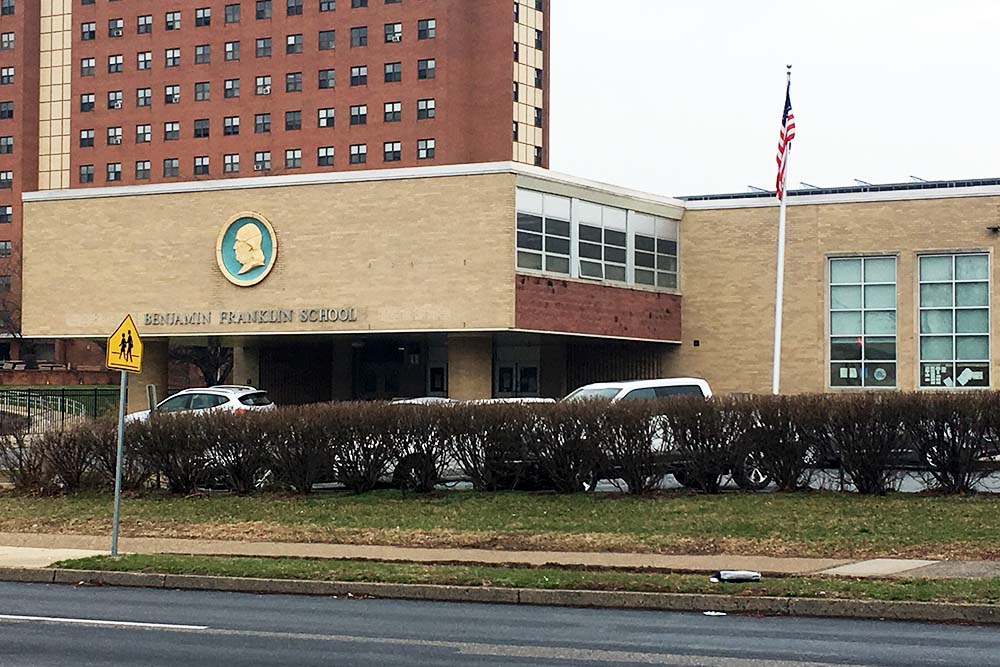
Benjamin Franklin Elementary School at 6th and Verbeke streets is a part of the Harrisburg School District.

Benjamin Franklin Elementary School at 6th and Verbeke streets is a part of the Harrisburg School District.

The Harrisburg School District is showing improvement financially and academically, but significant challenges remain, according to a report released last month.

The report, a mid-year update to the amended HSD Recovery Plan, ranked the district’s initiatives on a scale of complete, in progress and not completed. Of the 85 initiatives, 50 have been completed, 31 are in progress and four have not been completed.

“I was encouraged because I know how far we have come,” said School Board President Danielle Robinson. “We still have a lot of work to do, but I was encouraged to see the growth and the movement.”

Chief Recovery Officer Dr. Audrey Utley, with the assistance of PFM, a Philadelphia-based government and nonprofit consulting group, prepared the report using information from the district, financial reports and interviews with district staff.

Major gaps remain for the academic goals. If these goals are not met or have not shown advancement, the district risks having a state receiver appointed.

“If the District fails to meet these targets or show significant progress in each building toward the goal by the end of the Plan period, the CRO and the [State] Secretary of Education can take steps to appoint a Receiver effective for the 2018-19 school year,” according to the report.

The phrase “significant progress” saves the district from entirely having to meet academic targets, Robinson said. This phrase, added in the amended recovery plan in May 2016, means that the district will exit recovery next year “as long as there’s growth toward these numbers,” she said.

“We fought to make sure the language was in [the amended recovery plan],” Robinson said. “It’s always under review how can we can make this better.”

The recovery plan’s academic goals challenge the district to “eliminate the gap” or “close the gap by 50 percent” between the district’s testing, attendance and graduation metrics and state averages by June 2018, according to the report.

These targets mean big academic leaps for students and their teachers by June 2018, the end of the recovery plan period.

Take third grade PSSA exams as an example. Last school year, 19.4 percent of district third graders scored proficient or advanced in English and language arts (ELA) on this state test. That’s an improvement from last year’s score of 18.6 percent, but a far cry from the state average of 62 percent. The academic target goal expects 33 percent of district third graders to achieve proficient or advanced levels. That’s a 14.5 percentage-point jump.

For math PSSA scores, students need to make a similar jump of 12.7 percentage points. In other words, 23.1 percent of third graders need to score proficient or advanced in math.

Other goals require smaller jumps on state tests.

For example, Keystone exam scores for John Harris High School students need to jump 7.7 to 8.3 percentage points this year to meet half of the state average.

In general, the report shows steady academic progress, though the scores continue to be below state guidelines.

Other metrics are more encouraging.

District attendance for grades 9 to 12 has steadily increased from 79 percent in 2012-13 to 83 percent in 2014-15. This is just 3 percentage points away from next year’s academic target attendance rate of 86 percent.

John Harris High School’s graduation rate jumped from 42.7 percent in 2013-14 to 52.8 percent in 2014-15.

The report calls the growth in Keystone test literature scores at John Harris High School “promising.” In 2014-15, 23 percent of students scored proficient or advanced. Last year, the school saw nearly a 6 percentage-point increase. Harrisburg High School SciTech Campus exceeds the state averages for proficient or advanced scores in algebra and literature.

“I don’t think that the academic goals are not able to be reached,” Robinson said. “We just must become more focused.”

Pressing “front-burner” issues, such as union contract negotiations and the financial recovery, took priority over student academic achievement in previous years, Robinson said.

“It’s not just, you get into the district and these things are going to change right away,” she said. “Once we got stable financially, now we can say let’s work on our academics. Let’s change the perception of Harrisburg and the district.”

Financially, the report indicated similar mixed messages. The district has a “significant fund balance” of $29.2 million this year. However, the report notes a “concerning” annual structural shortfall of increased expenditures

“… the expenditures are slated to consistently outpace revenues in the coming years and several costly projects and contingencies could consume a substantial portion of the current fund balance,” the report said.

The report calls for the district to create a plan to maintain an 8 percent reserve fund balance (between $12 and 13 million) to ensure “sufficient working capital and provisions for contingencies” for the future.

“We have to go through and figure out what we can do to make sure we don’t have yearly shortfalls that are going to put us back into debt,” Robinson said. “That’s constantly under review.”

The district is hiring three major positions per the recovery plan: a human resources director, a chief financial officer and a professional grant writer.

Robinson said the district is vetting candidates for the human resources position. The district possibly will promote a candidate internally for the CFO position, she said.

The recovery plan outlines the need to hire a grant-writing professional to seek additional funding from competitive grant programs and non-traditional sources. Hiring this position and securing outside funding are two of the four items marked “not completed.” The grant-writing employee retired last year, Robinson said. So far, there’s “nothing solidified” with filling that position, she said.

In addition, the report outlined a need for a full-time English language learning coordinator position, which is currently filled by the director of the online school, Cougar Academy.

One of the hiring challenges is “making sure that the people who we bring in will actually stay,” Robinson said. “Harrisburg [School District] is still growing. You have to be able to grow with us,” she said.

The other incomplete administrative target is creating incentives for teachers to build careers within the district. This item, added with the May 2016 amended plan, suggests the district give teachers a small loan to help purchase homes in the district. Implementing a program has been pushed to next school year, according to the report.

Robinson said the board continues to focus on moving forward.

“We know that it’s not a sprint,” she said. “It’s a marathon.”

Read the full report here. 

Author: Danielle Roth

Continue Reading