Tag Archives: harrisburg

HBG Budget: 2018 plan shows growing revenues, no new tax hikes.

Harrisburg Mayor Eric Papenfuse and Budget and Finance Director Bruce Weber tonight presented the proposed 2018 municipal budget to City Council.

Touting healthy cash reserves and rising revenue, Harrisburg’s mayor this evening made his annual budget presentation to City Council, calling for the creation of new salaried positions and millions of dollars in capital investments for 2018.

The budget that Mayor Eric Papenfuse proposed would not raise city tax rates. Instead, it leverages higher revenue from a growing tax base to increase the city’s operating budget from $61 million this year to $65 million in 2018.

Papenfuse said his plan would allow Harrisburg to pay down debt while hiring more city workers and investing in capital improvements. He added that the city’s growing tax revenue this year, which is $2 million more than what was projected in the 2017 budget, shows rising employment, more valuable property stock and increasing incomes.

“The city is showing improving fiscal health, and we’re in a better position than we were a few years ago,” he said.

Papenfuse said that the city expects to balance its budget this year for the fourth consecutive year. It’s on track to meet or exceed all of its revenue projections for 2017, with property, earned income tax and local services tax revenues all greater than expected. The exception is parking and lease revenues as both categories fell roughly $200,000 short of their $1.8 million and $1.2 million projections, respectively.

Expenditures in 2018 would increase in two main categories: personnel and capital projects.

On the personnel front, the city would budget for $32.5 million in salaries compared to $31 million in 2017. That figure, which excludes healthcare costs, would create seven new management positions and two new sanitation positions. The budget would permit the Fire Bureau to make five hires and the Police Bureau to recruit 20 new officers.

The additional personnel funds would also increase salaries for two positions in the law bureau and award raises to sanitation workers represented by the AFSCME union.

Papenfuse also wants the city to spend some of the $20 million in cash that has built up in its general fund. He proposes withdrawing $2 million to make an early debt payment and $6.5 million to spend on capital projects.

The city defines a capital project as any expenditure exceeding $5,000. In 2018, proposed capital projects include $1 million on new radios and patrol cars for police, $700,000 for work on the 15th street police substation and $80,000 for police body cameras. About $450,000 would go towards renovating city playgrounds, and projects to renovate Reservoir Park would receive $285,000 in funding.

The Public Works Department would have a $1.5 million capital project budget, which would fund ADA ramp renovations and allow the city to match grant money for paving projects.

The $6.5 million budget for capital improvements would bring the city’s total general fund for 2018 to $72 million.

Tonight’s presentation was the first step in a weeks-long budgeting process. Council members will have until Dec. 5 to review the mayor’s presentation and submit questions to the city clerk. Public budget hearings will be held on Dec. 12 and 13, and council is expected to approve a budget by Dec. 19.

Council President Wanda Williams and finance committee chair Ben Allatt declined to comment on the presentation on Tuesday night, saying they needed time to review the budget and prepare questions.
Continue Reading

Peace in Our Time: City, Civil War Museum finalize accord over artifacts, rent.

Harrisburg Councilman Ben Allatt speaks to TV reporters following tonight’s legislative session.

Harrisburg’s years-long battle with the National Civil War Museum reached a permanent peace tonight, as City Council approved an agreement that should allow the museum to own its own artifacts and begin paying rent to the city.

Council unanimously OK’d a deal that will sell the city-owned permanent collection to the museum for $5.25 million. The museum now has five years to raise the money to pay for the purchase of the 25,000-plus artifacts.

“I think this is an important step forward,” said Councilman Dave Madsen in announcing his support for the deal.

The agreement ends a longstanding feud between the city and the museum board.

After entering office in 2014, Mayor Eric Papenfuse strongly objected to deals reached under former Mayor Steve Reed that allowed the museum to display the artifacts at no cost and that charged the museum just $1 in yearly rent to use the city-owned building, even as the city remained on the hook for building maintenance and repair.

The new agreement addresses both those issues.

First, the city will sell the artifacts to the museum for $5.25 million. In turn, the city will put $1 million into a reserve fund to pay for capital improvements to the building, which the city will continue to own. The other $4 million will pay for improvements to Reservoir Park, where the museum is located.

Under the deal, the museum has five years to raise the money to purchase the artifacts. If it fails to raise the money within that time, the city would be allowed to sell 20 percent of the museum’s collection.

“I think this is tremendously positive for the city,” said Papenfuse, emphasizing that most of the improvements envisioned as part of the Reservoir Park master plan would be funded from the museum’s purchase of the artifacts.

Papenfuse previously acknowledged that $5.25 million is below the retail value of the artifacts, which were not appraised for purposes of the agreement. But he said that he believed the price was in the best overall interest of both parties.

The agreement also outlines a graduated schedule for the payment of rent.

For the first three years, the museum will pay the city $45,000 per year in rent. The rent then increases incrementally, capping off at $100,000 per year for 10 years starting in 2029.

However, no money will change hands for the first five years, as the cumulative amount over that period almost equals the amount of money that the museum claims it is owed by the city for unreimbursed building maintenance and repair costs dating back to 2009.

Also tonight, council voted 6-1 to hire Maverick Strategies to represent the city in matters before the state legislature. The agreement retains the Harrisburg-based firm for $5,000 a month, for up to 12 months, to lobby the legislature as it tries to retain its extra taxing authority after it leaves Act 47.

The city also wants to make permanent the state’s annual payment to the city for emergency services. That payment currently is $5 million, but must be renewed as part of the state’s annual budget process, which places it in jeopardy each year. This year, for instance, the legislature twice stripped the payment from its proposed budget, only to reinsert it at the last minute.

“This is an important step for us to take,” said Councilman Ben Allatt. “I think this gives us a first foot forward to achieve these objectives.”

Allatt, in fact, has said that the state’s annual payment to Harrisburg should be even greater than $5 million.

Papenfuse said that, if Maverick is successful, there would be no need for a Home Rule charter, an extensive process that would give Harrisburg more leeway to set its own tax rates apart from those allowed in Pennsylvania’s third-class city code.

Councilwoman Shamaine Daniels was the lone vote against the agreement with Maverick.

Continue Reading

Gone to Seed: Blighted Schell building set for demolition.

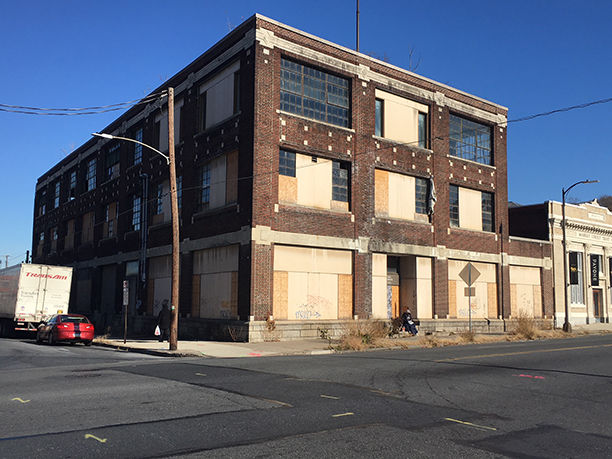
The 101-year-old Schell Seed building in Harrisburg is about to be razed.

Another piece of Harrisburg’s industrial past is set to disappear, as the century-old building at 10th and Market streets will meet the wrecking ball next week.

On Monday, the Pennsylvania Housing Finance Agency (PHFA) plans to begin demolition of the so-called Schell building at 1000 Market St., a long-blighted, vacant industrial structure.

“The building has been deteriorating,” said Brian Hudson, PHFA’s CEO and executive director. “The brick started to deteriorate, and there were health and safety concerns.”

The three-story, 28,000-square-foot building was originally constructed in 1916 as the Standard Baking Co., founded by the Graupner family, whose flagship brewery was located directly across the street. In 1920, it became the Schell Quality Seed Store after Walter S. Schell moved his quickly growing seed distribution and retailing business to that location from farther up Market Street.

The store, which also sold gardening supplies, lasted until 1972, when rains from Tropical Storm Agnes swelled nearby Paxton Creek, flooding the building and destroying the business.

The building later became home to Geiger & Loria court reporting service. After passing through several other owners, Susquehanna Township-based developer Moyer and Williams bought the building in 2007, planning to redevelop it as loft apartments with first-floor retail. PHFA financially backed the project, which never got off the ground, and then bought it out of foreclosure in 2016.

Hudson said that PHFA originally hoped to preserve the building, but that it had deteriorated too much, with trees even sprouting up from the roof. The condition is so bad that it threatens the building next door, an old bank branch now the headquarters of Pavone, an advertising and marketing agency, he said.

Hudson said there is some interest in new construction at the site.

“There are a number of partners interested in developing something on it,” he said.

Hudson declined to name any specific developers or projects but said that it could work as either a residential or office project.

David Morrison, executive director of Historic Harrisburg Association, said several members of the city’s preservationist community had contacted him over the last few days after learning that the building was about to be destroyed.

“It’s always a shame when a building can’t be rescued,” he said. “I wouldn’t say it would be impossible (to save it), but maybe it’s impractical from PHFA’s standpoint.”

The two-block stretch of Market Street between the railroad underpass and Cameron Street was once a thriving industrial and retail corridor. In addition to the brewery and the seed company, it was home to such diverse businesses as the Patriot-News, the city’s central post office, the state’s printing operation and A. Lane used furniture. Today, none survive, and empty buildings and surface parking lots line the corridor.

In 2011, Philadelphia-area developer Adam Meinstein bought the post office site, but that building remains underused. This past June, New York-based Twenty Lake Holdings, a commercial real estate company, purchased the sprawling former Patriot-News site for $644, 286—a fraction its original, 2010 list price of nearly $4 million—but has yet to state its intentions.

About a year ago, PennDOT unveiled concepts for a revitalized Market Street corridor, including the relocation of the city’s main bus depot from Market Square to either the site of the old post office or the Patriot-News building.

Hudson said he hopes that PHFA can assist in that revitalization. To guard against future floods, he envisions a building with parking on the first floor and apartments or offices above.

“We’re going to take a look at what makes the most sense there,” he said. “Our whole issue is to revitalize that area.”

He also said that his agency has the ability to take on projects that other financial institutions avoid.

“We don’t mind being the first ones in,” he said. “We do that all the time.”

Continue Reading

It’s Here: Harrisburg’s draft comprehensive plan released

State Street in Harrisburg

The long-awaited draft of Harrisburg’s comprehensive plan was released publicly today, setting out major priorities, concepts and ideas for everything from utilities to economic development.

The city Planning Commission posted the draft plan online, with eight sections tackling many aspects of city life and development.

The plan is thick with ideas on how to improve and revitalize the city, including adding more green space, preserving historic buildings and revitalizing blighted and depopulated areas.

The “Land Use” chapter alone, for instance, contains dozens of separate ideas, including:

  • Extending the dense downtown to former industrial areas along Paxton Creek.
  • Building a system of public squares at points where commercial and residential areas intersect.
  • Creating Meander Park, a large new park on Allison Hill along a former railroad spur.
  • Adding vibrancy to Market Square, increasing “Class A” office space downtown and vastly improving the city’s northern and southern gateways.

The $200,000 draft document is the culmination of about 2½ years of work and frustration, as the city and its consultant, Bret Peters of the Harrisburg-based Office for Planning and Architecture, feuded at various points over scope, resources and payment.

Originally, the city expected a draft in about 10 months, but disputes pushed the project far beyond the original deadline and led the city to try to finish up the draft plan itself. Peters eventually did submit a finished draft to the Planning Commission, and, earlier this month, commission members voted unanimously to use his document as the final working draft.

The commission is now accepting public comments on the draft and will hold a public hearing on Jan. 10. Following the meeting, the commission will make final changes to the document before voting whether or not to accept it. If it passes, the plan will go on to City Council, which will hold its own review and public hearings, before casting a deciding vote.

Ordinarily, cities adopt comprehensive plans for periods of about 10 to 15 years. Harrisburg’s, however, dates back to 1974, making it practically useless today.

Click here to read the draft comprehensive plan and add your comments.

Continue Reading

Road Repave: 3rd Street corridor project officially begins.

Marc Kurowski of Capital Region Water, Harrisburg Mayor Eric Papenfuse and Councilman Dave Madsen officially broke ground today to begin the 3rd Street corridor project.

Harrisburg officials today broke ground on the long-awaited repaving of 3rd Street, though most of the work will wait until next spring to start.

City Engineer Wayne Martin said that crews will begin on the Midtown portion with new curbing and ADA-compliant ramps at each intersection. Work is expected to continue through December, depending on the weather, and will resume in March.

The entire project includes about a two-mile stretch of the main artery from Chestnut Street downtown to Seneca Street in Uptown Harrisburg.

Actual milling and paving of the street will hold off until next year, said Mayor Eric Papenfuse. The project is expected to continue throughout much of 2018, wrapping up in October.

Papenfuse stressed that the project is not just for motorists. He said the improvements will make it easier to walk and bike, as well as drive along the street.

“By the time we are done, this entire area will be returned to the residents of the city,” he said.

Martin said that, when paving begins next year, he expects temporary road closures and detours lasting about three days at a time. He also said that some parking, about 10 spaces at a time, will be occupied by construction equipment.

“There will be times when parking will be an issue on 3rd Street,” Martin said, requesting patience among motorists and residents until the project is done.

The street was last paved in 1999, he said, so, “it’s overdue.”

As part of the project, Capital Region Water will install trees and other environmentally friendly infrastructure, including green “bump outs,” to reduce storm-water flow, said CRW board chairman Marc Kurowski.

He said the project is part of CRW’s City Beautiful H2O program, which is meant to replace outdated infrastructure and improve storm-water flow.

“We’ll have new trees and new ways to manage storm-water,” Papenfuse said. “This will become a showcase for design for the whole region.”

Harrisburg has contracted with Elizabethtown-based Doug Lamb Construction Inc. for the $5.5 million project, a cost split between the city and CRW. The city is paying an estimated $3.5 million, with CRW footing the remaining $2 million.

Most of the project is funded by a grant from Impact Harrisburg, a nonprofit set up as part of the city’s financial recovery plan.

Continue Reading

Papenfuse Wins Re-Election for Harrisburg Mayor; Council, School Board Set

The makeup of Harrisburg City Council will not change, as five sitting council members won election tonight.

Harrisburg Mayor Eric Papenfuse sailed to an easy reelection victory tonight, despite two candidates mounting late write-in bids.

With all 28 precincts reporting, Papenfuse garnered 3,782 votes. All write-in candidates together tallied 501.

Just days ago, two of Papenfuse’s defeated opponents in the Democratic primary, Gloria Martin-Roberts and Lewis Butts, declared that they would mount write-in campaigns in the general election. Both lost handily.

With his victory, Papenfuse will begin his second, four-year mayoral term in January.

Five Harrisburg City Council candidates also ran unopposed in their races. Council incumbents Wanda Williams, Shamaine Daniels and Ben Allatt each won four-year terms, as did newcomer Ausha Green. Councilman Dave Madsen earned a two-year seat.

Harrisburg Treasurer Dan Miller and Controller Charlie DeBrunner each ran unopposed and will serve four-year terms.

For school board, all the listed Democrats won four-year seats: Brian Carter, Carrie Fowler, Danielle Robinson and Judd Pittman. Incumbent James Thompson, who lost in the Democratic primary but cross-filed, lost on the Republican side tonight.

Percel Eiland, running unopposed, took the two-year seat for school board.

One district justice seat was contested. In the race for district 12-01-05. Democrat Hanif Johnson beat back Claude Phipps, who was on the Republican ballot, by a vote of 953-347.

In Dauphin County, Republican Matthew Krupp defeated Democrat Diane Bowman in a close race for prothonotary. In the heated contest for three Court of Common Pleas judgeships, sitting Judge Lori Serratelli lost to challengers Ed Marsico, Royce Morris and John McNally.

Continue Reading

3rd and Long: Yearlong 3rd Street improvement project set to start.

Patched, worn and pot-holed 3rd Street in Harrisburg is ready for its makeover.

People of Harrisburg—the day is almost here.

The long-promised repaving of 3rd Street is set to begin, as the city has scheduled a groundbreaking on Thursday at N. 3rd and Sayford streets to mark the start of the project.

The project will include substantial work, including milling and paving, on the following sections of the street:

  • Chestnut Street to State Street
  • Forster Street to Muench Street
  • Maclay Street to Seneca Street

Most of the initial work will not involve actual paving, but associated improvements, such as ADA-compliant curb ramps, traffic signal upgrades and new street trees and pits.

Street repaving will hold off until next spring as asphalt cannot be laid down in cold weather. The city expects the project to run through October 2018.

Initially, the repaving was supposed to have taken place this year, but was delayed because the city needed to coordinate with Capital Region Water (CRW), which is using the opportunity to install new drainage pipes.

Harrisburg has contracted with Elizabethtown-based Doug Lamb Construction Inc. for the $5.5 million project, a cost split between the city and CRW. The city is paying an estimated $3.5 million, with CRW footing the remaining $2 million.

The project is funded by a $6 million grant from Impact Harrisburg, a nonprofit set up as part of the city’s financial recovery plan.

The city says that parking on the street may be affected. It will post “no parking” signs 24 hours before work is set to begin on a section of street.

Continue Reading

Plan of Action: Progress finally made on Harrisburg’s comprehensive plan.

Aerial view of Harrisburg. Photo by Dani Fresh

Harrisburg’s long-delayed comprehensive plan appears to be back on track, as the city’s Planning Commission last night agreed on a draft plan and set forth a path for final approval.

The commission unanimously opted for a draft submitted by the Office for Planning and Architecture, a city-based firm headed by urban design consultant Bret Peters.

In May 2015, the city hired Peters for $200,000 to create a comprehensive plan, which cities use as frameworks to guide policy, ranging widely to include everything from land use to recreation. Plans typically have a shelf life of only 10 to 15 years, though Harrisburg’s had not been redrafted in some four decades.

Originally, the city expected its plan to be finished in about 10 months. However, a dispute with Peters over the editing process, communication and, especially, pay, led to a long delay.

At one point earlier this year, the city and Peters parted company after Peters demanded more money to complete the project.

That holdup ended last evening with the commission’s decision to go with Peters’ draft. Commission members said they would make the draft public both online and in hard copy by Nov. 15, with a public hearing slated for Jan. 10.

Following the hearing, the commission may make additional changes based on public input. It then must approve the final draft before submitting it to City Council for its approval.

Several city officials attended the commission meeting and seemed relieved that the process had new momentum.

“That’s why I’m here tonight,” said council President Wanda Williams. “They want to know, ‘Where is the comprehensive plan?’ Thank you for finally moving ahead.”

Mayor Eric Papenfuse said the city has not paid Peters more money than the contract allows and would not do so. Nonetheless, he echoed Williams’ sentiments.

“At least we’re moving the process forward,” he said. “So, it’s positive in that way.”

Continue Reading

Coffee Capital: Just across Forster Street, warm drinks, friendly staff, await.

The saying, “out of the mouths of babes,” resonates with Rick Hawtrey, owner of Capital Joe Coffee, right across the street from the Capitol Complex.

It was Hawtrey’s young son who urged him to move from Wisconsin in the mid-2000s, when his job as an information technology consultant had him traveling on a weekly basis to places like Washington, D.C., New York and Harrisburg. So, Hawtrey followed the boy’s advice and moved his family to central Pennsylvania in 2009, putting him closer to work and allowing him more time with his family.

It also set him down a new and unexpected path.

Hawtrey, a native of Milwaukee, purchased the Forster Street building that houses the coffee shop two years ago, using it then as the office for his IT business. But when the state, one of his biggest clients, couldn’t make timely payments for services because of a prolonged budget impasse, it got Hawtrey wondering what to do next. That’s when he realized he was in a prime location, not just for an IT shop, but for a coffee shop as well.

“We love coffee, coffee loves us,” he said. “We weren’t experts, but we put in the time and did the research.”

He approached Square One Coffee in Lancaster. Even though Capital Joe could have roasted its own coffee, Square One brought another dimension as a highly regarded roaster of small-batch coffees. Capital Joe, then, could tap into this established reputation and brand recognition.

Whatever We Can

Capital Joe’s charming 19th-century building sits across from the Keystone Building.

Visitors who walk through the door are hit immediately by the aroma of brewing coffee and treated to an invitingly quaint space with small table and chairs, old photos from around the Harrisburg area, and even a flat-screen TV mounted on the original brick walls. An indoor lounge anchors the back side of the building.

There’s a mission with each cup. Next to the tip jar are jars to support the Bethesda Mission and Morning Star Pregnancy Services. Anyone in uniform—police, firefighters, paramedics—is treated to a discount.

“We do whatever we can for the community,” Hawtrey said.

Mathias Cabell is usually the first face customers see. Cabell, Capital Joe’s general manager, had worked at Hawtrey’s IT company and previously sold cars at Red Lion Chevrolet in York County. Like Hawtrey before him, Cabell also relocated to the area to be closer to work, and his personable style and bright smile attract customers immediately, Hawtrey said.

“I knew nothing about coffee, and it has been a learning experience,” Cabell said. “But I went through the Square One training program, and I’m learning something new every day. I feel comfortable, and Rick believes in me, so that is why I do this.”

In addition to roasted coffees, Capital Joe offers 10 varieties of loose-leaf teas and a small selection of baked goods that are made by Hawtrey’s wife at their second location in the old police station on Main Street in Mechanicsburg. They offer three types of muffins, three kinds of biscotti and two types of cookies. In the fall, many of the treats are infused with pumpkin and seasonal spices. But the pumpkin spiced coffee is always available. Hawtrey and his team also are planning hot caramel apple cider, shoofly pie latte and lavender lemonade and lavender lattes, and soon will introduce a baked oatmeal cake.

“Our staff is always coming up with new ideas for drinks, and we are always looking to expand our menu,” Hawtrey said.

He hopes to open more shops, beyond the Harrisburg and Mechanicsburg locations. His first priority, however, is making sure his staff feels as though they are part of the family, especially as the business grows. For now, the Capital Joe philosophy is simple, Hawtrey said.

“Good drinks to make people happy.”

Capital Joe Coffee is located at 418 Forster St., Harrisburg, and 36 W. Main St., Mechanicsburg. For more information, visit www.capitaljoe.com.

Continue Reading

Across Generations: For 80 years, Neumyer Funeral Home has been an anchor of the Harrisburg community.

These days, you’ll often find funeral homes tucked away in the suburbs, located off of highways and out of direct sight.

But, for a long time, it was exactly the opposite. Located in grand corner buildings, they were highly visible, mainstays of cities, almost as common a sight as the neighborhood church or the corner store.

In Harrisburg, Neumyer Funeral Home is one of the last of the old types, a prominent fixture on the corner of N. 2nd and Calder streets.

Founded in 1936 by Henry S. Fisher, it originally was located just across the street, moving to its current location early on. Over the years, it was passed down through the family and renamed and today is one of the oldest businesses in the city.

In 2015, Nathan Bitner purchased Neumyer from long-time owner Bob Horst. Bitner, the owner of three other Harrisburg-area funeral homes, said that the building was in need of major updating. So, he gutted and renovated it to make it more spacious and modern.

“As the city changed, the business had changed as well,” said Bitner, detailing the work done on everything from the heating and ventilation to the lighting and layout.

Peter Stegman, general manager for Bitner Family Funeral Homes, compared the updates to putting old wine into a new bottle.

“We wanted to be respectful of its history and heritage,” said Stegman. “We looked at things we could do with past generations and present day needs.”

Stegman said that it was important to respect the building’s tradition and architecture, but also to take the next step, giving it a modern feel to keep up with the renaissance of Midtown.

“Today’s families like open space, warmth, natural light and a less institutional feeling,” he said, adding that they renovated nearly all of the facility to “make it a little more in keeping with what today’s families expect.”

To respect the heritage of the business, they chose to feature several tangible pieces of history.

The first was a sign with Henry S. Fisher’s name. Stegman said the Fisher sign once sat outside the funeral home, but was buried in the basement for years, covered in dirt when they found it. Stegman said it’s now on display as a direct link to the business’s roots.

The second historical link is a piece of leaded glass that was originally part of the casket bier, which is the stand where a casket is placed for services and display. The glass was backlit, so would emit light whenever there was a service or viewing.

Stegman said that the funeral home used the casket bier for more than 50 years, but that it had begun to deteriorate. They removed the leaded glass inset, which is now displayed on a wall in the funeral home. Bitner said the glass was such a signature of the business that a man recently recognized and remembered it from when he had attended a service at Neumyer Funeral Home as a young child decades ago.

Another way Bitner decided to pay homage to the history was by keeping the Neumyer name.

“People will know the name,” Bitner said, adding that the goal is to respect the history of the business, just as they did with the renovations and preservation of the sign and glass.

The goal of the renovation was more than merely cosmetic. Bitner believes that personality and service make a business. Part of that service includes ensuring that families are informed about all of their options and the new and different ways they can preserve their family member’s memory.

“We want to understand from a family who a person was and what they meant to the family,” said Stegman.

Bitner said people are personalizing services more than ever before and that technology has allowed that to happen with everything from personalized music to live streaming the service. They also offer keepsakes such as blown glass art preserving ashes and personalized jewelry with a loved one’s thumbprint.

“There are no curtain calls in this business,”Bitner said. “We’ve got to get it right the first time, and you never want to disappoint the families.”

Neumyer Funeral Home is located at 1334 N. 2nd Street, Harrisburg. For more information, call 717-233-7814 or visit www.neumyerfuneralhome.com.

Continue Reading