Tag Archives: harrisburg

Harrisburg will provide sanitation services to Steelton under new intergovernmental agreement

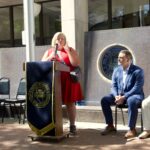
Members of Harrisburg City Council in session on Tuesday night.

Harrisburg soon will provide sanitation services to Steelton, as the city on Tuesday night agreed to begin trash collection in the neighboring borough.

Harrisburg City Council unanimously voted to enter into an intergovernmental agreement so that the city will begin picking up Steelton’s residential trash and recyclables starting the week of July 1.

Steelton’s council approved the same agreement on Monday night.

“This is a really exciting and positive development for the city of Harrisburg and the borough of Steelton,” said Harrisburg Mayor Eric Papenfuse.

Borough Manager Doug Brown said that Steelton wanted to make the change because of residents’ dissatisfaction with the service provided by long-time hauler Republic Services, as well as a proposed price increase by the company.

“It was significantly more money,” Brown said. “That, plus the problematic service we were getting.”

Therefore, Steelton had the idea of approaching Harrisburg to see if the city had the interest and ability to take on its trash removal.

Harrisburg Public Works Director Aaron Johnson described the arrangement as “all positive,” since Steelton’s trash has been picked up on Wednesdays, the one day when Harrisburg has enough spare capacity to handle the borough’s 2,500 residential customers.

“It couldn’t happen on a better day,” he said. “For us, it’s just like adding another route.”

The agreement calls only for residential, not commercial, trash pickup, which is handled privately in Steelton.

Papenfuse said that Harrisburg does not expect to have to add any personnel or equipment to handle Steelton’s trash, because Wednesday has been a slow day for the city’s sanitation workforce.

Under the agreement, Steelton households will pay Harrisburg $25 a month for pickup, or $300 per year. Residents now pay Republic $24.45 a month, but that price would have increased by $13 to $15 a month under the company’s renewal proposal, Brown said.

Papenfuse declined to describe the agreement as a potential revenue generator for the city, but said it would offset some costs.

“It will pay for part of our employees’ time and the truck’s time, which will free up money for other uses,” he said.

Papenfuse also pointed out the turnabout from several years ago, when, under the “Harrisburg Strong” financial recovery plan, the city almost privatized its trash pickup to Republic Services. City Council pushed back on the deal brokered by then-Mayor Linda Thompson, and sanitation remained a city-provided service.

Notably, the sanitation charge for Steelton residents will be less than that for Harrisburg residents, who receive a monthly sanitation bill of $32.34. The difference, Papenfuse told council, is due to the vastly different amounts that the two municipalities pay for refuse disposal at the Lancaster County Solid Waste Management Authority (LCSWMA) facility in south Harrisburg.

Steelton pays a “tipping fee” of $85 per ton, while Harrisburg, due to the terms of its agreement with LCSWMA that helped resolve its financial crisis, pays $195 per ton.

The agreement reached between Harrisburg and Steelton is only a temporary measure that runs through Dec. 31. Both municipalities will need to hammer out a longer-term deal in the fall.

Council members said they were pleased with the agreement, both because it represented an efficient use of the city’s resources and because it offered a rare example of cooperation and shared services between local governments.

“It seems like a no brainer,” said Councilwoman Danielle Bowers. “I hope this is the first of many cooperation agreements between us and neighboring municipalities.”

Harrisburg and Steelton officials plan to make a formal announcement of their agreement during a press conference tomorrow afternoon.

Continue Reading

History Restored: HHA, Midtown Action Council repair, replace Harrisburg history markers

The timeworn historical marker for the Payne-Shoemaker Building on N. 3rd Street sits temporarily in the Historic Harrisburg Resource Center awaiting refurbishment.

If you want to know which famous author visited Harrisburg in 1842, you can venture over to Market Square, near the site that once housed the Eagle Hotel.

There, you’ll discover one of the 113 historical signs scattered throughout the city, chock full of tidbits from Harrisburg’s past. Originally part of the “Harrisburg History Project,” many of these aging, worn-out signs are now being refurbished, thanks to Historic Harrisburg Association and the Midtown Action Council.

Spoiler alert—the author was Charles Dickens.

Originally installed between 2002 and 2004, most of the signs are badly in need of repair and replacement. The city replaced 30 of the panels in late 2017, but many others need work.

“The city was wonderful in allowing us to keep them up to date,” said David Morrison, executive director of HHA.

HHA currently has 40 panels to be replaced, 10 of which were ordered new and 30 that were found in storage. They will also be getting new stands for some of the signs, which have been damaged, hit by cars or aged over time.

Historical markers can be found all over the city, including in such areas as Midtown, downtown and Allison Hill. They include images from the state Archives accompanied by text highlighting historical sites and buildings.

“It’s available 24/7,” Morrison said. “It’s not like a museum that locks up at night.”

This new replacement panel soon will be inserted into the State Arsenal marker.

Harrisburg historian Jeb Stuart, who writes the text for each marker, explained the two-fold purpose the signs serve. They educate Harrisburg residents and visitors on the history of the city and provide a tourist destination.

“This is one of the most extensive systems anywhere for a city of this size,” said Stuart.

For the refurbishing, a majority of the funds have come through a Dauphin County gaming grant, which awarded Midtown Action Council $13,652 last year for the project. However, further fundraising will be needed to complete the replacement.

Morrison and Stuart hinted at the possibility of one or two new historical markers, but haven’t released information on that yet.

The markers hopefully help to brand Harrisburg as having a lot of history out there,” Stuart said. “A lot of people look at them.”

Now that’s a good sign.

Continue Reading

Harrisburg gets closer to exiting Act 47, as state body backs 5-year financial plan

City Solicitor Neil Grover speaks during today’s meeting of the Harrisburg Intergovernmental Cooperation Authority.

The state-appointed body tasked with overseeing Harrisburg’s finances today approved the city’s five-year financial plan, getting Harrisburg a step closer to exiting Act 47.

The Intergovernmental Cooperation Authority (ICA) unanimously endorsed the city’s long-term financial plan, following some tweaks and updates from an earlier draft plan.

“I believe that working on this will allow us to take a first necessary step for the city of Harrisburg,” said ICA board member Kathy Speaker MacNett.

Next, the ICA and the city need to draft an Intergovernmental Cooperation Agreement, which will formally set the terms and conditions of the intergovernmental relationship. A draft should be ready by mid-June, said ICA Chairman David Schankweiler.

Mayor Eric Papenfuse said that he hopes the final agreement will be approved by the ICA and City Council before council goes on summer hiatus in early July. At that point, with Commonwealth Court approval, the city can formally exit Act 47, the state’s program for distressed municipalities. The city has been in the program since 2010.

The financial plan approved today had some good news in it.

Since the May 1 draft, the city’s financial picture has brightened considerably. Real estate taxes, earned income taxes, local services taxes and interest income have all been stronger than projected, adding about $1.1 million in projected revenue for 2019.

Meanwhile, projected medical expenses for this year were reduced by $750,000.

As a result, the city expects to be able to pay down its debt faster than it projected just a month ago. It also expects to have to use less of its fund balance over the five-year period.

Nonetheless, Papenfuse remained concerned over what will happen when the five-year plan period expires in 2023. At that point, the city would lose some $12 million in extra taxing authority granted by the state legislature.

If, in the interim, the state does not allow Harrisburg to continue its elevated earned income and local services taxes, the city’s options would be to slash expenses, raise property taxes or perhaps pass a home rule charter, which could allow it to recoup some of the lost taxes.

Several ICA members voiced one reservation about the five-year financial plan. They noted that projected revenues were expected to be basically flat over the period, prompting several members to advocate a strong economic development policy for the city.

“There’s a lot to be done on the economic development front,” said ICA board member Audry Carter.

Following the meeting, Papenfuse said that he welcomed all ideas and proposals from the ICA to spur economic development in the city. He also said his administration is proposing transferring money that was used to fund a city communications director to hiring an economic development director.

The communications director position has been vacant for several months after Joyce Davis left to join PennLive. The economic development director job, which had been funded by the Harrisburg Regional Chamber, has been vacant since last year when then-director Jackie Parker left.

Continue Reading

Gown then Town: Harrisburg ranked among best cities for recent college grads.

Erin Templeton, Tyler Eaglowski, Liz Barrentes and Dove Reinford gather inside Capital Joe, one of Harrisburg’s many meeting places for young people.

Seth Robbins’ bags were packed before he even hit his Lock Haven University graduation stage in 2015. Afterwards, he drove himself out to Indianapolis, Ind.

In the fall of 2017, he finally landed a job in the field he spent four years studying, right in his hometown of Harrisburg.

According to Realtor.com, a popular real estate website run by the National Association of Realtors, more college grads like Robbins should be flocking to Harrisburg.

Recently, Realtor.com ran a story titled, “Give It a College Try: 10 Best Cities for New Grads to Live, Work Play,” and Harrisburg ranked an impressive fourth in the nation. Their team examined job opportunities, wage growth, housing affordability, social clubs and more in the 100 largest metropolitan areas in the country to help determine the best places for college grads.

The Capitol complex is a rich source of jobs for recent college graduates.

Though Harrisburg might not be your typical college town, it features many aspects that attract young people upon graduation, according to Realtor.com. The article specifically mentions running groups and Wildwood Park, and there is no shortage of activities–from 2nd Street’s bars and clubs to the State Museum and City Island.

In fact, only large college towns, like Madison, Wisc., and Austin, Texas, outranked Harrisburg on the list, while Pennsylvania’s capital city beat out other popular post-college cities, such as Nashville, Pittsburgh and Denver, which ranked sixth, seventh and ninth, respectively.

Pricey destinations, like Washington, D.C., New York, Boston and Seattle, which attract many graduates, didn’t make the top-10 list.

But there’s more to Harrisburg than just its nightlife. There’s also a growing job market, which contributed significantly to its high ranking. According to Realtor.com, with a 3.5-percent unemployment rate, students can find many types of jobs here, especially in government, politics and lobbying.

“I think Harrisburg in general is a great place to live, work and play,” said Derek Whitesel, executive director of Harrisburg Young Professionals (HYP). “There are a lot of jobs for those that are coming out of college. You can make a decent starting salary and have a decent cost of living.”

The job market might pull students in and nightlife will keep them entertained, but Harrisburg’s biggest draw, according to the site, is affordability.

Katherine Bosak, an undergraduate at Temple University, said that she plans to move to Harrisburg once she graduates because of its affordable housing. Currently, she pays $945 a month for her off-campus studio apartment in Philadelphia.

According to Realtor.com, the median home price in Harrisburg is $129,500. The average rent price is $900, $500 less than the state average, according to Zillow, another real estate-focused website.

“Compared to Philadelphia, [Harrisburg] is way more affordable,” Bosak said. “There is still nightlife and there are still things to do here, but it’s on a smaller and more affordable scale.”

After two years, Robbins is still in love with Harrisburg. When he’s not working as an associate residential mortgage loan officer at Fulton Bank, he works with Whitesel and other members of HYP to help highlight and improve the city.

“There is no other place better on the East Coast, and I’m not just saying that because I live here,” Robbins said. “You can go to a bigger city where there is more stuff to do, but you can’t make as big of an impact.”

To read the full realtor.com story, visit https://www.realtor.com/news/trends/best-places-for-new-college-grads-to-find-a-job-mate-and-affordable-home/.

Continue Reading

New Policies? Revised Zoning? Harrisburg council meets to hear about, discuss affordable housing

Craig Wolf of the York YMCA spoke at Tuesday’s work session.

Should Harrisburg adopt an affordable housing program? If so, what kind?

Those were the topics at hand on Tuesday night, as City Council held a special work session devoted to this issue.

The session was spurred, in part, by last year’s citywide affordable housing study, which stated that, in Harrisburg, 40 percent of renter households are cost-burdened, meaning they spend more than 30 percent of their income on rent.

“During the next five years, there is a significant need for affordable housing in every area of the city,” said Councilwoman Danielle Bowers, the chair of council’s building and housing committee.

The issue, then, is how to address that shortfall.

To that end, council invited three entities to make presentations: a group of Penn State Harrisburg graduate students; representatives of the Lancaster Housing Opportunity Partnership; and the director of community development for the York YMCA.

The Penn State students led the evening, repeating a presentation they made to council two weeks ago that offered results of a study they conducted of two capital cities that, they said, shared similar characteristics to Harrisburg—Albany, N.Y., and Annapolis, Md.

Their study yielded several recommendations, including taking maximum advantage of federal housing programs, improving the construction permitting process, easing professional licensure procedures for residents, and encouraging landlords to lease to Section 8 (subsidized rent) tenants.

Next, COO Shelby Nauman and Director of Lending Miriam Soto spoke of their work at the Lancaster Housing Opportunity Partnership, which offers loans, advocacy and education to create fair and affordable housing.

Their presentation focused on their mission, the services they offer and the projects they’ve undertaken. While Lancaster-based, they provide services in an eight-county region and are currently providing financing for Paxton Place, a 37-unit affordable senior housing project in Harrisburg near the Penbrook border.

“We don’t only want to do projects in Lancaster,” said Soto. “We want to spread the wealth.”

Finally, Craig Wolf spoke of his experience spearheading the revitalization of the area around the York YMCA. He said that, 20 years ago, the Y was surrounded on all sides by blight and crime.

“We didn’t know where to start,” he said. “We didn’t know what to do.”

So, his team began acquiring what he called “the worst properties” through the use of low-income tax credits, in the process driving out drug dealers and nuisance bars. One project led to another, resulting in $30 million in investment since 1998, he said.

“We must create neighborhoods in which families have a sense of belonging,” he said.

Other advice from participants included creating partnerships with similarly aligned groups, offering residents additional community services beyond affordable housing and persevering when challenges are inevitably encountered.

The work session closed with a heated discussion on the subject of inclusionary zoning, which requires or encourages developers to include affordable or low-income housing in their residential projects.

One of the Penn State students, who lives in Allison Hill and owns rental properties there, insisted that such a measure was premature for Harrisburg, where there has been scant interest from outside developers to build market-rate housing.

“Inclusionary zoning is a very good idea to fix a problem that Harrisburg doesn’t have,” he said. “It’s the wrong idea to use for Harrisburg. We’re on the other side of the spectrum from [places like] Seattle and Denver.”

In fact, the Harrisburg housing study stated that the city currently has some 4,000 vacant houses and commercial buildings, which could help alleviate the affordable housing crunch if rehabilitated.

This discussion caused Senghor Manns, the director of the Harrisburg Housing Authority, to approach the microphone from the audience. He insisted that an inclusionary zoning ordinance would have value for Harrisburg.

“You don’t want to fighting this retroactively, like in Seattle, like in Denver,” he said. “As the city grows and becomes more appealing to investors, there will be more pressure.”

Council President Wanda Williams concurred.

“We certainly need a policy of inclusionary housing,” she stated.

Nauman of the Lancaster Housing Opportunity Partnership said she believed that Harrisburg could use more housing “at every price point.”

“We’re hoping, if we get more housing, things will come back into balance,” she said.

For now, Bowers said, every idea is on the table as Harrisburg works to develop an affordable housing policy over the coming years.

“I think this is a great starting base to continue the conversation,” she said.

Continue Reading

6 Candidates, 1 Question: Where do Harrisburg City Council candidates see the city going over the next four years?

Ah, May. Flowers bloom, birds sing and, if you live in Pennsylvania, candidates canvas and campaign.

Harrisburg almost always has interesting races, especially in off-year, municipal elections. Since the city is overwhelmingly Democratic, the primary is usually where the action is, and this year is no exception, as no Republicans are running for citywide office.

For City Council, six Democratic candidates are vying for their party’s nomination for three, four-year seats. The candidates include three current office-holders, Danielle Bowers, Dave Madsen and Westburn Majors, and three challengers, Christina Kostelecky, Dionna Reeves and Brianna Smith.

To get an idea of where the candidates stand, we asked all the same question, requesting that they keep their answers to 500 words. We hope that these responses offer insight into the candidates’ visions for the city and how they hope to achieve them. Responses are listed in alphabetical order and have been lightly edited to conform to our style and grammar guidelines.

The primary is May 21. Please vote to make your voice heard on the future of your city.
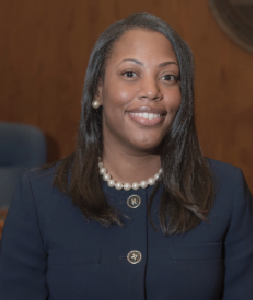
 

Danielle L. Bowers

Question: The term for this Harrisburg City Council seat runs for four years. What one or two major goals would you like to see Harrisburg accomplish over the next four years? Why? How would you, as a council member, try to accomplish these goals?

Answer: Over the next four years, I would like to see the City of Harrisburg accomplish the following two goals:

  1. Affordable Housing
  2. Economic Development

Affordable housing can be achieved through inclusionary zoning and blight reduction. The city conducted a housing study in 2018 to determine housing needs over the next five years. The study determined that there is a need for affordable housing in every area of the city over the next five years.

I believe the city should take a proactive approach to meet the impending need. Inclusionary zoning can be implemented to achieve affordable housing. Inclusionary zoning requires developers to designate a percentage of their housing units for low to moderate-income residents.

Blight reduction could also assist in achieving affordable housing. By reducing blight, I believe the city will have more viable sites for affordable housing. The city has a Harrisburg Property Reinvestment Board. The board meets monthly, and its sole purpose is to address blighted property throughout the city.

The goal of economic development can be achieved through promotion of equitable development, support of local entrepreneurs, and spurring job creation for local residents. Equitable development assists in achieving the goal of economic development within the city. Equitable development ensures that minority-owned business enterprises (MBEs), women-owned business enterprises (WBEs) and disadvantaged business enterprises (DBEs) are active participants in the city’s procurement and contracting opportunities. Equitable development could be achieved through participation in business workshops offered by the city, partnerships with the local chambers of commerce to identify businesses for contracting opportunities and targeted community engagement.

By supporting local entrepreneurs, the city will not only improve the local economy, but improve neighborhoods as well. Through local development, the city will provide access to goods and services available in their communities. Finally, economic development within the city will spur job creation for local residents. The city has a strong talent pool in an increasingly competitive labor market. Through increased development, the city should see more available jobs in various industries being filled by city residents who are qualified to succeed in these roles.

As a council member, I will work to ensure the city meets the two major goals of affordable housing and economic development. I believe these goals can be achieved through social innovation, effective research and collaboration between council and the administration. Should I be elected to serve a full term on City Council, I will continue to work to achieve these goals over the next four years.


Christina Kostelecky

Question: The term for this Harrisburg City Council seat runs for four years. What one or two major goals would you like to see Harrisburg accomplish over the next four years? Why? How would you, as a council member, try to accomplish these goals?

Answer: I’m Christina Kostelecky, and I’m running for our community. My goals focus on improvements for all residents rather than just a select few.

Economic development throughout the city. It’s time to focus on neighborhood development throughout the city. Evidence shows that costs are lower and returns are greater when we focus on small projects throughout neighborhoods. So, I’ll work with community groups and the planning commission to develop projects that our neighborhoods want that will benefit all Harrisburg residents. Imagine your neighborhood with wide sidewalks, clean streets and a locally-owned business just a few doors down.

I’ve spoken with Andrea, Shaun and Julia, local entrepreneurs frustrated with the hoops they’re jumping through while trying to start or expand a business in Harrisburg. I’m committing to the time and energy required to go through current legislation, line by line, to find outdated policies, to draft new language, and to build the coalitions necessary to reform the laws. Big, out-of-state developers don’t suffer from our tedious regulations; they simply hire expensive legal teams and pass costs along to the customers. Meanwhile, small business owners can’t afford to delay an opening (and therefore revenue) by several months. Our goal must be to encourage local businesses, not discourage them with antiquated, costly regulations.

Improve our schools. Undoubtedly you’ve heard about the state of our schools. Whether you’re a parent or are planning to have children, a business looking for a qualified workforce, or a long term resident of Harrisburg, you understand the importance of great schools and care deeply about their improvement. The quality of our city depends on the quality of our schools, and it’s time for City Council to play an active role in giving our city’s youth the positive learning environment and promising future they deserve. Simple steps like attending school board meetings can go a long way in making sure we stay on track with the administration and necessary improvements.

I recently met Kim and Yamaris, both parents of two who share my view that the solutions to our school problems are complex and will take time. Kim talks about walking a bunch of kids to school to make sure they stay safe, but she worries when she’s not around to do that. Yamaris dropped out of school and doesn’t want that for her own kids. While City Council members can’t change the schools overnight, we can hold the school board accountable. To that end, I commit to attending at least four school board meetings each year. Roughly two-thirds of our taxes go to the school system—I’m willing to pay that much when there’s some return on our investment.

Other goals include private-public partnerships for our community spaces (e.g. allow businesses to sponsor parks and paths), addressing affordable housing (e.g. reduce lot size restrictions), and increasing civic engagement by encouraging participation in citywide events. I invite each of you reading this to reach out to me; let’s start that engagement today—for our community!


Dave Madsen

Question: The term for this Harrisburg City Council seat runs for four years. What one or two major goals would you like to see Harrisburg accomplish over the next four years? Why? How would you, as a council member, try to accomplish these goals?

Answer: The goal is to improve the quality of life for our citizens. By making sure the budget reflects the health, safety and welfare of our community. We will accomplish this by continuing to invest in our police, fire and public works departments.


Westburn Majors

Question: The term for this Harrisburg City Council seat runs for four years. What one or two major goals would you like to see Harrisburg accomplish over the next four years? Why? How would you, as a council member, try to accomplish these goals?

Answer:
As a lifelong resident of the City of Harrisburg, I am excited about the opportunity to continue to serve my community on City Council. Over the next four years, my focus on City Council will be:

Continuing the work of improving public infrastructure and addressing blight.

In my role on City Council as chair of the Public Works Committee, over the last four years I listened to the needs of our community to improve the conditions of our neighborhoods. We know that as a city if we are going to be able to grow, attract new business and encourage existing businesses to expand, we must continue the work to repair our infrastructure and address blight.

Blight and trash discourage people from investing in our communities and neighborhoods. Last year, we went to the community to hold a series of meetings on ways to address these matters. The result was the adoption of a sanitation ordinance that increased fines and penalties for violations (including illegal dumping) and holds property owners accountable. Over the next four years, I remain committed to supporting increased enforcement and aggressively holding the responsible parties accountable for the cost of cleanup—instead of taxpayers. By improving the condition of our neighborhoods, we can restore a sense of pride in the city and attract more people to reside in the city while making it more attractive for businesses to locate in the city, which leads to jobs and improved living conditions for everyone. Over the next four years, I will work to develop policies that will encourage redevelopment.

Continued financial recovery and economic development.

Harrisburg has come a long way over the last four years. When I was elected to council in 2015, the city was in state receivership through Act 47. Council has worked with the administration to develop balanced budgets and stabilize our finances. Now the city is emerging from Act 47 and working with the Intergovernmental Cooperation Authority to develop a plan to improve our finances over the next five years. The law passed by the General Assembly gives the city five years, with our increased taxing authority under Act 47, to stabilize our finances.

My goal in the next four years is to make Harrisburg a more attractive place for investment. I will work with the business community to encourage reviving vacant commercial properties in our business corridors in Uptown, Allison Hill and throughout the city instead of looking to locate in surrounding areas outside the city. If we are able to grow our tax base through business development and growth in our neighborhoods, we will not need to increase taxes on a community that is already stretched. This includes working diligently with city departments to engage in partnerships with businesses, contractors and employers to provide greater opportunities for employment, job training and entrepreneurial experiences for the citizens of the city.

This is an exciting time for the city of Harrisburg, and I look forward to being a committed voice of the citizens, responsive to their needs and making Harrisburg an example of the benefits that can be gained when community, business and government work collectively for the good of the people.


Dionna Reeves

Question: The term for this Harrisburg City Council seat runs for four years. What one or two major goals would you like to see Harrisburg accomplish over the next four years? Why? How would you, as a council member, try to accomplish these goals? 

Answer: The city of Harrisburg has its share of challenges as I am sure other cities may have. A major goal I would like the city to accomplish over the next four years is the beautification of the city. Throughout areas of Harrisburg, there are vacant or abandoned properties. These vacant or abandoned properties are blight on the entire city, creating safety issues and a negative image.

Tackling this goal will be essential in improving the quality of life for residents. Encouraging revitalization throughout the entire city, not only in targeted areas, is a possible solution as all neighborhoods deserve attention. Community outreach will be a vital task to determine the needs in different neighborhoods around the city. Improving the overall attitude about Harrisburg can eventually create a feeling of hope and pride with city residents. Revitalization and beautification can keep residents living safely and thriving daily.

Other possible solutions to creating the beautification in our city are developing a strategic plan to include new policies and procedures for landlords. Landlord accountability needs to be reinforced, stricter enforcement of the current rules for blight remediation, and strengthening penalties for violations of city codes could all improve Harrisburg’s appearance. The revitalization of Harrisburg would be the responsibility of the city and city residents to rebuild and restore our community.


Brianna Smith

Question: The term for this Harrisburg City Council seat runs for four years. What one or two major goals would you like to see Harrisburg accomplish over the next four years? Why? How would you, as a council member, try to accomplish these goals?

Answer: One goal that I would like to see Harrisburg accomplish over the next four years is to increase job opportunities for today’s youth. For every young person, a job offering decent work is an important step in effecting the transition to adulthood, a milestone towards independence and self-reliance. For young people living in poverty and in other disadvantaged situations, employment is often the main means for achieving a better life. Creating and fulfilling income-generating job opportunities for young people can have a direct positive outcome for poverty improvement in Harrisburg. Youth employment benefits social development. It also benefits economic development by helping the entry of young, skilled people into the productive sectors of an economy and enabling the economy to sustain or increase its productivity and competitiveness in the global marketplace. Also, I would like to create partnerships with local businesses to invest in our youth by hiring them.


School Slate
Harrisburg City Council isn’t the only competitive primary race in Harrisburg this year.

The race for school board is arguably even more contentious, with 12 Democratic candidates competing for five, four-year seats. Like in the City Council race, no Republicans chose to run.

Below are the names of the candidates, with incumbents (elected and appointed) indicated by (I) after their names.

  • Jayne Buchwach
  • Lewis Butts Jr.
  • Lionel Gonzalez (I)
  • Lola Lawson (I)
  • Ralph Rodriguez
  • Ellis R. Roy (I)
  • James Thompson
  • Doug Thompson Leader
  • Gerald Welch
  • Patricia Whitehead-Myers (I)
  • Cory X. Williams
  • Steven Williams

At press time, several community groups were planning to host candidate forums and debates for both City Council and school board. We urge you to attend one of those events to learn more about the candidates.


Continue Reading

Construction Ahead: Road, sidewalk closings, detours coming to heart of Midtown

The intersection of N. 3rd and Verbeke streets in Harrisburg

Big changes are coming to the heart of Midtown Harrisburg, but first residents, visitors and motorists will have to endure a month of considerable inconvenience.

Starting next week, the 3rd Street project will hit N. 3rd and Verbeke streets, necessitating road and sidewalk closures and detours.

“This is going to be a major disruption in many respects,” said Mayor Eric Papenfuse today.

For more than a year, crews have been working on a two-mile stretch of 3rd Street, replacing sewers, improving intersections, replacing streetlights and redoing curbs. Construction on the $5.5 million project should wrap up late this year with a road resurfacing of the entire stretch.

The work near the Broad Street Market will begin on Monday, closing Verbeke Street at the intersection of N. 3rd Street. One side of the street, which is split by the market, will reopen on Thursday for the weekend market hours.

The following week, starting May 6, the entire intersection of N. 3rd and Verbeke will close from Monday through Thursday. Work at the intersection will continue through about May 23, though it could be extended in the event of substantial rain or other unexpected delays.

“The reason that Verbeke gets closed is that the dig is deep,” said city Engineer Wayne Martin. “We can’t have traffic with that deep of excavation.”

Besides road and sidewalk delays, the construction will affect access to the three main buildings at the intersection: the Broad Street Market, Midtown Scholar Bookstore and the Historic Harrisburg Resource Center, Papenfuse said.

The new intersections, which will include significant bump-outs into the current street area, will require construction work to the edge of the existing buildings so that they conform with Americans with Disabilities Act (ADA) requirements, he said.

The projected N. 3rd/Verbeke construction timeline

Martin said that the general contractor, Elizabethtown-based Doug Lamb Construction, could have had a less ambitious schedule, but that would have drawn out the period of construction.

“We could have prolonged the agony, or we could rip the Band-Aid off all at one time,” he said.

Papenfuse said that he believes the end result will be worth the temporary inconveniences to motorists and pedestrians.

The intersection, he said, will have a totally different look—with more green space—and be far more pedestrian-friendly.

“It’s going to be great once it’s done,” he said.

Continue Reading

Harrisburg metro again performs well on US News “Best Places” list

The beauty of the Susquehanna River and access to nature and the outdoors impressed the U.S. News judges.

The Harrisburg area is the 44th-best place to live in the country, according to the just-released annual list from U.S. News & World Report.

The editors praised Harrisburg for its affordability, easy access to outdoor activities and “small-town” atmosphere. While U.S. News analyzed the metropolitan area, much of the praise was focused on the city.

“Singles and younger residents might be more inclined to live downtown or in Midtown, near restaurants and nightlife, especially if they work downtown,” stated the entry. “Older couples and families might be more attracted to the bigger space and better schools that suburban areas like Camp Hill, Mechanicsburg and Hershey have to offer.”

U.S. News ranked 125 metro areas based on five general criteria: desirability, value, job market, quality of life and net migration. Harrisburg scored best on the “value” measure.

Last year, U.S. News also ranked Harrisburg as the 44th “best place” to live in the nation and the best metro area in Pennsylvania.

The editors were especially struck by the Harrisburg area’s affordable housing and beautiful setting near the river and mountains.

“While Harrisburg isn’t necessarily regarded as an affluent area, its housing market is exceedingly affordable,” said the entry. “That, coupled with a cost of living well below the national average, may result in a greater expendable income for Harrisburg residents than those in other parts of the country—especially given that the average annual salary in the area isn’t all that much lower than the national average.”

Like last year, the U.S. News compilers ranked Austin, Texas, as their “best place” to live for 2019. Colorado Springs, Colo., and Denver switched spots at No. 2 and 3, respectively.

Washington, D.C., fell precipitously from last year, falling to No. 19 from No. 8 in 2018.

The rankings for other Pennsylvania cities this year included Lancaster at No. 48, Pittsburgh at No. 50, Reading at No. 84, York at No. 87, Allentown at No. 93, Scranton at No. 98, and Philadelphia at No. 102.

U.S. News also ranks central Pennsylvania very highly in “best places” to retire, with Harrisburg coming in at No. 29 and Lancaster at No. 1 in the nation.

For more information, visit https://realestate.usnews.com/places/rankings/best-places-to-live.

Continue Reading

Capital Region Water begins water main project, with road impacts expected

Capital Region Water replaces a water main in Harrisburg

Spring has finally sprung, which means the beginning of infrastructure and road projects around Harrisburg.

Capital Region Water today announced that it will start a $1 million drinking water improvement project that will affect four locations in Susquehanna Township and another in Harrisburg.

This week, CRW plans to begin the installation of 1,400 feet of drinking water mains, which are also used for water supply for fire hydrants.

“This project is part of Capital Region Water’s proactive capital improvement strategy to provide safe and reliable drinking water service while reducing long-term operational costs,” said CEO Charlotte Katzenmoyer, in a statement. “We thank our customers who live or work near these project locations for their patience and understanding while these improvements are made.”

The projects will not happen all at once, said Andrew Bliss, CRW’s external affairs manager. Projects, in order of completion, are as follows:

  • Magnolia Street between S. 12th Street and S. 13th Street, Harrisburg
  • Ridgeway Road between Overbrook Road and Colonial Road, Susquehanna Township
  • Clinton Road between Cloverfield Road and Centerfield Road, Susquehanna Township
  • Darby Road and Darby Place near Vernon Avenue, Susquehanna Township
  • Herr Street and Laurel Street near Walnut Street, Susquehanna Township and Penbrook

Each project should take two to three weeks to complete, Bliss said. The entire series of projects should wrap up in late June to mid-July, he said.

Residents and motorists along these routes should expect a variety of impacts, including road closures, noise, parking restrictions and temporary road patches, according to CRW. Patched roads are expected to be resurfaced within about 90 days of project completion.

Work will take place on weekdays, 7 a.m. to 5 p.m. CRW stated that home access will not be required for the project.

A map of CRW’s 2019 infrastructure projects can be found at capitalregionwater.com/capitalprojects.

Continue Reading

Death Cab for Cutie to play in Harrisburg, marking return of major concerts to city waterfront

Death Cab for Cutie

The Harrisburg waterfront boasts great scenery, a few historic bridges and now—Death Cab for Cutie.

Come June, the eight-time Grammy Award-nominated band will grace a stage in Riverfront Park, making the band perhaps the biggest national act to play in the park in years.

Death Cab for Cutie will perform as part of Harrisburg University’s HU Concert Series, which this year is also featuring such popular acts as The Record Company in April at Club XL and Joan Osborne in May at Whitaker Center.

“This came about because we were looking for a major name,” said Frank Schofield, HU’s director of Music & Media Services. “The band became available, and we got it done.”

Death Cab for Cutie will set up on a stage in the southern part of the park, across from UPMC Pinnacle. The June 19 concert will begin at 7:30 p.m. with one or more opening artists, according to Schofield.

All tickets for the general admission, standing-only concert are priced at $40. Gates will open at 6 p.m.

In addition to the music, patrons will have access to a beer garden and food trucks, Schofield said. He also expects downtown venues to benefit from the influx of concert-goers.

“It will be a major economic boon for the city,” he said.

According to Schofield, there’s more to come. He said that “another major upcoming show,” targeted for August, will be announced soon that will bring music back to City Island, which once hosted major touring bands.

Special parking rates will apply for the Death Cab for Cutie concert. Parking will be available both at the Market Square Garage and on City Island for $10 starting at 6 p.m. the night of the concert.

Tickets for Death Cab for Cutie will go on sale at 10 a.m. on March 2 at www.ticketmaster.com. For more information about the HU Concert Series, visit www.HUconcertseries.com.

Continue Reading