Tag Archives: Harrisburg School District

Lost Labor

“This was like a prayer,” said Jody Barksdale, a sixth-grade math and reading teacher at Rowland School on Derry Street, and a vice-president of the Harrisburg Education Association, the local teachers’ union. “This was like God was dropping this in our laps, saying, ‘You do have a leg to stand on.’ ”

Barksdale was referring to the discovery, last week, that the school board had neglected to ratify the cut in pay and benefits that local teachers had agreed to, after months of negotiation, in early August last year. The cuts were a key component of the recovery plan for Harrisburg’s public schools, drafted in the spring under the auspices of Act 141, the 2012 Pennsylvania law providing for state oversight and assistance in financially distressed districts. For a while, the idea that the teachers would embrace the plan seemed doubtful—they had already endured school closures, furloughs, and a three-year pay freeze. Yet the district’s financial outlook was grim, with a projected shortfall of $131 million by 2018. On August 6, the teachers voted overwhelmingly to accept the cuts as outlined in the plan.

“I talked myself into thinking it was the right thing to do,” Barksdale said. It was Friday afternoon, and she was sitting at a long table in an assembly hall in Steelton, handing out ballots to teachers as they arrived from the schools. Barksdale, who has taught in the district for 15 years, is earning less than she did four years ago. She and her partner, another district teacher, expected a loss of $1,000 per month in household income under the proposed cuts. But she voted for them anyway. “I personally didn’t feel that it was fair to the retirees who would have to lose their benefits, and things they’d worked their entire careers for,” she said. She also feared what would happen to the district if the teachers rejected the plan. “If we didn’t agree to this, they were threatening to charter up our district and dismember it.”

Less than two months later, the teachers learned that the recovery plan’s projections of imminent budgetary shortfalls—upon which the need for union concessions was predicated—were overblown. In October, the district’s new financial officer, Peggy Morningstar, reported to the school board that, in place of a $4.5 million deficit for the 2012-2013 school year, the district actually faced a surplus of around $11 million.

On October 14, at a school board meeting in the auditorium of John Harris High School, teachers took to the microphone to demand an explanation. Gene Veno, the district’s state-appointed recovery officer, pledged to make adjustments to his plan, which he acknowledged had been based on incorrect data. But when it came to the restoration of the salary cut, he was circumspect. He maintained, at that meeting and subsequent ones, that any update to the plan must consider the full range of recovery objectives: not only a fair wage for teachers, but also academic improvement, minimal tax increases, and long-term fiscal stability. The union interpreted his hedging to mean that the cuts would remain as negotiated—an outcome they resented, but one they had little power to alter, since they’d voted to approve their contract back in August.

Then came last week’s peculiar discovery. On Monday, January 20, union leadership noticed that the school’s board agenda included a vote on their labor contract scheduled for Tuesday afternoon—nearly six months after the contract had been negotiated. The school board had apparently never ratified it. “We saw an opportunity,” Sherri Magnuson, the union president, said. After a snowstorm postponed the board’s meeting to Friday, the union hastily assembled the vote in Steelton for the same afternoon. By the time the ballot closed, at 5:30 p.m., 79 percent of the membership had voted; an hour later, Magnuson announced the results before the board. By a unanimous vote, 389-0, the teachers had rescinded the agreement from August.

When Magnuson made her announcement, the teachers, assembled in their blue union T-shirts in the chairs behind her, broke into applause. But the folks on the other side of the microphone were not so easily moved. Veno, who had declined to speculate on the consequence of a vote to rescind (“That’s an administrative matter, I have no comment”), was preparing to deliver a PowerPoint on his amended recovery plan. It would include a restoration of half the 5-percent cut to this year’s salaries, along with the “opportunity for full restoration in the future along with potential salary increases,” depending on the district’s future performance.

The school board, for its part, proceeded as if the union vote had never occurred. By a bare majority—five in favor, with two ‘no’ votes and one abstention—it ratified the old contract (among a bundle of other contracts) and pressed on through the meeting. This was, in part, a way of covering for an embarrassing neglect of procedure. Jennifer Smallwood, the school board president, had signed the labor agreement in August, but had never brought it to the board for a majority vote, as required by board policy. “From my understanding, ‘ratified’ means signed by all parties,” Smallwood said after the meeting. “ ‘Ratify’ means to approve.” (When it was pointed out that “ratification” was the word describing the vote on the evening’s agenda, Smallwood replied, “Then that’s the word on the agenda.”)

But the board’s decision might also have been a reflection of caution in the wake of such dubious accounting. James Thompson, who chairs the board’s budget and finance committee, said that the discovery of the surplus last fall only shows how poor the district’s budgeting models are. “I would be cautious even about the projection of a surplus,” he said. He voted to keep the contract as negotiated because, he said, “last year is last year.”

From the outset, Veno, the recovery officer, has been tasked with an essentially impossible mission: he must somehow deliver better academic results while employing fewer resources. Parts of his plan reflect that assignment’s absurd circularity, such as the endeavor to improve district finances by winning students back from charter schools—a result dependent on improving district academics, which is dependent on improved district finances. For that burden to be compounded by procedural errors, on matters that were meant to be settled at the start of the school year, must be profoundly frustrating.

But teachers also face impossible expectations. Barksdale works three jobs; her partner works two. When the pay cut was adopted, she said, “we literally had to sit down and re-budget, and hope and pray we didn’t have to sell our house.” Yet, when stories about the district appear online, they are greeted with invective commentary about “union parasites” and “whining.” When the teachers agreed to accept the cuts, they did so on the basis of a projection that has turned out to be a fiction. The board’s botched ratification might be a technicality—but then, technicalities are what we resort to when we can’t depend on good faith.

Correction: An earlier version of this article referred to James Thompson, a school board member, as the board’s “budget and finance director.” Thompson is the board’s budget and finance committee chair.

Continue Reading

City as Classroom: Harrisburg is more than just a place where schools are located; it’s a learning environment itself.

Screenshot 2013-11-29 10.21.40

A wide river. A rich history. Smooth government buildings balanced by planned green spaces. Meandering streets that twist and turn through Uptown, Midtown and downtown. Architecture with charisma. Harrisburg is a city worth exploring. City schools take advantage of its attributes all year long.

“We use the entire city as an extended campus,” affirmed David Rushinski, principal of Harrisburg Catholic Elementary School. He said that parents who enroll their children in the city campus note the phenomenal benefits of being next door to cultural, scientific and performance venues.

A valuable asset of Harrisburg is that it is such a walkable city.

“It’s simplified to schedule field trips almost every week to locations right around the corner such as the Whitaker Center, the planetarium or Strawberry Square to see the Popcorn Hat Players,” he said. “Plus, all of our students receive a year-long membership to the State Museum.”

St. Stephen’s Episcopal School on Front Street uses its picturesque spot in the city as a resource for several aspects of learning, from simple to more complex. Fall mornings are spent playing in Riverfront Park during recess.

“We don’t have a huge campus, so we are especially vigilant in how we use the space and the community around us,” said Ellen Konkle, development and alumni coordinator for the school.

The students enjoy walking to the Dauphin County Library, where they sign up for library cards and spend afternoons at the YMCA for swimming and gym class. “The takeaway is that it makes our students grateful for being an integral part of a community,” she said. “They learn civic responsibility by appreciating city parks, knowing that they are invested in making public space a nice place to enjoy.”

This is the next generation of city leaders, according to Konkle, and the valuable insight they gain from every day experiences in a cultural city boosts all levels of learning. “Also, the use of city resources in our curriculum is one of the most unique factors about St. Stephen’s and one that many alumni recount as a reason they think so fondly of their days with us.”

Caleb Smith, film and video teacher at Capital Area School for the Arts Charter School (CASA), said that, in his curriculum, students work on a variety of video projects, including narratives and music videos.  

“Location makes a strong impression when used correctly, and, rather than having all the scenarios take place in locker-lined hallways, we use the city as our classroom with a large variety of close places,” he said.

For example, students have used Riverfront Park and the Walnut Street Bridge for recognizable and nature-oriented locations, he said. The Capitol steps down to 2nd Street provide an older look for shoots, while the modern buildings around Strawberry Square evoke yet another mood.

“The city is our classroom and also the location and background to almost all of our productions,” he said.


Books & Bridges

If writing is a student’s passion, there’s no need to venture far to find the perfect place for inspiration.

“Creative writing typically takes a ‘field trip’ to the Midtown Scholar Bookstore, where the writers get to explore the plethora of books,” said CASA creative writing teacher Ann Stewart. “When we enter, someone invariably notes, with a near-swoon, the aroma of musty books, pungent coffee and polished wood. To a writer, that’s heaven.”

The river along Front Street is a strong source of inspiration as well, remarked CASA dance teacher Rosemary Battista.  Dance students visit the river every year to observe nature: not only the power of the water, but also the peace and tranquility that it provides.

In addition, students often comment on the bridges and relate their lines and form to the shapes they make when they dance. Often, the students create strong, emotional choreography from the contrast of the city noises and the quiet beauty of nature, she said.

Jackie Kosoff of Hershey graduated from CASA last year and is now majoring in dance at Montclair State University in New Jersey. She attests that the exercise by the Susquehanna provided an energetic muse. 

“It opened my mind to a new way of thinking and finding a source for inspiration,” she said.  “We take that experience and remember not to limit ourselves. It is a lesson that I carry with me now and will use in my studies. And it started as a quiet time taking notes on the energy of Harrisburg.”

The river is also used for scientific lessons to educate students on the history of floods in the region. Harrisburg School District pupils studied the high water mark from Agnes and tied the experience to a unit on weather, climate and watersheds, learning the causes of floods and how to be prepared.

In fact, nature provides many opportunities for students to get out and about in the city.

CASA students spent a day identifying native Pennsylvania trees on the Capitol lawn using keys provided by the state Department of Conservation and Natural Resources. Meanwhile, Camp Curtin School students celebrated the 25th anniversary of Arbor Day last spring with the Harrisburg Department of Parks, Recreation & Enrichment at the Italian Lake band shell. They were able to assist and learn more about the important effect trees have in our communities and how urban and community parks provide value.

Speaking of nature, Harrisburg’s Math Science Academy partners with Harrisburg Inner City Outings, a local nonprofit, to provide life-changing experiences for Harrisburg youth.

“Over the last seven years, we have completed more than 70 outings with 300 or more Math Science Academy students participating in the program,” said teacher Judd Pittman.

He said that Harrisburg students have hiked to Hawk Rock and Pole Steeple and paddled the Susquehanna and Juniata Rivers. 

Students also participated in The Sierra Club-sponsored Susquehanna River Clean Up and Friends of Midtown’s annual fall clean up.

“The students have gained a deeper appreciation regarding their impact on and relationship with the natural world,” said Pittman. “The experiences students have on Saturdays are often expressed through blogs and student-generated write-ups in the school newsletter, bringing full circle the connection between school and the opportunities afforded our students through Harrisburg Inner City Outings.”


Lessons from the Past, Present

The Harrisburg Cemetery sits in somber contrast to the spirited stories of former city residents buried there. Here is where local historian George Nagle brings tales of mid-1800s Harrisburg abolitionists to life for local high school students. A member of the Camp Curtin Historical Society, Nagle leads a field trip each fall to teach about people who were critical national figures in the anti-slavery argument raging during the pre-Civil War era.

Harrisburg Academy senior Hannah Shea of Susquehanna Township attended the cemetery field trip to one of the city’s best-kept historical secrets. “It really put the stories of past national debate in context for me,” she said.  “People from Harrisburg influenced the anti-slavery movement and participated in the Underground Railroad. I gained a deepened understanding from learning in such a meaningful atmosphere.”

Harrisburg Academy’s original location was the John Harris-Simon Cameron Mansion. “Our entire school community still returns to the city for our holiday concert at the Forum featuring student performers and for our commencement ceremonies at the Scottish Rite Cathedral,” said Kristina Pae, director of communications for the school.

Academy students of all ages participate in field trips in the city, including performances at the Gamut Theatre and the Scottish Rite Theatre, attendance at the Farm Show, tours of the state Capitol and visits to the Rachel Carson Building for presentations about the peregrine falcon banding. They go on walking tours of historic Uptown Harrisburg, visit the National Civil War Museum, explore the Susquehanna River, attend the Capital Area Science & Engineering Fair at Whitaker Center and watch educational films at Midtown Cinema.

In addition, each graduating senior concludes his or her final year with a three-week internship at a local business or organization.

“The resources of the city are readily available, and companies are willing to reach out in partnership to the school,” said Pae.  

In 2012 alone, students interned at the State Street Academy of Music, Harrisburg Law Bureau, Pennsylvania State Museum, state Bureau of Forestry, Kutztown University Small Business Development Center, Equality PA and the East Shore YMCA, she said.

Other resources in the city offer a social and community service aspect to learning for all students.

For instance, the Harrisburg School District partners with local organizations to provide weekend food for needy families through the Power Pack program, sponsored by PinnacleHealth and the Central PA Food Bank. The life skills classroom at Camp Curtin bags the food, which is then picked up by the district courier, who delivers it to the schools.

“A bag full of non-perishable food goes home every Friday at the end of the school day to families who need extra help with food because sometimes some of our students do not eat on the weekends and come to school on Mondays starving,” said Laura Bloss, Harrisburg School District’s homelessness liaison.  “This relates to curriculum in many ways. When our students have food and healthy nutrition, they are able to focus better in school. Also, our Life Skills students do the packing of the food, so they are getting skills for work like they would at a grocery store by keeping inventory and keeping track of the bags that are filled.” 

Harrisburg schools also work with The Highmark Caring Place, which champions the cause of grieving children by creating awareness of their needs, providing programs for them and their families, and empowering the community to effectively support them. 

“The Harrisburg High School SciTech campus has been sending a group to Highmark for several years, and it is one of our most popular partners for the students,” said SciTech Community Partnership Development Director Doug Reitz. “SciTech students help with the children’s grief center where young children are provided counseling to help them cope with the loss of a loved one.  We send a group each month of the school year for community service work.” 

Opportunity for learning abounds throughout the city, and every destination seems to be right around the corner.

“A hands-on experience of learning always trumps traditional classroom work,” said Harrisburg Catholic’s Rushinski.  “We are fortunate to have a wide array of opportunities this city offers us.”

Continue Reading

Cyber-Minded: Online education is transforming the way public school is taught, including in Harrisburg.

Jada Rosario

Jada Rosario

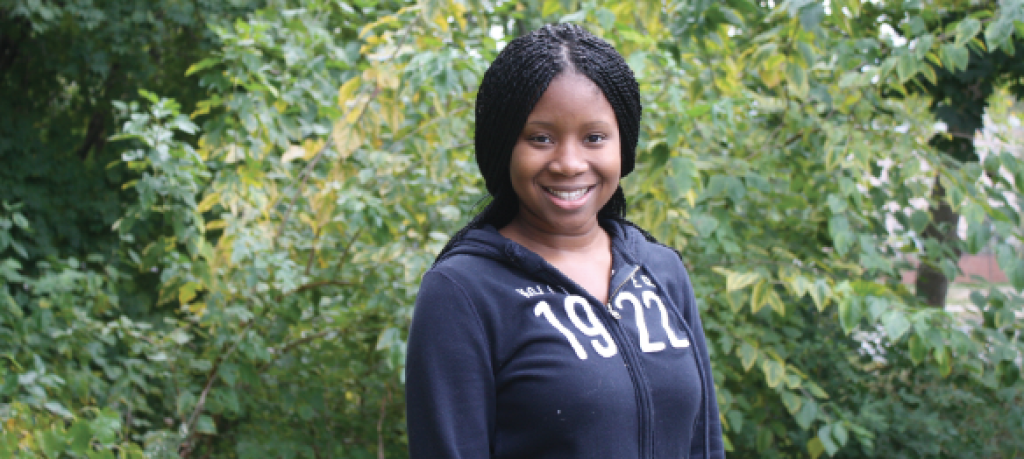
On a typical school day last year, Jada Rosario got up, ate breakfast and brushed her teeth. Then, she logged on to her computer—“You know, still in my pajamas”—and started taking classes. Around noon, she would break for lunch, and maybe watch a movie. Most days, she wrapped up her studies by early afternoon.

Rosario, who graduated high school in the spring, was a member of Cougar Academy, a virtual school within the Harrisburg School District. Cougar students work remotely, using software that delivers their coursework and quizzes, and they can phone in or visit the school’s drop-in center if they require personal instruction. The district provides laptops and printers to participants and reimburses families for Internet costs. When the school first opened, in the fall of last year, more than 100 students enrolled.

Rosario, a cheerful, articulate young woman who wants to become a paralegal, like her mother, signed up for Cougar in the hopes of bringing up her grades. At first, she thought online learning would be boring, but soon she settled in. She raced through her English lessons, doing “up to, like, 10 lessons” each morning, and saved math for evenings or the end of the week, when her mother could assist her. Around Christmas, she had the option of returning to traditional school, but she declined.

“I was more focused,” she said. “I wasn’t in the halls, playing around like I was in school.” She wound up finishing her coursework early, and graduated May 26.

Rosario’s experience in Cougar Academy, as it happens, was rare. Of the total number of students who enrolled, only 21 were left by the end of the year. More than 80 were removed because of poor grades or low attendance, and, of the ones who remained, 10 were failing. In the final tally, a mere nine students of the initial 103 passed the majority of their classes.

Part of the trouble was the freedom. Allison Burris, a teacher who helped direct Cougar Academy last year, said that students struggled to complete assignments on time, often letting coursework pile up until the last minute. “You had to log in by 2 p.m. every day,” Burris said. “You could ‘log in’ at 2, but do all of the work on the weekend. You could see the influx of work at the end of each marking period.” In addition, about half of the students were “re-entry,” meaning they had previously dropped out or gotten into trouble with the law, making them risky candidates for less supervised study online.

Then there was the problem of the loaned computers. “The risk of borrowing equipment was an issue to me,” Burris told me. “It’s a $300 charge to us, and if it goes missing, it’s supposed to be the student who pays, but they just don’t pay it. So we absorb that cost.” Of all the equipment loaned last year, Burris said, about half was returned with something missing or damaged. She worried that, in the case of most students, the program was a “waste of money.”

Harrisburg’s in-district cyber-education program is not the only online school whose performance has been called into question. Last May, the National Education Policy Center, a University of Colorado think tank, published “Virtual Schools in the U.S. 2013,” a scathing survey of 311 online schools across the country. “Despite virtual schools’ track record of students falling behind their peers academically or dropping out at higher rates,” the study’s authors wrote, “states and districts continue to expand virtual schools and online offerings to their students, at high cost to taxpayers.”

Indeed, Cougar Academy is slated to expand. In January, the district will pilot an option for full-time online study for the fifth through eighth grades. In 2015, the program will be available from the first grade onwards. Gene Veno, who was appointed Chief Recovery Officer for the district in December of last year, has included the expansion of cyber offerings as part of his recovery plan.

“In terms of meeting the needs of parents and students, the predominance of cyber enrollment presents a competitive opportunity for the Harrisburg School District,” Veno wrote. “The issue and challenge for the District is to understand the goals and objectives of the students enrolled in cyber schools, and to present a District-operated alternative that meets or exceeds the performance of the non-District cyber schools.”

Why would Harrisburg expand a program that had achieved such dubious results? I put this question, in various ways, to a number of education professionals inside and outside the district. As it turns out, the answer has little to do with whether the instruction is working, and everything to do with what it costs.

*****

The Harrisburg School District, like the city itself, projects an agitated mood. Its many efforts at reform and renewal are shadowed by recurrent crisis. Every year for the past 10 years, one or more of its schools has failed to meet state goals for attendance and academic performance. In 2010 and 2011, the district closed five schools and eliminated almost 400 positions. Enrollment, which was just under 9,000 in 2005, had fallen to 6,340 by the end of last year.

In spite of the contraction, the district continues to face intense budgetary pressures. Its expenditures last year were approximately $137 million—about the same as they were in 2011, before the closures. The recovery plan, extrapolating from recent trends, projects that costs will increase to $174 million by 2018. Among the factors the plan cites in its projection are a prolonged spike in health care and energy costs and an increase in the district’s annual debt service. Even in the wake of events like the one in October, when the chief financial officer discovered an unaccounted $11.5 million in funds, no one denies that the district is en route to debilitating shortfalls. “The sum of all the assumptions produces a grim picture,” Veno’s plan says. “If the District does nothing, it will be out of business.”

An increasingly significant source of expense is the exodus of district students to charter schools. Last year, 672 Harrisburg students enrolled in charter school, more than double the number in 2010. Of these, about 70 percent have opted for a “cyber charter”—that is, a school where courses are provided mostly or entirely online.

The cost to the district is substantial. In Pennsylvania, lawmakers have prioritized families’ freedom of choice, providing for tuition-free enrollment at both public and charter schools. To achieve this, the law requires each student’s home district to reimburse the charter school for the cost of the student’s education. The reimbursement amount is determined by a complicated formula and is based on the per-student cost within the district—an amount calculated by taking the district’s annual budget and dividing by the number of students. If the overall number of students declines, the district’s budget is spread over a smaller pool, leading to even higher reimbursements.

In Harrisburg, the effect has been dramatic. According to Tim Eller, at the state Department of Education, Harrisburg’s reimbursement payment for a non-special education student was $9,646 in 2011-12. A year later, it had climbed to $10,804; this year, the payment will be $11,829. (For special education students, the payments are $20,536, $26,311 and $28,473, respectively.) The charge also applies when parents enroll previously homeschooled students directly in a cyber charter, which is a frequent occurrence, given that cyber school is essentially homeschooling with tech support. In the 2012-13 school year, the total cost of charter-school reimbursements for the Harrisburg School District was around $9 million.

Within the district, the financial pressure of cyber-charter enrollment has produced a kind of schizophrenia. Administrators have their doubts about the efficacy of online instruction, but they also know that an in-house cyber option can realize substantial savings. The cost of educating a student at Cougar can be as low as $3,000—almost a fourth of the cost of sending a non-special education student to a cyber school outside the district.

In June, I spoke with the district’s superintendent, Dr. Sybil Knight-Burney, and Mary Lou Sypolt, the coordinator of pupil services, in the district’s administrative offices on Front Street. Initially, when I asked for an overview of Cougar Academy, their comments were positive. But when pressed for measures of success, they struggled to produce meaningful answers. “I’ve seen cases of success, but I don’t have any research,” Sypolt said. Knight-Burney could think of just one example: a girl who had gotten pregnant and used the online courses to catch up on missed work. They began to qualify their assessment. “To be honest with you, when we had about 88 kids starting, we thought this could be successful,” Knight-Burney said. “We learned, ‘Wow, this is very tough coursework.’”

When I observed that other Pennsylvania cyber charters had struggled to produce good results, Knight-Burney suddenly sounded relieved. She, too, had doubts about the benefits of learning online. “Now we’re finding out the reality of it,” she said. “We’re getting kids back and seeing the education’s not working.” She mentioned a phone call her staff had received from some concerned neighbors, who had approached a young woman they’d repeatedly seen wandering the street in the middle of the day. “I’m doing cyber school,” the girl had told them. They asked what time of day she did her online classes. “Oh, whenever I get a chance,” she replied.

Despite these doubts, Sypolt and Knight-Burney still believed the program had potential. Sypolt felt Cougar Academy was the district’s chance to address “cutting-edge technology.” They were also developing criteria to determine whether students were likely to succeed online. But, depending on how strictly the academy screens applicants, it may wind up at cross-purposes with Veno’s plan. If students feel the district is too restrictive, they’ll migrate somewhere else.

***** 

When money follows a cyber student out of the district, where does it go? In August, I met with Michael Wilson from Commonwealth Connections Academy, a cyber school with a drop-in center on Reily Street, next to Brothers Pizzeria. The school, which last year enrolled more than 6,600 students from across the state, is one of Pennsylvania’s five largest charters. (Of the remaining four, all but one are cyber charters.) Like many other online schools, Commonwealth Connections is the local branch of a nationwide education provider—in this case, Connections Academy, which has schools in 24 states. On the occasion of the launch of a new curriculum initiative, the academy was hosting an open house.

Wilson greeted me out front, wearing a pinstripe suit and a glossy pink tie. An administrator at the school in 2010 and 2011, he had left briefly to work under the former state education secretary, Ron Tomalis, as a special assistant focusing on the department’s oversight of charter schools. He returned to Commonwealth Connections over the summer, following Gov. Tom Corbett’s abrupt dismissal of Tomalis in May, and now serves as the school’s director of government relations and outreach.

We walked to an empty classroom equipped with a Smart Board and projector, the room still smelling fresh and new. Wilson, an ardent defender of cyber schools, had advised me in an email that there was “so much misunderstanding and misinformation out there” about online education. He told me that a cyber school like Commonwealth Connections was suited to any number of needs. It could free up a student’s schedule to focus on athletics, dance or acting; it could allow them to complete school while holding down a job; it could enable faster study for the gifted. Online learning, he said, was geared to the current generation of young people, whom he described as “digital natives.” “Everything they do is customized, geared towards ‘me,’” he said.

We headed outside, where he showed me one of the school’s signature assets: a mobile classroom, a 38-foot orange bus retrofitted with WiFi, computers and lab equipment, which travels around the region providing cyber students with hands-on activities. On board, surrounded by a multitude of brand-new equipment, I raised the topic of funding for cyber schools.

Wilson has no doubt that charter funding is equitable; if anything, he thinks local districts keep more money than they’re due. When a district reimburses a charter school, he estimated, the formula allows it to retain about 20 percent of tuition costs, “even though they don’t participate in the education of that student.”

“When a student ends up here, there’s a reason they’ve made that choice,” he said. “The bottom line is, they’ve made that choice. It’s not a school that’s entitled to funding. It’s taxpayer dollars.”

I had a similar experience with representatives of Agora Cyber Charter, another of the state’s largest online schools. Kevin Corcoran, Agora’s assistant head of school, told me he saw cyber learning as a viable alternative for “kids who don’t feel satisfied or served” in traditional public school. He invited me to attend Agora’s statewide graduation ceremony, which took place at Hershey Park stadium in June, and where I watched a diverse crowd of evidently proud parents applaud as their sons and daughters accepted their diplomas.

But when it came to questions about funding, it was difficult to get clear answers. Agora, like most cyber charters, contracts with a for-profit service provider, purchasing a bundle of services, including curriculum, tech support and management consulting. I wanted to know what it actually cost Agora to educate an individual student, but, because of the structure of the law’s funding formula, Agora does not valuate its services in this way. Instead, starting from the guaranteed reimbursements from local districts, the school comes up with its per-student purchasing power. Several years ago, Corcoran told me, the average reimbursement was in the “low 7,000s,” but, by last year, it had climbed to between $8,700 and $8,900.

According to Corcoran, the higher the average reimbursement rate, the better the services Agora can purchase for its students. “What school wouldn’t want more money?” he said. But the money also flows to its provider, K12, Inc., where it buys things that aren’t expressly about education. Some of the money is spent on advertising, though the school would not disclose the exact amount, saying only that K12 “provides certain advertising to the school as part of a school management fee.” And some of the money is spent at the statehouse. Nationwide, K12 has spent more than $1.2 million on lobbying over the past 10 years, according to data from FollowthMoney.org. In Pennsylvania, it has employed 11 different lobbyists since 2009.

It’s true that cyber schools can incur substantial costs, especially for special education, and that they must find a way to provide services under fixed revenues, just like a traditional school. Yet a review of the services online schools do provide suggests they’re able to deploy substantial, costly resources. A Connections Academy promotional video, for instance, advertises “more personal attention from teachers,” who “connect with students through phone calls, emails, live online sessions and sometimes even in person.” So, while Harrisburg experiences teacher layoffs and salary cuts, Connections Academy is able to provide one-on-one instruction on demand—and still have money left over to run a first-class website, retrofit a mobile lab and purchase advertising to attract more students to the fold.

***** 

Alongside the question of funding, of course, looms a more basic question: can a student be successfully educated online?

During my tour with Wilson, parents and students were attending a workshop on roller coaster design. The workshop was simultaneously a supplement for students and a media event, a not-uncommon combination in the world of cyber charters. Later, the group would have a virtual chat with a Hershey Park engineer, through something known as “LiveLesson technology.”

Towards the back of the room, I met the parents of a high school student who, they said, “loves” his online schooling. “As a teenager, he doesn’t have to get up in the morning,” his father said. After homeschooling their son for years, they had enrolled him in a traditional public school for seventh grade, but found that “disruptive” students in the classroom bothered him. Now that he was able to work at his own pace, he was thriving. In addition, they felt free to “not worry about the scariness of what goes on in high school.” In the school next to where they lived, in Carlisle, “there’s drugs and there’s violence,” they said.

A mother sitting nearby chimed in. She, too, had been delighted with her experience. Her son, who was dyslexic, had struggled in a traditional classroom, but in the cyber school, she said, “he gets to be him. He doesn’t have to bend so much.” Like the other parents, she found it a relief to have options outside the district. “My kids were horrified to go to public. But my son likes this atmosphere. It’s small. It’s private. It’s a chance for him to spread his wings far more than he ever could in a traditional public school.”

A common refrain among cyber-charter advocates is that online study allows students to work “at their own pace.” This can occasionally mean at a pace slower than in a traditional classroom, but most often it implies convenience and speed. One of the Commonwealth Connections parents, for instance, mentioned a nephew who graduated high school a full two years early. “There’s no reason for them to sit around and do nothing,” she said. Another was pleased with the possibility that students primarily interested in science, for example, could accelerate through subjects that held less interest. “They could conceivably have all their liberal arts stuff done before they get to college,” he said.

If that’s true, then perhaps the emergence of cyber school reflects a more radical change: not just in educational technology, but in what is expected of an education. I recalled what Jada Rosario, the Cougar Academy student, repeatedly said about her English courses being “easy.” Over the summer, I had paid a visit to Holly Brzycki, the director of the Capital Area Online Learning Association, or CAOLA, which provided online courses and support staff for Cougar Academy.

During a walkthrough of CAOLA’s online learning software, which included a visit to a virtual campus with an art gallery and an arcade, Brzycki opened a sample lesson in American Literature with text from the F. Scott Fitzgerald story “Winter Dreams.” At the end of the lesson was a quiz consisting of five multiple-choice questions. Brzycki explained that a student would have to score at least an 80 percent before she could move forward to the next lesson.

The first question asked which Fitzgerald novel was an extension of the themes in “Winter Dreams.” Of the four possible answers, only one, “The Great Gatsby,” was written by Fitzgerald. It occurred to me that a student could use Google to confirm this without ever having identified the themes of either “Gatsby” or “Winter Dreams.” But, when I asked Brzycki about this, she sounded unconcerned. For one, she said, students can cheat in brick-and-mortar classrooms, too. Anyway, in her belief, knowing how to Google for answers is part of what makes a well-rounded student in the 21st century. “Isn’t that a skill we want them to graduate with?” she asked.

Despite our best guesses, we scored only 60 percent, which meant we had to review the lesson and try again. This time, a “Learn More” link appeared, which took us to a supplementary video about narrative structure and anachronisms. It showed a series of short clips, including one of a man with a Mozart bouffant playing a Game Boy. The connection to “Winter Dreams” was beyond me, but no matter—the student was not required to watch and could click out of the video after about five seconds. After the video, we took the quiz again. This time, four of the five questions had us identify parts of speech. We passed.

I thought about this later when, interviewing Rosario, I asked her what sorts of things she had read for her online English class. She thought for a moment, and then said, “I think I did read ‘Huckleberry Finn.’ I think that was one of the books I had to read.”

“You think?” I asked.

“I’m pretty sure,” she said. “I don’t really remember, because it was, like, a while ago.”

Rosario is only one student, of course, but I wondered whether her inability to remember what she’d read might reflect a fact about cyber school. From my experience with Brzycki, it appeared it was possible to pass online English through some combination of guesswork and skimming. Without a teacher in the room, how do cyber schools ensure that students are learning and not just racing through the quizzes?

***** 

Over the summer, Cougar Academy got an overhaul. In August, the district appointed Kathy Ames-Borrel, a former ESL supervisor and John Harris High School alum, as the program’s full-time director. For her interview for the post, Ames-Borrel drafted a three-year plan for expanding the academy in accordance with the recovery officer’s recommendations. To address the problem of failing students, she added phone interviews to the application process to try to ensure that parents and students would be the right fit for the cyber option. “We want to go with the mindset that cyber is not for everyone, and bricks and mortar is not for everyone,” she said.

A month and a half into the year, her adjustments seem to have met with some success. Of the 26 students enrolled at the time of this writing, seven had returned to the district from cyber charters. Another Ames-Borrel initiative was to divide the online school into several tiers, requiring students to demonstrate self-discipline before being granted complete independence. Upon enrollment, students enter a 45-day trial period, during which they take their classes on laptops, but do so in the confines of the drop-in center at the school, supervised by teachers. At the end of the trial period, they can progress to full-time study at home, or to a mixture of home and classroom study. (They can also have their trial period extended, if they haven’t successfully adapted to learning online.)

Not everyone is thrilled with the new arrangement. Allison Burris, who moved this year to SciTech Campus, a smaller, selective school within the district, regards the trial period as essentially a negation of the purpose of online learning. “You can’t require a kid to come in,” she said. “That isn’t cyber school.” There are rumors of resentment among teachers, who feel they’ve been reduced to the role of babysitter. Burris had heard stories of students spending the whole day on cell phones or looking at YouTube videos.

In addition, there are signs that the pressure to meet financial objectives has led to haphazard implementation. Just before the start of the year, the district abruptly changed service providers, abandoning CAOLA in favor of a group called Compass Learning. Veno, the recovery officer, told me the choice was a cost-cutting measure: the school already subscribed to Compass for online supplements, which could easily be adapted for full-time study. But the decision will also require the district to negotiate out of its two-year contract with CAOLA, which Brzycki, CAOLA’s director, said she intends to enforce, at a cost of $26,000. (Some have suspected other motives for the switch. One John Harris teacher, who spoke on the condition of anonymity, told me that the school “got Compass because it’s easier for our students to pass.”)

To some extent, the recent growth of cyber learning parallels the emergence of any disruptive technology. Institutions, in their effort to catch up with the latest invention, will naturally find themselves stumbling through a transitional phase. What’s unique about the cyber-school proliferation, though, is that the primary incentive—the need to compete financially—is largely a creature of the legislature’s making. The state, in applying the current funding formula, has put extraordinary pressure on districts to make changes that they might otherwise have avoided.

In late September, I spoke with Ames-Borrel about how Cougar’s second year was going. Our conversations had soured somewhat, after she and Veno had declined my request to visit the classroom itself, on the grounds that the program was “still in its infancy.” But she was able to explain some of the reasons she thought cyber education could help certain students. The computer program had the ability to detect which skills were most difficult for each student and could tailor future lessons to address those areas. It could also create individualized reports for the teachers, who could then pull the student aside for “targeted intervention.”

Are these things that teachers couldn’t do without computers? I thought of a passage in “Player Piano,” the Kurt Vonnegut novel about a society run by engineers, in which a manager asks his subordinate to come up with an instrument for detecting mice in a factory. Meanwhile, he is holding and petting a cat.

Ames-Borrel and I went back and forth for several minutes about what, exactly, a teacher did in the classroom of Cougar Academy. I couldn’t understand how a single math teacher, for example, could provide instruction to a room full of students across all four years, all simultaneously working on different subjects. I observed that, in my high school math class, if a student started doing science homework, he’d get in trouble. Was that not the case at Cougar?

“No, and—” Ames-Borrel sounded frustrated. “I don’t even know where these questions are coming from. Like, really? It’s online learning. There isn’t a true comparison. What we’re trying to do in these 45 days is teach the students how to be online learners. So, in the course of your day, you may decide, ‘I’m gonna check email first, then I’m gonna do this, then I’m gonna check my Facebook, then I’ll do Twitter.’ Those are all things that you do because you have unlimited access to those resources, because you’re online. One of the things about online learning is that you have the option to choose and do the things that interest you, or whatever. There is no prescribed time.”

In that case, I thought, teachers at Cougar Academy were hardly teachers at all—they were more like instructional training wheels, to help the students transition to self-guided learning at home. Of course, that’s ultimately the experiment of cyber school: to see whether some or all of a teacher’s functions can be fulfilled by programmable devices.

I thought of a moment during my walkthrough with Brzycki in June. At one point, in the school’s virtual study hall, we entered what’s known as a “whiteboard session,” an interval of teacher-led instruction on a digital chalkboard. A handful of student avatars stood in the room, along with a pair of teachers. Brzycki approached one, and a chat box opened. She explained she was an administrator on a tour.

Where are you? Brzycki typed into the chat box.

Pittsburgh, the teacher replied.

What do you teach?

Math.

We asked the teacher for a whiteboard session on how to solve for x. But, for reasons unknown to Brzycki, the program was acting buggy. There were long lags between the teacher’s marks on the board, and for a while the screen went black. When we finally exited the session, the virtual lab was empty, and Brzycki’s avatar stood alone. “Uh-oh,” she said. She clicked around in vain.

“Our teachers are gone,” she said.

Correction: The print edition of this article contained an inaccurate statement about the way in which charter school reimbursements are calculated. When a student leaves a school district to attend a charter or cyber charter school, her departure does not affect the total number of district students in the reimbursement formula, as was originally reported.


Continue Reading

Where the Boys (and Girls) Are: Kids find safe haven at Boys and Girls Club.

Screenshot 2013-10-30 20.46.21Great futures start at the Boys and Girls Club.

But it wasn’t long ago that the economy and other setbacks nearly ended its own future. Now, despite a shoestring budget, it’s thriving.

One measure is that “enrollment has increased,” said Executive Director Yvonne Hollins.

What started as a part-time venture at Harrisburg’s St. Paul’s Methodist Church in 1939 with 75 boys now serves more than 1,200 boys and girls at three locations: Angino Clubhouse on Berryhill Street, Hall Manor and Downey Elementary.

Youngsters from pre-K through high school do their homework and play indoors and out. They learn social skills and socialize and eat hearty meals. They find a safe haven at the Club, which runs during the summer and after school. An evidence-based curriculum helps strengthen kids’ academic skills.

Still, according to board president Phil Shenk, the Club is “one of the best-kept secrets in central Pennsylvania.”

That’s something the board and staff, especially the ebullient and dedicated Hollins, are determined to change. She loves when kids such as Khennedy Washington express the Club’s mantra—“Graduation is a must, not an option.”

Affectionately known as “Miss Yvonne,” Hollins knows the name of every kid. She is a product of the projects who went on to teach in the Harrisburg School District and became an administrator in Central Dauphin.

Catherine Juarez, a 12-year-old seventh grader at Rowland Middle School, has been coming for five years and calls the Club a “poster place for kids.”

“They help you with homework, give you activities,” she said. “You can play outside, read and do arts and crafts.”

Juarez noted improvements to the physical plant—from the A/C and teen couches to the playground equipment. More significantly, she has “made new friends.”

Her favorite aspect, though, is helping younger kids with their homework. “My dream career is to be a teacher,” Juarez said.   

Shenk, whose father was the board president decades ago, helped ensure that the building would be up to code but also a place kids could be proud of.

“This coming year, we’d like to pump up volumes—to have more programs that involve kids and their families,” he said.

One goal is to open the Club on weekends, so the facilities are used all the time. The first Family Fun Days held on a recent Saturday attracted 200 kids.

Many organizations, businesses and individuals have pitched in to help—hands-on, through volunteerism or donations. Mark and Betty Butler of Ollie’s Bargain Outlet raised $1.4 million for the baseball field, which Core Construction built for free.

Mike Martin oversaw many of the physical improvements as pro bono project manager.

“Mike went on a tour of the building with realtor Bill Rothman and saw the kids interacting,” Hollins said. “He saw something special here.” 

Kids pay a nominal fee of $10 a year for the afterschool program and $60 for the summer camp. “But we turn no one away and try to get donations to cover the costs for those who can’t afford it,” she added.   

Most members live within walking distance of the Club, but it has a partnership with Children and Youth to transport those who don’t.  

Some of the staff were once Club members themselves, adding to the tight-knit feeling.  

Kevin Stanfield, a 16-year-old sophomore at John Harris High who aims to study psychology or nursing, is a three-year Club veteran. He loves there’s “always something to do—from baseball to X-Box—and a place to hang out with people.”

The new Robert C. Shenk Industrial Arts Center, named for Shenk’s late brother, offers formal training for the kids and the community.              

The Club offers a computer lab, mentoring and such special programs as SMART GIRLS and Passport to Manhood. In the Keystone Room, the kids develop projects to benefit the community, in partnership with the Soroptimists.

As part of its emphasis on health, the Club provides every kid with a food package for the weekend—thanks to Channels Food Rescue. And the Club sometimes serves as a social service referral agency to help them and their families.

Add two gyms, a laundry room, lockers and a fitness room, and the Club is a true community center, meeting so many of the needs of the city’s young people. Earlier this year, the Club even cut the ribbon on a beautiful new baseball field behind the Angino Clubhouse, established by the Carl Ripken Sr. Foundation.

“Cal Ripken believed baseball could teach life skills,” said Hollins. “This is the first field the foundation put up in the state. It’s used for all of Harrisburg’s Little Leagues.”

Another gem is the playground, funded by PPL and UGI and open to the community on weekends.

You can sense the coming together of the various strands that make up the Club, from the kids to the staff—which Hollins asserts works well beyond the “pay hours”—to volunteers to the board.

Shenk called Hollins a “rock-hard worker, wonderful person and dedicated leader who believes in structure and goals and does what it takes to get there.”

For her part, Hollins said: “I feel so special. We see young lives impacted.”

Find out more about the Girls and Boys Club of Harrisburg, including how to donate items, at www.bgccp.org.


You Can Help

The Club operates under the umbrella of the Boys and Girls Clubs of America, with funding from the United Way. It also accepts private donations. The Club currently has the following needs:

  • Washing machines and a dryer
  • Donations of $1.78 per day for one year to sponsor a membership and summer camp fee
  • New lunch room tables
  • Commercial copier for each site
  • PA/intercom system, sophisticated security surveillance system
  • Lawn care equipment
  • Commercial snow blowers
  • Paper goods for serving meals
Continue Reading

Financial Lesson

Life in Harrisburg can be wonderful, but it also can be a test of one’s temper.

The most recent smoke-from-the-ears news arrived last night, when Peggy Morningstar, the school district’s new chief financial officer, told the school board that she may have unearthed about $12 million that the district hadn’t previously accounted for. This comes just months after yet another round of school tax increases and staff furloughs, in addition to salary cuts. 

Shocking? Not really.

Last year, covering the school district’s budget hearings, I was left scratching my head on how, over the course of a month, a threatened $17 million budget deficit could just shrivel up and disappear. Here’s what I wrote in July 2012:

Nevermind. 

That was the message that rang forth from the Harrisburg school district last month.

Remember that multi-million deficit and unbalanced budget? Nevermind.

The cancellation of kindergarten, of all school sports, of band, of extracurricular activities? Nevermind.

Residents, taxpayers, parents, schoolchildren, furloughed teachers—please forget about the recent past because nothing has really changed after all.

Like most city residents, I’m delighted that public education in Harrisburg has not been stripped to the bare bottom. Harrisburg’s children already have lost much over the past few budget cycles, and they cannot afford to lose any more.

However, the rapid, perplexing shrinking of the deficit—from $17 million to $8 million to $6.6 million to a balanced budget to a surplus with all the cuts restored—underscores an unfortunate truth: living in this city has become an unceasing leap into the great unknown.

At the time, I repeatedly asked school officials how this could happen. Yes, some of the extra money came from last-minute state aid, but that assistance flowed in only after school officials threatened the near-collapse of the system: no sports, no kindergarten, no extracurriculars. In my mind, the head-spinning financial reversal was never adequately explained, nor has it been explained in other years when this same pattern–massive, crippling deficits suddenly disappearing–has been repeated.

The Harrisburg school district seems to suffer from terrible financial management, or perhaps something more calculated is occurring. Either way, it’s concerning.

Chief Recovery Officer Gene Veno told me today that, while the extra money is probably not enough to give taxpayers a refund or restore salary cuts, he plans to find out what is going on. For her part, Morningstar said she would prepare a more extensive report and present it to the school board soon.

Based on those results, Veno may order a forensic audit, which would open the books into years past, he said. That might finally reveal why the district has been on a financial roller coaster ride for so long, a pattern that must come to an end. 


Continue Reading

Elections Matter? Not for Some in Harrisburg

Who wants to be mayor of a town of 49,500 people?

Evidently, everyone.

If memory serves, Harrisburg had an election about two months ago, and a Democratic nominee was selected in this overwhelmingly Democratic place. Eric Papenfuse won the primary handily, and one would logically think that he could begin measuring the proverbial drapes in the mayor’s office (or, as Linda Thompson did following Steve Reed’s long tenure, replacing the drapes and the carpet and the furniture).

But this is Harrisburg, where ego triumphs over all else.

So, we remain with a scenario where two of the three losing candidates refuse to call it quits. Armed with 196 write-in votes, Controller Dan Miller continues to play a game of tease over whether he’ll run as a Republican, despite the fact that the GOP seems a very odd fit for him. And now Lewis Butts affirms that he’ll run as a write-in, even though he attended Papenfuse’s post-primary “Unity” rally, got all of 64 votes in the primary and is accused of vandalizing Papenfuse’s campaign signs.

Then there’s late-comer Nate Curtis, who doesn’t even seem to meet the residency requirements in his bid to run as an independent.

At this point, the general election should be a two-person race between Papenfuse and independent Nevin Mindlin, a serious candidate who voters will have the chance to judge come November.

As for the rest of the field — I’m all for maximum participation, but it seems these men are putting their personal ambitions over the welfare of the city, with no credible path to the mayor’s office.

That serves little purpose than to prolong the electoral melodrama, diverting our attention from the city’s serious issues in favor of a phony horse race.

There’s an old cliche that says, “Elections matter.” Except, apparently, among a group of would-be mayors in Harrisburg.


Continue Reading

Dropout Warriors: At CISPA, the offices may be new, but the mission remains unchanged.

TheBurg_doing_good“Good space can bring energy to people,” says Nathan Mains.

“It is certainly an improvement,” adds Jane Hess, indicating her understatement with a smile.

They’re talking about the brand new office space for Community in Schools Pennsylvania (CISPA), where Mains serves as president and director and Hess as executive director, Capital Region.

Incorporating repurposed wood, chic urban concrete architectural elements and strategic lighting, the office is a far cry from the cubicles and florescent ceiling lights of the organization’s former downtown home.

We’re in the meeting room of the Front Street building, which has a gorgeous view of the Susquehanna River. Mains and Hess believe the new office, which opened April 29, will help the organization in its mission—reducing the too-high dropout rate of the state’s schoolchildren.

“We want our employees to want to come to work in the morning,” says Mains. “The folks who work here could go anywhere, they are all talented. So, if we are going to retain our quality people, we have to consider the work environment.”

Beyond providing comfortable workspace for the organization, the new office enfolds powerful networking technology that lets Mains easily coordinate with the six service regions across Pennsylvania under his watch. And, as he points out, a working knowledge of network technology allowed him to lower the costs of installation and save money in the long run by limiting the expense of transportation and printing.

Education Is the Key

Mains has spent more than 20 years working in the non-profit sector. The majority of his experience comes from work within the health industry. In his previous positions, Mains worked to fundraise for worthy causes, such as the March of Dimes and the American Lung Association, and increase awareness concerning the importance of such work.

Mains also is committed to Harrisburg. He has called the city home since graduating from Lebanon Valley College. Upon seeing an exciting new opportunity to do important work in his adoptive home, Mains made the natural transition from health to education.

As we talk, I am struck by Mains’ ability to represent the importance of CISPA’s mission while simultaneously being affable. On a number of occasions, our conversation was sidetracked as he asked me about my own experiences within education.

“Education is the key to everything,” says Mains. “We want to bring about change for the kids that we serve. It’s not just the important work that we do in the schools, but we also have to look at policy changes that need to occur, and we have to expand awareness about the importance of keeping kids in school.”

CISPA is part of the larger Community in Schools network, which is the nation’s largest dropout prevention organization. When schools (such as John Harris High School) request assistance from CISPA, a site coordinator is assigned to the school. Tasked with evaluating the diverse needs of at-risk students, coordinators develop an action plan, put together a team and then leverage funds and material support from various sources to provide students with the attention that they need to stay in school.

As Hess states, “it is important to find the gaps, to see how student needs are not being met. For each individual student, these gaps can be different. Some need to be connected with food banks, others English language tutors. Sometimes, we coordinate services for the student’s entire family by setting up parenting classes or organizing transportation. Other times, helping a student is as easy as providing him or her with an alarm clock.”

I met separately with Caryn Watson, state Rep. Patty Kim’s legislative assistant, who formerly served as the site coordinator for John Harris High School.

“Our job was to come up with plans for individuals and for the community,” says Watson.

Watson maintained a caseload of students with whom she worked regularly. This involved developing an “Individualized Service Plan,” which addressed the specific problems that certain students faced. She also coordinated with the school’s faculty and counseling staff to make sure CISPA programming was as effective as possible. Additionally, she helped to develop school-wide programs. Her team offered FAFSA and college application workshops, along with SAT test preparation. Furthermore, Watson oversaw service learning projects.

“We wanted to produce a ‘Survival Guide’ for incoming ninth-graders. We were able to create a pamphlet and a video that focus on what it takes to graduate. Both are still being used by the high school when new students arrive in the fall.”

Love for Their Work

“Every day is different, and I think that’s the appeal,” says Mains. “You can find yourself one day in a school, chatting with some of the kids. The next day, you find yourself in a meeting with high-level donors, business people and government officials, talking about the importance of the issue. Then, the next day, I get the opportunity to talk to a reporter.”

A passion for education is certainly a job requirement for Mains and Hess. Funding is always tight, and the availability of a single grant can determine if CISPA can maintain a presence in a school or not. Such is the case here in Harrisburg. A last-minute funding cut meant that a CISPA program had to be shut down at John Harris. Discouraged but not defeated, Hess is determined to return there.

“We are currently waiting to hear about our most recent grant application,” says Hess. “Hopefully, we can use that funding to re-enter Harrisburg schools.”

Despite the excitement she feels about the opening of the new office, Hess realizes what CISPA’s real purpose is. Without the funding necessary for the implementation of CISPA’s programs, the work that began in the Harrisburg’s schools cannot be resumed. She knows that attractive meeting rooms and networking technology mean little while students in the city continue to drop out.

For Mains, Hess and everyone else at CISPA, getting students to don a cap and gown at graduation is the ultimate prize.


Continue Reading

Towards Recovery: A Q&A with Gene Veno & Sybil Knight-Burney

Last month, Harrisburg School District Chief Recovery Officer Gene Veno and Superintendent Sybil Knight-Burney stopped by TheBurg offices to talk about the recently passed school recovery plan, designed to lead the district to financial stability and improve academic performance. We share most of this extensive interview on these pages.

TheBurg: The recovery plan is designed so the district can achieve a budget surplus by 2017. That seems like quite a monumental task. Can you take us through how you hope to achieve that?

Veno: First, I’d like to thank you for having us here today. Anytime we can get out positive information about the school district, we’re very appreciative.

The plan is designed on a forecasted five-year model. The idea, when we came into the district, was first to see where we were financially. That was not known prior to coming in. We found out there was a deficit in the current general budget of which the superintendent had known previously, but we didn’t know the depths of how much. We started to drill down on what could we do without making cuts, what could we do without closing schools, what could we do without furloughing educators or eliminating any programs.

I’ve been saying this now in the community, and it seems to be really a catchphrase: this is really “Recovery 2.” “Recovery 1” was the board previously working on doing some of the harder decision-making as far as closing five schools; they had to furlough a number of employees; they cut $22 million in their operating budget. So, I call the recovery plan the Phase 2 process, which will give the board and the superintendent the opportunity to get through to the next stage of recovery.

Now, that being said: how do we get from where we were to a balanced budget in the 2017-18 school year? Well, there are very specific initiatives within the plan. If you’ve reviewed the 128 pages, there are guidelines that have to be followed, not necessarily just financially, but academically.

Financially, there are ways that we have now to manage our budget, and one of the areas that we have to look at is that we will see a dollar amount of $14 million. That will be from $6 million to $14 million in this budget year to next budget year of money going to charter cyber schools. We looked at 672 students at $15,000 approximately a student. That is money that we would like to see stay within the district. So, one of the initiatives to achieve that goal is to, hopefully within the next month, retain a cyber director who will oversee the cyber Cougar Academy, which we currently have, which is only 9-12. We’d like to expand it to K-12. It would be a blended model, where students will be both on site and at home. That’s one area.

The other area is looking at where we can bring in additional revenue. As I said, there were five shuttered buildings. One of them, we’re going to try to keep for the school administration building, that being Lincoln. The board had previously looked at the admin building cost and targeted about $40,000 a month. So, there’s about half-a-million there that will go away in the 2013, ’14, ’15 years. So, by 2017, we won’t be spending that half-a-million. So, if you add up there, we’re almost at a point of eradicating the current deficit that we see for next year, which would have been $14 million, if we didn’t do something, which we did.

Finally, there are many other aspects of the recovery, such as sale of buildings, which would come into the general fund, increasing student population (we average about $14,000 per student cost). So, we’re looking, as every student brings in revenue, our goal is to immediately to start to keep our 6,340 students and increase it. We want to see the population change, and that’s the challenge in the urban district.

TheBurg: The additional funding that comes in per student, does that essentially come in from state aid?

Veno: State aid, yes. But the point being: you don’t get it unless you have the students. So, it’s the average daily measure—the ADM as they call it. We want to stem the egress of students outside the district. We want to keep students in the district and increase the student enrollment in the district. And that’s one way of increasing the value revenue of the school.

TheBurg: Do you plan to do that mostly through the Cougar Academy?

Veno: That’s only one stage of that. We’ll have three academies, which I want Doctor (Knight-Burney) to speak on. It’s her vision to create special academies for children of [grades] 5, 6, 7 and 8, which we believe will inspire many parents to keep their children in our schools not only through 5, 6, 7 and 8, but on through graduation.

TheBurg: Getting back to this revenue question—if you have greater enrollment, you will get more money in from the state, plus you hope to get more students from the cyber charter school, correct?

Veno: If you take the number I gave, times the number we’re looking at, we’re looking at almost $10 million we’d like to stay in the district. So, right there, if we had $10 million this year, we’d have beyond a surplus, and we wouldn’t be looking at a 5 percent budget and 5 percent wage cut.

Knight-Burney: And provide options in our district so that families who are looking at other options can consider us.

Veno: So that was one area that we noted immediately in our discussions—that we needed to do something about the egress of students. When we got down to it, we said, “672 students times 15,000.” Right there, that was one area that we targeted. 672 are in a cyber school right now in the school district. Statewide, there are currently 103,000 students in a cyber charter school. That is their choice. We commend any parent who wants to do that. That is not for us to make that determination, but we have an obligation under the school code to pay that fee. We looked at it as, “Why are they going there?” And we are going to come out and do an aggressive marketing campaign to educate the community, the citizenry and the parents of these children that we do have a good product. We need to have a quality product, and one of the areas is through our academy. So, we’re going to do that.

Knight-Burney: This whole charter and cyber charter is something many districts are facing. Some districts have even higher charter costs than we have.

Veno: We don’t have a large number of charter buildings in brick and mortar. Ours is in cyber. So, that’s what we focus on, and we’ll do the best to compete. Again, what parents decide is their choice, but we’re going to try to give them a good choice in the Harrisburg City School District.

TheBurg: The accumulated deficit in the district is almost half-a-billion dollars. For a community this size, that number seems daunting. Do you really think that kind of debt can ever really be retired?

Veno: Yes. The number is $437 million. At one of the meetings, I asked our financial team, “What is our total outstanding debt? And if we were to pay it down over a period of time, what is that period of time?” Our total debt load right now is about $265 million. But I asked a question, “Well, when would it be paid?” And, if you look at it and amortize it over 25 years, it comes to the $437 million. And I put that number out there because that was kind of the benchmark for where we have to stop on our debt and have to reduce that.

I also looked at other districts, and we’re running about 12.5 percentage of debt to budget. And I’m looking at most universities and most other high schools and districts, and they’re running about pretty much from 9 to 12 percent, as well. Now, the thing I feel good about, in this respect, finding this, is that the money was not wasted. It was spent on refurbishing and reforming all of these schools—actual structural buildings. So, we have good schools. So, that part is done.

We have now set the stage for the next five years. That (debt payment) will grow another $6 million this year, from $14 million to $20 million, and then flatten out for five years. So, once I saw those numbers trending, I felt more comfortable knowing that I know what my fixed is for the next five years. And that’s predicated in the five-year plan, as well. That being said: $20 million a year is a lot of money. Our goal is to try to trend that down. How do we do that?

We’d like to place three of our buildings into the marketing of the KOZ (Keystone Opportunity Zone): Hamilton, William Penn and Shimmel. We already had some interest in William Penn through the State Museum Archive Society. We had a few medical facilities taking a look at it. But our biggest challenge the last month was looking at the property at 1901 Wayne Ave., which is not in the city. It’s in Susquehanna Township—42 acres. We would not receive all of that money because that money would have to be in context with the state because they’re the ones that gave it to the city school district to build a public education facility. If it should move forward, we would generate a net, at this point, of almost $1.8 million, which would have to go back to the state. Then the state would have to determine how much we would receive.

So, we’ll put these other buildings into the same kind of a process. We’re not going to sell them immediately, but we’ll do our best to market them so they become a viable source of revenue not just for the district but for the city.

Hamilton, for example: we had one interested party coming to rent it. I saw him, and it’s just not going to work out. We don’t want to be in the lease business; we want to sell it. We had another developer taking a look at it to make it into an apartment complex. We don’t base a dollar value on this. Any of that dollar that comes in will go right into the general fund.

TheBurg: You received significant interest in William Penn? Any potential action?

Veno: We gave some tours of the building. Again, we haven’t marketed any of the buildings. The property needs to be rezoned, and we met with City Council and the mayor and that will take place. I just think it’s a beautiful facility of 25-plus acres that could be turned into just about anything. I’d like to see it tax-driven too. So it would be a revenue-producer for the city, as well as the school district.

TheBurg: How is the search for the proposed CFO (chief financial officer) going?

Veno: We just finalized the job description. It’ll be posted on our website in the next day or two.

We’ve been in deep negotiations with the labor unions. On May 17, the plan was approved. Once it was approved, one item on my list was to get to the bargaining table with all the labor unions, and we did, and they’re completed. We will have hopefully this checked off our list very soon that two bargaining units (AFSCME and HEA) and the meeting group, which is for administrators. I was looking for a sign-off by all three groups. HEA signed off on it. They agreed to the 5 percent wage and benefit [cut]. All administrators and principals have signed off on it. And AFSCME—the non-certification employees—will sign off on it hopefully. If they do not sign off on it, we do not go into receivership, but we will go into furloughing employees. We do not want to see that happen. [Ed. Note: Days after the interview, AFSCME negotiators rejected the district’s offer, but then reversed and accepted it.]

Knight-Burney: Over the years, after closing five buildings, after furloughing over 300-some-odd people, we were out of ideas. Every year, we were able at the minute to balance the budget. But the point has come that we can’t close any more buildings. We’d have kids sitting on top of each other. We won’t have teachers to teach them. We’d have 40 to 50 kids in a classroom. In an urban school district, where we have kids with so many needs, that’s crazy. We already are looking at downsizing more with our psychologists and our counselors and, in an urban school district, they are vital to the academic environment. So we will do everything we can to hold our district together and to make it the high-performing, high-achieving district that it once was. I know we can do that.

Veno: We will make this turnaround. This is not in a receivership mode. It is an actual recovery plan . . . this a five-year forecasted model. This will be the key to the recovery of the district. We will stick to it. In the out years, the revenues increase, the costs go down, no tax increases in the fourth or fifth year, plus increases back to the teachers, employees, non-certification. And, if we can get there sooner, we will. One thing I keep saying: this is a five-year plan, but we really have three years. We can’t miss a mark in the next 36 months.

TheBurg: Have you gotten a lot of pushback from the teachers?

Veno: Yes, and they should. I don’t feel this is a win to ask anybody to accept any reduction in salary or benefits. They’ve been asked to take a lot of hits in the past three years. They have been invested in this district to stay and teach at wage freezes. They have not had a signed wage agreement in two years. They have not received a cost-of-living. They have not received a step increase. I’m very saddened this has to be the case for the next two years [5 percent salary cuts] and a freeze in the third year, but, if you work with us and you continue to stay with us, we’re going to try to resolve this quickly before the third year.

Knight-Burney: It beats the alternative, and the alternative is that we don’t have a district. We don’t have any place for our kids.

Veno: I’m trying to save the district. We all need to save the district. I would not go for charterization of the district. That’s one thing I said: I’d like to keep a traditional program. I’d like to keep the Cougar pride. But more importantly, I didn’t want to see anyone furloughed. We did not furlough an educator. I did not want to see us closing schools. I did not want to see tax increases at 10 percent. And the only way we can get to that was to get to some of the tougher decisions on wage cuts and benefit cuts.

Knight-Burney: One of the good things about having an outsider come in, they also bring in resources, and we’ve had a good relationship with the Department of Education, but it’s even better now. One of the things Gene was able to do was to bring in some experts to look and assess what we’re doing. One of the things we had started doing is building that academic piece, which is important because, if the academics don’t approve, we’re not going to have a district. It doesn’t matter what the finances are. If you’re failing, you can’t justify pouring any more money into it. So we’ve been able to be a part of pilot programs on teacher effectiveness, principal effectiveness. Gene has been able to go in and negotiate classes for our principals.

The only thing that’s going to make a difference is the instruction in the classroom: what the teachers are teaching and how the kids are learning and how they perform.

Continue Reading

One Tough Year: A new school board member reflects on his first year in office.

It has now been more than a year since the school board has taken office. I have loved being able to serve the community in this fashion, but it has come with many highs and lows.

The board was put in one of the worst situations one can ever experience as newly elected members. We had to make deep cuts to a school district that had already had closed five schools and let go more than 300 teachers.

This was a very tough task. How do you explain to a community that had to cut its pre-K program a year earlier that now we can’t afford kindergarten or a sports program that was the source of so much pride? After all the cuts were made, I felt that we didn’t need a tax increase so I voted no, because I believed there were still areas that could have been cut.

Another problem facing the board was the revolving door of members. It seemed that we were always down a member. This left the board in a state of flux. Decision-making was made harder because of the lack of understanding between board members.

The great moments always involved being able to interact with the students. The part of school board meetings I looked forward to most was when students received awards or acknowledgments for the good works they have done. Rewarding the students is a great way to set an example for younger children.

As an avid sports fan, I got great joy out of watching our young men turn around a great football tradition. Becoming a band booster allowed me to understand why this community has so much pride in its musical tradition. Attending concerts that showed off our students’ great talent for the arts is something I will continue to do long after I have left the board.

There is one moment I hold above all else—graduation, the culmination of so many years of hard work to get students to this one goal. Nothing gave me more happiness as a board member than to be able to shake their hands as they received their diplomas.

Graduation is the end result that I wish for all of our students. However, in too many cases, our students are not reaching it. We have to be realistic about how big the district’s task is. Turning it around will be a monumental objective. We cannot run from it. We need to dive in and take this challenge on headfirst. We must succeed because it is our future that depends on it.

We have accomplished some of the things that I believe will lead us in the right direction. The comprehensive plan laid out by Dr. Knight-Burney, our superintendent, is a very good start. I do understand that Rome wasn’t built in a day, but I believe we can do more. That is why I wanted to put a focus on mentoring. Our community, especially the young professionals, needs to see the connection between the school district and bringing Harrisburg back to prominence.

The connection needs to be forged between people just like me and the district to show how important the school district really is to someone who is single and has no children in the district. They need to see that the money they spend on education is not just another tax. It is very important to the future. The one way this can happen is by getting them involved in the mentoring of these students.

This is why I urge my fellow 20- to 30-somethings to join the Big Brothers Big Sisters program. We need to stop pointing fingers in the community to show where the problem comes from. It comes from all of us. I know this is a bitter pill to take, but it is the truth. We have been pointing fingers for more than 30 years, and it hasn’t changed anything.

Not so long ago in the history of Harrisburg, people used to look to us as one of the better places to get an education. I firmly believe we can get back there if we make the commitment as a community to make the right choices. Democracy is predicated on an educated electorate. The future of our city depends on students receiving the best education they can receive. That should be our mutual goal.

Brendan Murray is a member of the Harrisburg School Board.

Continue Reading

Takeover Redux: Receiver also possible for city school district.

State Sen. Jeff Piccola is due to retire in a few months from a long legislative career, but not before setting the stage for a possible third takeover of a Harrisburg entity.

Piccola is the primary sponsor of SB1450, which allow the state to assume control of a school district deemed “distressed.”

The bill, which spent much of last month in the Senate’s Education Committee, would set up an “Office of Financial Recovery” headed by a chief recovery officer, who would draft and implement a financial recovery plan. The officer would report directly to the state’s secretary of education.

If the school board refused to cooperate with the chief recovery officer, the state could appoint a receiver, who would directly run the district.

The bill potentially could apply to many school districts, but Harrisburg is one of the few districts in the state that could set off one of the triggers for a takeover, which include an inability to pay teachers on time, a request for an advance on state basic education funding and a default on a bond.

The Harrisburg school district is deeply in debt, with a budget deficit for the 2012-13 school year estimated at $12.9 million. The district currently is considering a number of unpleasant choices to close the gap, including possibly ending its kindergarten program. Athletics, band and some faculty cuts are also possible, as it is a tax increase.

The school budget is slated to be acted on by June 30.

In 2000, Piccola engineered another takeover of Harrisburg’s schools, which then were placed under the control of former Mayor Stephen Reed. The 10-year mandate expired in 2010, leaving the district with a debt load that is estimated to grow to more than $500 million by 2020.

Last year, Piccola also sponsored legislation that led to a takeover of the city government, which now is overseen by a state-appointed receiver.

The new schools legislation is similar to that bill, as it appoints one person to head a financial recovery office, which then would draft and implement a recovery plan for district.

Continue Reading