Tag Archives: Harrisburg School District

Leaf Us Alone: Susquehanna Twp. residents unswayed on Harrisburg composting proposal.

Harrisburg hopes to turn this area in Susquehanna Township into the city’s new composting facility.

Harrisburg mayor Eric Papenfuse came to Susquehanna Township on Thursday with an apology, but still found few supporters for a controversial waste disposal project the city seeks to build on an old school site.

Papenfuse appeared at the Township’s Board of Commissioners workshop meeting to defend the city’s application to build a composting facility at 1850 Stanley Rd. The property, which is owned by the Harrisburg school district, already houses a small composting site.

Papenfuse said that the proposal would expand and improve the existing facility, satisfying a state Department of Environmental Protection mandate that the city have its own composting plant for leaves, lawn debris and woody waste.

The mayor offered to scale back the permit application to help appease community concerns. However, township residents, citing concerns about public health, remained skeptical of the city’s intentions.

“Everything is suspect, and my trust has been destroyed,” said resident Pat Thompson, who called the proposal an issue of environmental justice for the largely African-American neighborhood nearby, citing research that shows that a disproportionate number of waste facilities are located in predominantly non-white neighborhoods.

Resident Jamie Folks pointed out that any agreement that the city reaches with the township could be revised under a future administration. Papenfuse said that the city does not intended to compost food waste at the facility, but Folks said that a future mayor could pursue a different plan.

“We might take food scraps out of the application tonight, but that permit allows for all sorts of things,” she said.

She asked for the creation of a permanent advisory council composed of Susquehanna Township residents with oversight of the facility.

Harrisburg submitted a preliminary permit application to the DEP on April 13 for a facility that would compost food and plant matter. More than 60 residents came to a July 22 commissioners meeting to stand against the project, and the board unanimously passed a resolution opposing the permit application.

Since the land is owned by the Harrisburg school district, the city has the power to go ahead with the project even without approval from the township. At last night’s meeting, however, Papenfuse insisted that community input was essential to the project’s evolution.

“I apologize for how this issue was communicated, and I take responsibility for it,” Papenfuse said, pledging to consider input from the meeting and return with a revised permit application that would be more acceptable to residents.

Papenfuse also defended the choice to build the facility at the Stanley Road site.

“Harrisburg is a small city, and most of it is in the flood plane,” Papenfuse said, reiterating that the city could not find a project site within its own borders.

John Rarig, Harrisburg’s recycling coordinator, insisted that residents would not notice any noise, odor, pests or traffic resulting from the project. He cited comparable facilities in Camp Hill and Swatara Township as evidence that the facility would not affect neighboring home values. Finally, he asked for public trust that the city comply with DEP regulations protecting air and water quality.

“We have nothing to gain from doing this wrong,” Rarig said.

One obstacle that Papenfuse faced last night was a general skepticism of city public works projects. AJ Overton, a Harrisburg resident who has family in Susquehanna Township, asked about the health hazards of the project. Overton grew up in the South Harrisburg neighborhood bordering the city’s incinerator, and she said that she has a chronic lung condition as a result of its air pollutants.

Amy Warnagiris echoed Overtin’s wariness.

“Your administration is the victim of past consequences,” Warnagiris said, addressing Papenfuse.

She said the township has been suspect of the city administration since it began the permit process in April.

“The lack of communication to us did not help,” she said. “The first permit did not go well, and I don’t know what it will take.”

Susquehanna Township residents were not the only ones who came out to oppose the facility. Rhonda Mays spoke on behalf of a community group from Allison Hill, which borders the proposed site south of Arsenal Boulevard. She said that Allison Hill residents have not received the same information as Susquehanna Township citizens, though they fear they will absorb some of the traffic and noise pollution from the project.

In an informal show of hands at the end of the meeting, about half of the people in attendance said they still opposed the project. Papenfuse remained optimistic that he could change their minds.

“We are hopeful that we can continue to work on a revised application that may be acceptable to you,” Papenfuse said, rejecting comparisons to the incinerator and adding that the composting facility carries “no health danger at all.”

Township residents, however, seemed unconvinced.

“You are ignoring us completely,” one resident said in exasperation. “We want nothing to do with it.”

In his final public comment, Papenfuse conceded that the city might need to consider alternative sites.

“There may come a time when this is deemed to not be in the best interest of the city or Susquehanna Township,” Papenfuse said. “We do not want to do something you don’t want.”

Speaking after the meeting, however, Papenfuse said that there are no alternative sites currently under consideration. He explained that building on the Stanley Road property would be mutually beneficial to the city and the school district, since the site is unsuitable for a school but fits the needs of the compost project.

The Stanley Road property, which was sold by the state to the school district decades ago, is bound under an educational covenant that requires it to be used for educational purposes. To comply with the property’s covenant, the facility would accommodate school trips and be used in the district’s environmental science curriculum, he said.

He also elaborated on the terms of the lease with the school district, saying that the city would pay a nominal fee—“maybe a dollar”—for use of the land.

Papenfuse could not offer a concrete timeline for the project, but insisted that the city needs its own composting facility. Currently, Harrisburg sends its lawn waste to a compost plant in Swatara Township. However, the DEP mandates that a municipality of Harrisburg’s size have its own dedicated site for leaves and wood waste.

Author: Lizzy Hardison
Continue Reading

Apply Here: Harrisburg school district to hold teacher recruitment event.

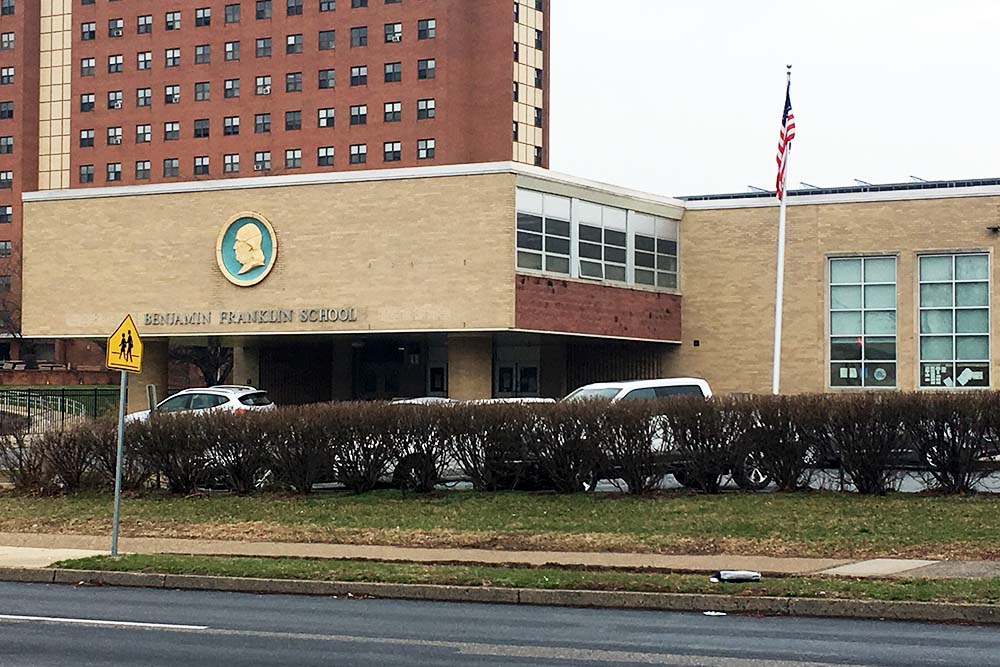
If hired by the Harrisburg school district, you just might land at the Benjamin Franklin School.

Have you always wanted to be a schoolteacher? Or maybe you’re considering it for the first time?

If so, the Harrisburg school district would like to talk to you.

School officials will hold an in-person recruitment event of potential educators on Thursday, beginning at 10 a.m., at the Lincoln Administration Building on State Street. The open house is meant to help fill faculty jobs, which begin next month, for grades K to 12 in all areas of study—from English and history to career services and special education.

“We wanted to do something out of the box and to expand opportunities for recruitment,” said Kirsten Keys, district spokesperson. “This event is a move to expand and to be innovative in our approach in recruiting highly qualified talent to teach in our district.”

The district needs to fill 27 to 40 spots vacated recently by retirees, young educators moving on or people who decided to change careers, Keys said. On-the-spot video-chat interviews will be available for those who have registered.

“Teachers [need to be] able to teach in a diverse population, be exposed to different types of challenges that you may not encounter in other settings, and have the ability to change the lives of their students,” said Curtis Tribue, the director of human resources.

Keys refers to working in an urban environment as a “calling” considering the challenges the children face, which include high poverty rates, parentless homes and no homes to go to at all. As of 2015, 77 percent of students’ families in the district live at or below the poverty line.

“There are differences when it comes to working in an urban setting versus a suburban or private or charter setting,” Keys said. “I would say it is something that links to that teacher passion—to come to an inner-city setting and teach children who come from diverse backgrounds, not only racially and ethnically but also socioeconomically.”

Minority and bilingual educators are especially encouraged to apply due to the diversity of Harrisburg’s student body.

African-American students make up 59 percent of student enrollment, and Hispanic students constitute 31 percent, with rapid growth. Nearly 13 percent of students are considered Limited English Proficient or English Language Learners. To help address these needs, the district has reached out to the University of Puerto Rico and to historically black colleges across the East Coast.

“It’s important for children, for students, to see teachers that look like them, that can relate to them, and care about them and their ability to learn and become successful outside of high school,” Keys said.

She added that the Harrisburg school district offers a completive salary, great benefits and the chance to impact a child.

“Our students are amazing,” she said. “Despite challenges some of the students face, our students are some of the most amazing students that you will find. They have high hopes, dreams, and aspirations. It’s a great place to work to impact the lives of students here.”

The Harrisburg school district’s Summer Educators’ Recruitment Event will take place Thursday, July 13, 10 a.m. to 2 p.m., at the Lincoln Administration Building, 1601 State St, Harrisburg. To register, contact the district’s Human Resources Department at 717-703-1499 or email [email protected].

Author: Yaasmeen Piper 

Continue Reading

Service Call: HBG Rotary members come for the networking, stay for the giving.

The more we give of ourselves, the more fulfilling our lives are.

Two Notre Dame sociologists refer to that as “The Generosity Paradox”—the fact that giving makes you feel better.

But you don’t need to tell that to members of the Rotary Club of Harrisburg.

“One of the greatest things about this place is you always leave with something,” said Rich Curl, CEO of the Harrisburg-area YMCA and proud Rotarian after the club’s weekly lunch meeting at the Hilton Harrisburg.

Curl wasn’t referring to a full belly or a business card—though he left with those, too.

He meant the good works of the club’s active members, who often share with fellow Rotarians what they’ve been up to over the past month.

“Research shows that people come for the networking, but they stay for the engagement and the service,” member Virginia Roth said.  “You come to realize that we are all beneficiaries of something greater than we could ever give.”

Una Martone, the club’s governor-elect, noted the large number of needs within the local and global communities.

“Rotary maximizes and leverages our individual capacity, giving us the power to make a huge difference in the world,” she said.

The organization’s century-old, grassroots approach is not specific to Harrisburg. According to Rotary International, more than 35,000 clubs operate at the local level to serve their communities. Members leverage relationships locally to eradicate disease, promote healthy and safe living conditions, and support education.  

What makes the Rotary Club of Harrisburg unique, however, is its focus. The largest recipient of the members’ time and philanthropy is the Harrisburg School District, Martone said.

Martone, who also is CEO of Leadership Harrisburg Area, chairs the Rotary’s committee for Youth Community Development Team, a group that spearheads a yearlong mentoring program for high school juniors and seniors.

“We help students identify the greatest community need and fundraise for that need,” she said.  

Martone’s work with youth is only one example in which Rotary’s mission engages others to serve the local community.  

The club also sets up a temporary vision clinic at Foose Elementary School, partnering with eye care professionals, who perform free screenings and provide glasses for children who need them. The program screened about 300 children this year, supplying almost two-thirds of them with eyeglasses.

Martone said the committee is currently working on developing a permanent screening location inside Hamilton Health Center.

“It’s all about the people,” said Andy Rebuck, the club’s vice president.  

Rebuck has been an active member of Rotary for 25 years, and he sees great value in the relationships he’s formed working alongside fellow members. Rebuck is involved in another service project to benefit the school district—the annual pancake breakfast held at John Harris campus over Homecoming weekend. He, along with other volunteers including fellow board member Joyce Libby, prepare and serve pancakes in the school’s cafeteria for upwards of 1,000 guests.  

To Libby, it’s the service work—not the meetings—that offer her the greatest benefits of membership.

“You have to roll up your sleeves and do the work,” she said. “When you do it next to somebody, you get to know them on a deeper level.”

Rotary members roll up their sleeves in the classroom, too. Each fall, Libby and other club members travel to the John Harris and SciTech campuses to recruit students for the “Four Way Speech Contest.” Students choose topics that pique their interest, form an argument, and evaluate it against Rotary’s four ethical questions, which focus on truth, fairness and value. Students compete for cash prizes as they advance through the competition’s three levels. Rotary committee members work directly with the teachers to personally coach and mentor the students along the way.

Committee member Joan Prescott said that witnessing the student’s growth is the greatest reward.

“They learn how to research a subject, open up their thoughts, and express how they feel,” she said. “I’m very proud of them and what they’ve done.”

Libby shared that the Harrisburg High senior who won wrote a thank-you letter to all those who supported her. In it, she credited the contest—as well as the combined coaching and support from the Rotary volunteers and her teachers—for helping her find the confidence to speak her mind effectively.

The district’s educators see the community involvement as a unique learning opportunity for the students.

“There was a neat camaraderie between the Rotary and the kids,” said Maureen Dunbar, instructional coach at Harrisburg High School.  

She described the relationship between the students and the Rotary volunteers as one of mutual respect. Dunbar also mentioned that the education was a two-way street.

“The professionals were able to see these kids putting in the work,” she said.

Dunbar added that the more the community gets inside the school, the better.

“The kids see that the community really cares, and they can see there are a lot of good things going on—and a lot of great kids,” she said.

Libby added that, every year, she looks forward to going into the classroom to support the teachers and the students.

“It fills me with pride to see all the students gain confidence and discover more opportunity can be available to them if they do the work,” she said, “And it’s uplifting to think that Rotary had some small part in that.”

Learn more about Rotary Club of Harrisburg by visiting www.hbgrotary.org.

Author: Jen Fertenbaugh

Continue Reading

Fool for the City: Common wisdom usually isn’t.

Illustration by Rich Hauck.

For the past few years, TheBurg has done an annual “April Fools” parody, poking fun at some of the more ridiculous aspects of life here in central PA.

We’ve taken shots at the mayor (repeatedly), the county commissioners, City Council and, just a few times, at our area’s website of record over there on the West Shore, among many other targets.

My apologies to fans of the “Fake News Digest,” but we’re taking a break this year from the mockery. Maybe it’s because “fake news” has jumped the shark (we were fake news before fake news was real). Or maybe it’s the toxic political climate. But I just don’t feel funny and refuse to put slices of bologna into my shoes (any old Steve Martin fans out there?).

The spirit of April Fools, however, isn’t completely lost. I thought this would be a good month to revisit some of the things that, in hindsight, seem a little foolish to me. Not that they weren’t serious concerns at one point. They were. However, I believe that time has shown them to be more “truthy” than true.

The Harrisburg Strong Plan is doomed to failure.

Yes, you can argue that the jury is still out on of the city’s financial recovery plan. However, Harrisburg hasn’t collapsed over the past four years. In fact, the budget is balanced, services are coming back and the city continues to redevelop. That said—the plan’s benefits were certainly oversold by its creators, requiring the city to make numerous adjustments along the way. And Mayor Eric Papenfuse has warned repeatedly that the rescue could still go south if the city isn’t allowed to retain its extra taxing authority. But, for all its faults, Harrisburg Strong has delivered on, maybe, 75 percent of its promise, which has turned out to be good enough to allow the city to get back on its feet after being essentially bankrupt.

Parking rates will kill downtown.

Is $3 for an hour of street parking ridiculous? Yes, it is. However, it has not led to the exodus of customers and businesses that many insisted was coming. Much of the credit goes to the excellent restaurants in downtown Harrisburg, which attract customers despite the cost of parking and the resulting press pile-on. And some credit goes to the administration, which, though powerless to mandate change, has worked around its weak position to find creative solutions to reduce the burden of high rates. In fact, my biggest parking bugaboo isn’t even the cost of street parking but of garage parking. High street rates were supposed to push motorists into cheaper, half-empty garages, but garage rates have increased so much that they’re now higher than street rates. This makes no sense. And that brings me to my greatest continuing concern—that operator SP+ seems out of touch with the reality on the ground in Harrisburg. Someone needs to tell those guys in Chicago to turn off the sum function on their spreadsheet app and try to understand that higher rates don’t automatically add up to more revenue.

Front Street redesign will lead to chaos.

Traffic backed up to Division Street. Gridlock on the side streets. Bicyclists getting tossed about like toothpicks. These were some of the common predictions after PennDOT reduced much of Front Street to two lanes and added a bike lane. None of that has come to pass. Except for a few minutes around the morning and evening rush, traffic usually flows freely and, with the addition of a shoulder, more safely. Traffic, in fact, flows so well that the greatest concern continues to be speeding drivers and their refusal to brake for pedestrians at crosswalks. But, all in all, the redesign of Front Street has been a huge step forward, making for a road that is far more attractive and better integrated with the city and its beautiful surroundings on the river.

The state is itching to take over the Harrisburg School District.

The Harrisburg School District continues to face considerable financial and academic challenges, as outlined recently in the district’s “Recovery Plan Update.” In fact, the district seems likely to miss its recovery goals again, especially on the flagging academic side. Back in 2013, the initial recovery plan carried the explicit threat of a state takeover of the district by the 2016-17 school year if goals weren’t met. Goals have not been met, yet no one seems concerned anymore that the state’s real goal was to turn Harrisburg into some kind of right-wing educational diorama.

Mayor Eric Papenfuse will be a stooge to his rich backers

Now that we’re back in campaign season, this talk has started again. Don’t believe it. Like him or not, Papenfuse has profound confidence in his own abilities, doesn’t suffer fools gladly, and, in my opinion, would sometimes be better off accepting outside counsel. Do you think that any donor thought it was a good idea for him to rumble with the Dauphin County Commissioners, the Regional Chamber or the Visitor’s Bureau? Of course not. Now that he’s been mayor for a term, Papenfuse is even less likely to be swayed by his contributors. So, if Papenfuse is re-elected, we should expect a mayor in all his positivity and pugnaciousness, his sureness and sourness—but maybe even more so.

Years ago, someone said to me, “The biggest problem I have with the press is that you guys write a story but then never follow up later.” I had to agree with him. News isn’t relevant only when there’s a problem or outrage. It’s also news, perhaps more important news, when a problem is solved or an issue clarified, even if that involves years of small, unsexy steps that don’t make for clickable headlines. But I guess that’s just the fool in me talking.
Lawrance Binda is editor-in-chief of TheBurg.

Continue Reading

Harrisburg Schools Update: Board, Teachers Union Address Disruptive Student Behavior

Harrisburg Education Association President Jody Barksdale addressed the school board at last night's meeting.

Harrisburg Education Association President Jody Barksdale addressed the school board at last night’s meeting.

When a student has an outburst during class time, a teacher cannot continue a lesson plan. The teacher drops the plan to address the disruptive student while students who want to learn must wait.

A pilot program in Rowland Academy middle school will address situations like this, school board member Judd Pittman said after the board unanimously approved to implement this “innovative solution” last night.

“This is generating a classroom space for students to de-escalate,” Pittman said. “They can go to that room, get a support team, maybe a mentor or school psychologist, and this allows them to de-escalate.”

The students in this temporary placement classroom would learn basic subjects such as math and language arts in addition to “character education” from one class period to several days, according to the meeting agenda.

“It’s a unique model that meets the needs of the students,” he said.

This $78,000 program, funded by a state Department of Education School Improvement Grant, will run through the end of the school year. If successful, the district will continue and expand the program, Pittman said.

By coincidence, unrelated to this agenda item, more than 15 blue-shirted members of the Harrisburg Education Association attended last night’s board meeting to say that the district needs to bring alternative education in-house.

About 15 members of the teachers union attended last night's school board meeting.

About 15 members of the teachers union attended last night’s school board meeting.

HEA President Jody Barksdale said an in-house alternative education program, like a program that closed eight years ago, would better meet students’ emotional and academic needs.

Barksdale said the in-house program showed better test scores compared to the current three alternative education programs. She also anecdotally shared the success of her previous students, now adults.

“It was the first time they experienced success,” she told the board. “They have jobs. They’re productive citizens of our community.”

The current alternative education programs, offered by entities outside of the district, place caps on the number of students, Barksdale said.

“If that’s what [students] need, why not give it to them,” she said. “We can do it in-house, with the staff we currently have.”

Pittman, chair of the academic, instruction and student services committee, said access to information teachers collect on disruptive student behavior would help the board members make better decisions.

“With this data, we could look at when and where incidents happen and get at the root cause,” he said.

Teachers brought Pittman student behavior data, which helped his committee create the pilot program at Rowland Academy. Pittman said accessing this aggregated data otherwise is difficult.

“You make the request and hope that it happens,” he said. “I want quarterly reports so we can make data-informed decisions. That’s the panacea.”

Board member Melvin Wilson said more information on disruptive student behaviors would help the board make “informed decisions that empower students.”

“We could look at the larger picture, not just small fires,” he said. “If we have that information, we can address the cause.”

Wilson, chair of the policy and procedure committee, said he did not know the procedure for board members to obtain this district-wide data and doubted that such data existed.

“I’m not so sure the district even has baseline data. Look at what happened with the expulsions,” he said, referencing the board’s recent votes addressing a procedural error in the expulsions of more than 400 students.

The board approved the expulsions of three students last night. Technically deemed an expulsion, the school board votes actually placed students into alternative education programs, said board Solicitor Samuel Cooper.

Richard Soto, a Democrat running for school board, lambasted the board for the recent string of expulsions, misunderstanding the board’s actions.

“This is very sad, very sad,” he told the board. “[Students] should have had another option, like Cougar Academy, the cyber school.” He added that the board put “kids on the streets.”

Students who violate the student code of conduct by actions, such as bringing a weapon to school, warrant expulsion, Cooper said. Rather than getting kicked out of school entirely, as the word “expulsion” implies, the district places students in alternative education programs.

“These kids are not on the street,” Cooper said.

The school board also held a moment of silence for those who passed away in a fire last week in Uptown Harrisburg. This moment of silence recognized student Savannah Dominick and a student’s child, Ashanti Hughes. Those who wish assist with funeral costs for Hughes can contribute to Major H. Winfield Funeral Home in Steelton.

Author: Danielle Roth

Continue Reading

School Recovery Update: Report Shows Progress, Substantial Challenges Remain


Benjamin Franklin Elementary School at 6th and Verbeke streets is a part of the Harrisburg School District.

Benjamin Franklin Elementary School at 6th and Verbeke streets is a part of the Harrisburg School District.

The Harrisburg School District is showing improvement financially and academically, but significant challenges remain, according to a report released last month.

The report, a mid-year update to the amended HSD Recovery Plan, ranked the district’s initiatives on a scale of complete, in progress and not completed. Of the 85 initiatives, 50 have been completed, 31 are in progress and four have not been completed.

“I was encouraged because I know how far we have come,” said School Board President Danielle Robinson. “We still have a lot of work to do, but I was encouraged to see the growth and the movement.”

Chief Recovery Officer Dr. Audrey Utley, with the assistance of PFM, a Philadelphia-based government and nonprofit consulting group, prepared the report using information from the district, financial reports and interviews with district staff.

Major gaps remain for the academic goals. If these goals are not met or have not shown advancement, the district risks having a state receiver appointed.

“If the District fails to meet these targets or show significant progress in each building toward the goal by the end of the Plan period, the CRO and the [State] Secretary of Education can take steps to appoint a Receiver effective for the 2018-19 school year,” according to the report.

The phrase “significant progress” saves the district from entirely having to meet academic targets, Robinson said. This phrase, added in the amended recovery plan in May 2016, means that the district will exit recovery next year “as long as there’s growth toward these numbers,” she said.

“We fought to make sure the language was in [the amended recovery plan],” Robinson said. “It’s always under review how can we can make this better.”

The recovery plan’s academic goals challenge the district to “eliminate the gap” or “close the gap by 50 percent” between the district’s testing, attendance and graduation metrics and state averages by June 2018, according to the report.

These targets mean big academic leaps for students and their teachers by June 2018, the end of the recovery plan period.

Take third grade PSSA exams as an example. Last school year, 19.4 percent of district third graders scored proficient or advanced in English and language arts (ELA) on this state test. That’s an improvement from last year’s score of 18.6 percent, but a far cry from the state average of 62 percent. The academic target goal expects 33 percent of district third graders to achieve proficient or advanced levels. That’s a 14.5 percentage-point jump.

For math PSSA scores, students need to make a similar jump of 12.7 percentage points. In other words, 23.1 percent of third graders need to score proficient or advanced in math.

Other goals require smaller jumps on state tests.

For example, Keystone exam scores for John Harris High School students need to jump 7.7 to 8.3 percentage points this year to meet half of the state average.

In general, the report shows steady academic progress, though the scores continue to be below state guidelines.

Other metrics are more encouraging.

District attendance for grades 9 to 12 has steadily increased from 79 percent in 2012-13 to 83 percent in 2014-15. This is just 3 percentage points away from next year’s academic target attendance rate of 86 percent.

John Harris High School’s graduation rate jumped from 42.7 percent in 2013-14 to 52.8 percent in 2014-15.

The report calls the growth in Keystone test literature scores at John Harris High School “promising.” In 2014-15, 23 percent of students scored proficient or advanced. Last year, the school saw nearly a 6 percentage-point increase. Harrisburg High School SciTech Campus exceeds the state averages for proficient or advanced scores in algebra and literature.

“I don’t think that the academic goals are not able to be reached,” Robinson said. “We just must become more focused.”

Pressing “front-burner” issues, such as union contract negotiations and the financial recovery, took priority over student academic achievement in previous years, Robinson said.

“It’s not just, you get into the district and these things are going to change right away,” she said. “Once we got stable financially, now we can say let’s work on our academics. Let’s change the perception of Harrisburg and the district.”

Financially, the report indicated similar mixed messages. The district has a “significant fund balance” of $29.2 million this year. However, the report notes a “concerning” annual structural shortfall of increased expenditures

“… the expenditures are slated to consistently outpace revenues in the coming years and several costly projects and contingencies could consume a substantial portion of the current fund balance,” the report said.

The report calls for the district to create a plan to maintain an 8 percent reserve fund balance (between $12 and 13 million) to ensure “sufficient working capital and provisions for contingencies” for the future.

“We have to go through and figure out what we can do to make sure we don’t have yearly shortfalls that are going to put us back into debt,” Robinson said. “That’s constantly under review.”

The district is hiring three major positions per the recovery plan: a human resources director, a chief financial officer and a professional grant writer.

Robinson said the district is vetting candidates for the human resources position. The district possibly will promote a candidate internally for the CFO position, she said.

The recovery plan outlines the need to hire a grant-writing professional to seek additional funding from competitive grant programs and non-traditional sources. Hiring this position and securing outside funding are two of the four items marked “not completed.” The grant-writing employee retired last year, Robinson said. So far, there’s “nothing solidified” with filling that position, she said.

In addition, the report outlined a need for a full-time English language learning coordinator position, which is currently filled by the director of the online school, Cougar Academy.

One of the hiring challenges is “making sure that the people who we bring in will actually stay,” Robinson said. “Harrisburg [School District] is still growing. You have to be able to grow with us,” she said.

The other incomplete administrative target is creating incentives for teachers to build careers within the district. This item, added with the May 2016 amended plan, suggests the district give teachers a small loan to help purchase homes in the district. Implementing a program has been pushed to next school year, according to the report.

Robinson said the board continues to focus on moving forward.

“We know that it’s not a sprint,” she said. “It’s a marathon.”

Read the full report here. 

Author: Danielle Roth

Continue Reading

School Voice: Karen Snider left a tremendous legacy, and big shoes to fill, at the Harrisburg Public Schools Foundation.

Karen Snider

A screen drops down in the cafeteria where 400 students gather before the school day starts at Downey Elementary School. While some children eat breakfast, a five-minute newscast featuring two young broadcasters appears on the screen.

“They do the pledge, talk about the weather and any important information coming up,” said Principal Travis Peck, explaining the morning routine. “Things like that.”

Peck also pointed out the ways the Harrisburg Public Schools Foundation, under the leadership of late Karen Snider, played a part in this routine.

The cafeteria’s speaker system? The foundation helped the school afford that, he said, plus the screen displaying the student journalists. The equipment used to record the broadcasts? The foundation helped the school purchase that as well.

This is part of the legacy left by Executive Director Karen Snider, who passed away unexpectedly on Jan. 12. Snider, 77, may be best known as secretary of the state Department of Public Welfare under Gov. Robert P. Casey, who appointed her in 1991. Others may know her from her leadership roles with organizations such as the Rotary Club of Harrisburg, United Way of the Capital Region and Girl Scouts in the Heart of PA.

“There are 24 hours in a day, and she would squeeze in 26,” said Dr. Sybil Knight-Burney, superintendent of the Harrisburg School District.

Knight-Burney met with Snider every other Thursday to coordinate programs with the foundation, she said.

“If it was something that would help students, she was always for it,” Knight-Burney said. “Her finger was in everything.”

The foundation provides enrichment programs and financial support to the entire district. Students participate in a writing contest, dual enrollment, science camps and health education programs, to name a few programs.

Snider did much more than required for the position, said foundation Chairman Morton Spector.

“I’d say the part-time job was 20 hours, and she put in 60 hours,” he said. “She was there nights and weekends.”

When the district wanted to bring “The Leader in Me” initiative to the Downey School, Snider and the foundation helped the school obtain a matching grant to start the process.

Now, the school is in its fourth year as a “Leader in Me” school, which applies principles from Franklin Covey’s book “7 Habits of Highly Effective People” in a school-wide and age-appropriate way.

“It’s about students finding their voice, finding their leadership styles and their intrinsic value,” Peck said. “They take leadership roles that inspire them to do better.”

First grade teacher Tracy Lechthaler, who has taught at Downey for 19 years, said the initiative helps her students find their voices. Her 26 students each apply for “leadership jobs” like “shoe sheriff” (in charge of helping peers tie their shoes) or “electrician” (turns on and off the lights).

“Giving them a leadership job, something they’re in charge of, gives them a sense of belonging,” she said. “It gives them a sense of, ‘Oh I can do this,’ and they love that.”

The foundation affected Lechthaler’s classroom in another way.

Her classroom has been sponsored as part of the foundation’s “adopt a classroom” since the program began.

“A lot of times, teachers, we buy our own stuff,” she said, while flipping through one of the hardcover books purchased with foundation funds. In one, a porcupine with a mullet of quills learned how to be responsible for his feelings after bully Biff Beaver said his quills look like toothpicks.

Spector said the board decided to honor Snider by adopting a classroom in her name. Board members individually contributed so at least one room per year will be adopted in her name, he said. Knight-Burney said her portrait will be displayed at the Camp Curtin mental health center already named after her.

“If I were in any other school district, [these programs] would just be a regular item on the budget,” she said. “But because we have some of the types of challenges that we have, it’s something that we know is a necessity.”

Stepped Forward

Much of Snider’s position of executive director dealt with fundraising, and she was known for her power to persuade.

Spector said her talent for fundraising shined in 2012. The district had a multi-million-dollar deficit, and the school board announced the district would have to cut music and sports programs.

Spector and Snider, who started as a foundation board member, attended that school board meeting.

“When the board looked at the financial condition and said they were going to have to cut the sports program as well as the band program, we looked at each other, and she stepped forward to the board,” Spector said.

Snider told the school board something along the lines of, “We’d like to make sure those programs continue and exist. We, the HPSF, would like to be able to help. We would like to attempt to raise the funds so you will have those programs,” said Spector.

“And that’s when we began to work,” he said. “That’s when her talent came forward. She had the connections, the person-to-person connections.”

She stepped up to become the executive director in 2012, amid the district’s financial distress and a transitional period for the foundation.

Foundation members started making calls to raise money. Money started coming in. A couple thousand dollars here, a six-figure corporate donation there. They raised more than $400,000, Spector said.

“She did an awful lot of that personally, one handedly, more or less,” he said. “I was able to make some calls, too, but she just outshined all the rest of us.”

Snider’s personal brand of persuasion left others feeling grateful to have been summoned.

Knight-Burney outlined how meetings with Snider went.

“She would say that she had some things that she wanted me to look over,” she said. Snider would push the most important item to the top of the list and delineate what would need to be done, she said.

“She would say you need to do this, this, this and this to make this happen,” Knight-Burney said, while Kirsten Keys, the district’s public relations coordinator, laughed in the background as if she also experienced this.

“But she would also tell you what she was going to do,” Knight-Burney said. “And most of the time she had already done it.”

Knight-Burney said working with her was like a call and response.

“If Karen called,” Keys said, and Knight-Burney finished the sentence, nodding, “You responded.”

Keys continued, “And, guess what, you were honored to respond. You were compelled to respond,” she said. “She had a way of bringing out your gifts, talents and abilities. Things that you had back in the recesses. You could bring them fourth and dust them off. And not only meet her request, but you could help others in the process.”

The foundation’s programs will continue.

Chris Baldrige, a board member with 30 years’ experience as an educator, stepped up at the January meeting to become the next executive director, Spector said.

“Because of his public-school exposure and because he is a person that most of us knew from the community, we are satisfied that he has the capability to do the job,” Spector said.

Knight-Burney also attended that late January meeting. She explained how the projects Snider was managing before her death would continue moving forward. She said she asked “Isn’t that what Karen would have wanted?”

“And everyone responded, ‘That’s right,’’ she said. “The board members are all on one accord. We have to continue because Karen would have wanted it that way.”

To learn more about the Harrisburg Public Schools Foundation, visit www.harrisburgschoolsfoundation.org

Author: Danielle Roth

Continue Reading

“Not Good Enough”: School Board Denies Application for Arts-based Charter School

The board voted to deny the Arts to the Core Charter School Tuesday night.

The Harrisburg School Board tonight rejected the application of an arts-based charter school, with school board members citing an incomplete application and thin grassroots support.

The 7-3 vote denied the Arts to the Core School a five-year charter to begin a kindergarten through 8th grade program in the former Bishop McDevitt High School. Board members raised concerns over curriculum and community involvement of the Lancaster-based school.

School Board President Danielle Robinson said the curriculum was “not good enough,” adding that the school did not incorporate recommendations made after a York school district rejected the charter.

“The adjudication outlined what needed to be fixed, and the issues weren’t resolved,” she said.

School Board Vice President Ellis Roy called the concept “terrific,” but still voted against the charter.

“You have got to do the legwork and present a complete document, then I’d vote in favor,” he said.

School board members Jim Thompson, Judd Pittman and Matthew Krupp voted in support of the school, which had hoped to enroll 300 students this September.

Richard Caplan, Arts to the Core’s CEO, said these are not “valid criticisms.” He said it’s difficult to create curriculum for an arts-centered approach because it requires teachers to incorporate the arts “on the fly,” he said.

“The A+ Schools,” a North Carolina charter system that would have served as the basis for this school, “succeed because they incorporate arts dynamically,” he said. “In truth, arts in the school works because it challenges the teacher.”

Caplan said he is prepared to continue trying to bring the school to Harrisburg. He said he and his legal counsel will either submit an amended application to address the board’s concerns or appeal to the state’s Charter Appeal Board.

More than 40 people attended tonight’s meeting, including Mayor Eric Papenfuse and councilmembers Westburn Majors and Jeffery Baltimore. The entire Arts to the Core board, many from Lancaster, also attended the meeting, said Caplan.

Before the vote, Papenfuse spoke in support of the charter school, saying that it would give young families an incentive to stay in the city and expand the tax base.

“This would be a means of attracting new people to the district,” he told the board. “We need options to attract young parents into the city. I’ve spoken to many of them.”

The board considered offering a three-year charter if the Arts to the Core school met 13 criteria by February 2018. These stipulations included measures for curriculum development and securing the building.

Bishop McDevitt High School. Large, long, brick building

The former building of Bishop McDevitt High School has sat vacant since 2012. The Arts to the Core Charter School proposed to renovate and use this building.

In this case, the school would use the 2017-18 school year to plan curriculum, which Superintendent Dr. Sybil Knight-Burney would have to approve. The school also would need to secure a lease agreement or sale of the Market Street building and complete all necessary renovations.

“The conditions, they were impossible,” Caplan said, adding that he could not secure the building without a charter.

These stipulations, including a requirement for fewer than 20 students per class, gave Pittman confidence in the charter school, though he called the application “ill-prepared” and questioned the Lancaster-based group’s commitment to Harrisburg.

“Our superintendent has the power to control the curriculum,” he said to the board. “All of that is in our control.”

Pittman said he would like to see the same tenacity and scrutiny applied to the district’s own curriculum, which offended Robinson, who has served on the board for five years.

“I’m proud of our teachers, our community and what we have accomplished in the past five years,” she said. “We have ways to go, but we are nowhere close to where we were before.”

For Robinson and Ausha Green, the additional conditions needed to implement the school led them to vote against the charter.

“We had other charters that did not make it through [the board’s vote]. Why do we have to walk them through?” Robinson said.

Green put it this way: “Come here correct or don’t come at all.”

The school’s community involvement also raised concerns for Robinson.

“[Caplan] has pandered to the Latino community without [English-language learners] curriculum,” she said.

Caplan said his school donated to two organizations, one including LOOP, in return for help petitioning. He denied pandering to Hispanic organizations.

“We have more than 500 kids signed up, and most of them were not Hispanic,” he said.

Board members also questioned the group’s commitment to Harrisburg.

“If this is so good, why not bring it home [to Lancaster]?” Robinson said.

Caplan said the school has the support of six or seven community groups including the Susquehanna Art Museum and the Harrisburg Opera.

For more information about the Arts to the Core Charter School, visit the Facebook page.

Author: Danielle Roth

Continue Reading

Up or Down? School Board to vote on new arts charter school at next meeting

The former building for Bishop McDevitt High School has sat vacant since 2012.

The former building for Bishop McDevitt High School has sat vacant since 2012.

The former home of Bishop McDevitt High School may become an arts-centered charter school, pending a vote by the Harrisburg school board.

On Feb. 21, the board is slated to decide whether to grant a charter to the newly formed Arts to the Core Charter School. The school incorporates music, dance, visual arts and theater into teaching core curriculum to kindergarten through eighth-grade students, said Richard Caplan, president of Arts to the Core.

“[The arts are] an attraction for kids going to school,” he said. “The arts cater to a lot of different learning pathways. Some kids learn better by physically doing things.”

If approved, Arts to the Core will open in September for the 2017-18 school year. More than 500 children from the Harrisburg School District have pre-enrolled. The school would accept 300 students from a lottery system to fill the first kindergarten through fourth grade classes, he said.

Students do not need to demonstrate artistic ability to attend the school.

“We essentially write off their talents if we don’t try to encourage them,” said Caplan, whose academic background is in the arts.

A Lancaster-based attorney, Caplan pursued music degrees before receiving his law degree from New York University. He said he “grew up in a family of educators” and has served for 10 years on public school boards in Lancaster County.

Caplan modeled the Arts to the Core school after the North Carolina Arts Council’s A+ charter school program. He said this approach is successful with inner-city children.

“The teachers find it much more exciting to teach because it’s more creative for them,” he said. “The parents love it because the kids want to go to school instead of being coerced to go to school.”

Jim Thompson, vice president of the school board, said he supports the Arts to the Core school and the arts-centered approach.

“I think it’s a good idea. I’ll ask them if they’ll let me come in and draw,” said Thompson, an architect. “To me, having an arts charter school as a feeder program to CASA makes a lot of sense.”

He said the community has reacted positively, most saying that it will be a good use of the iconic, 115,000-square-foot building at 2200 Market St. The building has sat vacant since 2012 and has been subject to vandalism since the private Catholic school relocated to Lower Paxton Township.

“I’m sensitive to community input,” he said, adding that he would not approve the charter just because it would put the property back into use.

Mayor Eric Papenfuse also supports the Arts to the Core school, saying that the school would encourage young families to stay in or move to Harrisburg.

“There’s probably no more important issue in terms of Harrisburg’s recovery,” Papenfuse said.

An increase in population, he said, is vital to re-energizing the city and boosting the tax base.

“We have seen growth among young professionals in various sectors,” he said. “A lot of times, young people will move to the city, enjoy city living and all that it has to offer, but, when it comes time for children to become school age, they have concerns.”

Students would attend the nonprofit school for free. The district would pick up the tab, at an estimated $1 million per 60 students. The school could apply for state and federal funds, as well. As a nonprofit, the school also could accept public donations.

Laws around charter schools restrict the school board from considering cost when voting on the proposal.

“Theoretically, [the district] should save that million dollars by not educating those children,” Caplan said.

Superintendent Dr. Sybil Knight-Burney, citing legal restrictions, declined to comment on the charter school.

Caplan brought the idea to the school board last November after a difficult search for urban school buildings in York, Lancaster and Chester counties led him to the former Bishop McDevitt building.

The building, built in 1930, needs renovations, including a new boiler, a security system and accessibility updates per the Americans with Disabilities Act, he said. This construction will take four to six months and cost more than $2 million, an expense Caplan said he will pay out of pocket.

Arts to the Core will complete the purchase of the school from the Harrisburg Catholic Diocese contingent on the charter’s approval from the school board, he said. If the board approves the charter, Caplan said he will move ahead with renovations and hiring staff. He said 12 people have expressed interest in heading the school.

For more information about the Arts to the Core Charter School, please visit the Facebook page.

Author: Danielle Roth

Continue Reading

“Missed in the Shuffle”: Harrisburg School Board reviews 100 letters from concerned teachers and students

12-19-boardSome students described their frustrations with working through packets of worksheets rather than following a teacher’s instructions. Some students penned their desire to develop leadership skills. Some wrote about needing to feel safe and appreciated.

More than 100 letters stuffed into four manila envelopes and a folder document these concerns from Harrisburg School District students and teachers. Last month, Harrisburg Education Association President Jody Barksdale delivered the letters to the school board.

At last night’s meeting, HEA Vice President Paul Kornfeld followed up on the delivery.

“There are other things going on in buildings that board members need to see,” he said.

School Board President Danielle Robinson said she will schedule a day off from her full-time information technology contractor position with the state so she can tour the schools with HEA to learn more about the concerns expressed in the letters.

“I read each and every one,” Robinson said.

She wrote a synopsis to give to the board, and board Vice President James R. Thompson received the letters to review.

“Even if things take some time, we are working on it,” Robinson said.

Students want structure, boundaries and discipline, Robinson said, referencing the letters, in addition to concerns about safety, teaching techniques and learning leadership skills.

Kornfeld, a life skills teacher at John Harris High School, said students need more mental health support. The district does not offer the stability and structure needed for students who come from unstable homes, he said.

“These are the kids missed in the shuffle,” he said. “I think students need an avenue to communicate.”

Teachers frequently leave the district, causing students to lose a sense of security, he said.

Board members took a step toward increasing teacher retention last night, though the district continues to search for a full-time human resources director.

Robinson said the board will review employee resignations in executive session. This decision comes after the advocacy of school board member Judd Pittman, who suggested the idea of exit interviews tonight and in past meetings.

“It’s hard to understand what we are doing as a board [without this information],” he said. “It’s like shots in the dark.”

Pittman said he wants to know what caused teachers to leave, but also why the teachers stayed for so long. This information would inform teacher development and support, he said.

Last night, the board approved the resignation of a teacher, an aide and a secretary. More than 50 employees have resigned this school year, according to past meeting agendas.

“An employee evaluation system should be in place,” said Ellis R. Roy, Jr., the chair of the board’s policy and procedure committee.

Author: Danielle Roth

Continue Reading