Tag Archives: Harrisburg School District

June News Digest

Broad Street Market brick building

Money Allocated to Broad Street Market

Harrisburg has allotted additional money towards the reconstruction of the Broad Street Market.

City Council last month approved funding about $3.2 million in change orders for the market, which officials said brought the total project cost from $20.8 million to $23.7 million.

Most of the change orders came from the collapse of one of the brick building’s walls during construction and the related foundation and shoring work to stabilize the structure, explained Project Manager Debbie Reihart.

To cover the costs, Harrisburg pulled money from its Community Development Block Grant (CDBG) fund and anticipates around $3 million in additional insurance reimbursements.

During public comment, several residents expressed concern about using CDBG funds that could go to nonprofit organizations and public infrastructure projects. However, council member Lamont Jones said that the city needs to keep the rebuild project moving and that council is actively trying to work with the mayor.

“We want to make sure that these works get done in our city, so we have to find some type of common ground,” Jones said. “Me personally, I don’t agree with the $23.7 million spend on this one brick building. However, we are in the midst of this, and we cannot stop this project at this moment because it will cost us more and more and more money.”

Council also approved three grant application submissions for park and roadwork projects.

The largest ask is to the U.S. Department of Transportation for $4.3 million to improve safety on Division Street, from N. 2nd to N. 7th Street. The project would aim to incorporate traffic calming features, crosswalks, traffic signal upgrades, sidewalk and ADA upgrades and bike lanes.

The Division Street project is still in the early stages and has yet to go through the design phase, according to City Engineer Joel Seiders.

The city will also submit a grant request to the PA Department of Community and Economic Development (DCED) for $250,000 to support the Capital Area Greenbelt Association’s relocation of the Greenbelt in South Harrisburg. The money would support lighting and safety measures.

Finally, the city will request $250,000 from DCED for redesign and upgrades at Vernon Street Park in South Allison Hill.

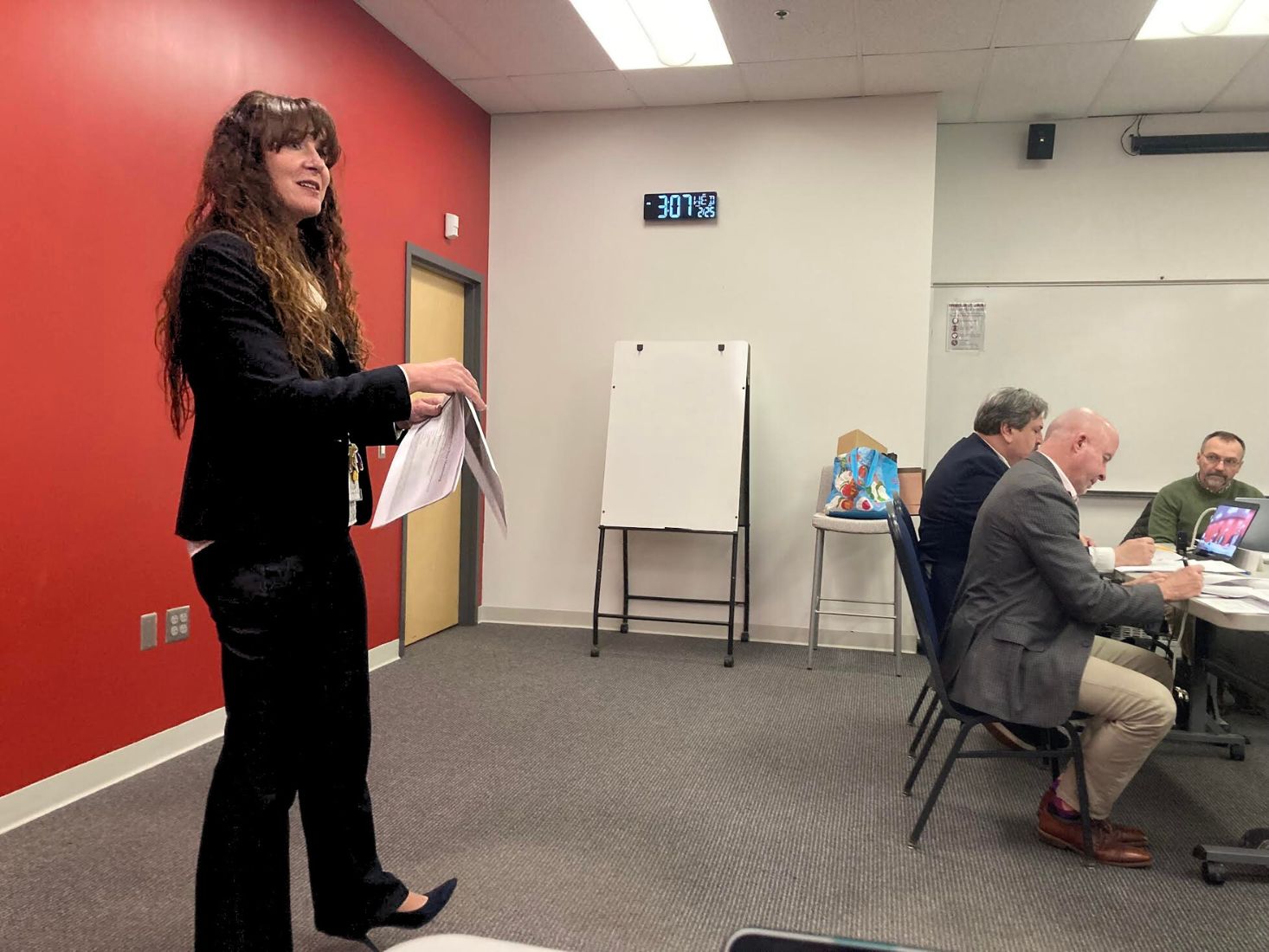
Chief Financial Officer Marcia Stokes

School District Proposes Tax Hike

The Harrisburg School District is proposing a property tax increase for the 2026-27 school year.

Last month, Chief Financial Officer Marcia Stokes presented an early draft of the district’s expected budget for the next academic year in the estimated amount of $227.7 million.

Stokes said that the district’s budget priorities include more support for special education and autistic support program instruction, math intervention, school clubs and tutoring programs.

Stokes has recommended a 3% property tax increase. The district would generate roughly $37.7 million in property tax revenue with such an increase, roughly on par with the $37 million it generated in 2025-26, per Stokes’ presentation.

“I don’t want to overtax, but I also want to make sure the board has solid financial footing,” Stokes said, noting the district’s assessed property values have been declining.

With a 3% hike, Stokes said that those with homes assessed around $54,000 (the median assessment in Harrisburg) would see an increase of about $31 on their property tax bills. For $100,000 assessed homes, owners would see an increase of around $73.

“Looking at whether we absolutely need it today might not be the question to ask,” Stokes said. “Do we need it five years out? Do we need it three years out? What is the cumulative impact of not doing it today?”

In June, the district will finalize the budget and the tax rate before voting on the package by the end of the month.

Roma Benjamin

High School Principal Hired

Harrisburg’s main high school has a new, but familiar, principal.

School board members voted unanimously to hire John Harris’ acting principal, Roma Benjamin, to fill the role permanently.

A longtime school district employee, Benjamin was brought on temporarily to fill the post in December. Following a string of former John Harris principals who had short-lived stints at the school, the district began a national search for a principal who would be “committed” long term and could help improve student performance.

“You are the person for that job, and we support you. We’re behind you, and we appreciate you,” board President Roslyn Copeland told Benjamin after the vote.

Benjamin has more than 20 years of administrative experience and holds a doctorate in education leadership from Nova Southeastern University.

“I’m just so appreciative to be back with the Harrisburg school district,” Benjamin said.

The board also voted to approve $6.8 million worth of demolition contracts for William Penn High School, the 100-year-old, long-vacant building near Italian Lake.

The cost includes a $6.2 million contract with the Gordian Group to raze the structure, plus contracts to remove asbestos prior to demolition ($257,000), to remove asbestos discovered during demolition ($200,000), and to conduct on-site airborne asbestos testing ($100,000).

The project also spends roughly $25,000 for compaction testing—to ensure that the site of the building can be built on later, if needed.

The demolition, proposed to begin this summer, would take an estimated six to eight months to complete.

“We will be providing weekly updates on the progress of the demo, as well as certainly any asbestos that we find, or any type of issues that we find during that project,” Chief Operations Administrator John Reedy said.
Home Sales Up, Prices Steady

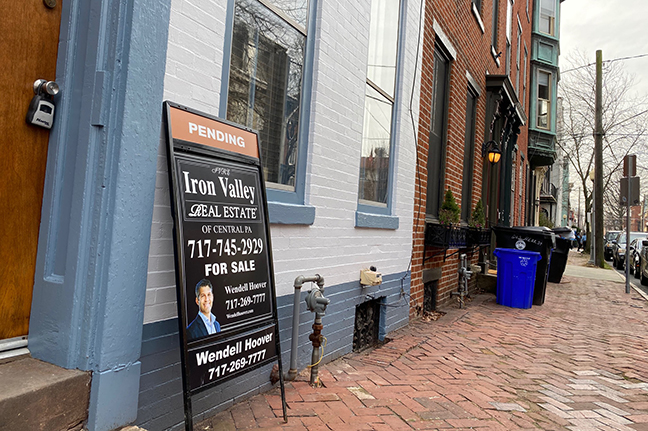
Harrisburg-area home sales inched higher in April, according to the most recent report on previously owned houses.

For the three-county area, 525 houses sold compared to 501 in April 2025, as the median sales price remained nearly unchanged at $290,000, according to data from the Greater Harrisburg Association of Realtors (GHAR).

In Dauphin County, 233 houses sold in April, a drop from 253 in the year-ago period, while the median sales price increased to $279,900 from $264,261, GHAR said.

Cumberland County had 251 home sales, up from 205 the prior April, as the median sales price rose to $319,000 from $315,000, GHAR stated.

In Perry County, 38 houses sold versus 34 in April 2025, while the median sales price dropped to $271,562 from $292,450, according to GHAR.

The pace of home sales slowed, as “average days on market” rose to 37 days in April from 33 days in the year-ago period, GHAR said.
Harrisburg University

So Noted

Chad Carroll has been promoted to president of F&M Trust, now serving as both president and chief operating officer. In this role, he will head the administration of the community bank while continuing to oversee day-to-day operations, according to the Chambersburg-based financial institution.

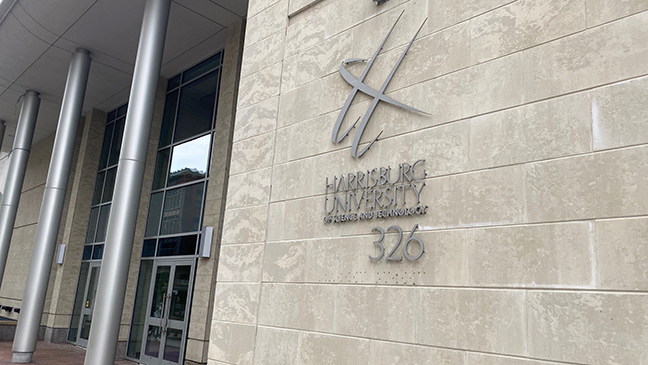
Christopher Reber has been named the new president of Harrisburg University.  Reber, formerly the president of Hudson County Community College in Jersey City, N.J., replaces David Schankweiler, who served on an interim basis since November 2024. Reber brings more than 40 years of experience in higher education, according to HU.

Dayana Diaz-Davalos, a Harrisburg Sci-Tech High student, last month was named the 2026 LaGrone Scholar, eligible for $16,000 in college scholarship funds. Named for Oliver LaGrone, the scholarship is the largest annual award available to Harrisburg School District students.

Harrisburg has reopened the City Island arcade for the summer, a small space for games that has been closed since 2019. The arcade will be open most days, 3 to 9 p.m., with possibly longer hours when the Harrisburg Senators have home games.

Harrisburg Area YMCA has a new location: the former Fit on Market space in downtown Harrisburg. The 3,420-square-foot boutique fitness center opened in 2020 at 312 Market St. and was operated by Harristown Enterprises, the owner of Strawberry Square, until turning it over to the Y in April.

Jennifer Doyle, president and CEO of TFEC, last month was named president of the Estate Planning Council of Central Pennsylvania. In the role, she will lead the council’s board of directors in its work to support education, collaboration and professional connection among estate and financial planning professionals throughout the region.

Pride of the Susquehanna
riverboat launched last month into the Susquehanna River following a two-year hiatus. The Harrisburg Area Riverboat Society, which operates the stern-driven paddlewheel riverboat, expects a full season of activities. For information and tickets, visit their website.

Ross Willard, a local biking activist and advocate, passed away last month. Willard was the founder and force behind Recycle Bicycle, a Harrisburg-based nonprofit that promotes bicycle use, safety and repair.

Ryan Jones was hired last month as principal of Camp Curtin Academy. Jones, formerly the principal at Marshall Math and Science Academy, will begin in the role July 1 with a salary of $131,648. He replaces Darnell Montgomery, who recently was tapped to serve as assistant principal at John Harris High School.

Slice, a new bar and restaurant, is expected to open later this month in the former Crawdaddy’s space at 1500 N. 6th St. in Harrisburg. Jameson Christopher and Sachiko Baez, owners of the nearby Coda Rouge restaurant, will operate the “elevated sports bar” for lunch and dinner hours.

TheBurg captured a total of 21 awards in the annual “Advertising Contest” sponsored by the Pennsylvania NewsMedia Association Foundation. The honors include the prestigious “Sweepstakes” award for best overall category performance, which TheBurg has won for four straight years.

Tri County Housing last month cut the ribbon on five new affordable townhomes on the 2100-block of N. 4th Street in Harrisburg. The townhomes, each with three bedrooms and 1½ bathrooms, were built on vacant lots acquired from the Harrisburg Redevelopment Authority.
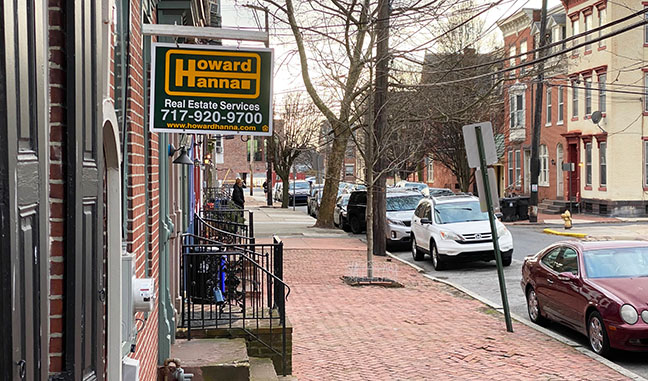
Changing Hands

Bellevue Rd., 1958: JTA Consulting Group LLC to N. Brown, $175,000

Berryhill St., 2320: T. Jones to M. Padua, $135,000

Boas St., 233: DKH Homes LLC to A. Miles & J. Mortimer, $295,000

Boas St., 1610: TKO Rental Properties LLC to D. & R. Khan, $222,100

Boas St., 1803: W. Folk to Top Cash Paid LLC, $56,000

Boas St., 1816: Harrisburg Properties LLC to 1333 Multiservices LLC, $115,000

Camp St., 645: LHV Properties II LLC to Breneman Properties LLC, $83,500

Derry St., 1212: J. Alducin to A. Tiberio, $175,000

Derry St., 1252: 1252 Derry PA LLC to J&A One Realty LLC, $200,900

Derry St., 1254: 1252 Derry PA LLC to J&A One Realty LLC, $200,900

Derry St., 1312: 1408 Vernon PA LLC to Dirah Residence LLC, $980,000

Derry St., 2026: Good Management LLC to Noraziza LLC, $120,000

Derry St., 2040: S. Laroc to M. King, $190,000

Derry St., 2444: K. Mooney to E. Ayala, $125,000

Derry St., 2514: Portal Enterprises Inc. to Alvarez Investment Properties LLC, $75,000

Dunkle St., 631: A. Eubanks to Top Cash Paid LLC, $80,000

Graham St., 514: B. Clark to M. Clark, $96,000

Grand St., 926: M. & D. Soisson to A. Dalantinow, $149,000

Green St., 2119: C. Acevedo to S. & M. Moody, $176,000

Green St., 2129: Leachman Properties LLC to Calcor Holdings LLC, $171,000

Hamilton St., 448: JMR Ventures LLC to Calcor Holdings LLC, $145,000

Herr St., 116: Sassafras Court Partners LP to Helios Realty Company, $50,000

Herr St., 1412: J. Gary Neff City Limits Realty to Breneman Properties LLC, $62,000

Hoerner St., 137: Bridger Investments LLC to Pink Dahlia LLC, $148,000

Holly St., 1815: B. Nevid to G. Amador, $142,000

Kensington St., 2130: M. Diggs to S. & R. Corroto, $135,000

Kensington St., 2346: E. Hernandez to L. Stewart, $120,000

Lewis St., 318: NJR Group LLC to Two Three Two Investments LLC, $110,000

Lewis St., 421: BP Real Estate Investment Group LLC to B. Fowler, $241,000

Logan St., 2111: ATW Property LLC to Halden Horizons Group LLC, $50,000

Logan St., 2230: DL Keystone Solutions LLC to Capital Key Properties LLC, $58,000

Luce St., 2309: T. Renda to PRD Property Group LLC, $130,000

Maclay St., 219: Good Management LLC to Noraziza LLC, $175,000

Market St., 1641: Avila Estate Investment LLC to A. & A. Burke, $150,000

Market St., 1913: Chad Gallagher Slatehouse Group LLC to Widespread Properties LLC, $245,000

Nectarine St., 314: Core 4 Investing LLC to JRHeller Com LLC, $60,000

North St., 228: S. Salaam to J. Zilinski, $329,900

N. 2nd St., 316: Wali Rentals LLC to Mindes Investments LLC, $500,000

N. 2nd St., 2243: Culcay Remodeling Guagua LLC to 2243N2ndSt LLC, $330,000

N. 2nd St., 2245: Culcay Remodeling Guagua LLC to 2243N2ndSt LLC, $330,000

N. 2nd St., 2439: Integrity First Home Buyers Inc. to J. Fry, $276,000

N. 2nd St., 2926: M. & S. Bennington to S. & A. Anselmo, $515,000

N. 3rd St., 1717: Segio Mannino LLC to S. Willis, $255,000

N. 4th St., 1841: R. Rammouni & J. Hamad to B. Esh, $132,000

N. 4th St., 3227: T. Barnes to D. Malesich, $144,000

N. 5th St., 2030: D. Glick to J. Stoltzfus, $170,000

N. 5th St., 3218: P. Diana to DA Investments LLC, $55,000

N. 6th St., 2249: H. & M. Williams to Nulife Equity Partners LLC, $75,000

N. 6th St., 3117: M. Walsh to J. Hill, $135,533

N. 6th St., 3201: R. Rammouni to Wylie & Wylie Enterprises LLC, $110,000

N. 15th St., 1120: L. Soza to A. Brothers, $165,000

N. 17th St., 39: L. Fraser to 2020 Real Estate Venture LLC, $75,000

N. 19th St., 35: V. Rivas to Estrella Realty LLC, $78,000

N. Front St., 25: 25 N Front St LLC to CJD Group LLC, $65,035 (tax sale)

Peffer St., 325: Core 4 Investing LLC to JRHeller Com LLC, $93,000

Penn St., 1909: J. Leonard to Z&E Holdings LLC, $120,000

Radnor St., 618: D. Glick to J. & S. Esh, $155,000

Regina St., 1617: A. Morocho to Y. Ramos & R. Perez, $75,000

Rose St., 927: R. Myers to S. Labrecque & K. Traynor, $147,000

Rudy Rd., 1833: Andes Home Solutions LLC to N. Zabala, $173,000

Rumson Dr., 335: T. & J. Hoy to Sunnyside RE Enterprise LLC, $141,500

Rumson Dr., 2959: W. & S. Stonesifer to E. Jimenez & Y. Rosario, $168,000

Schuykill St., 618: D&F Realty to O. Perez, $89,000

Seneca St., 542: Integrity First Home Buyers LLC to S. Williams, $170,000

Seneca St., 618: JRHeller Com LLC to Cashflow Cartel LLC, $105,000

S. 13th St., 434: H. Hernandez to Jhon Leo Home Renovations LLC, $106,000

S. 15th St., 441: JRHeller Com LLC to Cashflow Cartel LLC, $85,000

S. 17th St., 450: L. Lam to VisionLoop Realty LLC, $100,000

S. 19th St., 523: P and F Estate Investment LLC to HEV Properties Group LLC, $80,000

S. 20th St., 546: C. Tran to VisionLoop Technology LLC, $120,000

S. Cameron St., 135: BB Management LLC to Yasmaz LLC, $156,000

S. Cameron St., 1409: New Vision Management LLC to Noraziza LLC, $100,000

S. Cameron St., 1517 & 1540: New Vision Management LLC to Noraziza LLC, $350,000

S. Front St., 329: T. Dilldine to N. Gutierrez, $230,000

State St., 1500: Pennsylvania Housing Finance Agency to J. Gill, $150,000

State St., 1708: A. Peachy to Pink Dahlia LLC, $218,000

Summit St., 21: C. Hines to Breneman Properties LLC, $70,000

Susquehanna St., 1212: J. Tanzer to G. Sabino, $180,000

Swatara St., 2134: B. LeMelle to M. Echols, $154,900

Swatara St., 2408: N. Cobos to B. Vasquez, $240,000

Walnut St., 1246: B. Balkcom to D. Zook, $108,000

Wiconisco St., 626: M. Morgan to Val CC Properties LLC, $149,500

Wyatt Rd., 303: F. Mansfield to K. Weldeghebrial, $135,000

Harrisburg property sales, April 2026, greater than $50,000. Source: Dauphin County. Data is assumed to be accurate.

If you like what we do, please support our work. Become a Friend of TheBurg!   

Continue Reading

Harrisburg School Board pushes forward proposed budget, high school entrepreneurship program

Kelly Mosby-Fowlkes, chief academic officer

Kelly Mosby-Fowlkes, chief academic officer

The Harrisburg School Board advanced its 2026-2027 budget Tuesday night, with the intent to adopt a final version next month.

Members voted 8-1 to approve a $227.7 million proposed budget, which will be available for public inspection on the district’s website for 30 days before its final adoption by June 30. The proposal is based on numbers crunched by the district’s Chief Financial Officer Marcia Stokes.

Stokes emphasized that she is still adjusting numbers in the projected budget in real time as various enrollment numbers and district contracts are finalized.

“My job is to make sure I keep stuff as up to the minute as possible,” she said.

The proposed budget currently includes a 3% property tax hike, which it is possible the district could adjust next month as it is still waiting on a tax hike recommendation from Public Financial Management (PFM), an outside financial advisory firm. PFM is expected to have numbers for the district by June 9.

Board members have speculated that they expect PFM’s recommendation on the tax hike to be higher.

“Nobody’s numbers are wrong. The issues are whether the assumptions in either plan are most reasonable for the district,” explained district solicitor Jeffrey Sultanik, “I would venture to say that Dr. Stokes’ numbers are based upon actual numbers that she sees live on a regular basis. PFM’s is based upon the monitoring plan, which was admittedly quite restrictive.”

Brian Carter was the lone no vote on the budget’s preliminary approval.

Board members also voted unanimously to launch a new entrepreneurial studies program at John Harris High School campus. The program will be the beginning of a three-year Career Technical Education curriculum. It will operate alongside an existing School of Business and Industry program offered at the high school.

Kelly Mosby-Fowlkes, the district’s chief academic officer, said that, over the next few years, the district will aim to add additional concentrations like technology, cybersecurity, EMT and trades to the CTE program.

“We plan to make this pretty big and offer our students some, some really neat opportunities that a lot of them don’t have now,” she said.

Ryan Jones

Ryan Jones, Camp Curtin’s new principal

Ryan Jones, who was appointed to be the new principal at Camp Curtin last week, also spoke at the meeting, expressing excitement about working at the school because of its committed staff members.

“That staff, that building, that community, it’s got heart and I look forward to leading it,” he said. The official comes to the post after years leading the Marshall Math and Science Academy, another district middle school.

Camp Curtin will operate as the district’s flagship middle school campus as part of an ongoing consolidation plan.

Earlier in the meeting during public comment, Emily Stine, school psychologist, voiced her concerns that the consolidation had caused an increase of conflict at the campus. 

During the 2023-24 school year, the year prior to consolidation, there were 169 incidents of quarreling or shoving at the building, Stine said. 

This year that number was up to 417. 

“That is more than double. This is not a small increase,” Stine said. “This is a fundamental shift in the daily reality of our building.” 

She said that the district previously responded to concerns about overcrowding, school climate and student behavior at Camp Curtin by adding three more administrators to the building and increasing the presence of security.

“Those efforts are recognized, however, the core concerns raised in October still have not changed,” she said.

Harrisburg School Board

Harrisburg School Board

If you like what we do, please support our work. Become a Friend of TheBurg!

Continue Reading

Harrisburg School Board appoints Camp Curtin principal, reviews budget draft

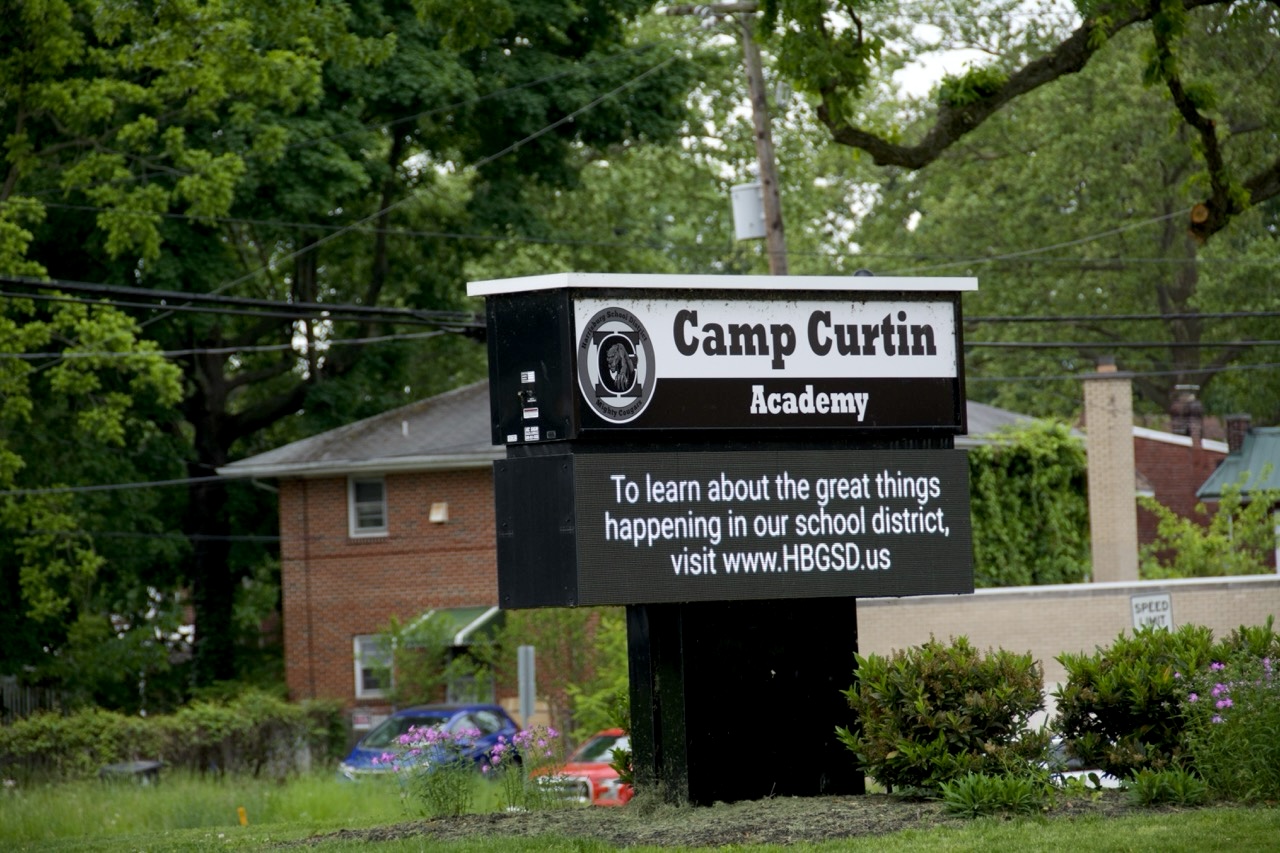
Camp Curtin Middle School sign

The Harrisburg School District has a hired a new principal for its flagship middle school campus.

Ryan Jones, formerly the principal at Marshall Math and Science Academy, will lead Camp Curtin next school year, following a 7-1 vote to approve his hire at a school board meeting Tuesday night.

“We have to have strong leaders to lead our children, and I think he’s done a great job at Marshall Math and Science,” said board president Rosyln Copeland.

Jones will begin his role effective July 1 with a salary of $131,648. He replaces Darnell Montgomery, Camp Curtin’s principal since 2023, who was tapped to serve as assistant principal at John Harris last month under new principal Roma Benjamin.

Chief Financial Officer Marcia Stokes

At the meeting, Chief Financial Officer Marcia Stokes presented an early draft of the district’s expected budget for the 2026-2027 school year in the amount of $227.7 million—not a final number as the draft uses estimates.

Stokes said that the district’s budget priorities include more support for special education and autistic support program instruction, math intervention, school clubs and tutoring programs.

The board will vote to approve the budget at a meeting later this month. The proposed budget will then be subject to a public comment period before it is ultimately adopted in June.

Stokes has recommended a 3% property tax increase this year. The district would generate roughly $37.7 million in property tax revenue with such an increase, roughly on par with the $37 million it generated in 2025-2026, per Stokes’ presentation.

“I don’t want to overtax, but I also want to make sure the board has solid financial footing,” Stokes said, noting the district’s assessed property values have been declining.

With a 3% hike, Stokes said that those with homes assessed around $54,000 (the median assessment in Harrisburg) would see an increase of approximately $31 on their property tax bills. For $100,000 assessed homes, owners would see an increase of about $73.

“Looking at whether we absolutely need it today might not be the question to ask,” Stokes said. “Do we need it five years out? Do we need it three years out? What is the cumulative impact of not doing it today?”

Harrisburg School Board hears budget presentation.

Board Vice President Autumn Anderson noted that raising local property taxes “crunches” the city’s limited tax pool, as 52% of properties in the city are tax-exempt. Just 48% of the city’s property owners pay property taxes, largely due to the massive impact of non-taxable state and nonprofit property holdings.

Over the last 10 years, the district has raised property taxes five times.

“As a school district, when we’re deciding whether or not to raise taxes, it’s difficult because we need to have a consistent source of revenue, which could be local taxes, but in doing that, we’re also putting more of a tax burden on our local residents,” Anderson said.

Board member Brian Carter joined the board in 2017, a year the district declined to raise taxes to not burden residents.

“We had accumulated a $20 million surplus, so we thought that we were a good standing where we didn’t have to raise taxes,” Carter told his fellow board members. “But here in 2018-2019, we were in the burden of possibly filing for bankruptcy.”

The district entered state receivership in June 2019. It exited state control last year, becoming the first district in the state to ever do so.

Stokes said that, if the district wants to increase student achievement and attendance, it must account for programs to do so in its budget.

“What do we need in place to be able to actually meet those goals?” she said.

Copeland noted that the district’s students are underfunded, and it affects their learning and their education.

More than two-thirds of the district’s budget (67%) typically comes from the state of Pennsylvania, as a result of Harrisburg’s high volume of tax-exempt government property and its high student poverty rates. While the state’s budget is officially due by June 30, it has been late in recent years. Last year, the state passed its budget in November.

The remaining third of the district’s money comes from local (27%) and federal (6%) sources.

Board member Danielle Robinson was absent from the meeting.

If you like what we do, please support our work. Become a Friend of TheBurg!

Continue Reading

Harrisburg School District considers $6.5 million quote to demolish William Penn

Chief Operations Officer John Reedy

The Harrisburg school district could end up spending around $6.5 million to demolish William Penn, according to a Tuesday night presentation by a district official.

Chief Operations Administrator John Reedy told school board members that the district has received a $6.2 million bid from the Gordian Group to raze the building, plus quotes for the removal of asbestos discovered during the demo process ($200,000) and on-site airborne asbestos testing during demolition ($100,000).

“We want to ensure that the air around the building is safe for the middle schoolers,” said Reedy, referencing the neighboring Camp Curtin school.

The demolition of the 100-year-old building, pitched to begin this summer, would take an estimated six to eight months to complete.

While some asbestos removal was completed in 2023, after a fire collapsed a roof over part of the building, this removal was based on a 1997 asbestos survey that proved incomplete. Reedy estimated about $1.1 million had been used for this prior removal that they had assumed “covered all the asbestos.”

Reedy said that an asbestos audit conducted at William Penn last week revealed that the building’s windows are glazed with asbestos. There is also asbestos on a portion of the roof, he said, and asbestos tile hidden under a layer of regular tile in a portion of the 15-year vacant building.

Another quote is in the works for later this month on asbestos removal services needed prior to demolition, Reedy said.

School district administrators

Also included in the price of demolition is the preservation of about 20 facades from the building, including carved words and gargoyle statutes. They would be preserved for future projects, said Reedy, to commemorate William Penn. At least 300 bricks from the building will be preserved for members of the community, he added.

The price also includes testing to confirm that the soil at the filled demolition site would be supportive enough to put another building where William Penn stood, if ever needed.

Proposed contractors on the project include Lobar Associates (project manager), Gundy Excavating (demolition contractor), the Baxter Environmental Group (asbestos removal contractor) and Dirty Dog Hauling (debris removal).

Board members are expected to vote later this month on whether to accept the demolition bid.

The Harrisburg School Board

Proposed summer upgrades for Lincoln Elementary, located in Allison Hill, will also be up for a vote at the school board’s next meeting.

The administration has proposed using $1.8 million from the capital reserve fund to paint the interior of the building and install new stair treads, LED lights, ceiling tiles, bathroom partitions and a new gym floor.

Board members unanimously approved a comprehensive academic plan Tuesday, as is required every three years by the state’s education department.

Presented by administrators during the meeting, the plan set goals for Harrisburg, including getting math proficiency levels for grades 3 to 8 up to 16% and English language arts proficiency levels up to 26% over the next three years. It also set a goal of increasing student attendance across the district from 49% to 52% by 2029.

Board President Roslyn Copeland indicated that, moving forward, the board wants school board members attending in-person, rather than online. Board members Jamie Johnsen, Danielle Robinson and Ellis Roy joined Tuesday’s meeting virtually.

Board member Terricia Radcliff was absent from the meeting.

School Board President Roslyn Copeland

If you like what we do, please support our work. Become a Friend of TheBurg!

Continue Reading

Planned Harrisburg middle school closures prompt Camp Curtin consolidation concerns from community

District Solicitor Jeffrey Sultanik

The Harrisburg School District held a public hearing Tuesday to solicit input about the formal closure of two middle schools.

Later this year, the district will formally vote on whether to close Rowland Academy and Marshall Academy, both of which it began phasing out a few years ago. (Marshall Academy is not to be confused with Marshall Math and Science Academy, a separate school that remains open.)

The closures are part of a comprehensive district restructure that began in 2023 under then-superintendent Eric Turman.

Designed to conserve resources, the plan was rolled out with the goal of recreating neighborhood schools at the elementary level, balancing student populations between school buildings, and simplifying its list of facility improvements.

The plan was approved by Pennsylvania’s Department of Education and the district’s former receiver in February 2024.

While the district is still following Turman’s plan, it has since gained new leadership. Superintendent Benjamin Henry joined the district in November 2024 and the school board gained back its voting power when the district exited state receivership in June 2025.

On Tuesday, board leaders noted that while the plans to close Rowland and Marshall are well underway, they had never approved it themselves.

“At the time, we weren’t in position to vote as a board,” said board president Roslyn Copeland. “I had a lot of concerns with the reconfiguration.”

In the plan, Camp Curtin (6-8) was tapped to be the “flagship” middle school for the district, to be flanked by two additional options: Marshall Math and Science Academy (6-8) and the blended-learning/hybrid Cougar Academy (K-12).

Several public commenters Tuesday expressed concern about putting most of the district’s middle schoolers into just one building. According to John Reedy, the district’s chief operations administrator, the capacity of Camp Curtin is 900 students; it estimates 740 are now enrolled.

Public commenter and Harrisburg City Council member Jocelyn Rawls worried Camp Curtin was becoming a school for all students who failed to get into application-based STEM magnets. She suggested that the school needed to develop specialty programing such as public health, communications or theater.

“Those students should be given a purpose to come to school every day, instead of [being] noted as ‘failure to thrive,’” she said.

Rawls, who has two children in Harrisburg schools, came to the public hearing despite a conflicting city council meeting because she felt it was important for her to attend.

Harrisburg City Council member Jocelyn Rawls addresses school board members during public comment.

Harrisburg resident Ronda Sparkman said she was concerned about the class sizes and behavior issues at the middle school.

“These kids are out of control,” she said.

Sparkman’s son, who attended Camp Curtin, told her that kids would throw milk and water on the bus. She questioned whether combining students from all of Harrisburg’s neighborhoods caused more fighting.

“Kids from Uptown don’t necessarily get along with kids on the Hill,” she said, referring to Allison Hill.

Reedy said Camp Curtin is expecting to operate at 80% educational capacity and that the conversion of an enrollment center will add five more classrooms in the building for next year. A second cafeteria for students is also in the works. He noted the district can expect to save money by consolidating its middle school administrative staff as well as custodial and food service staff.

After board member Brian Carter asked about class sizes at the school, assistant superintendent Marisol Craig said it is expecting 24 to 26 students per classroom next year, Public commenter Melanie Cook said this number makes it tough for teachers to control a classroom.

The district began phasing Rowland out of operation three years ago after a feasibility study estimated $15 million of improvements would be needed to keep the school, initially an office building, operational.

This school year, Rowland served just 8th-grade students. These students will graduate to high school at the end of the year. Craig said around 20 staff members from Rowland will also transfer to Camp Curtin next year and that no staff will be lost.

Camp Curtin has already absorbed would-be incoming lower-grade Rowland students over the last few years.

The district also heard comments on Marshall Academy’s provisional closure Tuesday.

This closure confused many public commenters, who mistakenly thought the hearing was for the STEM-focused magnet school Marshall Math Science Academy.

Although the two schools shared a building and a staff, Marshall Academy operated as a separate, general education middle school program with non-STEM classes. Programs for the two schools were registered under different state codes and had different student admissions processes.

“Marshall Academy was our attendance-zone students that lived in the neighborhood and Marshall Math Science Academy was our application STEM program,” explained Craig.

Effectively, Marshall has not been operational since the beginning of the 2024-2025 school year, when most of its 83 students were absorbed into the Marshall Math and Science Academy, explained district solicitor Jeffrey Sultanik.

The official referred to the action as “a ‘paper’ closure” because the physical building, which still houses Marshall Math and Science Academy, remains operational.

Per the Pennsylvania Public School Code, school boards must hold public hearings three months before they vote on permanent public school closures.

The board voted in February to set this public hearing date. The school board will formally vote on the closure of these schools at a special meeting on June 30.

Harrisburg school board members

If you like what we do, please support our work. Become a Friend of TheBurg!
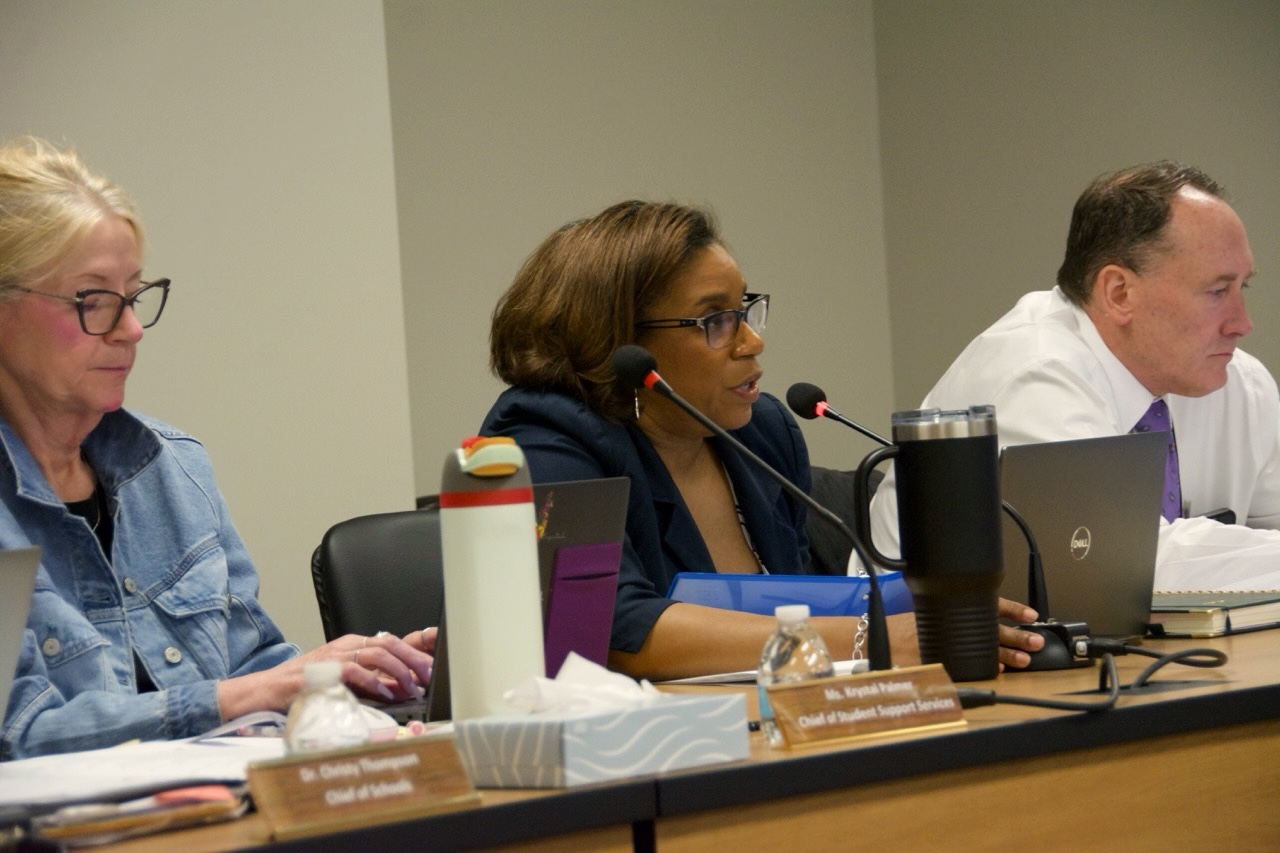
Continue Reading

PA Steam Academy charter renewed, school approved for K-8 expansion

PA Steam Academy

A Midtown-based charter school’s contract has been renewed for five more years.

The Harrisburg School Board voted 7-1 Tuesday to reenter a charter agreement with the PA Steam Academy, a K-6 charter school, located at N. 3rd and Reily streets.

Five years into operation, the charter school was in the last year of its current charter term.

PA Steam opened in 2021, offering K-2 classes, and has added subsequent grades each year. It now serves grades K-6 and boasts 440 students—about 70% of whom are Harrisburg residents.

PA Steam is approved to add 7th and 8th grades over the next two years and gradually increase its student capacity over the next five. It will work toward teaching 720 kids by the 2030-2031 school year.

Following a thorough review, Allison Petersen, a contracted education law attorney from Wisler Pearlstine, recommended the charter’s extension and continued expansion Tuesday night to the board ahead of the vote.

In a presentation, she said that PA Steam’s overall math and English language arts test scores exceeded the performance scores of Harrisburg School District students in the same grades over all its years of operation so far.

PA Steam is in compliance with lottery and attendance policies, Petersen added, but struggles, like many schools, with attendance and truancy.

The school also has room for improvement on publishing its board meeting information publicly in compliance with the Sunshine Act, the attorney added.

Per the terms of the charter renewal, PA Steam will only expand to be a K-8 school.

“They’ve indicated they are not interested in having a high school, and the charter that was negotiated specifically says ‘no high school grades,’” Petersen said.

The new charter runs from July 2026 through June 2031.

Board member Brian Carter voted ‘no’ to the charter renewal. He did not note a reason.

If you like what we do, please support our work. Become a Friend of TheBurg!

Continue Reading

Top Harrisburg school official will remain in her position following show of community support, board vote

Community members packed into Tuesday night’s board meeting to support assistant superintendent Mariosl Craig (back left)

A Harrisburg school district top official will serve in her role for another school year, following a failed board vote to reopen her position.

The Harrisburg school board fell one vote short (4-4) of passing a measure to reopen after roughly an hour of public comment, voicing support for district assistant superintendent Marisol Craig. Many commenters were district employees, parents, and past and current students.

A vote on Craig’s contract was prompted by state law because she is three months out from its June 30 expiration. The assistant superintendent position is commissioned by the Pennsylvania Department of Education and elected by the board.

“Like any elected official, at the end of the term of the election, your position is finished,” explained district solicitor Jeffrey Sultanik. “You have no continuing rights to a position at the conclusion of the term of engagement by the board, because you’re elected.”

With Craig’s contract expiring, the district had two options: to extend her post or move to consider others for the position.

The school administration recommended the latter to the board.

Board member Brian Carter, who voted yes to considering others, said the recommendation came from Superintendent Benjamin Henry, who started at the district in November 2024.

During Henry’s first year, the administration found in a performance review that Craig “did not meet” one of her role’s five objectives.

According to the district’s website, the objective was to collect and analyze student data surrounding academic achievement, attendance, graduation, and student behavior in line with Henry’s “entry plan” for his first 100 days at the district.

She “partially met” three other objectives of her role—which dealt with student services, hybrid and virtual learning operations and supporting an amended recovery plan—and “met” her objective to visit all district schools on a regular schedule.

Without clarifying the scope of the work, Craig said at the meeting that she was “forced to do work that other people couldn’t do.” She added she has asked several times for her position and work to be restructured.

Harrisburg resident Claude Phipps speaks on behalf of Marisol Craig (back left)

“I’ve asked for guidance,” she said. “I’ve asked for support.”

Craig has served the district as an employee for 22 years. She began as the district’s assistant superintendent in 2022.

During her time in the role, leadership above her has been turbulent. Craig pointed out she has worked for three bosses in her four years.

“I really haven’t had stability as a new assistant superintendent,” she said.

Craig worked under former superintendent Eric Turman from 2022 to 2024. After Turman resigned, she worked briefly under acting superintendent (current chief financial officer) Marcia Stokes before Henry was hired to lead the district.

“I don’t know anybody that can just step into a new role and be perfect at it,” Craig said.

Former state receiver Lori Suski, who appointed Craig, said the official “met” or “partially met” her goals during the 2022-2023 school year and “met” performance goals for the 2023-2024 school year.

Because the board’s vote tied, Craig’s contract will extend until the end of the next school year. Unless the board moves to extend her a three-to-five-year term before its expiration, it will end at that time.

Craig would have been eligible to apply with the district to be considered for the assistant superintendent role against other applicants, if the vote to reopen the position would have passed.

Sultanik noted that the administration will present a broader reorganization plan for the school administration later this spring and that they had been considering an option not to use an assistant superintendent at the district moving forward.

During discussion, several board members expressed concern about how the vote was handled.

Board Vice President Autumn Anderson said she didn’t think the district should have pursued this vote before plans for the restructure had been established.

“That should have happened prior to making a decision like this, so that we don’t have administrators living in limbo of what the next step might look like for them,” she said.

Anderson, who voted yes to reopening the contract, added to the superintendent that her vote was to support the superintendent in being able to choose his leadership team.

Danielle Robinson, a no vote, echoed this.

“I’ve been here a very long time,” she said, “This process was not done well.”

Of the 19 members of the public who praised Craig’s commitment to students and schools during public comment, many emphasized that Craig was the only Latina on the district’s senior administration team. They said she was an important role model for the district’s students, 45% of whom are Hispanic.

Community members holding signs at the meeting

Gina Vazquez, a district parent, told the board it makes a difference to have an administrator like Craig, who can speak Spanish with kids.

Others agreed.

“She can reach in and talk to people and get to understand their issues are. And that’s a plus for the school district,” added Harrisburg resident Claude Phipps.

Gloria Vazquez Merrick, executive director of Latino Hispanic American Community Center (LHACC), said Craig has been a constant for the district, “looking out for the Latino community.”

The principal of Steele Elementary, Frances Echevarria, added that she felt seen when Craig pronounced her last name correctly.

Jadiel Ayuso, 17-year-old senior at John Harris, offered a student perspective.

The Puerto Rican business and industry program participant, who takes AP classes, said Craig helped secure funds for a debate program hosted by the National Hispanic Institute that changed his life.

“I wouldn’t be chasing half of the things I chase—the accolades, the achievements, the strengths of being a student, of being a scholar. I wouldn’t be chasing education as a whole if it wasn’t for that program,” he said.

Board member Terricia Radcliff, absent from the meeting, did not participate in the 4-4 vote.

The Harrisburg School Board listens to public comment

If you like what we do, please support our work. Become a Friend of TheBurg!

Continue Reading

Harrisburg officials explore overlap between challenges facing the city, the schools


Harrisburg School District officials speak with the Intergovernmental Cooperation Authority.

Harrisburg city and the school district share a unique set of challenges, including financial issues arising from past overspending and a declining tax base, which both were discussed by city officials at a Wednesday meeting.

At the Intergovernmental Cooperation Authority’s (ICA) monthly meeting, board chair Doug Hill welcomed top officials from the Harrisburg school district to present an overview of the district’s finances.

“You have a comparable history to ours,” Hill told district Superintendent Benjamin Henry and Chief Financial Officer Marcia Stokes. “Not identical, but have had some financial issues that you’ve wrestled with, with some success, as has the city.”

While the entities operate separately, both entered into various forms of state oversight around 15 years ago due to unlinked financial management issues. 

As the city was plagued by mounting debt from a failed waste-to-energy incinerator project, the school was almost simultaneously struggling with debt caused by hundreds of millions in school renovations. The state placed the city under Act 47, a program for financially distressed municipalities, in 2010. Two years later, in 2012, the state appointed a chief recovery officer for the school district. Still struggling in 2019, the state appointed the district a receiver.

While the district exited state receivership last year, Stokes emphasized the city and schools’ situations are to some extent linked as the district can not exit financial monitoring until the city itself exits its own recovery status under Act 47.

Hill noted another overlap between the two.

“We are all reliant on some of the same tax bases,” he said.

It’s a tax base that often proves challenging for two entities already struggling financially. Stokes noted during her presentation that in 2011, the district had just under $1.6 billion worth of taxable assessed value. Last year, it dropped to under $1.5 billion.

“Over nearly a 15 year history, where most municipalities are increasing in assessed value, we have continued to decline,” Stokes said.

She added that properties in Harrisburg have a greater percentage of untaxable assessed value than those that are taxable. This is largely due to the sprawling state footprint, an entity that does not pay property taxes. As a high-poverty, underfunded district, Harrisburg schools also rely heavily on state aid. Stokes said 60% of district revenue comes from the state.

“If we made a perfect world and all of our properties in our municipality were taxable, that would be another $49 million per year that the district would be able to generate in tax revenue,” Stokes said. “$49 million every year we never can tap into for a source for supporting education.”

ICA board member Kathy Speaker MacNett said that a big obstacle—in the way of both the city and the district’s retention of a more taxable population—was the reputation of Harrisburg schools.

“Young couples move here, establish home bases, and when kids come into the picture—they go elsewhere,” MacNett said.

Henry said the district was looking to address this problem by sharing more of its success stories.

“We have great schools. We have kids that get scholarships to go off to college. We have some great opportunities for our kids in the community, but we have to get out there and tell the story,” he said.

Marcia Stokes presents to the Intergovernmental Cooperation Authority.

He and Stokes listed a few: the district brought back its musical theater program last year (after roughly two decades without one), started an eSports league, and has secured a fleet of 13 crossing guards to help elementary school students walk to school.

Stokes said in the future the district would be interested in collaborating more closely with the city to go after grants that would be beneficial to both parties and to increase the availability of out-of-school activities for students.

“We need to focus on becoming a suitable choice for the residents within the community and that means improving both our image and our product that we’re putting out there,” Stokes said. “And if we can do that, then I think that’s a contribution we can make into the revitalization of the city itself.”

Henry said that the district works hard every day to make change happen.

“We have to turn the corner on what we’re producing and we are doing this every day. But again, it takes all of us,” he said. “It can’t take the school district in isolation. It takes the whole community to come together in order to move the needle on academics and get people to understand that we have a great city.”

To learn more about the ICA, visit its website.

If you like what we do, please support our work. Become a Friend of TheBurg! 
Continue Reading

“So Beautiful:” A look behind the curtain of Harrisburg High’s revived theater program, helping students find their voice and a place to fit in

Jorday Johnson Strawbridge

Vocal warmups began promptly at 3:30 p.m. with the typical do-re-mis mixed with humming and buzzing exercises.

All 16 or so pairs of eyes were on director Jacob Trimble-Waddell as he led the group, students occasionally turning to whisper to a friend.

The teacher began a more complicated string of notes. A pair of girls near the front giggled, breaking the coolness on stage, when the group struggled to find the right high note.

By the time warmups were over and the group transitioned into practicing songs, the teens loosened up, shook off the weariness of the school day.

“Today I’m a lot more goofy than I usually am,” said Jorday Johnson Strawbridge.

Jorday, a 10th grader, decided to go out for Harrisburg High School’s musical this year, at first, not knowing anyone else in the group.

In high school world, frankly, adult world too, that takes guts—nerve that it took her a little time to work up to.

“I was too scared last year,” she admitted. But said that, “I still don’t know what I want to do with the rest of my life, so I wanted to see what it’s like being on stage.”

This year’s musical, coming up at the end of March, is only the second one for the high school in about 25 years. New to Harrisburg’s school board at the time, Autumn Anderson said she was shocked to learn that there was no theater program for students before now.

“I was totally on board to support it,” Anderson said of the plan to bring the program back. “Our district kids really deserve a lot of opportunities and options for them to build their creativity.”

While some students joined the club last year to try something new, then-freshman Ariana White might as well have been waiting her whole life for this moment.

“This club popping off was like, ‘Oh, finally I can do an extracurricular,’” she said. “I’ve been interested in musical theater since elementary school.”

Ariana White

Ninth grader Ariana secured the lead role in the 2025 musical “Mean Girls Jr.”  “It was like my debut,” she said.

In this year’s “Once on This Island,” Ariana is playing “the goddess of life,” a role that she described as “written for me.” The spunky student knows she’s a life-of-the-party type. This year, she was chosen as theater president and talked about the ninth graders, just a year below her, like a mother talking about her children.

“I love seeing me in them,” she said, calling them “my babies.” “I’m like, ‘I did that last year.’”


New Chapter

The theater club owns the John Harris High School auditorium for Tuesday and Thursday night rehearsals during musical prep weeks. And while the actors and singers practice on stage, the tech team runs things at the back of the large room, sometimes popping up front to joke with a friend on stage.

“It’s fun being back there because I can threaten to turn off their mics,” senior Elisha Garrett, head of audio and visual, said with a smirk.

While Elisha said he was “dragged here tooth and nail” by a friend to join the musical last year, he admitted he’s come to enjoy it and has even made friends.

“At first, it was just because I wanted something to do after school, but then it became interesting,” he said, calling the atmosphere, in typical teen fashion, an “overall great vibe.”

Program director Trimble-Waddell, like the musical club, is new to the school district—a recent college grad hired to teach music for the district. As part of the hiring process, the district expressed its desire that he revive theater in the high school.

Jacob Trimble-Waddell

“I wanted to go to a school district that had a need post-COVID to have some part of their program, music-wise, be rebuilt,” he said.

Since then, Trimble-Waddell has been working to do that, while intentionally making it a safe and welcoming space for everyone.

“There have been so many kids that have joined that there is no other outlet for them,” he said. “Having a space where they can be accepted and welcomed, just having that space does a lot to earn their trust.”

Of course, there’s drama—it’s high school, and it’s drama club. But Trimble-Waddell and the students take it in stride, working on healthy emotional expression and using acting to explore feelings.

This year’s musical, “Once on This Island,” gives them plenty of opportunities to practice that, as it deals with pretty heavy themes of grief, heartbreak, classism and racism.

The musical is a coming-of-age story, set in the Caribbean, of a peasant girl who falls in love with a wealthy boy. Think “The Little Mermaid,” with different twists.

Trimble-Waddell works through the themes with the students, helping them process and relate them to their lives.

Day’nija Andrews

Day’nija Andrews, a senior, is the lead in this year’s show, playing Ti Moune. She’s new to the musical club, but has quickly fallen in love with the music, especially the song “Mama Will Provide.”

The song starts with:

“But on this island the Earth sings
As soon as the storm ends
And as Ti Moune set out
She realized she was walking with old friends
The birds
The trees
The frogs
And the breezes

Ti Moune lost all her fears
She knew Asaka was near her

You’ve never been away from the sea, child
You’re gonna need a helping hand
A fish has got to learn to swim on land”

“It’s about waiting for life to begin. I relate to that,” Day’nija said, referencing her impending high school graduation this year. “It’s a whole new chapter of life. So, I’m scared, but happy to see what happens.”

Theater Kid

Theater President Ariana is always recruiting for the musical.

“Let me count,” she said, turning toward the stage, when asked how many students she got to join this year.

The count came to four, one of whom is a boy, who are often harder to recruit and only make up a small part of the full group.

Trimble-Waddell is often trying to entice kids to join as well.

“Anytime we heard a kid singing in the hallway, we’ll say, ‘Hey, join the musical,’” he said.

One girl was always showing up to school in style. Now, she’s the costume designer for the club. Elisha was another recruit based on his experience helping with sound at his church.

Elisha Garrett

Ariana talks about the musical “literally everywhere,” as the self-proclaimed spokesperson for the program.

“This has shown us her dedication,” said Ariana’s dad, Tim White, who “cried like a baby” during Ariana’s performance last year. “I don’t think she has missed a practice. It’s been very good to see her put her heart and soul into something and be so passionate about it.”

Ariana is proud to be a theater kid.

“This is my second home,” she said.

She knows that theater isn’t always as popular as, say, sports, but said that she doesn’t think her peers see musical kids as “nerdy,” but more of a “cool-weird.”

Jorday embraces it too.

“It’s fun being a theater kid,” Jorday said. “I’ve never [been able to say] that before, so it’s fun.”

Even Elisha, who said that the only musical he had ever heard of before joining the club was “Hamilton,” said that he’s been getting into the music.

He said he has grown in other ways too, like in his leadership skills. Elisha is currently training some younger students on tech to fill his shoes when he graduates this year.

“He’s getting not only the skills of the trade, but also the leadership skills,” Trimble-Waddell said.

Through the program, Trimble-Waddell also sees students being exposed to potential career paths that they may not have known about, especially arts-focused ones.

In the future, he’s hoping to add a pit orchestra to the musicals and further connections with local, city-based theaters as well.

“A big goal for this year and next year is to take these skills that these students learn, that most of them have never done up until now, and say, ‘Hey, these are all the real-life connections. This is actually a job you can go and do,’” Trimble-Waddell said.

District Superintendent Benjamin Henry has been impressed with the program and said that they’ve started introducing theater to the middle schools as well, hoping to “give the kids more opportunities to be exposed to the arts.”

School board member Anderson said that she was blown away by last year’s musical and can’t wait to see this year’s.

Ball-of-energy Ariana, unsurprisingly, is also excited, saying that the group of students has built even deeper bonds this year.

“It’s so beautiful,” she said. “I’m getting to live my dream.”

Harrisburg High School will perform “Once on This Island” on March 27, 28 and 29 at the John Harris campus at 2451 Market St., Harrisburg. For more information, visit www.hbgsd.us.

“Once on This Island” is presented through special arrangement with Music Theatre International (MTI). All authorized performance materials are also supplied by MTI. www.mtishows.com.

Photos by Dani Fresh.

If you like what we do, please support our work. Become a Friend of TheBurg!          
Continue Reading

Harrisburg School District moves to demolish William Penn, ending years of debate

William Penn

William Penn, February 2026

The Harrisburg School Board voted Tuesday night to demolish William Penn and use the 27-acre property for district needs.

The dilapidated state of the building—a target of arson and vandalism that suffers from deterioration, water damage and broken doors and windows among other issues—was a big factor in the decision for the board.

“If this had been 15 years ago, this would have been in a different context,” said board member Annie Hughes. “We’d be dealing with a different situation. There’d be different options on the table that aren’t on the table really viably right now because it’s been 15 years.”

The century-old, five-acre school building has been vacant since 2011, last used as a vocational school in 2011. Its demolition has been quoted at $5.3 million.

Vice president Autumn Anderson said that she felt it was her responsibility as a school board director for a district that just exited receivership last year to go with the least-risky option, despite being someone who personally would love to see the building restored.

“This is a hard decision, but at the end of the day, I’m making a decision as a school board director,” she said. “I have to put the school district students first, and so that comes down to making good, financial and responsible decisions for them.”

The 7-1 demolition vote noted that William Penn’s land will be used “in a manner consistent with the educational mission of the district,” although, two weeks ago, Superintendent Benjamin Henry identified the construction of athletic fields as the administration’s recommendation for the property’s use.

Board member Brian Carter expressed concern before the vote about pursuing sports fields, rather than academics.

“Every student in the district is not an athlete,” he said, prior to voting against the demo. 

Primarily, the administration had recommended a soccer field (estimated at $896,000) for the varsity girls’ team, currently practicing in the outfield of a boys’ baseball field.

Board President Rosyln Copeland, who attended the co-op program at William Penn when she was a student, added that the building is plagued by vandalism and that the district pays a hefty price (roughly $566,000 per year) in security and insurance costs to keep the building standing. 

“Our children are not in this building, so they’re not learning,” she said.

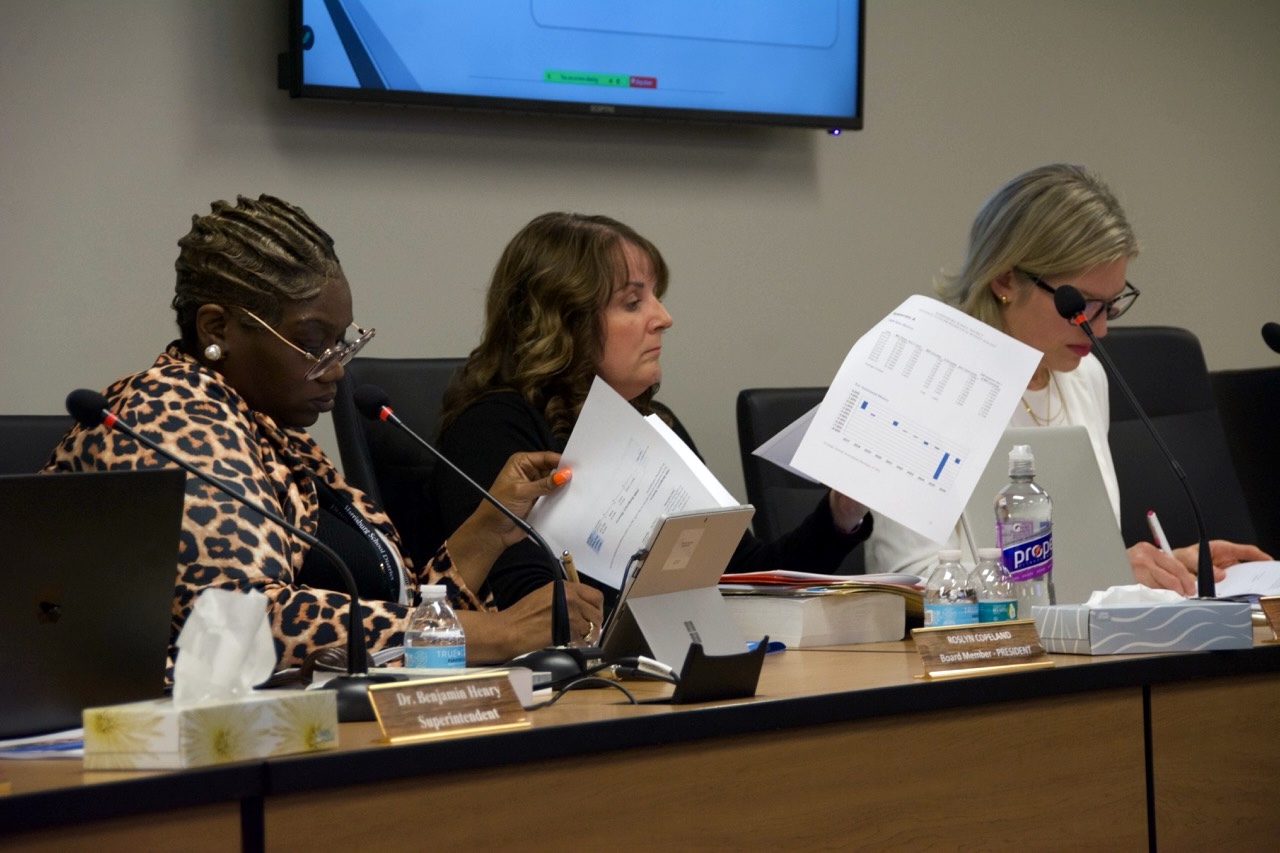
Harrisburg School Board officials

The district’s risk-versus-benefit analysis earlier this month also weighed an additional seven options, all presented in November to the board at a special meeting. The analysis also followed years of dialogue with the Harrisburg community over the future of the building following a called-off plan for its demolition in 2023.

Three options that would pursue the building’s adaptive reuse for various projects were considered financially risky (as they relied on to-be-determined funding sources) and failed to align with the district’s K-12 education agenda. Plus, defaults or underperformance on such projects could affect the district’s credit, clarified district solicitor Jeffrey Sultanik Tuesday.

The board moved 5-3, with board members Carter, Copeland, and Terricia Radcliff voting “no,”  to explicitly decline pursuing these partnerships further Tuesday night.

Melanie Cook, community task force member and Harrisburg resident, expressed her dissatisfaction Tuesday that the board had failed to take into account the recommendations that were made by a task force.

“That task force made a recommendation that that building be preserved to the greatest extent possible and adaptively be reused to create opportunities for our students,” she said, noting it was made up of Harrisburg engineers, lawyers, community activists, urban planners and urban farmers.

The Community Task Force’s proposed plan to partially or fully repair the building into a career technical education center was also considered financially risky for the district, as it would bring an estimated cost of $13 to $93 million. The district is operating under an existing debt burden of $19 million per year through 2036.

Board member Danielle Robinson was absent from the meeting.

The William Penn building is located on the 2900-block of N. 4th St., Harrisburg. 

If you like what we do, please support our work. Become a Friend of TheBurg!

Continue Reading