Tag Archives: Harrisburg City Council

Groundbreaking set for new federal courthouse in Harrisburg

The site of the future federal courthouse in Harrisburg

And some thought this day would never arrive.

The U.S. government plans to break ground next week on the new federal courthouse in Midtown Harrisburg, according to the U.S. General Services Administration (GSA).

The groundbreaking ceremony will take place on Monday at 11 a.m. at the site at N. 6th and Reily streets, according to a GSA press advisory.

This doesn’t mean that residents soon will see the 243,000-square-foot structure begin to rise from the ground. Site preparation and utility work will come first, with actual building construction not slated to start until early next year.

In fact, the federal government still hasn’t assembled all the land it needs for the courthouse, particularly along the fringes of the project. Just last night, Harrisburg City Council learned that the federal government is offering $39,000 for two city-owned parcels, 648 and 650 Boyd St., that will be part of the project.

The city acquired those parcels about a decade ago as part of the 7th Street widening project. A vote on that resolution is expected at next week’s legislative session. In the unlikely event that council refuses to sell the land, the federal government would initiate eminent domain proceedings to acquire it, according to the city administration.

The $194 million courthouse will provide eight courtrooms, 11 judges’ chambers and 79 parking spaces on about four acres. After a long site search, the federal government settled on the site across the street from Bethesda Mission in 2010.

Construction should take about three years, with expected completion in 2022.

Following relocation of workers, the federal government plans to sell the current Ronald Reagan Federal Building at N. 3rd and Walnut streets.

Continue Reading

Downtown apartments, affordable housing again top HBG Council meeting

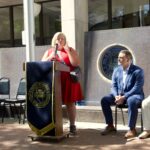
Harrisburg City Council, at Tuesday’s work session

Downtown development and affordable housing dominated another Harrisburg City Council meeting tonight, as members began to chew over the latest apartment proposal from Harristown Development.

As she has at several other meetings this year, council President Wanda Williams pressed Harristown on the relative affordability of its apartment units, this time for a proposal to convert a bank-owned, mostly vacant Pine Street building to 44 one- and two-bedroom units.

“We want you to be successful,” Williams told Harristown CEO Brad Jones, who presented the project to council. “But we want our residents to be able to live in safe housing, in comfortable housing, in affordable housing.”

At the council work session, Williams said that many city residents have told her that they want the chance to be able to live in the fully renovated Harristown units, but that they’re concerned that they can’t afford the rent.

“Our residents are living in slum housing,” Williams said. “I want to give residents a chance to live in those areas.”

Jones responded that many of his company’s apartments are considered affordable under federal housing guidelines. In recent years, Harristown has fully renovated several underused and rundown office buildings downtown, adding about 60 new residential units, which rent from $775 to $1,450 a month, he said.

He added that four of the 12 units in a 2nd Street building the company is now renovating “will be in the affordable category,” so that a tenant with a modest income would have to pay no more than one-third of his or her salary in rent.

“You could make $36,000, and that’s an affordable index, according to HUD,” Jones said, referring to U.S. Department of Housing and Urban Development guidelines.

He said that the rents in the proposed building at 116 Pine St. are projected to be $1,000 a month for one-bedroom unit and $1,400 for two bedrooms.

Jones also said that rents have to be high enough to justify the project financially. Early next year, Harristown plans to begin work on converting both 116 and 124 Pine St. to apartments, spending some $12 million on the renovations.

“These are very risky projects,” he said. “The fact that we’ve been able to convince two other partners to contribute has been a Herculean effort.”

Several other council members said that, while they also support affordable housing, Harristown can’t be held solely responsible for redressing any lack of affordable housing in Harrisburg. The city currently lacks an affordable housing policy for Harristown to follow.

“Affordable housing is a huge problem with our city, but City Council has failed to act on affordable housing,” said Councilwoman Shamaine Daniels.

Likewise, Councilman Cornelius Johnson said that the responsibility rests with council, not Harristown.

“The onus is not on you,” he told Jones. “It’s on us.”

To that end, the city, along with Harristown, the Harrisburg Redevelopment Authority and the Harrisburg Housing Authority, has commissioned a $10,000 housing study. The results of the study, conducted by Columbia, Md.-based Real Property Research Group, should be available later this year.

The city hopes that, through the study, it will learn more about its housing stock, rental rates and resident needs, so it can begin to craft more informed housing policies.

Following the meeting, Mayor Eric Papenfuse said that he supported Harristown’s apartment projects both to encourage investment in the city and to persuade people to choose Harrisburg over the suburbs, putting tax dollars in city coffers and money into city businesses.

“I definitely feel this brings new people into the city and expands the tax base,” he said. “This is exactly what Harrisburg needs.”

In April, City Council approved Harristown’s plan for 124 Pine St., with Williams casting the lone dissenting vote. Council is expected to vote on the land use plan for 116 Pine St. at an upcoming legislative session.

Continue Reading

Citizen’s group proposes Riverfront Park monument to honor prominent African Americans

Harrisburg’s Riverfront Park is dotted with historical monuments, but none of them honor African Americans.

A group of citizens hopes to change that.

Members of the Peace Promenade Project are asking city hall to green-light Harrisburg’s first monument to African Americans, which they hope to erect near the corner of Forster and Front Streets by June 2019.

Their proposal calls for a life-size tableau of four Pennsylvania abolitionists and voting-rights advocates: Thomas Chester, a Harrisburg-born journalist and attorney; William Howard Day, the first black school board director in Pennsylvania; Jacob Compton, a pastor who drove Abraham Lincoln’s carriage during his visit to Harrisburg; and Frances Harper, a poet and women’s rights activist.

All except Harper lived in Harrisburg and are buried in Lincoln Cemetery in Penbrook.

The monument would testify to the city’s African-American history and honor the 15th amendment of the U.S. Constitution, which granted African-American men the right to vote. (Women would not get the right to vote until the 19th amendment passed in 1920.)

“This is an American monument that represents the continuing struggle for the full fulfillment of the 15th amendment,” said Lenwood Sloan, leader of the Peace Promenade Project, which aims to rededicate Harrisburg’s public monuments through a yearlong event series.

Kelly Summerford, another project leader, said that the monument would also offer local students an opportunity to learn about abolition and voting rights.

Mayor Eric Papenfuse said he met with the project leaders and enthusiastically supports the project. He also offered to help the group pursue a gaming grant from Dauphin County.

City Council President Wanda Williams also pledged her full support at tonight’s legislative session.

The Peace Promenade group, which counts more than 200 members and 40 supporting organizations, plans to fund the monument through public support, corporate donations and individual giving. They did not announce an anticipated budget.

According to Summerford, the group plans to follow a process used by the Pennsylvania Council of the Arts to commission an artist and develop a design.

They hope to install the monument by “Juneteenth” 2019 – the anniversary of June 19, 1865, the official announcement of the end of slavery in the former Confederacy.

Continue Reading

May News Digest

Sanitation Changes Weighed

Harrisburg’s existing rules governing trash collection may soon get canned.

City Council is considering a new, more comprehensive sanitation ordinance that would usher in stronger enforcement tools and more efficient billing for its trash collection services and lay out clearer rules for city recycling programs, Mayor Eric Papenfuse announced last month.

It would also waive annual trash fees for the owners of vacant lots and properties, eliminating an unpopular provision of the current ordinance, Papenfuse said.

The revised sanitation code aims to curb the city’s perennial problems of illegal dumping and excessive trash accumulation. It would grant the city stronger enforcement powers by creating two categories of offenses and a new fine structure.

Under the proposed ordinance, serious offenses—including illegal dumping, accumulation of trash exceeding 1,000 pounds, improper waste disposal and failure to register as a private trash hauler—would be considered category 1 violations punishable by a $1,000 fine or up to 90 days in jail.

Category 2 violations are more minor acts that are likely to recur without deterrence, Papenfuse said. These violations, which include failure to bag waste, obstruction of streets and sidewalks or interference with enforcement, would be met with fines starting at $100. Fines would increase up to $500 for each subsequent offense.

The ordinance would also permit the Public Works Department to designate enforcement officers to patrol public streets for violations. It also would authorize police officers to issue citations and enforce the ordinance.

Papenfuse said that the new legislation also would codify the city’s free and mandatory recycling services, including its new glass recycling program.

“This will bring us into the new century in regard to recycling,” Papenfuse said. “We’ve more than tripled recycling in the last few years but very little is laid out in existing code.”

One of the most significant changes would be an annual billing structure designed to save money for the city and its residents.

Harrisburg residents currently make monthly payments for trash services. Under the new ordinance, the city treasurer’s office would include trash fees in property tax bills. The separate charges would appear on the same invoice and would be subject to the same due date and discount period.

Residents may opt out of yearly billing in favor of monthly direct deposit payments. However, those who pay their trash fees within 60 days of billing would receive a 2-percent discount.

City Treasurer Dan Miller said that streamlined bills would save the city $100,000 in mailing and labor costs each year. He also hopes it will increase the city’s collection rate and improve early-year cash flow.

Miller said that the city has a 98-percent collection rate for its real estate tax, with 70 percent of that revenue coming in during the 60-day discount period.

“We assume trash will be the same, which would increase cash flow and generate more interest for us throughout the year,” he said.


Staff Cuts, Tax Hikes in School Budget

Kindergarten cuts might not be coming to Harrisburg after all.

Members of the Harrisburg School District administration unveiled a new budget proposal last month that would preserve the full-day kindergarten program in favor of cutting 31 district employees. The proposal calls for eliminating nine administrators, 11 teachers, and 11 AFSCME union members for a total of $2.132 million in savings, which would narrow the district’s deficit to $4 million.

The budget still calls for maximum tax hikes for the next three years.

District Business Manager Bilal Hasan said that over-hiring has contributed to the district’s annual deficits, which are projected to deplete the district’s fund balance by 2020. Thirty-seven teachers who have been hired since 2016 took positions that were not in the district budget, Hasan said.

Interim CFO Jim Snell explained that salaries alone don’t account for the district’s high expenses. Costs like healthcare benefits and pension payments only emerged in long-term budgeting projections, he said.

“When you start to look at the reality of recurring costs over multiple years, that’s when you appreciate the true consequence of those decisions,” Snell said. “Some of those consequences are starting to get in the way and cause financial challenges for us.”

Budget and finance chair Ellis Roy was incredulous when Hasan confirmed the extent of the over-hiring.

“You’re telling me we hired 37 people we had no money to pay for?” Roy said. “We’re self-destructing here.”

Hasan said that the district has not had a position control mechanism in place to monitor its total number of staff positions and vacancies. The administration has implemented a new policy so that no position can be added to the payroll unless it is approved and included in the budget, he said.

Hasan and Snell said that developing a position control program is a lengthy and tedious process that requires collaboration between the district’s human resources, IT and business departments. Employees must code each permanent position with a unique identification number, which can be difficult in a large organization with high turnover, Snell said.

“At any point in time, there are staff coming and going, so there was a never a snapshot that said ‘at this moment in time, these are all our positions,’” he said.

The district’s mistake, Snell explained, was anticipating expenditures in line with previous years without accounting for vacant positions that the district wanted to fill. When the administration ramped up its recruiting efforts and hired dozens of new teachers at the beginning of this school year, it unwittingly took on employees that were not included in the budget.

The implementation of a position control system was one of the initiatives outlined in the district’s state-mandated recovery plan, which it adopted in 2013. The task ultimately fell to Hasan, who began developing the program in August 2017 and oversaw its implementation earlier this year.

“This will provide structure and order, and that was not always the case when we were hiring,” Snell said.

School Board Votes to Retain Knight-Burney

Sybil Knight-Burney will remain the superintendent of the Harrisburg school district for at least three more years, the city’s school board decided last month.

After almost an hour of public comment during which district residents overwhelmingly called for Knight-Burney to be replaced, the board rejected a motion that would have hired a search firm to find a new superintendent and passed another measure to retain her for a term of three to five years.

Frustrated residents began jeering the board before its members could vote on the second motion.

“You don’t care!” one resident yelled. “This is insanity, clear as day. You don’t care.”

“This is ridiculous!” Gerald Welch yelled, before chanting “Shame!” as he and two-dozen other exasperated residents left the gymnasium.

Yanna Kent, a Harrisburg High School alumnae, said she did not want to see the district put in state receivership, which is one possibility facing it when its five-year recovery plan expires in June.

“We need to do a better job,” Kent said, addressing the board and the administration. “We put you here to work for us and, if you don’t want your job, leave.”

Other residents pointed to the fact that state test score and graduation rates have remained stagnant or declined under Knight-Burney’s leadership. Some called out the administration for not yet completing the initiatives outlined in the district’s five-year recovery plan.

Almost 70 percent of the initiatives have been fully completed as of February 2018, according to the most recent report available from the state’s chief recovery officer.

“If I only complete at 70 percent of what my job had asked me to do, would I be able to continue, especially when other people are willing to go 100 percent?” said Carmen Dones. “It’s time to say thank you, but I think it’s time that we say goodbye.”

Board President Judd Pittman, who voted against retaining Knight-Burney, pointed to other sobering facts from the past two years: $180,000 in district funds were embezzled by an employee, 70 teachers were hired at the wrong pay step, and the district revealed two years of over-hiring by its business office.

Those factors have contributed to an $8 million budget deficit this year, as well as a structural deficit that threatens to eat up the district’s general fund by 2021.

Pittman cited these incidents as evidence that the district has not implemented strong accountability systems during Knight-Burney’s tenure.

“In 11 years, if you have not had time to put systems in place it’s time to come to the table with [solutions], or it’s time for us to look at other opportunities to put systems in place,” Pittman said before the board voted on the superintendent’s contract.

Pittman has been advocating since December for the board to launch a superintendent search. The board passed a motion to do that in March and then tried to rescind that action in April.

Board director Tyrell Spradley raised the motion to rescind in April, after voting in March to consider new candidates for Knight-Burney’s post. Spradley voted to retain the superintendent, along with board directors Ellis Roy, Lionel Gonzalez, Melvin Wilson and vice president Danielle Robinson.

Board directors Brian Carter, Carrie Fowler and Percel Eiland joined Pittman in the minority.


Substation Cost Rises

The Harrisburg Police Bureau last month made a plea for an additional $165,000 to construct a substation on S. 15th Street.

That sum represents a 13-percent increase over the project’s $817,000 budget.

City engineer Wayne Martin said that bids for the project came in above early estimates and insisted that the added cost was “not an unusual” margin for error in publicly bid projects.

Several council members lamented the fact that the project’s timeline has lagged as its costs increased.

“Three years ago, we planned a $300,000 precinct with a turnaround of three to six months,” Councilman Cornelius Johnson said. “Now, it’s more expensive, and it’s only a substation.”

Public Safety Commissioner Thomas Carter said that early plans to retrofit a facility at S. 15th Street became impossible once it was found to be structurally unsound. That structure was razed in December to make way for a new modular building.

Police officials say they don’t have enough manpower to staff a full-time precinct, but they still think a substation would benefit officers and residents. Carter reported that increased police presence in South Allison Hill has helped drive down homicides there this year.

“The cost is what it is, but I know that, since we’ve been concentrating on that area, we have not had homicides,” Carter said.

Tough Road for CAT

Harrisburg’s public transit network has a bleak road ahead of it.

Capital Area Transit (CAT) will end the year with a $700,000 deficit, but new Executive Director Richard Farr can’t explain why.

“It’s like an archeological dig trying to figure out how we got this far in the red with no foreseeable way out,” Farr told Harrisburg City Council last month.

Farr said that CAT’s “worst case scenario” would be to reduce service to narrow the deficit. Administrator salaries have been cut to the furthest possible extent, he said, which leaves the company eyeing its other major expenditures—insurance and maintenance—as possible areas to shave costs.

CAT has the highest maintenance costs in the state, Farr said, outpacing major public transit authorities like Philadelphia’s SEPTA system. It also has the third-highest labor costs.

And yet, CAT buses leave customers stranded every day due to driver shortages, Farr said.

CAT executives hope to join an insurance network to help mitigate some of its maintenance costs. But the source of the high labor expenditures remains hazy, especially since the agency has slashed administrator salaries in recent years by leaving high-level positions vacant.

Like most public transit authorities, CAT derives little revenue from fares and other consumer sources. State and federal dollars constitute the bulk of its funding, which make its annual revenues relatively stable and predictable.

“This isn’t a revenue problem, it’s an expenditure problem,” Farr said. “Some of these costs are legacy… but we have a big hurdle we need to work through.”

Farr hopes to avoid service reductions and said he has already averted driver layoffs once since taking the helm of CAT earlier this year.

Even if service reductions are avoided this year, they may be inevitable, said Harrisburg Mayor Eric Papenfuse.

“Eventually, they’ll have to cut service because they’ll have to use next year’s funding to pay this year’s line of credit,” Papenfuse explained.


HACC to Vacate Midtown Building

HACC plans to vacate one of its Midtown Harrisburg buildings after its lease expires in four years, the college said last month.

HACC, a community college with campuses in Harrisburg, Gettysburg, Lancaster, York and Lebanon, announced plans to leave Midtown 2, the former Evangelical Press Building, moving its trade and technology programs out of the building between mid-2019 and June 2022, with the expiration of its 15-year lease.

“No programs are being cut, and the transition will occur at times that have the least impact on classes,” said college President John J. “Ski” Sygielski. “Requirements to complete these programs will remain unchanged.”

HACC leases the building from GreenWorks Development, which fully renovated the landmark, century-old building at N. 3rd and Reily streets starting in 2006. HACC moved into the 80,000-square-foot building a year later, signing a long-term lease.

Soon after, HACC also moved much of its administrative staff across the street to GreenWorks’ newly built Campus Square Building, but returned these employees to the main campus at Wildwood several years ago. It plans to continue to occupy a third building, called Midtown 1 at N. 4th and Reily streets, which houses its workforce development, continuing education and welding programs, according to the college.

The move from Midtown 2 will save the college about $1.9 million in annual rent, maintenance and expenses, according to HACC. A portion of the savings initially will be used to renovate spaces for the relocated programs, HACC said.

So Noted

Capital Region Water has received the Award in Excellence for Sustainability from the American Planning Association, Sustainable Communities Division. CRW received the award in the Sustainable Green Infrastructure Project category for its “Community Greening Plan: A Green Stormwater Infrastructure Plan for Harrisburg.”

Chad Dion Lassiter was named the new executive director of the Pennsylvania Human Rights Commission last month. Lassiter has more than 20 years of experience in the fields of race relations, conflict resolution, mediation, teaching, counseling, policy and prison reform.

George Scott captured the Democratic nomination last month for U.S. Congress, besting a field of four candidates. He will face Republican incumbent Scott Perry in the November general election.

Harry Young has been named the new executive director of the Central Pennsylvania Gay and Lesbian Chamber of Commerce. In this role, Young will serve as the organization’s voice to build business, promote economic development and fulfill its mission to foster LGBT business equality and inclusion in central Pennsylvania.

Kathryn Aumiller announced her retirement last month as executive director of the Pennsylvania Regional Ballet. This summer, Aumiller will retire after 25 years leading the organization, which is searching for a new director.

S&T Bank has announced Shannon Golden as vice president, business banker, serving the Harrisburg market. In this role, she is responsible for fostering and strengthening business relationships in the region.

Stosh Snyder last month was named the new executive director for Theatre Harrisburg, responsible for the organization’s overall operations. A Harrisburg area native and actor, Snyder replaced Allison Hays, who served in the post about one year.

William B. Hawk, Lower Paxton Township supervisor, has been elected to a one-year term as president of the Pennsylvania State Association of Township Supervisors. The association represents the commonwealth’s 1,454 townships of the second class.

Zembo Shrine is back on the market after its proposed sale fell through. Arkansas-based Beaty Capital Group had the iconic, Moorish-style Shriners building in Uptown Harrisburg under contract, but backed out of the purchase after further examination of the mid-Atlantic area’s entertainment market, according to the company.

In Memoriam

Samuel Sloan Auchincloss died on April 27 after a brief illness. Born in New York, he was the long-time co-owner with his wife Susan of Auchincloss & Auchincloss, a Harrisburg-based marketing communications firm. Over the years, Sloan was active in many organizations, including Historic Harrisburg Association, Harrisburg Rotary, Harrisburg Lions Club, St. Stephen’s Episcopal School, Susquehanna Art Museum, the Rockhill Trolley Museum and the Harrisburg Chapter National Railway Historical Society, among others. Sloan also was a great friend, mentor and supporter of TheBurg. He is survived by his wife Susan, son Lloyd Brian Auchincloss, daughter Elizabeth Auchincloss Strickler, stepdaughter Leah Peak, their spouses and three grandchildren.

Changing Hands

Adrian St., 2436: S. Stroyan to PA Deals LLC, $30,000

Allison St., 1502: SWM Properties LLC to T. Mullally, $53,400

Barkley Lane, 2502: S. Vetock to J. Guerrero, $68,000

Berryhill St., 1101: Biks Auto Collision LLC to J. Garcia, $185,000

Bigelow Dr., 39: R. Johnson to J. Mayweather, $52,900

Briggs St., 211 & 213: Rockville Enterprises LLC to Grey Rex LLC, $230,000

Calder St., 105: A. Brett & K. Magagna to K. & G. Tennis, $150,000

Cameron St., 620: L. Aronson Family Trust & R. Aronson to Gini LLC & J. Pal, $225,000

Chestnut St., 2035: T. Coley to W. Seago, $62,500

Conoy St., 104: E. & K. Eckman to D. Wolf, $142,500

Croyden Rd., 2832: D. & B. Ratcliffe to J. Core, $51,000

Green St., 810: M. Hillman to S. & J. McGrath, $145,000

Green St., 1318: R. Bullock to G. & E. Gibeau, $93,500

Green St., 1802: BM Investment Group LLC to Asprodites Simpson Trust, $183,500

Green St., 2428: S. Tagle to T. & N. Blank, $137,500

Kensington St., 2223: PA Deals LLC to A. Womer, $64,900

Kensington St., 2326: E. McCloskey to I. Chatman, $69,900

Kensington St., 2431: Wells Fargo Bank to T. Dieu, $31,500

Lexington St., 2632: D. Grossman to A. Memic, $63,500

Luce St., 2306: T. & T. Parson to P. Almodovar, $69,900

Market St., 1025A: J. Lamb Sr. to J. Colron, $45,000

Market St., 2468: C. Jackson to S. Green & J. Burnett, $122,600

Mulberry St., 1845: V. Rivas to F. & R. Garcia, $70,000

North St., 1616: B. Davenport to C. Brooks, $39,000

N. 2nd St., 1937: US Bank National Association to M. Horgan, $92,000

N. 2nd St., 2053: 7 Eleven Inc. & Sunoco Retail LLC to Realty Income Trust 6, $3,221,477

N. 2nd St., 2538: T. & L. Magaro to M. Parsley, $110,000

N. 2nd St., 3033: A. Myers to D. Madsen, $100,000

N. 3rd St., 1014: 1014 N. 3rd St. LLC to O’Sullivan Realty, $660,000

N. 3rd St., 1231: E. Gabler to N. Wahby, $107,450

N. 3rd St., 1824: B. Strike to T. Miller & L. Wood, $79,900

N. 3rd St., 2329: CPenn Properties Old Uptown LLC to M. Mtere & F. Laoukili, $50,000

N. 6th St., 2407: Hobbeze Inc. to Elliots Enterprises LLC, $34,000

N. 6th St., 2528: Premier Property Solutions LLC to H. Foka, $31,000

N. 6th St., 2933: P. & E. Devenshire to C. Wise, $62,000

Paxton St., 1619: JC Hunt Management LLC to NAR Investments LLC, $110,000

Peffer St., 269: G. Neff & M. Baltozer to Heinly Homes LLC, $101,000

Penn St., 1925: WCI Partners LP to G. & K. Capoferri, $135,000

Race St., 566: I. & S. Milnes to B. Shisler, $119,000

Rudy Rd., 1919: M. O’Neill to A. Ross, $74,900

Rumson Dr., 298: Secretary of Housing & Urban Development to J. & J. Avila, $41,000

S. 17th St., 1040: Wells Fargo Bank NA to B. Nguyen, $40,000

S. 20th St., 12: Secretary of Housing & Urban Development and Information Systems & Networks Corp. to D. & L. Romero, $30,010

S. 25th St., 701: O. Huynh to G. Coppersmith, $69,900

State St., 1323: J. Ward to A. & S. Shelly, $71,000

State St., 1325: J. Ward to A. & S. Shelly, $71,000

Susquehanna St., 2112: E. Reichert to T. Hage, $45,000

Swatara St., 2158: Reverse Mortgage Solutions Inc. to D&F Realty Holdings LP, $30,500

Valley Rd., 2407: D. Loughery & J. Levine to E. Mena, $249,900

Verbeke St., 124: R. and M. Gordon to Kyzer Rentals LLC, $105,000

Continue Reading

Who Was Chosen? Harrisburg proposes recipients for federal housing funds.

Members of Harrisburg City Council listen as a resident speaks at tonight’s meeting.

The annual process of disbursing federal housing funds began tonight, as Harrisburg City Council introduced an ordinance that would provide money to nearly a dozen nonprofit groups.

Mayor Eric Papenfuse said that the city used the same process in selecting award recipients as last year, using a point-based merit system to judge applications.

“It’s a number of small grants,” Papenfuse said. “It’s not as much as anyone wanted.”

In all, the city will distribute $2.04 million in Community Development Block Grant (CDBG) money, a program of the federal Department of Housing and Urban Development. This amount includes almost $1.9 million from the 2018 allocation, plus a small supplemental amount tied to unallocated funds from a prior year.

Like last year, the greatest single amount of money, $593,423, will go to repay federal loans the city backed during the Reed administration for several development projects, including the disastrous Capitol View Commerce Center project, which went bankrupt before being completed years later by a new owner.

“If we didn’t have an exorbitant debt service, we’d have a lot more money for housing,” Papenfuse said.

Most of the nonprofits proposed to receive funds have gotten some money from previous CDBG allocations. The proposed recipients include:

  • TriCounty HDC: $250,000
  • Habitat for Humanity: $100,000
  • A Miracle 4 Sure: $50,000
  • TLC Work Based Training: $45,000
  • Christian Recovery Aftercare Ministries (C.R.A.M.): $40,000
  • Latino Hispanic Community Center: $25,000
  • Heinz-Menaker Senior Center: $25,000
  • Fair Housing Council: $25,000
  • PPL/IN HOUSE: $20,000
  • Shades of Greatness: $15,000
  • Neighborhood Dispute Settlement: $5,000

Like last year, Tina Nixon, an executive with UPMC Pinnacle, scored the applications, Papenfuse said. While most nonprofits that applied received some funding, several did not make the cut, he said.

In addition, the city is proposing to allocate $321,642 for its housing rehabilitation programs and another $408,765 to CDBG administration.

At tonight’s meeting, Les Ford, executive director of Heinz-Menaker, addressed council to emphasize the importance of the Midtown Harrisburg facility.

“The Heinz-Menaker Senior Center is the most active senior center in Dauphin County, bar none,” he said. “We’re just lucky enough to have that in the city of Harrisburg.”

Last year, the administration did not recommend that Heinz-Menaker receive CDBG funds, saying its application did not make the cut. In the end, council reversed that decision and approved $25,000 for the center.

Council is slated to discuss CDBG funding at its next work session, scheduled for June 5. In recent years, it has made some adjustments to the administration’s proposal.

Continue Reading

CAT to HBG: Tough road, big deficit ahead

Harrisburg’s public transit network has a bleak road ahead of it.

Capital Area Transit (CAT) will end the year with a $700,000 deficit, but new Executive Director Richard Farr can’t explain why.

“It’s like an archeological dig trying to figure out how we got this far in the red with no foreseeable way out,” Farr told Harrisburg City Council on Tuesday night at its legislative session.

Farr said that CAT’s “worst case scenario” would be to reduce service to narrow the deficit. Administrator salaries have been cut to the furthest possible extent, he said, which leaves the company eyeing its other major expenditures – insurance and maintenance – as possible areas to shave costs.

CAT has the highest maintenance costs in the state, Farr said, outpacing major public transit authorities like Philadelphia’s SEPTA system. It also has the third-highest labor costs.

And yet, CAT buses leave customers stranded every day due to driver shortages, Farr said.

CAT executives hope to join an insurance network to help mitigate some of its maintenance costs. But the source of the high labor expenditures remains hazy, especially since the agency has slashed administrator salaries in recent years by leaving high-level positions vacant.

Like most public transit authorities, CAT derives little revenue from fares and other consumer sources. State and federal dollars constitute the bulk of its funding, which make its annual revenues relatively stable and predictable.

“This isn’t a revenue problem, it’s an expenditure problem,” Farr said. “Some of these costs are legacy… but we have a big hurdle we need to work through.”

Farr hopes to avoid service reductions and said he has already averted driver layoffs once since taking the helm of CAT earlier this year.

Even if service reductions are avoided this year, they may be inevitable, said Harrisburg Mayor Eric Papenfuse.

“Eventually, they’ll have to cut service because they’ll have to use next year’s funding to pay this year’s line of credit,” Papenfuse explained.

Farr said he knows that the transit authority needs all hands on deck to avoid worsening its deficit or its service quality by the end of the year. Starting next week, CAT executives will draft a plan to save the transit authority, he said. That plan will eventually be made public.

“We have to earn the trust back of the community,” Farr said. “It will have to be transparent. It will be painful for us. We will hear things we don’t want to hear, but we have to do it.”

Farr also noted some initiatives CAT has undertaken in the past year, such as implementing mandatory annual trainings for all drivers and partnering with the Tri-County Regional Planning Commission on a bus stop optimization study.

The agency also has a $1.3 million grant to update its fare collection technology, so fully electronic fare systems could be on the streets by the end of this year. CAT hopes to roll out a regional transportation fare card as part of that project. That card would give riders access to public transportation systems in neighboring counties, including Lebanon, Lancaster and York.

Continue Reading

April News Digest

Superintendent Decision Reversed

The Harrisburg School District may not be getting a new superintendent after all, thanks to an unexpected vote last month.

In March, the board voted 5-4 to approve a resolution opening the position of superintendent to new applicants. The move signaled to current superintendent Sybil Knight-Burney that her contract would not be automatically renewed when it ends on June 30.

But last month, Tyrell Spradley, the board member who cast the deciding vote on that contentious resolution, motioned to rescind it. His motion passed 5-4 with board members Carrie Fowler, Percel Eiland, Brian Carter and board President Judd Pittman in the minority.

Asked what the vote meant for Knight-Burney’s contract, district Solicitor Samuel Cooper pointed to the Pennsylvania school charter. That law states that the board must give the acting superintendent 90-days notice if it doesn’t intend to automatically renew her contract.

But if the board fails to take action, the terms of Knight-Burney’s contract extend for one year, Cooper said.

By nullifying the vote from the prior month, the board has essentially chosen to forego any action on the superintendent’s contract. It will automatically renew for a one-year provisional period, but Cooper said the board could act before then to renew it for up to five years.

After the meeting, Spradley said that he changed his mind about the search because the board received new information about personnel and budget matters.

Allowing Knight-Burney’s contract to renew for one additional year will preserve consistency in the district and lead to better decision-making by the board, he said.

“I don’t have an issue looking for candidates, but we need time to find the correct ones,” Spradley said. “The board may feel rushed.”

Pittman was disappointed, but not surprised, by the board’s action. He said his position on Knight-Burney’s tenure has not changed in the three years he’s served on the board.

“When you look at our academic data and the evidence we put forth for our success, it just isn’t there,” Pittman said. “If we’d done a search and Knight-Burney came out as the best candidate, I would have supported her… but our responsibility as a board is to hold everyone as accountable as possible.”


School Finances “Bleak”

The Harrisburg School District’s finances are “more bleak” than anticipated, said the president of the Harrisburg school board.

Board President Judd Pittman offered that assessment last month following a presentation by Chief Financial Officer James Snell, who told the board that the district is facing serious financial challenges.

Budget projections prepared by consultants at Philadelphia-based Public Financial Management (PFM) anticipate that rising expenditures and flat revenues will generate years of consecutive deficits and ultimately draw down the district’s $21.6 million fund balance.

PFM consultant Marissa Litman told the board that the fund balance could be depleted in as few as three years, even if the board levies the highest allowable tax hikes.

Expenditure projections anticipate no salary increase for HEA-represented employees, but they do expect that bargaining will move some teachers up a salary step based on a grievance settlement. Social security and pension payments will increase along with those salary expenditures, and the projections also call for $3 million for facility enhancements. The expenditure projections assume that the district will continue its debt service payments and will not borrow any more money.

Litman reminded the board that projections are based on assumptions that are subject to change. Nonetheless, she advised the board to correct its spending to avoid drawing down its fund balance.

“This has been projected for a number of years, and now we have to deal with it,” Litman said.

The district was able to add to its fund balance as recently as the 2014-15 fiscal year. But the district ran a $3.7 million deficit in 2015-16, followed by a deficit of roughly half a million in 2016-17. The current 2017-18 budget anticipates another $6 million deficit.

DBEs Debated

For months, Harrisburg City Council members have raised seemingly the same question to members of the city’s administration.

How many women and minorities are being hired for public works contracts?

Last month, they got their first firm answer from Harrisburg Business Director Marc Woolley, who appeared at a legislative session to review the city’s success in hiring disadvantaged business enterprises, or DBEs, for its public contracts.

DBE is a recognized business category that includes minority business enterprises (MBEs) and women business enterprises (WBEs). A business can seek MBE or WBE certification if 51 percent of its ownership is controlled by minorities or women, respectively.

Most large cities across the country have policies aimed at drawing DBEs into public projects. TheBurg reported in March that Harrisburg’s own policies became the subject of scrutiny late last year, when council members grilled city officials on the rate of DBE participation in a major repaving project.

Last month, Woolley confirmed that DBE contracts for the 3rd Street Multimodal project, which will enhance two miles road and sidewalks from Uptown to downtown Harrisburg, amounted for just 3.8 percent of the project’s $3.1 million construction budget.

“There’s a lot of room for improvement if we want to increase our participation percentages,” Woolley said.

Working with colleagues from the Department of Community and Economic Development and the city’s Affirmative Action Office, Woolley set out to determine how many DBEs have participated in city contracts in the past three years and how city departments can reach more through bidding and solicitation.

According to Woolley, the program currently under development will have three objectives: removing impediments to business certification, participating in business development, and elevating small businesses and suppliers by moving them up the supplier chain.

Woolley said that Harrisburg’s current process for certifying DBEs is cumbersome, which could discourage businesses to seek DBE certification and, in turn, skew the city’s participation rate.

Woolley and his team plan to simplify the certification standards and are in the process of verifying the DBE status of every vendor that the city has hired in the past three years. The verification process has already revealed some vendors who were not listed as DBEs and who have since been added to the city’s Certified Minority Business Directory, Woolley said.

While some cities try to enforce minimum participation levels for DBEs, Harrisburg’s own DBE program will focus on education and business development, Woolley said.

City officials also plan to bolster outreach efforts by advertising public bidding opportunities on social media and in public service announcements.

More Apartments Downtown

Another downtown apartment project received the official go-ahead last month, as Harrisburg City Council agreed to a residential conversion on Pine Street.

Council voted 5-1 to allow Harristown Enterprises to proceed with converting the circa-1952 office building at 124 Pine St. to a 25-unit apartment building with commercial space on the first floor.

The lone no vote came from council President Wanda Williams, who stated that she would refuse to vote affirmatively on future Harristown projects until she was satisfied that they contained what she considers to be affordable units.

With the affirmative vote, Harristown can move forward with purchasing the six-story, 30,000-square-foot building from current owner Keystone Human Services, which has it on the market for $1.5 million.

Once the sale is complete, Keystone is expected to lease the building until it can find a new home, meaning that the office-to-residential conversion probably won’t begin until early 2019, according to Harristown CEO Brad Jones.

The Pine Street project, Jones said, will consist of 18 one-bedroom and seven two-bedroom units that will range from about 700 to 850 square feet in size. He expects rents to be about $1,095 to $1,395 a month. The project includes 19 off-street parking spaces, which would be rented separately.

Over the past few years, Harristown has converted several other downtown office buildings to residential use, adding about 60 apartment units in all.

At last month’s meeting, City Council also approved a resolution that will allow broadcaster ABC27 to construct a 3,500-square-foot addition to its Uptown Harrisburg building. The project entails consolidating three parcels at 3235 Hoffman St. and at 560 and 600 Alricks St., demolishing several existing structures on the Alricks Street parcels and adding to the main building on Hoffman Street.

In other action, council passed an “aerial easement agreement” with Harristown, allowing the company to continue to string about 580 lights over S. 3rd Street between Market and Chestnut streets. Harristown hung the lights last year after receiving temporary authorization from the city. Since then, several evening block parties have been hosted on the street.

Council also approved a $2 million, 10-year loan from the state Department of Transportation Infrastructure Bank to fund the repair and improvement of streets, including accessibility upgrades, in south Harrisburg.

Lastly, council passed a resolution allowing New York-based Smart City Media to install about 25 digital kiosks in downtown and Midtown Harrisburg. The kiosks will display city-based information such as events, businesses, dining options, schedules and history, with Smart City footing the $100,000 cost per kiosk, said Councilman Cornelius Johnson. The displays will contain advertising, with the revenue split between the company and the city, he said.

Glass Recycling Re-Starts

Glass is trash no more.

That was the message of Mayor Eric Papenfuse last month, as he announced the return of glass recycling to Harrisburg.

“We are pleased to be able to provide a way for our residents to recycle glass jars and bottles,” Papenfuse said. “This is just another way we’re trying to implement environmentally friendly programs that will make us a green and progressive city.”

Three years ago, Harrisburg suspended glass recycling, citing its high cost and difficulty. At the same time, it began to accept paper products for recycling, which previously had not been allowed.

While glass recycling will re-start, it will not be picked up with other recyclables during weekly curbside collection. Instead, the city has identified areas in the following places where glass can be dropped off:

  • Shipoke
  • Hall Manor
  • Kline Plaza
  • Fire Station Two
  • Fire Station One
  • Fire Station Eight
  • Broad Street Market
  • Uptown Shopping Plaza
  • Harrisburg Department of Public Works
  • William Howard Day Homes

Each location will provide a clearly marked dumpster or bin for recycled glass products, Papenfuse said.

Specific glass products, including jars and bottles without lids or tops, will be accepted. Other glass products such a mirrors, windows and drinking glasses, will not be accepted.

Papenfuse said that glass recycling has re-started because the new program will keep glass out of the waste stream of other recycled products. A major challenge for glass recycling has been that broken glass is difficult and expensive to separate and handle when intermingled with other recycled waste.

The city has contracted with Mount Pleasant, Pa.-based CAP Glass, a glass recycler, to collect and recycle the glass.

Papenfuse said that, since he’s been mayor, recycling in the city has increased three-fold, and he stressed the importance of glass recycling to keep down the city’s cost of burning solid waste at the incinerator.

“Not only are we concerned about the environment,” he said. “We’re also concerned about taxpayer dollars.”

River Walk Repaving Funded

Harrisburg will soon start repairing its pockmarked riverfront walkway, working with a budget that’s 50 percent larger than initially anticipated.

Harrisburg Mayor Eric Papenfuse announced last month that the city has received an additional $500,000 in grant funding from the U.S. Department of Transportation to repair concrete on the entire length of the city’s historic river walk—11,000 linear feet stretching from the Shipoke neighborhood to Maclay Street in Uptown.

The city learned a year ago that it had received $1 million from the federal Transportation Alternative Program (TAP) grant, which is designed to assist and promote non-motorized transportation.

City officials knew then that $1 million would not cover the whole project, Papenfuse said. They successfully lobbied PennDOT, which administers the federal TAP grant, for more money.

“It’s a massive project,” Papenfuse said. “With the price of concrete and total scope of the project, we needed more.”

Papenfuse said that work could begin as early as this year. He declined to say how long it would take to complete the repairs, but did say that the city might have to work quickly to comply with terms of the grant. Harrisburg expects to receive its funds almost immediately after City Council grants approval for the grant agreement.

“I think PennDOT is ready to go,” Papenfuse said. “This isn’t that complicated and won’t require a separate design phase. So, we’ll move into the contract and bidding phase next.”

The 100-year old river walk is pummeled by floods, snow and ice every year, which leads to erosion and cracks in the concrete. The walkway is currently marred by potholes and uneven surfaces, making it difficult to navigate for anyone riding bikes, pushing strollers, or travelling in wheelchairs.

The funds from this grant will not permit the city to repair the stairs leading from Riverfront Park to the riverside promenade, nor the steps that descend from the lower walkway into the river. Papenfuse said that those fixes, as well as other enhancements like landscaping, could be made by the city with in-house labor after the walkway repairs are complete.

“This is a major investment, and it will be up to the city to maintain it,” Papenfuse said.

HACC Tuition Rises

HACC students will have to pay a bit more for the next academic year, as the college plans to raise tuition and fees to close a budget gap.

The Harrisburg-based regional community college announced last month that its board of trustees passed a $142 million budget with an average 2.9-percent tuition hike.

“HACC faces enrollment challenges similar to other colleges and universities across the commonwealth and throughout the country,” HACC President John J. “Ski” Sygielski said.

Sygielski said that HACC faced a $1.7 million shortfall for the 2018-19 academic year. The higher tuition and fees will yield an extra $2.4 million, he said. HACC’s tuition will increase by $6 per credit hour for sponsoring, non-sponsoring and out-of-state tuition rates.

For an in-state resident who lives in one of the 22 sponsoring school districts, tuition will increase from $174.25 to $180.25 per credit hour (3.4 percent increase). For non-sponsored, in-state residents, tuition will go from $211 to $217 per credit hour (2.8 percent increase). Out-of-state residents will pay $262 per credit hour, up from $256 (2.3 percent increase).

There also will be a $25-per-credit-hour increase in tuition rates for “College in the High School” and dual enrollment programs, and a $1-per-credit-hour increase in technology fees for students.

So Noted

Barley Snyder last month announced that it has formed a “Senior Living Industry Group” to address legal issues facing the growing senior living industry. The law firm has offices throughout central PA, including in Harrisburg.

Devan Drabik began last month as the new director of marketing and communications for ExploreHBG, Visit Hershey & Harrisburg’s tourism branding program for Harrisburg. Drabik last served as director of business development for the city of Harrisburg

Gary Lenker was named last month to the Pennsylvania Housing Finance Agency. Appointed by Gov. Tom Wolf, Lenker is executive director of Tri-County Housing Development Corp.

S&T Bank last month announced two personnel moves. Melissa Doss was named mortgage banker to serve the Harrisburg and East Shore markets. In her new role, she will originate mortgage loans and foster relationships with new borrowers in that region. Katie Rittel was promoted to mortgage banker, responsible for originating mortgage loans and growing the bank’s existing loan portfolio in the Camp Hill and West Shore markets.

Shores Veterinary Emergency Care Center cut the ribbon last month on its facility at 835 Sir Thomas Court, Harrisburg. The 9,600-square-foot hospital features two surgical suites, eight treatment rooms and a dedicated trauma entrance, in addition to a 40-seat conference room.

TheBurg last month announced that it received 16 2018 Keystone Professional Awards from the Pennsylvania NewsMedia Association. TheBurg received peer-judged press awards in a wide range of categories, including for reporting, writing, headlines, graphics, photography and design. For the third straight year, TheBurg also won the prestigious “Sweepstakes” award for best performance statewide in its category.

Traditions Mortgage last month held a grand opening for its new location at 3421 Market St., Camp Hill. A division of York Traditions Bank, the mortgage company lends in York, Dauphin and Cumberland counties.

Changing Hands

Boas St., 405: V. Zahorian to J. Varner & C. Fowler, $119,900

Briggs St., 223: P. & J. Moran to D. & L. Butcher, $175,000

Brookwood St., 1915: R. Carter & S. Hill to Edwin L. Heim Co., $50,000

Chestnut St., 2043: V. Oster to P. Geltmacher, $128,500

Cumberland St., 211: Summerhill Partners LP to B. Sholtis, $118,000

Derry St., 1333: Leonard Dobson Family Limited Partnership to S. Costa. $50,000

Emerald St., 247: US Bank National Assocation to M. Bekelja, $31,000

Green St., 1611: L. McLeaish to M. & S. Topping, $177,500

Green St., 1918: J. Leahan to D. Haubert, $145,000

Green St., 2009: J. Croft & M. Kmiecinski to L. Crandall & C. Wagner, $206,000

Green St., 2220: M. & L. Craig to Harrisburg Properties LLC, $34,000

Harris St., 216: D. & R. McLean to D. Zimmerman, $161,500

Harris St., 220: D. Grossman to D. Merkt, $184,000

Harris St., 234: D. Barclift to Big Leaf Properties LLC, $40,000

Hillside Rd., 105: W. & L. McBride to J. Runyan, $149,900

Kelker St., 204: W. Manley to A. Nebbou, $125,000

Kensington St., 2223: Deutsche Bank National Trust Co. to PA Deals LLC, $31,000

Logan St., 1730: E. Tisdell to B. & W. Bechtel, $145,000

Manada St., 1914: T. & R. Black to W. Fischer, $30,500

North St., 254 & 256: Harrisburg Redevelopment Authority to Alli Lin LLC, $34,300

N. 2nd St., 1200, 1202, 1204 & 1206, Harrisburg Second Street Apartments LLC & Nish Realty Inc., to WCI Partners LP, $235,000

N. 2nd St., 2053: Sunoco Retail LLC to 7 Eleven Inc., $1,248,000

N. 3rd St., 2600: D. & V. Alvear to L. Freed, $160,000

N. 4th St., 1422: Leonard J. Dobson Family Limited Partnership to B. Esworthy, $80,000

N. 4th St., 2747: A. Sieger to S. Gamble & C. Kilb, $135,000

N. 4th St., 3212: L. Bowers to C. Gibson & R. Landon, $100,000

N. 5th St., 2606: M. Pitts to M. Napper, $67,900

Parkside Lane, 2906: R. & K. Riley to S. Webb, $350,000

Peffer St., 216: SL Realty to S. Gallagher & C. Prestia, $60,750

Penn St., 917: B. Fritz to B. Golper & J. Wu, $96,000

Penn St., 1908: WCI Partners LP to K. & D. Smyth, $165,000

Putnam St., 1625: S. & M. Mavric to J. Avila, $36,000

Radnor St., 618: Dziko Properties to D. Nelson, $45,000

Rudy Rd., 2311: N. Ishman to V. McCallum, $151,000

S. 14th St., 1408: M. & B. Graybill to City of Harrisburg, $42,000

S. 14th St., 1445: G. Neff to City of Harrisburg, $43,000

S. 14th St., 1446: D. & T. Patterson to City of Harrisburg, $52,000

S. 14th St., 1448: G. Neff to City of Harrisburg, $50,000

S. 14th St., 1450: G. Neff to City of Harrisburg, $49,000

S. 14th St., 1452: G. Neff & City Limits Realty to City of Harrisburg, $51,000

S 17th St., 1034: NationStar HECM Acquisitions Trust 2017 to D&F Realty Holdings LP, $45,000

S. 19th St., 533: PMSC Investments LLC to V. & D. Morales, $58,500

S. River St., 321: S. Cammack to J&S Home Solutions, $60,000

Susquehanna St., 1739: A. Otterson to A. Nebbou, $85,500

Susquehanna St., 1833: J. Secrest to C. Straub, $110,000

Susquehanna St., 2018: Unite LLC to P. Truong, $30,000

Verbeke St., 1723: J. & C. Weathers to Harrisburg Properties LLC, $49,900

Woodbine St., 214: Monte Design Studio LLC to E. Whittaker, $105,900

Woodlawn St., 2710 & 2712: Deutsche Bank National Trust Co. to Fruition Holdings LLC, $80,299

Continue Reading

“Our First Responders”: Harristown to start workforce housing policy.

Strawberry Square in Harrisburg, where many of Harristown’s employees work

As debates about housing prices swirl in City Council chambers, Harrisburg’s busiest downtown developer is dipping its toe into affordable housing policies.

Harristown Enterprises, the real estate company that has developed dozens of apartments in downtown Harrisburg since 2016, will soon implement a workforce housing policy for its rental units, CEO Brad Jones told TheBurg.

Jones said that Harristown will reserve 10 percent of its downtown units for employees of Harrisburg Property Services, the Harristown subsidiary that provides janitorial, security and maintenance services to its properties.

“These are our folks who clean and maintain buildings, our plumbers, electricians, construction guys,” Jones said. “They’re the people who fix and maintain everything here and keep the place safe and clean.”

Any HPS employee whose household earns $40,600 per year, which is 80 percent of Dauphin County’s median household income, will qualify for the program.

Participating employees will also get a modest reduction on their market-rate rent. According to Jones, prices for Harristown’s downtown apartments range from $750 to $1,500 per month. An apartment that rents for $800 or less will get a $50 reduction, while those renting for more than $800 will be reduced by $75 per month.

Jones said that Harristown followed federal affordability guidelines to set its program criteria and eligibility standards. The rule of thumb set by the Department of Housing and Urban Development (HUD) is that any household spending more than 30 percent of its total income on housing – rent or mortgage plus utilities – is considered cost-burdened. Most affordable housing programs, from the federal to local level, aim to keep housing costs at or below HUD’s affordability indicator.

Jones reported that one HPS employee who already lives in a Harristown unit will have his rent reduced. Other HPS employees will be able to participate in the workforce housing program as units become available.

“We have a lot of turnover in the apartment business,” Jones said. “I don’t anticipate that people will have to wait very long.”

Harristown currently owns 60 apartments clustered in three different housing projects downtown: Strawberry Square, the Fifteen@ Twenty-Two project on S. 3rd Street and SOMA apartments on 3rd Street. All of the units are modern conversions with upscale finishes and in-unit washers and dryers, according to property listings.

Twelve more apartments are currently under development at Harristown’s newest project, “The Bogg” on 2nd and Cranberry streets.

Jones said that the workforce housing initiative was partially spurred by recent discussions in City Council, which grants final approval for any building project in the city.

Since January, council President Wanda Williams has called on Harristown and other property developers to consider low-income residents in their projects.

“I’m very in favor of developers investing in Harrisburg, but until we talk about having affordable housing for everyone–including cashiers and clerks who work in downtown bars and restaurants–in every neighborhood of our city, we have not done our jobs,” Williams said.

At a legislative session earlier this week, Williams cast the sole vote against Harristown’s newest project, which will convert a mid-century office building on Pine Street into 25 apartments. Williams said she would not vote for any development projects until she felt confident that they were providing affordable units.

But Jones also said that Harristown is responding to HPS employees who have expressed interest in downtown units. Harristown executives decided that a workforce housing program could be mutually beneficial to employees and managers.

Jones estimated that only about half of HPS employees live in Harrisburg, and many of them walk or take public transportation to work. But since many security and janitorial personnel work late hours, not all can count on using public transportation for their commutes.

“We do have some employees who have no other way to get home, so this could be a real benefit for them and for us,” Jones said. “It’s nice to have people who work for you and live a block or two away from work. Often, those folks might get called in if there’s an issue in the facility – they’re our first responders.”

Continue Reading

Apartments OK’d: Harrisburg council approves Harristown, other projects.

This downtown Harrisburg office building is slated for apartments.

Another downtown apartment project received the official go-ahead tonight, as Harrisburg City Council agreed to a residential conversion on Pine Street.

Council voted 5-1 to allow Harristown Enterprises to proceed with converting the circa-1952 office building at 124 Pine St. to a 25-unit apartment building with commercial space on the first floor.

The lone no vote came from council President Wanda Williams, who stated that she would refuse to vote affirmatively on future Harristown projects until she was satisfied that they contained what she considers to be affordable units.

“I will not be voting for any of these projects,” she said.

With the affirmative vote, Harristown can move forward with purchasing the six-story, 30,000-square-foot building from current owner Keystone Human Services, which has it on the market for $1.5 million.

Once the sale is complete, Keystone is expected to lease the building until it can find a new home, meaning that the office-to-residential conversion probably won’t begin until early 2019, according to Harristown CEO Brad Jones.

The Pine Street project, Jones has said, will consist of 18 one-bedroom and seven two-bedroom units that will range from about 700 to 850 square feet in size. He expects rents to be about $1,095 to $1,395 a month. The project includes 19 off-street parking spaces, which would be rented separately.

Over the past few years, Harristown has converted several other downtown office buildings to residential use, adding about 60 apartment units in all.

At tonight’s meeting, City Council also approved a resolution that will allow broadcaster ABC27 to construct a 3,500-square-foot addition to its Uptown Harrisburg building. The project entails consolidating three parcels at 3235 Hoffman St. and at 560 and 600 Alricks St., demolishing several existing structures on the Alricks Street parcels and adding to the main building on Hoffman Street.

In other action, council passed an “aerial easement agreement” with Harristown, allowing the company to continue to string about 580 lights over S. 3rd Street between Market and Chestnut streets. Harristown hung the lights last year after receiving temporary authorization from the city. Since then, several evening block parties have been hosted on the street.

Council also approved a $2 million, 10-year loan from the state Department of Transportation Infrastructure Bank to fund the repair and improvement of streets, including accessibility upgrades, in south Harrisburg.

Lastly, council passed a resolution allowing New York-based Smart City Media to install about 25 digital kiosks in downtown and Midtown Harrisburg. The kiosks will display city-based information such as events, businesses, dining options, schedules and history, with Smart City footing the $100,000 cost per kiosk, said Councilman Cornelius Johnson. The displays will contain advertising, with the revenue split between the company and the city, he said.

“This is also a revenue driver for the city,” Johnson said.

Continue Reading

Free Parking? No, it’s not Monopoly. It’s Harrisburg.

Illustration by Rich Hauck.

To butcher a famous literary phrase:

“Let us now praise HBG famous men (and women).”

In my column last month, I took to task certain Harrisburg officials who seem determined to strangle downtown’s housing renaissance in its infancy.

But I feel I also should offer praise where it’s due, and nowhere is it due more than with the complicated, difficult issue of downtown parking.

Yes, parking.

Four years ago, Harrisburg’s financial recovery plan went into effect, and, to save itself from insolvency, even bankruptcy, the city entered into a convoluted, 40-year deal to lease out its cash-rich parking system.

Harrisburg surrendered control of its garages, rates, fees, ticketing, enforcement—the whole shebang. From then on, city officials, it seemed, would be able to do little more than smile and accept it as the new operator hiked rates and tightened enforcement.

But that’s not what happened at all.

Oh, sure, the rate hikes happened—street-parking fees doubled—with the adverse effect on downtown business that everyone predicted, especially for the coveted happy hour/dinner business of downtown’s many restaurants and bars. But city officials proved far more resilient and imaginative than I would have thought possible, given their seemingly powerless position.

First, Mayor Eric Papenfuse made a risky bet that reducing street parking rates from $3 to $2 per hour from 5 to 7 p.m. would not lead to any loss for Park Harrisburg. With the support of City Council, the administration pledged to compensate the system operator for any lost revenue. The scheme worked. The city never had to shell out a cent, and the rate for these hours has remained at $2 since.

Next, the city reached a deal with its mobile parking application provider for four free parking hours on Saturday by using the code “LUVHBG.” It then convinced Park Harrisburg to allow 15 minutes of free parking in downtown’s many loading zones, helping to address the problem of people avoiding downtown businesses for quick trips to pick up a sandwich or buy something at the hardware store.

Then, last month, City Council agreed to the grandest stroke yet. Under a new plan, the city will put up some money ($110,000 from a fund that Park Harrisburg already owes the city) to make parking free after 5 p.m. throughout much of downtown.

Now, this idea didn’t start with the city. The credit really goes to the Harrisburg Downtown Improvement District, which got both the city and Dauphin County on board and is splitting the cost with them.

But there you go: free parking after 5 p.m., four hours free on Saturday and free loading zone parking for those who want to zip in and zip out—all implemented from a position of utter powerlessness. That deserves praise.

Several years ago, I took flack from some readers after I had the audacity to say a few nice things about the new parking regime. I said that I liked the freshly installed digital meters, which actually took credit cards, not just quarters. Also, with better enforcement, I finally could find parking downtown, previously impossible since, with little fear of getting a ticket, people would never move their cars. I didn’t even mind (too much) the admittedly ridiculous $3 hourly rate if that was the price for helping the city get back on its feet financially.

However, I realize now that mine was a minority opinion. Most people in and around Harrisburg had grown used to cheap (or free) parking, seemed to regard it as their birthright, and nothing was going to change their minds. Even reducing the rate to $2 an hour didn’t bring back after-work drinkers and diners in their former numbers.

Honestly, I lay part of the blame on the business owners themselves, who, with a few exceptions, seem utterly allergic to the concepts of marketing and community engagement. The same goes for Park Harrisburg and its parent, SP+, which have never bothered to try to educate people about the system and why and how to use it.

Do most folks even understand that downtown parking costs just $2 an hour after 5 p.m., is free after 7 p.m., is free on Sunday and, with the mobile app, is basically for free on Saturday? For the most part, I don’t think so. Heck, it seems that, almost every day, I have to tell someone that Harrisburg no longer runs the parking system—four years after the city relinquished control of it.

This lack of outreach has allowed the problem to fester, giving people (especially suburbanites) another reason to hate on Harrisburg. It fed and affirmed an existing prejudice against the city, which sustained education and encouragement might have overcome. But that wasn’t done.

But maybe “free” will work. Maybe two bucks an hour is all that stands between suburbanites and a great meal or night out. Maybe any cost—a penny, a nickel, a dollar—is too much for folks accustomed to complimentary parking in vast surface lots. In time, we’ll see. We’ll also see if people actually get the message.

In any case, here’s to inventive, responsible local government. Harrisburg officials took a problem they had no business solving, in a system they had no right to change. And they helped solve it and change it. Praiseworthy indeed.

Lawrance Binda is editor-in-chief of TheBurg.

Continue Reading