Tag Archives: Harrisburg City Council

The Week that Was: A summary of news and events around Harrisburg

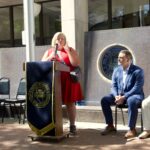
A scene from Wednesday’s school board candidates debate

What happened around Harrisburg last week? Here’s a summary of news and events that you may have missed.

Harrisburg city administration briefed City Council on a proposed five-year financial plan for the city, which shows essentially a flat operating budget through 2023. The city and the state-appointed Intergovernmental Cooperation Authority must approve a plan before Harrisburg can exit Act 47. Click here for the full story.

Harrisburg school board candidates held their final debate before the May 21 primary election. Once again, the stage was left to the challengers, as no incumbents (with one brief exception) showed up to engage in the discussion. Click here for the full story.

Harrisburg voters will experience changes to their polling locations in three wards. Voters in the 6th Ward, the 11th Ward and the 9th Ward, 2nd Precinct will have new voting sites for the May 21 primary. Click here for the full story.

Sara Bozich listed more than 100 things to do for this weekend, with something to suit about every taste and interest. Click here for the full story.

Sprint soon will open a new store inside of Strawberry Square. The store will occupy space on the first floor recently vacated by GNC. Click here for the full story.


Additional stories from TheBurg Daily over the past week:

Allison Hill stakeholders wonder why their neighborhood was selected for a medical marijuana facility.

Andrew Guth is our “Artist in Focus” for the month of May.

Cost of housing is on our editor’s mind as he ponders the question: What can you buy for $200,000?

Harrisburg Symphony Youth Orchestra will hold its annual Mother’s Day concert this weekend.

Our Musical Notes columnist opines on several shows this month that aren’t exactly youth-oriented.


Do you receive TheBurg Daily, our daily email digest of news and events? If not, subscribe here!

Continue Reading

Harrisburg readies 5-year financial plan in critical step to exit Act 47

Harrisburg City Council chambers on Tuesday night

Harrisburg officials tonight dug into the details of a proposed, five-year financial plan for the city, a critical step to fulfill a state mandate and ultimately exit Act 47.

Mayor Eric Papenfuse made a presentation of what he called a “responsible” long-range budget, which assumes “no significant growth” in the city’s tax base, yielding a flat operating budget of about $64 million through 2023.

“This is, in my opinion, a fiscally responsible plan,” he said. “It doesn’t call for the raising of taxes.”

The commonwealth required Harrisburg to draft a five-year financial plan as part of legislation passed last year that allowed the city to retain its elevated local services and earned income tax rates for another five years.

That plan must be approved by the Intergovernmental Cooperation Authority (ICA), the state-created body tasked with overseeing the city’s financial recovery.

After the budget plan passes muster, both the ICA and City Council must approve an Intergovernmental Cooperation Agreement. Papenfuse said that he hoped that step would occur by early July, before council takes its traditional six-week summer recess.

At that point, the city would be able to exit Act 47, the state’s program for financially distressed municipalities, Papenfuse said. The city has been in the program since 2010.

While revenues are assumed to remain mostly flat over the five-year period, expenses are expected to increase by several million dollars per year, with the gap made up by tapping the city’s substantial fund balance.

Over the next five years, the fund balance is projected to decrease from the current $21 million to about $3.3 million, leveling out at about 5 percent of the operating budget, which, according to Papenfuse, is the city’s target level.

In recent years, the city has built up a large fund balance mostly by under-spending its budget over successive years.

Councilman Ben Allatt said he was concerned about reducing the fund balance so greatly, considering that the city may well lose its enhanced taxing authority after the five-year period.

“I am concerned about going down to 5 percent, losing sources of revenue, then worrying about the scenarios that we can’t see right now,” he said.

Papenfuse responded that he expected that the city would continue to under-spend its budget, meaning that the fund balance may be higher. In addition, the five-year plan, he said, is a “living document” that will be amended annually.

“When all is said and done, the plan will change a lot from year to year,” he said.

In addition to the annual operating budget, the five-year plan also addressed the city’s capital improvement needs.

The plan divided capital projects into several buckets: critical projects that must be funded, less critical projects and lower-priority projects.

To that end, over the next five years, the city expects to spend $7.8 million on what it deems its most critical capital needs, which includes upgrades to 2nd Street, IT hardware and software, police patrol vehicles, police body cameras, fire apparatus and vehicles for public works.

Another 50 projects, costing some $8.4 million, are seen as important, but less critical. They include many park projects. Park projects also take up much of the third-tier priority list.

The administration also addressed the issue of what might happen after the five-year plan period expires in 2023.

Papenfuse said that, ideally, the legislature would agree to allow Harrisburg to continue to levy its higher taxation levels, revenue that makes up about 18 percent of the city’s operating budget.

However, if that doesn’t happen, the city should consider a Home Rule charter, which would free it from the strictures of the state’s third-class city code, he said. Harrisburg, then, would be able to recoup much of that lost revenue by retaining its current 2-percent earned income tax rate.

“I’m not here to debate Home Rule now,” he said. “But it is something we should debate as a city.”

In the end, the city needs to emerge from the five-year period with enough revenue to operate and, ultimately, have its credit rating restored, he said.

“The reality is that the city cannot survive without the taxing authority we currently have,” he said.

The city’s baseline financial forecast through 2023, as currently drafted


Continue Reading

The Week That Was: A summary of news and events around Harrisburg

The House of Music, Arts & Culture (HMAC) in Harrisburg

What happened around Harrisburg last week? Here’s a summary of news and events that you may have missed.

Affordable Housing was the topic of the evening at a Harrisburg City Council work session last week. Three area organizations told of their approaches and offerings, as council began to ponder options to offer greater affordable housing in the city. Click here for the full story.

Harrisburg City Council candidates last week held a debate that featured a discussion about everything from city finances to the state of the school district. Four of the six Democratic candidates participated in the event at the House of Music, Arts & Culture (HMAC). Click here for the full story.

Harrisburg School District vowed “full compliance” with a state audit of its finances. The district had balked at providing an outside auditor with access to its financial systems, but, under increased pressure, agreed to allow it. Click here for the full story. 

House of Music, Arts & Culture (HMAC) will be sold for $6 million, allowing it to exit Chapter 11 bankruptcy. A U.S. bankruptcy judge has approved the sale, slated for early June, which may bring big changes to the Harrisburg-based arts, event and restaurant venue. Click here for the full story.

La Cultura will hold its second “Don’t Touch My Hair” event this weekend at its space on Verbeke Street in Midtown. The event, on Sunday, combines beauty, art, culture and business, with numerous local vendors highlighted. Click here for the full story.

Midtown Scholar Bookstore is expanding once again, as the owners have bought a nearby storefront on the 1300-block of N. 3rd Street. The new space will serve as a retail location for Midtown Scholar’s discounted book inventory, freeing up room for more first-run books in the main store. Click here for the full story.

Pride of the Susquehanna held its annual launch into the Susquehanna River last week to begin operations for the season. The colorful riverboat is entering its 31st year, partly due to community supporters who stepped up last year with donations after the boat lost one-third of its sailing dates due to high water. Click here for the full story.

Sara Bozich has some great ideas for things to do this weekend, including the final days of Harrisburg Beer Week. Click here for her complete list of events.

TheBurg distributed our May issue last week, another edition full of community news, features, events and commentary. Pick up a free hard copy at more than 500 locations around central Pennsylvania or read the digital edition online.

Continue Reading

Harrisburg Today, Tomorrow: Council candidates share ideas, policies, visions

Councilman Dave Madsen speaks as challenger Christina Kostelecky, Councilman Westburn Majors and Councilwoman Danielle Bowers look on during Wednesday night’s candidate debate.

A Harrisburg City Council debate on Wednesday night was short on fireworks, but long on hope for the future, as four candidates shared ideas and policies on a wide range of issues facing the city.

Much discussion centered around the city’s financial future, as well as economic development and the state of the city school system.

“I see improving our schools as the number-one issue in Harrisburg because it has so many implications for the rest of our city,” said challenger Christina Kostelecky, who was joined on stage by incumbents Dave Madsen, Westburn Majors and Danielle Bowers.

Challengers Dionna Reeves and Brianna Smith were not present. The event’s sponsor, the community group Friends of Midtown, said that they were invited.

The six Democratic candidates are vying for three, four-year seats on Harrisburg City Council. No Republicans are running in the May 21 primary election.

About 70 residents attended the two-hour event inside the House of Music, Arts & Culture (HMAC) in the debate moderated by Mark Hall of abc27.

While city government has little control over the struggling city school system, candidates still spent much of the debate weighing in on ways that council could assist students.

“A youth invasion,” said Bowers. “Youth can come in and see how the city operates. They can see how the departments operate and perhaps find some new career opportunities through that.”

Several candidates mentioned safety, both from crime and while crossing city streets, as one way to help public school students. Madsen advocated for greater vocational training, while Majors suggested that successful graduates could act as role models and mentors.

“Kids from Harrisburg can excel in this life and be productive citizens not only in Harrisburg but in the world,” Majors said. “[Students] need to connect with graduates who are doing productive things.”

The candidates were more split on the issue of the district possibly entering state receivership. Bowers and Kostelecky said that receivership may be needed as a last resort, while Majors said he’d prefer to avoid a state takeover of the district.

Madsen said that, before receivership, the state might consider something like the Intergovernmental Cooperation Authority (ICA), a state-appointed board that currently is overseeing the city’s finances and the implementation of a five-year financial plan.

The candidates also addressed the city’s ICA, generally viewing it as a positive step forward. They all hoped that the financial plan implemented under the ICA would restore Harrisburg’s long-term fiscal health. If not, they said, they might consider a Home Rule charter, which would free Harrisburg from the state’s strict 3rd class city code, giving it greater flexibility in taxation policies.

The candidates agreed that the biggest issue with Home Rule is its complexity, which would make a charter difficult for residents to understand, support and, eventually, approve.

“My concern with a Home Rule charter is that it’s fairly complicated,” Madsen said. “I’m always open to the conversation, but . . . a lot of charters are voted down because [residents] don’t understand them.”

The candidates returned several times to two issues that seem to be growing in significance in Harrisburg—community-building and the importance of small businesses.

Several times, candidates touted Harrisburg’s neighborhoods, growing community spirit and walkability. They also seemed to agree on the value of small, homegrown businesses as vital both for growing the economy and fostering sense of community.

“In terms of City Council, we should rework the [business] regulations that already exist,” said Kostelecky, who said she believes that some small businesses are harmed by the complexity and cost of existing city rules. “A lot of regulations have been on the books for a long time.”

Interestingly, two issues that have been hot topics for years were not stressed at the debate. Parking didn’t come up at all, while the issue of crime made only brief appearances, mostly after an audience question about how to get guns off of city streets.

“The biggest thing we can do is get to a full complement in our police force,” Madsen said. “We have to get to a full complement and budget for that. Once we get more police on the street, it will reduce drugs and reduce the flow of guns.”

Hall asked the candidates to dream a little bit in a question about what they’d like the city to be like in 25 years.

“Our school system would be the premier school system in the state, which would encourage people to move here,” said Bowers, who, during the debate, also stressed the importance of an affordable housing policy in Harrisburg. “Our neighborhoods would be healthy, meaning they’re free of blight and litter. Our economy would be thriving.”

Majors said that he would like to see a city that has turned away from automobiles and embraced mass transit.

“I want to see Harrisburg be a more green city,” he said. “I want to see more connections from east to west in the city. . . as well as a top-notch education system.”

Madsen picked up on the themes of transportation and schools.

“I would love to see Harrisburg in 25 years with the best schools in the world,” he said. “Then I would like to see a bullet train that goes from D.C. to New York. That would make Harrisburg almost a suburb. That would be an economic boom that would take off—and a beautiful, green city.”

Kostelecky mentioned a block party she attended last year in her Midtown neighborhood, where neighbors met, shared stories and enjoyed food from city-based craft food producers and vendors.

“This is the Harrisburg that we deserve, a Harrisburg in which we all know our neighbors, we support local businesses,” she said. “We develop these close relationships, with every person incredibly proud to be in Harrisburg.”

Friends of Midtown will hold a debate for candidates for Harrisburg school board on Wednesday, May 8, at HMAC, 1110 N. 3rd St., Harrisburg. Doors open at 5:30, and the debate begins at 6 p.m.

Continue Reading

6 Candidates, 1 Question: Where do Harrisburg City Council candidates see the city going over the next four years?

Ah, May. Flowers bloom, birds sing and, if you live in Pennsylvania, candidates canvas and campaign.

Harrisburg almost always has interesting races, especially in off-year, municipal elections. Since the city is overwhelmingly Democratic, the primary is usually where the action is, and this year is no exception, as no Republicans are running for citywide office.

For City Council, six Democratic candidates are vying for their party’s nomination for three, four-year seats. The candidates include three current office-holders, Danielle Bowers, Dave Madsen and Westburn Majors, and three challengers, Christina Kostelecky, Dionna Reeves and Brianna Smith.

To get an idea of where the candidates stand, we asked all the same question, requesting that they keep their answers to 500 words. We hope that these responses offer insight into the candidates’ visions for the city and how they hope to achieve them. Responses are listed in alphabetical order and have been lightly edited to conform to our style and grammar guidelines.

The primary is May 21. Please vote to make your voice heard on the future of your city.


Danielle L. Bowers

Question: The term for this Harrisburg City Council seat runs for four years. What one or two major goals would you like to see Harrisburg accomplish over the next four years? Why? How would you, as a council member, try to accomplish these goals?

Answer: Over the next four years, I would like to see the City of Harrisburg accomplish the following two goals:

  1. Affordable Housing
  2. Economic Development

Affordable housing can be achieved through inclusionary zoning and blight reduction. The city conducted a housing study in 2018 to determine housing needs over the next five years. The study determined that there is a need for affordable housing in every area of the city over the next five years.

I believe the city should take a proactive approach to meet the impending need. Inclusionary zoning can be implemented to achieve affordable housing. Inclusionary zoning requires developers to designate a percentage of their housing units for low to moderate-income residents.

Blight reduction could also assist in achieving affordable housing. By reducing blight, I believe the city will have more viable sites for affordable housing. The city has a Harrisburg Property Reinvestment Board. The board meets monthly, and its sole purpose is to address blighted property throughout the city.

The goal of economic development can be achieved through promotion of equitable development, support of local entrepreneurs, and spurring job creation for local residents. Equitable development assists in achieving the goal of economic development within the city. Equitable development ensures that minority-owned business enterprises (MBEs), women-owned business enterprises (WBEs) and disadvantaged business enterprises (DBEs) are active participants in the city’s procurement and contracting opportunities. Equitable development could be achieved through participation in business workshops offered by the city, partnerships with the local chambers of commerce to identify businesses for contracting opportunities and targeted community engagement.

By supporting local entrepreneurs, the city will not only improve the local economy, but improve neighborhoods as well. Through local development, the city will provide access to goods and services available in their communities. Finally, economic development within the city will spur job creation for local residents. The city has a strong talent pool in an increasingly competitive labor market. Through increased development, the city should see more available jobs in various industries being filled by city residents who are qualified to succeed in these roles.

As a council member, I will work to ensure the city meets the two major goals of affordable housing and economic development. I believe these goals can be achieved through social innovation, effective research and collaboration between council and the administration. Should I be elected to serve a full term on City Council, I will continue to work to achieve these goals over the next four years.


Christina Kostelecky

Question: The term for this Harrisburg City Council seat runs for four years. What one or two major goals would you like to see Harrisburg accomplish over the next four years? Why? How would you, as a council member, try to accomplish these goals?

Answer: I’m Christina Kostelecky, and I’m running for our community. My goals focus on improvements for all residents rather than just a select few.

Economic development throughout the city. It’s time to focus on neighborhood development throughout the city. Evidence shows that costs are lower and returns are greater when we focus on small projects throughout neighborhoods. So, I’ll work with community groups and the planning commission to develop projects that our neighborhoods want that will benefit all Harrisburg residents. Imagine your neighborhood with wide sidewalks, clean streets and a locally-owned business just a few doors down.

I’ve spoken with Andrea, Shaun and Julia, local entrepreneurs frustrated with the hoops they’re jumping through while trying to start or expand a business in Harrisburg. I’m committing to the time and energy required to go through current legislation, line by line, to find outdated policies, to draft new language, and to build the coalitions necessary to reform the laws. Big, out-of-state developers don’t suffer from our tedious regulations; they simply hire expensive legal teams and pass costs along to the customers. Meanwhile, small business owners can’t afford to delay an opening (and therefore revenue) by several months. Our goal must be to encourage local businesses, not discourage them with antiquated, costly regulations.

Improve our schools. Undoubtedly you’ve heard about the state of our schools. Whether you’re a parent or are planning to have children, a business looking for a qualified workforce, or a long term resident of Harrisburg, you understand the importance of great schools and care deeply about their improvement. The quality of our city depends on the quality of our schools, and it’s time for City Council to play an active role in giving our city’s youth the positive learning environment and promising future they deserve. Simple steps like attending school board meetings can go a long way in making sure we stay on track with the administration and necessary improvements.

I recently met Kim and Yamaris, both parents of two who share my view that the solutions to our school problems are complex and will take time. Kim talks about walking a bunch of kids to school to make sure they stay safe, but she worries when she’s not around to do that. Yamaris dropped out of school and doesn’t want that for her own kids. While City Council members can’t change the schools overnight, we can hold the school board accountable. To that end, I commit to attending at least four school board meetings each year. Roughly two-thirds of our taxes go to the school system—I’m willing to pay that much when there’s some return on our investment.

Other goals include private-public partnerships for our community spaces (e.g. allow businesses to sponsor parks and paths), addressing affordable housing (e.g. reduce lot size restrictions), and increasing civic engagement by encouraging participation in citywide events. I invite each of you reading this to reach out to me; let’s start that engagement today—for our community!


Dave Madsen

Question: The term for this Harrisburg City Council seat runs for four years. What one or two major goals would you like to see Harrisburg accomplish over the next four years? Why? How would you, as a council member, try to accomplish these goals?

Answer: The goal is to improve the quality of life for our citizens. By making sure the budget reflects the health, safety and welfare of our community. We will accomplish this by continuing to invest in our police, fire and public works departments.


Westburn Majors

Question: The term for this Harrisburg City Council seat runs for four years. What one or two major goals would you like to see Harrisburg accomplish over the next four years? Why? How would you, as a council member, try to accomplish these goals?

Answer:
As a lifelong resident of the City of Harrisburg, I am excited about the opportunity to continue to serve my community on City Council. Over the next four years, my focus on City Council will be:

Continuing the work of improving public infrastructure and addressing blight.

In my role on City Council as chair of the Public Works Committee, over the last four years I listened to the needs of our community to improve the conditions of our neighborhoods. We know that as a city if we are going to be able to grow, attract new business and encourage existing businesses to expand, we must continue the work to repair our infrastructure and address blight.

Blight and trash discourage people from investing in our communities and neighborhoods. Last year, we went to the community to hold a series of meetings on ways to address these matters. The result was the adoption of a sanitation ordinance that increased fines and penalties for violations (including illegal dumping) and holds property owners accountable. Over the next four years, I remain committed to supporting increased enforcement and aggressively holding the responsible parties accountable for the cost of cleanup—instead of taxpayers. By improving the condition of our neighborhoods, we can restore a sense of pride in the city and attract more people to reside in the city while making it more attractive for businesses to locate in the city, which leads to jobs and improved living conditions for everyone. Over the next four years, I will work to develop policies that will encourage redevelopment.

Continued financial recovery and economic development.

Harrisburg has come a long way over the last four years. When I was elected to council in 2015, the city was in state receivership through Act 47. Council has worked with the administration to develop balanced budgets and stabilize our finances. Now the city is emerging from Act 47 and working with the Intergovernmental Cooperation Authority to develop a plan to improve our finances over the next five years. The law passed by the General Assembly gives the city five years, with our increased taxing authority under Act 47, to stabilize our finances.

My goal in the next four years is to make Harrisburg a more attractive place for investment. I will work with the business community to encourage reviving vacant commercial properties in our business corridors in Uptown, Allison Hill and throughout the city instead of looking to locate in surrounding areas outside the city. If we are able to grow our tax base through business development and growth in our neighborhoods, we will not need to increase taxes on a community that is already stretched. This includes working diligently with city departments to engage in partnerships with businesses, contractors and employers to provide greater opportunities for employment, job training and entrepreneurial experiences for the citizens of the city.

This is an exciting time for the city of Harrisburg, and I look forward to being a committed voice of the citizens, responsive to their needs and making Harrisburg an example of the benefits that can be gained when community, business and government work collectively for the good of the people.


Dionna Reeves

Question: The term for this Harrisburg City Council seat runs for four years. What one or two major goals would you like to see Harrisburg accomplish over the next four years? Why? How would you, as a council member, try to accomplish these goals? 

Answer: The city of Harrisburg has its share of challenges as I am sure other cities may have. A major goal I would like the city to accomplish over the next four years is the beautification of the city. Throughout areas of Harrisburg, there are vacant or abandoned properties. These vacant or abandoned properties are blight on the entire city, creating safety issues and a negative image.

Tackling this goal will be essential in improving the quality of life for residents. Encouraging revitalization throughout the entire city, not only in targeted areas, is a possible solution as all neighborhoods deserve attention. Community outreach will be a vital task to determine the needs in different neighborhoods around the city. Improving the overall attitude about Harrisburg can eventually create a feeling of hope and pride with city residents. Revitalization and beautification can keep residents living safely and thriving daily.

Other possible solutions to creating the beautification in our city are developing a strategic plan to include new policies and procedures for landlords. Landlord accountability needs to be reinforced, stricter enforcement of the current rules for blight remediation, and strengthening penalties for violations of city codes could all improve Harrisburg’s appearance. The revitalization of Harrisburg would be the responsibility of the city and city residents to rebuild and restore our community.


Brianna Smith

Question: The term for this Harrisburg City Council seat runs for four years. What one or two major goals would you like to see Harrisburg accomplish over the next four years? Why? How would you, as a council member, try to accomplish these goals?

Answer: One goal that I would like to see Harrisburg accomplish over the next four years is to increase job opportunities for today’s youth. For every young person, a job offering decent work is an important step in effecting the transition to adulthood, a milestone towards independence and self-reliance. For young people living in poverty and in other disadvantaged situations, employment is often the main means for achieving a better life. Creating and fulfilling income-generating job opportunities for young people can have a direct positive outcome for poverty improvement in Harrisburg. Youth employment benefits social development. It also benefits economic development by helping the entry of young, skilled people into the productive sectors of an economy and enabling the economy to sustain or increase its productivity and competitiveness in the global marketplace. Also, I would like to create partnerships with local businesses to invest in our youth by hiring them.


School Slate
Harrisburg City Council isn’t the only competitive primary race in Harrisburg this year.

The race for school board is arguably even more contentious, with 12 Democratic candidates competing for five, four-year seats. Like in the City Council race, no Republicans chose to run.

Below are the names of the candidates, with incumbents (elected and appointed) indicated by (I) after their names.

  • Jayne Buchwach
  • Lewis Butts Jr.
  • Lionel Gonzalez (I)
  • Lola Lawson (I)
  • Ralph Rodriguez
  • Ellis R. Roy (I)
  • James Thompson
  • Doug Thompson Leader
  • Gerald Welch
  • Patricia Whitehead-Myers (I)
  • Cory X. Williams
  • Steven Williams

At press time, several community groups were planning to host candidate forums and debates for both City Council and school board. We urge you to attend one of those events to learn more about the candidates.

Continue Reading

April News Digest

Free Downtown Parking Weighed

Free parking may stay on the menu in downtown Harrisburg, as City Council last month considered a measure that would extend complimentary street parking for another year.

The resolution would offer free street parking in most of downtown after 5 p.m., an arrangement that has been in effect since April 2018.

The current, one-year agreement actually expired on April 1, but the parties involved agreed to extend it through the month, until it could be renewed for another year, said Mayor Eric Papenfuse.

Technically, the resolution would allow the city to enter into an agreement with Dauphin County and the Harrisburg Downtown Improvement District (HDID) to split the $270,000 price tag. The city’s share would be $110,000, with Dauphin County, which has already approved the agreement, also kicking in $110,000. HDID would cover the remaining $50,000.

That money would be paid to Trimont Real Estate Advisors, the asset manager for the parking system. Trimont, along with operator SP+ (locally, Park Harrisburg), took control of the city’s municipal parking system as part of a debt-restructuring plan in 2014. The $270,000 sum represents the total revenue that SP+ had collected from meters and enforcement fines between 5 and 7 p.m. in the HDID zone, which ranges roughly from State Street to just past Chestnut Street.

Papenfuse said that the city has already accounted for the expected expense as part of its 2019 budget, with the money originating from its share of parking revenues.

HDID’s Executive Director Todd Vander Woude said that he enthusiastically backed another year of free evening street parking. HDID members, many of whom are restaurant owners, have reported increased happy hour and dinner business over the last year since the free parking went into effect, he said.

“I’ve heard very positive things from businesses and customers alike,” he said. “There’s been an increase in downtown business. It’s all been very positive.”

The resolution also requests a city contribution to continue another parking program—the four hours of free street parking on Saturdays enabled by using the code “LUV HBG” for users of the ParkMobile app.

That code went into effect more than four years ago to try to help businesses that said they were being harmed by the $3-per-hour charge for Saturday street parking, which had been free when the city ran the parking system.

Trimont had never requested payment before for revenue allegedly lost through use of the app. However, according to the resolution, it now is requesting $90,000 for the next year.

At press time, council had yet to vote on the “Free After 5” resolution and take into consideration the LUV HBG payment request.


Lobbyist Contract Renewed

Harrisburg City Council last month approved a contract with Maverick Strategies for a second, one-year consulting contract.

After a two-month hold, council passed the $60,000 outlay by a 5-2 vote. In February, council tabled the proposed 2019 agreement with the Harrisburg-based lobbying shop, asking for detailed billing statements for the city’s prior contract, which ended Dec. 31.

Mayor Eric Papenfuse has credited Maverick for helping the city marshal legislation through the state legislature that will enable it to exit Act 47 while retaining its current, elevated levels of taxation for five more years.

The city, he has said, continues to need professional representation before the state legislature, including for renewing the annual $5 million appropriation to the city to support the provision of emergency services to the Capitol complex.


New Director for Broad Street Market

Joshua Heilman last month was named the new executive director of the historic Broad Street Market in Harrisburg.

Heilman, of Harrisburg, bested more than 80 other applicants, according to Amy Hill, president of the nonprofit’s board of directors.

Hielman replaces Beth Taylor, who left the position in December to become general manager of the Millworks restaurant and brewery.

In addition to overseeing market operations on a day-to-day basis, Heilman will help launch a new community program, Friends of the Broad Street Market, and also will be encouraged to identify funding opportunities through grants, Hill said.

“We needed someone who could help us launch our community engagement mission,” she said. “It was a tough decision. There were many, many qualified candidates.”


Brown Appointed to School Board

Joseph Brown Sr. has been appointed to a vacant seat on the Harrisburg school board.

Dauphin County Judge Scott A. Evans selected Brown, a former board member, even though he did not petition for the seat.

The seat became empty following the December death of Melvin Wilson. Subsequently, the city school board could not decide on a replacement, which threw the decision to the court.

Four candidates informed the court of their interest in the seat. Evans, however, selected none of them, opting instead for Brown, who served on the board during the 1990s.


HU Selects Hotel Partner

Harrisburg University last month announced that it had selected a city-based company as its hotel partner for the 17-story mixed-use building it plans to construct in downtown Harrisburg.

HHM, also known as Hersha, has its headquarters on Front Street in Harrisburg. It will operate the 197-room hotel attached to HU’s academic tower at S. 3rd and Chestnut streets.

“We couldn’t be more excited,” said HU President Eric Darr. “Obviously, they’re committed to the region and to the city of Harrisburg. They’ve been long-time supporters of the university.”

HU plans to break ground in July on the $135-million project, which will include a restaurant in addition to the hotel and academic portions. The educational space will house as many as 1,000 students and a health science education center for nursing, pharmaceutical sciences and other health-related programs. It also will have classrooms and training space for advanced manufacturing and interactive media programs.

The 386,200-square-foot building is expected to take two years to complete, opening in time for the 2021-22 academic year. The hotel is expected to open at the same time as HU’s academic portion, Darr said.

The hotel will front Chestnut Street, and the hotel and academic portions of the building will be separated by an atrium in the first 10 stories of the building, according to HU.

The three portions of the building will be owned and financed separately, Darr said. The university will own and finance the academic portion, estimated at $100 million. HHM will own the hotel, projected to cost $33.5 million. The restaurant, expected to cost about $1.5 million, also will be owned separately, he said.

HHM operates about 125 hotels across the United States under a variety of hotel brands, including Westin, Hilton and Hyatt.

“This is a natural partnership for us,” said Naveen P. Kakarla, CEO of HHM. “We are honored to lend our expertise to this exciting project in the city where our company began.”


Apartments for Tracy Mansion

It’s been a long time coming, but a developer is set to complete renovations to the century-old Tracy Mansion.

Last month, developer Jack Kay received approval from the Harrisburg Architectural Review Board for several changes to the exterior of the property at 1829 N. Front St., including a new ADA-compliant ramp, outside steps, a landing and a covered canopy at the southern elevation of the building.

This will allow Kay’s company, York-based Susquehanna Real Estate, to begin converting the unused portions of the property to 13 market-rate apartments.

Industrialist David Tracy built the 30-room mansion as a private residence in 1918. In 1951, it became an osteopathic hospital and eventually a mental health facility.

Kay bought the property in 2005 with plans to convert it to an office condominium, adding a new, seven-story building in the parking lot next door. He received zoning board approval two years later, but the project died after the recession hit in 2008.

In 2012, Kay sold part of the building to Char Magaro, who opened the restaurant, Char’s Tracy Mansion, there. The restaurant, owned separately, is not part of the apartment project.

Kay expects construction to take up much of this year, with an anticipated opening in the fall.

Five two-bedroom and eight one-bedroom units are planned for about 12,000 square feet of space in the building. They will range in size from 750 to 1,200 square feet, and rents are expected to be about $900 to $1,500 a month.

“We are trying to create interesting spaces in the interior with all the modern conveniences,” Kay said.

Kay said that he undertook the project, estimated at about $2 million, due to the revival of both the city and the neighborhood.

“Over a period of time, we came to realize the interest in living in town, especially in a nice location, and that encouraged us,” he said. “With Midtown improving, we felt it was the right time to do this.”


Big Donation for HACC

The HACC Foundation last month announced the largest single donation in its history, a gift of nearly $1.3 million to establish the John E. Paxton and Gloria W. Paxton Fund for Excellence in STEAM.

This fund will provide access to programming and technology for HACC students enrolled in science, technology, engineering, arts and mathematics (STEAM) programs.

“They could have given to any nonprofit, and they gave to us,” said Linnie Carter, executive director of the HACC Foundation. “That’s tremendous.”

The Paxtons lived in the Harrisburg area for much of their lives. John, a land survey engineer, was active in the Lawnton and Chambers Hill fire companies. He died in 2007.

Gloria was a member of the Humane Society of Harrisburg and the National Wildlife Federation. Her estate bequeathed the money to HACC following her death in 2017.

“The genesis of this gift is generosity,” said Mark Mateya, the Paxton family attorney. “The Paxtons had no children, but they were very involved in their community and were very good at saving money.”

According to HACC, the Paxton’s gift will provide for several STEAM programs and initiatives, including a mentoring program for underrepresented and marginalized first-time college students, a scholarship program, a fund to pay for textbooks, and the implementation of video classrooms.


So Noted

Capital Region Water last month said that it has started five water infrastructure projects that will extend through the early summer. The projects—four in Susquehanna Township and one in Harrisburg—may lead to road closures and detours until they’re completed.

HACC last month announced a tuition increase and pay freezes as it passed its 2019-20 budget. Under the $140 million spending plan, students from non-sponsoring districts will pay an average of 2.1 percent more in tuition, and salaries will be frozen for employees earning more than $40,000 per year.

Janetta W. Green was appointed last month as the acting chief executive officer for the Center for Independent Living of Central PA, a nonprofit organization with a mission to eliminate and prevent barriers that people with disabilities experience. Green, who has more than 34 years of experience working in the independent living movement, fills the position left vacant by long-time CEO Theo Braddy’s retirement.

Jessica Knapp has been appointed the new executive director for the central Pennsylvania affiliate of Communities in Schools of Pennsylvania. In this position, Knapp will oversee the long-term strategy and direction for the central PA affiliate, as well as development, partnerships and communications efforts.

New Cumberland Farmers Market opens for the season on May 4. The market, which takes place at 4th and Bridge streets in the parking lot of Kelly Financial Services, will operate every Saturday through Oct. 26, 9 a.m. to 1 p.m.

TheBurg captured 16 Keystone Press Awards in the annual contest honoring the best in journalism in Pennsylvania, sponsored by the Pennsylvania NewsMedia Association. TheBurg won for work completed in 2018 in a wide range of categories, including for reporting, writing, design and illustration.

Theo Braddy retired last month after 30 years as CEO of the Center for Independent Living of Central PA, a nonprofit that works to eliminate barriers for people with disabilities. He will continue his involvement as a consultant.

UPMC Pinnacle took its first step into Midtown Harrisburg last month, relocating about 40 administrative workers to the Campus Square building at Reily and N. 3rd streets. The relocation will free up more space at the main campus for patient services, according to President and CEO Phil Guarneschelli.

Urban Churn last month opened its first brick-and-mortar scoop shop at 1004 N. 3rd St., Harrisburg, selling ice cream and related treats The small-batch, craft producer plans to continue operating its stand inside the Broad Street Market, said owner Adam Brackbill.

Virginia “Ginny” Roth, president of PPO&S, a Harrisburg-based integrated marketing communications agency, has received the YWCA Greater Harrisburg’s Carolyne L. Smith Legacy Award for community service. Roth was recognized for her lifelong dedication to a variety of community causes focusing on women’s empowerment, community health and social justice.

Wakeen Enterprise has relocated into Harrisburg from Mechanicsburg, with its new office located at 2001 N. Front St., Suite 300. According to Wakeen, the larger, 5,000-square-foot space gives the marketing/communications/media company the ability to host workshops, better support clients and serve as a hub for its nonprofit entity, Connection Mission. For more information, visit www.wakeenenterprise.com.


Changing Hands

Barkley Lane, 2521: Truemac Homes LLC to C. & S. Posey, $90,000

Benton St., 541: F. Brown to B. Guerrero, $62,370

Boas St., 420: PA Deals LLC to K. & D. Borelli, $116,000

Chestnut St., 308: F. & L. DiNatale to Harrisburg Realty Improvements Corp., $132,000

Conoy St., 114: J. Harmon to W. McMartin, $101,000

Cumberland St., 264: C Peiffer to Z. Rance Bare, $128,000

Derry St., 2223: N. Nguyen & D. Dang to J. Bach, $125,000

Division St., 505: PA Community Investors LLC to J Elias Holdings LLC, $35,000

Dunkle St., 555: Members 1st Federal Credit Union to J. Hayes, $61,800

Grand St., 912: D. & M. MacIntyre to M. Briner, $75,000

Green St., 2011: E. & S. Orndorff to D. & J. Zeile, $229,500

Green St., 3118: Hawk Vesta LLC to D. & M. Edmiston, $110,000

Greenwood St., 2516: R9 Holdings to KMM Development LLC, $44,000

Harris St., 443: E. Washington to Green Book Enterprises LLC, $115,000

Kelker St., 644: Dobson Family Partnership to EB Real Estate Holdings LLC, $53,000

Logan St., 1731: C. Auletta to L. Fernandez, $142,000

Manada St., 1946: E Street Properties to DHS Team LLC, $42,900

Market St., 2200 & 2300: Diocese of Harrisburg to William Penn Holdings Inc., $300,000

North St., 1930: Brey Ltd. LLC to Y. Abraham, $30,000

N. 2nd St., 610: C. Delozier to Wyco Investments LLC, $175,000

N. 2nd St., 1120: 2013 Central PA Real Estate Fund LLC to N. Hurley, $139,900

N. 2nd St., 1929: G. & W. Banova to E. & A. Anderson, $148,000

N. 3rd St., 1324: J. & M. Fornwald to E. Papenfuse & C. Lawrence, $30,000

N. 3rd St., 1638: S. King & S. Williams to J. Frank & K. Mercado, $90,000

N. 3rd St., 1814: W. & D. Balsbaugh to K. Lally, $77,900

N. 3rd St., 2104 & 2106: J. Hwang & H. Chen to J. & D. Negron, $50,000

N. 3rd St., 2206: S. & S. Peart to Grentals LLC, $138,000

N. 3rd St., 3001: HBG Investments LLC to A. Sauer, $38,000

N. 4th St., 2452: Lifeline F1 LLC to PropertyNet LLC, $53,000

N. 4th St., 3117: S. Snyder to P. Hiciano, $106,500

N. 6th St., 2935: J. Shearer to M. Thebes, $107,500

N. 18th St., 74: Lenape Investment Group LLC to Declan Holdings LLC, $35,500

N. 19th St., 1005: G. Neff & City Limits Realty to G. Graham, $35,000

N. Front St., 1103: L. Binda to S&A Merris LLC, $190,000

N. Front St., 1829, Units M1B, M1C, M2A, M2B, M2C, M2D, M2E, MBB, MBC & MBD: Cityscape Investors II LLC & WE Jackson to Tracy Partners LP, $300,000

Norwood St., 905: O. Messmer to F. & R. Ahmed, $40,000

Parkside Lane, 2926: L. & B. Williams to J. McKeithan, $138,000

Penn St., 1615: R. Straub to B. Waltz, $130,000

Putnam St., 1617: H. Nguyen, J. Le & K. Ly to J. & R. Morales, $109,900

Reel St., 2467: V. Rivas to G. Garcia, $70,000

Reel St., 2469: V. Rivas to M. Garcia, $70,000

Reel St., 2733: P. & D. McClenahen to J&G Estates LLC, $30,000

Regina St., 1628: R. Bryant to JOG Investments LLC, $30,000

Reily St., 306: T. Canady to Red Boat LLC, $115,000

Rolleston St., 1113: C. Pastula to R. Gerhards, $69,500

Rudy Rd., 1927: P. Malseed to T. & R. Dantzler, $83,000

Schuykill St., 227: Tassia Corp. to K. Braddock, $54,500

S. 19th St., 1141: 929 Holdings to 1141 South 19th LLC, $60,000

S. 26th St., 627 & 2611, 2613, 2615 & 2617 Duke St.: M. Tucci to T. Brooks, $106,375

State St., 1408: R. & A. Sharp to H. Cabrera, $96,000

Susquehanna St., 1618: Secretary of Housing & Urban Development and Information Systems Networks Corp. to M. Bekelja, $40,001

Sycamore St., 1506: D. Marshall to J. Elias Holdings LLC, $35,000

Sylvan Terr., 124: Reussi Group LLC to K. Zoubiri & F. Abdallahoum, $65,000

Vernon St., 1317: M. Nichols to J. Baugher, $30,500

Vineyard Rd., 212: A. Miller to E. Kawa, $160,000

Washington St., 113: J. & C. Kuntz to W. & M. Hammerstein, $111,900

Whitehall St., 2025: Roberta L. Daniels Trust to Wells Fargo Bank NA, $58,169

Continue Reading

The Week That Was: A summary of news and events around Harrisburg.

What happened around Harrisburg last week? Here’s a summary of news and events that you may have missed.

Harrisburg Beer Week kicked off with the “First Sip,” launching a host of events that runs through May 5. So, what is Beer Week all about? What’s their signature “717 Collab” beer this year? Click here for the full story.

Harrisburg City Council officially approved a three-year renewal of the “Free After 5” downtown parking program. For the past year, the Harrisburg Downtown Improvement District, Dauphin County and the city have chipped in to offer free street parking in most of downtown after 5 p.m. Click here for the full story.

Harrisburg School Board hired long-time city operative James Ellison as its in-house solicitor. A split board opted for Ellison, who has served as district solicitor twice before. Click here for the full story.

Intergovernmental Cooperation Authority (ICA), Harrisburg’s new state-appointed financial oversight board, has named Jeffrey Stonehill as its executive director. The ICA also appointed counsel and a website developer. Click here for the full story.

Midtown Harrisburg is about to bear the full brunt of roadwork, as the 3rd Street project hits the intersection with Verbeke Street. Motorists and pedestrians can both expect inconveniences over the next month in the heart of Midtown at the Broad Street Market. Click here for the full story.

Pennsylvania STEAM Academy has filed a court petition to try to overturn the decision of the Harrisburg school board, which rejected its charter school application in February. A court decree would send the issue to the state Charter School Appeal Board. Click here for the full story.

TheBurg published two editorials this week concerning the Harrisburg school system. The first criticized incumbent school board members for not participating in a series of candidate debates. The second urged immediate change in the district, given the recent vote to hire James Ellison as solicitor and the ongoing dispute between the district and the state over a financial audit.

Vivi on Verbeke is a must-stop in Harrisburg to enjoy pottery, photography and other art, as well as meet the fascinating couple that runs the shop. So says our arts columnist after a 3rd in the Burg visit. Click here for the full post.

What’s going on around Harrisburg this weekend? Check out the weekend roundup from Sara Bozich.

Continue Reading

Good news for diners, drinkers, as Harrisburg council approves, extends free downtown parking program

With Tuesday’s City Council vote, the “Free Parking” sign will remain on the meter for another three years.

If you liked the past year of free evening parking in downtown Harrisburg, you’ll love this—City Council has approved renewal of the program for three more years.

Council unanimously passed a resolution on Tuesday night that will allow for free street parking in most of downtown after 5 p.m. through April 2022.

“Overall, customers and restaurants are receiving positive outcomes from the 5 to 7 program,” said council President Wanda Williams, before casting her “yes” vote.

The “Free After 5” program has been in effect for the past year, with the city, Dauphin County and the Harrisburg Downtown Improvement District (HDID) splitting the $270,000 price tag.

That money is paid to Trimont Real Estate Advisors, the asset manager for the parking system. Trimont, along with operator SP+ (locally, Park Harrisburg), took control of the city’s municipal parking system as part of a debt-restructuring plan in 2014.

The $270,000 sum represents the total revenue that SP+ had collected from meters and enforcement fines between 5 and 7 p.m. in the HDID zone, which ranges roughly from State Street to Chestnut Street.

Mayor Eric Papenfuse has said that the city’s portion for this year has already been budgeted for, with the money coming from the city’s share of parking revenues. The county still must approve the three-year term, which, according to city Solicitor Neil Grover, should happen on Wednesday. The county had already OK’d a one-year renewal.

According to HDID Executive Director Todd Vander Woude, businesses, especially restaurant owners, have reported increased sales since the program began in April 2018.

During last week’s council work session, Steve Weinstock, owner of Stock’s on 2nd and Carley’s Ristorante, reported much higher dinner receipts over the past year, crediting the free parking program.

Notably, council on Tuesday did not approve another request from Trimont, which wants $90,000 a year to continue the program that has offered four free hours of parking on Saturdays by using the LUV HBG code through the ParkMobile app.

“Council has not received any documents to prove [Trimont’s] statement,” Williams said of the request for $90,000.

Instead, council authorized the administration to negotiate with Trimont in the hope that the company will continue to allow use of the code at no cost to the city.

Continue Reading

The Week That Was: A summary of news and events around Harrisburg

This past week, Urban Churn opened its new ice cream parlor in Midtown Harrisburg.

What happened around Harrisburg last week? Here’s a summary of news and events that you may have missed.

Harrisburg came in at No. 44 on U.S. News & World Reports’ “Best Places to Live” list, the highest ranking of any metro area in Pennsylvania. The area’s affordability and easy access to nature impressed the publication, which also ranked Harrisburg No. 44 last year. Click here for the complete story.

Harrisburg City Council on Tuesday began discussing whether to extend a program that offers free street parking downtown after 5 p.m. Council members seemed inclined to renew the program but were reticent to meet a new demand—providing compensation to Standard Parking for use of the LUV HBG mobile app code. Click here for the complete story.

Harrisburg school board met amid acrimony last week, as several board members tried, and failed, to suspend the district superintendent. The split board also failed to appoint an in-house district solicitor, though board members will meet in special session on Monday to reconsider that issue. Click here for the complete story.

Harrisburg school board candidates met for a second debate to discuss issues relevant to the district. As in the first debate, seven challengers participated in the debate at HMAC, but no incumbents attended. Click here for the complete story.

Harrisburg University last week offered details for its new student center, which currently is under construction inside Whitaker Center. The student center, which features a sleek, industrial look, is expected to open this fall in downtown Harrisburg. Click here for the complete story.

SoMa Block Parties will return this summer, said co-sponsors Harristown Enterprises and Sara Bozich. The first party will take place on May 11 in conjunction with the Harrisburg Young Professionals’ annual home tour, with monthly parties continuing through September. Click here for the complete story.

Urban Churn opened its first brick-and-mortar retail store, located on N. 3rd Street in Midtown Harrisburg. The craft ice cream company also plans to retain its stand inside the Broad Street Market. Click here for the complete story.

Continue Reading

Downtown stakeholders urge HBG council to renew free parking after 5

Street parking was full along N. 2nd Street in Harrisburg on Tuesday night.

Free evening parking has been a boon to downtown Harrisburg and should be continued, several downtown stakeholders told City Council members tonight.

At a council work session, representatives from a downtown restaurant, a theater and two nonprofits presented their case to extend an agreement that provides free street parking after 5 p.m. in most of downtown Harrisburg.

“Everything we’ve heard has been positive, positive, positive about the ‘Free Parking After 5’ program,” said Todd Vander Woude, executive director of the Harrisburg Downtown Improvement District (HDID).

Vander Woude cited a “car count” conducted by HDID to support his position. He said that 531 cars were parked in the free parking zone on a “random Wednesday” in October 2018. That contrasted with just 254 cars parked in the same zone during a count in September 2015, before the free parking program began.

Moreover, Vander Woude said that restaurants have reported much greater business over the past year. He cited an average increase in sales of 16 percent over the prior year, with some restaurants reporting much higher increases.

If approved, the resolution would allow the city to enter into an agreement with Dauphin County and HDID to split the $270,000 annual price tag. The city’s share would be $110,000, with Dauphin County, which has already approved the agreement, also kicking in $110,000. HDID would cover the remaining $50,000.

That money would be paid to Trimont Real Estate Advisors, the asset manager for the parking system. Trimont, along with operator SP+ (locally, Park Harrisburg), took control of the city’s municipal parking system as part of a debt-restructuring plan in 2014. The $270,000 sum represents the total revenue that SP+ had collected from meters and enforcement fines between 5 and 7 p.m. in prior years in the HDID district, which ranges roughly from State Street to just past Chestnut Street.

The current, one-year agreement actually expired on April 1, but the parties involved agreed to extend it through the month, until it could be renewed.

Restaurateur Steve Weinstock cited much greater sales at his restaurants since the free parking program started, saying that his dinner business at Stock’s on 2nd had increased by 34 percent and at Carley’s Ristorante by 29 percent.

“These are huge numbers,” Weinstock said. “They’re still not what they were a few years ago, but they’re headed in the right direction.”

Several council members echoed their enthusiasm for the renewal, advocating for a three-year agreement, not just one.

“Before, it was dead downtown,” said council President Wanda Williams. “Now, you can’t find a place to park. It’s a win-win for everyone.”

While most council members seemed happy to renew the agreement, they were less pleased about Trimont’s other request—compensation for use of the LUV HBG code on the ParkMobile mobile app, which provides four hours of free parking on Saturdays. Trimont is asking for $90,000 compensation for use of the code over the next year.

Council members said they wanted additional data from Trimont before entering into a negotiation over continuing the mobile code. Until now, Trimont had attached no cost to use of the LUV HBG code.

“We like the LUV HBG program. We would like it to continue,” said Councilman Ben Allatt. “But we want it open to negotiation.”

Melissa Nicholson, executive director of Gamut Theatre Group, advocated for the continuation of the code.

“LUV HGB has been an enormous help to us,” she said, explaining that Gamut has many Saturday activities at its theater on N. 4th Street.

In another matter, the administration asked council to ratify the submission of a grant application to the state Department of Conservation and Natural Resources for construction of a “chutes and ladders” playground in Reservoir Park.

If received, the $250,000 grant would substantially offset the $600,000 cost of the project, the construction of a play area that mimics the features of the classic children’s game. The city plans to apply for other grants to pay for much of the balance.

Council is expected to take action on these issues at its legislative session next week.

Continue Reading