Tag Archives: Catherine Lawrence

Just Baked Cakes: Better than grandma used to make?

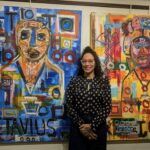
Owner Tammy Worthy-Jones stands behind some of her baked goods at Just Baked Cakes & Pies.

If you don’t have young kids, you may not have had a reason to venture into the children’s section of Midtown Scholar Bookstore.

But what if you knew there was a bakery tucked back there?

Recently, Just Baked Cakes & Pies debuted in space long occupied by P&R Bakery. The sweet shop boasts “desserts that remind you of grandma,” according to their tagline. But if you give them a try, they might even beat out grandma.

“Everything here is baked from scratch,” said Owner Tammy Worthy-Jones. “Everything is made with real ingredients.”

Worthy-Jones makes cookies, cakes, pudding and sweet potato pies, but the fan-favorite is her cheesecake—strawberry, sweet potato, plain, it doesn’t matter which. Most items come in a full-size pie or cake, as well as a smaller, single-serve size.

“We’ve been famous for cheesecakes for like forever,” she said. “Even people in Texas are asking for our cheesecakes.”

In addition to the sweets, Just Baked Cakes & Pies serves breakfast and lunch. Some options are the “Big Daddy” or the “Lil’ Mama” breakfast sandwiches, depending on your appetite.

“We are delighted that Just Baked Cakes has opened,” said Midtown Scholar co-owner Catherine Lawrence. “I recommend the homemade chicken corn chowder, along with the classic banana pudding, just like my grandmother used to make!”

Worthy-Jones, a New York native, grew up baking cakes for friends and family members. As she got older, she worked in bakeries and restaurants, tallying up over 30 years of experience. When she moved to Harrisburg 11 years ago, she sold her goods through word of mouth and at local restaurants like Crawdaddy’s in Midtown.

“I like making different things all the time,” she said. “I like the creativity of it all.”

Most importantly, Worthy-Jones values customer service. She enjoys interacting with customers, having conversations, laughing and joking.

“When you come, I want you to have great service,” she said. “A lot of times, to me, great customer service is better than the food at some places. But let’s not get it twisted. You come here and you get a really good meal.”

Just Baked Cakes & Pies can be accessed directly from the side entrance of Midtown Scholar Bookstore, 270 Verbeke St., Harrisburg. Hours are Tuesday to Thursday, 10 a.m. to 6 p.m., Friday, 10 a.m. to 9 p.m. and Saturday to Sunday, 10 a.m. to 5 p.m. For more information, call 717-236-3626 or visit their Facebook page.

Continue Reading

Midtown Scholar plans 3rd Street expansion for book annex

The long-time home of Fornwald’s is slated to become an annex for Midtown Scholar Bookstore.

Midtown Scholar Bookstore is expanding once again, as the owners have purchased a nearby building to house a retail annex for discounted books.

Last month, Harrisburg Mayor Eric Papenfuse and his wife, Catherine Lawrence, bought the long-time home of Fornwald’s Window Shades, a 3rd Street window treatment business that recently closed.

The new storefront, which will feature marked-down inventory, will allow Midtown Scholar to free up space in its main building for more new releases and “our favorite backlist titles,” Lawrence said.

“The bookstore is always growing,” she said. “Community-centered, independent bookstores are thriving nationwide these days, and the Midtown Scholar is part of that resurgence of local retailers.”

Recently, Midtown Scholar bought out the contents of the century-old W.H. Allen used bookshop in Philadelphia. About half of the retail space in the new annex will house that inventory, which includes about 40,000 secondhand books, Lawrence said.

The single-story building at 1324 N. 3rd St. was constructed in 1948 to house a dress shop. In 1986, James Fornwald bought the 1,576-square-foot building at tax sale for $1, according to Dauphin County property records.

According to Lawrence, over the years, Midtown Scholar and the Fornwald family had spoken several times about buying the building. A deal was made after the Fornwalds decided to close their shop, and, in March, Papenfuse and Lawrence purchased it for $30,000.

The building requires renovation, but Lawrence said that she expects to open the space in time for the next Harrisburg Book Festival in early October.

“It is a great early 20th-century shop building, and we are looking forward to fitting it out for book browsing,” Lawrence said.

Midtown Scholar has grown considerably since opening its first retail location on the 1500-block of N. 3rd Street. A decade ago, the bookstore moved into much larger space at 1302 N. 3rd St., then expanded into the corner building next door.

Papenfuse and Lawrence also own several other buildings along the 1300- and 1400-blocks of N. 3rd Street.

For more information about Midtown Scholar Bookstore, visit www.midtownscholar.com.

Continue Reading

Retail Therapy: More people are choosing to live, work and play in Harrisburg. Could a retail revival be next?

Boutiques and department stores brought shoppers to downtown Harrisburg in droves through the 1960s. This undated photo from the Dauphin County Historical Society shows a bustling scene outside Bowman’s Department Store on Market Street, which is now part of Strawberry Square.

It was close to 3:30 p.m. on a gray Monday afternoon when I found Moe Rammouni ringing up customers at Pal’s Apparel, his high-end streetwear boutique in downtown Harrisburg.

His clientele—two local guys, Rammouni said, who probably found Pal’s on Facebook or Instagram—came in seeking tracksuits and puffy parkas. It was Rammouni’s first sale of the day.

“Business is great now, but there’ve been some growing pains,” Rammouni said. “And there still are. You gotta have a lot of patience to do this.”

Rammouni has been in his storefront at 306 N. 2nd St.for just over a year. But he can already tell you what more seasoned merchants have been saying for decades: retail isa tough business. E-commerce has created a market where prices are low, consumer information abounds, and free, two-day shipping reigns supreme. Those conditions have devastated national chain retailers. In the past year alone, legacy brands like Sears and Bon-Ton have closed stores and liquidated inventory. Suburban malls are going dark as a result.

If not even the biggest brands can compete with online retail giants, where does that leave mom-and-pop shops?

These independent merchants have historically congregated in American cities, where dense populations and compact storefronts offered a symbiotic shopping experience. But the migration of people and businesses to the suburbs have decimated urban retail centers across the country. Harrisburg is no exception. The downtown boutiques, grocers and department stores that once animated the city’s streets are long gone. Their storefronts found second lives as offices and eateries, if they’ve been filled at all.

“To my left and my right, there’s vacant, commercial class-A space that could be turned into something magnificent,” said Rammouni. “I’d love to see more retail on 2nd Street.”

Even as they watch big-name competitors fold, merchants in Harrisburg think it’s a good time to start a small business. They say that the hardships rocking national chains highlight the power of independent retailers, which can offer superior expertise and customer service.

But if current businesses are going to flourish, their owners say, Harrisburg needs to fill its vacant storefronts.

“Don’t get me wrong—I love Harrisburg,” said Anela Bence Selkowitz, one of the city’s newest storefront retailers. “But there’s nowhere to shop.”

Bence recently opened Stash Vintage, a clothing and accessories store, in a shared storefront at 11 S. 3rd St. She’s near the restaurants El Sol and Bricco in the downtown SoMa neighborhood.

“I’d like to see three or four more boutiques on this block,” she said. “If this neighborhood was a destination where people could spend a whole afternoon, it would be a much better situation for us.”

Landlords agree that independent businesses have the best shot at success when they’re part of a dense network of stores. The good news is that Harrisburg’s commercial corridors are emerging from a long period of stagnation. Strawberry Square, the downtown mall that subsumed some of Harrisburg’s old storefronts in the 1970s, had a 40-percent vacancy rate just five years ago, according to Harristown CEO Brad Jones. It’s now at 5 percent.

“There’s been a lot of momentum, but retail is still a very tough sector for us, as it is for everyone else,” Jones said. “I don’t think we’ll ever get back to the way it was… But we are growing our density, and every year, it’s getting better.”

Rise and Fall

If you set out to do your Christmas shopping in Harrisburg in 1950, you wouldn’t have to travel far from 3rd and Market streets. Like most cities, Harrisburg’s central business district boasted everything from small specialty shops to multi-level department stores. Whether you wanted a custom hat, a tailored suit, a new armoire or the latest records, you could buy it in a downtown storefront.

Ken Frew, a librarian for the Dauphin County Historical Society, grew up on Derry Street, where he could pay 5 cents to take the bus to shop in downtown. “You could find anything you wanted down there, and you didn’t need a car to get it,” he said. “You had big anchor stores, sure, but you also had lots of other shops really keeping the place together.”

As a historian who has lived his whole life in Harrisburg, Frew has watched the city’s downtown evolve for decades. Its first major change came in the 1940s, he said, when customers started to favor their personal vehicles over public transportation. The shift carved the first cavities into Harrisburg’s downtown streetscape, as property owners began razing buildings to pave surface parking lots.

But the rise of the personal automobile dealt an even deadlier blow to cities. It facilitated movement to suburban communities, where residents could retreat after a day’s work in a downtown office. Segregationist housing policies and discriminatory lending practices accelerated the exodus. Urban planners played their part, too. Starting in the 1950s, cities including Harrisburg began to reroute major city streets with one-way traffic patterns. Under the guidance of Mayor Nolan Ziegler, Harrisburg officials reduced parking lanes and converted 2nd and Front streets to one-way, multilane mini- highways in 1956. “We are interested only if proper ingress and egress is assured,” Ziegler said at the time.

Ziegler and his engineering team got what they wanted. Following the 2nd and Front street conversions, it became easier than ever for commuters to zoom through Harrisburg as they came and went from work. The city’s small businesses became an unintended casualty.

“The one-way streets made it difficult to maneuver, and it was the end of downtown,” Frew said. “When people got off work, they went out of the city and stopped shopping. My dad was always grousing that it slowed business.”

Harrisburg’s population was close to 90,000 in 1950; by 1980, it had dipped to 53,000. As white, middle-class customers flocked to the suburbs, retailers followed suit. Harrisburg got its first suburban-style shopping center in 1951, when Kline Plaza opened on S. 25th Street. That, according to Frew, was “the first sign that retail was starting to plummet” downtown. The Harrisburg East Mall followed in in 1969. Some local business owners, like the men’s clothing retailer Allan Stuart, tried their luck opening satellite branches in suburban malls. But most found that their storefront model didn’t translate to the new setting. Others couldn’t match the prices of their chain competitors.

The erosion of the downtown merchant base was gradual, according to Stuart’s son, Jeb Stuart. But by his account, “the bottom fell out of downtown by the 1970s.”

Jeb Stuart recently curated an exhibit for the Historic Harrisburg Association that chronicles downtown retail during the city’s “urban golden age,” from 1918 to 1960. Walking through the exhibit, it becomes clear how much of the city’s retail space has been ceded to other industries. When retailers started to evacuate downtown Harrisburg in the 1950s, developers snatched up vacant storefronts and adapted them to other uses. Today, the Market Street property that once housed S.S. Kresge’s Co, a discount retailer, has become Whitaker Center. SciTech High School now occupies the space once held by G.C Murphy department store.

Many downtown retail spaces were acquired by Harristown Development, which the city created in the 1970s to spearhead urban revitalization projects. Chief among them was the development, in 1978, of Strawberry Square, a downtown mall with 1.4 million square feet of mixed-use office and retail space. Jeb Stuart worked as a leasing agent in Strawberry Square in the 1980s. He and his business partner tried to court national chains to fill first-floor retail spaces. When that didn’t pan out, they focused their efforts on small, mom-and-pop shops that catered to the downtown workforce.

“It was a challenge,” Stuart said. “But there will always be a downtown worker population in Harrisburg, so there will always be a need for some form of retail. But what you need now is retail that’s convenient, that fills a need or that offers a niche—because cool things can become destinations in themselves.”

Support System

The same malls that killed downtown retail in the 1960s and ‘70s are today facing a sea change of their own, thanks to the ascendency of e-commerce.

But does the newest disruption in retail represent a potential resurgence for urban storefronts?

“We all think we’re poised for a comeback,” said Isaac Mishkin, owner of The Plum, a women’s clothing boutique. “I see it inching forward. People are getting smarter and spending more time analyzing what people buy.”

Mishkin, who’s run The Plum from the same brick storefront on Locust Street for 50 years, is one of the lone legacy retailers in Harrisburg. To survive today, he believes that storefront merchants have to offer one thing that e-commerce companies can’t—attentive, experience-driven customer service.

“I learned how to sell the old-fashioned way,” Mishkin said. “We know how to dress customers when they come in. It’s not like department stores today where nobody waits on you.”

As accessories designer Amma Johnson put it, a customer’s most valuable commodity today isn’t money—it’s time. One reason customers have flocked to online retailers is because they can peruse goods and complete a transaction in minutes, eliminating the onerous task of driving to a mall to shop. To compete with that convenience, storefront retailers have to make a customer’s visit worth their while, she said. At her Amma Jo showroom in Strawberry Square, that means offering a pleasant shopping experience that puts the customer first. She’s also branched out into events, hosting networking happy hours and, more recently, a women’s empowerment and entrepreneurship panel. Johnson said that these events do generate sales. But she also sees them as an extension of her brand — the larger, more nebulous “feeling,” Johnson said, that people associate with her name and product. And that feeling can’t be conjured with pixels alone. She pointed out that even online companies are experimenting with brick and mortar retail models.

“A good brand is a good feeling,” Johnson said. “And even as powerful as a brand like Amazon is, they’re doing things like pop-up stores because it’s very hard to build a brand exclusively online.”

Andrew Kintzi, who run the men’s vintage store Midtown Dandy in a storefront he shares with Bence on 3rd Street, echoed what Johnson, Mishkin and other merchants said about running a storefront today.

“In terms of competing with other businesses, it comes down to the customer’s experience,” Kintzi said. “It’s being able to walk in the door, be greeted, trying something on and feeling materials. I want you to come in here, find something you love, and remember buying it here.”

Bence has a different take than her business partner. As she sees it, a good landlord can make or break a

retailer. And she says they’re hard to find in Harrisburg. She and Kintzi tried to set up shop on 3rd Street north of Forster, but were stymied by a paltry inventory of storefronts. Landlords wanted to charge exorbitant rents for sub-par spaces, she said, and wouldn’t accommodate requests to enhance them.

“You need a good deal with a good landlord who will work with you,” Bence said. “Landlords are really awful around here. They want way too much for empty shells.”

She contrasted that with her experience leasing from Harristown, which painted walls and constructed a small build-out in their storefront on S. 3rd Street. They’ll also include Stash and Midtown Dandy in their advertising and promotional materials.

“There’s a support system here, so it doesn’t feel like we’re just being thrown into a space,” Bence said. “It feels more like a partnership with the people who own the building.”

The final thing that retailers say they need is increased density in the downtown retail district. Johnson said that she chose her storefront in Strawberry Square because it offered the best chance to gain organic foot traffic—passersby who might not seek out her store on their own, but encounter her brand while going about their daily business. More than 6,000 people walk through the shopping center each day to shop, eat, work or attend events, according to Jones, making it one of the busiest commercial corridors in the city.

But the workforce population disappears on the weekend, creating wild variations in the pace of customers throughout the week. Retailers say the same is true elsewhere in the city. Chantal Eloundou, who opened Nyianga, a boutique selling African crafts and fabrics on N. 3rd Street, said business is best on days when the Broad Street Market is open, since it draws people down 3rd Street from state office buildings downtown. But the rest of the week can be a challenge.

“More retail would draw in more customers,” she said. “So, I say, the more the better.”

Critical Mass

Building a bigger retail landscape in Harrisburg would do more than just create a shopping destination.

Even though the industry can be precarious, experts say that locally owned businesses remain an essential part of any city’s community and economic development strategy. Besides creating jobs and building wealth for entrepreneurs, a diverse array of shops affords consumers more choice and competitive prices. It also drives tourism. Visitors who have enough reason to shop, eat and pass time in a city just might decide to move in.

“Having businesses, whether it’s retail or restaurants or services, really is a key component in making a thriving city where people want to live and shop and do business,” said Ken Hammaker, vice president at the Community First Fund, which loans to entrepreneurs in low-income communities across the state. “You need that component just as much as you need clean, affordable housing and good quality schools.”

Nobody understands that dynamic better than Harrisburg Mayor Eric Papenfuse, who touted his experience as a storefront business owner in both of his mayoral campaigns. Papenfuse and his wife, Catherine Lawrence, opened the Midtown Scholar Bookstore in 2003. In 2009, they moved the store to its current location at Verbeke and N. 3rd streets, into what used to be a movie theater and then a department store.

According to Lawrence, many of the nearby storefronts were underutilized when they moved in.

She and her husband convinced some recalcitrant property owners to sell them their neighboring buildings. County property records show their acquisitions began in 2008, the same year they purchased the two parcels that house the current Midtown Scholar, and continued through November 2013, the same month that Papenfuse won his first term as mayor.

Since he took office, these property holdings have opened Papenfuse to criticism that he prioritizes projects on 3rd Street to his own benefit. He said that it was always part of a greater strategy to build a community-oriented commercial corridor.

“We came in 15 years ago as young retailers interested in generating more foot traffic on this corridor,” Papenfuse said. “We looked at the market, at Midtown Cinema, and saw the potential for more of a critical mass more than just a single anchor store.”

Lawrence and Papenfuse are sympathetic to the challenges facing local retailers today. They know it takes a long time to build a customer base, develop a marketing strategy, and finance an inventory. Speaking as a city official, Papenfuse said that Harrisburg must provide the public services—smooth roads, inviting streets and a public safety presence—that enhance the city’s built environment and encourage tourism. It can also provide practical resources, such as business development programs, through the office of Community and Economic Development.

But speaking as a business owner, he said much of the responsibility for building a retail corridor lies with landlords and merchants who have a shared, community-oriented vision. Like Bence, he reserved special criticism for local landlords, who he says have been historically disinterested in maintaining their properties and identifying good tenants.

According to leaders in Lancaster, good landlords have made all the difference in their downtown business district, which has added more than 100 shops, restaurants and entertainment venues in the past half-decade.

“Historically, we’ve been fortunate that we’ve had a great number of local investors and property owners that are responsible for the fact that we still have this core area of retail downtown,” said Marshall Snively, president of the Lancaster City Alliance, a nonprofit community and economic development group. “They were patient at a time when other cities were leasing to anyone that would lease and very intentional in making sure it was lively retail that would add to the character of the city.”

It’s no coincidence that the evaporation of retail in Harrisburg coincided with the depths of its financial distress, a condition that began brewing in the 1970s and intensified through the 2000s. Today, local officials say that Harrisburg’s long-term recovery depends on whether or not the city can increase its population. But turning daytime workers into full-time, taxpaying residents will take more than new housing and better roads.

The urban theorist Jane Jacobs famously said that the hallmark of a healthy city is the “sidewalk ballet” of people darting between work, errands, meals and entertainment in a humming urban core. Plenty of people in Harrisburg participate in this “ballet” during the week, when almost 50,000 commuters flood the city. But boutiques, bars and restaurants, cultural and entertainment spaces convince them to stick around after hours. And it’s the coexistence of all these elements— apartments, workplaces, businesses and public spaces— that distinguish an urban ecosystem from a suburban office park or housing development. As Hammaker put it, all of these elements are all connected, and no one sector will flourish as long as the others falter.

And that includes retail. At a macro level, the realities of the industry may seem bleak. Dying malls and empty big-box stores have left unsightly cement husks in America’s suburbs. Amazon is colonizing private spaces with smart speaker robots as its CEO controls an ever-growing share of the world’s wealth. But locally, small retail businesses remain an integral component of vibrant, self-reliant cities. They create jobs, animate streets and offer a shopping experience that’s more than just transactional. One need only visit Stuart’s exhibit at the Historic Harrisburg Association to be reminded that retail is an indelible part of Harrisburg’s past. If the city is going to thrive, the same will have to be true in the future.

Continue Reading

Harrisburg, By the Book: Literary roads converge during the 2018 Harrisburg Book Festival.

“How can we take this festival to the next level?”

That was the thought following last year’s Harrisburg Book Festival, even after a long weekend filled with acclaimed authors and thousands of guests, according to Midtown Scholar co-owner Catherine Lawrence.

She and Alex Brubaker, the bookstore manager, pondered how to make the festival even better. Well, a Grammy-nominated artist, an Oprah’s Book Club winner and President Barack Obama’s former speechwriter just might do the trick.

This month, Midtown Scholar hosts the 2018 Harrisburg Book Festival, the sixth such celebration of all-things literary, featuring a wide variety of book readings, signings and discussions, as well as children activities and more.

“We have exceptional novelists, historians, children’s authors,” Lawrence said. “The schedule is packed with the most interesting choices we could find. That is the important part of last year’s book festival that we definitely wanted to continue.”

Opening the festival is New York Times bestselling novelist and Oprah’s 2018 Book Club Selection author Tayari Jones, who will read from her novel, “American Marriage.” Grammy-nominated singer-songwriter—and now published poet—Mary Lambert will read from her new book, “Shame Is an Ocean I Swam Across.”

For the more politically minded, Beck Dorey-Stein, author of “From the Corner of the Oval,” is returning to Midtown Scholar, just months after her first visit. She will talk with another former White House employee and friend, David Litt, an Obama speechwriter who now is head writer for the comedy website and film company, Funny or Die. They will discuss what it was like coming of age in the Obama White House.

Another highlight will be Crystal Hanna Kim, who will read from her debut novel, “If You Leave Me.” Inspired by her grandmother who survived the Korean war, “If You Leave Me” follows the story of a young Korean refugee named Haemi Lee, who fled her home in the midst of the war. In the book, Lee grapples with her home crumbling, taking care of her widowed mother and younger brother and being in love with two other refugees.

“She’s a willful, independent, intelligent young woman,” Kim said. “But she’s living under the duress of poverty, hunger and violence.”

Kim also will converse with her friend and fellow debut novelist Lucy Tan of “What We Were Promised.” The pair will discuss the theme of home and how it is laced throughout their stories.

“I’m really excited to go to Harrisburg,” Kim said. “It seems like it is a really cultural city. And from what I heard, Midtown Scholar seems like such a strong cultural force in the city. I’m really excited to explore and be a part of a strong local community for the weekend.”


A Party

For Midtown Scholar, part of reaching “the next level” is pulling back on the number of events and authors this year. Rather than packing every hour with activities, the festival will space out events to give guests time to explore the bookstore and Harrisburg.

And, despite the major names on the schedule, attendees will have the same up-close-and-personal experience they’ve come to expect gathered around the bookstore’s stage.

“You might go see Tayari Jones in a venue of a thousand-plus attendees, but it’s easy to feel detached from the author,” Brubaker said. “We’re bringing in the same high-quality authors as these internationally renowned festivals—only in a much more intimate and personal setting—an independent bookstore.”

With so many acclaimed writers, Brubaker said that they expect more than 4,000 attendees, double last year’s number.

Aside from the opening and closing keynote speakers, the Harrisburg Book Festival is free and open to the public. For those who are not able to come out to the festival, Midtown Scholar will offer a podcast of the events the following day.

“One of our core missions at the book festival is to recognize that solitary act of reading and connect readers with not only the authors, but other readers in our community,” Brubaker said. “We want to throw a party to celebrate these books, these authors and our readers. We want to celebrate it with thousands of other book lovers across central Pennsylvania.”

The 2018 Harrisburg Book Festival will run Oct. 11 to 14 at Midtown Scholar Bookstore, 1302 N. 3rd St., Harrisburg. For more information, including a complete list of events, visit www.hbgbookfest.com.


Author Sightings

The 2018 Harrisburg Book Festival features numerous book- and literary-themed events, including appearances by the following writers and authors:

  • New York Times bestselling novelist Tayari Jones (opening keynote)
  • Grammy-nominated singer/songwriter and poet Mary Lambert
  • National Book Critics winner and New York Times bestselling critic Carol Anderson
  • New York Times bestselling historian Liza Mundy
  • President Barack Obama’s speechwriter David Litt and stenographer Beck Dorey-Stein
  • Caldecott honoree Lauren Castillo
  • Emerging novelists Crystal Hana Kim and Lucy Tan
  • Joe Beddia, whose pizza was named Bon Appetit Magazine’s “Best Pizza in America”
Continue Reading

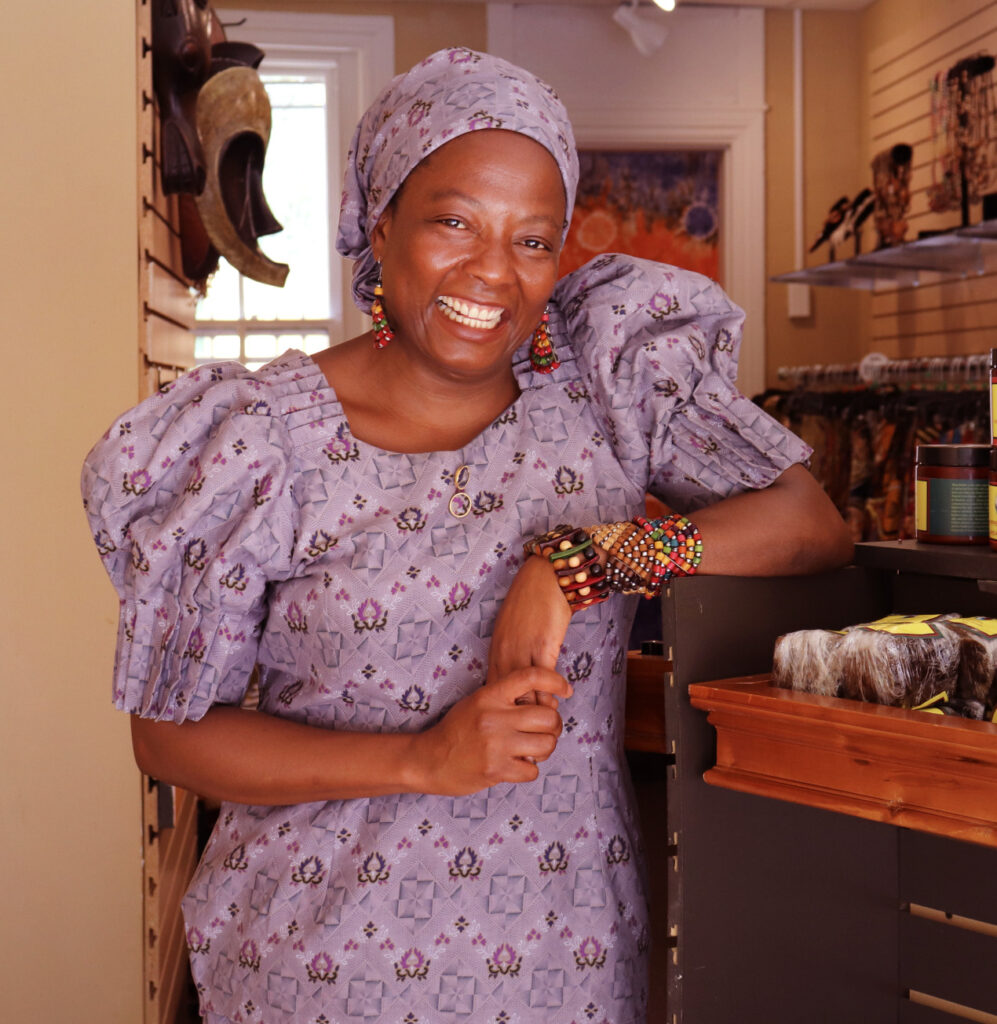
Beautiful Things: Item by item, Chantel Eloundou shares the splendor of Africa.

As a young nursing student in New York, Chantel Eloundou never imagined she would work in business, let alone run her own shop.

Yet, this past June, she found herself straightening racks of skirts and dusting off the counters of her new store, called Nyianga.

The Midtown shop has unisex clothing, dashikis and headwraps in vibrant patterns and hues. Each piece has a mixture of warm and cool colors, made with Cameroonian cotton, bazin fabric and linen.

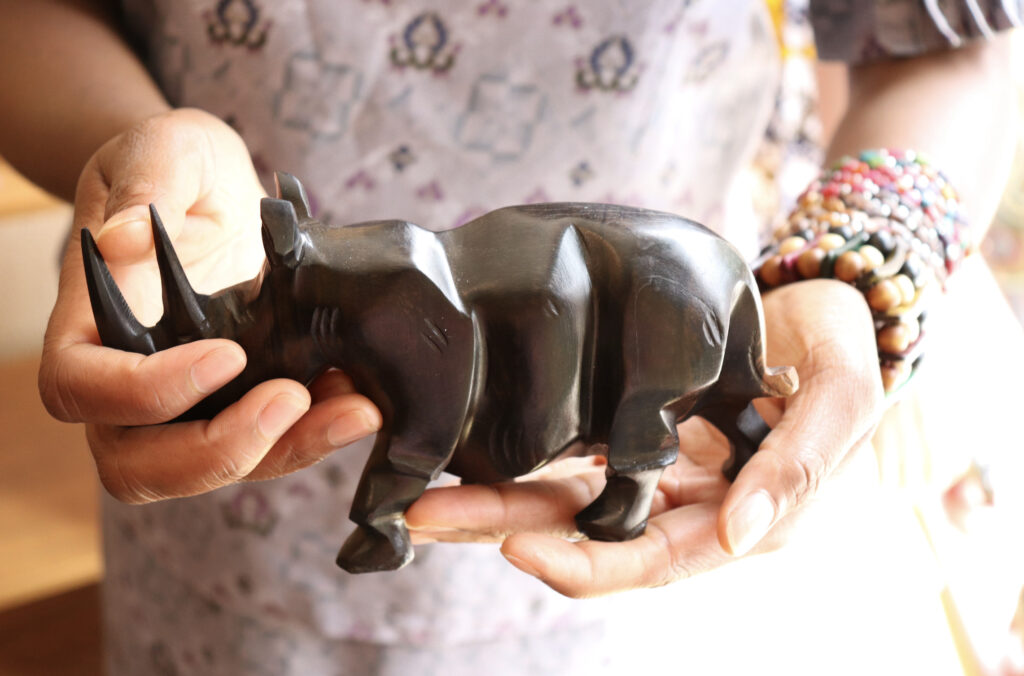
Even though “nyianga” translates to “fashion” in Eloundou’s native tongue, the shop has much more. Along with the clothing and wraps, Nyianga features jewelry, masks, raw shea butter, oils, authentic African black soap and even dolls. Most items are designed by Eloundou and handcrafted in her home country of Cameroon by family and friends.

“[Nyianga] gives me the opportunity to present Africa in a different way that is sometimes shown in the media,” she said. “These beautiful things, people make it, and Africa is also [beautiful].”

Eloundou got her first taste at selling at a Christmas flea market in 2015. She had a few pieces of jewelry sent from Cameroon and decided to sell them. She went home with only $37 in her pocket but, still, she knew she was on to something. She felt a calling.

She had more pieces flown in and eventually found a place in the Broad Street Market, where she worked as a pop-up vendor every Friday and Saturday. For two years, she sold in the market, slowly building a customer base and learning the ropes of running a small business. Her jewelry was nearly sold out every week, she said. She knew her customers wanted more, so she added clothes to the mix and, eventually, masks, artwork, shea butter and soaps.

Eventually, a women came up to Eloundou and said she was looking to open a jewelry store and asked if the two could work together.

“I was really afraid to move forward,” Eloundou said. “I thought it wasn’t going to go anywhere, but my fate or the world or whatever—I didn’t know I was going to be in this building, but here I am.”

“Here” is a snug storefront on N. 3rd near Reily Street. Old-time Harrisburg residents may best remember it as a storehouse for amusements, with games piled high inside a shabby exterior, blocking the large picture window.

In early 2013, Mayor Eric Papenfuse and his wife, Catherine Lawrence, bought the building, eventually restoring it to create new retail space. And, right next door, her jewelry-selling friend set up shop. Thus, Nyianga was created.

Everywhere

Eloundou calls herself a student of her own business. Instead of pulling the shop in a certain direction, she lets it lead her, and she learns along the way. She credits her customers for broadening her business to where it is today.

“I’m learning things—I learned so much,” she said. “This business, I discovered, I can talk about it from the morning until the next morning, which I didn’t know I could do.”

Through her journey, Eloundou has connected with customers who have shared their stories with her. Though Nyianga has customers from all walks of life, the store has a large African-American following. Some speak to her of their African roots, while Messiah College students have shared stories of traveling to Africa on mission trips. Some customers have even talked about the recent “Black Panther” movie—which brought in so much business that Eloundou sold out of headwraps.

“The African-American community kind of searches for their roots in Africa,” she said. “Everybody wants to know where they come from. I know where I come from. When the stress stikes me, I can think of my Cameroon roots, and I remember those memories. One phone call home can set my balance, but not everybody has that.”

These are the communities that drew Eloundou to Midtown and eventually kept her there.

“There’s nothing like Midtown Harrisburg,” she said. “There is something that is unique here.”

In the years to come, Eloundou hopes to increase the items in her store, which may necessitate looking for a larger location, but she still hopes to stay in Midtown. She said that, through her journey to the Broad Street Market and then opening her shop, she has learned not to let fear keep her from pushing herself.

“Whatever will come out of [Nyianga], I will embrace it,” Eloundou said. “I cannot set limits to my entrepreneurship. From the fashion to the arts, I am everywhere.”

Nyianga is located at 1432 N. 3rd St., Harrisburg. To view the clothing, accessories and more, visit www.nyianga.com and follow on Facebook and Instagram @NyiangaJewelry.

Continue Reading

Progress Noted, Cooperation Pledged as Harrisburg Swears in City Officials

District Justice Hanif Johnson swears in Harrisburg Mayor Eric Papenfuse to a second term in office as Papenfuse’s wife, Catherine Lawrence, holds a Bible from the year 1560.

Harrisburg officials invoked a spirit of optimism and cooperation today, as the city swore in its returning mayor and most of City Council.

In city hall, newly inaugurated District Justice Hanif Johnson administered the oath of office to Mayor Eric Papenfuse, Treasurer Dan Miller and council members Wanda Williams, Shamaine Daniels, Ben Allatt, Dave Madsen and Ausha Green.

In November, Papenfuse, Williams, Daniels and Allatt all won re-election, while Miller, Madsen and Green will serve their first elected terms following mid-cycle appointments to their positions.

At the ceremony, Papenfuse was the lone official to address the crowd, citing the progress Harrisburg has made during his first term following the financial crisis that nearly bankrupted the city and sent it into state receivership.

“Today, Harrisburg is not a symbol of failure,” he said. “In Pennsylvania and throughout the nation, Harrisburg is a glowing symbol of renaissance and renewal.”

He credited his fellow elected officials, city workers and residents for “the optimism and hope that is so palpable on our streets today.”

“Yes, we have achieved a lot working together these past four years, but much work lies ahead,” he said.

Following the ceremony, City Council held a brief reorganization meeting, unanimously re-electing Williams as council president. Allatt took over as vice president by a 4-3 vote over Councilman Westburn Majors. Daniels, who served previously as vice president, was not re-nominated. All council committee assignments are unchanged.

Williams said that, for 2018, her principal goal is ensuring the construction of the police substation on Allison Hill. The city plans to raise a 1,600-square-foot building on S. 15th Street, with a planned opening in the late summer.

Completion of the city’s comprehensive plan is another priority, she said. On Jan. 10, the Planning Commission will hold a meeting to present the draft plan to the public and get resident input.

Williams further said that she and Papenfuse will meet next week to review priorities for the year.

“I hope we can cooperate with the administration to move Harrisburg in a positive direction,” she said, as she heaped praise on her fellow council members as “the best council I’ve been on in the last 12 years.”

Continue Reading

Reader Rapture: Top-shelf authors, literary events swing by the 2017 Harrisburg Book Festival.

Last month, world-famous author Salman Rushdie stopped in Harrisburg for what may have been our area’s biggest literary event in—well, who knows how long?

You can thank Midtown Scholar Bookstore for putting central PA on the literary map, as it makes a pitch to become a regular stop on the national book tour circuit.

In that same spirit, the bookstore now is reviving an event that had been, uh, shelved, for a few years. This month, the Harrisburg Book Festival returns, bringing with it nationally acclaimed authors, poets, book reviewers, local artists and more.

“The festival this year finally deserves to be called a festival,” said Midtown Scholar’s co-owner Catherine Lawrence. “It’s extending over four days, which is longer than it’s been in the past, and the caliber of authors is extraordinary.”

The festival opens with poets Safia Sinclair, author of “Cannibal,” and Joshua Bennett, who will read from his work, “Sobbing School,” highlighted by a musical appearance from local band Shawan and the Wonton.

The next day, National Book Award winner Ibram Kendi will give the festival’s keynote address. His book, “Stamped from the Beginning: The Definitive History of Racist Ideas in America,” discusses the journey of racist thought from 15th-century Europe to the present day.

“I’m definitely most excited to see Dr. Ibram X. Kendi deliver the keynote address,” said Midtown Scholar’s manager Alex Brubaker. “Considering our current political and racial climate, there are not many other authors I’d like to see deliver the keynote than Dr. Kendi.”

On Saturday, four acclaimed book reviewers will take the stage, including Beth Ann Patrick, creator of “Friday Reads,” and other reviewers from National Public Radio, the Washington Post and LitHub. They’ll answer questions about the most popular books of 2017, if book reviewers still matter in today’s society and how printed books continue to thrive in the digital age.

“I think literature, and by extension, books are worth celebrating,” said Brubaker. “The physical book and its necessary role within a living, evolving culture isn’t going away, and we want to throw a party in the best possible place—a brick-and-mortar bookstore.”


Good Conversation

Midtown Scholar’s book festival debuted in June 2010 with a handful of authors and local artists. At the time, headliner Jackson Taylor, author of “The Blue Orchard,” sat down and conversed with the audience and with bookstore co-owner Eric Papenfuse, now mayor of Harrisburg.

“[Conversation] has always been my favorite part of a festival,” said Lawrence. “It allows not only the audience to be engaged as questioners, but even the people on stage. They’re not coming to us with the answers about their books. They’re coming to us to be part of a broader conversation about that makes this book work.”

The good conversation will continue with author and Philadelphia native Liz Moore of “The Unseen World” and New York Times bestselling novelist Jennifer Haigh of “Heat and Light.” The authors will share stories about their novels and talk about the good, the bad and the ugly that went into creating them.

“There’s an intimacy at book readings that is different than if you were to have a lecture in a school auditorium where there is someone at the podium and everyone else in the seats,” Lawrence said. “We have a space that values the questions readers bring to authors.”


On the Map

At the festival, Midtown Scholar will offer a place for acclaimed authors to meet their readers and fans. But it also will advance the ambitions of the bookstore, which wants to become a go-to spot for literary lovers and traveling authors.

“Now, we’re really a part of authors’ national book tours, and we weren’t before,” Lawrence said. “We are on the map. We’re now a part of the places authors must go to have interested audiences in our really unique space.”

This growth stems from the store’s connection with the wide array of reading interests in the area.

“Central Pennsylvania has a thriving community of readers that doesn’t often get the opportunity to engage with authors like the ones that we are bringing in,” Brubaker said. “With this festival, I think we’re making our mark as a bona fide literary destination.”

Each festival since 2010—this will be the fifth—has grown in terms of artists and attendance, and Midtown Scholar expects more than 2,000 attendees this time around, which is about as many as the bookstore can host over a long weekend.

“What matters is that people come and find interesting conversations to have,” Lawrence said. “We’re in a small town and yet there are many aspects of the artistic and literary culture that really are out-performing what one would expect from a small town in central Pennsylvania.”

The 2017 Harrisburg Book Festival takes place Oct. 12 to 15 at Midtown Scholar Bookstore, 1302 N. 3rd St., Harrisburg. For a complete list of events, visit midtownscholar.com.


Festival Features

The Harrisburg Book Festival is packed with four days of readings, signings, talks and events. Here are a few highlights to bookmark.

Oct. 12: Opening Night Reception
Oct. 13: Keynote by Ibram X. Kendi
Oct. 14: Children’s Book Festival
Oct. 14: “The Role of the Critic in the Digital Age”
Oct. 14: “The Art of the Novel”
Oct. 15: “An Afternoon with Elizabeth Wein”
Oct. 15: A Conversation with Ruth Franklin, Biographer of Shirley Jackson

Author, Author
Unfortunately, you may not be able to spend four straight days at the Harrisburg Book Festival. But here are five authors you won’t want to miss.

  • Ibram X. Kendi, historian, author of “Stamped from the Beginning: The Definitive History of Racism in America”
  • Jennifer Haigh, novelist, author of “Heat & Light”
  • Ruth Franklin, biographer, author of “Shirley Jackson: A Rather Haunted Life”
  • Safiya Sinclair, poet, author of “Cannibal”
  • Liz Moore, novelist, author of “The Unseen World”
Continue Reading

Novel Attraction: Salman Rushdie to visit Harrisburg as part of book tour.

Midtown Scholar Bookstore will host world-famous author Salman Rushdie in September.

One of the world’s most famous authors soon will be making a stop in Harrisburg, as Salman Rushdie plans to visit to promote his new novel.

On Sept. 29, Rushdie will stop by Midtown Scholar Bookstore for a reading and question-and-answer session, part of a 12-city tour to promote his novel, “The Golden House,” said Alex Brubaker, Midtown Scholar’s books and programs manager.

“We’re pretty thrilled,” Brubaker said. “We have been emphasizing trying to get the most respected and innovative authors to come here.”

The visit came about after Brubaker reached out to Rushdie’s publicist to see if Midtown Scholar could get on the tour itinerary.

“Harrisburg may not be the biggest market, but we have a really strong literary community, and I sold it on that,” Brubaker said.

Rushdie is the author of 12 previous novels, perhaps best known for his 1981 novel, “Midnight’s Children,” and his controversial 1988 work, “The Satanic Verses.” Queen Elizabeth II knighted Rushdie, who is of British-Indian descent, in 2007.

Rushdie’s publisher, Penguin Random House, describes his new novel “as “an epic of love and terrorism, loss and reinvention.”

To attend “An Evening with Salman Rushdie,” you must pre-order a signed copy of “The Golden House,” priced at $32. Otherwise, tickets are free, but available on a first-come, first-served basis. Doors will open at 6 p.m., with the event beginning at 7 p.m. at Midtown Scholar.

“I am thrilled that such an extraordinarily accomplished author and public intellectual has chosen to include Harrisburg and the Midtown Scholar on his latest book tour,” said Harrisburg Mayor Eric Papenfuse, who owns the bookstore with his wife, Catherine Lawrence.

Harrisburg is, by far, the smallest city on the tour, with St. Louis the next smallest, said Brubaker.

“[The visit] was rather surprising to us, too,” he said. “But it’s definitely exciting.”

Midtown Scholar Bookstore is located at 1302 N. 3rd St., Harrisburg. Click here for more information and to obtain tickets for the event.

Author: Lawrance Binda

Continue Reading

Independent Minded: In a tough business, local indie bookstores have survived through a mix of expertise, service and community.

“The reports of my death have been greatly exaggerated.”

That famous quote, attributed to Mark Twain, kept flashing through my mind as I interviewed the owners of six independent bookstores throughout central Pennsylvania. After all, these bookshops were, by now, supposed to be gone, kaput, dumped into the ash heap of history, right?

That’s been the common wisdom as e-books increasingly have caught on with readers. But, today, a handful of indie booksellers in our area have not only survived, but thrived.

How did they do it? What’s their secret? I wanted to find out.

 
Mechanicsburg Mystery Bookshop

In the book world, Debbie Beamer is the definition of a survivor as, on Nov. 9, her Mystery Bookshop in Mechanicsburg will celebrate 25 years in business.

“Members of my core group of customers still want to hold a book,” said Beamer, citing one of the factors in her success.

Beamer is always thinking of ways to add value to her shop and, earlier this year, added a lecture series—talks on Native Americans, the Revolutionary War and John Wilkes Booth, among other topics. She even threw in a class on psychokinesis.

As a specialty bookseller, Beamer may have an advantage over more general stores, as mystery book readers tend to be loyal and exacting. They appreciate her selection and knowledge, as well as the environment she’s created.

“The indies provide a community for their customers,” said Beamer. “Bookstores are a gathering place where readers can meet authors, listen to lectures and so much more.”

Sam Marcus

Sam Marcus

The Bookworm Bookstore
 
As I sat across the table from Sam Marcus at the Bookworm Bookstore in Lemoyne, I saw the glint in his eye when he talked about books and found it easy to visualize the college professor he once was.

But it takes more than a love for the written word to survive these days in such a difficult business. Like Beamer, Marcus has a specialty. In his case, it’s classics, literature and history.

“So, the type of books I sell aren’t conducive to e-books,” he said.

Marcus doesn’t shy away from the Internet, as about half of his sales are online, supplementing his brick-and-mortar shop. But he offers things you just can’t get from Amazon or even the large chains—knowledge and quality.

“I couple this approach with individual services for my customers,” he said. “It’s paramount to learn their likes and dislikes and be able to offer suggestions of books they might enjoy reading.”

Marcus is so confident in his shop that he’s even setting the stage for his retirement.

“My children are playing a larger role in the store management,” he said.

 
Canaday’s Book Barn
 
Ted Canaday is another area bookseller who has thrived due to that special formula of knowledge, customer service and quality, as well as having a niche.

“I specialize in out-of-print books, as well as historic maps and charts, so my customers aren’t after the latest bestseller,” said Canaday, owner of the Book Barn in Carlisle. “The market for me is distant and diffuse, my customers coming from as far away as 100 miles.”

Canaday does much of his business on the Internet, so the e-book craze was not a problem, he said. He usually finds his books at estate sales or has customers bring the books to him.

For Canaday, the key is having what his customers want when they arrive, then turning them into repeat customers.With more than 70,000 books, maps and charts, the Book Barn is indeed a fascinating place to shop, attracting people who want a different kind of buying experience.

“I’m actually more like an antique shop than your average bookstore,” he said.
 
 
Aaron’s Books

Ten years ago, Todd Dickinson and his wife, Sam, opened Aaron’s Books, naming it for their son. They wanted to have a business together and do something that Aaron would learn to love.

Soon afterwards, e-books went from afterthought to mass market, but the Dickinsons rose to the challenge, leveraging their strength as an integral part of the community in Lititz.

“The rise of e-books was arguably harder on chain stores,” said Todd. “So, that created an opportunity for independent bookstores to grow because of our closeness to the community.”

The Dickinsons didn’t let e-books change the kind of store they wanted to be. As independents, they’re highly responsive to their customers and stock new and used books that you simply won’t find inside grocery or box stores.

“We enjoy helping people find that book they’re going to love,” said Todd. “We just celebrated our 10th anniversary and look forward to many more in downtown Lititz.”

Michelle Haring

Michelle Haring

Cupboard Maker Books

Michelle and Jason Haring opened a custom-built furniture and bookstore in February 1998. In the spring of 2002, Michelle left her teaching job and made the decision to sell books exclusively.

Over the years, the couple adapted to the market, selling books over the Internet, as well as inside their Enola shop. But what’s really kept them going has been their loyal customer base for genre fiction.

“We carry all types of books, including history, religion, science, military, cookbooks and children’s books,” said Michelle. “However, our main interest area is genre fiction, especially mystery, science fiction and romance.”

This past year, they have focused more on author- and book-centered events. They currently have several genre fiction book clubs,including mystery, romance, young adult and urban fantasy. This past fall, they started “Book Mingles,” which provides a place for book lovers to talkto other book lovers.

“We see continued growth,” said Michelle. “The personal touch is what our customers are looking for.”


Catherine Lawrence

Catherine Lawrence

Midtown Scholar Bookstore
 
When you walk into Midtown Scholar Bookstore in Harrisburg, you immediately see the ornate coffee bar and watch people gathered around tables drinking lattes and socializing.

You then realize that diversification and community are essential parts of the story at Midtown Scholar, owned by Catherine Lawrence and her husband Eric Papenfuse, who now doubles up as the city’s mayor.

“We are honored to be one of the leaders in our neighborhood’s resurgence,” said Lawrence.

In fact, the brick-and-mortar location is the physical manifestation of the store’s main business, selling academic books online.

“We’re the largest scholarly used bookstore in the country,” said Lawrence. “That continues to be our special niche.”

Looking at the shelves and shelves of books in the store, it’s hard to visualize the beginning.

“I can remember sitting in our walk-up book store in the old post office, a block from the Midtown Cinema, with my foot rocking my infant son in his carrier,” said Lawrence. “Below me, our Internet staff was logging the latest tractor-trailer load of books from scholastic publishers into our computers. At that time, we already had seven public storage units stacked floor to ceiling with books we were selling online, as well as an annex in Allison Hill.”

As the Internet division outgrew its first-floor space, the retail operation took over that area with books, as well. That gave them the ability to hold concerts, author talks and public forums. They needed an even larger space for literary activities when people came from as far as Baltimore and New York to participate, and that’s when they bought the larger building across from the Broad Street Market.

Today, Midtown Scholar is an important community asset, hosting a myriad of events each month, including author talks, book clubs, concerts and children’s activities, none of which can be replicated well in a virtual way.

The couple plans a further expansion into another annex to make way for more books. The main store then will be able to offer an even broader range of new, used and rare titles to customers, including more children and young adult offerings.

So, as you begin to do your Christmas shopping this year, stop in at one of these independent bookstores. Who knows—you may just make a life-long book friend. After all, community is the secret of what makes these stores go.

If You Go
 
Aaron’s Books, 35 E. Main St., Lititz, 717-627-1990, www.aaronsbooks.com

The Bookworm Bookstore, 900 Market St. (West Shore Farmer’s Market), Lemoyne, 717-657-8563, www.bookwormhbg.com

Canaday’s Book Barn, 2269 Newville Rd, Carlisle, PA, 717-574-0092, www.canadaysbookbarn.com

Cupboard Maker Books, 157 N. Enola Rd., Route 11/15, Enola, 717-732-7288, www.cupboardmaker.com

Mechanicsburg Mystery Bookshop, 6 Clouser Rd., Mechanicsburg, 717-795-7470,
www.mysterybooksonline.com

Midtown Scholar Bookstore, 1302 N. 3rd St., Harrisburg, 717-236-1680, www.midtownscholar.com

Don Helin published his first thriller, “Thy Kingdom Come,” in 2009. His novel, “Devil’s Den,” was selected as a finalist in the 2013 Indie Book Awards. His latest thriller, “Secret Assault,” was selected as the best suspense/thriller at the 2015 Indie Book Awards. Contact Don on his website, www.donhelin.com.


Continue Reading

Charity for All: Over the years, Harrisburg has invested millions of dollars in the National Civil War Museum. The city’s new mayor now asks if the price is worth it.

Screenshot 2014-08-29 09.27.41Every Wednesday morning at 10 a.m., three men who control a $230 million annual budget meet on the fourth floor of a brick building downtown, across Market Street from city hall. Their meeting room is circular, with wood paneling and brown-and-khaki carpet, and a peculiar assembly of light fixtures hanging from the ceiling. The men sit at one end of this room on a dais, in high-backed, maroon leather chairs, and listen as people take turns approaching a table below.

Often, the petitioners are there to massage their relationships with these men, the Dauphin County commissioners—either to thank them for past support or to ask for future money. But, on the morning of July 30, Harrisburg’s new mayor, Eric Papenfuse, attended the commissioner’s meeting with a different sort of request. Six years prior, in 2008, the commissioners had increased a tax on visitors who stay in Dauphin County hotels. Under the ordinance, a portion of the new revenues from the hike was designated for promoting tourism in Harrisburg. But, under a set of separate agreements signed by the city (Papenfuse, speaking to press after the hearing, called them “quiet, secret deals”), most of the money, for years, had been going to one place: the National Civil War Museum.

Opened in 2001, the Civil War Museum is the crown jewel of former Mayor Stephen Reed’s campaign to draw visitors and renown to Harrisburg by way of a network of cultural institutions. Perched atop a hill in Reservoir Park, the museum commands a view of the city and, to the north, the valley cutting through the mountains. It houses a massive collection of period artifacts, most of them city-owned, among them a gauntlet that had been worn by the Confederate General George Pickett and a Bible owned by Robert E. Lee.

Despite the quality of its collection, and despite its relative proximity to Gettysburg, the museum has struggled to grow the visitor base that was envisioned at the time of its creation. According to figures provided by the museum, annual attendance has never surpassed its first-year peak, of more than 96,000. The total fell every year for the next eight years and has hovered between 38,000 and 41,000 for the past five. (Gettysburg, by contrast, draws 3 million people per year.)

Seated at the table in front of the commissioners, Papenfuse, in characteristically breathless fashion, asked them to freeze the museum’s hotel tax funding. The museum, he argued, was absorbing money that was meant for marketing the city as a whole. Furthermore, the museum only paid the city $1 of rent per year, on a property with a fair market rental value of $633,000, to say nothing of the value of the artifacts on loan inside. The agreements that allowed the museum to do these things, Papenfuse said, had been undemocratically extended in the final months of the Reed administration—one of them all the way out to 2039.

“I think it is time that we recognize that we have spent millions and millions of taxpayer dollars to subsidize this museum,” he said. “We’re not only talking about the costs of building the museum and, you know, the subsidy here for tourism, but we’re talking about moneys we’ve paid to subsidize the health care of the employees over time, staffing, operational expenses. Every time we put money in a parking meter, the public should understand that we are essentially paying back the debt that was incurred for the creation of that museum.”

Outside the hearing, however, Papenfuse went further. “It’s outrageous,” he told the reporter James Roxbury, who had asked about the long-term agreements. “And I think that it’s time we end what is essentially a failed experiment and begin to move towards a redeployment of those assets. If something else moved into that building and were able to contribute rent to the city of Harrisburg, we could use those funds to fix potholes and do all the things that we’d like to do in the city of Harrisburg. If we sold the artifacts, that would be millions more dollars that the city could have to be able to invest wisely.

“I don’t think the public supports the museum, I don’t think the museum caters to the city,” Papenfuse went on. “I think, from its advertising materials alone, you can see that it could be located anywhere in the country. It doesn’t promote Harrisburg in any way.”


“The idea was to have five nationally scaled museums,” Reed said.

He was speaking to David Morrison of the Historic Harrisburg Association, who was interviewing him as part of an oral history project in 2010. The project, sponsored by Highmark Blue Shield, was created to help celebrate the 150th anniversary of Harrisburg’s incorporation. But it also happened that the city’s sesquicentennial coincided with Reed’s departure from office, after a reign of 28 years.

In the interview, video of which is still available online, Reed conveys an air of bemused resignation. Only two of his museums ever came to be, and his opportunity to realize the others had passed. Nonetheless, he waves aside critics of, for example, the National Museum of the Old West, “who were empowered by the Internet and constantly blogged and bad-mouthed it.” Then he lays out the scope of his vision—to have the museums commemorate what were, in his view, “the three most significant events in American history, aside from the American Revolution itself”: the Civil War, Westward expansion and World War II.

“If Harrisburg, Pa., was a place to go in the golden triangle region of tourism in the east coast, east of the Mississippi, where you can learn about all those things, can you imagine how many people that would attract, and the economic benefits that would accrue to the local community and the jobs it would create? That’s what this was all about,” he concludes, sweeping his arms wide. “And some laughably dismissed it.”

By then, though, the vision had been more than laughably dismissed. Two of the museum concepts had ended in ignominy, with the waste of millions in public money. One of the concepts, for a National Sports Hall of Fame, languished without any apparent progress for years, until a 2008 investigation by CBS 21 reporter Jason Bristol exposed, among other things, that its director had no idea a similar museum had already opened in New York City. The museum commemorating the Old West, meanwhile, collapsed after City Council, facing a budget crisis, ordered the sale of millions of dollars worth of artifacts that Reed had quietly acquired over many years.

The means by which Reed purchased most of the Western artifacts was an account known as the City Special Projects Reserve Fund. Reed outlined his request for the fund in a memo dated Christmas Eve, 1990. It was addressed to the board of the Harrisburg Authority, the city’s sewer authority, which had earlier that year modified its charter to become a pass-through vehicle for bond financing. The fund would be filled with fees charged for administering the bonds and would be available for drawing upon at the discretion of the mayor. For two-and-a-half years, the Authority filled the fund with fees from a handful of clients: a few thousand here, a few thousand there, until, by September 1993, the fund held nearly $150,000.

At first, the mayor drew money from the account only rarely. In the summer of 1993, he approved an expense of $5,700, to reimburse the Authority for a full-page ad it had bought in an “Economic Profile” magazine. (The profile was published by the city, through the mayor’s Office of Economic Development.) Another $2,000 was sent to the city treasurer as a contribution towards a city open house.

Then, beginning in the spring of 1994, as funds kept rolling into the account, the city started to ramp up its withdrawals. In March, the mayor requisitioned $160,000 from the fund for deposit in a city account for capital projects. In September, the city withdrew another $20,000—$10,000 of it for Penn State, for consulting on the formation of an “alternative academy,” and another $10,000 for Big Brothers/Big Sisters of Harrisburg, for developing a mentorship program. In October, Reed committed $30,000 to the Center City News, newly re-launched as Harrisburg Magazine; unable to find all the money in the city budget, which he described in a personal letter as “seriously constrained,” he provided $15,000 out of the special fund.

Screenshot 2014-08-29 09.27.18The first mention of Reed’s museum vision in the special projects account occurred in December 1996, when Reed requested $30,000 from the fund for “professional services for the Sports Hall of Fame and War Museum.” Then, early in 1997, the artifact purchases began to be itemized. January 8: “1 Flintlock Mountain Man Pistol w/Map and 1 1896 Sheriff’s Pistol w/Holster,” $2,535. January 15: “one Walnut and Mahogany Veneered case 8-day Regulator Timepiece,” $8,500. The items evidently covered a wider range than the Civil War period, although, curiously, a May 1997 memo collects them under the heading “Civil War Museum.” Between January and May, the mayor spent $28,283 out of the fund on such itemized purchases.

In the summer of 1997, the spending took off. The checkbook register records purchases every few days: a major general’s kepi, a “fur-era trade pistol,” a Conestoga wagon. Between December 1998 and August 2002, the city withdrew more than $9 million from the fund, almost entirely for the purchase of artifacts. At times, especially in later years, Reed would ask the Authority to advance the fund cash from its other accounts, to cover additional artifact invoices until another bond issue closed and its fees could be collected.

The Civil War Museum’s collection is not exclusively bound up in the history of the special projects fund. By 1997, the city already had purchased most of the artifacts that would wind up filling the museum, and many of the purchases after 1998 were connected to the Old West. But the acquisitions for the Civil War Museum, like the others, had the same basic feature. They were purchased with public funds at the discretion of the mayor, who had set no apparent scope or limit on what he was acquiring.

There were people, though, who did speak up about the mayor’s use of the funds. One of them, in 2007, managed to get appointed to the Harrisburg Authority board, where he tried to pry open the records of the special projects account and hold them up for public scrutiny. His name was Eric Papenfuse.


Eric Papenfuse is a man of many personas. One of them, which became more developed in his mayoral campaign, is the sunny city cheerleader—the man with the toothy grin on the city website, who will bring a raft of volunteers to a press conference and will show up to a “brown bag” poetry reading in city hall with a sack lunch in tow. The other is the painstaking policy man, whose facility with budgets, contracts and legislation can lend his press conferences a classroom air.

But there’s another quality to Papenfuse that is less often seen from the podium. He can be fiercely, even stubbornly, adversarial. In April, a month after an unhappy meeting with the school district’s state-appointed recovery officer, he publicly called for the officer’s replacement. The state education secretary stood by the officer, who remained in his position. Nonetheless, three weeks later, Papenfuse raised the issue again, this time in an open letter to the secretary that accused the officer of having “watered down” the district’s academic standards.

Nothing seems to invite Papenfuse’s censure quite like the legacy of Mayor Reed. I learned of one example of this in June, after a former colleague at TheBurg, Dan Webster, published a lengthy article about Reed in his periodical, Local Quarterly. The article, which was based on an interview with the now-reclusive former mayor, included a claim that Reed’s manipulation of certain bond proceeds was “completely legal.” Papenfuse’s Midtown Scholar bookstore refused to carry the magazine. Papenfuse’s wife Catherine Lawrence, who is overseeing the bookstore in his absence, said later that the magazine was pulled from the shelves as a result of the store’s policy not to carry paid periodicals. But Webster and his photographer got a different impression when they met with the mayor at the store. According to the photographer, Papenfuse “repeated over and over, ‘I cannot allow the people of Harrisburg to think that what Reed did was legal.’”

In 2007, a faction within City Council overrode a veto by Mayor Reed, granting itself the power to nominate board members of the Harrisburg Authority. One of their nominees was Papenfuse, who, according to an affidavit that accompanied a lawsuit later filed by the administration, went directly to the Authority offices to demand copies of documents. What documents he requested, the affidavit doesn’t say, but it’s not hard to guess what he was after. In a video clip from October of that year, which is still available on Roxbury News, Papenfuse runs through Authority records of travel expenses reimbursed out of the special projects fund. They were incurred by a city employee, John Levenda, in connection with the pickup and delivery of artifacts. (Levenda, as it happens, was also the subject of Bristol’s 2008 investigation for CBS 21; he was the director of the non-profit Sports Hall of Fame Foundation, where he collected hundreds of thousands of dollars in salary and reimbursed travel expenses over the course of several years.)

In his public comments since his appeal to the county commissioners, Papenfuse has mostly focused on the best use of hotel tax dollars for the city. But it’s hard not to see his efforts as a kind of culmination of the path he started on years before his mayoral campaign. As a critic and a gadfly, he tried to call attention to what he saw as an illegitimate and abusive use of public money. As mayor, he seems to be going a step further—trying to actually undo it.


Two weeks after the mayor’s petition to the county commissioners, I met with Wayne Motts, the National Civil War Museum’s CEO, in his office above the gift shop on the museum’s second floor. Joining us were two board members—Rick Seitz, the current chair and the president of Alexander Building Construction, and Gene Barr, a past chair and the president of the Pennsylvania Chamber of Business and Industry, a business lobbying group.

Motts is a longtime museum man. His father, Warren, founded the Motts Military Museum in Groveport, Ohio. Wayne majored in military history and took a master’s in American history, and he has been a licensed battlefield guide, as he puts it, for “over a quarter century.” He most recently spent eight years as the executive director of the Adams County Historical Society. “There has never been a time, ever, that I haven’t been interested in the American Civil War,” he told me. His father used to read him excerpts from a Civil War diary, which he relates to the function of a museum—teaching history through contact with historical things. “My main interest is because I had a connection with the real artifact, which is what we’re doing here.”

Motts joined the museum board in 2009 and was named CEO in 2012. His predecessor, David Patterson, a former management consultant for the national YMCA, had hoped to bring his business experience to bear on the museum’s declining visitor base. But, when he left, in 2011, the dues were flat and annual attendance had dropped by several thousand. Motts, it was hoped, would improve on that record, combining museum experience with a manifest enthusiasm for Civil War history. “I don’t think there’s a better person for that position,” one Civil War artifact dealer told me.

Motts spends much of his time traveling the country, spreading the word about the museum at conferences and Civil War roundtables. He is an emphatic speaker, with a wide repertoire of punctuating gestures and a rural-flavored voice that breaks on occasion. Earlier in July, he gave a speech at the Gettysburg Foundation’s Sacred Trust Talks, where he spoke about the importance of preservation, highlighting several objects from the museum’s collection. “What if Ford’s Theatre was a Target store? Let’s talk about it. Our understanding of the war would be greatly diminished. Our empathy for it, our connection to it, would be reduced if we did not have those things.”

In his talks, Motts relies only scarcely on notes, but, when we met, he brought along a couple of pages of talking points about the museum’s position in recent years. He cited the attendance figures—around 40,000 per year for the past five years, which he described as a “very even keel.” Mayor Papenfuse, in his statements about the museum, suggested that the opportunity for growth had come and gone. The recent sesquicentennial of the battle of Gettysburg, which brought a renewed focus to the Civil War, appears to have only won the museum a few thousand additional visitors. Motts was sensitive to this. “Everybody always asks, are we satisfied with that? And the answer is no!” he said. “Every day, we’re thinking about, ‘Well, what can we do to maybe get more folks in there?’”

One of the central questions in the museum debate is whether the museum provides enough of an economic benefit to justify the public support it receives. The hotel tax is meant to create a virtuous cycle—money from tourists goes to sustain the things that will attract more tourists. Accordingly, Motts and his staff have conducted their own analysis and come up with a ballpark figure for the museum’s economic impact on the region. Relying on data they collect from visitors, and using a formula from an annual impact study commissioned by the state, they determined that the museum produces $5.7 million of spending in the region each year.

It’s a problematic figure. Motts, who said he removed student visitors from the calculation, suggested it was a conservative estimate. But he also acknowledged that the data he collects doesn’t distinguish between money tourists spend within the city and money they spend in neighboring municipalities. It may seem a small point, but it’s really the crux of the issue, because the museum’s hotel taxes come from what is designated by the county as the city’s share. It’s the share that gets spent on things like this year’s “Summer in the City” campaign. Papenfuse would like to spend more money on these sorts of campaigns, but he can’t—under the long-term contracts, nearly $300,000 of the city’s portion goes directly to the museum.

If the museum provided a regional economic benefit, didn’t it stand to reason that it should draw on the regional, rather than the city, portion? When I asked Motts and the board members about this, though, they objected to the notion that the city had any claim on the money. “It’s not the city’s pool,” Motts and Barr said in unison. “The city has their own funds,” Motts added.

Motts and the board went to some lengths to establish that, even though the funding is countywide, the museum provides an unquestionable benefit to the city. Papenfuse, in the course of his critique of the museum, had suggested that it had no meaningful impact on city tourism at all—he provided a map showing that the building was not even located in the city, but in Susquehanna Township. But Motts said the link between museum and city was beyond doubt. He produced the most recent issue of the Civil War Monitor, a seasonal magazine, in which the museum had taken out a full-page ad. “You can see what’s here,” he said. He pointed to two words in the advertisement: “Harrisburg, Pa.”

There is also a case to be made for the museum that transcends economics. At one point, Barr, who has worked on transportation issues, compared museums to mass transit. “A lot of people say, ‘Don’t fund mass transit, because it’s not self-sufficient.’ And in reality, there’s not a single mass transit system in this country that is self-sufficient. But people believe it’s important because it’s part of the fabric of the community.” In a similar fashion, places like the National Civil War Museum were “part of the culture of a community.”

The museum may be part of the city’s fabric, and it may also draw at least some of the outside interest and prestige that Reed had envisioned. But it’s difficult to assess whether the benefits really merit the price—especially because neither the museum nor the public seems to have ever completely reckoned with what that price was. Motts provided me with a 2012 article by the president of the American Association of Museums, which details the breakdown of revenue streams for museums in the United States. The average American museum, according to the article, receives 25 percent of its funding from the government.

That’s not terribly far from the museum’s current proportion of government support. Last year, the hotel taxes it received under the city agreements represented around 26 percent of its $1,109,128 in revenues (although, if you count other grant support, the amount climbs closer to 40 percent). The trouble is that the museum has required such support from the beginning, and, in the early years, the proportion was even higher. According to its 2003 federal tax form, for example, revenues identified as “government grants” accounted for 58 percent of its budget. In 2005, the figure was 64 percent.

I asked Motts and the board members if they knew where these funds had come from, since the tax forms don’t disclose the government sources. It had happened before their time, they said, and they didn’t know. (I subsequently requested the museum’s audited financial statements, but the museum declined to provide them.) I also showed them a printout, provided by the city’s budget office, detailing payments directly from the city to the museum between 2000 and 2008. They included several large grants, a few short-term loans, and regular monthly advances, ranging between $5,000 and $10,000, out of the city’s direct share of hotel tax funds. They added up to more than $1.2 million.

Again, Barr and Seitz didn’t know the full details of the payments, though Barr believed several of them were the city’s contribution to health insurance for museum employees, a practice that had since ended. “Look,” Barr said finally. “The reality is Steve Reed wanted to create this. I mean, yeah, we’ve had all those debates. Steve Reed wanted, I think as he termed it, a critical mass of museums to get more and more people here. That’s what Steve Reed wanted to do. Steve Reed has been gone now for quite a while. And the rest of us are left here, pushing along, trying to make sure that we make this the best possible facility we can.”


A few days after his announcement to the commissioners, Papenfuse went on a two-and-a-half week vacation. In his absence, people speculated on exactly what he wanted to achieve. His comments to the media had suggested he would like to see the museum closed, its artifacts sold off to provide the city with cash. He had even floated the idea that the building might be a suitable site for city hall. The dispute began to take on an all-or-nothing quality—either the county would let the museum continue with the status quo or the mayor would liquidate it completely.

But the extremes left some wondering if there might be a middle road. I spoke with Jeb Stuart, a former board secretary at the museum who has worked on tourism and development in the region for the better part of 30 years. Through the last decade of the Reed administration, he was a full-time consultant to the city, overseeing projects like the directional signs and placards that identify heritage sites across Harrisburg.

Stuart was pushed out of the museum board in 2008, at a time when new leadership, responding to the Western artifact fiasco, sought to put some distance between the museum and city employees. But he has maintained an active interest in the city’s Civil War heritage, and he still believes the museum could serve as a vital link in the region’s offerings. Several years back, the state launched a “Civil War Trails” initiative, mapping out road trips that visitors could take from one heritage site to the next. (The Papenfuse administration’s tourism director, Lenwood Sloan, worked closely on the project.) Harrisburg, Stuart said, formed a perfect bookend for one such trail, running north from Gettysburg and culminating at the museum. “The Civil War Museum has always kind of been the anchor,” he said.

He asked me to open Google Earth on my computer. We zoomed into Harrisburg, where a 3-D model of the museum can be viewed (and virtually entered, in the form of a panorama image that Stuart helped photograph). Zoom out, and you see an entire field of icons spread across the city. Many are linked to other sites related to the Civil War. He held up photocopies of the covers of two recent books about Harrisburg’s role in the Civil War. One is about the Confederate advance towards Harrisburg; the other is called “Civil War City.”

“What we’re trying to do is to show that Harrisburg should be branded as a Civil War destination, which can emanate to other destinations within the city, whether it be the state Capitol, whether it be City Island, to pull folks from Gettysburg to Harrisburg as part of the linkage,” he said. He wondered if perhaps the mayor’s comments stemmed from a sense that the museum had failed to integrate itself with the city’s other assets. “There are all sorts of things that can happen here,” he said. “But the museum has not stepped up. And that’s where Eric, I think, has viewed that as being a, quote, ‘failed experiment.’”

When he got back from vacation, Papenfuse seemed to have retreated from some of his statements, or at least to have refocused his message. Responding to questions by email—he had begged off a planned interview, citing a busy schedule—his spokeswoman, Joyce Davis, wrote that the mayor had “never proposed closing the museum.” Rather, she said, he objected to having “such a large amount” of hotel taxes go “exclusively to the Civil War Museum.” If the administration had access to its entire share of hotel taxes, she wrote, it could work with the visitors bureau to “develop a strategic marketing plan that would effectively promote Harrisburg and stimulate economic development and tourism in the coming years.”

She also contested the museum board’s account of their meetings with the mayor. In our interview, Barr had said the board’s efforts to negotiate had been “flat-out rejected” because Papenfuse was unwilling to entertain the idea of forwarding the museum reimbursements for capital repairs. (The museum cited a figure of $150,000, owed for renovations the city is supposed to cover under the lease.) But Davis instead put the onus on the board, saying that Papenfuse had tried to negotiate a step-down of hotel tax subsidies over the next three years. “The goal was to get to zero so that the museum would stop being a drain on the city,” she wrote. “The museum representatives were unwilling to negotiate and unwilling to entertain the idea of ending dependence on city resources.”

The museum, meanwhile, has tried to move forward with improving its exhibits and growing its base of supporters. During our interview, Motts mentioned a $45,000 matching grant, recently awarded by the Kline Foundation, to fund a labeling project that will allow the museum to display more of its artifacts, many of which have been tucked away in storage since its opening. Because it is a matching grant, the museum must come up with an equal amount in donations by November in order to receive the money. Motts and the board also point to their efforts to keep the museum’s costs down. Citing figures from their tax forms, he noted in an email that the line for salaries and wages, which was listed at $1,435,745 in 2002, was reduced to $381,161 by 2013.

The question about the museum’s reliance on city support, both past and present, is really about two possibilities. One is that the museum is a Reed-era white elephant—never appropriately vetted, lavished with public money without public scrutiny, and unlikely to escape the legacy of its founder’s bizarre ambition. The other is that the museum, however it came to be, really could be a first-class institution, if only it could be integrated with the city’s offerings as a whole.

Earlier in August, I reached Al Hillman, whose company produced the museum’s audio-visual exhibits. Their work included a sequence of video segments, playing on loop throughout the museum, which followed the lives of fictional Americans from the beginning to the end of the war. During a visit, I had found the sequence to be one of the museum’s most compelling features, offering a full range of perspectives on the conflict—from a freed slave to a small-time slave-owner to a trio of brothers split by their separate loyalties.

“We got actors who could really fall in love with what they were doing,” Hillman said. “Some of them did some really fine work, there.” It was odd to think that, less than 15 years after being created, the exhibits stood at risk of being shuttered as a waste of money and time.

He hoped that, regardless of the museum’s past, people would slow down and really consider what they wanted its future to be. “It’s way too important to just allow to crumple,” he said.


Continue Reading