Tag Archives: Bret Peters

Harrisburg’s comprehensive plan is “unworkable,” say mayor, business leaders.

Joyce Gamble addresses the Planning Commission during the Jan. 10 public hearing on the city’s comprehensive plan.

Harrisburg’s draft comprehensive plan faced a cool reception from business leaders and city administrators last night, as the city Planning Commission hosted its first hearing on the document following a months-long dispute between the city and the plan’s author.

During a three-hour hearing in City Council chambers, members of the business and development community said the plan stepped on the toes of property owners and private developers. They feared that the proposals it laid out in its land use chapter would restrict investment in the city.

Private citizens and representatives from neighborhood associations were more supportive of the plan. Those who spoke out favorably commended its goals to connect parks and neighborhoods and to redesign roadways for pedestrians and cyclists.

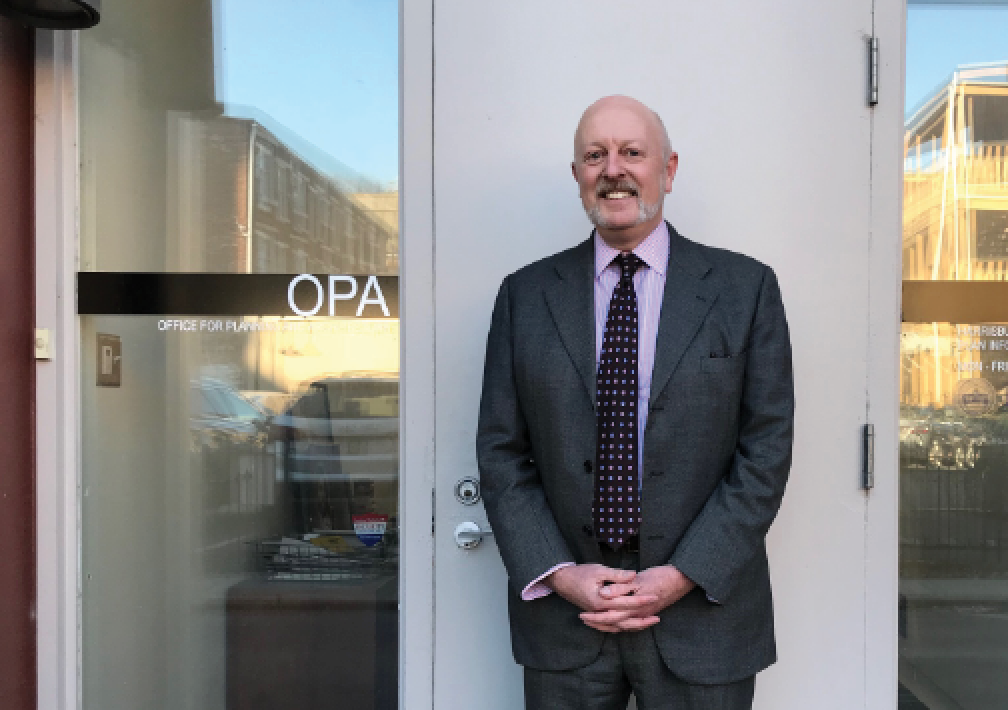
The plan, developed by the Harrisburg-based Office of Planning and Architecture, aims to guide development and urban planning in the city for the next 20 years. The project was delayed more than a year after OPA’s principal, Bret Peters, feuded with the city about compensation and proposals in the plan.

Mayor Eric Papenfuse, who has not shied away from criticism of Peters and his plan, wants the Planning Commission to discard the consultant’s draft entirely and adopt a new draft written by the city’s Planning Bureau. He said their in-house plan includes many of the best ideas from Peters’ draft, but is less specific and ideological.

“[Peters’] plan is a recipe for disaster. It’s unworkable and unsalvageable,” Papenfuse said. “It’s unreadable, redundant, disorganized and not ready for prime time.”

Other business professionals in attendance offered more specific criticisms.

Attorney Charles Courtney spoke on behalf of his client Adam Meinstein, who owns the former U.S. Postal Service building at 813 Market St. The draft comprehensive plan recommends dividing that property between commercial, residential and business uses. Courtney said that the specificity of the plan limited his client’s discretion for how to develop the property.

“We need to have a broader view,” Courtney said. “If and when that property is developed, all the stakeholders will want to work together and not have it hamstrung by language in the comprehensive plan.”

Kevin Kulp, president of the Harrisburg Senators, said that the plan would be catastrophic for businesses on City Island. It calls for the elimination of all surface parking on City Island and for parking to be relocated to a garage on the island and overflow lots in downtown Harrisburg.

“We don’t have enough parking as it is, and we need every bit of it,” Kulp said.

The plan also drew strong criticism from Brian Davis, executive director of the Harrisburg Redevelopment Authority, and Jackie Parker, the city’s director of Community and Economic Development.

Geoffrey Knight, director of the city’s Planning Bureau, said that the plan Harrisburg adopts needs to guide development, not direct it. He said that implementing the current draft could lead the city into thorny territory with property owners. If an owner did not want to develop a property according to a mandate in the comprehensive plan, Knight said, the owner would have to seek a waiver from the Planning Commission, which is the first body to consider land use proposals.

Some residents came out in support of the plan. Joyce Gamble, leader of Camp Curtin Community Neighbors United, said her organization supported the plan and hoped to work with the city to shepherd it to approval. Zach Monnier, a North Street resident, said he appreciated proposals that would localize property ownership and make renters stakeholders in their neighborhoods.

Peters, who was the chief author of the plan, only spoke once during the meeting to clarify his data collection methods. During a phone call today, he rejected the charge that he did not prioritize private business interests in his draft. Raising the aggregate real estate values in Harrisburg is central to the plan, he said, and will benefit property owners as well as residents. He also said that Harrisburg needed the kind of specific planning that made many attendees at Wednesday’s meeting balk.

“Laissez faire real estate and planning have been practiced in this city for 50 years, and it hasn’t worked,” Peters said.

Planning Commission members will consider the input from Wednesday’s meeting when they next convene on Feb. 5. They will then decide if and how they want to amend Peters’ draft document. They may also consider the separate plan submitted by the city’s Planning Bureau, which the Planning Commission already reviewed and rejected over the summer.


Continue Reading

Comprehensive Jam: Harrisburg spent $200k on a planning project that the Mayor now recommends trashing. What went wrong, and what could the plan mean for the city?

Print may be dead in the news industry, but it lives on in the offices of Bret Peters.

In a small suite of the Office of Planning and Architecture, Peters’ design firm on Willow Street in downtown Harrisburg, every surface is covered in paper: spreadsheets, mockups and “idea slips,” square cards on which Harrisburg residents wrote their desires for the city.

The print detritus shows what was left on the cutting room floor during the 18-month process of drafting a comprehensive plan for Harrisburg. That process recently culminated in the release of a 199-page draft document, which aims to articulate a shared vision of an historically factious and geographically fragmented city. The plan is part audit, offering an inventory of the city’s material and economic resources, and part wish list, enumerating the actions that the city can take to improve its housing stock, traffic patterns, waterways, business development and more.

“It’s an aspirational document,” Peters said on a recent afternoon in the planning room.

He estimated that the cost of implementing the comprehensive plan in full would range in the billions of dollars. But he also claimed that the plan as a whole would pay for itself over time by raising the aggregate value of the city’s real estate market, which would lead to more business development and higher tax revenue.

Many city officials, though, have another opinion of Peters’ draft plan. They regard the plan and the process as so flawed that they vow to fight its approval, much less its implementation.

“Something for the city”

Peters grew up in Lower Allen Township and lives today in Uptown Harrisburg. He founded OPA in 1999 and has taught design and architecture at Penn State and HACC. He also travels nationally for invited speaking engagements. In early November, he delivered a talk at Iowa State University School of Design titled “Corrupt Designs,” where he described “the challenges associated with comprehensive planning in a city well-known for economic and political difficulties,” according to an event listing.

Peters has said that the great potential he sees in Harrisburg led him to prepare a last-minute bid for the comprehensive plan project, which was announced by the city in late 2014. He promised to assemble a team of expert consultants from across the country and was awarded the project in a unanimous vote by a 23-person steering committee.

That vote may have been the first and last harmonious moment in the comprehensive planning process. The next 24 months saw disputes between the city and Peters about Peters’ alleged failure to pay subcontractors and meet deadlines, as well as ideological disagreements about policy proposals within the plan. The acrimony between Peters and city hall has reached such heights that the two parties don’t even agree on Peters’ employment status.

Mayor Eric Papenfuse and city Solicitor Neil Grover insist that Peters was fired after submitting material behind deadline last year. Peters says he assiduously followed the terms of his contract. He claims he suspended the contract in 2016, after city administrators allegedly failed to provide timely feedback on drafts and asked him to change content.

After their communication dissolved in 2016, city administrators and Peters began preparing individual draft plans. In summer 2017, the six-member, volunteer Planning Commission invited both parties to present their material separately. The commission voted unanimously to adopt Peters’ draft. He subsequently published it online at BeHbg.com.

As Peters began promoting the draft in public meetings and soliciting final feedback from residents, members of the city’s administration have been publicly denouncing it.

“The Comprehensive Plan that you are seeing on a website, is not the city’s plan,” Jackie Parker, the city’s director of Community and Economic Development, told members of the Harrisburg Parks Foundation in a Dec. 11 email. “It is a plan written by a consultant who has hijacked the process. It does not include what the public has indicated they would like to see.”

Mayor Papenfuse also claims that Peters “hijacked” the planning process. He said in December that he will recommend that City Council vote to reject the plan.

“[Peters] clearly wanted to impose his vision onto Harrisburg without sufficiently incorporating public input,” Papenfuse charged. “Now you have a fired architect putting forth a plan that the city had nothing to do with.”

The mayor also alleged that Peters undertook the project as a way to extort money from the city.

But people outside of the city administration who have worked with Peters offer a somewhat different account. Tara Leo Auchey led a community outreach effort with Peters for 10 months in 2015. Along with city planning director Geoff Knight, who declined to be interviewed for this story, the team gathered public input data to inform comprehensive plan proposals. Auchey said that Peters was reluctant to undertake the ambitious outreach agenda because of constraints on time and money and because he thought his professional expertise could guide the process. But Auchey said that he was receptive to the data as it came in.

“Bret’s message was that we were all doing something for the city, and I truly believe he came from that place,” she said.

Auchey did threaten to quit the project in October 2015 after a series of her paychecks were delayed. Though she questioned Peters’ management skills, she did not think he pursued the project to extort money from the city, as Papenfuse alleged. Auchey has since been paid for her work in full.

Auchey also emphasized that Peters wasn’t the only professional drafting the plan. A team of international consultants, with specialties from park design to housing policy, helped Peters analyze data and recommend planning strategies. Auchey thinks that Peters’ personality may have invited heightened scrutiny of his leadership abilities.

“Bret pontificates, he’s very highbrow and thinks highly of himself,” Auchey said. “But the biggest fault I see is in editing and time management.”

For his part, Peters insists that OPA upheld its contractual obligations, assiduously managed its resources and acted with good intent towards the city. He believes that officials are trying to discredit his work because they object to some of his
policy proposals.

In the chapter of his plan devoted to housing, Peters does not advocate for homeownership incentive programs, and he discourages the demolition of dilapidated properties. Both of those proposals, which are critical to Peters’ strategy to raise home values and, subsequently, increase tax revenue and business development in the city, are in direct conflict with city initiatives.

Harrisburg’s Department of Community and Economic Development has proposed its own comprehensive housing strategy that it hopes will bring homeownership in the city to 50 percent in the next decade. In December, City Council voted in to double the Code Bureau’s demolition budget
for 2018.

Peters’ comprehensive plan is currently published online for public input, and the Planning Commission will host a public hearing to discuss it on Jan. 10. After that, the commission can ammend the draft and vote to send it to City Council. Council, in turn, will vote to adopt or reject Peters’ draft as the city’s new comprehensive plan. The decision could be vitally important for how Harrisburg develops in the next 20 years.

What is a Comp Plan?

The last time Harrisburg undertook a comprehensive planning effort was in 1974, the same year that the Watergate investigation dominated the American news cycle. The city was recovering from the devastation of Hurricane Agnes, which, according to then-mayor Harold Swenson, dealt the city “a near fatal punch” two years earlier.

Flood waters from Agnes swirled into 6,000 Harrisburg homes and decimated at least 600 small businesses in June 1972. In his history of Harrisburg, “City Contented, City Discontented,” journalist Paul Beers wrote that the storm wrought more than $3 million in damage to city property and caused $5 million in private property loss. By the time the waters receded, landmark buildings and entire neighborhoods had been wiped off the map. Mayor Swenson, along with his seven-member, Republican-controlled City Council, decided to undertake a full update to the city’s master plan, which had last been updated
in 1961.

“The urgency of setting the direction for the future has plainly never been more real,” the 1974 plan begins. “The Harrisburg community is ready and willing to take the necessary hard look of self-reappraisal, to evaluate the future alternatives which face the City, and to determine to proceed by plan on a chosen course of action.”

For all its ambition, the 1974 plan languished after its publication. Some of the objectives of that plan, such as the construction of a bridge on Division Street for pedestrians to access Wildwood Park, are still being considered by the city today. Harrisburg leaders did not commission another update until 2014, the first year of the Papenfuse administration.

In recent years, urban comprehensive plans have shifted from general guides on community objectives to strategic documents that focus on implementation and action, affirmed Tom Daniels, a professor at University of Pennsylvania School of Design. Daniels, who teaches urban comprehensive planning, called comprehensive plans a blueprint of where a city wants to see itself in 20 years, based on professional expertise and public input.

“The clear challenge of a comprehensive plan is how do you set priorities,” Daniels said, noting that planners often have to reconcile competing needs in housing, transportation, land use and economic development.

How they set those priorities depends on what the public wants to see.

“The art of it is blending the more professional planning side with the desires of residents,” he said.

Peters’ team collected public input during a 10-month community engagement campaign in 2015. The effort was led by Auchey and Knight with help from graduate interns at Peters’ firm. Over the course of 10 months, the team held more than 100 meetings with residents and stakeholder groups, gathering input from hundreds of residents across the city. Peters then used that data to determine planning objectives and recommend actions to achieve them.

Peters’ draft document is organized into eight chapters. Each one outlines broad goals, more specific “objectives” and action items to achieve them. In the housing chapter, for example, the objective “stabilize and preserve existing buildings” entails four action items, including the “identification and mapping of problem properties” and “establishment of a troubled buildings initiative.” Each action comes with a detailed list of steps to realize it.

“We have followed an assiduously rational process based on math and fact,” Peters said. He added that, while analyzing the outreach findings, he found that public opinion perfectly aligned with trends and expertise in the professional design community.

In a conversation in early December, Papenfuse criticized Peters’ draft as too prescriptive and ideological. He reiterated the charge that Peters disregarded public input and imposed his own vision for Harrisburg’s future.

“The imperative language of this plan is unlike any other I’ve ever read,” Papenfuse said.

He added that he would have preferred broad objectives with a “panoply” of options for city officials to consider.

According to Daniels, however, the authors of comprehensive plans are supposed to be specific in their recommended objectives and actions.

“One of the things planners are supposed to do with help of the public is weigh alternatives,” Daniels said. “To have just an array of options is a little loose.”

Daniels also said that comprehensive plans should include cogent strategies for economic development and housing. Papenfuse had also objected to those chapters in Peters’ plan, claiming there was an argument over whether they should be included in the project at all.

A House Divided

For all the discord surrounding the contents of Peters’ draft, city administrators agree with him on at least one point: the city needs to rehabilitate dilapidated buildings and hold absentee owners accountable for blight. The problem, however, it that Peters and city hall have radically different ideas for how to do that.

The long-held stance of the city Department of Community and Economic Development is that increasing homeownership in the city will improve neighborhoods. When someone buys a home, they make an economic investment in the property and the neighborhood around it. Conventional wisdom says they will work to maintain both.

Harrisburg’s Department of Community and Economic Development sent Peters its own draft of a comprehensive plan housing strategy in April 2016, which Papenfuse said they completed with help from a subcontractor. That document details the city’s goals to increase resident homeownership in the city to 50 percent within the next 10 years and incentivize the construction of new market-rate homes. Currently, 40 percent of Harrisburg residents are homeowners and 60 percent are renters.

Peters acknowledges that neighborhoods with a higher share of homeowners are safer and better maintained than those dominated by renters. But he also argues that, with a median income of $34,000, Harrisburg’s population cannot sustain widespread homeownership. Even with the help of government subsidies and incentives to finance a house, Peters said, maintaining Harrisburg’s historical housing stock is expensive.

“Many people can’t afford to maintain the asset,” Peters said. “When someone is close to the edge on a payment program, one job loss or medical bill puts them into a foreclosure process in three months. Homeownership isn’t just the purchasing of a house.”

Peters said he didn’t prioritize home ownership in his own housing strategy because Harrisburg’s residents didn’t demand it. Only 14 percent of residents polled during the public outreach period said they wanted more incentives for home ownership. Sixty-five percent said their main housing concern was the rehabilitation of vacant properties. Peters thinks the city can mitigate blight by localizing property ownership, which doesn’t necessarily require owners to occupy their dwellings. In short, he wants Harrisburg residents to have myriad paths to build equity in their neighborhoods.

Peters details some of those paths in a concept he and his team developed in 2015. The concept proposes a “city wide investment area” that would expand property ownership opportunities for people who already live in the city. The resident-owner housing strategy might create favorable financing for a homeowner to buy and manage a neighboring rental property, or a tiered taxing structure where resident-owners would pay different rates than out-of-town landlords. Some of the methods he proposes elsewhere in the housing strategy, such as encouraging collective purchasing of property, also appear in the city’s DCED strategy.

The central goal of Peters’ housing strategy, he said, is to separate houses from the people who live in them. He envisions neighborhoods where rental properties are maintained to the same standard as owner-occupied properties, since the manager of the rental property may live down the street and see it every day. He also wants to incentivize trade education and apprenticeships so that the city has a robust corps of maintenance professionals. Harrisburg’s greatest material asset is its housing stock, he says, and it will become a more lucrative one if it receives proper care.

“The city is functionally a cultural landscape, and we have to treat it like a landscape we value, not a bunch of properties where we can make money off of trades,” he said.

Auchey and Vern McKissick, a local architect who serves on the Planning Commission, confirmed that Peters clashed with city officials on housing strategy proposals. Peters said that disagreements over housing precipitated the breakdown of cordial relations between his firm and the city. Papenfuse maintains that the project devolved after Peters submitted substandard work product and failed to complete the project by deadline.

“Unsalvageable”

In a public hearing last month on Harrisburg’s 2018 budget, Ausha Green, City Council’s newest member, pressed the city administration on its role in developing the comprehensive plan.

Green serves on the city Planning Commission and supported Peters’  draft over the city’s. She criticized the lack of clearly delineated responsibilities among all the planning entities, but her main concern was how the Planning Commission would incorporate public feedback into Peters’ draft document.

“Once the Planning Commission decides what edits it wants to see, we will do those at your direction in-house,” Papenfuse said.

“You mean what edits the public wants to see,” Green shot back. She then called on the city to withdraw from the process. “I recommend someone from outside do it because some people from the public have the perception that the plan was hijacked by the administration.”

In an interview the next day, Green said that city administrators instructed the Planning Commission to edit and rewrite parts of the comprehensive plan draft in 2016 and 2017. The commission knew that the city Planning Bureau would contribute feedback to the draft materials they received from Peters, but Green said the commission did not think they would be so extensive.

“I didn’t expect the city would have such a hands-on role in the writing of the comprehensive plan,” Green said. “Some people might see them as overstepping their role, but that depends on what they thought their role was.”

Green acknowledged that Harrisburg had not commissioned a comprehensive plan in 40 years, which left scant precedent for how to assign roles and responsibilities. Robert Shoaff, a Midtown resident who is trained as an urban planner, offered a similar theory of the discordant planning process.

“We have 43 years of not doing this, so the residents and city don’t know the right interaction.” Shoaff said. “We have to build this back up.”

Members of the public are invited to comment on the draft plan online and discuss it at a public hearing on Jan. 10. After that, the Planning Commission and City Council will vote on whether or not to adopt the plan. Papenfuse is not sure whether he has veto power, but he has said he does not think the plan will be approved.

“It’s unsalvageable,” he said. “Unfortunately, we’ll have to start over at some point.”

He pointed out that the plan does not include any references to Harrisburg University, which earlier this year announced it will invest more than $100 million in a 36-story building in downtown Harrisburg. He also said that some of Peters’ concepts, such as creating a southern gateway entrance for traffic entering Harrisburg from I-83, have already been considered and rejected by
the city.

Green said she’s heard mixed reviews of the plan from constituents. But after almost two years  of political and personal strife, she wants to let the public guide the planning process to its end.

“We’re going to continue to work through the process and are looking to have as much public input as possible,” Green said. “It’s a community issue at the end of the day.”

To read the draft comprehensive plan, visit behbg.com. A public hearing on the plan is scheduled for Jan. 10.

Continue Reading

Riots & Raffles: Our editor offers his annual review of Harrisburg’s top news stories.

Ah, January.

Bitter winds. Winter storm warnings. Slush up to your knees.

But here’s something to warm your soul—my annual “top 10” list of Harrisburg news. As usual, I’ve employed a totally unscientific, subjective process to judge what I consider to be the top Harrisburg stories for the year just ended.

10. Mega-Murals: Let’s kick off the top-10 list on a happy note, with perhaps the most delightful thing to happen in Harrisburg in 2017—the Harrisburg Mural Festival. In September, artists came to town from near and far, and, at the end of 10 days, more than a dozen new murals were sprinkled throughout Midtown and downtown. It was a fun, affirming community event the likes of which I hadn’t experienced here before. Speaking of public art, I’d like to give a quick quack-out to another way-cool project, the Downtown Ducks, which offered a bit of needed whimsy amidst the hard surfaces of Harrisburg’s business district.


9. To the Limits: Every year, an issue arises that epitomizes the perennial discord and power struggle between Harrisburg’s mayor and City Council. In 2017, there were several, but an effort by council President Wanda Williams to impose mayoral term limits had to be the most overt. Williams recalled the excesses of seven-term Mayor Steve Reed to justify her ordinance, but most people regarded it as a naked swipe at current Mayor Eric Papenfuse. In turn, Papenfuse said he didn’t necessarily oppose term limits for the mayor, but thought they should extend to council, as well. And, months later, that’s where we stand.


8. Going Up: In November, Harrisburg University offered up an early holiday present when it announced plans to build the city’s tallest building—a 30-story-plus neck-strainer at the corner of S. 3rd and Chestnut streets. The project, currently slated to break ground next year, may include a hotel and conference center, in addition to classrooms and student housing. Downtown saw other development news in 2017, as Harristown Enterprises announced new projects on 2nd Street and continued its transformation of Strawberry Square with the debut of high-quality tenants like Fresa Bistro, Provisions, Freshido and the UPMC Pinnacle medical offices.


7. What’s the Plan? A single story rarely lasts through an entire calendar year, but the saga of Harrisburg’s comprehensive plan has now extended through 2015, 2016 and 2017. The year began with the city dismissing consultant Bret Peters, as relations between the administration and its hired architect reached a breaking point. In an odd twist, it ended with the Planning Commission adopting Peters’ plan as its final working draft. Because the plan still must pass muster with City Council, I’ve already penciled in this never-ending story as part of my 2018 top-10 list.


6. Not a Laugh Riot. By springtime, it looked like 2017 might be a difficult year on the streets of Harrisburg, as the capital city got drawn into the nation’s pro- and anti-Trump drama. Following clashes between factions at one protest, Harrisburg police asked council for $65,000 for new protective, or riot, gear. That got the crowds to council chambers, with most speakers opposing the purchase. In October, council tied the funding to the creation of a new, eight-member citizen task force to advise on police issues. However, as of mid-December, council had not passed a resolution authorizing it.


5. Triple Tragedy: Every year, a few stories in this often-fragile city seem particularly tragic. For instance, the double-murder in November of stepsisters Kaliah Dearing and Natasha Harner was especially horrible and heartbreaking. But arguably no story was more tragic than the triple loss in March of 10-year-old Savannah Dominick, 2-year-old Ashanti Hughes and Harrisburg firefighter Lt. Dennis DeVoe. The girls perished from a house fire in Uptown Harrisburg sparked by a faulty hover board, and DeVoe was killed when his car was T-boned on his way to the fire. Fittingly, the Fire Bureau later retired DeVoe’s badge number and placed his name on the Memorial Wall at the PA National Fire Museum.


4. Reed Plea: Harrisburg’s “trial of the century” was set to start, with the city’s former seven-term mayor and erstwhile savior, Steve Reed, in the dock facing more than 100 criminal counts. Then, poof, it all ended. Reed suddenly accepted a plea deal on 20 counts of receiving stolen property and, a week later, was sentenced to two years of probation. The conviction was cold comfort for those wanting someone to answer for hanging Harrisburg out to dry, driving it the brink of bankruptcy. Back in 2015, the state had charged Reed with nearly 500 corruption-related counts, but most of those were dismissed because a judge ruled that the statute of limitations for prosecution had expired. Following the sentencing, the state and the city declared that, with the criminal case settled, they now could pursue civil charges against the myriad people responsible for the city’s financial implosion. So far, crickets.


3. Election Division: High-stakes elections often bring out the worst in a body politic, and so it was once again with Harrisburg’s mayoral contest. The five-candidate primary race was rather quietly (and often poorly) run until about two weeks before the primary election, when a series of debates finally forced the candidates out from behind their Facebook pages. Then it was all division: race, neighborhood, class and anything else that could be used by challengers to try to divide and conquer. In the end, incumbent Papenfuse had the overall best debate performances and won handily. And, with the Democratic nomination determined, the mayoral election seemed to be all but settled, until . . .


2. Raffle Wreck: In Harrisburg, nothing ever seems resolved. So, candidates lose in the primary, but then often reappear in the general election. This time around, two of the losing primary candidates decided to mount last-minute write-in bids, which seemed rather innocuous and, honestly, pointless, until one of them, Gloria Martin-Roberts, lost control of her campaign. Several supporters decided to mount their own rogue campaign on her behalf, rounding up a bunch of homeless men to distribute flyers supporting the candidate. The men also handed out raffle tickets, which offered a chance to win big prizes just for voting. “Foul!” cried several concerned citizens, who complained to the county elections bureau. A judge, seeing a possible connection between the flyers and the tickets, issued an order to halt the raffle. Over ensuing days, most folks complicit in the strange affair laid the blame on others or denied involvement completely. To quote those New Zealand pop gods, OMC, “How bizarre.”


1. Up and Up: Several years ago, in my year-end “Top 10” list, I remarked that most news items were surprisingly positive, even though the city itself, broke and under state receivership, was a basket case. This year, I have the opposite assessment. Many of my top news items are rather negative, but, in truth, the city had a very good year overall. The budget is balanced, many new businesses opened, re-development continued, the city’s first bike share launched and home sales were brisk. Back in 2012 and 2013, I never could have imagined such a rapid turnaround and bright future for Harrisburg. But, thankfully, here we are. So, that’s my No. 1 story of the year.

Numerous other stories almost made the cut in this news-rich little city. My runner-up list included City Council resignations, the doomed Eastern University deal, the sinkhole solution, the surprising Civil War Museum accord, the delayed (finally begun) 3rd Street project and the Hail Mary bid for the Amazon headquarters.

Wait—did I just finish up an entire year-end news review without once mentioning parking? This is Harrisburg. That can’t be right.

Lawrance Binda is editor in chief of TheBurg.

Continue Reading

November News Digest

City Election Marred by “Raffle”

Harrisburg’s uncontested mayoral election last month was supposed to be a sleepy affair, but it was upset by a raffle with apparent connections to a write-in candidate.

A Dauphin County judge issued an injunction on Election Day to stop the distribution of raffle tickets that may have encouraged people to vote a certain way in the race for Harrisburg mayor.

“The Court finds that the raffle ticket is also promoting of a particular race and suggestive of balloting,” according to the court order.

People at many city polling stations were found to be handing out raffle tickets, which promised prizes for voting. These included a new iPhone X (first prize), $500 in cash (second prize) and a $200 Best Buy gift card (third prize).

Dauphin County Sheriff Nicholas Chimienti later visited a downtown office owned by developer Jeremy Hunter, where Hunter stored both raffle tickets and flyers supporting write-in candidate Gloria Martin-Roberts.

Martin-Roberts, however, later denounced Hunter’s efforts, saying she never authorized the raffle or the flyers.

“I clearly told Jeremy, ‘do not distribute any of that information with my name on it,’” Martin-Roberts said. “He does not listen to anyone.”

Hunter also told TheBurg that he spent thousands of dollars in the primary and general elections in support of Martin-Roberts. At press time, those expenditures had not been reported to the Dauphin County elections bureau.


3rd Street Project Starts

Harrisburg officials last month broke ground on the long-awaited repaving of 3rd Street, though most of the work will not start until the spring.

Crews began on the Midtown portion with new curbing and ADA-compliant ramps at intersections. Work is expected to continue through December, depending on the weather, and will resume in March.

The entire project includes about a two-mile stretch of the main artery from Chestnut Street downtown to Seneca Street in Uptown Harrisburg.

Actual milling and paving of the street will hold off until next year, said Mayor Eric Papenfuse. The project is expected to continue throughout much of 2018, wrapping up in October.

Papenfuse stressed that the project is not just for motorists. He said the improvements will make it easier to walk and bike, as well as drive along the street.

“By the time we are done, this entire area will be returned to the residents of the city,” he said.

City Engineer Wayne Martin said that, when paving begins next year, he expects temporary road closures and detours lasting about three days at a time. He also said that some parking, about 10 spaces at a time, will be occupied by construction equipment.

As part of the project, Capital Region Water will install trees and other environmentally friendly infrastructure, including green “bump outs,” to reduce storm-water flow, said CRW board chairman J. Marc Kurowski.

He said the project is part of CRW’s City Beautiful H2O program, which is meant to replace outdated infrastructure and improve storm-water flow.

“We’ll have new trees and new ways to manage storm-water,” Papenfuse said. “This will become a showcase for design for the whole region.”

Harrisburg has contracted with Elizabethtown-based Doug Lamb Construction Inc. for the $5.5 million project, a cost split between the city and CRW. The city is paying an estimated $3.5 million, with CRW footing the remaining $2 million.

Most of the project is funded by a grant from Impact Harrisburg, a nonprofit set up as part of the city’s financial recovery.


City Incumbents Returned to Office

Harrisburg Mayor Eric Papenfuse sailed to an easy re-election victory last month, despite two candidates mounting late write-in bids.

With all 28 precincts reporting, Papenfuse garnered 3,788 votes. All write-in candidates together tallied 502.

Shortly before the election, two of Papenfuse’s defeated opponents in the Democratic primary, Gloria Martin-Roberts and Lewis Butts, declared that they would mount write-in campaigns in the general election.

With his victory, Papenfuse will begin his second, four-year mayoral term in January.

Five Harrisburg City Council candidates also ran unopposed in their races. Council incumbents Wanda Williams, Shamaine Daniels and Ben Allatt each won four-year terms, as did newcomer Ausha Green. Councilman Dave Madsen earned a two-year seat.

Harrisburg Treasurer Dan Miller and Controller Charlie DeBrunner each ran unopposed and will serve four-year terms.

For school board, all the listed Democrats won four-year seats: Brian Carter, Carrie Fowler, Danielle Robinson and Judd Pittman. Incumbent James Thompson, who lost in the Democratic primary but cross-filed, lost on the Republican side.

Percel Eiland, running unopposed, took the two-year seat for school board.

One district justice seat was contested. In the race for district 12-01-05, Democrat Hanif Johnson defeated Claude Phipps, who was on the Republican ballot, by a vote of 954-347.

In Dauphin County, Republican Matthew Krupp defeated Democrat Diane Bowman in a close race for prothonotary. In the heated contest for three Court of Common Pleas judgeships, sitting Judge Lori Serratelli lost to challengers Ed Marsico, Royce Morris and John McNally.

HU Proposes Downtown High-Rise

A new high-rise may soon add to downtown Harrisburg’s skyline, as Harrisburg University of Science and Technology last month issued a request for proposals for a new, mixed-use building.

According to the RFP, the proposed building at Chestnut and S. 3rd streets would house the school’s emerging Health Science Education Center, from which it would offer degree programs in nursing, pharmaceutical sciences and other health programs.

The RFP is asking for bids of at least 200,000 square feet for educational space, plus housing for more than 300 students. The building, currently proposed to be 36 stories, may also contain amenities such as a boutique hotel, restaurant, executive conference center and/or fitness facility.

The school envisions the building as a high-rise on parcels that include 222 Chestnut St., currently a surface parking lot owned by Vartan Enterprises, and 24, 26 and 28 S. 3rd St., which contain small commercial buildings owned by Mechanicsburg-based Dauphin Land Co. Under the RFP, those low-rise, 19th-century commercial buildings would be demolished.

HU President Eric Darr said that the current property owners have agreed to sell their parcels to HU for the project. He added that the proposed location was perfectly situated between UPMC Pinnacle and the university’s main academic building on Market Street.

“Being a block away from Harrisburg Hospital makes all the sense in the world,” said Darr, who estimates the total cost of the project at $120 to $140 million.

HU has set Feb. 2 as the deadline for responses, with a proposal selection date of April 10. An evaluation committee comprised of members of the university’s executive staff, board of trustees and outside advisers will evaluate the proposals.

Darr said he hopes to break ground in 2019 and that construction should take about two years.

Overnight Shelter Opened

Following a change in policy at Harrisburg’s largest rescue mission, a downtown shelter will open an emergency overnight shelter for 30 homeless men.

Downtown Daily Bread, a soup kitchen and daytime shelter operated by Pine Street Presbyterian Church on N. 3rd Street, got approval from the city to operate a 30-bed men’s shelter from Dec. 1 to March 31 at its facility at 234 South St., according to Anne Guenin, director of Downtown Daily Bread.

Downtown Daily Bread currently runs a daily drop-in shelter where people can nap, shower, receive meals and pick up mail. It serves between 70 and 90 people on an average day, Guenin said.

The night shelter will be in the same facility as the daytime shelter, which operates from 8 a.m. to 4 p.m. The nighttime shelter will open at 7:30 p.m., giving crews time to clean and convert the gymnasium to a dormitory with cots, and will close at 6 a.m.

Guenin said that the shelter originated in response to an operational change at Bethesda Mission, which this year decided to focus its efforts on long-term recovery programs and open its emergency shelter only in extreme weather conditions.

Comp Plan Back on Track

Harrisburg’s long-delayed comprehensive plan appears to be back on track, as the city’s Planning Commission last month agreed on a draft plan and set forth a path for final approval.

The commission unanimously opted for a draft submitted by the Office for Planning and Architecture, a city-based firm headed by urban design consultant Bret Peters.

In May 2015, the city hired Peters for $200,000 to create a comprehensive plan, which cities use as frameworks to guide policy, ranging widely from land use to recreation. Plans typically have a shelf life of only 15 to 20 years, though Harrisburg’s had not been redrafted in some four decades.

Originally, the city expected its plan to be finished in about 10 months. However, a dispute with Peters over the editing process, communication and, especially, pay, led to a long delay.

At one point earlier this year, the city and Peters parted company after Peters wanted more money to complete the project.

That holdup ended with the commission’s decision to go with Peters’ draft, which is now public. A public hearing is slated for Jan. 10.

Following the hearing, the commission may make additional changes based on public input. It then must approve the final draft before submitting it to City Council for its approval.

More Apartments Approved

Harrisburg is poised for more apartment conversions, as the city’s Zoning Hearing Board last month gave the go-ahead to two projects.

The board voted unanimously to permit as many as 18 rental units in Tracy Mansion, which would complete the restoration of the historic Midtown building.

Owner Jack Kay of York-based Susquehanna Real Estate plans between 14 and 18 one-and two-bedroom units in the eastern portion of the century-old building at N. Front and Muench streets, space that has long sat empty.

“All of the existing architectural features will be restored and, if anything, enhanced,” Kay told board members.

Industrialist David Tracy built the 30-room mansion as a private residence in 1918. In 1951, it became an osteopathic hospital and eventually a mental health facility.

Kay bought the building in 2005 with plans to convert it to an office condominium, adding a new, seven-story building in the parking lot next door. He received zoning board approval two years later, but the project died after the recession hit in 2008.

In 2012, Kay sold the western part of the building to Char Magaro, who opened the restaurant, Char’s Tracy Mansion, there.

Kay said that he believes there now is a market in Harrisburg for upscale apartments, which motivated him to seek a special exception for that use. He said that his apartments will be “nice units” with such features as high-end finishes, river views and in-unit washers and dryers.

He said that he hopes to undertake the project next year, but that the timing depends upon securing financing, among other factors. He said that he had not yet determined rental rates, but that they would be competitive with recent projects by Harristown Enterprises and WCI Partners.

Last month, the zoning board also unanimously granted a variance to Harristown for the conversion of a downtown office building to residential space.

Harristown plans to develop 12 one- and two-bedroom apartments from a worn-out, long-empty office building at the corner of N. 2nd and Cranberry streets. It currently has the building under contract with the seller, Camp Hill-based CJ2 Group.

With Planning Commission and zoning board approvals, Harristown now must have its land use plan approved by Harrisburg City Council before it can begin the project.

Water, Sewer Rates Rise

Water and sewer rates in Harrisburg are set to increase more than 7 percent next year, as Capital Region Water passed its 2018 budget last month.

The CRW board unanimously approved the spending plan, which will raise drinking water rates 7.5 percent for all city and suburban customers. Sewer rates will go up by 7.1 percent for city customers and vary for suburban customers, depending on their location.

The 2018 full-service rates for water and sewer service are $9.46 and $6.99 per 1,000 gallons, respectively. Under the new rates, an average customer who uses 4,500 gallons of water per month will pay an additional $5.56.

A few months ago, the board was faced with even higher rate increases, in excess of 10 percent, said board Chairman J. Marc Kurowski. However, CRW was able to scale those back to more reasonable levels, he said.

“Nobody’s excited with having to have rate increases, but we’ve kept them manageable,” Kurowski said.

CRW has raised rates for several years running. For 2017, the utility increased drinking water rates by 11.6 percent and sewer rates by 7.9 percent.

David Nowotarski, CRW’s chief financial officer, said the rate increases were needed, in part, to pay for ongoing capital upgrades to water and sewer infrastructure.

For 2018, CRW expects to spend about $8.9 million for water system upgrades and about $33 million for sewer projects. CRW has several major initiatives in place to repair and upgrade the city’s aged water and sewer infrastructure.

So Noted

Brighter Living held its grand opening last month at its facility at 979 E. Park Dr., Harrisburg. Brighter Living offers daily activities for seniors such as crafting, cooking, watching movies and gardening, as well as therapeutic activities.

Merit Marketing last month acquired Portland, Ore.-based communications firm, LT Public Relations. Harrisburg-based Merit stated that the acquisition strengthens its West Coast presence and gives it a team of senior advisors in media relations, executive training and crisis communications management.

UPMC Pinnacle opened its new medical office, Strawberry Square FamilyCare, last month in downtown Harrisburg. The office features six exam rooms, a laboratory, conference room and waiting area. It is open weekdays, 8 a.m. to 4:30 p.m., located on the first floor, atrium-level of Strawberry Square, adjacent to Rite Aid.

Changing Hands

Balm St., 119: K. & R. Thames to T. McNair, $55,000

Berryhill St., 2216: M. & N. Haile to PA Deals LLC, $31,000

Berryhill St., 2334: W. J. & J. Morrow to X. Rios & L. Vega, $52,000

Berryhill St., 2338: PA Deals LLC to L. Myers, $59,500

Briarcliff Rd., 2311: W. & E. Warren to S. & A. Cornick, $220,000

Briggs St., 2035: L. McArthur to C. & M. Bruner, $64,000

Calder St., 321: C. Steinbacher to R. & F. Armetta, $40,000

Chestnut St., 1200, 1202, 1204, 1206, & 1208: San Pef Inc. to Round Rock Investments LLC, $369,000

Derry St., 2612: J. Beal to T. Dunmyre, $68,900

Evergreen St., 26 & 28: San Pef Inc. to Round Rock Investments LLC, $95,000

Fulton St., 1418: PA Deals LLC to E. Shenk, $109,500

Girard St., 740: I. Naranjo & D. Benitez to O. Caban, $64,000

Green St., 1327: S. O’Neal to B. & S. Cincotta, $118,000

Greenwood St., 2237: J. Erb to A. & S. Rankin, $50,000

Herr St., 1614: T. Lawson to E. Andrades, $52,000

Holly St., 1914: J. Kaffaya to D. Berhe, $43,000

Hudson St., 1215: PI Capital LLC to V. Jackson, $97,000

Hummel St., 342 & 1508 Hunter St.: Equity Trust Co. Custodian Terry Casey IRA to E&K Homes, $34,000

Kensington St., 2335: PA Deals LLC to End Properties LLC, $69,500

Kensington St., 2343: PA Deals LLC to L. Myers, $59,500

Lenox St., 2032: J. & J. Belfonti to S. Ash, $43,000

Linden St., 128: Hal Don Properties LLC to A. Elkanouni, $56,500

Maclay St., 1037: J. & S. Pagliaro to P2N2, $65,000

Mercer St., 2440: T. Carey to D. Chen & M. Brinkman, $55,000

Mulberry St., 2000: L. & R. Moore to P. Robinson, $50,000

N. 2nd St., 912: S. Meyers to J. Radabaugh, $185,000

N. 2nd St., 1215: R. Shultz to R. & G. Armetta, $137,700

N. 2nd St., 2401: R. Buxton to M. Rathfon & S. Ewing, $162,000

N. 2nd St., 3301: D. & C. Gilkey to K. & K. Eshenaur, $197,900

N. 3rd St., 1914: J. Hobbs to J. Vega Jr., $90,000

N. 3rd St., 2016: WCI Partners LP to K. Reed, $212,000

N. 3rd St., 3301: N. Johnson to E. Verbos, $135,000

N. 4th St., 1336: M. Reed to R. & F. Armetta, $80,000

N. 4th St., 1620: Keech Equity Investments LLC to Acharya Rentals LLC, $60,000

N. 4th St., 3116: L. Deatrick to G. & J. Desgres, $90,000

N. 6th St., 930 & 932: K. & N. Galoyan to R. & F. Armetta, $170,000

N. 5th St., 3024: J. Olan to C. Geis, $95,000

N. 6th St., 3020: S. McCutcheon to L. Harris, $70,300

N. 7th St., 2301 & 2327: Sam Hill Properties LLC to DF7 LP, $410,000

N. 17th St., 28: V. Rivas to I. Mirambeaux, $35,000

N. Cameron St., 1301: J. & J. Salinger to R. Chatue & H. Tambo, $295,000

Oakwood Rd., 2301: PI Capitol LLC to J. Swetlick, $280,00

Penn St., 1721: PA Deals LLC to L. Myers, $129,000

Pennwood Rd., 3120: S. McCoy to J. Mohler & J. Suter, $38,000

Pennwood Rd., 3143: F. Travitz to T. Marhon, $85,500

Rolleston St., 1033: V. Clyde to L. Le, $35,500

Rudy Rd., 1959: E. Ripka to J. & M. Weaver, $66,500

Rumson Dr., 2627: G. & G. Chacon to L. & M. Holston, $81,000

Rumson Dr., 2956: A. & M. Berra to R. Gonzalez & M. Cabrera, $68,000

S. 14th St., 1407: R. Williams to City of Harrisburg, $51,000

S. 14th St., 1417: J. Vogelsong to City of Harrisburg, $49,000

S. 14th St., 1421: S. Mosley to City of Harrisburg, $57,000

S. 14th St., 1425: J. Coleman & A. Dannar to City of Harrisburg, $48,500

S. 14th St., 1430: L. & C. Matter to City of Harrisburg, $51,000

S. 14th St., 1438: A. & M. Reuveni to City of Harrisburg, $51,000

S. 14th St., 1444: Atlantic North Star Properties to City of Harrisburg, $55,000

S. 14th St., 1447: C. & F. Randolph to City of Harrisburg, $46,000

S. 14th St., 1451: C. Colon to City of Harrisburg, $57,000

S. 14th St., 1454: J. McFarland to City of Harrisburg, $52,000

S. 25th St., 736: M. Anderson to L. Crowder, $44,500

S. Cameron St., 130: Goldman Sachs Mortgage Co. & Ocwen Loan Servicing LLC to D&F 130 Cam LLC, $161,500

State St., 1326: Arthur A. Kusic Real Estate Investments to C. & T. Semancik, $100,000

Susquehanna St., 1635: R. Drakeford to S. & D. Williams, $99,900

Susquehanna St., 1932: St. Glecos to J. Gallant, $82,450

Swatara St., 1518: Tri County HDC Ltd to D. Kiser, $68,000

Sycamore St., 1625: T. Price to K. Fields, $79,042

Verbeke St., 208: M. Barrette to C. Malloy & K. Sica, $89,999

Wayne St., 1517: R. Palmer to J. Alvarado, $40,000

Harrisburg property sales for October 2017, greater than $30,000. Source: Dauphin County. Data is assumed to be accurate.


Continue Reading

TheBurg Podcast, Nov. 17: Raffles and High Rises Edition

Ring in the weekend with TheBurg Podcast!

TheBurg’s editor in chief Larry Binda sits down with city reporter Lizzy Hardison to rehash the past two weeks in Harrisburg news. They recap what the heck happened with that election day raffle, discuss the city’s new comprehensive plan, and imagine a skyline changed by Harrisburg University’s new building project.

A note to our listeners: We are working hard to bring you better audio quality! We’ve acquired new microphones and hope that you’ll see a marked improvement in sound quality in our next episode.

You can listen here on Soundcloud, or download the podcast in iTunes or the iPhone and Android podcast apps.

Read the stories mentioned in this week’s podcast:

Thousands of dollars later, campaign yields no finance report and one unhappy candidate.

It’s Here: Harrisburg’s draft comprehensive plan released

Healthcare & a Hotel: HU plans mixed-use high-rise in downtown Harrisburg

Stream this week’s episode on SoundCloud. You can also download it in iTunes, or on the Apple and Android podcast apps.

Continue Reading

It’s Here: Harrisburg’s draft comprehensive plan released

State Street in Harrisburg

The long-awaited draft of Harrisburg’s comprehensive plan was released publicly today, setting out major priorities, concepts and ideas for everything from utilities to economic development.

The city Planning Commission posted the draft plan online, with eight sections tackling many aspects of city life and development.

The plan is thick with ideas on how to improve and revitalize the city, including adding more green space, preserving historic buildings and revitalizing blighted and depopulated areas.

The “Land Use” chapter alone, for instance, contains dozens of separate ideas, including:

  • Extending the dense downtown to former industrial areas along Paxton Creek.
  • Building a system of public squares at points where commercial and residential areas intersect.
  • Creating Meander Park, a large new park on Allison Hill along a former railroad spur.
  • Adding vibrancy to Market Square, increasing “Class A” office space downtown and vastly improving the city’s northern and southern gateways.

The $200,000 draft document is the culmination of about 2½ years of work and frustration, as the city and its consultant, Bret Peters of the Harrisburg-based Office for Planning and Architecture, feuded at various points over scope, resources and payment.

Originally, the city expected a draft in about 10 months, but disputes pushed the project far beyond the original deadline and led the city to try to finish up the draft plan itself. Peters eventually did submit a finished draft to the Planning Commission, and, earlier this month, commission members voted unanimously to use his document as the final working draft.

The commission is now accepting public comments on the draft and will hold a public hearing on Jan. 10. Following the meeting, the commission will make final changes to the document before voting whether or not to accept it. If it passes, the plan will go on to City Council, which will hold its own review and public hearings, before casting a deciding vote.

Ordinarily, cities adopt comprehensive plans for periods of about 10 to 15 years. Harrisburg’s, however, dates back to 1974, making it practically useless today.

Click here to read the draft comprehensive plan and add your comments.

Continue Reading

Plan of Action: Progress finally made on Harrisburg’s comprehensive plan.

Aerial view of Harrisburg. Photo by Dani Fresh

Harrisburg’s long-delayed comprehensive plan appears to be back on track, as the city’s Planning Commission last night agreed on a draft plan and set forth a path for final approval.

The commission unanimously opted for a draft submitted by the Office for Planning and Architecture, a city-based firm headed by urban design consultant Bret Peters.

In May 2015, the city hired Peters for $200,000 to create a comprehensive plan, which cities use as frameworks to guide policy, ranging widely to include everything from land use to recreation. Plans typically have a shelf life of only 10 to 15 years, though Harrisburg’s had not been redrafted in some four decades.

Originally, the city expected its plan to be finished in about 10 months. However, a dispute with Peters over the editing process, communication and, especially, pay, led to a long delay.

At one point earlier this year, the city and Peters parted company after Peters demanded more money to complete the project.

That holdup ended last evening with the commission’s decision to go with Peters’ draft. Commission members said they would make the draft public both online and in hard copy by Nov. 15, with a public hearing slated for Jan. 10.

Following the hearing, the commission may make additional changes based on public input. It then must approve the final draft before submitting it to City Council for its approval.

Several city officials attended the commission meeting and seemed relieved that the process had new momentum.

“That’s why I’m here tonight,” said council President Wanda Williams. “They want to know, ‘Where is the comprehensive plan?’ Thank you for finally moving ahead.”

Mayor Eric Papenfuse said the city has not paid Peters more money than the contract allows and would not do so. Nonetheless, he echoed Williams’ sentiments.

“At least we’re moving the process forward,” he said. “So, it’s positive in that way.”

Continue Reading

What’s the Plan? After much delay, city officials lay out timeline to complete comprehensive plan

photo of all Harrisburg City Council members.

Harrisburg City Council held a public workshop on the Harrisburg Comprehensive Plan last night.

After a thrown-out consultant contract and more than a year of delay, city officials have laid out a timeline to get Harrisburg’s comprehensive plan to the finish line.

At last night’s public workshop, city officials said a draft of the document will be released for public comment in June. They expect the final version to be ready in November.

City Council members spent much of the three-hour meeting teasing out how a $200,000 consultant’s contract, which still has not yielded a draft document, became so held up and behind schedule.

After the city did not receive a final comprehensive plan draft by a March 2016 deadline, communication between city officials and urban design consultant Bret Peters slowly broke down, ending with the city terminating Peters’ contract, said city officials.

Consultant Bret Peters addresses city officials, council and residents.

After a negotiation process, the city made a final offer for Peters to complete the project, said City Solicitor Neil Grover. With no response, the city terminated the contract, Grover said.

“[His] demand was for more money,” he said. “From a taxpayer point of view, we cannot do that.”

So far, the city has paid Peters $185,000 of its $210,000 budget for the comprehensive plan. Peters told council that the city owes him at least $30,000 more for work already completed.

However, city officials said Peters did not deliver a complete, 10-chapter draft to them. The city requested “concise informative chapters” with goals and action steps, said Planning Director Geoffrey Knight.

The administration gave council members copies of the current comprehensive plan draft. The incomplete document, still missing chapters, was rife with highlights, question marks and other notes from the Planning Bureau, council members remarked.

City Councilman Cornelius Johnson called the document “incomplete.”

“[There are] sections that are just one-liners right now,” he said.

Peters gave council a stapled document of reasons explaining why his team’s work was not complete by last year’s deadline.

When council members asked Peters about the incomplete documents and the missed deadline, he placed blame on the city. He cited everything from a limited budget, bad communication with officials and the bureau’s limited capacity.

Members of the Planning Commission, a seven-person volunteer board, accepted part of the responsibility for the delayed project and questioned why Peters did not come to the commission’s monthly public meetings with his documents if he encountered difficulty with city officials.

However, as it stands, the city still needs to complete three chapters and polish up the chapters submitted by the consultant.

The city turned to two consultants to complete the chapter on housing and the chapter on energy and utilities. These consultants were sub-contractors who worked with Peters. Director of Community and Economic Development Jackie Parker will complete the economic development chapter.

City officials plan to release a complete draft to the public in early June to receive public feedback. Three feedback sessions are slated for this public comment period. After incorporating feedback from the public and the Planning Commission, city officials plan to have a final draft for a City Council vote in November.

Author: Danielle Roth

Continue Reading

What’s the Plan? After scores of meetings and tons of input, Harrisburg’s comprehensive plan process enters the final stretch.

Comprehensive plan leaders Bret Peters and Geoffrey Knight.

Comprehensive plan leaders Bret Peters and Geoffrey Knight.

The handwritten suggestions on 5×7 notepaper are posted for all to see at a beHBG comprehensive plan public meeting. Some of them make sense, expressing decades of frustration.

“More PARK renovations in the inner city. Harrisburg has to work for the kids.”

Others? Well, one of the submissions is nothing but a tot’s scribble in red marker. And there’s this, in a child’s handwriting: “I would like to see NFL team & stadium.”

Sorry, kid. Harrisburg will never work that well for city youth. But the Harrisburg comprehensive plan process is giving voice to dreams that have been silenced for years. Whether those dreams come true is another matter, but planners hope the process creates a new normal for transparency and dialog that bridges the festering trust gap among city leaders and residents.

Harrisburg City Council kicked off the comp plan process in early 2015 for a simple reason—because the state requires it. Also because the city’s previous plan is 41 years old. Remember 1974? If you wanted to watch M*A*S*H, your butt had to be on the sofa at precisely 9 p.m. on Tuesday. Meanwhile, your new AMC Gremlin sucked back 13.2 miles per gallon in gas.

At that time, 68,061 people lived in the city of Harrisburg, down from historic highs in the 100,000 range. Today, 49,082 residents rattle around among neighborhoods livable and not-so-livable, navigating streets that flow one way or split for reasons that might have made sense in another era but today only serve to divide.

Real Value

First, a note on what the comp plan is and isn’t.

It isn’t a tool for improving schools, bringing down taxes or whitening teeth. It may have some of those effects, but it’s focused on improving the physical environment and, therefore, projecting a stronger, healthier city to the world.

The theory goes like this: When people can navigate easily from one section to the other, social and geographic divides fall. When run-down lots turn into neighborhood gathering places, connections are made. When vacant buildings are reused, jobs are created.

“What points of the city have real value for the future?” asks Bret Peters, partner with Office for Planning and Architecture, the Harrisburg firm selected by a steering committee that launched the process. “Where there are structures with potential, you have redevelopment and reinvestment.”

It’s about integrating existing city elements, says Peters. Build a bridge from Division Street to Industrial Road, and Uptown connects easily with HACC and Wildwood Park. Make Market Street two lanes its full length, studded with redevelopment projects, and Allison Hill flows easily into downtown.

The plan envisions a city that’s easy to bicycle and walk, has transportation hubs, and offers a green waterway not just at the riverfront but also along a pristine, flood-free Paxton Creek.

Generational Opportunity

In Peters’ office behind St. Patrick’s Cathedral, there is a war room of sorts, where posters lining the walls display more than 40 transformative concepts—parks and greenways, fresh-food markets and rehabbed housing, repurposed schools and reinvigorated warehouses.

There is also, in this room, a giant map of the city pinned with more than 120 red, blue and yellow pushpins. Each pin represents a forum, neighborhood gathering or community meeting where planners solicited ideas and presented the comp plan as it took shape. Residents of all ages—including that tot who couldn’t write letters yet—submitted ideas on notepaper. Planners pureed those initial ideas into concepts that residents could vote on, in person or at behbg.com.

Community outreach and transparency are hallmarks of the process, says city Planning Director Geoffrey Knight, “hopefully insuring that we were in as many places and in front of the community in as many different ways as we possibly could have been.”

Some residents have been skeptical, assuming that planners are “supposed to have X number of meetings” and then craft the plan to their liking, Knight says. His team is “trying to disabuse the public of that notion.”

“We’re trying to find organizations and individuals and entities that traditionally haven’t interacted with the city all that much,” says Knight. “We do realize that over the last 40 or 50 years, there’s been a lot of apathy and mistrust built up. That’s been well-earned, because governments at the time just didn’t feel that public outreach was as necessary as we realize now, today, that it is.”

Of course, the ideas that rise to the top are no surprise. How many decades have city residents cried out for less crime, less blight, more greenery, fewer divides between the Hill and downtown, and for God’s sake, more grocery stores?

The next steps put comp plan ideas into practice, say planners. To prevent dust from piling up on the final document, the community must be vigilant and “continue pushing to say we want to start getting these in,” says Knight.

And for the funding that must, in nearly every case, materialize to turn ideas into reality? Knight sees three ways around that hurdle. First, grant funding spigots open more easily when projects are part of a comprehensive, well-thought-out, current plan, not a yellowed document that conjures Gerald Ford wearing wide ties.

Second, prioritize existing funds. “We are a fairly resource-constrained municipality, but we do have money to pave roads or do demolitions,” says Knight.

Instead of following an ad-hoc basis, allocate funds according to their fit with the plan. When an underground utility is replaced, paint bicycle lanes during resurfacing, and the task is done with “marginal costs.”

Third, use the plan to guide developers, urging them to build and invest in the areas where their interests intersect with the plans.

Same goes for integration among governments, says Peters. One of the plan’s more ambitious concepts is a revitalized industrial park on South Allison Hill, the area between 17th and 19th streets where that faded beauty, the Coca-Cola plant, and other industrial remnants now stand vacant.

That area is also at a prime location with direct access to I-83—the same stretch that PennDOT just happens to be widening and dramatically revamping in coming years, says Peters. It’s a “generational opportunity” to tell PennDOT “this is the community and the kind of area we’d like to see, and this is how we need roads to be designed coming in and out of the highway.”

“What we’re trying to do is create an export economy in this neighborhood where people are exporting goods and services, where people are coming in off the highway, buying things, and leaving,” says Peters. “Nobody views this neighborhood as a destination at the moment, but we want to turn it into one.”

Optimistic Exercise

But is any of this realistic or just Jetsons-style dreams?

Knight says much of implementation is simply “on-the-ground stuff in deferred maintenance that there’s money out there for.”

“Some of these concepts aren’t pie in the sky,” he says. “They might be a water taxi or splash park or skate park.”

And even though decades of mistrust prompt some to say that the city has more pressing needs, Knight paints the comprehensive plan as, “by nature, an optimistic exercise.”

“It’s meant to work on the premise that, if we do fix things up in five years, 10 years, where are we as a community?” he says. “You have to have those ideas and projects that think a little bit more long-term. We have addressed immediate needs that people care about, and where will we go from there?”


Milestones Ahead

Harrisburg’s Comprehensive Plan process should be wrapped up later this year, according to the following timeframe:

  • March 1: Final document is completed and issued for public comment. It’s also sent to Dauphin County and adjacent municipalities for review.
  • Mid-April: Harrisburg Planning Commission reviews the plan and votes to recommend its adoption or not.
  • June: Harrisburg City Council votes on whether to adopt the plan.


Continue Reading

May News Digest

Mayor’s Slate Victorious in Council Primary

Three candidates endorsed by Mayor Eric Papenfuse won nominations last month for four-year terms on Harrisburg City Council.

Incumbent Jeffrey Baltimore and challengers Cornelius Johnson and Westburn Majors emerged victorious in the Democratic primary for three council seats. Challenger Destini Hodges tallied the most votes for the lone two-year seat.

No Republicans ran in the primary, meaning the winners of the Democratic primary will be strongly favored in November’s general election.

Moreover, Papenfuse vocally denounced incumbent Brad Koplinski, pleading with residents to vote against him. Koplinski placed fourth, losing to Majors by just 18 votes for the nomination for the final four-year seat.

“This is a big night for Harrisburg, absolutely phenomenal,” said Papenfuse after the final votes were reported. “I’m elated that we’re finally going to get new leadership to move the city forward.”

Primary results were as follows: Johnson, 1,474; Baltimore, 1,429; Majors, 1,257; Koplinski, 1239; Ellis “Rick” Roy, 1,048; Rhonda Mays, 760; Jeremiah Chamberlin, 719; Ron Chapel, 332; Koscina Lowe, 226.

In the race for city treasurer, Tyrell Spradley defeated challenger Brian Ostella by a count of 1,279 to 1,221. Council appointed Spradley last year to fill the unexpired term of former city Treasurer John Campbell, who was arrested on theft charges.

For Harrisburg school board, Jennifer Smallwood, Monica Blackston-Bailey, Matthew Krupp and Melvin Wilson Jr. won nominations for four-year seats. At press time, Daunessy Penn and Lionel Gonzalez were tied for the final four-year slot, each with 1,159 votes. Judd Pittman defeated LaTasha Frye for the nomination for the sole two-year seat.


Tax Abatement Plan Passed

Harrisburg City Council last month narrowly approved a 10-year tax abatement ordinance that many had considered dead.

By a 4-3 vote, council members passed a plan that would provide full tax abatement on residential property improvements and new construction in Harrisburg for 10 years.

“For the first time ever, we have 100-percent tax abatement,” said Mayor Eric Papenfuse. “Before, there wasn’t enough of an abatement (to promote development). This is a stronger, more powerful LERTA.”

Council twice before had failed to pass the administration’s plan for the Local Economic Revitalization Tax Assistance (LERTA) program.

Councilman Brad Koplinski last month introduced his own LERTA plan, a program that would have diminished the tax abatement by 10 percent a year over 10 years. However, a council majority opted instead to re-introduce and pass the administration’s plan, along with certain responsible contracting provisions.
“I was totally shocked,” said Papenfuse. “I didn’t see this coming, but it’s great for the city of Harrisburg.”

The LERTA ordinance now must be approved by Dauphin County and the city school board, which are the other entities in Harrisburg that tax property.
Veno Announces Departure

Gene Veno, the state’s chief recovery officer for the Harrisburg school district, said he would step down at the end of June.

In December 2012, Veno was appointed to help revive the struggling, debt-ridden district. Several months later, he presented a five-year plan that he hoped would lead to a financial and academic revival.

Since then, the district has been in financial surplus, due to a combination of tax increases, school closures, staff layoffs and the discovery of millions of dollars that had been kept off the books. Academically, however, the district’s performance has deteriorated further.

Veno said he was departing to focus more on his consulting and lobbying firm, Gene Veno and Associates.

Last year, Harrisburg Mayor Eric Papenfuse asked the state to remove Veno, claiming he was too focused on financial, not academic, improvement.

As of press time, the state Department of Education had not announced a replacement for Veno.


Comprehensive Plan Team Named

Harrisburg last month awarded a contract to a consulting team for the first update in more than 40 years to its comprehensive plan, a document that will guide development across the city for the next two decades.

The $200,000 contract went to a team led by Bret Peters of the Harrisburg-based Office for Planning and Architecture and that includes designers, planners and engineers from both local and global firms.

Mayor Eric Papenfuse and city planner Geoffrey Knight said the update was long overdue and would help speed the city’s recovery.

Papenfuse described the plan as “the vision of the residents and the business owners and the stakeholders and everyone who has a stake in Harrisburg and its future development.”

The mayor added that he expects the plan to be ready for formal approval in April 2016 and that it will probably result in a revision of the city’s zoning code.

Knight said the plan, when finished, would overhaul an existing comprehensive plan dating back to 1974.

“So we’re in arrears by about 20 years with updating and adopting a new one,” he said.


Moose Lodge Conversion OK’d

The landmark Moose Lodge Temple in Midtown Harrisburg took a step closer to revival and reoccupation last month, as the city’s Zoning Hearing Board approved a plan to renovate it as mixed-use space.

The board unanimously granted a variance to WCI Partners LP for 33 apartments on three upper floors with commercial space on the ground floor. WCI needed the variance because the size of the apartment units, about 500 square feet apiece, is less than the 1,200-square-foot size permitted under the zoning code for the 900-block of N. 3rd Street.

WCI President David Butcher assured the board that the apartments, while small, would have high-end finishes that would appeal to young professionals. He estimated that the units would rent for around $1,000 per month.

WCI is purchasing the four-story building at the corner of N. 3rd and Boas streets for $900,000 from Atlanta-based Mosaica Education, a for-profit charter school company that is in receivership.

The purchase includes several adjacent parcels of land—three dilapidated townhouses and a 40-vehicle parking lot. Butcher said that WCI also plans to renovate the townhouses into apartments and retail space and would landscape the area around the parking lot to make it more attractive.

Harrisburg City Council now must approve WCI’s land use plan. If all goes smoothly, the project should start by the end of summer with completion expected in 12 to 18 months, said Butcher.

For five years, the former Moose Lodge housed the Ronald Brown Charter School. However, the building has been empty since 2005, when the school district’s board of control refused to reauthorize the school’s charter.

The Harrisburg Moose Lodge Temple was built in 1924, designed in the Beaux Arts style by renowned Harrisburg architect Clayton J. Lappley.
 
Disclosure: Alex Hartzler, publisher of TheBurg, is a principal with WCI Partners.
 
 
Changing Hands

Benton St., 634: 8219 Ventures LLC to S. Jawhar, $32,000

Briarcliff Rd., 135: J. & J. Lawrence to A. Sawyer, $215,000

Briggs St., 207: PA Deals LLC to S. & K. Plummer, $90,000

Brookwood St., 2424: G. & M. Tipton to R. Patterson, $70,000

Capital St., 911: K. Dolphin to B. & A. Lentz, $171,000

Chestnut St., 1925: J. Harbilas to J. Munoz Tineo, $45,000

Cumberland St., 1322: D. & D. Oswandel to E. Brinkman, $109,900

Cumberland St., 1416: T. Lewis to Full Harvest Ministries, $80,000

Division St., 609: D. Miller to G. Barone & L. Ambrosino, $90,000

Edgewood Rd., 2309: W. & N. Robinson to M. Cool & J. Smith, $162,000

Emerald St., 405: P. Dobson to G. Venable, $40,000

Fulton St., 1710: Cartus Financial Corp. to W. Fletcher & K. Cropper, $97,872

Green St., 1819: K. Livingston to N. Fickes, $105,000

Green St., 3212: R. Darr to E. Griffin, $55,000

Hale Ave., 426: M. & J. Williams to Gandy Real Estate LLC, $40,000

Kelker St., 500: Hamilton Health Center to Ministerio Nuevo Renacer, $65,000

Logan St., 2446: PA Deals LLC to M. & J. Sather, $104,300

Melrose St., 1029: S. & J. Wydra to W. Hocker, $35,000

North St., 244: E&S Properties LLC to K. Bryner, $161,000

North St., 1719: G. & M. Ramsey to K. Siddal & D. Cook, $35,000

N. 2nd St., 515: M. & B. Habib to Candlelight Properties LLC, $625,000

N. 15th St., 1617: Ajaz Uddin Inc. to T. Sweet, $35,000

N. 16th St., 911: E. & J. High to M. McManus, $82,500

N. Front St., 1525, Unit 404: R. & R. Fried to J. Kelley, $210,000

N. Front St., 1525, Unit 613: J. Wirick to Pact Enterprises LLC, $108,000

Peffer St., 220: R. Scarabello to G. Cudaback & S. Cox, $190,000

Rudy Rd., 1944: V. Kelly to V. & S. Reyes, $66,900

Showers St., 616: J. Forr to S. Clearfield, $112,000

S. 13th St, 1530: M. Watson to W. Okello, $58,000

S. 19th St., 1340: PA Deals LLC to S. Orr, $81,000

S. Front St., 623: D. Sullivan et al to G. Schwab, $117,500

State St., 231, Unit 401: LUX 1 LP to S. Sehar, $164,900

Susquehanna St., 1724: Fannie Mae to B. & E. Burchfield, $35,000

Swatara St., 2101: T. Sweet to R. Gonzalez, $55,000

Swatara St., 2224: H. Romanovicz & W. Shade to L. Ho, $105,000

Wyeth St., 1412: J. Cruz to PA Deals LLC, $82,000

Continue Reading