Tag Archives: Amma Johnson

Accessory boutique to reopen in downtown Harrisburg

Dewberry Alley in Strawberry Square

A familiar business will soon return to Strawberry Square.

AMMA JO, an accessories showroom, will hold a grand opening in downtown Harrisburg on Dec. 4, marking the third time the storefront has operated in Strawberry Square.

The boutique will offer handbags, accessories, gifts, art and home accessories at its location inside the Market Street entrance of Strawberry Square.

“We are returning to the downtown because we enjoyed our previous experience in Strawberry Square, and we feel that the energy is coming back to the downtown experience – we want to be a part of that!” said owner Amma Johnson.

AMMA Jo will host its grand opening at 11:30 a.m. on Dec. 4.

“We’re thrilled to welcome Amma Johnson back to the downtown,” said Brad Jones, president of Harristown Enterprises, which owns Strawberry Square. “Amma has a fantastic brand and is an inspiration for other retailers and small businesses here in Harrisburg.”

For more information about AMMA JO, visit their website.

If you like what we do, please support our work. Become a Friend of TheBurg!          

Continue Reading

Boutique, salon to open in Strawberry Square, completing 3rd Street shops

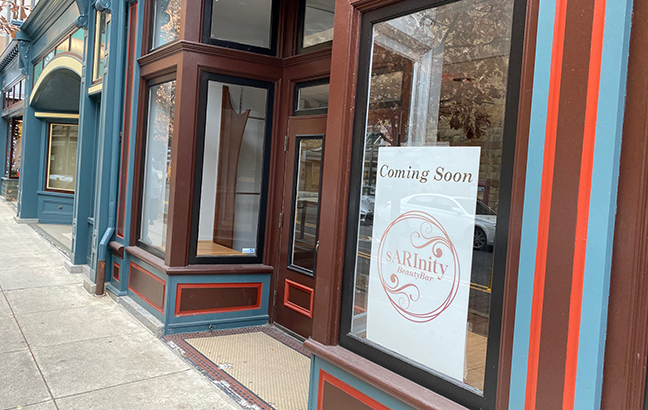
Sarinity Beauty Bar and, next door, AMMA JO, soon will open on N. 3rd Street.

Two new shops are due to arrive next week in downtown Harrisburg, as Strawberry Square fills up its 3rd Street retail spaces.

The first, AMMA JO, will have a grand opening on Dec. 15 at 7 N. 3rd St. The boutique will feature handbags, accessories, clothing, jewelry and other items for women, as well as a men’s section.

For several years, AMMA JO was located in retail space inside Strawberry Square, but that location has been closed for some time.

“We are returning to the downtown because we just loved our experience in Strawberry Square, and we feel that the energy is coming back to the downtown experience,” said owner Amma Johnson. “We want to be a part of that!”

Johnson will be neighbors with Sarinity Beauty Bar, which will open next door at 5 N. 3rd St. Sarinity will offer skincare, spa service and beauty treatments.

“I am ecstatic to provide affordable spa services to the downtown and surrounding areas,” said owner Arian Romaine.

With these new shops, Strawberry Square has leased all the retail spaces in its “Shops on 3rd at Strawberry Square,” said Brad Jones, president and CEO of Harristown Enterprises, which owns the mixed-used building.

“Shops on 3rd has really become a fantastic collection of unique fashion boutiques, restaurants and health and beauty services for this outstanding downtown corridor,” Jones said.

AMMA JO is located at 7 N. 3rd St., Harrisburg, and will have its ribbon-cutting on Wednesday, Dec. 15, at noon. For more information on AMMA JO, visit their website.

Sarinity Beauty Bar is located at 5 N. 3rd St., Harrisburg, and will have its ribbon-cutting on Friday, Dec. 17, at 10 a.m.

If you like what we do, please support our work. Become a Friend of TheBurg!


Continue Reading

Harrisburg Chamber names recipients of 2021 Catalyst Awards

George Nahodil has been named the 2021 Catalyst Award winner, as the Harrisburg Regional Chamber & CREDC today announced its annual list of people and organizations serving as positive forces for our area.

Nahodil, CEO and president of Members 1st Federal Credit Union, is one of eight awardees for the prestigious award.

“We are incredibly proud to honor this group of individuals and businesses for their commitment to our region,” said Ryan Unger, president and CEO of the Harrisburg Regional Chamber & CREDC. “This past year and a half has been challenging for everyone, and this group of individuals and businesses were able to step up and represent the best that our community has to offer.

In addition, to the Catalyst Award itself, the chamber and CREDC announced the winners of additional awards under the Catalyst framework. The honorees are:

  • Athena Award: Lisa Stokes, owner and president, B.R.P. Entertainment
  • Corporate Diversity Champion of the Year: Gannett Fleming, Inc.
  • Diversity Influencer of the Year: McNees Wallace & Nurick’s Task Force for the Legal Equity Advancement Program
  • Entrepreneur of the Year: Amma Johnson, owner and designer, AJ Brands LLC
  • Government Leader of the Year: Tim DeFoor, Pennsylvania Auditor General
  • Small Business of The Year: Macris Chocolates
  • Volunteer of The Year: Karen Young, founder and president, HR Resolutions, LLC

Each year, a panel of local business and community representatives selects the recipients, according to the chamber.

In 2018, TheBurg received the Catalyst Award.

The annual Catalyst Awards ceremony will take place on Dec. 14 at the Hilton Harrisburg and is open to the public. For more information and tickets, visit www.HarrisburgRegionalChamber.org.

If you like what we do, please support our work. Become a Friend of TheBurg!

Continue Reading

Harrisburg Regional Chamber talks systemic racism, changes needed in business

Screenshots from today’s “Chamber Live: A Conversation about Systemic Racism.” Pictured: Meron Yemane (left) and Amma Johnson (right).

Every so often, the Harrisburg Regional Chamber & CREDC hosts a seminar, but this one was different.

It was one that chamber board Vice Chair Meron Yemane has waited years for.

Today, the Chamber held a webinar entitled, “Chamber Live: A Conversation about Systemic Racism.”

“Today’s event is part of the desire of our board to try to do better and try to make a difference,” President David Black said.

Yemane explained how he believes this is the beginning of the process towards change for the Chamber. He pointed out the power structures within the organization itself and the hope he has for positive movement towards inclusivity.

“Next year, I’ll be the first black chair of the Chamber, and that doesn’t mean anything if there’s not a second,” Yemane said. “The Chamber can lead in this.”

He cited statistics showing black people are less likely to occupy executive positions, have a seat in Wall Street and even less likely to be hired if their name sounds black on an application.

Another panelist, Amma Johnson, member of the Chamber board of directors, recommended specific ways for businesses to make changes in their organizations. She encouraged making a clear statement against racism, considering hiring a diversity and inclusions professional, letting employees and customers in on the conversation and promoting black employees to leadership positions.

“I’m a big fan of internal task forces and councils,” she said. “Blending voices is the most helpful.”

Johnson suggested hiring black interns, as well, and looking for ways to mentor and provide opportunities for youth.

Black addressed the growing percentage of people of color in the central Pennsylvania region, about 20%, and the Chamber’s awareness of that.

“Your workforce should look like your customer base […] your workforce should look like your executive team,” he said.

The Harrisburg Chamber did release a statement against systemic racism on June 2 and called for more inclusivity and diversity within the organization. Johnson thinks more businesses need to take this important first step.

“I would encourage any organization who has not made a statement to not be silent,” she said. 

For more information on the Harrisburg Regional Chamber & CREDC, visit https://www.harrisburgregionalchamber.org/.

Continue Reading

Institutions for Sale: Your childhood school, your family church–going once, going twice.

William Penn High School

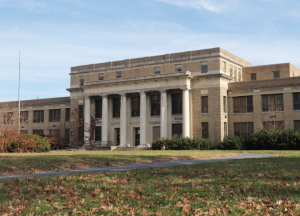
The neoclassical lintel carved “INDVSTRY” guards a door covered in peeling plywood. Inside, “AMOS” spray-painted his name on an unbroken windowpane. Outside, “L,” “D” and “M” painted their initials on the columns. The fire extinguisher lying in the grass adds a touch of irony, given the Harrisburg Fire Bureau’s growing familiarity with the vacant hulk once known as William Penn High School.

Harrisburg isn’t the only city struggling with obsolete institutional properties for sale, but a sudden flood of churches has further saturated the market. Can outdated people-gathering places be revived? Proponents hope the right alignment of creative ideas and hefty funding brings new life to old icons.


History Spared

Once, they anchored neighborhoods and hummed with activity. Now, William Penn High School is covered in vines. Choirs aren’t singing at Camp Curtin Memorial-Mitchell United Methodist Church and others closed by the Susquehanna United Methodist Conference. Zembo Shrine is active but back on the market after a sale fell through. Bishop McDevitt High School has a new owner, but its status is unclear. [Ed. note: after this story went to press, a development group announced a proposal for the Bishop McDevitt site.]

Bill Gladstone of the Bill Gladstone Group of NAI CIR is marketing six of the Methodist churches, among the many faith-based buildings crowding the real estate listings. Smaller churches tend to sell quickly, he said.

“Everybody’s starting new congregations,” Gladstone said. “They want to move out of the Holiday Inn.”

But not selling are “the bigger churches with no parking.” Many suffer from long-deferred maintenance. Inquiries trickle in, only to confront zoning and parking issues. One woman wanted to paint a church white and “attract thousands of people to come to arts events.”

Some ideas “will work,” said Gladstone, “and some won’t.”

The vast, ornate, non-ADA compliant Zembo Shrine attracted investors who saw an ideal entertainment venue—until they uncovered challenges in booking shows, Gladstone said.

“We’ve had activity,” he said. “We haven’t found quite the right buyer for it yet.”

Historic Harrisburg Association helped keep the doors open at historic Grace Church on State Street and is “trying to help find sympathetic buyers, at least for the churches that have history and architectural attributes,” says Executive Director David Morrison.

Gamut Theatre in the former First Church of God and State Street Academy of Music in the former St. Lawrence Chapel demonstrate that repurposing historic churches “becomes such a win-win, because it’s good for the building,” Morrison said. “It’s good for the organization that’s going to inhabit the building. A lot of expenses were spared, and history was spared.”

Success starts with a realistic—translation, “low”—selling price, to make up for the buyer’s upgrades, Morrison said. With institutional landmarks, “their economic value is one thing, and their community value is another thing. If you make the numbers work, there are investors and developers interested.”

Also required: time and creativity. Midtown Harrisburg’s COBA apartments sat empty for three decades before a developer acquired the building for $1, assembled the financing, reconfigured the layout and built a new elevator shaft. The result: 27 apartments in walkable Midtown.

“Thirty years went by before anybody figured that out,” Morrison said.


Offers of Interest

An old school—all those classrooms panting for conversion into lofts. What could be better? Just pay no attention to the 1,200-seat auditorium. And the gymnasium. And the cafeteria.

Philadelphia-based, multi-state developer Pennrose has made it work at Steelton’s Felton Lofts, converted from the historic Steelton High School (albeit after stepping in when the original developer backed out).

Nearly half of Pennrose’s 250 communities are the products of adaptive reuse—buildings that had “become rundown, dilapidated, an eyesore and deterrent to the values of the community,” said President Mark Dambly. “You want to make sure you have community support, because you’re going to have challenges and obstacles to overcome in order to be successful.”

Collaboration opens doors to resources and such municipal considerations as free property acquisition, waived fees, access to state and federal grants and financing, or relief from zoning and parking restrictions, Dambly said.

As for those spaces that held generations of kids staging “Oklahoma” or eating tater tots, “you want to make them generate something economically if you can, and if not, socially,” Dambly said. The Felton Lofts auditorium leans toward social, hosting community events and support services as amenities for residents.

On the revenue-generating side, look to Scranton, where the state-of-the-art Theater at North hosts such shows as an Elton John tribute tour and Judy Collins live in concert—all in a jazz-era junior high school converted in 2015 to senior-living apartments. Remarkably, the developer was Goodwill Industries of Northeastern Pennsylvania.

As for William Penn High School, now about 10 years on the market, owner Harrisburg School District “renegotiated” the listing with Landmark Commercial Realty in October, said Assistant Superintendent Christopher Celmer. Agent Seymour Barget is accepting and vetting offers.

By early 2020, the district hopes to “have a few serious offers of interest on the property that we’ll be able to sit down and evaluate,” said Celmer. “It could be a sale. It could be someone that would want to do a lease to purchase. There could be a multitude of options.”

With an active school, Camp Curtin Academy, adjoining the site, the district must also “make sure there’s a clear understanding” of boundary lines on the 25-acre property.

“If there’s an ability (for the buyer) to keep some of that history of the building, we would love to see that memorialized—what that building meant for generations that came through,” he said.


Mixed Uses

Re-imagination is hard, but it can zero in on filling community needs, said Harrisburg Economic Development Director Amma Johnson.

“Number one is mixed-use,” she said—those fashionable combos of retail and residential. Farther from the downtown-Midtown core, though, conversions could be “way more residential” until vendors dream up creative approaches to doing business.

The appetite for large institutions is primarily among “developers who have deep pockets and are creative in utilizing mixed-use space for residents—live-work, live-work-play,” added Harrisburg Historic Preservation Specialist and Archivist Frank Grumbine.

He knows, though, that those visions stumble at the sight of Gothic churches. Pittsburgh’s awesome Church Brew Works showcases potential, but “a really cool use for a big space like that is really difficult.”

“Their long-term preservation and maintenance are concerns for anybody who would purchase them,” he said.

Methodist Conference Harrisburg Superintendent Rev. Barry Robinson agrees with the primary challenges of selling large churches—“selling the buildings at a fair price over the cost of keeping them,” plus barriers due to size and condition.

“We would like for the buildings to continue to be used for houses of worship or faith-based ministries,” he said. “However, we would not deter anyone from buying the buildings for other uses.”

The city is “very flexible” about changing permitted uses while being “sensitive to the neighborhoods in which these properties reside,” Grumbine said.

Talks with developers are happening, but specifics are “still being formulated.”

“The most I can say is that the uses are mixed,” he said. “We’d like to see those buildings used as residential, commercial, even urban agriculture—a self-sustaining community within the city.”

Harrisburg Redevelopment Authority Executive Director Bryan Davis notes that developers are accustomed to relatively straightforward warehouse conversions, but repurposing unique spaces demands closer attention to the bottom line.

“It’s always nice if you’re able to find a buyer that also has a passion for historic preservation, so they have an appetite for this kind of investment,” he said. “They acknowledge the value. What that does is narrow the field of candidate buyers, which is not insurmountable.”

Neighborhoods “shudder” when beloved institutions close their doors, but Harrisburg’s monumental icons have potential, said Grumbine. William Penn is “so pretty.” And Zembo Shrine could “have a whole city within just that building.”

“There’s tons of opportunity,” he said. “It’s just who has the creativity and the money to figure it out.”

Continue Reading

October News Digest

Stormwater Fee Debated

Capital Region Water took its case for a stormwater fee to Harrisburg City Council last month, explaining how and why the utility expects to implement the new fee starting Jan. 1.

At the beginning of a 2½-hour meeting, Charlotte Katzenmoyer, CEO of Capital Region Water (CRW), explained the proposed fee to council members, which she said was necessary to pay some of the cost of improving the city’s obsolete sewer infrastructure.

“We have to upgrade our system and reduce stormwater flows,” she said. “There is a lot of deferred maintenance, so we have a lot of catching up to do.”

In June, the CRW board launched a process that may culminate with a separate stormwater fee at the beginning of 2020. Under the plan, most residential customers would pay $74 a year, or $6.15 with each monthly bill, though larger residential and commercial property owners would pay more, depending on the amount of impervious surface on their land.

Currently, stormwater costs are included in the wastewater portion of a customer’s monthly bill. CRW officials have said that, with a separate stormwater fee, wastewater rates should rise more slowly than they have in recent years.

CRW is under a partial consent agreement with the U.S. Environmental Protection Agency (EPA) to reduce the flow of pollution into area waterways. Much of the problem is due to the city’s obsolete combined sewer system, which discharges untreated wastewater into streams and the Susquehanna River during moderate and heavy rainfalls.

To help address the issue, CRW plans to spend $315 million to upgrade the sewer system and implement green infrastructure over the next 20 years.

CRW officials told council members that the stormwater fee, which will raise $5.2 million a year under the proposed rate structure, was a more equitable way to pay for system upgrades than through the wastewater portion of the bill, as owners with more impervious surfaces on their properties would pay a greater amount.

Following CRW’s presentation, Mayor Eric Papenfuse criticized CRW for proposing a stormwater fee absent a final agreement with the EPA. He said that the proposed fee might not cover the improvements mandated by the federal environmental agency.

“We’re spending $315 million on a plan because that’s what we can afford, but it doesn’t solve the problem,” Papenfuse said. “If we want to get to 95-percent compliance, or whatever the EPA mandates, we don’t have a plan that works for us, by your own admission.”

Katzenmoyer said that the $315 million investment would reduce wastewater flows into the Susquehanna River by 82 percent. She projected a total cost of $600 million to be in full compliance, with a timeframe of 65 years to achieve that.

CRW board Chairman Marc Kurowski said that discussions with the EPA indicate that the federal agency is aware that Harrisburg is a relatively poor city and needs a lengthy time period to achieve a 95-percent compliance rate. He also said that CRW didn’t want to wait for a final agreement with the EPA due to years of deferred maintenance to the system.

“To wait to implement the fee until the consent decree says this is what you need to do, it’s too late,” he said.

Papenfuse further said that he believes that too much of the burden will fall on Harrisburg’s lower-income residents, especially renters, since landlords presumably would pass on the fee to their tenants.

Katzenmoyer said that CRW plans to offer larger property owners, such as apartment building owners, credits for reducing the amount of impervious surfaces on their land, which could lower their overall burden.

Hanging over the meeting was a notice that the city issued in late July asking private water companies to respond to a request for information, which led to interviews with four respondents. Papenfuse has repeatedly stated that the meetings are “preliminary” and don’t mean that the city intends to sell the water/sewer system.


Polling Places Change

Many Harrisburg voters will need to cast their ballots in a new polling place this month, as Dauphin County had made numerous location changes to comply with the federal Americans with Disabilities Act.

For the Nov. 5 general election, voters in seven Harrisburg polling stations will have new locations, said Gerald Feaser, director of the county’s Bureau of Elections and Voter Registration.

In 2015, the U.S. Department of Justice surveyed a portion of the county’s polling stations, finding “many” to be difficult to access for people with disabilities. Then, last year, the county and the department reached an agreement meant to increase accessibility. As a result, the following polling stations are changing:

Harrisburg 1-1
Old: Comfort Inn/Passage to India, 525 S. Front St.
New: UPMC Pinnacle/Life Team Facility, 1000 Paxton St.

Harrisburg 4
Old: St. Michael Evangelical Lutheran Church, 118 State St.
New: MLK Jr. City Government Building, 10 N. 2nd St.

Harrisburg 7-2
Old: Capital Presbyterian Church, 1401 Cumberland St.
New: Downey Elementary School, 1313 Monroe St.

Harrisburg 9-4
Old: Bellevue Community Center, Briarcliff & Oakwood Rds.
New: John Harris High School Field House, 2451 Market St.

Harrisburg 10-1
Old: Our Lady of the Blessed Sacrament, 2121 N. 3rd St.
New: Goodwin Memorial Baptist Church, Family Life Center, 2430 N. 3rd St.

Harrisburg 10-3
Old: Hadee Mosque, 245 Division St.
New: Scottish Rite Cathedral, 2701 N. 3rd St.

Harrisburg 10-4
Old: Teamsters Local #776, 2552 Jefferson St.
New: Scottish Rite Cathedral, 2701 N. 3rd St.

In addition, for Harrisburg 6 (Susquehanna Art Museum) and Harrisburg 9-3 (Edison Village), the building will remain the same, but the polling location in the building will change.


Council Rejects Housing Director Choice

Harrisburg City Council last month rejected a top administration appointment, with the mayor stating that the decision imperils key city housing programs.

By a 4-2 vote, council turned down the appointment of Franchon Dickinson as the city’s new director of building and housing, the second time this year council members had refused to confirm her appointment.

Following the vote, Dickinson, who was serving as interim department director, resigned her job with the city.

Mayor Eric Papenfuse railed against the vote, saying that Dickinson’s departure endangers two critical housing programs—the annual Community Development Block Grant (CDBG) program and the city’s Lead Hazard Reduction Program.

“There is no way this can be understood as anything other than pure dysfunction on the part of City Council,” he said, following the meeting.

Council members Ben Allatt, Ausha Green, Danielle Bowers and Dave Madsen voted against the appointment, while council President Wanda Williams and Councilman Westburn Majors voted in favor. Councilwoman Shamaine Daniels was absent from the meeting.

In June, council voted 4-3 against the appointment.

Just hours earlier, Dickinson had hosted a city hall ceremony, in which she accepted a check for $5.6 million from the federal Department of Housing and Urban Development to continue the city’s lead abatement program for five years.

Papenfuse said that Dickinson was fundamental in securing both CDBG funds and the federal lead abatement grant and that, without her leadership, both programs were at risk.

“This puts our HUD funding in jeopardy,” he said.


PennDOT May Consider I-83 Changes

The PA Department of Transportation might consider making changes to its design for the widening of I-83 that would reduce the project’s impact on the community, Harrisburg’s mayor said last month.

At a City Council legislative session, Mayor Eric Papenfuse said that PennDOT officials seemed receptive to the preliminary findings of the city’s transportation consultants, Kittelson & Associates, during a Sept. 16 meeting.

“It was a robust discussion of Kittelson’s findings,” Papenfuse told council members.

In June, the city hired the company for $72,500 to conduct a traffic and community impact study of the commonwealth’s proposal to double the number of lanes running through the city.

The study analyzes PennDOT’s widening plan, which envisions as many as 12 lanes and new interchanges, and is determining whether alternatives exist to reduce the project’s footprint and the impact on the community.

Kittelson is expected to release its final report in December, but shared its preliminary findings during the September meeting with PennDOT, Papenfuse said.

Kittelson believes that the footprint of the project can be reduced to lessen the impact on numerous homes and businesses in south Harrisburg threatened by the expansion, and PennDOT seemed receptive to the firm’s ideas, the mayor said.

City Engineer Wayne Martin later explained that Kittelson is recommending reducing the size of the project from 12 to 10 lanes by eliminating two collector/distributor lanes, which are lanes that parallel and connect to the main travel lanes.

Other recommendations include redesigning the proposed 19th Street and Paxton Street ramps to further reduce the impact on the neighborhood.

“PennDOT is committed to doing what it can to minimize the footprint,” Papenfuse said. “It seems encouraging at this point.”


More Downtown Apartments

A plan for a downtown Harrisburg office building has evolved and now will consist of two separate projects—one residential and one office.

Harristown Enterprises has decided to split a Market Square project into two pieces, said CEO Brad Jones.

The first building, an existing, century-old office building at 17 S. 2nd St., now will become a 30-unit, market-rate apartment building with a mix of one- and two-bedroom units, with retail or restaurant space on the first floor, Jones said. That six-story project will go before the city’s Planning Commission this month.

The neighboring building, new construction at 21 S. 2nd St., still will become an office building, Jones said.

Originally, Harrisburg-based Harristown had planned one large, interconnected office building spanning both sites, but hasn’t been able to secure an anchor tenant for it.

“We had a number of prospects, but didn’t find the right deal on that,” Jones said.

In 2017, Harristown acquired 21 S. 2nd St. and later knocked down the small, dilapidated building on that site, which now is an empty lot. Last year, it bought the building next door, 17 S. 2nd St., most recently the home of the Skarlatos & Zonarich law firm, which has relocated to Strawberry Square.

Jones said that he didn’t want 17 S. 2nd St. to sit empty, possibly for years, while his company searched for a large anchor tenant for the office complex, nor could Harristown build it on spec. So, they decided to convert that existing building into apartments, as demand has been strong for other downtown residential projects.

Over the past few years, Harristown has built—or is building—about 150 apartment units in downtown Harrisburg, mostly conversions from aging office buildings. Its largest project, two attached, mid-century buildings on the 100-block of Pine Street, will deliver 74 units early next year.

Meanwhile, Harristown continues to search for an anchor office tenant for 21 S. 2nd St. Jones said that he envisions that new building to be four to six stories tall, with 10,000 to 15,000 square feet of new office space. Harristown would like to break ground on it in 2021, but timing depends on interest, he said.


2nd Street Design Chosen

Median strips have triumphed over a dedicated bike lane, as Harrisburg last month announced the winning design for its two-way 2nd Street conversion.

The city administration stated that residents overwhelmingly preferred “concept 1,” which features a center left-turn lane, along with partial median strips, along the two-mile stretch from Forster to Division streets.

“The public feedback greatly favored Concept 1, and so the city is ready to move forward with next steps towards its implementation,” according to a press release.

The competing design, “concept 2,” included a protected bike lane, but no center lane.

“That’s the main difference,” Mayor Eric Papenfuse told TheBurg previously. “Do you want a center lane with medians, or do you want a bike lane? We can’t accommodate both.”

The winning design also would sacrifice fewer parking spaces. The design would mean the loss of 70 spaces, as opposed to 83 under concept 2, yielding a total of 550 street parking spaces on N. 2nd from Forster to Division streets.

The design itself is not primarily responsible for the parking loss. Under the federal Americans with Disabilities Act, the city must make intersections ADA-compliant whenever it undertakes significant roadwork, which then reduces parking capacity.

The city said that 65 percent of respondents, who voted both in person and online, preferred concept 1 and that 87 percent of respondents wanted the street returned to two-way traffic through Midtown and Uptown Harrisburg.

In the 1950s, 2nd Street was made into a three-lane mini-highway to accommodate commuters and has remained that way since. Papenfuse has said that he expects the $5.7 million project to begin next year and be completed in 2021.


Harrisburg Finances Stable

The first six months of Harrisburg’s financials are in the books, and what’s the verdict?

Steady as she goes, according to the city’s finance and budget officials, who gave an update last month to City Council.

City Budget Manager Erika Regalado said that, for the first two quarters of 2019, revenues came in about on budget. Property tax revenue was flat, but local income taxes came in stronger than expected, indicating a robust local employment picture.

“The economy is steady, and it’s growing, and unemployment is low,” she said.

Her presentation echoed the one that Bruce Weber, director of the city’s Bureau of Financial Management, offered a week earlier to the Intergovernmental Cooperation Authority, a state-appointed body tasked with approving a five-year financial plan for the city.

Weber said that he expected current trends to continue through the rest of the year.

The city’s 2019 budget totals nearly $110 million, which includes a $70.8 million general fund, a $20.6 million neighborhood services fund and a $9.8 million debt service fund.


CRW Receives State Loan

Capital Region Water is in line to receive a multi-million-dollar state loan that should provide a boost to its ongoing battle against stormwater runoff.

Gov. Tom Wolf’s office announced last month that CRW would receive a $13-million, low-interest loan for green infrastructure projects in several Harrisburg neighborhoods, including South Allison Hill and Uptown.

CRW’s loan from the Pennsylvania Infrastructure Investment Authority (PENNVEST) constituted a fair chunk of the $98 million in water infrastructure funding announced by Wolf’s office. In all, 11 counties received funding for a variety of drinking water and wastewater projects.

In Harrisburg, the loan, which carries an interest rate of 1 percent, will allow CRW to initiate two major projects next year, said Tanya Dierolf, CRW sustainability and strategic projects manager.

The first project will take place in the heart of Allison Hill around the intersections of Derry, 14th and 15th streets. CRW will install a variety of green infrastructure, including tree trenches, planter boxes and catch basins, along with new, ADA-compliant ramps, Dierolf said.

The second project planned for 2020 will take place Uptown near the Camp Curtin YMCA. That project will include planters, bumpouts, inlets and catch basins, as well as new ADA-compliant ramps, Dierolf said.

From 2021-24, the loan will fund additional stormwater projects in Uptown Harrisburg and near Paxton Creek, she said.

CRW is under a partial consent decree with the U.S. Department of Environmental Protection to slash pollutant levels flowing into area waterways. Much of the problem lies with Harrisburg’s obsolete combined sewer system, which allows untreated stormwater and wastewater to flow into the Susquehanna River during moderate and heavy rainfalls.

CRW plans to invest $315 million over the next 20 years to upgrade its sewer system and install green infrastructure, which is a major part of its plan to reduce stormwater flows through its system.


Rezoning Gets Approval

A Harrisburg builder is a step closer to developing in a Midtown neighborhood, as the city Planning Commission has approved a zoning change that would allow a denser, more mixed-use neighborhood.

Seven Bridges Development received approval last month to rezone about 14 city blocks just north of the Broad Street Market. The zoning change from “residential medium neighborhood” to “commercial neighborhood” would permit greater height, density and mix of uses in the Marketplace townhouse neighborhood.

“The idea is take vacant parcels and give Midtown more opportunities for residential and commercial,” said Seven Bridges attorney Christopher Rice of the Carlisle-based Martson Law Offices.

In late 2005, the Harrisburg Redevelopment Authority sold 71 individual lots to State College-based S&A Homes for $1 apiece. S&A built a handful of houses then stopped, causing the authority recently to buy back the undeveloped parcels. In late April, the authority designated Seven Bridges as the potential developer of the remaining 60 lots in the Marketplace neighborhood,

City Planning Director Geoffrey Knight said that Seven Bridges would need to return to the planning commission to get its land use plans approved for individual projects, regardless of whether the zoning change is made.

“It will allow more development to occur by right, but it won’t exempt any new project from going through the land development process,” he said.

In the end, the planning commission voted 4-2 in favor of the change, with commissioners Anne Marek and Ausha Green dissenting.

Harrisburg City Council now must approve the proposed zoning amendment.


Downtown Office Building Planned

Harristown Development and Select Capital Commercial Properties are teaming to build a new, mixed-use building in the center of the 300-block of Market Street, directly across from Strawberry Square.

“This is the last area on Market Street in the core of downtown that needs redevelopment,” said Harristown CEO Brad Jones. “This is the final piece.”

The developers envision a 10- to 12-story, 100,000-plus-square-foot office and retail building at 307 to 313 Market St. The building, called 311 Market Street, also would have several floors of parking and might include residential space.

For the past few years, Harristown has been purchasing properties to assemble the site. Recently, the company closed on the final, and largest, piece, buying the former Rite Aid drug store from the Camp Hill-based company for just over $1 million.

Jones said that plans are to demolish the existing structures, probably next year. In the meantime, the developers hope to recruit an anchor tenant.

If construction is delayed following demolition, the developers would turn the site into a “pocket park” in the interim, a space that could be used for events, Jones said.

“We would have a nice transitional use,” he said.

Harristown this year applied for a state Redevelopment Assistance Capital Program (RACP) grant in the amount of $5 million for the project, which is estimated to cost $25 to $40 million in all. It didn’t receive the funds, but will apply again next year, Jones said.


Home Sales, Prices Up

Harrisburg area home sales jumped in September and prices also rose thanks to a drop in mortgage rates, according to the Greater Harrisburg Association of Realtors (GHAR).

In the three-county region, home sales increased to 607 units, a jump of 18.1 percent over September 2018, while the median home sales price rose 5.1 percent to $181,000, GHAR said last month.

In Dauphin County, 292 housing units sold versus 254 in the year-ago period, and the median sales price increased to $167,500 compared to $164,900. Cumberland County saw home sales increase to 286 units from 233, while the median price rose to $209,950 from $189,000 in September 2018.

In Perry County, home sales increased by two units, to 29, while the median price was unchanged at $149,900, compared to the year-ago period, according to GHAR.

Overall, sales inventory was down by about 10 percent compared to September 2018, GHAR said.

“The sharp drop in mortgage rates over the past year has created additional demand,” said GHAR, in a press release.


So Noted

Amma Johnson has been named Harrisburg’s new director of the Department of Community and Economic Development. Johnson also owns her own boutique, AMMA JO, in Strawberry Square. The city administration last month also appointed Jamal Jones as the new director of business development and LERTA administrator.

Anna Pantalone has joined Vision Resources of Central Pennsylvania as a new staff member. Pantalone is a licensed occupational therapist specializing in assisting people who are blind or visually impaired.

David Schankweiler has resigned from the Intergovernmental Cooperation Authority, the state-appointed board formed to approve and oversee Harrisburg’s five-year financial plan. Shankweiler was replaced by vice-chair Audry Carter.

Doggie Delights debuted last month in the Broad Street Market, offering a line of home-baked dog treats, as well as packaged dog snacks. It’s the second location for owners Donnie and Kelly Farner, who also have a stand in the West Shore Farmers Market.

Eric Darr, president of Harrisburg University, will receive the 2019 Catalyst Award from the Harrisburg Regional Chamber & CREDC. Other Catalyst winners include Claudia Williams of the Human Zone, Todd Snovel of the PA Commission on LGBTQ+ Affairs, Blake Lynch of the Harrisburg Police Bureau, state Rep. Sheryl Delozier, the creative services company Triscari, Sylvia Hepler of Launching Lives and UGI Utilities.

Elementary Coffee Co. opened its first standalone shop last month at 256 North St. in Harrisburg, with a grand opening planned for this month’s 3rd in the Burg on Nov. 15. Owner Andrea Grove started her coffee business with a stand in the Broad Street Market, which she will retain. The shop is located in a once-derelict and abandoned building that has been nearly completely rebuilt, featuring the first-floor retail shop and roaster, with two apartment units upstairs.

Jeremy Stahl has joined Harrisburg-based FMA Advisory. Stahl brings more than 20 years of industry experience that includes public finance, tailored investment portfolio construction and equity valuation.

Manal El Harrak has been appointed chief executive officer by the board of directors of Carlisle-based Sadler Health Center. El Harrak, who joined Sadler in March 2015, served as the interim CEO after spending several years as chief operating officer.

Penn State Health and Geisinger announced last month the signing of a letter of intent to transfer ownership of Holy Spirit Health System to Penn State Health. Target date for completion of the transaction is by June 30. The intent is for the two organizations to enter into a member substitution agreement for Penn State Health to replace Geisinger as the sole corporate member of Holy Spirit Health System.

Recycle Bicycle has found a new home at 1722 Chestnut St. on Allison Hill, said founder Ross Willard. Volunteers have been clearing out the 9,000-square-foot, circa-1940 building, which will be used to store bikes until it can be fully occupied, probably in early spring, Willard said.

Steelton has sold its water system for $21.75 million to Hershey-based Pennsylvania American Water, one of the largest private water companies in the state. PA American Water is also one of four companies interviewed by Harrisburg recently as it ponders whether to privatize its water/sewer system.


In Memoriam

Rev. Rick Hawtrey, Jr., the owner of Capital Joe Coffee, died last month after a brief illness. A native of Milwaukee, Hawtrey, 43, lived in Mechanicsburg and operated Harrisburg-based Hawtrey Inc., an IT training company. Several years ago, he opened his first coffee shop on Forster Street in Harrisburg then opened a second shop in downtown Mechanicsburg. He was a licensed minister in the United Pentecostal Church and a member and minister of the Apostolic Faith Church in Mechanicsburg. He also helped start the first PA campus of Purpose Institute. Rick was a friend of TheBurg, and our staff would like to express our condolences to his loved ones.


Changing Hands

Adrian St., 2446: P. & L. Norton to C. Grant & M. Rinaldi, $64,000

Barkley Lane, 2510: Nish Properties to D. Lugaro Jr., $62,000

Berryhill St., 2217: Nationstar HECM Acquisition Trust 2018 1 to R. Castro, $61,000

Berryhill St., 2244: T. Valinoto, M. Ciccone & G. Valino to Ranck Investments LLC, $69,000

Berryhill St., 2307: W. Birtle to D. Everett & R. White, $170,000

Boas St., 229: D. Carmelite to JVC Investments LLC, $115,000

Calder St., 205: Equity Trust Co. Custodian Paul J. Kirsch Jr. to Capozzi & Ehring Realty LLC, $105,000

Calder St., 206: Sage Policy Group Inc. to J. Knapp, $108,450

Crescent St., 352: D. & S. Zimmerman to T. Doughty, $48,000

Curtin St., 523: Urban Living Properties LLC to SR Homes LLC, $33,000

Duke St., 2622: J. Conjar to A. Cowan, $146,250

Emerald St., 221: Federal National Mortgage Assoc. to M. Horgan, $40,000

Fillmore St., 606: D. Halstead to C. Austin, $59,000

Forster St., 224: H. Bossert to S. De Freitas, $100,000

Green St., 1211 & 1213: J. & S. Bircher to D. Lehman, $210,000

Green St., 1310: Panda Real Estate LLC to A. Johnson, $156,000

Green St., 1708: M. Stevens to S. Jusufovic, $118,000

Green St., 1820: Jhonleo Home Renovations LLC to K. Hawkesworth, $217,000

Green St., 1925: B. & A. Christensen to M. Carson & R. Finkel, $206,000

Green St., 2013: M. Didone to C. Palmer, $232,500

Green St., 2218: F. Wilson to A. DeLeon, $41,750

Green St., 3117: B. Joyner to E. Bailey, $188,000

Green St., 3214: D. Bartels to J. Graf, $130,000

Hale Ave., 202: D. & P. Schulder to R. Kreitzer Jr., $110,000

Herr St., 121: Anderson & Spencer Rentals to M. & C. Freeman, $71,500

Herr St., 269: M. Berlin to B. Gordon & P. Keville, $154,900

Herr St., 403: C. Kotlarski to S. Nieves, $123,000

Kensington St., 2416: D. Truong to MRG Homes LLC, $55,000

Maclay St., 243: A. Apa Sr. to Trip Aces 243 LLC, $94,000

Manada St., 2016: D. Reinhart to A. Harrison, $105,000

Market St., 309 & 311: Rite Aid of Pennsylvania to Market Street Quad LLC, $1,045,000

Muench St., 429: Y. & K. Han to R. Wijaya, $63,000

Muench St., 639: P. Dobson to G. & E. Elledge, $44,900

Mulberry St., 1001: Mumma Realty Associates Property Management to D&F. Mulberry LP, $425,000

Mulberry St., 1815: Crystal Palms LLC to K. Kabeer, $55,000

North St., 1506, 1508 & 1512 & 1509 Primrose St.: F. Metzler to J. Ringley, $97,000

N. 2nd St., 2101: SMKP Properties to KALM Holdings LLC, $275,000

N. 2nd St., 2313: D. Lehman to B. VanFleet, $119,900

N. 2nd St., 2619: D. Skerpon & C. Baldridge to R. & J. Shovlin, $219,000

N. 2nd St., 2838: Diamond Real Estate Solutions Inc. to S. Gallagher, $245,000

N. 3rd St., 906 & 912: Nish Properties LLC to KALM Holdings LLC, $285,000

N. 3rd St., 1205: A. & J. Carper to S. & D. Rooney, $119,900

N. 4th St., 1727: B. & E. Holler to R. Moss & J. Stark, $153,500

N. 4th St., 1918: Rose of Sharon Baptist Church to Xtreme Management LLC, $135,600

N. 4th St., 2338: Penn Home LLC to M. Aramburu, $47,900

N. 5th St., 1945 & 521 Peffer St.: Church of the MC Lamb Memorial to Home for the Friendless Homeland Center, $390,000

N. 5th St., 2548: M. Roberts to B. Horn, $59,900

N. 6th St., 2245: J. Ward to N. Dessalegn, $44,000

N. 6th St., 2257: C. Yunga to I. Landi, $40,000

N. 15th St., 1503: KMABC Properties to A. Laboy, $46,000

N. 15th St., 1523: Tassia Corp. to K. Braddock, $35,000

N. 17th St., 1014: Truemac Homes 401K Trust to N. & R. Jeffries, $99,500

N. 21st St., 902: B. Garra to R. Womack, $63,000

N. Front St., 2843: M. & A. Saracino to Accession Holdings LLC, $328,200

Peffer St., 317: D. Berhe to CWJK Holdings LLC, $91,000

Penn St., 1619: H. Brown to T. Gross, $45,000

Penn St., 2419: M. & J. Miller to A. Demmel, $40,000

River St., 304: M. Della Porta & I. Smith to V. Murzin, $150,000

Seneca St., 245: CPenn Properties Old Uptown LLC to J. Ehring, $75,000

Seneca St., 250: PA Deals LLC to A. Nix, $69,900

South St., 122: FA Realty to J. Charles Realty LLC, $134,000

S. 16th St., 8: M. Hicks to D. & J. Portilla, $30,000

S. 19th St., 229: Water People Entertainment LLC to M. Reyes, $35,000

S. 25th St., 626: X. Shi to H. McCleave, $70,500

State St., 213: Legion Premier Properties LLC to H. Fang & K. Zhu, $319,000

State St., 231, Unit 506: LUX 1 LP to T. Huong, $124,900

State St., 231, Unit 802: LUX 1 LP to T. Huong, $169,900

Swatara St., 2405: L. & S. Snowden to K. Thai & K. Pham, $159,900

Valley Rd., 202: D. Benny to K. Caesar, $219,900

Vernon St., 1417 & 1419: Tang & Perkins Property Management LLC to Greenbrook Enterprises LLC, $180,000

Harrisburg property sales for September 2019, greater than $30,000. Source: Dauphin County. Data is assumed to be accurate.

Continue Reading

Harrisburg Mayor: PennDOT may be receptive to changes for proposed I-83 redesign

Aerial view of I-83 in Harrisburg from 19th Street to the Susquehanna River. A PennDOT proposal would double the width of this segment of the highway.

The PA Department of Transportation might consider making changes to its design for the widening of I-83 that would reduce the project’s impact on the community, Harrisburg’s mayor said on Tuesday night.

At a City Council legislative session, Mayor Eric Papenfuse said that PennDOT officials seemed receptive to the preliminary findings of the city’s transportation consultants, Kittelson & Associates, during a Sept. 16 meeting.

“It was a robust discussion of Kittelson’s findings,” Papenfuse told council members.

In June, the city hired the company for $72,500 to conduct a traffic and community impact study of the commonwealth’s proposal to double the number of lanes running through the city.

The study analyzes PennDOT’s widening plan, which envisions as many as 12 lanes and new interchanges, and is determining whether alternatives exist to reduce the project’s footprint and the impact on the community.

Kittelson is expected to release its final report in December, but shared its preliminary findings during the September meeting with PennDOT, Papenfuse said.

Kittelson believes that the footprint of the project can be reduced to lessen the impact on numerous homes and businesses in south Harrisburg threatened by the expansion, and PennDOT seemed receptive to the firm’s ideas, the mayor said.

Following Tuesday night’s council meeting, city Engineer Wayne Martin explained that Kittelson is recommending reducing the size of the project from 12 to 10 lanes by eliminating two collector/distributor lanes, which are lanes that parallel and connect to the main travel lanes.

Other recommendations include redesigning the proposed 19th Street and Paxton Streets ramps to further reduce the impact on the neighborhood.

“PennDOT is committed to doing what it can to minimize the footprint,” Papenfuse said. “It seems encouraging at this point. It’s been a good dialogue and a good discussion.”

In other meeting news, City Council on Tuesday unanimously approved a resolution to pay former Jump Street Executive Director Melissa Snyder $10,000 to serve as a consultant for one year as the city takes on organizing the annual Artsfest celebration. Council also passed a resolution applying for a grant for an extension of the “Urban Meadow” in Midtown.

Also at the meeting, Papenfuse introduced Amma Johnson as the new director of the city’s Department of Community and Economic Development and Jamal Jones as the new director of business development and LERTA administrator.

Continue Reading

Harrisburg Needs: A lot has been accomplished over the past decade. Let’s build on that.

Illustration by Rich Hauck

Back on a chilly weeknight in mid-February, I sat among a few hundred others at the annual meeting of Harrisburg Young Professionals.

TheBurg was there in force because we had been nominated for one of HYP’s annual awards—namely, the “community engagement” award.

I bring this up neither to boast nor complain (we didn’t win) but because of what I saw around me.

Sitting in the auditorium of the State Museum, I felt delightfully ensconced in a type of ad hoc club—one that I definitely wanted to be a member of (sorry, Groucho).

I had tremendous respect for the people surrounding me because they’d accomplished so much.

Blake Lynch, who’s made it his mission to improve outreach between the community and the city’s police bureau, was in our category. So were the good people from Friends of Midtown, led by Annie and Andy Hughes, who spent two years organizing, raising funds for and building Harrisburg’s first public dog park.

Sitting right in front of me was Meghan Jones, co-founder of the HBG Flea, and, right in front of her, the young folks who organized HUE Fest, Harrisburg University’s block party and e-sports tourney. Off to the right sat Sara Bozich and her contingent from Harrisburg Beer Week, an event-rich celebration of local craft beer, and, in front of her, Andrea Grove and the people of Elementary Coffee Co.

All were nominees for various community and business awards.

Then, on the stage was keynote speaker Amma Johnson of the AMMA JO boutique and new HYP President Adam Porter, who has co-founded two city businesses, st@rtup Harrisburg and Provisions grocery store.

And sitting right next to me was TheBurg’s own Megan Caruso, a 2018 HYP award-winner for co-founding the Harrisburg Mural Festival.

Wow, what a group!

In recent years, these folks have helped transform Harrisburg with new events, new products, new businesses and a new energy. When TheBurg began, 10 years ago, none of this existed.

And 2019 promises more of the same. At least four Broad Street Market food vendors are expanding to storefronts on or near 3rd Street (Knead, Urban Churn, Elementary Coffee and Radish & Rye), and another HBG Mural Festival will paint the town for 10 days starting in late August.

But all this has at least one guy (me) wondering—what comes next? What other great ideas are out there? Harrisburg has come a long way in a short time, but there is still much to do to complete this city’s transformation from post-industrial poster child to shining city on a river (this time, apologies to Ronald Reagan).

When people talk to me about what Harrisburg most needs, the conversation often turns to better schools and more and better housing. I agree. However, those two issues seem so large, the problems so overwhelming, that they can be a formula for inaction. Since we, as individuals, can’t seem to do much about these, why not just crack open another beer and watch more “Judge Judy?”

No.

Individual action is exactly what’s needed. America’s cities have improved largely due to the cumulative effect of countless small actions by ordinary citizens, just like we’ve already seen here. And, just like in Harrisburg, many of these cities, unfortunately, still have huge housing problems and underperforming schools.

I’ll start the conversation.

Harrisburg needs retail. Duh, right? In Harrisburg’s hierarchy of needs, more and better retail often ranks right up there behind better schools and housing. Retail is a tough nut, but, heck, I’m a guy who started a print magazine—I never said it would be easy. Looking at other cities, specialty shops and boutiques seem to be the type of retail that can work in an urban environment, though stores typically need to be concentrated to create critical mass in an attractive, walk-able area.

Harrisburg needs community assets. The dog park is a perfect example of a community asset that people long said was needed—and then a few intrepid pooch-lovers made it happen. A farmers market on Allison Hill could be another great community project, and Riverside desperately needs a gathering place, such as a café. Speaking of gathering places, I would love for the city to do something useful with its warren of desolate alleys downtown. Many cities have created vibrant pedestrian zones, event spaces and shopping areas from underused, well-located alleys, just like those around 2nd Street.

Harrisburg needs attractions. The city can’t afford grand building projects, such as museums, nor would I ever suggest one. But smaller attractions (the HBG Flea, Beer Week, Mural Fest) have proven to be big winners. How about a multi-weekend Christmas market on City Island, more food-focused events or better, more frequent use of the plaza at the Broad Street Market? The state could even throw us a bone by opening up the old Archives building (once emptied) as an observation tower or encouraging better use of the vast, empty plaza behind the State Museum—talk about an underused asset.

Harrisburg needs people. Most of all, Harrisburg needs people. It needs more people to live here, visit here, shop here—bringing their checkbooks with them. This situation has improved immensely from 10 years back, when I often felt that I was the only person walking down 3rd street. Still, city businesses would benefit greatly from more foot traffic and more customers.

I would like to close out this column with a disclaimer. Naturally, these ideas are mine alone, a little spit-balling exercise to get the discussion started. What are yours? I would love to know. And, most importantly—like Amma and Annie and Meghan and Adam—are you ready to make them happen?


Lawrance Binda is editor-in-chief of TheBurg.

Continue Reading

Retail Therapy: More people are choosing to live, work and play in Harrisburg. Could a retail revival be next?

Boutiques and department stores brought shoppers to downtown Harrisburg in droves through the 1960s. This undated photo from the Dauphin County Historical Society shows a bustling scene outside Bowman’s Department Store on Market Street, which is now part of Strawberry Square.

It was close to 3:30 p.m. on a gray Monday afternoon when I found Moe Rammouni ringing up customers at Pal’s Apparel, his high-end streetwear boutique in downtown Harrisburg.

His clientele—two local guys, Rammouni said, who probably found Pal’s on Facebook or Instagram—came in seeking tracksuits and puffy parkas. It was Rammouni’s first sale of the day.

“Business is great now, but there’ve been some growing pains,” Rammouni said. “And there still are. You gotta have a lot of patience to do this.”

Rammouni has been in his storefront at 306 N. 2nd St.for just over a year. But he can already tell you what more seasoned merchants have been saying for decades: retail isa tough business. E-commerce has created a market where prices are low, consumer information abounds, and free, two-day shipping reigns supreme. Those conditions have devastated national chain retailers. In the past year alone, legacy brands like Sears and Bon-Ton have closed stores and liquidated inventory. Suburban malls are going dark as a result.

If not even the biggest brands can compete with online retail giants, where does that leave mom-and-pop shops?

These independent merchants have historically congregated in American cities, where dense populations and compact storefronts offered a symbiotic shopping experience. But the migration of people and businesses to the suburbs have decimated urban retail centers across the country. Harrisburg is no exception. The downtown boutiques, grocers and department stores that once animated the city’s streets are long gone. Their storefronts found second lives as offices and eateries, if they’ve been filled at all.

“To my left and my right, there’s vacant, commercial class-A space that could be turned into something magnificent,” said Rammouni. “I’d love to see more retail on 2nd Street.”

Even as they watch big-name competitors fold, merchants in Harrisburg think it’s a good time to start a small business. They say that the hardships rocking national chains highlight the power of independent retailers, which can offer superior expertise and customer service.

But if current businesses are going to flourish, their owners say, Harrisburg needs to fill its vacant storefronts.

“Don’t get me wrong—I love Harrisburg,” said Anela Bence Selkowitz, one of the city’s newest storefront retailers. “But there’s nowhere to shop.”

Bence recently opened Stash Vintage, a clothing and accessories store, in a shared storefront at 11 S. 3rd St. She’s near the restaurants El Sol and Bricco in the downtown SoMa neighborhood.

“I’d like to see three or four more boutiques on this block,” she said. “If this neighborhood was a destination where people could spend a whole afternoon, it would be a much better situation for us.”

Landlords agree that independent businesses have the best shot at success when they’re part of a dense network of stores. The good news is that Harrisburg’s commercial corridors are emerging from a long period of stagnation. Strawberry Square, the downtown mall that subsumed some of Harrisburg’s old storefronts in the 1970s, had a 40-percent vacancy rate just five years ago, according to Harristown CEO Brad Jones. It’s now at 5 percent.

“There’s been a lot of momentum, but retail is still a very tough sector for us, as it is for everyone else,” Jones said. “I don’t think we’ll ever get back to the way it was… But we are growing our density, and every year, it’s getting better.”

Rise and Fall

If you set out to do your Christmas shopping in Harrisburg in 1950, you wouldn’t have to travel far from 3rd and Market streets. Like most cities, Harrisburg’s central business district boasted everything from small specialty shops to multi-level department stores. Whether you wanted a custom hat, a tailored suit, a new armoire or the latest records, you could buy it in a downtown storefront.

Ken Frew, a librarian for the Dauphin County Historical Society, grew up on Derry Street, where he could pay 5 cents to take the bus to shop in downtown. “You could find anything you wanted down there, and you didn’t need a car to get it,” he said. “You had big anchor stores, sure, but you also had lots of other shops really keeping the place together.”

As a historian who has lived his whole life in Harrisburg, Frew has watched the city’s downtown evolve for decades. Its first major change came in the 1940s, he said, when customers started to favor their personal vehicles over public transportation. The shift carved the first cavities into Harrisburg’s downtown streetscape, as property owners began razing buildings to pave surface parking lots.

But the rise of the personal automobile dealt an even deadlier blow to cities. It facilitated movement to suburban communities, where residents could retreat after a day’s work in a downtown office. Segregationist housing policies and discriminatory lending practices accelerated the exodus. Urban planners played their part, too. Starting in the 1950s, cities including Harrisburg began to reroute major city streets with one-way traffic patterns. Under the guidance of Mayor Nolan Ziegler, Harrisburg officials reduced parking lanes and converted 2nd and Front streets to one-way, multilane mini- highways in 1956. “We are interested only if proper ingress and egress is assured,” Ziegler said at the time.

Ziegler and his engineering team got what they wanted. Following the 2nd and Front street conversions, it became easier than ever for commuters to zoom through Harrisburg as they came and went from work. The city’s small businesses became an unintended casualty.

“The one-way streets made it difficult to maneuver, and it was the end of downtown,” Frew said. “When people got off work, they went out of the city and stopped shopping. My dad was always grousing that it slowed business.”

Harrisburg’s population was close to 90,000 in 1950; by 1980, it had dipped to 53,000. As white, middle-class customers flocked to the suburbs, retailers followed suit. Harrisburg got its first suburban-style shopping center in 1951, when Kline Plaza opened on S. 25th Street. That, according to Frew, was “the first sign that retail was starting to plummet” downtown. The Harrisburg East Mall followed in in 1969. Some local business owners, like the men’s clothing retailer Allan Stuart, tried their luck opening satellite branches in suburban malls. But most found that their storefront model didn’t translate to the new setting. Others couldn’t match the prices of their chain competitors.

The erosion of the downtown merchant base was gradual, according to Stuart’s son, Jeb Stuart. But by his account, “the bottom fell out of downtown by the 1970s.”

Jeb Stuart recently curated an exhibit for the Historic Harrisburg Association that chronicles downtown retail during the city’s “urban golden age,” from 1918 to 1960. Walking through the exhibit, it becomes clear how much of the city’s retail space has been ceded to other industries. When retailers started to evacuate downtown Harrisburg in the 1950s, developers snatched up vacant storefronts and adapted them to other uses. Today, the Market Street property that once housed S.S. Kresge’s Co, a discount retailer, has become Whitaker Center. SciTech High School now occupies the space once held by G.C Murphy department store.

Many downtown retail spaces were acquired by Harristown Development, which the city created in the 1970s to spearhead urban revitalization projects. Chief among them was the development, in 1978, of Strawberry Square, a downtown mall with 1.4 million square feet of mixed-use office and retail space. Jeb Stuart worked as a leasing agent in Strawberry Square in the 1980s. He and his business partner tried to court national chains to fill first-floor retail spaces. When that didn’t pan out, they focused their efforts on small, mom-and-pop shops that catered to the downtown workforce.

“It was a challenge,” Stuart said. “But there will always be a downtown worker population in Harrisburg, so there will always be a need for some form of retail. But what you need now is retail that’s convenient, that fills a need or that offers a niche—because cool things can become destinations in themselves.”

Support System

The same malls that killed downtown retail in the 1960s and ‘70s are today facing a sea change of their own, thanks to the ascendency of e-commerce.

But does the newest disruption in retail represent a potential resurgence for urban storefronts?

“We all think we’re poised for a comeback,” said Isaac Mishkin, owner of The Plum, a women’s clothing boutique. “I see it inching forward. People are getting smarter and spending more time analyzing what people buy.”

Mishkin, who’s run The Plum from the same brick storefront on Locust Street for 50 years, is one of the lone legacy retailers in Harrisburg. To survive today, he believes that storefront merchants have to offer one thing that e-commerce companies can’t—attentive, experience-driven customer service.

“I learned how to sell the old-fashioned way,” Mishkin said. “We know how to dress customers when they come in. It’s not like department stores today where nobody waits on you.”

As accessories designer Amma Johnson put it, a customer’s most valuable commodity today isn’t money—it’s time. One reason customers have flocked to online retailers is because they can peruse goods and complete a transaction in minutes, eliminating the onerous task of driving to a mall to shop. To compete with that convenience, storefront retailers have to make a customer’s visit worth their while, she said. At her Amma Jo showroom in Strawberry Square, that means offering a pleasant shopping experience that puts the customer first. She’s also branched out into events, hosting networking happy hours and, more recently, a women’s empowerment and entrepreneurship panel. Johnson said that these events do generate sales. But she also sees them as an extension of her brand — the larger, more nebulous “feeling,” Johnson said, that people associate with her name and product. And that feeling can’t be conjured with pixels alone. She pointed out that even online companies are experimenting with brick and mortar retail models.

“A good brand is a good feeling,” Johnson said. “And even as powerful as a brand like Amazon is, they’re doing things like pop-up stores because it’s very hard to build a brand exclusively online.”

Andrew Kintzi, who run the men’s vintage store Midtown Dandy in a storefront he shares with Bence on 3rd Street, echoed what Johnson, Mishkin and other merchants said about running a storefront today.

“In terms of competing with other businesses, it comes down to the customer’s experience,” Kintzi said. “It’s being able to walk in the door, be greeted, trying something on and feeling materials. I want you to come in here, find something you love, and remember buying it here.”

Bence has a different take than her business partner. As she sees it, a good landlord can make or break a

retailer. And she says they’re hard to find in Harrisburg. She and Kintzi tried to set up shop on 3rd Street north of Forster, but were stymied by a paltry inventory of storefronts. Landlords wanted to charge exorbitant rents for sub-par spaces, she said, and wouldn’t accommodate requests to enhance them.

“You need a good deal with a good landlord who will work with you,” Bence said. “Landlords are really awful around here. They want way too much for empty shells.”

She contrasted that with her experience leasing from Harristown, which painted walls and constructed a small build-out in their storefront on S. 3rd Street. They’ll also include Stash and Midtown Dandy in their advertising and promotional materials.

“There’s a support system here, so it doesn’t feel like we’re just being thrown into a space,” Bence said. “It feels more like a partnership with the people who own the building.”

The final thing that retailers say they need is increased density in the downtown retail district. Johnson said that she chose her storefront in Strawberry Square because it offered the best chance to gain organic foot traffic—passersby who might not seek out her store on their own, but encounter her brand while going about their daily business. More than 6,000 people walk through the shopping center each day to shop, eat, work or attend events, according to Jones, making it one of the busiest commercial corridors in the city.

But the workforce population disappears on the weekend, creating wild variations in the pace of customers throughout the week. Retailers say the same is true elsewhere in the city. Chantal Eloundou, who opened Nyianga, a boutique selling African crafts and fabrics on N. 3rd Street, said business is best on days when the Broad Street Market is open, since it draws people down 3rd Street from state office buildings downtown. But the rest of the week can be a challenge.

“More retail would draw in more customers,” she said. “So, I say, the more the better.”

Critical Mass

Building a bigger retail landscape in Harrisburg would do more than just create a shopping destination.

Even though the industry can be precarious, experts say that locally owned businesses remain an essential part of any city’s community and economic development strategy. Besides creating jobs and building wealth for entrepreneurs, a diverse array of shops affords consumers more choice and competitive prices. It also drives tourism. Visitors who have enough reason to shop, eat and pass time in a city just might decide to move in.

“Having businesses, whether it’s retail or restaurants or services, really is a key component in making a thriving city where people want to live and shop and do business,” said Ken Hammaker, vice president at the Community First Fund, which loans to entrepreneurs in low-income communities across the state. “You need that component just as much as you need clean, affordable housing and good quality schools.”

Nobody understands that dynamic better than Harrisburg Mayor Eric Papenfuse, who touted his experience as a storefront business owner in both of his mayoral campaigns. Papenfuse and his wife, Catherine Lawrence, opened the Midtown Scholar Bookstore in 2003. In 2009, they moved the store to its current location at Verbeke and N. 3rd streets, into what used to be a movie theater and then a department store.

According to Lawrence, many of the nearby storefronts were underutilized when they moved in.

She and her husband convinced some recalcitrant property owners to sell them their neighboring buildings. County property records show their acquisitions began in 2008, the same year they purchased the two parcels that house the current Midtown Scholar, and continued through November 2013, the same month that Papenfuse won his first term as mayor.

Since he took office, these property holdings have opened Papenfuse to criticism that he prioritizes projects on 3rd Street to his own benefit. He said that it was always part of a greater strategy to build a community-oriented commercial corridor.

“We came in 15 years ago as young retailers interested in generating more foot traffic on this corridor,” Papenfuse said. “We looked at the market, at Midtown Cinema, and saw the potential for more of a critical mass more than just a single anchor store.”

Lawrence and Papenfuse are sympathetic to the challenges facing local retailers today. They know it takes a long time to build a customer base, develop a marketing strategy, and finance an inventory. Speaking as a city official, Papenfuse said that Harrisburg must provide the public services—smooth roads, inviting streets and a public safety presence—that enhance the city’s built environment and encourage tourism. It can also provide practical resources, such as business development programs, through the office of Community and Economic Development.

But speaking as a business owner, he said much of the responsibility for building a retail corridor lies with landlords and merchants who have a shared, community-oriented vision. Like Bence, he reserved special criticism for local landlords, who he says have been historically disinterested in maintaining their properties and identifying good tenants.

According to leaders in Lancaster, good landlords have made all the difference in their downtown business district, which has added more than 100 shops, restaurants and entertainment venues in the past half-decade.

“Historically, we’ve been fortunate that we’ve had a great number of local investors and property owners that are responsible for the fact that we still have this core area of retail downtown,” said Marshall Snively, president of the Lancaster City Alliance, a nonprofit community and economic development group. “They were patient at a time when other cities were leasing to anyone that would lease and very intentional in making sure it was lively retail that would add to the character of the city.”

It’s no coincidence that the evaporation of retail in Harrisburg coincided with the depths of its financial distress, a condition that began brewing in the 1970s and intensified through the 2000s. Today, local officials say that Harrisburg’s long-term recovery depends on whether or not the city can increase its population. But turning daytime workers into full-time, taxpaying residents will take more than new housing and better roads.

The urban theorist Jane Jacobs famously said that the hallmark of a healthy city is the “sidewalk ballet” of people darting between work, errands, meals and entertainment in a humming urban core. Plenty of people in Harrisburg participate in this “ballet” during the week, when almost 50,000 commuters flood the city. But boutiques, bars and restaurants, cultural and entertainment spaces convince them to stick around after hours. And it’s the coexistence of all these elements— apartments, workplaces, businesses and public spaces— that distinguish an urban ecosystem from a suburban office park or housing development. As Hammaker put it, all of these elements are all connected, and no one sector will flourish as long as the others falter.

And that includes retail. At a macro level, the realities of the industry may seem bleak. Dying malls and empty big-box stores have left unsightly cement husks in America’s suburbs. Amazon is colonizing private spaces with smart speaker robots as its CEO controls an ever-growing share of the world’s wealth. But locally, small retail businesses remain an integral component of vibrant, self-reliant cities. They create jobs, animate streets and offer a shopping experience that’s more than just transactional. One need only visit Stuart’s exhibit at the Historic Harrisburg Association to be reminded that retail is an indelible part of Harrisburg’s past. If the city is going to thrive, the same will have to be true in the future.

Continue Reading

Downtown’s Town Hall: Brad Jones and the re-imagining of Strawberry Square.

The mayor of Strawberry Square is holding court on this Tuesday morning. From his soaring chamber, he greets his constituency.

Some passersby get a wave and a hello, as in “Hi, Mr. Regan,” who happens to be state Sen. Mike Regan. Others stop at his table for a quick word about their businesses or schools. When he notices grandparents and their preschool-aged grandson looking at the centerpiece Chockablock Clock, silenced for the moment, he obligingly takes out a key and turns on the clanking, whirring, Rube Goldberg-ian centerpiece of Harrisburg’s downtown mall.  

It’s all in a morning’s work for Brad Jones, president and CEO of Harristown Enterprises. He is, of course, not a mayor at all. But from a table at Little Amps Coffee Roasters—one of the new businesses in Strawberry Square—he sometimes presides over the moving pieces of Harristown’s ambitious plan to transform a dated, 1970s-era idea of urban renewal into a fresh, 21st century hub for live, work and play.     

“We’re trying to create community here,” he said. “This was always the town hall.”

A brief history: Under the aegis of Harristown, a private nonprofit created in 1974, urban revitalization bulldozed into downtown Harrisburg with demolition of the iconic, if distressed, Penn Harris Hotel, making room in 1979 for a retail-office complex along Strawberry Alley. By 1990, phase two incorporated historic 19th- and 20th-century buildings along Market Street, where retail once flourished.

Verizon rented much of the upper-level office space, but, despite the presence of such mainstay businesses as Auntie Anne’s, the Strawberry Patch and Ideas and Objects, Strawberry Square, with its massive atrium, seemed empty and lost in time.

The recession years were especially chilling, but Harristown’s volunteer board of directors had already launched a reinvention plan seeking revitalized retail, the addition of residential units and support for what Jones calls an “education corridor.”

The pending 2016 vacancy of the Verizon Tower was the launching point. Painstaking negotiations with the state relocated 900 Department of General Services workers into the heart of downtown from their old digs at the former State Hospital grounds at the edge of the city.

Getting that 17-year lease with the state, and its power to nearly erase $41.6 million in debt obligations on the facility, “was like breathing again,” said Jones. Those 900 workers didn’t displace existing bodies but filled a space where only about 250 people knocked around by then. As Jones put it, “Retail follows people.” And so does residential.

One of the first signs of new life was a childcare facility, immediately popular among office workers happy to drop off, visit and pick up their kids right where they work. New office tenants included highly desirable tech businesses and a health care consultant. A space accessed both from an interior corridor and the street was converted into the bright Market on Market, stocked with convenience-store fare like soda, Tastykakes and Hershey’s Ice Cream pints, plus millennial chow like okra chips and a bin of fresh onions.

In a survey, Strawberry Square workers, residents and patrons clamored for a drug store, so Harristown obliged by luring in Rite Aid from across Market Street, coming soon to 14,000 square feet in the same corner once occupied by a Thrift Drug.

“We’ve been working on this for 10 years,” said Jones, who declined to share Rite Aid’s lease length but promised it’s lengthy. “This is a business that is clearly going to prosper here.”

Reasons to Stay

Amma Johnson, who sells her bags and other boutique ware in her shop, Amma Jo, cheers the innovation of a mixed-use complex, in contrast to shopping malls where she would be “next to a million other people selling handbags.”

Today’s customers seek experiences, she said. For her, they include state workers on lunch breaks, attorneys on Dauphin County Courthouse business, contractors working in Pennsylvania’s capital city or Strawberry Square residents.

“People want to come downtown,” said Johnson, who opened in December 2015 then, last year, gobbled up the storefront next door. “They want to browse. They want to eat. They want to have a cup of coffee, and they want to have it all in one place.”

In short, they “need more reasons to stay,” she said, just before two browsing Amma Jo customers left the store with a cheery, “We’ll be back with money tomorrow.”

Not every vendor agrees with Strawberry Square’s new direction. Vendors who asked to remain anonymous said they worry that the one-stop shop convenience of Rite Aid, stocked with some things also sold at surrounding specialty vendors, will drain their customer pools.

But what “The Square,” as Jones often calls it, takes away, it also gives. Twenty-two upscale apartments, carved out of former office space, opened last year and filled immediately, bringing in full-time residents for the first time, all with their own need to eat and drink and buy. Many of the new tenants work at DGS or Harrisburg University or with a Harristown-tenant business, Jones said. Harristown pitches the residents’ easy access to retail, restaurants, entertainment and nature. In his usual energetic manner, he enthusiastically explained that tenants can stay entirely roofed during the course of a day: eating in the food court or at the Hilton Harrisburg, seeing a show at Whitaker Center, taking classes at Harrisburg University, working out at FitnessU. All are directly linked to the complex.

As for restaurants, Harristown is helping slake the city’s seemingly insatiable appetite for new eateries. From the owners of El Sol Mexican Restaurant, Fresa Bistro (“Fresa is Spanish for strawberry,” remarked Jones. “How cool is that?”) is slated to offer sandwiches and wraps, paninis and salads.

Harrisburg might not ever be an 18-hour city, but 12 or 14 hours of ceaseless activity seem feasible, Jones said.

“Some days, you might have a shot at a 16-hour city, but we’ve got to do more,” he said. “We’ve got a lot of density, but we’ve got to continue to do more and capitalize on the opportunity to help these corridors grow.”

In addition to Harrisburg University, the education corridor includes the Capital Area School for the Arts Charter School, for which Harristown recently added new music-room space, and Temple University, which offers undergraduate and graduate degrees, certificate programs and professional development. Harrisburg High School SciTech Campus is across the street.

Strawberry Square aligns with HU’s notion of city as campus by offering such amenities as eateries, banks and a fitness center.

“These are all important assets that we don’t have to provide,” said HU President Dr. Eric Darr.

HU interns have worked with Harristown entities, and WildFig, a data analytics startup that launched from HU and employs HU students, rents Harristown space. Jones also serves on HU’s board.

As in any marriage, there are occasional differences. Darr said he would like HU to be “THE university in the corridor,” but added that he recognizes the collaborative advantages of nearby university students and faculty.

“In general, we’re aligned with the direction Harristown is trying to take the corridor, particularly the more recent movement toward trying to attract technology businesses and analytics businesses, and providing nice, yet affordable housing for younger workers,” he said.

Future collaborative plans for HU and Harristown include an expanded, “more formal” business incubator and accelerator, to replace HU’s outgrown Blackberry Alley incubator, Darr said.

“We all know there’s a lot of work to do in the corridor,” he said. “Generally, as long-term players, we’re focused on some of the basics of trying to improve the basic corridor itself and the buildings and the facilities and the infrastructure, some of those basic pieces that have to be taken care of. Unfortunately, the city’s not in a position to do it themselves, and, so, we’re left as private entities to try to piece together ways to do this. When you’re talking infrastructure, that’s a pretty expensive proposition.”

About People

In all this, there is still the matter of Strawberry Square’s design, that living tribute to the disco era. Jones and Harristown are trying to give it new life.

A $16 million energy efficiency retrofit replaced every light fixture in the complex, saving money and brightening up the place. A $400,000 rebuild brought a wheezing escalator into the modern age (“As one who uses the escalator almost every day, I appreciate the undertaking,” said Darr). HVAC systems were revamped and bathrooms renovated. Badly needed elevator and skylight refurbs are on the 2017 docket, said Jones.   

Of course, nobody hangs around to admire light fixtures, but the Harristown board elected to tackle needed infrastructure upgrades first, “reinvesting in the systems of the buildings,” Jones said. Attention should turn to cosmetic improvements by 2018, the year when a Christmas tree, now on order and proportionally big enough for the atrium, will deck the halls for the holidays, he added.

In the meantime, the push is on to attract what Strawberry Square needs most—living bodies spending money. Among new businesses, Little Amps opened its third café in 2015, warming up the cold, open atrium and offering an attractive, central meeting place for workers, students and residents. Inside the vast space, the HBG Flea found a winter home for its monthly craft market, and pop-up events like craft beer tastings increasingly encourage mingling and socializing.

Jones said that Strawberry Square’s growth spurt originated with his predecessor, Russell Ford, and the Harristown board. Jones took over the helm in January 2015, 13 years after starting there as corporate director for public and community services. His career in economic development went from the state and federal levels to “nose right to the ground,” with oversight over “just about every brick, every fire hydrant, every tree.”

“I went from 10,000 feet to ground level,” he said. “I have to say, ground level is a lot more fun.”

To Jones, this is all perfectly natural. The son of Cliff Jones, legendary Pennsylvania Chamber of Business and Industry president and cabinet secretary for six governors, Brad Jones grew up with economic development, attending ribbon cuttings at 5 years old. “If you try to make somebody’s day every day,” Cliff Jones would say, “you’ll make your own day.” He also preached that, “It’s not about projects.”

“It’s about people,” Brad Jones said. “Helping people get jobs. Helping people find places to live. Helping people start businesses. Those kinds of lessons stuck with me.”

Jones is a Camp Hill resident with three children, one still in high school. He hopes that Harristown’s support for CASA and SciTech help create opportunities for more families to find quality schooling for their children. He is also a guitarist who once played with a band in Washington, D.C. Sitting at his de facto conference table by Little Amps, he says he is “the luckiest guy.”

“To me, this is the best job in the city,” he said. “It couldn’t get any more fun than this. You’re building your environment, adding to it every day. It’s exciting.”
For more information about Strawberry Square, visit www.strawberrysquare.com.

Author: M. Diane McCormick

Continue Reading