Art Deco Gems: Forum, Finance buildings worth a closer look.

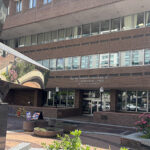
Two of the more ornate, but less-visited Capitol Complex giants are the Forum and Finance buildings. Together, these two massive structures, both designed in Art Deco and built in the 1930s, complete architect Arnold Brunner’s vision for a grand campus of state office buildings.

The Forum was originally built as the state’s new Education Building. It was designed by William Gehron and Sydney Ross in the late 1920s and dedicated on November 4, 1931. The building featured the new three-story State Library, and the 1,883-seat Forum auditorium, home to the Harrisburg Symphony Orchestra since 1931.

The ornate auditorium features murals on the ceiling and wall, designed by Eric Gugler and Richard Brooks. The bronze gates and doors of the building were produced by sculptor Lee Lawrie. Artists C. Paul Jennewein and Harry Kreis contributed carved panels and other decorations. Italian American artist Vincent Maragliotti painted the decorated ceilings of the foyers.

Gehron and Ross then designed the new Finance Building which would be the final structure of Brunner’s original plan. Construction of the building began in 1937 and was completed in the winter of 1940. Jennewein again produced exterior sculptures and medallions for the building, and famous sculptor Carl Milles produced the doors to the structure. Eugene Savage and Maragliotti produced interior murals for the foyers and elevator lobbies of the new building. Sculptor Lawrie also produced a large Deco-style coat of arms at the north entrance to the building.

In all, the Forum and Finance buildings are highly impressive Art Deco construction. Each contains dark marble wainscoting and brass chandeliers and sconces, which contribute to the overall grandeur of the buildings. The meticulous attention to detail and ornate artwork and artisanship in these buildings are just another reason why the Capitol Complex ranks as an eligible National Historic Landmark – a premier example of monumental government civic planning.

Continue Reading

Giving a Smile: Just 2 years old, Hbg4Kids impacting young lives.

You can’t help but hear a child’s laughter or see a baby’s smile and feel happier. Their joy is contagious, and I’ve often said that they are the best remedy for a bad day. Truth be told, I was having a hard week when Hbg4Kids got its start. It wasn’t until I closely examined my situation that I realized how insignificant my problems were in comparison with those around me. I think it was God’s gentle way of reminding me to be thankful for what I do have and to concentrate on how I could help others. From that point forward, I was determined to give back.

Hbg4Kids started very small two years ago. I reached out to a few close friends and asked them to join me in giving back to others during the holidays. I quickly realized however that there is a large group of young professionals and community members who want to help others, but they just need an organization, cause or channel through which to give. We quickly found that our true passion is helping children in our community who are facing some of life’s biggest obstacles but deserve bright futures. In what has become our theme, we wanted to “Give a Smile … Harrisburg Style.”

For our first campaign, we helped raise support for The Four Diamonds Fund at Penn State Hershey Children’s Hospital, as they work to provide invaluable care to children and their families. Our team’s efforts were well received, and at our inaugural event we were thrilled to present a $10,000 donation to the organization and help local children smile. From that night forward, our passion only grew stronger.

This year, we set our sights on reaching children in Harrisburg and around the world. We partnered with TOMS, a shoe company that donates one pair of shoes to an underprivileged child for every pair purchased through its “One for One” program.  Through the community’s generosity, we are thrilled to have donated more than 200 pairs through our “Heel Your Sole” campaign.

We then turned our attention to Allison Hill. Children living in this neighborhood face some of Harrisburg’s most challenging conditions including the city’s highest violent crime, unemployment and poverty rates – but many are striving for bright futures through educational mentoring provided by The Joshua Group. Our goal was to raise support for the nonprofit’s after-school tutoring program, J-Crew, which assists students in achieving academic success.

On February 4, we held our 2nd Annual Give Them a Smile, Harrisburg Style Charity Event at Dragonfly Club with title corporate sponsor HealthAmerica. Continuing to gather generous donations throughout the evening, we were thrilled to present a check to The Joshua Group for $12,000.

Despite a tough economy and the challenges it brings, the Harrisburg community continues to demonstrate its commitment to our youth.

What began as a small group of friends wanting to lend a hand, Hbg4Kids has evolved into a powerful catalyst, joining young professionals, adults, businesses, organizations and the community together to make a difference in the lives of local youth. Comprised of nearly 20 young professionals from the greater-Harrisburg area, we are working collaboratively to improve the lives of children and, of course, “Give a Smile … Harrisburg Style.”

Traci Fatula is a lifelong Harrisburg resident and president of Hbg4Kids. For more information on the group, call 717-903-7307 e-mail [email protected].

Continue Reading

Virtual Childhood: Ensure your child experiences life, not just watches it.

I remember Coleco and Atari from when I was a kid. The age of video games was just beginning, with clunky joysticks and graphics that are childish compared to what is available to children today. The options for video games have expanded exponentially. Children are often far more savvy than their parents regarding what is available. Many parents complain to me as we discuss limiting TV and video game time, “He/she wants to spend hours upstairs playing the Xbox.” Parents have the right and responsibility to set clear guidelines regarding what is acceptable for their children’s’ game time. This is not hard to do with just a little background and common sense.

To start, video games are not all bad. There are some products which may improve hand-eye coordination and develop problem solving skills. Items like the Wii which get kids up and moving can definitely have benefits. However, keep in mind that tennis or bowling on the Wii is not going to expend as many calories as actually getting out and participating in the sport. Also, many people are playing the Wii in the living room or rec room with some snacks readily available on the coffee table. This is usually not the case for kids who are out on the tennis court. They are focused on the game. It’s okay to use video games to blow off steam on a rainy day. However, I would not recommend routinely substituting Wii sports for the actual thing.

Additionally, many video games place the child in the role of a main character that shoots or fights toward winning a particular goal. These violent video games have been shown to increase kids’ aggressive behavior. The Entertainment Software Rating Board (ESRB) has developed a rating system to provide parents with information about the content of video games. There are two parts to this system.

Rating symbols are present on the front of the video game box and suggest age appropriateness of the game. There are seven different rating symbols:

1)      Early Childhood – for 3 years and above; no material parents would find inappropriate.

2)      Everyone – for 6 years and above with minimal cartoon and fantasy or mild violence and mild language.

3)      Everyone 10+ – for 10 years and above with more cartoon and fantasy, mild violence, mild language and some suggestive themes.

4)      Teen – for 13 years and above with violence, suggestive themes, crude humor, minimal blood, gambling and strong language.

5)      Mature – for 17 years and above with intense violence, blood and gore, sexual content and strong language.

6)      Adults only – for 18 years and above with intense violence, graphic sexual content and nudity.

7)      Rating Pending – this is only present when the game is advertised prior to release and a rating has not yet been assigned by the ESRB.

The content descriptors, which give parents additional information to clarify the rating, are present on the back of the box and detail elements of a game that may be of interest or concern. For example, a game may specifically be listed to contain “comic mischief” or “animated blood.” Keep in mind that the ESRB ratings are designed to give parents guidance on the content of a game. Simply because the ESRB rates a game appropriate for 10 year-olds, it does not mean you as a parent must accept that it is appropriate for your 10 year-old. Keep the video game console in a common area of the house. If you notice images that are concerning, watch how your child reacts, discuss the content with him or her, and ultimately decide for yourself whether the game is appropriate for your child.

The American Academy of Pediatrics recommends no more than two hours per day of screen time for children. That includes video games, computer games, television and movies. Make a daily time limit clear to your children and model this behavior by turning off the television or computer yourself. Take the kids out to play, walk or even grocery shop. And plan a dinner to make together. Make sure you and your children are living life, not just watching it on the screen.

Continue Reading

Inglourious Actor: Spotlight on Fassbender at Midtown Cinema.

Michael Fassbender.   Born in Germany, raised in Ireland, he is the “It” boy of present day cinema.  He was one of the oiled up muscled bodies in Zack Snyder’s battle royal 300.  He made his big break as Bobby Sands in the harrowing 2008 film Hunger.  Since then he has played a man who gets involved with his girlfriend’s teenage daughter (Fish Tank), the victim of torture porn terror (Eden Lake), a film critic turned tragic spy (InglouriousBasterds), the brooding Mr. Rochester (Jane Eyre), an assassin for hire (Haywire) and the master of magnetism himself (X-Men: First Class).  Soon we will see the ubiquitous actor play an android in Ridley Scott’s highly anticipated Prometheus.

Today, we are here to talk about two of Herr Fassbender’s films, specifically, a pair of films, originally making their theatrical debut in 2011 that are finally making it to Harrisburg this very month.  The first of these is A Dangerous Method, the latest from Canadian auteur David Cronenberg.  He plays Carl Jung opposite Viggo Mortensen as Freud and Kiera Knightley as the Russian woman who brought these two classic minds together and in turn who tore them apart.  Cronenberg, more in his A History of Violence mode than his earlier Videodrome or Scanners mode, hands us a deep and haunting take on the delicate relationship between sex and sanity.  Playing out as a ménage à trois of the mind (though mind you, there is much of the body as well) Cronenberg’s film is a sharply tuned near masterpiece of psychological derangement – and we get Fassbender at its juicy center.

The other film making its way to Harrisburg this month is Shame.  The film is directed by Steve McQueen (no, not that Steve McQueen), the man who gave us Fassbender’s breakthrough Hunger, and has been saddled with an NC-17 rating for the full frontal nudity of Fassbender’s sex addict main character (a full frontal of epic proportions at that) and therefore may not be for everyone.  But even so, with a bravura performance by the seemingly omnipresent actor as a man dealing with the demons of addiction, and McQueen’s delicate yet audacious directorial style, it is a not-to-miss cinematic experience indeed – and not just for the endowments that made even George Clooney blush and gush at the Golden Globes.  Due to the NC-17 rating, the film will end up reaching less people than most movies, and that is a (pardon the pun) shame because it is a stellar and harrowing look at a man and his addiction. It is highlighted by a performance that many, including yours truly dear readers, believe to have been one of the biggest snubs at this year’s Academy Awards.

Both of these films will debut at Midtown Cinema in March and both are well worth the wait we had to endure from their respective late fall releases in New York and L.A.  Other films coming our way include the equally long anticipated A Separation, The Skin I Live In, Albert Nobbs and We Need to Talk About Kevin – but none of these star Michael Fassbender, so we can talk about them another time.

Trivia Question: In Quentin Tarantino’s InglouriousBasterds, Michael Fassbender plays Archie Hickox, a British film historian and critic whose knowledge of German cinema and culture makes him the perfect candidate to go undercover as a Nazi officer.  What real life film critic and award-winning novelist, who also worked as a spy during WWII (though to less tragic circumstances), is this character based upon?   Find out the answer in my next column.

Continue Reading

Switching Tracks: With rail plans delayed, Modern Transit changes course.

For the last 15 years, Modern Transit Partnership could sometimes see a light at the end of the tunnel as it worked to bring a commuter rail line to the Harrisburg region, but lack of funding and political will has kept that project in the dark.

Now, with no signal that such a project is on the agenda of either the governor or the General Assembly, which are wrestling with funding for the state’s existing mass transit systems, Modern Transit has changed its strategy to winning hearts and minds.

In so doing, Brad Jones, the group’s new chairman, said MTP has brought onto its board individuals representing the region’s various modes of mass transit – from commuter services to transit bus lines from neighboring cities.

The group also works to help promote projects Amtrak has undertaken to improve amenities and facilities along the Keystone Corridor such as the rehabilitation and renovation of Amtrak’s Elizabethtown station and its proposed Middletown station.

For MTP, it’s a new era of cooperation with regional transit agencies and state and local governments, part of an effort to expand “the transit mentality,” Jones said.

“We’re not giving up on the mission for rail,” he said. “If anything, we’ve been guilty of being too far ahead of the curve.”

Opponents such as former Cumberland County Commissioner Rick Rovegno have believed the commuter rail project as envisioned by MTP has always been more wishful thinking than concrete planning, and the concept far ahead of need.

As such, Rovegno said, the proposed Lancaster-Harrisburg-Carlisle commuter train line was not going to get the needed federal funding. “The issue always comes down to the level of public benefit for the level of public financing,” he said.

Rovegno, who sits on Capital Area Transit’s board, said he supports passenger rail service. But he believes it may take a generation or more before the region’s population – 656,000, according to 2007 U.S. census figures – is dense enough to make commuter rail viable for the region.

Until then, Rovegno said he supports efforts by the region’s various bus transit agencies of one day creating an integrated bus system. It’s at this junction that MTP, CAT and the region’s other bus and commuter services have met.

MTP, which sees bus and rail as tandem services, is helping to promote CAT bus ridership (up 2.67 percent, from 2.61 million to 2.68 million between 2010 and 2011), and supports a regional transit system study, expected to be completed this spring.

“We’ve got to build the transit brand first,” Jones said. “You build the need, to show the politicians the need for [commuter rail] funding.”

For now, that means MTP’s chief mission waits at the station. “It’s going to be a long, slow road to bring commuter rail to central Pennsylvania,” said Julie Shade, MTP’s executive director.

That disappoints such longtime supporters as the Cumberland County Coalition for a Sustainable Future, but they remain hopeful, nonetheless.

“It’s needed,” said Ron Skubecz, the coalition’s president. “We think it’s the most forward-thinking idea the county has to consider.”

Continue Reading

N.J.-Style, Pa.-Sited: Capitol Diner serves everyone from pols to prols.

With its sleek stainless-steel exterior and well-appointed interior filled with the warm smells of cooking and brewed coffee, the Capitol Diner sits atop Eisenhower Boulevard, shining like one of its pre-fabricated brothers in New Jersey or New York.

That’s what Dimitrious “Jimmy” Hronis, who owns the diner with his brother, Gus, intended when they bought the old 70s restaurant with its faux stone exterior a decade ago and began to transform it into a stylish, 24-hour restaurant with a counter.

“This is very typical for New Jersey,” Hronis said, relaxing one morning in a booth near the long granite counter. “It’s the old way diners used to be, but modernized.”

The Swatara Township diner, which the brothers bought 10 years ago, was recently approved for a liquor license and should soon offer beer and wine with meals – very New Jersey/New York like, but Hronis doesn’t anticipate ever having a bar as many diners do in those states.

To Hronis, who has an information technology degree from George Washington University, appearance is everything in running a restaurant. He and his brother grew up working in their father’s Northampton diner, where they learned the business – from cooking to waiting tables.

Hronis found his niche in managing the front of the house while Gus took the kitchen, which is how they operate their 180-seat diner with a trained staff that numbers as many as 10 workers on a shift, depending upon the time of day.

Since those first years cleaning, remodeling and refurbishing the interior and re-fabricating the exterior, Capitol Diner has become a popular spot, attracting even governors and U.S. Senators as well as celebrities performing in Harrisburg.

One of the biggest to dine there was Hilary Clinton, when she was a candidate for president in 2008. Her staff chose the diner for a campaign event that drew crowds of voters as well as media.

“We had reporters coming in from all over the world here,” Hronis recalled, noting television trucks were parked everywhere. “It was a very busy day.”

The keys to running a successful diner, said Hronis, are “Good food, good service and clean atmosphere,” something his Greek-immigrant father always stressed during the 33 years he ran his diner. “Those were the words from Pop.”

“We strive here on being clean, very clean,” Hronis said. A short while later, He pointed at a busboy who worked nearby with a broom, “He’s doing sweeping, see?”

Hronis believes success requires a willingness to make changes. That, he said, is why he rebuilt the diner – it was closed for four months after he bought it in 2002 – and why he continues to add to the menu.

“People want a change,” he said. “They don’t want the same thing all the time.”

Hronis, who makes a point to know his customers, said that’s just as important as a clean restaurant, and food that not only tastes good, but looks good.

“People believe with their eyes,” he said. “The eyes are the key to people’s stomachs.”

Capitol Diner, 800 Eisenhower Blvd., Harrisburg, 717-939-2279 or fax 717-939-4119.

Continue Reading

Mulligan March: It’s do-over time for your resolutions.

It’s March and for a lot of people those New Year’s resolutions have come and gone – not necessarily because they have been accomplished, but, rather, we tend to lose steam or motivation.

Instead of claiming resolutions, why not set simple and, most importantly, realistic goals? By the way, goals can be set any time, not just that the beginning of the year!

Mulligan March – yes, it’s a “do-over”! Hey, if you can do it in golf, then why not also in life? The reality is we’ll have fall backs. Life will get in the way, but if we can set manageable and measurable goals, we don’t have to give up on them. Just start over or pick up and start from where you are at the moment.

Two of the most common New Year’s resolutions are to lose weight or start exercising. What does this really mean? Do you have a plan or the right tools and education to do either?

It’s easy to say you are going to do something but the “going about it” can be challenging. Many of us have tried numerous diets and workout plans, but it’s time to stop making it about a diet or “quick fix” workout plan and make it your way of life.

Stop focusing on the end result and focus on what it will mean over all. Make your lifetime goal to be the healthiest you can be. When you focus on being healthy, the rest will take care of itself. I tell my clients over and over, if “diets” worked, we would be the healthiest country on the planet.

We spend billions of dollars as a country in the diet industry and we are only getting fatter. Stop the madness and get back to the simplicity of leading a healthy lifestyle.

Work on achieving proper nutrition in conjunction with sufficient and focused “movement” – like exercise. If you don’t have the tools to do this on your own, search out a reputable nutritionist or fitness expert to help. Now, that’s a resolution!

Continue Reading

Window Space: Fenêtre Gallery opens to Harrisburg.

Fenêtre is French for “window,” and it’s the appropriate name of the new art gallery HACC is opening this month at Harrisburg Area Community College’s Midtown campus.

The gallery opens March 16 on the second floor of HACC’s historic brick building on the corner of 3rd and Reily streets. It will feature contemporary works of emerging and established artists.

The gallery’s name was selected for an interior window that is part of the 1917 building’s original architecture. The window creates an opening between exhibit space and reception area where light enters through a skylight. Metaphorically, the name is a reference to a window as an opening into the imagination.

The first exhibit opens March 16 with “Visions and Voices: The 2012 South Central Pennsylvania Scholastic Art and Writing Awards,” sponsored by Commonwealth Connections Academy, an online public school. A reception for opening day is from 5-7 p.m., coinciding with “3rd in the Burg.”

Fenêtre Gallery is in a historic landmark, the former home of Evangelical Press, a printing company that operated in the building for decades before being converted into a state office and laboratory. Today, after complete restoration, the building serves nearly 2,500 students enrolled in HACC’s trade and technology programs.

Hours for the gallery will be Friday evenings and several afternoons during the week. Events are free and open to the public. Entrance to the building is at 1500 3rd St.

Continue Reading

Switching Tracks: With rail plans delayed, Modern Transit changes course.

For the last 15 years, Modern Transit Partnership could sometimes see a light at the end of the tunnel as it worked to bring a commuter rail line to the Harrisburg region, but lack of funding and political will has kept that project in the dark.

Now, with no signal that such a project is on the agenda of either the governor or the General Assembly, which are wrestling with funding for the state’s existing mass transit systems, Modern Transit has changed its strategy to winning hearts and minds.

In so doing, Brad Jones, the group’s new chairman, said MTP has brought onto its board individuals representing the region’s various modes of mass transit – from commuter services to transit bus lines from neighboring cities.

The group also works to help promote projects Amtrak has undertaken to improve amenities and facilities along the Keystone Corridor such as the rehabilitation and renovation of Amtrak’s Elizabethtown station and its proposed Middletown station.

For MTP, it’s a new era of cooperation with regional transit agencies and state and local governments, part of an effort to expand “the transit mentality,” Jones said.

“We’re not giving up on the mission for rail,” he said. “If anything, we’ve been guilty of being too far ahead of the curve.”

Opponents such as former Cumberland County Commissioner Rick Rovegno have believed the commuter rail project as envisioned by MTP has always been more wishful thinking than concrete planning, and the concept far ahead of need.

As such, Rovegno said, the proposed Lancaster-Harrisburg-Carlisle commuter train line was not going to get the needed federal funding. “The issue always comes down to the level of public benefit for the level of public financing,” he said.

Rovegno, who sits on Capital Area Transit’s board, said he supports passenger rail service. But he believes it may take a generation or more before the region’s population – 656,000, according to 2007 U.S. census figures – is dense enough to make commuter rail viable for the region.

Until then, Rovegno said he supports efforts by the region’s various bus transit agencies of one day creating an integrated bus system. It’s at this junction that MTP, CAT and the region’s other bus and commuter services have met.

MTP, which sees bus and rail as tandem services, is helping to promote CAT bus ridership (up 2.67 percent, from 2.61 million to 2.68 million between 2010 and 2011), and supports a regional transit system study, expected to be completed this spring.

“We’ve got to build the transit brand first,” Jones said. “You build the need, to show the politicians the need for [commuter rail] funding.”

For now, that means MTP’s chief mission waits at the station. “It’s going to be a long, slow road to bring commuter rail to central Pennsylvania,” said Julie Shade, MTP’s executive director.

That disappoints such longtime supporters as the Cumberland County Coalition for a Sustainable Future, but they remain hopeful, nonetheless.

“It’s needed,” said Ron Skubecz, the coalition’s president. “We think it’s the most forward-thinking idea the county has to consider.”

Continue Reading

America, in a School: Democracy, independence valued at The Circle School.

It’s mid-afternoon on a Thursday, and The Circle School is abuzz.

A teenager has–allegedly–violated a rule, and everyone wants to know what the five-person judicial committee will do.

Will he admit the wrongdoing and accept punishment? Will he plead not guilty and go to trial?

Examples of democracy in action take place every day at The Circle School, an alternative school housed in a 75-year old brick building that once served as the infirmary for the Children’s Home of Harrisburg.

The Circle School is based upon such American concepts as individual freedom and responsibility. And the students-run judicial system–which almost daily judges infractions from chore-shirking to excessive swearing to, well, almost anything–shows how seriously the school takes it dedication to self-determination, fairness and community.

“We want the school to be a scaled-down version of the larger world,” said school co-founder Jim Rietmulder.

Rietmulder helped start The Circle School in 1984 as his own children were preparing to enter the educational system. He considered his options and didn’t like what he found.

“My wife and I looked around the area and said, ‘What are we going to do?'” he said. “For our children, we needed something different.”

So, in typical American fashion, Rietmulder didn’t just accept his bad options.  He started something new.

With several others, he studied what he believed was right—and wrong–with how children were educated in this country.

The shortfalls, they believed, were many, but none stood out so boldly as the stark difference between the way a typical school was run and the way American society operated.

Outside of school, freedom and personal choice were valued. Inside, students were subject to a strict hierarchy and what they considered to be the stifling environment of rule-bound teachers and administrators. How could such a system prepare children–citizens–for life in a democratic society, where freedom, thought and responsible choice must be valued for the country to prosper?

So, after two years of planning, the founders crafted a genuinely unique approach to education–one of the first self-directed schools in the United States.

The old ways were out. At the Circle School, democratic practices would be infused within the fabric of the school, so everyone’s opinion would be encouraged and valued. Students would study what interested them, would intermingle at will and could come and go as they pleased– under the guidance of certified teachers and caring staff.

“It’s really just American government injected into a school,” said Rietmulder.

That approach to learning has remained unchanged for 28 years.

Each day, some 70 students, ranging from pre-K through high school, freely associate, often huddling into small groups to share interests, books, knowledge. The curriculum rarely segregates subjects, so that math, reading and other concepts are learned as an integrated whole.

At The Circle School, responsible choice is paramount. Students energetically pursue their interests, unencumbered by periods and bells. And, if they need to let off steam, they’re free to run around the grounds, a grassy expanse located the top of winding road in Swatara Township.

In the school’s free-form atmosphere, perhaps most striking is its order, as well as its energy.

Sure, there are rules. But students seem to follow them not because of coercion, but because everyone is vested in a well-functioning system. It’s much like the adult world, where most people voluntarily accept ways of behaving so society can operate in a civilized manner.

“The critical-thinking skills, self-motivation and time management that are all inherent to The Circle School’s program are essential to work I’m doing now,” said Austin Vogt, a 2002 graduate now studying for a Ph.D. at Washington University in St. Louis. “I can’t think of a better way to prepare for graduate school.”

There are challenges, Reitmulder says, as, naturally, some children take better to the independence than others. Teenagers who’ve been long-exposed to traditional schools seem to have the most trouble adapting, but, in time, most transition well, he said.

In the end, about 90 percent of students go on to college, with their Circle School experience preparing them perhaps better than their peers for the independence of college life.

“Our students who visit us after they’ve been away at college say they don’t understand their fellow students avoiding class or partying all the time,” he said. “They’ve already done the freedom thing. It’s nothing new to them.”

The Circle School of Harrisburg is at 210 Oakleigh Ave. 717-564-6700; circleschool.org; a program for prospective students will be held March 15 at 6:30 p.m. (details p. 11).


Continue Reading