Old Bar, New Life: Take a quick peak into The Speakeasy.

Come May, a venerable Harrisburg watering hole is set to open with a new owner, look and name.

Adam Sturges said he expected to finalize the purchase of Garrason’s Tavern by the tail-end of March, renaming it The Speakeasy. A four-to-five week renovation will follow.

“There is much work I want to do,” Sturges said. “That building has a lot of history, so we want to bring it back to what it once was.”

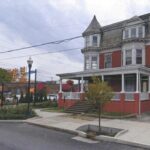
Last month, the Harrisburg Architectural Review Board (HARB) granted unanimous approval for Sturges to make a number of property improvements, most notably returning the facade of the circa-1870 building to its historical state by removing the dingy, non-conforming plywood and plexiglass enclosure at the entranceway.

Sturges also plans to install an L-shaped awning on the south and west sides of the building, install a wrought iron handrail in front of the entrance, remove glass-block windows with plate glass windows, repair and replace brick masonry around the openings and repaint the brick facade and trimwork.

The 4,000-square-foot interior also would be completely renovated, Sturges said, with new floors, ceilings, a bar and tables.

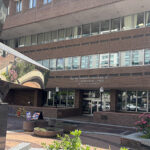
Sturges plans an American-style menu, offering high-quality dining at reasonable prices. He said he will open the space for lunch to serve the large population of government workers across the street.

Originally, Sturges, long-time manager of McGrath’s Pub downtown, hoped to open The Speakeasy in November, but the lengthy bankruptcy of the previous owner, Hollywood Restaurant Group, delayed the process.

According to U.S. Bankruptcy Court records, Hollywood Restaurant Group, owned by Rob Fogleman since 2008, entered Chapter 11 bankruptcy in January 2011. Fogleman closed Garrason’s located at 400 Forster St., in December.

Before he can open, Sturges has to get one additional approval from HARB, which still must endorse his outside signage.
Continue Reading

More Beer, Here: Growing pains cause ABC to seek expansion.

Appalachian Brewery Co. is doubling down on Harrisburg, planning an expansion that will substantially increase its footprint in the city.

The brewery and brew pub hopes to build a new, 8,000- square-foot warehouse, plus a new loading dock and parking area, on a large parcel of land next to its headquarters on N. Cameron Street.

A dilapidated former warehouse, which has been abandoned for the past two decades, currently occupies the site, located at 38-40 N. Cameron St.

Last month, Dauphin County approved a recommendation that the project receive $125,000 in gaming funds under the Local Share Municipal Grant Program.

The Capital Region Economic Development Corp. (CREDC) had sought $500,000 for the project.

CREDC will actually acquire the land for the project, as well as demolish the existing structure and perform site remediation and preparation, according to the gaming grant application. ABC then would build the new facility at a cost of $550,000.

The total cost of the project is estimated at $1.5 million, said Mark Stewart, solicitor to the Dauphin County Gaming Advisory Board.

In its application, CREDC states that ABC has outgrown its current facility at 50 N. Cameron St.

“To put it in a nutshell, ABC is running out of space due to the increased demand of their product,” says the application.

“The construction of the adjacent warehouse with additional parking is a crucial factor in accommodating the present and future growth of the company.”

Under the current schedule, most of the work would take place in 2013.

Stewart said he was unsure if the project might be delayed because CREDC was awarded just one-quarter of the amount it requested.

He said that CREDC could re-apply for additional gaming funds next year. The project also has received $320,000 in grant money under the state’s Industrial Sites ReUse Program, he said.

ABC owner Artie Tafoya could not be reached for comment.

In all, county commissioners last month approved $ 8.2 million in gaming fund grants throughout the county. In addition to the CREDC/ ABC project, county commissioners voted for following projects in Harrisburg:

  • $335,000 to the Harrisburg Fire Bureau for fire engine.
  • $250,000 to the Shumaker Public Safety Center on HACC campus for improvements.
  • $100,000 to Harrisburg Realty Improvement to continue the upgrade of International House.
  • $40,000 to the Tri-County Housing Development Corp. for housing construction on South Allison Hill.
Continue Reading

Recognizing the American Red Cross in your neighborhood.

Fires, tornadoes, floods: the Harrisburg area and Central Pennsylvania aren’t exempt from these disasters and when they strike, volunteers with a local chapter of the American Red Cross are there to lend a hand and someone to lean on for comfort.

The American Red Cross wants you to realize it’s about more than collecting blood donations, offering swimming and CPR classes, and responding to large scale disasters. Chris Weidenhammer, Regional Director for Emergency Services, said people don’t realize the Red Cross responds to disasters on a daily basis, such as house fires and gas leaks.

“We’ve always tried to educate the fire chiefs, county leaders, and the public that we’re around for the smaller incidents as much as the larger incidents,” Weidenhammer said.

The Lancaster County chapter of the American Red Cross assisted in such an incident. Joan Decker and her husband lost their home in a fire in 2010. Two volunteers came to help the Deckers and provided them with some necessities and a place to stay.

“I will be forever grateful to the Red Cross for assistance given to my husband and myself during our house fire,” Decker says in a letter written to the Red Cross. “Instead of gifts for my birthday, I asked for donations to your efforts to help those overcoming fire disasters, like myself.”

Another service The Red Cross offers, which much of the general public isn’t aware of, is emergency communication for Armed Forces. In the event of a death in the family, or the birth of a child, the organization can bring the service member home.

“We’re more or less a conduit between families that are state-side and service members overseas,” Weidenhammer said.

While responding to 650-700 disasters a year, regional chapters of the America Red Cross are prepared for everything. The last major disaster still on many peoples’ minds is the flooding from Tropical Storm Lee in September 2011. With 129 volunteers, the Red Cross set up 10 shelters in the Capitol region alone, which consists of Dauphin, Cumberland, and Perry counties. 395 people spent 1,127 overnight stays in those shelters. Volunteers served 5,257 meals, and 8,945 snacks.

Tropical Storm Lee cost $3.4 million for the Capital region and the Wilkes-Barre/Scranton area in Northeastern Pennsylvania. That money was raised through donations. “We get all our funding from the American people. We receive no government funding whatsoever. It’s just the generosity of the American People and through grants and foundations,” Weidenhammer said.

Whether you give $5 or $10, that’s just one way you can help your local American Red Cross. Another way is through volunteering. From helping families cope following a house fire, to working at a disaster shelter, even office work and data entry, The Red Cross would love your help.

To learn more how you can donate time or money, go to www.sqvalleyredcross.org.

Continue Reading

Equality at Issue: One-night only, “8” at Open Stage.

Eight states and Washington, D.C. now allow same-sex marriage, but the issue continues to roil. Two of the states, Washington and Maryland, imposed a test to their laws with fall voter referendums.

Pennsylvania, meanwhile, has taken the opposite course by considering a proposal to ban such unions.

With this backdrop, Open Stage of Harrisburg intends to bring light to the issue, teaming up with American Foundation for Equal Rights (AFER) and Broadway Impact for a one-night-only reading of the play “8,” at 7 p.m., Sunday, May 6.

The play chronicles the historic trial in the federal constitutional challenge to California’s Proposition 8, written by AFER Founding board member and Academy Award-winning writer Dustin Lance Black.

“8” is an account of the federal district court trial in Perry v. Schwarzenegger – now Perry v. Brown (following Jerry Brown’s election as governor, replacing Arnold Schwarzenegger). AFER filed the case to overturn Proposition 8, which stripped gay and lesbian Californians of the fundamental right to marry.

Black, who wrote the film scripts to “Milk” and “J. Edgar,” based his play on the Aug. 4, 2010 trial presided over by United States District Court Judge Vaughn R. Walker, who ruled that Proposition 8 was unconstitutional.

Black used the actual words of the trial transcripts, first-hand observations of the courtroom drama, and interviews with the plaintiffs and their families. On Feb. 7, 2012, the U.S. Court of Appeals for the Ninth Circuit upheld Walker’s ruling.

“8” had its much-heralded Broadway world premiere on Sept. 19, 2011 and the production brought in more than $1 million to support AFER’s efforts to achieve full federal marriage equality.

Overseeing the production is Open Stage Executive Artistic Director Don Alsedek, who has directed many important lesbian, gay, bisexual and transgender plays at Open Stage including “Angels in America” and “The Laramie Project.”

“Open Stage is dedicated to opening minds,” Alsedek said. “This is the kind of theatre we are passionate about.”

A select group, about 40 theatres nationwide, was chosen to produce the reading, which will feature many professional actors from the region and beyond, said Stuart Landon, the theatre’s marketing and sales operations manager.

With the LGBT Community Center Coalition of Central PA’s Executive Director Louie Marven, Open Stage Education Director Anne Alsedek has organized a talkback and a question-and-answer period following the reading.

“People need to witness what happened in the Proposition 8 trial, if for no other reason than to see inequality and discrimination unequivocally rejected in a court of law where truth and facts matter,” Black said. “The goal of “8” is to show the world that marriage equality is a basic constitutional right.”

“8” plays 7 p.m., Sunday, May 6, in the Angino Family Theatre at Open Stage of Harrisburg, 223 Walnut St. Admission is $15. For advanced ticket purchase, call Open Stage Box Office at 717-232-6736 or visit openstagehbg.com. 

Continue Reading

Little Big Horn to Gay Rights: City’s oldest law firm has turned with the times.

In the shadows of the ornate Capital building, along the banks of the Susquehanna, stands a law firm with a stoic, yet diverse past 140 years in the making.

A past that includes defending Major Marcus Reno in a Court of Inquiry concerning his conduct at the Battle of the Little Big Horn; representing some of the nation’s most powerful industries, including the Pennsylvania Railroad; making sure the average Joe and Jane have affordable legal representation and that members of the gay, lesbian, bisexual and transgender community are treated with equality and dignity.

Although this sounds like something ripped from the pages of the latest John Grisham legal drama, in reality it’s the story of Harrisburg’s oldest law firm, Nauman, Smith, Shissler & Hall LLP.

“We like to say we are proud of our past but poised for the future,” said Craig Staudenmaier, the firm’s managing partner who has practiced litigation for 30 years.

From their offices on the 18th floor of 200 N. 3rd St., the firm literally and physically stands above other firms in the city.

With a staff of six lawyers, six support staff plus a part time student law clerk, Nauman, Smith represents large corporations in highly specialized areas, including media and First Amendment law, insurance regulation, corporate structure, tax and nonprofit organizational, governance law and railroad transportation.

“We have represented railroads for over 100 years, from the Pennsylvania Rail Road to Norfolk Southern, CSX and Amtrak along with a number of regional and short line railroads,” said Staudenmaier, noting the cases range from Public Utility Commission and Surface Transportation Board matters, to litigation and real estate.

In a 1946 case, the firm took the liability passenger case of Picking v. Pennsylvania Railroad Co. to the United States District Court after the railroad was sued for the false imprisonment and constitutional violations in connection with transporting a person in the custody of peace officers from Pennsylvania to New York. The court held that since railroads were required to transport such persons while in the custody of peace officers, and the warrants were valid, the railroad was simply doing its duty.

One of the firm’s more unique cases occurred in 1954, in Pennsylvania Supreme Court. In Scibelliv vs. Pennsylvania Railroad Co., a child was injured while hopping onto a flatbed car. The court affirmed the railroad had no legal duty to provide guards to keep people from climbing on trains.

The firm also serves small businesses, municipalities and individuals. The newest partner, Suzanne Friday, works with non-traditional families on estate planning. She also has been successful in requiring hospitals to include both members of same-sex couples as parents on their children’s birth certificates.

In recent years, the firm has landed many impressive cases, which have drawn national attention.

Some of its biggest public access cases include representing The Patriot-News before the state Supreme Court where salary information of Penn State employees in the state retirement system was ruled public record, including that of late head football coach Joe Paterno. It also won for the state media a decision that found retreat expenses of the Pennsylvania Higher Education Assistance Agency’s board were public record.

The firm has “benefited greatly” from being located in the city, close to county, state and federal courts and agencies, Staudenmaier said. To support the Capital City, the firm’s lawyers and staff volunteer and serve a number of charities and nonprofits.

“The firm appreciates its rich history in the city,” he said.

Continue Reading

Mushroom Hunt: Wild morels, guarded secret, delicious eating.

What’s the best thing you’ve ever eaten? A fresh juicy, ripe peach picked right off the tree? Ask this of a hundred people and chances are good that you will receive a hundred different answers. Some might say succulent prime rib or filet mignon broiled medium rare. Or wild strawberries with chilled heavy cream. Maybe fresh, ripe, hot buttered sweet corn fresh off the stalk. Or a luscious dish of piping hot, cheesy Crab Imperial. Perhaps your mother’s homemade chicken and dumplings. Or a juicy, ripe peach picked fresh from the tree.

Whatever your favorite food, whatever it is that makes you drool, unquestionably and without reservation, if you have to stop and think of an answer, you’ve never eaten morels.

No single wild food is more diligently hunted and prized than this most popular mushroom – the common morel. For this fungus alone were created the words “superb” and “unrivaled.” And as much as the morel is praised by mycophagists, even more so are they secretive about it.

Wild food enthusiasts are usually more than willing to share information about wild foods with others who have an interest in sampling the free bounty of the earth. I’ve often received valuable information on where to find all kinds of wild foods and have even more often reciprocated with similar information. Not so, however, with morels. I know of no one who is willing to divulge the whereabouts of even a single specimen – including myself. In fact, not only are mushroom fanciers secretive about where to find morels, they are even reluctant to share their bounty when they return home. Remember, these are morels – the best food you’ll ever eat.

Besides the fact that they taste absolutely divine, there is no need to use elaborate and involved recipes to enjoy them. Simply sauté them in pure, creamery butter (they deserve only the best). As they sauté, they release a liquid that mixes with the butter to create a thick, creamy sauce to serve them in. The sauce is so good you will want to lick the plate. Some folks like them cooked in with scrambled eggs, or coated with cracker crumbs and sautéed. For me, the simpler the better. Anything cooked with them detracts from their unique flavor.

If you are so inclined, there can be no better mushroom soup than is made with morels. On the rare occasion that you have a surplus, they can be kept for future use by simply sautéing lightly, packing in jars or vacuum packing and freezing.

Without giving away specifics, the morel is found mostly in moist woods, old apple orchards and other shady areas, especially in burned over areas. Best places to look are under and around dead elm trees and around tulip poplars. I’ve also found them in large numbers in white pine woods.

As is true with all mushrooms, proper identification is essential. There are three color varieties of true morels. The most common is the yellow morel, Morchella esculenta. They have creamy white stems with pale cream or tan heads. The caps of the black morel, Morchella angusticeps, have dark brown or black ridges. The white morel, Morchella deliciosa, is actually more gray than white and said to be the most highly prized. They all very closely resemble the false morels which are to be avoided. One thing to look for in morels is a cap that attached to the stem at the bottom end, unlike the false morels whose caps hang from the stems unattached. The false morels are convoluted and brain like, where the common morel is pitted with distinct, whitish ridges. Since the edible morels are found in the spring (April and May), those mushrooms found in the fall are most likely the false morels and should be avoided.

There are many other edible mushrooms besides the morel, including the easily recognizable puffballs and shaggy manes, which are easily found and identified. Once you start delving into this aspect of wild food collecting, you will surely want to include many of them in your recipes. Like other wild foods, different specimens vary in taste, but for downright unrivaled eating, the morel is tops.

Continue Reading

Your Mansion for a Day: Milestone resurrected as events space.

With architectural flourishes reflecting Medieval English and French Eclecticism, the 1925 Front Street mansion – that had been an inn and is now a venue for weddings and events – was designed for social affairs.

Milestone on the River’s stone exterior and bucolic setting along the Susquehanna befit royal to elegant occasions. It was formerly, for four years, Milestone Inn, a bed-and-breakfast, until the previous owners sold it in 2010.

The new, silent owners see the mansion at 2701 N. Front St. as more than a place for catered events, holiday gatherings and weddings. It’s a home, said Kacy Englebrook, Milestone’s director of events. Overnight stays, though, are no longer offered.

“It’s about them having this mansion for the day,” Englebrook said. “We kind of want them to feel they live here for that day.”

For weddings, in particular, Englebrook said the smallest details would be made to convey that sense of home, right down to family pictures of the bride and groom in the many frames that decorate the mansion’s walls and books cases.

With its five fireplaces, hardwood and slated floors, many rooms and archways, the mansion’s interior harkens to an era of 1920s wealth and prosperity. It has a storied past, built by a Philadelphia lawyer for his family and their servants.

Designed by renowned Philadelphia architecture firm, Mellor, Meigs and Howe, the mansion’s original owner, Ralph Baker, had lived there only six years before he took a position teaching law at Harvard University.

Over the decades, the mansion passed through several hands: A furniture dealer bought it and then sold it to Congressman John Kunkel. Later, Dr. W. Minister Kunkel erected a building on the lawn for his surgical practice.

The Kunkel’s eventually deeded the property to the United Way of the Capital Region, which used it for many years.

In 2004, Robin Clemens and Sean Adams, bought the mansion and made extensive historic renovations, opening it as a bed-and-breakfast two years later. They sold it in 2010. The current owners, Englebrook said, prefer anonymity.

At the time it was built, the mansion was considered a unique home with its half-acre of lawn and river view. The surgical building is gone, burned down years earlier. In its place: a courtyard where a huge tent for 250 people stays up May through November.

Inside on the first-floor is a wood-paneled, bookcase-lined drawing room with fireplace, leather furnishings and pool table. It has a definite masculine feel, which is ideal for the groom’s half of the wedding party.

“They can have a beer, watch some TV and shoot some pool,” Englebrook said.

Upstairs, on the third floor, there is a salon, a dressing room and facilities for the bride and her maids to relax and prepare. There is even a cedar closet where dresses can be stored the night before the wedding.

“We welcome the brides to be here all day,” Englebrook said.

The mansion also has a reception hall for events and weddings in late fall through early spring when the tent is not up or for groups that prefer inside rather than outside.

“We have the flexibility to do whatever we need to do,” said Julie Dibble, director of business development for Chef Exclusive in Carlisle, Milestone’s resident caterer.

Just as important, Englebrook said, is the “warm and friendly” feeling she wants people find at the mansion.

Milestone on the River, 2710 N. Front St., 717-412-1925 or milestoneontheriver.com

Continue Reading

One Man’s Legacy: We’re still benefiting from the work of J. Horace McFarland.

At the dawn of the 20th century, Harrisburg was a city much in need of improvement. Sewage littered the unpaved streets and drained into the Susquehanna, which was also the source of the city’s unfiltered drinking water. Paxton Creek, which ran along Cameron, was a dumping ground for all types of personal and industrial waste. As a result, disease prior to 1900 was prevalent and at times, endemic.

Something needed to be done, and J. Horace McFarland was uniquely qualified to do it.

McFarland moved his family to Harrisburg and began a printing company and later, a plant nursery. The younger McFarland learned much from his father and, at age 19, became owner of the printing company, which he renamed Mount Pleasant Press.

Under McFarland’s leadership, Mount Pleasant Press was a leading seed catalog and horticultural publishing company, printing magazines such as “American Gardening” and the “Encyclopedia of American Horticulture.”

In 1901, he joined forces with like-minded civic activist and Harrisburg resident Mira Lloyd Dock. Together, they helped lead the local City Beautiful movement, garnering the support of local businessmen to fund and carry out a series of projects that provided parks and open spaces, established a city-wide sewage system and cleaned up the waterfront, among many other improvements aimed at urban beautification and public health and safety.

In 1904, McFarland was appointed head of American Civic Association, a position he held for the next 20 years. In this role, McFarland took his ideas of civic beauty to a national stage, supporting not only urban parks and planning, but also the conservation of millions of acres of federal land.

McFarland, with other notable figures such as Federick Law Olmsted and John Muir, was an avid supporter of the establishment of the National Park Service in 1916. He also supported the defense of Niagara Falls against development by power companies, joined John Muir in trying to defend Yosemite Park from the Hetch Hetchy Dam project and was an opponent of development in Yellowstone National Park. McFarland served on the Pennsylvania State Art Commission for many years, as well as the National Municipal League and the National Park Trust Board, to which he was appointed by President Franklin D. Roosevelt in 1935.

J. Horace McFarland passed away on Oct. 2, 1948, at his Breeze Hill mansion in Harrisburg’s Bellevue Park, a planned community that he helped create. As a publisher and advocate for city beautification, urban planning, the conservation movement, the National Park Service and aesthetic preservation of the natural environment, McFarland still ranks as one of Harrisburg’s most remarkable citizens.

Continue Reading

Fresh Air, Flowers, Liability: Spring cleaning should include a good look at your insurance.

Ready for spring?  Time to whip open the windows to the house, shut down the $4-a-gallon oil burning beast in the basement and start thinking about BBQ, gardening and the beach. Spring is a time of regeneration and reorganization, like a good spring cleaning of your house.

But I know something that you haven’t dusted off in years – your insurance policies! We see and hear stories all the time of the family that “assumed” they had coverage but didn’t. This is my golden rule in insurance: “If it was all just covered, why are there so many pages in the policy?” The answer to this question is obvious.

Your insurance policy should come with an insurance agent that understands the coverage. Press your agent for explanations. Most importantly, your agent needs to know about you – your hobbies, your goals, and how you live your life. Unfortunately, insurance agents are not mind-readers. Not taking the time to completely reveal all the risks unique to you is a recipe for disaster. Just because you’re paying premiums does not mean you get coverage for anything and everything.

So here are some simplified basic home and auto insurance guidelines:

  1. If it’s in the air, underground, or on water (or relates to water) we’ve got some limitations.
  2. If it is business related, coverage on a home or auto policy is tricky. Generally a business needs a business policy.
  3. If you’re renting to tenants, we need to know.
  4. If it’s vacant, we’ve got big problems. If your home is burglarized, that’s no longer covered. But far worse, if the burglars then cause a fire that burns down your house – you have no coverage at all!
  5. If you haul people or cargo for a fee on a personal auto policy you have completely voided all coverage under the policy. You have nothing, nada, zero – no liability, no comp, no collision and no benefits.
  6. If you fail to care about any of the above you can always hope and depend on the generosity of the insurance companies to simply ignore the exclusions in their policies and pay your claim – good luck!

Here are a couple things to talk about with your agent:

  1. Do you have personal injury coverage added to your homeowner’s policy?  When your teenage son posts inappropriate pictures of his girlfriend on Facebook – you’re going to need it.
  2. Do you have replacement cost on your home and contents?  Do you have “open perils” coverage on your home? Would you want “open perils” on your personal belongings too?
  3. Collectables, valuables and unique items – have you scheduled these to ensure you have enough coverage?
  4. Should you have a personal umbrella policy? (Yes.) This policy adds additional liability coverage to protect you and the assets you’ve worked so hard to create. It can cost as little as $200 a year!  $200 or your $200,000 house – how would you prefer to settle the liability claim?
  5. Kids in College. Is their stuff covered? What about liability for the dumb things they may do? How about the vehicle they take to school? The general answer is yes, but there are important restrictions.

It’s time for a spring cleaning, but make sure that includes a complete review of your insurance.  If you have no idea who your agent is or if your agent has no idea how to answer these questions, it’s time to get a new agent.

Finding out because of a bad claim that you aren’t properly protected will ruin your sunny day.

Nathan Troutman, AIA, is an agent with the Keystone Insurers Group

Continue Reading

Being in Control: Change your mind about hypnotherapy.

Are there things about your attitudes or behaviors that you would change if you could? Are you sick and tired of dealing with a problem and looking unsuccessfully for solutions from others? Are there physical or emotional things that are unwanted, unhealthy, annoying or out of control? The truth is that each of us has the power within to take control and make changes, rather simply.

We begin this life on a long path of learning. We store information in our mind as we go. We experience the hot stove burner through burned fingers in early years. That information is stored in our subconscious as a folder with an image and emotional tag. Next time we see the stove the conscious mind recognizes the image, recalls the bad experience and makes the decision not to touch. This lesson is stored as part of us, part of our automatic behavior files. Then, as adults, we automatically know not to touch the red, hot burner. We avoid the behavior.

Some of us store files that say it’s OK to smoke, to eat unlimited amounts of food, to always be late. Other files could leave the person fearful of things, anxious over challenges or always expecting the worst. Some people’s files tell them they will never be successful or as good as others. And some files convince people to accept hot flashes, pain or high blood pressure. Our minds store millions of things, some good, some bad, some no longer useful. The good news is we can change any file, any attitude or behavior. We simply go to the storage location by using a natural state of mind, a shift in consciousness known as hypnosis. You can undo or change things just as easily as you created them. The phrases and terms we use – “I changed my mind;”  “I used to think that . . . but now I think;” “Mind over matter;” “Automatic pilot” – are actually verbal explanations of the process that occurs in our mind.

Hypnosis is widely misunderstood, even by some professionals. The biggest obstacle in choosing to use hypnosis and hypnotherapy is a lack of understanding, which creates fear and doubt. Many people think it is some odd state of mind produced by a stage performer who gets control of our minds. Not true (sorry entertainers). Hypnosis is not brainwashing. In hypnosis, no one controls your mind or makes you do things. You are always in control.

Hypnosis is simply a state of relaxation and concentration, a shift in consciousness. It’s not sleep. You experience this shift in consciousness naturally, every day. We fail to recognize a hypnotic state because we think hypnosis is something else. Some of the confusion is related to the fact that you are aware of things going on around you while in this state. Day-dreaming is one example of this hypnotic state. Sometimes you shift into it while watching TV or a movie or while driving. Have you ever driven somewhere and all of a sudden you arrive realizing you do not seem to remember the trip? You had shifted into a state of hypnosis.

Now that you understand hypnosis, you are free to “change your mind” about it. You can think of making the changes you wanted to make (you can use hypnosis to make physical changes in the body); once and for all, safely and successfully, using hypnosis and a hypnotherapist as your guide.

Lynn Ralston, R.N., CHt, a certified hypnotherapist and registered nurse, provides hypnotherapy services through Changes Hypnotherapy in  New Cumberland, Harrisburg and other locations, 814-422-8783.  

Continue Reading