End-of-Life Planning: Prepare today for tomorrow.

An 80-year-old man enters the hospital upon developing fevers about one month after getting a heart valve replacement. His new heart valve is found to be infected and he is started on antibiotics. About two days later, he suffers a massive stroke, loses control of the left side of his body, and is unable to speak or communicate.

A decision needs to be made on how aggressively to treat the patient. However, his nearest relative is a daughter whom he has not seen or spoken to in 20 years. She does not feel comfortable making decisions for him. Consequently, his physicians feel obligated to “do everything.” He is intubated and placed on a feeding tube. His status does not improve and he is unable to breathe on his own or eat anything by mouth. Consequently, he is kept on the ventilator and a permanent feeding tube is placed. He is transferred to a nursing home where he remains unresponsive. He dies several months later.

The above case illustrates the importance of preparing for end-of-life decisions. Medical science is able to use extraordinary means to keep people alive. We can breathe for them with a ventilator, do the work of their kidneys through dialysis, and feed them through a tube directly into the stomach. Unfortunately, these life-saving measures also can prolong death and suffering. In the absence of instruction to the contrary, your physicians will feel obligated to “do everything,” even if there no real chance of regaining a useful existence.

How can you prevent this from happening to you? First, discuss your wishes with your family. Let them know what you would be willing to go through and under what circumstances. Keep in mind that these decisions are not straightforward. Most of us would be willing to be put on a ventilator, go on dialysis, or even have a feeding tube placed, if there was hope that we would recover. Few of us would be willing to do any of the above if they simply prolonged our death.

The next step is to formulate a living will so that there is a written guide to your preferences for end-of-life care. The living will should be specific about what modalities you are willing to use (mechanical ventilation, feeding tubes, dialysis, etc.) and under what circumstances you are willing to use them (short term or long term).

Living wills are legally binding. However, most living wills will only take effect if your “situation becomes hopeless.” Unfortunately, it is often difficult to determine when all hope is lost. I have had families that want almost nothing done and families that believe that everything should be done while they wait for a “miracle.” A living will alone will not protect you.

You will need a medical decision-maker. This is typically a family member. However, you can appoint a legally binding medical power-of-attorney. Whoever speaks for you should be someone whom you trust and someone who can advocate for you. If you become seriously ill, you want someone who knows your end of life preferences, knows what you would be willing to go through (what your definition of hopeless is), and will be able to communicate your wishes to your physicians. Keep in mind that extraordinary circumstances may occur. For example, I have seen patients who are willing to undergo almost anything in order to be there for the graduation of a child, the birth of a grandchild, or a simply to reach an anniversary. Your medical power-of-attorney should be able to understand these issues and be flexible enough to deal with unusual circumstances.

Medicine has tremendous power to prolong life, which can, unfortunately, turn into merely the power to prolong suffering. In the absence of documentation of your wishes or of someone who can speak for you, your doctors will feel the obligation to use every means at their disposal, even if they feel there is no real hope. It is very important that you protect yourself by discussing your wishes with your family, formulating a living will, and designating a medical decision-maker.
Continue Reading

Years and Years of Beer: Breweries have been a part of Harrisburg from the start.

Harrisburg, like many cities of the 19th century, counted quite a few breweries. Most of these would be classified as smaller local establishments, the modern equivalent of micro breweries, with German-style beers and ales brewed and sold on the premises and in local wards and neighborhoods.

Though Harrisburg had been officially laid out in 1785, by 1794 there were about 300 house, 1,000 lots and 32 taverns within the small village and many of these small taverns also brewed their own beer for sale.

Between the 1830 and 1860 numerous small breweries produced beer in Harrisburg. The smaller brewers thrived until increased industrialization improved transportation and, most especially, the advent of refrigeration.

Breweries were then bought and merged into larger operations, or simply folded. Nationally, the number of breweries declined from 2,300 in 1880 to 1,400 in 1914, a trend reflected in Harrisburg. By the 1870s, several Harrisburg breweries began to dominate the local market.

George Doehne (and later his sons) operated a brewery from 1856 until after the repeal of prohibition in the 1930s. Henry Fink established a brewery in 1861, becoming Fink Beer and Ale from 1862-1875, when he established the Keystone Brewery. His sons managed the brewery until 1919 when Prohibition forced the sons to convert the brewery into the Fink Ice Company. In 1934, a year after Prohibition was repealed, the brewery closed and the property was sold to the Commonwealth, which later built the Northwest Office Building on the site. It is now home to the State Liquor Control Board.

Perhaps the best known of Harrisburg’s historic breweries was that of Robert Graupner, which existed in various forms from 1875 until 1951. In 1876, brothers Edward and John Koening operated a brewery on Cameron Street. The brewery went through several owners and was eventually sold to Bauer and Graupner in 1892. Around 1893, Graupner, a German immigrant, became the sole owner and in 1896 he built a new brewery at 10th and Market streets, which lasted until 1951, surviving Prohibition and all the other city breweries.

Prohibition, coupled with refrigeration, railroads, and the rise of huge national conglomerates sealed the fate of hundreds of breweries nationwide, with many folding well before Graupner’s in 1951. Harrisburg spent the better part of half a century without local breweries, but that changed in the late 1990s.

Breweries such as Tröegs, which since moved to Hershey, and Appalachian Brewing Company on Cameron Street, located one block from where Graupner’s once stood, have revived and preserved the spirit of local brewing that has been a part of Harrisburg’s history for more than 200 years.

Continue Reading

A Healthy House: Health of your home depends on what’s in it.

Just as we look for Material Safety Data, or MSD, in our food, we should also be aware of what is contained in the various furnishings we bring into our homes.

We see products come into our market from all parts of the world. Now the big question is, “What is in those products?”

Most companies that make products in other countries are not regulated as those in our own country. We are accustomed to carefully defined regulation. Most domestic companies operate under strict licensing and controls.

We hear about recalls of food, children’s toys and other products, many from overseas. Recently, I learned of an American pet food that actually had been made in another country and almost caused a dog to get very sick. It’s not just how products are made, but what is in them.

When you purchase an item of furniture or undergo construction work – whether a new building or remodeling – consider reviewing the LEED standards.

LEED is a division of the U.S. Green Building Council that supports a national consensus to produce structures that deliver high performance inside and out. LEED develops industry standards and building and construction guidelines, and helps to develop public policy to support the adoption of sustainable-design building practices. LEED looks at how buildings are designed, constructed and maintained.

You may have noticed buildings being granted LEED accreditation. These buildings are evaluated and labeled – with platinum being the highest category. For example, wood would have documentation stating how it was grown, and on every process that took place, from the time the wood was harvested to the time it was delivered to your home or building. This ensures consumers have a healthy product.

Another organization is the Sustainable Furnishings Council, a nonprofit coalition of suppliers, manufacturers, retailers and interior designers. The Council focuses on low energy use, deforestation, indoor air quality, conservation, and toxic pollutants.

Next time you consider purchasing any product that will be part of your interior, request its Material Safety Data. Products often have offgassing – evaporation of toxic chemicals from materials that can release into the air for many years. It’s hard to believe offgassing can occur this long, but in many cases it does. The MSD will tell you if a product has toxic gases or other harmful effects. An example of a product that is safer than a more commonly used one is the silver in silverware. As opposed to stainless steel, silver doesn’t support germs.

Another issue is the definition of “green.” A manufacturer or retailer may call a product “green,” but what does that really mean? The term “green” is everywhere on products, but is it meaningful or is it just “green-washing” the product? Has it really been handled in a truly healthy manner? Is it truly safe for the environment? How does “green” differ from “sustainable” or “eco-friendly”?

Ask your interior designer or the professional working with you to supply you with the appropriate information, so you can be sure you are bringing only healthy items into your home.

Mary V. Knackstedt, FASID, FIIDA, of Harrisburg is founder and president of Knackstedt, Inc. She’s a designer with more than 30 years’ experience and a renowned business consultant, helping thousands of design firms improve business performance.

Continue Reading

Aging in Place: Connections provides a better way.

More than 75,000 older adults live in the corridor from Carlisle to Hershey – a number that will continue to grow as baby boomers age.

At the same time, many in this generation prefer to age in place. In fact, 84 percent of respondents to an AARP study said they would prefer to live in their own homes during retirement. Overwhelming majorities also said it was important for them to have access to transportation, healthcare and home-maintenance services.

Having both spent careers serving older adults, we believe these trends present serious challenges to our region, putting significant pressure on the current framework of available services.

But this new reality has also created an important opportunity – the opportunity to create an innovative, community-driven model for serving those 55 and better.

After many months of collaboration, Messiah Lifeways Connections will launch in July. Connections, based on a model that’s emerging in other parts of the U.S., is a membership-driven, grassroots organization created to support those who choose to age in place.

Connections will provide access to a broad range of services, create social and volunteer opportunities that enhance quality of life, and strengthen our shared spirit of community.

Peace of Mind, Enhanced Quality of Life

Two years ago, community advocates, local officials, older adults and Messiah Lifeways began to explore the development of a grassroots program in the Greater Harrisburg Region.

What emerged from research, focus groups and discussions was an innovative new approach. While the volunteer spirit fuels other similar programs across the U.S., Connections will expand on this model by extending the resources available.

The Connections framework will include not only caring volunteers, vetted service providers, and committed community partners, but also the professional team from Messiah Lifeways and two founding sponsors, Holy Spirit Health System and PinnacleHealth.

The Connections members, who pay $260 per year, will enjoy significant program benefits:

  • Quick, easy access to all services through a members-only hotline and 24-hour access to a members-only Web portal
  • Access to pre-screened vendors to provide a wide range of services: home repairs, maintenance, transportation, and more
  • Learning opportunities and events that foster connections and provide the critical benefits of social connection
  • Volunteer opportunities and the ability to “trade services” with other members
  • A personalized home safety evaluation and emergency preparedness review

The Connections program, developed with significant guidance from those eligible for membership, provides a critical platform of supports and opportunities for those who choose to age in place.

A Call to Action

Connections plans to begin providing service this summer. We are currently accepting enrollment of 100 Charter Members – adults 55 and better who will enjoy extended memberships and other benefits, and who will have the opportunity to drive the program’s offerings and future direction.

At its core, Connections is a community of people helping people. We hope older adults and their families will take time to learn about the program, provide their viewpoints, and consider a membership. Connections has the potential to help thousands of older adults to embrace life on their own terms and in their own home.

Dale Laninga, community advocate and volunteer, is retired co-director of Long Term Care Reform in the Governor’s Office of Health Care Reform, and Gary Johnson is vice president of Community Support Services at Messiah Lifeways.

For more information about the program and becoming a Connections Charter member, visit www.MessiahLifeways.org/Connections or call 717-790-8209. Contact the authors at [email protected] for Laninga and [email protected] for Johnson.

Continue Reading

Tasty Nostalgia: State workers bite into Old Town Deli.

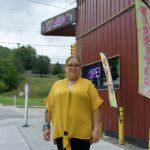
With its pickle barrel out front under the window, a weighing scale that greets patrons when they enter, and a décor reminiscent of old style delis, Old Town Delicatessen brings something new and unique to 3rd Street downtown.

“We’ve been watching the place for months,” said Debbie, having lunch with her friend, Suzie, the first week Old Town opened. “It’s a great use of this space.”

Located in a late 19th century building across the street from the Capitol, Old Town opened in May at 512 N. 3rd St. Owners Ron and Julie Gilbertson spent more than six months renovating the first-floor space.

“I think it’s definitely serving a need,” said Suzie, who, like Debbie, works at a nearby office. They declined to give their last names, they said, to avoid hurting the proprietors of their regular noontime haunts.

A Philadelphia native, Ron has worked in the food industry, but having a business he owns is the realization of a dream.

“I’m very excited,” he said, looking at Julie, a Re/Max realtor. “I always say you’ve got to have the support.”

“He pretty much wanted to be his own boss,” said Julie, who grew up in Mechanicsburg.

The couple relaxed after another busy lunch at one of the tables. With the dark-wood ladder-back chairs, mocha-colored walls and antique lighting, everything looks fresh and new, yet old fashioned.

“We picked out everything ourselves; lots of hours at Lowes,” Julie said. “We agreed on everything.”

Ron joked. “She picked it out and I said, ‘Looks great to me, honey.’”

The dinning room seats 11 and has café seating outside, where diners can enjoy an impressive view of the Capitol. They expect to have their website up soon.

Ron chose Boar’s Head meats and cheeses for his menu of specialty sandwiches and salads. The company sent a chef in to show Ron how to prepare items, such as making sure there’s just the right amount of ham and cheese on the pretzel roll.

“Boar’s Head has been great,” he said, and noted items he believes make the deli standout among the city’s eateries. “Utz is my favorite potato chip, so we have Utz.”

Old Town also serves breakfast – fresh bagels, muffins, fruit, soufflé-strata – and home made soups. His choice of coffee is from Longbottom Coffee and Tea in Hillsboro, Oregon, which air roasts its beans.

Ron even has old fashioned bicycles to deliver orders in a limited area downtown.

If the first four days of opening is any indication, the Gilbertsons can expect success. Old Town has stayed open well past its afternoon closing time, said Julie. “People have been coming in and we’ve been serving them.”

Old Town Deli, 512 N. 3rd St., is open 6:30 a.m. to 2:30 p.m., Mon-Fri. 717- 856-8432.

Continue Reading

A Second Life: Used goods offer quality, at a discount.

One man’s junk is another man’s treasure, a saying that holds a great amount of truth when it comes to consigning. Our society may not be as wasteful as it once was, if the number of consignment re-sale shops thriving in the Harrisburg area are any indication.

More people are donating their unwanted stuff instead of throwing it out. “It feels good to know you’re not filling a landfill,” said a regular consignor, Beth McKee.

McKee has long consigned clothes and household items. She frequents PassItOn, in Camp Hill’s Lower Allen Shopping Center, where she loves looking for antiques and products that are made in America.

Not only are the prices of antiques reasonable at consignment stores, but clothes, shoes, purses, home appliances, furniture, décor and more are affordable. You can get value items for less.

At Camp Hill’s Hello Gorgeous, 3730 Market St., owner Donna Ulrich believes in salvaging things, having started her business with 20 consignors in 2010. She now has more than 2,300.

“I never understood why people throw things in the curb instead of donating,” she said, noting her best trash pick was a Yamaha acoustic guitar in perfect condition.

Ulrich believes the key to her success is customer service, from greeting, “Hello Gorgeous,” when you walk in the door to fashion advice to keeping items organized and up to date with today’s styles.

Consigning gives once beloved items a second life in someone else’s life. It also puts money in the wallet to buy something new …or used. Consignors receive a percentage, most commonly 40 percent, while the store keeps 60 percent.

Rotating your wardrobe or giving your home a makeover has now become easier and affordable. No two consignment stores are alike; you never know what you’ll find.

Consignment stores have more control over quality than donation centers. They are more selective, accepting items based on season, quality, condition and brand – and shoppers prefer popular name brands, the latest styles and all reasonably priced.

“Face it,” McKee said. “We’re brand whores and people feel good that they can wear quality clothes without having to pay a lot for it.”

Patrick Wentz, owner of Thrifty Shopper, 24 N. Court St., Harrisburg, bought the store from its previous owner because his wife, Judith, loved shopping there. It’s a family run business: wife, son, mom, and aunt help run the store.

“I love the friendly atmosphere here,” Thrifty Shopper consignor Becky Kauffman said. “The owner always greets me by name and that is rare nowadays.”

A consignment store that sets itself apart from others is Hornung’s True Value, 223 N. 2nd St. downtown. A hardware store – everything from garden tools to paint – Hornung’s doesn’t consign clothes, but payment is immediate instead of a percentage of the resale value.

A family business with three generations working in the four stores around the Harrisburg area, Hornung’s accepts anything used – from antique toys to bicycles to VCRs, owner Pat Davis said.

Giving a second life to an unwanted item is economical, but it’s also charitable. Sellers can consign under a local charitable organization like the Humane Society or PA Breast Cancer Coalition and the consignor profits go directly to them.

Continue Reading

Concerns Aired over MID: Complaints, praise heaped on Midtown district.

A plan to boost safety in Midtown Harrisburg had its first public airing last month, as residents had a chance to give their views of the proposed Midtown Improvement District (MID).

More than 100 residents packed Midtown Scholar Bookstore for the two-hour meeting, offering opinions of the plan’s scope, cost, effectiveness and accountability.

The evening began with the two principal organizers–Eric Papenfuse, owner of Midtown Scholar Bookstore, and Bill Fontana, executive director of the Pa. Downtown Center–explaining what the MID is, how it would operate and how much it would cost.

“Our government cannot support the security we need,” said Papenfuse. “The reality of the situation in Harrisburg today is that the government cannot do what they should be doing.”

In March, Papenfuse and Fontana, working with numerous community groups in Midtown, unveiled their plan, which would levy a fee, averaging about $60 per year, on the owners of the proposed district’s 4,162 properties. Commercial property owners would pay slightly more.

The money raised, about $420,000, would primarily fund the hiring of off-duty Harrisburg police, who would patrol the area bordered by Forster, Maclay, Front and N. 7th streets.

To take effect, the plan would be voted on by each property owner, failing only if 40 percent of the owners of all properties rejected it. If the MID passed that stage, the City Council would have to approve it.

Papenfuse said he hoped the MID would be up and running by Oct. 1.

To reach that point, supporters may have some work to do, as numerous residents voiced a variety of objections to the current proposal.

“I’m totally against the association you’re forcing on us,” said Midtown resident Bill Fritz. “It’s a shift of responsibility for what we’re paying in taxes already.”

Several residents agreed, while others expressed concerns that the scope of the MID was either too narrow or too broad.

“I’d like you to reassess what your goals are here,” said one resident. “I’d like your focus to be wider than security.”

Fontana explained that, once in place, the MID could apply for a variety of grants that could help expand its mission, such as for economic development and infrastructure improvements, especially through the state’s Elm Street and Main Street programs.

“This is your money,” he said. “You can do with it what you want to do.”

Papenfuse and Fontana worked to allay other concerns, stating that accountability would be assured through a yearly audit required by the state and that they would consider building in fee reductions for low-income residents.

One resident said he was concerned funds would be eaten up by administrative costs.

Papenfuse said than an administrator, earning $40,000 to $50,000 per year, would be the only person on the payroll not a police officer. And that salary, he hoped, would be offset by funds collected from the area’s nonprofit groups.

An advisory council now will draft a formal proposal for the MID. If all goes smoothly, property owners would cast ballots for the proposal this summer, with a City Council vote in September.

It would be the state’s first residential improvement district. Its initial focus on police security would make it even more unique

“I think people feel this a matter of life or death–literally,” said Papenfuse.

Continue Reading

From Ruined to Resurrected: Shipoke shines again during HYP Home Tour.

Strolling through Shipoke, it’s almost hard to believe that, just months ago, the narrow streets were coated with dried river muck, the sidewalks chock-a-block with piles of ruined furniture and house debris.

The quaint has now returned to what may be Harrisburg’s most charming neighborhood, which is scrubbed, rebuilt and ready again to share its beauty with outsiders.

On May 12, Shipoke will have the opportunity to show off its fresh look during the annual Home and Garden Tour hosted by Harrisburg Young Professionals.

“Shipoke was one of the hardest hit areas in the region from the flood,” said Meron Yemane, HYP president. “But we wanted everyone to know that it’s come back, that it’s still a vibrant and beautiful place to live.”

More than 20 houses will be open for viewing, ranging from the grand to the snug. And, because the neighborhood is so compact, it may be the easiest Home Tour yet to get around.

Bob Hostetter is one of the proud Shipoke residents eager to show off his home and his beloved neighborhood.

Hostetter admits that it wasn’t easy being out of his house, living with friends for four months, after 3 feet of river water inundated his first floor.

But after extensive reconstruction, his S. Front Street home now looks gorgeous. And when people ask him if the flood–his second big one in 16 years there–ever caused doubts of continuing to live in the area, his answer is a swift shake of the head.

“Anytime you live near the water, you just have to take your chances that, now and then, you’re going to get wet,” he said. “I’m lucky to have a home right on the water with this view. It’s incredibly beautiful.”

The one thing that Hostetter enjoys even more than Shipoke’s beauty is its sense of community.

On many weekends, residents hold neighborhood events, such as an Easter egg hunt, a holiday parade, a clean-up and a flea market. Then there are the informal, impromptu gatherings with neighbors in parks, yards, sidewalks and the playground.

“There is an extraordinary sense of comradery,” Hostetter said. “People are genuinely interested in your welfare and will help you if you have a problem or a need.”

And many people, like Hostetter, are happy to open their homes to strangers. They want outsiders to experience Shipoke’s historic houses, charming streets and, most importantly, spirit of togetherness.

This year, in particular, they want everyone to know that Shipoke is back–and just as breathtaking as ever. The HYP Home Tour will provide a tremendous opportunity to get that message out.

“We’ve all come to know each other here,” said Hostetter. “And now we’re focused on welcoming people to our neighborhood once again.”

The 14th Annual HYP Home and Garden Tour is May 12, 1 to 5 p.m. An after-party takes place for all attendees 5 to 8 p.m. on City Island. Tickets are $25 in advance, $30 at the door and $20 for members. Tickets include all food and drink from area restaurants served at each house. For more information and to purchase tickets, visit https://hyp.org/event/annual-home-tour. Tickets also are available at many local restaurants.

Continue Reading

AFL-CIO Buys Historic Building: a cascade of restorations hits downtown.

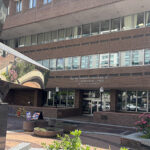
One downtown restoration has led to another, as the AFL-CIO of Pennsylvania has bought and is rehabilitating the long-underused Gannett Fleming Building.

Last month, the labor group purchased the five-story, Gothic revival building at 600 N. 2nd St. for its new headquarters, said spokesman Jim Deegan.

Restoration of the circa-1926 building designed by renowned architect Clayton Lappley, began immediately. Deegan said the AFL-CIO expects to move into the building by year-end.

The organization paid $1.29 million for the property, a price that included a parking lot across the alley at 518 N. 2nd St. and another lot in back of building at 609 Cedar St.

The AFL-CIO had to move after it sold its two downtown buildings to developer Brickbox Enterprises.

On  Aug. 30, Dan Deitchman, president of Brickbox, closed on the historic Barto Building at State and N. 3rd streets, buying it from the AFL-CIO for $850,000. On the same day, he closed on the 10,200-square-foot Seel Building at 319 Market St., paying $437,500. Deitch-man plans to convert the eight-story Barto Building, originally constructed in 1911 as Masonic Temple, into 50 in 1911 as a Masonic Temple, into 50 one-and two-bedroom condominiums. Work will include restoring the ums. Work will include restoring the historic nature of dilapidated building and converting the ground floor into restaurant and retail space.

The Seel Building is expected to become student housing for Harrisburg University.

Derek Dilks, a Brickbox vice president, said that planning now is underway for the restoration of both buildings. He could not give a firm date when actual construction work would begin.

Continue Reading

Who Wants an Asset?: Proposals received for incinerator, garages.

That was quick.

The proposals have arrived for Harrisburg’s incinerator and parking assets, just weeks after former city receiver David Unkovic asked a group of finalists to submit their formal bids.

Last month, the receiver’s office released the names of the bidders, though the details of their bids remain confidential.

Originally, five parties expressed interest in bidding for the city’s incinerator. Unkovic winnowed that list to four, and now three companies have actually submitted proposals. They are:

  • Cambridge Project Development, Miami
  • Interstate Waste Services, Ramsey, N.J.
  • Lancaster County Solid Waste Management Authority (LCSWMA)

Originally, 14 companies hoped to bid on a long-term lease of Harrisburg’s valuable parking assets. Unkovic narrowed that list to 12, and now eight companies have actually submitted proposals. They are:

  • Boenning and Scattergood, West Conshohocken, Pa.
  • Harrisburg First LLC
  • Harrisburg Forward LLC
  • Harrisburg Parking Partners LLC
  • Morgan Stanley/Central Parking, New York
  • National Development Council, New York
  • Northwest Financial Group, Jersey City, N.J.
  • Ontario Teachers’ Pension Fund/Imperial Parking LLC, Toronto

Originally, five companies wanted to manage Harrisburg’s water/sewer system. Unkovic selected four companies to make bids, and all four have submitted proposals. They are:

  • Aqua America, Bryn Mawr, Pa.
  • CH2M Hill, Englewood, Colo.
  • Pennsylvania American Water, Hershey
  • United Water Environmental Services, Harrington Park, N.J., with Kohlberg Kravis Roberts & Co. LP

The receiver’s office, currently being administered by Fred Reddig, an official with the state Department of Community and Economic Development, now will consider the proposals and may open formal negotiations with one or more of the companies.

Unkovic had hoped to conclude a deal for the assets by mid-June. The turmoil in the receiver’s office, including the possible appointment of a new receiver, could push that timeframe back.

Under a state-appointed receiver, Harrisburg is seeking to sell the incinerator and lease its parking assets to retire some $317 million in debt accumulated over many years due to multiple upgrades, some botched, to the incinerator.

Continue Reading