That Other Building: Ryan Building has sat next to the Capitol for 120 years.

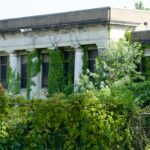
The Ryan Building, the oldest structure in Capitol Park, was the newest and most modern when it was completed in 1894. It also ranks as the building having the most names: the Capitol Annex, the old Museum Building, and the Ryan Building. But officially it was titled “the Executive, Library and Museum Building” upon its completion.

The need for a new “fireproof” building for the state’s artifacts and library was evident from the 1870’s onward as the size of the legislature grew. The debate centered around whether to build a new Capitol or renovate the Hill’s Capitol. Instead the compromise was to build a new structure beside the Hill’s Capitol.

The architectural design of the building stemmed from the 1893 Chicago World’s Columbian Exposition, which revived the ideas of classical architecture in America in a movement known as the “American Renaissance.” The building was designed by Philadelphia architect John T. Windrim and constructed by contractors Doyle and Doak.

The state gave strict guidelines for the construction and completion of the building. The contract was signed on September 28, 1893 and construction was to begin on October 2nd. The deadline for completion was December 1, 1894 and the contractor would have to pay a $250 dollar per day penalty for each day past this deadline.

The first problem the contractors had to address was moving the 1868 Mexican War monument to a different location. This movement was completed throughout the fall of 1893 and the cornerstone of the building was laid on December 15, 1893. Owing in part to a mild winter, construction progressed at break-neck speed and by October 31, 1894 the building was handed over to the Commonwealth – two months ahead of schedule.

The Italianate-style building was praised for being early and under budget and also for how impressive it was architecturally. It is also the first time the sitting governors of the state had offices and reception space. The building also had room for 500,000 books in the new state library and housed the growing collections of the state historical collections, including the famous 32 x 16 foot Battle of Gettysburg painting by Peter F. Rothermel.

The library moved to the newly-built Education (Forum) Building in 1931 and the now state museum to its present location in 1964. In the mid-1990s, the building underwent restoration. It was renamed in 1999 for the late Matthew J. Ryan, who had been speaker of the House for two years in the ‘80s and from ’95 until his death in 2003.

Continue Reading

Making Friends, a Difference: Junior League of Harrisburg: Women building better communities.

When a group of passionate women commit to improving their community, great things can happen. If you are a woman, over the age 21 and searching for a way to give back to the community while working with a motivated group of women, look no further.

Through August 31st, the Junior League of Harrisburg is accepting applications for 2012-13. A social for prospective members is scheduled at 6 p.m., Wednesday, August 15, at the Civic Club of Harrisburg, 612 N. Front St. Any one interested is invited.

The League’s mission is simple and noble.

“We are committed to promoting voluntarism, to developing the potential of women, and to improving the community through the effective action and leadership of trained volunteers,” League President Nicole Kaylor said.

The League has a proud tradition of training women to be effective leaders who go on to serve other organizations. Present and sustaining members can be found on the boards of many of the region’s best run non-profits.

Since 1929, the League has made Harrisburg a better place to live. It is one chapter of the Association of Junior Leagues International. New members spend their first year getting acquainted with the League’s rich history and learning what it means to be an effective community volunteer.

Throughout the year, the League organizes its own community events as well as supporting a wide variety of area non-profits, such as the Ronald McDonald House, the YWCA, Caitlin’s Smiles, and the United Methodist Home for Children. The annual “Run for the Health of It” 5K, which will be held this year on Nov. 3, raises money for the League’s grant and scholarship programs. Every December, the League hosts a holiday lunch for families going through tough times. The seminal spring event, Bargain Box, has a long tradition and is consistently referred to as one of the best rummage sales in the area.

For the upcoming year, the Junior League plans to work with its 2012 grant recipient, the Harrisburg Police Athletic League. Members will have the opportunity to get involved with PAL, and, in particular, its program, Positive Images, that focuses on building girls’ self-esteem.

Additionally, members have the opportunity to serve on a League committee where they receive training and gain hands-on experience with fundraising, event-planning and selecting grant recipients. Skills women learn in the League carry over to the business world and have a long-term, positive impact on the members’ lives and the community.

For these reasons, many women have found that the League is the perfect platform for launching a lifelong commitment to volunteer work. It offers members the opportunity to familiarize themselves with an assortment of local organizations so that they can go on to serve niche groups armed with the experience gained by being a League member.

Last, but certainly not least, Junior League of Harrisburg is a foundation for creating life-long friendships. For that reason, women who have recently relocated to Harrisburg are especially encouraged to attend the August 15th social.

To RSVP for the August 15th event and to download a membership application, please visit www.jl-hbg.org. Email inquiries can be sent to [email protected].

Continue Reading

Summer & the Susquehanna: Cooling off with nature’s own water park.

When Halifax couple Jenny and Joe Zerance wanted to do something a little different on a lazy, hot Sunday evening in July, they opted to take a leisurely ride aboard the Pride of the Susquehanna Riverboat. The sold-out “Blues Cruise” featured the soulful sounds of the Mark Facazio Band.

“My wife and I thought it would be a great way to spend a relaxing Sunday evening, enjoying good music,” said Joe. “And the band is pretty darned good,” his wife added.

If you haven’t enjoyed a Ride on the Pride yet this year, there’s still time left to take advantage of one of the many specialty cruises available.

Three more Blues Cruises are on tap through mid-October where patrons can sip drinks while enjoying the sultry sounds of area musicians. The ship remains docked for the first two hours of the event before culminating in a scenic river cruise.

Or, if you’re a wine lover, why not sign up for an upcoming wine and cheese tasting cruise where you can sip your favorite libation, while enjoying the scenery? If you enjoy crab, they’ve got the cruise for you and you have until the end of October to get crackin’ to partake in an all-you-can eat crab feast onboard.

And if you’re the type of person who doesn’t go anywhere without your beloved Fido, you can treat him to a ride on the Pride on September 17, when the riverboat teams up with the Humane Society for a benefit event.

If passive relaxation isn’t your cup of tea, you can take a more active role and navigate your own boat. Consider kayaking or canoeing on the Susquehanna. Harrisburg resident Gary Andree, who bought his kayak at Gander Mountain, said that his favorite part of kayaking is relaxing and enjoying nature. “And there are many places to launch,” he said.

If you’re hesitant to purchase a kayak outright, you can just head on over to Susquehanna Outfitters on City Island. Steve Oliphant, owner, said, “We rent kayaks and canoes for people and offer guided programs as well. We also provide team-building and physical fitness programs. Kayaking is an aerobic, non-impact sport and the Susquehanna is a lovelier place to work out than in a gym.”

Be sure to make reservations though, cautioned Oliphant, because they sell out quickly. “We’re at the very tip of the island, the most scenic spot in all of Harrisburg. We give you the equipment and a safety talk and we load up the shuttle bus, give people a ride upstream for either a three-hour or a six-hour float back.”

“People can also rent a kayak for an hour, just to paddle around City Island. We just purchased two Stand-Up Paddleboards, otherwise known as SUP Boards. They look like surfboards that you stand on and paddle. It’s a great core workout and just a lot of fun,” said Oliphant. “I don’t know anyone else around the area rents them. It’s sort of a national craze,” he said.

We here in central Pennsylvania have a huge playground right in our backyard, so get out there and enjoy the beauty of the Susquehanna. After all, summer’s still going strong.

For more information on the Pride of the Susquehanna, visit www.harrisburgriverboat.com, and on renting kayaks, canoes, or SUP boards, visit www.susquehannaoutfitters.com.

Continue Reading

Boxers or Briefs?: Serious matters are at stake for National Underwear Day.

How comfortable are you in your underwear – right now? In celebration of National Underwear Day on Aug. 5th, we at Curvatood, a local custom-bra maker in Hummelstown, conducted a brief, anonymous (and completely unscientific) survey to find out how people feel about their undergarments.

When asked what their undergarments say about them, respondents replied:

  • My undergarments aren’t talking, 37 percent
  • Fun, 21 percent
  • Don’t care, 17 percent
  • Conservative, 16 percent
  • Sexy, 12 percent
  • Athletic, 6 percent

About 82 percent of respondents reported selecting their undergarments based on comfort and fit. Yet, over 90 percent of women who wear bras cite fit issues, the most common of which is shoulder straps that either fall off or dig into the shoulders.

A close second are issues with the band or cup size not being correct for the body shape. Custom made bras easily solve these issues; and for those ladies who love to match their undergarments (over 10 percent), Curvatood offers matching panties. How much money have you spent on bras that don’t fit or are uncomfortable? A pretty, perfectly fitted bra is guaranteed to become your favorite!

When you invest in good underwear, follow these directions to make them last. Wear bras several times between washes and hand wash (especially underwires; at a minimum, use a laundry bag to protect them in a gentle cycle). NEVER put a bra in the dryer: heat is an elastic killer. Purchase bras that fit best on the loosest hooks, so that as the elastic ages, you can tighten it for a better fit.

Comfort is often defined by undergarment style. Female respondents report the brief is the most liked style, with the bikini close “behind,” while 13 percent prefer thongs. Men’s number one choice: boxer briefs, followed by briefs, then boxers.

Surprisingly, more ladies than men reported “going commando.” And just over 5 percent of the ladies still love their days-of-the-week panties. Wear undies that you won’t be ashamed of because you never know when you’re going to make an unscheduled trip to the hospital. Your mom said that too, right?

Forty-one percent reported wearing undies while sleeping; 46 percent follow Dr. Oz’s advice to take off their undergarments before retiring, so your whole body can breathe overnight. The balance of respondents said “it depends” whether or not they wear underwear when sleeping.

I recommend replacing undergarments: 1) if your weight has fluctuated more than 5 pounds; 2) you’ve had major physical changes, such as pregnancy, breast-feeding or surgery; 3) when a garment is worn out; or 4) fit has been compromised.

Most people pay far more attention to their outer attire than their undergarments, which really impact how you feel to a greater degree.

National Underwear Day is the perfect time to consider your undergarment style, fit, and function; nothing can make you feel more special than custom bras made to fit your body.

Curvatood takes pride in delighting customers with their specialized, custom fit garments for all needs. In the privacy of Curvatood’s studio, customers participate in the design of their creations, selecting from laces, trims and other fabrics. For more information, visit Curvatood, on Facebook or at www.curvatood.com, or call Carey Pumo at (717) 421-2569.

Continue Reading

Center of the City: LGBT Center Gallery, a new space for area artists.

Last June 15, this is what happened: the walls were painted, the display system installed and the art hung, all in a matter of hours.

By 7 p.m., The LGBT Center Gallery was open, ready for hundreds of visitors, who streamed in for hours to check out Harrisburg’s newest art space during 3rd in The Burg.

Seeing the art, the crowds, the whole put-togetherness of the event, one never would have known it all had happened so quickly.

And, for that, you can thank David Kern, curator of the gallery, located in the new LGBT Center of Central PA, next to Midtown Scholar Bookstore.

“It’s all come together so quickly,” he said, as small groups gathered around him, complimenting him, while others perused the artwork of Kristin Kest, the gallery’s first exhibitor.

The idea for a gallery in The LGBT Center came about only in late May.

Louie Marven, the center’s executive director, ran into Kern at a social function at the Paper Lion Gallery in Lemoyne, which Kern also curates.

He proposed a gallery for the center’s new space, one that would feature the works of LGBT artists. Kern jumped at the idea even though he knew he’d have just weeks to plan a gallery, find an artists, curate the space and mount an opening exhibition that would make a powerful statement.

Making the situation more frantic—The LGBT Center itself was under interior construction, having just moved from office space on Front Street. Therefore, Kern could not even work in the space until the Friday the exhibit was open. Nonetheless, he felt the effort would be worth it.

“For me, this gallery is not just dream fulfilled,” said Kern, who lives in Harrisburg. “It’s also a labor of love and a way for me to give back to the community.”

The space was last used by Mantis Gallery Collective, but the LGBT Center Gallery’s exhibit area is a bit smaller. It also is dual-function, as the Center will use it for meetings, with art making the space even more welcoming.

The gallery will focus on showing a diversity of exhibits, Kern said.

For instance, in July, the gallery will open an exhibit called, “Colors of Pride,” in which six different artists will submit six works apiece, each based upon a color in the rainbow flag. The works then will be arranged in the order of the flag’s colors.

In August, “Art is a Drag” will feature avant-garde photos of local drag performers, who also will attend the opening. September’s exhibit will highlight talented area artists who have never shown their work before.

In the end, the gallery is meant to complement the LGBT Center’s mission for its new, highly visible location—serving the LGBT community while making Midtown and the Harrisburg area in general stronger and more integrated.

That’s why Kern wanted to ensure that the LGBT Center Gallery joined 3rd in The Burg and why he’s working to add new life and energy to the emerging Midtown arts district.

“The gallery lets me take an idea that’s in my head and bring it to life,” he said. “It also allows me to support the arts community just like they’ve supported me.”

 The LGBT Center Gallery is located at 1306 N. 3rd St., Harrisburg. 717-920-9534. www.centralpalgbtcenter.org

Continue Reading

Parsing Corruption: Laws are meant to be followed, not dodged.

What exactly is corruption?

In Harrisburg, the definition of that word has been the subject of much discussion recently.

Is corruption just about taking bribes or stealing public money, to the direct, personal benefit of a public official?

Or is the definition broader? Does, corruption include purposely flouting, twisting, ignoring, bending and going around the law, even when a direct personal benefit cannot be proven?

The latter, I’ve found, is far more common in government. More than desiring to get rich, politicians want their stuff to get done, and sometimes nettlesome laws stand in their way.

They may not be directly taking bribes, but they’re still breaking the law for their own self-interest. They want to get re-elected, keep their jobs, make names for themselves and reward their political allies.

Which brings us to Harrisburg.

Last month, former receiver David Unkovic wrote an op-ed for the Patriot-News, in which he said, in part: “Many in the capital have treated the law simply as an ‘object’ or a ‘hurdle’ to be manipulated as necessary to accomplish a political goal. I believe the disdain for the law is so embedded in Harrisburg’s political culture that it constitutes a very insidious form of corruption.”

Many in Harrisburg agree with Unkovic that the actions surrounding the financing of the city incinerator constitutes corruption, and they want the U.S. Department of Justice to investigate—now. But will that happen?

For many years, I lived in Washington, D.C., so I still liked to follow the local politics in the city. Lately, it’s been ugly. Several federal investigation have nabbed two mayoral aides for campaign violations, and two of the city’s 12 council members have resigned after being arrested.

One of the councilmen admitted to stealing $350,000 in public money, and the other said that he inflated his salary to secure a boat loan.

Now, these are crimes that the Justice Department can understand: campaign shenanigans and politicians with their hands in the till. Even the apparently silly boat loan thing seems to have arisen from wider probe of the councilman’s finances.

But Harrisburg’s situation is different, and, unfortunately, prosecutors have had tremendous tolerance for public actions that can be couched, even in the most tortured ways, as part of performance of duty.

Was what happened in Harrisburg an overreach of power?  An immoral action? A situation that spiraled out of control?

Over the years, this complex, multi-layered story was all those things, but in many cases, it also was, as Unkovic asserts, outright corruption.

Among the corruption that Unkovic asserts, outright corruption.

Among the corruption that Unkovic writes about: purposely of debt a city can accumulate, that require a performance bond for major public projects and that affirm that a project can generate enough revenue to pay for itself.

To push through the Harrisburg incinerator retrofit, which has now buried the city in some $320 million in debt, all these laws were dodged, according to a forensic audit released earlier this year by Harrisburg Authority.

In addition, the years-long inflation and diversion of sewer fees to cover general budget shortfalls seems corrupt on its face. The alleged diversion of bond fees for other purposes appears almost as suspect.

Nonetheless, I’m skeptical that the Justice Department, much less the state’s attorney general’s office, will see it this way.

We already know that, several years ago, the FBI poked around Harrisburg’s government center, but no action was ever taken.

And, in an infamous case from the early 1990s, a district attorney and a Dauphin County judge both criticized former Mayor Stephen Reed for circumventing laws that required City Council approval before spending money. Reed, however, faced no other consequences, allowing him and his allies to continue to disregard laws specifically put in place to ensure responsible government and fiscal accountability.

I fear the attitude among investigators today remains unchanged—that charges will be filed only when big bags of money get deposited into an office-holder’s personal bank account. Blatant disregard for the law seems to be fair lesser concern, even though it can be much more harmful to the public. Recently, Harrisburg Authority member Bill Cluck has called for a special prosecutor to investigate the financing of the Harrisburg incinerator retrofit.

Indeed, a special prosecutor, given the time and resources to mount a thorough probe, might stand the best chance of truly analyzing what happened, of sifting through the web of deals over many years.

In addition, a special prosecutor might have a broader definition of the word “corruption,” one that goes beyond a politician sticking wads of cash in his pocket or forcing his staff to work for his campaign.

In Harrisburg and Dauphin Country, it’s way past time to expect more from our elected and appointed officials. They need to have a greater understand of the public trust, one in which the law is followed—not looked at as an obstacle to go around.

Even more than ensuring justice, an investigation into how the public’s business was done during the Reed administration might help re-establish respect for the law that seems to have gone missing for so many years.


Continue Reading

Poking around Shipoke: Join the celebration at the annual flea market.

Gently used clothing. Office equipment. Records. Lamps. Bric-a-brac. This and that. Trinkets, knick-knacks, baubles, gewgaws.

For 30-some years, browsers, bargain-hunters and serious used good buyers have flocked to the Harrisburg waterfront each July for the Shipoke Flea Market.

They know that rummaging the tables and boxes set up along Riverfront Park could yield unexpected treasures, new-to-you items or just some really good deals.

How long have you been yearning for those vintage rainbow suspenders? You just may find them here!

Bill Renz, who spearheads the annual event on behalf of the Shipoke Neighborhood Association, said that this year’s flea market holds special meaning as the historic, quaint neighborhood continues to recover from last year’s devastating flood. It’s a chance for residents to celebrate the renaissance and endurance of their lovely community.

“The flea market offers a great way for our neighbors to once again come together as a community to sell their wares,” he said. “It is also a great way for folks from outside the community to find values and to spend a wonderful day along the river.”

On July 14, Renz and his team of committed neighbors will start at daybreak, preparing for the arrival of more than 80 local outside exhibitors, some as far away as Johnstown and Baltimore.

At 7 a.m., the shopping begins, with flea market veterans, many who return year after year, already eager to unearth what they believe are the choicest goods.

For early-morning sustenance, residents and visitors alike grab the fresh-brewed coffee and homemade baked goods made by neighbors and available on site. A little later, the grills get fired up for hot dogs and sausages, “We’ve been told that our grill masters are some of the best in the business,” said Renz.

The flea market coincides with the Annual Pump Primer event, where vistors can watch antique fire trucks pump water into the Susquehanna River.

“Folks absolutely love the neighborhood as well as the setting,” said Renz.

All proceeds go toward beautifying Shipoke, which lost many trees and suffered severe damage in the flood.

“We want everyone to be able to enjoy this special little gem in our fine city,” said Renz.

The Shipoke Flea Market takes place Saturday, July 14, 7a.m. to 2p.m., at Riverfront Park in Shipoke, rain or shine. This year, parking has expanded to include the PinnacleHealth parking garage nearby on N. 2nd Street.

Continue Reading

Smooth Ride for Pride: This year, no hitches for festival, parade.

Brad Martin doesn’t especially like to talk about the controversy surrounding last year’s Pride Festival, but, if asked, he will.

Mostly, he stresses the positives that came about following days of publicity over butting heads with the city over a permit and the eventual cancellation of the parade.

This year, he stresses, the process couldn’t be smoother.

The festival received a permit from Harrisburg in less than a day. The Department of Parks, Recreation and Enrichment has been a dream to work with, he said. Relations with the city have never been better. In addition, the dispute brought new attention to the festival and many new volunteers.

“We’ve had no problems this year at all,” said Martin, president of the Pride Festival of Central PA board of directors. “We’re really eager for the parade, and we have a lot more people who are excited about it.”

The experience also has helped change Martin’s own thoughts on the area and the organization he now heads.

Martin, 35, considers himself lucky. He long has been accepted by his family, his co-workers and his customers at UPS Store in Palmyra. He also is in a long-term relationship with his partner, Adam, who, in turn, is supported by his family.

The stressful situation last year—which had media calling him at all times of the day and TV news crews setting up outside his workplace—solidified those relationships, he said. It also showed him that traditionally conservative central Pennsylvania had become more tolerant over the years.

“It’s slow, but it’s happening,” he said. “This area is much more accepting than it was just five years ago.”

This acceptance has led Martin to consider new paths for Pride. He would like to ally the organization with other groups, both gay and straight, and become more visible in the community—perhaps participating in other area parades and festivals.

“We want to do that, but want to feel comfortable enough and welcome enough to do that,” he said.

Martin also would like Pride to be known for other events beyond the festival, as Pride’s calendar is filled with events and fundraisers throughout the year.

The festival, though, will continue to be the highlight of the group’s year, an annual summertime celebration of diversity marked by music, dancing, joy and color.

Martin would like to expand it to a two-day event, perhaps as early as next year.

A single day is just too short, he believes, and prevents Pride from attracting some bigger names to its stage. He also would like the festival to be more like Harrisburg’s larger Riverfront Park events, such as Artsfest and Kipona.

“I want everyone to feel that they can attend our event: gay, straight, bi, transgender, whatever,” Martin said.

“I just enjoy serving the community, and this is the best way I feel that I can serve the community.”

The Pride Festival of Central PA takes place July 28 in Riverfront Park, Harrisburg. It starts with the parade down Front Street at 11a.m. The festival runs noon to 5p.m., with an $8 admission fee. For more information, including an events schedule and other PrideWeek activities, and to sponsor, donate or volunteer, visit www.centralpapridefestival.com

Continue Reading

The Face of Harrisburg: David Biser does more than portray John Harris Jr.; he inhabits him.

John Harris Jr. steps up before the large assembled crowd, clears his throat once and begins to speak.

Perhaps he’s about to explain his ambitious vision for his new town or tell a story about his father, who began a ferry service across the Susquehanna River some decades before.

Or maybe he’s going to share with his fellow colonists the new Declaration of Independence, an audacious document just drafted back east in Philadelphia by a group of guys he knows.

Except that, once you take your eyes off the gentleman in the breeches and tricorn hat, the crowd around you is distinctly 21st century American: shorts, T-shirts, sweaty, paunchy.

What gives?

Thanks to the Rev. David Biser, you’ve been temporarily lost in a historical fantasy.

Of course, deep down, you know you’re not actually watching the founder of Harrisburg speak. But, with Bier’s knowledge and interpretive skills, it’s easy to enter the world he’s created, circa 1780.

“John Harris was incredible individual,” said Biser. “He didn’t sign the Declaration of Independence, but he did a whole lot of work to make America happen.”

For the past seven years, Biser has been the embodiment of Harris, appearing in period costume at countless festivals, fundraisers, celebrations and other events. Almost every July 4, he stands on the steps of the Harris-Cameron Mansion and reads—excuse me, delivers—the Declaration of Independence.

If you’ve seen him perform more than once, it’s difficult to think of Harris Jr. without Bier’s face popping into your head.

This type of authenticity takes hard work, demonstrating the long hours that Biser has spent reading and researching. Everything is accurate: from the way he comports himself to the words he uses to his clothing, which is handmade by his wife Julie using period patterns and materials.

“At the level of portrayal we strive for, everything is authentic to the time period,” said Biser, 50, who’s nowadays job is vision pastor of CrossPoint United Methodist Church just outside Harrisburg.

In many ways, Biser has prepared for much of his life to play Harris.

A graduate of Cedar Cliff High school, he honeymooned at Colonial Williamsburg and later joined the Donegal Township Rifleman, who portray life in the Lancaster County militia in the mid-to late-1700s.

His work as a historical interpreter brought him to the attention of Kathryn McCorkle, executive director of the Historical Society of Dauphin Country, who asked him to play John Harris Jr. on behalf of the society. He agreed, as long as he was given leeway to interpret Harris’ life, not just dress like him.

“He is so good that I once asked him to re-enact another historical figure,” said McCorkle. “A woman who was at that event said to me, ‘Don’t ever do that again. I can’t imagine him as anybody else besides John Harris Jr.”

Despite his efforts, Biser acknowledges that any interpretation has limitations.

We can read Harris’ writings, but don’t really know how he spoke each day or his accent. In fact, we’re not even sure what he looked like, as a portrait—which almost certainly existed given Harris’ wealth and regional prominence—has never been found.

In addition, Biser always needs to fight the battle of romanticizing the past, something easy both interpreters and audiences to fall into.

“Historical re-enactments are often a romanticized view,” he said. “You never see the chamber pots. You never see the outhouses. You never see the dirt.” Among the details of Harris’ life that today we might question: he was a slave-owner who remarried the same year his first wife died and fathered 16 children.

But one thing is certain—Harris played a fundamental role in shaping our lives today. He was the first to have Harrisburg laid out as a town and played a leading role in establishing Dauphin Country, with Harrisburg as its seat. In his will, he provided land to the commonwealth to encourage the state capital to move to Harrisburg. Twenty years later, it happened.

“There were many secondary founding fathers who played an essential role in the founding of America, and John Harris was one of them,” said Biser. “I’m honored to be able to portray him.”

If you’d like John Harris Jr. to speak at your school or other event, contract the Historical Society of Dauphin County at 717-233-3462 or visit https://dauphincountyhistory.org. Due to a schedule conflict, Biser will not portray Harris on July 4 at the Harris-Cameron Mansion this year. Instead, the Declaration of Independence will be read by a Benjamin Franklin portrayer.

Continue Reading

Pairing the Old, the New: Mount Hill Tavern matches history with modernity.

Through the window panes of Mount Hill Tavern’s original three-story stone structure that dates to 1798, the mountain views evoke colonial times, when some of the hats doffed upon entry were tricorn-shaped.

Sitting at the foot of Blue Mountain, near the corner of Colonial and Lingelstown roads in Lower Paxton Township, Mount Hill, now open four years, is the only 18th century dining room in the region, said A.J. Neidich, the dining manager.

The modern-day addition, nearly three times the size of the old tavern, echoes 18th century design, but with 21st century flourishes and amenities such as a glass enclosed, climate controlled wine-rack room with more than 100 wines from around the world.

“We wanted to pay homage to the historic section of the building,” Neidich said.

The new section of the building includes a bar with a select variety of ales on tap, such as Pennsylvania’s Victory and Oregon’s Rogue that either pair nicely with certain menu items or great just to quaff.

Wine, though, is particularly important to the proprietorship.

“We sell as much wine as we do beer and liquor,” Neidich said. “We taste wines continually. Everything you get off the [wine] list we’ve had.”

Mount Hill is divided into five sections for dining. In the addition’s ground floor there is the Main Dining Room (seats 54) and the Cellar Room (seats 16), across from the wine-rack room. On the second floor is the Mezzanine Room (seats 26).

Outside, the stone patio with a large fireplace for warmth on cool evenings seats 85. A feature attractive to corporate or private groups is the privacy the Cellar, Mezzanine and tavern rooms afford parties.

With seating for a total of 220 inside and outside, there could be parties or events in every location and yet “No one knows the other is going on,” said Zeke Curry, the bar manager.

The historic tavern, built by Godfrey Fritchey, a German immigrant who began serving spirits there in 1805, is divided into two rooms that seat 50. The stone building has two more floors to it, currently being used as storage.

According to Neidich, the tavern is in nearly its original condition. The hardwood floors, thick plaster walls, woodwork, hardware, stairway, fireplaces and, of course, the window glass are almost all original.

As in the other rooms at Mount Hill, the tavern’s tables and chairs, period re-creations, are arranged in a way that makes the room feel spacious.

“We wanted people to feel as comfortable as possible,” Neidich said.

Mount Hill boasts extensive lush lawns amid thick foliage, where tents can be set up for events. As for the menu, it changes seasonally; food is fresh and, as much as possible, local, prepared by Wayne LeBerre, a chef with 30 years experience.

The selection is contemporary, ranging from chicken Marsala and crab-stuffed flounder to lobster ravioli and bacon-wrapped filet mignon. Tavern specialties include fish and chips.

And there’s always an event, whether dinners with historic themes like a 19th century meal in honor of Harrisburg founder John Harris or paring five wines with five foods. “We try to keep it varied,” Neidich said.

Mount Hill Tavern, 2120 Colonial Rd, Harrisburg, Mon-Fri., 11:30 a.m. to 10 p.m., Sat. 5 p.m. to 11 p.m. Call 717-540-6840 or visit www.mounthilltavern.com.

Continue Reading