A Grill and a Bottle: Move over beer, wine is challenging your place at the barbecue.

Move over beer, wine is challenging your place at the barbecue.

At this time of year, a remarkable transformation takes place across the landscape. Neighbors and friends huddle around their favorite braziers to create meals based on meat. One of my favorites for this season is beef. This brings up the question that confuses many folks.

What wine goes best with the fruit of the grill?

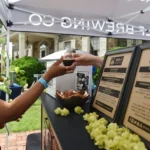
The short answer is red wine with red meat. The reason is that the tannin from the skins of the grapes matches up well with the fat in the meat. On the palate, the two combine so that one harmonizes with the other. Usually, you end up either with a long finish from the wine, or it will act as a palate scrubber causing the next bite to taste like the first.

Today, we will discuss red wines from the southern hemisphere. In my opinion, these are a natural match-up for the tradition of the backyard barbecue. There are many selections on the market, so it helps to follow some guidelines. Don’t choose wines based on high alcohol content. Even though they may show a good level of grape ripeness, they can be overpowering to your taste buds. When confronted with bottles from the same winery and one says “reserve,” this usually means that it has spent more time in oak before bottling and may need some aging time to settle down and become more food friendly.

Australian Shiraz is the same red noble grape as Syrah, which is number one in France’s Rhone Valley. It is spelled differently to distinguish it as the style of wine that develops down under. In my opinion, the big flavor here is fruit. It has an inherent sweetness that goes perfectly with steak. The biggest fruit bombs come from the Barossa Valley, which also means big proof on the label. Wines from McLaren Vale, a popular wine-growing region in South Australia, have more balance and nuance. Be governed accordingly.

The next quaff to explore is Argentinian Malbec. This grape was an obscure fruit used for blending in the Bordeaux region to make up for shortcomings in the wine during a mediocre vintage. It has burst onto the international scene as a wine to be reckoned with at all price levels. The word for me is spice. These are great complements for our cookouts with many layers of flavor galloping across our palates. Buy young, reasonably priced bottles. The expensive stuff needs aging.

The last wine to discuss is Cabernet Sauvignon from Chile. Known as the king of red wines, it is grown all over the globe, but is best known as the top grape in Bordeaux. To me, this is all about balance—fat-cutting tannins mixed with great fruit and long finishes. Another plus is that you don’t need to age these wines for a long time. They are delicious when young, unlike Napa Valley. My favorites are from the Maipo Valley, which is just one place in a country where wine making has become an obsession and that allows the South American nation to stand head and shoulders tall in the world of wine.

Continue Reading

Harrisburg 2028: In 15 years, who will be invited to our city’s comeback party?

Washington, D.C., is in a celebratory mood—and why shouldn’t it be?

Last month, the city shouted loudly, “We are back!” as it honored people and organizations that helped turn once-beleaguered city around, neighborhood by neighborhood, block by block. I lived in Washington for many years, long enough to witness a city in a tailspin, devastated by racial animus, crime, crack and horrible leadership. After several false recoveries, an enduring renaissance finally began to take root about 15 years ago.

When I read of D.C.’s celebration of its comeback, I couldn’t help but think of my home now, Harrisburg. So much here reminds me of Washington of the early to mid-1990s. Yes, there’s the bad: an insolvent, dysfunctional local government, an imposed receivership, sniping for political gain, slumlords, blight, crime. But there’s also the good and lots of it—people who have committed themselves to Harrisburg, who have bought homes here and made investments and built businesses here. In fact, that’s what the party in Washington was about. It feted the activists who stayed committed to D.C. in the bad times, people who held the line and tried to move forward, despite urban devastation, an unsupportive, small- minded media and relentless pressure from others to flee to the suburbs.

So, in 15 years time, who will Harrisburg invite to its re-coming out party? My guess is that room will be packed. Here’s what I foresee: developers who the took big risks on troubled neighborhoods; preservationists who helped breathe new life into historic buildings; artists who seeded the city with their creativity; people who made Harrisburg a better place to raise a child; shopkeepers who brought high-quality goods and services; restaurateurs who fed us and attracted outsiders in; politicians and media that sought to unite, not divide, us. It also will include, I hope, people we don’t know yet. Those who helped wrestle Allison Hill from the clutches of slumlords; the cops who walk beats throughout the city; the folks who found ways—and the money—to restore Harrisburg’s decrepit physical infrastructure.

loveintheburg

In D.C., the honorees included both those who sustained neighborhoods in the roughest times and those who took it from there. It was a hard slog, a grinding house-by-house, block-by-block effort that required constant effort, with often slow, halting progress, over many years.

Washington, of course, still has its problems, as will Harrisburg, even when things are much better. But D.C. seems to have reached a tipping point, a virtuous cycle of positive reinforcement, one that this city can set its sights on.

Harrisburg can aim for a day when newcomers arrive and see a wonderful, restored, urban place with close-knit, self-sustaining neighborhoods, quaint shops and world-class restaurants—and assume it was always like this.

Continue Reading

Missing Pieces: Old Friends, Bitter Enemies and the Struggle to Break the Stalemate over One of Harrisburg’s Most Visible Historic Blocks

If you’re looking for a burger in Harrisburg, you could do worse than go to Jackson House, a sandwich joint next to a barbershop on the otherwise blighted 1000-block of N. 6th Street. Dave Kegris, the owner, has served food out of the shotgun-style restaurant since the early ‘80s, and his burgers are routinely ranked as the best in town.

Good sandwiches notwithstanding, the block has seen better days. Of the six buildings that once stood there, only four remain. One collapsed in 2004, after Tropical Storm Ivan, and the other, the Bethel AME Church, was demolished after a fire in 1995. Two shuttered properties now bookend the block: the historic Swallow Mansion, which was condemned in April of 2010, and the Jackson Rooming House, which Kegris also owns and which used to rent rooms to prominent blacks, who were unable to stay in hotels during segregation. Depending on the outcome of a court appearance Kegris will make later this month over code violations, the rooming house may be the next to disappear.

I met Kegris on a Friday afternoon in March, as Jackson House was closing for the day. He wore glasses and a loose-fitting navy blue T-shirt, and his gray hair was disheveled from working the grill. When he first opened the restaurant, Kegris rented the space from German Jackson, who had run the boarding house while working as a bellhop at the Penn Harris Hotel downtown. “He was an extraordinary man,” Kegris told me. “The son of a slave. His father was a drayman who set up a business, hauling pianos with a horse and buggy. Six months out of slavery, he owned his own home.”

Jackson had no children, and, as he aged, Kegris began to do favors for him, taking him to get groceries or driving him to a vacation spot Jackson owned in Atlantic City. In 1998, when Jackson died, he bequeathed the restaurant property to Kegris.

Almost immediately, legal troubles began. Jackson had written the will by hand, and there was a dispute about what Kegris could inherit. The lawyers for Jackson’s estate, according to Kegris, spent five years trying to determine whether Jackson had meant to give the whole house or just the part that the restaurant occupied.

“They spent all Jackson’s money on fees,” said Kegris. “By the time I got the property, there was nothing left.” Unable to finance the extensive renovation, Kegris watched the house steadily deteriorate.

This past December, looking for someone to take over and restore the boarding house, Kegris approached Historic Harrisburg Association, a nonprofit devoted to historic preservation. On Feb. 4, John Campbell, HHA’s director, arranged a meeting with several developers, along with Kegris and two other stakeholders. One was Annette Antoun, publisher of the Paxton Herald, who owns the block’s three other properties. The other was Ted Hanson, a long-time resident of Old Fox Ridge, the historic neighborhood just west of North 6th, filled with quaint, brightly-painted brick homes. The conclusion reached at the meeting, according to Campbell, was that preservation “needs to be an entire block conversation.” The developers, primarily interested in residential projects, indicated they weren’t willing to invest if blighted properties would endure next to new developments.

Kegris, who would like to re-divide the double lot and just keep the restaurant, offered his building for a dollar, but Antoun, the majority owner on the block, refused to set a price. As a result, potential development has stalled. On the surface, it would seem that the future of the block depended on persuading Antoun to make preservation a priority. But, as with many cases involving money and land, the dispute runs deeper.

A Study in Brown

The Paxton Herald is a weekly newspaper with a circulation of around 16,000. Its contents are a tabloid-like pastiche of news, ads, event announcements, obits and editorials, which tend to be jumbled together on every page.

Antoun, who is 86, still edits and publishes the Herald out of an office in a vinyl-sided bungalow just off of Allentown Boulevard. On the day I visited, her office, like her outfit, was a study in brown. Sitting in a leather chair on a khaki shag carpet, she wore a brown scarf, brown wool sweater, brown corduroys and tan leather boots, as well as a wooden bracelet, tortoise-shell glasses and a ring of coiled copper.

Antoun was born in Franklin, in northwestern Pennsylvania, but spent much of her childhood in New York City and Washington, D.C. When she was young, her father succumbed to a mysterious illness, which she later came to suspect was celiac disease, and the family fell into poverty. “When my dad got sick, we didn’t have a pot to you-know-what in,” she said. “My mom would scramble one egg and spread it over two sandwiches for me and my brother to take for school lunch.”

In light of these humble beginnings, the year 1979 must have represented a substantial change in fortunes. That year, with the help of her son, Antoun acquired a total of seven properties on Boas and Herr streets, in the neighborhood that would become Fox Ridge. All seven were sold by proxy through the Tax Claims Bureau, which had assumed control from owners unable to meet their tax obligations. The Antouns picked up some, like the house at 306 Boas, for as little as $50.

Because of the volume of her purchases, and the fact that Antoun had no intention of living in the houses she acquired, some neighbors have come to regard her as a “slumlord.” But Antoun sees her real estate legacy as a matter of control. “I thought it should be saved as a historical place,” she said. She believed that, by buying the properties, she could determine the future of the neighborhood. “I’m not a historical nut. I just think if there’s a reason to preserve it, you should.”

Whatever her preservationist motives, Antoun was also making a bet that her investments would pay off—and, for the most part, they did. In a few cases, the Antouns improved the properties and sold them many years later for respectable sums. (One house on Boas, which the Antouns purchased for $1,100, sold in 2009 for $89,000.) But several returned an immediate, if modest, profit. Much of the area had been slated for acquisition by the city, as part of an urban renewal project led by the Redevelopment Authority. The project was primarily focused on infrastructure improvements, such as sewer and sidewalks, but the Authority also used its funds to acquire blighted properties under eminent domain.

In the early 1980s, the Authority claimed five of Antoun’s homes in Fox Ridge. Antoun was awarded compensation well in excess of what she had paid: nearly $15,000 for five of the properties, which she had bought for just over $4,000 a few years before. I asked Antoun why, if her true interest was preservation, she didn’t fight the city’s acquisitions. She told me, “There’s only so much you can do.”

Antoun also bought properties on nearby N. 6th Street, starting with the barbershop next to Kegris’ restaurant and later adding the house on the opposite side, between German Jackson’s old house and the Bethel church. These were also a gamble, as the aging buildings would require substantial upkeep. In addition, Antoun would have to contend with a force she may not have expected: a neighborhood group with high hopes for urban renewal, with Ted Hanson at the fore.

Really Bad Decision

Hanson bought his house on Boas around the same time as Antoun, in 1978, when the block was 70 percent vacant and prostitution and crime were rampant. Unlike Antoun, however, Hanson had a long-term interest in residing in the area. “I was the first person to move in with the intent of restoring and actually living here,” he told me.

When Hanson bought his home, the interior was falling to pieces, and the neighborhood had been targeted for demolition. “This neighborhood was going to be a huge surface parking lot for state workers,” Hanson said. “I realized that, in order to ruin their plans, we’d have to have it declared a historic district by the state.” Hanson worked in the press office of the House Democrats and had some political connections. In 1979, on his birthday, his home was declared eligible for historic preservation.

With a handful of other residents, Hanson formed a neighborhood association, Fox Ridge Neighbors, Inc., which positioned itself as a watchdog for the area’s progress. Occasionally, their actions made headlines. In 1984, they staked out a resident whom they suspected was involved in a spate of burglaries; their sleuthing, and the successful arrest it produced, was written up in the Patriot-News. The paper also covered a minor scandal that surfaced when Hanson, then serving on the Architectural Review Board, called attention to substandard materials being used by a city-approved contractor in the repair of a nearby home.

It did not escape Hanson’s notice, therefore, when a “for sale” sign appeared in the window of Swallow Mansion at N. 6th and Boas in the summer of 2000.The mansion, which had once been the home of Silas Comfort Swallow, an abolitionist preacher, later became the Curtis Funeral Home, which primarily served local black families. In 1997, it had been donated to Historic Harrisburg, prompting “a collective sigh of relief” from Hanson and his neighbors, who believed HHA shared their interest in urban development. But a mere three years later, it was back on the market. In a matter of months, and without consulting the neighborhood, HHA quietly sold the property to Antoun for $30,000.

Hanson was appalled. “There was no vetting, no investigation,” he told me. Another of Antoun’s acquisitions, a mere three homes away, was in a terrible state of repair. At the time, Hanson served on the board of directors for the Broad Street Market Corp., a subsidiary of HHA. When he learned about the sale, he promptly resigned.

Campbell, HHA’s current director, was reluctant to impugn his predecessors, but he agreed that the sale to Antoun was “a really bad decision.” He believes it had to do with HHA’s troubled finances. At the time, he said, HHA was “practically bankrupt.” Campbell cites the sale of Swallow Mansion as a reason HHA is now pursuing preservation of the block. “HHA had a role in this 15 years ago,” he said. “We have a responsibility to the community.”

Accusation and Spite

Antoun and Hanson had scuffled in the past, but after the Swallow Mansion sale, he began to pursue her with particular fury. He chronicled her actions on a website, Paxtonheraldsucks.com, which he no longer updates but preserves as “an historical archive.” Visitors to the home page are greeted by the words “Paxton Herald Sucks” in dripping green letters. Loaded with internal links and thumbnail photos of blighted buildings, court summonses and deeds, the site is a virtual labyrinth of accusation and spite. It describes numerous disputes, including a battle over a wooden fence that Antoun attempted to erect around one of her properties. Hanson filed a complaint about the fence, which had not been given a proper permit, and it was torn down. (Antoun claims the fence was necessary because someone was stealing the boards covering up the windows.)

According to the site, the central element in the block’s collapse was a secret collusion between Antoun and former Mayor Stephen Reed beginning shortly after Antoun purchased Swallow Mansion. At the annual Black History Gala, in February 2001, Reed announced plans to build a museum of African-American history. The museum, which Reed claimed would be “national in scope,” would occupy the 1000-block of N. 6th Street.

Page after page of Hanson’s site is devoted to virulent opposition to the museum scheme. Much of the criticism focuses on alleged ways that the proposal is misguided. Hanson observes that aspirations for a “national” museum were overblown, because there were simultaneous plans for an African-American history museum in Washington, D.C., under the purview of the Smithsonian. In addition, the plans were ill-conceived as a matter of pure logistics, he wrote. “It was the wrong place for the museum,” Hanson told me. “There was no parking, no festival grounds, no room for expansion.”

At the same time, the site offers an alternate, more sinister explanation. One page concludes with the following lines:

  What is really driving the museum project at the corner of Sixth and Boas streets?

   In our view it has nothing to do with black history… it has everything to do with money and political favors.

The site goes on to claim that Reed and Antoun had no intention of building a museum and were only using the plan as a justification for a multi-level parking garage to be erected on the empty lot of the former church. The “cynically evil beauty of the scheme,” the site says, was that, with a nearby parking lot, the Antoun properties would “skyrocket in value,” because of the proximity of the lot to the Capitol complex.

The site is meant to be a chronology of events, but it’s not hard to detect Hanson’s resentment simmering beneath the text. One reason for his harsh language, not mentioned on the site, is that Hanson had his own hopes for North 6th. He showed me a proposal he had drawn up for the creation of a bed and breakfast in Jackson’s old house, to be run by students from HACC’s hospitality school. Hanson had floated the idea to Reed in early 2000, and initially, he said, Reed was “very, very supportive.” But, at some point shortly thereafter, Reed apparently changed his mind. Hanson is convinced that Antoun interfered.

For Hanson, the key piece of evidence that Reed and Antoun were collaborating dates to the summer of 2002. That year, the city had condemned Antoun’s property at the north end of the block. Antoun was scheduled to appear in court on July 22 on charges of violating the building code. But, days before her court date, the charges were mysteriously withdrawn. When I asked Antoun, she denied that Reed had any involvement in her properties. But David Patton, the city’s codes administrator, confirmed that citations had been issued for her building and subsequently withdrawn. He showed me a record of an executive order, which states that “all legal action” on the relevant citations “has been suspended as per direction of the mayor’s office.”

So, why would Reed stake his political reputation on such a favor for Antoun? After years of promises, the museum never materialized. Eventually the plan joined the ranks of other failed projects—most notably the Wild West Museum—that have come to define Reed’s final years in office. Was it really just bluster to cover a plan for paid parking? The accusations on Hanson’s website are over a decade old; if Hanson still adheres to the parking lot theory, he didn’t emphasize it when we met. But he remains convinced that, behind the scenes, Antoun and the former mayor were conspiring. “What no one can figure out,” Hanson said, “is why Annette and Stephen Reed are in cahoots.”

Significant Harm

In the foyer of the offices of the Paxton Herald, the walls are covered with pieces of paper in frames. Among various certificates and newspaper clips is a proclamation signed by Mayor Reed, designating March 23, 1988, as Annette Antoun Day. Among other approbations, Antoun is acknowledged as a “singularly rare individual” who “knows her own mind.”

When I asked Antoun about Reed, she was quick to praise him. Before Reed’s tenure, she said, Harrisburg was a “crime-infested hellhole. There would not be any Harrisburg if not for Stephen Reed.”

I asked about their relationship, and whether she had supported his mayoral campaign, expecting, at most, an admission of financial contributions. As it turns out, Antoun’s support went a good deal further. Early in his run, according to Antoun, Reed expressed doubts about his ability to reach the public. “I said, ‘Bull****, Steve, I have a press downstairs,’” Antoun told me. “‘Write what you’re gonna write, and I’ll print it.’” She related the story of an all-nighter printing campaign material, during which she dried the ink with Avon bath powder. She laughed. “They were the sweetest-smelling political ads ever printed.”

Antoun maintains that her primary interest is in preserving the block’s history. She told me again and again that she’d still like to see a museum of some sort on North 6th to commemorate African-American culture. “I want something to show these young black kids: You didn’t just come from slaves in chains. You came from productive, accomplished people,” she said. In February, after the meeting hosted by HHA, Antoun wrote a sprawling three-page letter to Campbell in which she reiterated her commitment to developing “the most visible block in the entire city of Harrisburg.” In it, she referred to her roots in northwestern Pennsylvania, an area “rich in history,” and said she was “vitally interested in the history of slave runaways” who “went up the Allegheny.”

It’s hard to reconcile these claims with the theory that the museum was nothing but an elaborate smokescreen for a garage. But a landlord and a mayor need not be part of a profit-driven conspiracy in order to do a city significant harm. In some cases, mere inaction will suffice. It seems possible that Antoun had a sincere dream for a nationally prominent museum. But it’s also likely that, rather than preserve the buildings herself, she stalled in hopes that the city would pay to take them off her hands. It’s telling that it required a condemnation order, in 2010, to force Antoun to fund renovations of Swallow Mansion’s crumbling exterior.

In chess, a stalemate typically occurs when neither side has sufficient pieces for a decisive victory. At present, the fate of North 6th is a stalemate in that sense. Antoun owns three of the block’s five remaining properties, but lacks either the money or the interest to develop them. Hanson has won the battle for Boas, but says he is “no longer interested” in creating a bed and breakfast. Historic Harrisburg would like to restore the block, but it can’t do so without money from developers. And developers are only interested if they can renovate the block as a whole, which Antoun seems poised to resist in perpetuity, unless they can pay a sufficiently high price—a price that, so far, she has declined to name.

Kegris, for his part, appeared weary of the saga, and eager for Jackson’s old boarding house to leave his hands. He told me to advertise it in my story. “If someone wants it, they can come and get it,” he said. “Otherwise I’ll probably have to pay to rip it down.”


Continue Reading

Coming to HBG: April is the coolest month.

The month of April is chock-full of genre-busting, sing-a-long, symphonic goodness. It’s hard to contain our recommendations to a few bands. So, we’ve put together an alphabetized guide to your best bets over the next 30 days.

Appalachian Brewing Company

March 4th Marching Band, April 10

Think Village People meets local marching band meets Kiss. Dressed in kitschy band attire, this music carnival contains a section of horns, drums, electric guitarists, flag and fire dancers, stilt walkers and acrobats. The adult Barnum & Bailey has arrived. Their motto is “A Date. A Command. A Band.” Don’t forget it.

Mentionables: Start Making Sense on April 6, and The Dirty Sweet on April 13

FedLive

Brown Bird, April 10

Hailing from Portland, Maine, this 3-person-band fronted by Dave Lamb will bring out all the instrumental stops: fiddle, cello, ukulele, lap steel guitar, upright bass and a dobro. Don’t know what a dobro is? Come out and view this Americana trio that will treat you to blues, swing, country and folk tunes.

Mentionables: Wayne “The Train” Hancock on April 1, and Jenny Owens Young on April 20

HMAC Stage on Herr

The Woggles, April 25

The Woggles (not the Wiggles although they parodied them on “30 Rock” last year) draw their inspiration from rockabilly, a marriage of rock, country and rhythm and blues. If you like uptempo garage rock, and respect the following bands they’ve shared the stage with—Johnny Cash, the Strokes and the New York Dolls—then opt for The Woggles (again, not The Wiggles).

Mentionables: Tartufi w/ You You Dark Forest on April 2, and The Greatest Funeral Ever on April 20

TheMakeSpace

Barren Girls, April 25

The four-piece, all-female punk garage band was recently signed to the near-legendary indie label, Merge Records this winter. This high-energy, sweat-inducing show will justify this band’s rising profile in the music industry. Put on your boots for this one.

Mentionables: Jake Lewis/Widad on April 27, and Jack Grelle/The Johnson Family on April 30

Whitaker Center/The Forum

B.B. King, April 19

Does the 87-year-old virtuoso need an introduction? The blues master who made his start in the ‘60s, due to Sinatra’s backing, makes the word “tour de force” sound like a simple jog. He’s playing 18 shows in April alone from Michigan to Mississippi. You want to hear that one-note vibrato that defines this icon.

Mentionables: 2CELLOS on April 2, and Dave Mason Acoustic Duo on April 12 (both at Whitaker Center)

Continue Reading

Religious Restoration: Harrisburg’s historic black churches face untold challenges. Among them: preservation of their beautiful, aging buildings.

Last June, the Rev. Van Scott took over as pastor at Harris AME, a handsome, Tudor-style church on N. 17th Street, just east of the Harrisburg Cemetery.

The building is Harris’ only asset, and its income depends almost entirely on weekly collections. With its dwindling congregation—three-fourths had followed the departing pastor, leaving Scott with about 20—Harris soon struggled to pay the mortgage. When winter arrived, parishioners couldn’t afford to heat the sanctuary, so services were moved to a smaller room in the basement. When heating even this room proved too expensive, they retreated into the kitchen.

“And now, you want to see our heat?” Scott asked me on a windy day in February, in a cramped room stuffed with chairs, a makeshift altar and a commercial refrigerator. He turned on three ranges on the kitchen’s gas stove, which sputtered to life with blue flames.

Scott wore a cowboy hat, a black leather jacket and jeans. At his previous assignment, in Roanoke, Va., he became known as the “Walking Pastor with the Cowboy Hat,” for his frequent walks in the neighborhood. He has a warm, cheerful manner and speaks with a pastor’s preference for parables, especially for ones invoking animal behavior. In our conversation, he cited the habits of bears, stallions, lions, elephants and bulls.

“I knew it was going to be rough,” Scott said, “but this is worse than I anticipated. I didn’t expect the weather to become a factor in how I ran my church.”

Scott perceives needs in the community, where poverty, crime and drug abuse afflict many residents, but his primary concern is simply keeping the church’s doors open. He can’t afford to address structural problems—among them a leaking roof, poor insulation and an antiquated boiler—and he often forgoes his monthly salary.

Fortunately, there is a glimmer of hope that the church might be able to pay for renovations. In October, Scott and the pastors of seven other churches attended the first of several training sessions on conducting a capital campaign. The session was led by Partners for Sacred Places, a Philadelphia-based outfit that has helped churches nationwide secure much-needed funds. It does so by teaching them to leverage an asset that many Harrisburg churches share: their historically significant buildings.

A Meaningful Purpose

If there’s one person who deserves credit for this program, it’s Jean Cutler, director at the state Bureau of Historic Preservation. Cutler, a proud Harrisburg resident, speaks about the city’s buildings almost as if she’s describing a treasure trove. Churches, she said, are a natural focus, because they tend to be the primary landmarks of their neighborhoods.

“When you look at N. 6th Street, what stands out? It’s Camp Curtin,” she said, referring to the Methodist church that dominates the block north of Woodbine.

In 2008, Cutler applied for a Preserve America grant, which, with matching funds from the Pennsylvania legislature and other sources, provided her department with a pool of nearly half-a-million dollars for projects related to African-American history. Much of the money was distributed in statewide sub-grants, but, in late 2012, with the grant expiring, Cutler still had about $43,000 left. She decided to use the money on a long-time dream—a series of training sessions to bring together Harrisburg’s African-American churches and promote their preservation.

Typically, to secure grant money for historic preservation, a church has to meet several criteria. First, its building must be on the National Register of Historic Places, a designation that requires, among other things, that it be at least 50 years old and have a historically significant association, either with a person, a period in architecture or an event. It also helps if the church serves a meaningful purpose, which usually means outreach in the local community.

Based on these criteria, numerous churches in Harrisburg qualify. But, as Cutler explained, there are varying degrees of awareness among congregations of their churches’ significance and history. One purpose of the training is to help churches recognize their roles in their neighborhoods.

Cutler is spirited and optimistic. At the training session I attended, she stuck out as the blonde woman in a turtleneck and floral vest, reacting with delight as the pastors swapped ideas. She sees the preservation project as a critical component of a citywide revival.

“I’m a true believer in integrated historic preservation,” she said. “You can’t just fix one building on one block. You also have to help with blight, crime, education, health.” But repairing the churches is crucial, because “these buildings anchor a neighborhood.”

God Preserved This Church

One such building is Fountain Gate Church, at the corner of Kittatinny and Derry, in Allison Hill. On a recent Saturday, I went there to meet Jim Buchmoyer, a deacon who serves there three days a week.

Buchmoyer is 6-foot-2, with thinning brown hair, and he walks with a metal cane. In 1989, while working at a limestone quarry in Annville, his legs were caught in a machine for breaking up coal. His right foot was crushed, but he was saved from even worse injury by a new pair of reinforced boots, which jammed the machine. “I said, ‘OK, God, you have my attention. Tell me what to do and I will do it.’”

Buchmoyer introduced me to Fountain Gate’s pastor, Bishop Roberta Thomas, who greeted me in a pink sweatshirt with an image of two snowmen decorating a tree. Thomas’ voice is gentle but commanding, and she frequently invokes the grace of God to explain good things that have befallen her congregation.

In 2011, a severe thunderstorm tore an 80-foot tree from the pavement outside the church, sending it crashing through the roof and windows of Thomas’ office on the third floor.

Buchmoyer and others arrived to find the third floor flooded, with water pouring down the stairs towards the chapel and sanctuary. Despite extensive damage, the water never reached the most vital rooms, stopping a few inches short of the chapel and furnace and about a foot short of the sanctuary. Less than four years later, nearly everything has been repaired, in part because retailers like Lowe’s have offered steep discounts on materials. Discussing this, Thomas teared up.

“God preserved this church for something. As long as God gives his favor, I’ll stay,” she said.

Allison Hill is one of Harrisburg’s poorest neighborhoods. For many residents, Fountain Gate is an indispensable source of clothing, childcare, medicine and, especially, food. Two to three days a week, the church distributes food out of a room in the basement. Around 75 households from the neighborhood partake, forming a line at 2 p.m. for a handout that doesn’t take place until 4:30. Fountain Gate also offers a program for seniors, a clothing bank and after-school programs to keep kids off the street.

Yet, when it comes to the question of congregants, the church’s relationship with the neighborhood is more complex. Despite the size of the population it serves—around 300 people attend its annual Thanksgiving dinner and upwards of 400 attend its summer fair—the church has only 50 active congregants and only five or six who live in the immediate neighborhood.

Thomas also expressed concern that an “entitlement mentality” pervades the community. For instance, the church has struggled to keep people in the neighborhood from parking in its private lot. They recently put up metal “No Parking” signs, which someone bent over in protest. This results in a peculiar paradigm, in which the church is supported by a small number of worshippers, mostly from elsewhere, while simultaneously supporting a large number of locals who are spiritually disengaged.

This is not new among churches, of course, and, in a sense, it represents the vision implicit in the Partners for Sacred Spaces training. If Harrisburg’s churches are to survive, they will have to position themselves as more than just places of worship. They will have to make the case that they are some combination of community pillar and historical landmark, and, as such, worthy of outside funds, even as Sunday attendance wanes.

Turrets and Leaks

Camp Curtin, on N. 6th Street, is a perfect example of a church struggling to define its future. The church overlooks a well-kept plaza that commemorates a major Union camp of the Civil War, through which more than 300,000 soldiers passed. Its sanctuary is furnished with beautiful oak pews, on both the floor level and in balconies, and is graced at one end by an intricate web of stained glass, and, at the other, by a massive painting of an angel hovering over a wounded soldier. Yet its architectural troubles are numerous—a survey in December noted disintegrating stone turrets, leaking pipes and roof, and inadequate drainage, among many other problems—and its congregation, as the church secretary grimly put it, “isn’t growing.”

The church’s historian, Lewis Butts, who is also running for mayor, has been dreaming for years of ways in which Camp Curtin can figure as a cornerstone of neighborhood revival. His plans include Camp Curtin street signs on the surrounding blocks, a display of replica flags of Civil War regiments and magnets, T-shirts and buttons to be sold to Civil War buffs. He also hopes to restore the museum on the church’s second floor, which once housed Civil War artifacts but has been mostly emptied to discourage looting.

Yet for all its history, and despite its location, Camp Curtin has so far raised only $40,000 out of a target that Butts estimates at around $2 million. If Camp Curtin is to become a tourist attraction, it will need more than just repairs. Its neighborhood, rife with blighted properties, will need to become more welcoming. The visitor before me, Butts said, was not a tourist but a cop, who was curious about access to the defunct bell tower, which he thought might make a good spot for monitoring crime.

At the core of these churches’ challenges is the familiar catch-22 of urban renewal. To attract residents, a city needs public spaces that are both functional and pleasing; to maintain these spaces, a city needs residents to provide it with revenue. The church preservation project seeks to jump-start a revival by using Harrisburg’s historic buildings to attract federal and local funds. The case for the churches’ historical importance is clear, as is the case for their importance to their communities. What remains to be seen is whether short-term repairs can produce long-term sustainability.

At the remaining training sessions, on April 20 and June 20, the churches will receive pointers on how to fine-tune their campaigns. Some of the money that Cutler has raised will help the congregations print statements about their churches’ history and significance, which they can then distribute to potential donors. But most of what the churches will do in the future lies outside the scope of the training. In their own time, and on their own terms, they will have to ensure that they are vital institutions, deeply engaged with their communities.

Van Scott, for his part, looks forward to the spring, when he can finally take the neighborhood walks that proved so effective in his previous posts. At one church, he had trouble with a yard that his neighbors kept using as a place to dump bottles and cans. He persisted in picking up the trash by himself, until the neighbors eventually caught on and stopped littering.

“People will do it if they see it being done,” Scott said. “The trash in your yard? You don’t need a grant to get it picked up. You don’t need the mayor to come pick it up for you.”

The story reflects the central challenge facing Harrisburg’s churches. Ultimately, a church, like the city, doesn’t depend on God or a training module or a federal grant to make it thrive. It depends on people.

Continue Reading

After Mike: Rocked by the death of their founder, Greenbelt Events holds steady and plays on.

Concert promoter Mike Van Jura did a lot to jumpstart the music scene in Harrisburg. From the rocking, high-energy shows at the Appalachian Brewery’s Abbey Bar to the incredible display of talent during last year’s Kipona Festival, Van Jura seemed to have his finger in every pie.

“He was a self-taught businessman, and he learned all he knew about music just by constantly listening to new music and going to shows.” said his brother Billy Van Jura. “Growing up, his room was like a den for music. He had an awful poster of Jon Bon Jovi on the wall, and Bruce Springsteen was in heavy rotation. There was always music playing at our house.”

“Jersey Mike,” as he was known to friends, passed away unexpectedly last November, sending shock waves through a community of people who had grown to appreciate his finely honed sense of who the next up-and-coming band would be.

On the week that he died, the Abbey Bar had a packed schedule, but Sarah Staub, Van Jura’s business partner, along with sound engineer Alec Simmers and marketing director Ben Ketchum, stepped up to make sure that the shows ran smoothly.

“Everything was a blur after his unexpected passing, but I know that the week he died we had four large shows at ABC,” said Staub. “We all felt that the shows had to go on. That’s what Mike would have wanted.”

In December, the threesome organized two benefit events: one at the Abbey Bar and the other at the Harrisburg Midtown Arts Center to help raise funds for Van Jura’s two young children. Both featured music and a silent auction where people could bid on signed show posters, artwork from Van Jura’s personal collection and framed prints. The events also gave Van Jura’s friends a chance to grieve.

”He had professional friends and personal friends and a billion of them in between who had worked with him and had also hung out and drank beers with him,” said Billy Van Jura. “I think that these events gave Harrisburg a chance to have its own memorial.”

Staub first met Van Jura about 10 years ago at a Medeski Martin & Wood show at the Chameleon Club in Lancaster. They instantly hit it off, and soon she started coming back from college to visit him.

Hoping to infuse the local music scene, they started a collective called Roundtable Presents with a couple of other friends. After doing shows at several other venues, they put in a bid to be talent buyers for the Appalachian Brewing Company. Artie Tafoya, part owner of ABC, said that he was glad to bring Van Jura on to locate the talent that they just didn’t have time to find.

“With his passion for music, Mike was able to do a great job of improving the quality of music that we were able to bring in,” he said.

ABC opened its doors in 1997. The partners had spent more than two years renovating a burned-out hulk to create the beautiful, 50,000-square-foot venue that houses the brewery, a restaurant, the Abbey Bar, a room for functions and office space. Once the historic home of the Harrisburg Trolley Corp. and offices for the Work Projects Administration, the space had been transformed into a destination point for discerning diners and brew pub enthusiasts.

“It’s such a big facility that we’ve always had to look for ways to fill it,” said Tafoya. “Having really good entertainment has helped us to utilize the space well.”

Soon after Van Jura and Staub began running shows at the Abbey Bar, they changed their company name to Greenbelt Events. “We wanted to give the company a name that people would feel comfortable with,”recalls Staub. “We both liked being outdoors so we named it after Harrisburg’s Greenbelt nature trail.”

Van Jura was the public face of Greenbelt Events while Staub stayed in the background. “Mike really loved to be in the spotlight and hoped to make a big difference in our small little city,” said Staub. “Mike was the idea guy. He woke up every day and hit the ground running.”

Staub provided the fledgling company with financial support and handled the accounting, legal issues and paperwork. ”Mike and I had that dynamic that worked really well, “she said. “We would go out to breakfast every Monday or Tuesday and just plan the week; shoot around ideas, basically just think about what we wanted to do and make it happen.“

Van Jura did all the booking, but both he and Staub selected the bands. “Mike tended to enjoy rock shows, and I like more jam bands and bluegrass, “she said. “So, together, we each had our dream bands that we wanted to get and we would just pursue those bands until we got them.”

During the last several years, the pair was able to book just about every band they really wanted, including some standouts like The Hold Steady, Hackensaw Boys, the Carolina Chocolate Drops and the Steep Canyon Rangers.

From the beginning, Greenbelt Events structured the shows so that local artists would have a chance to open for national acts. “Having local support not only brings the people from the area in, but it also gives local groups a chance to grow as a band,” said Staub. “They get the opportunity to perform for people that they wouldn’t necessarily otherwise draw in. It’s a win-win for us all.”

Van Jura wouldn’t just pay the local bands—he also would take the time to give them advice. “He would just keep on pushing and encouraging and pushing and encouraging, even when they were ready to back off themselves,” said Billy Van Jura. “He inspired them to work harder and to believe in themselves.”

One band that Van Jura had a lot of influence on was the bluegrass/Americana band Cabinet. When the Scranton-based band was just starting out, Van Jura gave them a chance to build up a fan base by inviting them to play every Wednesday for a month. ”It worked out really well,” said guitar player Mickey Coviello. “Every time we went back there, more and more people came out to see us.”

Cabinet ended up getting so popular at the Abbey Bar that they decided to record a live CD there. “We sold out the place,” said Coviello. “It was really a blast!”

Now, after signing on to a new booking agency, Cabinet is getting ready to embark on an ambitious 12-city tour. Coviello credits a lot of the band’s success to being able to play at places like the Abbey Bar. “Mike Van Jura did a lot for us down there,” said Coviello. “He helped out a lot of bands that way.”

Since Van Jura’s death, Staub has taken over all the booking and has worked hard to keep the company going, despite a challenging career in real estate.

“I think about this dream that we created together and letting it go is just not an option,” she says. “We’re going to keep producing the same quality of shows we had before and expand the way Mike had dreamed.”

Recently, she booked a show with Frank Black that drew nearly 350 people on a Sunday. “It was the biggest show that we did since Mike passed,” she said. “I think he would have been really proud of it.”

Tafoya is confident that Staub has what it takes to continue the work of Van Jura. “She’s come across some difficult situations that she’s just handled so professionally,” he said. ”We’re very excited about the future of entertainment in the Abbey Bar.”

Run for Jersey

In honor of the founder of Greenbelt Events, the Jersey Mike Memorial Rock and Run 5-K race will be held on City Island in Harrisburg on Saturday, April 13 at noon.

The race was developed by the K+L Guardian Foundation, which was formed to benefit Mike Van Jura’s children. The race was designed to promote heart-healthy activities and to provide outlets for people who have lost a loved one manage their grief through healthy, positive activities.

Participants may run or walk, and a 1-Mile Fun Run for Kids is planned. An after-party will be held at Ceoltas Irish Pub in Harrisburg. Registrations and donations are accepted at https://runsignup.com/Race/PA/Harrisburg/JerseyMikeMemorialRockRun5k. Donations can also be sent to: K+L Guardian Foundation 1518 Green St., Harrisburg, Pa., 17102.

Continue Reading

Seen at the Scholar: Read this: An overview of what is being read by the staff of Midtown Scholar Bookstore

Middlesex by Jeffery Eugenides

529pp.

Farrar, Straus and Giroux

Good for fans of: first-person fiction, LGBT issues, complex storylines, David Foster Wallace, Jonathan Franzen, “The Virgin Suicides”

Why: This title has been spoken about in ways that make you wonder if the term “great American novel” doesn’t apply. Telling the tale of a family secret, this novel might remind some of John Steinbeck’s “East of Eden.” Of course, with exactly 50 years between the two books, there is a different American story to be told in this 2002 Pulitzer Prize winner. An immigrant Greek family as the story’s focus and an intersex narrator make this novel like nothing you have read before. It is the tale of compassion and love that can be understood by every person, regardless of gender.

Acting White: The Curious History of a Racial Slur by Ron Christie

St. Martin’s Press

Good for fans of: political topics, etymologies, African-American studies, history lessons

Why: It might seem strange that a Republican author would choose a quote by Barack Obama for the front cover of his book, but open the cover and you will see a list of chapters covering milestones since Harriet Beecher Stowe. The book examines the ideas of segregation in the time of Booker T. Washington and Plessy vs. Ferguson and black literacy and education in the times of W.E.B. Dubois and Brown vs. Board of Education. With a glance at Martin Luther King Jr. and Malcolm X, we see how America grew into a place with the first black Supreme Court justice and president of the United States. The feel of the entire book echoes the old adage: don’t judge a book by its cover, but rather by the content of its characters. This book knows that a black youth with a book isn’t “acting white” but is seeking more knowledge to grow from.

Big Plans by Bob Shea (author), Lane Smith (illustrator)

48pp

Hyperion Books

Good for fans of: young children’s books, dreamers, big illustrations, reading aloud, bedtime stories

Why: This is the book our children’s section manager has been talking about. These large, colorful pages—full of astronauts and football players—will easily keep the eyes of even the smallest scholars on the page. We love the message this story sends about childhood plans and the endless possibilities of growing up. Empowering and engaging, this book could bring out big dreams in even a small mind.

How Art Made the World: A Journey to the Origins of Human Creativity by Nigel Spivey

288pp

Basic Books

Good for fans of: artists, human history, nonfiction knowledge, PBS, beautiful pictures

Why: You may have come across the 2006 PBS documentary series of the same title sometime when you were flipping through channels. If you didn’t happen to catch it then, why not pick up the book written by the host of the series? Taking on the topic of art anthropologically with the motto “everyone is an artist,” this book shows the ways that humans make art, but also how art makes us human. Examining the themes that recur throughout history since the time of cave drawings and into the digital age, this book dares us to ask why we, as a species, have time and time again gone back to creating visual representations of the things we can see and even the things we cannot.

New at the Bookstore: Be sure to check out Midtown Scholar’s newly expanded Shakespeare section, including copies of all 37 plays and many sonnets. There’s something for everyone, no matter the amount of knowledge you already possess about the Bard of Avon. Find critical readings of his writings, biographies on the man and the myth—even humorous interpretations of his famous plotlines. These easily identifiable classics will look great in your living room.

Continue Reading

April News Digest

Candidates File Petitions

A large number of candidates, both electoral veterans and newbies, last month garnered enough signatures to place their names on the ballot for the May 21 primary election.

As expected, four Democratic candidates will vie for mayor: incumbent Linda Thompson, city Controller Dan Miller, businessman Eric Papenfuse and community activist Lewis Butts Jr. No Republicans filed to run.

On the legislative side, 10 Democratic candidates will battle for four council seats. They are:

  • Ben Allatt of the 1700-block of N. 3rd Street
  • Ron Chapel of the 700-block of N. 3rd Street
  • Shamaine Daniels of the 2000-block of N. 3rd Street
  • Robert Drum of the 700-block of Girard Street
  • Camille Erice of the unit block of S. 18th Street
  • Ellis R. “Rick” Roy of the 600-block of Curtin Street
  • Eugenia Smith of the 1200-block of Rolleston Street
  • Pat Stringer of the 2100-block of Kensington Street
  • Kelly Summerford of the 1900-block of Market Street
  • Wanda Williams of the 500-block of Wiconisco Street

Smith, Summerford and Williams are incumbents. An additional seat is open because Councilman Bruce Weber, appointed in December to complete state Rep. Patty Kim’s unfinished council term, is not running for election. No Republicans decided to run.

The office of Harrisburg City Controller has Democrat Charles DeBrunner of the 2300-block of Valley Road running unopposed for the office. The position will be open as current Controller Miller makes a run for mayor. No Republicans are competing.

The race for school board also attracted multiple candidates. Six candidates will run in the Democratic primary for four, four-year slots. They are:

  • Lionel Gonzalez of the 1400-block of Fulton Street
  • Lola Lawson of the 200-block of Hamilton Street
  • Kenneth Mickens of the 300-block of Chestnut Street
  • Danielle Robinson of the 2900-block of Heather Place
  • James Thompson of the 2300-block of Bellevue Road
  • Patricia Whitehead-Myers of the 2600-block of N. 7th Street

Lawson, Mickens, Robinson, Thompson and Whitehead-Myers are incumbents. Thompson also garnered enough signatures to be listed as the sole candidate running on the Republican ballot.

In addition, the school board has three two-year terms available. That race attracted three Democrats:

  • Monica Blackston-Bailey of the 1800-block of Holly Street
  • LaTasha N. Frye of the 2200-block of Swatara Street
  • Adara Jackson of the 1800-block of Mulberry Street

Incumbent Brendan Murray had filed a petition to defend his seat, but a paperwork error forced him to withdraw from the race. No Republicans are running.

There are also a couple of Dauphin County offices on the ballot.

For prothonotary, incumbent Stephen Farina will run unopposed on the Republican ballot, while former district Justice Joseph Solomon will run unopposed on the Democratic side. Unchallenged, they will face off against each other in the November general election.

For county coroner, incumbent Graham Hetrick is unopposed on the Republican ballot. No Democrats signed up to run, virtually ensuring Hetrick another term.

No GO: Harrisburg again defaults

Harrisburg last month defaulted on its general obligation (GO) bonds, the third time in a row it has skipped payments.

City receiver William Lynch ordered the city not to make scheduled payments on two series of bonds and notes, insured by Ambac Assurance Corp. The payments missed include $2.7 million on the series D bond of 1997 and $2.5 million on the series F bond of 1997.

“The decision to withhold payment was made to maintain sufficient cash-flow to provide vital and necessary services,” stated Lynch’s office.

In March 2012, former receiver David Unkovic instructed the city to skip $5.3 million in GO payments and, last September, Lynch told the city not to make scheduled payments of $3.9 million.

GO bonds were issued to fund certain city operations. They’re separate from bonds taken out by the Harrisburg Authority to fund a retrofit of its long-troubled incinerator. The city backed those bonds, but has not made payments on them in years. It now owes some $350 million in accumulated principle and interest on the incinerator debt.

Mayor Wants to Adjust Street Name

If Mayor Linda Thompson has her way, the city’s best-known stretch soon will share its name with a giant of the Civil Rights movement.

Thompson has asked City Council to “supplement” the name of N. 2nd Street, from Chestnut to Forster streets, with the name “Rev. Dr. Martin Luther King Jr. Boulevard.” In other words, the downtown street would be known by both names.

The council cancelled both its last meeting in February and its first meeting in March. Therefore, at press time, it had not yet acted on the ordinance.

School Recovery Plan Delayed

Gene Veno, chief recovery officer for Harrisburg public schools, has been given an additional 45 days to complete his blueprint for the financial and academic recovery of the school district.

Pennsylvania Secretary of Education Ronald J. Tomalis last month granted Veno until April 26 to issue his report. Veno has said he needed the extra time due to the complexity of his mission.

Veno was appointed on Dec. 12. He was instructed to create a recovery plan in 90 days and then oversee the implementation of the plan.

CASA Gets Charter

With the 2013-14 school year, the Capital Area School for the Arts will become Harrisburg’s newest charter school, as the city school board recently approved its application.

The board voted in favor of the charter after rejecting it the first time. CASA, formed in 2001, is located downtown in Strawberry Square. It serves students in grades 9 to 12 in the areas of visual arts, dance, music, creative writing, theater and film and video.

With charter status, CASA says it will expand its curriculum to include full-day academic and arts study, with a focus on college preparation. It hopes to enroll as many as 200 students.

CASA has entered into an agreement to use the classroom space of Temple University Harrisburg, also located in Strawberry Square, for its academic instruction.

The CASA approval was an anomaly for the board, which has turned down numerous charter school applications over the past few years.

For instance, at the same meeting, the school board rejected the charter application of the STEAM Charter School of Harrisburg, which wanted to move into the old Ron Brown Charter School at the corner of N. 3rd and Boas streets.

For more information on CASA, visit www.casa-arts.org.

Firm Plan for SAM

A start date has been set for the Susquehanna Art Museum’s new home at the corner of N. 3rd and Calder streets in Midtown Harrisburg.

Work on the site is expected to begin this month, said Laurene Buckley, the museum’s executive director. Then, on May 7, SAM will hold a ceremonial groundbreaking starting at 4:30 p.m., followed by a celebratory community party outdoors. Buckley expects the museum to open in October 2014.

The $7 million project is funded with both public and private money. While SAM has enough money to start the project, it hopes to raise at least another $1 million to be debt-free, said Buckley.

Two years ago, the museum moved out of its location in the Kunkel building downtown and since has been mounting exhibits in the State Museum.

For more information on the project and to donate, please visit www.sqart.org.

Glass Factory Ready for Tenants

Put another historic Harrisburg building into the “rehabbed” column, as the Glass Factory is ready to accept tenants.

The Old Uptown building, at the corner of N. 3rd and Muench streets, had sat for years as a deteriorating shell until the renovation by Harrisburg-based Skynet Property Management.

The century-old, 18,000-square-foot building contains 31 units: 19 studio and 12 one-bedroom apartments. Prices start at $685 per month, which includes parking and most utilities.

Visit www.glassfactoryhbg.com or call 717-585-0504 for more information.

New Rehab at 3rd & Hamilton

A Harrisburg developer and landlord has purchased a long-abandoned building at the corner of N. 3rd and Hamilton streets, intending to turn it into an apartment building.

San-Pef Inc. will develop the historic, Victorian-style building at 1701 N. 3rd St. into four two-bedroom, two one-bedroom and two studio apartments, with commercial space on the ground floor, according to Bryan Davis, executive director of the Harrisburg Redevelopment Authority.

The purchase price was $83,000. Once begun, the renovation, estimated to cost $415,000, should take 10 to 12 months, said Davis.

“This is a great example of what we should be using the authority for—for buildings that are very difficult to redevelop,” said Davis.

The building served as an apartment and laundromat for decades before falling into dilapidation. The authority acquired it in 1999, gutted it and stabilized it. It has been on the market since.

San-Pef owns and rents many houses in Harrisburg. In recent years, it also redeveloped two historic buildings that were in disrepair: 1014 N. 3rd St. and 1217 N. Cameron St.

Restaurant Roundup

Taco Solo is slated to open this month at 200 N. 2nd St., which most recently housed the short-lived Muncheese. The taqueria, a new venture by the owners of El Sol Mexican Restaurant, will be open for lunch and dinner, as well as late night on weekends.

Pastorante, a pasta-themed restaurant, is expected to debut this month at 1012 N. 3rd St., the Midtown location of the former Italian Market, which closed years ago. Owner Sri Kumarasingam said he decided to open the eatery “because everyone loves pasta. I love pasta.” The pasta will be fresh-made each day and served with a variety of sauces.

The Soup Spot closed last month at the corner of N. 3rd and Herr streets. Owners Randy and Melanie Straub started a take-out location about four years ago in a tight space at the corner of N. 3rd and Union streets. They later moved to a larger location up the street that had customer seating.

Changing Hands

February Property Sales

Capitol St., 909: S. Schreckengaust to M. Dietz, $120,000

Croyden Rd., 2807: M & T Bank to PA Deals LLC, $35,000

Derry St., 1956: W. Vera to Willow LLC, $39,000

Market St., 1918: Bank of New York Mellon to J. Matthews, $40,299

N. 2nd St., 1613: Members 1st Federal Credit Union to E. & P. Montgomery, $70,000

N. 6th St., 3202: PA Deals LLC to M. Strine, $74,000

S. 13th St., 346: PA Deals LLC to SMS Solo 401K Trust, $68,000

S. 16th St., 13: V. Ledesma to E. Chavez, $30,000

S. 25th St., 432: Fannie Mae to P. Bauer, $70,500

Swatara St., 1239: D. & F. Realty Holdings LP to W. Pan, $71,376

Verbeke St., 114: H. Thorkelson to A. Labs, $75,000

Zarker St., 1945: PA Deals LLC to M. Strine, $52,900

Continue Reading

La Festa di Asparagus: Celebrate spring Italian-style.

Ah, Italy. Can you think of any other place that devotes several weeks each year to the celebration of a vegetable?

That’s what happens in the small northern Italian town of Bassano del Grappa, home also to the potent brandy-like spirit grappa. Every April and stretching into May, the locals harvest the long-awaited asparagus spears cultivated with care by local farmers. Especially prized is the white asparagus, which is grown underground and carefully protected from the light of day to keep its white color.

Restaurant owners gather in an ancient villa where chefs experiment with new asparagus recipes and even serve dinners with all asparagus menus. Celebrations and music festivals go on for weeks. What do you think? How about having an asparagus festival along the river this year instead of Artsfest? Probably not.

My dear mother, Rose, was a person who eagerly awaited the arrival of spring. It brought her such joy: the season’s first robin who paid a visit to her back porch (she insisted it was the same one every year), the little buds on the trees and the purple crocuses by her front door. Spring meant fresh vegetables as well, and it is safe to say, Rose had her own asparagus festival.

Every week at the farmers market, she would examine the asparagus stalks offered by the vendors and always ask the same question: “Is it homegrown yet?” By homegrown, she meant locally grown rather than shipped from sunny Florida or California and, to her, homegrown asparagus was the best. She carefully chose the very skinny asparagus stalks, which were my father’s favorite. It is the tender thin asparagus that most resembles the wild variety growing in the northern Italian hills.

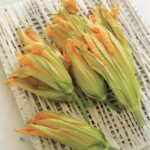
Italians put asparagus in everything. It has a place of honor at the Easter table and graces dishes from pasta and eggs to soups and chicken. I often sprinkle the stalks with olive oil, salt, pepper and breadcrumbs and bake them in a 350-degree oven for about 30 minutes. Made this way, asparagus takes on a sweet, roasted flavor. Another favorite preparation is slicing the stalks at an angle and sautéing them with olive oil and red pepper flakes. And, in the summer, we grill them until they are slightly charred. There’s asparagus lasagna and cold asparagus soup for a spring brunch. Scrambled eggs with asparagus and Parmesan cheese can be a light but elegant dinner. Or you can chill cooked stalks and wrap them in slices of rosy prosciutto for a first course. Asparagus works in stir-fries, too.

The recipe that follows is an elegant entree for an April dinner and is easily doubled or tripled for entertaining. It combines much-loved Italian ingredients: chicken, asparagus and Marsala wine. Pair it with rice of any kind and a nice chilled white wine.

Involtini di Petti di Pollo

  • Take 4 boneless chicken breasts and pound them between 2 sheets of wax paper until thin.
  • Season the cutlets with a little salt and pepper.
  • Place a slice of ham or prosciutto on each cutlet followed by a slice of bel paese cheese. This is a wonderful soft Italian cheese for which you can substitute fontina.
  • Roll each cutlet into a little “log,” tying each with a little kitchen twine to keep it together.
  • Dust each chicken roll with a little flour. (I like Wondra for its lightness.)
  • Melt 1 tablespoon olive oil and 2 tablespoons unsalted butter in a skillet and brown the chicken rolls on all sides. Use medium-low heat and turn the rolls frequently. The chicken should be thoroughly cooked (about 15 minutes).
  • Remove the chicken and keep it warm while preparing the sauce.
  • Add 1 additional tablespoon of butter along with ¼ cup chicken stock and ½ cup Marsala wine to the skillet. Bring the mixture to a boil and simmer for 3 minutes, scraping the brown bits from the bottom of the pan. The sauce should thicken a bit.
  • Place the chicken rolls on a pretty serving dish and place cooked asparagus spears on top and all around. You can sprinkle with a little grated cheese, if you like.

The days are getting longer at last, and I think I saw my mother’s robin the other day. Food for me is many things. One of them is a way to celebrate the seasons. There likely will be no asparagus festival along the Susquehanna this year. So have one in your kitchen.

Continue Reading

Energy and Intimacy: Stephen Michael Haas: the art and the individual.

Unlike other 21 year olds, instead of merely calling himself an artist, Stephen Michael Haas is showing his India ink and watercolor paper series, “Universal Folklore,” all over Harrisburg.

Haas started to show his work last August after a short, but productive, time at the Maryland Institute College of Art. After leaving school, Haas said, “For about a year, I found myself unable to make artwork because I couldn’t make anything I felt had any sort of value to it. Once I realized that my work wasn’t at all about fitting into any preconceived notion of how an ‘artist’ should create, this burden keeping me from doing anything was lifted.”

Now Haas has produced a body of work that has earned him the respect of Harrisburg’s artistic community.

He debuted Universal Folklore at Harrisburg’s Studio A Gallery in August after showing his sketchbook to owner Anela Bence-Selkowitz. “I’m always nervous about looking at artwork in front of the artist, but I was floored by the sharpie prints he showed me,” said Bence-Selkowitz. “I immediately offered him a solo show.”

Not expecting such a positive reception, Haas created the majority of the work shown in under a month, before the exhibit opened for August’s 3rd in The Burg.

Lisa Bennett met Haas through Art Kaleidoscope, a monthly community art event she organizes at the Midtown Scholar Bookstore where artists give presentations of their work.

“I thought Stephen had great ideas about making artwork,” said Bennett, who also curates the Midtown Scholar’s Yellow Wall Gallery, where “Universal Folklore” was on exhibit from January to February 2013. “The work is definitely a representation of his own exploration. He’s so passionate about his work, and he has really wholesome, solid ideas about art. He’s focused on his ideas and the art that he’s going to make right now, in this moment. It’s refreshing and inspiring.”

Haas’ work has a board game quality about it that illustrates the process of adult discovery and is representative of the journey “to find the meeting place where the notion of ‘artist’ and the individual self come together,” said Bennett.

On his art, Haas said, “My aim is to immerse audiences in a world…as beautiful and vivid as childhood.”

Liz Laribee, director of the Olde Uptown-based arts initiative The MakeSpace, recognizes this quality in Haas’ work. “His work is genuine and unique and evokes a nostalgia that seems almost universal,” she said. “Seeing him at work in the community is energizing.”

Haas is a purveyor of energy and intimacy not only in his art, but also with his popular local band Flower Garden. Haas does not distinguish between projects; the goals of both Flower Garden and his visual body of work are the same—one of immersion.

Laribee met Haas when Flower Garden played for her art opening at Little Amps Coffee Roasters in the summer of 2012. Laribee said, “Before that, I knew him as a seemingly ubiquitous fixture at cultural events, wearing a huge smile and swim trunks. I invited him to paint a mural in the kitchen of The MakeSpace, which is one of my favorite features of the whole facility. The whole time he was painting…we kept a shouting conversation going about the nature of Harrisburg and what we hope to see develop here.”

Haas travels back and forth from Baltimore and Harrisburg working on an official Flower Garden recording that he aims to press on vinyl and take national later this year. April is Haas’ self-imposed deadline on album tracking. After the album is mastered, spring will see a return to live performances by Flower Garden and a new stage of Haas’ career for Harrisburg to enjoy.

Continue Reading