Non-Profit Problem: About half the property in Harrisburg is nontaxable. Can anything be done about it?

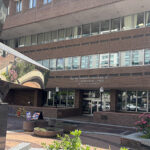
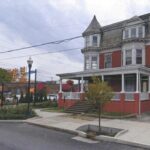
Non-profits in downtown Harrisburg.

Non-profits in downtown Harrisburg.

Forum Place. Harrisburg Hospital. The Farm Show complex. The state Capitol.

Four places, four very different businesses, one thing in common—all are regarded as nonprofit entities, so pay no property taxes to their host city, Harrisburg.

According to the city treasurer’s office, Harrisburg is home to 716 parcels that are tax-exempt due to their non-profit status. Making the situation even more difficult: more than 75 percent of those parcels belong to either the government or government-related entities, which by law cannot be taxed, according to the Harrisburg receiver’s office.

So, what’s a city to do?

For years, the answer was “not much,” as the state did with Harrisburg pretty much what it wanted. Condemn and raze entire neighborhoods? Sure. Turn local streets into forbidding, perilous highways to accommodate suburban workers? Why not? Expand and take more properties off the tax roles? OK.

During the past century, the city has toggled between actively participating in its own destruction by facilitating the state’s unquenchable thirst for more land and, more recently, lamely complaining in City Council meetings and mayoral press conferences that the state does not pay its fair share for the services it consumes.

Last month, the situation changed somewhat. The state passed a 2013-14 budget that gave Harrisburg $5 million in “fire protection” funds, representing the largest-ever direct infusion of cash from the state as part of a regular budget process.

However, as it stands right now, that level of funding is a one-shot, one-year deal. Meanwhile, there are numerous other issues emerging that could affect the capital city’s relationship with the many nonprofit entities that call Harrisburg home.

State of the State Funding

To say that John Campbell was surprised would be an understatement.

“I’ll be honest with you—I was shocked,” said Campbell, Harrisburg’s treasurer.

Campbell was speaking of the $5 million the state coughed up to the city, double the amount allocated in the 2012-13 budget. His surprise was heightened by the fact that House Republicans, in their budget plan, had already slashed the allocation to $496,000.

Most city officials, including Mayor Linda Thompson, expected the amount to increase once the budget bill was finalized. In the end, however, it surpassed nearly everyone’s expectations.

“It’s a figure we’ve never received before,” Campbell said.

State Sen. Rob Teplitz said he and Rep. Patty Kim had worked hard to get funding restored, hoping to reach $4 million, a figure most city officials had set their eyes on. Receiver William Lynch lobbied Gov. Tom Corbett and Republican legislative leaders for another $1 million, which is how Harrisburg ended up with $5 million for this fiscal year, said Teplitz.

“It really is a windfall,” he said. “But we’re not asking for extra payment. We’re only asking for fair compensation.”

That fair compensation is, technically speaking, for protecting state buildings from fire, thus the money is accounted for in the state budget’s line item for fire protection. In fact, according to Teplitz, the city had to pledge the money would go only for that purpose.

However, it’s a stretch to believe that 60 percent of the city Fire Bureau’s $8.4 million budget goes to safeguarding the 40 buildings that constitute the Capitol complex. The money, in fact, flows to the city’s general fund, which does include the Fire Bureau, but also includes most other parts of the city government. So, money that goes into the Fire Bureau budget simply frees up funds elsewhere for the financially strapped, indebted city.

In the end, the state uses fire protection as a politically expedient way to compensate Harrisburg. It’s simply easier to fund a single, existing line item for a specific use than to transfer money into the general fund of the much-criticized and ostracized city. Besides, firefighters have hero clout lacking in, let’s say, the city’s IT department.

Harrisburg is happy to go along with this process because the state has habitually underfunded the city for services rendered: use of its roads, its emergency services, its public works and sanitation staff. Each weekday, the population of Harrisburg doubles, largely due to the presence of the state government, with the small population of the largely poor city left to pick up the tab of this white-collar invasion.

Until this year, the state has never owned up to its obligation as, by far, the largest employer and landowner in Harrisburg. Exempt from having to pay property taxes, the legislature allocated whatever it wanted, with the amount bouncing around from year to year. So, under the Reed administration, the state often provided just over $1 million. In 2010, that amount was cut to $987,000 and then to $496,000 in 2011. After the city’s financial crisis hit full-on, the state used the line item to assist the city to the tune of $2.5 million for 2012 and now $5 million.

City officials seem satisfied with that level—that $5 million finally compensates the city fairly. The problem, however, is that the funding level is not guaranteed going forward. It’s subject to the legislature’s annual horse-trading extravaganza known as the budget process. So, will the state reduce funding again once the city’s finances stabilize or when Corbett is no longer governor or Lynch is no longer receiver? No one knows.

Teplitz said he’s introducing legislation in the fall that would stabilize Harrisburg’s state funding, ensuring the city fair compensation in the fire protection line item that also would allow it to plan financially from year to year.

“The legislation would require the actual cost to get reimbursed,” he said.

Teplitz acknowledged passing such legislation would be an uphill climb, but vowed to put in a strong effort.

“Then we wouldn’t have to go begging every year,” he said.

PILOT Programs

In Harrisburg, after the state government, the next largest block of tax-exempt properties in the city belongs to PinnacleHealth System, one of the area’s largest healthcare providers, which is listed as a non-profit 501(3), the IRS’s designation for a tax-exempt organization. In the city, healthcare providers alone account for 11 percent of the non-taxable properties. If taxed, the PinnacleHealth parcels alone would bring in more than $1.13 million in property tax revenue, according to the receiver’s report.

But Pinnacle, like many other non-profits, instead makes Payments In Lieu of Taxes (PILOTs) to the city, amounting to more than $120,000 a year. Pinnacle spokeswoman Kelly McCall said in an e-mail that a 1998 court settlement prevented her from discussing specifics.

“Our PILOT was established through the Settlement Agreement, and the Agreement contains a confidentiality provision. We do make PILOT payments to the City of Harrisburg, Harrisburg School District and Dauphin County,” McCall’s e-mail said.

“PinnacleHealth provided more than $14.8 million in community benefits and reached more than 2.1 million people through programs and services, such as free screenings, community health education and chronic disease management in fiscal year 2012.

In addition, PinnacleHealth has supported numerous initiatives within Harrisburg, including increasing access to healthcare for the underserved through the Keystone Continuum, donating to maintain extracurricular activities and athletic programs in the Harrisburg School District and providing nutrition and physical activity education and meals to Harrisburg School District students,” she continued.

Overall, Harrisburg received a total of more than $420,000 in PILOTs in 2009, $410,244 in 2010 and $420,286 in 2011. According to city records, Harrisburg anticipates, in its 2013 budget, receiving about $425,000 in PILOTs. Next to Pinnacle, PHEAA, the Pennsylvania Higher Education Assistance Agency, state is the second biggest PILOT contributor, sending in $107,444.79 each year for properties in the city.

“Under the Purely Public Charities Act, (Act 55), any PILOT payments are totally voluntary on the part of the non-profit,” said Cory Angell, a spokesperson for city receiver Lynch.

While a noteworthy addition to any municipal budget, PILOTs rarely constitute more than 1 percent of any total budget, according to an exhaustive 2010 nationwide study of the issue conducted by the Lincoln Institute for Land Policy. In Harrisburg, PILOTs account for about three-quarters of 1 percent of the budget, a figure largely unchanged for the past decade.

Tony Ross, president of the United Way of Pennsylvania, which has members who partner with more than 5,000 not-for-profit social service agencies statewide, said that standardizing a definition of what is and what is not a non-profit in Pennsylvania would help eliminate the fear that smaller non-profits—which have fewer assets and resources than the healthcare behemoths—end up bearing an undue share of the tax burden if stripped of their tax-exempt statuses. It would also help clear up the issue of just what qualifies as a non-profit from county to county.

“We’re concerned that non-profits are getting lumped into one group,” Ross said.

Ross explained that many of his affiliates, which tend to be smaller, community-based organizations, lack the assets and resources of the healthcare giants. What is a PILOT to PinnacleHealth could be a life or death situation to a smaller organization, he said.

“From what I can tell, those sorts of distinctions aren’t being made,” Ross said.  “Whatever is done, it needs to be uniform across the state.”

“This tension has been going on for a long time,” said Joe Geiger, who until recently was the long-time director of the Pennsylvania Association of Non-Profit Organizations. “It wouldn’t even be close to enough money to offset the deficit. And there are some unintended consequences that could occur where some non-profits who are currently operating in Harrisburg may decide they need to find a more favorable environment in which to operate.” 

“Poor decisions like that are what happened with the incinerator. That’s where the problem is. It’s not the fact that non-profits aren’t paying taxes,” Geiger said. 

“Very few non-profits are property tax-exempt,” Geiger explained.  “Most of them rent their properties and pay their taxes through the rent that they pay. So, when you look at the amount of debt that Harrisburg is in and you look at the amount of money that they could leverage out of charities, it’s not going to come anywhere close to the solution.” 

“Non-profits and the local government ought to be working together to look at solutions, not taking each other to court,” he said.

Baseball & Bathrooms

After the state and PinnacleHealth, a host of smaller nonprofits dot the Harrisburg landscape (see map). In fact, you can walk through much of downtown and Midtown and hit one after another.

Did you know that Metro Bank Park is still owned by the city, so is tax-exempt even though Harrisburg sold the Senators baseball team in 2007? The team now leases the ballpark from the city.

The restrooms at Sunshine Park on Herr Street are also tax exempt, as is the controversial Forum Place building on Walnut Street, even though it’s valued at more than $63 million.

Rep. Patty Kim, a first-year Democrat representing Harrisburg’s 103rd district, said she thinks it’s time for a public hearing as legislators have been getting lots of mail from the public. She also said she thinks that the non-profit designation should be made closer to home.

“I think it should be a municipal decision if it comes to that because, if the state does it, it’s going to be like a cookie-cutter formula that doesn’t fit with everybody’s unique situations in the city,” she said.

Kim said she was working with Rep. Robert L. Freeman, a Democrat from the 136th district representing Easton and Northampton County, as a future co-sponsor of a proposed bill that would ensure additional resources to cities like Harrisburg that have a disproportionate number of tax-exempt properties.

Speaking of legislation, a legislative solution is brewing that could expand the definition of a non-profit in Pennsylvania, which might further impact Harrisburg.

In June, the House Finance Committee stopped short of a vote on a proposed law that would amend the state constitution to give the General Assembly the power to define a tax-exempt non-profit statewide. The House was taking its look at the proposed new standards, known as Senate Bill No. 4, after the Senate approved it in March.

Pinnacle’s McCall said that Pinnacle is also closely watching the progress of the proposed constitutional amendment, which likely would lead to a more liberal definition of what qualifies to be a non-profit.

“PinnacleHealth supports the legislation, as it will provide clarity and uniform treatment of charities throughout Pennsylvania,” she said.

In Pinnacle’s case, its payments are made as a result of a 1998 settlement reached with the Dauphin County Board of Assessment Appeals after the hospital appealed the county’s decision stripping the hospital’s tax exempt status in 1993. The reason the tax board took the hospital off the tax-exempt rolls? The county was not satisfied that the hospital had continued to meet the five-prong “HUP test”—established by a 1985 court decision to help determine what is a non-profit—because it engaged in competitive practices with other local healthcare providers.

Dauphin County Judge Richard A. Lewis later agreed, ruling that Pinnacle’s acquisition of local private physician practices as part of its expansion of an integrated healthcare system evidenced a private profit motive on the part of the hospital.

“The taxing authorities argue that the physician practices compete with private physicians and that such competition is evidence of a private profit motive. This court finds that [Pinnacle] cannot compete while still maintaining its charitable mission and charitable nature,” Lewis wrote.

Eric Montarti, senior policy analyst with the Allegheny Institute for Public Policy, a Pittsburgh-based non-profit taxpayer interest research group, said that hospitals, in a sense, are placed in a vulnerable position since no one wants to be seen as wishing to start taxing churches and schools.

“Take away these things that you’re never going to tax. Take away these things that the politicians are never going to go after, and what are you left with?”

Pittsburgh, like Harrisburg, has an Act 47 problem, the legislative term used to describe when the state appoints an outsider to oversee a city’s finances because the municipality is so far in debt that it has been declared a financially “distressed” city. In 2004, Pittsburgh began grappling with a $34.3 million deficit.

“It obviously didn’t solve the city of Pittsburgh’s issue,” he said.

Harrisburg, a city with a $56.3 million budget, currently faces an operating deficit of about $12 million and a $350 million debt tied to its botched incinerator retrofit, which has pushed the city to the brink of bankruptcy.

Montarti said that trying to, in effect, indirectly tax tax-exempts is the wrong direction to take as nonprofits attract people who, for example, buy properties in the municipalities and therefore later end up paying property taxes. Montarti said that those same people also end up paying taxes on local services while otherwise helping to support the local economy. The city, instead of trying to tax non-profits, should first get its own fiscal house in order, he said.

“Our argument would have been, ‘Well, okay, the city of Pittsburgh really needs to look at what it’s spending and what it’s doing in terms of how many services it provides, how many people it employs, how much cooperation there is between it and the county on similar services,’” he said.

People have made the same point about Harrisburg. Over the past few years, however, Harrisburg has slashed and slashed and slashed. The once-bloated city government now is down to its bare bones, challenged to deliver even basic services.

After years of underfunding its obligations, the state government has finally stepped up—at least for one year. PinnacleHealth also has shown that it’s willing to be civic-minded. Will other nonprofits follow suit? Given the city’s vast financial needs, PILOT payments may never amount to too much. However, Harrisburg does provide these nonprofit organizations with vital services. Given its desperate shape, the city is searching for every penny it can find.

Reggie Sheffield is a freelance reporter in Harrisburg.  He may be reached at [email protected].
 

Continue Reading

A Polo Ponder: chukkers & water balloons. An afternoon is spent with the horsey set.

TheBurg_poloOn a Sunday in late June, I went to some polo grounds outside Lancaster.

The grounds hold Sunday afternoon matches through the summer and are open to the public at five bucks a head. I know next to nothing about polo and nothing whatsoever about the connection between sport horses and Lancaster. But I’d been anticipating the matches for so long, after learning about them online around Christmas, that the two seemed inextricably linked somehow, like Izod and alligators.

The polo grounds are located in Rothsville off Route 772, between Lititz and Brownstown, all of which is meaningless if, like me, you’re not from the area. On the way there, cars piled up behind the horse-drawn buggies of the Amish, waiting for a chance to pass. You might imagine the buggy horses at a leisurely Sunday walk, but the ones we passed were at a speedy trot, reins flapping. I don’t know if the horses think about it, but it felt like a slap to accelerate past them with such ease.

I’ve never owned a horse. I’ve ridden horses maybe three times in my life, and I remember liking it, though it’s been a long time. I’ve fed horses, and I’ve read about feeding horses, and in one case the thing I read was so well-wrought that I remember it more vividly than my own experience (Steinbeck: “daintily nibbling hay with lips like two flounders”).

I’d seen a polo match before, just once. It was in England, at the end of a year I spent there. My dad had come to collect me, and, before we left, we made a detour to an old farmhouse owned by my uncle’s old boss, an investment banker named Martin.

It was there I learned the term “nouveau riche.” Martin had a lot of nice paintings on the walls, and he told us their provenance and what they cost, in the tens of thousands of euro.

“Nouveau riche,” my dad muttered, when we had a moment to ourselves.

Martin also had polo ponies and team of Argentine breeders. On the day of our visit, one of his mares had just foaled. He pointed out the placenta in the grass.

Later that afternoon, Martin played in a match with several other bankers and a man everyone called “General.” The match both looked and sounded like warfare. The riders galloped in a mass, like Huns bearing down on a village. But the impulse to pillage seemed to bottleneck around the white ball. It was so bloody small and elusive!

The stampede would stall, the mallets would go up like stripped flagpoles, and the horde would wheel around clumsily, like a parading high school band at a bend in the road. Then someone would connect and send the ball sailing, and a fresh raid would surge down the pitch, rattling your skull.

In my memory, we stood closer to the horses than was probably possible. I seem to remember a taut thigh streaked with foam—though some author may have planted this, too.

The glistening shank of a horse is a potent thing. In the play “Equus” by Peter Shaffer, an English boy named Alan develops an erotic love for horses. “I couldn’t take my eyes off them,” Alan says. “The way their necks twist, and sweat shines in the folds…”

Perverted, sure. But you can see where he got the idea.

On the day of the match outside Lancaster, the weather was fitful, in a distinctly unpleasant way. It was hot without being sunny, and the clouds threatened rain without actually raining. On the drive, the sky sneezed once or twice on the windshield, and my shirt bunched up at my shoulders. This made me tense. I was ready to watch a war.

Unfortunately, the Lancaster match was more muted than the one I saw in England. There were three ponies per side, on a massive pitch that we sat far back from, on the edge of the flipped-open caboose of a van. To our right and left were other spectators, in a row going all the way down the sideline.

Most of them seemed like regulars. The ones to our right sipped sparkling white wine and discussed which cheese they liked better, this time’s or last time’s.

They also had a giant rubber slingshot that they took out at halftime, to launch water balloons at spectators on the other side. It was all in good sport. After a couple of volleys, somebody ran the thing over to the enemy, so they could fire back.

The teams rode out in opposing livery—red and white for Lancaster, blue and gold for the away team, from Brandywine, in northern Delaware.

Polo is a sport of Persian descent. The game is played in rounds called chukkers, which last 7½ minutes each, separated by breaks in which riders swap in fresh ponies. The announcer referred to the sport as “hockey on horseback.” Riders swipe at the ball with mallets and can check other riders, though they cannot, so far as I can tell, dismount and punch each other.

Polo is also sometimes called the “Sport of Kings,” presumably because it’s expensive to learn and play. At the match, in between chukkers, spectators are invited to wander the pitch and stomp down divots with their feet. This struck me as quaintly egalitarian at first, but, on reflection, seems like a trick of the ruling class. “They’ll do any chore you want, as long as it seems like a privilege”—something like that. Whatever. It felt like a privilege at the time.

We ate some bread and nibbled at some chocolate. I began to wonder if I was not tense, but merely thirsty. It drizzled, then let up, then got sunny, then cloudy again. A water balloon sailed over our heads and exploded in the grass.

Whenever the home team scored, fans tooted their car horns. They did not toot for the away team. The away team had one star player, who had a gray moustache and who swung his mallet in such graceful, carving swoops that it looked like a scimitar. He had several breakaways and sent a couple of arcing shots sailing between the posts from far up the field. There were more goals followed by silence than followed by tooting.

Lancaster scored the last goal, but, by then, they were many points behind. The match ended with a casual trot of the riders around the perimeter of the field. The announcer thanked everyone for coming and invited them to stay and tailgate until 6:30, which seemed like an idea someone should have thought of sooner—pre-gaming without any game scheduled after.

We had no beer, so we packed up the car and said farewell to the folks with the slingshot and cheese. We had not introduced ourselves, but I felt it was an appropriate gesture for a friendly combatant. It seemed like the thing a gentleman would do.

Continue Reading

Citizen Bill: Midtown man makes his piece of the planet a little more colorful.

TheBurg_FritzFormer Mayor Reed calls this man “The Mayor of Cumberland Street,” an earned and well-deserved nickname.

He takes care of the whole block, spraying down weeds, doing leaf clean-ups and planting and tending to the trees he’s installed for himself and neighbors alike. He’s personally taken on the role of chief steward and designer of the memorial garden in Riverfront Park at the foot of the Taylor Bridge.

You may not know him personally if you aren’t a resident of his curated block in Midtown Harrisburg. But you may have looked up and recognized his colorful pinwheels spinning in the wind, a feature that brings both wonderment and some joy for the passerby.

Bill Fritz is an energetic and important citizen of this neighborhood, a mainstay of Harrisburg and an import from nearby Lebanon, Pa. He and his business partner Patrick Brady migrated from Philadelphia, citing this city as a “nice blend between Philly and his hometown.”

Upon arrival, Fritz and Brady got to work, founding Classic Groundskeeping, now a 26-year-old business providing facelifts and sweeping changes to home and commercial environments around central Pennsylvania and even to places as far away as Florida.

Fritz said his obsession for both the built and natural environment stems from his Boy Scout days. He also started cutting grass at the age of 11, which provided supplementary family income for his father, who worked as a concreter in the Cornwall iron ore mines of northeastern Pennsylvania. After studying ornamental horticulture at Delaware Valley College, he transferred to Lebanon Valley and received his bachelor’s degree in business administration.

This marriage of business and know-how is Fritz’s jam along with a tireless work ethic. He meets for the interview in his work boots, tank top, jean shorts and an NRA cap; his mustache, crew cut and landscaping tan, along with his hurried movements and chatter, is a clear indication of the hard-nosed handyman he is.

I ask how many clients he has, and he looks at Brady, who has assumed the office work as of late. “Too many” seems to be the nonverbal, but that hasn’t stopped them from starting a pest control business this year.

“We wanted to get into something that was year-round, and it seemed like a natural transition,” Fritz says.

Comprehensive Pest Control uses safe methods like integrated pest management and organic applications, because, he says, “you’re dealing with family and children,” a pragmatic and progressive alignment.

On a more informal note, Fritz really likes his logo. “It’s a rat that’s cross-eyed in the crosshairs, and lots of people get a big kick out of it.”

He immediately gets back to business and chalks up their workmanship and success to their motto, a quote from one of our founding fathers, Benjamin Franklin: “The bitterness of poor quality remains long after the sweetness of low price is forgotten.” This paradoxical aphorism is the motivating force behind all their landscaping and pest control initiatives.

Beyond his business acumen, he clues me in on another one of his athletic undertakings.

“I didn’t get into any sports [growing up], so when I’m not working, I’m working on a house,” an irony that is not lost on me.

His true architectural passion is of the Victorian type, calling it the “epitome of society.”

The family room I sit in and the dining room adjoined showcase his carpentry and interior design artistry. He started from scratch in many of the rooms, installing the wainscoting, finding and hanging the chandelier in the dining room—a purchase from one of the Wannamaker mansions in Philadelphia—while the one in the family room is from the former Ephrata Mountain Springs Hotel’s receiving room, a place where Lincoln and Grant once stayed.

Portraits from bygone eras encircle the furniture. They aren’t just mere vintage, but photographs of their respective family members; a remarkable one of his grandmother in flapper garb catches the eye. Fritz is a maximalist, so it’s hard to keep your eye on any one thing in this house, especially when his beautiful gray cat, Sequel, vies for your attention.

After showing me his Caribbean themed patio—complete with palm trees, purple railings and yellow fencing—a shocking transition from the under-lit but gracefully adorned first floor, Fritz decides to reminisce, retelling, albeit quickly, a powerful narrative about his father (an MP during the American occupation of Germany) and his mother being wed overseas, a military ceremony that was purchased through soap, cigarettes and linens. He shows me the picture, and, sure enough, MPs line the aisle, his mother and father completing one of the first post-war nuptials between an American and German.

As if an aside, he called to mind the days that he and Brady owned Sweet Passions, a coffee shop that was located at 1006 N. 3rd St.

“It was ahead of its time. We had Tarot Card readings on Monday. Poetry night on Tuesday. On Sunday, we served Belgian waffles with fruit compote and had chair massages out back. We also sold exotic flowers out of it.”

A man of many passions and skills, he doesn’t give me an indication of what’s next on the plate for his frenetic life, but he does strongly suggest that I mention his 2013 Reader’s Choice award for landscaping and lawn care that Harrisburg Magazine is bestowing upon him.

I make a mental note of the irony of mentioning another Harrisburg publication, but the Mayor of Cumberland Street certainly deserves his title and his choice standing in the community.

You can reach Bill Fritz at Classic Groundskeeping at 717-234-2415 and at Comprehensive Pest Control at 717-712-2520. Learn more about his businesses at www.classicgroundskeeping.com and www.comprehensivepestcontrol.com.

Continue Reading

Up to Us: It’s time to begin thinking about our city, post-receiver.

Screen Shot 2013-07-30 at 12.30.06 AMThe debt solution is imminent.

That’s what we in and out of the city of Harrisburg have been hearing for the past three months. While another month has come and gone with no official pronouncement, punctuated by grinning politicians posing in photo ops, there are declarations made here and there.

One was made on July 11 at the Harrisburg Regional Chamber of Commerce and CREDC Community Forum on Economic Development by outgoing Mayor Linda Thompson. She said, “In the next several months, there will be a solution that will not only take care of the incinerator debt, but will also leave no stranded debt on the backs of the taxpayers of this city.”

Thompson also declared that the solution will include a plan to balance the city’s budget and assure it stays that way over the next five years. Giving credit to her own administration, she said that whoever is next mayor “will find things in much better order than what I did when I took office.”

We’re not exactly sure if this is true because, for the most part, the public has been kept out of the loop. Key phrases like “agreement in principle” and other scuttlebutt trickle down to the street, but, overall, we don’t know what’s going on, when it will happen or what the terms of the solution will be.

That’s the design of receivership, though. State takeover of the city’s situation dictates there is really no room for public input. Our elected leaders, we are told, have failed us. Thus, the structure of authority has spoken and is setting up to fix the problems. The state law was written and swiftly implemented to account for the crisis. All the while, the people of the city are stuck in the middle like children in a divorce, pawns in some conceptual game of power.

As a result of this alienation, there is a prominent attitude that the state, in its infinite wisdom, is failing the people of Harrisburg because it is neglecting to be sensitive to the citizens’ sense of democracy and freedom. We the people of Harrisburg are being done to. This is happening to us under the guise of for us. The message implied is that this is unavoidable, that this is what must be done. Officials have flunked, so a receiver needed to be put in their stead to fix the situation.

Indeed, there are some absolute challenges on the table that have nothing to do with the public and can’t be solved by the public because the public was never consulted in the first place. “The public” was used as collateral. “The public” was placated and made apathetic. “The public” didn’t give enough input when it perhaps could have made a difference.

Thus, it’s easier for many people to withdraw, shrug shoulders and say “c’est la vie.

Unfortunately, for Harrisburg residents, that seems a viable survival mechanism as so many feel they are being dragged along this ride of bureaucracy and politics. It’s a challenge to understand what happened, what could happen or what didn’t happen. Even more onerous is attempting to process it and develop a stance on it.

These macro issues may be the headlines and proclamations that grasp the most attention, but, if the city is to have true recovery, it will need the public to be aware, engaged and optimistic about the city’s future. When it comes down to it, what’s broken will not get fixed by the receiver, but by the people, not only those who live within the city’s limits, though. The people of the region will have to play a part in it, too.

We must keep in mind that the receiver is here for one thing and one thing only: to solve the city’s debt problem. The other problems of the city—the deficient governance, the messy infrastructure, the lack of a community-based comprehensive plan, the social tensions, the distrust and the lack of collaboration to address all of it—that’s on us.

The receiver will leave, and, hopefully, the story of the debt with him. Then the slate is left for us to do what we will with it.

If the Thompson administration foresees its own legacy, there’s a better way to set it up than to give itself accolades for the upcoming debt solution that a state team will ultimately make happen.

Rather, in her final months in office, the mayor would do well to concentrate on the basic needs of Harrisburg. She is in a position to use her bully pulpit to educate residents and visitors alike on taking care of this urban core. Discuss ordinances about trash receptacles, vermin prevention, noise considerations and blight. Move beyond the podium at the press conference and travel around the city to talk about what’s already on the books and what already exists as codified ordinances of Harrisburg. Educate the public on community responsibility, on residential duties whether a homeowner or a renter, a landlord or a business. Generate leadership, goodwill, action, attraction and hope.

Undoubtedly, the debt solution will be put before us soon. It will be a done deal given to us in its whole form no matter what we have to say about it. That doesn’t mean there’s nothing left for us to do. Once the solution is complete, it will be the people’s turn to take over and fix this city.

Tara Leo Auchey is is creator and editor of todays the day Harrisburg.

Continue Reading

Warm Breezes, a Cool Rosé: This refreshing wine helps beat the heat.

TheBurg_wineSummertime—and the dining is easy.

With long hours of daylight, this is the time of the year to enjoy outdoor meals that fade into the starry twilights. The downside is that the temperatures can climb to most uncomfortable heights, which makes matching wine and food a challenge. Fear not. The universal quaff for these months is the delicious and versatile rosé.

Not just any pink wine qualifies as a good rosé. White Zinfandel is technically a rosé wine, but its inability to match food makes it a poor candidate at a nice grill-side meal.

There are two major ways to make rosé. One is to blend red and white wines together. Hopefully, the best features of the two will shine, while any shortcomings will fade into the background. The other method is to take red grapes and drain the juice from the crush before too much of the skin color is absorbed into the wine. The result is a drink that is light enough to be refreshing while still able to match food. Most rosés have good acidity, which helps to cut through the many flavors at your picnic. Moderate alcohol levels are another plus.                                                                                     

The history of rosés in America is inauspicious at best. Take away the popularity of white Zin, and you have to go back to a time when the biggest selling pink wines came from Portugal in odd-shaped bottles that seemed to sprout candles when they were empty. Nowadays, these same types of beverages are available from all over the globe. According to Wine Enthusiast magazine, from 2011 to 2012, imported rosé increased 28 percent in the United States. As a trend, this is huge. Rosé is available from Germany, which has always been a bastion of white wine-making.

The ones that I like the best come from southern France. The wines are made by running the free juice from the grapes before it is too dark. The grapes themselves are the same ones that are grown in the Rhone valley. Syrah and Grenache dominate, while lesser varietals are used in blending. Personally, I have not found wines made with Bordeaux grapes or even Pinot Noir from Burgundy to my liking. However, the jury is still out, and I may come across one that has what I like.

The Rhone rosés seem to me to be the best of the lot. Chill them down nicely, and they can be drunk for pure refreshing pleasure. These quaffs can match grilled foods, be they fish, barbecue or even grilled vegetables. Their brisk acidity, combined with fruit flavors that range from strawberry to peach with an inherent   ability to stand up to baked beans, make these standouts at any outdoor affair.  Check the labels, as most pink wines have a list of grape varieties that are in the bottle. Chill well and notice how the flavors expand as the wine slowly warms. It doesn’t get much better.      

Keep sipping, Steve

Continue Reading

Show Tune Showcase: Casts combine talents for “Summer Salute.”

TheBurg_choraleThe country charm of Lebanon, Pa., may have little in common with the hustle and bustle of Harrisburg. But this month at Whitaker Center, Theatre Harrisburg and The Alumni Chorale of Lebanon Valley College will join forces to present “A Summer Salute to the Best of Broadway Musicals III.”

Along with hits from “My Fair Lady,” “Oliver” and a host of other toe-tapping tunes, the performances will feature small group and small ensemble numbers from musicals such as “Avenue Q,” “Smokey Joe’s Cafe,” “Chicago” and “The Secret Garden.”

Steven L. Flom, president of the Chorale, admits that it was tough to choose from the vast Broadway songbook.

“The first problem is that we have an embarrassment of riches when it comes to talent for the ‘Summer Salute,” he says. “This is not an auditioned concert; these musicians are hand-chosen because of their vocal and performance prowess. It is our task to showcase them as best we can to bring some of the greatest Broadway songs to life on our stage.”

The “Summer Salute” was the brainchild of Flom and the Chorale’s artistic director, Gregg R. Mauroni. Because arts organizations always have financial challenges, the two had decided to do a fundraiser similar to the one they had been doing for Central Dauphin East High School, where Mauroni is choral director. They approached Sam Kuba, Theatre Harrisburg’s executive director, with the “Summer Salute” idea, and it was full steam ahead.

This year marks the third installment of the “Summer Salute” and the performance partnership of the Theatre and the Chorale, known for its tight harmonies. The first year attracted a modest but enthusiastic crowd, Flom says, and, by year two, audiences were begging for more.

“When we program the show, our goals are to wow the crowd and challenge the performers to create a great evening of music,” Flom adds. “We were thrilled to hear that the audience wanted more. Spoiler—they will get it this year.”

Twenty Broadway shows are represented in this year’s program, and there are no solo performances. Flom predicts that “Titanic will be a showstopper. “It is vocally stunning and, when attacked by our 70-plus cast, the result is spectacular.”

While the drive between Lebanon and Harrisburg approximates 45 minutes or more depending on the time of day and motorists’ attitudes, these two arts organizations have closely shared talent for many years. Both Flom and Mauroni have worked behind the scenes and on stage for Theatre Harrisburg; one noted founding member of the Chorale, Thomas Hostetter, was Theatre Harrisburg’s artistic director for 28 years.

“He has been part of the backbones of each organization,” Flom says. “Other examples include Joe Gargiulo, who is a long-time member and business manager for the Chorale and who recently performed with Theatre Harrisburg in “Music Man” and “Urinetown.” And the Chorale is enjoying new members like Mandi Krepps, Rick Graybill, Kate Roksandic and Marisa Keener, who were introduced to us through Theatre Harrisburg.”

Flom has a special place in his heart for Broadway and recalls that the first show he ever saw in the Big Apple was “Cats.” Being very young, he didn’t have a clue as to the meaning of it all, but he was enthralled with what he had witnessed and was sure he wanted to be a part of it. He’s made that dream come true. His work as a director and/or choreographer has been featured on Theatre Harrisburg’s main stage every season since 1999. He also serves as resident director/choreographer for Cumberland Valley High School.

So what can audiences expect from “Summer Salute,” a Lebanon/Harrisburg collaboration? Flom says they will be entertained by one of the greatest gatherings of vocalists in song and dance performing both familiar and unexpected Broadway repertoire.

“Be on the lookout for murderers, puppets and even a fiddler on the roof, all rolled together to delight our audience,” Flom promises.

 “A Summer Salute to the Best of Broadway Musical III” will be performed on Aug. 10 at 7:30 p.m., and Aug. 11 at 2 p.m. at Whitaker Center for Science and the Arts, Harrisburg. For tickets, phone 717-214-ARTS or visit www.whitakercenter.org.

Continue Reading

News Digest: July News in Review


Financial Agreement Near

The major parts of a deal to resolve Harrisburg’s financial crisis are nearly in place, receiver William Lynch announced last month.

These include sale of the city’s incinerator, lease of the parking assets, negotiations with creditors and final agreements with the city’s trade unions.

Lynch expects most of the remaining issues to be resolved this month, including the sale of the debt-laden incinerator to the Lancaster County Solid Waste Management Authority.

“All the stakeholders involved in the sale of the incinerator are in agreement,” said Lynch, who added that the city’s creditors also finally understand that they must negotiate in earnest and might have to accept less than they’re owed.

In addition, the city must finalize an agreement with the firefighter’s union. The city’s police union finalized a new contract in June.

The goal, Lynch said, was to pay off about $600 million in debt, including $350 million related to the incinerator, while allowing the city to regain fiscal solvency over the long-term.

“This plan will create important new revenue streams to help the city reduce its structural deficit and spur economic growth,” said Lynch. “The parking agreement may very well become a national model.”

Many aspects of a final plan must be OK’d by City Council and then approved by the Commonwealth Court, actions that should begin to take place this month.


HUD Funds Distributed

The Harrisburg City Council last month dispersed nearly $1.8 million in federal funds designed to assist housing and community development.

In the annual distribution of Community Development Block Grant (CDBG) funds, 13 social service organizations received a total of nearly $500,000. Another $550,000 went to various city housing programs.

Community-based organizations that received funds were:

  • The Fair Housing Council of the Capital Region: $45,000
  • Community Action Commission: $25,000
  • Harrisburg Police Athletic League: $25,000
  • Latino Hispanic American Community Center: $25,000
  • Christian Recovery Aftercare Ministries: $20,000
  • Christian Love Ministries: $10,000
  • Camp Curtin YMCA: $100,000
  • YWCA of Greater Harrisburg: $25,000
  • Broad Street Market Corp.: $47,739
  • Rebuilding Together of Greater Harrisburg: $25,000
  • Habitat for Humanity of Greater Harrisburg: $75,000
  • African-American Chamber of Commerce: $10,000
  • Harrisburg Housing Authority: $65,000

 City programs that received funding were:

  • Homeownership Opportunities Program: $100,000
  • Home Emergency and Lead Repair Program: $100,000
  • Home Improvement Program: $200,000
  • Emergency Demolition: $150,000

Lastly, a large part of the funds were used for administrative/debt obligations. Debt service ate up $367,567 of the CDBG grant, while $353,826 was allotted for administration and “indirect” costs.


Auction Proceeds Tallied

Harrisburg recouped about half of what was spent on museum artifacts following a weeklong auction last month on City Island.

Auction sales totaled about $3.1 million for the 8,000 or so items, according to New York-based auctioneer Guernsey’s. Minus the auction fee, the city kept about $2.57 million, money that will pay off a loan taken out in 2006 that used the artifacts as collateral.

Harrisburg had received $1.6 million during two previous sales of another 2,000 items, bringing the proceeds from museum artifacts to $4.17 million. A follow-on auction of historic documents in September should increase that total some more.

Former Mayor Stephen Reed spent at least $8.3 million in public funds on these artifacts in his dream to turn Harrisburg into a museum mecca. Most of the artifacts auctioned were for an “Old West” museum he wanted to build, while some were for a proposed African American history museum.


Zoning Board Rejects 3 Projects

The Harrisburg Zoning Hearing Board last month turned down several proposals, all of which had generated neighborhood opposition.

Bethel AME Church had wanted to re-establish a surface parking lot at its site at the corner of N. 6th and Herr streets.

The historic church, located on the 1700-block of N. 5th St., long occupied the 6th Street site, but its building burned down in 1995. It then ran a commercial parking operation there until 2010, when its special exception, under challenge by the community, was not renewed.

The church’s new pastor, the Rev. Micah Sims, pleaded with the board to allow it to resume renting out parking until it could execute a redevelopment plan. The board, however, sided with members of Fox Ridge Neighbors who argued in opposition, stating the church would have no incentive to sell or develop the property.

In other action, the zoning board:

  • Rejected a variance/special exception request by developer Gary Wilson, who wanted to construct two two-family houses on vacant land at 1308 Green St. Neighbors testified in opposition, saying that four rental units were not in the best interest of the community.
  • Rejected a variance request from developer Paul Peffley to locate a convenience store/deli on the ground floor of an historic building he’s redeveloping at the corner of N. 3rd and Hamilton streets. That application met with opposition from residents of Engleton, who feared a negative impact on their neighborhood.
  • Approved a variance to turn the ground floor of the former Barto Building, at N. 3rd and State streets, into restaurant and retail space. Brickbox Enterprises would like a restaurant to locate in the former Barto Building, which the company is transforming into the LUX condominium building
  • Approved a variance to allow a church, Iglesia Pentecostal Jesucristo La Roca, to locate at 913 N. 2nd St., which once housed La Kasbah restaurant.


Mayor, Treasurer Clash over Fund Transfers

Harrisburg Mayor Linda Thompson last month asked for a significant increase in the amount of money her administration can reallocate without approval by City Council, a request that drew strong opposition from city Treasurer John Campbell.

Thompson asked for permission to transfer as much as $50,000 within the approved budget without the consent of council, up from the current level of $20,000.

The request prompted Campbell to write a strongly worded memo, urging council to deny the request.

“While this legislation may seem like an opportunity to allow for great flexibility in spending by the administration, it is my opinion that this legislation will only reduce the proper controls that are presently in place and exercised by City Council,” Campbell wrote. “If this legislation were to be approved, budget transfers would begin to become more frequent and thus negate the importance of passing a proper and reasonable budget annually.”

Every year, the council approves numerous reallocations, as some departments spend more or less than budgeted during the year. Campbell fears that increasing the reallocation threshold to $50,000 would give the administration too much leeway to transfer large sums of money outside of the regular budget process and without proper oversight.

The administration’s proposed ordinance was sent to the council’s Budget and Finance Committee for further review and possible action.


$5 Million for Fire Protection, $0 for Revitalization

Harrisburg received a split decision from the state last month, as the legislature approved a record $5 million in fire protection funds, but excluded the city from a new revitalization program.

City officials were pleasantly surprised—even shocked—by the $5 million allocation in the 2013-14 budget, meant to offset the city’s costs of protecting the Capitol complex from fire. That figure is double the amount allotted last year and far more than the $496,000 that House Republicans had approved in their budget plan.

Harrisburg’s state legislators were pushing for $4 million, but late lobbying by receiver William Lynch upped that amount by another $1 million, said state Sen. Rob Teplitz.

The money technically goes to secure the state’s 40 buildings from fire, accounting for the bulk of the Harrisburg Fire Bureau’s $8.4 million budget. However, it actually flows to the city’s general fund, which frees up money for other uses by the highly indebted, insolvent city.

As the state was giving, it also was taking away, as it purposely excluded Harrisburg from participating in a just-launched revitalization program.

The new state budget funded a City Revitalization and Improvement Zone program, which will funnel money to small cities each year to assist in the redevelopment of distressed areas. However, language in the law prohibits any city under state receivership from participating, a designation that applies only to Harrisburg.


Kiosks, Online Payments Come to Harrisburg

Harrisburg bill-payers have several new options available to them, as two computerized payment kiosks, as well as an online payment system, came on line last month.

The two kiosks are located in City Hall outside the city treasurer’s office and at the Giant Food Store in Kline Village, said Treasurer John Campbell, who added that a third kiosk would be located in a yet-to-be-determined location Uptown.

Denver-based EZ Pay Corp. is providing the kiosks at no cost to the city, said Campbell.

In addition, bill-payers now can pay online at www.harrisburgpayments.com or by calling 888-243-3456. Campbell said he expected the online bill-paying portal to be integrated with the city’s website soon.

Through these mechanisms, residents can pay most common bills, including for utilities, property taxes and traffic fines. A convenience fee will be added to each payment based upon the amount of the transaction, averaging $3 for most utility bills and $1 for most parking tickets, said Campbell.

Campbell expects the city, the Harrisburg Authority and the school district to save “at least” $80,000 a year by not having to pay the credit card transaction fee.


City to Receive State Loans

Harrisburg last month was awarded state funding for two major infrastructure projects, including for utility repair at the Uptown sinkhole site.

Harrisburg received a $900,000 low-interest loan through PENNVEST for repairing water and sewer infrastructure damaged by the sinkhole on the 2100-block of N. 4th Street, said state Sen. Rob Teplitz.

In addition, the Harrisburg Authority received a $26 million low-interest loan, administered by PENNVEST, for upgrading the city’s wastewater treatment facility, said Teplitz.

The improvements will bring the plant’s ammonia and nutrient reduction requirements into compliance with U.S. Department of Environmental Protection regulations. This $53 million project also will receive $26.7 million in outside financing and a $973,000 H20 PA grant, Teplitz said.


MLK Street Renaming on Hold

Harrisburg’s financial crisis seems to have doomed another proposal: the effort to supplement the name of N. 2nd St. downtown by adding “Rev. Dr. Martin Luther King Jr. Boulevard.”

Last March, the administration made the proposal, which the City Council then sent on to the council’s Public Works Committee.

Committee Chairwoman Sandra Reid said she was in favor of the change, which would give the historic street both names from Chestnut to Forster streets. However, the $6,000 to $8,000 cost of replacing 63 street signs could not be justified, she said.

“We have an ongoing concern that our parks and waterways are not being maintained,” she said.

Last year, park maintenance was transferred from the city’s Parks and Recreation Department to the Public Works Department, which since has been criticized for lax maintenance, particularly in Riverfront Park.


Miller: Still In Mayor’s Race

City Controller Dan Miller last month took a step towards running for Harrisburg mayor as a Republican, filing an affidavit affirming his eligibility for the office.

Miller lost in May in the Democratic primary to businessman Eric Papenfuse. However, he won the Republican nomination by gaining 196 write-in votes.

As of press time, Miller hadn’t yet paid the $25 filing fee, which must be received by the Dauphin County Office of Elections and Voter Registration by Aug. 12.

If he decides to run, Miller will face independent candidates Nevin Mindlin and Nate Curtis, in addition to Papenfuse. The general election is slated for Nov. 5.


Leak Won’t Close Jackson-Lick Pool

An Uptown pool will be open for the remainder of the summer after a major leak was quickly repaired.

City officials feared the Jackson-Lick pool, located at 1201 N. 6th St., would have to close after it lost about 450,000 gallons of water in a week.

“The city considered closing the pool,” said COO Robert Philbin. “However, we were able to keep the pool open while resolving the problem. City Engineer Paul Francis was able to locate and stop the pool water leakage with the assistance of a diver from the Harrisburg River Rescue.”

The city’s other public pool at Hall Manor on Allison Hill has been shut since last year after persistent leaks led to the finding that its foundation must be rebuilt.

The city’s Engineering Bureau is preparing a maintenance and repair plan to bring both pools back to full operation next season, said Philbin.


Farmers Co-op Debuts

Harvest, a new farmers cooperative, opened last month in the brick building of the Broad Street Market, bringing fresh produce and other goods to Harrisburg from more than a dozen area farms.

The co-op is the brainchild of developer Josh Kesler and chef Matthew Hickey, who is managing the business on a day-to-day basis.

“Our commitment is to build a relationship between the farmers and local consumers, providing healthy, sustainable local food, as well as helping to revitalize the Broad Street Market, which we believe will regain its position as the breadbasket of our region,” said Kesler.

The stand itself is unique for the Market, built from reclaimed lumber from the Stokes Millworks building across the street. Kesler recently bought that building and has begun renovating it for a farm-to-plate restaurant, which should open late next year.


New School in Strawberry Square

This month, the nonprofit Aegis Education Endeavor (AEE) will open in Strawberry Square, offering a new cyber charter school that “combines art, athletics and industry.”

The 2,800-square-foot facility will take space at 306 Market St. in downtown Harrisburg.  Aegis is partnering with Achievement House Cyber Charter School, a public online school chartered by the state to serve students in grades 7 to 12.

In addition to an education program, Aegis will offer activities to cyber school students and to students learning at home, public or private schools, said founder Denni Boger.

“Strawberry Square is the perfect site for AEE because it is centrally located to be available to students from surrounding school districts who may wish to use public transportation to access the facility,” said Boger.

Aegis will hold an open house and orientation at its new facility on Aug. 7, 1 to 7 p.m.


Changing Hands

Adrian St., 2256: Burner Properties LLC to B. Britton, $57,000

Bellevue Rd., 1921: A. & S. Jawhar to CNC Realty Group LLC, $63,500

Cumberland St., 114: B. Cohen to L. Larrieu, $132,000

Green St., 1925: F. Shannon to W. Gonzalez, $215,000

Mulberry St., 1158: E. Grill to S. Elazouni, $59,900

N. 3rd St., 1702: Fannie Mae to M. Mayhew, $75,000

N. 5th St., 1732: Freddie Mac to B. Harris, $100,000

N. 6th St., 2559 & 2561: Deutsche Bank Trustee & Company Americas Trustee to V. Acosta, $31,500

N. 20th St., 32: U.S. Bank Trustee & Pa. Housing Finance Agency to G. Carter & V. Diaz, $52,400

N. Front St., 1705: Rolleston Corp. to WCI Partners LP, $400,000

N. Front St., 2515: Centric Bank to 324 Mishika LLC, $175,000

Penn St., 1716: B. Andreozzi to D. Rhodes, $131,000

Reily St., 311: R. Heath to S. McLearn, $85,500

Rudy Rd., 2465: P. Lemmo to R. Harper, $75,000

Sayford St., 235: R. DeLong to JLS Rentals LLC, $35,000

Showers St., 612: D. & S. Hickethier to M. Murphy & V. Halchak, $166,000

S. Front St., 317: M. & J. Hankins to M. Homa, $115,000

Swatara St., 1321: D. & J. Boyle to J. Rodriguez & J. Vasquez, $33,900

Sycamore St., 1520: L. Miller Jr. to M. Brunner, $97,500

Wallace St., 1529 & 1531; 1513, 1515 & 1517 N. 6th St., $144,100: Buonarroti Trust to U.S. General Services Administration, $144,100

Source: Dauphin County, for sales exceeding $30,000. Data is assumed to be accurate.

Continue Reading

The Emerald Fair

Rain-barrel painters at Thursday's Live Healthy Harrisburg health fair.

Rain-barrel painters at Thursday’s Live Healthy Harrisburg Health Fair.

Last night, at the playground at 4th and Emerald uptown, a pair of castles appeared.

One was gray and blue, with pointy turrets, masonry and a blonde damsel in a window. The other was red and said “Party.” Pinned to the grass with white straps, like Gulliver, they were rapidly overrun.

To the west, at the foot of the fortresses, sprang up something of a medieval village. Tents stood shoulder-to-shoulder along a path. Drawn together for the Live Healthy Harrisburg Health Fair, Mayor Thompson’s summer wellness initiative, they ran the gamut of fitness, both body and mind.

Penn State had a couple of tables, one of them laden with smoothies. Capital BlueCross was there, as was Capital Area Head Start, Planned Parenthood and PPL. One table had a nutrition wheel. Another was handing out vegetable chips.

At the north end, whitewashed and stacked like siegeworks, were the rain barrels. Brushes and tubes of paint lay nearby. Maureen Maxwell, of the Rain Barrel Coalition, explained how it worked.

“We’re like a flash mob. We send out emails and before you know it, people are involved. Like this man in his eighties!” She indicated a man on a nearby bench. He smiled. “And then they’re part of the flash mob that is Rain Barrel Coalition.”

The barrels, oil drum-sized and made of blue plastic, once held artificial flavoring. Painted, they sell for $50 apiece, as catchments for garden water.

“We go to neighborhoods where kids never have the chance to draw,” Maxwell added. The barrels had been covered in line drawings in advance: rainbows, raindrops, stars, flowers. A young girl holding a slender brush filled in the eyelashes on a smiling sun. “We try to be neat,” she said.

Nearby, with dreads tucked under a bandanna and peel-and-sketch charcoal pencils behind his ear, Courtland, the coalition’s resident artist, painted a dolphin’s nose.

“I’ve worked with Jump Street off and on for years,” he said, nodding towards the table where Jump Street, the capital-area arts nonprofit, had set up speakers. “Painting, and also… mostly painting.”

He stood up and surveyed a neighbor’s work. “Awesome, we got a green turtle!”

At the Jump Street table, two dancers, Xavier Farrow and Markila Johnson, tried to cajole passing kids into busting a move. Markila, in a red blouse, sunglasses and soft-toe shoes, studied ballet; Xavier, in argyle Batman socks and a yellow Batman tee, had no formal training. At the suggestion of the term “self-taught,” however, he quibbled.

“If you want to call it teaching, that’s up to you,” he said. “I let the music move me.”

In a moment, three children had approached them, ushered by adults and looking wary. Xavier stooped and, smiling, started to boogie. Two of the children, small boys, were unmovable, but the eldest began to bounce absently, all knee. She was bluffing. At the drop, she went crazy.

Bob Welsh, who founded Jump Street in 2000, explained that the hip-hop table was just one of the organization’s many public art projects. Xavier, for instance, had spent the afternoon in period costume, during a living-history walk along Bethel Trail, a route commemorating the history of Harrisburg’s African-American communities.

In conjunction with Jump Street, the Harrisburg Police Athletic League had set up a mobile skatepark on the basketball court, where a game was already underway. The players, unperturbed, kept shooting hoops, and soon the scrape of skateboards filled the air.

The sun started setting, slowly. The park remained crowded. A man in red shorts and an ankle monitor walked by, carrying a baby.

Dylan Simon, representing Green Urban Initiative—it was a night of iniatives—announced that on Saturday, August 10, between 10:00 and 2:00, the nearby Atlas Street garden would unveil a mural. “We want to sort of demonstrate the difference between graffiti and street art,” he said.

At the barrels, Courtland considered what to draw on a final, unmarked drum. “The trick is simplifying everything,” he said. “You want something everyone can paint.”

Live Healthy Harrisburg will host its final health fair of the summer at Reservoir Park, on August 15 from 5:30 to 8:30 p.m. For more information, call 717-255-3020 or visit Harrisburgrec.com.

castles

Continue Reading

This Was the Weird Week that Was: The Premature Edition

It’s said that the mid-summer heat does strange things to people.

In the usually loopy town that is Harrisburg, Pa., that’s a strong statement indeed.

The week started out with folks trying to figure out the city’s take from the seven-day Wild West artifact auction, itself one of the more surreal episodes in this city’s (or maybe any city’s) history. Wielding the advanced technology of a calculator, TheBurg’s writer, Paul Barker, seems to have finally settled the question of how much Harrisburg is owed.

The week next snaked to a reminder that, among former Mayor Steve Reed’s thousands of bizarre artifact purchases, one still lies in ruins in a city garage : a disassembled war ship from the Revolutionary War (cost: $42,500 — but, heck, who’s counting when it’s only the public’s money?).

Then, at mid-week, we were treated to a Seinfeldian media frenzy about nothing. Bleary-eyed news humans (including yours truly) were shaken awake by a promise that some major announcement would surface during the early-a.m. gathering of the financial recovery advisory committee.

The media swarm was driven into City Hall by a couple of embargoed news releases from the receiver’s and mayor’s offices. Would a comprehensive agreement be announced? Would we find out just how much the city would get for its cursed incinerator or maybe the parking garages?

No and no.

The usually tight-lipped receiver William Lynch capped off the meeting with the “news” that the city and its creditors have agreed to “stop negotiating against each other.”

That’s it?

As strange as that was, Mayor Linda Thompson, who is a member of the committee, was purposely absent so she could grab the spotlight herself at a press conference two hours later. Before a packed room of local and national media, she gave herself credit, thanked all her supporting players and basically took a victory lap.

But for what? A solution, she said, was “imminent,” but exactly what that solution would be was no clearer than before the morning’s events. In fact, her press conference added no new information from the earlier advisory committee meeting.

Having said that: there was some movement in the melodrama of the city’s financial crisis. However, it was, in news jargon, a “process story,” the incremental progress of a much larger, more complex story.

So, after two years, the city’s creditors — who were entirely complicit in getting Harrisburg into this financial wreck — are finally realizing that they should deal in good faith with the city. OK, that’s good.

We also have a timeline (late August) for when Lynch expects the sale of the incinerator and the leasing of the parking assets to be fully negotiated and up for court review. Well, everyone in the room had been expecting this announcement for months, so the statement that “something’s coming” surprised no one. In fact, the original target date for the incinerator sale was more than a year ago.

This is not to deny credit where it’s due.

Thompson may have made the right call all along in backing the Act 47 process and the receivership. The taciturn Lynch may have been the right replacement for the jumpy David Unkovic. The McKenna Long law firm (along with a few other consultants) may have been the right choice to conduct much of the ground-level, day-to-day work on a recovery solution.

And, in the end, Harrisburg may end up in much better shape and may be able to build a future on much more solid financial footing.

Personally, I think all these things are likely. But, unlike some news people, I’m not going to jump to conclusions. To borrow a cliche, the devil is in the details — and, in this tangled mess, there are an untold number of details that could yet trip up Harrisburg and its residents.

So I’m going to be patient and see what emerges over the next few months. Perhaps, in the end, Thompson will be justified in saying that the next mayor should gratefully “accept the gift we’ve given you.” But, at the moment, that bold statement seems way, way premature.


Continue Reading

Bill of Goods: Update

In a phone call to TheBurg this afternoon, Guernsey’s president Arlan Ettinger assured Harrisburg residents that the city would not be shortchanged in its income from last week’s auction.

Referring to the fatiguing effect of “possibly the hardest auction in history,” he explained that Tuesday’s numbers were hastily calculated, and that a complete accounting would be submitted and open to scrutiny within 30 days, as promised in the auction house’s contract with the city.

“I didn’t want to give out numbers,” Ettinger said, adding that he did so at the behest of city officials, who were eager to present a tally at Tuesday’s conference. “These numbers were generated for me by members of our team, and it could have been rushed.”

The members of Guernsey’s team, whom Ettinger declined to name, appear to have come up with the reported commission by applying a flat rate of 18 percent to the $3.14 million in total sales. If so, they neglected the clause in the city’s contract with Guernsey’s, which specifies a reduced rate of 15 percent for the second million dollars in sales and a further reduced rate of 12.5 percent for all proceeds above two million.

If his team’s calculation was incorrect, Ettinger said, all discrepancies would be rectified in the final accounting. “No one is going to be shortchanged,” he said. “We’re grateful and honored to work with Harrisburg. We’re doing it the right way.”

Guernsey’s is also slated to manage the auction of numerous leftover items, largely historical documents, in New York in mid-September.

Continue Reading