Return of the Native: Master Gardeners want to create an arboretum in Harrisburg Cemetery, but find they’re up against centuries of damage.

Screen Shot 2013-08-30 at 11.53.24 AMNot long ago, Jane Lawrence of the Dauphin County Master Gardeners was at the entrance to Harrisburg Cemetery, looking for the right plant for a low limestone wall across from the caretaker’s cottage.

The difference between the right plant and the almost right plant, to adapt a line of Twain’s, is the difference between a fox and a foxglove, and the right plant for Lawrence would have to meet several demands. For one, the view over the limestone wall, of the Capitol dome, had to be preserved. So whatever variety she picked would have to be small—under 3 feet if possible.

It would also have to be interesting to look at for more than one season of the year. Every plant has seasonal offerings. Some, like the crabapples on a nearby plot, have spectacular spring blooms and ornamental fruit in autumn, but are dull in winter. Others, like the Kentucky coffee trees just up the road, are scrappy most of the year. The ideal plant for the prominent entrance spot would have something to show every season: flowers in spring and summer, leaf color in fall and berries in winter.

Lawrence decided, provisionally, to plant hydrangeas. But there were further considerations. Price mattered, as did ease of propagation. Her selection had to be limestone-friendly and had to tolerate being exposed. And the question of height remained. Most hydrangeas grow to 3 or 4 feet. There are dwarf varieties, but only in a narrow range of colors. One has pink blossoms, the other blue.

“But I wanted white,” Lawrence told me later, when we met in town. “So I’m still holding off on that one.”

Lawrence grew up in Detroit Lakes. Her grandmother, an avid gardener, gave her a plot to tend in her backyard. She later moved to Muncy, Pa., and raised chickens, rabbits, fruits and vegetables on an 11-acre farm. At the same time, she taught social work in the graduate school at Temple. “I liked people. I also liked growing things,” she said. When a position opened at Temple’s Harrisburg campus, she moved. She eventually settled in Bellevue Park, a bosky, undulating neighborhood to the city’s east, near John Harris High School.

Lawrence is short, with a sandy pixie cut and a sweet demeanor. She expressed a concern for animals and insects that “can’t feed their babies.” A few years after she moved to Bellevue Park, a series of heavy storms struck the region. A wooded area in the neighborhood lost several large trees, and the resulting hole in the canopy allowed plants closer to the ground to thrive. “I began really watching the woods,” Lawrence said. Soon, the floor was overrun with honeysuckle, privet and other invasive species. She became interested in the challenge of repopulating hollowed-out woods.

In the fall of 2008, Lawrence joined the Dauphin County Master Gardeners. Master Gardeners are unpaid volunteers who apply for certification by the Penn State Cooperative Extension. The certification process is rigorous. They must pass an exam and complete 40 hours of training, plus eight hours of update training each subsequent year. They volunteer time and expertise in their communities, answering hotlines, maintaining demonstration gardens and offering public workshops and lectures. According to Penn State guidelines, their role is to disseminate “unbiased, research-based information” to home gardeners. They are not to attach themselves to commercial products, nor can they charge a fee.

They also frequently involve themselves in civic beautification. Lawrence got involved with a group of Master Gardeners who had started working at the Harrisburg Cemetery, cleaning up overgrown patches and identifying trees. Eventually, seeing that some of the oldest canopy trees were in decline, they started thinking about planting saplings. They noticed that the cemetery was missing a “middle story”—that is, trees between the canopy and the low ornamentals. In late 2010, they developed a list of preferred trees for new planting, with an emphasis on native species, including mid-height trees like sourwoods and yellowwoods.

“We decided on a focus on native plants because these seem to be outnumbered in most private and public gardens,” Lawrence told me. “We are very concerned about promoting native wildlife, and the best way to do so is by providing them the food sources they evolved with.”

In 2011, one of the Master Gardeners, inspired by a visit to Morris Arboretum in Philadelphia, suggested the group pursue the creation of an arboretum in Harrisburg. Lawrence did some research and came up with a list of goals. When it came to choosing an appropriate site, the group did not look far. “We were all so fond of the cemetery plantings no one considered looking elsewhere for an arboretum, feeling we had the makings of one where we were,” Lawrence said.

Through this effort, the Master Gardeners will be adding to the appeal of one of Harrisburg’s most remarkable, and yet least-known, historical landmarks. They’ll also be waging a local battle in what might be described, with only modest exaggeration, as a nationwide horticultural war.

Feel of a Park

Harrisburg Cemetery is the largest and oldest cemetery in the city. It sits on a bluff at one end of the State Street Bridge, overlooking the railroad and the Capitol dome. Chartered in 1845, its grounds were carved from the city’s largely rural outskirts, and they gradually filled as church graveyards in town were relocated to make room. In time, it became the resting place of prominent local families. The headstones now feel like a survey of Harrisburg street signs: Verbeke, Calder, Cameron, Reily, Boas, Herr and Forster are there, among others.

The cemetery is also home to an astonishing variety of trees. There are flowering dogwoods, cherry trees, cedars, ashes, oaks and maples. They have a global pedigree: not far from the entrance is a towering European beech, whose gray trunk looks like a swollen elephant leg, and nearby is a bald cypress, native to the United States, with a thin coat of feathery needles. There’s a dawn redwood from China, several Korean dogwoods and at least one English Hawthorn that, despite its name, is believed to hail from Africa.

The trees, combined with the grounds’ crisscrossing avenues, lend the cemetery the feel of a park. The effect is deliberate and reflects a taste in the mid-19th century for cemeteries one could visit and walk around. Nowadays, visiting a grave with a purpose other than to mourn can seem like a form of trespassing or disrespect, but, in the last century or two, it was nothing unusual. (In Woodlawn, a historic cemetery in the Bronx, N.Y., where I once gave tours, some mausoleums had rooms where relatives could sit, read and even picnic.)

In May, on the first day of spring landscaping, I took a tour of the Harrisburg Cemetery with David Via, the resident caretaker. I found him halfway down a row of headstones, next to a plume of blue-white smoke. Via and two colleagues were clearing some graves of stiltgrass, a tenacious invasive weed, and had resorted to lighting clumps of it on fire.

Via apprenticed at an art conservation shop in Watertown, Mass., the area of the shootout after the marathon bombing, a little over a week before we met. “Actually, the diner we used to go to was in the news, because of those two idiots from Boston,” he told me. He travelled often, mostly restoring bronze. “But then the economy tanked, and there was no money for public art.”

He now works at the cemetery full time, addressing whatever needs addressing, which is usually some combination of overgrowth, fallen trees and damaged markers. In the winter, when he can’t do landscaping, he works in the cottage. “I have paperwork going back to 1843,” he said.

We headed for the cemetery’s western edge, past patches of grass dotted with flowers. “Traditionally, it was the time to start mowing when the violets started dying,” Via said. He pointed out a toppled headstone. Vandalism is a recurrent issue, and cutting back foliage often comes with the tradeoff of making for easier trespassing through the woods.

As we approached the cemetery’s boundary, we came upon a massive tower built into the hillside, like the last remaining turret of a ruined castle. This was the monument to Marlin Edgar Olmsted, a statesman who drafted Puerto Rico’s constitution and served as a member of Congress for 16 years.

A few steps away, on a stout square pedestal, stood John Geary, the only bronze statue on the grounds. The inscription notes that Geary, who died at the age of 57, was a colonel in the Mexican War and major general in the Civil War, as well as San Francisco’s last alcalde (a Spanish municipal official) and first mayor, governor of Kansas and, later, of Pennsylvania. “He packed a lot of life in,” Via said.

As we walked, Via plucked up the occasional weed. He held up some garlic mustard, a European herb that is currently invasive across much of North America. “The funny thing is, you can actually eat this stuff,” he said.

Tastes in burial, like tastes in cemetery styles, have changed over the years, and, as we walked, we passed a diverse assortment of markers. Some graves are ornate and imposing, while others are humble and spare. Some convey the presence—or rather, absence—of a singular individual; others present a collective, identities lost among the closely packed stones.

Via pointed out the Lutherans: several crammed rows of headstones, their lettering faded. They were dug up and relocated from a churchyard in town to make space for the railroad station. Not all were identifiable, and an obelisk now marks a single large plot where unknown remains were piled. Further along, we came to some shining white headstones. They marked the graves of Civil War soldiers who died at Camp Curtin, the major Union camp in Harrisburg. A year ago, for his Eagle project, a Boy Scout replaced the old graves with new, legible markers.

We circled back to the lot with the burning stiltgrass. Terri, a part-time employee, was working with a handsaw, cutting at weeds growing between the stones. “I disturbed an ant colony and now they’re biting,” she said.

Via lit a cigarette. With one hand on his hip, in a straw hat, his leg cocked at the knee, he looked not a little like the statue of Geary. Though he laments the lack of money for conservation across the state, Via is pleased that the cemetery, at least, faces no imminent threat of a funding shortage. Harrisburg Cemetery has an endowment that pays for its upkeep, and it requires no outside grants. It is also, so to speak, still open for business.

“It pays to keep the cemetery running,” Via said. There are plenty of available plots, and, with current tastes tending towards cremation, the number of potential internments per plot is high. Unlike some cemeteries, Harrisburg has virtually no restrictions on the number or type of burials. “If you can fit ‘em in there, go for it,” Via told me. “We just buried a gentlemen in a fishing tackle box.”

The Perfect Earth

Gardening, with its bent towards trading and collecting, has not always had benign effects on ecosystems. American horticulturalists, seeking plants that were both hardy and aesthetically interesting, historically transplanted species from abroad, especially from Europe and East Asia, where temperate climates harbor varieties that easily can flourish here. But the feature that makes non-natives desirable for gardens—their resistance to native fauna and disease—also makes them dangerously resilient in forests, where the lack of local predators gives them a competitive edge.

Eric Burkhart, the program director at Shaver’s Creek, a nature center connected to Penn State, has fought the spread of invasive species for years. Burkhart, who holds a Ph.D. in forest resources, teaches courses on plant identification and invasive forest plants. He explained that Pennsylvania, like many states, has witnessed an increase in invasive populations over the last few decades.

“Most of our native stands have seen slow change happening,” he said. “In a state like Pennsylvania, it’s mostly been due to fragmentation.”

Fragmentation refers to the division of intact woodlands that comes with urbanization—the paving of highways, for instance, or the clearing of power-line valleys. Fragmentation creates exposed edges, where invasive species tend to flourish. “When you create a zone of disturbance, you set up for a species adapted for disturbance to make its way in,” Burkhart said.

“Invasive” is not a straightforward distinction. It describes a tendency or pattern of growth rather than an inherent quality. Not all non-natives are invasive: hostas, native to northeast Asia, are popular in the United States, but deer love to eat them, which keeps them from outgrowing other species. And many plants that are native here have invasive tendencies abroad. An American species of black cherry, for instance, is becoming invasive across Europe; red maple, native to the Northeast, is invasive in Hawaii. “Generally, what defines an invasive is that it will spread to an adjacent ecosystem,” Burkhart said. “It’s not the non-native wildflower in your garden, but what spreads from your garden to the state park down the street.”

Invasives not only spread quickly, but also are often difficult to eradicate. Take garlic mustard, the edible herb Via pulled up in the cemetery, which is a tall weed with floppy green leaves and clustered white buds. In certain months, it’s easy to remove manually. But an individual plant produces 1,500 seeds each year, and the seeds can sit in the soil for seven or eight years, waiting for a chance to grow.

Coupled with the non-natives’ resilience is their relative uselessness to the rest of the ecosystem. I met with Steve Kidd, the owner of Perennial Gardens, a nursery in New Bloomfield that specializes in native trees and shrubs. Kidd sells plants out of a tent in the Farm Show Complex parking lot on Friday mornings, and the Dauphin County Master Gardeners are among his regular customers. Like Lawrence, he is keen to emphasize the importance of natives to local wildlife.

“You have to think back to the perfect Earth, before the white man showed up,” Kidd said. “Why do birds and bees migrate? They have certain plants that they need to eat.” He offered the example of the monarch butterfly, which depends on milkweed. “It can’t complete its lifecycle without it.”

At the same time, though, non-natives can be easier to maintain, and they offer characteristics a gardener can’t get from a native plant. “We’ve historically always moved plants around,” Burkhart said. Watermelon, for example, is originally from Africa—the Spanish introduced it through Mexico. Lawrence and some of the other Master Gardeners have created a list of natives with similar traits to popular non-native species; they distribute it to other gardeners to encourage substitution. But even their plans for the cemetery include non-native varieties. (At the time of this writing, Lawrence’s plan for the limestone wall was deutzia, a genus of flowering shrubs whose species are mostly the right color and height—and mostly from China.)

Kidd also sells non-native plants. In the back of his truck was a miniature nursery, and among green weeds was a flower that stood out for its bright red blossoms. “That’s not a native,” Kidd said. “I also have to attract the American woman. It is a business. People will say to me, ‘You’re not a native plant vendor! You’re someone who sells some native plants!’ Well, yeah.”

Burkhart’s outlook is not apocalyptic. He discusses the problem with an academic’s tranquil tone. “Many of these plants, they’re not bad plants—they’re just plants,” he said. “They have many positives, like medicinal uses and removing carbon.” He worries, however, about the virulence of invasives, particularly when it comes to out-competing native sources of food.

“People say, ‘Things change in the world,’” Burkhart said. “While that’s true, it doesn’t mean there isn’t a negative impact. We’re creating areas where there’s nothing to eat.”

Call It a Pin

On a Wednesday in June, the Master Gardeners met for their monthly meeting on the Harrisburg Cemetery grounds. Lawrence arrived early, her middle finger wrapped in a ball of bandages. It had been a difficult couple of months. After recovering from successive bouts of illness, she had snipped off the tip of her finger with pruning shears.

A clunking sound came from the lock on the cottage door. Via emerged with a cigarette and a cup of coffee in a Ball jar. “How you feeling, Jane?”

“My one problem’s over, but I’ve had other problems since then,” she replied. “It’s just gonna be a year of agony.” She laughed.

As the gardeners arrived, they crowded around a table in a front room of the cottage. Above the lintel of the open door was a trio of papery flags on thin wooden stems. Birds chirped in the trees.

For the arboretum project—as for anything involving the growth of trees—the gardeners have had to take a long view. They’ve started some saplings in a nursery, but, in the meantime, they must also keep up with basic maintenance. Lawrence mentioned the rhododendrons planted on either side of the entrance gate.

“They’re facing south in the sun all day. It’s not their natural habitat,” Lawrence said. “They’re sick and they’ll never make it.”

The group discussed possible replacements. “Since we’re Master Gardeners, maybe we should put in demonstration gardens,” someone suggested.

“I would just say, something like that is high maintenance,” another gardener replied. “With all the maintenance already…”

“Could it demonstrate maintenance-free?”

“There’s no such thing!”

The group knocked around several options. Someone had seen a variety of Indian grass bearing pink and blue blossoms. Woodland sedum, a perennial herb, was considered but passed over because it would require too much shade. Then someone brought up epimedium, a genus of low-growing perennials. It began to gain traction.

A newer member piped up. “For those of us not fully indoctrinated—epimedium? Help me out.”

“Barrenwort,” another gardener replied. (Epimedium has been bestowed with a number of colorful names, including barrenwort, bishop’s hat, fairy wings and horny goat weed.)

“It has a thin, wiry stem and little heart-shaped leaves,” said Lawrence, “and yellow, white and red flowers.”

“And there’s a native variety,” someone added.

“So, if we had that with some shrubs…” said Lawrence. The group settled, for the moment, on an evergreen shrub with native epimedium beneath.

The next order of business was finding a rose bush to plant by the grave of Horace McFarland, a proponent of the City Beautiful movement, who was the first president of the American Rose Society. There was discussion of his favorite rose.

“I still think, if he had lived long enough, he’d have loved the Knock Outs,” someone said. The room erupted into laughter. “Knock Out” is a disease-resistant variety of rose, bred in the late 1980s. It was a gardening joke.

The group walked out to a huge bush of pink roses growing by a nearby grave. They tried to determine how old it was, based on the burial dates on the marker—1910 or 1936 or later. No one knew. They looked it over and decided it was worth taking a few cuttings. “We already know it can live in this space. It likes the cemetery,” someone said.

“I do like it,” said Lawrence. “It’s a very pretty color. Who else will take a cutting? That way we’ll hedge our bets.” Four gardeners agreed to pot a piece of the bush at home, in the hopes that one would take.

The final task was tree identification. For the arboretum, in addition to rearing and planting new trees, the gardeners must label what’s already there. The gardeners divvied up the plots among identification teams.

Lawrence set out with two other gardeners, Alicia Mercik and Marie James. James, a newly minted Master Gardener, admired Mercik’s official pin. “It’s a mixed blessing,” said Mercik. “You show up at a public function, and people think you know everything.”

Identifying trees can be painstaking work, and Lawrence is constantly looking for volunteers. Some species are common, but others in the cemetery are over a century old, and knowledge about them has departed with the people who planted them.

“We had a couple of professors come in, and even they were having trouble,” Mercik told me. The variety is also an asset, however. “They said it was a teacher’s dream in here.”

The group headed for a plot just south of the cottage. A row of Norway maples, a non-native, highly invasive breed that can be found all over the city, stood on the side of the road. The Norways, the gardeners told me, are insidious; they shoot up anywhere their seeds drop and excrete a chemical that suppresses other growth. Via hopes to scrape together funds to have them all removed.

We gathered beneath a towering oak whose leaves were far out of reach. Lawrence peered at them. “They’re pointed, so it’s a red oak,” she said. “But the leaves are small. So it could be a scarlet oak.” She sat in the grass and opened a guidebook, a sizable, hardback tome. Mercik and James scoured the grass for fallen acorns or leaves.

The tree, despite its imposing size, was dying. Half of its branches were bare, and bark had fallen off in patches. “Oaks are in serious decline because of warming,” Lawrence said. “It’s just too warm for them to survive.”

Mercik found a leaf, and, with a bit of reading, they confirmed their initial guess. Lawrence took out a pen and wrote the scarlet oak’s Latin name, quercus coccinea, on a long white tag. She nailed the tag to the trunk.

Nearby, another huge oak stretched towards the sky. Its leaves, too, were high above the ground, but Mercik found a fallen branch loaded with dried-out, caramel-colored leaves. They noted their narrow shape and deep, U-shaped lobes. Lawrence opened her book to a set of pin oak drawings. Just like the sample sketches, a twig on their specimen had spots, as well as a pair of forked buds at its tip, like the upturned hoof of a deer. They cross-checked the entry for red oak, just to be sure.

“I’m ready to call it a pin,” said Mercik.

“We’ll call it a pin,” said Lawrence.

“Call it a pin,” echoed James.

Lawrence scrawled with her marker—quercus palustris, “swampy oak”—and hammered the label in.
Continue Reading

Witness to History? In Harrisburg, hostility has been replaced by apathy.

Screen Shot 2013-08-30 at 11.52.37 AMOn the 600-block of Maclay Street is one of the city of Harrisburg’s most recognized murals. Spanning the entire side of a building, it colorfully depicts the 1847 visit of abolitionists Frederick Douglass and William Lloyd Garrison.

While the mural signifies the honor and prestige of the event, it was actually one of the most dishonorable happenings in Harrisburg’s history.

In a letter dated August 8, 1847, one day after a town hall meeting with the renowned abolitionists in downtown Harrisburg on the wrongs of slavery and the need for civil rights, Douglass described what happened.

At the start of the meeting, Garrison, who was white, was given attention and due respect when he spoke; yet when Douglass, who was black, took the stage, a bombardment of rotten eggs came through the doors and windows. The sounds of fireworks and obscenities filled the air from a mob that had gathered outside of the hall to violently protest Douglass’ visit.

There was no one there to stop what Douglass defined as a “fiendish rage.” Audience members became fearful for their own safety and pressed in panic out the exits. No police came. No one attempted to stop the brutal throng.

Seeing that the danger was too great, Garrison addressed the stench-filled room and told the audience that the abolitionists’ mission in Harrisburg had ended. He announced that he and Douglass would travel on where there was self-respect and where freedom of speech and the right to assemble were protected.

An attorney named Charles Rawen stood up and declared the people of Harrisburg did value liberty and that, if the mob could not be stopped, it was because the people of Harrisburg let it happen.

No one joined Rawen in message or action.

The meeting was closed with only a few words said by Douglass, and the abolitionists departed physically unharmed except for suffering the drench of rotten eggs and the disappointment of vanquish.

Afterwards, Douglass wrote, “The atrocious character of the proceedings is sufficiently palpable, and Harrisburg one day will be ashamed of it.”

Another Meeting, Another Time

Flash forward to July 24, 2013. Civil rights activists Martin Luther King III and Cylk Cozart came to Harrisburg to discuss education, parental involvement, youth violence and cultural empowerment at a community forum at John Harris High School.

Unlike 166 years ago, there were no demonstrations of protest or violence. There was no mob outside seeking to harm or drive the speakers out of town.

However, an analogy of shamefulness can still be drawn.

The auditorium that seats 1,200 people was scattered with about 500 to 600 attendees.

An hour before the event began, it was recorded that all but 54 tickets had been reserved. Free tickets, too. The only purpose of having to secure tickets was keeping track of how many were expected to attend the visit from these celebrated community organizers and activists.

There was anticipation that people would have to be turned away.

That was not the case.

The audience was meager. State officials were present, but numerous local officials were notably no-shows. Despite the fact that these national leaders of the black community arrived in a city with a majority population of black residents, that was not sufficiently represented in the crowd. By a show of hands, there were only about 15 city of Harrisburg students present even though there were groups of youth sitting idly throughout the neighborhood within bounds of the auditorium’s doors.

In juxtaposition to Douglass and Garrison’s visit, this time the people of Harrisburg didn’t fail to protect freedom of speech and the right to assemble. This time, the people of Harrisburg failed to witness it.

Issues of the Day

While he was here, Martin Luther King III said, “When women and men come together, we bring about change.”

The city of Harrisburg is clearly in need of change, and, while it’s the financial and governmental issues that make the front pages of local and national media outlets, there are lesser-discussed social changes to be had, too.

For various reasons that can be debated at length, Harrisburg is impaired by a lack of tolerance and collaboration. Slavery may no longer be the explicit topic on the table, but racism—both white to black and black to white—is well in evidence.

The insidious tangles of superficial bias and hate wrap themselves around the city and threaten it to a more severe degree than the empty coffers of City Hall.

The causes for this are many and are shared by urban areas across the nation, such as disinvestment, poverty, educational disadvantages, politics and ethnic and cultural prejudices.

When listed like this, these challenges seem too big and lofty to overcome. The virtue of Harrisburg, though, is that it is a small city. The problems it faces are much more manageable at this scale. It may seem daunting, but this capital city along the river can adopt effective models of change to realize its potential, succeeding not just financially but as a community.

Of course, that will only come with serious changes in attitude, action and leadership.

Step one is to work together.

This will be accomplished if the people of Harrisburg adjust their historical reputation by standing up and showing up for what is right and worthwhile.

Then perhaps the words of the great speakers who have visited Harrisburg for the common good will have resonance to those who live here.

Tara Leo Auchey is creator and editor of todays the day Harrisburg.

Continue Reading

Right By Harrisburg: This community magazine is a different type of publication.

Screen Shot 2013-08-30 at 11.52.14 AMLast month, I got into my first-ever Twitter fight.

I’m not proud of this.

I wrote a blog post for TheBurg’s website, a Patriot-News reporter took offense and off we went. One-hundred-forty characters at a time, which is no way to have a civilized, much less a thorough, discussion.

In fact, after a few tweets, I abandoned the argument because of the simple futility, maybe even the silliness, of it all. And, besides, I had a magazine to run and stories to edit, and the day, like most days, was flying past.

Fortunately, there still are other ways to make a point, such as good old ink-on-paper, an ages-old technology that frees me from the tyranny of having to cram complex ideas into 20-word posts.

What I most wanted to say was this: When I write a column or assign a story or make any decision, my general philosophy is that I try to do right by Harrisburg.

Now, I certainly understand that my idea of what’s best for Harrisburg may not be another’s person’s idea of what’s best for Harrisburg—and I don’t mean to sound presumptuous or paternalistic.

But TheBurg, from the start, was never meant to be a traditional newspaper. It was designed to try to reflect how life actually is lived here on a daily basis and, if it can, encourage positive change to make things a little better.

My journalism professors at the University of Missouri are probably rolling their eyes (or, for several of them, in their graves) at that approach. Twenty years ago, “objectivity” was taught, and reporters were trained to be little more than flies on the wall, a reporting method I tried to follow early in my career.

However, as I got older, bought a house and became invested in a close-knit urban neighborhood, I came to understand the role that a newspaper could play in tying together a community, helping to give it a sense of place and purpose. To do so, though, the fly on the wall had to be squished in favor of greater advocacy for my community.

Which gets me back to my fracas with the Patriot-News reporter.

In my blog post, I criticized PennLive because I believe it often feeds the melodrama in this already melodramatic city, to no one’s benefit.

He thought I was criticizing a colleague for her reporting on Harrisburg and expressed outrage for it. That was not my intention. Like a lot of people, for me, the name “PennLive” has come to mean the totality of that website, including, in large part, the often-inflammatory, even noxious, reader comments, which frequently eclipse the stories themselves. The comments, in my opinion, add little productive to the conversation, often serving as a forum to flog Harrisburg, perpetuating prejudices, untruths and preconceived notions. 

As for the Patriot-News’ reporting—sometimes, I think it’s excellent, sometimes, I don’t. But that’s the nature of any newspaper.

Similarly, I was critical last month of the re-entry/re-re-entry of Controller Dan Miller into the city’s mayoral race. My reasoning was much the same.

I did not see Miller’s weeklong cat-and-mouse game over whether he’d run as helpful to Harrisburg. I saw it as a stage-crafted spectacle that made the city look petty and ridiculous.

I personally don’t understand how such a long-term, philosophically dedicated Democrat like Miller can run under the GOP label, but that’s his business. I only wish he’d made his decision with greater sensitivity to how his very public actions impacted this much-maligned city.

In that same vein, TheBurg recently has been critical of many city politicians, including Mayor Linda Thompson for her own vacuous, misleading press conference, former Mayor Steve Reed for the embarrassing spectacle of the Wild West artifact auction and mayoral candidate Eric Papenfuse for his refusal to candidly discuss challenges to the mayoral petitions of his opponents.

Going forward, I plan to continue to use my best judgment to advocate for Harrisburg and push for positive change. I don’t expect to always be right or that everyone will always agree with me. But, as I run this community magazine on a day-to-day basis, that’s my guiding principle, unchanged from the beginning.

Lawrance Binda is editor-in-chief of TheBurg.


Continue Reading

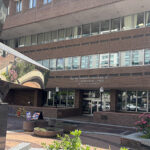
Modernism, Modernized: Executive House zips ahead after major renovation.

Screen Shot 2013-08-30 at 11.54.50 AMDowntown Harrisburg has numerous architectural styles: from federal to Victorian to art deco and more.

Like in most cities, modernism began to take root after World War II, and today, it may be best expressed by Executive House, a 14-story high rise at S. 2nd and Chestnut streets.

But even “modernist” buildings age and change. So, for more than a year, Executive House has undergone perhaps its most extensive update since its construction as a mixed-use building in 1967.

“Executive House was one of the top buildings in the city when it was built,” said Regional Leasing Director Isaac Naon. “The way it was structured, the top floors were residential, and the first three floors were used as commercial space by the government. Within the past year and a half, the commercial space was vacated, and we decided to convert those floors into apartments.”

Designs for the new apartments utilize every inch of the former office space, now renamed the Executive Floors.

“We wanted a modern city look like you would find in New York,” explained Construction Superintendent Brad Zimmerman.

The Executive Floors have three different types of apartments: lofts that are a single open space, one-bedrooms and two-bedrooms. Each apartment has a different layout to make the most out of the available space.

“Executive House is truly a city building, for anyone who is used to living in the middle of everything,” added Naon.

Renovations to Executive House began in February 2012 with the complete demolition of the first three floors.

“It has been a really intense process where we’re re-doing everything,” said Naon. “When someone moves in, they’re not getting an apartment which has been touched up. This is real, top-to-bottom renovation.”

In fact, the rooms’ height is the only feature maintained from their original design, with 10-foot ceilings and 6-foot windows providing open, light-filled environments.

The apartments’ interiors are completely new. Kitchens feature porcelain-tiled floors, granite countertops and stainless steel EnergyStar appliances, while bedrooms are carpeted wall-to-wall, with granite windowsills and spacious closets.

“We tore the floors out, the heating and cooling units, all the windows, all the doors—everything,” said Zimmerman. “Everything has been removed and replaced with new, modern equipment.”

The renovations also extended to Executive House’s communal areas, including a business center, gym and lounge, as well as upgrades to the building’s entrance. These are the most dramatic changes to the building during the two-decade service of Ann-Marie Ramsey, the building’s property manager.

“The main lobby looks like a hotel now, with fireplaces, a fountain and designer furnishings, so visitors receive a high-end experience from the moment they walk in the building,” said Naon.

A second private entrance has also been installed in the back of the building, exclusively serving the Executive Floors. Residents also have discounted access to Executive House’s five-story indoor parking lot, as well as in-house storage options.

“People coming to us are not finding anything similar,” said Naon. “Executive House offers apartments that have unseen, unmatched quality for the area.”

Executive House’s transformation of commercial property into a modern living space highlights the ongoing revitalization of downtown Harrisburg as a desirable location to live as well as work, said Naon.

“In the past few years, downtown and 2nd Street have definitely improved and keep getting better,” he said. “Our building is well-suited for professionals who need close proximity to work, the stores, the restaurants, the bars and the entire city life experience, all while living in a safe, nice, new environment.”

Executive House is at 101 S. 2nd St., Harrisburg. Loft, 1-bedroom and 2-bedroom apartments are available for rent, with the final phase of apartments opening within the year. Prospective residents can speak with a leasing agent seven days a week, 9 a.m. to 7 p.m., by calling 717-347-4949. Find more at ExecutiveHouseHBG.com.

Continue Reading

Playing from the Soul: More than a competition, cricket is a game of friendships, a reminder of home.

Screen Shot 2013-08-30 at 11.58.24 AMOn a warm day, you may see them as you drive up N. Cameron Street: a group of men playing an unfamiliar game on the fields across from the state Farm Show Complex.

The game is cricket, and it’s a special experience to those who play it in Harrisburg. 

From May until August, cricket is played in the early mornings, on soft green grass, wickets twisted into the ground, flat wooden bats cracking re-purposed tennis balls into the distance. 

As cars press along busy Cameron Street, the sounds of elation escape the grounds and into the air. “FOUR!” “SIX!” 

The non-profit Pennsylvania United Cricket Association (PAUCA), which incorporated in 2004, has been orchestrating games for more than 10 years now. It has 14 teams of nearly 40 players, and its members also volunteer and give back to the community, said Nilesh Patel, the vice president and CEO of PAUCA. 

And as far as the game itself, the organization brings together a smorgasbord of ethnicities, from Indians to Pakistanis to Australians, Americans and British. 

That camaraderie is built every year, from team to team. When an off-the-field tragic incident occurred in 2006—a cricket player named Hitender Thakur was killed in a robbery attempt at the convenience store where he worked in Harrisburg—the cricket community banded together to show support, going as far as to help a family they barely knew in India. They flew Thakur back home to have a proper burial. 

“It’s players and families getting together, bringing connectedness,” Patel said. “There’s different languages and religions, but we’ve become more close.” 

Some travel great distances just to play every week. 

“You can directly compare this game and Indian people to the NFL,” Patel said. “This is second only to golf. And for some people, it’s their primary sport. It’s the only thing we grew up with.” 

Cricket, like baseball, is played with a bat and a ball. But, unlike our national pasttime, cricket doesn’t have innings. There are overs, and for every over, there are six pitches. Games usually last 20 overs, with one team batting until their overs are extinguished. The next tries to break that number, and if they do, they win and the game ends. 

Pitchers are called bowlers. The field isn’t played on a diamond, but on a circle. There are no bases to run, just wickets. 

The game hasn’t caught up in America for that reason alone. It can be confusing. But like soccer, the game is played across the globe, and in India, it’s a national treasure, played by individuals who become celebrities and quasi-deity figures. 

One player on the team Desiboyz, Saurabh Singh, who works for Deloitte, says an athlete like Sachin Tendulkar—a famous cricket player—is like LeBron James or David Beckham. He’s considered a superstar by his country and adored by fans. 

In Harrisburg, players are simply happy to be playing the game, to have a space to take up their hobby. Some arrive at the grounds wearing cricket shirts and pants. Others wear jeans and t-shirts. The dichotomy somehow comes together, in part because of the sport. 

Many of the players grew up playing the game, Patel said, on sidewalks and dirt roads nearest to their homes and hearts. It’s become their passion, their love. 

It’s a game that will remain close to them for many reasons. In the four months this league maintains play in the Harrisburg area, there are countless matches earned, friendships borne and championships won. 

Still, there’s time for a celebration afterward. 

PAUCA makes a concerted effort to reward its players each season for a job well done, putting nearly 40 percent of its meager budget into the year-end bash, which takes place this month.

“The main reason we do it is for the families,” said Nilesh Patel. “The league runs the entire summer, but only a few families show up on the grounds. So, we started holding the banquet at the end of the year so we could cherish the game and have an award ceremony and have family togetherness.” 

The ceremony recognizes the more than 500 players in PAUCA with awards and a celebratory dinner at the Embers Convention Center in Carlisle. 

“It’s a life,“ Patel said of the culture of the game. “Personally, I like cricket because I do follow it religiously. I can’t wait to start the game. It’s a love for the sport, that’s the simplest reason I can say.”

And if that’s not enough, Patel adds, there’s this:

“Cricket is something that brings out the child, if you will, from their soul.”

Learn more about PAUCA and cricket in the Harrisburg area by visiting www.pauca.com.

Continue Reading

Adaptable Bug: Once again, bird flu is raising concern.

Screen Shot 2013-08-30 at 11.58.51 AMA new strain of bird influenza (H7N9) has been causing infections in people in China. There have been about 100 documented human cases and about one-third of these patients have died. It is feared that this could be the emergence of a more deadly strain of the flu and the start of a new, severe pandemic of influenza.

Typically, the flu virus that circulates each year is only slightly different from the strains of influenza that circulated in previous years. However, every 10 to 20 years, a new flu virus appears when a strain of influenza is transmitted to humans from another species and begins to cause widespread infection in the human population.

A new influenza virus can occur when an animal is simultaneously infected with a human flu virus and an influenza virus that normally only infects its own species. The two viruses combine in such a way that the animal virus is now able to infect humans and spread easily from person to person. Because the human population has no pre-existing immunity, the virus spreads more quickly, infects a larger portion of the population and results in more serious illness, more hospitalizations and more deaths than the typical seasonal flu.

In a typical flu season, 15 to 60 million Americans are infected, 226,000 are hospitalized and 30,000 to 50,000 die (about 0.1 percent of those infected). In contrast, in pandemic influenza, up to 50 percent of the population can be infected and the rate of mortality can be as high as 5 percent of infected individuals. Consequently, a severe outbreak of pandemic influenza would have the potential to cause millions of deaths in the United States.

Could the H7N9 bird flu virus have the potential to cause a new pandemic in the United States? It is clearly a very deadly virus. Of the 131 documented cases, 123 were hospitalized and 39 died. The fatality rate among hospitalized patients was as high as 33 percent. It is thought that many mild, unreported cases occur and the true fatality rate is much lower but could be as high as 3 percent. Consequently, the virus has the potential to cause a severe outbreak of the flu in which the mortality rate would be as high as some of history’s most severe pandemics.

Fortunately, H7N9 does not appear to spread easily among people. All of the current cases have occurred in people who have had direct contact with birds. There is limited or no transmission from person to person. Consequently, the virus has been unable to spread beyond the initial small clusters of cases. However, in the past, other bird flu viruses have developed efficient human-to-human transmission and have caused widespread pandemics. For example, one of the worst pandemics, the Spanish Flu of 1918 to 1920, which resulted in about 50 million deaths worldwide, is thought to be the result of bird flu.

Fortunately, no cases of this virus have been detected in the United States, and public health officials are able to prepare for the possibility of the pandemic. The Centers for Disease Control has sequenced the virus, is preparing a test kit to be able to detect this strain of the flu and is working on an H7N9 vaccine. In short, H7N9 could happen here, but, hopefully, we will be prepared.

Dr. John Goldman is Program Director of Internal Medicine at PinnacleHealth. 

Continue Reading

Community Corner: Notable Events in September


Kipona Wine, Art and Blues Festival

Aug. 31-Sept. 2: Enjoy the Keystone Regional Chili Cook-off, Native American Pow-wow, “Breath of Nature” Karate Tournament, Wine Village and Bassmasters Fishing Tournament. There will also be food, music, rides and games. The festival will be at Riverfront Park from 12 p.m. to 9 p.m. on Saturday and Sunday and until 7 p.m. on Monday.

Music on the Lawn

Sept. 5:  Get out for the final concert of the inaugural summer concert series at Mount Hill Tavern.  Drinks, appetizers and a full dinner will be served as guests enjoy music from the tavern patio. For this month’s final show, Little Brother will play, 7 to 10 p.m. For information, visit www.mounttavern.com.

It’s About You

Sept. 6: Alpha Kappa Alpha Sorority, Inc. and the Foundation of Central Pennsylvania, Inc. present a conference to celebrate professional women in leadership. Individual registration is $50 and table registration $350. The event includes discussion and presentations as well as continental breakfast and lunch.  The conference will run from 8:30 a.m. to 4 p.m. For more details, visit akaepsilonsigmaomega.com.

Dauphin County Jazz and Wine Fest

Sept. 7-8: National recording artists and local elite jazz musicians will play over two nights. More than 15 local wineries will participate in this celebration of music and wine. The festivities will run 4 to 9 p.m. both days. Tickets are $25 in advance and $30 at the gate; Children under 12 are free. For more information, visit www.dauphincounty.org.

The 50th All American Dairy Show

Sept. 7-12: This year’s show will feature more than 2,500 animals shown by nearly 1,000 exhibitors from across the nation at the Pennsylvania Farm Show Complex.  Activities will include silent auctions, juried events and various sales. For more information, visit www.allamerican.state.pa.us.

All Jazz for Homeless Cats and Dogs

Sept. 7:  The Castaway Critters Foundation will hold a fundraiser at the West Shore Country Club, 6 to 10:30 p.m., featuring live jazz, guest speaker Tonya Foster and silent auctions for golf outings, gift certificates, theater tickets and animal-related items. Visit www.castawaycritters.org.

25th Annual Harrisburg Gallery Walk

Sept. 8:  Celebrate the art and soul of the city in this year’s gallery walk! With 28 participating art venues, galleries across the city open their doors to display artistic brilliance and creativity. The event runs from 11 a.m. to 6 p.m.  For more information, go to www.artassocofhbg.com.

Flower Walk

Sept. 8: With autumn approaching, beautiful seasonal flowers will be in abundance.  Join volunteers at the Olewine Nature Center from 1:30 to 3 p.m. for this final walk of the season to identify and appreciate the beautiful natural scenery of fall.  More information at www.wildwoodlake.org.

Restaurant Week

Sept. 9-13, 16-20: This year’s restaurant week actually goes on for two weeks, with 14 participating local eateries. For $30, restaurant-goers will have the opportunity to experience a three-course meal from one of the specially designed menus provided by participating venues for the occasion. For more information and listing of participating establishments, go to www.harrisburgrestaurantweek.com.

7th Annual Mega Mixer

Sept. 12: Join the members of the four Cumberland County Chambers of Commerce and Cumberland Area Economic Development Corp. for one of the largest mixers of the year. Members of the West Shore, Greater Carlisle Area, Mechanicsburg and Shippensburg Chambers of Commerce will gather at the Allenberry Resort Inn & Playhouse for an evening of networking, great food and complimentary beverages.  Attendance is free, but registration is required. Doors open at 5 p.m. and close at 7:30 p.m.  For more information, visit www.wschamber.org.

Ned Smith Center’s 2nd Annual Trail Run for Conservation

Sept. 14: Support the center’s education and conservation mission while strolling through its 12 miles of scenic public hiking trails. Registration for individuals ages 13 and up is $20 until Aug. 31, $25 afterwards; children 7 to 12, $12 registration before Aug. 31, $15 afterwards.  The Trail Run will begin at 10 a.m. and all proceeds will go directly to the center’s mission. More at www.nedsmithcenter.org.

16th Annual Capital City Invitational Beer Fest

Sept. 14: The Appalachian Brewing Co. presents a celebration of beer tasting and merriment with about 20 breweries and vendors participating.  The festival will be divided into two sessions. Session One will be held 2 to 5 p.m. and Session Two 6 to 9 p.m. with breweries and vendors on both floors. Tickets are $35 in advance and $40 at the door. For more information, go to www.abcrew.com.

Appalachian Audubon’s Sponsored Native Plant Sale

Sept. 14:  Stop by the Meadowood Native Plant Nursery to enjoy the beautiful native plants and learn more about their importance to birds, butterflies and other wild visitors to gardens. The nursery sale will begin at 9 a.m. and finish at 1 p.m.  Volunteers will be on hand to provide selection advice for gardeners; more information available at www.meadowoodnursery.org.

Fort Hunter Day

Sept. 15:  Join the celebration in Fort Hunter Park for an autumn festival. Festivities will include children’s crafts and games, carriage rides, live music, craft shows and sales along with food and fellowship. The festival runs from 10 a.m. to 5 p.m. in Fort Hunter Park. For more information, visit www.dauphincounty.org.

Boot Camp in the Park

Sept. 15–Oct. 20: Take advantage of the various workout possibilities in Reservoir Park with Boot Camp in the Park. The fitness program is produced by local city residents for all. The final two-week session is available for $60, two classes per week. For registration and more information, visit www.harrisburgrec.com.

Ned Smith Center 20th Anniversary

Sept. 20: The Ned Smith Center of Millersburg will have an open house to celebrate its 20th anniversary. Admission to the galleries will be free to the public and refreshments will be served. All visitors will receive a complimentary copy of Ned Smith’s Wildlife Sketchbook. More information is at www.nedsmithcenter.org/20thanniversary.

Celebrate Wildwood!

Sept. 22: Visit Wildwood Park and Nature Center to experience a variety of activities from noon to 4 p.m. Enjoy “The Running of the Turtles,” recently hatched baby snapping turtles being released into the wetlands for the first time, adoptable dogs and pet vaccinations and educational children’s activities. Registration is $10 for adults and children under 12 are free. Visit www.wildwoodlake.org.

2013 Health Care Forum

Sept. 24: Harrisburg Regional Chamber and CREDC present a forum discussion focused on clarifying health care concerns, 7:30 a.m. to 10 a.m. Hear from leaders in the healthcare industry as they address questions. For details and registration, visit www.harrisburgregionalchamber.org/event/health-care-forum-2013.

2013 KILE

Sept. 28, Oct. 6: The two-day Keystone International Livestock Exposition at the Pennsylvania Farm Show Complex will feature more than 3,500 animals, various livestock showcases and other unique events. For online registration and more information, visit www.keystoneinternational.state.pa.us.

Smithsonian Magazine’s 9th Annual Museum Day Live!

Sept. 28: The Harris-Cameron Mansion will open its doors to offer free admission as part of this nationwide event to spread knowledge and cultural access to everyone.  Guided tours will be held from 1 to 3 p.m. Tickets are available for download at Smithsonian.com/museumday.

Harrisburg Hope Forums

Sept. 30 & Oct. 3: Join community group Harrisburg Hope as it hosts two forums in a week: one on marijuana issues and the second a mayoral debate. The Sept. 30 forum will focus on legislative and legalization issues concerning marijuana, beginning at 6 p.m. at Midtown Scholar Bookstore, 1302 N. 3rd St., Harrisburg. The Oct. 3 event is a mayoral debate at HACC’s Cooper Student Center, Harrisburg, which also begins at 6 p.m. All Harrisburg mayoral candidates—whether on the ballot or write-in—will be invited to the debate. Information can be found at www.harrisburghope.com.


Continue Reading

Last Blast: Hot sounds then a cooling trend.

We’re winding down the summer with a strong and varied lineup.

Soak up the last of the summer at the FedLive festival, catch an up-and-comer in Pokey LaFarge and start to make your way into fall with modern bluegrass/folk bands, American Opera and The End of America.

BIGTADOO, FedLive, Sept. 1, 6 PM – 2 AM

A one-day music festival with 20 bands and four stages fills our newest concert venue in town, FedLive. They’re keeping it fairly local for the Labor Day weekend shindig. Hailing from York, Dana Alexandra brings her sexy pop and frequent road miles back to her homeland. Kate Glorioso is another female act from York, delivering an equal amount of depth in both her key playing and vocals, recently performing at WXPN in Philadelphia. Chelsea Caroline, a Harrisburg resident, is coming off her successful Kickstarter project, prepared to offer up her sultry sounds. The Dead 50s drive a different engine, releasing a high-energy punk element into the festival. And Ducky & The Vintage, Joy Ike and another modern folk act, Canyon, round out my recommendations.

Pokey LaFarge, Appalachian Brewing Company, Sept. 23, 8 PM

Pokey LaFarge, a St. Louis-based artist, is a multi-genre genius, dipping his creative musical toes across the American roots. Blues, ragtime, early jazz and western swing are all present in his four-album career. Last month, he released his self-titled album on Jack White’s label, Third Man Records, and recently collaborated with White on his album, “Blunderbuss,” while also being featured on HBO’s acclaimed show, “Boardwalk Empire.” Pokey’s reputation is rising and is a fresh pick if you like music that has echoes from a bygone era.

American Opera/The End of America, The MakeSpace, Sept. 26, 8-9 PM

A perfect pairing of folk bands, American Opera and The End of America synch into the musical era of 20-somethings trying to reclaim their national identity through sound and song. They are the type of acts you want to listen to while sitting on hay bales and drinking hard cider. The MakeSpace venue is the perfect informal homestead to take in their tunes. Be sure to listen to “Broken Roads” by American Opera and The End of America’s rendition of Beck’s “Please Leave a Light on When You Go.”

Mentionables: Sept. 19, Ana Popovic, Whitaker Center, 7:30 PM/ Sept. 21, The Dirty Sweet, Appalachian Brewing Company, 8 PM/Sept. 23, Zula and Starlight, The MakeSpace, 8 PM

Continue Reading

Burg Blues: Singer-songwriter Nina Scarcia returns to her hometown with a soulful “mixed bag.”

Screen Shot 2013-08-30 at 11.57.36 AMNina Scarcia has been developing her sultry voice nearly her entire life.

Born and raised in Harrisburg, Scarcia—who celebrates her 30th birthday this month—has been singing and playing music since she could walk, with her musician father giving her the bug at a young age.

“He got me started really early. I loved the Beatles; my dad was always playing them,” she reflects. “I started piano and voice lessons around age six. I’ve been studying voice my entire life.”

After high school, Scarcia studied social work at Mansfield University until 2006. From there, she moved around Pennsylvania, calling towns like Collegeville and Reading her home. Two years ago, after a romantic relationship ended, she returned to her hometown, where she has performed her blues-driven and acoustic tunes at venues like the Sturges Speakeasy, Suba, The MakeSpace and FedLive. Just recently, Scarcia quit her job as a social worker at a nonprofit agency to pursue full-time songwriting and performing.

“I didn’t realize I was able to song-write [as a career] until I got out of school,” she says.

Over the last couple of years, Scarcia has established herself locally as an evocative singer-songwriter and guitarist, with musical styles similar to some of her much-loved artists like Norah Jones and Bonnie Raitt. Also on regular rotation in Scarcia’s music collection are Lucinda Williams, Aimee Mann, Jeff Buckley, Florence and the Machine, Jessica Lea Mayfield, David Gray and, of course, the Beatles.

This past May, Scarcia released her debut album, an intimate account of heartbreak and moving on, within the framework of country, folk, blues and rock styles, as well as some “funky, New Orleans flavors,” she says, lovingly referring to her music as a “mixed bag.” Aptly named, “Washed Away” represents Scarcia’s personal journey of starting over.

“The album is about relationships and hardships I have had to overcome, as well as starting anew,” she says.

Crafting “Washed Away” was a family affair for Scarcia—her father Joe Scarcia and his long-time friend and fellow musician, Jim Ebersole, produced the album’s nine tracks.

In Ebersole’s West Hanover basement, the family-and-friend team added instrumentals to Scarcia’s acoustic tunes. “It turned out to be completely different, but with the same intention of the original songs,” she says.

And, Scarcia, along with her brother and sister-in-law, created the colorful, abstract self-portrait that serves as the album’s cover art. “I am so happy with the album,” she reflects. “It was so special because I was working with my family and friends. I feel very fortunate to have been able to make this record surrounded by people that believe in me.”

Nina Scarcia is at once a pensive, soulful musician and a cheerful, pleasant young woman. While many of her lyrics are emotionally revealing and her subject matter can be quite personal, the friendly Harrisburg native has a light sense of humor and a great laugh and still gets butterflies before walking out on stage.

“I always get nervous before a performance,” she laughs. “But, once I get through the first song, I’m good.”

Spending the time before a show getting focused, she prefers to be alone to get ready for a performance. “I’ll tell my boyfriend, ‘Could you not talk to me? Cause I’m not going to listen,’” she laughs. “I just need to center my thoughts.”

While Scarcia often sings about emotionally vulnerable subjects, the cheerful musician tries to keep it light with pre-concert vocalizations, sometimes borrowing Ron Burgundy’s comical “How Now Brown Cow” warm-up from “Anchorman.”

Once on stage, Scarcia has a beautiful, playful presence with a powerful, yet delicate voice that captivates her listeners. “I just love the feeling I get when I’m on stage,” she says. “The way I write is pretty much pure emotion, what I’ve gone through. Having people connect with that is really cool. I am thankful to have been given this gift to share with others; it brings me peace of mind every time I perform.”

After having moved around Pennsylvania, Scarcia says she will be sticking around in Harrisburg awhile.

“I just love playing for my friends and family. It’s just always so much fun,” she explains. “There are also so many great rooms around here. And it’s pretty much the perfect spot—I can go to Baltimore, Philadelphia and New York City, because they’re pretty close. I was thinking about moving to Philly for awhile, but I kind of just stuck around, because the scene here was getting better and better.”

“Harrisburg has really changed over the years,” says Scarcia. “I’ve met so many cool people that are trying to make this city more artsy. The amount of talent in this area is incredible. It is becoming more of a cohesive place for artists.”

You can catch Nina Scarcia at the Market Cross Pub & Brewery in Carlisle on Sept. 5, the YWCA 4th Annual Fall Fest in Harrisburg on Oct. 5 and Sturges Speakeasy on Oct. 10.   

Continue Reading

Passion & Indiscretion: Born of love, Market Square Concerts enters its fourth decade.

Screen Shot 2013-08-30 at 11.58.02 AMIt all began at Lucy Miller Murray’s kitchen table in 1982.

That’s where and when she conceived of Market Square Concerts, which has since grown up into a nationally recognized arts organization, now on the cusp of middle age.

“People have nicknamed it my ‘love child,“ she laughed. “It was born out of passion and indiscretion.”

The reference is musical: the founder has a passion for chamber music and has been a “serious amateur” piano player for years.

In the early 1980s, “there was no chamber music in town,” Miller Murray explained. “I saw a great need in the community.”

She drew together an informal board and managed, to her surprise, to attain funding from the Pennsylvania Council on the Arts. “I was crying when I wrote the application,” she admitted.

The first artist presented by the fledgling organization was pianist Peter Orth.

Market Square Concerts is now headed by professional musicians Peter Sirotin and Ya-Ting Chang, his wife. Both studied at the Peabody Conservatory and came to Harrisburg in 1996. They have co-directed Market Square Concerts since July 2011.

Violinist Sirotin teaches at Messiah College and performs with the Harrisburg Symphony Orchestra; he is its acting concertmaster this year. He and Chang, a pianist, are members of the Mendelssohn Piano Trio.

“We believe professional musicians have an obligation to devote part of their time to advocacy and education … especially at a time when government support is limited,” said the Ukrainian-born Sirotin.

What is chamber music, and what draws people to it? The dictionary definition is music written for two to 10 instruments without a conductor and with one instrument per part. Miller prefers to call it “the best music written by the best composers, such as Beethoven’s ‘Quartets.’”

Orchestral music is a feast for the senses—like a large party with many different kinds of people “you spend 10 minutes with,” Sirotin elaborated. “Chamber music is like a dinner with two or three close friends, when you speak of issues near and dear to your heart. It is a highly personal medium that allows for more freedom, experimentation and exploration of one’s deepest emotions.”

One of the goals of the 30-something co-directors is to instill an interest in chamber music in young people who may not have been exposed to it. “Indie bands have a lot in common with chamber music,” Sirotin noted.

Market Square reaches out to young audiences through Soundscape, a series of educational programs featuring world-class artists. Then-executive director Ellen Hughes established Soundscape for the 2008 to 2009 concert season.

Hughes took over the helm after Miller Murray’s retirement and held it from 2008 to 2011. She focused on bringing in big-city performers and noted string groups, such as the Juilliard String Quartet, and is particularly proud of the concert featuring the Bach Choir of Bethlehem (Pa).

The position of executive director is challenging—encompassing artistic decisions, marketing and fundraising, said Hughes, current arts columnist for the Patriot-News and former WITF program host.  “But I loved it, and think I provided good continuity between the founder and new directors. I’m glad young people have taken over.”

Market Square Concerts offers an opportunity for local music lovers to hear chamber music on the level of artistry they’d otherwise have to travel to big cities for. The Berlin Philharmonic String Quartet, for example, is offering the same program in New York’s Carnegie Hall.

The organization is committed to commissioning new works. This year, it will present music written from 1680 to 2012.

Financing an arts group is always tough. Market Square Concerts is fortunate to have Capital Blue Cross as its season sponsor; PinnacleHealth sponsored the Summermusic 2013 program.

In addition to Market Square Presbyterian, its original venue, the organization holds concerts at Whitaker Center, where it is a resident company, Temple Ohev Sholom and Rose Lehrman Arts Center at HACC.

Hughes, who still serves on the board, said she is “in awe” of the organization and assured of its bright future. Miller Murray, who is also on the board, recalled fondly the time a patron unfamiliar with the music at a particular concert said he “knew it had to be good” because it was Market Square.

“What makes chamber music concerts special is finding the unexpected in well-known pieces, when a listener says he or she had no idea this was in the music,” Sirotin concluded. “Spontaneity is the name of the game.”

For information on concerts, educational programs for young people and other events, visit: www.marketsquareconcerts.org.


Market Square Concerts’ 2013-2014 season:

Sept. 21—Market Square Church. Jasper String Quartet, with HSO’s Stuart Malina at the piano. Shostakovich’s “Piano Quintet” and string quartets by Haydn and Dvorak.

Nov. 16—Ohev Sholom. The Parker Quartet, playing quartets by Schubert and Mendelssohn and the recently commissioned string quartet, “Capriccio,” by Harrisburg native Jeremy Gill.

Jan. 23—Ohev Sholom. Calefax Reed Quintet from the Netherlands, in a program of Bach’s “Goldberg Variations” and Ravel’s “Le Tombeau de Couperin.”

Feb. 26—Whitaker Center. Violinist Ray Chen presenting sonatas by Mozart and Beethoven and short works by Pablo Sarasate. Pianist is Julio Elizalde.

March 29—Whitaker Center. Pianist Ann Schein in a program of Beethoven, Ravel, Debussy, Liszt and Chopin.

April 29—Market Square Church. Celebration of centennial of composer Benjamin Britten, with English tenor Rufus Muller and award-winning Daedalus Quartet.

Continue Reading