Inspired by the People: No longer docile, Harrisburg’s residents helped guide the financial recovery plan.

David Unkovic, former receiver of the City of Harrisburg.

David Unkovic, former receiver of the City of Harrisburg.

“I think part of why Harrisburg has succeeded to this point is because of the people who live there.”

So said David Unkovic, former receiver of the City of Harrisburg, during a talk to McNees, Wallace & Nurick law firm colleagues, various elected officials, and other interested persons who gathered in a room last month at the Hamilton Club in Lancaster to hear him give a presentation entitled “Harrisburg: A National Model for Addressing Municipal Distress.”

He called the story of Harrisburg remarkable. He said the sequence of events of Harrisburg’s debt crisis were serendipitously just right despite the strife, fight and controversy that encompassed the saga.

In fact, he believes all of that was perfectly part of what happened.

As someone who closely watched and engaged with the unfolding events over the past five years—and studied the story much farther back—I agree. The strife reflected the complexity of the situation.

The fight pushed for substantive solutions.

The controversy attracted attention.

Without all of it, Pennsylvania’s capital city would be much worse off.

Now, not everyone concurs, and Unkovic acknowledged that.

He spoke of the contingent who believe the city should have been permitted to file for Chapter 9 bankruptcy, convinced that was the only correct answer to solve Harrisburg’s incredible fiscal crisis. “There are some people who think the city would have been better off in bankruptcy, but I don’t think that’s true.”

Aside from the cost and the unfortunate stigma, he pointed to the certainty that nothing is guaranteed in bankruptcy. “Everything is tested in the court,” he said.

However, such a position is not acceptable to those who think the city’s current path to recovery is bogus. Some citizens feel the so-called Harrisburg Strong Plan is the wrong plan for the city’s betterment, designed for the creditors and not for the people.

Unkovic sees it differently. “The plan for Harrisburg really got it right.”

What he didn’t say outright is that the plan only works if the citizens make it work. It’s all about the citizens. But, of course, he did say Harrisburg has some pretty special citizens.

For far too long, the citizens of Harrisburg were encouraged to disengage. Okay, so this may not have been the exact message that leaders splayed on flyers, declared in public service announcements or proclaimed in the media, but, all the same, the sentiment was loud and clear. For 28 years, Mayor Stephen Reed took care of things. He didn’t require citizens to give input or involve themselves in the business he conducted on behalf of the city. He didn’t need them to ask questions or offer suggestions. He merely needed them to listen to the pontifications he famously expounded.

Then came Linda Thompson. She modeled the reign that she observed for years, the reign she pined for and seized. When she became mayor, she adopted the attitude of power that separated her from the citizens. Rather than partner with people and their attempts to contribute, she had a tendency to appropriate projects and call them her own, cutting out the credit where credit was due.

Receivership changed all of that. Just as the state usurped the authority of the city, so could the citizens. For the first time in decades, the people of Harrisburg had the capacity to be heard and effective. And the strife, fight and controversy helped the cause along.

Our jobs have only begun, though.

Last month, the state filed a motion to end Harrisburg’s receivership. It is deemed no longer necessary. The plan is accepted, the debt is paid off, and, theoretically, the potential for stability has been set in place.

With the receiver soon to be gone, the onus is now on the citizens to make the city’s success happen. It is up to the citizens to engage, participate in the plan’s implementation, sit on boards, offer counsel and hold leaders accountable.

Sure, there are people frustrated, people still apathetic, and people not happy with how the events unfolded. Yet, it’s difficult to dispute that the citizens didn’t have an influence.

Unkovic said it was the citizens who impressed him the most during his time in Harrisburg. What he didn’t say—or really need to—is that it was the citizens who inspired him to do what he did for Harrisburg.

It hasn’t been an easy road for anyone involved, nor does it look like the challenges will disappear anytime soon. The virtue, though, is that we’ve gotten this far.

It’s not a bad place to be, and the next steps are essentially ours to take.

That means the future is filled with possibility and promise because, after all, the citizens of Harrisburg are pretty remarkable.

Tara Leo Auchey is creator and editor of today’s the day Harrisburg. www.todaysthedayhbg.

Continue Reading

January News Digest


Harrisburg Receivership to End

The state last month submitted a petition to end Harrisburg’s 26-month-old receivership, stating that “critical components” of the city’s financial recovery plan had been completed.

If the petition is approved by the Commonwealth Court, the receivership would conclude on March 1, concurrent with the end of the state-declared “fiscal emergency” for the city. At that time, an Act 47 coordinator would replace the receiver to oversee and help guide implementation of the rest of the Harrisburg Strong Plan.

Just last November, the receiver’s term was extended for two years.

“The receiver is no longer vital and necessary to successful implementation of the remaining components of the Harrisburg Strong Plan in the absence of a fiscal emergency, and the remaining components of the plan can be successfully implemented by a coordinator appointed by the secretary (of DCED),” according to the petition by C. Alan Walker, secretary of the state Department of Community and Economic Development.

While most of the plan has been implemented—including the sale of the incinerator and the long-term lease of the city’s parking assets—a few parts remain unresolved, such as a new labor agreement with the city’s firefighters’ union.

The state imposed receivership on Harrisburg in November 2011 after the squabbling city government could not reach an agreement to resolve its financial crisis. Bond lawyer David Unkovic served several months in the post, drafting the initial recovery plan.

After Unkovic resigned, Air Force Maj. Gen. William Lynch took over as receiver, overseeing the creation of the final recovery plan and its implementation to date.


Officials Sworn In

The leadership of Harrisburg’s municipal government changed dramatically last month as several recently elected officials took the oath of office.

Eric Papenfuse became the city’s 38th mayor at a brief swearing-in ceremony in City Hall, replacing one-term Mayor Linda Thompson in the office.

At the same event, Charles DeBrunner took the oath as the new city controller, and Ben Allatt and Shamaine Daniels were sworn in as new council members. Returning Councilwomen Wanda Williams and Eugenia Smith also began four-year terms.

Following the ceremony, City Council held its reorganization meeting. Williams was re-elected council president, while Sandra Reid became council vice-president.

In addition, council made committee assignments. The new committee chairs are:

  • Administration Committee: Wanda Williams
  • Budget and Finance Committee: Ben Allatt
  • Building and Housing Committee: Shamaine Daniels
  • Community and Economic Development Committee: Brad Koplinski
  • Parks, Recreation and Enrichment Committee: Susan Brown-Wilson
  • Public Safety Committee: Eugenia Smith
  • Public Works Committee: Sandra Reid 

Each committee is made up of three council members except for the administration committee, which includes all council members.


Papenfuse Announces Cabinet

Mayor Eric Papenfuse last month announced his choices for most of the top administrative posts in city government. These include:

  • Neil Grover, who took over as city solicitor from Jason Hess. An attorney in private practice, Grover had served recently as special counsel to City Council.
  • Aaron Johnson, who replaced Kevin Hagerich as director of the Public Works Department. Johnson, previously the department’s deputy director, ran against Papenfuse as a write-in candidate for mayor in November, garnering about 17 percent of the total vote.
  • Bruce Weber, director of budget and finance, a post last held by long-time director Bob Kroboth. Weber formerly served on City Council.
  • Joyce Davis, a key Papenfuse advisor, as director of communications.
  • Jackie Z. Parker, a former mayor of Lebanon, as director of community and economic development.
  • Roy Christ, former president of the Harrisburg school board, as director of building and housing.
  • Lenwood Sloan as director of the newly named and reorganized Department of Arts, Culture and Tourism.
  • Carlesha Halkias, former deputy city solicitor, as director of human resources.

In addition, Karl Singleton was named as senior advisor on education and youth and Catherine Stetler as scheduler. 

The Harrisburg Regional Chamber and Capital Region Economic Development Corp. (CREDC) will fund Parker’s position in full for the first year and at 50 percent for the second and third years. The city will take over full funding of the position in year four.


Budget Revisited

Harrisburg City Council last month reopened the 2014 budget to better reflect the spending priorities of the Papenfuse administration.

The $78.5 million budget is about $280,000 more than the budget passed in December, reflecting a slight increase in projected revenues from the earned income tax and intergovernmental transfers.

The greatest changes came on the spending side.

Mayor Eric Papenfuse proposed abolishing the post of chief operating officer, which paid $110,000 a year. Instead, he wants to establish the position of chief of staff/business administrator at an annual salary of $79,500. A new post of community services coordinator, paying $50,000 a year, would replace the position of assistant to the COO, which paid $41,000 annually.

Other proposed changes included:

  • Creation of several new posts, including director of arts, culture and tourism, director of sustainability and director of planning.
  • Raises for a number of management-level positions, including for the director of building and housing development, the director of financial management, the director of human resources, the police chief and the communications director.
  • Consolidating certain positions, decreasing salaries for others and not filling several vacant posts.

The council’s first budget review committee hearing is scheduled for Jan. 30. A final vote on the new budget is currently slated for Feb. 11.


Transition Report Released

The Papenfuse administration last month released a report with dozens of recommendations on how to improve government performance.

The 17-page report contained suggestions ranging from aggressively seeking grant money to making greater use of technology to tighter integration and communication between segments of government.

A few of the recommendations include:

  • Adequately staffing the finance unit by filling vacant positions and completing financial reporting on a timelier basis.
  • Appointing or designating an arts, culture, heritage and tourism liaison officer to oversee programs, activities and events.
  • Developing and implementing a plan for upgrading the city’s website, improving content and implementing social media.
  • Negotiating public/private partnerships to supplement resources.
  • Creating a new department focused on education, youth, recreation and related matters, hiring a qualified director and staff and securing new funding and partnerships.
  • Adopting a “broken windows” law enforcement approach to reduce crime and preserve order in targeted neighborhoods.
  • Conducting an independent feasibility assessment of alternative ways of providing sanitation service.

More than 70 people served on Mayor Eric Papenfuse’s transition teams and contributed to the report, which was compiled by consultant Robert Melville.

“This report represents hours of hard work from very dedicated people who want to see Harrisburg rise out of its problems and become the model capital it should be,” Papenfuse said.

The report contains many more ideas to improve the city government’s functions and operations. Read the entire report on TheBurg’s website, www.theburgnews.com, under the “News” category.


Brewery Eyes Midtown Building

If all goes right, a new brewery will debut in the heart of Midtown Harrisburg in the early fall.

Alter Ego Brewing Co. hopes to open a brewhouse in long-vacant space at the corner of Susquehanna and Boyd streets, at the rear of Midtown Cinema. The 3,500-square-foot brick building would house a beer-making operation, in addition to a tasting room with a limited menu featuring small plates, paninis and finger foods, said Brandalynn Armstrong, who operates Alter Ego with her husband, Theo.

The Armstrongs have numerous hurdles to overcome before they can open, including securing a liquor license and probable land use approvals. The building also requires a complete renovation, which should begin in late spring.

The couple took their first step late last month, holding a community meeting at Midtown Cinema, where they presented their plan and answered questions.

“We want to be good neighbors and an active member of the community,” said Brandalynn. “We think it’s a good fit for Harrisburg and that Harrisburg is a good fit for us.”

In addition to offering Alter Ego beers and a limited menu, the Armstrongs will feature local Pennsylvania wines and art gallery space. No liquor will be served.

The building is owned by Lift Development LLC, which includes two partners of GreenWorks Development. A couple of years ago, the state tried to relocate the former Midtown magisterial district justice’s office and courtroom to the building, but an agreement could not be reached.

More information on Alter Ego Brewing is at www.alteregobrewing.com.


Changing Hands

Berryhill St., 1940: PA Deals LLC to S. Maurer, $75,000

Briggs St., 1823: Wells Fargo Bank NA to S. Dial, $99,000

Brookwood St., 2420: P. White to M. Rodriguez, $63,900

Chestnut St., 2403: H. & L. Miller to L. & M. Walton, $149,000

Green St., 1703: Wells Fargo Bank NA & J. Landis to PA Deals LLC & J. Etzle, $116,500

Green St., 2013: WCI Partners LP to L. Binda, $209,000

Green St., 2135: D. Boyle to V. Brown, $35,000

Green St., 2233: R. Shokes Jr. & Shokes Enterprises LLC to R. & D. Requa, $60,000

Kelker St., 213: J. Henning to M. Porter, $124,500

Lewis St., 228: D. Hartman to C. Moss, $59,000

Manada St., 1903: PA Deals LLC to M. & D. Graeff, $90,000

N. 2nd St., 606: D. Brown Jr. to 606 Dalmatian House LP, $754,000

N. 2nd St., 1311: Susquehanna Bank to J. Feldman, $36,000

N. 2nd St., 1313: Brick City Investments LLC to 1313 Real Estate Holdings LLC, $245,000

N. 2nd St., 1522: T. & A. Magrory to J. Cantarell & A. Meck, $168,900

N. 2nd St., 2731: Sierra Real Estate LLC to T. & N. Schmitt, $240,000

N. 6th St., 2667: J. Vogelsong to G. Di Bosco, $31,500

N. 15th St., 1603, 249 Maclay St., 438 Muench St. & 614 Wiconisco St.: R. Shokes Jr. & Shokes Enterprises to R. & D. Requa, $266,000

N. Cameron St., 1817: Integrity Bank to 1817 Cameron St. Associates LLC, $100,000

N. Front St., 1721: Susquehanna River Basin Commission to Hersha H. & Hasu P. Shah Family Foundation, $875,000

North St., 263: B. Josephs to B. Minner, $84,000

North St., 2009: J. & C. Mills to K. Snoke, $42,000

Paxton St., 1638: T. & A. Ferguson to CNC Realty Group Inc., $55,000

Penn St., 1612: J. & E. Rosentel to A. La Laz, $152,500

Penn St., 1703: Fannie Mae to B. Swisher Houtz, $63,000

S. 13th St., 342: K. & S. Probst to B. & R. Lehman, $53,000

S. 13th St., 502: PA Deals LLC to J. & A. Garbanzos, $45,000

S. 15th St., 446 & 141 N. Cameron St.: G. Neff to San Pef Inc., $45,000

S. 17th St., 325: R. Ekvall to J. Tran & D. Nguyen, $50,000

S. 18th St., 1115: K. & W. Watson to M. Kaman & A. Phatimah, $68,000

S. 19th St., 1670: The Harrisburg Authority to the Lancaster County Solid Waste Management Authority, $121,898,000

S. 28th St., 806: DML Properties LP to AWK Consulting Engineers Inc., $225,000 

Swatara St., 2025: Mussani & Co. to I. Fernandez, $65,000 

Valley Rd., 2301A: F. & J. Haas to S. Thornsley, $195,000

Vine St., 114: F. Hutchinson to J. Robles, $135,000

Walnut St., 407: J. Brown & Graci LaPorta Partnership to J. & C. Bowen, $50,000

Harrisburg property sales for December 2013, greater than $30,000. Source Dauphin County. Data is assumed to be accurate.


 

Continue Reading

Lost Labor

“This was like a prayer,” said Jody Barksdale, a sixth-grade math and reading teacher at Rowland School on Derry Street, and a vice-president of the Harrisburg Education Association, the local teachers’ union. “This was like God was dropping this in our laps, saying, ‘You do have a leg to stand on.’ ”

Barksdale was referring to the discovery, last week, that the school board had neglected to ratify the cut in pay and benefits that local teachers had agreed to, after months of negotiation, in early August last year. The cuts were a key component of the recovery plan for Harrisburg’s public schools, drafted in the spring under the auspices of Act 141, the 2012 Pennsylvania law providing for state oversight and assistance in financially distressed districts. For a while, the idea that the teachers would embrace the plan seemed doubtful—they had already endured school closures, furloughs, and a three-year pay freeze. Yet the district’s financial outlook was grim, with a projected shortfall of $131 million by 2018. On August 6, the teachers voted overwhelmingly to accept the cuts as outlined in the plan.

“I talked myself into thinking it was the right thing to do,” Barksdale said. It was Friday afternoon, and she was sitting at a long table in an assembly hall in Steelton, handing out ballots to teachers as they arrived from the schools. Barksdale, who has taught in the district for 15 years, is earning less than she did four years ago. She and her partner, another district teacher, expected a loss of $1,000 per month in household income under the proposed cuts. But she voted for them anyway. “I personally didn’t feel that it was fair to the retirees who would have to lose their benefits, and things they’d worked their entire careers for,” she said. She also feared what would happen to the district if the teachers rejected the plan. “If we didn’t agree to this, they were threatening to charter up our district and dismember it.”

Less than two months later, the teachers learned that the recovery plan’s projections of imminent budgetary shortfalls—upon which the need for union concessions was predicated—were overblown. In October, the district’s new financial officer, Peggy Morningstar, reported to the school board that, in place of a $4.5 million deficit for the 2012-2013 school year, the district actually faced a surplus of around $11 million.

On October 14, at a school board meeting in the auditorium of John Harris High School, teachers took to the microphone to demand an explanation. Gene Veno, the district’s state-appointed recovery officer, pledged to make adjustments to his plan, which he acknowledged had been based on incorrect data. But when it came to the restoration of the salary cut, he was circumspect. He maintained, at that meeting and subsequent ones, that any update to the plan must consider the full range of recovery objectives: not only a fair wage for teachers, but also academic improvement, minimal tax increases, and long-term fiscal stability. The union interpreted his hedging to mean that the cuts would remain as negotiated—an outcome they resented, but one they had little power to alter, since they’d voted to approve their contract back in August.

Then came last week’s peculiar discovery. On Monday, January 20, union leadership noticed that the school’s board agenda included a vote on their labor contract scheduled for Tuesday afternoon—nearly six months after the contract had been negotiated. The school board had apparently never ratified it. “We saw an opportunity,” Sherri Magnuson, the union president, said. After a snowstorm postponed the board’s meeting to Friday, the union hastily assembled the vote in Steelton for the same afternoon. By the time the ballot closed, at 5:30 p.m., 79 percent of the membership had voted; an hour later, Magnuson announced the results before the board. By a unanimous vote, 389-0, the teachers had rescinded the agreement from August.

When Magnuson made her announcement, the teachers, assembled in their blue union T-shirts in the chairs behind her, broke into applause. But the folks on the other side of the microphone were not so easily moved. Veno, who had declined to speculate on the consequence of a vote to rescind (“That’s an administrative matter, I have no comment”), was preparing to deliver a PowerPoint on his amended recovery plan. It would include a restoration of half the 5-percent cut to this year’s salaries, along with the “opportunity for full restoration in the future along with potential salary increases,” depending on the district’s future performance.

The school board, for its part, proceeded as if the union vote had never occurred. By a bare majority—five in favor, with two ‘no’ votes and one abstention—it ratified the old contract (among a bundle of other contracts) and pressed on through the meeting. This was, in part, a way of covering for an embarrassing neglect of procedure. Jennifer Smallwood, the school board president, had signed the labor agreement in August, but had never brought it to the board for a majority vote, as required by board policy. “From my understanding, ‘ratified’ means signed by all parties,” Smallwood said after the meeting. “ ‘Ratify’ means to approve.” (When it was pointed out that “ratification” was the word describing the vote on the evening’s agenda, Smallwood replied, “Then that’s the word on the agenda.”)

But the board’s decision might also have been a reflection of caution in the wake of such dubious accounting. James Thompson, who chairs the board’s budget and finance committee, said that the discovery of the surplus last fall only shows how poor the district’s budgeting models are. “I would be cautious even about the projection of a surplus,” he said. He voted to keep the contract as negotiated because, he said, “last year is last year.”

From the outset, Veno, the recovery officer, has been tasked with an essentially impossible mission: he must somehow deliver better academic results while employing fewer resources. Parts of his plan reflect that assignment’s absurd circularity, such as the endeavor to improve district finances by winning students back from charter schools—a result dependent on improving district academics, which is dependent on improved district finances. For that burden to be compounded by procedural errors, on matters that were meant to be settled at the start of the school year, must be profoundly frustrating.

But teachers also face impossible expectations. Barksdale works three jobs; her partner works two. When the pay cut was adopted, she said, “we literally had to sit down and re-budget, and hope and pray we didn’t have to sell our house.” Yet, when stories about the district appear online, they are greeted with invective commentary about “union parasites” and “whining.” When the teachers agreed to accept the cuts, they did so on the basis of a projection that has turned out to be a fiction. The board’s botched ratification might be a technicality—but then, technicalities are what we resort to when we can’t depend on good faith.

Correction: An earlier version of this article referred to James Thompson, a school board member, as the board’s “budget and finance director.” Thompson is the board’s budget and finance committee chair.

Continue Reading

No Parking

AlterEgoFB

The proposed interior design of the Alter Ego Brewing Co. brewhouse, in back of Midtown Cinema.


“It’s Just Too Big!”

So read the signs that, over the course of a few days, suddenly sprang up on dozens of small, rectangular front yards about a decade ago on Capitol Hill in Washington, D.C., where I owned a rowhouse.

One afternoon, as I walked down the street, deeper into the neighborhood, I saw the first sign and wondered, “What exactly is too big?” Then I saw several more and thought, “What are these people protesting?”

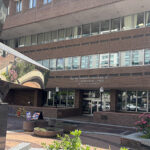
Soon afterwards, a friend filled me in that some of her neighbors (she lived closer to the source of the “problem”) were objecting to a plan to convert a huge, old building, the former Capitol Hill Hospital, into condominiums. Their main gripe: parking. The project provided off-street parking as required by city statute, but the neighbors thought that the one-spot-per-unit allocation wasn’t enough.

“What if they have visitors?” I remember one resident remarking in a story in the Hill Rag, the neighborhood newspaper.

Long story short: the protesters won. They successfully delayed the project until the developer went bankrupt. Street parking didn’t change. But neither did the old hospital, which gobbled up an entire city block and remained almost completely empty, a hulking, ghostly building that created an eerie, isolated, dangerous vibe for blocks around.

I think of that story sometimes when parking issues arise, as they often do, in Harrisburg. Like back in D.C., parking often pits residents who want to see their neighborhood develop, become denser and have more amenities against those who are worried that their street parking will vanish.

Both sides have valid points. Like most people, I want to park directly in front of my house, but I also want the cafe, the movie theater, the restaurants–all the things that make city life worthwhile.

Last night, I attended a community meeting held by the owners of Alter Ego Brewing Co., who are proposing to build a brewhouse in the building at the rear of Midtown Cinema at the corner of Reily and Green streets. The meeting was well-attended, attracting about 50 neighbors, most in support, but some airing legitimate concerns about noise, traffic, odors and the serving of alcohol.

Before long, the discussion became largely about parking, a topic that continued today on TheBurg’s Facebook page. Some neighbors, as well as some out-of-city patrons, are very concerned about parking, even though the Cinema has off-street parking for 49 vehicles, far more than required by the city, even with the addition of the brewery.

In the course of the evolution of a city, a time arrives when a decision must be made about priorities. Is it in the best collective interest of Harrisburg (or Midtown or Engleton) to see the continued development of the commercial district around N. 3rd and Reily streets? Or is it better to keep development at bay so that residents can continue to park in front of their houses?

In the end, I suspect that the parking issue will follow a similar course here as it did in D.C. Yes, the neighbors won the battle against the hospital conversion, but only because the developer already was financially fragile and couldn’t hold out any longer. However, they lost almost every other time.

They complained about parking as the H Street and Pennsylvania Avenue commercial districts were revived and built up, a process that has only accelerated since I left. They lost badly as the Barracks Row corridor went from a seedy strip of check-cashing joints and liquor stores to a booming restaurant district.

All along, they asked, “But where am I gonna park?” along with the related question–“Who’s gonna come here because there’s no parking?”

Turns out–a lot of people.

As the core, then the outskirts, of Capitol Hill improved, people flocked in, as did restaurants, cafes, bars and stores. The lack of parking may have deterred some, but, in the aggregate, the places to eat, drink and shop brought in far more people than were lost to tougher parking.

Sure, some upset residents departed for the suburbs, where they got their private driveways, strip malls and acres of surface lots. But the area’s redevelopment and amenities enticed others to move in, making the area a safer, more vibrant place to live, while dramatically raising property values.

D.C., of course, is fortunate to have a reliable subway, and I can only fantasize that Harrisburg, some day, will have a trolley or light rail system, which could revolutionize life in this city. But, today, Capitol Hill has far more visitors coming via every means of transportation–subway, car, foot, even bus.

In the not-so-distant past, you could walk down Barrack’s Row day or night without encountering another soul, other, perhaps, than someone bumming change off you. Today, the wide sidewalks are full of people; the streets with cars; the restaurants and cafes with patrons. And there’s no more parking today than there was 15 years ago.

In contrast, the old, large Capitol Hill Hospital today remains an under-utilized medical building (a long-term care facility) that adds little to the surrounding residential neighborhood. Every once in awhile, residents may hear an ambulance siren, but, for the most part, the entire city block seems lifeless each day, a bit dodgy at night.

So, around Capitol Hill Hospital, the protesting neighbors won. On Barrack’s Row, they lost. But, looking back now, it sure doesn’t appear that way.


Continue Reading

The Lives of Others

When Julia Tilley knocked on the door of a client’s apartment, in the lower story of a duplex near South 13th Street, in Allison Hill, it seemed for a moment that there might be no one home.

If so, it would be somewhat awkward. On the porch with Tilley, holding laundry baskets and a bag of detergents, were four volunteers who were eager to serve. They had just left the nearby First Church of the Brethren, where they’d eaten breakfast with some 200 other volunteers, at tables plastered with inspirational quotes by Martin Luther King, Jr. They’d even heard a welcome speech by Rob Teplitz, the freshman state senator from Dauphin County, who offered another King quote to help kick things off: “Everyone can be great, because everyone can serve.”

Tilley, a licensed clinical social worker, lives Uptown with her husband, Ron Tilley, a church chaplain and the program director for Brethren Community Ministries. When they first moved into their home, there were crack dealers and shootings in their neighborhood. But they felt it was important to live in the community they served, and they stuck it out. “Now there’s an Italian bakery on our block,” Tilley said.

This past Monday, the First Church of the Brethren served as the launch-off point for Harrisburg’s Martin Luther King, Jr. Day of Service, a combined effort of six local non-profits that drew volunteers from across the region to help with various projects throughout the day. They would pick up litter, clean out a shed, participate in a youth poetry workshop and help prepare meals. Tilley’s morning, though, had a narrower focus. In a few short hours, she hoped to make some progress with a family living in poverty a few blocks away.

The family had come to the Tilleys’ attention last year, when a neighbor applied on behalf of their Aunt Donna (her name, like other names in the family, has been changed) for the ministry’s emergency food service. At the time, Donna lived with her husband, who was terminally ill. She couldn’t make it to the church herself—partly because she doesn’t “like people to see” her, partly because she was debilitated by tumors in her arms and legs—so Ron Tilley began delivering food to her home. Over time, they became friends. When her sister and niece became sick, they moved in with her, as did her niece’s daughter, who was pregnant with her third child. “They try to keep an eye out for each other,” Ron told me.

Tilley stood on the porch, waiting. She looked around: she was fairly sure she was at the right place, but Ron usually made the visits. Then one of the volunteers strode forward and gave the door a loud rap. “It’s early,” he said, shrugging. The volunteers chuckled.

A few seconds passed, and then the knob turned and Donna’s sister, Brenda, swung open the door. A tall white woman with short, uncombed gray hair and lavender pajamas, she greeted the volunteers one at a time as they entered. The group piled up in the living room, unsure where to go. The lights were off, and dark curtains had been stapled to the window frames. Brenda flipped a switch, and an exposed bulb fixed to the wall cast a faint glow over the room, illuminating a couch heaped with clothing, a mattress, and a hardcover Bible on the floor.

Donna sat at a table in the kitchen, towards the back of the house. When the group shuffled in, a pet Chihuahua started yapping, and a kitten leapt up onto a shelf and ate from a bowl. Though the front room had been a bit cold, this room pulsed with heat. The oven door was open, and the coils on the stove were orange—a way of making up for the landlord’s refusal to turn on the furnace.

“Is this only a one-time thing, the laundry?” Donna said. “I have a bottle of Clorox, never been opened, if you want that.”

Donna, like her sister, is broad and tall, with short hair and skin that hangs slackly from her arms, mottled in several places with dark bruises. As the volunteers loaded dirty laundry into their baskets, she told them about her tumors. The one in her arm had come back, she said, and had gotten so bad she could no longer hold a fork. There were others in her back, and a lump behind her knee. “It’s getting to where I can’t put my pants on by myself.” She blinked hard, then locked eyes with the volunteer nearest to her. “I know when I go I’m going to heaven, because I believe. And God will only give you as much pain as you can bear.”

Tilley escorted the volunteers outside and saw them into their cars. Then she turned back to the house, stooping to pick up an unwound wire hanger and throw it behind a trash can, and went inside.

Brenda’s daughter, Denise, was waiting in the living room. She wore black pajamas and pink flip-flops, and had dark hair tied in a ponytail and jet-black eyes. She was suffering from stage-four brain cancer, though she showed no outward signs of pain. “There’s a couple things I wanted to talk to you about,” she said.

“Sure,” Tilley said. She took off her coat and sat in a chair. Denise lit a cigarette and sat on the couch, a few feet away.

“My daughter just got infected with chlamydia,” she began. Her daughter, Annie, 19 years old, was due in the spring. Denise removed a calendar of appointments, which she kept in a slender pink notebook, from a nearby dresser. She didn’t especially want to discuss the pregnancy or the illness, which she seemed to have under control. (She always accompanies her daughter to the doctor, she said, “to make sure she tells them everything.”) What she really wanted was help providing her daughter with some structure. She hoped Tilley could recommend a church program where Annie could volunteer. “She needs God in her life,” she said.

The other thing Denise wanted to discuss was housing. The apartment was really her Aunt Donna’s, and the close living quarters were beginning to be a strain. She had found a lead on a new apartment, but she wanted help broaching the subject with her aunt and mother. She was also anxious about calling potential landlords. “I’m not good at talking to people,” she said.

Tilley listened, now and then entering a date in her phone. She offered the occasional sound of sympathy, but otherwise made few comments. “I follow the client model of social work,” she told me later. “We take the view that, ultimately, these are adults who need to make their own decisions. But I can try to point out contradictions, or show them options they didn’t know existed.” In place of directives, she will offer suggestions, ask questions and, where she can, weigh in with a bit of perspective. At one point, while Denise was talking about her daughter, Tilley volunteered, “Our brains don’t finish growing until we’re in our mid-20s.”

“25, yeah,” Denise said.

“So we make some interesting decisions in our teens and early 20s.”

Tilley and Denise returned to the kitchen, passing Donna, who lay on her side under a blanket in a middle room. “Can I get you something to drink?” Denise asked. She filled a glass of water and handed it to Tilley.

Denise had written the address and the phone number for the potential new apartment on the back of an envelope. Tilley took out her phone. “Let’s call and leave a message,” she said. “Can I tell them to call—”

“You!” Brenda and Denise said in unison.

Me?” Tilley said. “Why me?”

“Please,” Denise said. “I don’t know how to talk to people.”

Most people who have spent some amount of time in a modern American city have a set of images they associate with urban poverty. They’ve seen decaying properties, or seedy corner stores, or streets and yards piled with garbage. They may have observed signs of poor health, or wound up in line at a grocery store behind someone on public assistance. Individually, each of these images reflects a problem that, on the surface, appears eminently solvable: pick up the trash, go to a doctor, get a job.

But combine them all under one roof, and these problems can become intractable. Tilley, after we had left, pointed out that the family had revisited the same issues “over and over and over”: for the person in the middle, facing everything at once, each problem swirls into the next. Ron Tilley calls this “swimming in the chaos of poverty.” “It’s tough to know exactly what to tackle first,” he said.

In earlier visits, the Tilleys had prioritized medical care. Donna hadn’t been to a doctor for years; now she was receiving treatment for the cancer she had long suspected was there. With regular visits to the doctor established, they hoped to move on to housing. Unfortunately, despite a negligent landlord and peeling paint, Donna was reluctant to move. “She’s scared about not being able to find a place she can afford, and she has anxiety issues,” Ron told me. “So we’re trying to get her used to the idea of moving.”

Tilley called the number for the rental, leaving an email where she could be reached, and led the family through a conversation about what sort of rent they could afford. It was progress, even if it was minimal progress. Then, with more than an hour until the laundry arrived, Tilley did something she often doesn’t have time for with clients—she talked to them about nothing in particular, as if they were old friends. They took out their phones and shared pictures: Tilley’s son (“Aw! He looks like his dad,” Brenda said), Annie’s daughter, a drawing Annie had done in permanent marker, of a sun beaming over the water.

This conversation may have been as valuable as any technical assistance Tilley could give. At one point, Donna, sitting by the window, began reflecting on the people she’d lost. “I blame myself for a lot of deaths,” she said. Some years ago, her nephew had committed suicide; Donna had found him hanging from an electrical cord in his bedroom. “I blame myself for my nephew, because I could have cut him down. I blame myself for my son, because if I’d had more money, maybe he wouldn’t have had his drug problem. I blame myself for my husband, because if I hadn’t left him for the shelter, maybe he wouldn’t have gotten so sick.”

She was crying. A tear broke free and rolled down her cheek. Her cigarette burned over the ashtray.

“You’re hard on yourself,” Tilley said.

Donna nodded.

“You’re forgiving of other people, but you’re hard on yourself.”

“We do try to create a pathway to prosperity,” Ron Tilley told me later. “You can provide a map, but they’ve got to take their own steps on the pathway.” Given the enormity of even a single family’s challenges, I wondered how he saw his ministry’s role: as an advisor? a friend? When I asked him, he thought for a moment, and then he said, “We’re trying to provide her with hope so she doesn’t give up.”

To learn more about Brethren Community Ministries, follow them on Facebook or Twitter (@bcmPEACE) or visit www.bcm-pa.org.

Continue Reading

Change of Plans

Lynch1

Philbin2

That was fast.

Harrisburg Mayor Eric Papenfuse was sworn into office just 12 days ago, but already we’re witnessing a dismantling of the structure put into place by the state to guide the city to financial recovery and help ensure more professional governance.

On Tuesday, Papenfuse announced that he is asking City Council to defund the position of chief operating officer and, yesterday, the state petitioned the Commonwealth Court to eliminate the state-imposed receivership. Assuming these requests are granted, Harrisburg will be back organizationally to a strong mayor who controls most of the levers of city government.

Whether you judge this to be a welcome development depends upon two key factors.

First of all, do you believe that Harrisburg continues to need the strong hand of the receiver and the professional management (at least in theory) of a COO?

The state created the receivership to formulate and implement a financial recovery plan for the city, to force that solution on feuding parts of the city government and to fortify the Thompson administration with additional expertise and oversight.

Over the course of two-plus years, the receiver accomplished these goals, although a few elements of the Harrisburg Strong plan, notably a new labor agreement with the firefighters’ union, are unfinished. The city will remain under Act 47, which means that a coordinator appointed by the state Department of Community and Economic Development (DCED) will continue to have some influence over city operations.

As for the COO position, it was one of the key reforms of city government proposed by David Unkovic, the city’s first receiver, and, until recently, seemingly supported by the second, William Lynch. It was designed to professionalize how government operated on a daily basis, helping to ensure that the city was not again brought low by the political and personal agendas and limitations of its powerful mayors. 

Many municipalities, in fact, are run daily by a professional city manager, and, under the reform, Harrisburg, though structured differently, would largely have followed that model.

On Tuesday, in his budget address to City Council, Papenfuse characterized the change more as a reclassification than an elimination. The COO, he said, would morph into the position of business administrator—with a $30,500 pay cut.

However, this is no reclassification. If defunded by City Council, the COO job is gone, and Harrisburg will revert to its strong-mayor form of government. The business administrator will serve as the mayor’s right-hand man (or woman), important but clearly beneath the mayor in the hierarchy. The huge pay cut emphasizes this point, with the business administrator’s salary tellingly just a whisker ($500 a year) below the mayor’s.

These changes are quite an achievement for Papenfuse, so early on in his administration. If both the receiver and the COO go away, he will have effectively re-consolidated the power of the office of the mayor. He also will have clarified the city’s hierarchy of authority, which has been muddied for more than two years, first by the creation of the receiver then by the addition of the COO.  

Evidently, Lynch and others at DCED have enough confidence in Papenfuse that they no longer deem either office necessary. On Tuesday, Papenfuse told council that Lynch supports ending Harrisburg’s COO experiment, which, admittedly was no great success under two short-lived, if very well paid, administrators.  

And that brings me to the second way of judging these developments.

Ultimately, how you view the re-creation of the powerful mayor’s office depends upon how you view Papenfuse. If you believe he can handle the office effectively and responsibly, you might be happy that he has consolidated power so quickly. If not, then you probably aren’t.

So far, I like what I’ve seen from the administration. Papenfuse’s appointments have been solid, and I support his decisions to work closely with council and to make government more accessible and friendly. His early moves have been pragmatic, not dogmatic or personal.

That said: it’s very early. I would be reluctant to reach any conclusions until at least six months have passed—and that’s why these recent moves give me pause.

I expected the receivership, which was extended just in November, to end well before its two-year term, but not just weeks into it. I expected the COO job to go unfilled for some time, until the administration got its bearings and the flow of government settled.

As a resident, I would have felt more comfortable had the receiver allowed more time, so that the new administration could settle in and show itself capable of governing well. As it stands, these changes appear rushed. I understand that the re-opening of the budget was viewed as an opportune time to make adjustments, but the resulting changes are huge. A more gradual evolution in the city’s power structure may have better served the still-wary, skeptical residents of this city.


Continue Reading

Harrisburg Receivership to End

The state today submitted a petition to end Harrisburg’s 26-month-old receivership, stating that “critical components” of the city’s financial recovery plan had been completed.

If approved by the Commonwealth Court, the receivership would conclude on March 1, concurrent with the end of the state-declared “fiscal emergency” for the city. At that time, an Act 47 coordinator would replace the receiver to oversee and help guide implementation of the rest of the Harrisburg Strong Plan.

Just last November, the receiver’s term was extended for two years.

“The receiver is no longer vital and necessary to successful implementation of the remaining components of the Harrisburg Strong Plan in the absence of a fiscal emergency, and the remaining components of the plan can be successfully implemented by a coordinator appointed by the secretary (of DCED),” according to the petition by C. Alan Walker, secretary of the state Department of Community and Economic Development.

While most of the plan has been implemented—including the sale of the incinerator and the long-term lease of the city’s parking assets—a few parts remain unresolved, such as a new labor agreement with the city’s firefighters’ union.

The state imposed receivership on Harrisburg in November 2011 after the city could not reach an agreement to resolve its financial crisis. Bond lawyer David Unkovic served several months in the post, drafting the initial recovery plan.

After Unkovic resigned, Air Force Maj. Gen. William Lynch took over as receiver, overseeing the creation of the final recovery plan and its implementation to date.

Read the entire petition from Walker to Judge Bonnie Brigance Leadbetter: ReceivershipPetition.


Continue Reading

Brewhouse Planned for Midtown

AlterEgoWeb

Alter Ego Brewing Co. hopes to call this Midtown Harrisburg building its home.


If all goes right, a new brewery will debut in the heart of Midtown Harrisburg in September or October.

Alter Ego Brewing Co. hopes to open a brewhouse in long-vacant space at the corner of Susquehanna and Boyd streets, at the rear of Midtown Cinema. The 3,500-square-foot brick building would house a beer-making operation, in addition to a tasting room with a limited menu featuring small plates, paninis and finger foods, said Brandalynn Armstrong, who operates Alter Ego with her husband, Theo.

While hopeful, the Armstrongs know they have numerous steps to take before they can open, including securing a liquor license and probable land use approvals. The building also requires a complete renovation, which is expected to begin in late spring, assuming all approvals are granted in a timely manner.

As a first step, the couple has scheduled a community meeting on Jan. 28 at 7 p.m. at Midtown Cinema. Brandalynn Armstrong said that they want to introduce themselves, answer any questions and seek community support for their business. They consider it vital that the community feel comfortable with their proposal before they proceed.

“We want to be a good neighbor and an active member of the community,” she said. “We think it’s a good fit for Harrisburg and that Harrisburg is a good fit for us.”

In addition to offering Alter Ego beers and a limited menu, the Armstrongs will feature local Pennsylvania wines and art gallery space. No liquor will be served.

The building is owned by Lift Development LLC, which includes two partners of GreenWorks Development. A couple of years ago, the county tried to relocate the former Midtown magisterial district justice’s office and courtroom to the building, but an agreement could not be reached.

The community meeting to discuss Alter Ego’s proposed brewery and brewhouse will take place at 7 p.m. on Jan. 28 at Midtown Cinema, 250 Reily St., Harrisburg.

To learn more, please read our August 2013 feature about the Armstrongs and Alter Ego Brewing or visit their website.

This story has been updated to include the latest estimate of the project’s timing. 

Continue Reading

Papenfuse Releases Transition Report

The Papenfuse administration today released its transition report, which offered analyses and recommendations on improving the operations of city government.

The final report was prepared by Robert Melville, who served as facilitator for some of the transition team meetings and provided guidance to the transition chairs. Karl Singleton and Joyce Davis served as co-chairs of the transition process.

More than 70 people were involved in the transition teams and included community activists, leaders of nonprofit organizations, educators, business people, political leaders and youth, said the administration.  The teams spent several weeks following the November general election engaged in meetings, compiling information and organizing notes for the final report.

Read the report here: Transition report- Final

Continue Reading

Inspiration Reconsidered

“Can’t I get the job done and inspire you at the same time?”

So asked then-long-shot-candidate Eric Papenfuse in a text message to me, shortly after he announced his intention to run for mayor of Harrisburg. He was responding to a column in the March 2013 issue of TheBurg, in which I had written that I would settle for basic competence from my next mayor, as opposed to some type of inspiration.

Since then, Papenfuse and I have revisited that topic several times, including in an extensive Q&A in the current issue of TheBurg, as well as in several casual conversations. I set the bar at competence; he raises it with both competence and inspiration.

Therefore, I was pleased, if a little surprised, at the stone-cold pragmatism he’s demonstrated during his first week in office.

It started right at the beginning, during his swearing-in on Monday. His address focused not on grand ideas, theoretical concepts, dreams or history, but on repairing the bedraggled municipal building. After brief, plain-spoken remarks, he led reporters on a tour of City Hall’s dirt, disrepair and dank, hoping to use the assembled media and rolling cameras to put out a public call for private funds.

I’ve written that I see a mayor, primarily, as an administrator tasked with delivering a core group of critical services to the people–the residents–who are paying for them. And nothing is more fundamental to that mission than providing a decent environment for workers who must deliver those services. That said: even I was surprised by the smallness of the small ball. That’s not intended as criticism, but as an acknowledgement that reform and advancement of city government must start at the bottom, building up from there.

Papenfuse’s cabinet appointments similarly showed attention to the practical realities of governing and delivering services. We already knew that the well-connected and respected Joyce Davis would serve as communications director. He then named Neil Grover, a founder of Debt Watch Harrisburg and special counsel to City Council, as city solicitor. Former Councilman Bruce Weber will serve as budget and finance director, and Aaron Johnson, Papenfuse’s former rival for mayor, will lead the Public Works Department.

Taken together, the appointments serve another important and practical function. These department heads all have ties to City Council, which should help Papenfuse with Harrisburg’s often-contentious legislative body. He seems to understand the reality that he cannot dictate, that, in order to get anything done, he needs the support of council members. That may sound obvious, but it’s a lesson that both mayors Reed and Thompson never seemed to learn, to their–and the city’s–great detriment.

When I was a young reporter in New Jersey, I covered our area’s local legislative delegation. At the time, a long-time state assemblyman was appointed to the Senate following a vacancy. When I learned of the appointment, I called him and asked what his priorities would be as a state senator. I suppose that I expected the articulation of some great goal or, lacking that, at least a few talking points out of the Republican playbook (less government, lower taxes). Instead, he told me that he wanted to make sure that the grass was cut regularly along state highways, that he was always bothered by the overgrowth and weeds in the medians and at the sides of the roads as he motored along to Trenton. So, he’d make that his first order of business.

Standing in Harrisburg’s City Hall the other day, I remembered that story. Given my past conversations with Papenfuse, I was expecting his inaugural speech to be gilded with soaring rhetoric, grand ideas, lofty goals–words and phrases designed to inspire. Instead, he wanted to patch some ceilings and repair some walls.

I was OK with that. Harrisburg badly needs to fix itself, and the municipal building seems like a fine place to start. As the week wore on, I began to see an administration playing the long game, not issuing edicts from on high but courting council and the public, laying down a foundation for actions to come. I also saw a focus on basic municipal services, as well as action on a few other practical, first-order items (a help desk instead of a security check, no metal detectors, no security detail, a meeting with Attorney General Kathleen Kane).

Perhaps, in weeks or months, Papenfuse will unpack the inspiration that I’m sure he still considers important. But, personally, I found this first week encouraging. As a resident, I want the grass cut, the potholes fixed, the roads striped, the trash collected. That’s what I want from my local government, and that requires several necessary conditions: a motivated workforce, good managers and a healthy relationship with City Council.


Continue Reading