The Grain Escape: Einkorn offers a nutty alternative to potatoes, rice.


Screenshot 2014-01-31 10.18.54I’m 100-percent Italian, and I love potatoes. I always have. I think, if given the chance, I would take them with me, along with ice cream, to a deserted island. And I like them prepared any way: mashed (especially), baked with sour cream and chives, stuffed with cheese and re-baked, roasted with rosemary and, in the summer, in my late Aunt Cackie’s famous potato salad.

How much do I love spuds? In a restaurant, I will order an entrée if it comes with whipped potatoes.

But here we are in 2014, and potatoes and other “white” foods, such as rice, bread, sugar and flour, seem to be in the doghouse of cooking. Even in my house.

Yes, there’s concern about glycemic index and rising blood sugar. One of my adult sons is “avoiding carbs.” And I recently received a not-so-favorable blood sugar report. So, I was searching for something besides brown rice to serve with dinner.

My friend, Peggy Harder, who runs a gourmet food stand (Peggy’s Silver Spoon) at the West Shore Farmers Market, suggested I try some of the new whole grains she is carrying. She was already selling steel cut oats, barley and many different kinds of rice. One day, she handed me a bag of einkorn, which, she said, was the oldest known grain from Italy. I had never heard of it and was skeptical. But she told me to take it home and try it. The little bag sat in my pantry for several weeks alongside my never-used package of farro, another Mediterranean grain.

Then, one evening, I gave the einkorn a try, and I fell in love. It was delicious, with a chewy consistency and nutty taste. I buy it frequently now and have spent a little time trying to research exactly what this little grain is.

Einkorn, similar to farro and spelt, is said to be the oldest and purest variety of wheat ever recorded, as in going back to biblical times. It is packed with antioxidants, beta-carotene, Vitamin E and protein and is thought to be lower in gluten than today’s genetically altered wheat.

I followed the directions on the package and found it easy to make.

  • Rinse 1 1/8 cup of einkorn in a colander and combine with 8 cups of water in a medium saucepan.
  • I add a little salt (although the package directions do not call for it).
  • Add a teaspoon or so of olive oil and stir to combine.
  • Bring to boil and then lower the heat to medium low.
  • Simmer until the einkorn is tender, about 35 minutes.
  • Drain and add a little more olive oil to moisten if you wish.
  • That is it!

So far, I have only served einkorn as a side dish, mostly with chicken and fish. But here are some ideas I plan to try:

  • Cook the grain with rich chicken broth and add Parmesan cheese. This would be a great substitute for risotto, which is made with white Arborio rice.
  • Combine the cooked einkorn with sautéed vegetables like zucchini, squash, mushrooms, cherry tomatoes or spinach. You get your starch and vegetable in one dish.
  • Use the cooked einkorn in your favorite pasta salad recipe. Serve it chilled or at room temperature.
  • Use the cooked grain in place of pasta with some good marinara sauce and Parmesan cheese.

Peggy gave me another primitive grain to try. It is called freekeh, an organic cracked grain that is similar to and cooked the same way as einkorn. I like them both and find them to be a welcome addition to my weekly menus. And I think I’m ready to pull out my package of farro and try a hearty soup for winter.

Potatoes and pasta will always remain my best loves, but I am making room for new friends in the kitchen. I think you will like them too.


Continue Reading

Reaching Normalcy: Mayor’s first goal–a normally functioning city.

Screenshot 2014-01-31 09.30.47

Over the past few years, my out-of-town friends and family have let me know whenever they’ve heard or read something about Harrisburg. It happens often and, when it does, I immediately brace myself, prepared to bat down questions having to do with:

Financial crisis. Even my casual news-following friends have read all about the lowlights of Harrisburg’s fiscal ignominy.

Scumbags. I don’t know why a silly, flip remark from the mayor of Harrisburg garnered international attention, but it did.

Wild West artifacts. An Old West museum in Harrisburg, Pa.? In Harrisburg? Really? This one took A LOT of explaining.

Mostly, their questions have been sincere (Hey, what’s the deal with that incinerator?), with a few bad jokes tossed in (So, you really burned through your money, huh?). Ha-ha.

When I visited friends and family over the holidays, I received several questions about our latest contribution to the national conversation: the poor, shattered New Year’s Eve strawberry. Evidently, National Public Radio and a few other news outlets thought their audiences would enjoy a good, seasonal chuckle at our expense.

I was asked how it broke, to which I could just say that they hauled it a few stories up the Harrisburg Hilton—then ker-plop. And then I was asked, “why a strawberry?” with folks eager to learn some interesting historical link between Harrisburg and that wonderful springtime fruit. When I responded that, well, there’s this alley called Strawberry Street with an enclosed mall called Strawberry Square built over it, they seemed not impressed at all.

But, ah, then I saw my opportunity.

“This is how I look at it,” I said. “It’s a new year, with new leadership for the city, so I see the shattered strawberry as a symbolic break from the past.”

A stretch?

Maybe, but I’m reasonably confident that Harrisburg is about to change considerably, and I’m hopeful that this change will be for the better. I don’t expect Harrisburg to turn overnight into a paradise (or even Pittsburgh), but I think that it can become what I might call a “normal city” relatively quickly.

So, what is a normal city?

A normal city is a place that lives within its means, can pay its bills and isn’t always dodging creditors.

A normal city is a place with conscientious, caring leadership, where residents don’t nervously await the mayor’s next miscue, intemperate remark or conflict.

A normal city is a place that provides solid, if not always spectacular, basic municipal services.

A normal city is a place where people like to be and don’t worry excessively about their safety.

A normal city is a place with enough stability that people feel confident planning for the future and doing business.

In “City Contented, City Discontented,” an excellent collection of columns about Harrisburg, journalist Paul Beers tells of Steve Reed’s first months as mayor. Already, he wrote, both the promise and the peril of Reed’s leadership were evident. He was ambitious, smart and had some creative ideas, but he also was imperious, overly confident and pugnacious, showing early signs of his ends-justify-the-means approach to governance. 

Similarly, former Mayor Linda Thompson set the tone for her mayoralty early on. Within six months, she had shown herself to be domineering and confrontational, often personalizing issues to the detriment of good governance. While she showed some capacity to improve over her term, the basic tenor of her leadership never changed. 

Therefore, to know whether Mayor Eric Papenfuse can make Harrisburg function as a “normal city”—or what to expect from him—we should pay close attention to his first six months in office. By mid-year, we should have a decent idea of his leadership style, his priorities, his capabilities, his strengths and his weaknesses. 

In many places, normalcy would be judged as a low bar to aim for. However, in Harrisburg, it would represent an improvement, an end to years of uninterrupted crisis. Stability and predictability need to return to life here, a clear break from the recent past, as symbolized (if accidentally) by our broken strawberry. After that, we can start thinking greater thoughts.

Lawrance Binda is editor-in-chief of TheBurg.

Continue Reading

Affordable Luxury: Authenticity, freshness flavor the experience at Fusion Fire.

Screenshot 2014-01-31 09.33.06Frank and Zhangji (also known as Vivian) Dominick worked for others for many years—he as a district sales manager and she as a computer programmer for the Pennsylvania Senate. The intrepid couple, longing to be in control of their own destiny, set the wheels in motion several years ago to start their own business.

Vivian, a Shanghai native, knew more than most about Asian cuisine and Frank, originally from Baltimore, was game for learning as the couple toyed with the concept of opening a restaurant. They bounced the idea off a few friends who owned restaurants in China and, after visiting the country in 2007, they decided to take the plunge. “They gave us a lot of pointers, and the idea of opening a restaurant of our own resonated with them, so they became our mentors,” said Frank.

When the husband and wife team learned that the building located conveniently across from the restaurant supply store on Simpson Ferry Road in Camp Hill was available, they jumped at the opportunity to purchase the property. Construction began while they worked full-time at their day jobs.

Today, the New Cumberland residents, who have been married seven years, devote their time exclusively to the establishment and work well together as a team. He runs the back of the house, she the front.

Upon entering the BYOB, one is immediately aware that this isn’t your typical Chinese restaurant. Their slogan, “luxury dining can be affordable,” is evident in the feel of the décor, featuring rich dark woods and etched glass panels that separate various sections of the room. Luxurious gold chandeliers contribute to the upscale atmosphere. To maintain authenticity, the couple had everything made in China and shipped to the restaurant.

One of the bigger challenges the couple has faced is the misconception that they’re a typical Asian place. “A lot of the food available is unhealthy and commercialized. When people think of Asian food, they think ‘takeout.’ We wanted to create a restaurant where we, as a couple, would choose to dine—where everything is made to order and all the ingredients are fresh,” said Frank.

The cuisine features sushi, Thai, Asian and hotpot, along with a bit of Vietnamese sprinkled in for good measure. That turned out to be a good idea since the Vietnamese beef, described as sliced steak in an aromatic sauce served over a bed of onions, is one of their most popular entrees.

For those unfamiliar with hotpot, it’s an Asian tradition dating back 1,000 years, according to Frank. The dining experience, meant to be communal, centers around a simmering pot of stew that takes center stage in the middle of the table and is kept hot by built-in induction burners. Diners choose from a variety of meats ranging from kobe beef to pork and lamb. Seafood like scallops and prawns are also an option, along with noodles and a variety of vegetables and dipping sauces. Patrons then proceed to cook their own meals.

“We offer two flavors of broth. People can mix and match to their taste. Vegetarians can dine with people who eat meat, and those who don’t enjoy spicy foods can eat with those who do,” said Vivian.

On a recent visit, the parking lot was full during the restaurant’s weekly “sushi club night,” where patrons can order off the regular menu or opt for the chef’s selection. A sampler platter features 10 pieces of five types of rolls, which are also offered on the menu.

When my husband and I visited, we ordered the platter, and each piece was flavorful, fresh and delicious. If we were forced to crown a favorite, however, it would be the fire roll comprised of lightly breaded, smoked salmon, eel and cream cheese, topped with hot sauce and caviar. Every bite was a delight.

A group of Harrisburg residents dined nearby in a separate room they reserved for the evening. Robyn and Sara Sitz joined Nate Melton and Mike Kravanis in sampling the chef’s selections.

Melton said he learned about the business during the construction phase and wasted no time asking the owners if they would be up for hosting a diversity networking group. The place was a hit with the group, and he has been returning ever since, keeping a long-standing date with friends every Thursday for sushi club night.

“This place is always consistent in both flavor and quality,” said Melton. “The owners are very involved, and they care about the food. No one cuts any corners here.”

Kravanis agreed. “This isn’t your standard Chinese fare. They use fresh ingredients, and it makes for a very upscale experience.”

Robyn said her favorite dish is the tropical mango chicken, which marries bell pepper and onion in a spicy mango sauce, while Sara’s favorite is the drunken noodle, a Thai concoction that features stir-fried noodles, with fresh basil and a choice of chicken, beef or shrimp.

Sara said the service is top notch as well. “The staff here is very nice,” she said.

Despite being in business for just a few years, the Dominicks have successfully mastered the art of melding excellent cuisine with a fine dining experience—and that’s just the right the recipe for many happy returns.

Fusion Fire is located at 3421 Simpson Ferry Rd., Camp Hill. For more, call 717-731-1188 or visit www.fusionfire.com.


Continue Reading

Sweets for Sweetie: Ignore the fungus; think about the love.

Screenshot 2014-01-31 09.34.27For such a short month, February is filled with celebrations.  It contains weather forecasts by rodents, presidential birthdays and, my favorite, a holiday devoted to love.

It is wonderful that an entire day is dedicated to appreciating our significant others. Fine dining seems to be a great way to spend time with our loved ones, and the best way to end such a happy time is with a glass of dessert wine.

The three best in the world are all the color of gold in the glass and exist solely due to a mold known as the “noble rot.” The scientific term is Botrytis cinerea. This fungus occurs in only a few wine regions in Europe, but concentrates the flavor and sweetness of the grapes into a heavenly elixir. These are not inexpensive due to the labor-intensive hand harvesting, which can go as far as cutting individual grapes from the bunches.

The French wine comes from the Graves area of Bordeaux in a small group of villages known as Sauternes. The main grapes are semillon and sauvignon blanc. This is a sweet and wonderful quaff with a creamy taste and a distinctive nuttiness. The finish is clean and long, not at all cloying, which is a surprising feature for such a sweet wine. Try it alone or with dessert.

Beerenauslese is the German term for that country’s sweeter noble rotted wine. Here, riesling is the main player with intensity and balance rolled into one. The wine is rich with caramel and honey, but is never overpowering due to the high acidity that the grapes contribute. This is a rare treat that should be sought and appreciated—a truly unique treasure.

Hungary produces the legendary Tokay aszú. Older than the other wines mentioned here, aszú comes in various levels of sweetness ranging from three to six “puttonyos.” The higher the number, the higher the sugar and, usually, the higher the price. The main grape here is furmint. Once the fruit has developed the fungus, it is called aszú. The harvested berries are kneaded into a pulp to which regular Tokay wine is added. Depending on the amount of these noble aszú, the wine takes on its sweetness and richness.

This is a truly unique quaff. It has sparked its own lore across the world, as it was cherished for centuries by the crowned heads of Europe. French monarch Louis XV called it the “ king of wines and the wine of kings.” Nowadays, it is available to everyone. So, you and I can drink a wine that was prized by the tsars of Russia and the royalty of France.

As you sit across the table from your significant other, I hope you can enjoy one of these wines, which are as unique as the two of you. Just don’t mention the fungus.

Keep sipping, Steve

Continue Reading

CASA Student Scribes: Living in a Fantasy World

Painting of Iain Sunday by Eden Edmonson.

Painting of Iain Sunday by Eden Edmonson.

It was almost Monday morning football as the Denver Broncos took the field with a minute and 16 seconds left in the fourth quarter. I stood inches from the television screen, anxious for the drive.  “Let’s go,” I hollered into the phone at my friend, Dylan Ardo.

“There’s not enough time,” he groaned on the other end. Peyton Manning threw it deep down the left side of the field to Eric Decker. “Clocks running,” Ardo said, his tone now more confident. Manning completed one out of his next four passes then got sacked at the Indianapolis Colt’s 29-yard line.

I pounded my fist on the table. “Hurry up!”

Denver’s special team unit sprinted onto the field. They lined up for the field goal. The center shot the ball out between his legs into the holder’s hands. Kicker Matt Prater swung his leg forward, striking the ball through the uprights. I thrust my fist towards the television, inaudible from the shock. Ardo, however, made up for my lack of response with a parade of expletives. Final score: Indianapolis 39, Denver 33.

On Oct. 20, the 4-and-2 Colts handed the undefeated Bronco’s their first loss of the season. It was Peyton Manning’s homecoming.  Manning spent 14 seasons with the Colts, leading them to several division championships and one Super Bowl. Denver had come back to score 16 points in the fourth quarter. I couldn’t have cared less. What mattered was Matt Prater, the Broncos kicker, hitting a 47-yard field goal that put the Broncos down by six. The Broncos never came back to win the game, but the kick did do one thing: the three points made my fantasy team beat Ardo’s by two.

According to the Fantasy Sports Trade Association, 24.3 million people played fantasy football last year. It’s a billion-dollar industry. On the other hand, it loses billions of dollars in worker productivity during the work year. According to a study made by Challenger, Gray and Christmas, fantasy football accounts for a loss of $6.5 billion during the 15-week season. This doesn’t account for the three-week playoffs that most standard leagues hold from weeks 16 to 18. In recent years, fantasy football has gotten a bad rep for ruining football. In many people’s minds, it has taken away from the team aspect of football and focuses more on individual accomplishments. During a panel interview I recently held, Josh Carter, fantasy football newcomer said, “I’m checking the bottom for stats instead of the top for scores.”

On Sunday, Oct. 27, my good buddies and members of my fantasy league Josh, Pj, Anthony, Mark and I found ourselves at Dylan’s house. We drank about 20 liters of soda while consuming at least six large pizzas. It was a typical Sunday afternoon watching football. Around the start of the middle slate of games, Chuck Ardo, Dylan’s grandfather, came downstairs offering wings. “What game you boys watching?” he asked.

“All of them,” I said. Mr. Ardo gave me a puzzled look. The Ardos didn’t have the NFL package, making it impossible to watch every game.

“What the hell do you mean all of them?” he jokingly asked. Dylan explained to him that we were watching NFL Red Zone, the NFL-affiliated channel that brings you all the most important plays, commercial-free, all Sunday. Confused and a little angered, Mr. Ardo asked, “Why would you do that?”

We all answered at the same time, “Fantasy.”

“You all live in a fantasy world!” Mr. Ardo said, disgusted, but not upset enough to take the wings with him. This soon became Mr. Ardo’s catch phrase.

“I don’t care about the scores of the game,” said another fantasy first-timer, Anthony Kline. “You can’t have feelings in fantasy football. If they don’t win, but the player gets a high amount of points, that’s better for me.” This coming from a former football player who worried more about the stats than the actual score. He disregarded the whole point of the game in favor of winning a fantasy football league between friends. Mr. Ardo would say this hurts the league.

I asked my panel of fantasy football players if they watched more football after they started playing fantasy football. All of them said they watched the same amount, if not more. Fantasy football hurting football? Every year, the National Football League continues to dominate viewership. According to Forbes, halfway through the 2013 NFL season, 19 of the top 20 most-watched programs since Sept. 5 were all NFL games. In fact, Bleacher Report recorded the NFL’s annual revenue at $9.5 billion, $2.5 billion ahead of the second highest, Major League Baseball. You want a cherry on top? Thirty of the top 50 franchises listed in “Forbes 2013, The World’s 50 Most Valuable Sports Teams” list were NFL teams. There are 32 NFL teams.

I was recently lucky enough to conduct an interview with Seattle Seahawk rookie defensive lineman, Jordan Hill. Hill, the 87th pick out of Penn State during last year’s draft, now found himself part of a locker room of playmakers, real game changers. When asked if anyone in the locker room talked about fantasy football, he said yes. “The guys are competitive,” he said.

With players comparing their points to each other’s, it makes them go out and compete even harder, he added. He also called fantasy football a “fun activity” that gets people interested in the league. He said he would want to get into it after his playing days are over.

I stumbled out the door, flinging my backpack over my shoulder. The horn honked as I jogged up my driveway. I opened the door and jumped into the car. Dylan sat in the front passenger seat next to his grandpa. Not even 10 seconds after buckling my seat belt, Dylan yelled back to me, “Up by 10!”

“What the hell could you be yelling about at 7 a.m. on a Monday morning?” Mr. Ardo demanded, his voice morning-weary.

“It’s our fantasy…”

“Your fantasy world!” Mr. Ardo interrupted Dylan, laughing to himself. “Do you ever talk about the actual scores?”

Did we? Now currently week 12 of the NFL season, I do not know if I have discussed an actual score this season. I know I’ve talked about a play, call, player performance and even touchdown dance, but I don’t know if I have actually discussed a score of a game. But I do talk more about football this year than any other year. Is this bad for the league? I don’t know. What I do know, however, is that I love football: real or fantasy.

Iain Sunday is a sophomore at Capital Area School for the Arts (CASA).

Continue Reading

Used Goods, New Homes: Harrisburg’s ReStore helps Habitat for Humanity fulfill its mission.

Screenshot 2014-01-31 09.32.46Harrisburg residents were distraught when Tröegs announced that the successful, homegrown brewery was relocating to Hershey—and rightfully so.

Tröegs had become not only a social hub of the capital city but a beacon of hope for Harrisburg—a symbol that a small business can thrive within the city limits. Then, just a few months ago, the former Tröegs brewery and bar became a different symbol of hope for those who call central PA home, one of a comfortable life at an affordable price.

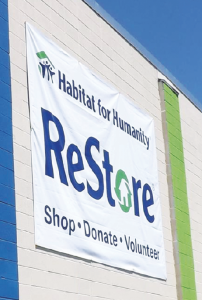
The Habitat for Humanity of Greater Harrisburg’s ReStore is a dream to your average weekend warrior or homeowner. Although Harrisburg’s ReStore only opened in late August, ReStores have been established all over the country for the past 15 years.

“The Habitat affiliate here in Harrisburg started putting together a capital campaign to get their ReStore open about two years ago. They also started accepting donations at their building at 13th and Walnut,” explained Bill Wood, ReStore manager.

A Habitat affiliate can be compared to a chapter of the national Habitat for Humanity. Each operates individually but under the national umbrella and guidelines. Wood moved from Lexington, Ky., with the sole purpose of opening the Harrisburg ReStore.

After finding the location, recruiting volunteers and having conversations with those who had the potential for corporate involvement, Wood and his team began to build the ReStore from the ground up. Tröeg’s recognizable bar still stands, but it now serves as a display area.

“While working on the building itself, we were securing donations from people to make sure donors are aware that we’re a presence in the community—that we’ll come out and pick up something if you want to donate it and give you a tax receipt,” Wood explained. “That way, when we opened, we already had that donor base going.”

In ReStore’s fourth month of serving Harrisburg, the store had too many donations and a lack of space—a good problem to have. To move some old merchandise out of the store, Wood and his team had a storewide sale.

“That’s a really good feeling to me. It shows that the community is hearing us,” Wood said. “They’re donating things that they no longer want, and we’re turning them into funding for our programs.”

Those programs help fulfill Habitat’s mission of providing housing for lower-income people. The ReStore even serves as an inventory for Habitat’s construction crew.

“If we’re doing a rehabilitation, and the home is in need of a vanity, if we have a vanity here that fits and is in good condition, we’ll use that for the home,” Wood said. “We also get paint and other building supplies donated. One of our construction guys came by to get six tubes of drywall caulk for $1 a tube. He would pay quadruple that in a store. It’s small, but on a larger scale, we’re saving 75 to 90 percent.”

Many customers don’t expect the ReStore to supply items such as caulk, but, walking in to the warehouse, customers will see modern furniture alongside antiques, dishwashers and ovens, maple and cherry cabinets, paper weights, lighting fixtures and even an antique clawfoot tub. ReStore customers range from do-it-yourselfers to people in need of new items for their homes at an affordable price.

“We have one customer whose home was completely destroyed and has been waiting to put in a new kitchen but could never afford it. She’s been coming in week after week and getting these cabinets piece by piece and putting it together herself,” explained Lindsay Kirkwood, ReStore assistant manager. “She came in a few weeks ago with pictures of it all done. We got to see her every week and watch that process come together. It’s really great. I’m glad we can be that resource for people out there.”

Kirkwood worked with Wood at a ReStore during her college years in Lexington.

“I rode around on the truck and, once I graduated with an English degree, I thought I should probably go move some more furniture for a while,” Kirkwood laughed.  “I fell in love with the mission and what we do. It’s one of those jobs where you get to go home exhausted most days knowing that you got a family in a new home or put a new roof on someone’s house and that’s good enough for me.”

Others come in looking for furniture that they can recover or paint to use in their home. Harrisburg Councilwoman Sandra Reid, for one, is a ReStore frequent shopper. Prior to the opening of the Harrisburg location, she traveled to Lancaster or York almost every week to check out their inventory for her ongoing home remodel.

“I work on my own home, and I believe that, if we recycle things and repurpose things, you can get some more use out of them. If you’re into DIY, this is where you need to be,” Reid said. “It benefits the DIY-ers, the residents, the people working on their own homes; having the ability to come and get high-end fixtures and high-end ceramic, paint, stains—it’s wonderful!”

Reid’s favorite find so far was an antique mirror that matched a 100-year-old dresser. She was able to replace the broken mirror with one she found during ReStore’s opening weekend, and, to her delight, many who see the piece believe it to be the dresser’s original.

Other customers are attracted to ReStore because of the price point. Wood and his team set the items’ prices before featuring them on the floor. To ensure accurate pricing, they sometimes will get the opinion of antique dealers who are experts in determining value.

Customer Stephanie Eshenour heard about ReStore and the good prices and decided to stop in for counter sealant.

“We’re doing a home remodel and trying to do it on a budget. We heard they have a lot of good things at good prices,” Eshenour explained. “We found a sink we’re going to buy for $35. Otherwise, it would be over $100 for the same sink. ReStore is really beneficial to everyone; we would buy a tool or sealant and use it one time and never use it again. This way, you can get it at a cheaper price, and I think people will want to improve their homes more if they realize it doesn’t have to cost tens of thousands of dollars.”

ReStore collects a wide range of items, but not everything in the store is used. Some of the merchandise is donated directly from the warehouses, sometimes due to overstock, but other times because there was a logo or packaging change. A seemingly small change such as a switch in packaging material requires all new products on store shelves. The products with the out-of-date packaging are often delivered to ReStore in new condition. 

“Anderson Windows actually called me to pick these up,” Wood said, referring to a long line of brand new windows. “These were all windows that were sent out to job sites and returned because they were the wrong size or the architect changed designs.”

Other merchandise that ReStore had available included chairs donated from Bob Evans; a bank deposit box; full sets of cherry and maple kitchen cabinets; office desks and chairs; paint, stain and sealant; ceramic tile and doors.

Wood estimates that 75 percent of the donations coming into the store are from individuals, with the remaining 25 percent from corporate or construction environments. The items leaving the store reflect this same balance. Most customers walking into ReStore are there for their own homes, while smaller numbers are shopping for a corporate or construction environment.

“We recently opened an account with a fire department. If they’re looking to remodel a fire station and need a new dishwasher, they can come here and purchase it. It saves the municipality a lot of money and helps us out, too,” said Wood.

Although ReStore’s doors have been open for less than six months, Wood and his team are already looking into the future. One way ReStore will continue to positively impact the community is through a new conservation program called The Toyota Together Green project, sponsored by The Audubon Society. Wood is one of 40 fellows across the country chosen to receive training, networking support and funding to conduct a conservation project.

“The Audubon Society and Toyota Together Green will be giving us money to complete volunteer recruitment with groups that are typically left out of the conservation movement. Low-income families, LGBT groups and others that are generally left out of the equation,” Wood explained.

The project will make the conservation movement reflect the diversity of our society. Wood and his team at ReStore hope that, by spreading knowledge of Habitat for Humanity and spreading their passion for conservation, the Harrisburg ReStore location will see an even greater influx of volunteers and donations.

“This is an opportunity to get more active salvage projects going, so we can go out into the community when a building’s getting torn down and take the stuff out on location so it doesn’t get thrown away,” Wood said. “That will bring us in more material to sell and allow us to do our job better of providing funding for Habitat. We’ll also be able to do a little waste reduction by keeping usable furniture out of the landfill.”

A personal passion of Wood’s, waste reduction, is also actively happening in the store. In ReStore’s first three months, the staff and volunteers filled only one dumpster—a huge achievement for the store and for waste reduction goals. Wood hopes that the Toyota Together Green project will also spread the word about ReStore while reducing waste throughout Harrisburg.

“When we get this architectural salvage program started, I hope we’ll be able to go into people’s homes that are getting remodeled and pull cabinet sets,” said Wood, who explained that cabinets are one of ReStore’s best sellers. “It saves the homeowner a bit of money because they’re not paying for a contractor to tear them out. We’ll come in and do it for free, or for a very nominal fee, and the homeowner gets the tax write off.”

Like any 501(c) 3 charitable organization, ReStore relies heavily on volunteers. In any given week, the store’s paid staff of three employees sees volunteers moving items, doing pick-ups at donors’ homes or working on the administrative side of things.

“You can come in and clean the store or serve on a committee,” Wood laughed. “There’s a wide spectrum of volunteer opportunities available.”

To learn more about the ReStore, or to donate or volunteer, please visit https://harrisburghabitat.org/restore.




Continue Reading

Literary Dress-Up: From Gatsby to Harry Potter, your favorite characters will party at the Bal Masque.

For the coming Mardi Gras weekend, Harrisburg art lovers will be given the opportunity to spend a night as their favorite literary characters at one of the year’s most stylish events.


Pictured: Scenes from last year's Bal Masque. Photos by M.R. Gruber Photography. www.gruberpix.com

Pictured: Scenes from last year’s Bal Masque. Photos by M.R. Gruber Photography. www.gruberpix.com

On March 1, the Art Association of Harrisburg will hold the 2014 Bal Masque at the Appalachian Brewing Co.’s Abbey Bar in downtown Harrisburg.

“The Art Association has held a Mardi Gras costume party called the Bal Masque since 1941, each with a different theme,” said Art Association President Carrie Wissler-Thomas. “This year, we’ve picked ‘Literary Allusions.’ It’s a very broad theme that we thought people would enjoy dressing up for. Guests can come as their favorite author, as a character from a book, as a depiction of the title of a book—all kinds of things. It’s always amazing to me how creative people can be with their costumes.” 

While traditional party attire is welcomed, costume-wearers will be eligible for prizes in a variety of categories. The evening will also include a silent auction on literary themed gift packages, heavy hors d’oeuvres, and performances that include DJ sets by Chuck Schulz and Jonathan Frazier, psychic readings by Dr. Edward North and new-school jazz by singer Erica Lyn Everest. Harrisburg Mayor Eric Papenfuse will serve as the Bal Masque’s honorary chairman.

In addition to being one of the year’s biggest parties, the proceeds from the Bal Masque provide the Art Association with much of the funding needed for its educational programs and exhibits.

“The Art Association of Harrisburg School has about 30 different classes a year for both kids and adults,” said Wissler-Thomas, “and our gallery at 21 N. Front Street holds eight exhibits per year that are free to the public to visit, seven days a week. The money that comes in from our fundraisers helps to keep us available for the public to enjoy.

The 2014 Bal Masque will be held on Saturday, March 1 from 7 to 11 p.m. at the Appalachian Brewing Co.’s Abbey Bar, 50 N. Cameron St., Harrisburg. Admission is $50 for open seating and $80 for reserved gallery seating. Tickets can be purchased online at artassocofhbg.com or by calling 717-236-1432.

Continue Reading

Resources to Bear: African-American Chamber helps close gap between skills, means.

Screenshot 2014-01-31 09.35.30

Small-business development is critical to Harrisburg’s economic revitalization.

In recent years, the African-American Chamber of Commerce of Central PA (AACCCP) has been one of the most active organizations in our region promoting that growth, helping minority entrepreneurs translate their ideas and expertise into viable businesses. “A lot of times, our members have the skill set for their trade, but not the business skills for their industry,” said chamber President Leland Nelson. “We bring those resources to our members.”

The AACCCP’s services are built around providing resources, education, advocacy and participation (REAP), said Nelson. This platform of core values inspires programs ranging from annual “Build Your Business” boot camps, which put local entrepreneurs through an intensive series of workshops, to “Professional Thursdays” networking events. The chamber also uses its relationships with area financial institutions to help member businesses secure loans and grants and assist them in collective bidding on contracts.

Besides his role as AACCCP president, Nelson is the owner of Harrisburg-based Dirty Dog Hauling, so he understands the difficulties new business owners face.

“For example, a member may know construction, but be unfamiliar with things like certified payroll, capability statements—the things they need to run their business,” said Nelson. “We listen to what the members want, and programs and events are geared towards their needs.”

The chamber gives minority business owners the chance to work alongside professionals with similar experiences.

“We’re faced with some real challenges in central Pennsylvania, including workforce development and providing jobs to people whose skills are not highly specialized,” said member and management consultant Wendy Jackson-Dowe. “I believe in the chamber’s mission, and that it’s important for folks of color to see other folks of color who can share our unique lens, our journey, from starting businesses to becoming successful. Being the daughter of entrepreneurs and having my own business, it was an easy decision for me to join.”

In 2013, the chamber completed a multi-year process to be designated as a 501(c)(3) charitable nonprofit organization by the IRS. “The 501(c)(3) allows us to accept contributions from corporations and organizations that see diversity and inclusion not just as keywords, but as a way of doing business,” said Nelson.

The charitable contributions help the chamber provide free programs for those who cannot afford membership and assist underserved populations, such as ex-offenders, to develop professional careers. It is also working with the state to become authorized to provide certification programs for minority, disadvantaged and women-owned businesses. In addition, several chamber members consulted with Harrisburg Mayor Eric Papenfuse’s transition team.

Among the most inspirational of the chamber’s efforts this year has been the work of member Hope Latimore, the owner of Cover Me with Hope, a Hershey-based wig and post-mastectomy boutique that assists people who have been diagnosed with cancer.

“My mission is to help customers build their confidence and self-esteem, to feel good about themselves through difficult times,” said Latimore.

Screenshot 2014-01-31 09.35.39

Her services include fittings, hair restoration, hair replacement and prosthesis, developed in collaboration with patients’ healthcare providers.

“I’ve been in business for five years now, and, doing things by myself, it felt like I was at a standstill,” she recalled. “Becoming a member has opened more doors, and meeting more successful businesspeople who are doing positive things for society and making our community better was a great opportunity.” 

Through the chamber, Latimore was able to increase Cover Me with Hope’s visibility in the region, reach out to more area oncologists and let more patients take advantage of her services, including the uninsured. “The chamber is truly sincere and genuine about helping you out,” she said. “They really do care and have helped me take my business to the next level. I believe all businesspeople should be connected and that any businessperson should become a part of it.” 

The AACCCP is also looking towards the future with programs such as Junior Entrepreneurs Training (JET), a series of classes and exercises aimed at children aged 7 through 14. JET helps participants start their own businesses with investment capital from the chamber’s partners. “They work at events like Kipona or the Jazz Festival and come up with a return on investment,” explained Nelson. 

“Too often, we hear stories about the negative things happening in the black community. There are so many positive stories about young, progressive, business owners and future leaders that are often overlooked or just not in the general conversation,” said Jackson-Dowe.

She believes that it’s vital that minority business owners realize that their hard work is appreciated and supported, so they can become successful.

 “It’s important to teach people self-reliance, to become independent,” concluded Jackson-Dowe. “The small business owner is the greatest creator of jobs in this country. It’s important that, instead of complaining and sitting back on the sidelines, people want to be part of the solution.”

 AACCCP’s February Breakfast Club meeting is sponsored by Highmark and will be held at Nellie’s Southern Style Café, 301 Reily Street, Harrisburg, on Feb. 4 at 7:45 a.m. The event is free for both current and prospective members, and features guest speakers, networking opportunities and a complimentary breakfast. On Feb. 13, AACCCP will host Corks, Canvas & Commerce, a free Professional Thursday event, 5 to 9 p.m., at Crawdaddy’s, 1500 N. 6th St., Harrisburg.

 For more information regarding memberships, business resources and upcoming events, visit ChamberForUs.com or Facebook.com/ChamberForUs.

Continue Reading

Who Are You? Online anonymity devalues our conversation, our community.

As I have mentioned before, one of the unexpected changes in my thinking since becoming publisher of TheBurg is my view of local media. Where I was once merely an avid consumer, I am now, with this column, a monthly producer of sorts. The added duty has caused me to think about local online and print media in new and different ways.

Far from making local media irrelevant, online social media seems to have enhanced individualized stories in the regional community. Anyone on Twitter or Facebook cannot help but notice the local stories of the day, week or month.  Checking your Twitter feed or Facebook page will gain you instant knowledge of what your friends are thinking about. Much of it is hyper-local and great for real-world social gatherings. Keeping a close eye on what is happening in the local press certainly helps local media distribution, even if you don’t purchase or even read the actual publication.  

I find myself checking our statistics at theburgnews.com to see which articles have drawn the most interest based on viewership, sharing or posting on social media. While not an infallible guide to determining the relative merits of any one article, the amount of uptake gives at least some indication of how receptive you, our readers, have been to the story. Our writers are generally grateful each time some one takes the time to tell their cyber-friends (and/or actual friends) to check out this or “like” that article that they have written. This is clearly a good thing from a media-owner perspective. Non-readers become readers because their friends are easily able to share a story with them with the click of a keyboard or tap on their phone. 

On the other hand, it is very hard to get any one local story to break through to more widespread awareness. The numbers are just not sufficiently large to achieve critical mass. Readers are too few and the stories too many, and focus is fragmented at best. This has led to the well-publicized crisis on the business side of local media that has experienced dramatically declining ad sales as a result of that fractured audience. In an effort to reverse this trend and stay in business, much of the focus has shifted to how many people are viewing and interacting with the content. This chase for online eyeballs and, thus, the ability to charge advertisers, has led to many changes, like fewer days of print publication, among other things.

The worst of these developments, in my opinion, is the advent of the ubiquitous anonymous commentator immediately following the online article. I believe that the practice of allowing anonymous comments, far from being a panacea for declining ad sales and tightening budgets, actually serves to hasten a publication’s decline. A factual, rational story is easily overwhelmed by the non-factual, irrational opinion that follows. This commentary lessens and cheapens the very product that is being produced by the writer, while stretching and stressing that person, who now has to respond and defend her reporting to the uninformed. More work for less pay rarely makes for happy employees, but certainly tends to increase actual errors as time and volume pressures mount.

Let’s take our local friends in big suburban media. There is perhaps nothing more simultaneously entertaining and disheartening, yet meaningless and time wasting, as watching a writer who has published a well-researched piece go online and try to defend the article against the anonymous commentators. As a teaching psychologist friend once told me, “Rational argument is a useless tool against the irrational”—it only makes you crazy. Proof of that maxim can be found in nearly every one of these so-called forums. I feel for the writer who thought she had chosen a career in journalism with the local paper and now realizes that it is far more “Lord of The Flies” than the Wall Street Journal (the WSJ now requires real names in its commentary). 

There is simply no point in engaging in combative back and forth with someone who doesn’t want to be informed or for whom the facts do not matter. For many of them, it appears that the game is very different—it is to rant and rage for their own personal enjoyment, not to enhance knowledge or even to prove a rational point. When a commentator is anonymous, there is no social check in place to restrain ignorance or need to fear damage to a personal reputation by writing things online that one would never say in person or if identified personally in the real-world town square. 

Let’s be clear: There are exactly zero, as in bagel, whistleblowers or the like in the online local media forums that admittedly would deserve anonymity if they did have actually pertinent information. The “whistleblower exception” is easily preserved not by posting online, but by sending the information to a responsible reporter, who can then actually report a story. Anonymous online commentary is clearly not that.

The fix, however, appears to be simple. The requirement should be for a verified e-mail and physical address with the person’s name, age and occupation.   Requiring a person to identify herself or himself and stand behind the comment would bring great social pressure to be more dignified and respectful, if not articulate and informed. Simply put, it is requiring the same level of social decorum that we demand in person. A simple request for civility, it would seem.

For these reasons, TheBurg has made the decision not to allow online commentary on our articles. The articles speak for themselves; they are valuable and took time to research and write. We welcome your letters, e-mail, social media posts, etc., whether positive or negative. If you let us know your thoughts, we may share them more generally with other readers. If you have suggestions for improving our paper, we will gladly listen and try to do so.

However, the real danger in anonymous commentary is the demeaning of our public discourse and the rise of a forum for the exceedingly small minority of aggrieved and disaffected who crowd out the rest of us who actually like where we live and work. Those vocal few are not representative of the community, but they are a great impediment to a truly informed citizenry by spreading inaccuracy and misinformation and just for uselessly wasting time. Ultimately, after this online experiment has played out, I believe that advertisers and the community generally will see all this anonymous commentary for what it is: sound and fury, signifying nothing. Let’s hope it is brought to an end locally, before it further threatens the viability of our otherwise valuable local media outlets.

J. Alex Hartzler is publisher of TheBurg.

Continue Reading

Winterizing Fido: Cold weather requires special care for dogs, cats.

Screenshot 2014-01-31 09.38.11Frigid temperatures, snow, wind and ice prompt pet owners to take precautions to ensure the safety and optimum health of their best friends. Protecting pets from the elements and giving adequate exercise are both challenges during the winter months.

If your dog likes to romp in the cold weather, have her wear a lined, water-repellent coat to help retain body heat and stay dry during walks. Short-coated dogs, toy breeds, puppies and seniors are at greater risk of becoming chilled faster. Shaving your dog is not advisable, as fur is a dog’s natural insulation from extreme temperatures. If your dog is sensitive to the cold, take her outdoors only long enough to relieve herself and keep all outside visits short during very cold temperatures. If you have cats that spend time outdoors, keep them safe inside.

Protecting your dog’s paws for outdoor adventures is equally important. Have your groomer trim the hair between the paw pads to prevent salt and snow from collecting. These are very painful for a dog to walk on. Some dog owners use dog boots to keep the paws warm and protected. If you do this, be sure to purchase the correct size for your dog to avoid discomfort and slipping. Training your dog to wear booties will take some time and patience because it’s a very strange feeling. Don’t assume she will accept it immediately.

When returning from a mucky, winter walk, it’s good to have a towel ready by the door to dry your dog. Wipe off her paws, legs and stomach. You can wash her feet with lukewarm water to remove unwanted snow, debris and chemicals. Keep in mind: any salt or other de-icing agents that are swallowed by licking can make a dog sick. If the paws become dry and cracked, you can soothe them by massaging a light coat of Vitamin E oil or pure aloe gel into the paw pads.

Inside the house, give dogs and cats a warm place to sleep, away from cold drafts. If you keep your thermostat down while you are at work, consider a heated pet bed or heating pad. You can also put a hot water bottle under a towel on the pet’s bed. For extra warmth, put a pet bed in a place that gets sunlight. Toss in a cozy, fleece blanket, fresh out of the dryer, and your cat or dog will be thrilled to burrow.

When you and your critters are stuck indoors, exercise is harder to get, but still very important. There is nothing like being cooped up with a dog or cat that has lots of energy to spare! Bored pets often find things to do, of which you may not approve. 

Keep them occupied by playing indoor games, such as fetch, chase and tug. Mental stimulation gives pets a great workout, too. Puzzle toys and toys stuffed with treats or catnip can entertain them for hours.

For dogs, you can fill a hollow bone or rubber toy with a mixture of sugar-free peanut butter, yogurt, oatmeal and honey or your dog’s favorite treats. Freezing the concoction makes it even more of a challenge. Treat-dispensing balls and toys are great for cats to bat around, too. It gives them the feeling that they are “hunting” and tires them out, as well. 

Just remember to reduce the amount you’re feeding at meal times to account for the additional caloric intake. You don’t want to pack more pounds on your pets during the winter months. It is just as unhealthy for them as it is for humans.

Kristen Zellner is owner of Abrams & Weakley, a general store for animals, 3963 N. 6th St. (rear), Harrisburg, www.abramsandweakley.com.


Continue Reading