Connected at the Heart: Valentine’s Day–Theatre Harrisburg Style

Screenshot 2014-01-31 09.38.39Could it be karma? Or perhaps coincidence? Or maybe just foresight and good planning.

For couples in love or those with stars in their eyes, it appears that Theatre Harrisburg has planned an event so perfect in its conception that it’s come together like some romantic puzzle. So let’s take a look at the pieces.

On Feb. 14, Theatre Harrisburg will present “Evening of Romance.” It’s on a Friday—close to the weekend and absolutely perfect for those lovers or wannabes who wish to express what’s in their hearts for their significant other. Feb. 14 is Valentine’s Day. Remember?

“Evening of Romance” will take place in Uptown Harrisburg at the Jay & Nancy Krevsky Production Center, 513 Hurlock St. No big deal, right? But it is.

“It is appropriate that this event is being held here, named after a couple who met in this building, fell in love and married,” says Samuel Kuba, executive director of the theater. “Jay and Nancy’s passion for each other and Theatre Harrisburg has never diminished after all these years.”

Are you beginning to notice a theme here? Okay. Stay focused. There’s more.

Doors to the event will open at 6:45 p.m. There’ll be complimentary champagne, a gourmet dessert buffet and flowers and candy for each guest. No need to rush out and get the obligatory (and somewhat boring) heart-shaped box of chocolates and wilting posies. Theatre Harrisburg takes care of all that for you, and it’ll all be quite artistic. Additionally, there will be several special grand door prizes awarded. All of this amidst a sparkling draped lobby, illuminated by candlelight and decorated with fresh flowers. See? One less item to worry about in impressing that special person.

Next.

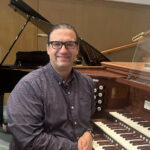
As you gaze into the eyes of that wonderful someone, you will be serenaded by songs sung by Jonathan and Beverly Hudson of Palmyra, another real-life married couple (there’s that romance theme again) with selections from Mozart’s “Don Giovanni,” “Candide” and other selections, including works by Verdi, Gershwin and Irving Berlin. All or most will surely speak to the affairs of the heart. Along with being a duet in the true sense of the word, the Hudsons have a creative connection to Theatre Harrisburg: Jonathan lent his operatic vocals to the show “The Last Romance” staged at the theater last summer which starred…wait for it… the Krevskys. Beverly starred in the 2012 production of “A Little Night Music” presented by Theatre Harrisburg at Whitaker’s Sunoco Theatre.

“Together, these two artists will generate enough musical heat to warm any heart and take the chill off even the most frigid weather,” Kuba says.

The puzzle is almost complete. Onward.

At 8 p.m. that evening, there will be a performance of the Ken Ludwig romantic farce “Lend Me A Tenor,” a lightning-fast, non-stop laugh fest that, at its core, involves several different—and sometimes unlikely—couples. One of those couples is the constantly quarreling spouses, Tito and Maria Merelli, played by—you guessed it—real-life husband and wife, Anthony and Ann Ariano. In keeping with the romance theme, all disagreements will remain on the stage and true domestic bliss will prevail. Audiences will witness every nuance because the venue’s intimate space guarantees everyone an up-close-and-personal experience.

So, could anything or any evening be more perfect? A venue named for a loving couple, sung by another loving couple, and performed by yet another loving couple. Candy, flowers, champagne, gourmet desserts, prizes, candlelight, Mozart and Gershwin. You can’t ask for more.

Wait, there IS more.

As if Theatre Harrisburg had some sort of magic wand, there will be a full moon that night.

C’mon, Theatre Harrisburg. You planned all this, right?

You did, didn’t you?

“Evening of Romance” will take place on Feb. 14, at Theatre Harrisburg, 513 Hurlock St., Harrisburg. Tickets available by visiting or calling Whitaker Center Box Office, 717-214-ARTS. “Lend Me a Tenor” runs Feb. 7 to 23.


Continue Reading

Very Harrisburg: From their home base, the Very Americans look to go national.

The Very Americans

The Very Americans

Did you catch a Senators game last summer?

If you did, you have already heard Harrisburg-based indie band Very Americans. They wrote the team’s fight song, aptly titled “Hey Senators.” The band has just celebrated the release of its new EP, “Stereo Types,” which came out last month digitally and on CD through iconic punk/hardcore label Eulogy Recordings.

“One thing to remember is that most record labels have gone 100-percent digital now, so it was important for us to find a label that was going to release a ‘physical’ version of our record,” explained bassist Garrett Rothman. “We were also anxious to have the record released on vinyl, which is our favorite format. Luckily, Eulogy and local label Rock Paper Records were able to work out an arrangement by which Rock Paper would release strictly the vinyl version of the record.”

“We all come from a punk and hardcore background, so [Eulogy] is not that far of a stretch,” added drummer Tyler Coleman.

Eulogy is a subsidiary of Sony, which will mean worldwide distribution of Very Americans’ music.

“[It’s] an amazing feeling,” said keyboardist Steve Radtke.

“Stereo Types” was mixed by famed producer J. Robbins at Magpie Cage Studios in Baltimore, a treasured experience for the members of Very Americans. And speaking of treasured experiences, the band performed live on The Artie Lange show in November, which aired on DirecTV and on Sirius and XM Radio.

“Although playing on live TV was a new experience and a little anxiety-ridden, it was just great to get our music out there,” said Radtke. “It was extra special for me because it was my birthday.”

The band is working on a few videos to accompany songs on the new album, like the one for “Floodgates,” directed by Moviate’s Caleb Smith.

“We can’t wait for people to see it,” said Rothman. “In a couple of months, our next video will come out for ‘Without a Trace,’ which should be fun… we recorded it in a mansion in Mechanicsburg.”

And, despite the increasing reach of their music, the members of Very Americans are proud of their central Pennsylvania roots and are quick to point out lots of reasons that this ‘Burg is a great place to be a band.

“I’m actually from Tampa Bay, Fla., but I’ve always loved the Harrisburg area and music scene,” explained vocalist Rich Wise. “[It] feels more connected to me than other scenes, and the fact you’re a hop, skip and jump away from a few major markets without the big city life is perfect.”

“We can play New York City, D.C., Philly and Baltimore and still drive home after the show if need be,” added Rothman. “And there are some great promoters and live venues that keep getting better, like FedLive, the Abbey Bar, HMAC and MakeSpace. Also, we don’t deal with the same space constraints that our band friends in New York deal with… we have a lot of options for rehearsal spaces.”

Very Americans is hard at work writing more songs and plans to record a full-length record this spring. Keep an eye on them at facebook.com/veryamericans.

Alexis Dow Campbell lives in Harrisburg with her husband Robert and daughter Rosie, age 1.  She is the director of creative programming at the Ned Smith Center for Nature and Art in Millersburg.


Continue Reading

Great Jump Forward: From a single program, Jump Street has become a connecting point for the arts.

Shailen Vines, Xavier Farrow & Ayat Muhammad in period costume after training to become docents for the Bethel Trail.

Shailen Vines, Xavier Farrow & Ayat Muhammad in period costume after training to become docents for the Bethel Trail.

Bob Welsh, Jump Street’s impressive executive director, wasn’t always at the helm of a top-notch non-profit that provides creative opportunities for youth and adults. Back in the day, he was just an ordinary city resident who was unhappy about what he saw happening in the city school’s music programs.

“Music education was really in terrible shape,” he said. “Not that the teachers weren’t great, there were just not many resources.”

Wanting to do something about it, he came up with the idea of starting an instrument donation program.

“I went to Mayor Reed to see what he thought, and he basically told me I have lots of energy and good ideas but no clue how to execute. He told me that I needed to go out and find some agencies that do this kind of work and find out how this work gets done. It was the best advice I ever got.”

Welsh found a kindred spirit in Metro Arts, where he was able to learn about non-profit management and how to write grants. One of the grants that he got allowed him to start the fledgling “Gift of Music Program.” Welsh served as a volunteer, a board member and then was hired as executive director of Metro Arts. A year later, in 2000, the organization changed its name to Jump Street.

Now, Jump Street is a thriving organization providing multiple programs for youth, teens and the community at large. It operates a facility on N. Cameron Street that includes the Thrive Art and Fitness Center for Seniors, teaching and rehearsal space, arts business incubator/office space, gallery space and administrative offices.

The following is a spotlight on three of Jump Street’s programs.

The Gift of Music

The Gift of Music is Jump Street’s oldest program. Through the program, band and orchestral instruments are collected, restored and distributed to students interested in learning to play an instrument. It’s not the first time that organizations have collected instruments, but Welsh has come up with some ideas that have streamlined the process.

“We decided not to get involved with trying to determine if individuals qualify for an instrument,” Welsh said. “Instead, we qualify programs.”

Accordingly, Jump Street works with 40 or 50 schools, community organizations or churches.

“They let us know what they need, and then they take responsibility for determining which students should get the instruments,” he said.

Repair of the instruments is done in local repair shops and typically costs about $100.

“In a former life, I repaired instruments, so that helps,” said Welsh. “So that’s one place that we have a leg up because I can identify what will probably get out into the field.”

Welsh says that he has a rule of thumb that, if the repair is more than one-third of the value of the instrument, check with him. If it doesn’t, the shop can just go ahead. “That saves time and cost,” he said.

During the 12 years of the program, Jump Street has refurbished and distributed around 500 instruments in the Harrisburg region, but the program expanded several years ago and now operates in four other cities. “All across the state, we’re probably pushing towards a distribution of 5,000,” Welsh said.

Jump Street accepts instrument donations at its offices in Harrisburg or at any area Classic Cleaners.

AND Magazine

One of Jump Street’s major literary projects is the publication of a magazine for teens written exclusively by teenaged journalists.

AND Magazine (which stands for “A New Diversion”) has been in publication for seven years and, since its inception, has had about 150,000 readers. The magazine was conceived as a way to provide opportunities for regional teens to participate in all phases of the magazine publishing process, including writing, editing, graphic design, photograph and marketing.

“Most magazines [geared towards teens] are people our age writing what we think and what wisdom we can offer to teens,” said Welsh. “It occurred to me that it might be more interesting to mentor young writers or just be with them to facilitate their own process.”

So far, the project has involved around 100 dedicated writers and about 100 more who may have contributed one or two stories, poems or photographs. One of the magazine’s most famous graduates, and its first editor, is Annie Stone, who is now editor of teen books with Harlequin. Many other students also have benefited from working on the magazine by being able to include stories they have written in their college portfolios. Welsh notes that the literary work of AND Magazine writers has helped them to net scholarships to many prestigious schools, such as Point Park University in Pittsburgh, Temple University, the University of Pennsylvania and Shippensburg University.

Every year, the project attracts a core of roughly half-a-dozen students from local school districts, many of whom travel to Jump Street’s offices on a daily basis as part of their school’s senior project programs, during a free period or after school. Working together as a team gives these students an opportunity to learn to work with people who have different backgrounds and skills.

“We may have a Harrisburg High School student sitting next to a Boiling Springs student so, for the first week or two, they may as well be from different galaxies,” said Welsh. “They won’t know very much about where each other is living, but it’s personally been a joy for me to watch those barriers dissolve—and they almost always do.”

Jump Street staff also goes out to schools to work with groups of students, tasking them to create pieces around a particular editorial thread, such as young people’s attitude towards voting during election time. Teens also can contribute work remotely on their own or through their teacher, counselor, community organizations or probation officer.

“Some of the most interesting work in one issue was from a kid in lock-up,” said Welsh. “He actually received a small scholarship from what he submitted to AND Magazine while incarcerated.”

The Speak Team

Besides its regular staff, Jump Street pulls in other professionals to help develop and facilitate creative projects for area teens.

Currently Lenwood Sloan, an actor, playwright, director and self-described “catalytic agent,” is the lead resident artist. Under the direction of Jump Street, he spent this past school year heading up an intensive theater lab program at Susquehanna Township High School, where students learned everything from basic acting skills to set design, lighting and make-up. The theater lab is part of the high school’s new School of the Performing Arts, which also focuses on the visual arts and fashion.

When some of the students asked to continue working with Sloan during the summer months, Welsh created a program that trained the students to be historical actors and docents in Harrisburg. Modeled after a decade-old tourism model called the “Past Players,” the young members of the “Speak Team” were trained to portray civilians and military personnel from the 19th century and went out as an ensemble to the city’s historical places such as the train station, the Capitol building and the Broad Street Market. There, they engaged tourists and school groups with renditions of period stories, poetry, dances and songs.

“They were scheduled on Tuesdays and Thursdays to appear in different places,” said Welsh. “They would start at the market and stroll through a scripted batch of locations while another Past Player might be going in the opposite direction. The two teams might meet up in the Capitol, one heading north and one heading south. It was very, very well received.“

At times, group members portrayed composite or generic people of the era, but, more often, they reenacted actual Pennsylvanians that they had studied. The message was mostly focused on African American history, which is where Sloan’s professional experience lies.  In a typical day, passersby would be able to hear stories of the Underground Railroad and African American life during war and Jim Crow. The goal was to get history to come out of the books and celebrate the lives of people in Pennsylvania who made a change, one person at a time, one neighborhood at a time.

During the inaugural year of the “Speak Team,” members of the ensemble received more than 100 hours of training. In addition to learning historic songs, stories, poetry and dances, they took elocution lessons and received tips on how to adopt mid-19th century postures.

“The cool thing for the kids is that they are working with a total pro,” said Welsh. “Lenwood Sloan is a treasure. We are lucky he hangs out with us.”

Moving forward, Jump Street is looking towards continuing to serve the community.

“Much of our success has been based on assessing needs in our sector,” says Welsh. “Then we train up our staff in certain responsive skill sets and take reasonable risks to grow toward the opportunities. “

Welsh says that he’s sure that Jump Street can meet any challenge that the community throws at them. “I have one of the best non-profit staffs around,” he said.

To learn more about Jump Street, visit www.jumpstreet.org.

Continue Reading

The Shows Goes On: Cancelled last year, Harrisburg’s mid-winter outdoors expo is back.

Screenshot 2014-01-31 09.39.56Cabin fever is running rampant. This especially cold winter has thus far kept all but the hardiest souls inside. We’re itching to get out of the house and do something outdoors—or at least outdoor related.

Well, good news: it’s show time! Outdoor sports show time, that is. The Great American Outdoor Show at the state Farm Show Complex runs Feb. 1 to 9 and will cure even the worst case of cabin fever. While this is the first-ever show here sponsored by the NRA, sportsmen and women have been attending a similar show for many years. Last year’s cancellation due to gun exhibition issues left us all with an empty calendar, wondering if it would ever be resurrected.

The show has been rebuilt from scratch. This is a nine-day event celebrating hunting, fishing and outdoor traditions that are treasured by millions of Americans and their families. The show features nearly 1,000 exhibitors ranging from shooting manufacturers to outfitters to fishing boats and RVs, from archery to art, covering 650,000 square feet of exhibit hall space. Add to this a jam-packed schedule that includes concerts, fundraising dinners, speaking events, archery competitions, celebrity appearances, seminars, demonstrations and much more.

If you are looking into a fishing or hunting trip to Canada, the United Sates or other worldwide destination, the Main Hall will be packed with outfitters ready to accommodate you. Family vacations? An entire hall of tourism exhibitors can map out a tailor-made vacation for you and your clan. In the market for a new bow? You can see all that’s new in the industry, as well as actually shoot the new bows before you decide. And so it goes—you just can’t miss this show for everything outdoors.

 If a new boat is in your future, talk with local dealers representing and showing all brands of boats, motors and accessories. And while you are at it, check out all the newest in rods, reels and lures before the spring thaw. Campers and motor homes are also here to be inspected.

If you are the competitive type, this show features contests in all fields of the outdoors. The taxidermy contest runs the full length of the show and features the best wildlife mounts of both fish and animals. You may just get an idea of a mount you may want for a future trophy.

During the week, there will be calling contests for duck, goose, turkey, owl and elk. Listen to the best callers and get some pointers. A 3-D Bowhunter Challenge will run the entire nine days and offers big money prizes to the winners.

Finally, a whole list of seminars and demonstrations will cover topics including deer hunting and butchering, law enforcement, fishing and waterfowling, presented by celebrity outdoorsmen like Roland Martin, Timmy Horton, Chef Albert Wuntz, Sean Mann, Ralph and Vicki Cianciarullo and many more.

My group, the Pennsylvania Outdoor Writers Association, will hold its 31st Annual Sportsman’s Auction to benefit outdoor education on Feb. 9 at noon in the Main Hall contest room. A Smith & Wesson revolver, hunting and fishing trips to Canada and the United States, hunting and fishing equipment, wildlife art, clothing and much more will be offered. POWA has raised more than $400, 000 to date, and every penny has gone to fund grants for organizations that introduce young people to the outdoors.

This year’s show has several added bonuses that previous shows did not. For instance, the NRA Foundation will host a banquet at the show on Friday, Feb. 7. Held in the PA Preferred Ballroom, the evening will feature fundraising, food and exclusive firearms. On Feb. 8, country music star Trace Adkins will perform in the large arena. The show starts at 6:30 p.m. and tickets are $30.

The Harrisburg show kicks off several other important regional outdoor expos.

The following week, the Greater Philadelphia Outdoor Sportshow will run Feb. 13 to 16 at the Greater Philadelphia Expo Center in Oaks, Pa. Here, again, you can learn about, see, touch and buy anything related to outdoor sports. Along with exhibitors representing the shooting sports, archery, lodging, outfitters, hunting, taxidermy, boats, camping and wildlife art and photography, there will be a climbing wall, kayak demos, a fly casting pond, paintball and much more. Visit www.sportshows.com/philly for more information.

The Lehigh Valley Sportsman Show follows, running Feb. 28 to March 2 at the Agri-Plex in the Allentown Fairgrounds. For decades, “the Allentown show” marked the end of the outdoors show season and signaled that the beginning of the spring fishing and hunting seasons were within sight for generations of outdoors enthusiasts in eastern Pennsylvania, as well as many in southern New York, western New Jersey and northern Maryland. The hall will be filled with exhibitors and feature an expanded schedule of seminars and special events. For more information, visit www.lehighvalleysportsmanshow.com.

The Great American Outdoor Show runs Feb. 1 to 9 at the state Farm Show Complex in Harrisburg. For more information, visit www.greatamericanoutdoorshow.org.

Continue Reading

Comfort Soups: Melt away the cold with these delicious, soul-warming recipes.

Screenshot 2014-01-31 09.33.37

Homemade soup is a weekly staple in our household. You could go as far as saying that we are soup addicts. When we began cooking soups from scratch a few years ago, we turned into overnight believers.

We have found that the savory taste of homemade soup cannot be captured in canned varieties. You also can’t beat the minimal cost per serving most home-cooked soups offer. While some soups take a bit of time and effort to make, if you cook up large batches over the weekend, you will have quick and easy re-heats during the week—one of the perks I love. And, during the chilly winter months, nutritious soups help to warm our souls, fill our bellies and protect our immune systems from nasty bugs. Soup is not only delicious, it is practical, cost-effective, usually healthy and the perfect complement to winter weather. I even find it to be a satisfying, creative cooking outlet.

So, stay toasty with these recipes, all of which can be adjusted according to your taste. If you prefer more or less of a particular vegetable or spice, feel free to adjust. Gather your family or friends, have fun in the kitchen and most importantly, kick back with a warm, aromatic, uplifting bowl of goodness.


Chicken Barley Soup

  • 1 whole chicken
  • 2 cups pearled barley
  • 3-4 cups cubed potatoes
  • 2 cups cut carrots
  • 2 cups cut celery
  • 2 cups corn
  • 1 diced red onion
  • 1 whole bulb of pressed garlic
  • 2 bay leaves
  • 4 tablespoons olive oil
  • salt and pepper to taste                  

This recipe makes a large batch of soup. Enjoy its heartiness and the simplicity of having a couple nights of leftovers. Our family of six can typically get about two nights out of this recipe. We go for a whole bulb of garlic for an immune system boost and add cayenne pepper to taste for an extra kick and a natural way to clear a wintery stuffy nose.

After removing the innards, place the chicken and half a bulb of garlic in a crockpot, cooking on low for 10 to 12 hours.

Toward the end of the chicken’s cooking time, combine all of the vegetables, the remaining garlic and the bay leaves in a large bowl or pot, top with 3 tablespoons of olive oil and a tablespoon of salt, and toss. Roast the veggies in a large, greased baking dish for 1 to 1½ hours at 400 degrees, or until they become caramelized on the outside. Stir every half hour.

Salt and season 5 cups of water and bring to a boil. Add barley, bring to a boil, cover and reduce to a simmer, cooking on low heat for 40 to 50 minutes. Fluff the slightly al dente barley with a fork.

While your veggies and barley are cooking, remove the chicken from the crockpot and place on a large tray or pan to cool for 5 to 10 minutes. Save the juice from the chicken to add into the soup. Remove all meat from the bones and be sure to store the remaining carcass in the refrigerator or freezer to use at a later date as a base for a nutritious soup stock.

Combine all of the ingredients in an extra large soup pot, along with the chicken juice, and add 10 cups of water. Use more or less water depending on whether you like a brothy soup or a chunky soup. Salt and season to taste. Serve hot.


Pulled Pork Tortilla Soup

  • 2 to 3 pounds pork roast
  • 4 cups roasted tomatoes
  • 2 to 3 cups corn
  • 1 bell pepper
  • 2 chopped red onions
  • 5 garlic cloves
  • 2 cups cooked white beans (follow the directions on the package)
  • 8 ounces of cheese, shredded
  • tortilla chips
  • olive oil
  • 2 tablespoons cumin
  • salt and pepper to taste
  • a dash of cayenne pepper
  • 10 cups water
  • lime and avocado garnishes (optional)

This large batch of tortilla soup is a favorite recipe at my house and one that offers a few nights of leftovers. Served over tortilla chips and cheese, this fun, flavorful meal is a crowd pleaser. Both the adults and kids in our family get exceptional joy out of the gooey cheese that hangs off of the spoon and accompanies each delicious bite. If you are like me and love spicy foods, add more cayenne pepper to taste.

Place pork roast, one chopped onion, 3 cloves of garlic and diced tomatoes in a crockpot, and cook on low for about 12 hours.

Add 2 tablespoons of olive oil to a pan on medium heat. When the pan is heated, add the second chopped onion, sprinkle with salt and cook until clear. Add the remaining garlic, chopped peppers and corn. Sauté on medium heat for about 10 minutes or until the peppers just become tender.

When the pork is finished cooking, remove from the crockpot and place on a large pan. Shred the pork into small pieces with two forks, if needed. Remove any large chunks of fat (which also can be saved for stock).

Combine the pork and its broth with the vegetables in an extra large soup pot. Pour 12 cups of water into the pot; add the cumin, salt, pepper and cayenne pepper; and bring to a slight boil. Reduce to a slight simmer and let cook for 5 to 10 minutes.

Place a small handful of chips in the bottom of each serving bowl, sprinkle the shredded cheese to the top of the chips and add a generous helping of hot soup. For additional flair, top with a lime wedge and several pieces of avocado.


Acorn Squash and Kale Soup

  • 4 acorn squashes
  • 8 cups chopped kale
  • 1 chopped onion
  • 1 teaspoon nutmeg
  • 1 teaspoon cinnamon
  • 1 tablespoon raw sugar or maple syrup
  • salt to taste

Here is a hearty and delicious option for vegans. The acorn squash is rich and echoes flavors of fall, with the kale adding a delightful texture and taste to the soup. While this is a vegan recipe, I have seen similar recipes that call for a garnish of crumbled bacon, for those who prefer a meaty flavor. You can also garnish with the seeds from the acorn squash. Just roast and chop them and sprinkle on top.

Preheat oven to 400 degrees. Slice acorn squash in half, scoop out the seeds and place the halves cut-side down on a baking sheet. Bake for 1 hour 15 minutes. Let cool.

Scoop out the flesh and puree in a blender or food processor, with nutmeg, cinnamon and salt.

Add 2 tablespoons of olive oil to a pan on low heat. When the pan is heated, add the chopped onion, sprinkle with salt and cook until clear. Add the chopped kale and cook until soft.        

Combine the squash puree, onions and kale in a large pot on medium to low heat. Add the raw sugar or maple syrup and 2 cups of water. Stir and let the soup heat.


Black Bean Coconut Soup

  • 1 bag of dry black beans (16 ounces)
  • 3 cups of coconut milk
  • 2 cups water
  • 1 bunch cilantro
  • 5 garlic cloves, chopped
  • 2 chopped onions
  • coconut oil
  • 1 tablespoon cumin
  • 1 bay leaf
  • salt
  • pepper

Eating beans is an inexpensive way to fill your belly. Always on a search for interesting recipes, I discovered a variation of this one online, published by recipe author Ian Knauer, and tweaked it a bit to my taste. The hearty, rich flavor of this recipe makes for a unique and delightful winter comfort soup, with an extra creamy treat provided by the coconut milk.

Soak the beans for 8 hours or overnight in a large soup pot to soften before cooking (most bags will give specific instructions).

After the beans have soaked, add 1 tablespoon of salt and the bay leaf to the pot, and place on the stove, covered with a tilted lid. Bring to a gentle simmer. Cook for 1 to 1½ hours or until tender.

In a large pot, heat oil on medium heat and stir in the chopped onions, garlic, 1 teaspoon salt and ¾ teaspoon pepper. Cook for about 6 minutes, or until golden.

Add the cilantro stems, water, beans and their liquid, cumin and coconut milk. Bring to a simmer and cook for about 5 minutes, or until the cilantro stems are tender.

Puree the soup in batches. Finish by seasoning with salt and pepper. Garnish with cilantro leaves.

Continue Reading

Harrisburg’s Mr. Lincoln: James Hayney has built a career portraying the Great Emancipator.

Screenshot 2014-01-31 09.32.25

“My mission is to keep history alive.”

So says James Hayney about his role as an Abraham Lincoln presenter. Hayney, a Camp Hill resident, has been keeping history alive around central Pennsylvania and beyond for most of the last decade.

He certainly looks the part. Hayney’s body is long and lean; he stands well over 6 feet tall and sports the trademark beard worn by the 16th president. Hayney states, with a wink, that he is about the same age as Lincoln at the end of his presidency.

Hayney took a circuitous route to the role of Abraham Lincoln, which he now plays full-time. He explained that, during his 20s and 30s, he was a telephone man, but had this dream of becoming an actor. As he approached his 40s, he saved enough to take a leap of faith and follow his dream. He resigned from corporate life and spent some time in New York, expanding his acting skills and trying to break into commercials. After a few months, he moved back to the Harrisburg area to work in the local theater scene.

“I’m a Harrisburg guy,” he explains, noting the terrific location for a professional Lincoln portrayer. “My roots are here. My son was born here.”

He began to find acting gigs around central Pennsylvania. He acted in Harrisburg’s Open Stage and Gamut Theatre. He soon began getting parts at Allenberry Playhouse and became a regular there. Then he received an unexpected break.

In 2002, the National Civil War Museum contacted him about playing the role of Lincoln for one of its fundraisers. Hayney accepted and began to research his new role, as any good actor would. He soon found that Lincoln fascinated him.

A short time later, Hayney began to look for a one-man play about Lincoln, one that spoke to him. He found it—“Mr. Lincoln”—by Herbert Mitgang. The one-man play begins at Ford’s Theater just as Lincoln is about to be assassinated. Lincoln sees his life in a series of flashbacks just as Booth pulls the trigger: from his early days as a rail-splitter to his latter years as a lawyer and politician.

Hayney presented “Mr. Lincoln” on Lincoln’s birthday and President’s Day at theaters in Carlisle and Harrisburg. As he continued to play the role, he began to wonder if he could work full-time as a Lincoln portrayer.

Jim Getty, the long-time Lincoln presenter from Gettysburg, became an early mentor to Hayney. After Hayney approached him, Getty explained the thorough research he had conducted for the role and allowed him to peruse his extensive library.

Getty also put him in touch with people and organizations that helped him make his start.

“Jim Getty is a terrific guy and was a tremendous help to me,” Hayney said.

Hayney started to build his own Lincoln library, which includes David Herbert Donald’s “Lincoln,” Harold Holzer’s “Lincoln President-Elect” and “Team of Rivals” by Doris Kearns Goodwin, among many other writings and biographies. Hayney purchased the complete collection of Lincoln’s writings and studied them extensively. He discovered that, the more he learned about the Great Emancipator, the more he admired him. 

“There is no point of diminishing returns with Lincoln,” Hayney states.  “The more I learn about him, the better he gets.”

Hayney turned his love for Lincoln into a career in 2005.  He now spends a lot of time at Gettysburg, performing or giving presentations at the Battle Theater, the Dobbin House and the Fairfield Inn, just outside of the city. He also speaks to many corporate and school groups. 

He explains that he prepares for his presentations by researching the group he will be speaking to and makes sure his knowledge of Lincoln coincides with their interests and their mission. Then he takes off his wedding ring—Lincoln never wore one—and puts on the mole. When he speaks to a group, he presses forward with a two-pronged attack.

“I always try to start out with humor,” Hayney says. “Lincoln was an extremely funny guy. Back in Illinois during his circuit-riding days, people would travel from miles around to hear him tell his stories at the taverns at night. He was almost a stand-up comedian.”

Once Hayney has his audience chuckling at one of his Lincoln stories, he hits them with a finishing punch. “When I get folks good and relaxed, then I sneak in some history lessons,” he says with a laugh.

In 2009, the National Civil War Museum contacted him about a project. The museum wanted Hayney to become the Lincoln that it displays on a daily basis. The “Meet Mr. Lincoln” video, which can be found both in the museum and on its online website, is Hayney’s portrayal of Lincoln answering questions about the Civil War, slavery and his presidency. 

Hayney traveled to Carnegie-Mellon University in Pittsburgh to film the project. “It was an exhausting experience,” he remembers. “We worked 12-hour days doing the filming.  I had to be at the top of my game every minute.”

But Hayney remains thrilled about the final product, which puts his talents on full display. He is grateful that the museum gave him such an opportunity.

“The folks at the museum—Wayne Motts, Trini Nye and Kate McDermott—do such great things and have been so supportive,” he said. “I love to go there whenever I can.”

Being a Lincoln presenter has given Hayney a wide range of opportunities. He performed at the National Portrait Gallery in Washington, D.C., on the day of President Obama’s first inauguration. He received the key to the town of Hummelstown and, earlier this year, was grand marshal for the Pennsylvania Farm Show. He even threw out the first pitch at a Harrisburg Senator’s baseball game.   

Hayney sometimes appears with other historical presenters, including a woman who plays the part of Mrs. Lincoln, a man who portrays the powerful abolitionist, Frederick Douglass and, of course, another presenter who portrays Lincoln’s favorite general, Ulysses Grant. On occasion, Hayney even gets on television. He recently completed a commercial for the History Channel.

When asked which of Lincoln’s speeches is his best, Hayney immediately points to the second inaugural address. He also considers Lincoln’s first inaugural speech important, simply because of the gravity of a nation in crisis. Naturally, Hayney admires the Gettysburg Address, as he feels the president’s “few appropriate remarks” were exactly right for the occasion.

“Of course, not everyone was thrilled with that speech,” Hayney chuckles. “Some folks didn’t like it at all, like the Harrisburg Patriot.” 

Hayney remains more than a little amused that the Patriot finally apologized for bashing Lincoln’s speech at Gettysburg as the “silly remarks of the President” that “shall be no more repeated or thought of.” Hayney acknowledges that pointing out the Patriot’s lack of vision gets him lots of laughs and applause. 

“When I point out that editorial, I always like to add that it’s no wonder that the Patriot is only now published three days a week,” he said, smiling. “People always burst out laughing and clapping about that line.”

Hayney readily admits he has had to change with the times. When he started out doing his Lincoln research, he usually bought books, many of them hardcover. Now, he downloads them and reads them on his Kindle. When he started out in 2005, he had a brochure, with his address and phone number. Now, he has a website where people can get all his contact information, as well as information, pictures and testimonies about his Lincoln presentation.

One thing that hasn’t changed is the support Hayney gets from his wife, Beverly.  Though she prefers to stay in the background, she clearly is very important to him.

“She is the love of my life,” he said. “We have been married 11 years, and I have loved every day.” Beverly is a nurse practitioner and works for the PinnacleHealth, where Hayney also volunteers one day a week.

When Hayney is asked how portraying Lincoln has touched his life, he is quick to answer. “Lincoln makes me a better person. Whether I am dressed like Lincoln or I am wearing a ball cap and T-shirt and just driving around town, I don’t want to do anything to denigrate his name.”   

Spend any amount of time with James Hayney talking about Abraham Lincoln, and his admiration for the man is bound to rub off on you.

You can find out more information about James Hayney at his website, www.lookingforalincoln.com. He also appears in the video, “Meet Mr. Lincoln,” at the National Civil War Museum and at the museum’s website.


Continue Reading

CASA Student Scribes: Overcoming Anxiety

Painting of Micaela Sisco by CASA student Mady Ho.

Painting of Micaela Sisco by CASA student Mady Ho.

The subway car smells dirty. Indistinct faces swirl in and out of focus. Bodies clamber into view, filling the aisle.

It’s getting warm, uncomfortably so. I don’t know anyone here, they don’t know me. Except my dad. He sits still beside me like a rock. I take a deep breath to settle my nerves. The door slides open, and more bodies file in. Suddenly my vision lilts, the light narrows and my pulse quickens. I whip around to face my dad, but I can’t see him. Everything feels hazy, and I cannot take a full breath. I plunge my head into his broad shoulder, trying to hide from my fears. Stifled, guttural sobs emanate from somewhere deep inside my soul. Finally, we jolt to a stop. The masses begin the exodus, but you better believe I got out first, sprinting to get up to where there was sunlight and fresh air.

And thus we learned that I suffer from moderate claustrophobia.

People with claustrophobia constantly devise an escape plan. When they walk into a room, they check for windows and doors, any sign of the outside. The Medical News Today website defines a phobia as “a kind of anxiety disorder in which the sufferer has a relentless dread of a situation, living creature, place or thing.” When confronted with a stressor, the sufferer exhibits many of the following physical symptoms: trembling, twitching, shaking, the feeling of fullness in the throat or tightness in the chest, increased heart rate, light-headedness, agitation and/or inability to catch a full breath. These indicate anxiety, a normal reaction to stress. But the source of the stress is not.

According to the Anxiety and Depression Association of America, “Anxiety disorders are the most common mental illness in the U.S., affecting 40 million adults in the United States age 18 and older.” Anxiety and depression often go hand-in-hand.  People with a phobia will go to great lengths to avoid that which they fear or dread. They are careful not to incite the distress that revolves around their phobia.

Four years later, I’ve come to understand my triggers. So, here I am, a high school senior. I stroll into class as usual. My science teacher is gone; a frumpy blonde substitute sits in his place. An interruption, an irregular step in my daily life. The already unfriendly grey walls glare threateningly. With haste, I snatch laptop number nine and skitter from the room. Almost. Her voice rings out.

“Where are you going?”

I explain that I work in the hallway every day, a little snappy because her intrusive tone further disrupts my pattern. My palms begin to sweat: step one of a panic attack.

“Look, I have crippling claustrophobia, OK?”

It isn’t actually crippling, but the longer I stay in that windowless room, the more uncomfortable I get, the more I really, really, really need to leave: step two. Half of me knows, though, that my oncoming panic is irrational. That’s a part of the struggle, acknowledging that what’s happening is illogical and still not being able to stop it or calm down. Insensitive people only add to the panic.

“This is a pretty big room,” she says.

The pain in my heart feels strong enough to break down walls. Yes, I know the actual size of the room, but I have this irrational fear of windowless rooms, so this place actually looks quite small to me. My throat tightens. I take a raggedy breath, grit my teeth and stumble out of the now spinning room, without answering her. 

There are eight major anxiety disorders. Generalized Anxiety Disorder, worrying about everything all the time, affects 6.8 million adults in the United States. Obsessive Compulsive Disorder, performing ritualistic behaviors, occurs in 2.2 million adults. Six million adults have Panic Disorder, spontaneous fits of panic. Post-Traumatic Stress Disorder, periodically freaking out over a personal and terrifying event of the past, grabs hold of 7.7 million. Fifteen million adults suffer from Social Anxiety Disorder, 18.9 million have Major Depressive Disorder, and 3.3 million live with Dysthymic Disorder (chronic minor depression). There are also 19 million American adults who have specific phobias that prevent them from doing normal human things, like interacting with other humans or going out into public.

My best friend since first grade, Sarah Smith for anonymity, is one such sufferer. She was recently diagnosed by the Philhaven Mental and Behavioral Health Care Providers with agoraphobia (fear of going out in public), Dysthymia, Major Depressive Disorder, Social Anxiety Disorder and Generalized Anxiety Disorder. Her caregivers (a medical worker or allied health professional who assists in the management of an illness or disability) decided that her hallucinations she had as a part of her anxiety were not severe and did not erupt often enough to classify as psychosis.

“I can’t remember a time when I didn’t have anxiety,” she confesses. In second grade, her parents got divorced. The depression started then. Since that time, her life has been a constant cycle of terrible guilt and fear, which progressively worsened until an attempted suicide on Sept. 17, 2013, after which she decided to admit herself as an inpatient at Philhaven, a very difficult decision indeed. The day began quietly. She knew what she must do: she sent out a few goodbye texts to her closest friends then drove with her father to the psychiatrist’s office to explain her predicament. Smith was honest with the psychiatrist, spared no detail. The psychiatrist sent Smith to the emergency room of the Penn State Medical Center in Harrisburg, where she met with the crisis evaluation team multiple times and filled out copious amounts of paperwork, only to be transferred to Philhaven and do it all again. At last, 12 hours later, she could lie down and try to rest in the safety of the facility.

Anxiety can be treated many different ways. The first step is to acknowledge that you have a problem, the hardest part. Once you take that step and seek help, you have two options. Mayo Clinic recommends psychotherapy, specifically cognitive behavioral therapy (CBT). Smith visits a therapist once a week, who employs CBT and dialectal behavioral therapy (DBT), and a psychiatrist once a month. Also, numerous medications treat forms and symptoms of anxiety. Smith takes three: Trazodone for sleeping, Lorazepam for extreme anxiety and Zoloft for depression. She believes, though, the people around her set her on the right track.

“With the right support group, you can get better!” she says, hugging me.

For more information on anxiety disorders, visit the National Institute of Mental Health website at https://www.nimh.nih.gov/health/publications/anxiety-disorders/index.shtml. Your local doctor’s office will also have pamphlets filled with recommendations for treatment, medication or otherwise. The most important thing to remember is you are not alone.

Micaela Sisco is a senior at Capital Area School for the Arts (CASA).

Continue Reading

The Itch that Rashes: Good skin care is key to fighting childhood eczema.

Screenshot 2014-01-31 09.39.35

I see many children for itchy, irritated skin at the office.

One of the more frequent causes is commonly referred to as “eczema.” Eczema can be very frustrating for parents and children alike, and below I hope to clarify what it is, what causes it and some initial steps to treatment.

Eczema actually refers to a number of conditions in which the skin becomes red and irritated and may develop small, fluid-filled bumps that ooze. It often begins around 2 to 6 months of age, but almost always appears by 5 years of age. The typical complaint is dry, red, itchy, bumpy skin. Any part of the body may be involved, but eczema often occurs behind the knees, in the bends of the elbows and on the cheeks.

Officially, eczema is called atopic dermatitis. Atopic refers to conditions that result when someone is overly sensitive to allergens in their environment. It is thought the dermatitis, or inflamed, red skin results from the body’s reaction to these allergens. As a person will have varying reactions to different allergens, each child has different triggers for his or her eczema. Some common triggers include pollen, dust, dry winter air, certain soaps and detergents, tobacco smoke, stress and heat.

Since eczema has a genetic link, many kids with eczema will have family members with other allergy-related conditions such as hay fever, asthma or food allergies. Researchers feel such children may be genetically predisposed to develop eczema.

Eczema affects one in 10 children. The good news is that eczema clears in almost 40 percent of children by adulthood. Children typically try to relieve the itch by rubbing the areas on anything they can find, but this often makes the skin worse.

My goals for children with eczema are to establish a good skin care regimen to minimize symptoms and prevent flare-ups. The mainstay of treatment is continually moisturizing the skin and avoiding any known triggers. In cases of mild eczema, I will ask parents to use a fragrance-free moisturizer (Eucerin and Aquaphor are popular brands, but petroleum jelly works just as well). The moisturizer should be thick enough that it has to be scooped out of the container rather than dispensed with a pump. This can be applied liberally and as often as parents remember, but we typically aim for two to three times per day, depending on the severity of symptoms.

To avoid triggers and minimize skin irritation, parents are advised to give children short, lukewarm baths, use fragrance-free hypoallergenic soaps and be mindful of other exposures (i.e. tobacco smoke, certain foods, excessive heat), which trigger eczema in their children.

For more severe cases, I will add a topical steroid. The strength of the steroid depends upon the severity of symptoms. The steroid is used for short-term treatment to decrease the inflammation and irritation of the skin and get the symptoms under control. Once this is achieved, I ask parents to stop the steroid, but continue application of a moisturizer two to three times per day.

If children experience flares in their eczema after exposure to a trigger, the steroid may be used again. Many parents are appropriately concerned about the use of topical steroids, which may cause skin discoloration or skin thinning from overuse. However, the constant irritation from poorly treated eczema may also cause skin discoloration, thickening of the skin (lichenification) and secondary skin infections. I like to reinforce getting control of eczema when it flares by using a well-established skin care regimen. This helps prevent repeated and severe flare-ups, which otherwise might require steroids.

If you think your child has eczema, it is a good idea to see his or her doctor. Eczema may be confused with other skin conditions such as cradle cap and psoriasis. Though there is no test available to make the diagnosis, a thorough history and examination will allow the doctor to come up with a good management plan for your child.

In addition to what is mentioned above, there are numerous other strategies to improve eczema control that the physician may suggest (drinking adequate water, keeping fingernails short to avoid scratching). Cases of severe eczema that do not respond to routine treatment may require referral to an allergist or dermatologist. Lastly, parents should be aware that eczema is not contagious, so there is no need to keep children with eczema away from others.

For parents dealing with eczema, it is an annoyance, but that itch can be managed with a good skin care routine and guidance from your child’s physician.

Dr. Deepa Sekhar is a pediatrician at the Penn State Milton S. Hershey Medical Center.


Continue Reading

Road to Freedom: Harrisburg served as an important stop along the Underground Railroad.

Tanner’s Alley, from South Street looking towards Walnut Street, 1904. Credit: Historic Harrisburg Association.

Tanner’s Alley, from South Street looking towards Walnut Street, 1904. Credit: Historic Harrisburg Association.

Harrisburg’s location as the closest northern capital to the Mason-Dixon line—and the numerous roads, canals, ferries and railroads that converged here—led to its importance as a hub for the Underground Railroad prior to the Civil War.

As early as 1836, Harrisburg formed an antislavery society to demand the immediate emancipation of all slaves held in captivity. The next year, a statewide antislavery convention was held in the city.

By 1850, the year that the notorious Fugitive Slave Act was passed, the free black population of Harrisburg was around 900. A decade later, it would nearly double, likely a testament to escaped slaves who chose to remain in the city. For those runaways who made it to Harrisburg—and due to the heinous nature of the fugitive slave law, which required local authorities to assist in recapturing slaves—runaways often were forced to go on further.

From Harrisburg, routes led east to Lancaster and Philadelphia, as well as north to Sunbury, Williamsport, Elmira and Rochester, N.Y. In Harrisburg, there were various houses and churches throughout the city that were likely used as hiding spots.

An especially well-known location was the area near Commonwealth and Walnut streets, an African-American community then known as Tanner’s Alley. Here, several houses, including those of free blacks Joseph Bustill and William Jones, were stops on the journey northward. Bustill was a schoolteacher, and Jones was a doctor and a merchant, both men highly active in the anti-slavery movement.

According to one source, Bustill wrote several letters to William Still of Philadelphia informing him of the operations of Harrisburg’s Fugitive Slave Society. Bustill, however, was very careful to always refer to “passengers” on the railroad metaphorically, one time mentioning the passage of “four large and two small hams” traveling to Philadelphia.

Bustill, Jones and Tanner’s Alley are three of the more familiar names associated with the Underground Railroad in Harrisburg, but secrecy was what made the railroad a success. Many families, businesses, farms, churches and organizations, some known, and some that will forever remain unknown, formed the web of the Underground Railroad throughout the Keystone State—with the city of Harrisburg as the nexus.

Jason Wilson is an historian for the Capitol Preservation Committee.

Continue Reading

CASA Student Scribes: Aches & Energy

Painting of Dany Nagle by CASA student Olivia Allbritton.

Painting of Dany Nagle by CASA student Olivia Allbritton.

It’s a chilly evening in mid-November. I stride down the sidewalk, dressed in a tank top, yoga pants and unzipped hoodie despite the cold. I feel confident and energized as I crunch through a carpet of fallen leaves, strong despite the complaining of my muscles. I’ll be feeling tonight’s class in the morning—in fact, I’m feeling it right now—but I don’t mind.

I reach my car, sit in it in the dark and take inventory: my abs hurt, no surprise there after the floor work; my arms ache—again, not a surprise with the pull-ups I did—and bruises already dot my knees and inner thighs. The top of my right foot stings, but it’s nothing too major—I’ve seen worse cases of pole burn. All in all, a typical catalogue of hurts. And these aren’t just because I’m a newbie, either: most people involved in my sport come home with little injuries much like this after every practice.

This is my sport. This is pole dancing.

Mimi Nicks, a self-taught dancer who has been involved with pole since May 2011, owns my studio, Addicted to the Pole. “I just fell into it,” she says. “I love the flexibility and strength it requires and what it does to my body, my personality and my self-esteem.”

Mimi became an instructor because “I love encouraging women,” she says, going on to explain how pole brings out her inner sexiness and beauty and how she wants other women to feel the same way. She loves seeing her students improve and reach for their goals, explaining, “You can’t be weak in pole, either physically or emotionally.”

Many other talented dancers teach at Addicted, each with their own style and brand of wisdom to pass on to their students. Giselle Butts is the first instructor I encountered at Addicted; she currently teaches intro classes. She tells me she got into the sport because of an exchange student from Colombia who she hosted in September of 2012.

“I asked her what she missed most about home, and she said her pole dancing classes,” Giselle, whose daughter Brittany also dances at Addicted, says. She scheduled a class for the student’s birthday, fell in love with the “vibe of the sport,” and has been involved ever since. She became an instructor as a favor to Mimi, who was short on instructors. “It was a no-brainer,” she says.

I sit with Giselle on the floor of the studio after my intro class and ask her to tell me her favorite pole trick. “The Scorpio,” she answers immediately. “It’s an inverted move, and…do you want me to show you?”

I nod, and Giselle walks over to the pole and climbs it effortlessly before inverting herself, gripping the pole between her left arm and her side. Her left leg hooks around the inside of the pole while her right hangs out from the pole, bent at a perfect 90-degree angle. She holds the pose for a few moments, then flips herself right side up and slides gracefully down the pole, striding back over to me with a smile on her face. She tells me she likes the move because of the control and strength in her legs that it requires. Giselle says she loves the challenge of pole dancing. “It makes me feel beautiful,” she says, also describing how the sport has increased her confidence.

Most people immediately think “stripping” when they hear the term “pole dancing,” but this isn’t necessarily a correct association. While strippers do use a pole, it generally serves as a prop that they use to hold on to and walk around while doing their routine. The sport of pole dancing, however, is much more complicated and requires tremendous amounts of upper body, leg and abdominal strength, as well as flexibility to accomplish the tricks and moves. As a sport, pole dancing has evolved rapidly in recent years, becoming a fitness trend, as well as a new niche for competition. However, some stigma still remains, and many dancers are reluctant to tell others about their passion for the sport. Giselle says she understands the stigma surrounding pole. “It’s starting to change, but I don’t think it has to,” she says. “Our roots are in strip clubs.”

Pole dancing evolved from a combination of worldwide forms of dance, according to the International Pole Dancing Fitness Association. These include Chinese pole and Indian mallakhamb, a form of pole used to train wrestlers. Exotic dance has its roots in ancient times, and one of the earliest recorded instances of strip tease can be found in the Sumerian myth of Inanna, who danced through the seven gates leading to the underworld and removed an article of clothing or jewelry at each one. Exotic pole dance itself appears to have originated in traveling fairs during the 1920s, where performers would dance suggestively around the pole holding the tent where they danced in place. The first recorded pole dance occurred at the Mugwump burlesque club in Oregon in 1968, and pole dancing began as a trend in Canada in the 1980s. Fawnia Dietrich taught the first pole class in 1994, and went on to open the world’s first pole dance school.

Poles used in dancing are made of steel or brass and can be either stationary or spinning. Some poles are made of fiberglass and have LED lights in them for dramatic effect; however, plastic poles aren’t ideal for dance since they tend to bend and give dancers nasty friction burn. Anyone who’s spent any time in a pole studio also knows that any kinds of lotions or oils are strictly banned. They make the pole slick and difficult to grip, which can prove dangerous to someone attempting a trick off the ground. And while some may complain about how skimpy pole costumes can be, this is actually necessary: skin contact with the pole provides maximum grip and friction that you can’t get while wearing leggings or sleeves. Heels aren’t necessary for dancing but do help with some climbs and tricks and make it easier to go higher on the pole from the floor—not to mention the fact that they make your legs look great.

Many pole dancing competitions exist around the world and are sponsored by pole associations, such as the International Pole Dance Fitness Association and the U.S. Pole Dance Federation, the former of which has been very vocal about including pole dance in the Olympics. Mimi competed in the Pole Sport Organization’s competition recently and placed fifth in her division. “I was critiqued, which was the best part,” she says, “especially since I’m self-taught.” She went on to explain how the critiques would help her learn what she needed to work on to be a better dancer, and that she would absolutely compete again.

Despite its work-at-your-own-pace structure, the pole dance community is inclusive, supportive and welcoming to anyone who wishes to try it. “It’s a sisterhood, a family, a church,” Giselle says. “It lifts the spirit.”

Teachers and students will applaud when you learn a new trick, and everyone is more than willing to give tips or advice if you need them. It doesn’t matter if you feel out-of-shape or not strong enough or shy about your body. There’s no judgment. And since pole is a female-dominated sport, it’s easier for women especially to feel welcome and comfortable doing it. At Addicted, men rarely venture inside except for coed and couples classes.

No matter how crappy my day is, something about my pole studio always brightens it. When I step through the doors and shed my clothes in favor of shorts and a tank top, I feel like I’m leaving the little stressors and worries of the day behind. And when I nail a new move, I’m on top of the world for the rest of the day. Pole has really helped me, both emotionally and physically, and I haven’t been dancing long at all. I suppose my studio is aptly named: I am absolutely addicted to the pole, and I wouldn’t have it any other way.

Dany Nagle is a senior at Capital Area School for the Arts (CASA).


Continue Reading