Over the River: Messiah College graduates are streaming into Harrisburg, bringing youth, creativity & change to the city.

Screenshot 2014-02-28 08.36.31 Screenshot 2014-02-28 08.36.42 Screenshot 2014-02-28 08.36.21 Screenshot 2014-02-28 08.36.10 Screenshot 2014-02-28 08.36.03 Screenshot 2014-02-28 08.35.52 Screenshot 2014-02-28 08.35.44 Screenshot 2014-02-28 08.35.35Louie Marven, executive director of the LGBT Center of Central PA, is tired of hearing the phrase, “What’s in the water at Messiah?”

“Oh my god,” he mimics sarcastically while sipping on a Nugget Nectar ale, “another gay person that went to Messiah and lives in Harrisburg?”

But the question, “What’s in the water at Messiah College?” can be applied to more groups than just the gay community. There are lots of us settling down here.

Marven, ’07, is one of countless graduates who moved to the Sycamore House, an intentional Christian service corps, after graduation. While he hesitates to categorize himself as a “Messiah shill,” Marven admits that it was attractive to stay local, with friends who were staying local, to live and work in community together—one of Messiah’s big thrusts.

Nearly six years later, Marven says he finally feels like a Harrisburg citizen who happened to go to Messiah rather than a Messiah grad living in Harrisburg. “I think it can feel very forceful that we’re this sort of army,” he says, “and I don’t want to be a part of that.”

On the other hand, Marven thinks that Messiah’s supposed “city takeover” is overstated. “It’s a local college, and it’s the closest city. It’s not that weird.”

Indeed, Messiah students long have moved into Harrisburg after graduation. (An amusing confirmation of this came when two of my interviewees bonded over annoyances about their respective Messiah-bred landlords). And in a small city like Harrisburg, we can’t help but cross paths.

But for many fresh graduates, Harrisburg—especially in Midtown and Uptown—is starting to feel like campus, minus the hanging baskets. There are a couple of caffeine hubs where everyone does their homework (job searching), a few small restaurants where they spend their flex dollars (savings), taverns within biking distance that serve adult fountain drinks, and places like the Sycamore House and The MakeSpace, where give-or-take 20-somethings can dine potluck style or catch a live performance.

So, were these hotspots mapped out on diploma backs? Or is there something else going on here?

Growing Network

While Messiah-gration isn’t new, it’s clear that we are connecting and clustering much more visibly than before.

Take Hana Grosh, ’12, who moved to the city seven months ago after feeling a bit nostalgic for her college life and a bit stymied in Lancaster, where her family lives. I see her working her barista magic at Little Amps on Green and State streets. She’ll see my boyfriend, ’09, at band practice and my good friend Liz Laribee, ’07, at the back shop table most days of the week. Laribee is an artist who led the founding of The MakeSpace, a studio, gallery and concert venue situated in Olde Uptown.

A table or three away from Laribee sits Dave Robertson, ’00, who operates a web design business called Factory 44. For years, he was very involved with the civic organization Friends of Midtown. “I was here before it was cool,” he volunteers proudly for a laugh.

“You’re the reason we started The MakeSpace,” says Laribee. “I had about eight ideas brewing at once, and you encouraged me to focus on one at a time, starting with an art center.”

This sort of rap session isn’t unique to certain personalities or to environments with psychedelic tables (we were at Ted’s Bar & Grill; rest in peace, Brick City). Instead, it demonstrates how a growing alumni network has been functioning well in the city.

“Even if I hadn’t known people before moving,” says Marven, “there were mechanisms for meeting them.” Something as simple as a free darts and pool night at Appalachian Brewing Co., advertised through the grapevine, made newcomers feel connected.

“I don’t know how I would have tried to make friends without knowing what previous Messiah people did,” he says.

For example, almost every Messiah student I’ve run into has at least heard of the Sycamore House, if not attended an event or actually lived there for a year. (As a sophomore, I remember sitting on the creaky floor for some benefit concert wondering if this is what a rockin’ house party looked like in the real world.)

Laribee, who helped start the Sycamore House and who lived there between her junior and senior years, saw how easy it was to get involved in the city, thanks to a friend she met through juggling club. She began volunteering at the Center for Champions and moved back into the Sycamore House with Marven after graduation.

While some Sycamore alumni have communicated their frustrations with the program’s growing pains, it continues to offer free housing in exchange for community service pursuits, which is a pretty excellent deal. And for someone like Marven who was helping to write the rules and form the board early on, the program was an invaluable way to find a job in Harrisburg and assist in the formation of the LGBT Center.

Inevitable Intimacy

For Marven and Laribee, the city has certainly provided great resources for growth and creativity, but it can also get tiring after awhile. “Harrisburg is a fascinating, enriching, endless blank canvass for me to figure out how I like to pursue development, creativity and grassroots projects,” says Laribee. “But being so involved here means that there’s a lot to do. As easy as it is to feel you’re in community here, you can also feel trapped.”

Paul Boyed, ’13, who lives within snowball-throwing distance of Laribee, Grosh and me, has started to feel a bit trapped by this inevitable intimacy. “The world that Messiah students live in in Harrisburg is kind of like the activities in college,” he says. He points to the coffee shops and alternative music scenes occupied by local young people.

Boyed lived in Harrisburg his senior year because it was much more affordable than living on campus. Now as a Children’s Targeted Case Manager for Dauphin County, a position he heard about through the Messiah grapevine, Boyed says he’s becoming more frustrated with Harrisburg’s dichotomy of socioeconomic experiences.

“I hear the complaints of people who live here—there are bigger problems,” he says. “But then, when I’m in my own life, it’s peppy, fun. The bigger picture of Harrisburg is the school district. It’s exhausting.”

Henok Begashaw, ’11, works with Boyed as a targeted case manager, and, like Boyed, wrestles with the positives and negatives of the conspicuous Messiah bubble. “The whole point of the city is to attract young people, [but] I hope that people come in and that they’re very aware of the people and space that were here,” he says. “A lot of Messiah alums move to Harrisburg with a missionary mentality. That can be a good thing; that can also be a bad thing.”

Begashaw lived at Messiah’s Harrisburg Institute his senior year and then at the Sycamore House after graduation. Institute/SALT Program Director Ashley Sheaffer, ’06, who remembers Begashaw causing an appropriate amount of mischief during his time there, sees a trend for many students who spend a semester in the city. “They deepen their understanding of the forces at play in a city and become acutely aware of their privilege, while genuinely developing a heart for Harrisburg,” she says. “Most students,” she clarifies, “not all.”

Marven himself remembers that aha moment of discovering the city with friends, and it seemed “a little bit imperialistic for a lot of people,” he admits. Except, then again, Harrisburg was where students, particularly LGBT students, knew to seek community because it was more open, he says.

Project opportunities and left-wing safe spaces aside, students seem to like Harrisburg for its “platform city” feel. Fewer amenities aren’t always a bad thing, and many transplants eventually want to call what was once a platform for better prospects “home.”

“Philly was so big I couldn’t take a bite out of it,” says Katie Manzullo-Thomas, ’10, who moved to Philadelphia after graduation, but is now living in Olde Uptown. “I would rather live in a city with two Little Amps instead of 15 amazing coffee houses. You couldn’t show up somewhere [in Philly] and see someone you know—unlike here.”

And, for Grosh, whose Ethiopian heritage has always inspired her to work with coffee, a part-time barista income can go a long way in Harrisburg. It nearly covers her rent, and she’s able to use her downtime for projects that she cares about—writing and playing music, modeling for Stash Collective, baking for Little Amps, auditioning at Carley’s.

She acknowledges, though, that working part-time isn’t by choice, and that living this way doesn’t facilitate any savings, an ever-increasing problem facing Millennials. Nevertheless, Grosh is grateful to be in a city that is accessible and artistically minded.

“I think Harrisburg has a lot to offer if you really want it to,” she says. “I needed it to be a platform for something bigger [at first], but I don’t want to be waiting on the next best thing. It’s not like you’re biding your time here—you’re making the best of it.”

Samantha Moore, a 2010 Messiah grad, lives in Olde Uptown.
Continue Reading

A Powerful Sound: Many voices become one at biannual Choral Festival.

Screenshot 2014-02-28 08.42.09Pianos, trombones, violins—all musical instruments, of course. But so is the voice, the sounds uttered through the mouth of living creatures while speaking, shouting, singing. It can be considered a musical instrument, too.

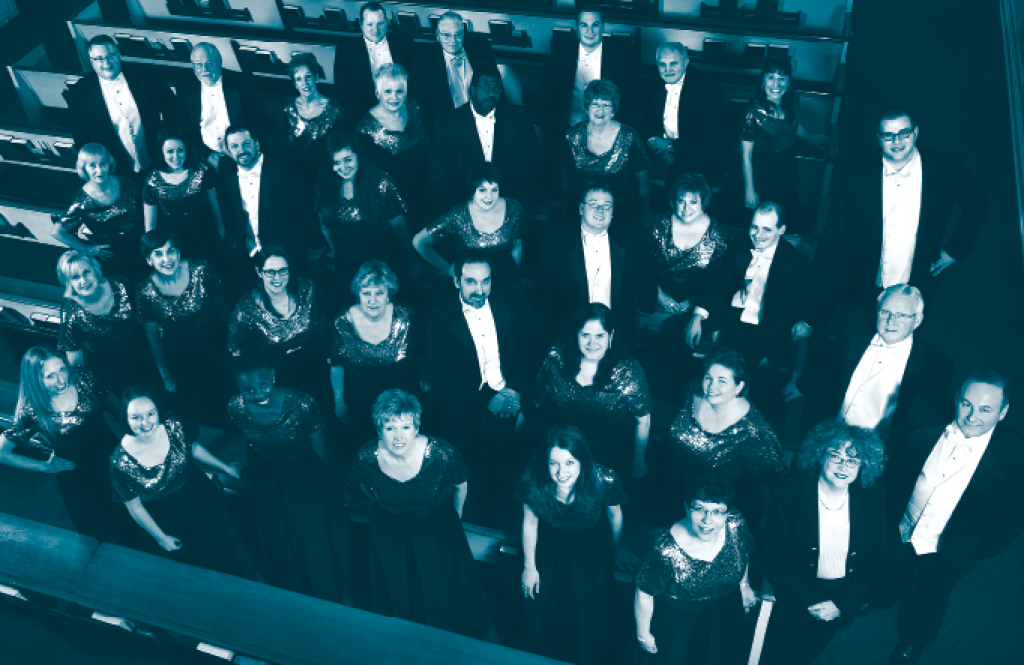
There will be no denying that fact later this month when the Harrisburg Singers, along with choir members from 10 area churches, combine their vocal “instruments” at the third American Composer’s Choral Festival. In all, about 225 singers will raise high their voices inside Trinity Lutheran Church in Camp Hill.

“There are two things that make the American Composer’s Festival special,” says Charles Beckley, chair of the Choral Festival, which has taken place every two years since 2010. “How often do you get to see a mass choir and, two, you rarely get to see the person who composed the music also conduct it.”

That composer—and the one directing the choir this year—is Dr. Robert Lau, organist/choirmaster at Mt. Calvary Episcopal Church in Camp Hill, where he has served for more than 25 years. He is the creator of more than 250 choral and keyboard works, published by leading musical publishing companies in this country.

“Also featured in the concert will be a brass quintet and organ,” Beckley adds. “Many of the choir directors from the participating churches play the organ, and they will take turns accompanying the mass choir under Dr. Lau’s leadership.”

Choosing a guest composer is no easy task when you get people together with different musical tastes. Beckley explains that six or seven possibilities were brought to the table, narrowed down to the top two choices—and then a decision was made from there.

“The appeal with Dr. Lau is that everyone likes his music, and it’s extra special that he’s a Pennsylvania native,” Beckley says. “Here’s a guy who’s nationally recognized, and he’s right in our own backyard.”

It’s one thing to be directing 225 choral members; it’s another to be one of those voices in a crowd of sopranos, altos, basses and tenors.

Kat Prickett knows that feeling well. As a member of the participating Harrisburg Singers, secretary of the Singers’ board and a committee member for the festival, Prickett has been singing in choral groups since kindergarten. She’s excited about all the pieces that make up this year’s event.

“There is something magical about singing with over 200 other voices and coming together as one,” she says. “It’s a wall of powerful sound, and, when you add the magic of brass, organ and a notable American composer, it’s truly amazing.”

Two of Prickett’s favorite selections include the “Ave Verum Corpus,” an a cappella piece with beautiful, lush harmonies, and “The Lord is My Shepherd,” which was created in memory of a member of the Jubilate Choral Ensemble who passed away rather young.

“It is hauntingly beautiful and, with all of the recent losses that the central Pennsylvania theater community has experienced, I think this piece has the potential to provide comfort for anyone who hears it,” Prickett says. “Music is a powerful gift that the Singers and mass choir have the opportunity to share on March 29, and we hope that people will take part of that gift away with them.”

Musical selections at the event also include Lau’s own music, along with pieces by past Choral Festival guests K. Lee Scott and Dr. Mack Wilberg. In addition, the Singers will perform a selection commissioned especially for this concert, entitled “Come, Let Us Sing to the Lord.”

“For me, this is always the most exciting part of singing in the Choral Festivals,” Prickett says. “We get to sing a brand new piece that was written especially for us on this occasion, and to sing it under the direction of the composer himself is the icing on the cake.”

The American Composer’s Choral Festival will take place on Saturday, March 29 at Trinity Lutheran Church, 2000 Chestnut St., Camp Hill. Tickets can be purchased by calling 717-737-8635 or by visiting www.harrisburgsingers.org/concerts. General admission is $10.


Continue Reading

Life of Service: For 20 years, Susquehanna Service Dogs have helped their humans cope, survive.

Screenshot 2014-02-28 08.41.15It’s a little after 9 o’clock on a Thursday morning, and SSD (Susquehanna Service Dog) Hamlet, along with seven of his mates, is being loaded into a van, headed for an area mall. They’re not going to shop ‘til they drop, but are destined for serious business—a training expedition.

“Each Tuesday and Thursday, we transport the dogs to malls around the area for training on how to behave among distractions such as other people, shopping carts and so forth,” said Amanda Nicholson, training coordinator for Susquehanna Service Dogs. “These dogs are permitted by law to travel with and help their partners inside crowded areas, and they must be trained, then tested periodically, to prove they are able to do that.”

At the mall, the dogs work with their professional and volunteer trainers who practice the various commands the dogs have already learned from their puppy-raisers—sit, stand, stay, come, heel, retrieve—then help them learn the advanced tasks they must know to support their potential partners. 

These more advanced tasks include visit (putting his chin on his partner’s knee to calm him in the event of a meltdown), take it (picking up a leash or something else his partner may have dropped on the floor and can’t reach) and maybe 20 other commands that will be of value. 

During this time, the trainer may take the dog to a food court to practice lying quietly under a table while his partner has lunch or a cup of tea. “Down stays” of 30 minutes or more are required. It’s critical that SSD Hamlet only pay attention to his trainer and no one else. Later, his partner’s safety may depend on it.

20 Years of Service

Two decades ago, Nancy Fierer founded Susquehanna Service Dogs, now a program of Keystone Human Services. Since then, SSD has placed 225 service dogs that provide assistance to their partners on a daily basis.

“I’m so proud of each one of these dogs,” Fierer says.

Every dog has his or her own special story, one that starts at birth and culminates in a unique human/animal bond.

SSD Hamlet, for one, began his career (and his life) on June 12, 2012, snuggled up with other pups and his mom. Each litter receives a name, so Hamlet was from the Shakespeare litter. At about eight weeks, he left the friendly environs of the litter and, after a week in the kennel for a physical and other health checks, moved to the next step in his training: life with a puppy-raiser.

For more than a year, SSD Hamlet lived with his raiser/trainer in State College, learning not only basic commands, but how to control the urges that most dogs have every day—running, barking, playing. SSD Hamlet must be given time to be a dog, of course. However, as a service dog in training, he has to learn the skills and behavior he needs. At 18 months, SSD Hamlet moved from his puppy-raiser into a kennel with other dogs his age to begin learning advanced skills.

SSD Hamlet, along with three or four other dogs, now will spend about three months in the kennel working with trainers. Afterwards, he finally will meet his potential partner. It may be a soldier with PTSD, a woman in a wheelchair, a child with autism or a man with multiple sclerosis. Potential partners greet and play with each dog before a decision is made on placement. Every partner is special, and each dog must be carefully matched to meet the needs of that partner. For example, it takes a relatively large, strong dog to pull a wheelchair or act as a balance dog.

Positive Effect

Once SSD Hamlet is matched with a partner, he will spend the next two to three months learning the specific skills required. Afterwards, the pair will spend three weeks working together with trainers, polishing the skills they will use. 

In SSD Hamlet’s case, he may become a courthouse dog. If that’s the decision, he must be sensitive to the moods of all around him and be able to calm people who are under pressure or stress. After the three-week training period, the partnership will be tested to make sure the pair works well together and both have learned the skills required to be able to move around their community and support one another.

Alternatively, he may serve an older person or even a child, which was the case with a recent success story cited by Fierer.

“We placed a service dog with an 11-year-old girl with a significant psychiatric illness and autism,” she said.

The girl’s family had tried many other support services with little success, but nothing helped until their service dog came into their lives.

“At the time the girl was a D/F student in school, with few friends and many meltdowns,” she said. “The service dog had an immediate positive effect.”

Together, the family taught the dog to exert full-body pressure, which provided a significant calming effect. Immediately, the girl’s meltdowns decreased in duration and slowly decreased in frequency. And her grades improved dramatically. 

“That girl is now 16, and her life has changed markedly for the better because of her service dog,” said Fierer.

There are many other success stories involving these dogs. If you’re inspired, consider volunteering with Susquehanna Service Dogs.  You’ll be proud of what, together, you can accomplish.


Coming Soon: PawsAbilities

If you’re interested in meeting service dogs and having fun with your own dog, then go for a walk this month to PawsAbilities, the annual canine extravaganza and fundraiser for Susquehanna Service Dogs.

“This is a fun family program,” said Vikki Lagaza, who coordinates PawsAbilities. “It consists of a number of events—we have a Dog Olympics, the Great Biscuit Bite-Off, Cutest Dog Contest, Dog Parade, agility tryouts and more.”

The event will be held on March 8 and 9 at the state Farm Show Complex in Harrisburg from 9 a.m. to 4 p.m. each day. As a special treat this year, New York Times best-selling author Luis Carlos Montalván and his dog, Tuesday, will be featured on the main stage on March 8 at 1 p.m.

Pre-sale tickets (ends March 4): adults $8, children $4. At the door: adults $10, children $5. Tickets are good for both days. Proceeds support the mission of Susquehanna Service Dogs.

For more information on Susquehanna Service Dogs, visit www.keystonehumanservices.org/susquehannaservicedogs; for PawsAbilities, visit www.pawsabilities.net.

Don Helin published his first thriller, “Thy Kingdom Come,” in 2009.  His second, “Devil’s Den,” has been selected as a finalist in the Indie Book Awards.  His next, “Secret Assault,” will be published in May 2014. Contact him at www.donhelin.com.

Continue Reading

Under Water: A change in flood insurance policy has left some property owners feeling stranded.

Screenshot 2014-02-28 08.34.46Sure, David DeKok might be safe from any flood insurance rate spikes for now. Then again, maybe not. And almost certainly, if he tries to sell the place, the new owner could be charged $6,000 a year, the same rate that brought the imminent sale of a neighbor’s home to a screeching halt.

“That’s a tremendous hurdle to selling a house here,” said DeKok. “It’s gonna really hurt property values. It’s gonna make houses all but unsaleable.”

In 2012, Congress passed the Biggert-Waters Act, or BW12, to erase a $24 billion deficit in the National Flood Insurance Program by limiting federal subsidies on premiums and making property owners pay market rates. In Harrisburg, the impact could be huge, and it’s not just property owners along the Susquehanna River and Paxton Creek likely to feel the effect. If flood insurance rates dampen home values or force owners to walk away from their properties, the entire city may suffer another hit to its economic prospects, some say.

First, a primer. All flood insurance follows rules and rates established by the Federal Emergency Management Agency’s National Flood Insurance Program, according to James C. Enders, vice president, Enders Insurance Associates, based in Lower Paxton Township. Adopted in 1968, the NFIP extended rate subsidies that assured the continued viability—or foolhardy development, depending on your perspective—of flood-prone areas. Any property with a federally backed mortgage that’s sitting in a high-risk zone must have flood insurance.

Under BW12, rates for homes and businesses sitting in high-risk zones or frequently flooded will rise 25 percent a year until the subsidy is erased. When a property is sold, the new owner immediately pays the highest rate.

One significant change comes at policy renewal time. Under BW12, owners of homes built before implementation of a 1976 Flood Insurance Rate Map—known in the insurance industry as pre-FIRM buildings—must have certificates showing the property’s relation to flood elevations. That certificate, always required in post-FIRM buildings, is used to determine insurance rates and could send premiums skyrocketing on older buildings, said Enders.         

The idea behind BW12 makes sense, Enders said. What doesn’t make sense are drastic changes after 45 years of business as usual.

“You and I as taxpayers are not going to continue to fund a program that is broken, and its intentions were all very good upon its inception—get communities involved, keep the rates down, and we know we’re going to foot the bill a little bit,” he said. “But I think we waited a little bit too long from 1968.”

DeKok now pays $1,700 a year for flood insurance on his Shipoke home. It’s pricey, he said, but the availability of affordable flood insurance convinced him and his wife to “buy here in this beautiful neighborhood.”

“They talk about bringing the price of policies up to market rates,” he said. “Where’s the market? There is no market. It’s somebody’s calculation of what the policy would be on open market.”

Sticker Shock

The issue isn’t new development in flood zones but protection of longstanding, taxpaying communities, said William J. Cluck, environmental energy and land use attorney, chairman of the Harrisburg Authority and a Shipoke resident.

“When we bought our house, this was a contract,” said Cluck.

In Harrisburg, Cluck sees the potential for higher taxes and utility bills citywide when property owners walk away from their mortgages.

“There’s real concern that the cost of the flood insurance program is going to be higher than their mortgage,” he said.

Many city property owners don’t realize their relation to flood zones and will experience the sticker shock of higher premiums, said Cluck.

“We allegedly have a recovery plan, but this is going to have a huge impact,” he said.

Though other states have taken steps to lessen the blow of rate hikes, Pennsylvania is not among them. Gov. Tom Corbett directed the Department of Community and Economic Development to form a task force of state agencies to assess “what resources we have available to homeowners” if the increases go through, said DCED spokesman Steve Kratz.

“The agencies met a few weeks ago and were taking the information back to their agencies and determining, from a proactive standpoint if this goes through, what they can provide in terms of support, hoping that the federal government does reverse this, but preparing in the event that they don’t,” Kratz said in early February.

Official inertia mystifies Cluck.

“As I understand it, Pennsylvania has the most miles of rivers and creeks in the country,” he said. “The economic impact on Pennsylvania has to be unbelievable. The fact that there’s nothing in our state government doing anything is just amazing to me.”

Deluge of Appeals

By contrast, Dauphin County commissioners are leaning on members of Congress and documenting the impact of drastic hikes on homeowners and businesses. One-fifth of Harrisburg real estate, comprising 2,500 properties, occupies the 100-year floodplain, they report. In Dauphin County, 12 percent of properties—13,205 total—are in 100-year or 500-year floodplains.

The county expects a deluge of homeowners appealing assessments on unsaleable homes with market values that have plunged, said Commissioner George Hartwick. Revenue drains would follow—tax losses of $3.3 million for municipalities, $20.8 million for schools and $9 million for libraries, according to county estimates. Services would be cut, or more revenue would have to be raised to keep services going, Hartwick said.

“When we see that kind of assessed loss in value and loss in revenue, who do you think is going to be making up that real estate tax loss?” Hartwick said. “It’s going to be everybody else not in the flood zone. The idea that this is somebody else’s problem couldn’t be further from the truth.”

In Congress, the issue has been snared like a dolphin in a tuna net—with some lawmakers from flood-prone areas scrambling for a moratorium, conservatives refusing to further subsidize an essentially bankrupt program, the White House backing NFIP reforms but probably disinclined to veto any delay bills.

For its part, FEMA last month announced a delay in some rate hikes until October 2015. However, the rate-hike delay apparently applies only to properties newly captured by redrawn flood-zone maps, not to those with existing policies, said Andrew Enders of Enders Insurance Associates.

“If you had been benefiting from subsidized rates, the stay or hold is not going to do anything for the phase-out of the subsidies,” he said.

Without compromise, RE/MAX realtor Ray Davis worries that the specter of high flood insurance costs is “bound to have an impact” on home sales in Harrisburg and elsewhere.

“It’s difficult enough when you have a property in the flood plain for buyers to overcome their concerns about living there,” he said.

As contributing citizens, Shipoke homeowners have “a right to continuation of reasonable subsidies,” no more unfair to other taxpayers than “for us to pay taxes to build a highway in Nevada that we may never drive on,” DeKok said.

Since 1888, DeKok’s house has withstood the floods of 1936, 1972 and 2011. The same goes for the people in it.

“We survive, we rebuild, and we keep a strong community going,” he said.


Continue Reading

Reform the Formula: Gov. candidates should consider impact of school funding on local economy.

When the snow finally begins to melt this spring, the race for governor of Pennsylvania will begin to heat up. By last count, not less than four or five major Democratic candidates have lined up to face incumbent Republican Gov. Tom Corbett, who is seeking election to a second term. The May primary will also help shape the races for the state House and Senate, which will go a long way in determining the balance of political power in Pennsylvania.

Now that Harrisburg has adopted the state-supported fiscal recovery plan, local and state attention should turn to pro-growth policies that will encourage our capital city to realize its full potential. The city’s population peaked at nearly 100,000 people in the 1950s before bottoming out at less than 48,000 at the turn of the century. The slight but important increase in population of about 600 people over the last decade shows promise for further growth and prosperity if the right conditions can be put into place.

 There are many local pro-growth policies that are effective, such as crime-prevention, urban transportation, improved sanitation and water, efficient and operating streetlights, and other civic infrastructure like parks and green space, which the city can and should work on and implement. However, other important economic policy issues can only be handled at the state level. One of those is education funding.

The topic of public education is sure to predominate the governor’s race, particularly the proper state support for local school districts and the ability of students and parents to access educational alternatives. There are few issues more powerful than how we educate our children and the level and fairness in state funding (perhaps a topic for a future column). However, a related issue, which typically receives less attention on either side, is the methodology for funding our school districts via real estate taxes and, importantly, the impact that those policies have on the local economies of those districts.

As a whole, Pennsylvania relies far more heavily on local real estate taxes to pay for public education than most other states in the country. A 2006 study showed that the commonwealth ranked fourth in the nation in that regard. Other states use a broader mix of income, sales and other taxes, along with real estate taxes, to make up total funding for education.

Take Harrisburg, for example. The total millage rate paid on real estate in Harrisburg is around 45 mills. That means, for every $1,000 in taxable real estate, the owner must pay about $45 in annual taxes. On a $100,000 home, that is $4,500 in annual taxes. Fully two-thirds ($3,000) of that bill is payable to the school district, with the county and city dividing the remaining one-third, or $1,500. (The figures are an estimated average as the city has a two-tier system, with a higher rate on land than on improvements, making each parcel somewhat different.)

This tax burden, which is far higher than in surrounding communities, is a powerful disincentive to anyone considering buying a home in the city, regardless of the quality of education provided or available alternatives. New homes that would be assessed at the full cost of building could face tax bills of $5,000, $7,000 or even higher annually. Knowing this, builders have simply not built new homes in Harrisburg at any scale—and none without outside subsidy—over the past several decades, thereby contributing to the decline in population. (The burden on renovated homes is a more complicated story, but the disincentive is also significant, if not as strong as against new home construction.) In contrast, surrounding communities with lower real estate tax burdens have grown their housing supply along with their populations.

The true problem, however, is that cities like Harrisburg have little to no choice or control over the matter. The poorer urban districts have been forced to crank up their millage rates to try to keep up with falling populations, making their real estate even less competitive with surrounding communities. Meanwhile, regional growth has pushed up real estate values in lower-tax suburban communities, making the properties more valuable with greater revenue overall and lower individual rates. 

In other words, cities, like Harrisburg, have small tax bases with high tax rates, while suburban municipalities generally have large tax bases with low tax rates. As a result, the suburban tax structure enables and promotes growth, while the urban tax structure almost completely prohibits it. Once in place, these conditions are nearly impossible to break absent extraordinary measures like tax abatement, as successfully implemented in Philadelphia (which only abates taxes on improvements that otherwise would not happen), or other policies like Keystone Opportunity Zones (KOZs). 

Beyond these local fixes, true reform at the state level would re-examine not only the funding formula that the state contributes to local districts, but alternatives to the excessive local real estate tax burdens. Some states, like Michigan, have tried to address these burdens by shifting taxes away from real estate to income, sales taxes and even cigarette taxes. Interestingly, the burden in Michigan prior to its reform in 1993-‘94 was 34 mills, which ended up causing a taxpayer revolt (it is now about half that). Harrisburg citizens face a 45-mill burden, but have no way to “revolt” without help from the state legislature and governor. 

Whether you are a Harrisburg resident or a resident of the region who wishes Harrisburg well—and you’re concerned about fairness and the ability of our capital to fully recover—this is an issue that should be high on your agenda when thinking about voting this spring.

A real solution would be for this governor or the next to consider comprehensive reform of the funding source for our Pennsylvania schools, changing the mix of taxes away from real estate toward other sources, without raising overall tax revenues. Any candidate who brings this issue to fore deserves consideration and support.   

 J. Alex Hartzler is publisher of TheBurg.


Continue Reading

Beautiful Music, Beautiful Space: “Music by the River” set to debut at St. Stephen’s.

Screenshot 2014-02-28 08.41.49Market Square, Italian Lake, HSO Summer—Harrisburg doesn’t lack for high-quality music series, some seasonal, some year-round.
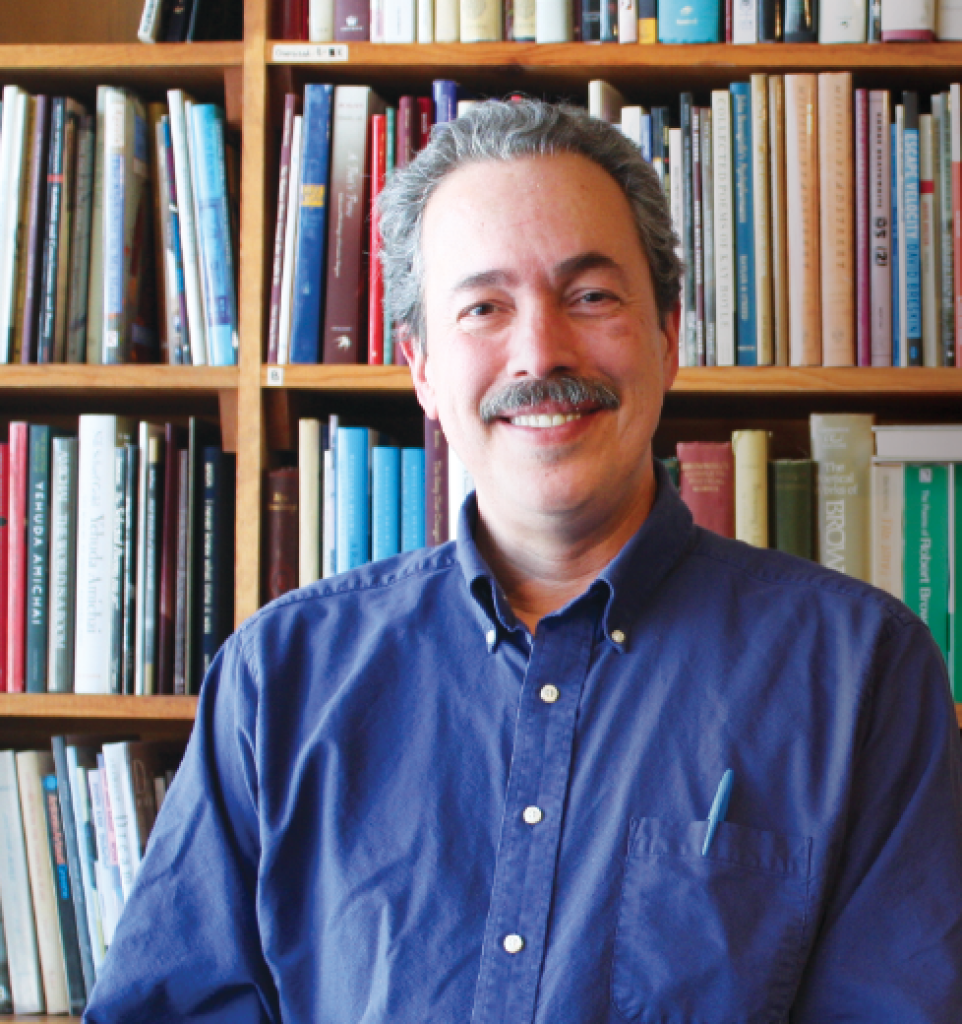
Adding to the riches: This month, Maestro T. Herbert Dimmock will launch the “Music by the River” series at St. Stephen’s Episcopal Cathedral, where he serves as organist and choir director.

“We anticipate a good variety of artists, some local, some out of town,” said Dimmock, who is eager to bring his ideas and talents to music-lovers in the Harrisburg area, his home for the past year.

In 1988, Dimmock founded the Bach Choir of Baltimore, which performs the first Sunday of the month in Christ Lutheran Church in the Inner Harbor. In fact, before moving to this area, he started and directed many musical groups in Baltimore, where he also served as organist/choir director at various churches.

The Music by the River series—its named inspired by St. Stephen’s picturesque location across the street from the Susquehanna—has been a part of Dimmock’s vision for some time.

“It’s a time-honored tradition that I wanted to bring to Harrisburg,” he said. “This is a way for people to experience performances that they might not otherwise get the chance to.”

The cathedral’s high ceilings and colorful, stained glass windows offer a setting designed to set the mood for the music and enhance the audience’s listening pleasure.

“This church is rich with both beauty and history,” Dimmock said.

The inaugural concert will take place on March 16, as the Langley Air Force Woodwind Ensemble plays selections from its vast repertoire, ranging from Renaissance to contemporary.

Then, on April 5, the Bach Choir of Baltimore, under the baton of Maestro Dimmock, will present Johann Sebastian Bach’s dramatic “St. John Passion.” The concert, which requires tickets, will feature a co-mingling of voices true to the original 18th-century arrangement, with professional orchestral accompaniment and Baroque soloists.

While Harrisburg has a long tradition of music culture, Dimmock believes this series can offer the city something new.

“We are looking for things that consistently have a spiritual element,” he said. “This series is unique in the way that it brings that to our city.”

Moreover, Music by the River offers a combination of substance, beauty and affordability.

“Good music appeals to us beyond words,” Dimmock said. “Ninety percent of these concerts will be free. When you bring high-caliber talent like this at such a low price, why would you not want to attend?”

St. Stephen’s Episcopal Cathedral is located at 221 N. Front St., Harrisburg. www.ststep.org.


“Music by the River” Series Upcoming Concerts

Langley Air Force Woodwind Ensemble                                         March 16, 4 p.m.

“St. John Passion,” Bach Choir of Baltimore                                   April 5, 7 p.m.

ARTSFEST Organ Marathon, Herbert Dimmock, organist             May 24-26, noon-6 p.m.       

Continue Reading

Verse across Cultures: In his work, Poet Laureate Rick Kearns reveals his passions, his whimsy.

Rick Kearns

Rick Kearns

Last month, Mayor Eric Papenfuse named Harrisburg native Rick Kearns as the city’s new poet laureate, the first Latino to be so honored. Amidst his busy schedule, Kearns, a professor and tutor at HACC, made some time to tell us about his craft, his culture and his new position.

TheBurg: How did you get involved in writing poetry and where did you initially find success doing it?

Kearns: I was drawn to poetry when I was still very young. I was a kid, maybe 8, 9 years old. I enjoyed what I heard because of the music in the language. That was the first thing that attracted me. The second thing was the ideas. But the format attracted me, and I was always attracted to music. I’ve been a part-time jammer since I was a little kid. So, that was where it began, and I was writing off and on from maybe age 12 to forever from that point on.

As I grew older and came to know a bit more about the Puerto Rican side of my family and the situation of Puerto Ricans here, it sort of politicized me. I began to see poetry as a way of telling that story. For instance, when I was, remember now, I’m 56, so in the late ‘60s, early ‘70s, as I was coming of age, the only Puerto Ricans I saw on movies or TV or anything, they were either criminals or just foolish, negative characters. And I wasn’t seeing any of the people I was relating to on the screen. That’s how I got to know about racism in general, and I got to know about racism against other people of color because a bunch of my friends were African American. So, I was sort of politicized, and I was using poetry to express myself in that direction.

For instance, my mother was a professor. She spoke six languages. My grandfather was a hardware salesman who loved his job so much that we had to fight with him to get him to stop working when he was in his mid-70s. I didn’t see that reflected in the media, and I rarely see it today. It’s not as bad as it was, but it was pretty bad.

So, that was part of what drew me in. But, as I got to know the art form more, I began to study it more, and I was influenced by all of the great U.S. poets as well as some of the English poets. When I started to study Spanish, I began learning about the Spanish poets and Puerto Rican poets and then poets of color in this country, meaning African American, Native American and Puerto Rican and Latino. So, all of that stuff together was influencing me, and I think it’s been reflected in my work.

TheBurg: What language do you primarily write in?

Kearns: I write in English. I was raised in English in an English-speaking household, but I grew up knowing Spanish. But I didn’t have to write it, and I didn’t have to speak it that often. So, when I got to college, I decided to study it so that I could read about, for instance, Puerto Rican history, Puerto Rican literature, in Spanish, because the only place you could find any information was in texts in Spanish. So, it was through studying Spanish that I got to know that world better. I became fluent enough that I’ve been able to do some basic translating and interpreting. And, along the way, I learned some French and Italian, and I’m married to a Brazilian, so I’ve learned some Portuguese.

So, I love language, and I really have enjoyed learning these other languages. And I’ve also found that it’s given me a better appreciation of the relationship between language and meaning and feeling, in that I can tell you that I’ve read certain poems in Spanish, then seen translations of them, and I know the translations are missing something—and vice versa. I’ve read, for instance, American poets translated into Spanish, and I can see some things missing there. So, that was another thing that emphasized to me that power of language. And it’s been fun; I’ve really enjoyed it. And I’ve also found that the poetry that I’ve been writing has been somewhat educational to various folks who’ve heard my work. So, I’ve read my poems in rural settings, where nobody has seen hardly any people of color. Or I’ve read in some suburban settings, too, where the folks haven’t been exposed to or know about Puerto Rican writers, for instance. And, like I said before, things are a bit better now, but, in other ways, we’re having similar battles right now. There are a whole lot of Latino kids going to school in Harrisburg High School. There’s little or nothing in their literature courses talking about writers of Puerto Rican or Dominican or Mexican heritage writing in this country or writing from their countries. So, the battle isn’t over. These are some of the things that I’ve been engaged with, aside from just trying to be a better writer, trying to develop my craft and pay attention to that.

TheBurg: What do you find yourself writing about frequently?

Kearns: If I were to generalize, I would say it’s just people’s stories, stories of the lives of not-so-famous people. I found myself, aside from writing about famous situations or people, writing a number of stories about people who are on the margins, or who just aren’t famous, just so-called regular folks. I think, if I was to generalize, that’s what I’d say. I write about everybody, and I’m drawn to stories, personal stories. And, every once in awhile, I go off on these little themes. In the last three years, I’ve written maybe 10 or 11 poems that all involve crows. So, I’ve written about crows, also using crows as a symbol of other things. I’ve also written pieces that are sort of dedicated to certain people. I wrote a poem to my mom, which was really a very emotional thing. She was an amazing person. It was about nine or 10 years ago when I wrote it. It was around the time that these friends of hers had put together a little testimonial dinner for her. So, I wrote a poem for her. But, before that, I already had written a poem for my grandfather. I had written a poem to certain famous people, where I just sort of addressed them and tried to ask them questions. For instance, this guy, who was fairly famous in Puerto Rico a long time ago was a guy named Pedro (something) Campos. I wrote a poem to him that got published in a few places. The poem that the mayor read was a poem that I wrote to Dr. Martin Luther King. I was addressing him, in a sense. So, some of the poems I write are sort of dedicated or directed. So, those are some of the different themes.

TheBurg: How did it come about that you were named poet laureate of Harrisburg by Mayor Papenfuse?

Kearns: I got to know Joyce Davis [Papenfuse’s communications director] a few years ago. I met Joyce, and she was telling me about her organization—the World Affairs Council. Eventually, she told me that the upcoming Martin Luther King Day celebration involved the winners of a poetry contest, and would I like to read a poem there? And that was last year, in 2013. And I said, “You know what, Joyce, I’ve been meaning to write a poem to Dr. King, so yeah, I’m going to do that.”

So I wrote a poem for that event, and I came and I read that poem, and I read the mom poem. I read the poem for my mom. At that point, she was very ill, and it was this past year that she passed. I was also grieving at the time. So, I read those poems. They were very well-received by Joyce and those folks. And then it was a couple months ago, maybe a month or so ago, that Joyce wrote to me and was telling me about the inaugural and that there would be a poet laureate and that she wanted to nominate me. And I said, “Well, thanks, Joyce.” I had no idea what my chances were or anything like that. And, honestly, I really didn’t think it was going to happen. But she said, “OK, send me your information and send me a poem.” So, I sent her this thing that’s like a poet’s CV, it’s called a literary bio. I sent her my bio, and I sent her the King poem. And, a few weeks after that, I got an email from her saying, “OK, tomorrow, I’m sending you the letter signed by Mayor Papenfuse, saying you’re going to be announced.” Apparently, he really liked that poem. And I had no idea—I mean no idea—that he would want to read it. At the event, as he’s about to introduce me, he looks and says, “Rick, by the way, could I read this poem?” I said, “Of course.” You know what, he did a really good job. He did a fine job. So, it was a very nice surprise. I didn’t expect the honor, and I especially did not expect that the mayor would like the poem enough that he was going to read it. So, yeah, it was very nice, and I got a lot of reaction from a variety of friends, people in school and other writer-friends of mine in various parts of the country.

TheBurg: So, what types of responsibilities come with that title?

Kearns: Well, I was kind of hoping for a cape, but there’s no cape [laughs].

No, it’s very vague. I was told that I would be asked to represent the city at some literary events. And sometime in the future, at some arts-related events, I will probably be asked to participate. But, at that ceremony where the mayor handed me the proclamation and so forth, I did say that I would like to help develop creative writing or poetry workshops in the barrio and in city neighborhoods. So, one of the things I’m hoping to do with this new platform is to promote the idea of creative writing and other arts programming for kids in this city. And I have done some of that in the past, but unfortunately keeping arts programming going almost anywhere is tricky, especially in poor neighborhoods. Funding and everything else is very iffy. But I taught at least four writing workshops in the Latino neighborhood and one or two others in other parts of the city in the early ‘90s. And, as a result of those experiences, I know that they can have a really good effect, a long-term effect, on the kids who participate and, to a certain degree, their families. And I’ve also taught creative writing at the college level. I’ve taught at HACC. I taught many years ago at the Pennsylvania School of Art and Design in Lancaster. And I taught a really neat seminar course at Rutgers, back in the mid-‘90s. And it’s a wonderful job when you can get it, to teach creative writing. But, right now, a lot of people are looking at this time in the city as a time where, OK, let’s start over, let’s try something new. And I think, in that environment, it’s going to be easier, in a sense, to get people’s attention, at least, to the idea of this arts-focused programming. So, I’m hoping that, aside from maybe reading at events in the next four years, I can get one or two of these workshops going. That’s what I really would want to do.

TheBurg: What do think of the state of the writing arts in Harrisburg? What do you think we might need?

Kearns: Starting in the early ‘90s, and up until today, there have been reading series and poetry in the city almost continuously. And, right now, there are one or two others right on the West Shore. So, I’d say that the state of poetry in the city, in that sense, is healthy. It’s very healthy. There’s a nice scene here, and there has been a nice scene. Some talented folks have come and gone, and some are staying. So, that part of it is really good.

But the problem is that the art of poetry, in general, has not been supported financially. This is the old story of the arts, that very talented people can go throughout a whole career without getting compensated or recognized. And that problem still exists. It’s getting funding for arts; it’s getting funding for poetry, for music, for dance. On the one hand, there is a vibrant scene, but it’s still very tenuous because of getting funding to develop a series to pay writers, to perform, to cultivate their art. That’s what’s missing. There a saying we used to have back in the day, which I still throw around a lot, which is $2 and a great poem will buy you a small order of fries. It’s basically still true, but, I think, with myself promoting the arts when I can, and more folks hearing about these reading series and about these local poets, I have some hope that that will result in encouraging political leaders to reinvest in the arts because, without going into too much detail, this has always been a problem in this country, especially around poetry. But, starting with the mid-to-late ‘80s, there was an attack on arts funding at the federal level. Federal funding took a huge hit. It was replaced in part in the 1990s, but then it got chewed away again. I think, for instance, the NEA budget was something like $80 or $90 million. The city of Paris spends $1 billion. The city of Paris spends $1 billion on the arts. The United States total has a federal allotment of $90 million. The city of Munich spends close to $1 billion. And they know the results. The arts bring in tourists. It generates income. It helps other businesses. And it’s healthy for the culture. It’s healthy for the intellectual life of the country. And I guess I’m hoping that that message gets through, that the arts are good in and of themselves, but that they have these other benefits. If we can get enough people to understand that, things will improve, at least a little bit.


The Moon Rides a Black Horse  (for Lorca)

The moon is

riding along

the shore

thinking violins

and howling wolves,

the moon is

riding a black horse,

looking for a widow

who sings

the deep song

llanto of

the unforgiving sea,

buleria of

smokestacks and

isotopes.

The moon

wants a good

red wine

and a woman

who can dance.


Crow Dish TV

Crow is speaking to me

but I can’t understand what he’s saying.


Crow sits on top of

chain-link fence of

my back yard he’s

flown down from

neighbor’s roof where

he and 10 more large

pitch black crows sit on and

around Mr. Moody’s

6-foot diameter TV dish.

Hitchcock would love this

but it’s making me nervous.


Crow is screeching now, louder

and I’m getting the idea that

he’s found a way to

intercept TV waves he’s

pissed off at what we’ve done

to, well, everything and so

he and his family are

addling us through the eyes

lucky for them, doesn’t take much

to make us stupid

but Crow

is still pissed off

he wants more of a challenge

this is too damn easy

is what I think

he’s saying now

or maybe he’s telling me

something else that will

re-appear in one of my

animal dreams

again


I ask him to please

do something other than

Reality TV and he screeches

And flies off, back to the

gang by the dish, they

commence to caw in a

raucous fashion

I’m guessing they’re

laughing at me

again.


I go inside

turn on the box.

Nothing has changed.

I say out loud

to no one in particular

‘Damn, we’re screwed.’


Crow’s Midtown Battalion

They swoop in from the south.

Targeting the cars of

state workers and

apartment dwellers

on a side street

near the capitol.

Multi-colored splatter.


Crow has a new hobby


He and his

Midtown Battalion

align themselves on the

telephone wire that runs

just above the unlucky vehicles.

At the same time of day

just before dusk and

maybe there’s another pattern.

It does happen in sequence


probably follows a melody.

No one interested in

transcribing this one.


Crow has a new hobby


He’s tired of banking.


People in Small Rooms

 “5. Something that you feel will find its own form”  J. Kerouac


I knew it was there

Connection

Kid wearing tie and fancy shirt

normally dressed in jeans

I asked,

“Court date?”

He looked at me blankly.

You smiled and said

“Wow, haven’t heard that one

  for a long, long time.”

We were

the only ones laughing at this

and became friends

allies from a place

where ties used to mean

Police

DA’s

Bikers in court

people in tight places

and small rooms.


Missing You, As Usual, In the Wintertime

Hidden in the trunk of the Ausubo

floating through the house in Las Lomas

riding the blood blossoms of

the flamboyan inside the

guitar

Boricua

Puerto Rican

Latino

Hisss-panic


All these words

don’t catch the smell

or spark or the

goose bump charge volt

rumbling up my spine

and through my head

when I think of you

Borinquen,

Puerto Rico

and I think of you

Puerto Rico


As I sit in front of

this computer screen

wrestling articles out

of actions, statistics

subtle assaults and the

sulfurous vapor coming

out of politicians’ mouths,

I dream of you

my beautiful

brilliant

deranged country.

I make do

trying to

help my young

cousins deal with

the language of

industrial consonants

the language of

Shakespeare, Updike

and of Espada and Soto,

of Martin Luther King

and of

English-only paranoia


the language of lynching.


I remember sea breezes

when I shop the bodega

for cafe puro, bacalao

candles with San Lazaro

and enormous plastic dolls

wrapped in clear sheets

enormous Indian chief

figures designed as if

there were still Tainos in

Puerto Rico

and the secret is,

there are.

There in Vega’s

“Spanish American Grocery”

There in my

mother’s house

There on the

street in front of

the church on Market St.


Inside the yautia

in the air above the

cinammon colored girls

laughing in the doorway,

in the roar of the

engines gunning down

Derry Street,

I see you

Borinquen.


I cry for you

and my blood that

has returned to

your earth Puerto Rico

I cry for Abuelo

my Mom

for Tio Raul

for the people

and the things not

here not now not

within

reach

Puerto Rico

I’ll be looking for you

again

tonight.


Continue Reading

Spring Zing: Give your greening garden a great, big howdy-do.

Screenshot 2014-02-28 08.40.48The days are warming, the birds are singing louder. Your personal zing is getting a much-appreciated infusion as it entangles with this awakening. It is a beautiful, chaotic frenzy. Focus and green up the delicious surge of energy!

If you have plans to plant this year, begin by walking around your property and getting to know it better. I am continually amazed at this exchange with many shoppers.

“Is it sunny or shady in that spot?” I ask.

The answer, more times than you would guess is, “I don’t know. The area is in the front of my house.”

Ummm.

Help turn your thumb greener. Be aware. Are there spots that are excessively dry or wet? Wandering deer? Having personal information about your spot on Earth will increase plant choice success.

There are plants of high value—long-lived, low maintenance, insect- and disease-free, easy to grow and interesting. There are other plants that should only be planted in a horse pasture! These are plants such as short-lived, brittle trees (the poor-quality ornamental pear) and those plants prone to insect and disease problems. Some are fussy about soil or water needs, becoming weaker and prone to issues when their needs are not met. Some are invasive, currently powering through our native woods (this includes the ornamental pear!).

People who know about plants are called “horticulturists.” These garden geeks can help you choose plants based on your site needs and how the plant will react to your conditions and expectations. Be aware. And don’t believe, just because you saw it on the Internet, that it must be true. Talk to your locals. 

Turning our attention to expectations…how big do you want the plant to get? What ultimately should be the size of the perfect tree? Did you look up and make sure there are no power lines? How far away from the house should it be?

And don’t ever say, “I’ll be gone before it gets too big.” Really, just don’t. It’s not like a tree can get up and walk over 15 feet due to poor placement. And setting them up for a future of brutal tree topping is awful for the health of the tree—and just plain wrong. Be aware!

This also applies to your shrubbery choices. Don’t say, “Oh, I’ll just prune it when it gets too big.” That translates directly to: “high maintenance.” Choose the proper plant for your spaces. You and your plants will appreciate your extra efforts.

A good garden rant from me has to include the use of chemicals in the garden, with a burst about lawn care.

Eighty percent of chemical misuse is due to homeowners: labels not read, wrong or no identification of the pest, not wearing protective gear. The label is where the dose information is and where the warnings are. If it says two tablespoons will do the job, don’t use two, plus a splash for good luck!

The label often will read “caution,” “warning” or “danger.” (Caution is the lowest threat.) Sometimes, it’s best just to do . . . nothing! Systemic chemicals (imidacloprid) are absorbed by the plant and any insect feeding on it—or drinking from the flowers (our bees, butterflies and hummingbirds)—will ingest it and die. Be aware.

If the bottle says “lasts for 12 months,” that translates to: “This chemical is so sturdy and awful, it takes 12 months for it to go away.” Yikes. Bring a leaf or insect sample to a horticulturist and get the right identification and plan of action.

Lawn care is quite possibly the greatest economic manipulation of our times. We have been led to believe everything that is not a blade of grass is the enemy.

Watch the commercials, and really “see” them—we are waging a war against…dandelions? Really? The bright, yellow flowers are landing pads for pollinators, including bees. The spring fresh foliage is fabulous in salads and is a natural detox (I have recently seen it being sold in grocery stores). Roasted dandelion root tea is also believed to have healing properties and is quite tasty. The big tap root breaks up clay and hard soils.

And the clover? Clover (another bee food source) has the magical ability to pull nitrogen (fertilizer) out of the air and transfer it to the soil. So, we buy chemicals to kill the clover, and then we buy chemicals to fertilize. We kill the dandelions that are making the soil better and buy more grass seed, hoping it will finally take in the terrible soil. And then we worry about what is happening to our beloved bees.  Hmm. We aren’t too smart. But the lawn care companies are laughing all the way to the bank.

Don’t be a sheep. Be aware. Let your lawn be a meadow.         

Erica Shaffer is a nursery manager with 24 years of experience at Highland Gardens, Camp Hill. She’s also a proud landscape designer, consultant, lecturer, writer, blogger and tree-hugging plant geek. www.highlandgardens.org

Continue Reading

Good Cop: To Robert Martin, community policing means cops are in the “human being business,” an approach he now is trying to share with Harrisburg’s force.

Robert Martin

Robert Martin

Robert Martin, the public safety director of Susquehanna Township, has always been a reader.

Growing up in Prospect Park, a borough just south of Philadelphia, he owned a copy of the 54-volume Great Books of the Western World, which he read constantly, along with the encyclopedia. As an adult, he keeps up the habit, consuming studies, usually related to law enforcement, and books, usually dealing with more cosmic themes. Last month, after finishing “Man’s Search for Meaning,” by the psychiatrist and Holocaust survivor Victor Frankl, he picked up “Biocentrism,” a monograph on the ascendancy of the biological sciences.

“When I watch TV, if I’m not watching sports, it’s the book channels, where they’re interviewing authors,” he told me, during a visit to his office, in a squat municipal building on Linglestown Road, one morning in early February. “That’s what I watch. My wife will come down and be like, ‘Are you kidding me?’ And I’m like, ‘That’s what I watch!’”

Martin is tall, with round cheeks and a friendly, wholesome manner—he greets acquaintances as “buddy,” he says “oh my gosh.” The day of my visit, he wore a suit with a purple patterned tie, black-framed glasses and a class ring from one of his alma maters, Valley Forge Military Academy & College in Wayne, Pa. He started serving Susquehanna Township in 1988 and retired this year as chief of police, a position he held for 16 years. Upon his retirement, the township appointed him to his new position, where he will continue to oversee the department, as well as the fire services.

In January, during his first press conference as mayor, Eric Papenfuse announced that he would be tapping Martin as a public safety consultant through the first six months of his term. Two days a week, Martin will advise Harrisburg’s own police chief on ways to strengthen the department. The arrangement will cost the city nothing—Susquehanna is underwriting one of the days, while Martin is donating the other one. In addition to any organizational recommendations, Martin will also focus on developing a strategy for community policing.

At first hearing, community policing can sound like a bit of public-relations pablum. It seems to take something that ought to be implied—what other kind of policing is there?—and dress it up to convey an impression of change. “Community Policing Defined,” a pamphlet distributed by COPS, an office of the U. S. Department of Justice, offers a snapshot whose opacity rivals David Brent, the master of “management speak” from the BBC series “The Office”: “Community policing is a philosophy that promotes organizational strategies, which support the systematic use of partnerships and problem-solving techniques, to proactively address the immediate conditions that give rise to public safety issues such as crime, social disorder and fear of crime.”

Nonetheless, at the mayor’s press conference in City Hall, everyone invoked the phrase with enthusiasm. Martin called Harrisburg’s chief, Thomas Carter, a “walking textbook of community policing”; Papenfuse announced a companion initiative, the appointment of a full-time “community policing coordinator,” whose job is to “revitalize citizen involvement in fighting crime.”

This is largely because the concept of community policing, however nebulous, has defined Martin’s tenure in Susquehanna Township—one that has been marked by a growth in the police force, a drop in crime, and a spike in citizen involvement. By his own accounting, the concept of community policing has motivated the design of his department’s website, has informed how he trains and promotes his officers, and has guided his interactions with the public, who seem to have responded, by and large, with grateful affection. Clearly the term means something. But what?

Well, for starters, it seems to be the sort of policing where being a voracious reader plays a role. Years ago, someone remarked to Martin, who holds two college degrees and certificates from Harvard and Princeton, that being a college graduate wouldn’t make him a better police officer.

“Well, it may not make me a better cop in terms of the nomenclature of writing a police report or making an arrest,” he told me. “But it will broaden my perspective of human beings. And I have a feeling, in some way, that’s gonna make me a better cop.”

Though Martin’s reading habits, as he puts it, make him “a little different from most police officers,” they’re also central to how he thinks of his profession, which, for him, is about much more than handcuffs and tickets. Nowadays, when he interviews officers being considered for promotion, he concludes by asking which book they’re reading. “I want my officers to be readers,” he said. “I want them to expand who they are.”

The Department of Justice’s COPS (Community Oriented Policing Services) office was formed by the Violent Crime Control and Law Enforcement Act of 1994, the Clinton administration’s omnibus crime bill and the largest law-enforcement act in the nation’s history. Among the law’s provisions were the Violence Against Women Act, the federal assault-weapons ban, now expired, and a boost to prison funding. The law also provided for close to $10 billion in grant money to be disbursed to law-enforcement offices around the country in support of “community-oriented policing.” The funds, though aimed mostly at hiring and retaining officers, could also be used for crime-prevention programs and for training in skills like conflict solving and mediation.

In addition to distributing grant money, the COPS office also serves as a repository for advice about best practices. One of the standbys of the COPS website is “The Beat,” a podcast featuring interviews with officers and other experts about developments in community policing. In February, “The Beat” released a series of interviews about a program called “Coffee with a Cop.” The program, which follows a national template, involves partnerships between local police departments and restaurants, which provide pots of coffee and seating space for officers to interact with the public.

“When you really look at how we communicate with the public, we are always answering emergency calls and never really have a chance to sit down and have a cup of coffee with somebody,” an officer tells the interviewer in one episode. “So, this is an opportunity to really just sit down and focus on some of the questions that might not be a 911 question.”

One of the tenets of community policing is the idea that citizens should have an open, even cordial, relationship with officers. The most dangerous invention in modern police work, Martin likes to say, is the climate-controlled patrol car—keeping officers from interacting with members of the public except in the event of a crime. An early recommendation he made to Harrisburg’s Chief Carter, which has already been adopted, is the institution of mandatory foot patrols, requiring officers to leave their vehicles for some part of each shift. Another initiative, which he implemented in Susquehanna Township under the name Operation Vigilant Protector, instructs officers to alert citizens of conditions that might invite criminal activity.

“I wanted one more kind of block in our system that got the officers out of the car and sent a message to our citizens that we’re not just driving around,” Martin told me. His department supplies officers with salmon-colored cards to be placed as a cautionary note at the scene of the crime-in-embryo: on the windshield of an unlocked car, say, or on top of unsecured property in someone’s yard.

“They come out for work in the morning, and they see that vigilant protector card on their windshield, their first thought might be, ‘Oh my God, it’s a parking ticket,’” Martin said. “No, it’s a little warning card saying, ‘Hey, you left your doors unlocked, and it’s probably a good thing to lock your doors before you go to bed.’ Then they know, ‘Wow, what a nice gesture from the police department. I appreciate that.’”

This service-oriented approach can even extend to circumstances that might customarily be adversarial. Another hallmark of Martin’s tenure is the judicious use of warnings in place of citations. “I think that one of the greatest tools a police officer has in the Commonwealth of Pennsylvania is a written warning,” he told me. He sees the routine traffic stop as an instrument with “exponential value.” For the drivers pulled over, it’s both an “opportunity to educate” and a chance to make a positive impression by engaging them politely and not saddling them (at least, not the first time) with a fine. And, “if you’re on that traffic stop for 10 to 15 minutes on Union Deposit Road, and 30 to 50 cars drive by, they’ve been impacted as well.“

“I’m a believer in presence,” he said.

Of course, a corollary of constant presence is the feeling of constant scrutiny of our daily lives. You don’t have to have criminal intentions to be wary of increased engagement from the men in blue. What about people who just want to be left alone? When I put this question to Martin, he thought for a moment, then replied, “I think that’s gonna be a small minority. I think folks want to feel protected, and they want to feel secure.” The website of the Susquehanna Township police department has an online form for submitting complaints and also one for complimenting his officers. Martin encourages citizens to use both. “I get an officer compliment online once a week,” he said. “It’s great.”

One reason that community policing might elude easy definition is the slipperiness of that initial qualifier—“community.” The sort of folks who will show up for a meet-and-greet with cops over a coffee pot are probably not the sort who have had, historically, the most troubled relationship with the law. How should police go about engaging those portions of the community that, for one reason or another, have learned to distrust them?

Another initiative of Martin’s, which he began implementing around six years ago, is called Operation Honorable Endeavor. It encourages officers on patrol to approach young people they see and, basically, try to get a conversation going. He acknowledges that some aren’t responsive, but his response to officers is, “Keep trying.” “It’s incumbent on us to continue to extend the olive branch,” he said. As he likes to remind his officers, “You never know as a police officer when you have an opportunity to uplift a young person, who maybe does not have anything positive in their household. If you say something uplifting to them, maybe you’re the only person that week that said something uplifting to that young person. Think of that. Think of the power you have.”

As part of his professional development, Martin attended executive-training programs at Harvard and Princeton, where he learned, as he put it, to take “a bit more of a private sector view” of law enforcement. “As a police department, we’re not profit-driven, certainly, but we do have customers,” he said. “And our customers are the citizens we serve.” A concept often attached to community policing is that of “procedural justice”—the idea that the transactional parts of enforcement, like how officers treat offenders and how transparent their rules and procedures are, are essential to the perception of justice being served, and perhaps to justice itself. Some of the principles of community policing look less like principles of law and more like principles of good customer service.

This can apply not only to minor offenders, like speeding drivers, but also to more serious ones. Last year, a Susquehanna Township detective, Aaron Osman, helped solve a serial vehicle-theft case that concluded with an on-foot chase through the snow in the neighborhood of Bellevue Park, in Harrisburg. The perpetrator, an unusually short high school student, whom the officers nicknamed “Peewee,” evaded police for nearly an hour, at one point hiding under a car. After Peewee was apprehended, Osman told me, the two of them discussed the chase, almost comparing notes: “I told him, I give you some credit. I run three or four miles every day… ‘Dude,’ he’s like, ‘I slid underneath this truck and I hid underneath it. You ran by me, but you were about three houses up, when you looked down and you realized there weren’t footprints in the snow anymore.’”

I recounted this later to Martin, expressing my surprise at what it suggested about the relationship between criminals and police—how it could sometimes border on the friendly, or even the fraternal. “That doesn’t surprise me at all,” he said. “And that’s the mark of a really good detective. It really is.”

I asked him to elaborate. “Well, because, who’s to say that, five years from now, Det. Osman may have an opportunity where he needs that person as a source of information? Everybody remembers how they’re treated by law enforcement. Everybody remembers how they’re treated.”

Part of why Martin encourages his officers to read, he said, is that reading helps them understand others. And understanding others, in his view, is the key to good police work. “I look at our profession as, we’re in the human being business,” he said. “I mean, that’s what we’re in. The human being business. Human beings that need help. And as human beings, we’re a very complex thing.”


Continue Reading

On the Market: Heed this advice before putting your house up for sale this spring.

Screenshot 2014-02-28 08.40.26‘Tis the season!

It’s been a long, cold, messy winter and, with spring, often come thoughts of selling and buying a new home. Here are a few simple tips to help you maximize your return and minimize your market time.


First Impressions (Don’t get left at the curb)

It all begins with curb appeal. Can you see the house? Large, overgrown landscaping not only hides or dwarfs the house and blocks natural light inside, it also requires maintenance that many homeowners do not care to do. Minimal landscaping is better than too much or overgrown landscaping. Trimming, pruning and a thorough cleanup of winter’s debris go a long way. Scrub the front porch to remove winter’s grime and salt residue. Paint the front door, put out a new welcome mat, and complete the picture with a few seasonal potted plants flanking the front door. You only have one chance to make a first impression.


There’s Something in the Air (The nose knows)

House-i-tosis is a sure way to turn off potential buyers. One of the first senses buyers will experience upon opening the front door is smell. Pet odors, cigarette smoke, cooking odors, heavily scented candles and the excessive use of air fresheners can be a real turnoff to those with sensitive sniffers. The best smell in a house is no smell. Buyers are often wary of homes with candles and simmering potpourri and will frequently ask, “What do you think they are trying to hide?” If you believe the smell of fresh-baked cookies will make the house feel like a home, bake some—and leave them with a note for the buyers to “Enjoy.” Give your house a good sniff test and invest in an air-purifying device if necessary.


Mr. Clean (Let him out of the bottle)

Even buyers whose homes are not pristine appreciate homes that are. Prior to opening your home for buyers’ inspection, give it an old-fashioned spring-cleaning like mom used to do. Start with closets and cabinets. You don’t want them cluttered, which gives the impression that there is not enough storage space. Rent a storage unit if necessary to store off-season clothes, decorations, trophy collections and excess “stuff” that you will not need before you move. Wash windows and curtains. Don’t forget light switch covers, ceiling fans and baseboards. Clean the garage and basement, including the top of the furnace and water heater. Use a dehumidifier in summer months. My favorite analogy to a basement is that of a car. Clean, bright, dry basements are like clean car engines—a sign of good, regular maintenance.


Let There be Light (Day and night)  

Buyers like light and bright homes. Open curtains, shades and blinds. Not only will this show off your nice, clean windows, it also will make the rooms feel more spacious. For nighttime showings, turn on the lights. The last thing you want the agent who is showing your home to have to do is search for light switches. Walking into a well-lit home, perhaps with soft music playing, is a great first impression.


Picture Perfect (Not always a good thing)

There are several reasons the family photo gallery should be packed away before your house is shown. “De-personalizing” helps buyers visualize themselves living in the home.

Family photos can also be a distraction to lookers. You don’t want buyers to spend more time trying to identify family members they “think they recognize” than they do looking at the house. It happens. It is often advisable to “neutralize” the house too. Excessive collections of political and religious memorabilia, diplomas and certificates should be rmoved. Sorry, mom—this includes the kids’ artwork on the refrigerator.


Set the Stage (And the table too)

“Staging the home” for sale has become a thriving business for talented professionals who specialize in organizing, arranging and accessorizing. Stagers will do as much or as little as their clients are willing to pay for. Homeowners who need help de-cluttering and organizing can pay a stager and staff to pack unnecessary items, paint, move furniture, rearrange and even provide rental items to help present the home in a manner that is more appealing. Staging is different than decorating—in fact, it often is “un-decorating” and simplifying. The strategic placement of items in the home—and removal of items that distract from the space—has been proven cost-effective, increasing sale price and decreasing market time.


Pre-Sale Inspection (Ignorance is not always bliss)

Most homebuyers will include an inspection contingency with their offer to purchase a home. Home inspections give the buyer a chance to have an in-depth study of the home. Everything from the roof to the basement is inspected for current and potential problems. Home inspections generally start at $250. Why not invest in one before you list your home for sale, and give yourself the opportunity to fix a problem before it becomes one?


The Price Is Right (It’s not a guessing game)

Even a house that has great curb appeal, is odor-free, clean, bright and perfectly staged will not sell if the price is not right. Conversely, sellers who choose not to make any extra effort to prepare their houses for sale can easily sell them if the price reflects the need for improvements. Arriving at an accurate asking price is not always easy, particularly in the current market where values have fluctuated. Real estate agents can prepare a market analysis, which will analyze the recent sales of similar homes in the neighborhood and thus provide a range of value for your home. Appraisers are licensed to perform a more specialized valuation of a home.

Every buyer and every home is different. Some require a lot more attention than others.

Happy house hunting!

 Ray Davis is a realtor with RE/MAX Realty Associates. He’s been selling homes in and around “The Burg” for 22 years. Contact him at 717-761-6300 or [email protected]

Continue Reading