Faces of the Market

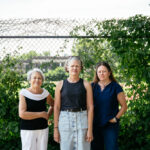
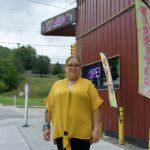
In Harrisburg, few buildings are more iconic than the Broad Street Market. Through its 154-year history, the Market has experienced many changes, and some old-timers even remember when it was a hub of both commerce and social life in Harrisburg. While not the center of community it once was, the Market still is a busy place. Each week, its legacy is carried forth by the dozens of purveyors of meats, produce, flowers, cheeses, baked goods, prepared foods and more. A couple of months back, our photographer, Dani Fresh, decided to visually document the people who make the Market the wonderful place it is. We decided to re-print her work so that Burg readers throughout central Pennsylvania can meet the people of the Broad Street Market.

View more of Dani’s work at www.DaniFresh.com

Peach Ridge Produce

Peach Ridge Produce

Pictured left: Proter's House, right: Tep's Seafood.

Pictured left: Proter’s House, right: Tep’s Seafood.

Hummers Meats

Hummers Meats

Floral Bouquet

Floral Bouquet

Green Ridge Produce

Green Ridge Produce

3 Brother's BBQ

3 Brother’s BBQ

Fisher's Deli

Fisher’s Deli

Pictured left: Golden Gate, right: the Cornerstone Eatery.

Pictured left: Golden Gate, right: the Cornerstone Eatery.


Continue Reading

Pet Adaption: Even small changes can affect your pet’s emotional state.

Pet AdaptionHave you noticed a difference in your pet’s behavior lately? Maybe she is eating less, barking more, becoming protective, hiding, developing inappropriate bathroom habits or doing other things that she may not have done before.

It’s often difficult for us as pet owners to interpret what is causing these changes in our pets, and they tend to worry and frustrate us at times. Pets can’t verbalize how they are feeling, but these behaviors are their way of indicating that something is wrong in their world.

Even subtle changes in environment can upset the world of our furry friends, leaving them confused and anxious. Change of feeding schedule or exercise regimen, weather changes, redecorating your home, moving the litter box, going on vacation, and having guests visit are just some of the events that can upset our roommates and cause them to engage in undesirable behavior.

Pets thrive in a consistent environment. They are very resilient creatures, but some are more sensitive than others and can have a very difficult time transitioning. It is wrong for us as humans to expect our pets to adapt quickly to change because they don’t make sense of their environment in the same way human beings do. Though many assume otherwise, even cats can have a difficult time adapting when left alone for long weekends. Imagine a pet’s world where they are completely reliant on humans to fulfill all of their needs for safety, nutrition and companionship.

There isn’t one easy answer for helping pets feel comfortable and safe at all times. When you know a change is about to occur, plan to be proactive in caring for your pet’s needs. For example, if you know that you’re having houseguests or a contractor in your home, give pets a safe place to relax away from the activity and strangers. Place their food, water, beds and toys nearby so they don’t have to come out if they are nervous or afraid. This also gives visitors a break from being accosted by protective pets.

There are several other things we can do to assist our pets during difficult transition times. Some pet owners find a Thundershirt helpful. Thundershirts are just one brand of wrap that can be used on cats and dogs to calm them. The shirts or wraps on the market today are made to put light pressure on points of the animal’s chest, back and belly, similar to giving them a hug. Its effectiveness varies depending on the pet and the severity of the situation.

Other options include pheromone-emitting plug-ins, calming sprays, calming treats, herbal remedies, essential oils and calming music. Sometimes, the problem can become severe, and getting professional support of a trainer or behaviorist is the best option. Your vet should also be able to guide you in more severe cases that warrant medication or other interventions. Most often, pets that experience situational stress can benefit from more exercise, extra play time or a pet sitter or trusted friend who will spend time with them when you can’t.

In addition, changing certain things in our lives that are causing us stress can have a great impact on the mental well-being of our animals. In our times of stress and change, we need to remember that our pets are a priority. We chose to bring them into our lives, and it is our job to care for their needs appropriately. Pet companionship goes much deeper than just tending to the physical needs of our animals.

Kristen Zellner is owner of Abrams & Weakley, a general store for animals, 3963 N. 6th St. (rear), Harrisburg. www.abramsandweakley.com.

Continue Reading

Book Box: Take a book, leave a book. Or just take a book at the Little Free Library.

BookBox_2 BookBox_1

In the Broad Street Market, just across from Tep’s Seafood, there’s a newspaper box that doesn’t sell newspapers.

Once stacked with copies of the Patriot-News, it now dispenses books by Hemingway, Tolkien and, in any given week, maybe something about gardening or Clifford the Big Red Dog.

You’ve stumbled upon the Friends of Midtown Little Free Library.

Earlier this year, the community organization transformed two old news boxes into free lending libraries—one in the Market and the other at the Neighborhood Center at N. 3rd and Kelker streets in Harrisburg.

Each box holds about 15 to 25 books that anyone can borrow. When the stock runs low, Friends of Midtown refills them with donations from members and neighbors.

And, unlike a traditional library, there are no cards, no shushing, and it’s even OK if the books don’t get returned at all, said Matt Caylor, the group’s business chair.

“If they find a book they really like, and they’re going to take some joy out of it, go right ahead,” he said.

Friends of Midtown has actually brought a national trend to Harrisburg. More than 750 of these libraries are built each month, according to Todd Bol, executive director and founder of the nonprofit Little Free Library.

Bol created his first library outside of his Wisconsin home partly to excite children about reading. Kids with access to books have higher rates of literacy, and communities with higher rates of literacy have lower crime rates, he said.

“Parents that read, read to their children,” he said. “Parents that don’t read, don’t read to their children. That’s the cycle.”

Today, there are more than 16,000 little free libraries in more than 65 countries, said Bol.

In our area, in addition to the two in Harrisburg, there are libraries outside a house in Linglestown and another in Mechanicsburg, according to the registry on the organization’s website.

Many libraries are custom-built—often cute, sometimes kitschy. The first library that Bol created was designed to look like a little, one-room schoolhouse. You also can purchase a library from Little Free Library’s website.

Friends of Midtown needed something more durable than a cute box that resembled a tiny chalet or a British phone booth, both available from the website. So, it opted for the sturdy, metal boxes donated by the Patriot-News.

The libraries have been very well used. Caylor said that he doesn’t formally track the books that Brotate through the library, but he notices that they don’t stay for long. Two or three volunteers refill them weekly in the Broad Street Market and every other week outside the Neighborhood Center.

“At my house, I have shelves of books that we are rotating in and out of the libraries. That way, it’s always fresh. Ideally, whenever people come here, they will find something new,” Caylor said.

Children’s books and adult pop literature are the most popular genres.

“We had one of the little boys here [at the Neighborhood Center] ask for Pokemon,” said Caylor. “We put that request out on Facebook. We will see if we get any donations that show up here or come to us with Pokemon.”
Books about Transformers were so popular they barely made it onto the shelf. As volunteers were filling up the box, children were taking the books out. “I think the books were gone before we left,” he said.

Caylor said that there is a grandmother who comes in weekly to take books for her grandchildren.

Since May, the Broad Street Market location has been catering to an older audience with “summer classics,” works by such authors as John Updike and F. Scott Fitzgerald.

Bol referred to the libraries as “water coolers for literacy.” They can encourage a sense of community as people chat, and you never know who you’ll meet while perusing through the selection. People have told Bol that they met more neighbors in a week through their Little Free Libraries than they had in the last few years.

Caylor hopes that the libraries will encourage more socializing, as well as more foot traffic in Midtown. “Close to here [at the Neighborhood Center], you have the Fire Museum. We’d love to see people walk up to the Fire Museum and see what’s there,” he said.

In addition, the location in the Broad Street Market gives people another reason to visit that wonderful facility, he said.

More than anything, though, he hopes that the Little Free Libraries encourage kids to pick up books they wouldn’t otherwise read.

“If they can get one kid to develop a love of reading or just start reading, they’re totally worth it,” Caylor said.

For more information, visit www.friendsofmidtown.org or www.littlefreelibrary.org.

Continue Reading

A Place to Romp: Sunday in the park with dog.

A_Place_to_Romp_2 A_Place_to_Romp_1Sometimes, a dog has just got to run. Or sniff around or wrestle with a pal in the grass.

That’s certainly the case for my Jack Russell rescue, Olivia, whom I’ve owned for just over a year.

We live in the Harrisburg exurbs, on three acres 25 miles west of the city. I fenced in a section of our barnyard for her, which makes a nice play area, providing our resident snakes aren’t sunning. But with only a house full of cats to terrorize under our roof, I like the idea of her having a chance to socialize with, well, her own kind.

So, we headed off to the dog park nearest to our house—the Lower Allen dog park. It’s a good two-dozen-mile round trip, but it’s worth it.

After registering with the township (that means providing basic information and proof of vaccinations), we parked ourselves in the small dog (under 30 pounds) section of the park. Segregating dogs by size is really a must lest the little ones end up as doggie bait for the 100-pounders. The park provides “doggie bags” for waste and trashcans, chairs, picnic benches and water fountains.

The park is heavily used, as evidenced by the bare spots in the otherwise grassy fields and the occasional leftover, chewed-up toy. However, I’ve never found it too crowded, and people generally abide by the cleanup rules.

Not everyone is a dog park fan. Several folks I talked to say they avoid the parks because they are concerned about disease from unvaccinated dogs or parasites when waste is not cleaned up or the possibility of injury in a fight.

I’ve witnessed a few altercations in the big dog park at Lower Allen but owners responded quickly to break things up.

I find the dog park is a great place for socializing for owners too. On a recent visit, a woman told me about the monthly pug “meet up” event that draws about two-dozen pugs and owners. Another woman said she and her dog last year drove all the way to Lancaster to try out the stunning new Beau’s Dream Dog Park, a veritable Disneyland for dogs, with its obstacles, water sprinklers and animal sculptures.

But perhaps you can’t get all the way to Lancaster—or even to Lower Allen.

Harrisburg proper lacks a dog park, though many residents try to make due. For instance, while cycling in Riverfront Park recently with a friend, I asked her where city residents take their dogs to play, and she gestured to the little strip of green near where we were riding and said, “This is the dog park.”

She has a laid-back Labrador retriever that has never strayed far off the leash and loves to swim in the Susquehanna. But ask any dog expert, and they will advise you to keep your dog on leash all the time for safety reasons.

Might the situation in Harrisburg change?

A few years back, a group of residents lobbied the city for a dog park in Midtown, where, at times, it seems that dogs outnumber the human population. The Thompson administration, though, never acted on it.

Now, the mayor himself has resurrected the idea.

Speaking recently before the Pennsylvania Press Club, Mayor Eric Papenfuse brought up a dog park as a way to improve the quality of life for both the city’s four-legged and two-legged citizens. He also mentioned possible locations, including a temporary play area on the vacant lot where the future federal courthouse is planned at N. 6th and Reily streets.

“In his public remarks, the mayor has suggested the land might be used in a variety of ways, including having part of it used as a dog park,” said his spokeswoman Joyce Davis. “These were some ideas that he floated, but nothing is yet confirmed.”

Hopefully, one day soon Olivia and I will be able to attend the ribbon cutting at Harrisburg’s first dog park. But until then, when we need a little adventure, we’ll head on over to Lower Allen.

After our play dates, she and I usually take a leisurely walk along the park’s neatly manicured nature trail by the Yellow Breeches and listen to the chorus of frogs in the wetland.

We stick our toes in the creek and watch the passing parade: the seafaring dogs floating by in kayaks and canoes and the water-loving dogs bounding past us to chase sticks in the current.

Dog Park Dos and Don’ts

  • Do make sure your dog is a good candidate for a dog park. Dogs that are overly excited or exceptionally shy or nervous around other dogs or people might not enjoy the dog park experience.
  • Most parks have a website with posted rules, so check before going and make sure to register if you need to.
  • Make sure your dog is up to date on her state dog license, vaccinations and heartworm medication. Most parks require dogs to be spayed or neutered.
  • Clean up after your dog. No one wants to dodge doggie doo in the park. Most parks provide plastic bags and trashcans for disposal.
  • Keep an eye on your dog not and not on your mobile device. Casual sniffing can turn violent in an instant, and you want to make sure you can react quickly to prevent or break up a fight—or just make sure you have the plastic bag ready when a potty break calls.
  • Bring fresh water if none is available

Midstate Dog Parks

Happy Tails Dog Park, Dowhower and Union Deposit Rds., Lower Paxton Township. Located on two acres inside Kohl Memorial Park, it has separate areas for large and small dogs.

Lower Allen Township Community Park, 4075 Lisburn Rd., Mechanicsburg. The popular dog park has large and small dog areas, water fountains, shade trees and chairs. The larger community park sits along the scenic Yellow Breeches and has picnic areas and ball fields. After your yard play, take a walk along well-manicured nature trails and wade in the creek by the boat launch. Another nice feature for humans is the restrooms inside the old barn that is now a community center.

Shaffer Dog Park, 1700 Carlisle Spring Rd., Carlisle. This beautifully maintained, shaded park is a membership-only facility. Members pay $50 a year and receive key fob to access the park, which has dedicated areas for small and large dogs, benches and water fountains.

Biglerville Dog Park, 2880 Table Rock Rd. Located at Oakside Park in the heart of Adams County’s apple orchard region, this park, which just opened last year, features separate areas for small and large dogs. Trees, benches and agility equipment are being added over time.

West Manheim Park, 245 Bartholomew Rd., Hanover. This large park sprawls over the hillsides near the Maryland border. The park has separate areas for large and small dogs. There are many trails, ball fields and picnic areas, so you can make a day of it.

Beau’s Dream (formerly Buchanan) Dog Park, 905 Buchanan Rd., Lancaster. Once a well-worn city park, it won a $500,000 makeover two years ago in a contest sponsored by Purina/Beneful. Today, it can only be described as the Taj Mahal of dog parks, with obstacles, water sprinklers, sculptures and astro-turf footing. It is the vision of celebrity TV interior designer Nate Berkus.

The Canine Spa, 140 Ore Bank Rd., Dillsburg. Need a change of pace, a place to rehab an injured dog or just a fun spot to exercise in bad weather? The Canine Spa, in a former horse barn, gives dogs a place to frolic in the water or try dock diving on a pay-as-you-go basis. There’s even a bathing area to lather up and hose off when you’re done.

Amy Worden is a staff writer for The Philadelphia Inquirer and author of Philly Dawg blog. https://www.philly.com/dawg.


Continue Reading

How Will You Be Remembered?: Estate planning = your game plan.

How_will_you_be_rememberedLike most families, I keep a first aid kit in my home… just in case.

If some part of my daily plan goes awry (the slip of a knife while chopping vegetables for dinner, the onset of a migraine, a clumsy misstep walking upstairs, etc.), I simply reach into my first aid kit to find the appropriate equipment or medicine. I can never be sure if I’ll find myself in need of a bandage, a pain reliever, gauze or a cold compress.

Now let’s think of your estate plan as your “legal first aid kit.” Imagine having a need for a legal bandage, only to reach into your legal first aid kit and find that it is empty. You realize that you aren’t prepared with the necessary equipment to maintain control of your health and your assets. Unfortunately, if the legal first aid kit isn’t already full by the time you need it, it may be too late.

What is Estate Planning?

Estate planning is the process of establishing a game plan during your lifetime for the distribution of your estate, which is simply the net sum of all that you own.

For many people, the term “estate planning” is taboo. It’s no wonder that many procrastinate in this area—estate planning forces you to face your own mortality, and it serves as incredibly bleak cocktail party conversation. However, estate planning can be one of the most selfless things you can do for your loved ones.

Without proper planning, family disputes are more likely to occur over estate distribution. If you die without a will, also known as dying “intestate,” state law dictates your estate settlement—and the state laws may not distribute your assets the way you wish. When you die without any sort of plan, your wishes are irrelevant.

The basic contents of your legal first aid kit are:

  1. Will—The will is the document that outlines how you want your probate estate distributed after death. Your probate estate consists of any assets that pass through your will via the probate process. Assets with a named beneficiary do not pass through the will, and, therefore, are not subject to probate; if an asset has a named beneficiary, the beneficiary designation supersedes the will. There are also certain forms of property ownership that supersede the will, such as “Joint Tenants with Right of Survivorship.” When property is owned in this fashion, the surviving owner automatically receives the deceased owner’s share without regard for the will.

Accordingly, it is important to note that the will does not necessarily dictate how your entire estate will be distributed. Let’s say that you want your entire estate to be inherited by your children. If you’ve indicated in your will that you want absolutely everything to go to your children, but you’ve designated your spouse as the beneficiary of your 401(k) plan, then your estate plan is not in line with your objectives. The 401(k) plan will go directly to your spouse, not to your children.

  1. Health Care Directive—This document plans for your incapacity while living. It outlines what medical care you wish (or do not wish) to receive in the event of your incapacity. It also names an agent to make medical decisions for you. Without a Health Care Directive, you have little or no control over what care you are given or who makes your decisions with respect to healthcare.
  1. Durable Power of Attorney—This document allows you to designate family members or other trusted individuals to make financial decisions on your behalf. Essentially, the durable power of attorney allows you to transfer decision-making power to another individual without disrupting your estate plan. It is key that the individual to whom this power is given is, in fact, a trusted individual. Although the courts can intervene to deal with individuals who abuse this position of power, the damage is typically done prior to this intervention.

An important component of this planning process is regular review. A good rule of thumb is to revisit your estate plan every five to seven years to ensure that the plan still accomplishes your objectives, taking into consideration changing laws and the development of new planning strategies.

There may be alternatives to the above strategies that are more suited to your specific needs, and I encourage you to consult a financial or legal professional to develop a plan customized to your needs and desires.

More than Money

We know that estate planning has many benefits, including getting you organized in the event of incapacity or death, providing a smooth estate settlement for your heirs, and, in some instances, providing great tax advantages. And if those benefits alone don’t spur your ambition to review your estate plan, then I encourage you to see estate planning in a much deeper, more meaningful light. Instead of thinking in terms of “preparing for death,” try thinking about these issues:

  1. What kind of life do you want for your children or grandchildren?
  2. How do you want your charity to remember you?
  3. Am I taking steps toward leaving the legacy I want to leave?

Estate planning can trigger a thought process that goes beyond your tangible assets. Planning your legacy is much more than the dollar amount your family and friends receive as an inheritance. How you live your life today builds the legacy you will leave tomorrow. How do you want to be remembered?

Alison Bach is a certified financial planner for Conte Wealth Advisors in Camp Hill, www.contewealthadvisors.com.

Registered Representative Securities offered through Cambridge Investment Research, Inc., a Broker/Dealer, Member FINRA/SIPC. Investment Advisor Representative Cambridge Investment Research Advisors, Inc., a Registered Investment Advisor. Cambridge and Conte Wealth Advisors are not affiliated.  2009 Market Street, Camp Hill, PA 17011.

Continue Reading

Hot Rocks & a Train Wreck: The Flinchy’s jam: good food, a fun time.

Hot_Rocks_TrainwreckFlinchy’s “Train Wreck Deck” was hopping at 8 p.m. on a recent Wednesday night. A pleasant breeze blew across the crowd, and the party was in full swing as Shea Quinn and Steve Swisher (aka Swish) entertained the audience.

As the duo performed a rendition of “Train Kept ‘A Rollin” by Aerosmith, a train sped down the nearby tracks seemingly right on cue, much to the delight of the crowd, who cheered the coincidence.

Camp Hill resident Ginny Rea, who was just settling in after a long day at work, managed to secure a coveted seat on the deck right in front of the duo.

“They’re a big draw. I really enjoy them, and they have quite a following,” she said, before pausing to join the crowd in singing the chorus of a Tom Petty song.


Temporary Insanity

Dawson Flinchbaugh, who operates the Camp Hill restaurant with his son Matt, has moved through life racking up experiences.

He served in the Marine Corps for six years and spent two tours in Vietnam. He sold life insurance, ran a horse farm and headed a digital imaging business. Ever busy, Dawson also served his community as president of the Wormleysburg Borough Council and as chairman of the Dauphin County Historical Society, where he helped raise $1 million for the John Harris-Simon Cameron Mansion restoration. During his spare time, he cooks, travels with his family, skydives and rappels.

So what made him decide to add restaurateur to the list?

“Temporary insanity,” quips Dawson with typical lighthearted humor, before explaining why he signed on for such an ambitious endeavor.

“Matt was managing one of Donny Brown’s restaurants in Harrisburg, and somebody informed him that the old Theo’s in Lemoyne was up for sale. He approached me to see if I wanted to run it with him, and I said, ‘Why the hell not? We haven’t done that yet.’”

That was 11 years ago, and the joint is still jumping, even though the formula has been tweaked a bit over the years.

“When we first opened, we tried to be a ‘white tablecloth place,’ serving upscale food. That didn’t work so well since our bar was very active, and we attracted a lot of 20-somethings,” said Dawson.

So, the flexible Flinchbaughs tinkered around the edges to add a more casual vibe to the place.

Matt suggested adding the Train Wreck Deck, which ended up being great for business, according to Dawson and, today, crowds flock to the popular deck to enjoy live music throughout the week.


Hot Rocks

Two years after Flinchy’s was up and running, Dawson’s wife Betty recalled a concept they had seen in Germany called the “hot rock,” where diners cook their own meals on a volcanic stone. They brought it on board and, to this day, the hot rock is one of the more popular requests. It requires no oil or fat and, therefore, appeals to health-conscious diners who want to control the temperature of their cooked meat.

Staff serves lunch and dinner seven days a week, and patron Danielle Kinback, who works nearby, stops in often for a quick soup and salad before returning to work. When she meets friends for dinner, she usually chooses the feta-stuffed portabello mushroom on the hot rock, but also enjoys the filet, which she describes as “very tender.”

Other popular items include steaks and crab cakes, along with the new “steamer pots” containing shrimp, clams, mussels and crab legs. Flinchy’s also appeals to those who are on a restricted diet by offering a wide variety of gluten-free choices.

The Flinchbaughs will even serve you off-site. They recently added catering to their repertoire, offering assistance with parties, meetings and special events.


Meet the Chief

Since Dawson goes by the moniker of “Chief Chili,” it would be an oversight to omit another popular dish he serves at the restaurant.

He and his wife perfected their chili recipe in the ‘80s as they traveled from state to state, competing in the World’s Championship Chili CookOff. He’s since judged the cookoff several times and has been running the regional cookoff on Labor Day weekend for the past 30 years.

Another spicy tidbit is that Flinchy’s designed the self-contained cooking pot that made the Guinness Book of World Records, weighing in at more than 1,400 pounds. The pot that used to cook the chili was custom-made at Hauck Manufacturing in Cleona, according to Dawson.

“We steam crabs in it now,” he said.

Giving back to the local community is also important to Dawson and Matt. So, each year, Flinchy’s sponsors a local sports team and participates in a number of events to support area causes, including the popular “Flinchypalooza,” a parking lot party featuring several local bands to benefit the Lower Allen Township Police Department.

Dawson said that running the restaurant has been a rewarding experience, but watching his customers enjoying themselves is the best part of the business. So, it’s not likely he’ll retire anytime soon.

“It’s like throwing a party for 200 of your closest friends every day,” he said. “It’s fun.”

Flinchy’s is located at 1833 Hummel Ave., Camp Hill. www.flinchys.com.

Continue Reading

Seen at the Scholar: This month, an urban journey.

SeenatScholar_1

Of Gardens
by Paula Deitz
384pp—University of Pennsylvania Press
Good for fans of: nature, travel writing and landscape design

Why: Writer and cultural critic Paula Deitz has delighted gardening and design aficionados for more than 30 years with her vivid descriptions of famous and hidden landscapes. In these newly collected essays, she shares the stories of her extensive travels, from the waterways of Britain’s Castle Howard to the Japanese gardens of Kyoto, and home again to New York’s Central Park.

If you like it: You’ll also enjoy gardening writer Adrian Higgins’ “Chanticleer: A Pleasure Garden,” with exceptional photographs by Rob Cardillo.

 SeenatScholar_3

Historic Architecture of Pennsylvania
by Scott D. Butcher
180pp—Schiffer Publishing
Good for fans of: local history, photography and the built environment

Why: York photographer Scott Butcher surveys the architectural history of south-central Pennsylvania. Beginning with early-18th century buildings, almost every style of American architecture is featured in the region’s mid-sized cities, charming towns and quaint villages. He devotes special sections to local farmers’ markets and train stations.

If you like it: You’ll also enjoy Virginia Savage McAlester’s “Field Guide to American Houses,” a fully expanded and updated edition of the 1984 classic, the best all-around descriptive handbook of architectural styles.

SeenatScholar_2

Design after Decline: How America Rebuilds Shrinking Urban Cities
by Brent D. Ryan
280pp—University of Pennsylvania Press
Good for fans of: Philly, city design and civic life

Why: Almost 50 years ago, America’s industrial cities like Detroit, Philadelphia, Cleveland and Baltimore began shedding people and jobs. Today, they are littered with tens of thousands of abandoned houses, shuttered factories and vacant lots. With ongoing population and housing losses, the future of their neighborhoods is precarious. In this award-winning book, an MIT professor of Urban Design and Public Policy explores how Philly and Detroit are faring.

If you like it: You’ll also enjoy “Buck,” a raw, lyrical memoir by the award-winning filmmaker and hip-hop artist M.K. Asante. “Buck” is his powerful, personal account of growing up in the urban jungle of Philadelphia.

SeenatScholar_4

Aftertaste: A Novel in Five Courses
by Meredith Mileti
384pp—Kensington
Good for fans of: Pittsburgh, food and women’s fiction

Why: Battling to save her restaurant, New York trattoria-owner Mira Rinaldi falls back on family and friends in Pittsburgh as she struggles to find a recipe for happiness. For Mira, cooking isn’t just about delicious flavors and textures, but about the pleasure found in filling others’ needs. And the time has come to decide where her own fulfillment lies—even if the answers are unexpected. Aftertaste is a novel about rebuilding and rediscovery, about food passionately prepared and unapologetically savored, and about the singular contentment that comes with living and loving, with gusto.

If you like it: You’ll also enjoy Bucks County writer and dance critic Kathryn Craft’s “The Art of Falling,” a moving novel about a dancer who must find a way to overcome a tragic fall.

All these books can be found at Midtown Scholar Bookstore, 1302 N. 3rd St., Harrisburg. www.midtownscholar.com.

Continue Reading

This Is Your Hometown: Local on Harrisburg: Hipsters, homeless & Steve Reed.

Your_HometownWhat does it take to snag an interview with former Harrisburg Mayor Stephen Reed?

Persistence, yes, lots of it. It also helps to learn some of the elusive man’s habits, like his tendency to show up at an area social club in the wee hours of the morning.

That’s how Dan Webster tracked down his subject. After months of sending the seven-term mayor letters, knocking on the door of his Midtown townhouse and asking intermediaries for help, Webster found out about Reed’s peculiar habit of popping into the Harrisburg Maennerchor each Sunday at 2:30 a.m., drinking three light beers over ice, then leaving precisely one hour later.

So, he cruised into the North Street club in the middle of the night.

“He said ‘you’re stalking me,’ and then he said that other reporters have tried and failed,” said Webster about his first interaction with Reed at the Maennerchor bar. “We stated who we were and what we wanted to do.”

What Webster wanted to do was this—get an interview with Reed and make it the cover story for the just-released issue of Local Magazine, which Webster founded and runs. A quarterly publication, Local dives deep into a chosen community, attempting, through a couple dozen stories, to capture the lifeblood of the place.

The recent, 138-page issue, focused entirely on Harrisburg, has stories on subjects as diverse as Neato Burrito, life in Allison Hill, the Bridge Club of Harrisburg, The MakeSpace and the city’s many rundown bars.

Some stories have a high quirk factor, even when they’re about ostensibly serious subjects. Can’t bear to read anything more about the incinerator? Well, how about if the trash started talking to you? You’ll also discover what happens when an email interview with the governor gets fed through the snark chipper.

“We had fun with some of the political stuff,” said Webster, a former managing editor of TheBurg. “But, for the most part, we wanted to tell more honest stories about Harrisburg than the CNN and Gawkers of the world.”

Local’s feature story offers a Reed-eye view of recent Harrisburg history, along with Webster’s first-person narrative of the interview, a lot of news background and an undertone of irreverence. Clips from old Patriot-News stories pepper the piece, breaking up the text and providing visual interest.

As Webster recounts, Reed refused, as a condition, to answer anything about his “personal life,” though he did manage to get some information about his youth growing up in Shippensburg and Harrisburg.

Otherwise, Webster details chronologically the hopes and successes of the early years; the increasing controversies—and public complacency—as Reed won term after term; and the city’s inevitable debt crash after decades of over-borrowing and over-spending. The tragicomedy of Reed’s pharaonic building schemes is fully detailed, as is Reed’s obsession with saving the city incinerator.

Webster’s conclusion? Reed was pleasant and polite, if “mildly defensive” about his legacy. In general, he seemed to give honest answers, with two exceptions.

Webster said he didn’t believe Reed’s statement that he pushed for the incinerator upgrade because it was better for the environment than a landfill. Through the incinerator retrofit, Reed was primarily trying to protect the cash cow that the incinerator had become, Webster said.

“I felt he meant he couldn’t float bonds anymore if he didn’t have the incinerator,” he said.
In addition, he didn’t believe Reed when he said he had no personal interest in Wild West artifacts. Reed, after all, attended countless auctions throughout the country, spending about $8.3 million in public money to buy 11,000 items for the oddity of building an Old West Museum in Harrisburg.

“I felt some of his answers were odd and contradictory,” Webster said.

In the end, Webster said he believes his staff captured the essence of Harrisburg perhaps more accurately than places like Asbury Park, N.J., Roanoke, Va., and Jersey Shore, Pa., which were profiled in previous issues.

In part, that’s because Local is based here, so the staff could write from a deeper level of knowledge and meaning. But it’s also, he said, because of the unique nature of their hometown.

“There’s this groundswell of people who don’t want to give this place up,” he said. “That mettle is something we also write about. This is a hardy place.”

Find out more about Local Magazine and order a copy of the Harrisburg issue at www.localmag.us.

Continue Reading

July Jumble: This month, little cohesion, but plenty of chops.

MusicNotes_credit_sopercussion.com

Admittedly, there is not much of a theme for this month’s musical selections. However, while July may be lacking cohesion, it is not short on talent. With so many excellent performers rolling into Harrisburg this month, there are plenty of reasons to take advantage of the warm summer evenings.

MAN FOREVER & SŌ PERCUSSION w/ CUDDLE MAGIC, 7/9, 7:30 P.M., SECOND CITY CHURCH, $10: John Colpitts (aka Kid Millions) founded the experimental percussion project Man Forever in 2010 in order to explore the art of percussive composition. The results have been nothing less than breathtaking. While percussion is an essential element of the majority of musical compositions, it often cannot stand on its own. Despite these odds, Man Forever creates musical soundscapes that are both passionate and mesmerizing. He will be joined by America’s premier percussive ensemble, Sō Percussion, to perform Man Forever’s latest release, “Ryonen,” with opening support from the superb Brooklyn band, Cuddle Magic.

AMERICAN OPERA, 7/19, 7 P.M., LITTLE AMPS UPTOWN, $5 Suggested Donation: American Opera’s music can best be described as handmade. A passionate and growling voice is coupled with glockenspiels and melodicas to create an intriguing juxtaposition that evokes images of marathon songwriting and do-it-yourself recording sessions taking place in a starving artist’s living room or loft. But this is not an example of style over substance. In the end, American Opera is about songwriting in the truest sense of the word. Built on a backbone of traditional folk, these are songs about living a life that is often difficult and at times painful.

MATTHEW SWEET ROCK SHOW, 7/20, 8 P.M., ABBEY BAR, $18/$22: Matthew Sweet is not young. His career began in the mid-80s, and, considering the short shelf life of most rockers, that feels like ages ago. But Sweet continues to churn out the solid rock and roll that has sustained his longevity. Still present is that jangly, hazy guitar so characteristic of the Athens, Ga., scene that produced both Sweet and R.E.M. However, Sweet’s latest work also demonstrates a confidence that can only come with age. Never content to trot out the same numbers that brought him fame decades ago, he continues to let his music evolve. Sweet’s performance at the Abbey Bar is sure to satisfy both longtime fans and newcomers alike.

Mentionables: The Bacon Brothers, Whitaker Center, 7/10; The Greatest Funeral Ever, HMAC Stage on Herr, 7/12; Dick Dale, Abbey Bar, 7/25; The Baseball Project/The Split Squad/The Minus 5, HMAC Stage on Herr, 7/26

Continue Reading

1 Story at a Time: LGBT History Project re-creates an often-hidden past.

LGBTDan Manedal’s voice still shakes when he recalls the night that teenagers pelted rocks through his windows.

“There was nothing I could do,” he said. “My life was like this because I had decided to be open about my sexuality.”

Coming out in the 1960s and ‘70s was far different than it is for people today, said Manedal, now 67. At age 25, after telling his friends and family he was gay, his life changed.

He moved to a trailer park when he didn’t feel safe in his home.

He was beaten walking out of a gay bar.

He met someone at a gay social event 200 miles from his home in Williamsport only to find they were neighbors. Each had been forced to go far from home to try to find support.

Manedal said he’s proud to see how far the lesbian, gay, bisexual and transgender movement has advanced. But he fears that where it came from will soon be forgotten.

His story is just one of many that, when combined with artifacts and stacks of documents, will help tell the story of LGBT people in central Pennsylvania.

A Story Told

Barry Loveland is founder and chair of the History Project organized by the LGBT Center of Central PA. He’s worked with about 50 volunteers, from student interns to retired professors and historians to preserve the local history of the LGBT community.

The project was started in August 2012 after Loveland met with the center’s Common Roads group for teenagers. A small panel was formed to talk to the younger generations about the hardships many faced when coming out often meant giving up family and friends.

The panel was so well received that it led to a story circle at the LGBT Center, located in Midtown Harrisburg. About 20 people attended, and it sparked the idea, Loveland said, that there were stories to be told.

Over the following months, Loveland recruited volunteers, who were trained how to perform interviews, use video equipment and catalog artifacts. A partnership also was created with Dickinson College in Carlisle, where anything collected or recorded would be kept safe.

The project has grown into a full chronology of central Pennsylvania’s history regarding LGBT issues, from political movements to social acceptance.

“My vision is to have a way for LGBT people to really connect with that history,” Loveland said.

After dozens of interviews are transcribed and more than 100 artifacts are cataloged, the center will create an interactive website including videos, photos and documents.

Many stories examine discrimination, what it was like for people to come out at home and in the workplace, and how community infrastructures were developed for support and socialization, Loveland said.

“A lot of straight people don’t think about the fact that, in their tradition or families, people kind of hand down stories to generations,” Loveland said. “LGBT people have their families, but they also have their chosen families, and sometimes those intergenerational stories don’t come down to them. It’s really important that we build those ties that have never really been there for the LGBT community.”

Slow Process

Lonna Malmsheimer, professor emeritus from Dickinson College’s American studies department, heard about the project while attending a separate event at the LGBT Center.

Because of her experience in communication and history, she was asked if she’d train a group of people who would interview LGBT activists.

So far, three groups of volunteers have gone through training on how to use the video equipment needed to record interviews, but it’s been a slow process.

“Working with volunteers is generally not all that easy,” she said. “They are busy people, too, and it’s often the busiest who offer help.”

While they’ve completed a number of interviews—Malmsheimer having done five or six herself—there are about 80 people on a waiting list who want to tell their own stories.

Malmsheimer, now 73, remembers going to a research library as a graduate student and finding that materials related to LGBT issues were locked up in a separate room. If she wanted to see any of it, she had to get permission.

“Part of the push, as far as I see it as a historian, is that, in the past, this work not only wasn’t done, it couldn’t have been done,” she said.

Sara Tyberg, a 20-year-old sophomore sociology student at Dickinson College, is one of two interns assisting in the project.

Her responsibilities include transcribing interviews and proofing the completed work.

“I think the LGBT History Project is an important project because it is revealing a huge, marginalized history in this area,” Tyberg said. “There’s the saying, ‘History is written by the victors,’ and, for most of history, especially in areas like central Pennsylvania, the (LGBT) community hasn’t been the victor.”

So Local

Tyberg believes participating in the project has taught her a lot about the LGBT experience.

While most people are familiar with LGBT identity, she said, each story is unique.

Louie Marven, executive director of the LGBT Center, said he’s happy to watch the project form under the work of volunteers.

“They’re really the ones who have been making this happen,” he said.

What’s unique about the project is that it’s so local, Marven added. Similar things have been done in major cities, he said, but LGBT people are everywhere.

Many people who are just coming out feel they’ll find the most support in big cities, Marven said. But he wants to change that.

“I hope this project can emphasize that people in rural spaces are doing things to support each other,” he said. “Changes are happening in the LGBT community. I’m excited to see where it takes us.”

For more information on the project or to learn how to get involved, visit www.centralpalgbtcenter.org.

Continue Reading