July Jumble: This month, little cohesion, but plenty of chops.

MusicNotes_credit_sopercussion.com

Admittedly, there is not much of a theme for this month’s musical selections. However, while July may be lacking cohesion, it is not short on talent. With so many excellent performers rolling into Harrisburg this month, there are plenty of reasons to take advantage of the warm summer evenings.

MAN FOREVER & SŌ PERCUSSION w/ CUDDLE MAGIC, 7/9, 7:30 P.M., SECOND CITY CHURCH, $10: John Colpitts (aka Kid Millions) founded the experimental percussion project Man Forever in 2010 in order to explore the art of percussive composition. The results have been nothing less than breathtaking. While percussion is an essential element of the majority of musical compositions, it often cannot stand on its own. Despite these odds, Man Forever creates musical soundscapes that are both passionate and mesmerizing. He will be joined by America’s premier percussive ensemble, Sō Percussion, to perform Man Forever’s latest release, “Ryonen,” with opening support from the superb Brooklyn band, Cuddle Magic.

AMERICAN OPERA, 7/19, 7 P.M., LITTLE AMPS UPTOWN, $5 Suggested Donation: American Opera’s music can best be described as handmade. A passionate and growling voice is coupled with glockenspiels and melodicas to create an intriguing juxtaposition that evokes images of marathon songwriting and do-it-yourself recording sessions taking place in a starving artist’s living room or loft. But this is not an example of style over substance. In the end, American Opera is about songwriting in the truest sense of the word. Built on a backbone of traditional folk, these are songs about living a life that is often difficult and at times painful.

MATTHEW SWEET ROCK SHOW, 7/20, 8 P.M., ABBEY BAR, $18/$22: Matthew Sweet is not young. His career began in the mid-80s, and, considering the short shelf life of most rockers, that feels like ages ago. But Sweet continues to churn out the solid rock and roll that has sustained his longevity. Still present is that jangly, hazy guitar so characteristic of the Athens, Ga., scene that produced both Sweet and R.E.M. However, Sweet’s latest work also demonstrates a confidence that can only come with age. Never content to trot out the same numbers that brought him fame decades ago, he continues to let his music evolve. Sweet’s performance at the Abbey Bar is sure to satisfy both longtime fans and newcomers alike.

Mentionables: The Bacon Brothers, Whitaker Center, 7/10; The Greatest Funeral Ever, HMAC Stage on Herr, 7/12; Dick Dale, Abbey Bar, 7/25; The Baseball Project/The Split Squad/The Minus 5, HMAC Stage on Herr, 7/26

Continue Reading

1 Story at a Time: LGBT History Project re-creates an often-hidden past.

LGBTDan Manedal’s voice still shakes when he recalls the night that teenagers pelted rocks through his windows.

“There was nothing I could do,” he said. “My life was like this because I had decided to be open about my sexuality.”

Coming out in the 1960s and ‘70s was far different than it is for people today, said Manedal, now 67. At age 25, after telling his friends and family he was gay, his life changed.

He moved to a trailer park when he didn’t feel safe in his home.

He was beaten walking out of a gay bar.

He met someone at a gay social event 200 miles from his home in Williamsport only to find they were neighbors. Each had been forced to go far from home to try to find support.

Manedal said he’s proud to see how far the lesbian, gay, bisexual and transgender movement has advanced. But he fears that where it came from will soon be forgotten.

His story is just one of many that, when combined with artifacts and stacks of documents, will help tell the story of LGBT people in central Pennsylvania.

A Story Told

Barry Loveland is founder and chair of the History Project organized by the LGBT Center of Central PA. He’s worked with about 50 volunteers, from student interns to retired professors and historians to preserve the local history of the LGBT community.

The project was started in August 2012 after Loveland met with the center’s Common Roads group for teenagers. A small panel was formed to talk to the younger generations about the hardships many faced when coming out often meant giving up family and friends.

The panel was so well received that it led to a story circle at the LGBT Center, located in Midtown Harrisburg. About 20 people attended, and it sparked the idea, Loveland said, that there were stories to be told.

Over the following months, Loveland recruited volunteers, who were trained how to perform interviews, use video equipment and catalog artifacts. A partnership also was created with Dickinson College in Carlisle, where anything collected or recorded would be kept safe.

The project has grown into a full chronology of central Pennsylvania’s history regarding LGBT issues, from political movements to social acceptance.

“My vision is to have a way for LGBT people to really connect with that history,” Loveland said.

After dozens of interviews are transcribed and more than 100 artifacts are cataloged, the center will create an interactive website including videos, photos and documents.

Many stories examine discrimination, what it was like for people to come out at home and in the workplace, and how community infrastructures were developed for support and socialization, Loveland said.

“A lot of straight people don’t think about the fact that, in their tradition or families, people kind of hand down stories to generations,” Loveland said. “LGBT people have their families, but they also have their chosen families, and sometimes those intergenerational stories don’t come down to them. It’s really important that we build those ties that have never really been there for the LGBT community.”

Slow Process

Lonna Malmsheimer, professor emeritus from Dickinson College’s American studies department, heard about the project while attending a separate event at the LGBT Center.

Because of her experience in communication and history, she was asked if she’d train a group of people who would interview LGBT activists.

So far, three groups of volunteers have gone through training on how to use the video equipment needed to record interviews, but it’s been a slow process.

“Working with volunteers is generally not all that easy,” she said. “They are busy people, too, and it’s often the busiest who offer help.”

While they’ve completed a number of interviews—Malmsheimer having done five or six herself—there are about 80 people on a waiting list who want to tell their own stories.

Malmsheimer, now 73, remembers going to a research library as a graduate student and finding that materials related to LGBT issues were locked up in a separate room. If she wanted to see any of it, she had to get permission.

“Part of the push, as far as I see it as a historian, is that, in the past, this work not only wasn’t done, it couldn’t have been done,” she said.

Sara Tyberg, a 20-year-old sophomore sociology student at Dickinson College, is one of two interns assisting in the project.

Her responsibilities include transcribing interviews and proofing the completed work.

“I think the LGBT History Project is an important project because it is revealing a huge, marginalized history in this area,” Tyberg said. “There’s the saying, ‘History is written by the victors,’ and, for most of history, especially in areas like central Pennsylvania, the (LGBT) community hasn’t been the victor.”

So Local

Tyberg believes participating in the project has taught her a lot about the LGBT experience.

While most people are familiar with LGBT identity, she said, each story is unique.

Louie Marven, executive director of the LGBT Center, said he’s happy to watch the project form under the work of volunteers.

“They’re really the ones who have been making this happen,” he said.

What’s unique about the project is that it’s so local, Marven added. Similar things have been done in major cities, he said, but LGBT people are everywhere.

Many people who are just coming out feel they’ll find the most support in big cities, Marven said. But he wants to change that.

“I hope this project can emphasize that people in rural spaces are doing things to support each other,” he said. “Changes are happening in the LGBT community. I’m excited to see where it takes us.”

For more information on the project or to learn how to get involved, visit www.centralpalgbtcenter.org.

Continue Reading

Water, Weeds & Wilting: Welcome to high season for plant care.

Water_Weeds_WiltSpring fever is winding down, so now what? It’s time for some tips for the summertime gardener.

To water, or not to water? That is the question.

Newly planted trees and shrubs require twice a week watering for a few weeks. A nice soaking once a week into the deep autumn days is usually enough. If we have a long, dry summer, returning to twice-a-week watering may be beneficial. But please remember that over-watering is every bit as bad as under-watering.

Plants respond to water issues the same way—too much or too little will result in wilting. The trickiest part is knowing which plants like wetter soil and which like drier soil. Once you know this, a water meter probe can help gauge soil moisture content for both outdoor and indoor plants.

Also, if your mulch is very deep (over 3 inches is too deep), the water may not even be making it to the root systems. In addition, the mulch “volcanoes” around trunks can cause rot or roots growing up to search, encircling and then strangling the trunk. A mulch ring should look like a low bowl, the mulch only 2-inches deep or less around the trunk of a tree.


Time to Fertilize

Fertilizing your plants can increase vigor and flower power. For annuals and especially hanging baskets, I love Jack’s Blossom Booster. Since annuals only make it one year, fertilizing helps them to be all they can be. For perennials, flowering shrubs and roses, use Espoma’s FlowerTone every six weeks. For evergreen shrubs and trees, HollyTone or PlantTone should be applied. The “Tone” fertilizers are full of slow-releasing, easily applied, granular organic ingredients. Thus, the effect lasts longer—plus soil health is increased. Chemical fertilizers do not help your soil at all and need to be reapplied frequently.

“Dead heading” is not about zombies, but is a term for keeping the faded flowers removed from your plants. While visually tidy, this action also encourages more flowers to grow. Grab a pair of garden scissors and let off some steam.

And how to keep all those weeds away? The number-one way is mulching beds 2 to 3 inches deep (and no volcanoes!). This smothers weed seeds. Hand weeding before seeds are produced is certainly a big plus. Preen is a chemical that can be sprinkled around to suppress seeds that land on top of the mulched beds.

Organically, corn gluten does the same, but needs to be reapplied more frequently. Many people also use the non-selective vegetation killers. Most are chemical concoctions, but some organic choices are emerging. Being non-selective, they will kill anything that is green, not distinguishing between your favorite zinnia and that weed right next to it. If the wind is blowing, the chemical can drift and damage neighboring plants. Wait for a still day and be focused in your action.


Know Thy Enemy

Insect and disease issues can rise up and be simply a nuisance or a full-blown destructive force. Knowing the “enemy” and the name of the plant is imperative to proper treatment. Don’t choose to just “spray something.” Not only is that environmentally irresponsible; most times, it won’t even take care of the issue.

Bring a leaf or the insect to your local experts for proper diagnosis. This saves money and time and gets results. Be aware when using chemicals that advertise their ability to kill lots of different kinds of insects—this also means bees and butterflies! Even hummingbirds sipping nectar can be hurt or killed by the systemic or broad-spectrum chemicals. Beware the chemicals that tout their long-lasting effect. That means they are so heinous that it will be weeks or months until they finally begin to dissipate. Sometimes, the best thing to do when encountering these little spots or holes is…nothing.

Lawn care in the summer couldn’t be easier. Start by raising the mower deck up to 3 inches, and make sure you have a sharp cutting blade. Allowing your grass to grow taller does a few helpful things. Longer grass can photosynthesize (bask in sun for energy) with greater efficiency, making the plant stronger. The resulting height shades the ground, helping to prevent moisture from evaporating as quickly. Longer grass blades equal longer root length, which helps with the drought tolerance of the lawn. And, if all that isn’t enough, leaving your grass a bit longer makes the grass more competitive for holding out against weeds.

Fertilizers should be avoided in July and August, as the lawns don’t need to be forced to grow when we travel through our hot and dry period of the year. Watering early in the morning, deeply fewer times a week, instead of a little every day, is best. The deeper watering will cause the roots to grow deeper. As for weeds, I call ‘em wildflowers… let ‘em be.

Happy Gardening!

Erica Shaffer is a nursery manager with 24 years of experience at Highland Gardens, Camp Hill. She’s also a proud landscape designer, consultant, lecturer, writer, blogger and tree-hugging plant geek. www.highlandgardens.org.

Continue Reading

The Select Few: Our wine guy picks his favorite recent quaffs.

the_select_fewA few weeks ago, I attended my first wine tasting of the latest Chairman’s Selections sponsored by Fine Wine and Good Spirits (many thanks to Lauren and Stacy!). In the space of a long day, I got to sample wines that will appear in your local PLCB store.

During the time spent in “tough labor,” I compiled my notes and wish to pass on my impressions to readers of TheBurg. The wines that I selected are the ones that I personally like the most. These will match well with food in this season of outdoor cooking.

One thing about tasting in a group is that it was possible to compare notes with other people. This only confirms that judging wine is highly subjective. It seems that most folks can find common characteristics in a wine, but, to some, other flavors and scents seem to crop up. Also, some people will tell you they just don’t like a particular wine that you do.

I hope you get to enjoy what I consider some of the best wines available in Pennsylvania, many of which are very affordable. My suggestion: Purchase one of each, which will give you a nice case and more.

Keep sipping, Steve.

White Wine:

Beringer Sauvignon Blanc 2012, code 33239, $10.99: Fruity summer sipper for light fare and picnics. Closer to Loire than Marlborough.

Monchiero Carbone Recit Roero Arneis 2013, code 33229, $13.99: Unique summertime wine from one of Italy’s oldest white grapes. Doesn’t age well, so drink up.

Evening Land Pouilly-Fuissé 2011, code 33286, $17.99: Very nice quaff with real French character. Good fruity, minerally Chardonnay without tasting over-oaked.

Red Wine:

Roth Estate Pinot Noir 2011, code 33255, $17.99: A light and easy drinking example of what to expect from California.

Bodegas La Magdalena Sueño Tempranillo 2011, code 33233, $12.99: Rich and dark from Spain, headed to your barbeque.

Bonny Doon Contra 2012, code 33245, $9.99: Randall Graham’s version of a French red made from California grapes. A West Coast Cotes du Rhone.

Sebastiani Merlot 2010, code 33258, $10.99: Smooth round blend, mostly Merlot for cookouts. Nice wine that shows this grape is back.

Vignerons De Caractère Domaine de la Pertiane Vacqueyras 2012, code 33250, $19.99: A 50/50 blend of Syrah/Grenache that is delicious now and will only get better.

Finca Don Leta Reserva Malbec 2013, code 33266, $10.99: Soft, fruity Malbec that is a good match for grilled meats. Not overly oaky.

Château De Belcier Castillon Côtes de Bordeaux 2011, code 33237, $15.99: An excellent example of an entry-level Bordeaux from the third good vintage in a row.

Bodegas Heredad de Aduna Reserva Rioja 2008, code 33234, $15.99: A 100-percent Tempranillo with five years of bottle age. Rich fruit with a long finish.

Villa Cafaggio Cortaccio 2006, code 33238, $29.99: It seems pricey at first glance, but this wine is aged and shows a unique side to a classic Cabernet Sauvignon.

Conti Sertoli Salis Valtellina Superiore Grumello 2009, code 33244, $12.99: Unique funky red that is mostly Nebbiolo with others blended. For Italian dishes.

Contino Gran Reserva Rioja 2007, code 33236, $29.99: A classic wine, blended and well aged. Smooth and elegant Spanish red. The bottling is a PA-only exclusive.

Continue Reading

A Better City: We all share responsibility in building community.

A Better City

PinnacleHealth System has enjoyed being a part of Harrisburg for more than 140 years. What makes our city so wonderful is that, through good times and bad, individuals and organizations have stepped up to give back to the communities they call home.

A story in TheBurg epitomizes this spirit—a spirit where one person encounters a challenge and seeks a solution (“Let There Be Lights,” June 2014, p. 19).

After falling along a poorly lit section of Front Street, Stacia Zewe decided to do something about it. She didn’t have to, but, in that moment, she wanted to make a difference. Working with Historic Harrisburg Association and Lighten Up Harrisburg, she helped organize a 5K run to raise money to restore some of the streetlights along Front Street. More than 600 participants wore something that glows—like a glow stick—and ran off into the dusk to help illuminate the city they love.

This effort won’t fix all the lights in the city or even all the lights on Front Street, but it will raise awareness of a problem that affects more than one individual. And little by little, working together, we can build consensus and momentum to truly address the problem.

Stacia is a model for us all. Whether we work or live here in the Burg, we share in its services, amenities, culture, dining, arts and sports. We share in the life of the city. This means we also share a responsibility to help make the city a better place.

How can we do that? We may consider ourselves “ordinary,” but ordinary people partnering for a positive change can elicit extraordinary results. We may look around our cities, homes and neighborhoods and feel overwhelmed and unsure what to do. We may want to throw our hands up and say, “What could I possibly do to make a difference?”

You can find that answer in several ways. First, figure out what affects you and your family on a day-to-day basis. Are transportation issues a problem? Do you pass city blight on your way to work? Are you or someone you know suffering from a disease? Do you share a passion for abused or homeless animals? Do you want to help children?

Tap into your passion, and your calling will become clear. Then you’ll know where you would best serve your community and your personal needs. The next step is to begin reaching out to others. It all begins with a question or a conversation. When you find those who share your passion, you’ll be surprised just how quickly the wheels are put into motion.

This philosophy has been at the heart of PinnacleHealth’s mission. We are always reaching out into the community, talking to people, listening and sharing. Many great ideas have resulted from that approach. Harrisburg has been very good to us, and we are proud to support many programs that give back to the city and its residents.

It feels great to be part of such a dynamic and caring community. Together, we are able to support the well-being of our residents in every aspect: medically, socially, spiritually.

Everyone wants to feel as if they belong. And you’ll find no better way to build a stronger connection to your community than by giving back. Get out and talk to your neighbor, local grocer, physician or faith provider about your community. It’s been said before, but “change begins with you.”

I am very fortunate in my job. Every day, I see how giving back to others fuels a greater sense of self, a greater sense of empowerment and a greater sense of hope. I hope you consider joining everyone at PinnacleHealth and giving back to the city.

Michael A. Young is president and CEO of PinnacleHealth System, one of TheBurg’s Community Publishers.

Continue Reading

Patience and Time: The reconstruction of Harrisburg will need long-term vision, effort.

Patience & Time

It’s been six months since the city of Harrisburg has officially been in recovery. Six months since the deal was signed, the Harrisburg Strong Plan enacted, and the city considered out of its “fiscal crisis.”

In that same time, a new mayor took office.

Eric Papenfuse rode in on a wave of great ambition, which largely reflected a public push for change. Fueled, too, by the state’s expectations, Papenfuse exhibited a determination to lead the city to glory.

When he was elected in November, Papenfuse said he and his team intended to “make Harrisburg a model for the whole country.” He spoke of taking the city “out of its current state of despair and into a new era of pride and prosperity.”

Everyone—the mayor included—wanted to see much get done fast.

After four years of the Thompson administration, three years of state oversight, and a year of listening to the negotiations of the crisis, people want to see the immediate benefits of the so-called “recovery” of Pennsylvania’s capital city.

However, the state would have been better to call the recovery plan the reconstruction plan, because that’s really what we’re in.

We’re in a period of rebuilding—not just physically but politically, mentally and emotionally.

We’re a citizenry re-establishing a relationship with our elected leaders—and they with us. The people of Harrisburg—the region not just the city—are trying to figure out if they are proud or ashamed of this place.

There are members of the public declaring enough isn’t enough and that the foundation is weak. Then there are those who are trying to cope and have hope that things will indeed improve.

This juxtaposition of attitude and stance is typical in a period of reconstruction. During these times, people have great expectations and great impatience for change of condition and society.

In Harrisburg, the air of expectation and impatience is palpable. I hear often the lament of when. When will this happen? When will that occur? When will this get done? Residents, commuters and observers from outside continually inquire.

Of course, we all have lists of wants. Undoubtedly, the public’s list of desires is similar to the mayor’s. One and all want Harrisburg to be better, and, with a glance around, we could see that meant fixing streetlights, maintaining roads and improving basic services like trash collection, codes enforcement and policing.

Of course, there also are the differences in the lists—different priorities, different approaches, different perspectives, different ideals and different visions.

Since January, the city’s communications director has sent out scores of press releases announcing various initiatives like the Broad Street Market Task Force, City Hall Beautiful, Adopt-a-Park, a program to reduce gun violence, an agreement with the fire union, the Housing Court, a lighting repair program, a “Word in the Burg” television program and a summertime campaign.

Papenfuse has revamped the budget, debated City Council about a variety of things, including new positions and a hiring freeze, and denounced the school district’s recovery officer.

That’s a lot. Maybe too much. Perhaps not enough at all.

The fact of the matter—and something for the public and the Papenfuse administration alike to remember—is that the city’s government doesn’t have the wherewithal to accomplish certain tasks, especially in this first year.

Harrisburg is still short-staffed and broke, and everything that needs to get done comes with paperwork, processes and procedures, some of which must be designed along the way.

Rushed notions of accomplishment can mess up the renewal and poison the vital optimism necessary in times like these. And, while enthusiasm naturally wanes every day people don’t see the improvements they want, it can be re-sparked again with the opportunity of long-term sustainability.

It’s impossible to eliminate anger, frustration and annoyance at the pace of reconstruction.

Fortunately, those feelings can serve as motivators for movement. They can also destroy the delicate sense of potential that envelopes a city attempting to reconstruct itself.

At this point in the year, we would all do well to reconsider our expectations and recheck our lists of priorities. This is a good time to revamp our ideas of what progress is and think about the long haul. Objectives like pride and prosperity will surely take longer than one administration’s tenure to establish. It will take more than a generation of people to sustain. It will take patience and time.

After all, ultimately, the point is not only to recover but to rebuild Harrisburg.

Continue Reading

Got a Cause, Take a Jog: Forget about parties, balls and walks; the 5K has become the go-to fundraiser.

Got_a_Cause

After the friends of Jersey Mike Van Jura recovered from the shock of his sudden death, they vowed to raise money to support his children. They asked themselves, “What would he have hated?”

“Let’s do something athletic,” they said. “Let’s have a race.” And so, says Jason Bowser, the friends of Jersey Mike joined the 5K culture.

Once the weather warms up, an organization in our area is holding a 5K every weekend—and on some weeknights—often on the Harrisburg waterfront. The old walk-a-thon has strapped on a pair of running shoes, complete with timing tag, and is going for a 3.1-mile sprint.

Dress for Success South Central Pennsylvania added a timed run this year to its annual Power Walk in Hershey because supporters claimed that “walks are so 1980” and wanted more excitement, says Executive Director Ruth Koup.

“They shame you into doing this,” jokes Koup. “It’s like, ‘Oh, you’re walking.’”

Several trends converged to make 5Ks commonplace. First, nonprofits are diversifying their revenue sources.

“Rather than do a gala, they might do a run,” says Anne Gingerich, executive director of the Pennsylvania Association of Nonprofit Organizations. “The things that aren’t working, many nonprofits are looking to put those down and try new things.”

They’re also reaching out to younger supporters, although 5Ks easily attract older runners, too.

“It’s definitely a younger demographic,” says Stacia Zewe, an organizer of last month’s Glow Run for Lighten Up Harrisburg and Historic Harrisburg Association. “We need to broaden that base.”

The Norm

A 5K attracts large crowds and can be customized to any cause, such as the evening Glow Run, which spotlighted the campaign to repair city streetlights. They also dovetail with our growing health consciousness.

“Running or jogging has become a norm, where 5Ks and half-marathons end up becoming something that everybody can do, everybody can work towards,” says Mike Spooner, assistant manager of the running store Inside Track, Swatara Township. “It works great for charity X, so maybe it’ll work great for charity Y.”

Although “the first mile sucks no matter how far you run,” the 5K distance is comprehensible to the layperson, Bowser says.

“You’re not committing to a half-marathon,” he says. “You can wrap your head around it and say it’s gonna be hard, but I can do that.”

Harvest Health, a Carlisle-based, health-focused organizer of walks and runs, tries to keep races welcoming for cause supporters who “won’t come out of the house because they are intimidated by the runners,” says President and Founder Michelle Grochalski.

“Yes, we have walkers,” she says. “Yes, we have runners, and yes, we have in-betweeners.”

From Runners to Dregs

Many 5Ks are basically big costume parties, interrupted by a jog around blocked-off streets. Like some newer runs, the Glow Run concluded with socializing and drinks, as did the Jersey Mike run.

“They (Sawyer’s Cantina) graciously partnered with us just to keep that sense of community and fun going,” says Zewe, of the Glow Run after-party. “It’s not just run and go home.”

The Jersey Mike event’s rock ‘n roll theme honors the man who reinvigorated Harrisburg’s music scene. When the first run in 2013 wildly exceeded expectations by attracting 450 runners, organizers felt overwhelmed until “an army of volunteers” took over, Bowser says.

“They saw how community gets together, that they can have nice things,” he said. “A 5K invites everyone from the professional runners to the dregs that never get out of bed.”

Dress for Success increasingly heard people say they’d come to its walk, but they were runners, Koup said. So, she contracted with an organization to time the runners and, with the greater participation, had to add “accommodations.”

“Now that we have runners, all of a sudden we have to get port-a-potties,” says Koup.

Signing up for a 5K motivates participants to stay in shape, organizers agree.

“It’s healthy. It’s good for your heart. It’s great for your mind,” says Bowser. “I want other people to know about this because I don’t want to lose any more friends.”

“You start training for your first Color Run, and hopefully, you think, ‘I really like feeling in good shape,’” says the Inside Track’s Spooner.

Says Grochalski, “Just get out and walk. Take the first step. It’s amazing where your feet will take you.”

In the turnout and the army of volunteers for the first two Rock + Runs, Bowser saw growing financial support for Jersey Mike’s children—Kaiya, 11, and Lennon, 2—and a message, as well.

“Life sometimes deals you a crap hand, but you gotta make the best of it, and you’ve gotta stay positive, and you’ve gotta find the good in everything,” he says. “Yeah, you lost your dad, but here’s a whole community that is gonna show you what a cool guy he was.”

Continue Reading

The “Unspeakable” Fritchey: Corruption in Harrisburg? Eh, nothing new.

John_Fritchey

Ed. Note: Currently, a grand jury is investigating activities associated with Harrisburg’s near-bankruptcy. The city, however, has had a long history of corruption and dubious actions undertaken by colorful politicians. Gilded Age Mayor John A. Fritchey is a terrific example, as our writer relates in this article adapted from a recent lecture she gave for Historic Harrisburg Association.

Before City Beautiful, Harrisburg had “City Ugly” and a three-time mayor named John A. Fritchey.

John Fritchey was an upstanding citizen and corrupt to the core. A populist reformer allied with the state Capitol’s rotten political rings. A beloved physician who performed “illegal operations”—Gilded Age code for abortions.

To his friends, Fritchey was a powerful man who dispensed welcomed favors and patronage. To reformers such as City Beautiful founder J. Horace McFarland, he was “the unspeakable Fritchey.”

Fritchey was an up-from-the-streets success story, born on the eve of the Civil War to a butcher who achieved middle-class status and sent his sons to Harrisburg Academy and the University of Pennsylvania School of Medicine. In the 1888 mayor’s race, the Harrisburg Patriot endorsed this promising City Council member, “a young man of ability and integrity,” who, the newspaper claimed, would not serve the corrupt rings running the city and county.

As mayor elected in 1888, 1893 and 1898, Fritchey established police and ambulance systems. He calmly directed rescue efforts during such emergencies as a May 1889 deluge that was also rumored to have caused “terrible destruction of property at Johnstown.” He ably managed the mayor’s “quick charity” fund that aided the destitute.

But Fritchey and his cronies also made sure that the quick charity fund and other revenue streams aided the not-so-destitute. Owners of speakeasies, gambling houses and brothels paid for police protection. Legitimate business owners wrote personal checks to Fritchey for the privilege of operating. Street peddlers paid “licensing fees” to the mayor and the police chief. Fines and fees went into envelopes that were deposited through a slot in the mayor’s desk.

In one instance, Fritchey convinced a grocer not to press charges against some misguided young ruffians who stole about $600. Before handing the grocer the recovered money, Fritchey peeled off a few bills for himself.

Fritchey was in his third term when Mira Lloyd Dock shocked Harrisburg’s businessmen out of their complacency with her photographic presentation comparing their garbage-strewn town to cities where manicured public spaces nurtured civic pride and thriving commerce. As City Beautiful gained steam, Fritchey conceded that a park wasn’t a bad idea, but his tepid support for a $1 million bond issue to fund improvements cooled even further when he learned that the money would be controlled by an independent authority.

In the days leading up to the inauguration of his successor, Fritchey’s clerk was seen burning ledgers in a furnace.

The next mayor was the reform-minded Vance McCormick, privileged son of a banking and iron manufacturing family. After his first few months in office, McCormick noticed that the $2,000 in fines his administration had collected dwarfed the $178.14 from the three years of Fritchey’s final term. McCormick reported to City Council that $1,282.42 in fees and $1,159.42 in fines were unaccounted for.

Fritchey was shocked that money put into the “supposedly trustworthy hands” of his subordinates didn’t make its way into city coffers.

The mayor had few executive powers, and McCormick could only wheedle Select Council—a sort of upper chamber in the bicameral City Council—into holding hearings on his reported findings. A subcommittee eventually ruled that Fritchey was responsible only for $686.51 in missing funds.

The Select Council chairman dismissed calls for further investigations. “You can’t dig up old things without having further odors,” he said.

Without fanfare, Fritchey paid the $686.51. In 1905, he ran for mayor again. He lost and never again ran for office, but that didn’t stop the intrigue.

First, there was his colorful personal life.

Fritchey’s first marriage fell apart when his wife had an affair with his chauffeur. He later briefly married the beautiful, much-younger Eleanor Shoop, building her an ornate brownstone mansion at 911 N. 2nd St., which still stands today. The 1906 building later became a frat house, then the Reese Funeral Home and now is Mayor’s Manor, the condo and apartment building recently restored by Chris and Erica Bryce.


Secondly, there was his professional life.

As a physician, Fritchey was well known for taking groceries to struggling families or declining to bill those in need. As for illegal abortions, people always knew where to go when a wife, daughter or sister was in trouble, and the railroad town of Harrisburg was convenient for women needing a secret operation. The sympathetic Fritchey would have understood the devastating impact of pregnancies on impoverished families or abused women. Maybe he also engaged in the lucrative practice because his second wife reportedly expected the finer things in life.

On Christmas Eve 1912, an 18-year-old milliner’s apprentice named Jessie Stroup died in Philadelphia. The physician and the magistrate called to her deathbed coaxed from her the details of an abortion performed a month earlier by Dr. John A. Fritchey, former mayor of Harrisburg. But the magistrate declined to declare her words as an official “ante-mortem”—the dying declaration that could be used in court against the perpetrator.

A constable named Saleranco escorted Fritchey and Jessie Stroup’s boyfriend, Jonathan Kerstetter, from Harrisburg to Philadelphia to face charges. Kerstetter couldn’t post bail and went straight to jail. The accommodating Saleranco posted bail for Fritchey.

It wasn’t the only string Fritchey would pull to stay out of jail. He was charged with performing an abortion on Stroup and on another woman from Chambersburg. His March 1913 grand jury hearing in Harrisburg featured 24 witnesses, but, as the proceedings neared the end, the Harrisburg Patriot reported rumors of “embracery,” also known as jury-fixing, practiced among “men active in politics.” The grand jury declared “not a true bill,” clearing Fritchey of all charges.

Fritchey continued practicing medicine (although it’s not known if he continued performing abortions). He died from heart and liver disease in August 1916, at the age of 59.

“The personal reminiscences of the ex-mayor, if put to paper, would have made one of the most interesting chapters in Dauphin County’s political history,” read one glowing obituary. “At one time, he swayed City Council, had a big influence in the school board and dictated terms to the county commissioners . . . He had political enemies and hosts of sincere friends and admirers.”

Diane McCormick adapted this article from her lecture entitled, “City Ugly: Mayor John Fritchey and the Deliciously Dark Side of City Beautiful.” A chance encounter with a 1912 account of the former mayor’s arrest for an “illegal operation” led her to research his life and times for her master’s degree in creative nonfiction from Goucher College.

Continue Reading

Boy Meets Parking: Can you put a price on love? Yes, it’s $3 an hour.

Boy Meets Parking

I have a confession to make: I’ve fallen in love.

It’s not your typical romance, and some people might even regard it as unnatural or perverse. But, as they say, the heart knows what it wants, so I beg your forgiveness if you find my desire offensive.

I have fallen for Harrisburg’s new parking system.

It’s a flawed love, as all love is, and it comes at a cost. But, as many guys know, beauty often extracts a high price.

In the Beginning

Where do I start about my love? Well, as with all love stories, it’s best to start at the beginning.

When I moved to Harrisburg, I was surprised by the ugly, obsolete parking regimen. Squat gray meters stood like elderly soldiers in rows along downtown streets, accepting not credit cards, not even paper money, but only change. Sure, the cost was reasonable—$1.50 an hour—but who carried around buckets of quarters to feed the old guys?

As I’d soon learn, my reaction was so, so naive. Only chumps actually put money into the things, I was told. Enforcement was so lax that people never bothered paying at all. On the rare occasion you’d get a ticket, it was 14 bucks if you paid it within three days, an acceptable cost of doing business.

That is, if you could find parking at all.

The old system created a perverse incentive for long-term parkers to hog spots on the street. Heck, the day rate for downtown garage parking was more expensive than paying the ticket. So, by 8 a.m., early-rising state employees, construction guys and restaurant workers already had sidled into the limited street parking, where they stayed until their days were done.

Looking to bolt downtown for a quick lunch or to grab a coffee? Good luck finding a place to put your car.

Falling

In March, this all began to change as the new operator, SP+, took over from the city authority and ripped out the mechanical coin-ops, replacing them with a digital, multi-space system. The rates also doubled, to a hefty $3 an hour, and tickets skyrocketed to $30 per violation—$50 after four days.

It was part of the deal to relieve Harrisburg of hundreds of millions of dollars of debt, while providing it with about $5 million of new revenue a year.

At the time, I was as skeptical as anyone and avoided downtown for a week or so. I had heard the first reports—people didn’t understand the system, had been dinged with big fines, couldn’t find the new parking office to pay the tickets they got—and they weren’t good.

But, one day, I couldn’t avoid it anymore. I had errands to run and a growing McGrath’s craving to sate, so I took off down Front Street from our Uptown office.

Turning onto Locust Street, I knew something was different. There was parking, plenty of it. So, I did something impossible before—pulled into a spot directly in front of the restaurant. I walked a few feet to the new meter and immediately bumped into a parking attendant, who guided me through the process.

It was simple. I put in my license plate number, the amount of time I wanted and my credit card. It was the first time I didn’t have to dig for quarters, regret I had none and scurry to the nearest bank to get a roll (yes, I had remained a law-abiding, quarter-toting chump).

There was even a field to key in my cell number so, when the meter was low, the system could send me an alert, allowing me to top off remotely. Running late, I did just that, and—oh my Lord—it actually worked. Also, I learned that, when you buy time, you’re not renting a designated space. You can move your vehicle anywhere within the on-street system as long as you have money in the system.

To me, this was a thing of beauty, a virtual parking supermodel.

So, now, for a few extra bucks, I get to park where I want, when I want. I can use a credit card. I can add time through my cell phone. I’m no longer so weighed down with quarters that I look like a home plate umpire who’s just stocked up on baseballs.

Pull In

I know that not everyone shares my affection.

Some people preferred the old way. They liked cheap, even though the broken-down, inconvenient system was run incompetently and ate your quarters almost as often as it tallied them. It offered nothing to the city and little to its customers—not even the parking that was its only product.

Yes, I realize that restaurant and shop employees have suffered under the added expense. However, the parking operator and some business owners are making accommodations for lower-wage workers. There are even discounted garage rates for downtown residents who only need to park at night and weekends.

Indeed, there are always bumps in a new relationship. You find out that your beloved chews like a cow or snores loudly or charges on Saturdays. But you make adjustments because the thought of not being with him or her or not eating Suba’s fish tacos is just too horrible to bear.

So, now I’m going to say something weird(er): Give my love a try. Several restaurant owners have complained that their happy hour business is down because customers are waiting until 7 p.m. to go out so they won’t have to pay for parking.

That’s so silly! Please, go at 6, park wherever you want, put $3 on your card, and get some great happy hour deals.

I think you’ll find that my beloved has these great, big open spaces and friendly, accepting payment methods. She’s eager to please. So, just pull in and give her a go.

Continue Reading

Cats & Town: In Steelton, a community came together to solve a multiplying problem.

Cats&Town

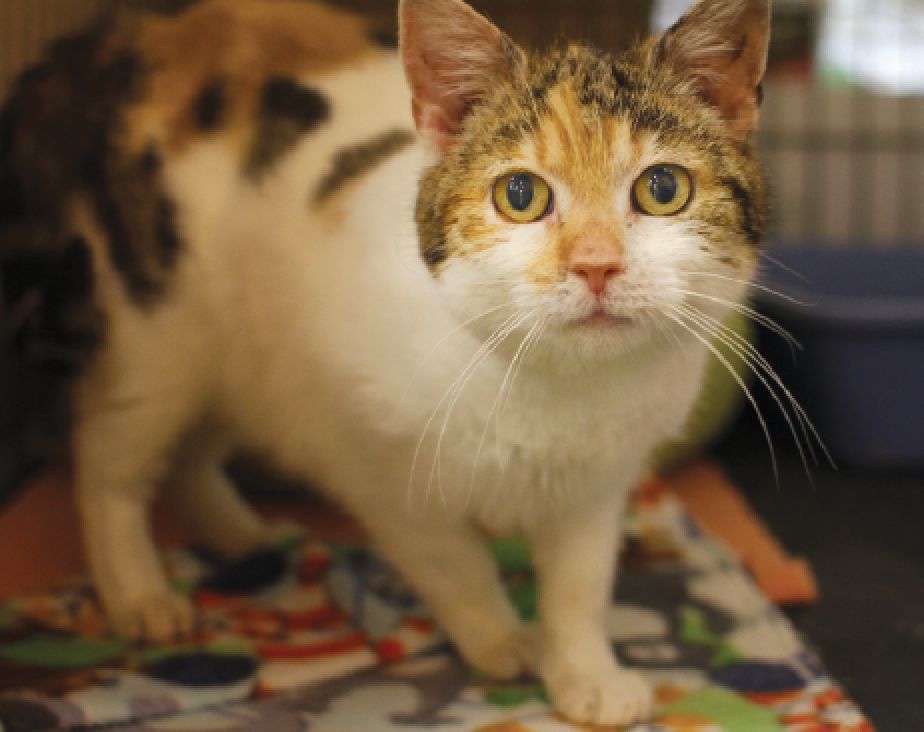
When Maria Marcinko took office as a Steelton borough councilwoman in 2010, the community had a budget-draining problem on its hands: feral cats, hundreds of them. Many were starving or sick. They fought and howled and knocked over trashcans. And they reproduced prolifically.

The borough had been contracting with an animal control company that trapped the cats and took them to Humane Society of Harrisburg Area, where virtually all were promptly euthanized. Taxpayers were on the hook for thousands of dollars, and Marcinko was tasked with finding a solution.

“It was costing us $138 per cat, or $26,000 to $27,000 a year for animal control,” said Marcinko. “I didn’t know anything about TNR, but I decided we would take care of our own.”

TNR stands for “Trap, Neuter, Return,” a strategy that is being adopted by a growing number of communities seeking to address cat overpopulation. The idea sounds simple: trap the feral cats, get them sterilized and vaccinated and return them to the place where you found them.

But it takes community buy-in. Such an effort needs volunteers, traps, a way to provide low- or no-cost spay/neuter surgeries and people to care for colonies. A community also needs sympathetic property owners who won’t evict the cats.

Steelton went whole hog on the idea and, by all accounts, it has paid off.

In early 2010, Marcinko sent out the notice of the first community meeting about the cats with the monthly water bills. Soon, there was a core of several dozen volunteers. For a borough struggling with economic distress and blight, things came together quickly for the cat ladies and their cause.

They found a generous veterinarian, Diane Ford of Campbelltown, who agreed to work at reduced rates and began applying for grants to pay for medical services.

When group members realized they needed a building to house cats awaiting surgery and a place to perform the procedure, the Steelton Community Development Foundation gave them use of an old bank building. When they needed extra help to paint and repair the building, Dauphin County Courts agreed to assign offenders sentenced to community service to that duty—an arrangement that carries on to this day.

Several months ago, standing in what was once the president’s office of the former Mellon Bank, Rosemary Loncar showed off the group’s surgical suite to several visitors. Sitting next to the marble-framed fireplace with the walnut paneling was a stainless steel operating table, an anesthesia machine and shelves for medical supplies.

From here, the group runs monthly spay/neuter clinics serving an average of 60 cats over two days. So far this year, after getting a late start because of the harsh winter, the group has fixed 200 cats, preventing the births of hundreds of more unwanted kittens.

“The problem is caused by humans,” said Loncar, who learned about feral cat care-taking a decade ago when her mother called her desperate and in tears because the number of cats she was feeding was multiplying, and she could no longer afford the food.

The act of abandoning un-spayed and un-neutered cats in a community can turn from a few stray animals wandering the streets into an unmanageable colony in no time, with female cats producing as many as three litters of kittens a year.

Traditional methods of cat control usually involve trapping and end with euthanasia for the often-untamed animals, but, inevitably, not all cats are caught, and those removed create a void quickly filled by other cats. TNR allows sterilized populations to live out their lives without fear of further reproduction.

“We know the program works,” said Loncar, who retired from her state government job in 2004. “It takes time.”

Kittens—and sometimes an adult cat if they are socialized—can be adopted to permanent homes, and the volunteers contact Castaway Critters, Compassionate Hearts and other rescue groups to place them. When they find cats that are declawed, blind, deaf or too injured or sick to live outdoors, they send them to The Best Little Cat House, an area feline hospice.

Loncar invited me to observe feeding time at one of the two colonies she tends, totaling about 25 cats. On a raw Sunday afternoon early this year, she approached the wooded area with two plates of cat chow. Suddenly, the brush on the hillsides started moving as cats, one by one, began making their way to the feeding area.

Colony caretakers are loath to identify the locations—and there are about 20 currently in Steelton—out of fear that more cats would be dropped off there or that someone might hurt the animals.

Loncar calls each one by name. Murphy, an orange tabby, lounges on a car hood and Peaches, a striking, long-haired tortoise shell cat, trots across the street. They live in tarp-covered Styrofoam boxes used to ship medical supplies that are filled with straw. Loncar also has set up covered feeding stations so the cats have a protected place to eat in bad weather.

As it marked its four-year anniversary in February, Steelton Community Cats celebrated the successful spaying and neutering of more than 3,000 cats, including many from the neighboring municipalities of Swatara Township and Highspire.

Steelton weathered an economic beating with the collapse of Bethlehem Steel. It watched its population shrink and still combats blight in its neighborhoods. But, now, the gritty borough along the Susquehanna River has an award-winning animal health and welfare program to be proud of that not only has saved lives but has saved money.

The total bill for the citizens of Steelton for cat control in 2013? Zero. Total taxpayer savings? About $100,000.

The borough also has gained control of its cat population, even enlisting support of employees of ArcelorMittal, the steelmaker now occupying the site of the old Bethlehem Steel plant, which helps with trapping, said Loncar.

The Steelton success has led nearby Swatara and Derry townships to start their own TNR programs, and the program’s volunteers are fielding calls from communities around the country seeking help.

Loncar says the group hopes it can show other communities that there is a way to address out-of-control cat populations without resorting to “trap and kill” methods or punitive ordinances such as bans on feeding outdoor cats or cat licensing requirements, as several municipalities across Pennsylvania have proposed in the last year.

For its groundbreaking work, Steelton Community Cats has won accolades from Alley Cat Allies, a national feral cat advocacy group and the Central Penn Business Journal, which last year named it the most innovative non-profit group in the region.

And Loncar says property owners are noticing that managed cat colonies help reduce another less attractive animal population: rodents.

“We had one minister tell us he’s happy because he doesn’t see mice in the church kitchen anymore,” said Loncar.

For more information on Steelton Community Cats, to donate supplies or funding or to volunteer, visit the groups website at www.steeltoncats.org or call 717-877-4146. The next spay/neuter clinic is July 24 and 25.


Continue Reading