Justice Delayed: Harrisburg ponders how to use acres of empty space as Congress puts the proposed federal courthouse on hold.

Screenshot 2014-07-30 21.12.38A vacant lot stands at N. 6th and Reily streets in Harrisburg. But where, many ask, is our shiny new federal courthouse that’s supposed to be rising there?

The answer comes down to two obstacles, one better known than the other. It’s no secret that the first obstacle to construction is congressional appropriation of the funds, but the project’s fate also rests on the outcome of a lesser-known review underway of all federal courthouse construction projects.

Chastised by the U.S. Government Accountability Office (GAO) for a clouded decision-making process and bloated construction projects, the federal judiciary is re-examining its five-year (2014 to 2018) plan that prioritized new courthouses for Harrisburg and 11 other cities. The reworked plan will then be handed to Congress, which could use it to guide funding decisions.

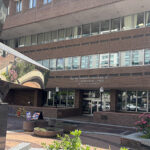
First, a recap.Harrisburg’s current federal courthouse stands downtown at N. 3rd and Walnut streets, occupying several floors of the Ronald Reagan Federal Building. In 2004, the federal judiciary put Harrisburg on a list of cities where new construction was a top priority, prompted by the need to beef up security or add more space, or both.

The General Services Administration (GSA) seemed hellbent on tearing down a viable block of 2nd Street downtown to make way for the new, 265,000-square-foot facility. Residents, organizations, city officials and the state’s congressional members put up a fight.

In 2010, the city prevailed, winning a commitment that the building would rise from the vast, L-shaped parcel bounded by N. 6th, N. 7th, Reily, Harris and Boyd streets, affirming hopes for a courthouse as a jewel of a Midtown renaissance.

More than four years later, the five-acre site remains vacant. About half of the $26.7 million appropriated by Congress for site and design work has been spent, according to the GSA, but Congress has yet to approve the remaining $110 million needed to move forward.

It “remains to be seen” if Harrisburg stays on the list of priority construction projects, said U.S. Rep. Lou Barletta, a Republican who represents a chunk of Harrisburg and chairs the House Subcommittee on Economic Development, Public Buildings and Emergency Management.

“The Harrisburg Courthouse remains on the Judiciary’s five-year Courthouse Project Plan,” said Barletta. “However, there are six federal courthouse projects scheduled ahead of it, at a combined cost of $700 million—which is currently not funded.”

While many players point to the lack of a congressional allocation as the holdup, Harrisburg also must wait while the judiciary reconsiders its construction projects.

The rethink was prompted by GAO’s April 2013 report that the judiciary’s five-year plan lacked transparency or documented justification for many priority projects. For instance, GAO claimed, the plan cites the need for two or more new courtrooms as a key criterion for a new building—and Harrisburg needs only one.

The judiciary balked at GAO’s recommendation for a moratorium on construction but agreed to review all projects. Harrisburg is part of that review, according to U.S. Courts spokesperson Karen Redmond. She had no timeline for completion of the review, although the GAO report said it could be done by October 2015, plus another 18 to 24 months for a long-range facility plan.

Waiting, Waiting

Harrisburg’s current federal courthouse has “a sufficient number of courtrooms,” but security is a major concern, said Middle District Chief Judge Christopher Conner. The building, finished in 1966, has exceeded its 40-year lifespan and, sitting squarely on the street, doesn’t comply with post-Oklahoma City setback guidelines, he said.

The primary concern is that the current building can’t be retrofitted with “secure corridors for the ingress and egress of prisoners, judges, witnesses, jurors and the like,” said Conner.

“I ride in the same elevators as the prisoners, the witnesses, the attorneys,” he said. “There is no segregation of judicial officers from the other participants. I’ve been in elevators with the family of somebody I’ve just sentenced, and it’s awkward and unsettling, probably for everyone.”

U.S. Rep. Scott Perry, a Republican who represents most of Harrisburg, said that he and his staff have “sought feedback from a wide array of sources,” including city officials, local business leaders, concerned citizens and the GSA. Congress will review the judiciary’s new plan when it’s released, he said.

“I believe that ensuring the proper administration of justice for our citizens is a core function of government,” Perry said. “Yet, with our nation facing a $17 trillion debt, Congress has a duty to ensure that taxpayer money is used efficiently.”

In January, Barletta told Pennlive/Patriot-News that the project could be done under a public-private partnership, in which businesses make a deal with government to shoulder a big share of the load in exchange for a profit. Still, it all goes back to a congressional appropriation, he told TheBurg.

“I do believe that public-private partnerships should more frequently be used for this type of project, but funding is still a big issue,” he said.

Nothing Firm

While federal officials ponder their next moves, the GSA is leading residents and the Papenfuse administration in considering how to make temporary use of the vacant space at 6th and Reily. Ideas that emerged from a meeting in May included dog park, community gardens, park and playing field, fitness area, bandshell/theater and open space.

Working with the GSA and the city, Friends of Midtown and today’s the day Harrisburg solicited opinions on the site’s interim use. Findings were to be shared with the GSA.

Under GSA guidelines, any use would have to be temporary and add little infrastructure, said Friends of Midtown Vice President and Treasurer Don Barnett.

“We’re trying to gauge what the community would like and what the community would use,” said Barnett.

Before his election, Mayor Eric Papenfuse was among the residents who fought for the 6th and Reily site. He remains interested in the talks about its temporary use, said spokesperson Joyce Davis.

“There have been some conversations at recent public meetings in which the mayor indicated he favored being able to let the land be used for community purposes, including some of it possibly being used for a dog park, but there is nothing firm or confirmed about these ideas,” Davis said.

Continue Reading

City to Residents, Visitors: Get Ready for Kipona

KiponaWeb

Harrisburg Mayor Eric Papenfuse explains the details of the city’s Kipona festival during a press conference today.

Are you a fan of the pow-wow, the chili cook-off, the fireworks, the canoe races, the music, the food and craft vendors?

Then you’re in luck, as Kipona will take place as usual over the Labor Day weekend, with just a few changes to the annual three-day festival, the city said today.

In perhaps the greatest change, most activities will be located on City Island, said Mayor Eric Papenfuse. Riverfront Park near the Walnut Street Bridge will be reserved for food and vendor booths, though some booths also will be located on City Island. Fireworks will go off Sunday night at dusk.

“Everything we’ve done with Kipona, we’re doing,” said Papenfuse, of the Aug. 30 to Sept. 1 festival. “We’re only tweaking the location of events.”

Notably, 1,200 parking spaces on City Island will be free on Saturday, as will spaces in the River Street parking garage. Parking will be free on all city streets on Sunday and Monday. Bike taxis will be free of charge for transportation over the Walnut Street Bridge connecting the two festival locations.

The footprint of the festival will shrink, which will help keep down the cost, Papenfuse said. Front Street will be closed for just one block, from Locust to Walnut streets, on Saturday and Monday. On Sunday, the closure of Front Street will extend to Forster Street to accommodate the large crowds expected for the fireworks.

The city will pony up $37,500 for Kipona, of which $20,000 will pay for the fireworks, said Papenfuse. Moreover, the city continues to seek sponsors for the event to further offset costs. In past years, Harrisburg’s main three summer festivals cost the city “in excess of $100,000” each, said Papenfuse.

City Council will be asked to approve the expense for Kipona once it returns from its summer hiatus in late August, said Papenfuse. He added that, in prior administrations, the cost of festivals was “off-budget,” but that, going forward, the cost would be included as part of the normal budgeting process.

During today’s press conference, Papenfuse repeatedly took issue with recent media reports on Kipona, which he characterized as incomplete, wrong and purposely inflammatory. Some media outlets, for instance, reported that Kipona would be held exclusively on City Island.


Continue Reading

Half-a-Year Out, Laid Off Parking Employees Count Their Losses

Robert Wilson, pictured here with his granddaughter at his Uptown home, is one of more than 50 employees laid off from the Harrisburg Parking Authority last year.

Robert Wilson, pictured here with his granddaughter at his Uptown home, is one of more than 50 employees laid off from the Harrisburg Parking Authority last year.

On a Monday morning last December, two days before Christmas, Robert Wilson finished his final shift at the River Street garage, where he had worked as a night custodian since 1989.

As regular customers arrived from their morning commute, he told them it would be his last day. Around 8 a.m., he headed to the maintenance shop and dropped off his keys, his garage pass and his spare uniforms—dark blue pants, maroon shirts. Then he went home to hand off the car to his wife, who was starting her work day.

Wilson is one of more than 50 employees of the Harrisburg Parking Authority who lost their jobs last year. Now, as state unemployment benefits run out and the authority’s monthly supplemental payments become his only income, Wilson is once again taking stock of how his 25 years of service came to end.

In the fall, as the city edged towards a resolution of its debt crisis, Wilson and his co-workers confronted an unpleasant reality. The city needed to generate hundreds of millions of dollars to pay off bad debt, and the parking system was one of its only assets with any long-term value. But union jobs like Wilson’s, with good wages and benefits, contributed negatively to the system’s potential value.

In September, members of Wilson’s union, AFSCME Local 521, voted 43-0 in favor of a “transition agreement” outlining the terms of the transfer to the system’s new operators. It described two options: continued employment with a 10-percent pay cut, with no guarantees of wage or job security after one year, or a severance package that included a lump-sum payment and unemployment supplements for up to a year.

David Gash, a retired union staff representative who was involved in the negotiations, described the severance package as unusually generous. “I’ve had companies close and not give their employees anything,” he said. All but five employees took it.

Typically, a laid-off worker in Pennsylvania collects unemployment at a rate of about half his or her former salary. Under the union agreement, however, the Harrisburg Parking Authority would supplement its former employees’ state checks, bringing their total compensation to the level it had been when they were employed.

The agreement also stipulated that laid-off employees would be reimbursed for the costs of health insurance, at a rate of 90 percent of the parking authority’s previous contributions to their monthly premiums. Both sets of supplements would be paid out of trust funds, administered by the authority’s handful of remaining employees. The authority would make payments out of the funds—$588,000 for unemployment supplements, $360,000 for insurance reimbursements—for up to one year, at which point the benefits expired, and any leftover funds reverted to the authority.

For Wilson, as for others, the severance package was vastly preferable to the uncertain promise of continued employment under the new private operator, Standard Parking.

“How am I going to go from $14 an hour to $7.25?” he asked, reflecting a belief that, once a year had passed, Standard would be free to reduce its compensation to minimum wage.

Even so, he found the transition negotiations bewildering, such that he and his sister, Jackie, also a former parking employee, wound up believing they’d been promised much more than they had.

For one thing, while the agreement promised unemployment supplements for up to one year, there was an important caveat: the parking authority would pay a maximum of 50 percent of each past employee’s former earnings. State unemployment benefits would theoretically make up the other 50 percent—but those would only last for 26 weeks. Without the federal government’s emergency extension of benefits, which the U.S. Congress did not renew, in six months the authority’s supplements would be all he earned.

Additionally, the insurance reimbursements were just that: reimbursements for premiums, which laid-off employees would have to pay first on their own.

With respect to the insurance agreements, yet again, the severance agreement was meant to be generous. Laid-off employees can usually obtain so-called COBRA coverage, under a federal law giving them the right to continued benefits under their former group health plans. But they often wind up with insurance premiums that, absent the contribution from an employer, are difficult to afford.

The Parking Authority severance sought to mitigate the pain by guaranteeing employees a 90-percent reimbursement of the authority’s prior contributions to their premiums. To receive the reimbursement, though, former authority employees had to sign up for COBRA or other continued coverage themselves.

One way or another, the Wilsons missed the message. As they tell it, they relied on assurances from the union and from management that they would continue to receive health coverage. Representatives at the authority, however, say that employees were clearly told about the nature of the reimbursements at meetings in the fall. In any case, Jackie didn’t learn she had no coverage until March, when she took her daughter for a maternity checkup.

A generous severance package is still a severance package, and people close to the labor negotiations will generally acknowledge that parking employees caught a tough break. Effectively, they suffered the consequences of a debt crisis they played no role in creating.

“They ended up paying the price. They were all good employees, all good people,” David Gash, the AFSCME staff representative, said. “It was terrible. Everybody felt bad about it.”

Continue Reading

Theft Charges Filed Against Former Leader of Police Athletic League

Harrisburg police officer Jennie Jenkins, second from left, at an event with children and fellow officers outside PAL's N. 6th Street headquarters.

Officer Jennie Jenkins, second from left, at an event with children and fellow officers outside the Harrisburg Police Athletic League’s N. 6th Street headquarters.

The office of Pennsylvania Attorney General Kathleen Kane filed charges today against Harrisburg police officer Jennie Jenkins, who was placed on administrative leave last October over her alleged misappropriation of funds as the head of the Police Athletic League.

The criminal complaint—which details charges for one third-degree felony and four first-degree misdemeanors, all related to theft—was assigned to Magisterial District Judge Lavon A. Postelle, in whose court Jenkins was arraigned Tuesday afternoon.

In it, the Attorney General’s office alleges Jenkins paid herself $7,000 for work related to PAL and falsified PAL time sheets over an eight-month period beginning in November of 2012. The Harrisburg police department’s own internal investigation of the matter, which was begun last August and concluded with the filing of charges, supported the AG’s complaint, Harrisburg Police Chief Thomas Carter said Tuesday.

At a press conference in city hall Tuesday afternoon, Mayor Eric Papenfuse suggested that Jenkins’ alleged misuse of funds stemmed from a culture of favoritism and poor accountability in the police department, which his administration has sought to eradicate since he took office in January.

“You had individuals given special treatment,” Papenfuse said. He added that the people associated with this culture have left the city, and that “those who said ‘enough is enough’” had risen to positions of leadership in the new administration.

The mayor pointed to Chief Carter as an example, saying the city had “the right leader at the helm.” He declined to name former employees who might have been involved in creating the culture he condemned.

The 43-year-old Jenkins joined the Harrisburg police department in August of 2005, and was appointed president of the Police Athletic League in August of 2011, in the midst of the city’s efforts to revive the dormant charity.

The Police Athletic League, usually referred to by the acronym “PAL,” provides youth mentoring and other community services, relying on police officers to volunteer time in its various programs. The IRS awarded PAL its nonprofit status on Nov. 30, 2012, following an application by PAL the previous July.

The Attorney General’s complaint lists three offenses, all related to Jenkins’ actions in her two years leading the organization. The first offense, charged as a third-degree felony, relates to allegations that Jenkins paid herself $4,000 out of charitable donations to PAL for time she had spent working for the organization. According to the complaint, Jenkins submitted time sheets to The Foundation for Enhancing Communities, a local manager of charitable funds that served as PAL’s account administrator from November 2011 to March 2013.

The second offense, charged as three first-degree misdemeanors, relates to three alleged cases of Jenkins receiving checks totaling $3,000 from PAL’s account with PNC Bank in the spring and summer of 2013 in return for services she provided the organization.

The checks, for $1,600, $900 and $500, were dated May 1, July 16 and August 5, respectively. The first check, for $1,600, noted in its memo section that the payment was for “Jan-Feb Mentoring Pal,” according to the complaint.

The third offense, charged as a first-degree misdemeanor, involves Jenkins’ alleged falsifying of time sheets on 13 separate occasions between November 2012 and July 2013. According to the complaint, Jenkins was paid a total of $875 for hours she claimed to have spent working for PAL when she was actually working for the police department.

On Tuesday, Jenkins’ defense lawyer, Brian Perry, said that his client’s position is that she was entitled to compensation for hours she spent working for the organization. “She was basically running the Police Athletic League by herself,” Perry said. “The whole case is about the hours she put in. There are two questions: was she allowed to be paid? And did she double-dip?”

Perry declined to comment on the complaint’s allegations in the third offense, relating to the falsified time sheets, saying he had not yet seen the documents in question. But he did say that Jenkins reviewed all PAL expenditures with a board of directors, who approved every payment she requested.

Jenkins was placed on administrative leave on Oct. 18 last year, following the Harrisburg police department’s inquiry into her handling of PAL funds. Chief Carter said Tuesday that he opened the investigation after becoming interim chief in August and finding discrepancies in her accounting of PAL and police department hours.

Janice Black, the president of The Foundation for Enhancing Communities, said Tuesday that Jenkins brought receipts to TFEC whenever she requested reimbursement for goods and services provided through PAL. She said that investigators had visited TFEC offices and gone over all materials related to the PAL account, and that it was her understanding that there had been nothing inappropriate about payments TFEC had made.

“We had receipts for everything,” Black said.

Black also said that the Harrisburg PAL had received numerous charitable donations in the period that TFEC managed the account, including several from area banks. Jenkins was a “very good fundraiser,” she said.

Mike Dillhyon, the executive director of the National Association of Police Athletic/Activities Leagues, said that Harrisburg’s PAL was awarded a $15,000 grant in 2012 for its youth mentoring program. The grant was to reimburse costs for snacks and other program-related expenses in 2013, but expressly excluded payments to program mentors, who are supposed to be volunteers.

The Harrisburg PAL had to forward receipts and other documentation in order to receive reimbursements, Dillhyon said. He said that his organization had not detected any issues with the Harrisburg PAL’s filings, but did say he had forwarded several documents connected to the 2012 grant to investigators last year.

The Harrisburg PAL is one of numerous members of the national organization, all of which pay a $400 annual membership fee in exchange for benefits including lower insurance costs and free website development.

Years before Tuesday’s criminal complaint, Jenkins faced disciplinary action on two occasions for having a service weapon stolen from her personal vehicle. The first time, the police union blocked any penalties, and the second time, in August 2010, she was placed on desk duty, according to prior reports by abc27.

On Tuesday, Chief Carter would not go into detail about either of these incidents, saying that he was eager not to denigrate Jenkins, who remains on the payroll on administrative leave.

“Our thoughts are with Officer Jenkins,” the chief said. “She’s still a Harrisburg police officer. She has been charged but not convicted, and we should be mindful of that.”

Continue Reading

Harrisburg Police Officer Charged with Theft

Office Jennie Jenkins with youth and fellow officers of PAL

Officer Jennie Jenkins (second from left) poses with city children in 2012, soon after the re-establishment of the Harrisburg Police Athletic League.

Harrisburg Police Officer Jennie Jenkins today was charged with five counts of theft for allegedly misdirecting funds intended for the city Police Athletic League to her own use.

Three years ago, Jenkins was widely lauded after helping to revive PAL, a charitable organization focused on helping city youth, which had been dormant for many years. The press release from state Attorney General Kathleen Kane’s office follows:

Harrisburg City Police Officer charged with stealing from HPAL

HARRISBURG – Attorney General Kathleen G. Kane today announced charges against a Harrisburg City Police Officer following allegations that she misappropriated funds from the Harrisburg Police Athletic League (HPAL), a volunteer charitable organization she helped administer.

According to the criminal complaint, Jennie Jenkins, 43, 2605 N. 2nd St., Harrisburg, paid herself out of HPAL’s charitable donations and grant funding following its revival in 2011.

The investigation revealed that when Jenkins assumed the role as president of the athletic league it was made clear that she would not receive any additional compensation beyond her salary as a city police officer.

The charges state that Jenkins allegedly wrote checks to herself from the athletic league’s account and submitted falsified time sheets for periods when she was actually performing regular police duties. Agents estimate that Jenkins stole $7,000 from the organization.

Jenkins is charged with four counts of theft by unlawful taking or disposition and one count of theft by deception.

Attorney General Kane thanked the Harrisburg City Police Department and the Dauphin County District Attorney’s office for their assistance with the investigation.

The case will be prosecuted in Dauphin County by the Office of Attorney General’s Criminal Prosecutions Section.


Continue Reading

Harrisburg’s Awarded Grants Tally Passes $1 Million, With More To Come

An aerial view of the Broad Street Market, whose renovation the city hopes to fund with a USDA grant applied for earlier this year.

An aerial view of the Broad Street Market, whose renovation the city hopes to fund with a USDA grant applied for earlier this year.

Six months into the administration of Mayor Eric Papenfuse, Harrisburg is beginning to see the fruits of a revitalized grants-writing process, according to city officials who spoke on the topic this morning in city hall.

Errol Newark, a grants manager in the office of financial management, said that from January to June of this year the city was awarded more than $1 million in grants from outside agencies, including two first-time awards in amounts totaling $110,000. Not included in that figure are applications pending for an additional half-a-million in grants which, Newark said, the Papenfuse administration identified and pursued for the first time this year.

The $1 million includes grants for projects in public safety, public works, tourism and parks and recreation. The vast majority of them—$924,300—were awarded on the basis of applications made under the previous administration of Mayor Linda Thompson. These include $466,998 in Dauphin County gaming funds for the purchase of a new fire engine; $78,843 for an upgrade to police information systems; $250,000 from the state Department of Environmental Protection for a leaf collection vehicle and a recycling truck; a $13,619 state fire grant for firefighting equipment; and $114,840 from the Federal Emergency Management Agency for advanced firefighter training.

An additional $112,500 were applied for in 2014 under the Papenfuse administration, including two awards that the city pursued for the first time, Newark said. One was a $10,000 grant from the state Department of Conservation and Natural Resources for assessing the condition of five city playgrounds. The other was a one-time award of $100,000 from the Hershey Harrisburg Regional Visitors Bureau.

The remaining $2,500 came from an application this year to Walmart, for a grant to help fund the renovation of the playground at 4th and Emerald streets uptown.

Joyce Davis, Mayor Papenfuse’s spokeswoman, suggested Monday that the recent awards reflect the new mayor’s leadership in the area of grant applications. She compared the $1 million figure with the $425,000 the city was awarded in grants in the first six months of 2013.

Newark, the grants manager, echoed this sentiment, though he suggested that Papenfuse’s real contributions would be felt in the months to come, as applications for newly identified grant opportunities began to show results.

“There are certain agencies I’d never heard about until this mayor came in,” Newark said. “New grants came to the table this year because of this administration’s priorities.”

Newark estimated that the city was on track to receive between $10 and $12 million in outside grants this year, in contrast to last year’s total of $7 million. Both figures include the $4.5 million in state grants to the city for public safety, a line item that the state legislature increased last year as Harrisburg and its advisors were negotiating the final pieces of the city’s recovery plan.

So far, in addition to those for which funds have already been awarded, the city has submitted applications this year for three large grants related to recreation and economic development. One is for another $148,450 from DCNR for the development of Reservoir Park. Another application, to the U.S. Department of Agriculture, is for a $99,999 rural business grant to help renovate the Broad Street Market in Midtown. A third is an application to the state Department of Community and Economic Development for $250,000, to be spent on equipment for the five playgrounds being assessed under the previously awarded DCNR grant.

Newark, who started working for the city in June of 2012, has worked on compliance issues for city governments since 1998. Most recently, he worked as the compliance manager for the city of Baltimore.

During his first six months in Harrisburg, Newark said, he focused on cleaning up the city’s grants program, which was then in deep disarray. Among the problems was the chronic delay in preparing an independent audit of city finances, which outside agencies rely on for assurance that their awards will be appropriately spent and accounted for.

“Who wants to give grants to a city without an audit?” Newark said. “I told my staff, ‘We’ve got to fix our house before we apply for grants.’”

On Monday, Newark attributed the grant program’s recent successes to a combination of these cleaning-house efforts in the last two years and the leadership of the new administration. “We’re reaping the rewards of these two factors,” he said.

The money from the Hershey Harrisburg Regional Visitors Bureau, in particular, shows how the Papenfuse administration has left no stone unturned in its quest for outside funding. Traditionally, the HHRVB has spent city tourism money—which comes from a tax on overnight lodging in Dauphin County—directly on bills supplied by the city in connection with an overall marketing campaign.

Recently, the bureau committed around $70,000 to the “Summer in the City” promotional campaign, which the Papenfuse administration has used to highlight Harrisburg’s seasonal arts and leisure offerings.

But months before that, Papenfuse wanted to ensure the city received its full share of tourism money, a portion of which Harrisburg is entitled to under county ordinance. Early in his term, he requested additional funds from the HHVRB, which the HHRVB awarded in the amount of $100,000. Ostensibly, the money was for marketing purposes, though it was not attached to any formal campaign and went directly to the city’s general fund.

“HHRVB views it as a one-time… allotment? process? A one-time…I can’t use the word ‘grant,’” Rick Dunlap, the bureau’s public relations director, said, adding that the bureau has no process for receiving or approving grants.

But Davis, the mayor’s spokeswoman, said that as far as the administration was concerned, the money was a grant. “That money did come to the city,” she said. “And we’re defining ‘grant’ as any money that came from a source outside the city.”

Continue Reading

City To Replace Downed Light Poles on Front, Seek Bids for Citywide LED Upgrade

The city will soon be replacing 15 downed light poles along Front Street, Mayor Eric Papenfuse announced this morning at a press conference along the 2900 block of the road.

The project is a prelude to a larger campaign to replace missing street lights across the city, as well as to upgrade approximately 6,000 existing ones to cost-saving LED bulbs.

The Front Street replacements will be partly funded by a $22,000 donation from Lighten Up Harrisburg, which in partnership with the Historic Harrisburg Association raised the money through sponsorships of its first annual “Glow Run” on June 7 this year.

The work will begin at the north end of Front and proceed with the installation of 15 poles over the next week. Installing the 29-foot poles will cost around $2,000 apiece, the administration said, with the city matching the charitable donation with labor and the cost of additional poles.

On Thursday, city engineer Wayne Martin issued a request for qualifications to design and install the LED-conversion project. The RFQ went out to 48 interested parties, Martin said, with applications due Aug. 15.

The LED bulbs are expected to generate significant cost and energy savings. In May of this year, according to the RFQ, the electric costs for the city’s 6,161 existing mercury-vapor and high-pressure sodium lights totaled around $64,000.

More information on the Glow Run and the city’s lights can be found in “Let There Be Lights,” a feature story in the June issue of TheBurg.

Continue Reading

No Drama

“Is this what a normal city is like?”

Someone asked me that question today about Harrisburg, remarking on the lack of drama in a place that has become known for it.

When TheBurg launched nearly six years ago, we began to cover the drama of the last days of the Steve Reed reign. Then there was the drama of the financial crisis and the unending drama of the Thompson administration. Last year, the election offered nearly a year of dramatic twists and turns.

But the new administration seems to be stabilizing into a day-to-day routine that, by Harrisburg standards, is positively dull. You may like Eric Papenfuse or you may not, but no one is going to accuse him of being Mr. Excitement. And governments tend to take on the sensibilities of their leaders.

Now, it’s taken a few months to reach this point. Upon taking office, Papenfuse wanted to make many changes, and change, by its nature, foments controversy. He lost a few of those battles (Gene Veno, anyone?), won a few more, and that change now is becoming institutionalized in such places as a new Housing Court and a revived economic development office.

Recently, the most controversial issue has been the proposed change in the zoning code, and most of that controversy has centered around the timing, the fact that the administration is trying to get it passed in such rapid fashion.

In this battle, I agree that the city needs a new zoning code, as the existing code is a Byzantine, confusing mess. However, I also understand the stance of several developers, who have complained that the new code was dropped on them without a chance for them to argue for changes, especially in areas of the city where they own property.

But outside of those guys, I’ve seen little indication that this issue has resonated with the broader public, which still seems most concerned with parking, a topic the administration can do little about. Even crime, which often spikes along with the heat in early summer, is not generating any more than the usual concern.

So, on this 4th of July weekend, we should be grateful that the fireworks will be happening over our heads and not within City Hall or in the neighborhoods. In fact, absent some big surprise, it might just remain quiet through the end of August, with the administration going about its business of running the local government. At that point, City Council returns from its six-week summer hiatus to take up the topic of–um–tax abatement.

Cue the drama, anyone?


Continue Reading

Sexual Abuse of Elderly Woman Was Investigated Days Before Her Death

An 83-year-old woman whom Harrisburg police found dead in the basement of her N. 13th Street home last Thursday was named only two weeks prior in a civil action alleging she was being sexually abused, court records show.

The action, initiated by the Dauphin County Area Agency on Aging, states that the agency is “strongly of the opinion” that Peggy Swann, of 107 N. 13th St., was “engaged in intimate acts” which may or may not have been consensual.

At a city hall briefing Monday morning, police had confirmed some details of the case, but declined to mention the alleged abuse, saying only that they had reasons to view her death as suspicious. But the director of the county agency, when presented later with information from the court documents, confirmed his staff had been working with law enforcement in the days before the discovery of Swann’s body.

The agency’s petition identifies David Barksdale as a resident of the house along with Swann. It notes that Barksdale, as well as other “unknown persons” at the address, denied an agency caseworker access to the property.

The agency “cannot emphasize enough that in response to the Agency’s representation of an investigation of sexual abuse, the denial of access to Peggy Swann constitutes a ‘red flag’ that cannot be ignored,” the court petition says.

The petition, dated June 11, also notes that Swann was believed to be a “mentally incapacitated older adult,” and that she had “uncharacteristically been missing” from her residence for two nights prior to the court filing.

Robert Burns, the agency director, would not go into detail about the case, citing confidentiality rules. But he did say that, in general, the agency would not initiate a court action without something substantial indicating a report of abuse warranted investigation.

“We’re in close contact with law enforcement and sharing what we learned,” Burns said.

Earlier on Monday, Harrisburg police Capt. Deric Moody had confirmed that Swann’s body was badly decomposed when it was discovered by police in the basement of the N. 13th St. home. An initial autopsy was performed early Monday morning, he said, but the body was going to be sent to Erie for a more extensive analysis, which could take anywhere from one to eight months. He estimated Swann had been deceased for around two weeks when her body was found.

“There are some things that haven’t made sense,” Moody said of the death, which was being investigated as a potential homicide. “To be there that long with no one smelling it…we haven’t got a good explanation yet.”

According to county property records, Barksdale and Swann have co-owned the property since June 2006, when Swann added Barksdale, identified as “a single man,” to the deed.

This story has been updated for style and to provide additional information.

Continue Reading

Water Rescue: How a volunteer board and a new director reclaimed a public utility.

Water_Rescue_3 Water_Rescue_2

In the middle of Clark’s Valley, between the ridges of Peters and Stony mountains, is a 6-billion-gallon lake that supplies Harrisburg with its drinking water. Known as the DeHart Reservoir, it was named for William T. DeHart, a city councilman who oversaw its creation in the late 1930s, and who died in 1947, in the last year of his third term. Four-and-a-half miles long, with a surface area of 650 acres, it releases between 8 and 9 million gallons of water to the city each day, roughly the quantity that would be needed to fill 13 Olympic-sized swimming pools.

On a recent Thursday morning, I stood with Dan Galbraith, the DeHart’s superintendent, on top of the stone-and-earth DeHart Dam and looked out over the reservoir. Galbraith wore a sky-blue T-shirt displaying the name of his employer—Capital Region Water, the city’s water and sewer authority. We were joined by Mike Deily, CRW’s director of operations, and Andrew Bliss, its community outreach manager. Underneath us, 90 feet below the surface of the lake, water was rushing through a steel-reinforced concrete pipe, beginning its downhill journey toward the city, over a distance of some 24 miles.

Galbraith has lived on the site for the past eight years, in a caretaker’s house just below the dam. I asked what it was like to live there. “Did you ever see ‘The Shining’?” he said. The remoteness has a lot to do with the reservoir’s pristine condition, which is why, during my visit, Deily and Galbraith went out of their way to emphasize the close watch kept on the facility. To our left was the spillway, a wide concrete chute that carries reservoir overflows to Clark’s Creek below. As we drove down from the dam, Galbraith pointed out a camera in the trees. “We already got you under surveillance,” he said. Deily, a biology major, noticed a cluster of butterflies fluttering around a trickle on the spillway floor. “Let me point out all the Lepidoptera species,” he said, and proceeded to identify each one.

Life at the DeHart has persisted, more or less unchanged, since its construction. The surveillance is new, and there are now Internet servers for transmitting flow data. The water treatment process has been upgraded, too—instead of getting a dose of chlorine just outside the reservoir, water from the DeHart is subjected to a battery of chemicals at a filtration plant downstream. But the basic function of the reservoir is the same. Water rushes out; some gets diverted to keep Clark’s Creek flowing, and the rest runs down to the city.

Capital Region Water, by contrast, has undergone a metamorphosis. In March, following a vote by City Council, its name was officially changed from the Harrisburg Authority—an entity best known for the nearly $400 million in debt related to the Harrisburg incinerator, which almost bankrupted the city and prompted an unprecedented state intervention.

In addition to the new name, Capital Region Water got a new logo: a pair of interlocking water droplets, which seem to reflect a much-simplified identity. As part of the state’s recovery plan for the city, it has shed the incinerator and the associated debt and refocused its mission on water and sewer services. At the same time, it has undertaken an ambitious project to map, through the use of robots, the condition of the city’s sewers. It has also absorbed two city bureaus, increasing its staff from nine to 86 people. And in April, two-and-a-half years after losing its credit rating, it reentered the capital markets with a refinancing that will save its ratepayers around $2 million per year.

The recovery plan contained many controversial provisions: the lease of the parking system and an accompanying increase in rates; a hike in local taxes and concessions from city unions; settlements with various creditors. The creation of Capital Region Water invited little public controversy, perhaps because, on the face of it, nothing fundamentally changed. A locally controlled water and sewer system remained under local control. And yet, without the efforts of a handful of people, it might have turned out very differently.

The home page of Capital Region Water’s new website, which launched at the end of June, includes a “community promise” from Shannon Williams, the company’s CEO. “Water is clear,” it begins. “And so should be our intentions.” To the left is a smiling portrait of Williams, who has signed off at the bottom of the pledge by invoking the company’s motto—“From raindrop to river.”

Williams grew up in Altoona, in Blair County, where her mother was a county commissioner for 28 years. She considered becoming a teacher or going into political science, but she liked her advanced physics course, and she wound up pursuing an engineering degree. After graduation, she took a full-time job at Herbert, Rowland & Grubic, eventually moving to their office in Harrisburg.

One day, she got a call about a City Council meeting. Council was interviewing new appointments to the Harrisburg Authority, and her firm, which was doing work for the Authority, asked if Williams would go observe. Not long after Williams’ visit to council, an engineer at the Authority retired, and Williams jumped at the opportunity. “It was right here,” Williams said. “We chose to live here, my husband and I, and we really love it.” She took the interim position, and in January of 2009, the Authority hired her full-time.

When Williams first arrived at the Authority, her primary project was to be contracts manager for the 85 outstanding contracts attached to the incinerator upgrade. But she was also quickly introduced to the Authority’s peculiar relationship with the city. Part of that relationship encompassed the water system, which the Authority still owned, but which the city’s bureau of water operated. Under the management agreement, the Authority was supposed to establish the annual water budget, including user rates. Yet the city effectively controlled the budget, which included large administrative fees.

Michele Torres, then the Authority’s executive director, assigned Williams to review the relationship. “My very first day here, she said, ‘Read through these documents. Find out what they say,’” Williams told me. “And it was often a theme of ours to talk about the ways things should be, the way the agreements say they are, and then the reality.” Initially, she saw herself as simply getting the lay of the land, but she soon developed a sense that the city wasn’t adhering to the letter of the agreements. She and Torres began to ask questions. What justified each line item in the city’s proposed budget? Where was the money going?

They weren’t the only ones trying to untangle the Authority’s complicated relationship with the city. In early 2007, amid mounting criticisms of the incinerator financings, a faction within City Council had tried to wrest control of the Authority from Mayor Stephen Reed, then in his seventh term. In February, they overrode a mayoral veto, granting themselves the power to appoint members to the Authority board. Reed challenged them in court, and lengthy litigation ensued.

The legal question concerned an interpretation of the city’s charter and the law governing municipal authorities. But documents filed in the case give a sense of larger issues. In one memorandum, council’s lawyers took aim at mayoral control under Reed, whom they accused of treating the Authority “as his own personal funding source for pet projects,” including his so-called “Wild West” museum. Another document, the sworn affidavit of the Reed-appointed board chairman, concerned Eric Papenfuse, an appointee of council’s who had been a vocal critic of such “pet projects” of Reed’s. Within a day of his appointment, according to the affidavit, Papenfuse went to Authority offices and “aggressively made demands” for various Authority records.

The more Williams and Torres studied the stipulated agreements, the more they sensed that something had gone seriously wrong with the Authority’s mission. She felt that, as owner of the water and sewer facilities, the Authority was accountable for how they were used, even if the city actually operated them. “At the end of the day, it comes back to the Authority,” she said. “So, we need to make sure things are done properly.”

 …

The Harrisburg Authority began its life in 1957, as the Harrisburg Sewerage Authority, a government agency created with the purpose of financing projects related to the city’s sewers. In forming the Sewerage Authority, the city relied on the state Municipalities Authorities Act, legislation first passed in 1935, and replaced in 1945, permitting the creation of municipal authorities as a means to secure public-project funding.

An authority’s primary financing vehicle was the revenue bond, a form of debt secured not by taxes but by charges to users. To borrow for the construction of a sewage treatment facility, the authority would pledge, in essence, a piece of the monthly bills of the facility’s future users. As outlined in a 2002 white paper by the state Department of Community and Economic Development, the reliance on user charges helped protect authority projects from the exigencies of city government. Where a tax increase might be politically impossible, user charges could achieve “a more equitable distribution of the burden of government” by tying rates to actual consumption. At the time, they also gave an authority access to debt that was unavailable to a local government under state law.

In 1987, Harrisburg amended the Sewerage Authority’s articles of incorporation, converting it to the Harrisburg Water and Sewer Authority. Its purpose was still broadly within the confines of the original authority: borrowing for public projects that now encompassed drinking water as well as sewage.

Then, in 1990, things started to become convoluted. That year, the city modified the authority again, changing it to a “general purpose” authority and rechristening it the Harrisburg Authority. Not long afterwards, in 1993, the Harrisburg Authority purchased the city incinerator, arranging for a series of bond issues to finance the acquisition.

On the surface, the debt was like the debt of the previous authority—it was in the form of revenue bonds, secured by charges to the incinerator’s users. But the debt was also only marginally related to the incinerator’s actual operations. In a $40 million bond issue that year, for example, $7.5 million went towards construction on the incinerator, while nearly $27 million went to the city itself, as a portion of the cost of purchase. The purchase price, in turn, went to refund the city for any number of expenses. In a May 22, 1995 letter to City Council, then-Mayor Reed provided a list of projects to be repaid by the “sale proceeds from the transfer of the Harrisburg Waste-to-Energy Facility.” The list included everything from playground renovations to laser printers to Sig Sauer pistols for police. It went on for 15 pages.

By these and similar maneuvers, the city converted the Harrisburg Authority to something much broader than a financer of public utilities. “General purpose authority,” in fact, was more apt than was perhaps intended. The Authority had become a kind of credit card for the general purposes of city government.

Capital Region Water’s “raindrop to river” motto skips over the steps in the water system that don’t make for pleasant slogans. On its way to the river, what enters homes as drinking water must leave those homes as waste.

The same day as my visit to the DeHart Dam, I toured the Advanced Wastewater Treatment Facility, a circuit of tanks and settling pools along the river, near the city’s southern edge. The AWTF’s superintendent is Jess Rosentel, who had prepared for our arrival by stashing glass jars of sewage at various stages of treatment throughout the plant, like Easter eggs.

A tour of the AWTF shows pretty quickly why, as a method of waste disposal, toilets are superior to, say, a hole in the ground. The average intake of the facility is 22 million gallons per day—most of which, whatever image the word “sewage” conjures, is water. “What you wash off with, it’s a little bit of dirt, but it’s not much,” Rosentel said. He held up a jar of cloudy water, floating with a few visible flecks. This was “primary influent,” sewage in the condition in which it reaches the plant, minus heavy grit like rocks and pebbles that washes into storm drains when it rains. The ratio of solid waste to water in primary influent is 100 parts per million.

In the 1950s, wastewater treatment was a physical process. The sewage was moved through pools slowly enough for solids to settle to the bottom. Treatment at the AWTF still begins this way. We passed along a catwalk between tanks of mostly clear water, where automated skimmers, like long windshield wipers, crept along the top and bottom, sweeping away sludge. In their path over the water’s surface, these skimmers catch floating solids, like grease, which the facility gets quite a bit of. At the end of a tank, I watched a skimmer come up against a cloud of grease and nudge it into a weir. Then the skimmer flipped under the surface, like a swimmer at the end of a pool, and headed back along the bottom.

Rosentel picked up another jar. The flecks were gone, but the water was still cloudy. In the 1950s, he said, the process would have stopped there: the cloudy water would be disinfected with chlorine and sent to the river. Then, starting in the 1970s, with environmentalists pushing for more stringent standards, the government began requiring the removal of dissolved pollutants, too.

The secondary treatment of wastewater is biological—what Rosentel referred to as “how Mother Nature removes solids.” Naturally occurring bacteria are added to the sewage, where they feed on pollutants like ammonia nitrogen and phosphorus and convert them to solids that can settle to the bottom. Normally, this process would require more space than the AWTF, hemmed in between the river and railroad tracks, possesses, so the facility produces high-purity oxygen in a tower on-site to help speed the activity of the bacteria.

Once the bacteria have digested the pollutants, the sewage is sent to enormous cylindrical clarifiers, where the mixture can settle while rotating vacuums suck sludge up from the bottom. Between the two rows of clarifiers, Rosentel held up a final jar. A cloud of brown solids had sunk to the bottom, and the top was almost crystal-clear.

 …

In late 2010, the Harrisburg Authority set in motion a series of events that would dramatically alter the course of the city’s recovery. That spring, the Supreme Court had finally issued its opinion on the question of board appointments, finding that the mayor had the power to appoint members with the advice and consent of council. The result was that existing board appointments, which had been made by council, were declared void. Linda Thompson, who had been on the council side of the complaint when it was filed, was now mayor—yet rather than simply repeat the appointments, she decided to revisit them.

In the ensuing squabble with council, two of the former board members got through: Bill Cluck, an environmental lawyer and activist, and Marc Kurowski, a civil engineer. As a two-member board, they were short of a quorum, and they spent most of the summer unable to do official business. On one occasion, they even had to file an emergency petition with the county for permission to renew an expiring insurance plan. Finally, in September, council consented to a third nominee: Westburn Majors, a government relations specialist at a downtown firm.

Of the three, Cluck had the deepest knowledge of the Authority’s history. A graduate of Penn State, with a law degree from Temple University, Cluck had moved to the city in 1991 to help open the Harrisburg office of Saul Ewing, a Philadelphia law firm. In the early 1990s, he and a colleague, Doug Schleicher, represented a York landfill in litigation over Dauphin County’s solid waste plan. In the course of the litigation, Schleicher took the deposition of Dan Lispi, a city employee who was project manager for the incinerator. “And my antennae went up,” Cluck told me. “I just made a mental note that something wasn’t kosher about this facility.” In 2000, he left Saul Ewing and started a private practice, in part to free himself up to be more active in the community, and to keep a closer watch on the incinerator.

In the fall of 2010, the three-man board solicited proposals for a forensic investigation of the incinerator financings. City Council and some members of the public had been calling for an investigation for some time, and the board was eager to obtain one, though its members had somewhat different motivations. “Bill had some opinions, because he had been pretty deeply entrenched in it, so he thought it might be going in a certain direction,” Kurowski told me. “To me, it was very important that it was a fair reporting, and wasn’t just, ‘Hey, this is a splashy headline, let’s go find somebody to hang by their ankles in the town square.’”

The team that was chosen included Doug Schleicher, Cluck’s former colleague, and Steve Goldfield, a financial advisor at Public Resources Advisory Group and, like both Schleicher and Cluck, a Saul Ewing alum. During the team’s presentation, Schleicher explained that Goldfield, an expert in public finance, would offer an “inside perspective” on the Authority’s bond issues, helping to “shed light on the kind of advice the Authority was entitled to” and “the protections and guidance it should have received.”

Their forensic audit wound up being a foundational document for the entire recovery process. By the time it was completed, in January 2012, the city had entered Act 47, the state program for distressed municipalities, and City Council had rejected financial recovery plans submitted by both the state-appointed coordinator and the mayor. As soon as the audit was finished, the board sent a copy to David Unkovic, who recently had been appointed the city’s first receiver.

The day he got the audit, Unkovic was holding a public forum to solicit input as he tried to draft a more palatable plan for recovery. As Cluck tells it, Unkovic went home that night to read the audit and couldn’t put it down. “It was like reading one of those mystery novels, up til 4:30 in the morning,” Cluck said.

The audit, Goldfield told me, confirmed for Unkovic the “complicity” of Dauphin County and the bond insurer, AGM, in the incinerator debt. “You couldn’t say this was the city’s problem, and the city needed to fix it,” he said. “This was a partnership going in, and it needs to be a partnership going out.” (Unkovic declined to comment about his tenure as receiver.)

The audit was foundational in another sense, too—the story it told about the incinerator debt laid the groundwork for subsequent investigations. When the state Senate held hearings on reforming the local government debt laws, Goldfield, with his summary of the audit’s findings, was the first to testify. He was also first out of the gate for the current grand jury investigation of the incinerator financings, for which he gave testimony lasting seven hours.

Whether the audit will contribute to any criminal or civil litigation, he said, remains to be seen—but there should be little doubt about why it exists. Numerous bodies had called for a forensic investigation. “But nobody did it,” Goldfield said. “It was the Harrisburg Authority that did it.”

Telling the story of the incinerator debt, and how the Authority’s ability to borrow had been abused, was only one half of the path toward its rehabilitation. The board and Authority officials also had to confront the question of what the agency would become.

One possibility, especially in the early stages of Act 47, included the privatization of water and sewer services. The looming debt had created a kind of fire-sale atmosphere; as Williams tells it, the initial attitude was “monetize everything and plug this hole.” Among the assets, the DeHart Dam, a pristine watershed surrounded by undeveloped woodland, would have been particularly valuable. But Williams and others were concerned about what a sale of public utilities might mean for customers.

“The level of investment that needs to be put into this system is so large that my concern was that, if it were sold to a private company, the rates would go through the roof,” she said. “They have to make a profit to give back to their investors.”

In January 2012, she gave a presentation to Unkovic and his team. Since before the city entered Act 47, Williams and others at the Authority had contemplated turning it into a “true operating authority”—an expert operator of the water and sewer systems, as opposed to a pass-through entity for city financing. In her presentation, Williams raised this possibility again. If the various components of the utilities could be combined, and the Authority could take over their operation, then a major burden could be lifted from the city while retaining local control.

Following the presentation, the receiver’s team began looking at the possibility of a long-term lease of water and sewer, along the lines of what would ultimately happen with city parking. There were two main objectives: ensure the efficient delivery of vital services, and, if possible, obtain some form of ongoing monetary benefit for the city. In February 2012, the receiver and the Authority issued an open-ended request for qualifications, explaining that the receiver’s goals were settling the city’s long-term debt as well as achieving long-term stability. Proposers, it said, were “strongly encouraged to provide creative solutions.”

Then, in late February, a major development took privatization off the table. Among the sewer system’s customers are six suburban municipalities, collectively producing about half of the wastewater flowing to Harrisburg’s treatment facility. In 2009, these municipalities, suspecting excessive charges by the city, hired legal counsel to investigate.

As it turned out, much as Williams and Torres had suspected with the water budget, the sewer budget had long included inexplicable fees. “The city would include line items in their budget, but when we looked, there were no supporting activities,” Scott Wyland, who represented the municipalities, told me. By law, whatever rates the city collected for sewer usage had to be used for sewer-related purposes. But an increasingly large portion of the city’s sewer budget—58 percent of it in 2009, Wyland said, up from 4 percent in the 1970s—was devoted to “administrative fees” and “other contracted services.” Alleging that the city had overcharged his clients by $25 million over a 10-year period, Wyland applied to intervene in the receivership proceedings in Commonwealth Court.

“That kind of completely hit the reset button,” Steve Goldfield, who was then the financial advisor to the receiver, told me. The receiver’s lawyers, concurring with Wyland’s analysis, determined that the type of lease they had in mind wouldn’t be permitted under the sewer-revenue laws. (Ultimately, the receiver reached a settlement with the suburban municipalities, which agreed to $11 million in offset credits distributed over the next seven years.)

Meanwhile, the receiver and his advisors were gaining confidence in Williams and the Authority board. The idea of converting to an operating authority, with an exclusive focus on water and sewer services, seemed like an increasingly viable option. Goldfield related a story about his local school board, which took a chance on a young principal who turned out to be a “superstar.” He and William Lynch, the receiver who replaced Unkovic after his resignation, held Williams in similar esteem. “Bill said to me before I said to him, ‘I think she could be a superstar,’” he said.

“I’ve always tried to do whatever I can to further the goals,” Williams told me. “As we were moving through everything, I just had that one singular goal, which was to get this as a true operating authority, and to improve those operations.” On Aug. 26, 2013, the receiver filed his recovery plan for the city, which was nicknamed the Harrisburg Strong Plan. Among its provisions was the creation of the new Authority—an operator of the water and sewer systems, free of the incinerator’s bad name and bad debt, under the control of a locally appointed board.

Once Harrisburg’s wastewater has been clarified, it can be returned to the river. But the sludge is only beginning its useful life. On their journey out of the plant, the bacteria are stored in a building where, for a time, they keep digesting, producing methane that the Advanced Wastewater Treatment Facility can capture and use to produce energy. In addition to powering two boilers, which heat the buildings on the complex in winter and keep the digesting room at 95 degrees, the methane powers a 400-kilowatt generator that sells electricity back to the power grid. Rosentel estimated the bacteria’s total energy production to be the equivalent of around 1,000 gallons of gasoline per day.

When digestion is finished, the water is removed, and two products remain. One is what Rosentel referred to as “cake”: spongy, black, virtually odorless clumps of sludge, which are collected and hauled away by farmers for use as fertilizer. Currently, the AWTF pays farmers to take the cake, though the facility is contemplating some additional treatment upgrades that could improve the fertilizer to a point where it can be sold. The other byproduct is ammonia-rich water, which is used to jump-start the growth of new bacteria.

A couple of weeks after my tour of the facilities, I met with Williams in the Capital Region Water offices, on Locust Street downtown. It had been a busy month: the week before, she had attended the American Water Works Association’s annual conference in Boston, where Capital Region Water had been given a 10-Year Director’s Award for consistently exceeding federal standards for drinking water quality. Harrisburg’s water also entered a taste-test competition, where it placed in the top five of 31 competing utilities.

We talked about the many things underway at the new authority. The updated website would be going live later that week, and it would include an interactive cartoon map tracing the water’s progress, per the company motto, from rain to river.

We talked about the upgrades to the sewage treatment plant. In 2009, the state Department of Environmental Protection imposed new caps on the pollutants that could enter the river in treated wastewater. An early achievement of Capital Region Water was securing financing for the necessary plant upgrades, which will cost an estimated $50 million.

We also talked about the recent refinancing of some of the outstanding debt. Williams pointed out, as I had noticed some days before, that water bills were now directed to a post-office box in Philadelphia. The address corresponded to a temporary lockbox for user payments while the city completed its transfer of billing services. As a condition of its refinancing of the debt, Amalgamated Bank had required an agreement that the revenues would circumvent city coffers.

I thought about something Mike Deily, the director of operations, had told me on our drive down from the reservoir, about the cuts he made to the sewer budget each year under prior administrations. “They put spending and revenue freezes on us because they were using our revenues to supplement the general fund revenues,” he said. He recalled the frustration of going to conferences, and seeing the technologies other utilities were using, and then coming back to Harrisburg and having no capacity to employ them.

Before I left, I asked Williams about something I’d wondered at the Advanced Wastewater Treatment Facility. If the treated wastewater is clean enough to enter the river, and the river is clean enough to be treated as drinking water, wasn’t it possible to treat the treated wastewater, and essentially drink our own sewage?

Williams nodded. Some places experiencing drought, like certain cities in California, were already contemplating just such a program, she said. But Harrisburg wouldn’t need anything like that in the foreseeable future—the DeHart could provide plenty of water, and much more efficiently.

“People have clean water, but they take it for granted,” she reflected. “It’s a cool profession. You can go anywhere in the world, and people will need clean water.

But,” she added, “there’s no place I’d rather be.”

Continue Reading