Kipona: A Review

With Kipona 2014 located on City Island, the Native American pow wow took its rightful place as a centerpiece of the Labor Day weekend celebration.

There were canoe races, a pow wow, fireworks. There were vendors, food, music.

The things that make up Kipona were at Kipona again this year, though people most wanted to talk about something apart from the chili cook-off, the martial arts demonstration and the basketball tourney. The number-one topic of discussion: the relocation of most activities from Riverfront Park to City Island.

I spent much of last weekend at Kipona, helping to man the information table for 3rd in The Burg. When I wasn’t chatting up Harrisburg’s monthly arts event, I listened to people opine (at length) on how they thought things were going. For the most part, attendees and participants seemed positive about the annual Labor Day weekend festival. That said–they were not shy in sharing with me possible areas for improvement.

I agreed with much of what I heard. In my opinion, the city got many of the big things right. Most activities went off well, and attendance was solid. The relocation to City Island was (sorry, Kipona traditionalists) a very pleasant surprise. Before last weekend, I regarded under-utilized, under-visited City Island as a huge surface parking lot, a baseball stadium and a random smattering of other stuff that seemed only loosely connected. Now I know the potential that City Island has.

I’ll admit to not much liking Kipona’s old format. Yes, there are uniquely Kipona activities, but, over the years, it came to closely resemble Harrisburg’s other summer festivals along the river. By the time Labor Day rolled around, did you really want to trudge up that narrow, asphalt path one more time, hemmed in on all sides by booths, battling sweaty crowds and having largely the same experience that you did over the Memorial and Independence Day weekends?

I found City Island to be tailor-made for hosting Kipona. It had close-by, ample (free!) parking, a variety of landscapes, open spaces, refreshing breezes, easy access to the river and beautiful views of the city. The loop around the island seemed to be a perfect length and format, and the permanent structures–from the stadiums and restrooms to businesses and pavilions–anchored the festival and provided necessary amenities. Larger-scale events, such as the fascinating and funky Festival of India parade, were easily accommodated.

City Island also allowed more natural groupings, so that children’s activities, for instance, were all together, arranged comfortably, and there was ample spacing between festival booths and themes. In addition, the excellent and interesting Native American pow wow fittingly became a centerpiece of the celebration, not the hidden, out-of-the-way event-in-exile it was before. And kudos to Capital Region Water, which hosted a variety of educational and creative activities. Who knew that learning about water and waste could be so much fun?

It’s understandable that downtown bars and restaurants would prefer Kipona to remain in the park, closer to them. However, based solely on the festival-going experience, City Island is a better place–much better.

Now that I’ve gotten all the accolades out of my system, let me turn to some of the shortfalls. I don’t mean to gratuitously criticize the organizers, who were working within very tight budget and organizational restrictions. However, even several administration officials told me that, while certain things went well, others did not. Here are, in my mind, the areas that most need to be improved.

Arts Walk. For two days, I was trapped inside the stifling Carousel Pavilion with my fellow arts hostages. There were a couple of photographers, two wood craftsmen, an author, another arts group–about a dozen people total–stranded inside a cavernous space that can hold many hundreds. On Sunday, Appalachian Brewing Co. gave away free beer samples, but even that brought in only a trickle of takers, as thousands walked past just outside, seemingly oblivious that people were within the forbidding building. A stage was set up there, and a lineup of talented musicians played to an audience of two or one or zero. Strangely, that stage was maybe 50 feet from the main music stage just outside the pavilion, which led to a cacophony of competing sounds, complaints from the musicians and the shutting of several pavilion doors, adding to the stifling heat. In my opinion, the Arts Walk, with little art, few patrons and nothing much to walk to, was the weakest part of Kipona.

Traffic. Cars, trucks and vans motored around City Island all weekend long, weaving in and out of crowds of people. For the duration of Kipona, Riverside Drive should have been pedestrian-only, the only exceptions for festival staff on golf carts and for emergency workers. Lax enforcement, however, led to something of a vehicle vs. walker free-for-all and created a very dangerous situation on the island.

Signage. Signage was almost non-existent, and the poorly designed Kipona program–if you could find it at all–did not identify several major venues, had no schedule of performers and didn’t say where most acts would be. More people seemed to wander into the Carousel Pavilion to ask us for directions, or if we knew what the music schedule was, than actually wanted to see art.

Fireworks schedule. Fireworks are a highlight of Harrisburg’s festivals, with people often organizing their evenings around going to the waterfront to watch them. The Kipona schedule said the fireworks would go off at 9:30 p.m, but they actually started about 45 minutes earlier. Rain or no rain, you just can’t do that.

Riverfront Park. The split festival between Riverfront Park and City Island did not work. People complained about walking across the bridge, park vendors complained about weak customer traffic, and City Island had empty spots that could have used more vendors to create a critical mass. The city needs to choose a single location and stick with it.

This year, Kipona turned 98 years old, so you would think Harrisburg would have it down by now. Kipona 2014 showed that this is not the case, and, in fact, all of Harrisburg’s summertime festivals have been in flux for years now. At least one good thing, though, seemed to come from this turmoil–the rediscovery of the wonderful resource that is City Island. It’s my hope that, now found, this beautiful, accessible and festival-friendly place will stay found.


Continue Reading

Mayor Again Presses County to Cut Civil War Museum Funding

Harrisburg's National Civil War Museum in Reservoir Park.

Harrisburg’s National Civil War Museum in Reservoir Park.

Harrisburg Mayor Eric Papenfuse took another shot at the National Civil War Museum’s tax subsidy late Friday afternoon, suggesting that the Dauphin County commissioners were taking an excessively long time to conduct a legal review of his request that they freeze the museum’s funding.

In a press release, Papenfuse is quoted as saying that the commissioners have clear authority under a county tax ordinance to withdraw their approval of the museum’s estimated $300,000 subsidy per year.

“This is not a complicated legal question that requires weeks of review,” the mayor is quoted as saying. “It is fully within the commissioners’ authority to stop the National Civil War Museum’s misuse of hotel tax dollars on salaries and general expenses.”

Dauphin County Chief Clerk Chad Saylor, however, said by phone Friday that lawyers for the county “basically don’t share that view.”

“He raises an important issue, and we’re taking it seriously,” Saylor said of the mayor’s request. “But we’re going through our process.”

Saylor added that the current funding arrangement, which involves a combination of state hotel tax law, county ordinance, and separate contractual agreements between various parties involved, is more complicated than the mayor suggests.

Saylor also said that the mayor should not expect a decision from the county until the commissioners have heard from museum representatives at one of their public hearings. Such a presentation by the museum is not yet scheduled, he said.

Friday’s press release is just the latest in the mayor’s sustained efforts to reclaim the museum’s portion of county tourism dollars for city use. He first raised the issue at a county commissioners’ hearing July 30, at which time he also critiqued the museum’s $1 annual rent for the use of millions of dollars worth of city artifacts and a facility whose fair market value is estimated at $633,000 per year.

The press release, with its reference to spending on “salaries and general expenses,” follows a line of argument that the mayor’s office advanced on Wednesday, when it released a report from the National Civil War Museum regarding the museum’s use of hotel tax funds.

According to that report, which only covered the museum’s 2010-11 fiscal year, the museum spent 66 percent of its $270,696 in county tourism dollars on salaries and another 18 percent on utilities.

Only 15 percent was spent on marketing, although the report also identifies the salaries as being for “3 full-time sales and marketing staff.”

The mayor’s office did not provide any reports on the museum’s marketing expenditures in more recent years.

Friday’s press release also draws a distinction between the museum’s share of hotel taxes and the city’s, noting that the county ordinance permits a broader variety of uses for the portion the city receives directly each year.

Among those permitted uses for the city is payment of debt service on bonds issued for the construction of tourism-related facilities, which the mayor’s office says more than consumes the city’s portion—around $750,000—of hotel taxes each year.

“The money the city receives directly from commissioners for tourism is less than the annual debt payments on bonds that helped originally construct the National Civil War Museum and other tourism related facilities,” the mayor is quoted as saying. “I don’t think the public is aware that the city is still paying off debt for this venture.”

In a phone call placed shortly after the press release was issued, the mayor’s spokeswoman, Joyce Davis, was unable to clarify which bond issues the release referred to. But Neil Grover, the city solicitor, said in a subsequent phone interview that they comprised general obligation bonds that were partly used to fund tourism projects, which the city is still paying off.

These bonds include a 1997 series that indirectly financed the Civil War Museum through projects related to Camp Curtin and improvements in Reservoir Park, Grover said. An additional portion of general obligation debt went to finance the construction of the stadium on City Island, which Grover said fits the description of a tourism-related facility.

Saylor, the Dauphin County chief clerk, said Friday that the county would also like to review these expenditures by the city out of its share of hotel tax funds. “Did the mayor mention the 2.5 million?” Saylor said, referring to an estimated $2.5 million the city has received in direct revenue from the tax since 2011. He said the county would like to get information from Harrisburg on how that money was spent, though he acknowledged the county had not yet made any formal request for that information.

Friday’s press release was the mayor’s third substantive action against the museum this week, his first back from a two-week vacation. In addition to the report on marketing expenditures, Papenfuse brought a resolution to City Council Tuesday night asking for its support of his request to county commissioners, which council passed unanimously.

A phone call to Wayne Motts, the National Civil War Museum’s CEO, was not immediately returned Friday afternoon.

This story has been updated to include comments from the Dauphin County chief clerk.

Continue Reading

Charity for All: Over the years, Harrisburg has invested millions of dollars in the National Civil War Museum. The city’s new mayor now asks if the price is worth it.

Screenshot 2014-08-29 09.27.41Every Wednesday morning at 10 a.m., three men who control a $230 million annual budget meet on the fourth floor of a brick building downtown, across Market Street from city hall. Their meeting room is circular, with wood paneling and brown-and-khaki carpet, and a peculiar assembly of light fixtures hanging from the ceiling. The men sit at one end of this room on a dais, in high-backed, maroon leather chairs, and listen as people take turns approaching a table below.

Often, the petitioners are there to massage their relationships with these men, the Dauphin County commissioners—either to thank them for past support or to ask for future money. But, on the morning of July 30, Harrisburg’s new mayor, Eric Papenfuse, attended the commissioner’s meeting with a different sort of request. Six years prior, in 2008, the commissioners had increased a tax on visitors who stay in Dauphin County hotels. Under the ordinance, a portion of the new revenues from the hike was designated for promoting tourism in Harrisburg. But, under a set of separate agreements signed by the city (Papenfuse, speaking to press after the hearing, called them “quiet, secret deals”), most of the money, for years, had been going to one place: the National Civil War Museum.

Opened in 2001, the Civil War Museum is the crown jewel of former Mayor Stephen Reed’s campaign to draw visitors and renown to Harrisburg by way of a network of cultural institutions. Perched atop a hill in Reservoir Park, the museum commands a view of the city and, to the north, the valley cutting through the mountains. It houses a massive collection of period artifacts, most of them city-owned, among them a gauntlet that had been worn by the Confederate General George Pickett and a Bible owned by Robert E. Lee.

Despite the quality of its collection, and despite its relative proximity to Gettysburg, the museum has struggled to grow the visitor base that was envisioned at the time of its creation. According to figures provided by the museum, annual attendance has never surpassed its first-year peak, of more than 96,000. The total fell every year for the next eight years and has hovered between 38,000 and 41,000 for the past five. (Gettysburg, by contrast, draws 3 million people per year.)

Seated at the table in front of the commissioners, Papenfuse, in characteristically breathless fashion, asked them to freeze the museum’s hotel tax funding. The museum, he argued, was absorbing money that was meant for marketing the city as a whole. Furthermore, the museum only paid the city $1 of rent per year, on a property with a fair market rental value of $633,000, to say nothing of the value of the artifacts on loan inside. The agreements that allowed the museum to do these things, Papenfuse said, had been undemocratically extended in the final months of the Reed administration—one of them all the way out to 2039.

“I think it is time that we recognize that we have spent millions and millions of taxpayer dollars to subsidize this museum,” he said. “We’re not only talking about the costs of building the museum and, you know, the subsidy here for tourism, but we’re talking about moneys we’ve paid to subsidize the health care of the employees over time, staffing, operational expenses. Every time we put money in a parking meter, the public should understand that we are essentially paying back the debt that was incurred for the creation of that museum.”

Outside the hearing, however, Papenfuse went further. “It’s outrageous,” he told the reporter James Roxbury, who had asked about the long-term agreements. “And I think that it’s time we end what is essentially a failed experiment and begin to move towards a redeployment of those assets. If something else moved into that building and were able to contribute rent to the city of Harrisburg, we could use those funds to fix potholes and do all the things that we’d like to do in the city of Harrisburg. If we sold the artifacts, that would be millions more dollars that the city could have to be able to invest wisely.

“I don’t think the public supports the museum, I don’t think the museum caters to the city,” Papenfuse went on. “I think, from its advertising materials alone, you can see that it could be located anywhere in the country. It doesn’t promote Harrisburg in any way.”


“The idea was to have five nationally scaled museums,” Reed said.

He was speaking to David Morrison of the Historic Harrisburg Association, who was interviewing him as part of an oral history project in 2010. The project, sponsored by Highmark Blue Shield, was created to help celebrate the 150th anniversary of Harrisburg’s incorporation. But it also happened that the city’s sesquicentennial coincided with Reed’s departure from office, after a reign of 28 years.

In the interview, video of which is still available online, Reed conveys an air of bemused resignation. Only two of his museums ever came to be, and his opportunity to realize the others had passed. Nonetheless, he waves aside critics of, for example, the National Museum of the Old West, “who were empowered by the Internet and constantly blogged and bad-mouthed it.” Then he lays out the scope of his vision—to have the museums commemorate what were, in his view, “the three most significant events in American history, aside from the American Revolution itself”: the Civil War, Westward expansion and World War II.

“If Harrisburg, Pa., was a place to go in the golden triangle region of tourism in the east coast, east of the Mississippi, where you can learn about all those things, can you imagine how many people that would attract, and the economic benefits that would accrue to the local community and the jobs it would create? That’s what this was all about,” he concludes, sweeping his arms wide. “And some laughably dismissed it.”

By then, though, the vision had been more than laughably dismissed. Two of the museum concepts had ended in ignominy, with the waste of millions in public money. One of the concepts, for a National Sports Hall of Fame, languished without any apparent progress for years, until a 2008 investigation by CBS 21 reporter Jason Bristol exposed, among other things, that its director had no idea a similar museum had already opened in New York City. The museum commemorating the Old West, meanwhile, collapsed after City Council, facing a budget crisis, ordered the sale of millions of dollars worth of artifacts that Reed had quietly acquired over many years.

The means by which Reed purchased most of the Western artifacts was an account known as the City Special Projects Reserve Fund. Reed outlined his request for the fund in a memo dated Christmas Eve, 1990. It was addressed to the board of the Harrisburg Authority, the city’s sewer authority, which had earlier that year modified its charter to become a pass-through vehicle for bond financing. The fund would be filled with fees charged for administering the bonds and would be available for drawing upon at the discretion of the mayor. For two-and-a-half years, the Authority filled the fund with fees from a handful of clients: a few thousand here, a few thousand there, until, by September 1993, the fund held nearly $150,000.

At first, the mayor drew money from the account only rarely. In the summer of 1993, he approved an expense of $5,700, to reimburse the Authority for a full-page ad it had bought in an “Economic Profile” magazine. (The profile was published by the city, through the mayor’s Office of Economic Development.) Another $2,000 was sent to the city treasurer as a contribution towards a city open house.

Then, beginning in the spring of 1994, as funds kept rolling into the account, the city started to ramp up its withdrawals. In March, the mayor requisitioned $160,000 from the fund for deposit in a city account for capital projects. In September, the city withdrew another $20,000—$10,000 of it for Penn State, for consulting on the formation of an “alternative academy,” and another $10,000 for Big Brothers/Big Sisters of Harrisburg, for developing a mentorship program. In October, Reed committed $30,000 to the Center City News, newly re-launched as Harrisburg Magazine; unable to find all the money in the city budget, which he described in a personal letter as “seriously constrained,” he provided $15,000 out of the special fund.

Screenshot 2014-08-29 09.27.18The first mention of Reed’s museum vision in the special projects account occurred in December 1996, when Reed requested $30,000 from the fund for “professional services for the Sports Hall of Fame and War Museum.” Then, early in 1997, the artifact purchases began to be itemized. January 8: “1 Flintlock Mountain Man Pistol w/Map and 1 1896 Sheriff’s Pistol w/Holster,” $2,535. January 15: “one Walnut and Mahogany Veneered case 8-day Regulator Timepiece,” $8,500. The items evidently covered a wider range than the Civil War period, although, curiously, a May 1997 memo collects them under the heading “Civil War Museum.” Between January and May, the mayor spent $28,283 out of the fund on such itemized purchases.

In the summer of 1997, the spending took off. The checkbook register records purchases every few days: a major general’s kepi, a “fur-era trade pistol,” a Conestoga wagon. Between December 1998 and August 2002, the city withdrew more than $9 million from the fund, almost entirely for the purchase of artifacts. At times, especially in later years, Reed would ask the Authority to advance the fund cash from its other accounts, to cover additional artifact invoices until another bond issue closed and its fees could be collected.

The Civil War Museum’s collection is not exclusively bound up in the history of the special projects fund. By 1997, the city already had purchased most of the artifacts that would wind up filling the museum, and many of the purchases after 1998 were connected to the Old West. But the acquisitions for the Civil War Museum, like the others, had the same basic feature. They were purchased with public funds at the discretion of the mayor, who had set no apparent scope or limit on what he was acquiring.

There were people, though, who did speak up about the mayor’s use of the funds. One of them, in 2007, managed to get appointed to the Harrisburg Authority board, where he tried to pry open the records of the special projects account and hold them up for public scrutiny. His name was Eric Papenfuse.


Eric Papenfuse is a man of many personas. One of them, which became more developed in his mayoral campaign, is the sunny city cheerleader—the man with the toothy grin on the city website, who will bring a raft of volunteers to a press conference and will show up to a “brown bag” poetry reading in city hall with a sack lunch in tow. The other is the painstaking policy man, whose facility with budgets, contracts and legislation can lend his press conferences a classroom air.

But there’s another quality to Papenfuse that is less often seen from the podium. He can be fiercely, even stubbornly, adversarial. In April, a month after an unhappy meeting with the school district’s state-appointed recovery officer, he publicly called for the officer’s replacement. The state education secretary stood by the officer, who remained in his position. Nonetheless, three weeks later, Papenfuse raised the issue again, this time in an open letter to the secretary that accused the officer of having “watered down” the district’s academic standards.

Nothing seems to invite Papenfuse’s censure quite like the legacy of Mayor Reed. I learned of one example of this in June, after a former colleague at TheBurg, Dan Webster, published a lengthy article about Reed in his periodical, Local Quarterly. The article, which was based on an interview with the now-reclusive former mayor, included a claim that Reed’s manipulation of certain bond proceeds was “completely legal.” Papenfuse’s Midtown Scholar bookstore refused to carry the magazine. Papenfuse’s wife Catherine Lawrence, who is overseeing the bookstore in his absence, said later that the magazine was pulled from the shelves as a result of the store’s policy not to carry paid periodicals. But Webster and his photographer got a different impression when they met with the mayor at the store. According to the photographer, Papenfuse “repeated over and over, ‘I cannot allow the people of Harrisburg to think that what Reed did was legal.’”

In 2007, a faction within City Council overrode a veto by Mayor Reed, granting itself the power to nominate board members of the Harrisburg Authority. One of their nominees was Papenfuse, who, according to an affidavit that accompanied a lawsuit later filed by the administration, went directly to the Authority offices to demand copies of documents. What documents he requested, the affidavit doesn’t say, but it’s not hard to guess what he was after. In a video clip from October of that year, which is still available on Roxbury News, Papenfuse runs through Authority records of travel expenses reimbursed out of the special projects fund. They were incurred by a city employee, John Levenda, in connection with the pickup and delivery of artifacts. (Levenda, as it happens, was also the subject of Bristol’s 2008 investigation for CBS 21; he was the director of the non-profit Sports Hall of Fame Foundation, where he collected hundreds of thousands of dollars in salary and reimbursed travel expenses over the course of several years.)

In his public comments since his appeal to the county commissioners, Papenfuse has mostly focused on the best use of hotel tax dollars for the city. But it’s hard not to see his efforts as a kind of culmination of the path he started on years before his mayoral campaign. As a critic and a gadfly, he tried to call attention to what he saw as an illegitimate and abusive use of public money. As mayor, he seems to be going a step further—trying to actually undo it.


Two weeks after the mayor’s petition to the county commissioners, I met with Wayne Motts, the National Civil War Museum’s CEO, in his office above the gift shop on the museum’s second floor. Joining us were two board members—Rick Seitz, the current chair and the president of Alexander Building Construction, and Gene Barr, a past chair and the president of the Pennsylvania Chamber of Business and Industry, a business lobbying group.

Motts is a longtime museum man. His father, Warren, founded the Motts Military Museum in Groveport, Ohio. Wayne majored in military history and took a master’s in American history, and he has been a licensed battlefield guide, as he puts it, for “over a quarter century.” He most recently spent eight years as the executive director of the Adams County Historical Society. “There has never been a time, ever, that I haven’t been interested in the American Civil War,” he told me. His father used to read him excerpts from a Civil War diary, which he relates to the function of a museum—teaching history through contact with historical things. “My main interest is because I had a connection with the real artifact, which is what we’re doing here.”

Motts joined the museum board in 2009 and was named CEO in 2012. His predecessor, David Patterson, a former management consultant for the national YMCA, had hoped to bring his business experience to bear on the museum’s declining visitor base. But, when he left, in 2011, the dues were flat and annual attendance had dropped by several thousand. Motts, it was hoped, would improve on that record, combining museum experience with a manifest enthusiasm for Civil War history. “I don’t think there’s a better person for that position,” one Civil War artifact dealer told me.

Motts spends much of his time traveling the country, spreading the word about the museum at conferences and Civil War roundtables. He is an emphatic speaker, with a wide repertoire of punctuating gestures and a rural-flavored voice that breaks on occasion. Earlier in July, he gave a speech at the Gettysburg Foundation’s Sacred Trust Talks, where he spoke about the importance of preservation, highlighting several objects from the museum’s collection. “What if Ford’s Theatre was a Target store? Let’s talk about it. Our understanding of the war would be greatly diminished. Our empathy for it, our connection to it, would be reduced if we did not have those things.”

In his talks, Motts relies only scarcely on notes, but, when we met, he brought along a couple of pages of talking points about the museum’s position in recent years. He cited the attendance figures—around 40,000 per year for the past five years, which he described as a “very even keel.” Mayor Papenfuse, in his statements about the museum, suggested that the opportunity for growth had come and gone. The recent sesquicentennial of the battle of Gettysburg, which brought a renewed focus to the Civil War, appears to have only won the museum a few thousand additional visitors. Motts was sensitive to this. “Everybody always asks, are we satisfied with that? And the answer is no!” he said. “Every day, we’re thinking about, ‘Well, what can we do to maybe get more folks in there?’”

One of the central questions in the museum debate is whether the museum provides enough of an economic benefit to justify the public support it receives. The hotel tax is meant to create a virtuous cycle—money from tourists goes to sustain the things that will attract more tourists. Accordingly, Motts and his staff have conducted their own analysis and come up with a ballpark figure for the museum’s economic impact on the region. Relying on data they collect from visitors, and using a formula from an annual impact study commissioned by the state, they determined that the museum produces $5.7 million of spending in the region each year.

It’s a problematic figure. Motts, who said he removed student visitors from the calculation, suggested it was a conservative estimate. But he also acknowledged that the data he collects doesn’t distinguish between money tourists spend within the city and money they spend in neighboring municipalities. It may seem a small point, but it’s really the crux of the issue, because the museum’s hotel taxes come from what is designated by the county as the city’s share. It’s the share that gets spent on things like this year’s “Summer in the City” campaign. Papenfuse would like to spend more money on these sorts of campaigns, but he can’t—under the long-term contracts, nearly $300,000 of the city’s portion goes directly to the museum.

If the museum provided a regional economic benefit, didn’t it stand to reason that it should draw on the regional, rather than the city, portion? When I asked Motts and the board members about this, though, they objected to the notion that the city had any claim on the money. “It’s not the city’s pool,” Motts and Barr said in unison. “The city has their own funds,” Motts added.

Motts and the board went to some lengths to establish that, even though the funding is countywide, the museum provides an unquestionable benefit to the city. Papenfuse, in the course of his critique of the museum, had suggested that it had no meaningful impact on city tourism at all—he provided a map showing that the building was not even located in the city, but in Susquehanna Township. But Motts said the link between museum and city was beyond doubt. He produced the most recent issue of the Civil War Monitor, a seasonal magazine, in which the museum had taken out a full-page ad. “You can see what’s here,” he said. He pointed to two words in the advertisement: “Harrisburg, Pa.”

There is also a case to be made for the museum that transcends economics. At one point, Barr, who has worked on transportation issues, compared museums to mass transit. “A lot of people say, ‘Don’t fund mass transit, because it’s not self-sufficient.’ And in reality, there’s not a single mass transit system in this country that is self-sufficient. But people believe it’s important because it’s part of the fabric of the community.” In a similar fashion, places like the National Civil War Museum were “part of the culture of a community.”

The museum may be part of the city’s fabric, and it may also draw at least some of the outside interest and prestige that Reed had envisioned. But it’s difficult to assess whether the benefits really merit the price—especially because neither the museum nor the public seems to have ever completely reckoned with what that price was. Motts provided me with a 2012 article by the president of the American Association of Museums, which details the breakdown of revenue streams for museums in the United States. The average American museum, according to the article, receives 25 percent of its funding from the government.

That’s not terribly far from the museum’s current proportion of government support. Last year, the hotel taxes it received under the city agreements represented around 26 percent of its $1,109,128 in revenues (although, if you count other grant support, the amount climbs closer to 40 percent). The trouble is that the museum has required such support from the beginning, and, in the early years, the proportion was even higher. According to its 2003 federal tax form, for example, revenues identified as “government grants” accounted for 58 percent of its budget. In 2005, the figure was 64 percent.

I asked Motts and the board members if they knew where these funds had come from, since the tax forms don’t disclose the government sources. It had happened before their time, they said, and they didn’t know. (I subsequently requested the museum’s audited financial statements, but the museum declined to provide them.) I also showed them a printout, provided by the city’s budget office, detailing payments directly from the city to the museum between 2000 and 2008. They included several large grants, a few short-term loans, and regular monthly advances, ranging between $5,000 and $10,000, out of the city’s direct share of hotel tax funds. They added up to more than $1.2 million.

Again, Barr and Seitz didn’t know the full details of the payments, though Barr believed several of them were the city’s contribution to health insurance for museum employees, a practice that had since ended. “Look,” Barr said finally. “The reality is Steve Reed wanted to create this. I mean, yeah, we’ve had all those debates. Steve Reed wanted, I think as he termed it, a critical mass of museums to get more and more people here. That’s what Steve Reed wanted to do. Steve Reed has been gone now for quite a while. And the rest of us are left here, pushing along, trying to make sure that we make this the best possible facility we can.”


A few days after his announcement to the commissioners, Papenfuse went on a two-and-a-half week vacation. In his absence, people speculated on exactly what he wanted to achieve. His comments to the media had suggested he would like to see the museum closed, its artifacts sold off to provide the city with cash. He had even floated the idea that the building might be a suitable site for city hall. The dispute began to take on an all-or-nothing quality—either the county would let the museum continue with the status quo or the mayor would liquidate it completely.

But the extremes left some wondering if there might be a middle road. I spoke with Jeb Stuart, a former board secretary at the museum who has worked on tourism and development in the region for the better part of 30 years. Through the last decade of the Reed administration, he was a full-time consultant to the city, overseeing projects like the directional signs and placards that identify heritage sites across Harrisburg.

Stuart was pushed out of the museum board in 2008, at a time when new leadership, responding to the Western artifact fiasco, sought to put some distance between the museum and city employees. But he has maintained an active interest in the city’s Civil War heritage, and he still believes the museum could serve as a vital link in the region’s offerings. Several years back, the state launched a “Civil War Trails” initiative, mapping out road trips that visitors could take from one heritage site to the next. (The Papenfuse administration’s tourism director, Lenwood Sloan, worked closely on the project.) Harrisburg, Stuart said, formed a perfect bookend for one such trail, running north from Gettysburg and culminating at the museum. “The Civil War Museum has always kind of been the anchor,” he said.

He asked me to open Google Earth on my computer. We zoomed into Harrisburg, where a 3-D model of the museum can be viewed (and virtually entered, in the form of a panorama image that Stuart helped photograph). Zoom out, and you see an entire field of icons spread across the city. Many are linked to other sites related to the Civil War. He held up photocopies of the covers of two recent books about Harrisburg’s role in the Civil War. One is about the Confederate advance towards Harrisburg; the other is called “Civil War City.”

“What we’re trying to do is to show that Harrisburg should be branded as a Civil War destination, which can emanate to other destinations within the city, whether it be the state Capitol, whether it be City Island, to pull folks from Gettysburg to Harrisburg as part of the linkage,” he said. He wondered if perhaps the mayor’s comments stemmed from a sense that the museum had failed to integrate itself with the city’s other assets. “There are all sorts of things that can happen here,” he said. “But the museum has not stepped up. And that’s where Eric, I think, has viewed that as being a, quote, ‘failed experiment.’”

When he got back from vacation, Papenfuse seemed to have retreated from some of his statements, or at least to have refocused his message. Responding to questions by email—he had begged off a planned interview, citing a busy schedule—his spokeswoman, Joyce Davis, wrote that the mayor had “never proposed closing the museum.” Rather, she said, he objected to having “such a large amount” of hotel taxes go “exclusively to the Civil War Museum.” If the administration had access to its entire share of hotel taxes, she wrote, it could work with the visitors bureau to “develop a strategic marketing plan that would effectively promote Harrisburg and stimulate economic development and tourism in the coming years.”

She also contested the museum board’s account of their meetings with the mayor. In our interview, Barr had said the board’s efforts to negotiate had been “flat-out rejected” because Papenfuse was unwilling to entertain the idea of forwarding the museum reimbursements for capital repairs. (The museum cited a figure of $150,000, owed for renovations the city is supposed to cover under the lease.) But Davis instead put the onus on the board, saying that Papenfuse had tried to negotiate a step-down of hotel tax subsidies over the next three years. “The goal was to get to zero so that the museum would stop being a drain on the city,” she wrote. “The museum representatives were unwilling to negotiate and unwilling to entertain the idea of ending dependence on city resources.”

The museum, meanwhile, has tried to move forward with improving its exhibits and growing its base of supporters. During our interview, Motts mentioned a $45,000 matching grant, recently awarded by the Kline Foundation, to fund a labeling project that will allow the museum to display more of its artifacts, many of which have been tucked away in storage since its opening. Because it is a matching grant, the museum must come up with an equal amount in donations by November in order to receive the money. Motts and the board also point to their efforts to keep the museum’s costs down. Citing figures from their tax forms, he noted in an email that the line for salaries and wages, which was listed at $1,435,745 in 2002, was reduced to $381,161 by 2013.

The question about the museum’s reliance on city support, both past and present, is really about two possibilities. One is that the museum is a Reed-era white elephant—never appropriately vetted, lavished with public money without public scrutiny, and unlikely to escape the legacy of its founder’s bizarre ambition. The other is that the museum, however it came to be, really could be a first-class institution, if only it could be integrated with the city’s offerings as a whole.

Earlier in August, I reached Al Hillman, whose company produced the museum’s audio-visual exhibits. Their work included a sequence of video segments, playing on loop throughout the museum, which followed the lives of fictional Americans from the beginning to the end of the war. During a visit, I had found the sequence to be one of the museum’s most compelling features, offering a full range of perspectives on the conflict—from a freed slave to a small-time slave-owner to a trio of brothers split by their separate loyalties.

“We got actors who could really fall in love with what they were doing,” Hillman said. “Some of them did some really fine work, there.” It was odd to think that, less than 15 years after being created, the exhibits stood at risk of being shuttered as a waste of money and time.

He hoped that, regardless of the museum’s past, people would slow down and really consider what they wanted its future to be. “It’s way too important to just allow to crumple,” he said.


Continue Reading

Water Colors: The river, nature offer renewal, inspiration for artist Jonathan Frazier.

Screenshot 2014-08-29 09.49.23If you’ve visited Riverfront Park lately, you may have noticed a lone figure behind a canvas examining his surroundings with a keen eye for detail, color, shape and feeling.

He’s a painterly type; an artist who views the world uniquely, a bit differently from those nearby who may be walking through the park after a typical workday at the Capitol or a runner adhering to an exercise regimen as the sun is just about to set. For Jonathan Frazier, Riverfront Park is not just a place leading to somewhere else—it is that place.

“There are always a variety of folks out for an evening stroll/jog/bicycle ride,” he says. “Whenever they comment, their words are always very positive and encouraging.”

Sometimes, they see the early stage of a painting he’s working on when they’re going somewhere earlier in the day. Later, it may be more developed, and they’ll notice the progression.

“People are always amazed that something can start as large blocks of abstract color and turn into something that they recognize,” Frazier adds. “Children are particularly fascinated, as it seems to be their first time witnessing such a thing. People often take photos, which is fun. I have encountered people for the first time who recognized my name and work from the galleries, which is a neat way to bring it all full circle.”

Those artistic “full circles” are transformed into lush landscapes, the angular bends of historic buildings, perhaps a Provincetown sunset in his collection of Cape Cod paintings. That’s right. His “studio” reaches beyond Harrisburg.

“I’ve often traveled fair-to-long distances to paint, such as my annual trip to Cape Cod, my trips to Gettysburg and the Shenandoah, and even Montana last summer,” Frazier explains. “I love travel, but the nice thing about living on the river is that I have a range of great scenes within a five-minute drive. Sometimes I just walk out my front door.”

Frazier’s work has not gone unnoticed. One of his Montana paintings, “Glacial Lake,” was included in the recent Lebanon Valley College 43rd Annual Juried Art Exhibition. His river painting “Calm (but not boring)” won first place in the faculty category at the Art Association of Harrisburg’s Annual School Show in July. Another was selected for inclusion in the Washington County Museum of Fine Art’s 82nd Annual Cumberland Valley Artists Exhibition. He also has a body of work at Gallery@Second, where he often performs musically for 3rd in The Burg.

Musically? Frazier has been a musician for years and, despite his lack of formal education in the subject, relates to rhythms and textures in songs because of his visual thinking as an artist. He doesn’t care about the words or a flashy solo—he just likes the sounds.

“So, naturally, I gravitated initially towards the keyboard as it allows me to play with sound and shape in all sorts of ways,” he says. “There were always guitars around the house, as my father plays, so I learned that, as well.”

He’s now on an instrument-collecting spree, as he calls it, gathering such unusual items as a triple flute, Irish penny whistles, a couple of Chinese hulusi “gourd flutes,” a melodica, various harmonicas and a theremin.

“It’s the first electronic musical instrument and perfect for Halloween,” Frazier says. “I have ordered a Thai khim, which is a form of hammered dulcimer popular in Thailand and should be a great fit for my monthly gigs at the Bangkok Wok.”

Frazier has even begun to give evening talks about the native flutes, along with other exotic wind instruments, to local groups that feature speakers. He explains a bit of history, talks/demonstrates a little theory along with playing technique. His listeners are lucky enough to get a talk and a concert all wrapped up into one. And, as if that weren’t enough, he lends his musical talents to Hershey Medical Center, where he plays flute and piano in patient entrances and waiting areas—a connection to his past in the medical field, when he served as a medical lab tech in the Air Force.

“I’ve always felt that my artistic and musical interests feed off each other, though it’s hard to articulate how,” Frazier says. “For me, it’s all about openness to process. They both involve the expressive manipulation of a group of known parameters to create interest, movement and a sense of place or mood.”

While Frazier loves the sounds emanating from his musical menagerie, it’s the river that speaks to his artistic soul. And, besides, it’s only a few steps away.

“These river images have been so popular that some never even reach the commercial galleries as they are snatched up by folks who see them on social media,” he says. “They tend to be smaller canvases, which enable me to complete a painting ‘alla prima,’ all in one take.”

Jonathan Frazier shows his work at many galleries in central Pennsylvania, including at Gallery@Second, 608 N. 2nd St., Harrisburg, where he also frequently performs music during 3rd in The Burg. His painting, “Looking Down the Hill from Reservoir Park,” graces the front cover of this month’s Burg. For more information on the artist, visit www.jonathanfrazier.com.


Continue Reading

Found Art: What does it take to get an old house to divulge its secrets?

Screenshot 2014-08-29 09.28.24

Lori Fortini has been in some truly awful houses in Harrisburg.

Animal droppings. Water damage. Actual wild animals.

That’s what you find when you’re in the business of rehabbing old houses, many of which have not been lived in—or cared for—for many years.

1908 Penn St. was like that, too.

Last year, Fortini bid on the property at the Dauphin County tax sale for her employer, WCI Partners LP, which has redeveloped large swaths of Olde Uptown, including the 1900-block of Penn Street.

This time, as she opened the front door, she discovered something shocking among the trash and ruined floorboards and squirrel nests that she expects to find.

Stepping gingerly inside, she shone a light around the living room, which had been shrouded in darkness since the previous owner locked the door and left abruptly 15 years before.

Through a haze of dust, she glimpsed splashes of color on a far wall. Bright colors, as if they were painted yesterday. Stepping closer, she saw an entire mural, figures in ecstatic motion—happy, dancing people, a celebration of life that was in profound contrast to the dank, dirt and decay of the room around her.

She then cautiously ventured upstairs and, peering into the front bedroom, saw that someone had painted a similar scene on a ceiling. There were more beautiful, vibrant works of art on a door, a doorframe, in the bathroom.

“I was stunned,” said Fortini, who, days later, giving a tour of the house, still seemed amazed by the discovery. “It’s not every day you find this.”

And so began a mystery.

Her Name

I suppose that many people who buy an old house have a dream of finding some treasure inside—within a wall, beneath the floorboards. As the owner of three Victorian-era houses, I’ve had that fantasy myself, though never found much in the empty houses I bought except, once, an old, cut-glass lampshade and, another time, an ancient bottle of baby powder.

Fortini, though, was fortunate.

The previous owner had changed almost nothing about the house. In fact, he left a vast collection of his own things behind, most dingy, some decaying, not touched for more than a decade.

There was clothing, furniture, frames, a grubby suitcase, a skateboard, ledgers, a crudely installed jetted tub, a motorcycle seat, a 30-year-old Lower Dauphin football schedule among hundreds, maybe thousands, of items. Dozens of martial arts trophies lined the front window.

Fortini took it upon herself to find the prior owner, to see if he wanted any of these things before WCI started the interior demolition.

“I had tried to locate the owner to negotiate a price before the tax sale, but I wasn’t able to locate him,” she said.

Finally, she tracked him down to Enola, where he had moved many years before. Touching upon several subjects related to the house, she took the opportunity to ask about the murals.

“He said that he hadn’t done them, but they were painted by the woman he had bought the house from,” said Fortini.

Fortunately, he remembered her name.

On Trial

Screenshot 2014-08-29 09.29.18In 1972, a young, idealistic woman named Toni Truesdale arrived in Harrisburg from Detroit.

It was the height of the Vietnam War, and Truesdale had come here to attend the trial of seven peace activists, six of them Catholic priests and nuns, accused of conspiring against the U.S. government. The case had nothing specifically to do with Harrisburg, but was assigned to the federal courthouse downtown, earning the defendants the moniker, “The Harrisburg 7.”

To the government, The Harrisburg 7 represented nothing less than a threat to national security. They were accused of, among other things, conspiring to bomb steam tunnels in Washington, raid government offices and kidnap then-National Security Advisor Henry Kissinger.

To anti-war activists, The Harrisburg 7 trial was a trumped-up sham, a case based upon flimsy evidence, illegal government wiretaps and the paranoid fantasies of FBI Director J. Edgar Hoover. They flooded into the city to protest the trial, protest the war and protest the government.

Truesdale took on an added role. A courtroom illustrator for the Detroit News, she brought her talents as an artist to Harrisburg. When she wasn’t in the courtroom illustrating the trial, she joined other activists in teach-ins, forums and acts of street theater held throughout the city, turning Harrisburg from staid to colorful almost overnight.

“I ended up doing a lot of anti-war activity, as a lot of other people did at the time,” she said, speaking on the phone from her current home in Pecos, N.M.

However, there was one main difference between Truesdale and the legions of other activists who, for a short period, turned Harrisburg into a center of the anti-war movement. After the three-month trial ended, they vanished, onto the next battle in the cause. Truesdale stayed.

“I ended up making a lot of friends in Harrisburg,” she said. “There were a lot of artists already living there then.”

Screenshot 2014-08-29 09.29.02

Life on Penn Street

1972 was a watershed year for the sleepy capital city.

The Harrisburg 7 trial ended in mid-spring, after prosecutors failed to secure any meaningful convictions in the case. The media mobs left with it. Two months later, however, they were back.

In June, an early-season tropical storm, Agnes, stalled over the northeast, dumping copious rains that led to the most severe flooding in the city’s history. Much of what is now Olde Uptown was underwater, and, after residents of the working- and middle-class community dried out, they fled en masse, taking their federal flood dollars with them.

On their way to the suburbs, they sold their Harrisburg properties for whatever they could get. A huge amount of housing hit the market, crashing prices.

Slumlords grabbed much of the bounty, but others also bought, including always-broke artists who could purchase a place for next to nothing. Truesdale paid $150 for her snug, three-story, two-bedroom house at 1908 Penn.

For 10 years, she made a life there, even raising her young daughter, Maia.

“In that era, it was a very exciting place to be,” she said. “There were a lot of artists living in Harrisburg, and there was a lot of political activity going on, both locally and nationally.”

Truesdale converted the third-floor attic into a studio, where she spent long hours working, struggling to support herself on artist’s commissions. There, she did sketches, paintings, a lot of poster work. In fact, she used several of her posters, with such titles as “Welfare Rights” and “Miami Warpath,” as a kind of wallpaper in the kitchen. Yellowed, peeling and faded, they were still hanging there 40 years later.

In the larger community, Truesdale became best known for her mural work. She led a number of projects throughout the city, often working with neighborhood children. Many of the murals focused on African-American history, including perhaps her most famous work that exists today, a towering mural, now faded, depicting the history of the Underground Railroad in central Pennsylvania. Painted in 1979, the prominent work takes up the entire side of a building near N. 6th and Maclay streets.

Other works had a more overtly religious bent, addressing the influence of the black church.

“They were themed as spirituals,” she said. “I did a whole series on the African-American spiritual experience with help of my extended family at that time.”

In all, Truesdale completed more than 35 murals in Harrisburg, including an interior work celebrating the history of the Neighborhood Center, two murals inside William Penn High School, one on the Capitol complex and another at the old Boas School.

Sadly, few remain today—painted over, torn down or locked inside inaccessible buildings.

A Movement Reborn

The murals inside the little house at 1908 Penn St. survived in near-pristine condition for two reasons.

First, they were sheltered from the elements, even escaping the water that damaged other parts of the neglected house. Secondly, the next owner let them be, and, after he locked up, everything stayed exactly as he left them, lost in time.

At this writing, both Fortini and Megan Davis—the head of a new group in Harrisburg called Sprocket MuralWorks—were hoping to save at least the large work in the living room. That mural, which shows people dancing ecstatically, is a wonderful example of Truesdale’s work: vibrant colors, a studied sense of movement, a deep spirituality.

“I’ve been in touch with people who do art restoration, and we hope to remove the mural and display it publicly,” said Davis.

Unfortunately, other art in the house probably will be lost. It may be impossible to remove the unfinished painting on the second-floor bedroom ceiling, which appropriately features angels and a god-like figure bestowing life. Another wall mural is in the bathroom, half-hidden behind wall framing from an uncompleted renovation. Truesdale’s ephemera—the fraying posters in the kitchen—may fall to pieces once anyone touches them.

“Sadly, not all artwork is savable,” said Jeff Johnson, a Harrisburg resident and professional art conservator who was brought in to see and assess the Truesdale murals. “Either because of structural or material flaws inherent to the artwork itself and how it was created, or as in the case of the 1908 Penn wall and ceiling murals, not all artwork is made to last. I think that some of the artwork painted directly on the walls of 1908 is savable, but it’s really up to the current owners of the artwork and their budget.”

The house also contains whimsical pieces, several deeply nostalgic. Truesdale’s daughter Maia features prominently in these—a little girl joyously dancing, holding balloons, praying—on walls, ceilings, doors. The most touching work may be a vertical piece of wooden molding between the living and dining rooms, where Truesdale painted a lovely sunflower reaching towards the ceiling. Green petals are marked 9½ months, 1 year, 21½ months, etc., a brightly artistic interpretation of the age-old practice of marking a child’s height against a wall.

“I did those in my spare time, just for our pleasure,” she said.

Truesdale lived a decade in the house, years she described as happy, though impoverished. She reluctantly left Harrisburg in 1982, when Maia was about 5 years old, to take a teaching position in Philadelphia so she could better support herself and her daughter.

“One thing I remember about Harrisburg was that it was very integrated and had a lot of artists,” she said. “But it was very hard to make a living.”

After 10 years in Philly, she moved to New Mexico to teach art. She since has gained a considerable reputation for her illustrations, paintings and murals, recently finishing a series on the everyday lives of women and another depicting 14th-century medieval life for St. Botolph’s Church in the United Kingdom.

Despite being 2,000 miles away, Harrisburg continues to pop into her life. She said she sometimes hears from people who remember her mural work, and she still has friends still in the area.

Then there was the time she bumped into former Mayor Stephen Reed.

It was at a market in Santa Fe, N.M., where some of her Native American students were showing and selling their art. There, she spied Reed, who was making his way through the booths. She introduced herself, they spoke, and he spent about $20 to buy one of her student’s pieces.

“A short time later, he sent me a certificate in the mail naming me an honorary citizen of Harrisburg,” she said, with a chuckle.

The recent interest in her work has rekindled memories of her time here and also left her astonished that a random event—a house bought at tax sale—led to a reporter finding her and contacting her and to an appreciation of her work by a new generation of Harrisburg artists.

Davis, in fact, would like to find funding and a location for a retrospective of Truesdale’s art—perhaps even have her participate in a new mural project in Harrisburg.

Truesdale said that she would love to come back and, if the money could be found, would even consider serving as an artist-in-residence.

“This has been a delightful surprise,” she said. “After all these years, it is very wonderful that there continues to be such interest in my work.”


Learn more about Toni Truesdale at www.tonitruesdale.com and about Sprocket MuralWorks at www.sprocketmuralworks.com.

Disclosures: Megan Davis is the creative director of TheBurg. Alex Hartzler, a principal at WCI Partners LP, is publisher of TheBurg.

Continue Reading

Marriages and Crumpet and a Leg Lamp: Harrisburg theater tees up an eclectic season on the stage.

Theatre Harrisburg, Sweeney Todd

Theatre Harrisburg, Sweeney Todd

Theater is getting bigger and better in the ‘Burg as evidenced by the coming 2014-15 season. There’s nothing quite like the live experience of watching a story unfold, characters coming to life, along with a surprise or two. Here’s just a taste of what’s in store.

Gamut Theatre Group

In what it hopes will be its final full season inside Strawberry Square before it moves into a renovated church on N. 4th Street, the players at Gamut Theatre Group will be offering an exciting mix of classic productions that will delight audiences…and challenge its actors.

“It’s going to be a season that’s going to rely heavily on the range of our actors,” says J. Clark Nicholson, Gamut’s artistic director and co-founder. “It’s a fun and exciting challenge.”

A good example is Gamut’s production of Oscar Wilde’s “An Ideal Husband,” first up for the mainstage season in November. Four actors will play 13 different roles—and one role will be played by those four different actors.

Another example of actors taking on multiple characters is “Women Playing Hamlet,” an original production that will be staged in March. Gamut was chosen as one of three theaters to produce this play by William Missouri Downs as part of the National New Plays Network’s “Rolling World Premiere.” Patrick Flick, executive director of the Shakespeare Theater Association, is slated to guest-direct four local female actors playing 20 different characters.

But you don’t need to wait until November to see a Gamut show. The Stage Door Series, an extended arm of Gamut, will present “The Girlhood of Shakespeare’s Heroines” by Don Nigro in September. Looking ahead, Gamut will mount “Troilus and Cressida” for its 22nd Annual Free Shakespeare in the Park next year. And, all year long, don’t forget about Popcorn Hat for the kids.

Log onto www.gamutplays.org or phone 717-238-4111 for details and reservation information.

Open Stage of Harrisburg

Familiar titles, tradition and family dreams are the mantras this season at Open Stage of Harrisburg. The iconic “Driving Miss Daisy,” which has succeeded both on screen and on stage, will springboard the theater’s 2014-15 season of shows in October. “Bill W. and Dr. Bob” will follow in November, a story of two men who pioneered Alcoholics Anonymous and their wives who founded Al Anon.

For the holiday season, Open Stage has heeded audiences’ demands as Stuart Landon, the theater’s marketing and sales operations manager, dons his knickers once again to portray Crumpet in David Sedaris’ “The Santaland Diaries.”

“After a one year hiatus, and many patrons asking if Crumpet was coming back, I think the time is right to bring back this hilarious show,” Landon says. “Get ready to laugh!”

Also for the holiday season, there will be a special, one-night-only reading on Dec. 7 of the Charles Dickens classic, “A Christmas Carol.”

Rounding out the Open Stage season will be Lorraine Hansberry’s “A Raisin In The Sun,” a play about a family’s hopes for the future, which will be staged in February, followed by Lanford Wilson’s “Talley’s Folly” in April.

Log onto www.openstagehbg.com or phone 717-232-OPEN for details and reservation information.

Theatre Harrisburg

2014-15 marks Theatre Harrisburg’s 89th season, which will expand its repertoire from five to six shows: four presented Uptown at the Jay and Nancy Krevsky Production Center on Hurlock and two staged downtown at Whitaker Center’s Sunoco Performance Theater.

Intimacy is what the Production Center space affords both the actors and audience. Case in point will be the theater’s presentation of its September opener “The Philadelphia Story,” a play that later became a film classic. Another example is the two-person musical in January and February of “I Do! I Do!” about a 50-year marriage written by the same team who created “The Fantasticks.” Another play about another marriage is Edward Albee’s “Who’s Afraid of Virginia Woolf?”—considered one of America’s finest plays and one given screen time starring Elizabeth Taylor and Richard Burton.

“Through the use of a flexible seating arrangement, the audience will feel as though they are actually in the room with George and Martha, which should make for a very intense, provocative evening of theater,” says Samuel Kuba, executive director.

Rounding out the Production Center’s shows in June is another two-person tour de force comedy, “Greater Tuna.”

Theatre Harrisburg moves to downtown’s Whitaker Center in November with the holiday favorite “A Christmas Story,” complete with Red Ryder BB gun and leg lamp, and, in May, with the creepy and kooky and spooky musical, “The Addams Family.”

Log onto www.theatreharrisburg.com or phone 717-232-5501 for details and reservation information.

Continue Reading

A Healthier Lifestyle: Highmark, partners team to promote wellness for Latino community.

Screenshot 2014-08-29 09.38.54Lupe Sidhu is worried—about her husband Sansar’s high cholesterol and high blood pressure, about their lack of medical benefits.

Originally from Mexico and India respectively, the Sidhus moved to Harrisburg for employment. With so many health questions, Lupe initially didn’t know where to go, but then a program offered through Highmark and her church opened up opportunities to learn.

“Before, I wasn’t interested in learning about healthy living,” said Lupe. “But now I need to learn more about issues of the heart, for my husband.”

Highmark’s Health Equity and Quality Services (HEQS) team provides services to diverse populations throughout the Harrisburg region and beyond. To share the message of healthy lifestyles with these audiences, the team tailors health education programs for various cultures and works with faith-based, community and social organizations to reach community members. Their newest endeavor, geared toward the Latino community in Harrisburg, is called “Seven Steps to Good Health.”

According Dr. Oralia Garcia Dominic, Highmark health equity and quality consultant, the first step in creating the Seven Steps initiative was to “meet with community leaders to find out if there are any needs, and, if so, what would the program [to meet those needs] look like?”

Dr. Dominic and fellow HEQS team member Esmeralda Hetrick met with numerous community leaders who serve the Latino population in the greater Harrisburg region. Some of their recommendations surprised Highmark staff. Health research and statistics already show that residents in the Allison Hill neighborhood of Harrisburg deal with high incidences of diabetes, colorectal cancer, hypertension and obesity. Less obvious was the importance of oral healthcare, as well as proper skin care and hygiene habits. And, when it came to diabetes, their concerns were very specific.

“Know the facts, know your numbers, and learn how to lower your risks. That was a new perspective,” explained Hetrick.

Staff from St. Francis of Assisi and the Bilingual Christian Church, both located in Allison Hill, partnered with Highmark to start the Seven Steps to Good Health initiative in the Harrisburg area. These organizations already had a health program in place, so Highmark knew they were committed to the goal of promoting healthy lifestyles. From the start, Highmark “depended 100 percent on the churches,” said Dr. Dominic.

“We have to meet the people where they are and provide culturally appropriate and tailored health education programs for the members of both churches,” she said. “We focus on four behavioral change strategies: education and awareness, skill building, health screening and follow-up treatment.”

Father Orlando Reyes of St. Francis Assisi was interested in working with Highmark on the Seven Steps program.

“We need a lot of social services,” he said. “Many of our members are immigrants from Central and South America, and also Africa.”
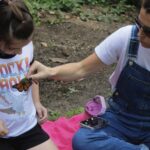
Two such immigrants are Manuel and Blanca Romero. This couple moved from El Salvador to New York, where they lived for 16 years. Just last year, they moved to Harrisburg and immediately became members of St. Francis of Assisi. They participated in the Seven Steps program in order to “make friends and get to know their fellow church members,” said Manuel. He added that the event was a lot of fun too, with food, singing and dancing. Learning about healthy living and the resources available to them was a useful secondary benefit.

The Romeros and more than 100 other church members participated in the first program event at St. Francis of Assisi, held on May 18. This festive kick-off event celebrated healthy cooking and honored mothers for their role in families’ healthy eating and cooking habits. At the event, attendees received bilingual, healthy-eating cookbooks featuring Latino recipes, as well as other handouts and giveaways. A meal was prepared by church members, including Juan Garcia,owner of El Sol restaurant in Harrisburg, using recipes from the cookbook, such as pupusas revueltas (Salvadoran-style stuffed masa cakes) and encurtido salvadoreño (Salvadoran pickled cabbage).

“In the Latino culture, parents are highly respected, and they serve as guides for the best interest of their families,” said Father Reyes. “Mothers especially look out for the health and physical well-being of family members, and Mother’s Day provided the perfect occasion to applaud them for their efforts. My hope is to educate our community members on all the seven steps, to have them take it personally, to make them their best, and to help future generations. We are so grateful to Highmark for reaching out to the poor communities in the Harrisburg area and helping meet their needs.”

What’s next for Highmark and the Seven Steps to Good Health initiative? At the two Allison Hill locations, the next steps “will be dictated by the churches,” said Dr. Dominic. “After the December program, we will see if there are new needs to consider or if the steps should stay the same” in the coming year.

Other parts of Pennsylvania, as well as neighboring states, are considering the adoption of the program, as well. Dr. Dominic and the rest of the Highmark staff involved with the Seven Steps initiative are excited that the program is taking off elsewhere.

“This program provides you with the information and resources about staying healthy and sends the message that small steps make a big difference,” says Dr. Dominic. “Empowering people to make lifestyle changes to improve their overall health—and encouraging Latinos to visit their doctor regularly—is what this initiative is all about.”

Other organizations interested in joining the Sevens Steps to Good Health initiative, or in receiving cookbooks, pedometers and other healthy lifestyle materials for their members, should contact Highmark HEQS by calling 1-866-260-1709.

Continue Reading

Grim Reader: The prose is dark, but the mood is light at “Murder as You Like It” conference.

Pictured (r) is author  Peter Durantine talking with  mystery book fan Jodi DeAngelis. Images courtesy of Todd  DeAngelis Photography.

Pictured (r) is author
Peter Durantine talking with
mystery book fan Jodi DeAngelis.
Images courtesy of Todd
DeAngelis Photography.

Murder. Intrigue. Dirty doings of all sorts.

Something foul is afoot in Mechanicsburg.

Yes, Mechanicsburg.

This month, “Murder As You Like It” creeps into town, one of just a handful of conferences in Pennsylvania designed for fans and readers of mystery books, as opposed to writers.

Mystery fans are a unique group. They love to escape the humdrum of everyday life by rooting for their favorite heroes, while solving the intricate puzzles that authors lay out for them.

This event is aimed squarely at them“I want each of the mystery fans attending the conference to have a chance to speak with their favorite authors and meet new ones,” said Debbie Beamer, owner of the Mechanicsburg Mystery Bookshop, which organizes the one-day mystery bash. “Many attendees are too shy to approach an author on their own, so I developed an atmosphere where they’d have an opportunity to do just that.”

Path to Murder

Beamer has peddled in the lighter side of homicide since opening her first bookshop more than two decades ago.

“I’ve always loved mysteries,” she said. “One day, I happened to see an ad in the newspaper that showed an Irish setter sitting in a green, wing-back chair with a caption that read “Mystery Books, Bethesda, Md.” I was drawn to visit the shop, and, as I searched through all those shelves of mysteries, told myself that one day I would own a mystery bookstore.”

Time passed before Beamer could live out her dream.

She worked for a trade association until 1987, when she started her own association management company. With her partner, she managed four trade associations, doing all of the membership, conference planning and accounting work. Then, in 1990, she opened a small mystery bookstore on East Main Street in Mechanicsburg and named it the Cloak and Dagger.

In 1997, she saw a chance to move to a larger building.

“I changed the name because I tired of receiving calls from people looking for a tailor to help adjust their cloaks,” she said, a smile coming over her face.

With the larger space, Beamer began to sponsor a variety of activities at the store, including a book discussion group and the “Stitch and Bitch” needlework club.

The mystery conference was born in 2011, the first one attracting 70 people. The next year, attendance grew to 85 and, this year, she hopes to top 100 fans.

In addition to meeting authors, fans will be able to attend a number of informative panels including, “Where Do Authors Get Their Ideas,” “The Art of Creating Memorable Characters” and “How Authors and Their Editors Work Together.”

Graham Hetrick, the Dauphin County coroner, will be the keynote speaker.

“Not every conference has a coroner as the featured speaker,” Beamer said. “But mystery fans enjoy the unusual. Besides, he’s a dynamic and entertaining speaker who has lectured throughout the United States on such topics as crime scene management and evidence preservation.”

As a special feature this year, a group of Mystery Writers of America authors, led by Annamaria Alfieri, the past president of the New York Chapter of Mystery Writers of America, will attend the conference. Beamer wants to provide attendees a chance to meet MWA authors and hear about the activities of the association, including its mentor program.

In addition, for one hour during the conference, each author will spend three to five minutes with a group of about five fans, a type of “speed-dating” for mystery book readers. The author will provide a short summary of his or her book then the attendees will have a chance to ask questions.

“I want my readers to get to know the authors and hear what they have to say,” said Beamer.

Ice Cream & Tombstones

While the mystery conference is an annual high point, Beamer sponsors a number of other events throughout the year. One of the most popular is an ice cream social held each August. After the author’s presentation, the frozen treats flow.

The Susquehanna Mystery Alliance is another popular series sponsored by the bookshop.

For example, on Oct. 22, local authors Joe Farrell and Joe Farley will be on hand to sign their latest book, “Keystone Tombstones Volume III.” This volume features stories about the tombstones of Joe Paterno, Art Rooney, victims of Flight 93, victims and survivors of the Titanic, Arlen Specter, Joe Frazier and many others.

As always, a presentation will be part of the event. That’s the nature of a bookshop that puts its readers first.

“Any author who visits the store for a signing must make a presentation,” Beamer said. “I’m proud that I have mystery fans traveling here from as far away as Connecticut, West Virginia, New Jersey and Virginia to attend my programs.”


GOING THERE

The “Murder As You Like It”mystery conference will be held at the Eagle View Middle School cafeteria, 6746 Carlisle Pike, Mechanicsburg, from 9:30 a.m. to 4 p.m. on Saturday, Sept. 20. Take the entrance to Cumberland Valley High School and drive past the high school to the middle school.

Pre-registration is required to ensure sufficient lunches are available. The fee of $20 covers the program, including lunch, refreshment breaks, materials and more. Contact the bookshop at 717-795-7470 or [email protected] to register. For more information, go to the website at www.MysteryBooksOnline.com.


Don Helin published his first thriller, “Thy Kingdom Come,” in 2009. His recently published novel, “Devil’s Den,” has been selected as a finalist in the Indie Book Awards. He lives in central Pennsylvania and his latest thriller, “Secret Assault,” was published in August. Contact Don on his website, www.donhelin.com.

Continue Reading

Juice Abuse: Parents–Beware sugary drinks in disguise.

Illustration by Stephen Michael Haas

Illustration by Stephen Michael Haas

Our standard well-child checkup includes asking what children are drinking. Specifically, I like to know how much juice and how much milk. I asked a mother recently how many cups of juice her toddler drinks each day. She smiled and said, “Oh Dr. Sekhar, we know you don’t like juice.”

I actually love juice, and I remember our fridge stocked with orange juice and lemonade as a child. However, most parents today are keenly aware of the recommendations to limit juice and other sugary beverage intake in children. This can be confusing in the face of labels advertising “100% organic juice,” “no sugar added,” “full-day’s supply of vitamin C,” and “1 serving of fruit.” Below, I hope to demystify what your toddler should be drinking.

Sugar-sweetened beverages include any drink with added or naturally derived sweeteners such as sucrose (table sugar), high-fructose corn syrup or fruit juice. Soda, chocolate milk, 100-percent juice, sports drinks and energy drinks all fall into this category. In the United States, children and adults are estimated to consume almost 200 calories per day from these beverages.

Sugar-sweetened beverages have been linked in many studies to increased risks for obesity, diabetes and heart disease. Note that juice is not better than soda in this case. A 12-ounce glass of orange juice has 170 calories and the equivalent of 10 teaspoons of sugar. This is the same amount of sugar in a 12-ounce soda, which has 150 calories.

When people consume sugar-sweetened beverages with a meal instead of water, the sugary drink does not make them feel full. Therefore, they tend to consume more calories overall at the meal. Additionally, sugar-sweetened beverages may have long-term effects on taste preferences and food acceptance. Toddlers accustomed to sweet beverages may find less sweet but more nutritious and filling options (vegetables and fruits) less appealing.

Parents often ask me about artificial sweeteners as an option. Many “low calorie” juices rely on the use of artificial sweeteners. There are numerous brands available including aspartame (Equal), Sucralose (Splenda) and Saccharin (Sweet’N Low). Each of these is usually several hundred times sweeter than regular sugar.

Studies have suggested that artificial sweeteners may be helpful for adults trying to wean themselves from more sugary beverages or assist with weight control. However, little information exists on these products in children. I also like to remind parents that these are relatively new products. There is limited data available on what happens to people after 50 years of consuming artificial sweeteners. To reduce juice intake in young children, parents can gradually dilute the fruit juice they offer with water rather than use artificially sweetened products.

Having a glass of apple juice each day does not mean your toddler is at risk for obesity. I try to emphasize to parents that the goal is to establish healthy habits that children will benefit from throughout their lives. I find that toddlers accustomed from the start to drinking water with meals are more likely to maintain such habits. Ideally, children should drink mostly water and milk (no more than 24 ounces per day of milk is recommended). Juice, if given at all, should be limited to 4 to 6 ounces a day.

It is equally important for parents to model healthy behaviors.

Going back to my well-child visit, one of the standard questions for parents is if their toddlers “copy” things they do around the house. The answer almost always is “yes.” Toddlers pretend to talk on the phone, pretend to clean the floor, pretend to cook dinner. Your children will also want to drink what you are drinking.

So, I do recommend parents refrain from having soda at the dinner table, offering water instead. What we do as parents usually sends a stronger message than what we say.

Dr. Deepa Sekhar is a pediatrician at the Penn State Milton S. Hershey Medical Center.


Continue Reading

Build a Website, Build a School: At WebpageFX, work life is part social mission.

So, let’s say you have a good day at work and exceed your boss’s expectations.

What happens?

Maybe you get a “good job” or a pat on the back. Moments later, your fine work is largely forgotten, and you’re on to the next task.

WebpageFX, though, has found another way of memorializing a job well done, one with more impact than a “thank you” and with far greater reach. The Harrisburg-based Internet marketing company set up a system last month that matches employee benchmarks with a school-building initiative in Guatemala.

Quincy Herrold

Quincy Herrold

“Our company is very unique,” said Quincy Herrold, an Internet marketing analyst at the company, which moved into the renovated Moffitt Mansion on Front Street in March. “Our founders honestly care about the betterment of the world. That’s cool for the employees, who can be part of that dream and vision.”

Specifically, WebpageFX puts a certain amount of money into a kitty each time a certain employee or departmental goal is met. So, the company will set aside a fixed sum when, for instance, an employee makes a new sale or a task is performed above client expectations. When the purse reaches $25,000, the company will donate that money to build a school in a Guatemalan village.

The initiative started after the company began an internal conversation of how to make their charitable efforts go farther, said Rachel Vandernick, a WebpageFX social media specialist.

Already, employees had participated in several local charitable causes, such as a cystic fibrosis fundraiser and June’s Glow Run, which raised money to replace streetlights in Harrisburg. Also, individual employees are always encouraged to donate time and money to charitable causes, said Vandernick, and the company matches employee giving at a rate of 150 percent.

WebpageFX employees, though, wanted to expand their reach. So, founder Bill Craig initiated the company’s first international charitable effort through a group called Pencils of Promise, which builds schools in developing countries.

Craig liked the mission of the organization, as well as the pledge that 100 percent of donations goes directly to educational programs. According to Pencils of Promise, it covers its operational costs through other private donors and fundraising events.

The $25,000 amount is the cost to build one school that will accommodate 60 to 90 students. It also covers such ongoing expenses as maintenance, supplies and teacher training, said Vandernick. That figure may seem low, but the cost of living is far less in Guatemala than in the United States, and the village donates much of the labor and materials, she said.

So, WebpageFX set up a unique program to turn fundraising into a company project. It wouldn’t encourage direct giving to the cause, but would make contributions based on employees achieving certain performance benchmarks.

On the day I visited, just weeks into the endeavor, several employees were excited to see their efforts adding up. With $2,500 already raised, they were way ahead of schedule to meet their Christmas deadline.

Rachel Vandernick

Rachel Vandernick

“We celebrated a new sale today by saying, ‘that’s more money for the WebpageFX Build [program],’” said Vandernick.

She added that the endeavor not only benefits the charity and the children, but helps motivate workers, ultimately accruing to the benefit of the company.

“It’s a goal for the program, but it’s good for us, too,” she said. “Being able to do a project like this helps us become a little more efficient and better at what we do.”

Moreover, it adds another dimension and deeper meaning to work. Perhaps not by coincidence, a number of employees are graduates of Messiah College, which encourages service to the community and the world.

Alicia Lawrence

Alicia Lawrence

“It aligns with our company values,” said Alicia Lawrence, a WebpageFX content coordinator. “This is a big project that we all can get behind.”

Herrold nodded her head in agreement.

“It makes everyday work life better,” she said. “When we build a website, we’re not only building a website. We’re building a school, too.”

Continue Reading