TheBurg Podcast, Dec. 12, 2014

Welcome to TheBurg Podcast, a weekly roundup of news in and around Harrisburg.

Dec. 12, 2014: This week, Larry and Paul discuss the first 2015 budget hearing, the Pango parking app, the south Harrisburg sinkhole study and Councilman Jeffrey Baltimore’s statement on media coverage and race.

Theme Music: Paul Cooley, Harrisburg resident and host of The PRC Show.

Continue Reading

Sinkhole Report: Fractures Extend into Larger Area of South Harrisburg

A site plan from the most recent engineer's report on sinkhole activity in south Harrisburg, showing potential fracture lines and potential voids in the soil underneath the survey area.

A site plan from the most recent engineer’s report on sinkhole activity in south Harrisburg, showing potential fracture lines and potential voids in the soil underneath the survey area.


A second engineering report of sinkhole potential in south Harrisburg shows additional areas of concern, in a region that a city official described as “fragile, but not unstable.”

The report, prepared by Camp Hill-based engineering firm Gannett Fleming, is based on an expanded survey of the surrounding neighborhood, as opposed to the single city block that was studied in a prior report.

The prior report, released in August, showed evidence of five fractures in the limestone bedrock and several potential voids beneath the 1400-block of S. 14th Street, where a series of sinkholes opened in March.

For the latest report, engineers surveyed an expanded area bounded by S. 12th Street to the west, Scott Street to the east, Hanover Street to the north and Cloverly Terrace and S. 13th Street to the south, a neighborhood encompassing some 200 buildings, most of them single-family homes.

The latest report shows evidence that previously detected fractures extend across the larger area and also introduces evidence of possible additional fractures and voids throughout the neighborhood.

Limestone fractures can contribute to the formation of voids beneath the street surface, as soil subsides into openings in the rock. The voids can eventually migrate towards the surface, causing the street to collapse and sinkholes to open.

On Wednesday, city officials were quick to emphasize that the new report did not significantly change the status quo. “I don’t think the study changes the dynamics at all,” Mayor Eric Papenfuse said.

City Engineer Wayne Martin said that the report showed the area was “fragile, but not unstable,” adding that the city had determined it was safe to keep roads in the neighborhood open.

City Council will hold a public meeting to discuss the new report at 5:30 p.m. on Monday, Dec. 22, at the public works building at 1820 Paxton Street. Councilwoman Sandra Reid, who chairs council’s public works committee, will host the meeting, council members confirmed at their legislative session Tuesday night.

The August report concluded that the “potential for future sinkhole activity” was “high” in the affected block of S. 14th Street. The more recent study does not offer a conclusion about the likelihood of future sinkholes, although it does end with a handful of suggestions about ways to prevent them or to mitigate them if they occur.

The August report relied on site observations, drill samples and multi-channel analysis of surface waves, or MASW, a method of creating and measuring seismic waves to detect likely fractures and voids underground.

The latest report relied on site observations and an MASW survey, but did not include drilling for samples. Both reports also tapped historical records, including aerial photographs showing the development of the neighborhood over the years.

Meanwhile, the city has continued its efforts to address the more immediate problems facing residents of S. 14th Street, where sinkhole activity has continued. Since March, the city has declared 10 homes on the block unfit for human habitation, according to Dave Patton, the city’s codes administrator.

Martin said the city hopes to submit an application this week to the county for $1 million in disaster relief funds. The city has already sent in a notice of intent to apply for an additional $3 million in federal disaster relief funds, he said.

Together, those applications would seek to secure the $4 million it would take to mitigate the problem on S. 14th Street, according to an estimate provided in a third report by Gannett Fleming issued earlier this year.

The mitigation efforts will likely entail a combination of buying out certain homeowners and reconstructing the street, Martin said.

There was some question as to why Harrisburg officials did not publicize the report until Wednesday, two weeks after it was sent to the city, and only after the topic was raised during public comment at Tuesday night’s council meeting.

The mayor addressed this question Wednesday morning, saying there was “no decision to hold the report,” but that the city was simply “looking for a time to hold a public meeting.”

“It’s complicated,” the mayor said of the report, adding that the best way to inform the public was to have the document explained at a hearing by an engineer.

The choice of date for the hearing was left to the discretion of council’s public works chair, the mayor said. “We would have been happy to have met sooner,” he said.

You can download the complete Gannett Fleming report here: Expanded Sinkhole Investigation, 11/25/14. For the site plan of the neighborhood, click here: Sinkhole Report – Neighborhood Site Plan.

This story has been updated to provide a time and address for the public works committee meeting, which will take place Dec. 22 at 5:30 p.m. at 1820 Paxton St.

Continue Reading

For Parkers, Pango Offers Convenience And Coupons—For A Fee

Harrisburg Mayor Eric Papenfuse, center, with scissors, cuts the ribbon at the unveiling of Pango's mobile app service in Harrisburg Tuesday morning.

Harrisburg Mayor Eric Papenfuse, with scissors, cuts the ribbon at the unveiling of Pango’s mobile app service in Harrisburg Tuesday morning.

Starting today, drivers looking to park their cars in Harrisburg can use a mobile app to do it, thanks to a contract between the city’s new parking operators and Pango USA, a company that offers some form of the pay-by-phone service in several Pennsylvania municipalities.

The app, which is free to download, will require customers to establish an account and to register a method of payment. Once the account is established, a customer can purchase parking with a few taps of the thumb.

For each transaction, Pango will charge customers an additional 14 cents on top of the regular cost of parking. The service is optional and will not replace the city’s meters, Neil Edwards, president of the company’s U.S. operations, said.

Pango unveiled the new parking service Tuesday morning, at a ribbon-cutting ceremony inside and on the street outside Arooga’s along downtown Harrisburg’s restaurant row.

The choice of a restaurant was deliberate, as the app will include coupon and parking validation features that Pango says should help entice customers, offsetting the increase in hourly rates that many businesses fear are driving people away.

Businesses will be able to purchase bundles of validation codes, Edwards said, which can then be passed on to customers as a reward for making a certain amount of purchases. They can also submit coupons that will be exclusively available to Pango customers, and only redeemable while a car is actually parked, he said.

Though the app is free, customers will also be able to add extra features, such as an automatic alert by text 15 minutes before parking expires, for a monthly fee.

At Tuesday’s ribbon-cutting, Mayor Eric Papenfuse touted Pango as a “new and wonderful app” that would “make it both easy and fun to park” while simultaneously providing a benefit to local businesses.

Papenfuse said that his own business, the Midtown Scholar Bookstore, would be offering validations good for one hour of free parking on purchases of $25 or more.

As of Tuesday’s ceremony, the mayor’s bookstore was one of only two businesses offering validations, though Edwards said there would be “four or five” with similar offers by the end of the day and, he hoped, “30 or 40 by the end of the month.”

As an incentive for drivers to sign up for the service, Pango is also offering five hours of free parking to new customers for each car they register.

An individual account can be attached to multiple users and cars, Dani Shavit, Pango’s executive vice president, said.

Customers without smartphones will also be able to use the service, either by calling a hotline or by sending a text. Details about the various ways to use the service are available at the company’s website, Mypango.com.

Standard Parking, which became the new operator of Harrisburg parking after a long-term lease was signed last year as part of the city’s debt solution, had originally contemplated contracting with a different company, Parkmobile, for a version of the pay-by-phone service.

But Pango was able to offer a lower price and a wider range of features, Edwards said, and was ultimately selected out of a handful of possible providers.

Harrisburg’s 14-cent transaction fee is higher than Pango’s price in at least some other Pennsylvania municipalities. In the city of Butler, for instance, where Pango is available in two garages, Pango charges 10 cents per transient parking transaction and $1 for processing the purchase of a $50 monthly permit.

In Scranton, where Pango is available for on-street parking, drivers are not charged any transaction fee at all, since the city opted to pay Pango 5 percent of all receipts, forgoing the option of a 10-cent fee charged to drivers altogether.

“We didn’t want to ‘penalize’ parkers for the use of the system,” David Bulzoni, Scranton’s business administrator, said in an email.

Edwards said the company hoped to have between one-fifth and one-quarter of all parking customers in Harrisburg purchasing parking through Pango in the first year. In Scranton, where the service became available in May 2013, the app was used in about 16 percent of transactions, he said.

Pango USA is a wholly owned subsidiary of Pango Mobile Parking, Ltd., a venture-backed company headquartered in Israel.

The company website claims the service is available in “over 59 cities,” with “more than 1 million active accounts.” Its operations have recently expanded into Brazil.

According to a 2013 company press release, the Pango system is based on patents registered in several countries, among them a U.S. patent awarded in 1999.

A drawing accompanying that patent application details a rudimentary network connecting a customer—by way of mobile phone, payphone or computer terminal—to a central database that subsequently relays information to law enforcement.

The drawing, which predated mobile apps by a decade, is far from imagining a world where a driver could purchase parking by tapping an icon with her thumb. And it doesn’t make any mention of coupons like the Midtown Scholar Bookstore discount which, as of Tuesday, was one of only two coupons available to Harrisburg parkers.

“The mayor is a small-business owner,” Edwards said of Papenfuse, who owns the Midtown Scholar, in a phone interview prior to Tuesday’s ribbon-cutting. “I really connected with him on this level. The ability to have coupons or give free parking—that’s a real benefit. It turns parking into an asset instead of just a necessary evil.”

Pango will be hosting an additional information session about its app at Arooga’s tomorrow, Wednesday, Dec. 10, from 5 to 7 p.m.

Continue Reading

All The World Shall Park

parking angel

This week, Standard Parking, Harrisburg’s new parking operators, announced the creation of four distinct districts to help drivers keep track of the city’s new rates and hours. The system relies on multi-space meters whose brand, LUKE II, shares its name with the Biblical chapter about the birth of Jesus. At first, we thought it was just a coincidence. But then we found this dusty old scroll…

Luke 2: The Birth of the Parking Districts

And it came to pass in those days, that there went out a decree from Standard Parking, that all the parking spaces in Harrisburg should be divided into districts.

And all the Harrisburg drivers went to park their cars, every one into his own district.

Some of them went into the Central Business District, stretching between Chestnut and Forster, and between Front Street to the west and North 7th Street to the east.

And the ones who drove into this district were either great with hunger, for there were ranged along this district many a maker of food, or great with anger, for they worked for the state and yet, somehow, did not qualify for a space in one of the garages.

Parking in this district was $3 per hour. And lo, the color-coding of this district on the maps was lime.

Other parkers drove to the north and south, into the border districts. One such district was to be called Old Midtown, extending to Verbeke in the north and N. 2nd to the west.

And the parking in this district was to be mainly in front of homes and apartment towers, and the fee was to be $1.50 per hour. And the reason for the fee was to capture those parkers who sought to avoid paying fees in the other district, whom the decree did not exactly call “cheapskates” or “freeloaders,” although it sort of said it without saying it.

And lo, the color-coding of this district on the maps was salmon.

The other border district was to be called “South of the Central Business District,” and the hourly fee in this district was also $1.50. And the drivers who parked in this district looked upon its name and said unto themselves, “Yea, and by this logic, shall we now also christen our Commonwealth ‘West of New Jersey’?”

And lo, the color-coding of this district was up for debate. Some said it was aqua, and others said it was cyan, and still others said it was glaucous. And while they were debating, an angel came before them, saying:

“Why do ye doubt the color scheme of Standard Parking? Ye shall call it steel blue!”

And the parkers called it steel blue, and were sore afraid.

And the final district was almost no district at all. It was a narrow stretch along North 3rd Street, extending from the Midtown Scholar Bookstore to Harris Street.

And some of the places along this district were cafes and boutique stores, but many of the places were vacant buildings and empty fields, except towards Harris Street, where there was a church and an apartment building for the elderly.

And the fee for the privilege of parking in these places was to be $1.50 as well, but the first 15 minutes of the parking was to be free.

And the elderly folk looked at one another and said, “Let us get out of this district, and go somewhere our grandchildren can visit us for free!” But they could not, because the apartment bus service came once in the morning and once in the evening, and it was only 1 p.m.

And the name of this district was “New Midtown,” and the boundary this district shared with Olde Uptown was the source of much consternation. Some said it should be called “Olde Middleupton,” while others said the parts should cancel each other out, and it should simply be called “Town.”

And lo, the color-coding of this district was lavender.

And it came to pass that a reporter with questions about these districts referred to a portion at the bottom of the decree, which directed him to a “media contact” named Chris Sherman, Senior Vice President of Standard Parking.

And the reporter called the number provided for Mr. Sherman, and it took him to a central switchboard, which put him on hold.

And while he was on hold, the reporter heard a heavenly choir, and the music from the choir was upbeat, in an inoffensive, sanitized sort of way.

And after some minutes, the music ended, and a woman named Alicia answered, in Tennessee. And Mr. Sherman was unknown to this woman, who said she was to direct all media inquiries to another number, which was based in Chicago.

And the man in Chicago was out of the office until Dec. 10, according to his voicemail. And the reporter emailed Mr. Sherman instead, in the hopes of asking, “Why hast thou dealt thus with us?”

And lo, upon the close of business Friday, the email had not been answered.

Continue Reading

TheBurg Podcast, Dec. 5, 2014

Welcome to TheBurg Podcast, a weekly roundup of news in and around Harrisburg.

Dec. 5, 2014: Larry and Paul chat about the arrest of city Councilwoman Sandra Reid, the zone-ification of Harrisburg’s street parking, Paul’s story on the fall of the T-Mart convenience store and the resurrection of the Millworks building. There also may be a rant or two.

Note: This podcast was recorded prior to an interview with Councilwoman Sandra Reid, during which she provided comments on the week since the arrest. You can read the story from that interview here.

Theme music by Paul Cooley, host of the PRC Show podcast.

Continue Reading

Councilwoman Reid On Her Arrest: A “One-Sided Conversation”

City Councilwoman Sandra Reid, left, and Council President Wanda Williams.

City Councilwoman Sandra Reid, left, and Council President Wanda Williams.

The story of Harrisburg City Councilwoman Sandra Reid’s arrest will remain a “one-sided conversation” for now, Reid said Friday afternoon, during an interview in which the councilwoman declined to give her version of the events leading up to her arrest last week at a city gas station.

She did, however, partially dispute the description provided by District Attorney Ed Marsico yesterday as part of his announcement of a disorderly conduct charge for Reid, a lesser charge than the obstruction of the administration of law for which she was arrested after allegedly interfering with the work of Harrisburg police.

According to Marsico, Reid had “repeatedly berated” officers who were detaining a man allegedly involved in a harassment incident at the City Gas & Diesel station in the 1500-block of State Street.

Reid, who said she received law enforcement’s description of her actions for the first time yesterday, said it was “not completely accurate.”

She declined to elaborate further, however, saying she had been instructed by her attorney not to discuss an “open case.”

Reid spoke to two reporters for just under an hour Friday afternoon in a quietly arranged meeting at the abc27 studio on Hoffman Street uptown, in what was her first on-the-record interview since her arrest.

Although she declined to discuss the incident, the councilwoman did address her perception in the media, her interactions with officials since her arrest and her frustration with reactions from members of the public.

She also discussed her on-camera reference to the shooting of Michael Brown by a police officer in Ferguson, Mo., in city hall earlier this week, as well as several outstanding warrants she faced for a number of previous minor offenses.

Reid, upset by the intensity of reactions to what she emphasized was only a summary offense, said the past week has been “traumatic.” “I’ve been villainized as if I’ve committed murder,” she said.

She also said her experience had left her with a feeling that she was “guilty until proven innocent,” and described the events since her arrest as “one of the most trying things” she has been through.

Reid appeared calm and collected throughout the interview. She was not accompanied by her lawyer or any other party.

She said she had wanted to give a statement to the district attorney, but that her lawyer had advised against it. First Assistant District Attorney Fran Chardo confirmed Thursday that Marsico’s description of the incident relied solely on testimony from the police officers and video footage collected from both police dashboard cameras and surveillance cameras at the store.

Reid said she had not spoken since her arrest with Mayor Eric Papenfuse because he was the “CEO of the police department” and it would be a conflict to discuss an active case with him.

She acknowledged speaking with the police chief, Thomas Carter, in the days following the incident, but said they had not talked about it since the case was referred to the district attorney’s office at the end of last week.

She also said she had not seen the brief statement Papenfuse issued late on Thursday, which described her arrest as “an unfortunate incident that escalated too quickly.” Presented with the statement Friday, she declined to say whether she agreed or disagreed, saying that would be tantamount to making a statement about the details of the incident itself.

Reid also addressed a set of outstanding warrants she faced for a variety of low-level offenses, which had been featured in several news reports and which she claimed to have learned about for the first time following her arrest.

Three of the warrants were for unpaid fines for failure to file a local income tax return in 2002, 2007 and 2008. A fourth related to an unpaid 2012 parking ticket, while a fifth related to having been in Negley Park in Lemoyne late at night in violation of a park ordinance.

Reid said she paid the fines on all five warrants, which totaled around $250, earlier in the day on Friday.

An employee in the district court of Judge Marsha Stewart, where four of the five warrants were filed, confirmed on Friday that Reid’s fines had been “paid in full.” An employee in the Cumberland County district court, which held jurisdiction over the warrant for the Negley Park incident, also said Reid had paid her fine.

She expressed frustration at how the warrants were characterized in news reports and comments on news sites, saying people had treated her as if she was “some kind of criminal” out of proportion to the size of and reason for the fines.

Reid also explained her state of mind during an on-camera exchange with reporters in city hall earlier this week, in which the councilwoman said, “Hands up, don’t shoot,” in reply to a question about her arrest.

The remark was a reference to the series of protests this fall following the shooting of Michael Brown, an unarmed black teenager, in Ferguson, Mo., in which the phrase “Hands Up, Don’t Shoot” was often used to invoke the image of excessive police force, particularly against minorities.

“I was frustrated at the time,” Reid said of her use of the phrase. She said the national conversation about relations between police and minority communities was important, but declined to relate it to Harrisburg police in particular, saying they were a party in the case over her arrest.

Continue Reading

Councilwoman Charged With Disorderly Conduct

Harrisburg City Councilwoman Sandra Reid and Police Chief Thomas Carter at a May 9 press conference in city hall.

Harrisburg City Councilwoman Sandra Reid and Police Chief Thomas Carter at a May press conference in city hall.

Harrisburg City Councilwoman Sandra Reid has been charged with disorderly conduct following her arrest last week outside a city gas station, the Dauphin County district attorney’s office said Thursday.

Reid, 45, “unnecessarily inserted herself in an active arrest and ignored numerous requests to allow the police to continue their work at the scene of the arrest without interference,” according to the release.

The district attorney’s office has been reviewing possible charges since last week, including a misdemeanor charge of obstructing the administration of law, which a Harrisburg police log listed as the reason for Reid’s arrest.

Upon completing a review of the incident, however, Dauphin County District Attorney Ed Marsico said he determined her actions only warranted the lesser charge of disorderly conduct, a summary offense.

The obstruction charge would have required “proof of force, violence or similar unlawful act” and there was no evidence of such actions in the case, Marsico said.

The review of the incident incorporated surveillance footage from the gas station, City Gas & Diesel in the 1500-block of State Street, and video footage from police patrol cars, as well as descriptions from the officers involved.

It did not include statements from Reid, store employees or the man with whose arrest Reid allegedly interfered, according to First Assistant District Attorney Fran Chardo.

The footage was video only, and did not contain audio, Chardo said.

According to the release, police officers had arrested and were detaining a man who had been involved in an incident inside the convenience store at the station, allegedly preventing a woman from leaving, when Reid arrived in her car.

The man, Alain Ebele Dejin, 29, had no connection to Reid, Marsico said. He was charged Thursday morning with making terroristic threats, false imprisonment, defiant trespassing and harassment.

As she pulled up, Reid’s headlights “shone into the face of the arrestee,” Marsico said. Police asked Reid to turn off her lights, which she did “after a few requests.” She then “turned them back on, before finally turning them off again.”

Reid then allegedly asked the officers to move Ebele Dejin into the store, “presumably on account of the cold.” The release notes that the temperature at the time was 45 degrees Fahrenheit, and that Ebele Dejin “seemed comfortable and was cooperative with the two officers there.”

During her interaction with police, Reid allegedly demanded the name and badge number of one of the officers and “repeatedly berated” the police.

Reid “ignored numerous requests from the police to stop interfering” with Ebele Dejin’s arrest, Marsico said. After she was arrested, he said, she told police she was a member of city council and “indicated an intention to call the chief of police.”

The incident began late in the evening on Tuesday, Nov. 25. Both Reid and Ebele Dejin were arrested and released sometime after midnight on the morning of Nov. 26.

The police log and Ebele Dejin’s criminal docket list the arresting officer as Jeffrey Clark, a Harrisburg policeman. The district attorney’s description does not indicate whether Clark or another officer provided a name and badge number to Reid, nor does it identify Clark or any other officers involved.

Asked whether Reid was within her rights to ask for a name and badge number, Chardo said it depended on whether doing so interfered with an ongoing arrest. “It’s a matter of context,” he said.

Chardo also said the district attorney’s office would not be releasing the video footage, because he did not believe they were permitted to. If the charges against Reid go to trial, however, he said they would likely become an exhibit and would therefore be a public document.

Marsico also said in his release Thursday that his review included reading a report of a prior incident in which Reid allegedly interfered with a police investigation.

During that incident, which occurred on August 27 near the councilwoman’s home on Liberty Street, Reid is alleged to have confronted an officer whose police vehicle was parked on the street with its lights flashing.

Reid allegedly “ordered the officer to move his car,” Marsico said. When the officer told her he was investigating a car theft, Reid allegedly threatened to call the police chief and asked for his name and badge number.

She subsequently let the officer continue his investigation, upon learning from him that her neighbor’s car had been stolen, according to the release.

Late in the day Thursday, Mayor Eric Papenfuse’s spokeswoman sent out a press release that included a comment from Papenfuse on Reid’s arrest, which he called a “most unfortunate incident that escalated too quickly.”

The comment came at the end of an announcement for a planned series to air on WHBG Channel 20, in which the mayor will host discussions with various guests about easing tension between law enforcement and minority communities. The series is expected to begin this month and continue through next year.

Reid, who is one of seven members of Harrisburg’s City Council, took office in January 2012 and chairs the public works committee.

Prior to Thursday’s announcement of charges, Reid had told reporters she was waiting to make a statement until the district attorney had made a decision.

Asked about a statement Thursday afternoon, she wrote in a text message that she had no comment.

This story has been updated with comments from Mayor Eric Papenfuse.


Continue Reading

Video Footage of Councilwoman’s Arrest May Factor In Charges

City Councilwoman Sandra Reid, left, and Council President Wanda Williams.

City Councilwoman Sandra Reid, left, and Council President Wanda Williams.

Video footage taken at the State Street gas station where Harrisburg City Councilwoman Sandra Reid was arrested two days before Thanksgiving is among the evidence the district attorney’s office is using to determine whether to file charges, First Assistant District Attorney Fran Chardo confirmed Wednesday.

The footage includes video from both police dashboard cameras and store surveillance cameras, Chardo said.

The store’s footage, from cameras with views inside and outside City Gas & Diesel at 15th and State streets, was collected by law enforcement the day after Reid’s arrest, according to Nirmal Singh Gill, a man who identified himself as the business owner.

Gill said he was not present during the arrest and had not viewed the surveillance footage. He did not make available any employees who might have witnessed the incident at his store.

So far, few details have surfaced of the circumstances leading to the arrest of Reid, a first-term councilwoman with an often fiery demeanor who has actively campaigned to remove trash from city streets and crack down on illegal dumpers.

Since her arrest, late in the evening of Tuesday, Nov. 25, Harrisburg police have referred questions about the incident to the mayor’s office. Reid, meanwhile, has declined to give her version of events, saying she would wait to release a statement until after the district attorney had made a decision on the charges.

Most of what is known about the incident comes from a police log, available for download on the city’s website. The log records the arrest of two people close to midnight, one of them a 29-year-old black male and the other Councilwoman Reid.

The log is generated automatically from details entered by officers at the time of an arrest, said Paula Trovy, the police department’s public information officer. In the log, Reid is identified as Sandra Greene, a name from a previous marriage. Both Trovy and Chardo said that was consistent with the police records system, which logs subjects by the name under which they are first entered into the database.

According to the log, Reid was arrested for obstruction of justice, which Chardo said took place during the arrest of the other suspect. The man was arrested for making threats, physical harassment and false imprisonment, as well as for remaining on private property in defiance of an order to leave, the log says.

Officials have “no reason to believe” Reid and the man knew each other, Chardo said, but he added that he couldn’t be sure.

The counts against the man could be charged as three misdemeanors and one summary offense, Chardo said, while the count against Reid could be charged as a misdemeanor. As of midday Wednesday, no charges against either had been filed.

On Wednesday, the city denied a right-to-know request for the surveillance tapes, citing an exemption in the law for materials involved in either a criminal or noncriminal investigation.

Chardo later affirmed the exemption, saying the tapes formed part of the investigation. He did not say whether his office would release the tapes on its own, and referred to a law that restricts dissemination of investigatory materials to non-law enforcement entities.

He did say, however, that the tapes would likely be an exhibit in any case resulting from the investigation, at which point they would become public documents.

This story has been updated with information that an alternate surname identifying Councilwoman Reid was from a previous marriage, and to clarify a point about the names recorded in Harrisburg police logs.

Continue Reading

Turn the Corner: When a convenience store started to disturb a neighborhood, residents, backed by the city, did something about it.

Screenshot 2014-11-25 17.14.58On the afternoon of Friday, May 30, Dave Patton, Harrisburg’s codes administrator, walked into the T-Mart convenience store and asked to see its health license.

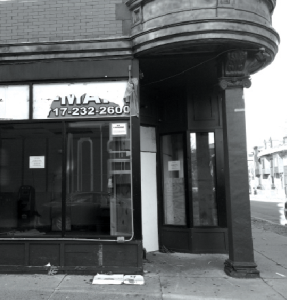
As a business, the T-Mart, at the corner of N. 3rd and Herr streets, was in some ways typical of its environs, the patchy commercial district north of Forster, in the city’s Midtown neighborhood. Across Herr Street is a new Moroccan restaurant; across 3rd, takeout Chinese. Further down the block is a diverse array of businesses, including a trendy pasta place, a greasy spoon, a barber and a pawn shop with red and yellow banners saying, “We Buy Gold.” The T-Mart was just one more business in the mix, carrying the usual corner-store fare: cigarettes, cell phones, candy, toilet paper, over-the-counter painkillers.

In other ways, though, the T-Mart stuck out like a sore thumb. Not long after it opened, in early 2012, the store erected a wooden produce stand along one of its exterior walls. Often, the stand was empty, but when it did have fruit, it was of questionable quality. “It looked like the stuff that fell off the back of the truck,” one neighbor told me. Then there were the windows. Initially, the owner filled them with flyers and ads, so that it was difficult to see into the store from outside. Then, starting sometime in 2013, they kept getting busted in. That October, and again in January and May of this year, police got reports of someone smashing the glass in the shop’s front door.

On May 12, someone threw a brick through one of the main windows, and, shortly afterwards, large plywood panels appeared, covering all the glass on both sides of the door. Now there were no views into the building whatsoever. As one neighbor put it in an email to the city, they made “an occupied store look abandoned.” (Cigarettes, other unnamed items and a total of $850 were reported stolen in connection with these break-ins, according to police reports.)

But the T-Mart’s most unusual feature was the traffic outside its door. Particularly beginning in the winter of 2014, neighbors frequently witnessed what they took to calling “curb service”—a car would roll up, and someone would come out of the T-Mart with what looked like a Styrofoam takeout tray in a plastic bag. The store, however, didn’t sell prepared food. The T-Mart also started to keep irregular hours, which led to another strange phenomenon. People would hover outside the entrance, waiting for it to open. Neighbors found this odd, because there were other convenience stores a few doors away, selling substantially the same items. “If you need a cigarette, it’s over there. If you need a Coca-Cola, it’s over there,” David Botero, a police department community liaison who monitored concerns about the T-Mart, told me. “Why are you waiting for this store to open, and why is there a line of people to come into the store?”

Prior to Patton’s visit, the T-Mart had already been cited a few times for various violations. In April 2013, the store was caught selling cigarettes without a license, while, more recently, earlier in May, it got nabbed for illegally selling individual cigarettes out of the pack, also known as “loosies.”

When Patton entered the store on May 30, the owner, a Nepali man named Tika Siwakoti, wasn’t there. But the man behind the counter, whom Patton took to be an employee, starting digging around in search of the license. “Nah, don’t bother,” Patton said after a moment. “I know you don’t have it.” In fact, Patton’s question was only a test; he’d looked up the T-Mart’s records at his office and knew that Siwakoti hadn’t renewed. In addition, the shop owed a couple hundred dollars in overdue mercantile taxes.

As it happened, another man in the store was on the phone with Siwakoti at that moment, and he passed the phone to Patton. “You have til Monday,” Patton told him. Siwakoti started to protest, but Patton held firm. “I don’t think you’re feeling me,” he said. He told Siwakoti that if he didn’t update his license and get current on his taxes, the city would shut him down.


One of Mayor Eric Papenfuse’s first actions in office was to promise a new approach to crime. He made Thomas Carter, a soft-spoken and courteous 26-year veteran of the force, the permanent police chief—he had been holding the position in an interim capacity—in a decision Papenfuse later called “the most important” of his first year. He also engaged Robert Martin, the longtime chief in Susquehanna Township, to consult Harrisburg in adopting “community policing” techniques. (Martin and those efforts were the subject of a profile in this magazine’s March issue.)

“Community policing” is an umbrella term for methods that are meant to improve a department’s relationship with the public. That might make it sound like a branch of marketing, and indeed, David Botero, whom Papenfuse appointed in January under the title of “community policing coordinator,” sometimes speaks of the police department’s “brand.” (In a past life, he worked at an ad agency.) But to its adherents, community policing is also about good police work. A department that has positive relationships with residents, they believe, will ultimately pick up better tips, catch more criminals and generally have an easier time doing its job.

In the case of the T-Mart, neighbors stepped up their involvement in mid-May. “People reported suspicious activity there,” Botero told me recently. “Then, when we looked into it; ‘suspicious’ turned out to be pretty legit.”

Jonathan Hendrickson, the president of Midtown Square Action Council, one of the neighborhood groups that corresponded with Botero, said that, in the preceding weeks, the situation outside the store had worsened dramatically. “We kind of called an emergency meeting, because there were some things that just had been getting really shady,” he told me.

One neighbor complained she’d been solicited for sex in front of the store. Another neighbor, fed up with what he saw as blatant evidence of drug dealing, had created around a dozen flyers advertising an “Open Air Drug Market,” which he posted on telephone poles in the neighborhood. The flyer showed a skeleton figure hawking “diesel” and “hard”—nicknames for heroin and crack cocaine, respectively—and provided T-Mart’s name, address and phone number. (Aside from Hendrickson, neighbors I spoke with asked not to be identified.)

On the morning of May 30, a neighbor emailed a contact in the mayor’s office with a complaint about the T-Mart’s boarded-up windows. The mayor’s assistant forwarded the complaint to several officials, including a police captain, Patton from codes and Botero. Within a few hours, Patton had made his visit to the store and reported back on the thread. Botero replied three minutes later. “Thank you; and excellent—great job, DP!” he wrote. He asked how much he could share with the Midtown group, which he planned to meet the following Monday. The group was “[v]ery political, very vocal, very connected,” he added. “They will be asking about this property.” (The city produced the email chain in response to a right-to-know request; the neighbor’s name was redacted.)

Initially, the city seemed to think the extra scrutiny would be enough to close the shop. “We were planning to shut everything down,” Patton told me. But, the following Monday, to his surprise, Siwakoti showed up in city hall to renew his license and pay the taxes. “We kind of had to go to Plan B,” Patton said.

“Plan B” was the codes enforcement equivalent of a full-court press. Over the next three months, the city applied every kind of pressure within reach to drive the T-Mart out of the neighborhood. In June, another police officer caught the store selling loosies. In July, and again in August, a codes inspector cited the owner for the boarded-up windows, this time filing the charges in “housing court,” a concept Papenfuse revived this year as part of a crackdown on blight. Both times, the judge, David Judy, handed down a $600 fine.

On Aug. 5, a codes inspector and a city health officer showed up at the T-Mart together and found myriad violations. The health officer’s report noted the lack of soap and paper towels in the bathroom, expired Similac baby formula for sale, and “evidence of pest on food shelving,” among other offenses. The codes report was even more voluminous. It cited exposed wiring in an electrical box, a padlocked exit door, a fire extinguisher with expired tags, one emergency light blocked by boxes and another inoperative, and a dozen other violations. Additionally, it noted there were still boards on the windows.

Meanwhile, the neighbors and Botero were in touch with the landlord, a man named Geoffrey Rhine. On May 27, Rhine had sent a termination notice to the T-Mart, which referred to lease violations as well as “complaints from others in the nearby neighborhood about the impact of activities in and around T-Mart.” On Aug. 12, he sent a second notice, ordering Siwakoti to vacate by Sept. 15. Nonetheless, by early October, the T-Mart had still not left the premises.

On Oct. 7, Hendrickson of Midtown Square Action Council sent a letter to Rhine. He claimed that, following the health inspection, the shop had switched from selling food to selling clothing and “‘burner-style’ cell phones.” He added that the neighborhood group was trying to help find a new tenant for the space, but asked Rhine to initiate eviction proceedings in the meantime. “We can do little while the property remains a blighted source of drugs and decay within our neighborhood,” he wrote. Finally, one week later, on Oct. 14, Rhine filed for eviction. “He took one for the team,” Botero told me. “He could’ve played dumb, but he did the right thing.”


Siwakoti’s eviction hearing took place on Wednesday, Oct. 29, in District Justice Barbara Pianka’s courtroom in the Uptown Shopping Plaza. At 9:30 a.m., Rhine was already there, sitting just inside the door with his hands folded in his lap. Siwakoti arrived 15 minutes later, in a tan sports jacket, light brown corduroys, and a tan ball cap with a Yankees logo. It looked as though he hadn’t shaved in several days. He spotted Rhine, walked over to him and shook his hand. “Hi, Tika,” Rhine said. Siwakoti checked in at the counter, took a seat and began reading from his phone.

Just before 10, a clerk called them into the courtroom. After a short wait, during which neither of them spoke, Pianka entered in her black judge’s robes and took her seat at the bench. Rhine, in his complaint, had not asked for any money beyond court costs; he simply wanted the eviction. He began by referring to a paragraph in Siwakoti’s lease, which required compliance “with all statutes, ordinances, and requirements of all municipal, state, and federal authorities.” Pianka stopped him, asking whether Siwakoti had a copy of the lease.

“I misplaced the lease,” Siwakoti said quietly. “I lost it.”

Pianka left to make a photocopy so that, she said, Siwakoti would “know exactly what’s taking place today.” When she came back, she handed the document to Siwakoti, who began to protest. “Your Honor, it is not really failure,” he said. “What happened was—” Pianka cut him off, telling him that Rhine had to finish the complaint first.

Rhine picked up where he’d left off. In addition to the paragraph about compliance with local ordinances, the lease, which was dated Nov. 12, 2011, contained an option to extend the lease an additional two years, which had to be exercised by Sept. 15, 2013. Siwakoti, Rhine said, had never exercised the option. He reviewed a series of documents he’d attached to the complaint, including Hendrickson’s letter, his termination notices, and the failed codes inspections. He also included an email he’d sent Siwakoti on Aug. 1 about reports that boards were still up in the windows. “Please make immediate necessary window repairs and get the boards removed,” it said. It also suggested that Siwakoti contact Botero and neighborhood groups “on how to work together to eliminate the undesirable drug trafficking and loitering in the area around the building.”

Once Rhine had reviewed all this, Pianka gave Siwakoti a chance to speak. He began by defending the presence of the boards in the windows. “The store got broke in five, six times,” he said. “Six glasses was broken. I had to board that up til I fixed that. It is not a magic to fix six glasses in a matter of weeks.” He said the repairs had cost a total of $3,200. As for the violations, he said, everything in his store was up to code except for a piece of exposed wire in the ceiling, which he only learned was a violation when the inspector pointed it out. He said he had “never received any letter” from the neighbors, but that whatever it said was “totally, absolutely false.” He dismissed the idea that people gathering on the corner was evidence of wrongdoing, noting that sort of thing happens anywhere there’s a business. “This is a court,” he said. “People have to come here, they’re going to gather outside.” There were “absolutely no drugs” and “absolutely no kind of any illegal solicitation” inside or outside his store, he said.

When he was finished, Pianka asked Rhine if he had any questions for Siwakoti.

“No,” Rhine said.

“Anything else I need to be made aware of today?” she asked.

Rhine confirmed that he wasn’t seeking money damages, only an eviction and payment for his court costs. Siwakoti said that, because he’d lost the lease, he wasn’t aware of the deadline for the extension. Then he digressed into a discussion of rent. He spoke quietly, and his syntax was hard to decipher, but he seemed to be saying that, if Rhine wanted to negotiate a higher rent payment, he was open to doing so. Finally, he returned to the codes inspection. When a codes inspector found something wrong, he said, that was “not a violation—that is ‘need to fix.’” Every problem that had been identified, he said, he had since resolved.

Outside the courtroom, I introduced myself to Rhine. Botero had referred to him as the “unsung hero” of the story because he had cooperated with the city and neighbors. I wanted to know: did he see things the same way? Rhine, who grew up in Camp Hill but now lives outside Philadelphia, said he’d be willing to talk, but added that he didn’t want his name to appear in the story. When, in a follow-up call, I told him I couldn’t grant that condition, because his comments were made in a public forum, he declined to be interviewed further.
Screenshot 2014-11-25 17.15.16


On a rainy day in late October, I met Botero outside the T-Mart on 3rd Street. He rolled up in a white police caravan—an airy, rattling vehicle he described as a “lunchbox.” When I climbed on board, he offered me a McDonald’s coffee from a tray of them on the floor between the driver’s and passenger’s seats.

Botero isn’t a cop. He doesn’t carry a badge or a gun, and he has no background in police work. A New Jersey native of Colombian descent, he has an olive complexion, clear blue-gray eyes and short black hair, specked with gray. In his role as an intermediary between citizens and police, he tries to be both a cheerleader and a friend. He maintains a huge network of contacts—buddies, acquaintances, people he’s given one-time favors. He’s conspicuously informal, identifying himself in email signatures as “community peace dude.” Whenever possible, he tries to inject excitement into the enterprise. At the end of our first phone call, he asked me to email him my contact information. He wrote back with an immediate one-line reply: “giddy up!”

To Botero, the T-Mart episode represented a classic case of neighborhood intervention. On the phone, he’d praised the Midtown neighbors, saying he wanted their efforts to be a “blueprint” for other neighborhoods. “They helped us to stay focused,” he said. In the car, he elaborated. “Four or five years from now, when things continue to change, I’m gonna look back at this T-Mart,” he told me. “Because other neighborhoods that have, quote-unquote, ‘T-Mart,’ those nuisance businesses? If it’s happening there, it’s because the neighborhood allows it to be there. Midtown clearly does not have any tolerance for that. And they did something about it.”

As we talked, Botero spotted a woman laden with shopping bags on a street corner, looking forlorn. He pulled up beside her, rolled down the window, and called out to offer her a ride. She was on her way to a department store in Kline Village and had missed her bus. It was raining, and, after a moment’s consideration, she climbed on board. Botero can talk to anybody, and, in no time, the two were chatting amiably—about bus routes, their churches, their opinions of local media. After driving 15 minutes out of his way, he dropped her off at the store’s front door. “That was God right there,” he said as we drove away. “This is not politicking, because it’s not an election week,” he added. “It’s got zero to do with that. She will go to Hillside”—her church—“and she will say, ‘You know what? Some nice officer came and got me.’ That’s all I care about. And that’s branding. That’s my goal.”

We returned to the topic of the T-Mart. I wanted to know whether the neighborhood involvement had actually solved the problem. The city had driven the store out of a particularly active neighborhood—wouldn’t it now just take up residence somewhere less vigilant? “The cool thing about this is, what it isn’t, it’s not ‘Not In My Backyard,’” Botero said. “Because he’s not taking it to the West Shore, he’s not taking it to Derry, he’s not taking it to Uptown. He’s just kicked out, period.” He said he would hold up the story as an example for other neighborhoods, to show them that they, too, had the ability to control the activities on their street corners. “I’m going to Southside, going to all those places, saying, ‘We did it here.’ Not because they’re white and because they’re homeowners, but because they cared, and they did something about it,” he said. “And we, the city, stepped in and did it.”


A week after his eviction hearing, I called Siwakoti. He picked up on the third ring. I told him I was a reporter interested in his version of events regarding neighborhood complaints about the T-Mart.

Screenshot 2014-11-25 17.14.48“That is not ‘neighborhood,’” he began. He claimed the people complaining about his store were not actually residents of the neighborhood, adding he was a victim of “racial hating.” “They are white,” he said, so officials “are going to listen to them, not me.” He also felt he’d been unfairly targeted over violations, and that neighboring businesses had not received the same scrutiny.

While we were speaking, I heard Siwakoti field what sounded like a sale. “3.99,” he said. “Plus tax.” I asked whether he was in his store. Yes, he said, the store on 4th Street. In addition to the T-Mart at 3rd and Herr, Siwakoti until recently operated two other stores—one at the corner of 4th and Harris, the other on Locust Street downtown. (He was evicted from the downtown store on Oct. 30, for apparently unrelated reasons; the complaint, by a different landlord, claimed he owed $3,500 in rent.) I asked if I could come over, and he said that would be fine.

I pulled up in front of the store around 10 minutes later. The door was open, but the lights were off, and Siwakoti stood on the stoop, smoking a cigarette. He said he was having electrical problems and that someone was coming to make repairs.

We talked outside for around 40 minutes. In that time, perhaps a dozen different people approached the store. One identified himself as a student in a forklift operating class in the HACC parking lot across the street. He came to buy a knit cap. Others came close, peered through the open door into the dark shop, and then walked off. For the most part, Siwakoti didn’t acknowledge them.

There were, however, exceptions. At one point, a forest green van pulled up and a middle-aged man, wearing a hoodie and a gold chain, climbed out. He entered the store and, a minute later, reemerged with an orange drink and drove away. Siwakoti didn’t say a word. I asked if the man worked for him. “Yes,” he said. “I’ve been robbed at gunpoint more than hundreds of times. So I asked this guy, he doesn’t drink, smoke or do drugs, can you help me, stay around me?” On another occasion, a sedan rolled to a stop in front of the store with the windows down. A man leaned out and told Siwakoti to close the door, so that people wouldn’t think the store was open. Then he drove on.

For most of our conversation, Siwakoti spoke freely, even emphatically, about how he’d been mistreated. He dismissed the citation for expired baby formula, saying it was only one can out of 15 on the shelf, and he would never have sold it if someone tried to buy it. He also complained that a TV news story about the T-Mart didn’t accurately portray his statements. (The story, which ran on Channel 8, introduces the T-Mart as a “nuisance business” that “voluntarily” closed.) He seemed particularly agitated by the accusation about sex solicitation, which he said occurred everywhere. “That happens in front of police building, in front of MLK Government Center,” he said. “If my customer winds up being prostitute, that’s my fault? Prostitutes don’t go to city hall?”

But then, at the end of our conversation, he suddenly started to withdraw. He said he didn’t want his name in the paper—it was too late for his business, and quoting him would only damage him further. He said the police and the city, who were already against him, would come after him for what he’d told me. “They will chase my ass out of town,” he said.

Two guys who had walked up and found the store closed had been hovering nearby. When I wouldn’t consent to not printing anything he’d told me, Siwakoti called at them so that he could have a “witness.” They ignored him. Finally, he called out, “Hey, deaf!” One guy walked off, but the other turned around and came over. He was young, perhaps in his late 20s, and wearing a varsity jacket and a ball cap.

I expected Siwakoti to explain his demands, but instead, they just talked about the T-Mart. The young man, who seemed familiar with the situation, waved the allegations of drug dealing aside. “Only drugs I know is medicine,” Siwakoti said. “They said I was selling heroin. I don’t know what is heroin!” He laughed.

The young man started to say something about how “they” had targeted the T-Mart and broken its windows, but when I pressed him, he wouldn’t say who. He stepped out into the street. “Tell them the real reason all those people went in there,” he said finally. Siwakoti was silent. “He was selling loosies!” the guy said.

After our conversation, I went to get lunch. An hour later, on my way back to work, I drove past the 4th Street store. The lights were on, and the door was open.


Continue Reading

Livin’ the Cream: Pastries rise to the top at Brew Crumberland’s Best.

Screenshot 2014-11-25 17.16.45Laurel Weiser never wanted to work for someone else.

After finishing school and moving back to her hometown of Grantville, the pastry chef took jobs as a baker, first at the Hilton Harrisburg and later at the Hershey Hotel.

While she enjoyed the work, she dreamed of creating her own recipes and running her own business. Just when she felt she might be stuck as someone else’s employee, a speck of hope appeared at the end of her rolling pin.

Weiser’s aunt, Vicky, wanted to retire from Bridge Street Coffee Shop, the New Cumberland fixture she owned for about 15 years. Weiser decided it would be the perfect time for her to make a jump. After working alongside her aunt for several weeks, she officially took over the shop on Sept. 1.

“It suddenly felt like everything I had worked for would be worth it,” she said.

Weiser’s family helped her put her own touches on the shop décor, and she renamed it Brew Crumberland’s Best (pun totally intended). But new paint on the walls and a different furniture arrangement was just an aesthetic change. Bigger things were going on inside the kitchen.

A new espresso grinder and fresh roasted coffee beans delivered each week from Mosaic Coffee Company in Shippensburg were one part of a two-part menu redesign Weiser had in mind.

“A lot of places can offer you just one thing—either great tasting coffee or a great tasting pastry,” Weiser said. “They specialize in one thing, but I want to make sure we’re the best of both.”

When Weiser isn’t out front making specialty coffee drinks for regular customers, she’s back in the kitchen. It’s there that she finds the freedom to explore recipes she never had the chance to tackle when she worked in other places.

Her daily baked scones and muffins, most recently created with fall flavors apple cider and pumpkin roll, are her biggest sellers. Brownies and peanut butter pie are close seconds, but she soon hopes to break into more sweet breads, as well as cinnamon rolls, cheesecake and other desserts.

“I can do whatever I’m in the mood to do,” Weiser said of her creations. “The special thing to me is being able to see people’s reactions when they eat my food. I was always stuck in the back of a kitchen, making the same recipes every day. There’s something very unique to getting immediate feedback from people who eat what you create.”

The young business owner has big plans for her new endeavor. She hopes to eventually offer live music and have local art displayed on the walls.

“I really want to immerse myself in this community,” she said.

Meredith Brewster, who stopped into the coffee shop recently, said she happened to be passing through and needed something to get her through the rest of her day.

The Lower Paxton Township woman munched on a panini and snuck a scone into her purse for later.

“I never go to the big name coffee shops,” she said. “For me, the great thing about this area is that there are so many independent businesses. I always try to help them—especially when they make stuff as delicious as this.”

Jeremy Lewis of Harrisburg was on his way between business meetings when he decided to use the drive-thru for a late lunch the same day.

“I’ve come here a few times, always for the coffee,” he said. “When I find a place that makes a good cup, it becomes a regular stop for me.”

The comments of happily fed customers keep Weiser inspired. She’s always looking for something new to create, something else she can improve and another customer she can please.

“I’m exhausted every day, but I don’t think I’ve ever been so happy,” she said. “I’m learning a lot, and I have a lot of areas to grow in, but I’m happy to be on this path. I think great things are going to happen.”

Brew Crumberland’s Best is at 1903 Bridge St. in New Cumberland. Hours are Monday to Friday, 6 a.m. to 3 p.m., and Saturday, 7 a.m. to 2 p.m. For more information, call 717-774-6511 or search for “Brew Crumberland’s Best” on Facebook.


Continue Reading