Creative Construction: Amid high hopes, the Susquehanna Art Museum debuts its much-anticipated new facility in Midtown.

Screenshot 2014-12-29 08.57.28On a chilly morning in early December, shiny new lettering sparkled in the bright sun outside, and workers toiling on the new Susquehanna Art Museum completed their final touches.

The round front desk had just been moved from the Kunkel Building, SAM’s downtown home for 10 years, and placed in the lobby, ready to receive visitors.

The atmosphere was notably relaxed, absent of anything resembling last-minute anxiety.

“We’ll be ready,” stated Laurene Buckley, SAM’s confident executive director.

At 6 p.m. on Jan. 16, the front doors will draw open to the public for the first time. All eyes are on the project, hoping that the museum will reshape the Harrisburg area’s experience of learning about, appreciating and making art—and maybe have a hand in reshaping the city, as well.

“It’s a huge catalyst for the entire city, not just the Midtown area,” said Mayor Eric Papenfuse. “It’s building on the energy that is already there but is going to see a lot of transformations next year.”

Founded in the 1970s, SAM always lived in rented or borrowed space, and Harrisburg laid claim to the dubious distinction of being one of the few state capitals without a dedicated art museum.

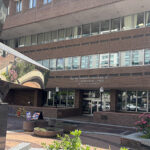
A $5.5 million state grant, plus $1.5 million raised by SAM, finally changed the picture. In late spring 2014, shovels hit dirt at the former Keystone Bank building at N. 3rd and Calder streets, constructed in 1916. The renovation and an addition give SAM 20,000 square feet of its very own display and operations space.

Like Papenfuse, Joshua Kesler stressed the importance of SAM’s expansion and relocation to a new, permanent home in Midtown. The developer of The Millworks nearby paused long enough in preparations for his own early 2015 opening to note that the museum’s decision in 2010 to occupy the historic Midtown bank was the encouragement he needed to buy a former warehouse and factory and convert it to restaurant, bar, art studios, gallery, music venue and beer garden.

“The art museum is a one-of-a-kind for central Pennsylvania,” Kesler said. “It’s a complete game-changer for the city and especially Midtown.”

At Home

On the day I visited, light flooded in through the bank’s tall windows, made to look historic but actually energy-efficient replacements for the originals that couldn’t withstand renovations, said Buckley.

The original vault door stood open but immobilized at the rear of the lobby, there to add a touch of history and because “there’s no way to get rid of it,” said Buckley. “We’d have to dynamite it out of here.”

The vault, made cheery with green, blue, orange and brown carpet tiles, will host weekly story time for young children and their parents. Stories will be related to SAM exhibits or other art themes, and sessions will end with art-making activities.

“This is really going to be a place where families can feel comfortable and at home,” said SAM Education Manager Tina Sell. “We’re breaking away from the idea that museums are a place where you have to behave 100 percent of the time. This is a place where you can relax and enjoy and still make some connections to artwork.”

SAM plans to be as much about creating and learning about art as displaying it. An education room will host classes, including after-school sessions for advanced students in anime manga comic-book drawing. A first-floor hallway will display works created by local artists or SAM students, or pieces related to the main exhibits.

The DOSHI Gallery, a longtime SAM partner devoted to contemporary works, will display in the lobby gallery for three months out of the year—a change that has upset some DOSHI artists and supporters. However, ongoing negotiations between SAM and DOSHI over such items as the number of shows and the jurying process “are looking pretty good,” Buckley said.

Upstairs, in SAM’s 3,500-square-foot main exhibit hall, visitors will interact with art. For the inaugural exhibit, “Pop Open: Icons of Pop Art from Niagara University,” visitors can play with old-fashioned projectors to create Lichtenstein-style comic-strip art or channel their inner Warhols and turn their shadows into live, multi-colored offset lithography.

For the following exhibit, “Everyone Can Fly: Faith Ringgold’s ‘Tar Beach’ & Regional Picture Book Illustrators,” the museum will recreate the rooftop getaway from Ringgold’s children’s classic.

“So, you’ll be able to go and lay out and daydream,” said Sell.

Outside the building, a mural by Messiah College professor Daniel Finch will grace an outside wall overlooking a sculpture garden, which will be completed by late spring. Additional ways to brighten up the exterior and streetscape are still under consideration, Buckley said.

“We haven’t quite figured out how we’re going to explode the outside with something colorful,” she said.

New Energy

SAM’s interactivity extends into Midtown, where museum officials hope to contribute to the neighborhood renaissance. The museum is partnering with everyone from Yellow Bird Café for food for its own café to HACC for parking. The gift shop will sell art books pulled from Midtown Scholar’s warehouse.

Midtown Scholar inventory manager and head book buyer Sarah Ludwig had just been choosing pop-art books when TheBurg called to ask why the partnership works.

“We’re hoping that art and reading go all together, especially the way books are made today, especially art books,” Ludwig said. “They’re like a piece of art themselves sometimes, so hopefully it all melds together very nicely.”

Papenfuse, who owns Midtown Scholar and is a SAM board member, said SAM’s entry into the neighborhood has “got us very, very excited at the bookstore.”

As for the two bars across the street from SAM, including one involved in a drug raid in August, they “are going to clean up their acts and go more upscale, or they’re going to have a hard time surviving with the new energy and dynamic that’s happening in Midtown. The city’s not going to tolerate illegal activities and continued drug dealing,” said Papenfuse.

Kesler said that the Millworks is conceptualizing with SAM on “how to integrate our customer base.”

“What we’re really looking for is people being able to make a day in Midtown,” he said. “Going to Midtown Scholar, going to the Broad Street Market, going to the art museum and the Millworks. We see those projects as the real keystone of rebuilding Midtown.”

Food, books, art, drink—“That sounds like a Saturday to me,” Kesler said.

New museums are springing up nationwide, at Harvard University and in New York, in Miami and in Westmoreland, Pa., reports the Association of Art Museum Directors. A 2012 University of Chicago study found that small cities joined in a cultural building boom from 1994 to 2008, although it found “no clear pattern of spillover effects (negative or positive) of specific cultural building projects on non-building local cultural organizations and the greater community.”

And while greater Harrisburg has high hopes for its shiny new museum, SAM officials are concentrating on art of the people, by the people and for the people.

“Art is for everyone,” said Sell, the education manager. “The museum is not supposed to be a place just for art students, just for art collectors. It’s for people to get to know themselves and get to know each other, hopefully, a little bit better.”


The Susquehanna Art Museum is located at N. 3rd and Calder streets in Harrisburg. It opens its doors to the public for 3rd in The Burg, Jan. 16, at 6 p.m., with the inaugural exhibit, “Pop Open: Icons of Pop Art from Niagara University.” More information about the museum is at www.sqart.org.

The museum’s hours are Tuesday to Saturday, 10 a.m. to 5 p.m., Sunday 12 p.m. to 5 p.m. and Monday by appointment. General admission is $8 and $5 for teachers, seniors and veterans. Children under 12 are free.
Continue Reading

Showing the Way: Leading by example, during National Mentoring Month.

Joseph Royall & Tom Paese

Joseph Royall & Tom Paese

Michael Richey joined the 3-Star Foundation to play a game, but when he left, he said, “I knew what it meant to be a man.”

Tempted with the chance to be on a basketball team, Richey spent his sophomore through senior years of high school playing the game. The same men who taught him how to shoot a basket would guide him in leadership, responsibility and academics.

The 3-Star Foundation gave Richey, now 21, and other teenagers the chance to become adults who could give back to their communities. They are just some of the mentors who, through simple conversation, can guide a Harrisburg teenager into a successful future.

About one out of every three children will reach adulthood without ever having a mentor, according to a study by The National Mentoring Partnership, which celebrates National Mentoring Month in January. Without adult role models, many of those children will never go to college, volunteer in their communities or know the pleasure of cooperating with others to finish a project.

For Richey, the mentors at 3-Star Foundation saved him from a life on the streets.

“Growing up, my dad was in and out of my life,” said Richey. “They gave me someone who was stable and always there for me. They taught me family values when no one else was really showing me what that meant.”

Reconnecting

After graduating from the program and venturing out on his own, Richey nearly lost his way. He said that he struggled to keep a job and started to drift from his responsibilities at home. When his son, Michael Jr., was born, Richey knew that he could do better.

He reconnected with his mentors at 3-Star and soon found himself welcomed back into the program—this time as a living example to other teenagers of how someone can change his life.

“They helped me see what it meant to be responsible for my actions and to be accountable,” Richey said. “They showed me how to take care of my son in the way they take care of me.”

Now a coach at 3-Star Foundation, Richey tries to have the same impact on other teenagers who come through the program.

“I’m basically trying to give them the same mentoring lessons that I learned,” he said. “I want to be someone who is there for them, and they don’t have to fear being judged or getting in trouble.”

Gerald Jarmon, president of 3-Star Foundation, said the organization has spent the past nine years focusing on a holistic approach of developing good character in the kids who participate.

“The staff is what sets the tone and provides excellent leadership for our participants,” Jarmon said. “They are from different walks of life. Some are out of college, out of high school. Some are teachers; some have regular jobs. But collectively, with one goal in mind, that’s what makes us successful.”

The program is well known in city schools, where organizers hold weekly morning huddles to meet with students and encourage them spiritually and academically, Jarmon said.

The coaches are the biggest mentors for each kid. Each Monday night is broken up into time spent on the court and time spent in a mentoring session. About three teams of seven to nine students gather for 15 minutes to discuss a particular topic, whether it’s leadership, stereotypes or family life. The teams then break off into smaller groups and talk more.

“The consistency in these adults is a great example for the kids,” Jarmon said. “It touches my heart and means a lot to me.”

Beyond Education

For others in the community, mentors provide a chance to grow professionally in ways that might not otherwise be possible.

That’s the goal of Harrisburg University of Science and Technology through its experienced learning program.

Kim Sprout, manager of experiential programs and career services, said the school runs two mentorship programs. The first is for incoming freshmen, who will spend their first year paired with upperclassmen of the same major. The mentor and mentee will meet during freshman orientation and interact throughout the year during social activities and in seminar classes.

When students enter their second year, they have the option to sign up for a community mentor who can guide them through the rest of college.

While that program has been available for a few years, there is currently only one student and one mentee who participate.

“A lot of students don’t want to have things added to their plate, so it’s tough to convince them that they should regularly meet with a mentor,” Sprout said. “What they miss out on by passing that up is the chance to learn from someone who has either worked in their field of study or who can give them guidance on areas of business they never thought of.”

Junior Joseph Royall, an interactive media design student, has spent the last year following Tom Paese, section manager for government relations with Buchanan, Ingersoll & Rooney, a Pittsburgh-based law firm with an office in downtown Harrisburg.Even though Royall doesn’t have any plans to become an attorney or lobbyist, he’s learned the basics of good business practices.

“I generally ask how I should act in a professional environment and how I can manage my finances once I do have a career and steady income,” Royall said. “I think we have a good relationship, and I appreciate his time, but it also holds for me the chance to build connections.”

Paese, who sits on the board at the university, has taken Royall to different functions, including a Pennsylvania Chamber of Commerce social, where Royall had the chance to see Paese interact with elected officials and area professionals.

“He might never go into this field, but I try to show him that there are good business practices that cover a variety of professions,” Paese said. “We talk about the right way to dress or how to be polite and professional. I teach him the courtesy of quickly responding to phone calls and emails. These are simple things, but things I think he’s really taking to heart.”

Royall is eating up the advice while Paese nears his retirement, set to begin this year.

“The more I get to know other individuals in a professional environment, the better opportunities I’ll find for myself,” Royall said. “I think I’ve learned a lot about maintaining positive relationships and being willing to help other people.”

The 3-Star Foundation can be found at www.3starfoundation.org. To learn more about National Mentoring Month, visit www.nationalmentoringmonth.org.

Continue Reading

Centuries of Service: Harrisburg Fire Bureau has grown, evolved with the city.

Screenshot 2014-12-29 08.59.07The city of Harrisburg was laid out by John Harris in the mid-18th century, but it was not until 1791 that citizens began forming the first volunteer fire company in the city, the Union Fire Company.

Without a water system, the earliest companies were largely volunteer bucket brigades, which transported water to fill small, hand-operated pumps. Throughout the first part of the 19th century, companies would form in the various city wards, last several years and then disband.

According to Harrisburg fire historian David Houseal, 1841 and 1858 marked significant years in the early development of the fire company. In 1841, the city’s first water system was completed and water became readily available in most locations. With this came the first hose companies and carriages. In 1858, the first hook and ladder companies formed, largely because buildings in the downtown area approached three stories.

As the Civil War came and Harrisburg transitioned into a rail and industrial center, more local companies were founded and steam pumpers and horses were added to the city’s fire apparatus.

Petitions were circulated throughout the late 19th and early 20th century in an attempt to abolish the volunteer companies and establish a full-time, paid force, but it was not until 1913 that the Harrisburg Fire Bureau was established.

Over the course of the 20th century, numerous smaller companies were closed as fire houses were abandoned, torn down (in the case of those formerly in the Capitol complex area), or converted to different uses. The department also moved further toward full-time paid staff and relied less on volunteer companies, though, according to Houseal, numerous volunteer companies still exist on the books.

Additionally, the city restored the Reily #10 firehouse and opened the Pennsylvania National Fire Museum, which catalogs and honors the 223-year history of Harrisburg’s fire department.

At one time, Harrisburg had more than a dozen firehouses scattered throughout the city. With the recent closing of Paxton Station No. 6 in Shipoke, only three remain: one in Uptown and two on Allison Hill.

Moreover, the spirit and function of these firehouses has changed greatly through the years. The buildings once functioned not only as firefighting units, but almost as much as neighborhood and social centers.

Today, that function has largely been lost. However, in its stead, Harrisburg has gained a well-trained, professional and capable force focused on its job of fighting fires.

Jason Wilson is an historian for the Capitol Preservation Committee.

Continue Reading

Life of Secrets: Triumph, tragedy revealed in “The Imitation Game.”

Screenshot 2014-12-29 09.13.17“Sometimes, it is the very people no one imagines anything of who do the things that no one can imagine.”

This phrase was repeated three times in “The Imitation Game,” and the words resonate true in the case of the film’s subject. Directed by Morten Tyldum and adapted by Graham Moore from Andrew Hodge’s book, “Alan Turing: The Enigma,” the film closely follows the life of Turing, the British mathematician, cryptanalyst and computer scientist. Yes, last month I spoke to you of one genius with a life-changing struggle, and now I present to you another.

It isn’t a surprise that the story made it to the big screen. Turing’s life was predestined to become a movie. He was the man behind the bombe, a code-breaking machine that cracked Nazi Germany’s Enigma code in World War II and contributed to the idea of the modern computer. And, even beyond his professional work, he was an incredibly interesting man. He hid his homosexuality at a time when it was illegal in the United Kingdom, and there is speculation that he was on the autistic spectrum. And the end of his life—well, talk about tragedy.

The plot weaves three different segments of Turing’s life together: the beginning, in his childhood, when his only friend is Christopher Morcom; the end, in the days of his conviction for “indecency” (read: homosexuality); and the middle, which holds the most focus—his wartime endeavors as a cryptanalyst.

Played by Benedict Cumberbatch (and Alex Lawther as young Turing), Turing comes across as an odd, brilliant man who doesn’t quite grasp the concept of jokes and colloquialisms. He begins his work at Bletchley Park, immediately isolating himself from his colleagues and claiming that he will be the one to crack the Enigma, a machine the British stole from the Germans that decodes messages—when used properly.

The problem is, every day at midnight, the Germans scrap the code and come up with a new one, which means that the team of cryptanalysts has fewer than 24 hours to decipher the code before they have to start all over again. Turing, however, claims that he will create a machine (which he poetically names Christopher) that can decipher the code for them—a machine to beat a machine.

At first, his colleagues complain that he is wasting precious time (and precious lives) by drawing diagrams and refusing to work on the actual codes. But then Turing riles the group even further by taking charge and firing two people. To fill the hole in manpower, he puts a crossword puzzle in the newspaper, claiming that whoever can solve it in fewer than 10 minutes will qualify as a candidate for one of the open positions. A woman, Joan Clarke (Keira Knightley), qualifies, and, soon after, joins Turing in his work at Bletchley (though in secret, because how could an unmarried young woman do such work?).

Joan serves as a conflicting love interest, as her closeness with Turing has everyone convinced—except Turing—that they are a couple. The plot takes several sharp turns as it continues, which I will not reveal here, but, basically, Turing’s odd behavior does not go unnoticed. His life’s work and vitality hinge on the effectiveness of his machine, and the number of secrets he has to keep to protect himself begins to grow.

The plot seems a bit crowded, especially in the second half. Events start to unfold that could have been made into another film entirely, causing this two-hour story to feel bloated with plot points. Perhaps the writer got carried away with the idea of piling secrets onto Turing’s plate. But the film certainly conveys the psychological impact that this forced privacy has on him. There is a scene toward the end that especially reveals his inner conflict, in which Turing challenges an investigator to judge whether he is a person or a machine. From the perspective of this film, every one of Turing’s passions and dispositions forces him into secrecy, to avoid the worse option—his life being compromised or threatened.

This culminates in a bittersweet ending, as we learn the fate of a man who helped end the war. It is upsetting to see him torn up by a society that he gave so much to, and yet this is what happened. Perhaps the film could have gone more in-depth with the injustices that were served upon him. Instead, it is explained in five minutes at the end of the film. Not to say it wasn’t impactful, but it turns a tragedy into a fable.

Cumberbatch and Knightley give amazing performances, and this is hardly a surprise, especially for Cumberbatch, who never seems to fail when given a character of high intelligence. I can see him getting an Oscar nomination for this role, though I can’t see him beating out the rest of the year’s competition. The rest of the cast gives some strong supporting performances, especially Matthew Goode, Mark Strong and Charles Dance.

Overall, this is a film that you want to see about a man that you probably didn’t know too much about. “The Imitation Game” will be playing at the Midtown Cinema soon.

Sammi Leigh Melville is a staff member and film reviewer at Midtown Cinema.


Midtown Cinema January Events

Digital Classic Theatre Presents
“Great Expectations” from London’s West End
Sunday, Jan. 1, 4pm & Tuesday, Jan. 6, 7pm

Down in Front!
Improv crew skewers “Monster a Go-Go”
Friday, Jan. 9, 9:30ish

Saturday Morning Cartoons
Classic cartoons on the big screen
Saturday, Jan. 10, 9:30-11:30am

Mommy & Me Matinees
Early matinees every second Saturday!
Saturday, Jan. 10

Foreign & Classic Series
Charlie Chaplin’s “Gold Rush”
Sunday, Jan. 11, 6pm

3rd in The Burg $3 Movie
“The Muppet Movie”
Friday, Jan. 16, 9:30ish

Family Film Series
“The Muppets Take Manhattan”
Saturday, Jan. 17, 12pm; Sunday, Jan. 18, 2pm; & Tuesday, Jan. 20, 7pm

National Theatre Live Presents
DV8 Physical Theatre’s “John”
Sunday, Jan. 18, 4pm & Tuesday, Jan. 20, 7pm

Friends of Midtown Presents
1970 documentary “King: A Filmed Record . . . Montgomery to Memphis”
Sunday, Jan. 18 & Monday, Jan. 19, 5pm

Moviate Film Series
Sunday, Jan. 25, 7:30pm

Continue Reading

Up from the Ashes: Clean UP Cycle transforms discarded junk into valued artwork.

Screenshot 2014-12-29 09.12.26A little less trash litters the streets of Allison Hill these days, thanks to creativity, passion for community and some artistic inspiration. The litter, though, is still visible, now components of upcycled artwork that the Harrisburg community can see and enjoy.

This past fall, nonprofit collaboration Clean UP Cycle hosted an art show, which was the culmination of volunteers salvaging materials from Harrisburg streets and a team of local artists dreaming up new life for the retrieved trash. It began as a Drug Free Pennsylvania (DFPA) initiative to incorporate addiction-themed art in its office space, but became a much larger community-wide project of hope and rebirth.

DFPA Executive Director Christie Wentz and Director of Educational Programs Scott Serafini, as well as volunteer Brad Gebhart, brainstormed a community-centric art project that they hoped would get artists and Harrisburg neighborhoods involved in their message. Soon after, Foundation for Hope (FFH) founder Jesse Gantt joined forces with Clean UP Cycle.

To spread awareness about substance abuse, bullying, depression and suicide, DFPA and FFH planned a two-month-long trash-to-art project, organized as a community outreach initiative.

“As we discussed the message of Drug Free Pennsylvania, we realized that the mission of hope and renewal begins with discovering inner beauty in ourselves and our communities. The idea of creating something beautiful from something cast off is where we began,” says Serafini, explaining that the project ties in seamlessly with DFPA and FFH’s messages of hope about “coming up from the ashes” of drugs, depression and suicidal thoughts.

Trash to Art

Back in September, a team of 15 volunteers gathered at Danzante Community Art Center on an unkindly damp day to remove trash and debris from the Allison Hill neighborhood. After the team of trash haulers loaded their finds on a box truck, they transported the newly salvaged art materials to the Habitat for Humanity Greater Harrisburg Area ReStore warehouse, where, the next day, local artists began selecting the components for their projects.

“As I walk the streets of Harrisburg, I believe people will take pride in their neighborhood if their neighborhood is something to be proud of,” says Serafini. “Picking stuff up off the streets encourages that mindset. We want to encourage people to take pride in where they live.”

Volunteering their time to the cause, participating artists had one monthto complete their works of art, which were presented to the public on Oct. 18 in a vacant lot across from Danzante. A selection of art pieces is now permanently displayed in the Danzante lot and at other nonprofit organizations around the city. Proceeds from art sales directly benefitted DFPA and FFH.

Screenshot 2014-12-29 09.12.40About a dozen pieces were featured in the show, including functional art, large installation pieces and mixed media work, all signifying the capacity of art to breathe new life into our communities.

“Beauty can be found in every neighborhood and every individual,” says Gantt. “Clean UP Cycle is a win-win for everyone. Artists and volunteers were given a unique opportunity to creatively send messages of hope, renewal and recovery.”

For Serafini, art is a healthy expression of the soul, especially in hard times.

“I believe that art is something that everyone can relate to,” he explains. “When people struggle with any of these issues, they can look to art for hope.”

Serafini believes that Harrisburg is the natural backdrop for an art project that sends inspirational messages to its community.

“Harrisburg is on the edge of some great things, and I think that we are doing some great things in the city,” he says. “We have a very artistically focused community. It incites passion in people. It is very exciting to see.”

For more information on Clean UP Cycle, visit www.cleanupcycle.org.

Continue Reading

Community Corner: Notable January Events


Penguin Plunge

Jan. 1: Take a dip into the icy Susquehanna River in support of homeless animals during the Humane Society of the Harrisburg Area’s annual Penguin Plunge. Registration starts at 10 a.m. on City Island, Harrisburg, with the plunge slated for noon. More information is at humanesocietyhbg.org.


Rachel Carson Program

Jan. 6: Biologist Patricia M. DeMarco examines the life and work of environmentalist Rachel Carson, including lessons that we can learn to face challenges today. The program begins at 7 p.m. at the Olewine Nature Center at Wildwood Lake, Harrisburg. Please visit wildwoodlake.org.


Chamber Luncheon

Jan. 7: Learn more about the West Shore Chamber of Commerce and enjoy a complimentary lunch during the Member Benefits Luncheon, noon to 1:30 p.m. at the chamber’s offices, 4211 Trindle Rd., Camp Hill. Additional information is at wschamber.org.


Panama Canal Centennial

Jan. 7: The World Culture Club of Central PA presents “The Panama Canal: Celebrating 100 Years,” with a discussion led by native Panamanian Yolany Neiffer. The event begins at 7 p.m. at the Penn State Hershey Medical Center, 500 University Dr., 5th floor, lecture room C. Additional information is at worldcultureclubpa.org.


Indie Film & Food

Jan. 9: Learn the story behind sriracha through a 33-minute documentary focused on the popular spicy sauce. Showings are at 2 p.m. and 9 p.m. at the Fredricksen Library in Camp Hill. Visit fredricksenlibrary.org.


SAM Preview

Jan. 9: Be among the first to check out the Susquehanna Art Museum’s new Midtown home during a special, ticket-only preview, which includes live music, hors d’oeuvres, cocktails and a chance to enjoy the museum’s first exhibit. Tickets are $150 apiece for the 7 to 9 p.m. event at 1401 N. 3rd St., Harrisburg. For more details, visit sqart.org.


2015 Farm Show

Jan. 10-17: It’s another year of shakes, sheep, cows and funky-looking chickens at the annual Pennsylvania Farm Show at the state Farm Show Complex in Harrisburg. With nearly 6,000 animals and 10,000 competitive exhibits, it’s the largest indoor agricultural expo in the nation. Details are at pafarmshowcomplex.com.


“The Last Raft”

Jan. 11: Jack Dillman, Susquehanna River historian and captain of the Pride of the Susquehanna, presents “The Last Raft,” the story of a 1938 commemorative voyage that ended in tragedy. Program begins at 2:30 p.m. at the Harris-Cameron Mansion, 219 S. Front St., Harrisburg. Additional information is at dauphincountyhistory.org.


CapCOG Dinner

Jan. 19: Capital Region Council of Governments holds its annual dinner and reorganization meeting, featuring a keynote address by HACC President John “Ski” Sygielski. Event begins at 5:30 p.m. at the Radisson Hotel Harrisburg in Camp Hill. Additional information is at capitalregioncog.org.


Life in a Coal Town

Jan. 13: Retired civil engineer Stephen A. Runkle will present, “The Joller Story—Life in a Company Coal Mine Village,” depicting life in the coal town of Joller, Pa. The presentation follows the business meeting of the Harrisburg Chapter of the National Railway Historical Society at 7 p.m. at Hoss’s Restaurant, 743 Wertzville Rd., Enola. Dinner is available as early as 5 p.m. For more information, email [email protected] or visit harristower.org.


Legislator Forum

Jan. 14: Join the Harrisburg Regional Chamber for the 2015 Legislators’ Forum, featuring members of the state House of Representatives. The event takes place at the Harrisburg Hilton, 7:30 to 9:30 a.m. For more information, visit harrisburgregionalchamber.org.


Civil War Exhibit Opens

Jan. 14: The National Civil War Museum opens the final installment of its sesquicentennial exhibit with “1865,” which examines the last year of the war. Lincoln scholar Harold Holzer will speak during a wine-and-cheese reception, which runs 5:30 to 7:30 p.m. Tickets are $10 each. Make reservations by emailing [email protected] or calling 717-260-1861. Information is at www.nationalcivilwarmuseum.org.


Winter Birding

Jan. 15: Appalachian Audubon will present “Frosty Forests and Frozen Fields: Winter Birding in Ontario,” a program that highlights bird species that appear in Ontario and the northeastern United States during the winter months. Program starts at 7 p.m. at Christ Presbyterian Church, 421 Deerfield Rd., Camp Hill. More information is at appalachianaudubon.org.


Business After Hours

Jan. 15: The Harrisburg Regional Chamber hosts a monthly business mixer where businesspeople can mix and mingle. This month’s event will be at WITF, 4801 Lindle Rd., Harrisburg. Find more information at harrisburgregionalchamber.org.


3rd in The Burg

Jan. 16: Enjoy the best of Harrisburg during 3rd in The Burg, the monthly arts event at galleries, restaurants and art spaces throughout downtown and Midtown. For more information, visit thirdintheburg.org.


Community Weekend

Jan. 17-19: The AACA Museum holds its annual Community Weekend, featuring $7 admission and a scavenger hunt throughout the museum. The museum is located at 161 Museum Dr., Hershey. More information is available at aacamuseum.org.


Understanding Islam

Jan. 18 & 25: Join John Maietta, retired U.S. Army colonel and college professor, as he provides an introduction to the core beliefs, sectarian diversity and contemporary challenges of the world’s second-largest religion. No registration necessary. Program will be held in two sessions at the Fredricksen Library in Camp Hill. More information is at fredricksenlibrary.org.


Day of Service

Jan. 19: Volunteers will clean up, fix up and make their communities a little better during the annual MLK Day of Service. Each year, hundreds of people fan out across central Pennsylvania to take part in dozens of projects. For all the details on registering projects, volunteering and sponsorships, visit centralpamlkday.org.


More Than a Forester

Jan. 20: Learn about a conservationist and former Pennsylvania governor during the pictorial presentation, “Gifford Pinchot, More Than a Forester.” The event runs 7 to 8:30 p.m. at the Olewine Nature Center at Wildwood Lake, Harrisburg. Visit wildwoodlake.org.


Classical Music Concert

Jan. 20: Market Square Concerts presents violinist Kristof Barati on the eve of his Carnegie Hall debut. Performance will take place at Temple Ohev Sholom, Harrisburg. For more information, visit marketsquareconcerts.org.


Sip and Paint

Jan. 24: Try a new hobby while socializing with friends at the Perry County Council of the Arts’ Sip and Paint Party under the guidance of an artist from aMuse Uncorked. The event will be held 5 to 7 p.m. at Landis House, 67 N. 4th St., Newport. All art supplies are provided, and cost is $45. BYOB. To reserve a spot, stop by the PCCA Gallery or call 717-567-7023. Visit perrycountyarts.org.


Beyond the Footlights

Jan. 24: The Hershey’s Theatre’s annual fundraiser for its Apollo Awards returns with a cabaret-style program spotlighting the talents of past award nominees and recipients. Cost is $75 for a full dinner and the program or $10 for just dessert and the program. Information is at hersheytheatre.com.


Mansion Tour

Jan. 26: Join Janet Bowen, curator for the Historical Society of Dauphin County, on “An Armchair Stroll through the John Harris Mansion.” The free tour begins at 6 p.m. at the Harris-Cameron Mansion, 219 S. Front St., Harrisburg. Additional information is at historicharrisburg.com.


Annual Meeting

Jan. 28: The Central Pennsylvania Gay and Lesbian Chamber of Commerce will hold its eighth annual meeting and dinner, 6 to 9 p.m., at The Hotel Hershey, 100 Hotel Rd., Hershey. ABC27 Anchor Alicia Richards will deliver the keynote address and state Rep. Brian Sims will be the guest speaker. Information is at cpglcc.org.


2015 Auto Show

Jan. 29-Feb. 1: Roll into the annual PA Auto Show, an event that features what’s new and exciting in the world of automobiles. The four-day show takes place at the state Farm Show Complex in Harrisburg. More information is at motortrendautoshows.com.


Ugandan Kids Choir

Jan. 31: Fredricksen Library in Camp Hill welcomes the Ugandan Kids Choir for songs of hope through traditional rhythmic dances and songs of Africa. The concert is designed for families with children ages 1 to 10. Visit fredricksenlibrary.org.

Continue Reading

TheBurg Podcast, Dec. 19, 2014

Welcome to TheBurg Podcast, a weekly roundup of news in and around Harrisburg.

Dec. 19, 2014: This week, Larry and Paul discuss the second city budget hearing, the possibility of a land sale near the DeHart Reservoir, the hidden power of the zoning hearing board and, as usual, other media.

Theme music by Paul Cooley of the PRC Show.

Note: If the podcast doesn’t play when you click the link above, you can access it by visiting our host page, theburgnews.libsyn.com.

Continue Reading

Mayor’s Office Salaries: A 10-Year Comparison

What does it really cost to run the office of the mayor?

The question was raised with some testiness this week at City Council’s second hearing on Mayor Eric Papenfuse’s proposed 2015 budget, which includes a raise of $15,000 for the mayor’s personal assistant.

Papenfuse, in pleading for the raise, made an appeal to fairness. Former Mayor Linda Thompson, he said, had two assistants, one earning $40,000 per year and the other $60,000. His raise would bring his single assistant’s salary to a comparable $60,000, he said.

Council President Wanda Williams, however, rejected that argument, focusing instead on total salaries in the office, including a senior advisor post for “education, youth and civic engagement” at $70,000 per year.

Regardless of their titles, Williams argued, positions in the mayor’s office should be treated with the same austerity that council applied to past administrations.

All of this raises the difficult question of how to compare salaries across administrations. In the chart below, TheBurg has tallied the front-office salaries in city hall over the past decade, a period spanning three administrations.

mayorsalarychart

As the chart shows, total front-office salaries, which approached $350,000 during the final four-year term of Mayor Stephen Reed, did drop significantly under Mayor Linda Thompson. Under the first two Papenfuse budgets, total salaries have climbed again, though not to the levels they reached under Reed.

These results, however, should be hedged with a few caveats.

First, front-office employees are not the mayor’s only support staff, and different administrations recruit different forms of assistance in other departments.

For example, in 2012, employees in the office of Mayor Linda Thompson had combined salaries of $180,000, the lowest total over the past 10 years. In the same year, however, but in a different department, Thompson had a chief of staff with a $110,000 salary, who in turn had an assistant with a salary of $41,000.

Papenfuse, though his 2014 budget tallied $265,000 in front-office salaries, hired no chief of staff this year. As a result, he and his assistant assumed many of the duties that would normally have fallen to the chief of staff role, as the mayor was quick to point out during this week’s hearing.

(The unfilled position, however, does appear in both the 2014 budget and the mayor’s proposal for 2015, at a $75,000 salary.)

Second, cuts and raises are always made relative to the budget for the prior year, and in the context of other spending priorities.

For instance, under the 2015 proposal, even though total front office salaries will climb, Papenfuse is making a net reduction in management salaries, offsetting a combined $68,869 in raises with $73,387 in cuts.

Third, other factors not immediately evident in the budget have a significant impact on both spending and workload each year.

In the last two years of the Thompson administration, for instance, the city received significant management assistance from the office of the state-appointed receiver, which had been installed to help navigate the resolution to Harrisburg’s debt crisis.

And to the extent the question over assistant salaries is about competitive compensation for skilled workers, other economic factors should be considered.

The figures in the chart have not been adjusted for inflation, because salaries for comparable positions have remained relatively stable over the 10-year period. Nonetheless, it’s worth noting that an assistant making $52,000 in 2006 made the equivalent of $61,000 in 2014 dollars.

As a final note, the front-office salaries provided for the Thompson administration in 2010 and 2011 were calculated differently than the other years, which relied on salaries in the approved budget documents (or proposed document, in 2015).

Thompson’s budgets for these years were formatted differently than in years prior, and it is not immediately clear what salaries were approved for which staff. Instead, the 2010 and 2011 totals relied on salary information available on the website of the city controller, which indicated which positions were actually filled during the year and at what salary level.

Despite these considerations, two meaningful conclusions can be drawn from the chart. In terms of front-office “assistant” jobs, neither Thompson nor Papenfuse approach Reed-era levels of spending. At the same time, Papenfuse is spending more in his front office than Thompson did, in large part because he created the new advisory position for education.

Whether that position is an assistant under a different name, however, is up for interpretation.

Office of the Mayor positions and salaries, 2006 – 2015:

Mayor Stephen Reed

2006

Mayor: $80,000
Senior Assistant to the Mayor: $80,702
Senior Advisor to the Mayor / Director of Communications: $76,017
Assistant to the Mayor: $52,687
Special Assistant to the Mayor: $41,168

Total: $330,574

2007

Mayor: $80,000
Senior Assistant to the Mayor: $80,869
Senior Advisor to the Mayor / Director of Communications: $76,887
Assistant to the Mayor: $53,259
Special Assistant to the Mayor: $41,437

Total: $332,452

2008

Mayor: $80,000
Senior Assistant to the Mayor: $81,711
Senior Advisor to the Mayor / Director of Communications: $53,559
Assistant to the Mayor: $50,406
Special Assistant to the Mayor: $41,670

Total: $307,346

2009

Mayor: $80,000
Executive Assistant: $65,163
Assistant / Director of Communications: $50,875
Assistant to the Mayor: $53,925
Special Assistant to the Mayor: $44,740

Total: $294,703

Mayor Linda Thompson

2010*

Mayor: $80,000
Ombudsman / Assistant to the Mayor: $55,000
Senior Assistant / Director of Communications: $81,000 ($77,000)
Assistant to the Mayor: $40,000

Total: $256,000 ($252,000)

2011*

Mayor: $80,000
Assistant to the Mayor: $40,000
Senior Assistant to the Mayor / Director of Communications: $77,000
Senior Assistant to the Mayor: $60,000

Total: $257,000

2012

Mayor: $80,000
Assistant to the Mayor: $40,000
Senior Assistant to the Mayor: $60,000

Total: $180,000

2013

Mayor: $80,000
Policy / Communications Director: $70,000
Senior Assistant to the Mayor: $60,000
Assistant to the Mayor: $40,000

Total: $250,000

Mayor Eric Papenfuse

2014

Mayor: $80,000
Communications Director: $70,000
Senior Advisor to the Mayor for Education, Youth and Civic Engagement: $70,000
Special Assistant to the Mayor: $45,000

Total: $265,000

2015 (proposed)

Mayor: $80,000
Communications Director $70,000
Senior Advisor to the Mayor for Education, Youth and Civic Engagement: $70,000
Senior Assistant to the Mayor: $60,000

Total: $280,000

*2010 and 2011 figures rely on salaries from a compensation spreadsheet provided by the city controller’s office. All other figures are based on salaries in each year’s approved budget, except for 2015, in which case they come from the mayor’s pending budget proposal.

Continue Reading

Capital Region Water To Weigh DeHart Land Sale

The DeHart Reservoir.

The DeHart Reservoir.

Capital Region Water, the city’s water and sewer authority, is contemplating a $1 million sale of land above the DeHart Reservoir, the lake that supplies Harrisburg’s drinking water, authority officials said Monday.

The sale would occur under a conservation partnership that will generate revenue while keeping the property in public hands, said Capital Region Water CEO Shannon Williams.

The sale, to the Pennsylvania Game Commission, would be federally funded through the Department of Defense’s Army Compatible Use Buffer program, or ACUB, which seeks to maintain undeveloped spaces around military installations.

The program would partner Fort Indiantown Gap, a National Guard training facility near the reservoir, with the Conservation Fund, a national environmental charity.

“The military are not good neighbors,” said David Weisnicht, deputy base operations manager at the Gap. “We make a lot of noise, we make smoke, we fly things.”

A sale under the ACUB program would guarantee the base could continue its operations without being encroached upon by future developers, Weisnicht said.

If the sale were to go forward, the Conservation Fund would purchase the 384-acre parcel with ACUB funding and then transfer the property to the Game Commission.

The parcel, at the furthest upstream edge of Capital Region Water’s 8,200 acres in Clarks Valley, would form a bridge between two existing tracts of state gaming lands on either side of the reservoir.

The deal’s structure would provide “one of the best guarantees of protection in perpetuity,” said Kyle Shenk, the Conservation Fund’s Pennsylvania representative.

Ownership by a government entity, as opposed to a private developer, would provide continuity, Shenk said. And the deed would contain language compelling the Game Commission to prevent incompatible development in the future.

Clarks Valley, along the Kittatinny Ridge, forms part of a critical migration corridor for raptors and other birds, Shenk said.

He said the sale would allow Capital Region Water to monetize its land assets without endangering the ecosystem or the pristine watershed.

A map of Capital Region Water land around the DeHart, with the parcel proposed to be sold at right, in purple. Courtesy of Capital Region Water.

A map of Capital Region Water land around the DeHart, with the parcel proposed to be sold at upper right, in purple. Courtesy of Capital Region Water.

Williams, in an interview about the proposed sale last week, said her “gut feeling” was that the deal represented a window of opportunity to ensure preservation while generating much-needed revenues for the authority’s capital projects.

Among those projects are comprehensive evaluations of the transmission mains that bring water to the city from the DeHart and from the Susquehanna River, as well as an assessment of the condition of authority pipes throughout the water system.

The authority will have a projected $5 million in capital expenses on the water system each year for the foreseeable future, with no current funding strategy in place for such projects beginning in 2016, according to Williams.

If the board passed on the current proposal, Williams said, she feared a similar opportunity would not come along again any time soon. And a future authority, under different leadership and facing new financial obligations, might consider an agreement without preservation guarantees.

At the same time, Williams said she wanted to ensure members of the public had adequate time to consider the decision and offer their input at hearings.

“I want devil’s advocates all over the place,” she said.

The proposed sale will appear before the Capital Region Water board at their regular meeting at 6 p.m. this Wednesday, on the first floor of 212 Locust St., Harrisburg.

Wednesday’s meeting is not the first time the sale comes before the board. In July, the board unanimously authorized the negotiation of a preliminary sale agreement.

If the board votes Wednesday to consider the sale, the authority will commission an engineering report and will schedule public hearings before a final vote in February.


Continue Reading

Mounds of Dumped Material Mystify Uptown Neighborhood

The mysterious mounds at 6th and Emerald.

The mysterious mounds at 6th and Emerald.

It almost looks like part of the landscape: a few mounds of soil, stones and tattered black fabric, sprouting tall yellow grasses and dusted with snow.

In fact, it’s the discarded plantings from the State Street median below the capitol, excavated and replaced this fall as part of a $50,000 project funded by county gaming funds and donations from a neighborhood nonprofit.

The debris now sprawls across a few vacant lots at the corner of 6th and Emerald streets, against a backdrop of bare trees and houses.

Ellen Crist, a member of Camp Curtin Community Neighbors United, an area neighborhood group, noticed the mounds recently and thought the materials looked familiar. So she posted some photos to Facebook and started calling around.

“Uptown should be taken seriously,” Crist later said. “I don’t think they would put this pile in Shipoke or Midtown and get away with it.”

Discovering how the pile got there in the first place, however, turned out to be somewhat more complicated.

The land, Crist learned, is owned by the Harrisburg Redevelopment Authority. She called and spoke to a woman there who said she had no knowledge of the authority having given permission to dump materials on the property.

HRA staff did not answer phone calls near the end of the day Friday. Later that night, however, Bryan Davis, HRA’s executive director, wrote in an email that the city has a “standing agreement” with the city permitting it to temporarily store top soil or backfill on HRA lots.

Crist also called Aaron Johnson, the city’s public works director. Johnson, in a phone interview with TheBurg, said the city wasn’t involved in the dumping. He added that there had been problems with illegal dumping on the site over the summer, and that he was speaking with codes about possibly putting up fencing.

But Wayne Martin, the city engineer, later said the city was aware of the dumping, and in fact had approved it, because the materials were indeed going to be used as fill at a demolition site on Allison Hill.

The lots were being used as a transfer site before city workers took the fill to the demolition project, located near 15th and Hunter streets. Bethesda Mission, a homeless shelter on Reily Street, had also coordinated with the city to dump materials from a recent renovation there, Martin said.

The State Street replanting took place in late October. Martin, referring to communications with the landscaper, Shaffer Landscapes of Middleburg, said that the project had been scheduled to begin on Oct. 23 and be complete by Nov. 12.

TheBurg photographed the median on Oct. 30, at which time the project appeared to be mostly complete. The materials would have been moved to the 6th and Emerald site in late October or early November, Martin said.

State Street Improvement Association, a neighborhood nonprofit, spearheaded the project and sought input from residents on its design.

Two local developers, Alex Hartzler and Dave Butcher, led the effort and contributed the bulk of the private funding of the project through their company, WCI Partners.

Hartzler is also the publisher of TheBurg.

Hartzler said Friday that the idea of donating the fill came up at a neighborhood meeting about the project, during which Martin had brought up the possibility of using it at a demolition site.

Hartzler said he and the landscapers were happy to give the material to the city, and that he found the use “entirely appropriate.” He added, however, that he “can sympathize with neighbors who own property next to a vacant lot” and would be concerned to see material dumped there without explanation.

“It’s a positive thing that the neighbors are concerned and would call the city about it,” he said. “If it were me, I would make a similar call.”

Martin said the public works department would be collecting the fill soon, and that it would be “gone within the next week.”

Crist, for her part, reached Martin on Friday, too, and got his explanation. “Just as long as it is moved and Uptown stops being a dumping site,” she wrote TheBurg afterwards, “I am okay with it.”

This story has been updated with comments from HRA’s executive director, Bryan Davis.

Continue Reading