After First Year, Taking Stock of Harrisburg’s Recovery

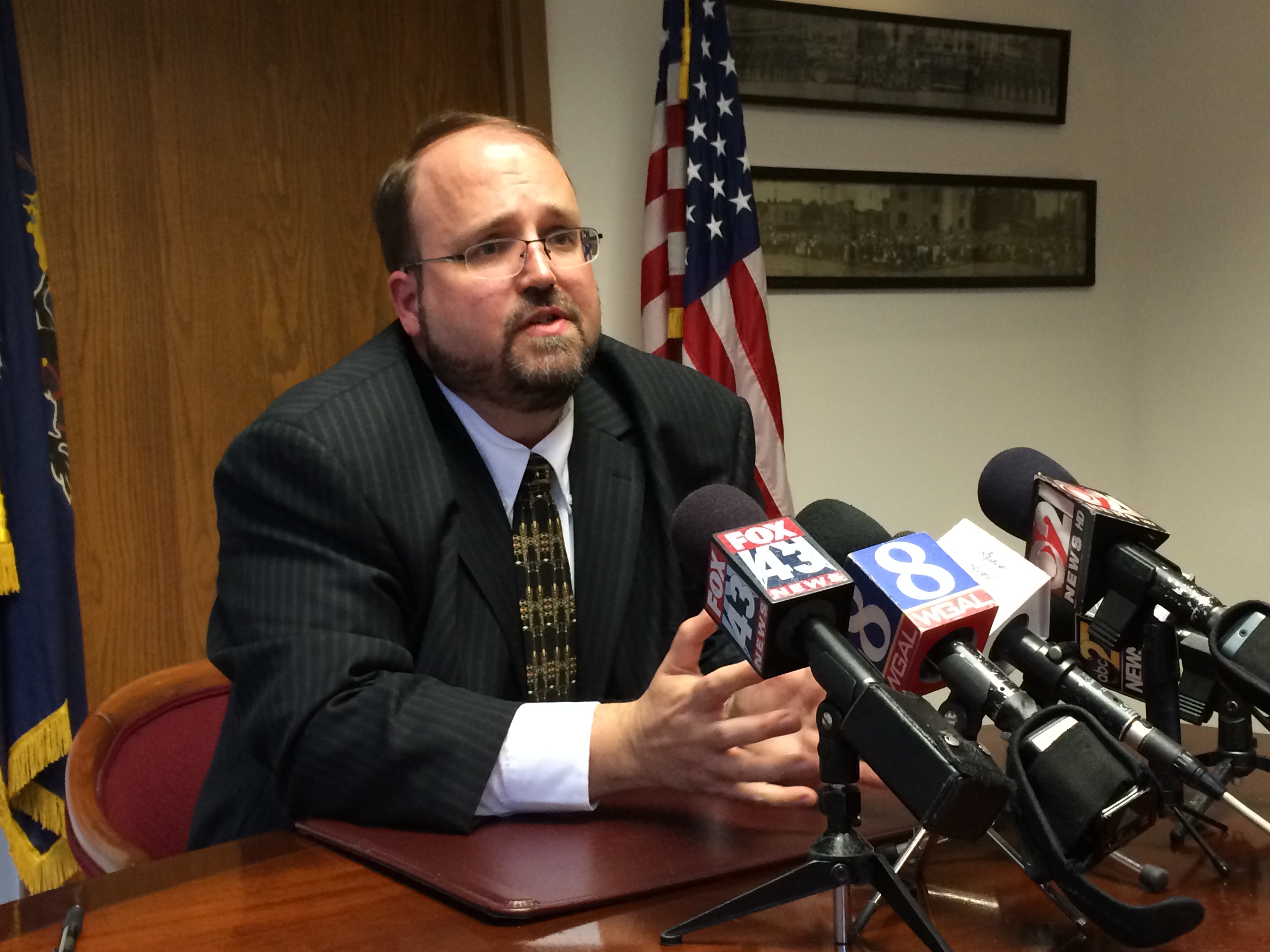
Harrisburg Mayor Eric Papenfuse. (File photo.)

Harrisburg Mayor Eric Papenfuse. (File photo.)

On the campaign trail in 2013, soon-to-be-mayor Eric Papenfuse spoke approvingly of the state’s financial recovery plan for Harrisburg, saying it offered a “brief window of opportunity” to bring the city back from the brink of bankruptcy.

Now, Papenfuse and other city officials are sizing up the recovery plan once again, as they look back on the city’s first year under his administration and weigh the financial challenges and successes since the plan was implemented.

The year saw Harrisburg’s departure from receivership, the period of direct state intervention in city finances, although the city remains in Act 47, Pennsylvania’s program for state oversight of financially distressed municipalities.

For the most part, officials said, the year exceeded expectations, with the city receiving most of its anticipated revenues, maintaining a balanced budget through the close of the year and getting current on its bills faster than was predicted.

They also pointed to a substantial year-end fund balance and a likely settlement of an outstanding debt obligation as evidence of the city’s improving fiscal health.

At the same time, they remained cautious about the city’s finances in the coming year, as evidenced in part by the $4.5 million tax and revenue anticipation note, or TRAN, they plan to submit for City Council’s consideration Tuesday evening.

The TRAN, a form of short-term borrowing that municipalities often issue to cover lean revenue periods, would allow the city to pay its bills in the event of a cash shortfall in the months before property and other taxes start to roll in.

Steven Goldfield, a financial advisor who helped craft the city’s recovery plan and continues to work closely with the city’s coordinator under Act 47, said the TRAN was a positive step for Harrisburg, since it meant the city was accessing the capital markets for the second year in a row after its debt crisis.

In addition, three lenders bid this year on the city’s request for a TRAN, securing a better offer for the city than last year, when only Metro Bank bid.

Last year’s $2 million TRAN cost the city a $10,000 commitment fee and a $5,000 legal fee. Under this year’s offer, from Mid Penn Bank, the city will pay a $1,500 legal fee and no commitment fee, said Bruce Weber, the city’s finance director.

The city ultimately didn’t draw upon last year’s TRAN. Both Papenfuse and Weber said in an interview last week that they did not expect the city to draw upon this year’s TRAN, either, largely because of its sizable fund balance going into 2015.

That year-end fund balance, which Weber said totaled $5.3 million, is another measure of the city’s improved financial condition, they said, as well as being a pleasant surprise to city officials.

“In my wildest dreams I never thought I’d see a fund balance like this,” said City Controller Charles DeBrunner, who took office in January.

DeBrunner, who served briefly as budget director under Mayor Harold Swenson in the 1970s, ran for his current post with the encouragement of Dan Miller, his predecessor and a former councilman whom Papenfuse defeated in a bid for mayor.

DeBrunner praised Papenfuse for his management of the city’s 2014 budget, saying the mayor helped achieve the large fund balance in part by having almost every city department spend less than it was actually authorized to spend.

The city also managed to pay down nearly all of the $4 million in outstanding 2013 payables that it carried forward into 2014, far exceeding DeBrunner’s expectations.

Papenfuse “had a terrific year,” DeBrunner said. “I’m really pleased with him. And controllers don’t get pleased.”

Officials were also hopeful about a settlement to a significant outstanding debt obligation, which City Council will consider for the first time at Tuesday night’s legislative session, the first of the year.

The settlement, to be introduced as Resolution 7 of 2015, will be with bond insurer Assured Guaranty Municipal, or AGM, over debt obligations related to the so-called Verizon tower, a downtown office building.

In 1998, the Harrisburg Redevelopment Authority issued $23.6 million in revenue bonds to purchase land and facilities from the city in Strawberry Square. The city guaranteed $7 million of these bonds, which were to be secured by rent payments from tenants and were to start coming due in 2016.

However, the building’s primary tenant, Verizon, later decided not to renew its lease, which expires in 2016, potentially leaving the city on the hook for a total of $41.6 million of debt payments through November of 2033.

The so-called Verizon Tower in downtown Harrisburg, which the telecommunications company plans to vacate in early 2016.

The so-called Verizon Tower in downtown Harrisburg, which the telecommunications company plans to vacate in early 2016.

In September, the state Department of General Services agreed to lease office space beginning in 2016, relieving the city of part of the burden. The DGS payments, however, will not be sufficient to cover all of the debt, leaving the city with mounting debt service that could threaten its financial stability.

Full details of the proposed settlement with AGM will not be made public until Tuesday’s council hearing. But Goldfield, in a partial preview of the deal last week, said that it would involve AGM advancing payments to bondholders on the city’s behalf without declaring the city in default of its obligations.

Effectively, AGM will authorize the city to borrow up to $400,000 per year for six to eight years to put towards debt service on the bonds, with the city later paying back any required advances with interest.

Goldfield would not disclose the interest rate, although a note in the relevant section of the state’s recovery plan from August 2013 indicated the receiver’s team was at the time negotiating towards a rate of 6.02 percent.

Goldfield said it was his “mantra” in the city’s debt negotiations that Harrisburg would not have ascending debt service. His goal, he said, was to keep annual debt payments at around 10 percent of the city’s budgeted expenditures.

The city’s current annual debt service exceeds this percentage, although a chart of projected payments, which Papenfuse showed TheBurg, indicates that under the proposed settlement with AGM, the city’s debt service will reach 10 percent of expenditures in the next few years and remain there through 2032.

Repaying the Verizon tower debt is a “horribly bitter pill to swallow,” said Papenfuse, who was reviewing documents from the original 1998 bond issue prior to the interview with TheBurg.

He said he was “personally reviewing every document” to see if the city could get out of its obligation. But he added that, in his current analysis, Harrisburg was “stuck with this horrible Reed deal,” referring to former Mayor Stephen Reed, under whose watch the borrowing occurred.

Because of that borrowing, Papenfuse said, the city had “basically maxed out” its credit through 2032 and would not be doing any elective borrowing under his tenure or possibly even the next mayor’s.

Nonetheless, he was proud of the city’s progress in his first year, which he said represented an extensive effort by him and his staff to cut costs and spend responsibly. “To me it’s pretty extraordinary what we’ve been able to do,” he said.

This article has been updated to correct the title of Bruce Weber, who is the city’s finance director.
Continue Reading

TheBurg Podcast, Jan. 9, 2015

Welcome to TheBurg Podcast, a weekly roundup of news in and around Harrisburg.

Jan. 9, 2015: This week, Paul and Larry discuss the city’s financial successes in 2014, the impending financial pain of a bad debt deal from the 1990s, the myth that the zoning hearing board is “anti-business,” and why Paul is so obsessed with paper trails.

Special thanks to Paul Cooley, who wrote our theme music and whose own podcast, the PRC Show, is available on SoundCloud and in the iTunes store.

TheBurg Podcast can be downloaded by clicking on the date above or by visiting the iTunes store. You can also access the podcast via its host page, here.

Continue Reading

Strong Stuff

Last call?

Last call for the proposed distillery?

When I was a young reporter covering municipal government, I found myself often surprised when my newspaper’s editorial board wrote an opinion piece about a story that I was covering.

“How do they know what really happened?” I asked a fellow reporter after one such editorial. “They weren’t there. They weren’t at that meeting.”

I joked that all they knew about the issue was what they had read in their own newspaper, which was true, since they sat in their offices all day. They didn’t even consult with me, the guy covering the issue, the person who had the backstory (there’s always a backstory), which often went beyond the simple who, what, where, when and how. I found their editorials to be shallow, obvious and sometimes just plain wrong.

I had a flashback to those days yesterday after reading PennLive’s third piece in a week about the proposed distillery in Midtown Harrisburg. I thought to myself, “How do these guys know what really happened at the zoning board meeting? They weren’t there.”

In the minds of the PennLive editorial board, the zoning board is in the wrong, hindering the redevelopment of Harrisburg by denying a variance for the distillery. That sentiment has been repeated in the numerous comments accompanying the stories, as well as on several Facebook posts. So, is it true?

Outside of the zoning board members, the two applicants, the stenographer and the city planning officer, there were only two people in the room for that hearing. I was one of them, the only reporter present.

Actually, this was the second zoning board meeting I had attended for this project.

Two weeks earlier, the zoning board had first heard from the applicants, Alan Kennedy-Shaffer and Stanley Gruen, who proposed creating a distillery in the long-empty, dilapidated “Carpets and Draperies” building at 1507 N. 3rd St. The board quickly determined that the applicants lacked standing in the case as they did not own the building, nor did they have a valid purchase or lease agreement for it.

Nevertheless, the board let the applicants begin to make their case. Kennedy-Shaffer and Gruen spoke about their dream for a distillery, about how they wanted to contribute to the economic revitalization of Midtown Harrisburg and how they hoped to put an historic, neglected building back into productive use.

These were all noble goals, members of the board agreed. However, they believed that the applicants similarly lacked standing to testify about both distilling and the building itself, as neither was a distiller nor a structural engineer or architect.

“We need evidence,” said board Chairwoman Marian Frankston. “We just can’t take what you’re saying third-hand. We need proof.”

I’ve been to many zoning board hearings over the years, and, indeed, the board can be exacting and tough. Members take their jobs seriously, and they expect applicants to be equally serious about their projects, to have their act together before appearing before them.

In this case, the board wanted the applicants to have a signed sales/lease agreement, as well as reliable data on such issues as raw materials used, frequency of deliveries, size of vehicles, shipments out, bottling, parking, waste, odors and more. Alcohol production, after all, can be hazardous if not done correctly, and the business certainly would impact the immediate commercial and residential area, which is not zoned for industrial uses.

Board members strongly advised the applicants to bring in experts who could testify in detail about the distilling process, about its potential dangers, about the business of a micro-distillery and about the building itself–its condition, its viability and its suitability for the proposed purpose.

“We want to promote business in Harrisburg,” said Frankston. “But you have to have your case ready for us to properly review it.”

The board offered to continue the case to the next zoning board meeting in February. The applicants, though, claimed hardship, saying the delay might cause them to lose potential investors. Yielding to their needs, the board agreed to hold a special meeting for their case in two weeks, just days before the end of the year.

When I walked into that second meeting, I immediately had a bad feeling.

Kennedy-Shaffer and Gruen sat in front, before the board, ready to begin their testimony. However, the same people were there as in the previous meeting: the applicants, the board, the stenographer, the planning officer and, with my appearance, the same two guys in the audience.

In other words, there were no experts or witnesses on hand to offer testimony and, based upon the prior hearing, I knew right off that was trouble.

The applicants did have a signed sales agreement for the property, contingent upon zoning board approval. The board accepted the document as valid and began to listen to the applicants’ testimony.

To their credit, they had more information this time. They had some data from existing micro-distilleries and some government statistics regarding matters such as odor, noise, waste, deliveries, etc. They also had included the street addresses of nearby business owners who had signed letters of support, information missing the first time around.

The applicants also answered questions about the building itself, about the equipment they would use and about what they expected in terms of deliveries, waste, etc., at their distillery.

The problem: They still had no expert witnesses, such as an architect, structural engineer and master distiller, who could support these assertions. The board also wanted greater detail, as members were not satisfied with the floor plans, renderings and other documents that the applicants submitted.

The applicants offered to call their distillery consultant to testify over the phone. However, the board refused to take telephonic testimony.

“We have certain rules of evidence,” said board member Dan Deibler. “We may not use hearsay or testimony by someone not here.”

Kennedy-Shaffer stated that the pair couldn’t afford to meet the board’s requirements, as they were “paying out of pocket right now” until their proposed backers provided financing, which, they said, was contingent on the zoning board granting a variance. The applicants estimated the project’s cost to be at least $1.2 million.

After two hours, they board remained unsatisfied with the presentation.

“I’ve never seen anyone present such a major project so ineptly,” said James Cowden, the board’s solicitor.

The board offered to continue the hearing until the next meeting in February. Half-a-dozen times, Frankston asked the applicants if they wanted to continue the hearing until February. The applicants refused to answer “yes” or “no.”

Frankston told them that, if they didn’t respond, the board would have no choice but to vote, as they couldn’t leave the case open without a continuance. The applicants still refused, with Kennedy-Shaffer reading his closing remarks over Frankston’s final warnings that a vote probably would go against them. Exasperated, she called the vote, which unanimously denied the variance application.

In the end, the distillery hearing came down to two contrasting views of what was necessary to obtain a variance for the property.

The applicants believed that they had presented a solid case. The board did not agree and explicitly told them why. At both meetings, the board attempted to educate the applicants on what more they needed to do. Chairwoman Frankston strongly advised them to return in February to take another shot at it and said that some applicants appear before the board three or four times before getting it right. The applicants, though, ignored her advice.

In its editorial, PennLive had another opinion, in which it tried to make a larger point. It stated that the distillery rejection was an example of an anti-business mindset in Harrisburg. That’s simply not true. I’ve repeatedly seen the zoning board bend over backwards to approve projects it believes are in Harrisburg’s economic and business interests. Just in recent years, these projects have included the Zeroday Brewing (Alter Ego) brewery, the Susquehanna Art Museum, LUX condominiums, the Millworks and others–some of the most important businesses proposed in Harrisburg in decades. Furthermore, PennLive’s conflation of this case with City Council’s attempt to sell a blighted property on Cameron Street near Appalachian Brewing Co. makes no sense, as the two cases are very different, involving different properties, different government bodies and different circumstances.

As it should, the Harrisburg Zoning Hearing Board believes that the bar should be set high to obtain a variance, which, after all, is an explicit exception to established city law–the zoning code. The board takes this responsibility seriously and does not grant variances until it is convinced that a project is viable, is in the city’s interest, will benefit the immediate neighborhood and is generally supported by the community.

Even after its “no” vote, the board told the applicants that they had the option to re-file. If they do, I hope they make the most of this first, failed attempt. In fact, their experience should serve as an example to anyone considering filing for a special exception or a variance: give the board precisely what it wants, bring in the experts, be courteous and professional, and understand that the board gets to decide what is needed for approval–the applicants don’t.

This story was updated to correct a quote attribution.

Continue Reading

Hearings Scheduled For Proposed Clarks Valley Land Sale

A map of Capital Region Water land around the DeHart, with the parcel proposed to be sold at right, in purple. Courtesy of Capital Region Water.

A map of Capital Region Water land around the DeHart, with the parcel proposed to be sold at right, in purple. Courtesy of Capital Region Water.

Harrisburg’s water and sewer authority has scheduled two public hearings to discuss a proposed Clarks Valley land sale.

The first hearing will take place on Wednesday, Jan. 28, at 6 p.m. at the Heinz-Menaker Senior Center at 1824 N. 4th St., Harrisburg.

The second will take place Tuesday, Feb. 10, at 6 p.m. at the Dauphin County Agriculture and Natural Resources Center at 1451 Peters Mountain Rd., Dauphin.

The proposed sale would seek to generate revenue for Capital Region Water while also ensuring the undeveloped land will be conserved in perpetuity.

Under the proposal, the Conservation Fund, a national environmental charity, would purchase a 384-acre parcel from the authority’s holdings around the DeHart Reservoir, which supplies the city’s drinking water.

The Conservation Fund would then transfer the land to the Pennsylvania Game Commission, which already controls two tracts of gaming lands on either side of the reservoir.

The deed would include language compelling the Game Commission to prevent incompatible future development, according to Kyle Shenk, the Conservation Fund’s Pennsylvania representative.

Clarks Valley, along the Kittatinny Ridge, forms part of a critical migration corridor for raptors and other birds, Shenk said.

The $1 million purchase would be funded by the federal government, under a Department of Defense program that aims to conserve undeveloped land around military installations.

Fort Indiantown Gap, a National Guard training facility near the reservoir, would partner with the Conservation Fund and the Game Commission in the sale.

At their Dec. 17 meeting, Capital Region Water board members voted 2-1 in favor of further exploring the proposed sale.

In addition to the meetings, the authority is soliciting public input through its website, www.capitalregionwater.com, where it will collect comments through Feb. 18.

A final vote on the proposal is expected in late February.

Continue Reading

TheBurg Podcast: Year-in-Review Edition

Welcome to TheBurg Podcast, a weekly roundup of news in and around Harrisburg.

Dec. 31, 2014: Larry and Paul look back at the year that was. From parking and crime to street planning and fiscal sanity, they discuss stories ranging from the overplayed to the overlooked.

Special thanks to Paul Cooley, who wrote our theme music and whose own podcast, the PRC Show, is available on SoundCloud and in the iTunes store.

TheBurg Podcast can be downloaded by clicking on the date above or by visiting the iTunes store. You can also access the podcast via its host page, here.

Continue Reading

Dispirited: Zoning Board Denies Distillery Plan

Two Harrisburg residents hope to transform this dilapidated building into the city's first distillery.

Two Harrisburg residents had hoped to turn this building into a distillery.

The plan to locate a craft distillery in Midtown Harrisburg suffered a major setback last night, as the city’s Zoning Hearing Board denied a variance for the project.

The board unanimously turned down the variance request, which would have allowed Kennedy Spirits LLC to locate in the so-called Carpets and Draperies building at 1507 N. 3rd St. The proposal previously had been approved by the city’s Planning Commission.

The two-hour hearing was at times marked by heated exchanges between the applicants, Alan Kennedy-Shaffer and Stanley Gruen, and members of the board. The two parties seemed to have widely differing opinions over the level of documentation and detail necessary to approve the variance, which is needed because the area is not zoned to permit a distillery to operate there.

“We have endeavored to answer all of your questions,” said Kennedy-Shaffer, near the end of the hearing. “We believe we have met our burden under the law.”

The board, however, did not believe the information provided was sufficient to warrant approval.

“We don’t have the information required upon which to base a decision,” said board Chairwoman Marian Frankston. “We are disappointed with your presentation.”

The hearing was the second one in two weeks for the project, which proposed a tasting room and a bar, in addition to a manufacturing facility to produce about 500 gallons a week of such liquors as vodka, gin, whiskey and rye. During the first hearing, the board requested more information, documents and plans, necessitating last night’s special hearing.

Kennedy-Shaffer and Gruen presented some of the requested information, including a signed sales agreement for the dilapidated, three-story building, which was built in 1922 to house a home furnishings retailer called the Gerber Department Store, later renamed the Keystone Furniture Co. They also addressed questions about the building’s condition, customer parking, supply deliveries, storage and the distillation process.

Board members, however, felt their answers were not thorough enough. They wanted greater detail, such as floor plans and architectural renderings, as well as testimony from experts in the distillation of spirits, the waste it produces, safety issues and if that particular building is suited to serve as a distillery. Neither Kennedy-Shaffer nor Gruen is a distiller.

“We review real plans that are submitted to us,” said Frankston. “You submitted your dream.”

For their part, the partners were upset that the board did not let their distillery consultant, who is based in New Hampshire, testify over the telephone. They also felt that the information they provided should have been sufficient to grant the variance and that the level of detail and documentation the board wanted was onerous and costly.

The board gave the business partners the option to continue the hearing to its next meeting, slated for late February. However, Kennedy-Shaffer and Gruen said that a two-month delay could cause them to lose investors for the distillery, which they estimate will cost $1.2 million.

“I think this project will be dead in the water if we wait until February,” said Kennedy-Shaffer, who refused to agree to a continuance, leading the board to cast a negative vote.

Following the meeting, Gruen and Kennedy-Shaffer said they would have to assess their next step.

“We’re going to move forward,” said Gruen. “The question is where.”

Continue Reading

Drive-By Band: No Last Call–They have trumpets, and they’re not afraid to use them.

Screenshot 2014-12-29 09.11.59Is that . . . could it be . . . “Rock Lobster?”

On a warm fall evening, notes from that discordant, circa-1980 B-52s song drift down North Street in Harrisburg. Interpreted through horns, woodwinds and percussion, it sounds even stranger than the strange original.

Little by little, the sound gets closer to the restaurant where you’re dining al fresco. Before you know it, a large group of youngish, middle-age-ish musicians gathers around you, dressed in eclectic outfits that can best be described as high school marching band meets Mad Max.

You’ve unwittingly been sucked into the vortex of Harrisburg’s only “hit and run” street band, No Last Call. And, if you’re lucky, you’ll end up having half the fun that they’re having.

“There’s an edge to [hit-and-runs], not knowing what to expect from either side,” said Doug Wilburne, a No Last Call founder who also happens to be vice president of public relations at industrial giant Textron. “We’re building its momentum with a focus on routine and choreography as it becomes a permanent fixture in the landscape.”

On the “other side,” listeners greet No Last Call with a mixture of enthusiasm, discomfort, delight and puzzlement. Should you sing along? Ignore them? Tip them?

No Last Call is made up of 32 members identified as professionals by day and performers by night. Band members include doctors, attorneys, former music teachers, computer programmers and one-time band geeks, to name a few.

It all started about five years ago, when a rowdy group of musicians stumbled out of a bar in Providence, R.I., awakening Wilburne, who owns an apartment there. The ruckus later inspired him to team up with Ted Reese (also known as the director of development for the Harrisburg Symphony Orchestra) to replicate that band’s loud, spontaneous, ragged performance for greater Harrisburg.

A few years ago, No Last Call—not knowing what to expect—hit the streets of the city for the first time. They chose a busy night, when there were lots of outside diners along restaurant row on N. 2nd Street.

“While we were waiting to be chased away by the police, people were so surprised to see a marching band in downtown with fairly decent musical quality,” Reese said. “When money started coming into our bucket and people were hiring us to perform at events, Doug and I realized this was not a joke.”

On a recent evening, I attended a band rehearsal on the second floor of the Hummelstown American Legion. Members were preparing for the winter season of parades and holiday honks, their sounds mixed in with the rattle and clash of pool sticks and balls from downstairs.

Without warning, a thunderous BRRRRRRRRRRRRRRRRRRR erupted from a trombone in the left corner. Immediately, sounds from tubas, clarinets, trumpets and saxophones filled the room among chatter and laughter between friends and acquaintances. There was an energetic and contagious vibe with full camaraderie, like a stadium of sports fans during a rival game.

“Our relationships are strong,” Wilburne said. “We’re building friendships that provide support and reinforcement with exposure in front of a lot of people.”

Musical Director Brant Kenny, a satellite office support specialist at Lincoln Intermediate, gave the band credit for becoming more polished over time.

“There are different playing levels with a variety of skills that add to the diversity of the group,” he said. “Some people take lessons just to be in the band, so we encourage those interested in playing, as well as new, experienced musicians.”

Typically, the band purchases arrangements, but trumpeter Jim Neidinger and soprano sax player Jamie Mosher have arranged a few songs to supplement No Last Call’s unique style. The band finds ways to reinterpret the tunes of performers like James Brown, Lady Gaga and the B-52s. On the night I heard them, the roundup featured familiar melodies like “Thriller,” “Timber,” “Centerfold” and “Dance to the Music.”

After a break, Kenny stepped back into his role, fortifying a circle of musicians awaiting cues from his lead. His talent in matching and correcting tones unfolded as the overall music quality improved through balance, sound and rhythm with each song. There was discipline and creativity during sets, as the band became more discerning but also friendly and collaborative.

“I didn’t expect how much I would enjoy adults rediscovering music and instruments,” Reese said. “For some, it’s been 10 to 20 years since they touched an instrument. It’s gratifying.”

This sense of gratification shows in their impromptu street performances, which fuels the passion behind No Last Call. The band, though, has found it an increasing challenge to live up to its reputation as a “hit-and-run” band.

“We can’t bolt anymore,” Reese admitted. “It’s more of a ‘meander away’ when you have 20 people come out and play.”

In addition to its signature street act, No Last Call performs at booked events like the Dillsburg Farmers Fair in October and Palmyra’s Holiday Parade in November. The band relies on its Facebook page and website to connect with its members and fan base. For “hit-and-run” shows, they notify followers the day beforehand with a general location of their expected whereabouts.

So, don’t be surprised if you see and hear a rambunctious street band playing outdoors once the weathers warms up. No Last Call is just adding to the music of the city.

Learn more about No Last Call by visiting www.nolastcall.net or the band’s Facebook page.

Continue Reading

The Secret Is Out: Uptown Chicago Grill may seem like an unimposing little neighborhood eatery. But. Oh. The food.

Screenshot 2014-12-29 09.04.53On a busy corner in Midtown Harrisburg, catty-corner to the Governor’s Residence, the smell of home-cooked goodness entices a passerby.

Peering in the glass door, black-and-white photos of cityscapes hang on crisp yellow walls, and small lamps shed light onto each table. You can hear chatter within—at tables, among tables, between customers and staff, as everyone seems to know everyone else.

Walk inside. You’ll be glad you accepted the invitation.

“Thanks for stopping in,” says the guy behind the counter, who makes time for a reporter while cooking up generous portions of grilled meats and seafood and simultaneously chatting with patrons whom he knows by name.

That man is Fred Baskin, the owner of Uptown Chicago Grill, a family-style, neighborhood restaurant that has been serving Harrisburg for six years.

In a nutshell, the Chicago Grill is a classic neighborhood joint, one of those places cherished by locals, but a mystery to many outsiders, who may know of it only by seeing its sign as they speed through the light at the corner of N. 2nd and Maclay during their daily rush out of the city.

“We depend on a lot of regulars,” said Baskin, who often identifies checks not by table number, but by scribbling the first names of his customers on them. “We get a lot of the Midtown folks coming over for Saturday brunch. It’s all the same faces. Saturday is a lot of fun for us.”

Baskin knows how to keep it good, simple and inexpensive. With an expansive menu of baby back ribs, fish, pasta, steak, burgers, pulled-pork barbeque, traditional grilled chicken and big entrée salads, there’s something for every kind of food mood. And it won’t break your wallet either.

“You can’t fool the customer,” he said. “You try to cut costs wherever you can without raising prices. Keep your quality, save expenses otherwise.”

A Good Choice

Baskin knows a thing or two about running a restaurant. He took his first food service job soon after graduating from Texas Tech University in Lubbock, Texas.

“I went to work for a restaurant chain called Black-Eyed Pea,” he said. “I met with their recruiter my senior year and went to work with them right out of college.”

In 2000, he moved to the area to operate an independent restaurant in Mechanicsburg. After eight years working there, he took over the Chicago Grill.

So, why Harrisburg?

“The opportunity that was presented to me was in Harrisburg. Business was here, so we came to Harrisburg. I wasn’t looking anywhere else.”

And it seems that the city was a good choice to call home.

Screenshot 2014-12-29 09.05.03“Midtown is really exploding,” he said. “There’s a lot of new folks. Younger professionals seem to flock to Midtown. With the excitement of Midtown’s growth, we’re just going to hope to ride that wave. And as it keeps growing and coming around, we want to grow with it.”

Let’s Sample

Shortly after I arrived on a recent visit, I cozied up to a feast.

I first tried a grilled, juicy steak, which sat beside a colorful pasta blend of feta, spinach and tomato pasta bathed in aioli sauce. I then sampled the grilled salmon—tender and moist—topped off by a helping of freshly homemade seafood bisque.

Ice clinked in my fresh Arnold Palmer iced tea, a perfectly cool refreshment after a long day. The banana pudding was a unique and light dessert, providing closure to a delicious meal.

“Our menu is grilled to order,” Baskin said. “Our biggest seller is the baby back ribs. They are outstanding. And the voodoo salmon. Our entree salads are pretty big, as well.”

Baskin said that the menu, though large, changes often to cater to customer tastes.

“As seasons change, we tweak the menu with specials and seasonal items,” he said.

Booth or table? For here or to go? It’s up to you.

“To-go orders are a big part of our business,” Baskin explained. “We are a family-operated business. We appreciate our guests and regulars. We try to provide everything they like.”

Can’t decide between the ribs and the steak? Simple. “We can do half and half too if you can’t decide between two meals.”

The restaurant also offers self-catering.

“We provide everything, and you pick it up. We give you all the equipment: warmers, chafers, paper products. Then you set it up and bring it back. It eliminates all of those catering charges you would normally have. It also eliminates us having to keep a staff for that, as well.”

The staff at Uptown Chicago Grill is exceptional, knowledgeable and friendly. “All of our employees are long term,” Baskin said with a smile. “They’re all cross-trained, so everybody can chip in anywhere. Since they are long term, they all work well together.”

With its huge, affordable menu, family-friendly atmosphere and prime location, Uptown Chicago Grill may someday lose its reputation as the best “hidden spot” in Harrisburg. Regardless, the emphasis will always be on the neighborhood and the regulars.

“Working as an owner/operator, you are able to be more hands on and really cater to what local folks want,” said Baskin.

Uptown Chicago Grill is located at 2101 N. 2nd St., Harrisburg. Hours are Tuesday to Thursday, 7 a.m. to 3 p.m.; Friday, 7 a.m. to 8 p.m.; and Saturday, 7 a.m. to 1 p.m. and 4 to 8 p.m. More information is at www.uptownchicagogrill.com or 717-233-7487.

Continue Reading

So What? Writer Jack Veasey has spent a lifetime answering a simple, two-word question.

Screenshot 2014-12-29 09.11.41Poet Jack Veasey writes stories—hard, nitty-gritty, ironic, heartfelt stories. And, after he’s finished with each one, he thinks about the advice he received years ago from a poet/novelist friend in Philadelphia. Writers, the friend said, must ask the question, “So what?”

“He was the person who taught me the most important lesson ever—how to give myself the ‘so what’ test,” Veasey says. “If, after you’ve written something, you read it and ask yourself, ‘So what?’—there better be a good answer.”

Veasey has come up with hundreds of good answers in his years of living the creative life, and they’re apparent in his dozen or so published poetry collections, his music and his plays. The Philadelphia native, who has lived in Hummelstown for the past 20-plus years, is a force in the Harrisburg poetry scene. Say the name “Jack Veasey,” and the first word that comes to mind is “poetry” and the group, the Almost Uptown Poetry Cartel, where he is an active member. Despite the image many have of the solitary writer chained to a desk while tapping at the keys, Veasey explains that poets need the camaraderie and support of other poets to continue to be inspired and to keep the art form alive.

“Throughout the history of the form, we’ve tended to clump together like cat litter,” he says. “You need to see what’s happening with and to the art form and to share your work with other poets. It’s the same reason painters establish art galleries and musicians form orchestras.”

Many of Veasey’s poems exhibit his struggles of growing up gay in the tough Fishtown neighborhood in Philadelphia, where Archie Bunker-types ruled and where the nuns in his Catholic school were tougher than old meat. It also didn’t help that Veasey had the attitudes and values of a hippie and that being gay in this place and at this time “was about the most despised thing you could be.”

“I had plenty to struggle against in Fishtown, and the neighborhood’s old atmosphere still pervades a lot of my work,” Veasey says. “I was a target for bullies, and that gave me an outsider’s perspective and made me identify with the underdog, which I still do. That colors a lot of my choices of subjects, and the viewpoints from which I write, even when they aren’t my own.”

Two poems from Veasey’s soon-to-be-published book, “The Dance That Begins And Begins,” illustrate that point. One poem is titled “Mr. Martin,” who was Veasey’s high school typing teacher and whom Veasey describes as the first man he ever loved. This narrative poem relays that yearning, the “pangs,” the loss after the teacher marries. Despite the pain, it offered Veasey evidence of being alive.

Another poem in this collection, “And Then Came The Plague Of Frogs,” tells the Catholic school story of Veasey freeing frogs that were about to undergo dissection in his biology lab. His action resulted in a suspension, a punishment he considers worth it. He writes:

“I may never have been/Popular, but, for a few years later/I’d be/Legendary.”

Legendary, indeed.

Veasey called his prior poetry collection “Shapely,” an autobiography in verse that sections his work by a particular form, such as sonnets and the Japanese 17-syllable forms of haiku and senryu.

“Some poets claim that writing poems in forms are limiting, but I found they enabled me to write about a much broader range of subjects, including some that had been too big to tackle or even to face,” he explains. “It pulled insights out of me. Sometimes, I’d articulate something in a form and then realize, ‘My God, I never knew I saw it that way.'”

Veasey has a lot more “So what’s?” to answer. Despite now being disabled with back issues resulting from spina bifida, he’s examining his entire body of work—from 1973 to the present—to see what remains to be brought out. And, of course, he’s always writing, always exploring. There’s possibly a collection of stories on the way, a murder mystery about Catholic priests, a full-length musical with new songs he’s composed.

Ah, but poetry.

“Poetry is my life,” Veasey muses. “I continue to write for pretty much the same reason as I continue to breathe. I need to. It’s how I make sense of being in the world.”

You can catch Jack Veasey and the Almost Uptown Poetry Cartel every Thursday, 7 to 9 p.m., at Midtown Scholar Bookstore, 1302 N. 3rd St., Harrisburg. His next book, “The Dance That Begins And Begins,” published by the Poet’s Press, is slated for release this year. All of his books are available at www.amazon.com.

Continue Reading

A Time to Mourn: Emmy’s Heart supports those who lose a pet.

Screenshot 2014-12-29 09.00.12Let’s face it: for most of us, pets are part of our families. We spoil them with gourmet treats and salon visits, doggie day care, artisan kibble and specialized medicine.

When they are gone, we grieve. But there have been few places to turn to for support in our time of loss.

That is, until Emmy’s Heart, a pet bereavement group, arrived in Harrisburg.

Named for Harrisburg resident Charlotte Kluge’s beloved Yorkie, the group meets monthly in a cozy room above Abrams & Weakley General Store for Animals, just over the city line in Susquehanna Township.

Those who come know they won’t hear “it was just a dog” or “you can get another one.”

“It’s a nice, safe place to share feelings and memories,” said Mandy Rothenhoefer, one of the group’s founders who led the session I recently attended.

Emmy’s death a year ago left Kluge heartbroken.

“It was the first time I realized the loss of a pet is real and nothing to just ‘get over,’” said Kluge, who runs a family-owned insurance business. “She was my heart and everything to me. My grief was entirely real.”

Kluge wanted to offer others similarly finding it difficult to cope with a loss an opportunity to connect and talk about their feelings. So, she teamed up with Rothenhoefer, whose dog Sunny used to play with Emmy, and they started holding meetings in May.

On a recent Thursday evening, six pet lovers showed up, including me.

Rothenhoefer read a brief poem and lit candles in memory of pets who had passed on and one who had been reported missing on the Carlisle Pike.

She offered a theme for the evening, autumn rituals, asking attendees what they recalled about the change of seasons, walks in the woods, adjusting to the shorter days with their pets.

Jackie Hamill, who, with her husband Jim, has lost two dogs in the past three years, remembered how her chow-chow/retriever mix Angel loved to play in the fallen leaves and pulled out an iPhone picture to prove it.

“They are our children,” Jackie said.

Angel died in March at age 13, and the Hamill’s other dog, Clay, a Lab mix, died two years earlier after struggling with cancer and other serious health problems.

Rothenhoefer asked me if I had an autumn memory of Mindy, my childhood border collie, who lived to be 17.

Tears welled up as I told the group about a fall outing the two of us had at Sugarloaf Mountain near Frederick in the mid-1990s. As Mindy sat and watched several white geese paddle on a pond, I snapped a picture from behind, her black fur and the orange beaks of the ducks against a backdrop of dying grass and turning leaves. It was a moment of quiet reflection that occurred 20 years ago, and still I felt the emotions come bubbling to the surface.

Kluge said the sessions usually draw four to seven people. Participants are invited to bring pictures to post on a memory board of those who have “crossed the rainbow bridge,” as the pet people like to put it.

The conversation shifted to the hard choices about what to do with a pet’s body. Sharon Wilson said she hated the idea of having had to cremate her beloved beagle Tanner, but was not able to afford a plot in a pet cemetery.

“I have a hard time looking at pictures,” she said. “I was upset about cremating him.”

The Hamills said they chose to cremate their pets because then they could take them along if they moved. That sparked a discussion about whether there was an ordinance about pet burials in city backyards, something Kluge said she would investigate and post on the group’s Facebook page.

Clearly, Kluge’s idea has struck a chord. Hospice of Pennsylvania and several veterinary hospitals are now handing out cards to clients with information about Emmy’s Heart, Kluge said.

There is a sense of knowing that others love dogs like we do, said Jackie Hamill, who, with her husband, traveled 45 minutes to attend a bereavement group in Red Lion before Emmy’s Heart started. “I can share and talk. The pet people get it.”

The Hamills already “paid it forward” by taking Prince, a schnauzer who belonged to a neighbor who died. “[The family] wanted to get rid of him,” said Jackie. “But he helped Angel come out of depression after we lost Clay.”

Emmy’s Heart also wants to be there for those facing potentially fatal health issues with their pets who may not be able to afford life-saving treatment.

The group has already helped a single mom cover the costs of treatment for a serious skin disease and an elderly man pay for chemo treatment for his cat.

To raise funds, the group is selling commemorative leather bracelets that look like dog collars with a single paw print design.

Said Kluge: “It shows they left a paw print on your heart.”

The Hamills said they recognize that grieving is an ongoing process even as they enjoy their time with Prince and their newest rescue dog, Lexie.

Jackie Hamill gets choked up when she talks about Angel and Clay.

“Not a day goes by when I don’t think of them,” she said.

Emmy’s Heart pet bereavement group meets at 6:30 p.m. on the third Thursday of the month at Abrams & Weakley General Store for Animals, 3963 N. 6th St., Harrisburg. Anyone with a pet that is ill, missing or has died is welcome. For more information, call 717-364-0852, email [email protected] or go to the Facebook page.

In addition, The Humane Society of the Harrisburg Area has a pet grief counselor available for anyone who brings in a pet to be euthanized and offers a monthly support group, Healing Haven, open to members of the public at no charge. Visit www.humanesocietyhbg.org/pet-bereavement.

Continue Reading