A Message from Jack: Maybe Harrisburg can’t do much about its tax rate, but it still can be more welcoming to outsiders.

Screenshot 2015-01-27 23.42.27I get letters.

Well, not exactly letters, since no one writes letters anymore, but the modern equivalent—email.

Most email is complimentary of something we did or printed; some is critical. An occasional email offers unsolicited advice, which I often find less helpful than confounding (why would I change my magazine’s design based upon a message that pops into my inbox from some guy I’ve never met?).

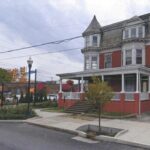
Recently, I received an email from a fellow from Virginia who had considered buying property in Harrisburg. As he tells it, his mother lives here, and, when he visits, he’s tempted by what he sees.

“Wonderful Victorian houses, solid houses with character and mighty cheap,” he wrote.

He changed his mind, though, after checking out his mom’s property tax bill, which was the real reason he sent me the email. He wanted to know why it was so high and suspected it was due to poor property tax collection.

I responded back that, no, lax collection isn’t a big problem here. The relatively high tax rate is due more to a limited tax base, too many nonprofits and non-taxable properties, an enormously indebted school system, a relatively poor city with tremendous service needs, and far too many undeveloped lots and unimproved buildings.

So, count Jack from Charlottesville as among those who won’t be relocating to Harrisburg anytime soon, bringing his human and financial capital with him.

Unfortunately, there’s little Harrisburg can do to lower its tax rate in the near-term (if ever). However, Harrisburg (the government, the people) can do a few things to make this place more attractive, to entice those who may decide that living here in one of our beautiful (cheap) Victorian houses is worth a few extra bucks in taxes.

Encourage responsible development. As I’ve said before in this space, Harrisburg desperately needs people (and their money), which is the only way to keep taxes in check and provide better public safety, social services and infrastructure to the people who live here now. And, in Harrisburg, there’s room to spare as much of the residential land consists of vacant lots and empty and blighted buildings. For a city, this is an unnatural, toxic state that punishes existing residents with rising taxes, poor services, lack of employment opportunities and deserted, dangerous streets. Developers and business people need to be encouraged, not denounced, for taking tremendous risks investing in a city that most others won’t touch. Like all cities, Harrisburg is not a static creature. It requires constant redevelopment and re-investment to continue to be a viable place to live and work. Without this, without a flow of new people and capital across generations, it will crumble and die—as it once almost did.

Drop the provincialism. How would you describe the current state of Harrisburg? If you were to attend a City Council meeting, you might come away thinking that things are so good that they should stay exactly the way they are. Fear of change, fear of outsiders and a zero-sum, us vs. them mentality often pervade these meetings. Council members must realize that they represent all the people of Harrisburg, not just those in their immediate circles. They also must understand that Harrisburg will never be able to pay its current bills—much less provide better services to its residents—unless it grows its tax base, which means attracting people and businesses into the city. Harrisburg must be open to new residents, new ideas and new, better ways of doing things.

Make the most of Harrisburg’s inherent strength as a cozy, quaint city located on a magnificent river. Harrisburg has many assets that it poorly utilizes. City Island, Italian Lake and Reservoir Park are underused; could-be charming streets and alleys are run down and bleak; litter and dumping are rampant; and the condition of the river walk and steps is an embarrassment. Yes, it’s great that the city is blessed with a magnificent Capitol building, which draws in visitors and workers. Harrisburg, however, would be better served polishing up its small-city charm instead of indulging in a conceit that it’s a very important capital city.

In my email back, I told Jack that, despite the tax situation, he still should consider poking around Harrisburg, that there are some great things happening here. Indeed, the city has come a long way just in my time here. The budget is balanced, major projects are coming online, and the mayor and council, while often at odds, at least aren’t at war. Many of the vacant and underutilized historic buildings downtown and in Midtown have been—or are being—redeveloped and reoccupied. In 2015, Harrisburg’s long-neglected infrastructure will begin to get fixed. For the first time in a long time, at least among some residents, there’s a sense of hope, a belief that things just might get better.

I don’t think I won my argument with Jack, as he remained turned off by the local tax situation. I hope, though, that eventually we’ll snag him, that Harrisburg will become friendly enough, open enough, clean enough, vibrant enough and charming enough that he won’t be able to stay away.

Lawrance Binda is editor-in-chief of TheBurg.


Continue Reading

Create Space: A peek inside the new Millworks artist studios.

For the past two months, artists have been filtering into The Millworks, setting up their studios within an 85-year-old art deco building that long served as a lumber manufacturer and supply store.

A year-long renovation carved 23 artist studios and one shared space from the long-abandoned, once-dilapidated building across from the Broad Street Market in Harrisburg. We wanted to share a first glimpse of this stunning renovation, as well as portraits of the lucky artists who get to create there.

Fortunately, these studios are not just for the eyes of the creators. Next month, once the building’s farm-to-table restaurant and beer garden debut, the studios will be open so that people can see them, interact with the artists, and, we hope, support our city’s art community.

Photos by Dani Fresh. www.DaniFresh.com

Tara Chickey

Tara Chickey

Yachiyo Beck

Yachiyo Beck

Stash Collective

Stash Collective

Richard Souders

Richard Souders

Linda Benton McCloskey

Linda Benton McCloskey

Johnson & Griffiths

Johnson & Griffiths

John Davis

John Davis

Jason Lyons

Jason Lyons

Fennec Design

Fennec Design

Elaine Brady Smith

Elaine Brady Smith

Caroline Owens

Caroline Owens

Caleb Smith

Caleb Smith

Continue Reading

A Temporary Home: Meet foster parents of a different breed.

Screenshot 2015-01-28 00.02.12It was several years ago that Amanda Shafer and her husband, Matthew Caylor, opened their home to a little black lab.

The next six months would be filled with training, feeding and caring for the precious pooch until it was time to give her up to a loving family—her “furrever” home.

The growing trend of pet foster homes has potentially saved hundreds of dogs that would have otherwise been put down in shelters that simply didn’t have room. But allowing those dogs to meet the same fate of so many before wasn’t an option that Shafer wanted to consider.

“I knew the Central PA Animal Alliance needed help in finding places to take dogs,” Shafer said. “There was a lot of craziness going on at the time, and I asked what I could do to help. Next thing you know, I’m signing up to become a foster parent.”

She and her husband both had grown up with dogs but never owned one of their own. Other than the few cats the couple already had roaming their Midtown Harrisburg home, they decided they could help by opening their doors to dogs in need.

The Central PA Animal Alliance was pulling dogs from the York County SPCA and putting them into homes when Shafer walked in.

“I went down there and they said, ‘Find her an easy one—she’s new,’” Shafer said, recalling the black lab that would find a place in her home and heart that year.

Most pet foster parents don’t have to pay anything out of pocket to help an animal. In Shafer’s case, Central PA Animal Alliance will supply the food and toys and even pay the veterinary bills. However, as part of their donation to the shelter, Shafer and Caylor have decided to purchase the dog food themselves.

When it comes time for the foster dogs to find a new home, those interested in adopting the animal must fill out an application, go through an interview process, have a home inspection and then meet the dog.

“It’s great to see those dogs go to loving families,” Shafer said. “But the biggest question we get is, ‘How do you give them up?’”

While it’s never easy to say good-bye, Shafer said that she and her husband have been pretty good about not getting too attached. They want to avoid becoming “foster failures” by deciding to keep the dog for themselves.

“It is sad to give them up, but it’s more sad knowing a dog in a shelter is being put down and killed just because there’s no space,” she said.

Not About You

Robin Scherer has a knack for finding distressed animals. Her first rescue was right out of college when she found a stray dog wandering the streets. She would find kittens dropped off in the parking lot at work and also find them homes.

She later found 13 kittens, starving and infested with fleas, and was told if she wanted them, she could have them. Slowly, she nursed them back to health and found them loving families.

Eventually, Scherer said, it was time to open a shelter.

Along with family, she opened Furry Friends Network in Boiling Springs. Fourteen years later, it hosts 75 volunteers, 30 dog foster homes and 20 cat foster homes.

As a foster parent of cats, Scherer has seen both sides of the foster world.

“I think a shelter environment is extremely stressful for an animal,” she said. “I don’t think an adopter can see an animal’s true personality.”

Because the animals are living in someone’s home, the foster parent is able to tell potential adopters about all of the animal’s quirks. Maybe they don’t get along with children but love to cuddle in bed, Scherer said.

“You find, with dogs, that there is a honeymoon period,” she said. “You have to give them time to unpack their baggage. The dog will be different in three days, in three weeks, in three months, and you just have to roll with it. But, sometimes, a foster parent can help you know what to expect.”

For those interested in adopting fostered animals, the process can be a little more complicated.

“If people out there want a dog today or tomorrow, we’re not the organization for you,” Scherer said. “People can experience buyer’s remorse by treating a pet as an impulse buy, and we’re trying to avoid that.”

While there are plenty of people adopting dogs from foster homes, there are always more homes needed, Scherer said.

“So many people say, ‘I could never foster because I’d fall in love,’” she said. “Stop thinking of yourself and think of the animal. I have little kids, and it’s hard for them, but they know we’re helping the animals.”

Life Savers

Jessica Blouch, vice president of Pitties Love Peace in Elizabethtown, has seen animals abused in ways she’ll never forget. Her first rescued animal was a pit bull that had been tied to a banister the first 14 months of her life. When the owner threatened to take the dog into the woods and shoot it, Blouch took her.

“She wasn’t socialized, and I had smaller dogs, so I couldn’t take her home with me, but, at the same time, I couldn’t leave her there,” she said. “I found someone who could board her temporarily until I found people who would take her forever. The reward of doing that kept me going.”

Pitties Love Peace took in about 147 dogs in 2014, with 106 of those already adopted by the first of December. The 40 foster homes that take in the animals make it possible to save each of those dogs from being euthanized.

Many of those taken in have come from local shelters that ran out of room, as well as a handful from New York Animal Control, which puts out a list every day of the dogs that will be euthanized if no one claims them.

“For myself, or for anyone who fosters, even though it can be a little bittersweet to give that animal up, the reward is great,” Blouch said. “You get to be involved in helping a dog who would not be alive anymore.”

Scherer also has seen animals kept in cages, often not fed and owners ready to kill them.

“It doesn’t take a lot to help,” Scherer said. “It takes some of your time and your heart, and, to me, that’s the best gift you can give an animal. People have created this mess, and it’s time for us to step up and clean it up.”

That call to action is what keeps Shafer and Caylor going as foster parents. In three years, they’ve welcomed eight dogs into their hearts and home.

“They need it,” Shafer said. “The shelters are full. There’s no room for dogs. They get put down all the time. Foster homes are making the difference.”


How to Help

If you are interested in becoming a pet foster parent, contact the following shelters to find out how to get started.

The Central Pennsylvania Animal Alliance: [email protected] or at www.cpaa.info

Pitties Love Peace: [email protected] or www.pittieslovepeace.com

Furry Friends Network: www.furryfriendsnetwork.com

Continue Reading

Musical Notes: Frantic Feb – A short month packs in great sounds.

February is one of Harrisburg’s busiest months for music. Thanks to the annual Millennium Music Conference, hundreds of artists will perform throughout the Harrisburg metro area. While this concentration of live music occurs over only one weekend, there are other notable shows throughout the month. So, check out the venues for the music conference, but don’t miss out on some of the month’s other compelling offerings.

DRUMS AND DRONES (BRIAN CHASE OF YEAH YEAH YEAHS) w/LIVE VIDEO BY URSULA SHERRER, 2/4, 7PM, MIDTOWN CINEMA, $5: Don’t let his affiliation with Yeah Yeah Yeahs fool you. Brian Chase’s Drums and Drones is an ambient compositional project, not artsy post-punk. Rhythmic and without traditional melody, this performance will be visceral and atmospheric. Accompanying him will be a live video performance by Ursula Sherrer, designed to further immerse the audience within Chase’s sonic world. This show will certainly be a little more daring than your typical acoustic guitar-wielding singer-songwriter, but this composer, working on the cutting edge, will reward your patience and open-mindedness.

DRIFTWOOD, 2/6, 9PM, ABBEY BAR, $7/$10: If my previous columns are any indication, there is no shortage of Americana-tinged touring acts coming through our city. But while Driftwood is unmistakably influenced by the old-timey, the band breathes fresh air into this well-trod genre. Rapidly moving between hushed verses and rousing choruses, band members bring a dynamic range and sense of atmosphere that is often missing within the Mumford & Sons crowd. With the addition of musical nods to each member’s classical and jazz experience, Driftwood pushes the boundaries of a genre that is otherwise becoming very predictable.

MILLENNIUM MUSIC CONFERENCE & SHOWCASE, 2/19-2/22, VARIOUS LOCATIONS: Boasting 300 acts over three days, the Millennium Music Conference can be hard to wrap your head around. Thankfully, most nights feature a number of performers, both local and touring, that represent a particular genre or sound. Venues and performers are listed on musicconference.net, along with the price of admission and a note about whether the show is all ages or 21-plus. So whether you like punk rock, singer-songwriter, blues or bluegrass, there is likely a venue showcase that will fit your tastes.

Mentionables: Robert Cray, 2/7, Whitaker Center; Mark Lanky & White Lighters, 2/13, Little Amps Downtown; Kill Matilda, 2/19, HMAC; Big Mean Sound Machine, 2/27, Abbey Bar; Kat Edmonson w/Robert Ellis, 2/27, Whitaker Center


2/4
Drums & Drones
Midtown Cinema
250 Reily St., Harrisburg
Starts at 7 PM


2/6
Driftwood
Abbey Bar
50 N. Cameron St., Harrisburg
Starts at 8 PM


2/13
Mark Lanky & White Lighters
Little Amps Downtown
2nd & State streets, Harrisburg
Starts at 7 PM


2/19
Kill Matilda
HMAC Stage on Herr
268 Herr St., Harrisburg
Starts at 8 PM


1/27
Kat Edmonson w/Robert Ellis
Whitaker Center
222 Market St., Harrisburg
Starts at 8 PM

Continue Reading

Community Corner: Notable February events.

Photo Exhibit

Feb. 2-28: The Pennsylvania Parks and Forests Foundation’s Photo Gallery Tour will be exhibited all month in the East Wing of the state Capitol. The tour features award-winning photographs of state parks and forests from the foundation’s 2014 photo contest. A reception will be held on Feb. 24, 3:30 to 5 p.m. in the East Wing rotunda. Visit PaParksandForests.org for additional information.


Ned Smith Lecture

Feb. 3: Author and researcher Scott Weidensaul presents “The Art and Legacy of Ned Smith” as part of the Wildwood Park winter lecture series, “Keystone Conservationists.” Event takes place at the HACC Cooper Student Center, 7 to 8:30 p.m. Information is at wildwoodlake.org.


Learn about Florence

Feb. 4: Italy is in focus as the World Culture Club of Central PA hosts “Florence: Queen of the Renaissance.” The lecture by John Maietta starts at 7 p.m. at the Penn State Hershey Medical Center, 500 University Dr., 5th floor, lecture room C. For more information, visit worldcultureclubpa.org.


Winter Social

Feb. 5: Friends of Midtown will hold its winter social and annual meeting from 6-8 p.m. at HMAC Stage on Herr, 268 Herr St., Harrisburg. The event, which will review the community group’s 2014 and preview 2015, includes complimentary appetizers and a cash bar. More information is at friendsofmidtown.org.


Networking Mixer

Feb. 5: Mix and mingle with fellow business professionals at the West Shore Chamber of Commerce’s afternoon networking mixer. This month, the event will be 11:30 a.m. to 1:30 p.m. at the Meadows at Bumble Bee Hollow, 2277 Mill Rd., Mechanicsburg. For more information, visit wschamber.org.


Truffles for Couples

Feb. 6, 7, 12, 13, 14, 15: Just in time for Valentine’s Day, the Hershey Story Museum hosts a special, one-hour chocolate lab class involving the most romantic of sweets—the truffle. Participants will learn how to make truffles then package them in a traditional Valentine box to take home. Cost is $18.75 per person. Visit hersheystory.org.


Outdoor Show

Feb. 7-15: The Great American Outdoor Show returns for another year to salute all things hunting, fishing, camping, hiking, boating, etc. More than 1,000 exhibitors will pack into the state Farm Show Complex in Harrisburg for the nine-day show. For all the details, visit greatamericanoutdoorshow.org.


Civil Rights Lecture

Feb. 8: The life of abolitionist William Howard Day will be the focus of February’s Second Sunday lecture at the Harris-Cameron Mansion in Harrisburg. A long-time city resident, Day dedicated his life to abolishing slavery and to civil rights for African Americans. More information is at dauphincountyhistory.org.


Reservoir Property Meeting

Feb. 10: Capital Region Water will hold its second hearing on the proposed sale of 384 acres of land in Clarks Creek. The meeting will be held at 6 p.m. at the Dauphin County Agricultural and Natural Resources Center, 1451 Peters Mountain Rd. in Dauphin. Visit www.capitalregionwater.com for more information and a chance to comment or call 888-510-0606.


Rail History Program

Feb. 10: Former railroad official Rob Kitchen delivers a lecture, “1970-1980 Railroads in Lake Superior Area,” presented by the Harrisburg Chapter of the National Railway Historical Society. The business meeting and speaker begin at 7 p.m., with a meal available as early as 5 p.m. at Hoss’s Restaurant, 743 Wertzville Rd., Enola. For more information, visit www.harristower.org or email [email protected].


Business Mixer

Feb. 10: Meet your fellow business professionals at the West Shore Chamber of Commerce’s evening networking event. This month, the free event takes place 5 to 7 p.m. at Mission Central, 5 Pleasant View Dr., Mechanicsburg. Visit wschamber.org.


Book Launch & Lecture

Feb. 11: In honor of Black History Month, YWCA Greater Harrisburg presents “Unicorn in Captivity: Poetry & Perspectives on Race in Harrisburg.” Local author Marian Cannon will discuss her recently published book of poetry, providing a perspective on race and segregation in Harrisburg. Event starts at 5 p.m. at YWCA at 1101 Market St., Harrisburg. Snow date is Feb. 24. For more information, email [email protected] or call 717-234-7931, x3057.


Economic Forecast Breakfast

Feb. 12: The Harrisburg Regional Chamber presents the Harrisburg Regional Economic Forecast breakfast, featuring Dr. Jay Bryson, managing director and global economist at Wells Fargo. The event takes place 7:30 to 9:30 a.m. at the Sheraton Harrisburg/Hershey. More information is at www.harrisburgregionalchamber.org.


CPR Classes

Feb. 14: To mark American Heart Month, Holy Spirit Hospital will offer free CPR classes with American Heart Association-trained instructors. The free classes will be offered in the hospital auditorium. For times and registration information, call 717-972-4262. Space is limited.


Bal Masque

Feb. 14: Groove to the 1960s at “LoveFest: A Happening,” the theme of the 2015 Bal Masque. The event runs 6 to 11 p.m. at the Radisson Hotel in Camp Hill. Tickets cost $100 apiece, with proceeds benefitting the Art Association of Harrisburg’s programs and services. Visit artassocofhbg.com or call 717-236-1432.


Let’s Go Tracking

Feb. 15: Join a naturalist to learn about the art of tracking animals. The lesson starts at 1 p.m. in the classroom at the Olewine Nature Center before heading into Wildwood Park, Harrisburg. For more information, visit wildwoodlake.org.


Homelessness Benefit

Feb. 15: Family Promise of Harrisburg Capital Region and Theatre Harrisburg will present a special performance of the play, “I Do! I Do!” at the Krevsky Center, 513 Hurlock St., Harrisburg. A 6:30 p.m. silent auction precedes the 7:30 p.m. show. Admission is $35, including refreshments. To learn more, visit familypromisehcr.org.


Maurice Goddard Lecture

Feb. 17: Marci Mowery, president of the Pennsylvania Parks and Forests Foundation, will explore the life and work of the “father” of the state park system, Maurice Goddard, as part of the Wildwood Park winter lecture series, “Keystone Conservationists.” Event takes place at the Nature Center, 7 to 8:30 p.m. Information is at wildwoodlake.org.


Chamber Mixer

Feb. 19: Join the Central Pennsylvania Gay and Lesbian Chamber of Commerce for its monthly business networking mixer at The Foundation for Hope, 107 Locust St., Harrisburg, 6 to 8 p.m. More information is at cpglcc.org.


Millennium Music

Feb. 19-21: For the 19th year, the Millennium Music Conference and Showcase will feature hundreds of original acts at dozens of venues throughout greater Harrisburg. In addition to musical performances, the conference will include panelists, speakers, sponsors, exhibitors and talent scouts, many at the Best Western Premier. For all conference information, visit musicconference.net.


3rd in The Burg

Feb. 20: Enjoy the best of Harrisburg during 3rd in The Burg, the monthly arts event at galleries, restaurants and art spaces throughout downtown and Midtown. For more information, visit thirdintheburg.org.


Motorama Show

Feb. 21-22: Motorsports will be in focus at the 2015 Motorama Races and Shows at the state Farm Show Complex in Harrisburg. In addition to racing, the two-day event features car shows, vendors, live music, food, a beauty pageant and more. Visit motoramaevents.com.


Rock ‘n’ Roll Flea

Feb. 22: Want to buy, sell or swap music-related items? Then stop by the 2nd annual Rock ‘n’ Roll Flea Market at Federal Taphouse, 234 N. 2nd St., Harrisburg, 11 a.m. to 3 p.m. Items will include instruments, concert clothing, vinyl records, toys and more. Visit federaltaphousehbg.com.


Wedding Show

Feb. 22: Hearing wedding bells? The AACA Museum hosts its sixth annual wedding show, “A Wedding for All Seasons,” at its building at 161 Museum Dr. in Hershey. Tickets are $8 in advance and $10 at the door for the 11 a.m. to 3 p.m. event. Additional information is at aacamuseum.org.


Oscar Party

Feb. 22: It’s Hollywood on the Susquehanna as Midtown Cinema hosts its annual Oscar party. Don your best designer threads and join area cinephiles to watch the broadcast on the big screen, starting at 6 p.m. at the theater at 250 Reily St., Harrisburg. Tickets cost $35 and include wine, appetizers and a bag of swag. Learn more at midtowncinema.com or call 717-909-6566.


Black History Lecture

Feb. 23: Retired Penn State Harrisburg Professor Dr. Clem Gilpin and local historian Calobe Jackson present “Tanner’s Alley & the Underground Railroad,” a look at life in Harrisburg’s African-American community in the 19th century. The lecture starts at 6 p.m. at Historic Harrisburg Association, 1230 N. 3rd St., Harrisburg. More details are at historicharrisburg.com.


Legislators’ Forum

Feb. 26: The Harrisburg Regional Chamber and the West Shore Chamber co-host the second Legislator’s Forum of 2015, featuring local members of the Pennsylvania Senate. The breakfast event takes place 7:30 to 9:30 a.m. at the Harrisburg Hilton, 1 N. 2nd St., Harrisburg. Visit www.harrisburgregionalchamber.org.


School Registration

Feb. 26-27: Harrisburg Catholic Elementary School will hold open registration on Feb. 26 at the Holy Family Campus, 555 S. 25th St., Harrisburg, and on Feb. 27 at the Cathedral campus behind St. Patrick Cathedral at Liberty and Church streets, Harrisburg. For more information, call 717-232-2551 or 717-234-3797.

Continue Reading

Soccer Goals: As U.S. soccer moves into the big time, can Harrisburg move with it?

Screenshot 2015-01-30 11.31.41You wouldn’t know by the look of it, but, on the first floor of a modest office park in Linglestown, the future of Harrisburg soccer is being shaped.

That’s where Tiago Lopes, the 32-year-old president of the Harrisburg City Islanders, works in the off-season. A year ago, he was hired to resuscitate the stalling franchise, which is part of USL Pro, a 14-team professional outdoor soccer league that, since 2011, has added seven franchises across the country.

“The goal is to prepare the organization for the next five to 10 years,” said Lopes, who in his native Portuguese accent calls the city “Ehrris-burg.” In his first year, he said, the city “accomplished a lot of things with limited resources.”

In business terms, that meant higher attendance figures from a year ago, going from about 1,500 fans to about 2,100 per game in 2014, including six sell-outs at Skyline Sports Complex.

But, to Lopes, the success put a real emphasis on a growing problem in Harrisburg. The stadium, located adjacent to Metro Bank Stadium, is a shell of what most other markets offer in the same league, just as the sport itself is in the middle of a boom.

On Board

When Lopes talks about the picture of soccer in Harrisburg, there’s a real concern with the future at City Island. As it stands now, rickety metal bleachers and a hilltop offer fans their main source of seating.

“When I arrived,” Lopes said, “of course the stadium at that time was in need already. Part of my plan going forward is having the stadium as a priority … the strategy is very clear. The stadium is a big part of that. There is no future without a stadium.”

Lopes talks a lot about “priority” when he talks about stadium details. Until recently, he says, the city and the organization haven’t made a new facility much of a priority.

But that changed last March.

Backed by private partners, plus an affiliation with the Philadelphia Union, which remains the City Islanders’ affiliated franchise in Major League Soccer, the City Islanders unveiled plans for a new structure at their current location.

Lopes talks about a two-phase project that includes the structural bones of a new, $6 million, 4,000-seat facility built by the 2016 season.

Construction is expected to commence after the 2015 season in August or September, he said, with the hope that the team can be on the field by the beginning of the next calendar year.

A potential second phase, which could add another 2,000 seats and $4 million to the budget, could be implemented after other feasibility studies are conducted.

In the coming months, the financial terms will be negotiated between organization personnel, partners and the city—with all financing, Lopes adds, slated to come privately.

And key to the discussion will be site location. While the city is currently playing nice with the team, there’s an outside shot both parties may not come to a solution on the Island.

“Of course, we want it at City Island,” Lopes said, “But if we don’t find the resources, the conditions, the support from the city, then we’ll have to look at other locations. At this point, we do find that the city is on board with us.”

Growing Pains

As the league grows, another concern looms. It’s becoming harder and harder to keep pace with growing travel costs.

Four franchises were added to the league in 2014, all of which were significantly west of what used to be a league dominated by East Coast teams. Cities like Sacramento, Los Angeles, Arizona and Oklahoma City all unveiled debut seasons.

Lopes said the travel part of the budget has become “extremely high” over the last two seasons with the addition of these franchises.  In previous years, the main mode of transportation was a bus, but flights now are more common.

When Orlando moves up to MLS in 2015, a new franchise in Louisville will take its place, adding another team west of Pennsylvania to the mix.

“We’re working to control that piece of the budget,” Lopes said. “And that’s why we need to have partners involved with us that can help us lower those costs.”


Changing Tides

While Harrisburg is finding ways to meet its need in a growing league, business on the field has been anything but troublesome. In fact, the City Islanders continue to get better year after year.

In 2014, Harrisburg reached the league finals after finishing eighth overall in the regular season, losing 2-0 to Sacramento Republic FC at Bonney Field in Sacramento before 8,000 fans.

The Islanders, which debuted in the USL Pro in 2004, have been to the finals twice in the past four seasons under Head Coach Bill Becher.

The City Islanders have gained respect across the league, Lopes said, by winning games and competing for championships.

“If you ask any of our fans,” he said, “and you ask them within any team in this league what they think about Harrisburg—what their reputation will be—people are amazed at what we do. That’s the key point for us. We embrace that.”

A byproduct of that success has been a successful crossover of talent developing on the field. Lopes says, on average, the Islanders have put two players into the MLS each year over the last few years, including recent players like Leo Fernandes and Antoine Hoppenot.

Slowly but surely, it seems, the tides of soccer in Harrisburg are beginning to change.

By 2016, Lopes hopes to execute what he hopes will be a shift in gears for soccer in central Pennsylvania.

“If we have over 2,500 people coming to our games in a terrible stadium,” Lopes said, “imagine how many people we could attract with a good facility?”

If Harrisburg wants to survive in this fast-paced and fast-growing industry, Lopes said, the city, the organization and its partners will need to invest in infrastructure to help that vision come to fruition.

“It has to be partners, it has to be sponsors, it has to be politicians,” he said. “We have to be united, if we want to keep seeing the name Harrisburg.”

Learn more about the Islanders and keep up to date with their stadium plans at www.cityislanders.com.

Continue Reading

Changing Her Tune: A new sound, a new city for singer Kat Edmonson.

Screenshot 2015-01-30 11.29.56Vocalist Kat Edmonson, while a contemporary artist, has always looked to the past for inspiration.

Her style, which she calls “vintage pop,” is reminiscent of the movie scores and musicals that she grew up with. Her original songs are rooted in jazz, but there are also elements of rock ‘n’ roll, classic pop, folk and country.

Pulling it all together is a fabulous voice that, as a teenager, earned her a spot on the TV show, “American Idol.” Called “memorable and contagious” by NPR, Edmonson continues to garner fans with her well-crafted lyrics, clever melodies and distinctive singing style.

Edmonson will make her way to Harrisburg this month, showcasing a repertoire from her three CDs and featuring her band: Laura Scarborough on keys, vibes and accordion; Steve Elliot on guitar; Bob Hart on bass; and Aaron Thurston on drums.

“I like to create an intimate atmosphere during a concert,” Edmonson said. “I like to chat with the audience and get to know them and let them get to know me, too.”

Edmonson grew up in Houston, but moved to Austin to take advantage of the city’s vibrant music scene. After gaining experience in the local club scene, she released her first album, “Take to the Sky,”in 2009. The recording featured steamy cabaret jazz numbers, such as George Gershwin’s “Summertime” and Cole Porter’s “Night and Day,” along with a few originals.

Her second CD, “Way Down Low,” came out in 2012 and was funded by a Kickstarter campaign (raising $30,000 in just one month). On it, her sound moved away from jazz with more of a retro feel reminiscent of the early 1960s. She used the first song on the CD, “Lucky,” in an official video that she posted on YouTube.

The video is filmed in New York on Independence Day weekend and shows her playing a series of old pianos that had been dropped off all around the city. As the video wraps up, she’s on Coney Island, playing along with a stunning fireworks display.

The last two years have seen many opportunities come her way. She toured with Lyle Lovett, singing the duet “Baby, It’s Cold Outside” with him on his CD, “Release Me,” and on The Tonight Show with Jay Leno. She appeared on “Austin City Limits” and “A Prairie Home Companion,” and her songs were featured on several television commercials (Zales Diamonds, Coca-Cola). In the spring of 2013, she made her first U.S. tour as a headliner with 11 concerts around the country. The following summer, she played several festivals in Europe, including the famed Montreux Jazz Festival. She even was tapped to be one of the faces of the makeup brand bareMinerals.

About a year ago, Edmondson signed with Sony Masterworks, and, this past fall, came out with her latest recording, “The Big Picture.” To create the CD, she teamed up with renowned producer Mitchell Froom, working with him over a three-month period at his studio in Santa Monica.

“It’s a departure from the last record in many ways,” she said.” It’s more pop-oriented and more orchestrated. I had a plethora of musicians to work with, and we were laying down tracks and did a lot of overdubbing.”

These days, Kat Edmondson says that she’s very happy. She recently moved to Brooklyn, where, she added, there’s much more infrastructure for the kind of music that she plays than in Austin.

“I’ve always wanted to live in New York, and I live in a beautiful place right near Prospect Park,” she said. “It’s a place that I go and wander and contemplate and often write.”

Kat Edmonson and her band, along with opener Robert Ellis, will perform at 8 p.m. on Feb. 27 at Whitaker Center for Science and the Arts, 222 Market St., Harrisburg.  Tickets are $20 and $27.50 and are available at 717-214-ARTS or at www.whitakercenter.org. Learn more about Edmonson at www.katedmonson.com.


Continue Reading

Quietly Powerful: “A Most Violent Year” explores who’s right – if anyone.

Screenshot 2015-01-30 11.30.28It seems that J.C. Chandor has a passion for putting men in hot water. The same writer/director who brought us last year’s hit, “All is Lost,” now presents “A Most Violent Year.” First, he showed us a man face to face with his mortality, and now we see a man face to face with his morality.

It is 1981, the most violent year that New York City has had in its history. Colombian-born Abel Morales (Oscar Isaac) has married into a family business—a heating oil company—whose previous owner (his wife Anna’s late father) had more of a gangster’s approach to making a living. But Abel is a different man, and, though Anna (Jessica Chastain) still knows the life her father set up for her, Abel wants to live his life doing what is “most right.” When the business begins to flourish, Abel begins to feel resistance from all sides.

The company has been working towards buying a port property that will enable the business to flourish even more. Abel puts down 40 percent in cash on the trust that, in one month, he will have the rest of the money—and no more than a month or he loses his deposit and the property gets sold to his competitors. His plan is to get the other 60 percent (a whopping $1.5 million) from a loan at the bank, but it is here that they run into trouble.

For one thing, someone keeps hijacking their oil trucks, beating up the drivers and then selling the oil to competitors. The drivers want to arm themselves for protection, but Abel resists, knowing that this will cause more complications down the line. And a second problem arises: The company is being charged for fraud and corruption.

Even though Abel has been honest in his work, the charges are there, and the reputation of the company makes the district attorney assigned to the case (David Oyelowo) wary of the truth. As the deadline for the rest of the payment draws near, Abel and his family are pushed to the extent of their abilities.

The plot is so simple—a man needs to get money in an allotted time, but problems in his life become obstacles in his goal. But the way Chandor has written Abel and Anna is the refreshing part of this story. It flips the typical Mafia-esque gender roles on their heads, making Anna the one with the connections. Anna plays an interesting foil to Abel, challenging him to protect the family, and, when he hesitates to do so, working to get some protection of her own. She is a self-starter who ends up causing her own share of problems.

Isaac and Chastain are on point in their performances. Isaacs has had some pretty stellar roles prior to this, but has really topped his game here—his quiet determination as Abel is powerful. Other notable performances include supporting roles from Elyes Gabel and Albert Brooks.

Just like its protagonist, this film is quietly powerful, brewing dark ambience with nuanced characterization. This is a film that will sit with you for a while. Check out “A Most Violent Year” at the Midtown Cinema.

Midtown Cinema
February Events

Digital Classic Theatre Presents
“Caesar and Cleopatra”
Sunday Feb. 1, 4pm
Tuesday Feb. 3, 7pm


Groundhog Day
Monday, Feb. 2, 7pm
Re-live the film on the day


MOVIATE Presents
“Drums and Drones”
Brian Chase of the Yeah Yeah Yeahs plays live music to the video projections of Ursula Sherrer
Wednesday, Feb. 4, 7pm


Foreign & Classic Series
“Royal Wedding”
Sunday, Feb. 8, 6pm


Down in Front!
Improv crew skewers
“The Brain that Wouldn’t Die”
Friday, Feb. 13, 9:30ish


Saturday Morning Cartoons
Classic cartoons on the big screen
Saturday, Feb. 14, 9:30-11:30am


Mommy & Me Matinees
Early matinees every second Saturday
Saturday, Feb. 14


Family Film Series
“Matilda”
Saturday, Feb. 14, noon
Sunday, Feb. 15, 2pm
Tuesday, Feb. 17, 7pm


MOVIATE Presents
“Salad Days: A Decade of Punk in Washington, D.C., 1980-1990”
Sunday, Feb. 15, 7:30 pm


Digital Contemporary Theatre Series Presents
National Theatre Live’s “Treasure Island”
Sunday, Feb. 15, 4pm
Tuesday Feb. 17, 7pm


3rd in The Burg $3 Movie
“Who Framed Roger Rabbit”
Friday, Feb. 20, 9:30ish


Midtown Cinema’s Oscar Party
Sunday, Feb. 22, 7pm
Tickets on sale now!

Continue Reading

Powerful Dreams: Classic play explores the intersection of ambition, family, race.

Screenshot 2015-01-30 11.29.40“What happens to a dream deferred? Does it dry up like a raisin in the sun?”—from “Harlem,” by Langston Hughes

Leonard Dozier loves “A Raisin in the Sun,” the classic play about the dreams and struggles of an African-American family in 1950s Chicago.

But having performed the role of Walter Lee Younger, its protagonist, twice, the actor thought he was “done.” Still, when Donald L. Alsedek, executive artistic director of Open Stage of Harrisburg, announced that the downtown professional theater would be presenting “Raisin,” Dozier couldn’t resist.

“It’s one of the best pieces of literature in contemporary American art,” he said.

Since its opening on March 11, 1959, the play has risen to iconic status. Both humorous and touching, it was doubly groundbreaking—the first work written for Broadway by an African-American woman and staged by Broadway’s first black director. The playwright was Lorraine Hansberry (who tragically died of cancer at age 34) and the director, Lloyd Richards.

Nominated for four Tony Awards, “A Raisin in the Sun” revolves around the conflicting dreams of three generations of a black family, the Youngers, living on Chicago’s South Side. When her deceased husband’s insurance money comes through, Mama dreams of moving to a new home and better neighborhood. Her son, Walter Lee, a chauffeur, wants to buy his own liquor store. His sister, Beneatha, aims for medical school. Meanwhile, they are beset by white prejudice.

Revisiting “Raisin” is appealing to Dozier, both because it affords him the opportunity to work at Open Stage again and because he’s now 35.

“That’s the actual age of Walter,” he said. “And I have more life experience under my belt.”

The actor appeared at the theater previously in four plays by August Wilson—“The Piano Lesson,” “Ma Rainey’s Black Bottom,” “Joe Turner Come and Gone” and “Fences.” He was nominated for regional Broadway World Best Actor Awards for the last two.

From Dozier’s present perspective, “Raisin” seems less about racial consciousness per se and more about a man striving to improve his lot.

“But, in these racially tense times, it does retain its relevance on that level as well,” he said.

“A Raisin in the Sun” certainly has legs. It was turned into a musical in 1973 and a made-for-TV movie in 1989, in addition to a 2004 stage revival with Sean “P. Diddy” Combs. More recent was the revival with Denzel Washington, which, noted Alsedek, gave a boost to a play that never really waned.

“It proved that the play still resonates, maybe more than it did in 1959,” he said. “It has become more universal and maybe even more relevant, since a lot more people are in line for that American Dream. It speaks to a large audience.”

What hasn’t changed is the perception of the play being very well written. “What a shame Hansberry wasn’t able to go on,” Alsedek commented.

Alsedek has assembled a cast that is a mixture of actors new to Open Stage and veterans.

In addition to Dozier, they are Jessica Gondwe (Ruth Younger), Madison Bond (Travis Younger), Nhadya Salomon (Beneatha), Sharia Benn (“Mama” Lena), Jurdan Payne (Joseph Asagai), Jeremy Patterson (George Murchison), Aaron Bomar (BoBo), Dan Burke (Karl Lindner) and Jason Moffitt (moving man). Gwen Alsedek designed the set and costumes, and Tristan Stasiulis did the lighting design.

One aspect of “Raisin” that may be more noticeable today is feminism.

“It’s really a women’s play,” Donald Alsedek said. “Over the years, we’ve thought of the male star—which in the original production and 1961 movie was Sidney Poitier—but, if you really take a look, the play has three very strong female parts. Mama is the glue of the family.”

Set at the brink of the Civil Rights movement, “Raisin” also explores changing expectations.

At one point, Mama states: “I was just happy to get the family together and keep it from getting lynched.” Her children, however, have other, larger dreams.

“A Raisin in the Sun” runs Feb. 6 to 22 at Open Stage of Harrisburg, 223 Walnut St., Harrisburg. Tickets cost $25 to $35, except for limited $15 tickets on PSEA Thrift Thursday, Feb. 12 and 19. Student tickets are $21 with valid ID. For more information or to order tickets, visit www.openstagehbg.com or call 717-232-OPEN.


Continue Reading

Student Scribes: On the Nature of Grief–A Stew of Mixed Emotions


Painting by Olivia Austin

Painting by Olivia Austin

Periodically, TheBurg highlights the work of student writers at Capital Area School for the Arts.

Over my 17 years of life, I’ve attended numerous funerals. As a child, I never knew what to expect, as I wandered around and looked at everyone and everything. As I became older, showing sympathy became more of a feeling than a responsibility to the grieving world. Having both parents alive in my life, I questioned what it’s like to lose a parent at a young age.

The microwave timer read 5:50 p.m. Quinetta Jones, a middle-aged woman, stood over the stove mixing a pot of Hamburger Helper ingredients. She then added a spoonful of the food onto a plastic plate and made her way over to the kitchen table. “I was only 15 when my mother, Kathleen Jones, passed away, on Dec. 14, 1986,” Jones explained in a soft tone. “That was the day when my life took a different turn.” Jones did not want to discuss the cause of her mother’s death. “My mother had her 12th child two weeks before she passed. I am the second oldest and the closest thing my siblings have to a mother figure in their lives.” She looked down at her food and ate a bite. Then she raised her head and stared off into another dimension. “My mother was independent, a comedian and a good cook.” She smiled, and I realized the memory of her mother was as fresh as the pain of losing her.

According to the website, www.hospicenet.org/html/understand, children of different ages hold a different perspective about death. Between ages 3 and 6, a child imagines death to be a punishment of bad behavior. Children have difficulty understanding the term “grieving” and what causes it. Their grief is acted out with regressive behaviors like bedwetting or magical thinking, where they think their loved one can come back into their life. Adolescents, aged 13 to 18, view death as the enemy of living. A teenager may show different ways of grieving: escaping pain through alcohol and drug abuse or becoming depressed and anti-social. They may also accuse themselves of being the cause of their parent’s death. As time passes, they may find joy in talking about them.

At 6:20 p.m., I interviewed a close relative of mine. Haneefah Muhammad, 22, answered my call. We caught up a bit before the real work began. “Aug. 15, 2003, my father’s birthday, was also my mother’s death date. Her name was Miranda Jones. I was turning 14 that year. I was hurt because I was losing the person I looked up to,” she said as she began to silence herself. In an effort to lighten herself up, she recalled a memory of my mother Quinetta, who’s also her aunt, eating peas, and one falling from her mouth as her son Quazil dropped the bomb about Haneefah’s mother’s death. Haneefah laughed about the situation to break the quiet between us. “My mother passed away from a leaking brain aneurysm that eventually ruptured.”

According to Robert D. Brown, head of neurology at the Mayo Clinic, a brain aneurysm is a ballooning in a blood vessel artery in the brain. “When the small balloon bursts, it causes blood to spill into the brain or over the brain tissue that’s underneath the lining of the brain,” Dr. Brown said in a documentary, “All About Brain Aneurysms.” “Most people who have an unruptured brain aneurysm don’t have any symptoms at all,” he said. “But on occasion, the aneurysm can grow to the point where it can put pressure on the brain tissue or some of the nerves in the brain.”

Grief, the emotional suffering you feel when someone or something you love is taken away, can’t be forced or hurried, there is no timetable, and it can impact a child’s personal and social life on many different levels.

“It felt like somebody dropped a nuclear bomb on my life,” 9-year-old Michael Schultze said about his 12-year-old deceased sister, Elizabeth Schultze. He was a participant in the support group, “Highmark Caring Place,” cited in the documentary “Highmark Caring Place—A Place of Hope.” Expressions of grief can range from reacting with violence to shedding little tears. “Grief is knowing that things are never going to be the same as before,” Allison Mohn, another participant at Highmark, said.

“On Jan. 5, 1993, my daughter Elizabeth, 12½, died in a drowning accident,” Mohn stated in a sympathetic tone, remembering her child. She looked at different corners of the room while talking. She became teary. “I felt lonely.” Stephen Barber who lost his best friend, spoke about it. He too, looked off into the distance. He paused, then said: “People sort of would back away from me. I was extremely depressed. My schoolwork started to slip. I just had a rough time.”

“Grief never tends to fit anyone’s agenda at anytime. It can surface at anytime. During this initial period of grief, you will feel numbness and a disassociation with the world around you,” Helen Fitzgerald, author, “The Mourning Handbook,” stated. “The loss of someone can make the world feel like an unfamiliar place,” Brook Noel said, as part of a series on grief found at www.funeralplan.com/griefsupport.

When grief covers us with its dark wings, it can mimic a serious illness, making people become emotionally and physically depleted, with a variety of symptoms to follow. “We become so weak that we actually feel like we have the flu. Because of our lack of experience with energy depletion, this weakness frightens and perplexes us,” Dr. Catherine M. Sanders stated in her book, “Surviving Grief.”

“I lost my mother after I turned 8. Her name was Laila McCullough. I’m the third oldest out of five females,” Zaida McCullough said. We conversed over Facebook. “I know she died from cancer, I just don’t know the type. Being eight, people didn’t want to me to wonder much about my mother, or where she’s going. She passed June 6, 2005.” McCullough said. “She was a loving, caring, role model for all her children.”

Cancer is a disease in which abnormal cells divide without control and are able to invade other tissues (www.cancer.gov/cancertopics). There are more than 100 different types of cancer, and they are named for the organ or type of cell in which they start. Statistically speaking, African Americans have the highest death rate and shortest survival of any racial/ethnic group. Cancer is the leading cause of death in the United States and can be triggered by many factors. For example, smoking any tobacco product can be a cause, especially ones with menthol. Menthol is strong enough to open chest holes inside the human body and makes it easier for someone to catch a chest cold.

“My mother’s name is Shirby Kirksey. She passed away on March 12, 1996, nine days prior to my 21st birthday.” Ayesha Mayers, who’d recently married, spoke in a tone that was hard to hear between the telephone lines. She spoke softly, dragging the words from her mouth. “When she passed, I didn’t know what to do. My entire body felt sick—mentally, physically and emotionally,” Ayesha stated. “I’d felt so sick I couldn’t even celebrate my 21st birthday.” She did not feel comfortable enough to specify her mother’s death. The tone in Mayer’s voice suggested that she was not up for the interview.

There are multiple ways to help support someone who’s grieving such as never forcing them to open up about their feelings until they are ready. Each interviewee expressed emotions in a different way. McCullough chose to face the “wall” of Facebook, Muhammad and Mayer’s spoke over the phone, and Jones spoke to me face-to-face. “Holding your breath all the time is stressful. But being able to let it out and know that grieving is normal is a huge sigh of relief.” Amy Winters, a participant of Highmark Caring Place, said.

I knew speaking about a loved one who had passed was already hard, but everyone recalled the death date of a loved one with no hesitation. The wheel of life has a start date, as well as an expiration date. Some are unforgettable.

Quadriya Cogman is a senior at CASA.

Continue Reading