Student Scribes: Letter from Harrisburg

Screenshot 2015-06-01 08.33.02I heard nothing about the Baltimore riots until the following day, when I walked into work and noticed the television tuned to the news. Being at the tail end of my undergrad career, while also working four to five days a week, leaves little time for keeping up to date. I knew about the death of Freddie Gray, but not the escalating situation. The first images that crossed my vision were of fire and chaos. I worry that it could happen here, in Harrisburg, right down the road from where I live.

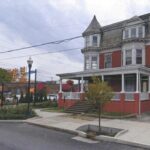
My neighborhood, Allison Hill, has a face only a mother could love. Empty plastic bags tumble down the streets, and scraggly weeds grow out of the cracked sidewalks. A pothole on my side street takes up so much of the road that my car can only drive down the wrong half. My car might easily be dragged into the black hole of rubble, ripping out the undercarriage and leaving a gutted shell behind. The street remains mostly unchanged since I purchased my house and moved in five years ago. Though they did throw in some cold patch a few years back that lasted until the following winter, when it began to cave in on itself again. Like the burnt-out street lamp on my block, I doubt the city will ever fix it.

And I adore it. I adore the Dominican salon across the street, the Spanish-American restaurant on the corner, the deli that sits diagonal from my house that reminds me of Brooklyn. I love the joy of the two young girls who live in the house across from me, who giggle and chase each other down the stairs and up the ramp of their home, over and over. I wave to my neighbors across the street and smile at the passersby on my way to the store. I love the kids on roller blades navigating the jutting sidewalks; the folks walking back from the supermarket pushing wheeled personal carts around the broken landscape; the souped-up dirt bikes that rip and roar up the street on any given Saturday night, or Tuesday afternoon for that matter. But in the same breath, learning to discern the difference between bullets and fireworks factored into the education of living on the tattered edge of Allison Hill. I actually reside two blocks past the technical edge of Allison Hill, but bullets aren’t concerned with invisible boundary lines.

I understand the anger of Baltimore and Ferguson, of Eric Garner, Amadou Diallo and Rodney King. There is a systemic racism in this country, and it has gone on far too long. But how do we channel that anger into change? How do we become a country that values each and every life? My neighborhood could very easily descend into violence. The buildings in this city could burn alongside police cars. Walk down Derry Street, and you will see abandoned houses, chipped and peeling paint, broken and boarded up windows. The Rite Aid down the street has been robbed so often they employ a security guard. How are the people who live in this neighborhood supposed to hope for a better future when their environment falls apart around them? Martin Luther King Jr. stated that, “A riot is the language of the unheard.” Who will hear the cries of my neighbors if chaos erupts? More importantly, is anyone listening now?

My friend “Jersey Mike” Van Jura moved here from New Jersey, and adopted Harrisburg as his home. He loved it here. I never asked him why he came; I missed that opportunity. He saw possibility on the streets of this city. He wanted to create a scene that encouraged art, music and theater, that encouraged political activism, that fostered involvement. He wanted a better future for everyone. His heart and soul loved and believed that Harrisburg could be a place where people wanted to live, a city where bands wanted to come because a space conducive to the arts existed. He believed that, by creating a scene where positivity reigned, the whole city could benefit.

The first few years after I moved here, I hated Harrisburg. The only thing to do in the city involved drinking on 2nd Street. Yes, there were some fabulous restaurants, and a couple fantastic little theaters, The Gamut and Theatre Harrisburg, but once you attended their productions, weeks passed before a new show opened. I regretted ever moving here to be near my family. I’d lived in Brooklyn, traveled to Chicago several times, and spent a couple months in Austin. I’d resided for a decade in Kalamazoo, Mich., a town loaded with theaters and music venues, art galleries and opportunities. Here, I felt adrift on a disappointing wave lapping at the shore of a life I used to live.

Ranting one day to Jersey Mike about the lack of culture in the city, he surprised me. I thought he’d commiserate with me. Instead, he told me I needed to be part of the creation of something bigger than an angry diatribe. He put himself out there all the time. He held tweet-ups at Appalachian Brewing Co. that encouraged people to become an active participant in the change they wanted to see in the city. He blogged about the best diners and attended City Council meetings; he wanted his voice to be heard. The last day I saw him, he wore a crisp white shirt and black vest. His smile showed his excitement at lending his voice to the politics of the city. Three days before, he’d officially submitted his name to run for City Council. He never had the opportunity make good on his promise. When Harrisburg lost Jersey Mike, it lost a beacon of light in a city immersed in darkness.

At one time, my neighborhood must have been gorgeous with its beautiful old houses. When I started looking to purchase my first home, I spent much of the time perusing cookie-cutter townhomes that appeared as carbon copies of one another. There came a point where I almost gave up hope. Then I stumbled upon an ad on one of the real estate websites showing photos of the home I would come to call my own. Boasting high ceilings, beautiful woodwork, a hardwood staircase and a claw foot bathtub, I knew I wanted to look at it. My real estate agent, a sweet, older, balding man tried to talk me out of it because of the neighborhood. He insinuated that as a tiny, single, white girl intent on living alone, that area of the city might not be in my best interest.

I knew the dangers of living in a poverty-stricken area. I’d lived in Trenton, Cleveland and Pittsburgh. My neighborhood in Kalamazoo acquired the name “The Student Ghetto.” For years, it had been dangerous, but the students stayed and bought homes, fixing them up in the process. The neighbors there looked out for one another. So, I didn’t care about the surface appearance of Allison Hill. The requisite postage stamp-sized backyard and the sloped-ceiling attic where my books could live sealed the deal. On August 31, 2009, I signed the paperwork and became a homeowner. The girl who never lived in one house longer than two years finally put down roots.

The following summer, a drive-by shooting occurred right in front of my house. In that moment, I remember thinking that gunshots sound nothing like fireworks when they happen 15 feet from your bedroom window at 2:30 a.m. I watched as a crime scene unit placed tiny, numbered placards on the sidewalk for each bullet that lay abandoned on the street. There were no casualties, but I wondered if I’d made a mistake. Who was I to live alone in such a dangerous place? I talked to friends. They advised me to consider purchasing a weapon. A black-ops military man I know, more than 6 foot tall and very imposing, suggested a rifle with buckshot. The sound of the cocking gun would become a deterrent, and, even if I couldn’t aim, the buckshot would likely spray enough that I’d hit whoever was in the process of breaking in. As a hippie, I recoiled from this whole idea. I’d never held a weapon, let alone considered firing one. Could I shoot someone even in defense of my life? I’d been advised that once I shot, I must empty the chamber into whoever stood before me. Otherwise, the police would not believe that I felt truly threatened.

Walking around Allison Hill, if you learn to look past the roll-down gates and the graffiti, you’ll see backyard gardens bristling with sunflowers. You’ll see the young trees we planted a few years ago and an anti-violence mural the community created with the words, “Live the Conversation” on the side of a building. When I walk anywhere, the people almost always smile back at me. In the five years since I moved into the neighborhood, I’ve never had a problem. But summertime approaches, and I will once again fall asleep to gunshots and sirens. After 5½ years of hard work at HACC and Penn State Harrisburg, I wonder what my bachelors of arts offers my community.

In Jersey Mike’s office hung a whiteboard. On it, in varying shades of dry erase markers, were listed the names of bands he wanted to bring to the city. I often wrote my own suggestions. Some were unattainable: Flogging Molly, Mumford & Sons, Bruce Springsteen. One late night, while sitting on the deck, we planned how we might attract Springsteen to play at the Abbey Bar. I still think about that complicated and impossible dream that involved a lot of luck. Everyone we mentioned it to enjoyed a good chuckle. But Jersey’s magnetic charm brought plenty of other bands, and I’m not sure he didn’t actually believe he could get Bruce Springsteen to play here. I’m not sure I didn’t believe he could do it. Especially considering I once wrote the name of one of my favorite bands, Lucero, on the board on a whim. I’m fairly certain I squealed the day he told me he’d booked them.

As I watched the news of Baltimore the day after the riots occurred, I listened to stories of community members calling for calm. I turned it to sports when my bar started to fill up, but the images lingered. That evening, I turned the news on at home and waited for the curfew to take effect. Riots cops lined the streets, the protestors facing them. Someone lobbed a bottle at the police, and they retaliated. But somewhere amidst the rising tension, the community chose peace and silence came over the neighborhood as people slipped back to their homes. Did the people calm because they felt that their voices had been heard?

It’s easy to imagine Allison Hill as Baltimore, easy to see potential fires where stores grace corners. I hope, if the worst happened, that someone would give voice to the unheard cries of the people who live here. But maybe Jersey Mike was right. Maybe life needs to be more than waiting around for someone else to make a change, to take a chance. I love the pockets of beauty hidden in my neighborhood, but I’ve never really claimed it as home.

I explain patiently to those who look at me quizzically when I reveal where I live that the scariest man in my neighborhood is the man who lives in the duplex on the other side of my house. I have a kiddie pool I set up in my backyard every summer. I like reading in the sunshine, a beer on the side table, XPN playing over the radio on the porch. Creepy old man neighbor insists on leaning over the fence to ask me what I’m doing, as if the swimsuit, pool and book weren’t enough of an indication. As I hastily try to cover my body from his lecherous eyes, I know now why the previous owners grew morning glories on the trellis. I’ve been forced to listen to his family scream obscenities at each other more often than not. I worry more about them than I do about coming home at 4 a.m. after closing up at my job. Yes, there are arguments at all hours that waft in off the streets, and I’ve been woken up more than once by the sound of a vehicle crashing on the block in front of my house, but I’ve never felt threatened in my neighborhood. Catcalled, yes, but I’m a woman, so there’s nothing unusual in that.

Allison Hill is quiet tonight. No siren’s lullabies seep in through my open window. My cat’s head rests on his paws as I sit in my worn blue recliner and contemplate what comes next. My eyes fall on the stacks of books, the piles of mail, the sci-fi posters that adorn my living room and hide the holes I’ve made trying to hang pictures on the horsehair plaster walls, and I wonder if I want to leave. Grad school looms on the horizon. Ten years ago, when I first moved to Harrisburg, five years before I bought my house, when asked if I planned on leaving, I always answered with a resounding yes! I’d always planned to leave. Now I’m not so sure.

Today, the dappled sun flickered over me through the branches of the oak tree, and my neighbors waved from across the street. I walked over to Rite-Aid and jokingly gave Alex, one of the employees there, a hard time, as I always do; I know most everyone who works there by name. I passed a man walking with his daughter on my way back home, and they both smiled at me. These people hold voices worthy of listening to, if only someone cared to do so.

Last summer, 13 years after I left, I drove through the “Student Ghetto” back home in Kalamazoo. I noticed the vibrant colors of repainted houses, the streets free of debris, the hippies still playing guitar on the porches. It is beautiful today, because the residents graduated and decided to stay. I think about Allison Hill, and the people who live here. Hardworking, decent people who deserve more than vacant overgrown lots and potholes. It’s days like these I ask myself what Jersey Mike would do. What made him stay here despite the odds stacked against the city? I wish I could envision the city he imagined. At a crossroads, the decision of whether to stay or to leave waits in front of me. When the sun shines down and children’s voices echo on the streets, I want to stay. I want to make it better. But when the silence of the night breaks with the ricochet of gunshots, I want to sell and get as far away from the danger as possible. Then I wonder how the media would characterize my kind, smiling neighbors, and my troubled neighborhood, if chalk outlines left ghostly imprints on the streets.

Dawn Saylor was a senior English major at Penn State Harrisburg. She graduated in May.

 

Continue Reading

Farm to Glass: From grapes to bees to beer–Spring Gate crafts a local experience.

Screenshot 2015-06-01 08.24.47“Why a vineyard in Harrisburg?”

That was one of the first questions I asked of Marty Schoffstall, owner of Spring Gate Vineyard in Colonial Park, located just a few miles outside the city.

I visited during a ribbon-cutting ceremony commemorating the vineyard’s one-year anniversary, and, amidst the food and music and general hoopla, Schoffstall kindly gave me a tour of his operations.

“Wineries,” he said, “weren’t that big of a deal in PA.”

He was referring to the 1990s, when he traveled with his then-business partner, Mark Fedor, to California’s Napa Valley. They happened upon a vineyard where they tasted, learned and experienced wine. Schoffstall and Fedor decided that’s what they wanted to bring home—the vineyard experience.

The two first opened a vineyard in Virginia, named North Gate Vineyard. After North Gate’s success, Schoffstall turned homeward to Harrisburg, where he had previously purchased a farm for his family. He started by planting a test vineyard, experimenting with hybrid grapes.

Enter Rebecca Klein, another Harrisburg local, and an oenophile. Schoffstall and Klein met at their children’s school and discovered their common wine passion. He tapped her as Spring Gate’s executive director. Together, they opened the winery in March 2014.

Schoffstall, also a partner in Linglestown’s St. Thomas Roasters, envisioned something unique for Spring Gate. He decided to model his business after the European Farm Barn motif, capturing the essence of a European café.

He and Klein created a setting where people experienced the area, not just the wine. Firepits, enclosed patios, open gazebos, wandering farm animals, tastings, specialty chocolates, tours, music and private parties are all part of Spring Gate. They want you to enjoy wine at an enjoyable place.

The Vineyard

About 12 of Schoffstall’s 60 acres are devoted to the vineyard. Two natural springs provide plenty of clean water, as well as the vineyard’s name.

The central structure on the grounds, the barn, has been renovated. It includes cozy seating, a wine bar and a tasting room. Spring Gate currently offers about 23 wine varieties. Schoffstall said the Susquehanna sweet white (Niagara) and red (Concord) thrive at the vineyard. Chardonnay won’t grow, and he lost the Merlot in a test vineyard. The noiret, a hybrid grape with a hint of pepper, is my personal favorite.

Anthea, a visitor to Spring Gate, recommended the Détente—a dry white with a crisp, fruity finish. She said it reminded her of her time in Italy, sitting outside, enjoying a similar wine.

Besides grapes, there is an apple orchard, hops and beehives. Maple trees were tapped for syrup on the day of my visit. Vegetables grown on the farm are sold across the street in a market building. Chickens roam freely and sheep, not chemicals, fertilize the ground. Sheep, not machines, cut the grass.

“Inch by inch, year by year, the property becomes more sustainable,” said Schoffstall.

One domesticated bird in particular, Gertrude, has graced the label. So has a lamb. The dog might be next.

Wine to Beer

Spring Gate hosts festivals most months. On St. Patrick’s Day, an instructor taught an Irish jig. Earth Day was celebrated with bottle swaps and guests hand-painted recycled bottles. May featured the Kentucky Derby’s mint juleps and fancy hats, along with a Mother’s Day brunch.

And Spring Gate isn’t only the reserve of wine-lovers. Schoffstall has more than 30 years of experience making cider, so he logically introduced the hard variety. Now, every Saturday is cider day, the beverage purchased by the glass, growler or bottle.

Going forward, Schoffstall hopes to add brewing to his expanding operation. A beer garden—an outdoor area where beer is served—is in the works.

“Winter wheat is a natural product in this area,” he said.

The beer menu won’t be as extensive as the wine list, at least to start, featuring three or four varieties, he said. To get things going, he’s even brought in a consultant and brewer from Belgium.

The prospect of a brewery recently led to some controversy in Lower Paxton. Over the winter, some locals objected to a special zoning exception that Spring Gate sought, expressing fears of traffic, drunken driving and noise.

When I asked Schoffstall about it, he replied, “No one has ever complained about a winery,” perhaps because beer has a stigma that wine does not.

Indeed, beer in this country long has been associated with flannel, truck stops and bad country music. However, that stereotype is fading as the local craft beer scene has grown.

“What would differentiate Spring Gate from other local breweries?” I asked.

“The culture, the property and the experience,” Schoffstall replied.

I asked about future plans and brought up the word, “mead.” With a gleam in his eye, Schoffstall said, “We are releasing a honey-peach wine in June.”

The farm has bees and springs; honey and water make mead.

“To emulate those (old-world, European) meads would be a real goal, if I could find enough local honey,” he said.

Emphasis on local. Local wine and cider. Some day, local beer and mead. That’s what Spring Gate is really about.

Spring Gate Vineyard is located at 5790 Devonshire Rd., Harrisburg (Lower Paxton Township). For more information, visit www.springgatevineyard.com.

Continue Reading

A Midstate Passage: Anju Singh brings Indian clothing, culture to central PA.

Screenshot 2015-06-01 08.27.18Walking into Aanchal Apparel & Accessories, it’s impossible to miss the array of bright colors and sparkling jewelry that lines the shop’s racks and walls.

Indian culture is known for its vivid, vigorous spirit, so the visual display is a perfect introduction to the downtown Hummelstown shop.

“My vision and mission are to provide economical Indian clothing and accessories to promote diversity,” said owner Anju Singh, who greets customers with a warm and welcoming smile. Her motto is “apparel for anyone, anytime, anywhere.”

Singh was born and raised in India and earned her medical degree before coming to the United States. After enduring a difficult divorce and earning a PhD in molecular medicine, she was looking for a job that would be fulfilling and allow her to be her own boss while caring for her three children. She says her daughters, 4 and 6, were the inspiration for her store.

“They love the bling, bangles and jewelry,” Singh said. “I wanted to keep the culture and tradition alive in my own family.”

She got a business license, $4,000 from a friend who believed in her idea and began selling clothes and jewelry from her home in the fall of 2013. A year later, she opened her shop, presenting a unique concept for central Pennsylvania.

“I found this niche in the market,” Singh said. “There is no other brick and mortar store in the area selling Indian apparel.”

Singh carries items for women, men and children, with everything from casual clothing to wedding gowns. Brides can buy dresses she carries in the shop or order custom creations that will be made in India and take four to six weeks to arrive, depending on the season. She schedules appointments for wedding parties and individuals and also offers free sari-wearing lessons, taking pride in teaching second-generation girls and anyone else who wishes to learn how to wear the traditional Indian garment.

All of the items she sells come from India, and Singh works with multiple suppliers to provide a wide variety of options to her clients. She says she has one great supplier that she does rely on because they have a good relationship and his prices are reasonable.

“If he doesn’t have it, can’t get it, or won’t get it, though, I tell him I’m going shopping,” Singh said with a laugh.

One aspect of her business is very important—keeping her prices affordable. Singh has an exact formula for calculating her costs, allowing her to make a profit while ensuring the clothing and accessories are reasonably priced. She knows that she is competing with online stores, but cites an example of silk scarves in her display case of why customers should come into the shop. She says the same scarf she sells for $30 costs $41 online.

The reason for keeping her prices reasonable is simple. She believes that people are more willing to try new clothing items if they’re economical. She advocates a “try it before you buy it approach” because each piece is cut differently and because people like to be introduced by touching and feeling the clothing.

One of the items she is most proud of is what she calls the “1-2-3 sari.” Women can choose their fabric, and Singh then sends that material to her tailor in India to stitch into a ready-to-wear sari within a few weeks. The majority of her clients are American, and she takes great pride introducing new people to Indian apparel and accessories.

She also feels strongly about working with other local business owners to build mutually beneficial relationships.

“We generate energy by working together,” Singh said, adding that she is always looking for other small- and women-owned businesses with which to collaborate.

Singh was recently elected president of the Hummelstown Business and Professionals Association and has a vision to put the area on the map.

“Hummelstown is a small American town that has preserved its heritage but is in the 21st century,” Singh said, adding that she hopes to add to its diversity and culture.

Singh regularly attends community events to meet other local business owners and to promote Aanchal. She says she never fully understood customer loyalty before opening her store.

“I am touched to see that there are people who show up at events to support me and take the time out to support us,” she said.

Aanchal Apparel & Accessories is located at 417 W. Main St., Hummelstown. For more information, call 717-991-5105 or visit the Facebook page: Aanchal Apparel & Accessories. Singh also will be out with other local vendors between June and September at First Friday events at the Giant Food Store at 257 Hershey Rd., Hummelstown.


Continue Reading

A Way of Life: Yoga Nature offers a Sunday organic farmers market to nurture mind, body and soul.

Screenshot 2015-06-01 08.18.23It’s only natural that Sara Rose Bryant and Misha Kaschock started an all-organic farmers market at their Linglestown-based studio, Yoga Nature.

After all, according to Bryant, both yoga and an organic diet are agreeable to the body.

“Yogis through the ages have deeply understood the simple and ancient idea: You are what you eat,” said Bryant. “[An organic farmer] studies the external landscape carefully like a yogi studies the internal states.”

Held during the summer on Sunday afternoons, the market offers an open-air, leisurely shopping experience, complete with prepared food and drinks, vegetables, herbs, cheese, bread, coffee, seafood, baked goods and more.

​​“We are unique in that we have this yogic backbone which seeks to create a deeper connection between the community, the farmers and the Earth,” said Bryant, explaining that the market is a full community experience, with featured artisans and musicians.

To further enhance the connection between food and health, Yoga Nature offers activities like drumming, yoga, dance, educational classes for adults and kids, community drum circles, henna tattoos and face painting. The studio also plans on hosting work and learning days with the farmers so that people can witness a direct correlation between the land and growing food.

Filling a Void

Bryant is quite comfortable with market culture, having spent much of her youth at her family’s oyster bar in the famous Pike Place Market in Seattle.

“The vibe at Pike Place is pure magic with abundant produce, buskers galore, beautiful foods, herbs and spices from every culture, fresh fish, local artisans, huge bouquets of flowers and bustling excitement all year long,” she said.

Even with so many organic farmers in the Harrisburg region, the couple saw a gap in the local offerings—no exclusively organic markets and no markets on Sundays. As their creative ideas came together, they toyed with the idea of filling the void.

Screenshot 2015-06-01 08.18.15Friends then mentioned that they wanted to create an organic garden and needed a place to sell their produce. This was just the happenchance Bryant and Kaschock needed to dive into creating the market.

“I had already had the seed of the idea for a farmer’s market outside of our yoga studio and so the idea sprouted,” Bryant said. “I decided to try to create a whole organic farmer’s market in less than three months.”

She added they dealt with a lot rejection in the beginning, but, believing in the concept, kept at it.

“It was difficult to assure farmers that we would have a good flow of patrons,” she said. “By the skin of our teeth, we managed to fill our very first market with vendors and, from there on out, it was a complete success.”

Mindful Eating

Yoga Nature allows market-goers to experience the nourishing and healing power of food harvested from the earth, right here in our local community.

With a year of the market under their belts, the couple continues to educate people on why buying local, organic whole foods is so vital to their health.

“We want to help people feel the difference between buying something at the store, off of a shelf with no connection to the people who grew it and how it got there, and knowing your farmers, how they work with the land, their names and stories,” Bryant explained. “We want to help people understand why buying local and organic is worth the extra 30 cents you might pay for that bundle of kale.”

Bryant has enjoyed watching people enjoy the fun, positive, health-oriented market. In addition to the food, the market fosters other principles of yoga, such as building relationships and community.

“What many people don’t realize is that yoga is more than just a movement practice. It is a way of life,” Bryant said. “Since Misha and I were given the yoga studio, we present this idea to our community in as many ways as we can. I feel proud to facilitate, connect and bring beautiful people together to create a wave of positive connection in the greater Harrisburg area.”

The Organic Farmers Market is held each Sunday through September, 1 p.m. to 5 p.m., at Yoga Nature, 4400 Linglestown Rd., Harrisburg. For more information, call 717-695-7101 or visit www.yoganaturelife.com. You also can like Yoga Nature on Facebook. If you’d only like to sign up for the organic farmer’s market list, send an email to [email protected]. Photos by Haley Harned.


Market Vendors

The following vendors sell goods at the Organic Farmers Market at Yoga Nature.

  • A+ Produce, Pitman – vegetables, herbs, flowers
  • Camelot Valley, Dover – goat cheese
  • EarthSpring Farm, Carlisle – organic produce
  • Elementary Coffee Co., Harrisburg – locally roasted organic coffee beans, cold brew coffee
  • Filey’s Pride, Dillsburg – organic produce
  • JB Kelly Seafood Connection, Halifax – wild harvested seafood from Maine
  • MidSt8 Taco, Lemoyne – tamales, tacos, freshly made tortillas
  • RiJuice, Lancaster – organic juice
  • Spring Gate Farm + Vineyard, Harrisburg – free range organic chicken eggs, seasonal berries
  • Stoney Creek Valley Farm, Dauphin – plant starts, homemade herbal beverages
  • Sunshine Bakery, Dillsburg – organic scones, homemade granola
Continue Reading

Fresh Air Fun: Over the summer, local families will host New York kids–and all will benefit.

Screenshot 2015-06-01 08.18.50Families wait in the summer sun on the steamy macadam of the department store parking lot. Program veterans converse with first-timers, assuring them that they can expect a great week. Some carry banners and balloons, some just the countenance of anticipation. One of the lookouts yells, “There’s the bus!”

Here come the kids.

Last year, the Fresh Air Fund sent thousands of underprivileged children from New York’s five boroughs for a summer visit with families in 13 states on the East Coast, including here in central Pennsylvania. Since 1877, 1.8 million children have participated in The Fresh Air Fund programs.

A not-for-profit agency, Fresh Air aims to provide children with “free summer experiences” outside of the city. It accomplishes this through a variety of summer camps in Fishkill, N.Y., and through the volunteer host program. Children, ages six through 12, participate in the host program and re-invited youth can return until age 18.

So Quiet

Hosting provides an opportunity for families to “open up their homes and hearts” to a city child, said Roberta Popp, a 15-year Harrisburg-area participant. Since 1981, Popp and husband Bill have hosted eight children through Fresh Air.

On a warm spring day, outside her rural Lewisberry home, amongst the trees and bird feeders, Popp shared that the program is “about letting the child run free, letting them run barefoot in the grass.” She added that, when families host a child, they “are introducing a child to firsts…to another way of life.”

These firsts include things that those who experience them every day take for granted—seeing the stars at night, feeling the grass tickle the toes and watching squirrels steal seed from the bird feeder.

Other unique events for Fresh Air kids include hearing quiet, seeing darkness and feeling bugs. As one of Popp’s Fresh Air visitors, Alex, would often say, “It’s so quiet here.”

Liz Charleston agrees with Popp’s description. A co-chair of the Etters Friendly Town, the name given to an area where Fresh Air Fund children are hosted, Liz and her family have welcomed eight children over the past 11 years. She described two visitors’ first experience with fireflies. Awestruck by the flashing bugs, the girls asked, “What are all these lights?”

Simple experiences typically fill the children’s visits, events like playing on a swing set, walking the dog or making homemade ice cream. Children often learn to ride a bike or swim while visiting. According to Sherry Sweigard, Sarai—her family’s visitor for three summers—thought playing with bubbles was fabulous.

Many families take Fresh Air youngsters to Hershey Park, Lake Tobias, Harrisburg Senators games or other destinations, but simple pleasures often win out. Sweigard explained that, no matter where they went, Sarai would always ask, “Can we swim when we get back?”

These experiences create relationships between the host families, the children and their families, said Charleston. Families re-invite children at a rate of more than 65 percent, she said.

Many families have ongoing communication with their host child after the summer is over. In November, Popp attended Alex’s New York wedding. The Sweigard family had Sarai visit during Christmas break, meeting her mother in Allentown for the exchange. Some families send Christmas and birthday gifts.

A Yard and a Bed

The children receive much from their visit, but host families receive much, too.

Families that “open up their home and hearts,” as Popp put it, get a glimpse into city life, get an appreciation for what they have and get an introduction to a different culture and lifestyle.

“Our kids don’t think they have anything, then they meet these kids,” said Popp.

The Charleston boys, Carson and Brandon, ages 7 and 9, refer to the girls who visit them in the summer as their “Fresh Air big sisters.” One of those big sisters, Tiffany, inspired by Charleston’s job as a science teacher, has decided to become a math teacher.

Only a few criteria need to be met to host: a yard, a bed and clearances. When a family registers to host, the regional representative will visit the home, meet the family and discuss the program and necessary clearances.

Area Fresh Air volunteers support host families and answer questions, address concerns or guide them through any health issues that may arise. The Fresh Air Fund covers all medical expenses incurred while a child visits.

Charleston said possible host families need not let the “what ifs” keep them from hosting. Fresh Air has local and New York office support available 24 hours a day.

Charleston offers this advice for those wishing to host: “Be flexible and open-minded.” She also advises host families to include as much information as possible about their family activities on the host paperwork to assist Fresh Air in matching a child with overlapping interests. All interests won’t match up exactly, so families can adapt activities for the visiting youngster or find new adventures together.

Popp began her adventure with the Fresh Air Fund 35 years ago. She said that she “believes in this program” and that it’s “a great experience for a city kid.”

Her friends often ask her why she still does the work.

“Because I love seeing the smiles on the kids’ faces when they slip off that bus and see their host families,” she responds.

After a week or so, the voyage across states and cultures must end. Host families pack lunches for the children, and the journey ends where it began—at the bus. More tears end the visit than began it. On the bus, the children, excitedly and sometimes braggingly, share their stories and picture albums. Families drive home without their special visitor, richer for the experience, remembering the week and anticipating next year.

In the end, everyone has benefitted from a little fresh air.

There is still time to host a Fresh Air Child this summer. Contact Roberta Popp, Harrisburg Fresh Air Fund representative, at 717-487-8096 or consult The Fresh Air Fund website at www.freshair.org.

Continue Reading

River City: From ferry to festivals, the Susquehanna has defined Harrisburg.

Screenshot 2015-06-01 08.26.38Before there was Harris’ Ferry, there was a shallow plateau allowing Native Americans to ford the Susquehanna River. Trails led to and from the eastern and western shores. The landings weren’t called Shipoke or Lemoyne then, but they were made to order for the trading post and ferry established by entrepreneurial pioneer John Harris.

A new book by Eric V. Fasick, “Harrisburg and the Susquehanna River,” begins at that beginning, starting with the ford in the river and chronicling the centuries-long relationship between a capital city and its shallow, sometimes sparkling, occasionally cranky waterway.

The book, from Arcadia Publishing’s “Images of America” series, draws largely from the Historical Society of Dauphin County’s archives. As chair of HSDC’s collections committee, Fasick has special insight into the rich trove.

“I knew what was upstairs,” he says. “I knew what we had.”

The history of residents’ interactions with the river is a history of moneymaking, says Fasick. Ferries, toll bridges, dance halls, sports, festivals, dredging for waste coal washing down from northeast Pennsylvania—it’s all there in a book that explores the Susquehanna’s waters, islands and bridges from Colonial days to the 1990s.

As the book recounts, before City Island became the focal point for mid-river fun, there was Independence Island, near what is now the Harvey Taylor Bridge. Ferries would carry guests to a dance hall fashioned from a rolling rink transported to the spot.

“They had an old coal chute they set up for kids to slide down into the lagoon,” says Fasick.

Around 1900, the city of Harrisburg acquired its own island, known originally as Turkey Island and then called by the names of a succession of owners. One island owner, John J. Hargest, had been well known for the vegetables he grew and sold in Market Square.

The newly named City Island became home to a bathing beach, originally restricted for male use by city officials who said they had “witnessed the antics of Atlantic City and Coney Island.” Until urban flight and the coming of municipal pools, it was a popular cool-down destination for residents and a revenue generator for the city.

“The push from the city was to keep people in town,” said Fasick.

In a generations-spanning coincidence, Fasick realized after publication that the cover photo his editor chose—scores of men, women and children enjoying a dip in the river—included his great-grandfather and great-grandmother or her sister.

Rises, Falls

Fasick, steeped in local history and river culture, was born in Harrisburg and grew up in Lemoyne. He works at the Pennsylvania Liquor Control Board and serves on the HSDC board. He has been published in history journals and authored another Arcadia book, “Tropical Storm Agnes in Greater Harrisburg.”

As Fasick’s river chronicle shows, the Susquehanna’s role in the life of the region rises and falls with the city’s fates. Beginning in 1900, the City Beautiful movement did the river a favor, leading to construction of riverfront walkways, dedication of parklands and an end to raw sewage pumped directly into those sparkling waters.

People responded by celebrating life on the water. Festivals, whether they were called Water Carnival or Kipona, originally included participatory races. Residents competed in the fastest freestyle, swiftest canoeing or the unique talent for swimming while reading a newspaper without getting it wet. Really.

But the general intimacy with the river from those days has dissipated.

“We want everything sterilized to the point where we don’t want to be in that perceived filth,” he says.

City Island activities have included football games, track meets, concerts and gardening. The one constant through all the years—at least, since around 1893—has been baseball, and, when photos lacked identification, Fasick turned history detective.

For one long shot from center field, he spent more than 35 hours and used such clues as arched lettering on a player’s uniform, a coach’s distinctive jacket, and the overcoats worn by spectators to conclude that it was Sept. 22, 1904. On that cool day, the Harrisburg Athletic Club defeated the visiting Washington Senators, led by Hall of Fame pitching legend Walter Johnson.

“I was trying to date the photos and, really having no background on baseball at the time, I thought it gave me a good groundwork to start with this one,” says Fasick.

And in a photo from Sept. 25, 1919, when the Boston Red Sox came to town, is that Babe Ruth approaching first base? There’s no proof, but Fasick says the big guy in baggy breeches played that day, and that stiff-backed running stance sure looks familiar.

“I think it’s Babe Ruth,” says Fasick. “I put my proverbial rear end out there on that one saying it’s Ruth, but I really do think it is.”

“Harrisburg and the Susquehanna River,” by Eric V. Fasick, can be purchased at several local bookstores and online. A book-signing will be held to coincide with the opening of the “Susquehanna River Islands” exhibit, June 14, at the Historical Society of Dauphin County, 219 S. Front St., Harrisburg. Information is at www.dauphincountyhistory.org.

Continue Reading

Love and War and Politics and Poetry: Enigmatic “Troilus and Cressida” is annual Shakespeare in the Park

Screenshot 2015-06-01 08.32.42Ian Potter, an actor and set designer with Gamut Theatre Group, was somewhat prepared for his role of Achilles in “Troilus and Cressida.”

“I read ‘The Iliad,’ the epic poem attributed to Homer about the Trojan War, in high school,” Potter said. “I was also in a college production of ‘The Trojan Women,’ a tragedy by Greek playwright Euripides.”

The play is the annual outdoor production to be presented this month by the Harrisburg Shakespeare Company, which, together with Popcorn Hat Players Children’s Theatre, comprises Gamut.

Jaded
As usual, the author of “Troilus and Cressida,” William Shakespeare, brings his own take to the ancient conflict.

Now in its seventh year, the war has reached a stalemate. Both sides, Trojans and Greeks alike, are questioning the value of continuing it. Meanwhile, Troilus, the young son of the Trojan House of Priam, and Cressida fall in love.

Only, it isn’t feuds in an Italian city that thwart their romance—as per “Romeo and Juliet”—but political maneuvering. Cressida decides to make alliances that stand to compromise her virtue, explained Gamut Theatre Group’s artistic director, Clark Nicholson, who is staging the production.

When Troilus sees Cressida flirting with a man in the Greek camp to which she has been traded, he considers her a whore, although no one refers to the beautiful Helen of Troy that way because of her social standing.

“Yet, it’s not even clear that Helen minds having been abducted to begin with, though that supposedly started the war,” said Nicholson.

Troilus ends up a “very angry, very jaded young men, who becomes an angry fighter,” Nicholson said. “It’s not unlike a Romeo and Juliet dynamic, in which the two are doomed not to be together.”

“Troilus and Cressida” is one of the Bard’s most enigmatic plays, encompassing both an ancient story—actually one of the oldest extant in Western literature—and modern cynicism. Part of it is drawn from a medieval source, a work by Chaucer about the two lovers.

Variously characterized as a problematic comedy or a tragedy, it is “simultaneously comic, tragic and satiric, offering a chilling twist to the classical mythic heroes of antiquity,” Nicholson said.

Moreover, while the undoing of Troilus and Cressida’s love is at the play’s core, in reality, it accounts for little stage time, which mostly focuses on the leaders of the Greek and Trojan forces.

“The love story bookends the play,” rather than being central to it, noted Nicholson.

Worth Doing
While not one of Shakespeare’s most popular works and not containing the memorable speeches a “Hamlet” does, “Troilus and Cressida” is a “beautiful piece of poetry,” full of metered and rhymed couplets, surrounding an epic adventure. That alone makes the play worth doing,” Nicholson added.

“Troilus and Cressida” is a “very dark look at humanity, with people confusing love and lust and war being based more on covetousness and bragging rights than on honor,” Nicholson continued. “Shakespeare casts a satirical eye on his characters and not the most flattering look at war, although it’s not a wholesale condemnation.”

Other cast members include Jared Calhoun as Troilus and Emily Samuelson as his love interest—both in their Gamut debuts; Amber Mann as Pandarus, the go-between for the lovers; Thomas Weaver as Ulysses; Sean Adams as Hector; Jeffrey Rensch as Agamemnon; Bernard Joseph as Aeneas; and Kathryn Miller as Helen.

The multi-talented Potter also designed the sets, drawing inspiration from photographs of contemporary, war-ravaged Syria.

No Heroes
Nicholson’s locale for the play is not ancient Greece or Troy but the present or not-too-distant future on the eastern side of the Mediterranean. The fighting is carried on by private military units, like Blackwater; each city-state of Greece (as opposed to a united Troy) has a different insignia.

Besides the possible betrayal of Troilus by Cressida (whether to survive or for other reasons), there is a larger one: the leaders have tried to convince their people that the Trojan War was a life-and-death struggle. But it was really an “insult thing,” said Nicholson. “Like Samuel Johnson said, ‘Patriotism is the last refuge of a scoundrel,’ and in that sense, the play is very timely and germane.”

Great playwrights are not about polemics, at least not exclusively.

“Shakespeare is not a pacifist, nor does he take a propaganda point of view—but rather, a realistic one,” Nicholson said. “It’s more like, if someone tells you to kill a man for God, country and apple pie, and you do it, maybe you should have been a little less gullible. Shakespeare asks us to figure out and decide if this is patriotism.”

In order to get Helen back, the Greeks are “willing to topple the city and the ground and loot as much possible,” added Potter. “Maybe that’s why Helen is more an idea, talked about” than active in the play.

For all of its foundation in “The Iliad,” Potter points out that these are not really heroes.

“There’s a lot of deceit and brutality,” he said. “If Shakespeare’s play is not totally anti-war, it does show it’s not a glorious thing and how ugly it can be.”

The great Achilles, for example, no longer wishes to come out of his tent. “He is motivated to do so for personal reasons—when Patroclus (Rose Weber), who may have been his dear friend, family member or lover, is killed by Hector,” said Potter.

In a breach of honor, Achilles then has others kill an unarmed and resting Hector.

Yet, just as Romeo and Juliet fall in love amidst feuding, so do Troilus and Cressida amidst war. Something good may come from something brutal, though not necessarily with happy results, said Nicholson.

Gamut Theatre Group’s Harrisburg Shakespeare Company will perform “Troilus and Cressida” June 5 to 20 at the Levitt Pavilion in Reservoir Park at 7:30 p.m. Admission is free. For information, visit www.gamuttheatre.org or call 717-238-4111.

Continue Reading

A Summer Favorite: June is strawberry pie time.

Screenshot 2015-06-01 08.30.47June is a special month for me: memories of my father and his lovely floribunda roses, one of which I placed in his lapel every morning before he left for work; a time of celebration for a husband’s and son’s shared birthday; and strawberry season!

My mother and aunts and two young sons and I looked forward every June to picking our own strawberries. Our favorite place was Strites Orchard, a farm market on the outskirts of Harrisburg. We always tried to be among the “first pickers” to get the cream of the crop. This translated into getting the largest berries on the bushes, often the size of golf balls.

We would head out into the fields with our berry baskets, which, in those days, we were permitted to completely fill rather than pay by the pound. So, when all our baskets were overflowing, we would gingerly take them home, eating as many as we could that were tumbling out the sides.

These “homegrown” strawberries, with rare exception, bear no resemblance to the plastic-encased supermarket variety. Varying between bright red and a deep wine color, depending on variety, these fruits were bursting with juice and sweetness. My first strawberry “chore” in those days was to make jam—a wonderful freezer jam that we ate all year long. Because it wasn’t cooked, this jam remained bright crimson in color and tasted just like fresh summer strawberries month after month.

Another tradition for me was (and still is) the annual strawberry pie. It is not a fancy dessert, and it is not hard to make. The recipe calls for a baked pie shell. I have always made my own piecrust, and that is not hard to do either. But, for this pie, you can use a regular, pre-made piecrust from the grocery store or even a graham cracker crust, both of which shorten your preparation time. The smell of strawberries and sugar bubbling on the stove on a June afternoon always stirs wonderful memories for me.

Ingredients

  • One 9-inch baked pie shell (cooled if homemade)
  • 6 cups fresh, ripe local strawberries (about 1 ½ quarts washed and stems removed)
  • 1 cup sugar
  • 3 tablespoons cornstarch
  • 1/2 cup water
  • 1 package (3 ounces) cream cheese (I usually use 2 packages)

Recipe

  • Mash enough berries to measure 1 cup.
  • Mix sugar and cornstarch in a 1 quart saucepan.
  • Stir in water and mashed strawberries gradually (I use a wooden spoon).
  • Cook on medium heat until the mixture thickens and boils. Lower the heat to prevent scorching if necessary. Boil and stir for 1 minute, then remove from the heat and let cool.
  • Beat cream cheese in a small bowl until smooth (I use a wooden spoon for this also, no need for a mixer).
  • Spread the cream cheese over the bottom of the pie shell.
  • Top the cheese with the remaining whole berries. Stand the berries upright. (It works well to place the larger berries around the outside of the pie shell and end with the smaller berries in the center.)
  • Pour the cooled cooked berries over the pie, spreading the mixture with a spatula.
  • Refrigerate until the top of the pie is set, at least 3 hours.

When ready, cut the pie into slices and garnish with a little sprig of mint if you like. The pie is wonderful on its own and needs no whipped cream or ice cream on top.

My little boys are all grown up, and no one seems to want to eat jam anymore, strawberry or otherwise. But this pie is a summer treasure. I hope it will become a favorite of yours as well.

Continue Reading

Lawn Chair Cinema: Harrisburg gets its own outdoors film series.

Screenshot 2015-06-01 08.32.14Sometimes, there’s nothing you’d rather see more than an 8-foot-tall projection of Matthew Broderick’s 20-something face smirking down at you in public.

Maybe I’m only projecting my own desires on the masses. Then again, if that weren’t the case—if not with Matthew Broderick then with another household celebrity actor—the concept of an outdoor movie wouldn’t be so widely beloved.

There have been many outdoor film series across the country, such as “Screen on the Green” in Washington, D.C., and “Rooftop Films” in New York. Clearly, many people enjoy the communal experience of enjoying cinema in the warm outdoors.

Harrisburg now will have its chance, too. This summer, Friends of Midtown presents a series of films that will be projected in the parking lot of Midtown Cinema. It’s the perfect opportunity to bring the community together for a free event, enjoying a good film and each other’s company.

“We want to provide something enjoyable for individuals and families of Midtown and to just make it a more fun place to live,” says Shawn Westhafer of Friends of Midtown. “That’s our obvious goal, but outreach, of course, is too. We’re always looking to reach out to more people, always trying to do things that will cause us to reach new folks.”

Six films will be played throughout the summer, from June to August, with two per month. The movies were chosen for their widespread popularity and family-friendly content, as well as being suitable for summer fun.

One of the films (“Plan 9 from Outer Space”) will combine the Outdoor Film Series with another Midtown Cinema series, “Down in Front!” in which improv comedians make fun of atrocious movies. “Plan 9,”directed by Ed Wood—a filmmaker some regard as the worst director of all time—will be a fun change from the more mainstream movies that will grace the outdoor screen.

So, pull out your lawn chairs and blankets and join the fun. The films will start at dusk, but make sure to come early. It’s going to get pretty crowded!

Outdoors Film Series

June 5: “Indiana Jones and the Raiders of the Lost Ark”
June 26: “Batman”
July 10: “Plan 9 From Outer Space”
July 24: “Labyrinth”
Aug. 7: “The Princess Bride”
Aug. 28: “Ferris Bueller’s Day Off”

All movies start at dusk in the parking lot of Midtown Cinema, 250 Reily St., Harrisburg.
 

Midtown Cinema
June Events
 
Midnight Matinee Series
“The Matrix” (1999)
Saturday, June 6, 11:45pm (BYOB)

Contemporary Digital Theatre Series
“Showboat” w/Bill Irwin
Sunday, May 31, 4pm

“NTL’s Man and Superman” w/Ralph Fiennes
Sunday, June 7, 4pm
presented by Open Stage of Harrisburg

Classic Film Series
“Singin’ in the Rain” (1952)
Sunday, June 14, 6pm

3rd in the Burg $3 Movie
“Clueless”
Friday, June 19, 9:30ish (BYOB)

Family Film Series
“The Neverending Story” (1984)
Saturday, June 20, noon
Sunday, June 21, 2pm

MOVIATE Night
Sunday, June 28, 7pm

Continue Reading

Snack Attack: Embark on a road trip to Pennsylvania’s most tempting factories.

Screenshot 2015-06-01 08.26.09From pretzels to potato chips, Pennsylvanians know how to chow down.

Grumbling bellies in the middle of the afternoon are no match for the thousands of pounds of snacks that are produced in this region each year.

Those with an appetite big enough to tackle the salty offerings of central Pennsylvania should pack the kids in the car and hit the road for free tours and factory samplings. Bring your water bottles. You’re going to get thirsty.

We’re headed south to York County, where the self-proclaimed “Snack Capital of the World” offers suggested stops on its Sweet and Salty Trail guide. Here are a few worth the trip.


Martin’s Potato Chips

Technically located just outside of York County in Adams County, Martin’s Potato Chips has a history rooted in snacking.

Legend has it that Fairy Martin started making her famous potato chips in 1941 to keep her son from spending money at the Utz potato chip stand in the local market.

Today, the company produces more than 1 million bags of potato chips and popcorn each month. According to the company website, the product is so popular that the past three presidents have served Martin’s chips on Air Force One.

“We order boxes at a time,” said Joanne Kinner, who used to live in Hanover but moved to Florida a couple of years ago.

She was going on the tour with family members recently and getting ready to stock up on her favorite potato chips.

Tours are only available Tuesday mornings and calls should be made in advance to reserve a spot. Visitors have to wear hairnets, but it’s worth it. This is one of the few factory tours that will allow you step right onto the production floor.

The process of making potato chips hasn’t changed much at Martin’s. The washed spuds make their way on conveyor belts to be peeled, sliced, fried, cooled and salted. If you’re tempted by the delicious smells of freshly fried potato chips, the tour guide can help satisfy your craving. At Martin’s, visitors can sample potato chips right off the line before they’re packaged.

Martin’s Potato Chips, 5847 Lincoln Highway West, Thomasville, www.martinschips.com.


Snyder’s of Hanover

When you’re making your way back to York County from Martin’s, it makes sense to stop by Snyder’s of Hanover.

A reported 80 percent of America’s pretzels are made in Pennsylvania, helping contribute to the nearly two pounds of pretzels the average American eats each year, according to Snyder’s tour guides.

Visitors can go on guided tours Tuesdays, Wednesdays and Thursdays. Calls in advance are recommended.

Since 1901, Snyder’s of Hanover has been making pretzels, still using the original recipe. This 30-minute tour runs along a hallway above the factory floor, which allows for great views of what’s happening below.

“The kids are always well-behaved when they know they get a treat at the end,” said Michael Lourette, who took the tour with his family recently.

The tour is a great way to see the variety of products that Snyder’s offers. A century-plus in business, the company has grown to manufacture more than 10 different kinds of pretzels, tortilla chips and salsas.

The best part of the tour? A free bag of pretzels when you leave.

Snyder’s of Hanover, 1350 York St., Hanover, www.snydersofhanover.com.


Utz Potato Chip Factory

Unlike some other snack factory tours, Utz Potato Chip Factory tour is self-guided. Open Monday through Thursday, the 30-minute tour takes visitors through the factory via a private entrance and video tour. Be sure to give yourself enough time to press the buttons that prompt the narration at various stops along the way.

As the largest independent snack factory in the United States, Utz produces 3.3 million pounds of snacks a week, about half of which are potato chips.

When it first started in 1921, William and Salie Utz made about 50 pounds of potato chips an hour from their summer kitchen in Hanover. The company grew each decade until it became the snack franchise it is today.

Eleven different stations through the tour give visitors a view of the factory below. A small bag of chips is given to each visitor at the end, but, if that doesn’t satisfy your hunger, a factory store is located on-site.

Utz Potato Chip Factory, 900 High St., Hanover, www.utzsnacks.com.


Wolfgang Candy Co.

If salty snacks are weighing you down and your sweet tooth is begging for some attention, head to the Wolfgang Candy factory tour.

A fourth-generation family business, Wolfgang Candy Co. was founded by Delphy Eli and Mima Mae Wolfgang in 1921.

Food safety regulations no longer allow tours in the production area, but there are still opportunities to learn the history of candy-making and see how the handmade items are created today.

Tours are available at 1 p.m. Monday through Thursday, although larger groups may be accommodated at other times.

On the tour, visitors learn how chocolate is tempered and see how hollows are made. The whole tour takes about 45 minutes.

The Das Sweeten Haus also has display cases filled with wooden sugar molds, glass candy jars and other candy-collectible antiques.

Janice Tally, a York native who was visiting the factory recently, said she loves to go on the tour for the smell alone.

“That sweet chocolate sticks with you all day,” she said. “The thing about local treats is they’re the ones you grew up with. Even if you move away or try other things, nothing is as good as the foods that remind you of home.”

Wolfgang Candy Co., 50 E. Fourth Ave., York, www.wolfgangcandy.com.


Other Snack Happenings

Central Pennsylvania is full of sweet and salty destinations. A few others include:

  • Julius Sturgis Pretzel Bakery, 219 E. Main St., Lititz. Visitors get to tour the original 1861 bakery and take a shot at twisting their own pretzel. www.juliussturgis.com.
  • Wilbur Chocolate Company, 48 N. Broad St., Lititz. Visit the Candy Americana Museum, where you can sample a free Wilbur Bud. www.wilburbuds.com.
  • The Turkey Hill Experience, 301 Linden St., Columbia. While it isn’t a real factory tour, The Turkey Hill Experience gives visitors a backstage look at dairy production and the work that goes into making its famous ice cream. www.turkeyhillexperience.com.
  • Hershey Chocolate World, 251 Park Blvd., Hershey. You can’t go on a snack-food tour and not mention Hershey. The free tour is a popular destination for tourists. www.hersheys.com/chocolateworld.
Continue Reading