Burg Verse: “Crow at the Lawson Hotel”

Screenshot 2015-08-26 00.15.01When Crow isn’t busy
scheduling the TV lineup for Fall
or sneaking into the Oxycontin dreams
of angry talk-show Radio DJs
he likes to relax
and unwind
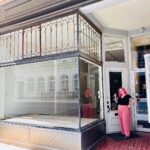
in the crumbling remains
of the Lawson Hotel.

He communes with jazz ghosts,
Sarah Vaughn, Bobby “the Sheik” Walker
or Maharaja Lynn Hope and points out
which of their passages
came from him.

The Maharaja asks
“Did I feel your presence
when we played our way
off the stage and into the alley
and then back inside
playing the whole time
wandering through the audience?”

Crow smiles
nods his head
leaves the bar
as Maharaja’s ghost
starts playing
St. James Infirmary.

Crow taunts the homeless guy
who tries to sleep in the sheltered
doorway of the rusting 3 story hotel
that was the down-the-block cousin
of the fabulous Lawson Palace.

Crow thinks of himself
as the new king.
Jumbo Lawson long gone and
so are the windows
so are the patrons
so is the Jazz row of 6th Street
now a stretch of
empty lot, grass, weeds, rats.

I am the new king
Crow proclaims
as the homeless guy
pulls his shopping cart in front of him
lifts his old broom
to defend himself
against Crow and
his army of windmills….

 
This poem is in tribute to Lawson’s Palace and the Lawson Hotel, important venues in the Harrisburg jazz circuit that included many clubs in an area between N. 6th, N. 7th, Forster and Hamilton streets, from the 1930s through the 1950s.

Rick Kearns is the poet laureate of Harrisburg, the first Latino-American to hold that honor.

Continue Reading

A Song of Their Own: Central PA Womyn’s Chorus marries music, activism.

Screenshot 2015-08-26 00.29.34Terri Saar got a bottle of water and ended up finding her voice.

During the 2014 Pride Festival of Central PA, she stopped at a booth run by the Central Pennsylvania Womyn’s Chorus. Founded in 1993, the group long has had a presence at the festival, spreading the word about itself.

Staffers told Saar about the annual spaghetti dinner, a major fundraiser for the chorus every October, and parenthetically asked if she liked to sing.

A long-time nurse now studying for her nurse-practitioner degree, she replied, “I’d rather play sax, but I can sing well enough. I’d never do a solo, but I can carry a tune.”

Since that chance meeting, Saar, possessed of a low-range “alto 2” voice, has been with the chorus.

“It’s been very much fun,” she said. “I was looking for camaraderie and found it.”

Love to Sing
The Central Pennsylvania Womyn’s Chorus began after area resident Diane Gumboc approached the Harrisburg Gay Men’s Chorus, asking if she could join.

Then-artistic director Dan Kryack said “absolutely not,” recalled Cynthia Swanson, board president of the Womyn’s Chorus. But he did offer to help Gumboc organize a choral group for women.

“So, you could say it was really Dan who was the mover and shaker of our chorus,” she said.

The Womyn’s Chorus also discovered Jordan Markham, its interim artistic director, through his earlier tenure with the men’s group.

Markham is a classically trained lyric-baritone who studied at the prestigious Peabody Institute of The Johns Hopkins University in Baltimore, performed in opera, musical theater and other genres, and serves as organist and director of music ministries at the historic Grace United Methodist Church.

The Womyn’s Chorus is relatively small, comprised of about 25 singers. But it’s “always looking to build—in all categories of voices,” said Swanson.

There are also opportunities of other types. Swanson and her partner, Mary Nancarrow, both non-singers, have served on the board for 12 years and now co-chair the time-intensive fundraising committee.

“We hold two major fundraisers a year,” Swanson explained.

The first is in the spring, boasting the self-explanatory title of “Breakfast with the Chorus and Big Rummage Sale.” The second is the annual spaghetti dinner, to be held this year on Oct. 17.

Although the only feminist- and lesbian-identified choral group in the area, the chorus is open to all women. “All you have to do is love to sing,” Swanson emphasized.

Singing means a varied repertoire, including classical, folk, jazz, a cappella, show tunes, chants and rounds and popular songs of most decades of the 20th century, as well as music recently composed.

The concerts are themed. Recently, these included “Babes on Broadway,” which offered show hits, one devoted to 21st-century music, and another to the works of women composers.

“But we’re also activists,” Swanson said. “We’ve given concerts in support of women’s issues such as Breast Cancer Month, AIDS education and immigrant and refugee women.”

The spelling of the chorus’s name reflects that activism.

“It was created to be more distinctive than that of general women’s choruses,” said Swanson. “We focus on the issues that affect women as well as strive for music excellence.”

Friendships, Music
The chorus is generally an amateur group. But Cathy Nelson, a “soprano 2” and board member, has sung professionally with a band and with St. John’s Lutheran Church in Shiremanstown.

Looking for more singing opportunities, she answered a notice in the Harrisburg-based newsletter, “Lavender Letter,” which called for new members for the Womyn’s Chorus.

There was another female choral group in the area, Sweet Adelines International, but Nelson “wasn’t into” barbershop singing.

“I knew the Womyn’s Chorus was for me,” she said.

Nelson has made lasting friendships in the group, bur her main reason for joining was musical.

“It’s definitely the singing, being able to sing good music under a good director,” she said. “I’ve learned an incredible amount.”

She also likes the diverse repertory. Despite its name, the chorus isn’t strictly devoted to choral music. “We strive for excellence in everything we take on,” she said, “including Broadway tunes—which make us happy.”

Arleen Shulman had sung with other choral groups before joining the chorus, right after the group celebrated its 10th anniversary. While the other choruses were enjoyable, she was drawn by a chance to sing specifically with other women and by the appreciative audiences.

“We get cheers and standing ovations,” she said. “And I felt part of a community immediately.”

Quality, Technique
When Markham interviewed for the director’s position, he was asked how he would handle being a man leading a female group.

“He’s been fantastic,” Shulman said. “And we’re great learners. He can pull the women in.”

Markham uses a number of techniques to do that.

“First, I record a CD of all the music with me playing, just their voice part, and then another of all the music played together,” he explained. “That gives the singers a chance to have a rehearsal every day of the week, not just when I’m around.”

When Markham is around, he listens carefully to see what the singers need.

“Teaching vocal technique can be done with anyone, regardless of ability to read music,” he continued. “I spend about 10 minutes at the beginning of rehearsal teaching techniques through exercises. That way, when we get to the music, we can apply what we worked on. This is the same way I handle my private voice students.”

Markham is gratified by the calls and letters praising the quality and vocal technique of the chorus.

“It helps that the women learn as much as they can and are willing to work,” he said. “These women are the hardest workers I’ve ever seen.”

But, he added, the group exists for more than just to put on a concert.

“It’s also about having fun,” he said.

The Central Pennsylvania Womyn’s Chorus is on hiatus until its annual November concert, though its annual spaghetti fundraiser is slated for Oct 17. To learn more about the chorus, visit www.cpwchorus.org.

Continue Reading

Get Goosed: It’s fun, good food and all-things goose during this whimsical celebration.

Screenshot 2015-08-25 23.59.24What the duck is Goose Day?

That’s the thought that occurred to me (though not exactly in those words), when I first heard of the annual September celebration in and around Lewistown.

The local tradition of eating goose on St. Michaelmas Day has been observed in the Juniata River Valley for more than two centuries, carried here bya British sailor, said Rhonda Moore, administrative assistant for the Juniata River Valley Chamber of Commerce.

“It all started in 1786 when a Pennsylvania Dutchman named Andrew Pontius moved his family to this area,” she said. “His farm did well so he needed help. Pontius met a young Englishman named Archibald Hunter. Hunter had jumped a British ship docked in Philadelphia. Impressed with the young man, Pontius offered Hunter a job, and he accepted.”

Hunter requested their accounts be settled each year on the traditional English day to do so, Sept. 29. On that date, Hunter appeared at Pontius’s door with the contract under one arm and a goose under the other. He explained to Pontius that, in England, eating goose on the Festival of St. Michaelmas day, the patron saint of soldiers and protectors, would bring good luck.

From that day on, the legend grew, and, by the 1970s, both the Mifflin and Juniata County commissioners had issued proclamations establishing Goose Day as an official county holiday.

“The tradition that, if you eat goose on St. Michaelmas Day you will never want for good luck all the year round, continues to this day,” Moore said. “Many in our community adhere faithfully to it and eat goose everySept. 29, thus hoping to ensure wealth and prosperity for the coming year.”

Each year, the Chamber of Commerce hosts the Goose Day Expo, one of the celebration’s key events. This year, it will take place at the Brookmere Winery from 5 to 8 p.m.

“There will be wine, goose treats, and a number of our members will be showcasing their wares,” said Moore. “From goose pinwheels to blackberry thumb print cookies and apple cider, the menu highlights many of the connections the Goose Day legend makes to food.”

In addition, many businesses in the area have Goose Day specials, while restaurants prepare unique dishes.

Taste of the Valley, a Belleville coffee shop that specializes in paninis, developed two Goose Day options. Reuben’s Goose includes sauerkraut with cherries and Swiss cheese on rye, and Rachel’s Goose is topped with creamy coleslaw and Swiss cheese on rye.

“It was fun developing new panini recipes just for Goose Day,” said Daphne Marthouse, store manager. “And last year’s response encouraged us to serve them again this year. But we’re purists and will only serve goose on Goose Day!”

Other activities start the weekend before the actual day.

For instance, Stained Glass Glory, a night of illuminated beauty in downtown Lewistown hosted by the Juniata River Valley Visitor’s Bureau, takes place on Friday, Sept. 25. On Saturday, the Goose Day 5K Race, hosted by the Juniata Valley Striders, kicks off at 9 a.m. in Monument Square in Lewistown.

“The Juniata River Valley Visitors Bureau is once again promoting a weekend of events to celebrate Goose Day,” Project Director Jenny Landis said. “We’ll have contests, programs, festivals, races, concerts and fun during the entire five days of the celebration.”

After the race, the Goose Day Fun Fest starts in Monument Square. The festival features a variety of free things for kids to do, including a flying goose game, soccer skills practice, coloring, costume characters and a bit of interactive history from the McCoy House Museum. There will even be a life-sized Candy Land game and complimentary hot dogs, chips, ice cream and popcorn.

Sunday’s highlight is the Goose Day Road Rally, in which participants receive clues on how to reach a specific goal with their cars.

“Whoever takes the longest time to complete the rally is awarded the Wayward Goose Award,” said Visitors Bureau President Jim Tunall. “Don’t let that happen to you!”

Team Trivia, sponsored by the Mifflin County Historical Society & Burnham Lions Club, will be held at 2 pm. Trivia topics will be based on general knowledge, not local history. There will be cash prizes, door prizes and a food stand.

“Be sure to check our website for specific times as well as other events,” Landis said. “We expect to continually be adding events for the celebration.”

IF YOU GO
The Goose Day celebration will take place in Lewistown and the surrounding area Sept. 25 to Sept. 29. For more information, visit www.juniatarivervalley.orgor call 717-248-6713.

Don Helin published his first thriller, “Thy Kingdom Come,” in 2009. His novel, “Devil’s Den,” was selected as a finalist in the 2013 Indie Book Awards. His latest thriller, “Secret Assault,” was selected as the best Suspense/Thriller at the 2015 Indie Book Awards. Contact Don on his website, www.donhelin.com.


Continue Reading

Latin Dance Lovers: As the area’s Latino population grows, so does the popularity of Latin Night at Level 2.

Photo by Gio Acosta, www.GCexpression.com.

Photo by Gio Acosta, www.GCexpression.com.

The people have spoken. And the people want Latin music. Free appetizers are cool, too.

By popular demand, it’s Latin Night every Thursday at Level 2 in downtown Harrisburg. The vibrant rhythms and infectious energy that Latino music is known for has been bringing people together for the past six years at the upscale nightclub, which advertises the longest running Latin Night in the capital region.

And, yes, there’s a complimentary buffet of appetizers.

Originally, Level 2 held its Latin Night once a month, explained owner Brian Fertenbaugh. As the audience grew, the event’s frequency increased from every other week to every Thursday.

The ages of regulars and newcomers that hit the dance floor for Latin Night can range from 24 to 50, said Event Coordinator Nikki Condon. With that kind of generational diversity in mind, the right mix of dance music is essential so that everyone likes what they hear.

“The DJs we like to work with can do everything,” said Condon, explaining that a good DJ will know how to move from traditional salsa, merengue and bachata into Latin fusion, Latin pop and more club and urban genres of Latin music.

Lancaster-based DJ Latin Leprechaun is Level 2’s Thursday night resident DJ and the founder of the South Central Pennsylvania Salsa Meetup Group. In addition, Latin Night often features popular DJs who hail from nearby cities, including DJ Gustavo from Baltimore and DJ Rockwell from Philadelphia.

The club also has hosted a number of local bands to do live performances. Recently, Level 2 even booked popular South American recording artists, El Caribefunk, for two shows as part of their second North American tour.

“One thing about Latin Night is that it really transcends all cultures,” said Condon. “On any given Latin night, our crowd is extremely ethnically diverse. People come together for their love of great music and dancing in a lively and fun environment.”

Fertenbaugh also noticed the laid back and friendly vibe of Latin Night.

“I think the social activity of the dancing removes the awkwardness and helps people take the edge off because, oftentimes, you’re dancing with someone you don’t know,” he explained.

Condon agreed, adding, “Everybody dances with everybody. People are very approachable. They’ll just come up to you and say, ‘Would you like to dance?’”

Doors open at 8 p.m., and the night gets started at 8:15 with a beginner salsa lesson led by professional dance instructors. Intermediate lessons for salsa or bachata run from 8:45 to 9:30 p.m., at which point the night’s featured DJ gets the party going until 2 a.m.

“If you come to the lesson, you sort of develop a relationship with the other people that are new,” said Condon. “I’ve seen that happen a lot.”

Fertenbaugh said that, every week, new people show up who have never before danced to Latin music.
“What’s great is the instructors and the experienced dancers welcome new people and help them feel comfortable on the dance floor,” he said. “It is this friendly atmosphere that keeps our numbers growing every week.”

On Latin Night, guests will see couples dancing on the main floor while others relax in the comfortably sleek couches, admiring the waterwalls and sipping a freshly made caipirinha or $3 bottled Corona. A full specialty drink list is available, as are $5 house sangrias. A small plates menu accompanies the free appetizer buffet offered on Latin Night, and everything is prepared by the chefs at Level 2’s downstairs sister business, Café Fresco.

The cover charge for Thursday’s Latin Night ranges from $5 to $10, depending on the entertainment.

“There’s no cover charge if you dine at Café Fresco prior to going upstairs,” said Fertenbaugh.

With Latin Night in its sixth year, the club recently added Latin Fuzion Friday to its monthly calendar. The next one is scheduled for Sept. 25.

“It’s something that our Thursday night regulars have been asking for,” said Fertenbaugh.

Condon explained that Latin Fuzion is more DJ-based, in which traditional Latin music meets pop and is fused together with other Latin genres. In contrast, Latin Night features a more relaxed environment where you can find your footing.

So, if it’s Thursday, it’s Latin Night. And beginners are always welcome. So, let’s dance.

Latin Night takes place each Thursday night at Level 2, 215 N. 2nd St., Harrisburg. For more information, visit the Level 2 Facebook page or call 717-236-6600.

Continue Reading

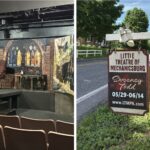
Sneak Peek: Classic, funny, serious–a new theater season opens in Harrisburg.

Thomas Weaver and Tara Herweg-Mann in A Midsummer Night's Dream.

Thomas Weaver and Tara Herweg-Mann in A Midsummer Night’s Dream.

A splendid inventiveness and a fresh vision dominate the 2015-16 theater season in Harrisburg. And, besides the high-quality entertainment, audiences can look forward to the minor miracle of a stunning new performance space.

Gamut Theatre Group

Let’s start with a warning.

If you’re going to see “Twelfth Night,” Gamut Theatre’s initial offering of the season, and you’ve ended up on the third floor of Strawberry Square where the theater has been for years, you’d better head back down the elevator, out the door, around the corner and across the street to 15 N. 4th St., formerly The First Church of God. That’s where you’ll find Gamut’s most extraordinary achievement—its new digs.

To say that the Gamut folks are excited would be an understatement. The renovated building will house two performance venues, multiple classrooms and more than enough space for its ambitious new season of shows. William Shakespeare’s “Twelfth Night” is an appropriate first choice as Gamut enters this new phase because, according to Artistic Director Clark Nicholson, the comedy is about “honoring the past and the rebirth of the future.”

“It was also the most rained-out show when we did it at ‘Free Shakespeare in the Park,’” Nicholson recalled. “I dearly love this comedy. Now, we get to do it again.”

In January, Gamut will present “Red Velvet” by Lolita Chakrabarti, a play about the first black actor to perform many of Shakespeare’s leading characters such as King Lear, Macbeth and Shylock, followed by one weekend of public performances of “A Midsummer Night’s Dream.” In March, Associate Artistic Director Thomas Weaver will take the reins of Anton Chekhov’s play-within-a-play, “The Seagull.” The mainstage season ends with “The Merry Wives of Windsor” at “Free Shakespeare in the Park.”

All season long, Gamut’s Popcorn Hat Players has fun shows for the kiddos, including unique takes on “Sleeping Beauty,” “Rumpelstiltskin” and “Robin Hood.”

Visit www.gamutplays.org or call 717-238-4111 for details and reservation information.

Open Stage of Harrisburg

Open Stage also will be bustling this season.

According to Associate Artistic Director Stuart Landon, its “Subscription Series” has been expanded to include five plays, beginning in October with “The Amish Project,” a drama that explores the Nickel Mines shooting in Lancaster County and the remarkable power of forgiveness that arose from that tragic event.

Lighter fare follows in November with “Peter, Hook & the Darlings,” with Nicholas Hughes portraying Captain Hook. Landon, who is directing this production, remarked that Open Stage’s intimate space prevents the “flying” of actors, so it’s getting inventive.

“This isn’t Mary Martin’s Peter Pan,” he explained. “We’re going to have to get creative, and audiences will love it. Puppetry and video work will create the magical creatures and power Neverland.”

In February, Open Stage will continue its presentation of August Wilson’s “Century Cycle” of plays with “Two Trains Running,” followed by Horton Foote’s “The Old Friends.” And, for the first time ever, the theater will produce a summer musical, the regional premier of “Sondheim On Sondheim” in June.

Other fare includes shows that audiences continue to clamor for year after year, including “A Christmas Carol,” “The Santaland Diaries,” “The Diary of Anne Frank” and the revival of the tuneful Court Street Cabaret.

Visit www.openstagehbg.com or call 717-232-OPEN for details and reservation information.

Theatre Harrisburg

For the 2015-16 season, Brett Bernardini takes the reins as Theatre Harrisburg’s new executive and artistic director as the theater celebrates its 90th anniversary.

Bernardini brings 20 years of theater experience to the midstate’s live theater mainstay and has experience as a director, producer, theater manager and as the founding artistic director and CEO of a theater in Norwich, Conn. He was also a theater and vocal music educator and created the Connecticut High School Music Theater Awards.

“Mr. Bernardini will be responsible for the overall operation of the theater and its artistic vision,” said long-time Executive Director Sam Kuba, who just retired.

Theatre Harrisburg’s new season of shows opens at the Krevsky Center in September with “My Way,” a musical tribute to Frank Sinatra, followed by Irving Berlin’s “White Christmas” at Whitaker Center in November.

“‘White Christmas’ brings the beloved holiday movie classic to life on stage and will feature some of the most extravagant costumes and sets in recent Theatre Harrisburg history,” said Kuba.

Then it’s back to the Krevsky Center for two plays. “The Laramie Project,” a powerful theatrical piece exploring the murder of Matthew Shepard, begins Jan. 8, and “On Golden Pond,” a story of love, family and relationships, opens Feb. 12.

The theater’s season wraps up with the regional premier of the recent Broadway hit “Nice Work If You Can Get It” at Whitaker beginning April 29, and, finally, “The 39 Steps,” which opens June 16 and is described as a clever and funny twist on the classic 1935 Hitchcock film, with four actors portraying more than 150 characters.

Visit www.theatreharrisburg.com or call 717-232-5501 for details and reservation information.

The 2015-16 Theater Season

Gamut Theatre
“Twelfth Night,” Nov. 7-29
“A Popcorn Hat Christmas Carol,” Dec. 2-19
“Sleeping Beauty,” Jan. 13-30
“Red Velvet,” Jan. 23-Feb. 7
“Stone Soup,” Feb. 17-March 5
“A Midsummer Night’s Dream,” Feb. 19-21
“The Seagull,” March 12-26
“Snow White,” April 8-10
“Rumpelstiltskin,” April 13-30
“Robin Hood,” May 11-26
“The Merry Wives of Windsor,” June 3-18
“Wonder Tales from Around the World,” June 8-18
“Cinderella,” July 13-Aug. 20
“As She Likes It,” Aug. 12-21

Open Stage of Harrisburg
“The Amish Project,” Oct. 2-18
“Peter, Hook & the Darlings,” Nov. 27-Dec. 13
“A Christmas Carol,” Dec. 13
“The Santaland Diaries,” Dec. 17-23
“Court Street Cabaret,” Jan. 15-16
“Two Trains Running,” Feb. 5-21
“The Diary of Anne Frank,” March 8-12
“The Old Friends,” April 14-May 1
“Narnia, a Musical,” May 12-15
“Sondheim on Sondheim,” June 10-26

Theatre Harrisburg
“My Way: A Musical Tribute to Frank Sinatra,” Sept. 11-20
“Irving Berlin’s White Christmas,” Nov. 6-22
“The Laramie Project,” Jan. 8-17
“On Golden Pond,” Feb. 12-28
“Nice Work If You Can Get It,” April 29-May 14
“The 39 Steps,” June 16-26


Continue Reading

Art Everywhere: The 27th annual Gallery Walk will span themes, media, locations.

When you think of art, you may immediately think of a frame hung on a wall.

If that’s your sole conception of art, Harrisburg’s annual Gallery Walk is here to broaden your perspective, offering a multi-sensory experience involving multiple forms, genres and techniques.

“You don’t have to visit a big city to experience tremendously vibrant art,” said Carrie Wissler-Thomas, president of the Art Association of Harrisburg, who has organized the event since 1986.

You won’t find all the tour stops in traditional art galleries either. Many are in commercial businesses. Some are in churches. A few are even outside.

“Harrisburg doesn’t have a gallery district, and we have few commercial galleries,” Wissler-Thomas said. “We do well promoting the arts without having all our galleries in a row. We bring art to local businesses that are willing to open their walls to artists. We reach the people by bringing art to them.”

At Gallery Walk, you’ll find traditional paint on canvas—but so much more—from about 500 artists in 27 open house locations.

“Most tour stop locations are smaller venues or shows with one or two artists,” Wissler-Thomas said. “If you don’t have all day to invest, you can target some of the larger exhibits.”

For instance, more than 100 artists are featured just at the State Museum’s annual “Art of the State” exhibit. And, at 1 p.m., the exhibit gets interactive with the “Artists’ Conversations” talk.

Art with an architectural theme will be in focus at several venues, including at The Art Association of Harrisburg’s “Structures” exhibit. Across town, the Susquehanna Art Museum will feature “Towards an Old/New Architecture,” a show put on by the Central PA Chapter of the Architects of America. In addition, architect Clayton Lappley’s renderings of some of the city’s most famous buildings will be on view at Historic Harrisburg Association.

Gallery@Second, one of Harrisburg’s few dedicated art galleries, will feature work by Joanne Finkle and Peter J. DeHart. At other locations, attendees can expect to find sculptures, paper cuts, encaustic, knitted creations and myriad mixed media.

The Millworks, a new location for Gallery Walk this year, holds another large concentration of art, with 35 artists working in 23 studios that will be open to the public.

“Millworks is an exciting, significant change to the walking route this year,” said Wissler-Thomas.

Artists from the Susquehanna Valley Plein Air Painters will create art outside on the grounds of City House Bed & Breakfast, while plein air artists also will set up at the Governor’s Residence garden.

Young artists will be well represented at Gallery Walk. Capital Area School for the Arts Charter School, located in Strawberry Square, will show pieces from its classes. Y Art’s contribution, “Discovering the Next Generation of Artists,” is a juried exhibit at Whitaker Center that features art by high school students from across central PA. Old City Hall will include artwork from students at Harrisburg High School. Uptown, you’ll find university-level art from Slippery Rock and Kutztown on the Dixon University campus.

Gallery Walk doesn’t limit itself to art from the area and the state. Brian Molloy is an impressionist artist from Boston who will open his small art studio on Locust Street. St. Stephen’s Mission Gallery at the Episcopal Cathedral will show artwork from Haiti and Brazil, and 704 Lounge will have pieces by New York artists.

At Gallery Walk, the art will extend to live music. Little Amps on State Street will feature an audio-visual music explosion from Harrisburg artist Stephen Michael Haas. The Latino Hispanic American Community Center on Derry Street will host live music with a cultural flair, while AAH will feature Hemlock Hollow, a guitar and mandolin duo. Pine Street Presbyterian Church and Midtown Scholar Bookstore also will offer live music.

No Last Call, Harrisburg’s “hit-and-run street band,” will play along the Gallery Walk route all afternoon.

“There are about 20 people in No Last Call,” said Wissler-Thomas. “They’re going to wear period marching band uniforms and play campy music all afternoon. They’re great.”

If all that walking makes you thirsty, many of the tour stops will offer refreshments, and you even can make your own bloody Mary at 704 Lounge from 2 to 4 p.m.

Wissler-Thomas said that she invests nine months of planning and promotions into each Gallery Walk.

“This is our gift to the community,” she said. “We hope it brings new people to Harrisburg to enjoy and sell art.”

 
The 27th Annual Gallery Walk takes place Sunday, Sept. 13, 11 a.m. to 6 p.m. Street parking is free, and the Sutliff Chevrolet shuttle will be on hand to offer rides along the route. The Gallery Walk brochure can be downloaded at www.artassocofhbg.com/index2.htm.


Continue Reading

Vintage Ache: Shawan and the Wonton’s throwback style is a raw manifestation of the artist’s sensitive spirit.

Photo by Kelly Shuler, www.KellyAnnShuler.com

Photo by Kelly Ann Shuler, www.KellyAnnShuler.com

When Shawan Rice floats cool, soulful notes from her vocal chords, she catches all sorts of feels. The aching cleanse that comes from releasing painful emotions through song. Brave words relaying tales of love, loss, grief and acceptance. The euphoric connection when concertgoers click with her energy and thank her for her music. Rice feels it all.

With vintage soul and mature intonation, Rice’s bluesy voice sounds like it has been molded by a lifetime of pain, more than her mere 20 years. A self-described old soul, Rice looks forward to her 21st birthday, but not with the usual coming-of-age motivation. Only an occasional drinker, she is more excited about being able to get into bars to play music. Music has always come first for her.

“I’ve always loved singing. When I was 7 years old, I took piano and singing lessons and was absolutely infatuated with Shirley Temple,” reflects Rice, who believes that she inherited her musical gifts from her parents. Her mother loved to sing, and, though her father passed away when Rice was young, people have told her that he was really into music, too.

For her 13th birthday, her mother bought her a guitar that came with a small lunchbox amp, paving the way for Rice’s first written song.

“I was completely in love with it,” she remembers. “I wrote a lot of poetry and lyrics for songs, but I was never able to put the words to music until I got my guitar.”

This beloved gift paved the way for her budding career.


Love Deeply

Just last month, Rice stepped away from her part-time job at a gelato shop to pursue music full time, a choice already showing great potential. With a similar style to Amy Winehouse, she draws inspiration from the late soul singer.

“I feel like we are these kindred spirits, and we were sisters in past lifetimes,” she says.

In Rice, you also hear flecks of Adele’s throwback style and the modern R&B and neo soul grooves of Erykah Badu and Macy Gray.

Growing up, she was heavily influenced by classic soul and R&B artists like Etta James, Marvin Gaye and Fats Domino, as well as psychedelic blues rock bands like The Doors, Pink Floyd, Jimi Hendrix and Edie Brickell and the New Bohemians. Also tapping into modern influences, Rice’s poetry and style have been shaped by indie rock-folk musician Conor Oberst of Bright Eyes.

Rounding out a diverse sound, the band includes a local group of alternating musicians, including Jamar Tyler, Romano Gelsomino, Mike Dempsey, David Turby and Daniel Delaney. While Rice’s voice is full of soul and R&B style, Shawan and the Wonton as a whole touches on piano pop, indie folk rock, smooth jazz and classic rock.

“It kind of just sprouted into a beautiful collective. There are so many wontons: vegetable, meat, noodles. You don’t know exactly what it’s going to be, but it’s going to be really yummy. You’ll always know Shawan will be there, but the Wonton changes with each show,” says Rice, who, in conversation, is lighthearted and down to earth.

“Catchin Feels,” Shawan and the Wonton’s recently released EP—a raw collection of Rice’s original songs that was recorded in just one night—showcases her sensitive nature, which is highly affected by other people’s vibrations and energies.

“[The EP] revolves around the idea that all throughout our life, our emotions, experiences, everything, we are just catching these different [feelings],” she explains. “All of the songs recorded on there are songs I wrote about intense emotions I felt at some point.”

For Rice, love, loss, grief and acceptance are recurring themes throughout her music.

“My mother is an extremely sensitive being, and, me being half of her, I tend to be very sensitive myself,” she relays. “Everything I love, I love very deeply. I am a very passionate person.”


Best I Can

A listen to this album is much like entering Rice’s soul, navigating fragile self-consciousness, stinging heartache and the apprehension of falling in love.

On the opening track, “Recessive Traits,” a smooth jazz and blues sound carries Rice’s gliding vocals, admitting, “I don’t always understand, but I’m doing the best I can.”

Bluesy guitar and keyboard pair eerily well with lyrics like, “So many skeletons I forgot to mention. I should have never said this, but I always meant it,” from the track “Relativity.” Rice sings her mournful lyrics on the track “Bone Chili” when she croons, “Sometimes, I scrutinize the deterioration of my being that you caused. The steady monotonous flow of ill fortune that you brought.”

While Rice’s words are sometimes distressed and smarting, her gentle, yet commanding voice elevates her above despair and grief. This is a young woman who has battled with depression, post-traumatic stress disorder and self-esteem issues. Yet, the power in her voice tells a different story. Rice is a survivor who engages in brave acts every timeshe puts her words to music, and, as a result, becomes an inspiration to others who may be suffering.

“I don’t mind sharing my experiences,” says Rice, who is hoping for a full album release by Halloween. “I’m very thankful and lucky to be able to use this gift to be able to help other people. After a show, when people come up to me and thank me, it’s the most amazing, euphoric feeling. It shoots me to a whole other level of bliss.”­­


Baring Her Soul

Shawan and the Wonton has been making the rounds throughout the Harrisburg area, establishing themselves as the latest not-to-be-missed live act.

Most recently, the collective has played at The Millworks, River City Blues Club and Yoga Nature’s Organic Farmers Market. Rice loves playing and living in the Harrisburg area because the city is community-oriented, with a vibrant arts and culture scene.

“What I’ve noticed is there are a lot of people with really beautiful, big dreams and aspirations, and they are going after them,” she says. “It is very inspirational.”

Rice is a dynamic, talented component to the lively Harrisburg art community. Witnessing Rice perform live is a moving experience, because of just how deeply she dives into her craft.

“When I play music, I tend to see myself as a bit of a masochist, because I like to bare my soul and rip my own heart out,” she explains.

Rice performs with her eyes closed, and people often ask her if it’s because she is nervous.

“Not at all. When I’m creating music, it’s like creating life. I’m making sweet love to my guitar, and I’m using my vocal chords to express how deeply I feel. If I’m singing a song, I’m the saddest person in the room. When I open my eyes, I’m back to reality.”

For Rice, singing transports her to a meditative state of visceral expression that becomes therapeutic.

“It’s raw, expressive and emotional,” she says. “But then again, that’s how I would describe any part of my life.”

Learn more about Shawan and the Wonton by visiting www.shawanandthewonton.com or the group’s Facebook page.


Continue Reading

A Safe Haven: For 2 decades, St. Barnabas Center’s summer camp has given Harrisburg kids a place to be, a place to grow.

Screenshot 2015-08-26 00.23.58School’s out. Sun’s shining. What’s a Harrisburg kid to do during those warm, restless summer months?

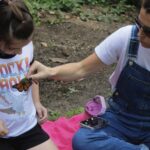
Each summer, starting in early June, St. Barnabas Center hosts an eight-week day camp, offering kids an educational, fun and safe place to be. Located at St. Paul’s Episcopal Church, camps gives them an opportunity to thrive, keeping them off the streets and out of harm’s way as they engage in a wealth of activities.

The 22-year-old program has its roots in the joint venture of Bishop Guy Edmiston of Lower Susquehanna Lutheran Synod and Bishop Charlie McNutt of the Episcopal Diocese. Since 1993, it has served as an answer for Uptown Harrisburg residents concerned over idle children during the summer season.


(sub)Good Memories

Each year, kids, 5 to 15 years old, look forward to a full day—five days a week—of mental stimulation, social interaction and spiritual nourishment.

The day starts at 7:30 a.m. with breakfast. Later on, the kids are provided lunch and a snack, taught a Bible lesson, given reading and computer practice and taken on field trips, such as to the Jackson Lick pool in Midtown. Activities conclude at 5 p.m.

Executive Director Rodger Hines said he enjoys spending time with the kids, ensuring they make the most out of the experience. Outside of the summer months, he is a teacher at Rowland Academy.

“I want [the kids] to learn about success stories, as some have come back as counselors,” he said. “These are good memories for [the camp].”

To support the program, local churches donate food for meals and help with the center’s funds. Scholarships are offered and are based on a sliding scale. For $50 a week, St. Barnabas summer camp is one of the most affordable programs in the city.

Aside from trips to the pool, kids enjoy an assortment of other activities, such as Zumba, arts and crafts, firefighter and police speakers, gardening, Lake Tobias Wildlife Park and Petting Zoo, baseball games, playgrounds and a trip to Knoebels Amusement Resort and Doc’s Family Fun Center. Field trips take place every Wednesday.

The program also places an emphasis on academics, such as a recent class focused on the science of the human body. For this, the camp broke into groups, each studying a different body part. A skit was presented to the parents at the end of the program, which gave the kids a chance to highlight what they learned and share what interested them.

Other recent science-related activities involved a garden box, rain barrels and a watch conservation project.

Hines said the children benefit in many ways from the camp, including enhanced self-worth, greater respect for others and more mature social behavior. Regardless of faith and race, all children and youth are welcomed.


(sub)Better Start

Building up life skills, focusing on spiritual development and looking to the counselors as role models have helped encourage the kids to turn from crime and violence, Hines said.

“[I feel the program] provides a safe place for children and benefits the community. It’s a better start in life, [as the children] learn how to build friendships, have fun, be kids and learn social skills,” said board chairwoman Carol Witzeman.

For funding, the program receives donations from the St. Barnabas Fashion Show, Highmark Walk, grants, local churches, families and child sponsorships, said Witzeman. About 10 percent of donations go to administration, with 90 percent directly to the program, she added.

The camp not only acts as a service for the children, but for parents, too. While the parents are working, their kids have a structured, faith-based and academic oasis to retreat to in the summertime.

Looking ahead, Witzeman would like to expand the board, involve more young professionals and set up other sites, such as in Allison Hill.

In the end, Hines believes the kids take away something positive from the experience, whether it’s aspiring to something great, improving personal character or taking steps to becoming successful citizens.

“Meet people to share a dream with. Find the thing you love to do. Don’t care about the pay, the time or how hard it is. Just do it,” said Hines, offering some insight in pursuing the dream that is St. Barnabas.

Visit www.stbarnabascenter.org/summercamp.html for more information on St. Barnabas Center, the camp and its mission of empowering Harrisburg kids and youth.


Continue Reading

War of the Worlds: Harrisburg’s mayor and Civil War Museum supporters not only disagree–they don’t even exist in the same reality.

Screenshot 2015-08-25 23.58.14A year ago, Harrisburg Mayor Eric Papenfuse asked Dauphin County to stop giving a portion of the city’s hotel tax money to the National Civil War Museum.

Then in July, following the arrest of former Mayor Steve Reed, he called on the museum to shut down entirely, saying it was a “monument to corruption.”

“That’s classic Papenfuse,” joked my colleague Paul Barker during an episode of TheBurg Podcast. “When you don’t get what you want—ask for more.”

Indeed, escalation does seem to be one of the mayor’s go-to strategies when faced with a setback. But, for me, Papenfuse’s desire to starve the museum of money, even close it, begs the question—what exactly is his motivation?

A lot of folks in Harrisburg seem to think that Papenfuse’s crusade against the museum is part of his war against Reed—what I call the de-Reedification of Harrisburg.

There’s something to that, given that Papenfuse waged a decade-long battle against the alleged wrongdoing and profligacy of the Reed administration, and the museum, arguably, was Reed’s signature project.

The fight over the Civil War Museum, though, is more than that. It’s as much a clash of worldviews and priorities as it is a tussle over a disgraced former mayor and his legacy.

Simply put, Papenfuse lives in the unforgiving world of being the mayor of a poor, under-populated city that struggles to balance its books and deliver decent services to its people. The museum’s board and its allies live in another world entirely—the museum world—in which Harrisburg (Harrisburg!) has one of the best collections of Civil War artifacts on the planet.

So who has the better argument?

If you’re the mayor, you might reasonably see the museum as a source of funds, as the collection, owned but not controlled by the city, is estimated to be valued north of $10 million.

In his world, that money buys a lot of street repairs, light poles, police patrols, trash pickup and other basic services that the city needs but can barely afford. Liquidating the museum’s assets would allow Harrisburg to better provide for its people, which should be the first priority of any mayor. It’s a this-or-that world in which you can fix your streets, maintain your parks and protect your people—or you can have a sparsely attended, pretty museum on a hill.

Papenfuse also sees the museum as an enormous potential financial liability as the city is on the hook for maintaining the building, which it also owns. Meanwhile, it receives just $1 a year in rent, while $300,000 in city hotel tax money goes directly to the museum. From this viewpoint, the city gets all the downside from the museum and little, if any, of the upside.

Then there’s the museum world.

The museum world does not have to deal with an anemic tax base, sinkholes, bumpy roads or crime. It mostly needs to keep the lights on in a single building.

In the museum world, Harrisburg receives tremendous prestige from having a world-class museum, housed in a stunning building, within its borders. Many of the museum’s board members and allies live in the even smaller world of history and Civil War buffs, collectors and experts.

The museum world is not without its economic case, as the board claims the facility contributes $5.7 million to the regional economy a year. The city disputes that figure and, in any case, says much of the benefit falls to suburban hotels, restaurants and attractions.

But that’s another thing about the museum world. It exists mostly as a suburban phenomenon—its leaders well-educated professionals who largely live outside the city, its chief defenders the Dauphin County commissioners.

Two different worlds, two different sets of priorities.

So, that’s where we are today, caught in a no man’s land between the mayor and the board, the city and the suburbs, one man’s past museum fixation and another man’s present budget fixation.

How should this end? While I respect both sides, as a Harrisburg resident, I find myself more in agreement with the mayor. Likewise, your opinion probably depends upon which world more closely resembles yours.

Lawrance Binda is editor-in-chief of TheBurg.


Continue Reading

Spanish to English: ESL instructors help Latino students transition to American life.

West Shore School District ESL instructor Brandy Kanode; Allen Middle School eighth-grader Alberto Hernandez-Ortiz; his sister, Daniela Cruz-Hernandez, a second-grader at Lower Allen Elementary School; and the children's mother, Magali Hernadez-Ortiz, of New Cumberland.

West Shore School District ESL instructor Brandy Kanode; Allen Middle School eighth-grader Alberto Hernandez-Ortiz; his sister, Daniela Cruz-Hernandez, a second-grader at Lower Allen Elementary School; and the children’s mother, Magali Hernadez-Ortiz, of New Cumberland.

Imagine going to a place where everybody speaks a language you barely know, if you know it at all. This is the place where you will spend a large portion of your day, five days a week. You know Spanish, but most everyone around you speaks only English.

This is what life is like for Hispanic children who need English as a Second Language, or ESL, instruction when entering their first U.S. school.

“It’s all about making them feel comfortable in the classroom and building a relationship with them,” explained Ashley Sabitsky, an ESL instructor in the Middletown Area School District. “If they feel comfortable, then they’re willing to take risks in their learning. ESL is all about reading, writing and speaking. It all ties into the reading block, which I love.”


Middletown Area School District ESL instructor Ashley Sabitsky, left, sits next to one of her students, Kunkel Elementary School third-grader Luis Gonzalez Bravo. On right is Luis’ sister, Heidy Gonzalez Bravo, who is entering kindergarten, and their mother, Rosa Bravo of Middletown.

Middletown Area School District ESL instructor Ashley Sabitsky, left, sits next to one of her students, Kunkel Elementary School third-grader Luis Gonzalez Bravo. On right is Luis’ sister, Heidy Gonzalez Bravo, who is entering kindergarten, and their mother, Rosa Bravo of Middletown.

Better Life

Alberto Hernandez-Ortiz, an eighth-grader at Allen Middle School in the West Shore School District, was born in Mexico but has lived in New Cumberland for most of his life. His mother, Magali Hernandez-Ortiz, said the family came to the United States “so we can have a better life.”

Alberto, 12, started English as a Second Language instruction while in kindergarten at Mount Zion Elementary School in the West Shore School District. Until then, he had spoken Spanish at home with this family.

His ESL instructor began teaching him with letters and words from books and through the use of a computer. By the time Alberto was in the first grade, he began understanding English and could speak it in sentences by the middle of the school year, he recalled.

“The hardest part was learning how to read in English and learning subjects in English like science,” Alberto said.

“It can take up to six months to two years for a student to master social language,” said West Shore ESL instructor Brandy Kanode, who taught Alberto. “Academic language can take up to four years.”

Throughout elementary school, a portion of Alberto’s school days were spent in mainstream classrooms, where English was the primary language. For language arts instruction, he was pulled out for ESL instruction for a 50-minute period each day.

“The approach we take (with teaching) depends on a student’s age level,” said Kanode. “I had one student in seventh grade who had never been in school. At first, we were communicating through visuals and gestures. For Alberto, we would teach him similarly to American kids with phonics and letters.”

By the middle of sixth grade, Alberto had become fluent enough in English to take language arts in his mainstream classroom. He no longer needed ESL.

Although Alberto has acquired an English tongue, his taste buds still favor Mexico. His favorite foods are tamales, beans, rice and “spicy food.” His family continues to observe Mexican customs like celebrating Cinco de Mayo.

Despite his fluency in English, some things in the United States have been a little hard for Alberto. His first Thanksgiving feast is an example.

“Turkey was really strange,” he noted with a grimace.

Kanode’s ESL classes usually are comprised of fewer than 10 students, with Spanish being the predominant language, she said. During her 17 years as a teacher, she also has taught students with native tongues that have included Arabic, Ukrainian, Somali and Vietnamese.

Kanode spent five years as a French teacher but then “kind of gravitated” toward ESL students, she said.

“I noticed that the kids didn’t have a lot of ESL help, so I asked what certification I needed to become an ESL teacher,” she said. “This was right around the time when the No Child Left Behind Act (of 2001) increased English language requirements in schools, so it seemed to fit right in with things.”

Kanode said she addresses her students in class using English instead of their native tongues “because that’s the language we’re learning.”

Altogether, the West Shore School District has 201 ESL students beginning the new school year. The district has a total of eight ESL teachers and four classroom aides. Of those, three teachers and three aides speak Spanish fluently.


They Just Soar

Luis Gonzalez Bravo of Middletown is an ESL student entering the third grade at Kunkel Elementary School in the Middletown Area School District. His mother, Rosa Bravo, was born in Mexico and came to the United States 13 years ago. Like Alberto’s family, Luis’ mother said she came to this country “for more opportunities and for work.”

Before Luis, 8, started school, he spoke a mixture of Spanish and English at home, the same as his sister Heidy, 5, who is just starting kindergarten. Heidy, who attended preschool and had “lots of (social) exposure,” already is fluent enough in English that she won’t need ESL instruction, instructor Sabitsky said.

As for Luis, he “almost passed” the district’s highest-level ESL screening test for the upcoming school year. Sabitsky doesn’t expect that he will need ESL instruction for much longer, she said.

Luis said the most difficult part of English for him is writing the language, especially the spelling of homonyms like “to,” “too” and “two.” Reading is the easiest part of mastering English, he said.

Sabitsky has taught ESL in Middletown schools for two years and expects to have around 25 students this year, she said.

Of those, about one-third speak Spanish, with other students’ native languages including Chinese, Burmese and Arabic. However, Sabitsky only knows how to speak Spanish and English.

“I think that really helps with the Hispanic kids,” she said. “If I make a mistake in Spanish, the kids laugh, and it lightens the mood.”

Sabitsky said that ESL students whose native language is Spanish tend to learn English quicker than ESL students with other native tongues.

“Spanish and English have similar alphabets, plus some English words are derived from Spanish,” she said. “Once Spanish-speaking students feel comfortable and feel that they’re getting a grasp of English, they just soar.”

Sabitsky said her favorite part about teaching ESL is “the growth and smiles. The way the students’ faces light up when they speak their first sentence. Also, the gratification of their parents.”

Kanode said her favorite part of teaching ESL is working with families.

“I like the families,” she said. “It’s important for parents to have a relationship in American schools so they can advocate for their kids. The parents are great, the kids are great.”

Continue Reading