The Cost of Recovery: As Harrisburg’s recovery plan turns 2, how close is the city to financial stability?

Cost of RecoveryWhat will it take for Harrisburg to exit Act 47, Pennsylvania’s program for cash-strapped municipalities?

Don’t ask the citizens of Farrell. Located in the Shenango Valley, along the Ohio border, the city entered the program in 1987 and hasn’t left. In 2013, the Farrell City Council approved an amended version of the consulting plan guiding its recovery, which said it was “in a position to move out of the Act 47 program over the next four to five years.” Residents had heard that before—in 2006, consultants had said the city was poised to exit within a few years, too. But this time was different. Within a year of the update, state lawmakers adopted a five-year deadline for all municipalities in the program. “We’re stuck now,” Michael Ceci, the Farrell city manager, said recently. “The most recent amendment is it.”

Farrell’s fortunes, like those of many other Pennsylvania towns and cities, rose and fell with the U.S. steel industry. In 1992, the Sharon Steel Corp., a major local employer, filed for bankruptcy. By 2010, the city’s population had fallen to just above 5,000, from a height of more than 15,000 in the 1920s. A key benefit of Act 47, in this context, has been the ability to levy an additional four-tenths of a percent of income tax on non-residents—primarily people coming from Ohio to work in the remaining factories. According to Ceci, the hike, which provides a quarter-million dollars of Farrell’s $3 million budget, has been the program’s only meaningful advantage. “I get no other benefit,” he said. Yet, under the new deadlines, the city must eliminate this hike by 2018. Future budgets will have to be balanced through some combination of cuts and higher taxes on people who live there.

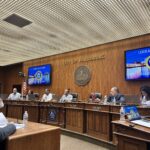
Two years ago, a state court approved Harrisburg’s own blueprint for financial recovery, branded the Harrisburg Strong Plan. The plan cautiously promised four years of balanced budgets, but a few weeks shy of the anniversary, Mayor Eric Papenfuse, who took office in 2014, announced it wasn’t working. Speaking in an annual “State of the City” address downtown, he swaddled this claim in some impressive rhetoric, comparing the need to amend the plan with the need for a Bill of Rights to amend the Constitution at the country’s founding. But Harrisburg’s plan, like Farrell’s, was already no stranger to revision. The Strong Plan updated a 2012 plan, itself modeled on plans from 2011, which in turn had replaced an emergency plan from 2010, a few months before the city entered Act 47.

Every city has its own circumstances, but financial trouble ultimately comes from the same two quarters: growing expenses and sluggish or declining revenue. When Harrisburg first sent up its distress flare, the worst problems were on the expense side. Though the Strong Plan has its detractors, there’s no question it addressed many of these woes. Most famously, it paid off hundreds of millions owed on the city incinerator, but it also targeted other, smaller obligations. (Among these were ballooning overtime costs for city firefighters; in his speech, Papenfuse noted these had dropped from $2.8 million two years ago to below $900,000.) This year, like last year, the city plans to underspend its budget. Halfway through its second year under the plan, Harrisburg appears to have expenses under control.

At the same time, cutting expenses isn’t the only key to recovery. As Papenfuse also said, the city is “starving for capacity,” with a workforce that has shrunk from 667 a decade ago to 369 today. The problem now is on the revenue side. The Strong Plan provided for two primary sources of new money—a higher income tax on residents and proceeds from more expensive parking downtown. But for months, city officials have been warning that the money isn’t coming in as expected. The balanced budget now threatens to fall apart in 2016.

Is the Strong Plan working? The first part of the plan, captioned “Guiding Principles,” concluded with a “cautionary comment”: no matter how comprehensive the plan was, it couldn’t replace the “dedicated and diligent services by public officials and other civic leaders.” But cities like Farrell offer their own cautionary tale. No matter how dedicated the public officials, they can only tax so much and cut so far. Most recently, Farrell decided to jettison its library, handing its management over to an area non-profit. “This city has done absolutely everything it can in terms of cuts,” Ceci said. At the same time, he fears what will happen as the city shifts the tax burden from commuters to residents. Why would anyone move to town?

Nobody likes it when money is tight, but one benefit of being in recovery is that it can force citizens to think about what level of government they’re willing to pay for. Harrisburg’s leadership, in the form of the recovery plan and, more recently, in Papenfuse, has drawn conclusions about what services to provide. They include filling in more potholes, tearing down more blighted properties, and hiring more police and public works employees. At the same time, Papenfuse has stirred the pot by saying the plan doesn’t quite cover their costs. He has already aired an initial suggestion on how to make up the difference—an extra $2-per-week tax on people who work in Harrisburg, and a plan to get more businesses to switch trash accounts from private haulers to the city. But the true price of closing the gap, and who should pay it, are questions we should expect to revisit in the months to come.

Continue Reading

Boys to Men: As a kid, Blake Lynch hung out at Boys & Girls Club of Harrisburg; he now helps build the organization.

Screenshot 2015-09-28 10.03.32The 27-year-old man walks into the waiting room with an air of pleasant self-confidence.

He ushers a visitor into a well-lit lounge that resembles a college common area. That’s deliberate, he says. The design helps kids become accustomed to the college atmosphere. It’s apparent he feels at home here, and he should, because, in a way, he grew up here.

As a boy, Blake Lynch attended the Oberlin and Harrisburg chapters of the Boys & Girls Clubs and now serves as the newly hired director of development for the Harrisburg club.

A number of pivotal people and experiences laid the foundation for his journey from kid at the club to staff. He recalls, for one, Mr. Lee, who volunteered there.

“Mr. Lee was a very strong example of a good man—a great example of what I could become,” Lynch said.

That example embodied a passion for education. He encouraged the youth to have vision and dreams. He ran a program called “Passport to Manhood” and wanted to see the boys become positive examples in the community.

“Part of the reason I love Boys & Girls Clubs so much was Mr. Lee,” Lynch said.

Level of Excellence

Lee’s example was particularly important because Lynch, whose father passed away, grew up in a single-parent home.

Lynch speaks with obvious admiration about his mom. The family lived in Cole Crest, a public housing project in Steelton, until his mother was able to move the family to a home in Susquehanna Township.

He credits his mother with giving him what seemed like a middle-class life. Until the age of 17, he was unaware that the family ever collected welfare or lived in subsidized housing. His mother always worked and projected a professional persona. He said that she “expected the same level of excellence” from them.

That work ethic rubbed off on Lynch, and he began working at the Wendy’s on Eisenhower Boulevard at age 14. From there, he worked at the DoubleTree hotel and Taco Bell. His leadership skills showed at an early age, and he became a McDonald’s shift supervisor at 16 and, amazingly, a shift manager at 17. With no money for a second vehicle, he arrived at work via his mother or a taxi. If his mom or funds proved unavailable, his bike or his two feet carried him to his job.

Work was important, but Lynch felt that education was essential. Shippensburg recruited him for track and field, but he decided to attend Messiah College instead.

The reason? Messiah’s emphasis on service. Boys & Girls Clubs, as well as his church, had instilled in him a commitment to service that he felt he could fulfill at Messiah. He described his time at Messiah as phenomenal, as he made lifelong friendships and received an excellent education in communications.

For financial reasons, Lynch was unable to graduate but is determined, one day, to finish his degree. In fact, he credits Boys & Girls Club for this spirit of resolve.

“Determination is taught here,” he said. “In this community, you need grit and determination.”

People also need someone to believe in and help them.

Joe Massaro, general manager at the Harrisburg Hilton, has served as that positive mentor for Lynch. Massaro hired Lynch as a sales manager and, six months later, promoted him to corporate and government sales manager.

“He’s a very personable young man who connected very well with our customer base and other employees,” said Massaro, who added that Lynch carried himself professionally and encouraged those around him.

In turn, Lynch complimented Massaro as a role model and said his time at the Hilton was one of great personal development.

Widening the Road

It takes good people to help children and youth navigate the challenges of living in Harrisburg. Poverty, in particular, prevents children from having access to opportunities and ideas.

“The road into poverty is wide, but the road out of poverty is narrow,” said Lynch.

Boys & Girls Clubs, according to Lynch, aims to widen that road by providing a structured, safe environment and support system for kids—and access to the world outside their block.

The Allison Hill clubhouse is full of chatter, laughter and the noise of a ping pong game. Walking out the back door, one finds a well-maintained, colorful playground, begging for kids to whoosh down the slide, a large pavilion, and the impressive Ollie’s Bargain Outlet Park, a sports field complete with shiny artificial turf (no maintenance), proper dugouts and a legit scoreboard.

A secure, yet unobtrusive fence surrounds all of this. The place sends out a respite vibe—not accidentally.

“Boys & Girls Clubs of Harrisburg truly are a positive place for kids,” said Lynch. “We give them a home to develop and grow into themselves—in a community that may not be so nice sometimes. We want them to be committed, great citizens.”

To the kids at Boys & Girls Club of Harrisburg, Lynch represents what Mr. Lee, his mom and Massaro were to him—a great example. He feels blessed to have his life come full circle in such a short time, led by all the people who have assisted him along his journey.

As a visitor leaves the building, a young man of about 13 unhesitatingly opens and holds the door. It’s a poignant gesture that leaves one with the feeling that Lynch and Boys & Girls Club are on the right track.


Learn more about the Boys & Girls Club of Harrisburg at www.bgchbg.org.

Continue Reading

Building a Future: Master set builder, thespian, leaves Gamut for the Big Apple.

Illustration by Ryan Spahr

Illustration by Ryan Spahr

An “alarm” went out from Gamut Theatre Group last month. Ian Potter, long-time Core Company member, was leaving Harrisburg earlier than expected.

Having performed its final show in its old Strawberry Square location, Gamut was in the final phase of preparing its new home in the former First Church of God across N. 4th street. Potter, the company’s set designer and an expert builder, was vital to those renovations.

As one example, he drew the plans for the new thrust stage and helped build it.

Now, he’s applying those skills in another city in another context. As of Sept. 8, Potter became a workforce training instructor at Rebuilding Together NYC, a Brooklyn-based nonprofit focusing on urban revitalization projects and disaster recovery for low-income and struggling residents of the Big Apple.

“I’m responsible for formulating a curriculum I will then teach to a student body composed of low-income participants,” he said.

The program has two goals—to recover salvageable materials from federally bought homes on Staten Island ravaged by “Superstorm” Sandy and to offer the students certification to get well-paying jobs in the construction field.

Potter is “very excited” about this career move, being able to use his teaching and construction experience to “better communities and lives.”

Theater friends and fans of Potter’s are both surprised and not. For all his thespian talents—people still talk about his energetic title performance in Gamut’s production of “Hamlet” a few years back—he never felt “it would be theater or nothing for me,” he said. “I can see myself being happy in a lot of different walks of life.”

But no one, including Potter himself, expects the 28-year-old to leave theater completely.

It was a passion he discovered relatively late.

“The interest actually started in my senior year of high school, at Bishop McDevitt,” said the Harrisburg native. “I had a wonderful lit teacher, Sister Jude, who was also assistant director of the theater program.”

At the time, Potter was “more into” sports and art classes, but when the nun said she “needed help” with a production of “The Scarlet Pimpernel,” he agreed to audition.

“She knew what she was doing,” he laughed. “It was a lot of fun.”

As a freshman at Shippensburg University, Potter aimed to be a history education major, but his acting bug was sparked further by one of his professors, Paris Peet, a member of Actors’ Equity who has performed with Gamut.

After Potter appeared in a production of “The Pavilion” directed by Peet, the professor pulled him aside and said, “You have a knack for this. Come see me.”

During their meeting, Peet conveyed the message: “If this is something you want to do, you need to go somewhere else for college.” Shippensburg offered only a theater minor and a club.

Potter indeed transferred, choosing West Chester University because of its “great theater program.”

Leaps and Bounds
Even before entering college, Potter had embarked on what was to become a long, glorious relationship with Gamut Theatre Group. During the summer of 2006, he interned with the company, which cast him in a very small role in “King Lear.”

He returned in 2010 during a spring semester, when Gamut was gearing up for a production of “Richard III” starring David Newhouse. Potter got cast in multiple small roles and commuted back and forth to do them.

“I really loved it,” he recalled.

Then came an unexpected non-acting break. Jeremy Garrett, Gamut’s technical director, was leaving after that season, and he was hired.

“I grew leaps and bounds professionally in ways I never thought I would,” Potter said. “What Gamut does, the scope, is so immense—that a small core company of actors does so much—including design and building.”

He also credits Clark and Melissa Nicholson, Gamut’s artistic and executive director, respectively, for trusting company members “to be competent and talented enough without being checked on. You have to be self-sufficient.”

And stretch yourself. In his first season, Potter “shied away” from teaching because he lacked experience. During his last season, he was teaching two different classes as a lead teacher and assistant-teaching two others.

“I can’t imagine what kind of person I’d be if I hadn’t met the people I did through theater and through Gamut,” he said.

Rite of Passage
While acting has brought Potter great satisfaction, even more may have derived from his set design and building for Gamut’s shows—including “Hamlet.” (See www.potterproductions.org for a gallery of some of these designs and Potter’s personal artwork.) “I’m a very visual person,” he said.

Looking back at his tenure with Gamut, Potter considers three productions as “sticking out.” “Hamlet,” not surprisingly, is his favorite.

“The role is so immense and so challenging, it’s like a rite of passage for actors,” he said. “And there’s just the fact that we did the play largely uncut—which is kind of unheard of.”

Clark Nicholson, who directed, “is really good at energizing the language and pacing the plays,” Potter added.

Potter found the production of “An Ideal Husband,” re-written from the Oscar Wilde original for four actors—who play 15 or more characters while ripping off Velcro for role changes—“pretty insane but really funny and fast-paced.”

His third-favorite show, “The Dresser,” did not call on Potter’s acting talents but on his designer role. “I’m really proud of that set,” Potter said.

Upon departing, Potter emphasized that Harrisburg and New York are “only an Amtrak ride” apart. He said he will “definitely do some tech stuff” for Gamut and would audition, as well, if a role came along that he and Clark think suits him.

Still, it’s not quite the same as an omnipresent Ian Potter.

While the old adage states that “no one is indispensable,” Clark Nicholson noted that Potter comes pretty darn close.

“Everyone has strengths and weaknesses, but Ian has many strengths,” he said. “He’s a fine teacher, a good actor, a mentor to young people and a designer and builder. These skills don’t always go together.”

Potter’s replacement, Andrew Nyberg, has been embraced in the characteristic Gamut way. But, said Nicholson, “Ian will be missed.”

Continue Reading

City Beautiful, City Searchable: Digital Harrisburg uses today’s technology to peek into our past.

Screenshot 2015-09-28 10.03.18In 1900, Syl F. Hammill lived at 208 Reily St., Harrisburg.

He was a train conductor, not unusual in a railroad town. Mary, his wife of 31 years, was born in Massachusetts, and her parents were born in Connecticut. The Hamill’s three unmarried children—William, a 25-year-old clerk, Roy, 17, a student, and Lila, 28, a bookbinder—lived with them. The household spoke English. All could read and write.

Who lived in your city home in 1900? You now can find out thanks to Digital Harrisburg, a collaboration of students and faculty from Messiah College and Harrisburg University of Science and Technology. Together, they digitized Harrisburg’s 1900 census, making it searchable online by name and address.

It’s a fun peek behind the lace curtains of homes in what were then the city’s boundaries. But, more importantly, Digital Harrisburg is embarking on a voyage into the past to answer questions that traditional historians have struggled to answer about a time of change and disruption.

Seeking Answers

The turn of the 20th century was the era of City Beautiful, when Harrisburg was a leader in the young nation’s progressive urban movement.

Though City Beautiful has been well documented, questions remain. When ridding the city of typhus depended on a yes vote for a municipal bond for sewer upgrades, why did some precincts vote no? We know about the elites who championed City Beautiful, but how did the reforms affect the everyday lives of citizens?

The questions are still being explored, but Digital Harrisburg has begun seeking answers. It started when liberal arts Messiah College and nerdy Harrisburg University started conversing on ways to blend humanities and technology. At Messiah, Associate Professor David Pettegrew turned his digital history class students into sort of 1900 census-takers, transcribing census data into a database for easy searching.

At the same time, students of Albert Sarvis, Harrisburg University assistant professor of geospatial technology and project management, aligned Harrisburg’s 1901 road network with today’s map. Another class vectorized—that is, drew the shapes—of city buildings and lined up the shapes with the address codes tied to the census findings of Pettegrew’s students.

It’s not as if the findings themselves are new. They’ve been discoverable in records for decades—for anyone with the unlimited time to find them. Digitization makes results instantly searchable. Demographic trends in income, occupation, race and ethnicity quickly pop up by geography. Where did families live who had the highest rate of living children, versus those who had lost the largest numbers of children? That might have influenced their City Beautiful votes.

It’s a way to compare “a pattern or any other spatial layer you want to,” said Sarvis.

“It’s not just how many German illiterate women there are, but exactly where in the city they are,” he added.

Never Knew Existed

Rachel Carey joined the project as a Pettegrew student and is now the data master. The history major with a minor in music (she plays French horn) graduates from Messiah College at the end of 2015 and then looks forward to a graduate program in history.

Digitizing history is the 21st-century solution to the age-old puzzle of how to engage new generations in history, said Carey. Historians have a new tool to “bring the past into the present” and help contemporary audiences relate to the neighborhoods and communities of the past, even in “this smallish city.”

“My favorite part is being able to visualize the past, and that’s what this project is all about,” she said. “We take these people who formerly we knew nothing about. We put it on the Internet and map their houses. You go onto the map, click a house, and you can read all of this information about these people you never knew existed.”

At Messiah, the project has become an “energized enterprise” among faculty and students from many classes. Some students of Messiah History Department Chairman John Fea added Market Square Presbyterian Church membership records to the database, finding where church members, many among the city’s elite, lived in relation to neighborhoods and ethnicities. For the rest of 2015, inputting citywide property values for 1900 is a top priority for the Digital Harrisburg team.

The full project continues using digital tools to explore Harrisburg history in 1910 and 1920 through the lens of City Beautiful. Just who were the winners and losers? The answers could help guide the city through new reforms and adoption of a comprehensive plan.

“Why is the city the way it is right now?” asked Sarvis. “Does looking back 70 or 80 years predict anything? Maybe not, but maybe it can promote ideas to preserve certain areas of the city. It’s not just an academic exercise. We may be able to see some trends that reveal something about the impact of the City Beautiful movement.”

In the meantime, young audiences of the digital age will find hometown history “in an interesting, hands-on way,” said Carey.

“History is too infrequently hands-on,” she said. “You get to be hands-on in the sciences and the arts, but not so much in history, and I think this’ll really draw the kids in, get them to like the past, because they’ll get to work closely with it. They’ll get to know these people and learn about their lives.”

Discover fascinating information about Harrisburg’s past and find out more about the project at www.digitalharrisburg.com.

Continue Reading

Hear the Cheers: Harrisburg Marathon reconfigures to be “mini-Boston” event.

Screenshot 2015-09-28 10.13.17Imagine the sidewalks of 2nd Street lined with crowds of people. Their cheers flood the street as sweaty, worn runners pull all the strength they have left to cross the finish line of the Harrisburg Marathon.

“We really envision a new, re-energized marathon,” said Tom Gifford, race and marketing director for the Harrisburg Area YMCA. “It’s going to be a new experience, even for people who run in Harrisburg all the time.”

It took about five months and 50 different course drafts to plan the route for the Nov. 8 marathon, set to kick off at City Island and take runners on a flatter, more scenic route, Gifford said. The old route, which wrapped through HACC and Wildwood Park, was fine but produced some issues with truck traffic, hills and industrial scenery, he said.

With the natural beauty of the Susquehanna River as a backdrop and the Capitol building in the line of sight, the Harrisburg Marathon will feature Harrisburg’s treasures. By sticking to Front Street almost the whole way to the I-83 on-ramp, runners can enjoy the open road and the flowing river beside them.

Certain areas also will feature two-way runner traffic to help eliminate areas where some runners could end up running on long stretches alone, Gifford said.

“Running with people is often all you need to keep going,” he said. “It’s tough to get that juice when you’re alone and later in the run.”

The race will finish on 2nd Street this year, as opposed to its old end point on City Island. Arooga’s, the finish line sponsor, will feature specials for marathon participants. Gifford hopes that other Restaurant Row businesses will join in the celebrations by offering their own specials and welcoming tired, famished runners and their supporters inside.

Hilton Harrisburg, the official host hotel, is also just two blocks from the finish line and offers a late checkout for race participants, making it a convenient way to really submerge yourself downtown—or quickly escape to a cold shower after the race, Gifford added.

“Having a downtown finish is one way of giving our small town race a big city feel,” Gifford said. “The race is a qualifier for the Boston Marathon, so why not give people a sample of what a big city race can feel like?”

Joy of Moving

Dr. Richard Rayner of Aspire Health, which has sponsored the race since 2011, sees it as a great way to get the community moving as a whole.

A runner himself, Rayner believes some marathon participants might miss the challenge of Wildwood Park’s hills, but will swap out the disappointment with the chance to improve their time for a chance to run in the Boston Marathon.

One of the things he appreciates about the Harrisburg Marathon, especially for patients who aren’t crazy about running, is the relay option. The Team Aspire running and walking group encourages people to keep moving, no matter the distance or pace, and walking the relay is a great way to get started, he said.

“Mostly we want people to begin to know the joy of moving,” Rayner said. “It’s one of the best things about this life. All runners know that there are times when running that you wonder why you are doing this—it doesn’t feel good at the time. However, the overall good feelings that it produces in your life are well worth the effort. We want people to feel that they too can be athletes no matter what their age or abilities.”

So far, it looks like participation numbers will be close to last year’s count—about 1,300 runners, Gifford said, but the YMCA hopes that grows as word of the revamped race spreads. Social media posts about the new route reached more than 30,000 people, he said, and many comments showed excitement for the changes.

“We want the race to grow, but it’s also important we keep that small town vibe,” Gifford said. “I think the coolest thing is making the race feel like it’s more about Harrisburg and celebrating all that this city offers and the great people who accomplish amazing things here.”


The Harrisburg Marathon will take place on City Island on Nov. 8. Walkers start at 6:30 a.m. and runners/relay participants will start at 8 a.m. Registration is available through Nov. 3 online or during packet pickup times. For more information, visit www.ymcarun.com or call 717-232-9622.

Continue Reading

More Admin Stuff . . . and a Dash of Art: Open Stage and Gamut Theatre name new associate artistic directors.

It’s safe to say that both Open Stage of Harrisburg and Gamut Theatre Group are at pivotal moments in their respective histories.

Open Stage is embarking on its 30th season, and Gamut is in the process of moving into a new theatrical home. So, it seems fitting that both companies would expand their leadership, as well, and each has done this by promoting a long-time company member to associate artistic director.

Stuart Landon

Stuart Landon

Stuart Landon, the new associate artistic director at Open Stage, was promoted from marketing director, and Thomas Weaver, now associate artistic director at Gamut Theatre Group, was formerly the company’s director of development.

“There are some similarities to what I was doing before—I’m still director of development,” explained Weaver. “But, with us moving into a new facility and everyone on staff being stretched thin, I’m able to take the reins on some things.”

Thomas Weaver

Thomas Weaver

Landon finds himself in a similar position.

“I’m still responsible for the same things as well, but it’s interesting,” he said. “I’m part of conversations that I haven’t been a part of before.”

Landon and Weaver will also direct mainstage productions this year, a first for both. Landon will direct “Peter, Hook & the Darlings,” which opens Nov. 27, and Weaver will direct Anton Chekhov’s “The Seagull” next March.

“[Being the associate artistic director] is more admin stuff, plus a dash of art,” Landon said.

Both Open Stage and Gamut employ small staffs (six and eight, respectively), which include the companies’ founders.  Landon and Weaver agree that the opportunity to learn from the founders has been a valuable one.

“I consider Don and Anne [Alsedek] mentors, and I can see why things have been the way they’ve been, why certain decisions have been made,” Landon explained. “In this new role, I look at it in a whole different way. I feel an increased sense of responsibility to the company as a whole.”

Weaver added that it’s important not to lose sight of the founders’ vision when dealing with the every day details of the job.

“I definitely consider Clark and Melissa [Nicholson] mentors as well, and I look at all they’ve done over the last 20 years, and it’s clear that the reason that everything has worked as well as it has is because they’ve really stuck to the mission of the organization,” he said. “I definitely feel a new kind of ownership of the mission now.”

 
Open Stage of Harrisburg is located at 223 Walnut St., Harrisburg, on the street level of the Walnut Street Parking Garage. Call 717-232-6736 or visit openstagehbg.com.
 
Gamut Theatre recently moved to 15 N. 4th St., Harrisburg from its longtime home in Strawberry Square. Call 717-238-4111 or visit gamuttheatre.org.
 

OCTOBER THEATRE EVENTS
at Harrisburg’s Professional Downtown Theatres

Oct. 1 to 31
GAMUT ON THE MOVE
Volunteer opportunities available
Tuesdays to Sundays at Gamut Theatre
Assist Gamut Theatre in the move to their new space. All skill levels needed.
For more information, contact [email protected].

Oct. 2 to 18
THE AMISH PROJECT
a drama by Jessica Dickey
Thursdays to Sundays
at Open Stage of Harrisburg with these special events:

Friday, Oct. 2: Opening Night with reception
Sunday, Oct. 11, 2pm: Matinee includes post-show discussion
Thursday, Oct. 15: Meet Donald Kraybill, author of “Amish Grace,” following 8pm performance
Thursday, Oct. 22: Thrifty Thursday with a limited number of $15 tickets sponsored by PSEA

Sunday Oct. 11
The NARNIA Project auditions
Join the OSHKids Performance Company at Open Stage Studio/School. Ages 8-13. Course runs until May 2016. Email [email protected] for appointment.


Continue Reading

Happenings: Our October Calendar of Events


Museum & Art Spaces

 
3rd Street Studio
1725 N. 3rd St., Harrisburg
Facebook: 3rd Street Studio
 
“The Introduction,” works by Yolanda Webb, through Oct. 10.
 
“Transrational Viewing Boxes” by Casey Fletcher and “Secrets of Water,” photographs by Rance Shepstone, Oct. 16-Nov. 10; reception, Oct. 16, 5-9 p.m.
 
 
AACA Museum
161 Museum Dr., Hershey
717-566-7100; aacamuseum.org

“1929 Duesenberg J Dual-Cowl Phaeton,” a display of “The World’s Finest Motor Car,” through Oct. 9.

“Motorbikes for the Masses,” an exhibit dedicated to low-cost transportation including motorbikes, scooters and mopeds, through Oct. 11.

“Automotive Jewelry Art Exhibit,” images by Michael Furman, through Oct. 11.

“A Family Affair,” an exhibit celebrating the station wagon, through Oct. 12.

“Spirit of Halloween,” an exhibit featuring black-and-orange vehicles, Oct. 17-31.

“Autos in Acrylic,” fine art by Dan Reed, through Nov. 6.

Art Association of Harrisburg
21 N. Front St., Harrisburg
717-236-1432; artassocofhbg.com

“Structures II,” fall membership show, through Oct. 15.

“Architectural Visions,” Oct. 23-Nov. 25; reception, Oct. 23, 5 to 8 p.m.

 
The Cornerstone Coffeehouse
2133 Market St., Camp Hill
717-737-5026; thecornerstonecoffeehouse.com

Artist of the Month: Rachid Hatni

 
Fredricksen Library
100 N. 19th St., Camp Hill
717-761-3900; fredricksenlibrary.org

Artwork by The Bethany Towers Painting Group, through Oct. 31.

Gallery@Second
608 N. 2nd St., Harrisburg
galleryatsecond.com

Artwork by Peter Dehart, Joanne Finkle and Robert Finkle, through Oct. 3.

“The Lens Hoods,” artwork by Irene Van Buskirk, Karen Commings and John Wright, Oct. 8-Nov. 14; reception, Oct. 16, 6-9 p.m.

 
Hershey Gardens
170 Hotel Rd., Hershey
717-534-3492; hersheygardens.org

“ArtCycle,” a sculpture exhibit, featuring local artists, through Oct. 31.

The Hershey Story Museum
63 W. Chocolate Ave., Hershey
717-534-8939; hersheystory.org

“Chocolate Workers Wanted,” life in Hershey’s chocolate factory from 1905 to 1925, through spring 2016.
 
 
Historic Harrisburg Association
1230 N. 3rd St., Harrisburg
717-233-4646; historicharrisburg.com

“The Life, Work and Landmarks of Harrisburg Architect Clayton Lappley,” featuring the work of the renowned Harrisburg architect.

 
Landis House
67 N. 4th St., Newport
717-567-7023; www.perrycountyarts.org

“PCCA’s First Juried Exhibition,” showcasing original artwork in a variety of media and offering visitors the chance to vote for People’s Choice, through Jan. 22; reception, Oct. 9, 6 to 8:30 p.m.
 
Metropolis Collective
17 W. Main St., Mechanicsburg
717-458-8245; www.metropoliscollective.com
“Urban Legends,” an art show of tales and superstitions, through Oct. 27.
 
National Civil War Museum
One Lincoln Circle, Harrisburg
717-260-1861; nationalcivilwarmuseum.org

“1865,” an exhibit highlighting the fifth year of the Civil War covering battles, strategies and civilian lives, through December.

“The Life and Times of Congressman Robert Smalls,” the story of a man born into slavery who rose to the U.S. Congress, through June 2016.

PCCA Gallery
Perry Country Council of the Arts
1 S. 2nd St., Newport
perrycountyarts.org

“Artisan Marketplace of Perry County,” featuring a holiday display of locally made fine art and handcrafted gifts by emerging and professional artists, through Jan. 2; reception, Oct. 9, 6 to 8:30 p.m.
 
Rose Lehrman Art Gallery
One HACC Dr., Harrisburg
717-780-2435; hacc.edu

“Pull Left—Not Always Right,” emerging contemporary artists in China, Oct. 9-Nov. 13; reception, Oct. 15, 5:30-7 p.m.

 
The State Museum of Pennsylvania
300 North St., Harrisburg
717-787-4980; statemuseumpa.org

“The Pennsylvania Modern, A Juried Photography Exhibition of Midcentury Modern Architecture” opening, honoring iconic and modern architecture, Oct. 25, 12-5 p.m.

“A Fondness for Birds: Pennsylvania’s Alexander Wilson,” featuring bird prints and first-edition volumes of the 200-year-old “American Ornithology” series by Alexander Wilson, through Jan. 3.

 
Susquehanna Art Museum
1401 N. 3rd St., Harrisburg
717-233-8668; sqart.org

“The Edgeless Divide,” an installation by Sun Young Kang, through Nov. 1.

“Towards A New/Old Architecture,” an exhibition exploring modern architecture, through Jan. 17.

 
Wildwood Park
100 Wildwood Way, Harrisburg
717-221-0292; wildwoodlake.org

“Art in the Wild,” through Oct. 31.

Yellow Bird Café
1320 N. 3rd St., Harrisburg
717-635-8991; yellowbird-cafe.com

Works by Lynn Kennedy-Putt, through Oct. 12.
Works by Nate Solberg, Oct. 15-Nov. 13
 
 
Zeroday Brewing Co.
250 Reily St., Harrisburg
717-745-6218; zerodaybrewing.com

“What Lurks in the Shadows,” acrylic paintings by Sean Arce, through Oct. 16.
 
 
Read, Make, Learn

The Cornerstone Coffeehouse
2133 Market St., Camp Hill
717-737-5026; thecornerstonecoffeehouse.com

Oct. 13: “Sandwiches Beer Pairing” class, 6-9 p.m.
Oct. 21: “Classic American Favorites” class, 6-9 p.m.
Oct. 27: “Ghosts, Witches and Halloween,” 6-8 p.m.

 
Fredricksen Library
100 N 19th St., Camp Hill
717-761-3900; fredricksenlibrary.org

Oct. 6: Curl Up With the Classics – “Frankenstein,” 1 p.m.
Oct. 27: Making Milk Chocolate with Macris Chocolates, 7 p.m.
Oct. 31: Chamber Music and Spooky Fairy Tales, 2 p.m.
 
 
Healthy Living Kitchen
16 S. Rosanna St., Hummelstown
717-512-0077; healthylivingkitchenpa.com

Oct. 3: Run for a Reason Event
Oct. 6: The Balanced Plate Class
Oct. 7, 14, 21, 28: Holistic Approach 8 Week Weight Loss Class
Oct. 9: Couples Class—Cooking for the Season
Oct. 17: Grand Opening at Healthy Living Kitchen
Oct. 20: Harvest Soups & Stews
 
 
The LBGT Center of Central PA
1306 N. 3rd St., Harrisburg
717-920-9534; centralpalgbtcenter.org

Oct. 4, 7, 11, 14, 18, 21, 25, 28: Common Roads Youth, 6 p.m.
Oct. 6: Women’s Group, 7 p.m.
Oct. 3, 10, 17, 24, 31: Meditation Practice, 11 a.m.
Oct. 4, 11, 18, 25: Alcoholics Anonymous, 12 p.m.
Oct. 8: Aging with Pride Lunchtime Discussion, 12 p.m.
Oct. 22: Aging with Pride, 6 p.m.
 
 
Metropolis Collective
17 W. Main St., Mechanicsburg
717-458-8245; www.metropoliscollective.com
Oct. 10: Art, Music and Conversation with Mark Kostabi, 7 p.m.
 
 
Midtown Scholar Bookstore-Cafe
1302 N. 3rd St., Harrisburg
717-236-1680; midtownscholar.com

Oct. 1, 8, 15, 22, 29: Almost Uptown Poetry Cartel, 7 p.m.
Oct. 2, 9, 16, 23, 30: Nathaniel Gadsden’s Spoken Word Café, 7 p.m.
Oct. 3: Reading and Crafts with Kaylee, 11 a.m.
Oct. 3: Good News Café, 6 p.m.
Oct. 4, 18: TED Talk, 1 p.m.
Oct. 5: Midtown Writer’s Group, 6 p.m.
Oct. 6, 20: Meet-Up, 9 a.m.
Oct. 6, 21: Sci-Fi Writer’s Group, 7 p.m.
Oct. 7: Alder Healthcare Community Class on Transgender Children, 6 p.m.
Oct. 7: Market Place HOA Meeting, 6:30 p.m.
Oct. 7, 14, 21, 28: Midtown Chess Club, 11 a.m.
Oct. 8, 15: Camp Curtin Toastmasters, 6:30 p.m.
Oct. 10: Reading and Craft with Andrea, 11 a.m.
Oct. 13: The League of Women Voters, 6 p.m.
Oct. 13: Dauphin County Young Democrats Meeting, 7 p.m.
Oct. 16: Coffee Tasting with Café Staff, 12 p.m.
Oct. 16: Tea Tasting w/Café Staff, 2 p.m.
Oct. 17: Coffee & Critique—Designer Workshop
Oct. 18: Midtown Writer’s Group, 1 p.m.
Oct. 18: Book Club: LGBT, 5 p.m.
Oct. 19, 26: Harrisburg Young Professionals, 6 p.m.
Oct. 24: Book signing w/Terry Walters, Willie Shell and Benjamin Anderson, 2 p.m.
Oct. 26: Book Club: Feminism Group, 7 p.m.
 
 
The Millworks
340 Verbeke St., Harrisburg
717-695-4888; millworksharrisburg.com

Oct. 8, 29: Beginning Knitting
Oct. 15: Paint Night Party
Oct. 21: Waterscapes

 
National Civil War Museum
One Lincoln Circle, Harrisburg
717-260-1861; nationalcivilwarmuseum.org
 
Oct. 3 & 24: The “Lost Story,” four-part series by Hari Jones, 11 a.m. & 2 p.m.

 
Perry County Council of the Arts, Landis House
67 N. Fourth St., Newport
717-567-7023; perrycountyarts.org

Oct. 14: Wire-wrapped Cabochon for beginners, 6-8:30 p.m.
Oct. 17: How to Write a Memoir, 9:30 a.m.-4 p.m.

 
Perry County Council of the Arts, PCCA Gallery
One S. Second St., Newport
717-567-7023; perrycountyarts.org

Oct. 10: Book signing with Perry County Poet laureate William G. Davies, 11 a.m.

Rubicon
270 North St., Harrisburg
717-317-9027; rubiconhbg.com
 
Oct. 8: Jump Street Charity Bartending Event, 5-7 p.m.
Oct. 10: “Wines of France” tasting, 4-5 p.m.
Oct. 29: Central PA Youth Ballet Charity Bartending Event, 5-7 p.m.

 
The State Museum of Pennsylvania
300 North St., Harrisburg
717-787-4980; statemuseumpa.org

Oct. 14: Learn @ Lunchtime, National Fossil Day, 11 a.m.-1 p.m.
Oct. 18: African American Story-Telling Festival, 1-4:30 p.m.
 
 
Suba Tapas Bar
272 North St., Harrisburg
717-233-7348; mangiaqui.com

Oct. 16: “The In a Pinch Fund” Charity Bartending Event, 5-7 p.m.
Oct. 22: “Wines of Rioja” pairing dinner, 6:30 p.m.
 
 
Susquehanna Art Museum
1401 N. 3rd St., Harrisburg
717-233-8668; sqart.org

Oct. 3, 10, 17, 24, 31: Saturday Morning Art Club, 10 a.m.-12 p.m.
Oct. 4, 11, 18, 25: Story Time at the Museum, 2 p.m.
 
 
Untitled: A Storytelling Project
untitledhbg.com
 
Oct. 8: “Trapped” at Jigsy’s Pizza, Enola, 8 p.m.

 
Wildwood Park
100 Wildwood Way, Harrisburg
717-221-0292; wildwoodlake.org

Oct. 4: Kids Discover, 1-2:30 p.m.
Oct. 11: Tremendous Trees, 1-2:30 p.m.
Oct. 18: Fall Foliage Walk, 1-2 p.m.
Oct. 22-23: Wildwood’s Magical Trail, 6-7 p.m. & 7-8 p.m.
Oct. 27: Full Moon Halloween Hike, 6:30-8 p.m.
 

Live Music Around Harrisburg
 
American Music Theatre
2425 Lincoln Highway East, Lancaster
717-397-7700; amtshows.com

Oct. 2: Charley Pride

 
Appalachian Brewing Co./Abbey Bar
50 N. Cameron St., Harrisburg
717-221-1083; abcbrew.com

Oct. 1: Big Mean Sound Machine
Oct. 2: Hoots & Hellmouth
Oct. 9: Wild Adriatic
Oct. 10: PennsylMania Music Fest 2
Oct. 11: Julie Fowlis
Oct. 16: The Mantras
Oct. 17: The Clarks
Oct. 18: The Young Dubliners
Oct. 30: The Dirty Sweet

Carley’s Ristorante and Piano Bar
204 Locust St., Harrisburg
717-909-9191; carleysristorante.com

Oct. 1, 20, 30: Jessica Cook
Oct. 2, 5, 18: Chris Emkey
Oct. 3, 17. 24: Ted Ansel
Oct. 6: Daniel Sheehan
Oct. 7: Deborah Anderson
Oct. 8, 11, 22, 25, 29: Anthony Haubert
Oct. 9, 15, 23: Noel Gevers
Oct. 10, 16: Roy Lefever
Oct. 13, 31: Corinna Mazzitti
Oct. 14, 30: Maria Batista
Oct. 22, 25, 29: Anthony Haubert

 
Central PA Friends of Jazz
www.friendsofjazz.org
 
Oct. 11: Terell Stafford Quintet
Oct. 14: CPFJ Jam Session

 
Chameleon Club
223 N. Water St., Lancaster
717-299-9684; chameleonclub.net

Oct. 4: Granger Smith featuring Earl Dibbles
Oct. 9: Owen Benjamin, Box of Rain
Oct. 12: Joey Bada$$
Oct. 13: Owl City
Oct. 17: The Bouncing Souls
Oct. 18: Metalachi
Oct. 24: Brass Monkeys
Oct. 29: Consider The Source
Oct. 31: blessthefall

 
The Cornerstone Coffeehouse
2133 Market St., Camp Hill
717-737-5026; thecornerstonecoffeehouse.com

Oct. 3: Antonio Andrade
Oct. 4: Pat McCaskey
Oct. 5: Vern and the Zesty Wrens
Oct. 10: Drew Zimmerman
Oct. 11: Stephanie
Oct. 12: 3 West
Oct. 16: Dominick Cicco
Oct. 17: Kevin Kline
Oct. 18: Dan Zukowski
Oct. 19: Josh Krevsky
Oct. 24: Jeanine and Friends
Oct. 25: Doin’ Time
Oct. 26: Taylor Perry with Jeff Judy
Oct. 31: Steve Wilkins
 
 
Fed Live
234 N. 2nd St., Harrisburg
717-525-8077; federaltaphousehbg.com

Oct. 16: UPNEXT Fest Music Fest

 
Harrisburg Symphony Orchestra
The Forum at 5th and Walnut St., Harrisburg
717-545-5527; harrisburgsympony.org
 
Oct. 3, 4: “Masterworks” w/Di Wu
Oct. 24, 25: “The Music of Billy Joel & More” w/Michael Cavanaugh
 
 
Hershey Theatre
15 E. Caracas Ave., Hershey
717-534-3405; hersheytheatre.com

Oct. 6: Harrisburg Symphony Presents “The Wild West”
Oct. 17: Big Brothers Big Sisters “Really Big Show”

H*MAC/Herr Street Stage
1110 N. 3rd St., Harrisburg
717-441-7506; harrisburgarts.com

Oct. 1: Jucifer w/Anthrophobia
Oct. 2: Vetour Productions “First Friday”
Oct. 3: The Soulafied One w/Funkbot
Oct. 8: Strangest of Places
Oct. 9: Pleasure Leftists w/Adults of Baltimore & Deletions
Oct. 10: Colebrook Road w/Lord Helmut
Oct. 12: Beauty Pill
Oct. 14: Chuck Prophet
Oct. 15: Work Drugs
Oct. 20: American Aquarium w/Ryanhood
Oct. 21: David Wax Museum
 
 
Little Amps Coffee Roasters, Downtown
133 State St., Harrisburg
717-635-9870; littleampscoffee.com

Oct. 2: Positive No & Concrete Beach
Oct. 9: Carly Clark & Itsy + I’m
Oct. 16: Rivers
Oct. 23: Best Girl Athlete & Birds

 
Little Amps Coffee Roasters, Uptown
1836 Green St., Harrisburg
717-695-4882; littleampscoffee.com

Oct. 16: Timbre & Catamount

Luhrs Performing Arts Center
1871 Old Main Dr., Shippensburg
717-477-7469; luhrscenter.com

Oct. 17: Peter Frampton
Oct. 21: REO Speedwagon
Oct. 24: Three Dog Night
Oct. 29: Paul Anka
 

Market Square Concerts
marketsquareconcerts.org
 
Oct. 10: David Orth
 
Midtown Scholar Bookstore- Cafe
1302 N. 3rd St., Harrisburg
717-236-1680; midtownscholar.com
 
Oct. 24: Northside
 
 
The Millworks
340 Verbeke St., Harrisburg
717-695-4888; millworksharrisburg.com

Oct. 3: Cheezy and the Crackers
Oct. 7: Lonely Heartstring Band
Oct. 16: Hot Jam Factory & Ton-Taun
Oct. 22: The Wild Reeds
Oct. 28: Moon King & Another Satellite
 
 
MoMo’s BBQ and Grill
307 Market Street, Harrisburg
717-230-1030; momosbbqandgrill.com

Oct. 2: Back Rhodes
Oct. 16: Visitors Duo
Oct. 23: Christopher Dean
Oct. 30: The Coalishun Band
 
 
River City Blues Club & Dart Room
819 S. Cameron St., Harrisburg
rivercityhbg.com
 
Oct. 1, 8, 15, 22, 29: Open Electric Jam
Oct. 2: Dirty Sweet
Oct. 3: Lovers of Music Band
Oct. 7: Acoustic Stew Open Jam
Oct. 9: Marissa Elise & The Grove
Oct. 10: Michael Burton & De-Jam
Oct. 14: Blue Elephant Open Jam
Oct. 19: Big Band
Oct. 24: Me & Us Band
Oct. 26: Jazz Jam
Oct. 31: Crippled But Free

Rubicon
270 North St., Harrisburg
717-317-9027; rubiconhbg.com

Oct. 17: Aortic Valve

 
Stock’s on 2nd
211 N. 2nd Street, Harrisburg
717-233-6699; stocksonsecond.com

Oct. 2: Josh Krevsky
Oct. 3: JJ Gunn
Oct. 9: Keith Goldstein
Oct. 10: Shea Quinn and Steve Swisher
Oct. 16: Up Pops the Devil
Oct. 17: Song Smith
Oct. 23: Music Thru Science Lite
Oct. 24: Rhyne McCormick
Oct. 30: Wally DeWall
Oct. 31: The Visitors Duo

 
Strand Capitol Performing Arts Center
50 N. George St., York
717-846-1111; mystrandcapitol.org

Oct. 2: Jazz in the City
Oct. 7: Hotel California (a salute to The Eagles)
Oct. 11: Bela Fleck & Abigail Washburn
Oct. 17: York Symphony Orchestra
Oct. 18: Mother Falcon & Ben Sollee
Oct. 24: Chris Cornell

Suba Tapas Bar
272 North St., Harrisburg
717-233-7358; mangiaqui.com

Oct. 3: Jake Lewis & The Clergy
Oct. 9: Davey O
Oct. 10: Christian Lee Hutson
Oct. 16: The Christopher Dean Band
Oct. 17: Nate Myers & The Aces
Oct. 23: Hemlock Hollow
Oct. 30: Scotch Hollow
 
 
Susquehanna Folk Music Society
sfmsfolk.org

Oct. 4: The Alt
Oct. 11: SFMS Jam Session
Oct. 11: Julie Fowlis
Oct. 24: SFMS Fall Coffeehouse

 
The Ware Center
42 N. Prince St., Lancaster
717-871-2308; artsmu.com

Oct. 3: Caravan of Thieves
Oct. 9: Jazz in the Sky
Oct. 15: Julie Fowlis
Oct. 23: Kerensa Gray

Whitaker Center
222 Market St., Harrisburg
717-214-ARTS; whitakercenter.org

Oct. 3: Blue Oyster Cult
Oct. 11: Sadie and the Hotheads
Oct. 17: Ed Kowalczyk

 
Zeroday Brewing Co.
250 Reily St., Harrisburg
717-745-6218; zerodaybrewing.com

Oct. 1: Eli Charleston
Oct. 8: Itsy & I’m
Oct. 15: Punk Acoustic
Oct. 22: Live Folkin
Oct. 28: Shawan & the Wonton

 
The Stage Door

American Music Theatre
2425 Lincoln Highway East, Lancaster
717-397-7700; amtshows.com

Through Oct. 9: “Inspire”

Christian Performing Arts Center
1000 S. Eisenhower Blvd., Middletown
717-939-9333; www.hbg-cpac.org

Oct. 16-24: “Beauty and the Beast Jr.”

 
Dutch Apple Dinner Theatre
510 Centerville Rd., Lancaster
717-898-1900; DutchApple.com

Through Nov. 7: Church Basement Ladies: “A Mighty Fortress”

Harrisburg Comedy Zone
110 Limekiln Rd., New Cumberland
717-920-5653; harrisburgcomedyzone.com

Oct. 2, 3: Kevin Lee & Corey Hunter

 
Harrisburg Improv Theatre
1633 N. 3rd St., Harrisburg
717-798-6973; hbgimprov.com
 
Every Saturday: Free Improv Mixer
Every Sunday: Open Mic

 
Hershey Theatre
15 E. Caracas Ave., Hershey
717-534-3405; hersheytheatre.com

Oct. 2: Wanda Sykes
Oct. 3-4: The Illusionists
Oct. 7-8: Dave Chappelle
Oct. 10: Clifford The Big Red Dog Live
 
 
H*MAC/Herr Street Stage
1110 N. 3rd St., Harrisburg
717-441-7506; harrisburgarts.com
 
Oct. 30-31: “Rocky Horror Show”
 
 
Little Theatre of Mechanicsburg
915 S. York St., Mechanicsburg
717-766-0535; ltmonline.net

Oct. 16-31 “Turn of the Screw”
 
 
Majestic Theater
25 Carlisle St., Gettysburg
717-337-8200; gettysburgmajestic.org

Oct. 24: Rhythmic Circus
 
 
Midtown Scholar Bookstore- Cafe
1302 N. 3rd St., Harrisburg
717-236-1680; midtownscholar.com

Oct. 16: Comedy Night

Open Stage of Harrisburg
223 Walnut St., Harrisburg
717-732-OPEN; openstagehbg.com

Oct 2-18: “The Amish Project”

Oyster Mill Playhouse
1001 Oyster Mill Road, Camp Hill
717-737-6768; www.oystermill.com

Through Oct. 11: “Next To Normal”

Rose Lehrman Art Center
One HACC Dr., Harrisburg
717-231-ROSE; hacc.edu/RLAC

Oct. 6: Aquila Theatre Company: “The Adventures of Sherlock Holmes”
Oct. 20: RIOULT Dance NY: “Recovery and Resiliency”
 

Strand Capitol Performing Arts Center
50 N. George St., York
717-846-1111; mystrandcapitol.org

Oct. 8: Hal Holbrook in “Mark Twain Tonight!”
Oct. 20: Last Comic Standing
 
 
Whitaker Center
222 Market St., Harrisburg
717-214-ARTS; whitakercenter.org
 
Oct. 24, 25: “Once Upon a Rhyme” (CPYB)

York Little Theatre
27 S. Belmont St., York
717-854-5715; ylt.org

Through Oct. 4: “Disney’s Aladdin Jr.”
Oct. 23-25: “Dracula”

 

Continue Reading

HU at 10: President Eric Darr takes a glance back and looks ahead as Harrisburg University celebrates its first decade.

Illustration by Ryan Spahr

Illustration by Ryan Spahr

Last month, Harrisburg University of Science and Technology marked its 10-year anniversary. The school began in September 2015 with 73 full-time equivalent students. This year, HU will have 2,200 undergrad and graduate students enrolled.

We used the occasion to interview Dr. Eric Darr, who has been with H.U. since its inception and has served as its president for the past three years. We asked him to look back at the school’s founding and ahead to its future.

TheBurg: How did you come to be involved with Harrisburg University?

Dr. Darr: About 2001 or 2002, the idea for university was floated to the state, and the state system passed. And Steve Reed, as we know, not to be denied, put together a group of consultants about what would be a new university—really around the academic side of this—and I was one of those five people who was approached.

“Eric can you help us out? You were an academic. You understand that part of it. You run a technology business. You helped found businesses. Starting a university is like starting any other business.”

For a lot of reasons, it made sense for me to help thing about it. And I looked at it, as a lot of people did—oh, this is an interesting kind of exercise. Then, a year or so in, it became apparent that the Department of Ed and others—Jeff Piccola—and some others at the time actually believed that this could happen. And so, in 2004, it became, to me, I guess, real, and I became the chief financial officer. I left the software company and started full-time here. I think there were four or five of us, and I became the chief financial officer. And I’ve been here ever since.

So, I helped design the underpinnings of the application to the Department of Education and what would be a new university, and we have a very different faculty model. We have a very different structure to our general education, and we have a manic focus on experiential opportunities for our students. And all that was from the very beginning laid out in the roadmap of what would be Harrisburg University, and I was fortunate enough to be part of the thinking in those early days.

So, that’s how I ended up here. I’ve been the chief financial officer. I’ve been the provost, been executive vice president, and now I’m in my third year as president.

Q: What would you say would be the greatest achievement during this period of the university?

Darr: The good news and the bad news is that it’s not easy to start a new university, at least in Pennsylvania, and particularly one in the model of not-for-profit, independent, comprehensive university. It’s not something you can wake up on a Tuesday and say, “I’m going to go do this.” And so actually getting that done through the legislature, through the accrediting body, was a significant accomplishment in and of itself.

I can still remember the feeling of—and, as you know, it is now 10 years in September, of the first day of having classes and feeling like, you know, you’ve put together a party, and you’re not quite sure who’s going to show up. Then, when they show up, are they going to get along or not? You know, you have a broad guest list, and you’re not quite sure. That’s kind of the sense we had: “Wow, we’re really having students, and we’re really conducting classes. This is like a real thing.” We’ve come a long way since that day. So, that’s a significant accomplishment.

I’d say another significant thing in the journey of Harrisburg University is the building itself. You know, good or bad, right or wrong, people criticized the construction of the building, the financing of the building. In some sense, at this point, it’s passed, and let’s just move on. But, at the time, we were fortunate to be able to raise the money to build this building.

I’ve thought about—what would the university be without this? Or if we had tried to just use rented space. And, if you know the history, we did, while this building was being constructed—space in the train station, space in Strawberry Square. If that were the path we had pursued for more years, could we have been successful? Maybe, at the time, this (building) was too big. Today, with our growth over the last two years, we’ve already outgrown this building. So, today, this is not enough of a building. But, as a startup business, two or three or four years in, it probably was too much of a building.

With an academic endeavor, you just can’t go rent more office space as you need more office space. That’s not the way it works for a university. So, I look at it, and I say: This was a significant accomplishment. And anybody you talk to—this is a fantastic building. It works well for the students. It works well for the curriculum that we want to deliver. It’s a unique physical structure. It works 95-percent of the way we designed it way back when to work. How many people can say that, 10 years in, a building they designed still meets all of their needs, other than it’s not big enough yet right now for us. So, that’s a significant accomplishment.

I think the hiring of faculty and recruiting of faculty, and the people who are here—to me, at the end of the day, that’s the thing that I’m most proud of. I look at the building and say, “I contributed to the skyline of Harrisburg.” But the people are really what makes the university and are why we’ve been successful. And, so, recruiting really smart people and keeping them here. Putting together a fantastic team and keeping them together—that’s significant.

Q. The financing of the university was unconventional, to say the least, and Dauphin County (which backed HU’s bonds) has had to pay some of your bond payments. How do you perceive the university’s finances, how will you be self-sustaining going forward? How is that issue evolving?

A. Well, we will be self-sustaining going forward. We’re now at a size where that’s not an issue. Historically, just to be clear, the bonds on this building are not at all like the bonds that have been called into question with regard to the incinerator or other things, meaning the city was not involved, and the taxpayers in the city itself were not at risk.

The county was a limited partner, meaning their exposure was limited per year. So, by and large, we’ve had to stand on our own. Yes, the county has helped, and the county has helped tremendously. They’ve been great partners, and I hope they’re great partners going forward—whether we need the funds to make bond payments or whether we would request monies for innovative programs or technology pathways that help county workers or in other ways. I look at the partnership and say, “Maybe it’s been of one form in the past three or four years, but maybe it takes a different form moving forward.” By all accounts, the university, our employees, our students, the money we spend, the real estate that our employees purchase—all of that helps Dauphin County. I would look to the county to remain a partner even as the university financially gets to a point where we’re on our own.

Q. Do you know when that might be?

Darr: Now. So, we have a bond payment due on Monday (Aug. 31). We’ll make that payment. This is the first year that principle payments are due on the bond, and we made that payment back in June. Right now, we’re making those payments on our own. We also made our payment in March, and I anticipate that going forward.

Q. What do you see as some of your biggest challenges over the next couple of years?

Darr: So, two years ago, we had some 500 or 550 degree-seeking students. Last year, we had around 1,400 degree-seeking students; this year, around 2,200. So, that’s what leads to the financial stability. But, to accommodate growth like that, you need the physical space as I alluded to—lab space, classroom space, office space for faculty, all of those things, which I can’t just go to Harristown next door and say, “I want to rent some empty space. It just doesn’t work.”

So, in the next year or two, we’ll finish off the floor and a half that’s unfinished in this building and, frankly, we’ll look to others for buildings that may be around us. So, for example, in September, with a partner, there will be a small new media business accelerator that opens up just down the alley here in a building across from where Messiah is located. Again, a small building, a start. But it’s a building that’s been sitting vacant for years that is now renovated, and it’ll be an interesting place, and there will be four or five new media startups that are affiliated with the university that will be in that space. I envision more of those kinds of partnership spaces, not just pure university academic space. We’ll need more housing. We have three student housing buildings now and, over the next five years, we’ll need more of that. So, the good news there is that, unfortunately, there are buildings and spaces that are not used to their maximum capacity sitting all around us. So, there is opportunity. And we would look to development partners to help in that kind of expansion. So, that’s one.

The other is, frankly, the hiring of faculty. We have to meet the needs of now nearly 2,000 additional students, and, if I look at next year, there’s no reason why we won’t get close to 3,000 students. So, from a faculty perspective—we’ve hired 12 new full-time faculty since March, and we have plans to hire 20 more full-time in the next year. On top of that, we’ve hired 35 part-time faculty since March with plans to hire somewhere between 50 and 70 in the next year. So, there’s a challenge of doing that because, again, considering the types of programs we have, you look for Ph.D.’s, highly successful people in cyber-security, data analytics and network architecture. I’m not just competing against other universities. I’m competing with industry for all of that talent, as well. So, we’ve had to look globally for the faculty that have come. And that kind of matches our growth in the international student area, as well. So, we’ve hired two Indian faculty, Pakistani, a Romanian, an Iraqi as part of all of the faculty. So, it’s kind of a mini-U.N. downstairs. But I look at that and say, “That’s great in terms of diversity. That’s great for the region. That’s great for Harrisburg University.” Our students benefit from having multiple perspectives and smart people that have grown up in different parts of the world.

So, to answer your question, space and faculty will be our two biggest challenges over the next two to three years, just keeping up with the growth.

Q. What do you credit this recent growth in your student population?

Darr: Of the last 10 years, we spent eight years building an undergraduate institution. That was geared to attract and retain, by and large, traditional-age undergraduates. In doing that, we attracted really talented, student-centered faculty, people who cared an awful lot about the success of students. So, the faculty had to be very student-centered in their approach. And, while some do research, this is not a research university, in terms of our focus.

So, a byproduct of that early work was really great student attention, high-quality education and an emerging strength in technology, somewhat driven by the employers in the region, like Highmark, Penn National Insurance, PSECU, Holy Spirit, etc. These are all very different businesses, but, in terms of their back end businesses, they’re all very sophisticated technological institutions. Highmark, particularly, is world-class in its technology sophistication in what it does. So, being driven over a period of years by the needs of those employers, we became, as an institution, really good at some really hard things from a technology perspective.

And, every year, you sit around and say, “How can we attract more students? What do we have that’s interesting? What do we have that we can market, to what groups?” So, after a period of years, you list off what do you have? So, we have affordable education, student-centered faculty, sophisticated technology capabilities. What don’t we have? We don’t have 100-year-old brand. We don’t have bands. We don’t have athletic teams or fields. We don’t have sororities or fraternities. We don’t have those sorts of things.

So, what kinds of students are interested in what we have and don’t care about what we don’t have? So, you start thinking and immediately graduate students come to mind because, by and large, graduate students don’t go to grad school for the bands and the intramurals and clubs. They had all that, right? They either wanted it and got it in their undergrad or they didn’t want it. But what they care about is an affordable way to improve their skills so they can get a better job, so they can climb the ladder. So, we started thinking—graduate students.

The brand issue—the fact that we’re only 10 years old, and we don’t really have a brand per se, led us to think about international students. As Americans, we’re somewhat brand-conscious, whether it’s universities or jeans or cars or shirts or whatever. International students are less so. So, a couple of years ago, we tried to recruit Chinese students, not very successfully. English is still an issue, by and large, with Chinese students. Some people have successfully put in English as second language programs, but it takes money to do that, and we didn’t have money at the time to do that. So, if you think outside of China—what’s the second biggest group that comes into the United States? It’s Indian students, and Indian students, at least in many parts of India, English is the language of instruction. And, technical sophistication—Hyderabad and Bangalore are probably two of the technology centers around the world, let alone in India. So, it fit very well with our strengths, and our weaknesses are mitigated because that’s not what, by and large, Indian graduate students care about.

So, two years in, you talk to the 1,500, 1,600, 1,700 graduate student we have, and ask them: What attracts you to Harrisburg University? And it’s the quality of education at an affordable price in an attractive location. It sounds pretty simple, right? But we had spent six, seven, eight years building that and aiming it particularly at an undergrad population. And, in the last two years, our growth has been driven because we then went out and took our strengths and aimed it at a population that was more attracted to what we had spent time building. We probably couldn’t have done this from the very beginning because we didn’t have it in place at the very beginning. So, the struggles of the early years allowed us to go reach and be attractive to the graduate students that we’ve now been successful in recruiting over the last two years.

We look at that as an amazing opportunity for the region because these are technically sophisticated students, many have families, many may already have a graduate degree from an international university. From a technology perspective, they’re as sophisticated and talented as you’re ever going to want to find. So, to the employers of this region that need technology workers, here are hundreds if not thousands of technology workers that will be available.

But this is a problem that we see. The firms in northern New Jersey near New York or in the DC area have already recognized the population of Harrisburg University in terms of these graduate students and are snapping them up. So, to the employers of this region: I say, “Wake up, here’s a great opportunity for you.” Part of that is that we just haven’t marketed it as aggressively as we perhaps should. But this is a tremendous opportunity for the region in terms of this population of graduate students.

Q. Do you find that a lot of these international students after they graduate stay in this country?

Darr: Absolutely. For the vast majority, that’s what they want to do. Something that I learned is that the Harrisburg region is the sixth-fastest growing Indian population in the United States. It’s driven by Indian entrepreneurs who settled in Central PA decades ago, have been successful, have become very successful. That attracted others. They’ve had good experiences. This is a great place to raise a family, and the momentum just keeps growing.

Q. Your model for expansion seems to be the urban school model, like a place like George Washington University.

Darr: That was one of the visions when the place was founded, to have a positive influence on the city of Harrisburg, and I think you’ve seen in during the last 10 years just in our little dusty corner of the world here: this building itself, the student housing buildings. All of those used to be abandoned buildings, more or less, and now they’re renovated and are fantastic buildings. The attraction of some number of vendors—the store that’s downstairs is a bigger version of a food store than probably has been seen in this part of Harrisburg in awhile. The art store that’s downstairs that’s aimed at students. That’s another interesting addition. The Subway that came in. These are not great cultural icons. Nonetheless, they represent economic activity and growth and vibrancy to this part of the world. Our view would be that that’s only going to expand as we get bigger. And it’s certainly part of our plan. And we have no illusions that we will do it alone. We have partners already. We’ll look to use other partners. Harristown, for decades, has been an active developer in this part of the region, and we’re connected physically and emotionally to them, and we look to work with them. We’re an urban school, we’re an urban campus, so absolutely.

We have an interesting new partnership with Pavone. Where they’re physically located down Market Street represents a future direction for us, I think. I’ve already talked to them about what we might do together in that part of the city.

Q. Harristown is now renovating old office space into apartments. Do you foresee any of your students living in those?

Darr: Absolutely. So, we have students living in Harristown spaces this year. As they expand and though I can’t predict better than anyone else the housing market here in Harrisburg and what’s good or bad, I will say that we’ll need housing as our undergraduate population grows. And even our graduate population—our plans moving forward is to put in place a doctoral program. Well, a doctoral program means you have graduate students—doctoral students—who are living and working here full time in the city. They will need something other than an undergrad circumstance. They’ll want their own apartments that can support families. You’ll see that in the future, as well. So, I applaud Harristown for what it’s doing: renovating, reusing buildings here in Harrisburg that have sat vacant for awhile. I think that’s great. They are bullish on what we’re doing, what Messiah is doing, what Temple might do. Again, I look at that and say that’s good for the university. I don’t look at that as competition. Our programs are very different. The kinds of students we serve are different. And much like George Washington and the universities that are in DC that are all kind of clustered together, in some sense, it’s good that they all play together. It’s good for the vibrancy, for the education, for the aura that is there. To the extent that can be built here in Harrisburg, that’s great.

Q. Is there something you’d like to say about your 10th anniversary?

Darr: We have three events planned over the next eight months to celebrate the 10th anniversary. You’ll see some marketing changes, banner changes. I think the university will want to be recognized a little bit more on how we stuck our heads down and just tried to work down and pull ourselves out of the financial challenges we had over the last couple of years. Now, heading into our 10th anniversary with a few nickels to rub together, I think you’ll see some more come out of the university in terms of who we are and where we think we’re going—and celebrating the support we’ve gotten from people like the county commissioners and others who have stood by us and supported us through the years. We’ll thank them and then look to the future to look forward during our 10th year. For us, it’s a great opportunity to celebrate the past but also a launching pad for the future. There’s nothing more exciting than bringing in faculty and professionals into the university, but also to continue to expand a growing city.

Even though we’re growing on the graduate side of the business, we haven’t forgotten the roots of the institution in regards to servicing of the undergraduates and particularly students who otherwise wouldn’t have success. So, this year, for the third year in a row, we held tuition constant in a world where everybody around us continues to increase their tuition. We talk to students every day about how they can’t afford an education and don’t believe that they can be successful. So, we’re trying everything in our power to make sure the education here is as affordable as possible and to extend to the students who need the help as much financial help as possible. So, again, we’re not or the first or the last university to do this. You make money on one set of students, then you help and subsidize another set of students. So, we still see that as a critical part of what we’re doing—providing students here in Harrisburg, York, Reading, Philadelphia with opportunities that they might not otherwise have in science and technology. So, we’re proud of our ability to hold tuition constant in the face of rising costs and healthcare that we have no control over. We’re fairly proud of that accomplishment.

Continue Reading

Structural Assets: Architectural exhibits rise in Harrisburg.

Photo by Elizabeth Stene

Photo by Elizabeth Stene

Throughout history, says Carrie Wissler-Thomas, humans have “designed structures to live in and to work in and have always enhanced them with visual arts.”

“Art and architecture,” says the Art Association of Harrisburg president, “flow together.”

This fall, Harrisburg’s art and architecture don’t just flow together but collide in joyous profusion through a groundbreaking partnership among the Central PA Chapter of the American Institute of Architects, the Art Association of Harrisburg, Historic Harrisburg Association and Susquehanna Art Museum.

Together, the four groups are presenting programs and exhibits showcasing historic and contemporary architecture.

It began when SAM refashioned a classic bank building into its new Midtown home, which opened in January. The project included a large addition, not duplicating the bank design but holding a 21st-century mirror to the original edifice.

That project inspired SAM and AIA to develop “Towards a New/Old Architecture,” the exhibit that has become the four-group collaboration’s centerpiece. It spotlights historic Pennsylvania buildings given new life by contemporary additions.

While developing the exhibit, SAM staff would hold meetings with collaborative members and then head to meetings with architects at the construction site, says Director of Exhibitions Lauren Nye.

“It was very, very fresh in our minds,” Nye says. “We would go from that meeting and put our boots on and come down here with hardhats and talk about what we had just talked about.”

The complicated exhibit—“the most moving parts I have ever planned,” says Nye—features giant, gallery-quality photos of 12 projects, including the instantly iconic Andy Warhol Museum in Pittsburgh, the revitalization-sparking CODO 241 in York, the apocalyptic Levitt Pavilion at Arts Quest in Bethlehem, and a cantilevered home hovering over a Pittsburgh art glass factory. In specially designed light tables, photos and images reveal the evolution of each project.

The overall effect spotlights “the inherent art in the architecture,” says Nye.

“It gives people ownership of the spaces they live in,” she says. “It gives you a new reason to visit a space you may not have before, to come to a neighborhood that is growing, and care about not just tearing something down because it’s old but thinking about how you can use what is good there, and use additions to make it a workable space that people will thrive in.”

On Board

Harrisburg architect Chris Dawson, whose own Hershey Fire Station is in the exhibit, worked with SAM to select exhibit-worthy projects and images that tell stories of transformation.

A successful contemporary addition might purposely contrast the historic space, “but that doesn’t mean it’s a free-for all,” says Dawson. “You have to take cues in scale and proportion.” In the Harrisburg area, “we have these beautiful, under-utilized buildings in our midst, and to have people look at them with fresh eyes was part of our intention.”

Historic Harrisburg Association, long known as a bulwark against bulldozers, is all on board with that, says Executive Director David Morrison.

“The SAM exhibit definitely conveys a vivid message about how old buildings can be transformed and added to,” says Morrison. “The SAM building itself is the perfect example, having received HHA’s 2015 Preservation Award, and then adjoined by a 21st-century sleek, modern, state-of-the-art museum.”

HHA is showing its collection of drawings by 20th-century Harrisburg architect Clayton Lappley, designer of such landmarks as Riverview Manor, John Harris High School and the Moose Lodge temple now slated for a mixed-use renovation by WCI Partners. The news that SAM was planning an architectural exhibition inspired HHA to display its Lappley collection, donated after they were found in the basement of Riverview Manor during restoration.

Quiet Fashion

The snowballing of SAM’s exhibit into a four-way collaboration among arts, architecture and history organizations is “unprecedented, completely unprecedented in terms of the scope of the undertaking,” says Morrison.

“By having four organizations simultaneously present architectural-themed exhibits, it has enormous impact on the viewing public to gain a greater understanding and appreciation of art, architecture and the professions of artists and architects,” he says.

The Art Association of Harrisburg’s involvement created a platform for “all kinds of wild and crazy interpretations” of architecture and structure in its exhibit, “Structures II,” says Wissler-Thomas. There are a whimsical, found-objects rendering of the state Capitol, stainless steel sculptures, a “charming” sculpture of two floating squirrels, and a twig-bamboo bird’s nest construction titled “Christopher Wren” (get it? Look it up for a little architectural history).

“Structures II” will be followed by “Architectural Visions,” an invitational exhibit where architects and artists show their skills in sculpture, photography, painting and other media. Wissler-Thomas hopes the shows—AAH’s and the others—open visitors’ eyes to the artistic value of architecture, “one of the highest form of visual arts because it combines the ability to draw and to see spatially and create three-dimensional reality on a huge scale.”

“All these shows really show how artistic, how visually skilled these people are,” she says. “They don’t just work on a computer and come up with some model of blocks you stack up to make some building. They really have a huge visual sense.”

Arts groups frequently collaborate in quiet fashion, but the joint architecture celebration puts “the fruits of our labor” before the public eye, says Wissler-Thomas.

“I would hope that the general public would come out with a more abiding appreciation for the beautiful architecture that surrounds them, and the feeling that it’s not something you just work in and live in,” she says. “It’s something you should look at and appreciate.”

For information on the exhibits and related events, including lectures, classes and walking tours, visit www.sqart.org, www.historicharrisburg.com and www.artassocofhbg.com.

Continue Reading

Great Scott! The cult classic “Rocky Horror Show” returns to H*MAC for Halloween season.

Screenshot 2015-09-28 10.05.20Fishnet stockings, heavily made-up transvestites and a hunk by the name of Rocky have made the cult classic “Rocky Horror Show” a fan favorite for years at the Harrisburg Midtown Arts Center.

This year, the live production returns for four shows, to the great relief of light-shining, callback shouting, dancing-in-the-aisles audience members who can’t imagine a Halloween season without the crazy antics of Dr. Frank N. Furter and his spaced-out, insatiable crew from Transsexual, Transylvania.

“The audience is the best part,” said Lindsay Bretz-Morgan, a longtime producer and choreographer for H*MAC’s “Rocky Horror Show.”

As soon as the band plays the first note, the crowd goes wild, she said.

But it isn’t just the audience at H*MAC that comes back to see the show year after year, sometimes buying tickets for each of the four performances. Bretz-Morgan has participated in a “Rocky Horror” production at various theaters for the past 10 years. The past three have been at H*MAC.

“Performing this show at H*MAC makes you feel a little like a rock star,” Bretz-Morgan said. “It comes back to the stage each year, but there’s always something a little different.”

Based on a story by Richard O’Brien, “Rocky Horror” is about newly engaged couple Brad and Janet, whose car breaks down near the Frank N. Furter castle. The mad scientist, famous as a flamboyant transvestite, takes the couple in and introduces them to a cast of characters who have their own hidden agendas. Things take a twist when the doctor’s project, the creation of a handsome fellow named Rocky, comes to life.

Going into its sixth year at H*MAC, “Rocky Horror” has always had a live band and presents an experience different from any other theater, said John Traynor, H*MAC president.

The entire room becomes the stage as actors interact with the audience and the narrator even tells the story from a spot above the theater’s bar. Many audience members come dressed as the popular Frank N. Furter and are happy to shout or sing along with the cast or toss confetti onto the stage, Traynor said.

He suggests those who haven’t been to the theater performance first watch the movie version, “The Rocky Horror Picture Show,” and have an open mind to the story of acceptance.

“The story has a real fun aspect to it, if you’re open to it,” Traynor said. “I think it’s become so popular because it pushes people to be who they are.”

Bretz-Morgan said that, despite being a yearly production, “Rocky Horror” has a little something different to offer depending on the cast and people behind the scenes. Different directors often bring their own take, she said. In previous years, Justin Beiber jokes and other modern aspects were tossed into the mix. This year, people might notice the addition of a saxophone to the live band. A group of phantoms, who play the ensemble, also make it the largest cast H*MAC has had for “Rocky Horror,” she said.

Returning veterans, such as Ryan Boyles, who plays Frank N. Furter, and Taryn Sprenkle, who plays Janet, also bring back a sense of familiarity to the show. Boyles had to take a break from theater performances a couple of years ago when he and his wife had a child, Bretz-Morgan said. Others members have gone on tour, moved away or become busy with new projects, so it’s nice when an old face can return, she said.

Those thinking of attending the show for the first time should be prepared for a crazy night, said Bretz-Morgan. Friends of hers who attended in the past were expecting a traditional theater experience. By the time the show was over, they wanted to learn all the callbacks shouted out by regular audience members so they could be more involved for the next year.

“If you come knowing that things are a little different, a little out of the ordinary, then you’ll have a great time,” she said. “It’s such a fun atmosphere, and people love that.”

Bretz-Morgan also suggests people make a night of it by having dinner in H*MAC’s restaurant, The Kitchen, which wasn’t an option before this year. In the past, even cast members searched for places to get Chinese takeout between shows.

“Harrisburg, in general, has a lot of cool, new places that have been opening up, and I think people are more likely to grab dinner or a drink and just hang out,” she said. “It’s fun to be in Harrisburg right now. I’m glad H*MAC can be part of that.”


The “Rocky Horror Show” will be performed at 8 p.m. and midnight on Oct. 30 and Oct. 31 at the Harrisburg Midtown Arts Center, 1110 N. 3rd St., Harrisburg. Tickets are $20 to $25. For more information, visit www.harrisburgarts.com or call 717-412-4342.


Continue Reading