Land of the Flea: Art, sculpture, odd creations–it’s all at the HBG Flea.

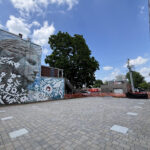
Screenshot 2016-07-27 19.31.23The first Saturday of each month, there’s an artsy party on the street.

A solid block of Midtown Harrisburg closes and, instead of cars whizzing by, there are people and tents and no end of lovely, handcrafted goods.

It’s the HBG Flea.

Founders Mary Imgrund and Meghan Jones brought home the idea of marrying the reliable appeal of a flea market with the flair of an arts festival after witnessing other artsy markets in places like Brooklyn, Baltimore and Philadelphia.

“It went from ‘this is something I wish was in Harrisburg’ to ‘we could make this happen in Harrisburg,’” said Imgrund.

In spring 2015, Imgrund had just graduated from Penn State Harrisburg and Jones, whose graduation was still a year away (the pair met in the English program there) went to revisit the Brooklyn Flea, the bazaar behemoth that operates markets every weekend in New York.

They both saw the flea market as a perfect means to promote local artists and enable visitors to shop locally by showcasing the wealth of creators—crafters, snack-makers, soapers and more—to be found throughout Harrisburg.

Jones, who is into upcycling, and Imgrund, who makes art and jewelry, launched HBG Flea in November, its best-of-both-world qualities mirrored in the city itself.

Harrisburg, Imgrund observes, has the benefits of a city and the feel of a small town, and HBG Flea was created to contribute to and harness the artistic energy that circulates here. Every market has a featured charity as well, with some proceeds having benefited the American Cancer Society’s Relay for Life, Caitlin’s Smiles and other nonprofit organizations.


The Fun One

Imgrund and Jones started out determining which vendors they would accept and building the website. The reality of their undertaking really took shape when they connected with John Traynor at Harrisburg Midtown Arts Center (H*MAC) about space. They then plunged into a flurry of contacting and lining up vendors.

“We’re really focused on making sure that the vendors have a good time,” said Imgrund.

It shows.

HBG Flea is intimate, expansive without being overwhelming. Coffee, candles, succulents, spices, tiny taxidermied creatures—seeing what so many area creators have made by hand, repurposed or curated—puts into perspective what constitutes a “gift.” HBG Flea itself feels like a thoughtful reminder of what exists between close friends—in this case, between market-goers and the city.

The June market was Thomas Weaver’s first as a vendor. He had manned a stand at previous installments of HBG Flea for Gamut Theatre, where he is associate artistic director, and had been coming to the market as a visitor since its first iteration last November.

“It’s an empowering thing, seeing so many local artists here,” said Weaver, and that inspired him to bring his hobby—constructing cigar box guitars—into a market for the first time.

Elsewhere in the market was Sage and Ash, a company that hits farmers markets and conventions with their essences, oils, balms and other botanical goods while maintaining space at the Artisan Cooperative and Gallery in Williamsport.

“We do several flea markets,” said Ingrid Callenberger, an herbalist who co-owns Sage and Ash with April Line, a formulator, “but this is the fun one.”


Powerful Thing

Among the first vendors to get excited about HBG Flea was Amanda Leilani, whose raw crystal jewelry Imgrund and Jones both love. They were also overjoyed to bring Mixology8 on as a vendor, a vintage records retailer that travels to antique malls and marketplaces. Vendors heartily reciprocated enthusiasm for HBG Flea, and that spread from the first market on.

It now is only a few months away from their first anniversary, and Imgrund and Jones no longer have to solicit applications for vendors—they can focus on organizing and expanding the market.

They hope to see HBG Flea grow to several times a month, enabling some of those markets to be themed around different kinds of vendors—vintage goods, food, art, etc.

“We want to grow carefully,” said Imgrund, retaining quality as they scale up.

There have been challenges, like finding out how many permits are involved and reckoning with cars parked overnight on the 1100-block of N. 3rd Street, where they hold the market (in seasonable weather, that is—the market is in H*MAC’s Capitol Ballroom otherwise). That they could pull this all together is a powerful thing for two 20-somethings (Imgrund is 24; Jones is 22), right out of college.

It was at the first market that Imgrund reflected on how happy she and Jones said they would be with 20 vendors—as they looked out over their market and saw about 50.

“I want people to know,” said Imgrund, “that doing something that you’re passionate about is an option.”

The next HBG Flea will be held on Aug. 6 in the 1100-block of N. 3rd Street, Harrisburg. For more information, visit www.hbgflea.com.

Author: Kari Larsen



Save

Save

Continue Reading

A Student Story: Class of ’51 revisits William Penn HS, with memories, regrets.

Members of the class of ‘51 sing their alma mater.

Members of the class of ‘51 sing their alma mater.

Just across from the lush, green, life-filled Italian Lake is a contrasting site.

William Penn High School closed its doors permanently in 2010 and now sits gray, lifeless, crumbling. Its empty halls, once bustling with the sounds of students, lay silent.

Recently, though, a bus stopped at the entrance, its cargo not teenagers of 2016, but students of a past era.

Alumni from the William Penn High School class of 1951, 35 of them, gathered at the school in May to visit their alma mater.

After taking a bus tour of Uptown Harrisburg, the eclectic group, who hailed from as far away as Arizona, mingled and waited for a Harrisburg district representative to let them into the school.

When asked how it felt to be here again, Edgar Alston—“Eggie” as he was affectionately known way back when—chirped an enthusiastic “Great!” When asked about his fondest memories from William Penn, he replied, “Sports.” Fred Dougherty, another alumnus, piped in over Alston’s shoulder, “The best,” referring to Alston.

Alston, who participated in football, baseball and track, proudly recalled that the football team was undefeated in 1951. He received scholarships to attend college, but, after about a year, he left to join the Air Force and head overseas.

“I didn’t wait to go,” he said.

It had been 65 years since many folks had been to the school, and their faces showed them sorting through the tickler file of memories. Some had an easier time than others. The nametags, dotted orange identifying the alumni, helped. Alston said he only remembered one face—that of class President Jim Smith.

Smith recalled with zeal the things he’d done since leaving William Penn. He graduated from Lehigh University and worked as a geophysicist. After retiring from the Office of Naval Research, he bicycled across Cuba in 2000. Classmate Carl Nurick, who traveled from Texas, chimed in about Smith.

“He has retained a position of respect from all of us,” he said.

It was apparent that this class exudes admiration for their school and one another.


Kinder, Gentler

Mara (Layton) Moore lives in the Philadelphia area and hadn’t been to William Penn since she graduated. She recalled that, on nice days, she ate her brown-bag lunch at Italian Lake, riding the bus one way for 7 cents (walking the other) and paying 3 cents for a school milk.

Boyd Strain recollected that it was a kinder and gentler time.

“I don’t even relate to what’s going on in the schools today,” he said.

While times were good, they weren’t perfect.

“We were poor,” Strain said.

He noted that black folks worked mainly janitorial or housekeeping jobs, and white folks had better paying manufacturing and railroad work. He added that school was mainly equal—aside from the segregated sock hops—but life outside of school was not.

“The opportunities weren’t there because our parents didn’t have good jobs,” he added.


Sweat and Tears

John Gallagher, director of facilities for the school district, arrived and unlocked the doors for the eager octogenarians.

As they entered the school, the first thing they noticed was the dark. The electricity was out. Just inside the entrance, to the right, stood a large trophy case—empty.

Smith inquired about the trophies before entering the school and, upon seeing them gone, said, “A lot of people had sweat and tears in those.”

Likewise, a number of his classmates expressed concern about the trophies’ whereabouts.

Next came the auditorium. On the wall, hidden in the inky blackness, rests the school’s life motto. Edna (Heck) Baker didn’t need the light to recall it. She pronounced it aloud: “So teach us to number our days so that we may apply our hearts to wisdom” (Psalm 90:12).

As the group continued to the right, sunlight illuminated the hallways of their youth. The peeling paint and fallen plaster served as a reminder of the school’s age—it opened in September 1926.

For some, it was hard to see the school in such disrepair. Alston, with nostalgia across his face, described the 43-acre campus he remembered.

“That hall goes a quarter-mile that way.”

He pointed left.

“There’s the football field and two tennis courts,” he said. “It was a beautiful school.”

He added that it was a shame that no one could find a way to keep it up.

Kenneth Markley, a member of the reunion committee, joked that he didn’t have a note from his mother.

“It’s been 65 years since I’ve been here,” he said. “I might get detention!”

Some alumni wanted to venture further into the school, but safety wouldn’t allow it. The friendly banter and memory-sharing continued as they meandered outside. Their visit was over.

As the Class of 1951 made their way to the bus, much slower than the last time they boarded here, some walked with assistance from canes or companions. It was impossible not to see the similarities between these people and the building. Both still stand proud, even as age has affected them, and both remain filled with wonderful memories of William Penn High School.

Author: Susan Ryder

Save

Continue Reading

A Crime Story: In Harrisburg, the media often is the message.

Illustration by Rich Hauck.

Illustration by Rich Hauck.

Have you heard about the recent crime wave over this long, hot summer?

  • thefts
  • drug possession
  • hit and runs
  • assaults
  • vandalism

And that’s not all. Since January, there have been numerous burglaries, robberies, assaults, drug arrests and vehicle break-ins.

Where is this pit of criminal activity? No, not Harrisburg, but in the symbol of our area’s safe, wealthy, white suburb—Camp Hill.

I don’t mean to dump on Camp Hill—I like Camp Hill. Nor am I directly comparing Camp Hill to Harrisburg. Harrisburg, after all, is a densely populated city, with many times the people and poverty rate of Camp Hill. So, of course, Harrisburg has more crime—and more serious crime at that.

I’m saying that, when it comes to crime, perception can be reality. PennLive and the TV news push a daily diet of Harrisburg crime, causing people to irrationally fear and avoid the city. But when’s the last time you read about crime in everyone’s favorite, secure, West Shore town? I’m here to tell you that it’s nearly an every day occurrence.

I once had a journalism professor who spoke of the “hidden rich.” These are the people who live in huge houses off of leafy streets with names like Golf View Road and Country Club Place—and you never hear a word about them. What’s going on behind those wrought iron gates and long driveways? No one seems to know, and the state cops sure aren’t saying. But we do know what’s happening on city streets. It’s right in view, it gets all the attention of reporters, and it’s a staple of the click- and ratings-obsessed media.

Now, every media outlet has its own approach to covering crime.

I’ve long been fascinated with how the Washington Post goes about it. Get a copy of the Post, and you’ll see that the front page often has a couple of national and international stories, a policy piece, maybe the start of a lengthy feature. It rarely includes a crime story in a city dense with crime.

In the Washington Post, most crime stories are relegated to the interior pages of the “Metro” section and, even then, are tiny briefs—maybe a few paragraphs long. If you turn to page B3, you’ll see these afterthoughts under the bland heading of “Local Digest.” Here are three samples buried deep in the paper on a recent, random Tuesday.

  • “Man Shot by Agent Is Ordered Detained”
  • “Police Identify Victim in Southeast Shooting”
  • “Deaths Declared Murder-Suicide”

A few days later, there was this item: “Police Chase involving Gun Prompts Capitol Lockdown.” In this case, gunfire from a MAC-11 semiautomatic erupted from a speeding car being chased by police in the middle of the afternoon in downtown Washington, resulting in the U.S. Capitol complex being placed on lockdown, the second time that had happened in a week. This short story, nine paragraphs in total, was hidden on page B-6.

I sometimes wonder how stories like these would be handled in the Harrisburg media. No doubt, each one would include screaming headlines, multiple articles, breathless prose and hundreds of comments from people swearing they’ll never set foot in Harrisburg again for fear of their lives.

Indeed, these are very serious crimes, but the Post doesn’t exploit them. So, readers get a completely different feel for crime in D.C., perhaps a more honest one, since the chances of any individual falling victim to one of these crimes, while not zero, is quite low. It would be a tragedy if someone decided to forgo the many wonderful things in Washington because news coverage made them afraid. As for other crime stories you see each day in the Harrisburg media—muggings, burglaries, drug arrests—they’re so numerous that they don’t even rate an article in D.C.

TheBurg has its own way of covering crime. We’re not really a daily news outlet, nor do we shamelessly chase clicks for money, so we don’t usually cover individual occurrences. When we do cover crime, we typically write a trend story that tries to offer as much context as possible or a feature piece, such as the wonderful long-form story that Paul Barker wrote for our January issue about Rayon Braxton and Braxton Hall.

Sometimes, people ask me if TheBurg would consider publishing more frequently, perhaps weekly. If we did, we would give more coverage to crime stories, but, again, would try to do so in a respectful, contextual, informative and non-exploitative way. For instance, we certainly would have covered the recent tragic murder of Steve Esworthy, but would have done it, as we do everything, with the community firmly in mind.

PennLive may not cover crime in Camp Hill, but that doesn’t mean it doesn’t exist. It may cover nearly every crime in Harrisburg, but that doesn’t mean that’s all there is.

Harrisburg has amazing parks, restaurants, theater and nightlife. It has a professional baseball team, an incredible river, a vibrant community market, the country’s most beautiful statehouse and plenty of history. It is so much more than a crime story. It’s a city worthy of time, understanding, exploration.

To read more about crime in Camp Hill, visit www.camphillpolice.org.

Lawrance Binda is editor-in-chief of TheBurg.

Save

Continue Reading

Lesser Case: From criminal mastermind to common thief?

Illustration by Ryan Spahr

Illustration by Ryan Spahr

It was all so clear a year ago.

Steve Reed, the seven-term, former “mayor for life,” was exposed for what he was—a municipal mastermind, shuffling projects, political allies and toxic debt among the various branches of Harrisburg city government. The grand jury report, made public in July 2015, laid it out in exquisite detail. We learned, or thought we learned, about how Reed handled detractors. (“Thank you. You are fired,” he supposedly told a naysaying engineer.) We learned, or thought we learned, about the “binge artifact buying ‘addiction’” behind his repeated borrowing. (“You’ve got to stop this, you’ve got to cut it out, it’s just going to kill your career,” a key Reed aide supposedly warned.) And we saw, or thought we saw, how the “prudent stewardship and innovative thinking” of Reed’s early years eventually warped into a tendency to “gratify his own interests at the city’s expense.”

With these and other zingers, the report made for good reading. It told a story that one longtime Reed skeptic described as “Shakespearian,” striking upon themes of youthful ambition, the fickleness of fortune, and the corrupting influence of power. But was any of it true? In May, a judge tossed out 305 of the 449 criminal counts against Reed, saying they fell outside the statute of limitations. A month later, the state attorney general’s office announced it wouldn’t appeal. The remaining charges have to do with the alleged theft of artifacts and other city property that residents watched agents haul out of Reed’s Cumberland Street home earlier in 2015. Those are serious charges—the state solicitor general, Bruce Castor, noted that they carry a maximum combined sentence of 886 years—but they don’t include the running of a years-long “corrupt organization” alleged in the complaint. This raises an interesting question about the original grand jury report. If the charges are out, what becomes of the gripping story that supported them?

Earlier this year, the New Yorker’s Jeffrey Toobin profiled Preet Bharara, the U.S. attorney for the Southern District of New York, whose office has brought headline-grabbing cases against Wall Street traders and corrupt state legislators. Among other things, the profile discusses Bharara’s use of “speaking complaints,” in which lengthy, descriptive narratives of the alleged crimes accompany the more legalistic affidavits of probable cause. Toobin ties their use in part to the proliferation of plea deals in federal prosecutions—with some 97 percent of federal defendants pleading guilty, a prosecutor might be tempted to write a detailed complaint telling the story of a crime that would otherwise have come out at trial. But these narratives can also deeply color a case with scintillating accusations that are far from proven. The article quotes a defense attorney, Henry Mazurek, who describes such complaints as “unnerving and disturbing and fundamentally unfair.” “The complaints tell a story and set a tone, especially in the press, that’s very hard to counteract,” Mazurek is quoted as saying.

The case against Reed is a state, not federal, prosecution, and there’s no evidence that the former mayor sought or was offered a plea deal. And, of course, it was Reed’s attorneys who raised the statute of limitations challenge against most of the charges; the fact that he won’t be fighting most of the criminal “narrative” in court is, in the end, a victory for the defense. Nonetheless, it’s worth wondering about some of the more alluring sections in the grand jury report, now that they are unlikely to be interrogated at trial. What to make, for instance, of the “bizarre meeting” with Reed, recalled by former City Council President Richard House, during which House “anxiously, and silently, wrote out and held up a note asking Reed whether he was recording the conversation”? The report concludes, elusively, “Reed responded by writing down that he was not recording the conversation and then asked if Mr. House was recording it.” Was this sinister, or was House simply paranoid? Needless to say, it would have been illuminating to see this fleshed out on the stand. (Jeffrey Johnson, a spokesman for the attorney general’s office, said the presentment is “still a public document” that “gives a detailed narrative,” and that it was released “with every intention of proceeding with the prosecution.”)

Despite the dropped charges, the case appears to be far from over. The grand jury report referred to an “ongoing investigation” into “those named herein and others as yet unnamed”; as several have pointed out, it’s hard to run a corrupt organization on your own. There is still the possibility of a civil suit over the incinerator debt—last September, the state retained a D.C. law firm to pursue potential claims. The attorney general’s office, even if it files no additional criminal charges, could still issue an informational report, as it did in the grand jury investigation into sex abuse in the Catholic Church’s Altoona diocese.

For now, though, the cake is only half-baked. Residents who hoped an investigation would shed light on the city’s political disintegration and crippling debt have only a partial answer—a theory of corruption, but not the proof. (They also have a blanket denial from Reed, who said the grand jury report “contained so many mischaracterizations, so many misrepresentations, so many untrue things that it flabbergasts me.”)

Last summer, we heard a saga spanning three decades, one that began with a “dynamic and forceful” politician and ended with a shopping addiction and a city Reed had built as “a monument to him and not administered for the common good.” After the charges were dismissed, the attorney general’s office released a quieter, narrower statement. “With his fascination for the Wild West, this man used other people’s money to decorate his house and office with antiques,” it quoted Solicitor General Castor as saying. “But, Pennsylvania is not the Wild West. We have the rule of law here. We look forward to presenting our evidence in court.”

Paul Barker is a former senior writer for TheBurg.


Save

Continue Reading

Chill Out: Cold soup flavors a hot summer night.

Screenshot 2016-07-27 19.36.26So, there we were, a weekday summer dinner on the porch.


It was still hot at the end of the day, and I had prepared what I thought was a delicious meatloaf: yellow-gold mashed potatoes with real cream and butter and green beans. What was I thinking? My “better half” met my culinary endeavors with significant resistance—the meatloaf wasn’t bad, but it was too hot to eat like that and something about sweating. (More likely due to the two glasses of wine he had consumed.)

My menu choice was mostly due to the desire for meatloaf sandwiches for the week ahead. What’s better than that? Nevertheless, I violated one of my primary cooking rules—cook seasonally. I was starting to resemble my Aunt Mary, who once made pot roast and gravy for the Fourth of July.

So, I re-visited several of my favorite recipes for dishes more conducive for serving on a hot summer evening: chicken salad spruced up with plump bing cherries, chilled Nicoise salad (a classic combo of fresh tuna, hardboiled eggs, Mediterranean olives, tomatoes and green beans), several uncooked tomato sauces fragrant with fresh basil and chilled soups.

I have always loved cold soups in the summer. But food trends are constantly changing. One rarely sees the classic French vichyssoise made with potatoes and leeks as a restaurant offering anymore or the sweet-cream blueberry soup that could double as dessert.

But one summer favorite seems to have retained its popularity—gazpacho. Traditional gazpacho, which hails from Andalusia, Spain, is usually a tomato-based concoction. Today, endless varieties are popping up, such as green gazpacho, which is honeydew melon-based, watermelon gazpacho and even white gazpacho made with a puree of almonds and cucumber. Chefs are adding toppings such as cold shrimp or crab, diced avocado, sliced celery and chopped herbs that add a nice contrast to the pureed vegetables.

My favorite gazpacho has always been a traditional recipe from an old cookbook of mine entitled “Cold Cuisine.” It is slightly spicy, spiked with vinegar, and, to me, really tastes like each of the summer vegetables contained in it. Its consistency is a cross between chunky and smooth, and all you need is a blender or food processor to make. If you pair it with some melon and prosciutto or a nice cheese and whole grain crackers, it can be dinner.

Gazpacho

Ingredients

  • 1 garlic clove, peeled
  • 2 parsley sprigs
  • 2 large, ripe tomatoes, peeled, cored and chopped (about 1 to 1 ¼ pounds)
  • 1 medium-sweet green pepper, seeded and chopped
  • 2 or 3 scallions, chopped
  • 1 medium cucumber, peeled and chopped
  • 2 tablespoons chopped fresh basil
  • 2½ cups tomato juice
  • 2½ tablespoons olive oil
  • 3 tablespoons red wine vinegar
  • Salt and freshly ground pepper to taste
  • Tabasco or other hot sauce to taste

Directions

  • Chop the garlic and parsley in a food processor.
  • Add the chopped tomatoes, green pepper, scallions, cucumber and basil to the work bowl.
  • With the motor running, add the tomato juice in a stream and process until the vegetables are chopped fine but not completely pureed.
  • Turn the mixture into a bowl and add the oil, vinegar and seasonings to taste. Thin with extra tomato juice if you feel the soup is too thick.
  • Chill until very cold.

Serve the soup in chilled bowls with a garnish of sour cream and some shredded basil. You will be surprised how filling this soup is and how beautiful it looks. You can serve it as a first course, too, along with a grilled main course.

I’m saving the meatloaf until fall, along with my great pot roast and chicken cacciatore. August can bring the hottest days of summer and, by now, if you have read this column before, know I am tired of charred grilled meat and dried-out, boneless chicken breasts. So, I will charm the resident grumpy spouse with a lovely chilled soup (maybe gazpacho?) and a crisp white wine. Dinner on the porch? I think I have it figured out!

Author: Rosemary Ruggieri Baer


Save

Continue Reading

Hoops & Hopes: Coach Smallwood leads with basketball, follows with life.

Screenshot 2016-07-27 19.34.00For Harrisburg Coach Kirk Smallwood, basketball is the “carrot” that leads city youth to his mentorship.

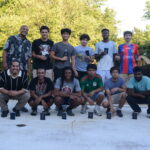
Smallwood, a 1973 Harrisburg High School graduate, is considered a legend in the school district. He served 16 years as the district’s athletic director and has coached basketball there for as long as anyone remembers.

“I love this school district, and I’m willing to do anything to help the kids here,” Smallwood proudly noted. “I was in the second class to graduate from Harrisburg High School.”

To the hundreds of young people that Smallwood has mentored over the years, he is far more than a basketball coach.

“Coach Smallwood is like a father figure to me,” said Tony James, 16, an incoming 11th-grader at Harrisburg’s SciTech High School and a third-year player on the Smallwood Summer League. “He always helps us out and always has our back.”

The Smallwood Summer League is a Harrisburg youth basketball team that Smallwood has run for seven weeks every summer since 1991, in addition to serving as the high school’s basketball coach during the regular school year. The league competes against 34 school districts from throughout the state, including Williamsport, Hazleton and Shamokin.

“Coach Smallwood is a great coach,” said Elijah Barrett, 18, an incoming Harrisburg High senior and a second-year Smallwood Summer League player. “He teaches us to become great men.”


Coach of the Year

Smallwood, of Susquehanna Township, began his coaching career in 1978 as an assistant coach at Harrisburg High. It was the same year he started working as a substitute teacher in the school district—just two days after receiving a bachelor’s degree in elementary education from Kutztown University. He was hired full-time later that year, continuing as a “general teacher” in the district until 1989, when he left for the Central Dauphin School District.

Smallwood taught alternative education at Central Dauphin East High School in Lower Paxton Township for four years while serving as CD East’s head basketball coach. In 1993, he returned home to Harrisburg High School as a teacher and coach. In 1999, he was appointed the high school’s athletic director, a position he maintained until retiring at the end of the 2014-15 school year.

“I just felt it was time to retire,” he explained. “I was dealing with some health issues that deserved a lot more attention than I was giving them. It helped me to better monitor my sleep and eating patterns.”

Smallwood didn’t entirely retire, however. He’s still Harrisburg’s head varsity basketball coach and runs the summer basketball league. He also heads a free Kirk Smallwood Skills Clinic at the Camp Curtin YMCA in June and July for boys in grades 8 to 11.

During his school coaching tenure, Smallwood has overseen 19 Mid Penn Championships, nine District Championships and two State Championships. He was also awarded the 1998 and 2002 AP Big School Coach of the Year.


The Carrot

Mentoring youth carries no trophies, but Smallwood finds this as rewarding as winning any championship.

“Today’s kids are different than when I went to school here,” he said. “They need more help and assistance to succeed. There’s less parental involvement. They need assistance from many other entities. Sometimes, kids get distracted. They’re not being attended to as much.”

Smallwood said he builds relationships with his players through honesty and caring. The biggest challenge, he noted, “is that they just need so much of you.”

“We may walk across the street together for a burger or I may visit their homes,” he said. “Basketball is the carrot. Every kid is different. You never know what baggage they’re carrying.”

Wes Bair, Harrisburg’s assistant basketball coach for 20 years, said it’s not only kids who respect and admire Smallwood. Adults feel the same way.

“Coach Smallwood is very knowledgeable, well respected and very fair,” he said. “He gives his staff a lot of freedom to operate within the system. He doesn’t micromanage and welcomes suggestions from others.”

Bair added that, over the years, he’s seen Smallwood “help hundreds of kids get into college or get jobs.”

So what does Smallwood hope that young people will take away from his basketball court?

“I hope they know that I work hard every day,” he said. “I’m consistent. I try to give my all every day.”

Author: Phyllis Zimmerman

Save

Continue Reading

Absolute Success: With five locations, Absolute Pilates has become a local fitness powerhouse.

Owner Allison Zang (left) instructs a student at Absolute Pilates.

Owner Allison Zang (left) instructs a student at Absolute Pilates.

When I met Allison Zang, owner of Absolute Pilates, she told me a quick joke: What came first, the reformer or Joe Pilates? It took me an entire class to get it.

Pilates started in a prison camp during World War I by a German physical trainer named Joseph Pilates. He rigged up hospital beds with bed springs so bedridden patients could exercise and build up strength using resistance training. He didn’t know what he was starting.

Forward to 2001 and Zang, an epidemiology researcher living in Pittsburgh, decided to teach the Pilates method on the side while her husband was getting his degree in physical therapy. She didn’t know she eventually would own five Pilates studios on the west and east shores of the Susquehanna.

Zang, who received an undergrad degree in organizational behavior and wellness, thought she wanted to work in corporate wellness. As it turned out, the field didn’t provide what she believed to be the “correct level” for helping people.

So, she taught Pilates classes at night in her basement. Later, in 2007, she received her master’s degree in exercise physiology from the University of Pittsburgh.

“It’s a fancy way of saying, the science of exercise,” she said.


Five and Counting

Zang is considered a third-generation Pilates instructor. The first generation was founder Joe Pilates. Second generation was Eve Gentry, a Pilates elder and disciple of Joe Pilates. Allison completed her training as a third-generation instructor in the Eve Gentry tradition. From Joe Pilates to Eve Gentry to Allison Zang to you.

When Zang and her husband moved to Mechanicsburg in 2008, she said there weren’t “really any studios in my area” and again offered Pilates classes inside her home. Her business quietly outgrew her home, and she opened her first studio, Absolute Pilates, conveniently close at the Shops at Walden.

When The Shops at Arcona was built, she was asked if she would like to open another location. In 2012, she opened her second Absolute Pilates studio, which focuses on barre and mat.

Zang wasn’t looking to expand further, but the opportunity came again in 2013 when one of her clients, who owned Burn30 Personal Fitness, asked if she would be interested in opening a space in the Lemoyne Burn30 location (where Zang’s husband runs his own physical therapy practice). Her fourth studio in Enola opened in another Burn30 in 2015.

Lauren and John Brown, who manage clubs at Colonial Ridge, took Zang’s classes in Enola. They asked her if she’d like to open a fifth studio in what used to be a club gym. It was being remodeled, and they thought her Pilates classes would be a great fit within Linglestown’s Blue Ridge Country Club. So, Absolute Pilates opened in Linglestown in April 2016.

Zang’s biggest challenge, she says, is getting the word out about what Pilates is.

“It’s completely different from yoga,” she said. “Although it has the mind/body connection with full body integration, it doesn’t have the Zen-like feel of yoga.”

With more than 15 years of experience in Pilates, Zang believes anyone can benefit from the method.

“My favorite client is one who thinks they can’t exercise, because they’re out of shape, injured, have had joint replacements,” she said. “I’ve been able to do something for everyone.”


To Request

Zang, who manages all five studios and employs 12 instructors, teaches classes at her Walden, Arcona and Linglestown locations. Absolute Pilates offers reformer, mat and barre Pilates. Classes run all day, as early as 5:30 a.m. and as late as 7 p.m.

The reformer and barre classes are the most popular.

“Probably because they both offer resistance and allow you to work on the core muscles, abdomen and glutes,” she said.

Core strength, flexibility and muscle tone are the Pilates promises.

The reformer is a piece of exercise equipment that looks like a medieval torture device. It’s a bed-like plank, called a carriage, with shoulder blocks and a footbar, loaded with springs and pulleys. The machine is safe and offers versatility and full-range motion.

Mat classes are performed on the floor, using the body instead of a machine for resistance.

Barre Pilates uses a ballet barre for balance during isometrics. It combines ballet conditioning with cardio and Pilates.

“It’s a fitness trend in big cities,” said Zang.

What to expect?

“All our classes are taught according to request,” said Zang.

And in your bare feet. Dress comfortably, knowing your clothing needs to move and stretch with you. And be prepared to work muscles you didn’t know you had. You’ll work up a sweat—some more than others—and the session will be over before you realize it. Private classes are available, or join with a class of up to four on a reformer, eight on a mat and barre.

I took a class with Zang.

The gym was clean and simply structured. She’s slim and toned and carried on a conversation while changing springs. She told me how to use the equipment, how to move, where to place my head and toes. She guided me through the breathing, complimented my pedicure, and told me stories about crazy monkeys, icepick climbing and one very special princess.

I didn’t think I was doing much, but the next day, when I was sore—in a good way—I realized I’d had an absolute workout.

To learn more about Absolute Pilates, visit www.absolutepilates.com or call 717-585-2592.

Author: Cathy Jordan

Save

Continue Reading

Community Corner: Notable August Events

August Community Corner

National Night Out
Aug. 2: Neighbors meet neighbors during National Night Out, celebrated after work throughout greater Harrisburg. To learn more, check with your neighborhood group or visit natw.org. Friends of Midtown (friendsofmidtown.org) will host its event at the Broad Street Market, 6 to 9 p.m. with food, music and family activities. 

Young Leaders Conference
Aug. 2: The World Affairs Council of Harrisburg will hold its 4th Annual International Young Leaders Conference at Harrisburg University, 326 Market St., 9 a.m. Students will learn about global polarization and conflict resolution through panel discussions, simulations and breakout activities and will have the opportunity to network with local businesses and universities. Visit wacharrisburg.org.

Clydesdales in Harrisburg
Aug. 3: The Budweiser clydesdales will be in Harrisburg, 11 a.m. to 2 p.m., starting at City Island and parading down 2nd and 3rd streets. The horses will stop in front of the MLK Government Center. Visit budweiser.com/clydesdales.

Networking Mixer
Aug. 4: Join the West Shore Chamber of Commerce and other local business professionals at the August evening networking mixer, 4 to 6 p.m., at Autobahn Indoor Speedway, 1001 Bosler Ave., Lemoyne. The event is free and open to chamber members. Potential members may attend up to three free chamber events per year. Visit wschamber.org.

Cultural Fest
Aug. 5: Dauphin County commissioners and the Cultural Task Force will host the annual Cultural Fest in downtown Harrisburg at Market and 2nd streets, 5 to 10 p.m. This free, open-air street festival celebrates cultural diversity with live music, ethnic foods, crafts, kids’ activities and more. Visit DauphinCounty.org for more details.

Outdoor Movies
Aug. 5 & 26: Friends of Midtown and Midtown Cinema will host two outdoor movies: “Hook” on Aug. 5 and “Goonies” on Aug. 26 at Midtown Cinema, 250 Reily St., Harrisburg. Both films begin at dusk and, in case of rain, will be delayed to Saturday. Admission is free. Visit friendsofmidtown.org.

HBG Flea
Aug. 6: The HBG Flea outdoor market will be held from 10 a.m. to 4 p.m. on N. 3rd Street between Herr and Cumberland streets. Enjoy local art among vendors, food trucks, music and more. For more details, visit hbgflea.com.

India Day
Aug. 6: The India Day Community Fair will be held at HACC, 1 HACC Dr., Harrisburg, 10:30 a.m. to 8 p.m. India Day features a variety of Indian food, live stage performances, Indian jewelry, vendors and kids’ activities. Visit aiacpa.org/Indiaday for more details.

Stress Relief Walk
Aug. 10: Walk off the stress of the work day with a hike at Wildwood Park, 7 to 7:30 p.m. The 3-mile walk on easy trails with short climbs will be at a moderately brisk pace. Meet at the Olewine Nature Center. Bring water and wear sturdy shoes. Check wildwoodlake.org for cancellation information in case of rain.

Bookstock Read In
Aug. 11: Celebrate reading on the grounds of Fredricksen Library, Camp Hill. Bring a blanket or lawn chair, a book to read and the whole family. Snacks and drinks will be available, but attendees may bring their own snacks or a picnic. Visit cumberlandcountylibraries.org/FRE.

Jazz Festival
Aug. 11-15: Central PA Friends of Jazz will host the 36th Annual Central PA Jazz Festival, with concerts and events taking place throughout the region. Take in a Riverboat Cruise on the Pride of the Susquehanna, a jazz workshop at the Art Association of Harrisburg and a jazz party at River City Blues Club. For a complete listing of events, visit rivercityhbg.com.

Volunteer Work Day
Aug. 13: Head to Wildwood Park, 100 Wildwood Way, Harrisburg, to help with continuing park and habitat enhancement projects, 10 a.m. to 1 p.m. Snacks, tools and work gloves will be provided. In an effort to reduce plastic usage, bring along a water bottle. Visit wildwoodlake.org.

Summer Soirees
Aug. 13 & 20: The Art Association of Harrisburg will host a soiree in Harrisburg on Aug. 13, 5 to 8 p.m., featuring painters April and John Holtzman, Steve Wetzel, Julie Riker and Jill Pecklun. On Aug. 20, AAH will host a soiree in Winfield, 4 to 7 p.m., showcasing the works of Robert Hughes, John David Wissler, Simonne Roy and Jane Albin. Visit artassocofhbg.com.

Bacon & Brew Ha Ha
Aug 14: Appalachian Brewing Co., 50 N. Cameron St., Harrisburg, will host Bacon & Brew Ha Ha, a home brew and bacon contest fundraiser, 12 to 6 p.m. Admission: bacon and brews (21+), $25; bacon and non-alcoholic, $10. All proceeds benefit Elliott’s New Wheels, raising funds for a handicap-accessible van for a young boy with cerebral palsy. Visit facebook.com/events/964457883652281.

Rug Hooking Demo
Aug. 14: Loose Noodles, a local rug-hooking group, will present “Hooked on Rugs,” an exhibit of their own works and demonstration of the techniques used in rug hooking at John Harris-Simon Cameron Mansion, 219 S. Front St., Harrisburg, 1 to 3 p.m. Demonstrations begin at 2:30 p.m. Visit dauphincountyhistory.org.

Central PA Plants
Aug. 16: Cumberland County Master Gardeners will host “Gardening with Nature: Outstanding Plants for Central PA Landscapes” at their Trial and Idea Garden, 1000 Claremont Rd., Carlisle, 7 p.m. Discover which annuals are the best and worst to grow in our area and get ideas on which shrubs and perennials to add. Workshop cost is $5. Visit extension.psu.edu/plants/master-gardener.

Nature Crafts
Aug. 18-19: Ned Smith Center for Nature and Art, 176 Water Company Rd., Millersburg, will host a Nature Crafts Camp, Aug. 18, 1:30 to 4 p.m., and Aug. 19, 9:30 a.m. to 12 p.m., for kids ages 4 to 8. Explore trails for leaves, twigs, acorns, etc., to use as part of nature-inspired artwork. Cost is $13 per person. Visit nedsmithcenter.org.

Foreign Film Friday
Aug. 19: Join Fredricksen Library for “Secrets of War,” with two showings at 2 and 7 p.m. “Secrets of War” puts both the danger and humanity of wartime friendships on the shoulders of three children who must face extraordinary circumstances. Not recommended for viewers under 17. Visit fredricksenlibrary.org.

3rd in The Burg
Aug. 19: Enjoy the best of Harrisburg during 3rd in the Burg, the monthly arts and cultural event at galleries, restaurants and art spaces throughout downtown and Midtown. Check out all the action at thirdintheburg.org.

Tiny Book Show
Aug. 19-20: Curated by the Creativity Caravan, a mobile exhibit of hundreds of miniature books is coming to 3rd in the Burg, Aug. 19, hosted by Jump Street. Then, on Aug. 20, the Tiny Book Show heads to Newport Public Library, 316 N. 4th St., where Perry County Council of the Arts will host the exhibit and a free bookmaking workshop, 1 to 6 p.m. Visit thecreativitycaravan.com.

Local Lunch
Aug. 20: Join Friends of Midtown at its monthly community lunch, which will be held at Alvaro Bread & Pastry Shoppe, 236 Peffer St., Harrisburg, 12 to 2 p.m. Email [email protected] or visit friendsofmidtown.org.

Fitness Open House
Aug. 20: Celebrate the one-year anniversary of Omni Fitness, 4349 Carlisle Pike, Camp Hill, with an open house starting at 7 a.m. Free classes including TRX & BODYPUMP, info sessions with a physical therapist and dietitian, plus mimosas, giveaways and more. Learn more and sign up  at www.omnifitness.club, or call 717-480-3455.

Arts Festival Fundraiser
Aug. 20: Harrisburg Midtown Arts Center, 1110 N. 3rd St., will host a Little Buffalo Festival Fundraiser, 2 p.m. to 12 a.m., with live music, local vendors, kids’ crafts and more. Entrances fees benefit the volunteer-run, free outdoor arts and music festival held annually at Little Buffalo State Park. Admission is $5-15, based on ability to pay. Visit littlebuffalofestival.com.

Business After Hours
Aug. 25: Mingle with business professionals at Harrisburg Regional Chamber and CREDC’s free networking event at Penn National Insurance, 2 N. 2nd St., Harrisburg, 5 to 7 p.m. Visit harrisburgregionalchamber.org.

Memorial Golf Outing
Aug. 26: The Harrisburg Parks Foundation will host the Jack Crago Memorial Golf Outing in partnership with the Harrisburg mayor’s office at Sportsman’s Golf Course, 3800 Linglestown Rd., Harrisburg, 12 p.m. Visit tfec.org/cragogolfouting.

Meditation Retreat
Aug. 27:  The Kalpa Bhadra Kadampa Buddhist Center, 251 Wiconisco St., will offer an Inner Peace Meditation Retreat, 10 a.m. to 6 p.m. Learn about and meditate on four of Buddha’s 21 meditations. Attend all four sessions or drop into any one as your schedule allows. Cost is $5 per session. Visit meditationpa.org.

Pasta Barbershop Concert
Aug. 27: Keystone Capital Chorus will host the 10th Annual “Pasta: Barbershop Style” at the Scottish Rite Auditorium, 2701 N. 3rd St., Harrisburg, 5 p.m. Chorus members will serve a baked lasagna dinner by Vino Restaurant, then perform a show featuring the barbershop chorus and several of its own quartets. The event includes door prizes and a silent auction. Visit kccsing.com.

Adoption & Foster Care Information
Aug. 30: The Bair Foundation will offer an information session the last Tuesday of every month at 441 Friendship Rd., Suite 101, Harrisburg, 5 to 6 p.m. This information night is designed for families who want to learn more about foster care and adoption. Visit bair.org for more information. 

Call for Artists
Aug. 31: Perry County Council of the Arts seeks artists for its 2017 Annual Juried Exhibition to be held Nov. 11 to Jan. 20 at Landis House, 67 N. 4th St., Newport. Artists of all media should submit entries by Aug. 31. The juried exhibition includes $2,000 in cash prizes. For complete contest rules, visit perrycountyarts.org.


Continue Reading

Backpack to School: Tabernacle Baptist’s back-to-school fair offers supplies, support.

Screenshot 2016-07-27 19.35.07Few things are more nostalgic than the memories of preparing to go back to school in the fall: clothes laid out neatly on beds, sharpened pencils, pristine folders and backpacks ready to be filled with new material. But when you can’t afford a new backpack or supplies, how do you prepare for the new school year?

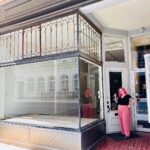
For families in the Harrisburg area, Tabernacle Baptist Church is here to help.

On Aug. 6, the church will partner with D&H Distributing and Delta Sigma Theta sorority to host a “Back to School and Health Fair.” The event is designed to meet the needs of school-aged children and their parents.

“We started the event six years ago,” said church member and former outreach committee chair Sandra Goodram. “We wanted to engage the youth in the community, so we decided to have a giveaway that would be beneficial to them.”

That first summer, the church gave away 75 backpacks. This year, thanks to a donation from Harrisburg-based D&H Distributing, it will give away 300.

The event is designed to feel like a street fair.

“We grill hamburgers and hot dogs, and we’ll have music and a dunk tank,” said Keith Mitchell, a member of the community outreach committee. “There will be games for kids, and, for the adults, we’ll have a health fair.”

The health portion of the fair is coordinated by the church’s health ministry, which has invited providers to set up booths. PinnacleHealth, Penn State Hershey Medical Center and Dauphin County’s Area Agency on Aging all will be represented at the event. Adults will have the opportunity to receive a blood pressure screening, as well as eye and ear testing. All services will be offered free of charge.

“We tend to think of this kind of stuff—backpacks, school supplies, blood pressure screenings—as extra,” said Rev. Dr. Arthur L. Brown, the church pastor. “But sometimes that is fundamental. What we provide to these kids and families is so important.”

Children going into grades K to 6 will receive a backpack and school supplies, such as colored pencils, erasers and pens. Students entering grades 7 to 12 will receive a calculator with their backpack.

This year, the Harrisburg chapter of Delta Sigma Theta sorority will play an important role in the event, too. The sorority has been involved with Reading is Fundamental for almost 25 years.

“We go into churches, or any place that will have us, and we donate books,” said Kristal Turner-Childs, chapter president. “We have a summer reading program, and we also bring applications for Delta GEMS, our mentorship program for young girls. The program is geared toward young ladies. We teach them leadership skills, how to conduct themselves, table etiquette and life skills.”

Brown said that giving out backpacks helps the church fulfill part of its mission.

“The three areas of our church’s mission are to worship, grow and serve,” he said. “This event gets members of our church outside the walls and into the community. It provides them an avenue to get involved in the community.”

The church already is known for providing meals to people in the community, but members wanted to do more.

“We have a feeding program that we’ve been doing for almost 40 years, and it operates weekly,” said Brown. “We feed 100 or more people each week—we’ve expanded our efforts. Feeding people is necessary, but what else can we do to help people?”

Participants hope this event is one small step in creating a more supportive and engaged community in Harrisburg.

“It’s important that we don’t lose sight of the fact that this is a collaboration,” said Turner-Childs. “We’ve become a transient society, but we still need each other. We can make a bigger impact if we do things together.”

“That’s the challenge of collaboration—setting our egos aside,” added Brown. “Lately, all we’ve read about in the news is tragedy, and how it is bringing people together. We hope, in this case, it will be love and not tragedy that brings our community together.”

The Back to School and Health Fair takes place Saturday, Aug. 6, 11 a.m. to 2 p.m., in the parking lot of Tabernacle Baptist Church, 1106 Capital St., Harrisburg. For more information, call 717-236-1774 or visit www.tabernaclebaptist.net.

 Author: Rachael Dymski

Save

Continue Reading

Class Act: In Harrisburg, it’s lights, action–learn.

Photo by Haley Harned.

Photo by Haley Harned.

Harrisburg has some great theater—lots of us already know that. But did you know it also has theater training?

Open Stage of Harrisburg Studio/School has been offering classes since 1985, making it one of the longest running theater schools in the area. Classes are available for both children and adults and often culminate in showcases where students can share what they’ve learned with family, friends and the public.

Starting as young as age 8, children and teens can choose from the year-long OSHKids Performance Company or 180Prep and summer offerings of OSHKids or the Music Theatre Workshop. Classes are also offered for adults with options available from September through March.

Veronica Biegen’s children have participated in the OSHKids Performance Company, Music Theatre Workshop and 180Prep.

“I can’t overstate how much they love it and how much growth we’ve seen in both of them because of it,” she said.

The benefits extend beyond acting skills, Biegen said.

“I get so many comments from teachers on how they present themselves with more maturity, how their in-class speaking projects and speeches are much more mature, and their approach to the materials, especially literature, is deeper and more thoughtful,” she said.

Biegen’s children will both be attending the Capital Area School for the Arts Charter School in the fall.

Kara Miller, who is currently enrolled at the prestigious Atlantic Acting School in New York City, planned on pursuing field hockey until an injury sidelined her plans. Open Stage Associate Artistic Director Stuart Landon then encouraged her to look into the theater’s classes.

“Because of Open Stage, I knew I wanted to have a career in theater,” said Miller. “It was the first time I felt confident in something I was sending out to the world.”

She credits her acceptance to the Atlantic Acting School to her time at Open Stage studying with Education Director Anne Alsedek.

Open Stage classes are not just for those looking to pursue acting as a full-time or even part-time career. The theater’s classes focus on a technique created by Sanford Meisner, one of the great acting teachers of the 20th century, which encourages actors to be authentic, organic, truthful and reactive. These key elements, once learned, can be applied across many facets of life.

Michael Chapaloney had always considered exploring acting, but realized the benefits of Open Stage acting classes could have a far greater impact.

“I thought it would help professionally with developing greater public speaking skills, improving my presentation style,” said Chapaloney.

And he did not feel overwhelmed at the prospect of not having any prior acting experience.

“I felt very comfortable not having past theater experience,” he said. “You start with such basics that you really develop the foundation for moving forward.”

After the class ended, Chapaloney appeared in a staged reading of “The Normal Heart” at Open Stage.

“It was incredible,” he said. “It put two things together that I really enjoy—the experience of performing and using some of what I learned through the Studio School, but it also benefited the LGBT Center of Central PA. It was a good blend of two things I’m passionate about.”

The fall session for this year’s OSHKids Performance Company (ages 8 to 13) begins in September. 180Prep, an acting program for 14 to 18 year olds, will also begin in September. Acting classes for adults are offered in both the fall (September through November) and winter (January through February).

For more information on classes at Open Stage of Harrisburg, visit www.openstagehbg.com.


August Theater Events
At Harrisburg’s
Professional Downtown Theaters

AT GAMUT THEATRE
www.gamuttheatre.org

POPCORN HAT PLAYERS PRESENT
“Cinderella”
Aug. 3-20
Wednesdays and Thursdays at 10 a.m. and Saturdays at 1 p.m.

STAGE DOOR SERIES PRESENTS
“As She Likes It”
Aug. 12-21
Friday and Saturday at 7:30 p.m. and Sunday at 2:30 p.m.


AT OPEN STAGE
OF HARRISBURG
www.openstagehbg.com

SEASON 31 SUBSCRIPTIONS
on sale August to October
$120 for 5 plays

OPEN STAGE STUDIO/SCHOOL
enrollment open for Fall classes
Youth ages 8 and up
Adult acting classes available

Author: Laura Dugan

Continue Reading