Free Uber vouchers will offer bar patrons a “Sober Ride Home” during the holiday weekend

Officials announced the Sober Ride Home program in July 2024.

As the holiday weekend approaches, a local program encourages people to have fun—responsibly.

Tri-County Regional Planning Commission (TCRPC) announced on Friday that it will bring back its Sober Ride Home initiative for Labor Day weekend, offering free Uber vouchers to bar and restaurant patrons.

“The goal is to prevent tragedies for people who may be out celebrating over the holiday weekend,” said Andrew Bomberger, executive director of TCRPC.

According to the organization, they decided to bring back the initiative following an increase in participation over the July 4th weekend. Sober Ride Home is aimed at preventing DUI accidents and fatalities, organizers said.

According to Bomberger, 40% of the region’s fatal crashes involve impaired drivers, as do 30% of serious injury crashes.

Through Sober Ride Home, people who have consumed alcohol at bars and restaurants in Dauphin, Cumberland and Perry counties can access a free Uber voucher worth $20. Vouchers are available from 7 p.m. to 3:30 a.m. Friday, Aug. 29 through Sunday, Aug. 31.

Vouchers will be available by visiting the Sober Ride Home website and scanning a QR code. Local bars and restaurants will be promoting the program.

Sober Ride Home vouchers will be available while supplies last. Users must have an active Uber account with a credit card on file to access a voucher.

TCRPC partners with the Federal Highway Administration and the Safe Streets and Roads for All (SS4A) program, Commute PA and Uber on the initiative.

For more information, visit their website.

If you like what we do, please support our work. Become a Friend of TheBurg!   

Continue Reading

Where to Find the Most Affordable Credit Card Options in Pennsylvania

When choosing a credit card, it is important to balance low interest rates, valuable rewards and manageable fees. Affordable cards reduce financial strain, maximize everyday spending and help cardholders avoid the pitfalls of high-interest debt. Local and regional providers often stand out by offering lower annual percentage rates (APRs), fewer hidden costs and more personalized service compared to national banks.

In Pennsylvania, banks and credit unions compete to deliver community-focused solutions that put members first while offering competitive perks. With many trusted institutions across the state, residents have no shortage of opportunities to find a card that fits their financial needs and long-term goals. Here’s where you can find the most affordable credit card options in Pennsylvania.

1.   Members 1st

Members 1st provides several budget-friendly credit cards tailored to different financial needs. Its Visa Signature Rewards card delivers 1.5% cash back or 1.5 points on all purchases. It does not have an annual fee and offers high credit limits starting at $5,000, plus perks like low monthly payments of as little as 2% of the balance, emergency coverage and Visa Concierge service.

For those prioritizing low interest, the Visa Platinum Low Rate card features a competitive APR and no annual fees. It is ideal for carrying a balance with as little as 20% or 2% minimum payments. For individuals building or rebuilding credit, the Visa Platinum Secured card requires a security deposit, has a low annual fee, reasonable rates and manageable payments starting at $30 or 3%.

These cards are accessible through generous credit limits and have tools like contactless pay and member-focused digital banking. Members 1st stands out for those seeking affordable, dependable and easy-to-manage card solutions.

2.   PSECU

PSECU offers highly affordable credit cards designed for clarity, value and member-focused benefits. Its Classic card features a notably low fixed APR of around 12.90%, with no annual, balance transfer, cash advance or foreign transaction fees. It also offers promotional balance-transfer rates as low as 2.90% APR during select periods.

The Founder’s Rewards Card has unlimited 1.5% to 2% cash rewards on all purchases, depending on account activity. Visa Signature perks apply to credit lines of $5,000 or more, with zero fees. For those building or repairing credit, PSECU’s Secured Visa Card offers a low 12.90% APR, no annual fee, and credit limits from $200 to $2,500 tied to collateral.

Consumers benefit from PSECU’s nonprofit structure, which allows it to pass savings directly to members through low-cost products. Its digital-first banking setup supports mobile wallets, virtual card numbers, alerts and card controls, enhancing affordability and control.

3.   TruMark Financial Credit Union

TruMark Financial Credit Union delivers affordable Visa cards that cater to various financial needs, blending low rates, zero annual fees and rich features into a streamlined experience. Its Classic Visa card attracts users with a notably low APR starting at just 10.24%, no annual fee and transparent terms.

The Cash Back Visa offers an uncluttered structure involving 1.5% unlimited cash back on every purchase and no annual, balance transfer or cash advance fees. Shoppers seeking greater flexibility can opt for the Rewards Visa, which earns one CURewards point per dollar spent. These points are redeemable for travel, merchandise, gift cards or cash and come with perks like cell phone protection, fraud safeguards and zero liability.

TruMark Financial’s card portfolio stands out for its no-annual-fee structure, transparent pricing, tailored rewards programs and supportive features. These products are all backed by the community-minded approach of a member-owned credit union serving Pennsylvania residents.

4.   American Heritage Credit Union

American Heritage Credit Union offers wallet-friendly cards that balance low rates, valuable rewards and community impact for Pennsylvania residents. Its Cash Reward Mastercard delivers up to 3% cash back on essentials like gas, groceries and pharmacies, 2% on travel and dining, and 1% on everything else. These offers do not require annual or balance transfer fees, and members get a $150 bonus when they spend $1,500 within the first 90 days.

The Platinum Preferred Mastercard is perfect for individuals wanting to manage or consolidate debt. It offers a 0% APR on purchases and balance transfers for the first nine months and a competitive 9.99% APR afterward. Users can also earn ScoreCard Rewards points while enjoying Mastercard benefits like travel insurance and zero fraud liability.

Beyond the rates and perks, American Heritage also stands out for its Penny-per-Purchase program, which donates $0.01 to a local Kids-N-Hope foundation with every card use. Low fees, smart rewards, flexible rate options and local impact make American Heritage a compelling choice for Pennsylvania consumers.

5.   Citadel Credit Union

Citadel Federal Union offers budget-friendly Mastercard cards that balance value, transparency and member-centric service. Its Choice Mastercard offers new cardholders a 4.99% introductory APR for nine months on purchases, balance transfers and cash advances. It also has no annual or balance transfer fees and a generous credit limit.

The Cash Rewards Mastercard offers unlimited 1.5% cashback on all purchases, with no annual or balance transfer fees. Plus, it has perks like purchase and ID theft protection and easy cash back transfer to checking or savings. Travelers and foodies will appreciate the World Mastercard, which starts with a 2X points program on restaurants and travel. It has added benefits like TSA PreCheck/Global Entry rebates, no foreign transaction fees and liability protection.

As a nonprofit, member-owned credit union, Citadel passes savings directly to cardholders through better rates and lower fees. It offers a personalized, transparent banking experience for Pennsylvania residents who value affordability and community focus.

6.   First Citizens Community Bank

First Citizens Community Bank offers affordable Visa credit cards that appeal to various financial goals while maintaining transparency and value. Its Cash Rewards Platinum Visa card offers unlimited 1% cash back on every purchase with no annual fee. It also provides 0% introductory APR on purchases and balance transfers for the first 12 billing cycles.

The Rewards Visa boosts earning potential with tiered points, including three points for gas and streaming, two points for groceries and drugstores, and one point on all other qualifying purchases. For individuals building or rebuilding credit, the Secured Cash Back Credit Card adds value through its 1% unlimited cash back and reporting to credit bureaus, which helps users improve their score while earning rewards.

Each card also includes benefits like fraud alerts, mobile wallet compatibility and free FICO score access. These features make First Citizens a compelling choice for consumers seeking clarity, relevant rewards and manageable costs under a trustworthy, locally accessible banking brand.

What Makes a Credit Card Affordable?

Three core features define an affordable card — a low APR, minimal or no extra fees, and transparent terms that allow cardholders to understand their obligations. Credit union cards often excel in these areas because they are member-focused nonprofits, which typically translates to lower interest rates, fewer hidden costs and more flexible approval criteria.

By contrast, big bank cards may offer broader nationwide access and premium rewards. Still, these often come at the expense of higher fees and less personalized service. For Pennsylvania residents, turning to regional providers like local banks and credit unions offers the advantage of affordability and community connection.

These institutions invest in local economies and tailor their products to member needs. This means individuals can find the most affordable credit card options in Pennsylvania while enjoying reliable, local support.

Why Pennsylvanians Should Choose Local Card Providers

Pennsylvania’s community banks and credit unions often give residents an edge by offering better approval rates than larger national institutions, thanks to their ability to look at members as individuals rather than numbers on an application. These local providers also prioritize personalized service, which gives members access to tailored financial advice, flexible solutions and community-focused benefits that make banking feel more approachable.

In addition, they frequently deliver lower APRs than big banks, which makes managing balances more affordable and reduces the long-term cost of borrowing. For Pennsylvania residents, this combination of accessibility, affordability and personal attention makes regional banks and credit unions practical when exploring card options.

Factors to Consider When Finding Pennsylvania’s Most Affordable Credit Card Options

When choosing a credit card in Pennsylvania, several key factors determine whether an option is truly affordable and valuable. The APR and introductory rates are critical as a lower interest rate can save cardholders significant money over time, especially if they carry a balance. Annual fees and hidden charges should also be considered, since even a card with great perks can become costly if fees outweigh the benefits.

Rewards and cashback options add extra value for everyday spending. At the same time, balance transfer opportunities provide a way to consolidate debt at lower interest rates and pay it off more efficiently. For first-time users, the credit-building potential of a card is especially important, as establishing a solid history with an affordable card sets the foundation for stronger financial opportunities in the future.

Tips for Finding the Best Deals in Pennsylvania

Finding the most affordable credit card options in Pennsylvania requires looking beyond promotions and focusing on long-term affordability. While national banks may tempt consumers with sign-up bonuses, local and regional providers often deliver fewer fees and more personalized service. Here are some practical tips to guide your search:

  • Check credit union membership eligibility: Many Pennsylvania unions provide lower rates and fees, though applicants must meet membership requirements.
  • Compare APRs before applying: The standard APR and introductory offers should be reviewed to ensure lasting value.
  • Watch out for annual fees and hidden charges: Cards with low or no fees often save more in the long run than those with expensive extras.
  • Explore rewards and cashback options: Choosing a card that aligns with common expenses like groceries, gas or dining adds everyday value.
  • Ask about local promotions: Community banks and credit unions frequently run seasonal deals or member-exclusive offers.
  • Use online comparison tools: These tools help quickly evaluate rates, fees and rewards across multiple providers.
  • Consider balance transfer opportunities: A card with a low or 0% balance transfer APR can make repayment more affordable for those with debt.

FAQs for Pennsylvania Residents

Can out-of-state banks offer better deals?

Out-of-state banks can provide competitive deals, especially larger national or online-only banks with attractive introductory rates, cashback or travel rewards. However, they may lack the personalized service and community-focused benefits that Pennsylvania-based banks and credit unions provide. While national banks can appeal to those seeking nationwide accessibility and premium perks, local unions often deliver stronger long-term value with lower APRs and more member-focused support.

Are credit unions safer than traditional banks?

Credit unions and traditional banks are safe for consumers since deposits are federally insured. The Federal Deposit Insurance Corporation backs banks, while unions are insured by the National Credit Union Administration, each protecting up to $250,000 per account. The key distinction lies in structure. Credit unions are member-owned and generally prioritize affordability and community service. In contrast, banks may provide broader offers and more advanced technology.

How does a credit score affect affordability in Pennsylvania?

A credit score significantly impacts the rates and terms available to Pennsylvania residents. Higher scores typically unlock lower APRs, better rewards programs and higher limits. In comparison, lower scores may result in limited options and higher borrowing costs. However, many state credit unions are known for being more flexible than national banks. They often work with residents to provide affordable options even when their credit is less than perfect.

Is switching banks for a better credit card deal worthwhile?

Switching banks can be worthwhile when the savings and benefits of a new card outweigh the effort of moving accounts. Lower APRs, waived annual fees or stronger rewards programs can result in meaningful financial advantages over time. For Pennsylvania residents, exploring credit unions and regional banks may provide access to better terms without requiring a full switch of all banking services. It allows them to keep convenience while securing affordability.

Finding the Right Credit Card in Pennsylvania

Pennsylvania is home to many local and regional providers offering affordable options tailored to community needs. By comparing offers carefully, applicants can apply wisely and choose cards that support their financial goals. With the proper research, individuals can find the most affordable credit card options in Pennsylvania while prioritizing affordability and trust.

Sponsored Content

Continue Reading

Weekend Roundup with Sara Bozich


Plan your weekend with my weekly list of things to do around Harrisburg and central PA!

In partnership with

What you’ll find ⤵️

For something new: PSLs have arrived. Skip the ‘bucks and try them at Denim or Cornerstone; Heroes Unheard First Responder Community and Resource Fair on Saturday; The Plant Witch Grand Opening on Saturday Worth noting: SoMa Block Party TONIGHT! Kick off your Labor Day weekend with us!! Harrisburg’s Kipona Festival runs Saturday through Monday. Things on my agenda this weekend: see above; maybe a baseball game, Steak Saturday

🆕 Quick Weekend Links: ThursdayFridaySaturdaySunday

📤 Share this with the friend who always asks, ‘What’s going on this weekend?’ 👨‍💻 Submit your events for the Weekend Roundup

New + Noteworthy

you know, ICYMI

Sara’s Top Picks

for the group chat


  (more…)

Continue Reading

Connection + Chemistry: You may find a new holiday classic in “The Baltimorons”

Image courtesy of Jon Bregel.

What makes a great holiday movie?

There are, of course, the unimpeachable classics: “It’s A Wonderful Life,” “The Muppet Christmas Carol,” “Die Hard” (yes). The fun ones: “Elf,” “Home Alone,” “The Grinch.”

But over the last 10 years or so, films like “Tangerine” and “The Holdovers” have approached the genre with less focus on the holiday itself but rather more so on human connection in a cultural moment when it feels like everyone else has a family.

“The Baltimorons,” written and directed by Jay Duplass of indie powerhouse duo the Duplass Brothers (best known for producing Sean Baker’s “Tangerine” and the microbudget horror “Creep”), steps into that canon of contemporary holiday movies with heart, tracing the path of two strangers finding themselves with each other’s help on a quiet Christmas Eve in Baltimore.

The leads of this movie—relative unknowns Michael Strassner and Liz Larsen—give very down-to-earth performances. Watching their personalities progress and unwind as they become truer to themselves and comfortable around each other is a privilege.

Strassner delivers an incredibly natural performance as Cliff Cashen, a newly sober and engaged ex-improv comic, but Larsen especially shines as Didi, a jaded middle-aged divorcee dentist who is still figuring out what being cared about looks like. The entire film hinges on the co-leads’ real human chemistry, and once they connect, it isn’t in doubt for a moment. You know these people—and not just because you live 90 minutes from the Inner Harbor.

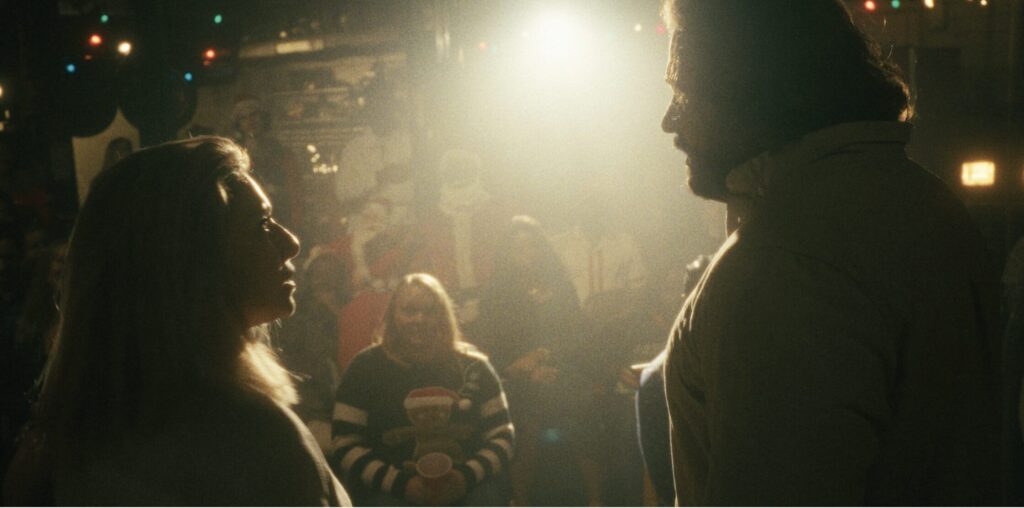
The film comes to its crux with a masterfully directed scene set onstage at an improv comedy pop-up at a body shop, where both Strassner and Larsen get to really play off each other and develop their understanding of their characters in relation to one another. It’s an incredibly satisfying scene of character work as Cliff and Didi start and end the scene in entirely different places.

“The Baltimorons” is a true dramedy. It’s both very earnest in the topics it broaches, including alcoholism, divorce, infidelity and suicide, and very funny, mostly due to the performance of Strassner, who delivers jokes and lines naturally off the cuff. I could have been convinced they were improvised on the spot, which is equally a credit to the dialogue-writing skills and directing ability of Duplass.

It would be easy for this movie to end up a tonal nightmare, but the heavier things in it never overpower the genuine humor and earnest relationships between its characters. There is true humanity to be found in this graceful juxtaposition.

“The Baltimorons” opens at Midtown Cinema in September.

Midtown Cinema is located at 250 Reily St., Harrisburg. For more information, visit www.midtowncinema.com. Gabriel Brown serves as assistant manager at Midtown Cinema.


September Events
At Midtown Cinema

First Run Films
“The Roses”
“Caught Stealing”
“Ne Zha 2”
“Twinless”
“Downton Abbey: The Grand Finale”
“Baltimorons”
“History of Sound”
“Big Bold Beautiful Journey”
“One Battle After Another”

Open Mic Night
Tuesday, Sept. 2, 7 p.m.
Tuesday, Sept. 16, 7 p.m.

Trivia Night
Tuesday, Sept. 9, 7 p.m.
Tuesday, Sept. 23, 7 p.m.

Special Double Feature
with Greg Sestero in Person
“Big Shark” (2023)/“The Room” (2003)
Friday, Sept. 5, 7:30 p.m.

Saturday Morning Cartoons
“The Secret of NIMH” (1982)
Saturday, Sept. 6, 11 a.m.

National Theatre Live
“Dr. Strangelove” (1964), Sept. 7, 5 p.m.
“Fleabag” (2019), Sept. 14, 5 p.m.
“The Importance of Being Earnest” (2015), Sept. 21, 5 p.m.
“Inter Alia” (2024), Sept. 28, 5 p.m.

Down in Front! Comedy Riffing
“Death Race 2000” (1975)
Friday, Sept. 12, 9:30 p.m.

Friends of Midtown Outdoor Film Series
“Black Panther” (2018)
Saturday, Sept. 13, Dusk

Sunday Docs
“Undefeated” (2012)
Sunday, Sept. 14, 12 p.m.

3rd in the Burg Movie Night
“Romy and Michele’s High School Reunion” (1997)
Friday, Sept. 19, 9:30 p.m.

Cinemaaaah! Series 
“Night of the Living Dead” (1968)
Friday, Sept. 26, 9:30 p.m.

“Poltergeist” (1982)
Saturday, Sept. 27, 9:30 p.m.

“Alien” (1979)
Tuesday, Sept. 30, 7:30 p.m.

“Rosemary’s Baby” (1968)
Tuesday, Sept. 30, 7:30 p.m.


If you like what we do, please support our work. Become a Friend of TheBurg!

Continue Reading

Filling Bags, Filling Needs: Small food pantries make a big impact

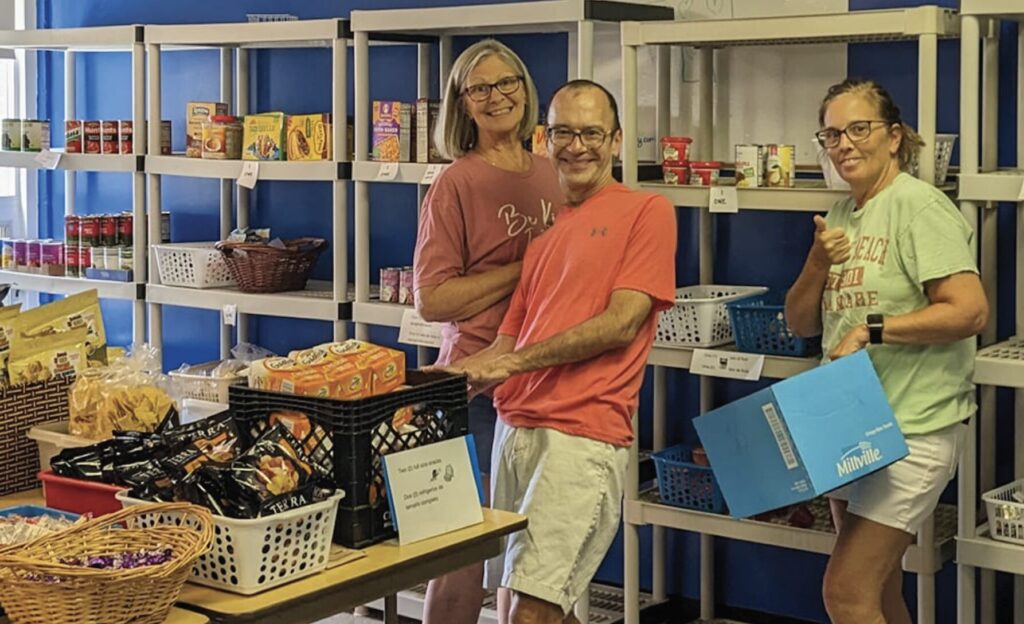
Volunteers stock Grace Giving Pantry

A group of small but mighty food pantries has been assisting the people of central Pennsylvania, mostly going unnoticed except by the people they serve.

Heather Simpson is one of those people. What sent her to a food pantry?

“I was a newly single mom with a really tight income, and I needed to be able to provide for my kiddos,” she said.

Simpson visits Grace Giving Pantry at Grace Lutheran Church in Camp Hill weekly if her schedule allows. It’s open on Wednesday afternoons.

“When people come, we provide a meal that they can take home to cook, fresh fruits and veggies, breads and sweets, shelf stable food, refrigerated items, personal care items, cleaning supplies, and diapers provided by the Healthy Steps Diaper Bank,” said Jackie Behney, co-coordinator of the pantry.

Grace Giving Pantry is one of several small food pantries around the Harrisburg area, often run from churches. You may not hear about them as much as the larger food banks, but they play a vital role in helping to curb hunger throughout the region.

St. Paul Missionary Baptist Church on 17th Street in Harrisburg is another small pantry. It supplies the same types of food as Grace, but a bit differently. On the first and third Tuesdays of each month, Lisa Harris, pantry coordinator, prepacks about 20 bags for visitors.

“I give them a bag of dry goods, frozen food and meat, and this week I’ll have produce,” Harris said.

They’ve been doing this for 30 years.

Then there’s Mountain Be Removed Outreach Center (MBROC), which distributes its food outside in the parking lot of the Church of God in Penbrook.

“We’re out there 11 months out of the year, unless it snows, unless it’s pouring down raining,” said Samonia Whisonant, co-founder and executive director. “So, we’re out there in zero or below zero.”

MBROC decided to have its 14-year-old pantry outdoors because it’s less intimidating and gives them exposure to people who need help but may not know that they are there. Whisonant is grateful for the collaboration with the Church of God.

Collaboration allows these pantries to do their work. The food they distribute comes from a multitude of places.

“Midwest Food Bank is probably the largest place that we get food,” Behney said.

The pantries also get food from Panera, Central Pennsylvania Food Bank, Aldi, Weis Markets and Giant.  Each pantry’s corresponding church also provides financial donations.

“Sometimes, the best donation we get from our congregation is a financial one because, that way, we can fill in the gap by purchasing things we’re not able to have donated,” Behney said.

Ingenuity helps too. One volunteer from Grace Giving Pantry heads to Root’s Country Market and Auction in Manheim late Tuesday evenings to get rock bottom prices on produce.

Greater Options

All these donations go to many people for many reasons, including seniors, people facing illness, those who have lost a job, and those who simply can’t make ends meet.

During each distribution, MBROC serves about 60 families, Grace Giving Pantry about 25, and St. Paul’s about 20—not huge numbers, but huge to those who need the help.

Janice Reinke, manager of food procurement and distribution at Midwest Food Bank in Middletown, said that, of its 230 partner organizations, 80% are smaller sized.

“The need is great,” Reinke said. “So, the more options, the better.”

And these pantries are low- or no-barrier, meaning they have few requirements to get food.

“They just need to tell us their name, where they live, and how many people are in the household,” Whisonant said.

St. Paul requires identification, due to donor organization requirements, but “we serve whoever comes through the door,” Harris said.

There is no income requirement for the pantries, which is helpful to people like Simpson.

Simpson does receive SNAP, but, since she is self-employed, her income can vary greatly, pushing benefits down disproportionately to her increased income.

“There were times when I wasn’t getting enough benefits,” she said.

The pantry took the pressure off.

Whisonant pointed out that it’s not just about income. It’s also about bills.

“I think that, when it comes to groceries, it doesn’t matter where your income is at, because everybody is in a different spot, in a different situation,” Whisonant said.

She spoke of a time when there were three incomes coming into her house, but they still didn’t have enough for food. That’s what drove her to begin helping others, because her family was helped at one point.

Having a variety of small pantries offers people options of when, where and how frequently they can get food.

“They can come out on Saturdays, because most people are off on the weekends,” Whisonant said.

These three pantries aren’t one-trick ponies. Between the three, they either serve food to the homeless weekly, distribute food to seniors, or have a community meal at the church. They also have relationships with the folks who come to be served.

“They share their lives with us,” Behney said. “They share their prayer needs with us. We hear their life stories.”

Sometimes, the recipients become volunteers or donate to the cause.

These pantries represent just a portion of smaller pantries operating in the Harrisburg area. Others are tucked away in organizations’ basements and neighborhoods, quietly getting to know and serve those who need an extra hand. Filling people’s bags also benefits the giver.

“It fills my heart,” Behney said.

Editor’s note: Heather Simpson’s name was changed to protect her identity.

Where There’s Food

Where can people access small food pantries? Here’s information on the pantries mentioned in the story, plus a few others.

Mountain Be Moved Outreach Center
Church of God, Harrisburg
Second Saturdays, 11 a.m. to 1:30 p.m.

Grace Giving Pantry
Grace Lutheran Church, Camp Hill
Every Wednesday, 2 to 5 p.m.

St. Paul Missionary Baptist Church, Harrisburg
First and third Tuesdays, 9:30 to 11 a.m.

St. Peter’s Lutheran Church, Middletown
Mondays and Thursdays, 9 to 11:30 a.m.
Tuesdays, 6:30 to 7:30 p.m.

Crossroads Christian Ministries, Oberlin
Third Saturdays, 1 to 3 p.m.

One80 Ministries, Mechanicsburg
First and third Fridays, 5:30 to 7 p.m.

Salem Shares Food Pantry
Fishing Creek Salem UMC, Etters
First Thursdays, 3:30 to 6 p.m.

If you like what we do, please support our work. Become a Friend of TheBurg!    

Continue Reading

September Publisher’s Note

I read tons of news industry information—data, trends, articles—so recently came across a story that stated that lots of people still like to read print newspapers.

My reaction: I could’ve told them that!

This particular article breathlessly related how nine community members in suburban Indianapolis, fed up with the area’s chain-owned “ghost newspapers,” teamed up to launch their own old-fashioned, subscription-based print paper.

Two years in and, at least according to the story, their back-to-the-future news experiment has proven a success (“Stop the Press? Does Print Have More of a Future in Media Than We Think?” Local News Initiative, Northwestern/Medill, Aug. 4, 2025).

Well, TheBurg is 17 years old, and our print product is more popular than ever. We print as many copies as we can afford to publish and distribute, but demand always outstrips supply. Each month, we run out quickly, especially at our most popular locations. [Note to Wegman’s shoppers—believe it or not, we restock there every week, but you scoop up Burgs as fast as we can stack them.]

This is not to diminish our online news product, which is also popular. We publish most breaking news only online, so please bookmark and visit our website on a regular basis to enjoy everything we offer.

In other words, we have a hybrid model, which combines our award-winning print magazine with our online daily reporting. Every news outlet must make its own decision on how best to run its business (print vs. digital, free vs. paid, etc.), and we find that this model works for us.

With that, welcome to our latest issue of TheBurg. We pride ourselves on coverage of the local arts scene 12 months a year, but, each September, the arts truly take over our monthly magazine. This month, you’ll find stories on theater, music, visual arts, the written word and more—always all original and all local.

On a parting note, I’d like to circle back to that Indianapolis start-up, which, importantly, is run by community members. Indeed, we believe a key to our success is local ownership, as our partners all live in the Harrisburg area and, in fact, work for TheBurg. That’s an intangible that no chain newspaper could ever replicate.

Lawrance Binda
Publisher/Editor

If you like what we do, please support our work. Become a Friend of TheBurg!   

Continue Reading

September News Digest

Lower-Income Housing Fund Opens

Harrisburg plans to lend support to developers providing housing to lower-income residents.

The city announced last month that it would launch an $8 million Affordable Housing Development Fund to financially assist developers and to expand housing options in the city.

“We are taking bold action to support the kind of housing development that meets the real needs of our community,” said Mayor Wanda Williams. “This is about putting resources where they will have the greatest impact—on the people who call Harrisburg home.”

The Affordable Housing Development Fund is open to qualified developers with experience building or expanding affordable housing within the city. Developers may apply for funds for new construction, expansion of existing units or enhancements. Applications will be reviewed and scored by an independent committee appointed by the mayor.

The money for the initiative came out of the city’s grants fund but was made possible through the federal American Rescue Plan Act (ARPA) program. Harrisburg opted to put $31.4 million of its total $47 million share of ARPA money into its general fund to replace revenue lost during the pandemic. That money then went to pay for regular budget items, such as salaries, therefore freeing up money that usually paid for those things to be allocated to special projects, such as the affordable housing program, said Business Administrator Sam Sulkosky.

City Council, in July 2023, approved moving that money into the general fund, but designated certain projects that the money should fund. One of those was the $8 million for affordable housing, in addition to other projects, such as $8 million to replace the Hall Manor pool.

Applications for the affordable housing funds will be due by Sept. 5.


Building Projects Approved

Several downtown Harrisburg office buildings soon may have a new lease on life as residential spaces.

The Harrisburg Planning Commission last month supported proposals by two developers to turn vacant offices on N. 2nd Street into apartments, as well as a project to construct a new transportation center.

First up was Harrisburg-based WCI Partners, which shared its variance and land development plan proposal for 508 and 510 N. 2nd St. Between the two buildings, the company would construct 11 one-bedroom units, ranging from 435 to 538 square feet.

The planning commission voted to recommend approval of the project, in a vote of 5-1. Board member Vern McKissick was the lone “no” vote, saying that he was in favor of the project as a whole, but didn’t agree with the use of a variance, which would allow the developer to construct more units than the city code typically allows for a building of that size.

McKissick expressed concern that WCI requested the variance, in part, to make the conversion work financially, a subject detailed in the Planning Bureau’s case report for the project.

Dave Butcher, president of WCI, said that financial feasibility was a factor, but that the unique layout of the building was the major reason for the variance. City Planning Director Geoff Knight agreed.

“I do think there are issues beyond the finances of this, as far as combining units and how this building functions as a multifamily unit dwelling,” Knight said. “When you look at what’s the use after the commercial, I think what they’ve laid out makes sense for how the floor plan is laid out.”

Just two blocks from WCI’s project, developer Breneman Properties has proposed transforming three attached office buildings at 315 N. 2nd St. into a 10-unit apartment building.

The commission unanimously recommended approving the conversion.

Both projects will need to obtain City Council approval before breaking ground.

Additionally, the planning commission recommended approval for the lot consolidation and land development plan submitted by Susquehanna Regional Transportation Authority to construct a new transportation center on N. Cameron Street.

SRTA, which operates the Rabbittransit bus system, has proposed demolishing its outdated transfer center and building a new one with a temporary bus transfer center on site. The 15-acre project site is bounded by Herr Street, the Harrisburg Cemetery, State Street and Cameron Street.

Harrisburg’s Parks and Recreation facilities currently sit on the project site, but its offices are slated to move and the buildings demolished.


Market Restoration to Start

Construction at the Broad Street Market is now slated to begin by the end of this month.

Harrisburg officials have told TheBurg that the groundbreaking for the rebuilding of the fire-damaged brick building would move up a month, to Sept. 30.

Previously, the city said that construction would begin at the beginning of September, but more recently, that date was pushed to Oct. 30. But Facilities Director Dave Baker said that the timeline has been expedited due to “the mayor’s prerogative to make this project as expeditious as possible.”

“I’m moving as quickly as I can,” Mayor Wanda Williams told TheBurg. “I want it open ASAP, but I want it done right.”

Williams has approved the final design for the brick building rebuild, which includes preservation of the historic nature of the building, with added HVAC, a mezzanine and ADA compliance. Ultimately, some features may be added or removed depending on funding.

The market’s brick building burned in a devastating July 2023 fire and has been shuttered since.

Baker said that he doesn’t expect insurance money to cover all project costs. Additional money may come from CDBG funds received from the U.S. Department of Housing and Urban Development and grant opportunities.

Williams and Baker both said that the previously proposed “connector” building, which would have been erected between the brick and stone buildings, is not part of the plan.

Home Sales, Prices Higher

Harrisburg-area home sales and prices both increased in July, according to the latest report on previously owned houses.

For the three-county region, 634 houses sold compared to 608 in July 2024, as the median price rose to $310,000 from $286,000, according to the Greater Harrisburg Association of Realtors (GHAR).

In Dauphin County, 282 homes changed hands, a decrease from 293 in the year-ago period, while the median sales price dipped to $263,750 from $280,000, GHAR said.

Cumberland County reported 314 homes sales versus 281 in July 2024, as the median sales price rose to $340,500 from $295,000, according to GHAR.

Perry County counted 37 sales in July, an increase from 32 a year ago, as the median sales price went to $319,900 versus $275,000 in the prior year, GHAR stated.

The pace of sales slowed somewhat, as “average days on market” rose to 24 days compared to 22 days in July 2024, said GHAR.


So Noted

“A Miracle Community” opened last month in south Harrisburg, off Shanois Street, to accommodate people who need to relocate from a nearby homeless encampment. The new location was necessary due to imminent work to I-83, which will displace the long-time encampment near the PennDOT building.

Bernard “Bernie” Gallagher last month was named executive director of the Harrisburg-based Keystone Research Center, an economic policy think tank. He succeeds Stephen Herzenberg, who founded and led the organization for three decades.

Catherine Hershey Schools for Early Learning cut the ribbon last month on its newest facility in Middletown. It was the third Early Childhood Education Center, which offers free care and education for young children ages six weeks to five years, following similar facilities in Hershey and Harrisburg.

Dan Miller last month announced that he had accepted the Republican nomination for Harrisburg mayor. Miller, the city treasurer, lost to incumbent Mayor Wanda Williams in the Democratic primary, but secured enough write-in votes to be on the ballot on the Republican side for the November general election.

Jennifer Kuzo will retire after eight years as president of Visit Lebanon Valley, a regional destination marketing organization. She will remain through mid-December as the organization searches for new leadership, according to Visit Lebanon Valley.


Changing Hands

Bellevue Rd., 1958: Y. Porter to JTA Consulting Group LLC, $90,000

Berryhill St., 1955: G. Martin to Wrosado LLC, $130,000

Boas St., 426½: N. Patterson to C. Zeger & K. Jackson, $205,000

Boas St., 1853: L. Portes to First Choice Home Buyers LLC, $100,000

Briggs St., 218: M. Theis & J. LaCroix to S. Toole, $381,000

Brookwood St., 2424: Blessed Investments LLC to H. Duverge, $163,500

Chestnut St., 1919: GW Rentals LLC to 3DST LLC, $109,000

Crescent St., 311: D. Boyle to D. Canario, $56,650

Crescent St., 325: L. Kaighn to BZDEL Global Investments LLC, $112,000

Croyden Rd., 2832: W. Acevedo to E. Jimenez & Y. Rosario, $165,000

Cumberland St., 119: J. Michel to S. Bauer, $215,000

Curtin St., 506: A. Sheaffer to JRHeller Com LLC, $85,000

Derry St., 1615: DKH Homes LLC to 1615 Derry St LLC, $125,000

Derry St., 2029: S. Bailey to JRHeller Com LLC, $144,000

Derry St., 2117: Unite LLC & L. Tran to V. Acosta, $165,000

Emerald St., 315: D&F Realty Holdings LP to D. Lopez, $108,000

Emerald St., 331: JRHeller Com LLC to Chappel Capital LLC, $75,000

Green St., 2148: First Choice Home Buyers LLC to Williams Williams Properties LLC, $170,000

Hamilton St., 346: K. Possinger to A. Louis, $295,000

Hamilton St., 427: Wright at Home LLC to Easton RE LLC, $100,000

Holly St., 1805: Fine Line Real Estate LLC to X. Star, $149,000

Hunter St., 1717: Bloom Investment LLC to T. Ravel, $170,000

Jefferson St., 2359: JRHeller Com LLC to Chappel Capital LLC, $75,000

Liberty St., 1355: Bridger Investments LLC to J. Rodriguez, $200,000

Logan St., 2149: M. Murlin to Beta One LLC, $60,000

Market St., 1905: Y. Elyadin to T. & N. Celestin, $165,000

Midland Rd., 2406: S. Peterson to J. Perry & K. Casino, $250,000

Moore St., 2122: A&K Investment Property LLC to B. Fortune, $152,000

Nagle St., 119 & 709 Showers St.: V. & B. Wagner to E. Konkle, $325,000

Naudain St., 1615: C. Harp to First Choice Home Buyers LLC, $55,000

North St., 1945: M3 6 Realty LLC to Breneman Properties LLC, $82,000

N. 2nd St., 315: Pennsylvania Health Care Associates to Breneman Properties LLC, $370,000

N. 2nd St., 813: J. Rotz to D Martin Rentals LLC, $400,000

N. 2nd St., 2530: K. Dillon & D. Smyler to Blessed Investments LLC, $158,000

N. 2nd St., 3228: T. Underkoffler & J. Kemmerer to S. Kaplan, $297,500

N. 2nd St., 3237: R. Murray to J. Greenly & B. Johnson, $369,999

N. 3rd St., 1637 & 1637½: B. & L. Wickard & ABKB Properties LLC to CAS Group LLC, $75,000

N. 3rd St., 1808: R. Caretti to R. Devitry, $215,000

N. 3rd St., 1938: R. Kline to Capital Acres LLC, $160,000

N. 3rd St., 3002: PA Deals LLC to CC Homes LLC, $85,000

N. 3rd St., 3029: D. Miller to Equitable Builds LLC, $85,000

N. 4th St., 1705: SPG Capital LLC to D. Hetrick, $167,000

N. 5th St., 1540: HBG Rents LLC to Velocity Capital Group LLC, $270,000

N. 5th St., 2449: Gary Neff Inc. & City Limits Realty to TKO Property Holdings LLC, $85,000

N. 5th St., 2600: S. & S. Aiken to EA Capital LLC, $117,250

N. 5th St., 3127: J. Delores to M. Terry & H. Nguyen, $177,000

N. 6th St., 2448: D. Aibangbee to R. Contreras, $160,000

N. 6th St., 2617: W. Williams to A. Abrantes, $70,000

N. 6th St., 2639: N. Amundson to D. Glick, $135,000

N. 6th St., 2951: W. & M. Tomlinson to Housing Urban Development Secretary & Compu Link HUD Division, $184,835

N. 6th St., 3148: E. Einav to C. Agazie, $165,000

N. 7th St., 2964: D&F Holdings LP to BYD Properties LLC, $280,000

N. 13th St., 129: S. Carter to TNT Systems Group LLC, $158,000

N. 14th St., 1220: J. Frye to Jhon Leo Home Renovations LLC, $121,500

N. 14th St., 1311: J. & V. Williams to T. Strawn, $78,585

N. 15th St., 1316: Henderson Hall to Pettis Hall Ventures LLC, $75,000

N. 18th St., 65: M. Frost to Famous Achiever LLC, $108,000

N. 20th St., 25: I. Williams to W. Griffin, $90,240

N. Front St., 1525, Unit 307: P. Gitnik & G. Svrcek to F. al Mousally, $180,000

N. Front St., 1525, Unit 603: G. & N. Naser to C. Strite, $199,900

Penn St., 2307: Mussani & Co. LP to Breneman Properties LLC, $84,000

Reel St., 2436: JRHeller Com LLC to Core 4 Investing LLC, $75,000

Reel St., 2736: Integrity First Home Buyers LLC to J. Soto, $145,000

Ross St., 618: A. Sheaffer to JRHeller Com LLC, $85,000

Rudy Rd., 1833: Normans Realty Services Inc. to Andes Home Solutions LLC, $70,000

S. 14th St., 410: J. Araujo to Bencosme Realty LLC, $100,000

S. 23rd St., 1012: CNK Investments LLC to J. Poremba, $99,900

S. 24th St., 704: J. Abubaca to M. Sanchez & E. Perez, $107,000

S. 26th St., 625: K. Bentzel to Quick Holdings LLC, $140,000

S. Cameron St., 1000 & 1171: Harrisburg PA III LLC and Cushman & Wakefield to Storage Five Harrisburg LLC, $3,300,000

S. Front St., 701: T. Richards & K. Leitzel to H. Whitt, $225,000

State St., 231, Unit 306: CJ3 Properties LLC to G. Vanegas, $151,900

State St., 1708: T. Freed to A. Peachy, $120,000

Summit St., 37: JRHeller Com LLC to Chappel Capital LLC, $75,000

Swatara St., 2056: J. Quailes to JQ 717 Investments LLC, $104,643

Vernon St., 1526: E. Gonzalez to J. Morocho, $70,000

Walnut St., 1311: R. & P. Noss to Leesuer Estates LLC, $123,000

Walnut St., 1423: G. Amador to M. & A. Polanco, $190,000

Woodlawn St., 2600 & 2601 Greenwood St.: Alternative Rehabilitation Communities Inc. to C. & E. Joseph, $310,000

Harrisburg property sales, July 2025, greater than $50,000. Source: Dauphin County. Data is assumed to be accurate.

If you like what we do, please support our work. Become a Friend of TheBurg!   

Continue Reading

Mind the Gap: As federal funding falls, our community can help fill the breach

Illustration by Rich Hauck.

WITF has faced funding threats before.

Over the years, many politicians and pundits have called for the end of federal financial support for public media. But, from administration to administration, the money continued to flow—often with strong bipartisan backing.

Then came 2025, when Congress, acting on orders from President Trump, passed a rescission bill that zeroed out funding for the Corporation for Public Broadcasting (CPB), which supported public media stations and programs throughout the country.

Starved of funds, the CPB, created by Congress in 1967, is now shutting down.

As a result, starting in October, Harrisburg-based WITF will lose $1.3 million a year, or about 8% of its annual public media budget, according to Ron Hetrick, president and CEO of Pennon, the parent organization of WITF.

“I’m grateful that we’re in a position where we will be able to weather it,” Hetrick told me. “For us, this is not a fatal blow, but it’s not insignificant either.”

Smaller, more rural stations are even more threatened, Hetrick said, as are public music stations, such as Philadelphia-based WXPN, which has a significant audience in central Pennsylvania.

But it’s not just public media facing losses. Numerous food, school, parks, housing and immigrant programs have had their funds reduced, frozen or struck. Grants for arts groups have been recalled and eliminated. The same has happened to library, museum and environmental programs, among others.

In May, the National Endowment for the Arts abruptly cancelled grants to hundreds of arts groups—most local and small—and the Trump administration has proposed shutting down the NEA entirely.

I’m writing this column, though, not to point out how much is being lost to federal budget cutbacks. Instead, I’m writing it as a call to action. If there’s ever been a time for this community to step up, that time is now.

“I count ourselves lucky to have the community base and the megaphone that we do to reach out and make our case for support,” Hetrick said. “But I spend time with a lot of different fund raisers across all different genres, and there are so many needing to find a new way right now.”

Peter Winter Lee, for one, would be happy for your support, especially if you’re a fan of traditional American music.

Lee is the executive director of the Susquehanna Folk Music Society, which has received NEA grants dating all the way back to 1985. Most recently, his group was awarded a $22,000 grant to mount a multi-year, multi-faceted program featuring one of the most American of all instruments: the banjo.

In early May, that grant was caught up in the blanket rescission of NEA grants, which withdrew and terminated funding to hundreds of visual, performing, folk, educational and other art projects across the country.

“The N.E.A. is updating its grantmaking policy priorities to focus funding on projects that reflect the nation’s rich artistic heritage and creativity as prioritized by the president,” read the boilerplate email received by the arts groups. “Consequently, we are terminating awards that fall outside these new priorities.”

As a last-ditch effort, Lee appealed the denial and, to his surprise, learned in early August that his funding would be restored. So, the show goes on. Starting later this year, look for their program, “The Banjo: Torchbearers and Trailblazers,” which will take place at several area locations, including the Fort Hunter barn and the West Shore Theatre.

However, with federal funding priorities in flux and the NEA on the line, Lee knows that he cannot count on future support.

“We’ve tried to apply to the NEA every year, but we ultimately did not apply this year,” he said. “We kind of took a gap year just to see where the dust settles.”

Instead, the group is emphasizing other sources, including memberships, sponsorships and partnerships. Lee mentioned an ongoing effort to strengthen existing relationships with local libraries and with Dauphin County.

“We’re already seeing our community step up in ways to help keep this all going,” he said.

And that’s where you come in. What are your interests? If you’re a fan of public media, you might choose to become a member of WITF or WXPN. If you’re into the arts, Harrisburg has many fabulous theater, music and visual arts groups. Nonprofits that help feed and house people always need donations—perhaps now more than ever, given federal funding cuts.

Truly, it’s a target-rich environment. Maybe you’ve been meaning to donate but have been putting it off, for months, for years. I know that I’m guilty of this.

According to Hetrick, WITF serves about 300,000 people weekly, but only about 10% support the service financially.

“If we can just move those numbers up a couple percent, that makes a really big difference in terms of our ability to do more with public media,” he said.

Peter Winter Lee has another suggestion—get involved. If you embrace a cause, you’ll find participation even more rewarding. You may even make new friends from those who share your interest.

“We will always take donations, but the best way is to get to know us,” Lee said. “Come to a concert and bring a friend—then come to another concert. Just be there, become part of our community.”

Lawrance Binda is publisher and editor of TheBurg.

If you like what we do, please support our work. Become a Friend of TheBurg!   

Continue Reading

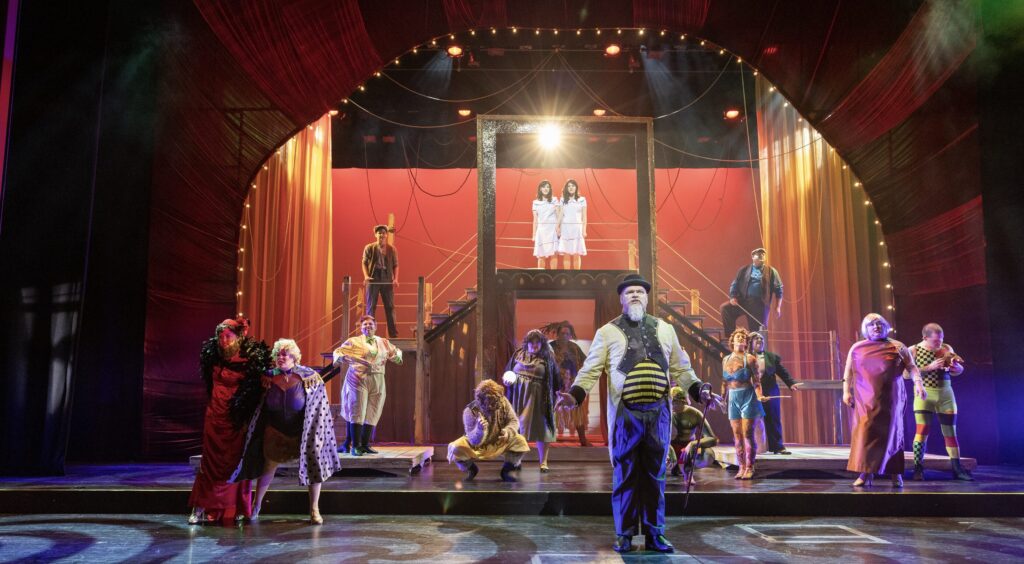
A Century of Community: Theatre Harrisburg opens its 100th season with reflection, dedication

“Side Show” 2022-23

The first live theater production Michael Greenwald saw was a student preview of Harrisburg Community Theatre’s “Witness for the Prosecution” in 1957. He was 16, and he was “transported.”

“It transformed my life, and I’ve never stopped being involved,” he says now. “The role of the Harrisburg Community Theatre, as well as for other theaters that came later, was an opportunity for people who wanted to engage their creative side to do that.”

Whether people worked onstage, backstage or saw shows at reasonable prices without having to travel out of town, “it was opportunity all around.”

Theatre Harrisburg, once known as Harrisburg Community Theatre (HCT), launches its 100th season this month. Founded in 1926, the theater was part of a national movement for hyperlocal productions, made by the community, for the community.

The theater’s history is Harrisburg’s history, said Executive Director Lorien Reese Mahay.

She remembers reading a news story about a smallpox outbreak at HCT, “but they went out, and they burned all of the costumes, and the show went on,” she said. “Whatever was happening outside these walls was happening in the walls, and they were just doing theater through all of it. Through the wars. Through the health crises.”


Try Out

“Sex plays.” My goodness. Couldn’t Broadway and Hollywood produce anything wholesome?

The Little Theatre Movement began around World War I, when Americans, tired of racy theatrical fare and sad-sack touring companies, decided they could do better. It was also an era of college-educated women, blocked from careers, who channeled their considerable talents and organizational skills into civic betterment and creating impactful institutions.

The Women’s University Club of Harrisburg announced in 1925 that it would focus on “the drama,” bringing the Little Theatre Movement to a city that was thriving economically and equally thriving with wayward youth, speakeasies and corrupt political machines.

On Jan. 19, 1926, 18 performers, educators and civic leaders met to launch the Community Players. Their first play would be “The Dover Road,” staged the coming May.

“A try-out for the play will be held next Tuesday evening at 7:30 in the Conservatory of Music,” said a newspaper announcement. “Everyone is invited to ‘try.’”

With confidence built from the success of “The Dover Road,” the Community Players changed its name to Harrisburg Community Theatre. In 1927, perhaps spooked by movies grabbing entertainment dollars, HCT merged with an upstart rival, the Garret Players. By hiring Adele Eichler as director, the model was created of professional staff supporting volunteer onstage and backstage talent.

Greenwald believes that HCT, the Art Association of Harrisburg and Harrisburg Symphony Orchestra—all products of 1920s Harrisburg—emerged from the earlier City Beautiful movement’s effort to “make cities healthier, more livable.”

“Quality of life was associated with arts and culture in the minds of people who were instrumental in city life and who were the civic leaders,” he said.

After Greenwald’s first HCT encounter, he pitched in “wherever I thought I could be helpful” —usher, concessions salesman, follow spot operator (he and a good friend were “crack follow spot operators—we could find somebody in the dark”), actor and longtime board member.

For all the magic onstage, theater production can bring tempers to a boil. Greenwald will never forget when something went wrong in that “Witness for the Prosecution” dress rehearsal, and the director screamed from the back of the house, “What happened to the damn lights?”

Audiences have equated some shows with Broadway quality, but there have been stereotypical community theater moments. Old-timers used to recall Peter Pan “flying” in on a wire unspooling so slowly over the audience that it creaked.

Still, said Greenwald, although a reliance on volunteers can create up-and-down moments, “it was the professional consistency that established the reputation that Theatre Harrisburg has had these 100 years.”

In 1999, the theater split its performance venues into straight shows at the circa-1951 Hurlock Street facility—now the Jay and Nancy Krevsky Production Center—and musicals at the new Whitaker Center for the Performing Arts in downtown Harrisburg.

While Whitaker Center “remains an asset,” said Greenwald, consequences linger. Aging audiences stayed away from downtown. Many people interpreted the simultaneous name change from HCT to Theatre Harrisburg to mean that the company was folding into Whitaker Center operations.

As recently as the early 2000s, Theatre Harrisburg sometimes came close to shuttering, but Reese Mahay, taking her post at the end of the pandemic, saw resilience.

“Here’s this theater that is almost 100 years old, and it is coming back from COVID, and if it could stand that period of time—not to mention depressions, recessions, floods, etc.—and still manage to come back, I thought, ‘I want to be part of it,’” she said.

As arts administrations are eviscerated and nonprofits in every sector compete for dwindling grants and donor dollars, “there’s going to have to be a shift in the way that things are done,” she said. “The museums and libraries and theaters are all going to have to figure out how to do this together.”


Breaking Barriers

Thomas G. Hostetter didn’t get the job of director until his third try, but, once hired in early 1981, he stayed until retiring as artistic director in March 2008. He is “very happy” to return to direct the 100th season’s opening show, the gleefully manic, “A Gentleman’s Guide to Love and Murder.”

“I’m just happy to be at the forefront of the season after all the years I spent there,” he said. “I have an emotional connection to the place.”

Except for a couple of original shows, the theater he joined offered “conventional community-theater fare,” he said.

Hostetter strove “to crack that barrier and do some newer works,” sprinkling seasons with “the safe and the adventurous.” Scheduling musicals from Broadway’s hottest composer, Stephen Sondheim, attracted exceptional talent to auditions “because young people of the time wanted to do Sondheim.”

The Sondheim shows of the 1980s became the theater’s drawing cards—“Company,” “Follies,” “A Little Night Music,” “Sweeney Todd.” For the massive undertaking of “Sweeney Todd,” Hostetter knew days before opening night “that the show was going to reach levels that we had seldom been able to attain, because the cast was ready, the crew was ready. Everybody was devoted to it, committed to it. Everybody was 100% in.”

Challenges materialized in the mid-1990s, as new theater companies opened in the area, entertainment options grew, season-subscription purchases declined nationally, and elaborate Broadway hits, such as “Phantom of the Opera,” were less doable on local stages.

But as Hostetter has kept his hand in directing shows, he sees positive trends. His “Gentleman’s Guide” cast mixes acting veterans and “very gifted” new talent.

“They’re young,” he said. “They’re really solid in the singing department as well as the acting department.”


Theater Hub

Harrisburg’s thriving theater scene today emerged from Theatre Harrisburg, many say.

Donald and Anne Alsedek were HCT veterans—she played Mrs. Lovett for the landmark “Sweeney Todd”—when Don felt called to do more substantial shows than the “just fluff” he was directing there.

Former HCT Director Peter Carnahan, then serving on the Pennsylvania Council of the Arts, advised Alsedek to build a board and business plan, and HCT sent students to the theater school of Open Stage, the company that the Alsedeks founded with Marianne Fischer.

This year, Open Stage celebrates its 40th season.

“If HCT wouldn’t have been there, I might be selling pencils now,” Alsedek said. “The fact that they were there and accepting of lots of young talent over the years—I’m glad I was part of the 100 years.”

Open Stage was also instrumental in creation of Sankofa African American Theatre Company in 2017. Sankofa was founded as “a space for Black folks to tell our stories and handle them in the way that we want to and care for them and really understand them,” said Executive Artistic Director Sharia Benn.

For the 2023-24 season, Reese Mahay approached Benn about a Sankofa-Theatre Harrisburg collaboration of “Intimate Apparel,” Lynn Nottage’s exploration of African American and immigrant life in turn-of-the-20th-century America.

“The things that are important to Sankofa, Theatre Harrisburg respected,” Benn said.

Sankofa brought its audience base, its capacity to contribute half of the resources and organizational tasks needed, and—new to Theatre Harrisburg audiences—the post-performance talkbacks for critical dialogue that are core to Sankofa’s purpose.

Both companies needed each other’s resources to stage the intricate “Intimate Apparel,” Reese Mahay said. “It was a true collaboration in the sense that it was two companies acknowledging that we can’t do this unless we band together.”

While Theatre Harrisburg is trying to choose scripts with parts open to people of all backgrounds, it is also cultivating partnerships with diverse organizations, because “it’s short-sighted to think that, if you open up an audition, then everything changes,” she added. “It doesn’t change. It takes years of actually going to the community and saying, ‘we’ve changed, we’ve adapted, we’re listening, and we’re willing to do what we need to do in order to serve the community.’”


Season of Celebration

Immediate past Chair Rebecca Mease is proudest of helping to hire Reese Mahay as executive director.

“I really think she’s taking us to a new level with her dedication to seeing the community, serving the community,” Mease said. “She has grown our patron base so much by being able to connect with different communities that maybe were not even aware that we exist. While we are a community theater that puts on professional productions, community is the whole key. That’s who we are.”

The 100th season features a mix of shows consequential to the theater’s history, including the oft-performed “Guys and Dolls,” and some new to the repertoire, such as “The Last Five Years,” coming by popular demand.

A staged reading on Oct. 4 of “The Dover Road” honors the first HCT production, at McCormick Riverfront Library, where the founders first met. On May 30 and 31, Theatre Harrisburg and Harrisburg Symphony Orchestra will present a concert version of “Follies,” recognizing two legacy institutions from the 1920s and the theater’s achievement in staging two past productions of Sondheim’s complex saga.

Theatre Harrisburg will hold a 100th anniversary gala at The Willows at Ashcombe Mansion on May 31. A Gatsby-themed New Year’s Eve gala will kick off 2026 at the opulent King Mansion, opened in 1926.

“It’s a great way of bringing us into not only our hundredth season but our hundredth year in grand style,” she said.

Mease, a veteran performer, now in her 28th production with “Gentleman’s Guide,” sees a decline in corporate sponsorships nudging the theater toward more service-oriented projects that deliver a community good, such as the Penguin Project, which stages shows performed by children with disabilities.

While the Penguin Project provides an avenue for children to perform, it also provides a conduit for those who “want to be involved,” she said. “They want to help such a program.”

From the vision of a few people in the 1920s, Theatre Harrisburg remains standing in the 2020s, said Greenwald.

“The soul of our community is intrinsic in those things which bring us joy and which move us, and that’s theater, and that’s art, and that’s music,” he said.

Theatre Harrisburg’s 100th season concludes with “Disney’s Dare to Dream JR,” the summer 2026 Penguin Project show. Reese Mahay sees correlations.

“It felt very fun and appropriate when you think that the entire thing began with a bunch of people dreaming about what it might look like to have a theater in Harrisburg,” she said. “It began with a dream, and now here we are, looking into the future. Always looking into the future.”

For more information on Theatre Harrisburg, including their 100th anniversary season and events, visit www.theatreharrisburg.com.

If you like what we do, please support our work. Become a Friend of TheBurg!    

Continue Reading

“Everyone Laughs”: Latino improv group Los Complicados focuses on comedy—and truths

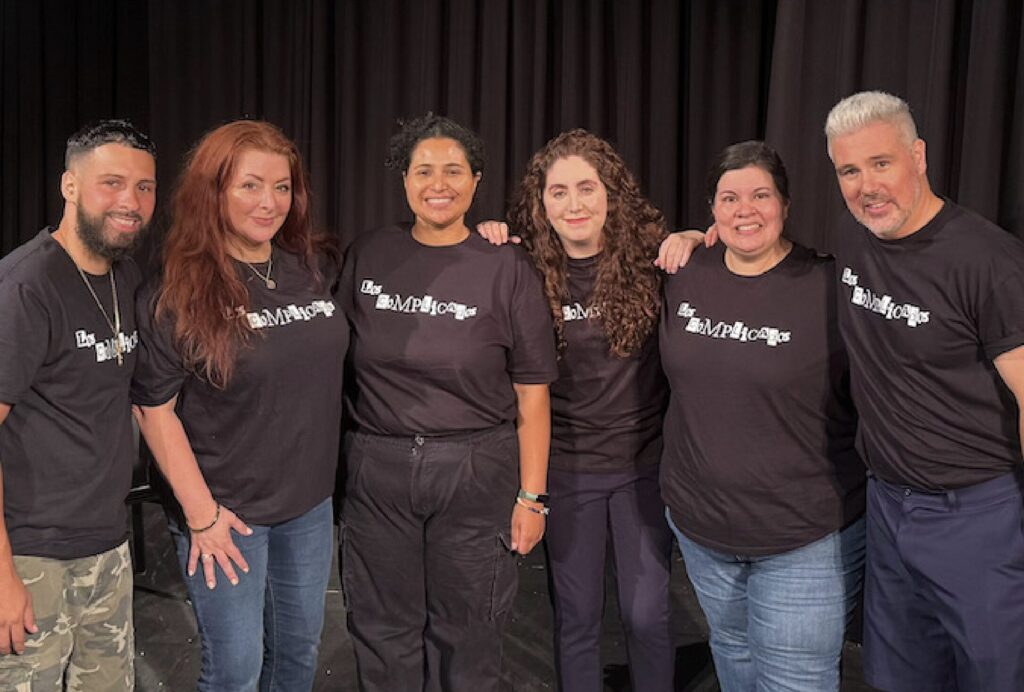
Members of Los Complicados, from left, Nelson Gomez,
Vanessa Codorniu, Carolina Sanchez, Mila Kreichman Sara B. and Dan H.

For Vanessa Codorniu and her group of performers, it’s complicated. Literally. Because that’s their name.

Los Complicados.

“This is why we chose our name,” Codorniu explained recently, with a laugh. “We’re complicated voices in comedy. We’re not just trying to be funny. We’re trying to tell truths, too, and that’s tough in this day and age.”

While it might be tough, Los Complicados has found something of a sweet spot at the Harrisburg Improv Theatre, where the troupe frequently performs. According to Codorniu, their performances almost always pack the theater, leaving some latecomers on the outside looking in.

And to think—the group isn’t even one year old.

Taking the stage for the first time in October 2024, Codorniu gathered her fellow performers for two months of practice before they brought their act to the public. The idea for a Latino improv team in central Pennsylvania had been floating through Codorniu’s mind for a while, but it wasn’t until she started attending the Harrisburg Improv Theatre that she was able to bring her vision to life.

“When I joined the Harrisburg Improv Theatre, everyone around me was mostly white,” said Codorniu, who also teaches at the theater. “But the owners are amazing and supportive of diversity. So, when I brought the idea to them, I was like, ‘We’re doing this,’ and they got on board.”

After performing for the first time, she told the owners, “If they don’t let us do it every month, we’re going to die,” she added jokingly.

“But they saw us and said we were so far ahead of the game,” she said. “Since then, this has been my home.”


Introspection
Codorniu has turned that home into a dynamic show that takes pride in being what she thought might be the first-ever Latino improv team in all of Pennsylvania. One minute, performers are dancing to Bad Bunny songs while, the next, they seamlessly transition into dissecting the legacy of a chancla.

The prolific nature of the group didn’t come as an accident. Spending most of her childhood in New York City, Codorniu fell in love with improv after she came across the Harrisburg Improv Theatre and threw herself into the process. From there, a distinct curiosity took over. Not only did she thrive making people laugh, but she took pride in forcing them to think, as well.

Case in point: stereotypes and communication.

When it comes to the former, Codorniu is quick to point out how she’s been subjected to a lot of “not nice” Latino stereotypes, and Los Complicados makes it a point to use only stereotypes that she deems “lovable.”

As for the latter, Codorniu ensures that nothing gets lost in translation, including scenes that may be done entirely in Spanish. Codorniu will stand at the front of the stage and translate all that’s being said so nobody misses the punchlines.

“We want to let people in on both the story and the joke,” she said. “We want to share stories that are real and then create made-up stuff off of that. It’s about educating as much as it is about anything else.”

That introspection has led to the group’s members finding an even deeper appreciation for what they do.

“Los Complicados has been a wonderful addition to my life in Harrisburg,” member Carolina Sanchez noted. “Every time we play, I feel like we are bringing more Latinos into this space that was previously reserved for other non-Hispanic populations. I am so happy that I now have a community of Latinos to engage with while doing this fun hobby.”


Healing
As for the future of Los Complicados, Codorniu explained that she has no intention of slowing it down. Instead, she’s excited to expand the show to festivals, cultural centers and other theaters. Locally, they will continue to perform at the Harrisburg Improv Theatre every third Friday of the month.

In the meantime—and despite the troupe’s name—there’s nothing complicated about the impact the group has had on Codorniu. Without Los Complicados, she noted, she doesn’t know where she would find a place to fit in as well as she does both within the group and at the theater.

“For me, this has been very healing,” she said. “Being from New York, I don’t know where I could have gone to find other people like me—maybe a Spanish church, but I didn’t end up doing that. Now, this is the only place where everyone has an abuela and the common denominator is Spanish.”

She chuckled to herself.

“Everyone laughs,” she said. “And I guess it doesn’t matter where you are from, because we are all human in the end.”

The Harrisburg Improv Theatre is located at 1633 N. 3rd St., Harrisburg. For more information, visit www.hbgimprov.com. Follow on IG @latino_improv_los_complicados.


Upcoming Performances:

* LoS CoMpLiCaDoS perform every third Friday of the month at 8:30 p.m. at the Harrisburg Improv Theatre.

* York Fringe Festival, Sept. 6, 4 to 5 p.m., The Hangar, 441 E Market St., Suite 4101, York

* Hispanic Heritage Festival, Sept. 13, 1:30 to 2:30 p.m. Allison Hill, Harrisburg

If you like what we do, please support our work. Become a Friend of TheBurg!    

Continue Reading