Student Scribes: “Naked”

I thought when my shirt came off
my stomach would be gone,
That it had moved to my chest.
It didn’t move.
I change clothes every day,
but this time taking them off
felt bizarre and weird.
You clothed me
in kisses.
Your eyes dressed me
in warmth.
Sounds were made
But none of them were words.

Julia Slezak is a sophomore communications major at Penn State Harrisburg.

Continue Reading

New Books Cometh: How about a good read in 2018?

We book-lovers are an expectant lot, eagerly anticipating each year what the publishing gods will send our way. Fortunately, our wait is over. Below are a handful of 2018 selections that are generating buzz, some already released and others waiting just in the wings.
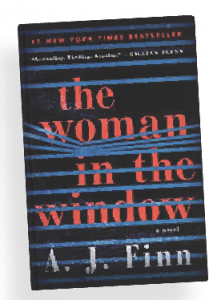
“Woman in the Window” by A.J. Finn (Jan. 2)

Maybe you’ve heard the blurbs—from Gillian Flynn and Stephen King to Louise Penny and Ruth Ware—masters of the thriller genre who have come out to praise A.J. Finn’s “The Woman in the Window.” The term Hitchcockian shouldn’t be thrown around lightly, but in this case, Finn delivers a “Rear Window”-esque noir that packs enough twists and turns for any fan of Hitchcock’s most thrilling films. With a nod to those mid-century classics, Finn is diabolical in taking the reader where he wants them to go—and who he wants them to trust. Already set for translation into 36 languages, Finn’s thrilling, suspenseful, edge-of-your-seat page-turner will delight those looking for the next book-to-film blockbuster in the vein of “Gone Girl” and “The Girl on the Train.”
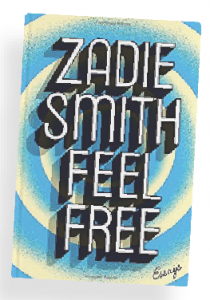
“Feel Free: Essays” by Zadie Smith (Feb. 6)

New Zadie Smith is always a cause for celebration, and her latest essay collection, “Feel Free,” does not disappoint. Taking on the modern world with an insightful, critical eye, Smith tackles music, film, pop culture, politics, literature and everything in-between. About Facebook, Smith writes, “It’s a cruel portrait of us: 500 million sentient people entrapped in the recent careless thoughts of a Harvard sophomore.” With wit, humor and that razor-edge intellect that’s made her one of the most beloved international authors working today, Smith delivers a superb literary collection to add her to growing oeuvre.
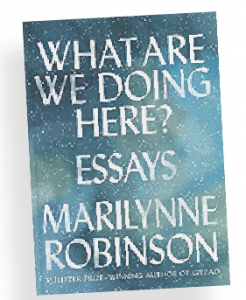
“What Are We Doing Here?: Essays” By Marilynne Robinson (Feb. 20)

A new essay collection from Marilynne Robinson? Sign us up. The award-winning novelist takes on an array of contemporary issues—political, theological, philosophical—to give us this timely collection when we need it most. “What do we lose when we ignore early American history, and, to the extent that we notice it, mischaracterize it?” Robinson writes in the essay, “What is Freedom of Conscience.” With unrivaled prose and boundless insights, “What Are We Doing Here?” proves that Robinson is at the top of her game, offering us clarity and wisdom in an age of misinformation.
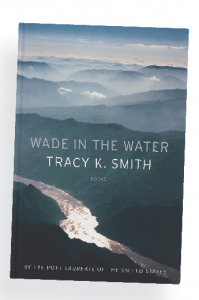
“Wade in the Water” by Tracy K. Smith (April 3)

In her first publication since being named U.S. poet laureate last fall, Tracy K. Smith delivers a powerful and hypnotizing new collection in “Wade in the Water.” Ranging from themes of politics and religion to erasure poems based on correspondence between African-American slaves during the Civil War, Smith is in full command—offering us a necessary, profound and unsettling poetry collection. “I ache most/to be confronted by the real,” Smith writes in “Annunciation,” a profound-yet-personal critique of modernity, one of many poems circling our nation’s history and the notion of progress. In “Wade in the Water,” the former Pulitzer Prize-winning poet proves once again why she’s one of the leading ambassadors of poetry in the world.

“The Recovering” by Leslie Jamison (April 3)

In this autobiographical study of alcoholism, acclaimed essayist Leslie Jamison transcends genre in her new book, “The Recovering: Intoxication and Its Aftermath.” Part memoir and part historical study, Jamison recounts her own personal struggles with alcoholism while profiling famed writers such as Raymond Carver, John Berryman and David Foster Wallace. Jamison’s talent as a writer is evident, and her ability to evoke humor and pathos from such a serious topic is a testament to her ability as an essayist. The author of “The Empathy Exams” scores again—look for this one.

“The Road to Unfreedom: Russia, Europe, America” by Timothy Snyder (April 3)

From the acclaimed, bestselling author of “On Tyranny,” Yale Professor Timothy Snyder has been a vocal and spirited critic of contemporary totalitarianism across the globe. In “The Road to Unfreedom,” Snyder expands his lens to Russia, Europe and yes—America—in this in-depth-yet-accessible research of contemporary history. In a turbulent and uncertain global period, Snyder examines these threats to democracy, the global rise of populism, and the choices we face going forward.

“The Lost Empress” by Sergio De La Pava (May 8)

This time around, self-published literary darling Sergio De La Pava has opted for the more traditional publishing route. After publishing his now-acclaimed, postmodern romp of a novel, “A Naked Singularity,” De La Pava became a cult favorite among those who admire the works of David Foster Wallace, William Gaddis and Thomas Pynchon. In his new, traditionally published novel, “The Lost Empress,” De La Pava takes on America’s most popular sport, the criminal justice system, and topics ranging from theoretical physics and immigration to lonely pastors and religion. De La Pava, who is a New York public defender, writes with a mesmerizing, maximalist style reminiscent of the aforementioned novelists, and his new novel all but guarantees he won’t have to self-publish again.

“The Ensemble” by Aja Gabel (May 15)

I know next-to-nothing about classical music, quartets and the cutthroat world of professional musicians, but that didn’t stop me from loving Aja Gable’s debut novel, “The Ensemble.” Set in this high-stakes world where every concert matters, we watch as four members of the Van Ness String Quartet—Jana, Henry, Daniel and Brit—experience love, betrayal, triumph and loss. Featuring rich, fully fleshed-out characters that jump off the page, “The Ensemble” is one of the most endearing and worthwhile explorations of friendship I’ve ever read. With intoxicating prose and complex-yet-likeable characters, this debut is well worth the read. Set for release in May, it’s an astounding debut for Aja Gabel and another hit for Riverhead Books.

“American Sonnets for My Past and Future Assassin” by Terrence Hayes (June 19)

From one of the preeminent poets writing today, Terrence Hayes’ latest collection wins the award for best title of the year. Featuring 70 different poems bearing the same title, “American Sonnets for My Past and Future Assassin” presents an ode to the sonnet form while exploring race, identity in America, love and the meaning of “assassin.” Written during the first 200 hundred days of the Trump presidency, Hayes’ collection is a haunting journey into America’s past and future—dreams and nightmares.

Alex Brubaker is manager of Midtown Scholar Bookstore, 1302 N. 3rd St., Harrisburg. For more information, visit www.midtownscholar.com.


Continue Reading

Harrisburg Council confirms CRW appointments, delays action on financial advisor, downtown parking

Harrisburg City Council tonight

Harrisburg City Council approved four of the mayor’s board appointments tonight but bucked his will on two other pieces of legislation, including one that would bring free evening parking to the city’s downtown business district.

The city’s legislative body appointed Garvey Pressley, Crystal Skotedis, Alisa Harris and Andrew Enders to serve on the board of Capital Region Water. Skotedis and Pressley are current board members. Enders and Harris are newcomers, replacing vice chair William Cluck and board director Daryl Walters.

CRW’s board approves all contracts, budgets and strategic plans for the city’s water/sewer authority. All of the board appointees were nominated by Mayor Eric Papenfuse and endorsed by current board chairman Marc Kurowski.

Council also confirmed the appointment of Shannon Gority, a former CRW executive director who stepped down last year, as a member of the city’s Zoning Hearing Board.

In other action, council sparred with the mayor over a resolution to hire a financial planner for the city, which would allow it to enter into negotiations with one of its creditors and potentially secure a lower interest rate on loan payments.

Papenfuse said that Ambac Insurance Corp., which the city agreed to pay $125 million over a 20-year period as part of its 2013 debt deal, has expressed interest in re-negotiating the terms of the city’s debt payments. Due to requirements under the federal Dodd-Frank financial reform bill, however, the city can’t enter those negotiations without a financial advisor.

Last year, the city issued an RFP and convened a selection committee to choose an advisor. The selection committee unanimously picked Fairmont Capital, which was recently restructured as Marathon Strategic Advisors LLC. The firm, based in New Jersey, is not yet incorporated in Pennsylvania.

Papenfuse explained that Marathon’s senior advisor was favorably recommended by Marita Kelley, the city’s Act 47 financial oversight coordinator. But Kelley’s word alone wasn’t enough for council members, who said tonight that they would not approve the contract with Marathon until they were able to consult two additional references.

Papenfuse warned council that delaying the vote would delay the negotiations with Ambac, which could, in turn, jeopardize favorable interest rates.

“Interest rates will continue to go up,” he said. “This is time sensitive, and to delay even a few more weeks could end up costing the city in the long run.”

Council members rejected the allegation that they were delaying a potential loan restructuring. They claimed that they were applying the same level of due diligence as they would for any city contract.

“We’ve been burned by consultants before,” said Councilwoman Shamaine Daniels.

Council also delayed voting on a deal that would eliminate parking enforcement in Harrisburg’s downtown business district from 5 to 7 p.m. The deal calls for Harrisburg, the Dauphin County commissioners and the Harrisburg Downtown Improvement District to pay a combined $270,000 a year to Park Harrisburg, the private company that manages Harrisburg’s parking assets.

The agreement originally called for a three-year term, but council proposed adopting it as a one-year trial period. Council President Wanda Williams recommended delaying the final vote until the county commissioners could discuss and agree to the single-year term.

Continue Reading

A Living Downtown: Harristown plans another residential conversion.

Harristown hopes to convert this downtown office building to apartments.

More apartments appear headed for downtown Harrisburg, though it may be awhile before you’ll be able to move into one.

The city’s Zoning Hearing Board tonight approved a variance that would allow Harristown Enterprises to convert a circa-1952 office building to a 25-unit apartment building with commercial space on the first floor.

The building, at 124 Pine St., currently houses Keystone Human Services, which would seek new space following a sale, said Harristown CEO Brad Jones.

“We believe it is a good place for some very nice apartments,” Jones told the board. “It fits in with our goal to revitalize downtown Harrisburg.”

Keystone currently has the six-story, 30,000-square-foot building on the market for $1.5 million.

Over the past few years, Harristown has converted several downtown office buildings to higher-end apartments. In fact, the company just started work today on another project, the conversion of a small, empty office building at the corner of N. 2nd and Cranberry streets into 12 apartment units. That building, Jones said, has been renamed “The Bogg on Cranberry.”

The Pine Street project, he said, would consist of 18 one-bedroom and seven two-bedroom units that would range from about 700 to 850 square feet in size. A variance was needed because current zoning code restricts new housing units to a size of at least 1,200 square feet.

Jones said that he expects rents to be about $1,095 to $1,395 a month. The project includes 19 off-street parking spaces, which would be rented separately.

Harristown still must get the approval of City Council before it can proceed with the project. If that happens, the company hopes to close on a building purchase in May. Jones, however, expects that Keystone will then lease the building back until it can find a new home, meaning that renovation work probably won’t begin until early 2019.

At tonight’s meeting, the Zoning Hearing Board also was slated to hear a variance application to establish a vehicle storage and repair business in a series of garages at 1408 Susquehanna St., as well as a commercial parking facility across the street in a small parking lot at 1418 Susquehanna St.

However, in a letter to the board, the company’s lawyers said they were withdrawing the application for the 1408 Susquehanna St. property. The board was unsure of the company’s intentions for 1418 Susquehanna St. Because the applicant did not attend the meeting, the board granted a continuance for that part of the application pending clarification.

Continue Reading

A Step Closer: Site preparation set to start for federal courthouse project.

The site of the proposed federal courthouse in Harrisburg (file photo)

Pre-construction activity should begin in months on the site of the new U.S. courthouse in Harrisburg, according to a federal government spokesman.

Nick Smith, spokesman for the General Services Administration (GSA), District 3, said today that his agency anticipates “some site work preparation starting this summer.”

Site preparation typically involves the demolition and clearing of existing structures, as well as ground leveling and drainage work.

A GSA document obtained by TheBurg states that the agency anticipates actual construction of the building to begin next year, during fiscal year 2019. Smith, however, said that GSA isn’t able to set a firm start date until Congress appropriates the money for construction.

GSA needs about $137.2 million for the project’s construction and post-construction phases. That money is contained in the proposed 2018 federal budget. However, Congress has yet to pass a final spending bill for the fiscal year, which began last Oct. 1.

Smith added that GSA expects to conclude the project’s multi-year design phase, which precedes construction, in December. Once construction starts, the project should take about three years to complete, according to GSA.

The federal government began searching for a new home for the courthouse in Harrisburg some 15 years ago, after deeming that the current structure downtown, built in 1966, did not meet design and security standards.

In 2010, the government finally settled on a 4-acre site at N. 6th and Reily streets. However, the project has moved along slowly, given a boost only in the last two years after the area’s congressional delegation made it a priority.

The 243,000-square-foot courthouse will provide eight courtrooms, 11 chambers and 42 interior parking spaces. Congress has appropriated about $55.5 million for the project so far, bringing its total expected cost to $194.1 million.

Notably, GSA plans to dispose of the current, 12-story federal building at N. 3rd and Walnut streets once the new courthouse is in use. It expects to move remaining workers from other federal agencies into leased space, according to the document obtained by TheBurg.

“The existing Ronald Reagan Federal Building will be transferred out of the federally owned inventory upon occupancy of the new courthouse,” states the GSA document titled, “Fact Sheet—Construction of New U.S. Courthouse, Harrisburg, Pa.” “GSA intends to proceed with established disposal processes to transfer the property after the remaining federal tenants are relocated from the building into leased space.”

That building also houses a U.S. post office.

Once built, the new federal courthouse would join a new Pennsylvania State Archives building along the 6th Street corridor.

In November, the state completed the demolition and clearing phase for the Archives project at N. 6th, Harris and Hamilton streets, said Howard Pollman, director of external affairs for the Pennsylvania Historical and Museum Commission.

The $24 million project’s next phase, installation of the utility infrastructure, is set to begin in July, with the building phase following in February or March 2019, Pollman said. A two-year construction phase is expected, he said.

The state Archives needs a new home after running out of space in its iconic, mid-1960s-era tower at Forster and Capital streets, Pollman has said.

Continue Reading

Weekend Roundup with Sara Bozich

Happy [RAINY] Weekend!

It’s Millennium Music Conference Weekend! Micah has a nice preview of the weekend, and he, Hope, and Jimi will be out exploring bands Friday and Saturday evening.

Cider fans — Grand Illusion Cider makes its Grand Opening on Friday! Even if you weren’t one to win a $25 gift card, consider making the easy trek to Carlisle to check out any of their 15 local and regional ciders on tap — along with Pennsylvania wine and beer.

P.S. Harrisburg Beer Week will be here before you know it. Want to sponsor? The deadline to commit is tomorrow. Hit me up — I have an option as low as $50!

What are you doing this weekend?

(more…)

Continue Reading

Community Comment: TheBurg unfairly overlooks Steve Reed’s many accomplishments.

Whitaker Center in downtown Harrisburg, cited by the letter-writer as one of former Mayor Steve Reed’s many achievements.

I enjoy The Burg and appreciate both your professional standards and ethics, and the constructive intentions underlying your work with it.

That being said, I must ask you to consider more thoroughly your statements re: Steve Reed’s tenure as mayor and its aftermath noted in your February article, “The Next Phase.” (“The Next Phase: Harrisburg Breaks with ‘City Discontented,'” February 2018). I have no horse in this race–I don’t really know him and have nothing to gain or lose by sending you this. It’s just a matter of fairness.

Your comments were the latest of many proclamations of the kind–i.e. writing off his 28-year tenure in condemnation. It is not fair. I’ve seen few balanced views of this subject in the rolling bandwagon, not to say stampede, of criticism of him and his tenure.

This inertial chorus completely overlooks the tremendous transformation of the city that he accomplished, as well as the incredible devotion to the city exhibited in his 16-hour days, seven days a week for 28 years.  And it must be said that there is no possible rational contention that he was doing it for personal gain.

Yes, there are very legitimate questions about financial management, especially the mystifying incinerator deal, but it is a disservice not only to him but to history, the truth and balanced reporting to ignore his accomplishments.

I don’t know if you were around in 1980, but I would consider that, not 2011-13 cited in your article, as the city’s nadir. I grew up in Allison Hill in the 50s and early 60s near Reservoir Park, a fantastic time and place to grow up in.  I left town and moved elsewhere in the world for many years, coming back in 1980 to find a city that not a soul in the region considered anything but a hopeless basket case.  Into this miasma of despair Reed walked.

His vision was astonishing (yes, even while not batting 1.000) and his more visible accomplishments equally so, considering the starting point. The Hilton, City Island, Harrisburg University, the Whitaker Center, Restaurant Row and development of Second Street from a dangerous gauntlet to a thriving commercial district, and no doubt others I am missing were beyond unthinkable when he started.  And yes, these all do involve the central commercial district. I am less knowledgeable about changes elsewhere in the city, like Allison Hill and Uptown.

But much more important than these was the psychological transformation of the city that he affected, from a universal perception of a lost cause to a place of energy, progress, potential and investment where people, suburban families even!, came for enjoyment.

The city is paying a price now for the financial “mismanagement.” I put that in quotes because, while it is technically correct, I sometimes wonder if it was deliberate, a considered decision in often no-good-choices circumstances, that it would be worth the future cost if it could lift the city out of its grave.

In short, despite the errors (not bad faith intentions) and seemingly counterproductive decisions visible in retrospect, the very arguable view is that he began and, in fact, assured Harrisburg’s resurrection, and the city now has a chance–the “Next Phase”  in your article–because of him. The pejorative commentary also chooses not to recognize the selfless and total dedication to the city that more than anything defines his tenure.

Please consider this a letter to the editor for printing in The Burg. I believe it is more in accordance with the laudable standards of your magazine than the unbalanced commentary on this subject so often seen in the region’s media.

Thank you for your good work in advancing our community.

Jim Heckman
Wayne Township (Halifax area)

Continue Reading

As deadline nears, School Board postpones action on superintendent contract.

Clergy from the Interdenominational Ministers Conference of Harrisburg speak before the Harrisburg School Board in support of superintendent Sybil Knight-Burney.

The Harrisburg School Board once again delayed a vote that would launch a search for a new superintendent, giving them just six weeks to act before the sitting superintendent’s contract is automatically removed.

The board voted 5-3 tonight to strike down a resolution that would have opened Superintendent Sybil Knight-Burney’s post to a competitive application process – one in which she could participate. Knight-Burney’s four-year term expires on June 30.

State law requires the board to give Knight-Burney 90 days notice if they choose to put her contract in jeopardy. Unless they start the search process at their March 20 meeting – the last one before the state-imposed April 1 deadline — her contract will be renewed under its current terms for one year.

It is the second time that the board has decided to table a decision on the superintendent search process. The same resolution that was struck down tonight was also removed from the December agenda on procedural grounds.

Board President Judd Pittman voted tonight with board directors Carrie Fowler and Brian Carter against removing the agenda item. After the vote, Pittman decried the board’s failure to act proactively on the issue.

“It’s time to stop admiring the problem,” Pittman said, referring to the district’s record of poor performance. Harrisburg schools perennially log some of the lowest test scores and graduation rates in the state.

Pittman initially raised the issue of Knight-Burney’s contract in December to keep the board in compliance with the district’s school code. Whereas state law requires the board to give Knight-Burney 90 days notice if they choose not to renew her contract, school code requires 150 days.

School district Solicitor Samuel Cooper acknowledged tonight that the board entered a legal gray zone when it passed the 150-day window. Nonetheless, he said that state law trumps school code and advised board members that they could postpone a decision until April 1 at the latest.

Board Vice President Danielle Robinson, whom Pittman recently replaced as president, led the charge last month and again tonight to table the discussion on Knight-Burney’s contract. She argued that new board members would be unprepared to make informed decisions about the administration early in their tenures. The current board has three newcomers: Brian Carter and Carrie Fowler, who took seats in November and December, respectively, and Tyrell Spradley, who was appointed to a vacant seat on Feb. 8.

Robinson said tonight that the board has not had the chance to discuss the superintendent’s contract as a group. She won’t consider any action on the topic until they do.

“This was all about scheduling a meeting,” Robinson said, referring to the board’s dispute over the resolution.

Robinson supports renewing Knight-Burney’s contract after renegotiating its terms. She said she would not challenge the resolution again in March, so long as the board meets to discuss it before then.

For his part, Pittman thinks that the board should solicit new applications and encourage Knight-Burney to apply for another term. Jody Barksdale, president of the Harrisburg Education Association, declined to comment on behalf of the teachers’ union.

A number of residents who came to tonight’s meeting to support Knight-Burney declined to speak after the resolution was nullified. Karl Singleton, a former mayoral aide, expressed his support for the administration but called for Knight-Burney’s contract to be renegotiated.

“What this vote is actually about is a review process,” Singleton said. “Contracts are renewed every year because nobody should be beyond reproach.”

Four clergy members from the Interdenominational Ministers Conference addressed the board as a group and asked them to grant Knight-Burney another term.

“It’s for continuity,” said Bishop David Screven. “Every time a superintendent comes in, they start from scratch. The school district was very much in the hole when she got here, and we have the opportunity now to grow.”

Next month, the state Department of Education will also weigh in on Knight-Burney’s tenure. Department officials have a meeting scheduled with board representatives on March 13 to consider the district’s potential exit from a state recovery program.

If the state decides the district has not met the standards outlined in its recovery plan by that time, it could place the district in receivership. During the meeting, Pittman emphasized that the district’s performance under Knight-Burney will determine its fate once its five-year recovery plan expires in June.

“What we have in front of us is real, and it’s grave,” Pittman said. “We need to make sure we do everything in our power to retain local control of our school district.”

Correction: The resolution to open a new superintendent search process first appeared on the School Board agenda in December; it did not appear in January.

Continue Reading

No Charge: Could free parking be coming to downtown Harrisburg?

A parking meter on 2nd Street in downtown Harrisburg.

Harrisburg restaurateur Steve Weinstock has seen his dinner business drop since downtown parking rates doubled four years ago.

Weinstock, the owner of Stock’s on 2nd and Carley’s Ristorante, said that downtown restaurants like his have experienced dinner-hour declines after the city relinquished control of the parking system as part of its financial recovery plan in early 2014. Afterwards, the cost to park on downtown streets skyrocketed from $1.50 to $3 per hour, leading fewer people to park and patronize the long line of restaurants along and near N. 2nd Street.

“It’s sad to see,” he told members of Harrisburg City Council, who held their semi-monthly work session tonight. “The streets are empty.”

There may be some hope for Weinstock and other downtown business owners, as council tonight learned about a complex plan to make downtown parking free after 5 p.m.

Council is expected to vote as early as next week on a memorandum of understanding in which the city, Dauphin County and the Harrisburg Downtown Improvement District (HDID) would join forces to offset lost revenue that the system now generates between 5 p.m. and 7 p.m.

Under the agreement, the three entities would pitch in to pay Park Harrisburg $270,000 a year to make up for lost street parking revenue. Harrisburg and the county each would pony up $110,000, while the HDID would kick in $50,000.

Mayor Eric Papenfuse told council that the city’s share would come from the “hold-back fund,” an amount of money that Park Harrisburg already owes the city and is “holding back” until the parking operator finalizes a budget. That account has about $550,000 in it, he said.

The county and HDID already have OK’d the agreement.

Papenfuse said that he also expected to get approvals from system manager SP+, which is Park Harrisburg’s parent company, and the Pennsylvania Economic Development Financing Authority (PEDFA), which controls the city’s parking assets under a long-term lease. These entities, he said, don’t care how they get paid as long as they receive the same $270,000 that the system generated during the two-hour time slot last year.

Originally, the city, county and HDID had hoped to make their agreement a three-year deal. However, Harrisburg council pushed back, limiting it to just one year so that they could judge its effectiveness.

“I want to see if revenue picks up from 5 to 7,” said council President Wanda Williams. “I want to make sure it’s working.”

Since 2014, the city has tried several tactics to mitigate the high cost of street parking. First, the Papenfuse administration convinced the system’s operators to lower the “happy hour” rate from $3 to $2 an hour between 5 p.m. and 7 p.m. It later turned many of downtown’s loading zones into 15-minute free parking areas for quick trips.

However, neither of these moves seems to have done the trick, and downtown bar and restaurant owners continue to complain about a loss of business, which they largely blame on high parking rates. The problem seems especially acute after work, as fewer state and downtown workers stick around for happy hour and dinner, business owners have said.

If implemented, the no-fee plan would come with some conditions. First, it would apply only to street, not garage, parking. Secondly, it would take effect only within the HDID boundaries, which run downtown from State to Chestnut streets.

While council seemed generally in favor of the proposal, Councilman Westburn Majors said he was concerned that Park Harrisburg would redeploy its personnel to increase enforcement outside of the free parking zone.

“I’m concerned that other areas then would have higher enforcement,” he said. “I want to see new business downtown, but I also want to see business in Midtown, Allison Hill, all over the city of Harrisburg.”

Papenfuse pushed back, saying that he didn’t think enforcement could get any stricter.

“I don’t know how much worse it could be,” he said.

Council also criticized Park Harrisburg for both its lack of communication with the city and for showing little understanding or care about the effect of high parking rates on businesses, which, they believe, has also meant fewer customers and, ultimately, less revenue for the parking operator.

“I’m flabbergasted that, after four years, there’s no indication that Standard Parking (SP+) wants to be a partner with the business community,” said Councilman Ben Allatt. “I wonder—where is it going to go from here?”

This story has been updated.

Continue Reading

TheBurg Podcast: Onward and Upward Edition

We cover all things infrastructure and development on this week’s episode of TheBurg Podcast. First, why is Capital Region Water going to spend more than $300 million updating Harrisburg’s sewer system, and what will it mean for ratepayers? Then we dip back into the debate playing out in city council about affordable housing downtown. We wrap up with (yet another) update on the city’s comprehensive plan — is there an end in sight?

Stream the episode here via Soundcloud, or subscribe to TheBurg Podcast in the Apple or Android podcast apps.

Read more about this week’s topics at TheBurgNews.com, and look for our new magazine when it hits newsstands next Wednesday:

Move In Day: First MulDer Square house sold, ready for new owners.

Moving Ahead: Despite criticism, HBG Planning Commission sticks with comprehensive plan draft.

2 for 2: Council considers, approves development projects in Harrisburg.

Water, Sewer Plan: Massive improvements, major rate hikes proposed over next 2 decades.

TheBurg Podcast is released twice a month by TheBurg Magazine. It is recorded in the offices of StartUp Harrisburg and produced by Lizzy Hardison. Special thanks to Paul Cooley, who wrote our theme music.

Continue Reading