Weekend Roundup with Sara Bozich

Happy Weekend!

Hope you’ll consider dropping by Rubicon this evening as I guest-bartend for a good cause: Cumberland County Library System.

Also this weekend:

  • 3rd in the Burg
  • St. Patrick’s Day (Saturday – all the parties; Sunday – Harrisburg parade)

What are you doing this weekend?

(more…)

Continue Reading

Act 2: Gamut to complete facility build-out with new Education Center.

Gamut Theatre in downtown Harrisburg

Gamut Theatre Group is set to begin the second phase of the build-out of its downtown Harrisburg space—construction of the Gamut Theatre Education Center.

Melissa Nicholson, Gamut co-founder, said today that the organization’s board of directors recently voted to initiate construction after the theater company raised about 87 percent of the $700,000 cost.

Nicholson expects work to begin in late April and wrap up by August.

Co-founder Clark Nicholson said that he’s excited to “finally use a space that I have been walking around for two years, feeling it fairly bursting with potential.”

Gamut purchased the circa-1850s First Church of God in 2013, then raised about $1.5 million to complete the first phase of the project, which included construction of the main stage. Two years later, it mounted its first production in the space, moving from its long-time home across the street in Strawberry Square.

Since then, it has been raising money to complete the project. The two-year fundraising effort has been led by anchor grants from the Impact Harrisburg Foundation and the Donald B. and Dorothy L. Stabler Foundation, Melissa Nicholson said. Gamut kicked off a public fundraising campaign March 1 to raise the remaining $88,000 for the second phase.

Artist’s rendering of Gamut’s second stage (rendering by Lynne Porter).

When completed, the Education Center will include the Alexander Grass Second Stage, two renovated classrooms and other areas for students to learn various aspects of theater operations. The second stage will be the permanent home for the Popcorn Hat Players Children’s Theatre, Stage Door Series Ensemble and the Gamut Theatre Academy.

“By providing a home stage for both the Children’s Theatre and for the ensemble of Stage Door, the ability to develop the distinct and beloved programming of these two groups will be vastly expanded and improved,” Clark Nicholson said. “We will continue to do what we have done well throughout our first quarter-century, but with the physical facility to give each of these distinctive Gamut entities the secure launching and nurturing ground which they so richly deserve.”

This year marks the 25th anniversary for Gamut Theatre Group, which began in 1993 with the Popcorn Hat Players, later adding a Shakespeare troupe and other theater programming.

Gamut Theatre Group is located at 15 N. 4th St., Harrisburg. For more information or to make a donation, visit www.gamuttheatre.org.


Continue Reading

Healthy Hopes: Pennsylvania’s first Latino Health Summit addresses needs of rapidly growing Latino population.

Nurse Christiane Delgado, who is also coordinator of the Latino Heath Summit

Pennsylvania has the 13th-largest Latino population in the nation, according to the latest Pew Research Center report.

Like all Pennsylvanians, Latinos need and deserve quality healthcare. But often, due to cultural, immigration and language issues, they don’t get the services they require to stay healthy.

That’s where the Latino Health Summit comes in, a new event planned for Wednesday, April 4, by Latino Connection in collaboration with the Governor’s Advisory Commission on Latino Affairs (GACLA) and AETNA Better Health of Pennsylvania. The Summit is focused on bettering the health and wellbeing of this rapidly growing population, which currently is at 1 million people. This number continues to rise due to the influx of families moving here following Hurricane Maria.

“The purpose of the Health Summit is to have meaningful conversations about the top health disparities that affect Latinos and to address what everyone in healthcare is doing and, can do, to appropriately serve them,” said George Fernandez, CEO of Latino Connection and GACLA commissioner.

The one-day event includes panel discussions hosted by top healthcare professionals across the commonwealth and breakout sessions, where attendees can chose from shorter lectures that best suit their specific interests. There will be breakout sessions addressing lung disease, heart disease, cancer, diabetes and obesity—the top-five most pertinent diseases that affect this community, according to Fernandez.

Universities have been invited to have booths in common areas to promote higher healthcare education. Attendees can receive continuing medical education (CME) credits for attending the Summit. Advance registration is required. Tickets include breakfast and lunch and can be purchased at www.palatinohealthsummit.org.

The Summit will also feature a Vendors Expo from 12 p.m. to 5 p.m., which is free and open to the public.

While his company focuses on helping Latinos, Fernandez said that he feels a personal connection to the healthcare struggles of Latinos. He added that he believes that the healthcare community can do a better job at providing quality care that is relevant to the Latino population.

“I’m taking on something that most people would say, ‘You’re crazy for taking on,’ because it’s not my responsibility to take on this task,” Fernandez said. “But for me, it’s filling a gap. It’s filling a void in the community in which I serve and call home.”

Fernandez moved to Harrisburg from the Dominican Republic when he was 8 years old. His mother spoke no English, so he quickly took on the role of translator and caretaker.

“A lot of the services that we offer today were the challenges my mother faced when I was growing up,” said Fernandez.

Fernandez said he hopes that the Latino Health Summit can be a catalyst to end that cycle. The event is planned to be annual, but he acknowledges that there are many different forms it could take and is open to the possibilities. Some of the future topics that he hopes to incorporate are Latino and LGBTQ issues and autism.

Although the Summit is geared towards those in the healthcare industry, anyone is invited to attend.

The Latino Health Summit will take place on April 4, 7:30 a.m. to 5:00 p.m., at the Lancaster Marriott at Penn Square. For more information, and to purchase tickets, visit www.palatinohealthsummit.org.

About Latino Connection: Latino Connection is a marketing and communications firm with a network of resources focused on connecting businesses and organizations within the Latino community. Their mission is to provide high quality translation and interpretation services while educating the Latino community in finance, jobs, health and other areas that present opportunities for growth and advancement. For more information, please visit www.thelatinoconnection.net or call 717-963-7218.

Continue Reading

City council approves free evening parking downtown, but only for one year.

Free parking could come to downtown Harrisburg this spring, as City Council tonight passed a resolution that would completely offset street parking costs after 5 p.m.

Council agreed unanimously to join Dauphin County and the Harrisburg Downtown Improvement District (HDID) in ponying up money to offset parking revenues that operator Park Harrisburg would lose between 5 and 7 p.m.

“I think it’s a boost for the city,” Mayor Eric Papenfuse told reporters after the meeting. “I think it will lead to more people visiting downtown.”

Harrisburg’s contribution will amount to $110,000 over the next year. It will come from money that the parking system currently owes the city, said Papenfuse. The county has also pledged $110,000, and HDID will pay $50,000.

The county and HDID had hoped for a three-year deal, though council approved just a one-year test period.

Council members tonight reiterated their support for a deal that would help downtown businesses, but said that renewing it would depend on future spending priorities.

Council members Cornelius Johnson and Shamaine Daniels both said they only voted for the agreement because it would not draw down the general fund.

By entering into the “memorandum of understanding,” the three entities — the city, county, and Downtown Improvement District — must now finalize the exchange with the parking system operator. Papenfuse has said he expects no pushback, as the system operator, SP+/Park Harrisburg, and its asset manager, Trimont, want to ensure that contributions offset lost revenue, which, last year, amounted to $270,000 between 5 and 7 p.m.

Papenfuse said the parking subsidy could kick in as soon as April, but may take longer.

Since 2014, the city has tried several tactics to mitigate the cost of street parking. First, the Papenfuse administration convinced the system’s operators to lower the “happy hour” rate from $3 to $2 an hour between 5 p.m. and 7 p.m. It later turned many of downtown’s loading zones into 15-minute free parking areas for quick stops.

Nonetheless, downtown bar and restaurant owners continue to complain about a loss of business, which they largely blame on high parking rates.

If implemented, the plan would come with some conditions. First, it would apply only to street, not garage, parking. Secondly, it would take effect only within the HDID boundaries, which run downtown from State to Chestnut streets.

City council tonight also approved a resolution allowing the city to hire a financial advisor. Marathon Strategies LLC, the firm selected through a competitive bidding process, will help the city renegotiate interest rates on some of its general obligation debt.

Continue Reading

Need a Loan? Harrisburg Business Opportunity Fund set to launch next week.

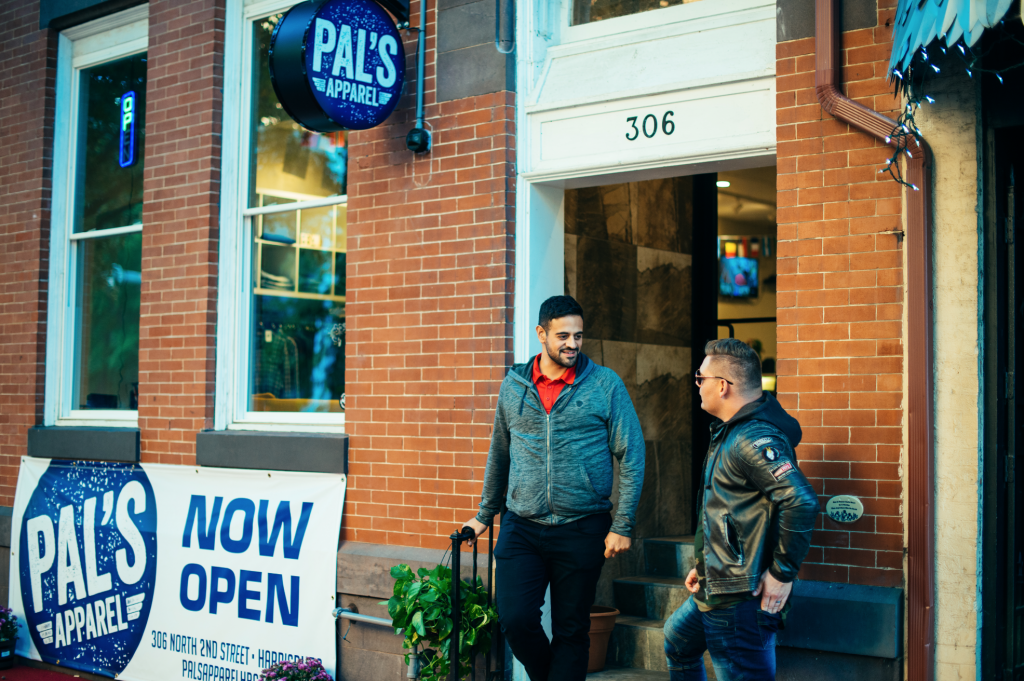
Pal’s Apparel on Second St. in downtown Harrisburg. A new loan fund targets small, for-profit businesses in the city. (File photo.)

Whether you’re a shop owner looking to expand your storefront or an aspiring entrepreneur with a business dream, you may benefit from a new loan fund set to launch this month in Harrisburg.

Impact Harrisburg is partnering with the Community First Fund and the Pennsylvania Housing Finance Agency to launch the Harrisburg Business Opportunity Fund (HBOF) on March 20 with $1 million in seed money, according to Sheila Dow Ford, executive director of Impact Harrisburg.

Impact Harrisburg, which was founded with proceeds from the sale of Harrisburg’s incinerator, will contribute $350,000 to the fund. The Pennsylvania Housing and Financing Authority has pledged $650,000 through its nonprofit subsidiary, the Commonwealth Cornerstone Group.

Loans will be available to small, for-profit business owners or aspiring business owners in amounts ranging from $1,000 to $100,000. According to Dow Ford, the goal of the fund is to encourage economic development, job creation and a diverse workforce in the city of Harrisburg.

“We’re providing for a segment of the population that has, for various reasons, been overlooked by traditional lending institutions,” Dow Ford said. “We want to create opportunities to build business and put people on the tax rolls.”

Any for-profit business or startup in Harrisburg can apply for a loan, Dow Ford said. Real estate trusts or businesses that buy and sell property will not be eligible.

The new fund bears some resemblance to Harrisburg’s old revolving loan fund, which was launched in 1984 and languished in the 2000s as many borrowers went delinquent. As of 2015, businesses that received loans from that fund still collectively owed $1.1 million in past due payments, TheBurg has reported.

Dow Ford acknowledged that some HBOF loans might be considered risky by traditional lending standards, since they will be issued to people and ventures that might be denied by traditional lenders. However, she hopes that the partnership with CFF will prevent the same mismanagement and delinquency that plagued the city’s revolving loan fund.

CFF’s loan panel will apply its standard protocol for reviewing applications, disbursing monies and tracking return on investment. The Lancaster-based organization, which has provided capital to entrepreneurs in central Pennsylvania for 25 years, is working with Impact Harrisburg to solidify loan terms and criteria before the fund launches next week.

“We’ve identified criteria in line with the way we’ve always made loans,” said Joan Broadhead, executive vice president and chief operating officer of CFF. “But we’ve agreed to a few different areas of flexibility that we hope will encourage more entrepreneurs, especially entrepreneurs of color, to access loans.”

Dow Ford said that the Harrisburg Business Opportunity Fund will offer flexible underwriting and a 5 percent interest rate for its loans, which she said is lower than interest at a bank or other lending institution.

Impact Harrisburg will receive regular reports from CFF and internally track all the loans, Dow Ford said, but otherwise will not participate in the selection process.

Dow Ford said that the fund is also distinct because it offers microlending – small, short-term loans with low interest rates. In addition, monies from the Harrisburg Business Opportunity Fund will be available to entrepreneurs at any stage of business development.

“We want to put in place tools to help businesses succeed, from beginning to end,” said Brian Hudson, executive director of PHFA. “That could be for a business that’s struggling to find the capital to grow, or for a business that’s just getting off the ground.”

Impact Harrisburg, PHFA and CFF plan to work with local partners, including Harrisburg Young Professionals, CREDC and M&T Bank, to create a “toolbox” of business resources and offer expertise to loan recipients, Dow Ford said.

“We expect there will be some hand-holding,” Dow Ford said. “Everyone has to come in with something, but sometimes they need technical assistance or help structuring or tweaking their business plans.”

Dow Ford and Hudson hope the fund will grow in the coming years. Though PHFA will not participate in loan operations, Hudson said his main responsibility in the partnership will be identifying public and private partners to contribute capital to the fund.

“If we could get to $5 million in three to five years, that would be great,” Hudson said.

More information about the Harrisburg Business Opportunity Fund, including loan terms, criteria and application instructions, will be available on March 20.


Continue Reading

No Small Plans: Enormous Club XL set to debut in Harrisburg.

The exterior of Club XL in Harrisburg.

As one might expect, at Club XL, nothing is small.

Big space, big patio, big stage, big bars, huge screens.

That’s the vision of owner Phil Dobson, who plans to open the 18,500-square-foot nightclub and music venue next month in an underused, 1940s-era warehouse near S. Cameron and Hanna streets in Harrisburg.

“Everything is big, hence the XL,” Dobson said.

The club will be the latest piece of Dobson’s redevelopment puzzle for this once-industrial and later forsaken area. Across one street, he opened Savannah’s on Hanna in 2009 and, across another street, River City Blues Club and Dart Room in 2014.

Dobson has owned the Club XL space for about eight years, buying it without a firm plan, but with the thought that he wanted to control the several-block area just off I-83, gradually transforming it into a nightlife destination.

Now those plans are firm, and they are of the extra-large variety.

Walking in, a reception area leads to an enormous dance floor with one of the largest stages in Harrisburg, the ceiling outfitted with an industrial lighting system.

“I went all out with the lighting and the sound to give a true nightclub experience,” he said, adding that he’s gone as far as installing Co2 cannons. “When you’re here, it’s all sensory appeal. This brings it to a higher level.”

A bar winds around the entire back and leads to a long room on the side, which will feature a concession area for food orders, with tables. Six giant screens grace the walls, capped off by a 200-inch behemoth. Upstairs, there’s a VIP area, and, outside, a large bar and a patio built around a 200-year-old sycamore tree.

Dobson said that he was inspired by Las Vegas clubs and wanted to bring that type of flashy nightlife to Harrisburg. He plans big dance parties on Friday nights, but it won’t all be DJs.

Dobson also is booking live music for touring bands that need a venue that can hold about 1,200 people. To that end, he’s scheduled the alt-rock lineup of Puddle of Mudd, Saving Abel and Tantric for the debut concert on April 15. Local bands Smooth Like Clyde and Honeypump will play the night before for the soft opening.

Club XL also will host sports, comedy and other events that can use a large open space, stage, lights, plenty of parking and other amenities, Dobson said.

“When people come here, I want them to be wowed,” he said. “I want to give them so many options that it’ll be an experience.”

Club XL is located at 801 S. 10th St., Harrisburg. For more information, call 717-409-8975 or visit the website.

Continue Reading

Dauphin County Doles Out Annual Gaming Grants

The Dauphin County administration building in downtown Harrisburg

The Dauphin County commissioners shelled out some $6 million to dozens of projects yesterday in the annual disbursal of gaming grant money.

The commissioners spread the money around to municipalities throughout the county, with the largest sums, by state law, going to those nearest to the Hollywood Casino at Penn National in Grantville.

In and around Harrisburg, grants to governments included:

* City of Harrisburg: $229,724 for police equipment, the engineering bureau and for Fire Bureau dive team equipment

* Susquehanna Township: $159,900 for sanitary sewer system extension, for Progress Fire Co. vehicle replacement and for Wedgewood Hills Swim Club heat pump installation

* Lower Paxton Township: $82,825 for Devon Manor pool improvements, Koon’s pool improvements and Ranger and George park soccer upgrades

* Hummelstown: $58,471 for municipal building debt service

* Highspire: $57,200 for roadway rehabilitation

* Steelton: $43,000 for Fire Department apparatus and Skate Park debt reduction

* Swatara Township: $13,000 for Police Department K-9 and training


Grants to Dauphin County entities included:

* MDJ Court Administration: $200,000 for construction of MDJ buildings

* Dauphin County Industrial Development Authority: $137,000 for solar farm project debt reduction

* Dauphin County Parks & Recreation: $101,000 for Detweiler Park master plan and Fort Hunter Station planning project

* Dauphin County Redevelopment Authority: $100,000 for project on former State Hospital grounds

* Dauphin County Land Bank Authority: $100,000 for renovation of vacant homes


Grants to organizations included:

* Camp Curtin YMCA: $100,000 for conversion of indoor pool into recreational area

* Central Dauphin School District: $75,600 for school safety improvement project

* Jewish Home of Greater Harrisburg: $75,000 for emergency generator project

* Penn FC (Harrisburg City Islanders): $72,562 for field conversion project

* Humane Society of Harrisburg Area: $70,000 for expansion of veterinary services

* Salvation Army: $50,000 for new headquarters and services facility

* Harrisburg Rugby Food Club: $50,000 for Perseverance Field improvements

* Homeland Center: $40,000 for emergency generator project

* The Nativity School: $40,000 for furniture purchase and building renovations

* Open Stage of Harrisburg: $32,000 for facility and equipment upgrades

* Capital Region Literacy Corp.: $30,000 for books in schools and clinic program

* Habitat for Humanity: $28,000 for weatherization project

* Heinz Menaker Senior Center: $25,000 for ADA-compliant restrooms

* Midtown Action Council: $13,652 for historic marker renovation and expansion

* Beacon Clinic: $5,000 for HVAC installation and renovations

Click here for a complete list of all recipients.

Continue Reading

With big spends approaching, Capital Region Water, Harrisburg offer professional enrichment for diverse business owners.

Panelists addressed a crowd of almost 30 entrepreneurs at an event titled “Doing Business with CRW and the City of Harrisburg.”

After years of austerity-driven decay, Harrisburg’s infrastructure is poised to get a much-needed makeover in the coming decades.

Capital Region Water (CRW) plans to spend $315 million on sewer upgrades in the next 20 years, and Harrisburg hopes to repave miles of roads and sidewalks and improve its parks.

For those with a glass-half-empty mentality, this means that taxpayers are about to shoulder decades of deferred maintenance costs within the city. But Harrisburg and CRW see the projects as opportunities for economic development – which they want to be shared equitably among the city’s population.

To that end, 30 small-business owners in the construction trades attended a panel at the CRW headquarters last night, the first in a series of workshops aimed at helping so-called Disadvantaged Business Enterprises – those headed by minorities, women or members of the LGBT community — to become competitive bidders in public works contracts.

The event series is part of an ongoing push from city hall and CRW to bolster DBE participation in public contracts.

In the past year, CRW has developed a comprehensive diversity supplier program that set minimum participation rates for DBEs in its construction projects. Diversity program manager Tremayne Terry said the plan came about after CRW took a hard look at its contractor and supplier pool.

“We realized that our contractors did not reflect the diversity of our community,” Terry said.

He explained that qualifying as a DBE won’t entitle any firm to public contracts or necessarily give them preference. Law requires a competitive process for any public bid more than $20,000. The entity awarding the contract must choose the qualified firm offering to do the job on the lowest budget.

Some entrepreneurs say that the public bidding process favors larger firms that can prepare time-consuming bids and absorb the low profit margins that sometimes come with public projects.

Terry hopes that the events that CRW has planned with the city will make DBEs more competitive applicants for public projects. And, as more public entities start to set and enforce participation rates, DBEs, which are typically smaller businesses, may find more opportunities for work as subcontractors providing specialized services on large projects.

Over time, Terry hopes that bringing more job opportunities to small DBEs can help some grow into prime contractors – the firms that manage large-scale projects.

Panelists at the event, which included business leaders, nonprofit executives and city administrators, stressed the importance of firms obtaining a third-party DBE certification. These certifications vet firms to determine, among other factors, their ownership and access to capital.

Certified DBEs can then register their status with the city or CRW, which both compile lists of DBEs in various construction trades and professional industries. Members of these lists will receive alerts every time a city or CRW project goes to bid, and they can also be offered as referrals to prime contractors looking for diverse suppliers.

At the end of the panel, questions from the audience circled back to two themes: job training and capacity building.

Many of the entrepreneurs said that one impediment to expanding their businesses was a lack of young people who are trained in trades or eager to learn.

Hubert Wilson, owner of Wilson’s Plumbing, Heating and Renovations, suggested that the scarcity of vocational education in the area shouldn’t deter young people from entering trade professions. He said that apprenticeships with other plumbers taught him all he needed to know to gain certifications.

“The only shortcoming we have is money and time to teach,” Wilson said, referring to the difficulties some small firms face in offering apprenticeships. “You can show kids [a trade], but you need money and will.”

Terry said that CRW has a role in building a pipeline of tradespeople and hopes to partner with industry associations and local schools to make trades programs available to more Harrisburg residents.

“The need for skilled labor isn’t only on the contracting side, and CRW isn’t alone in this need,” Terry said on Thursday. “It’s industry-wide.”

Continue Reading

Weekend Roundup with Sara Bozich

Happy Weekend!

And Happy International Women’s Day! How are you celebrating?

This weekend, I’d love to find time for some popcorn and a movie — perhaps Friday night.

Saturday is for fine wine and cheese (maybe I’ll actually blog about it??)

Sunday: Birthday dinner with mom.

What are you doing this weekend?

(more…)

Continue Reading

The Right Place: Midtown eatery space revived as “Right on Reily.”

Owner Dylan Simon takes a break from readying his new restaurant, Right on Reily, for an early April opening.

If there’s such a thing as a restaurant homecoming, Dylan Simon is about to come home.

A decade ago, Simon worked for Ray and Grace Diaz at Nonna’s Deli Sioso, a much-missed Italian-style eatery across the street from Harrisburg’s Midtown Cinema.

Today, he’s back in that same kitchen, working on much of the same equipment, as he makes plans to open his own place, called Right on Reily, which is slated for a soft opening on April 2.

“I fell in love with this space when it was Nonna’s,” said the 27-year-old, pausing for a brief conversation between painting, planning and fixing. “Then I missed it every time it changed hands.”

And changed hands, it has.

After Nonna’s closed, the spot briefly became Cribari’s Ristorante then, even more briefly, Mom’s Tamales and Pupusas. But, most of the time, it’s sat empty, despite its seemingly great location a stone’s throw from the cinema, Zeroday Brewing Co. and HACC’s Midtown campus.

Simon, who you also may know as the guy who’s made your cocktail at Rubicon, said that he put a great deal of thought into what would work best in the spot.

He believes that a winning formula is a mix of freshly made sandwiches, salads, soups and desserts served in the casual dining room—in other words, a real neighborhood bistro. About one-quarter of the menu will be vegan- and vegetarian-friendly, he said, and many of the ingredients will come from local farmers market and CSAs (community-supported agriculture).

Simon plans to open for the day at 7 a.m. with bakery and breakfast items, including breakfast sandwiches on homemade rolls. Lunch will follow, and he expects to offer a fixed-price dinner on weekends, though not immediately. He said he’ll run the BYOB restaurant with his fiancée, Erin O’Dea.

“This is a dream of mine,” he said. “I remember wanting to own my restaurant since I remember wanting to do anything in my life.”

For four years, Simon was a football coach at Central Dauphin High School, and he now hopes to engage with the Harrisburg school district, bringing students in who want to learn about the restaurant business and about eating healthy.

And what about the colorful, tropical mural that graces the front of the building, an echo of the brief time last year it served as a Salvadoran eatery? Simon said that he’s been in touch with the artist and that they may be able to create a concept more suited to the new restaurant.

Above all, Simon said that he’s focused on the community and will adapt to what it needs.

“It’s going to be another solid location for Midtown Harrisburg and for the city,” he said.

Right on Reily is expected to open on April 2 at 263 Reily St., Harrisburg.

Continue Reading