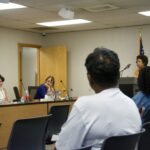
As cities cope with cyber crimes, local IT directors prepare their defenses.

Photo by Dani Fresh.

For almost two weeks, the city of Atlanta has been in a “hostage situation.”

That’s how Atlanta Mayor Keisha Lance-Bottoms described a March 22 ransomware attack that has spread through the municipal computer systems, causing serious disruptions in several departments of city hall. The attack crippled Atlanta’s courtrooms, disabled online bill payments, and forced many public employees – including the Atlanta Police Department – to keep records with pen and paper.

Security experts have long known that local governments are vulnerable targets for cybercrimes. But the attack in Atlanta, followed by a March 28 hack that disabled 911 services in Baltimore, show that many municipalities have failed to mount adequate defenses for their local computer systems.

“Networks fall into two categories: those that have been breached and those that will get breached,” said Jason McNew, president of Gettysburg-based Stronghold Cyber Security. “This is definitely a public safety issue and municipalities need to take it seriously.”

A 2016 report from Pennsylvania’s auditor general found that cybercrimes are certainly on the minds of government leaders across the state. Sixty-five percent of municipalities reported being concerned about cybersecurity threats, and 55 percent said they needed more resources to improve their network’s defenses.

As it turns out, though, many municipalities across the country operate with outdated or nonexistent cybersecurity programs. A 2016 study by the International City/County Management Association found less than half of local governments surveyed have a formal cybersecurity policy, and only 34 percent have a written strategy to recover from breaches.

The city of Harrisburg is among the municipalities that has neither. Steve Bortner, Harrisburg’s director of information technology, said that updating policies has been a priority of his since he took the helm of the IT Department in July 2017.

Harrisburg does have an information security policy, but it’s more than 10 years old and has “very little reference to anything related to cyber security,” Bortner said.

The city is also developing a written strategy for recovering from breaches.

“These policies are things that I guess had never been a priority,” Bortner said. “There are several other IT policies that we are trying to make current.”

Bortner explained that the city’s working cyber-security policies are embedded in other IT guidelines that govern computer usage for employees. New employees pledge to follow these policies, but Bortner said that there isn’t formal training for employees when they’re hired, nor are there regular cyber security trainings for staff.

McNew recommends that all cybersecurity policies and procedures be updated annually to keep up with emerging threats and industry best practices. He also urges his clients to hold annual, mandatory cyber-security trainings for employees.

“The analogy I like to make is that it’s like a safety program,” McNew said. “If my clients do safety training, I tell them to do the cybersecurity training at the same time.”

Bortner said the city has considered implementing mandatory employee trainings, but it would likely require a costly third-party vendor. The IT department does conduct phishing tests, when they send out suspicious emails to see if employees click on them, which he said were “fairly successful.”

An attack on Harrisburg’s municipal computer network would likely hit email and phone communication systems first, Bortner said. Other city applications run on mainframes that are connected to a different internet network. According to the city website, the mainframe systems run city operations such as insurance claims management; field reports for all service calls for police; billing systems for property real estate taxes, and codes licenses, permits, inspections and complaints.

“It depends on the nature of the attack as to what would be impacted, but not everything would be adversely affected,” Bortner said.

For instance, courts in Harrisburg would likely be safe if the city’s system was breached, since the Magisterial District Judges offices are run by the county. Dauphin County has a cyber security policy and an incident response plan that are updated yearly, according to IT Director Tom Guenther.

Bortner pointed out that almost all of the information that Harrisburg stores is public information, either published online or obtainable through a right-to-know request. But most hackers who target municipal governments aren’t after sensitive data.

As was the case in the Atlanta ransomware attack, most cybercrimes aim to hold computer systems hostage from city employees. The hackers who contaminated Atlanta’s IT system demanded $51,000 in bitcoin to end the attack; city officials have not said yet whether or not they have paid it.

Since every city relies on some form of IT infrastructure, hackers can afford to be indiscriminate when launching attacks, McNew said.

“Hackers troll the internet looking for targets,” McNew said. “Your data may not be interesting to them, but it’s interesting to you, and if they get a toehold in your network they can compromise it.”

Bortner said that the recent scourge of municipal cybercrimes hasn’t led him to reevaluate the city’s defense systems. He reports that finances have not been an issue for the IT department, and he’s fairly confident that Harrisburg could weather an attack with the systems it currently has in place.

“I believe we would be in a position to reckon with an attack,” Bortner said. “It would be a triage situation, but we have the knowledge and the resources to address a breach in the event that we have one.”


Continue Reading

TheBurg Captures 16 Press Awards, Including Prestigious Sweepstakes

For a third straight year, TheBurg has captured the prestigious Sweepstakes Award, one of 16 Keystone Professional Awards that it won, it was announced today.

The Sweepstakes Award is given to the publication that performs best in its category in the annual peer-judged press awards sponsored by the Pennsylvania NewsMedia Association.

TheBurg won honors in numerous categories for its work last year, including for reporting, column writing, headline writing, illustration and photography.

City reporter Lizzy Hardison and Editor-in-Chief Lawrance Binda won the most individual honors, both earning four awards.

“Our competition is very tough as we’re up against papers in major metros, including Philadelphia and Pittsburgh, with much larger staffs,” Binda said. “So, winning 16 awards, including the Sweepstakes, means a lot to us. It validates the hard work we put in all year.”

Other winners included TheBurg’s Creative Director Megan Caruso, former senior writer Paul Barker, illustrators Brad Gebhart, Rich Hauck and Ryan Spahr and photographers Dani Fresh, Ben Miller and Eduardo Pitino.

The awards will be handed out on June 2 at the annual Keystone Press Awards banquet, attended by newspapers from throughout the commonwealth.

Below is a full list of TheBurg’s 2018 Keystone awards with links to some of the award-winning entries.


First Place Awards

General News: Lizzy Hardison, “Thousands of Dollars Later, campaign yields no finance report and one unhappy candidate”

Ongoing News Coverage: Lizzy Hardison and Lawrance Binda, Election Raffle Coverage

Headline Writing: Lawrance Binda

Feature Photo: Ben Miller, “Parkour Playground” (photo only)

Graphic/Photo Illustration: Brad Gebhart, “Sit, Stay and More” (illustration only)


Second Place Awards

News Beat Reporting: Lizzy Hardison, Harrisburg City Beat

Feature Story: Lizzy Hardison, “New Cops on the Block”

Headline Writing: Lawrance Binda

Photo Story/Essay: Megan Caruso, Dani Fresh, “Teacher, Student, in Tune” (one of several photos)

Sports Photo: Ben Miller, “Parkour City”

Graphic/Photo Illustration: Rich Hauck, “Farewell Washington, Welcome to Harrisburg” (illustration only)


Honorable Mention

Investigative Reporting: Paul Barker, “Penalty Phase”

Columns: Lawrance Binda (“A Matter of Trust,” one of the three columns submitted)

Sports Photo: Eduardo Patino, “Family Dance” (photo only)

Graphic/Photo Illustration: Ryan Spahr, “Illustration of Bernie”

To see all the Keystone Award winners from throughout Pennsylvania, visit https://panewsmedia.org/Events/contest/keystoneprofessional.


Continue Reading

Weekend Roundup with Sara Bozich

Happy Weekend!

It’s a pretty low key weekend for us, which is somewhat needed following Easter and busy workweek. We’re hosting some friends for dinner on Saturday (what should I make?), so that will mean a trip to the Market.

Plus, I’m looking forward to ZerØday’s 3 year anniversary on Sunday — they’re buying you your first beer!

What are you doing this weekend?

(more…)

Continue Reading

HACC finalizes 2018-19 budget, tuition to rise by $6 per credit hour.

The HACC Midtown II building in Harrisburg.

HACC students will have to pay a bit more for the next academic year, as the college plans to raise tuition and fees to close a budget gap.

The Harrisburg-based regional community college announced late today that its board of trustees has passed a $142 million budget with an average 2.9-percent tuition hike.

“HACC faces enrollment challenges similar to other colleges and universities across the commonwealth and throughout the country,” HACC President John J. “Ski” Sygielski said in a press statement.

Sygielski said that HACC faced a $1.7 million shortfall for the 2018-19 academic year. The board then raised tuition and fees to yield an extra $2.4 million, he said.

HACC’s tuition will increase by $6 per credit hour for sponsoring, non-sponsoring and out-of-state tuition rates.

So, for an in-state resident who lives in one of the 22 sponsoring school districts, tuition will increase from $174.25 to $180.25 per credit hour (3.4 percent increase). For non-sponsored, in-state residents, tuition will go from $211 to $217 per credit hour (2.8 percent increase). Out-of-state residents will pay $262 per credit hour, up from $256 (2.3 percent increase).

There also will be a $25 per-credit-hour increase in tuition rates for “College in the High School” and dual enrollment programs, and a $1-per-credit-hour increase in technology fees for students.

Sygielski also said that the college would reduce expenses “that are directly controlled by the college” and would try to identify outsourced projects that could be brought in-house. Cost-cutting should save the school almost $1.5 million, he said.

Separately, TheBurg reported today that some arts classes have been targeted for elimination, leading to a petition drive among students to have the cuts restored.

The 2018-19 budget also includes a 2-percent salary increase for employees.

“This modest increase recognizes the hard work contributed by HACC employees to the success of the college,” Sygielski said.

In addition to its Harrisburg location, HACC has campuses in Gettysburg, Lancaster, Lebanon and York. For more information, visit www.hacc.edu.

Continue Reading

Following temporary cuts, HACC students call on administrators to restore arts electives.

Ariana Bronson, Rod Dixon, and Shawna Purdy-Beaver are among the HACC arts students who are protesting the cuts to arts elective courses for the Fall 2018 semester.

Shawna Purdy-Beaver was 43 years old when she first sat behind a pottery wheel. After raising two daughters as a single mother, she began taking classes in photography, ceramics and glass blowing to pursue her passion for the arts.

Four years later, Purdy-Beaver is working towards dual associates degrees in Arts and Business Administration at Harrisburg Area Community College (HACC). She hopes one day to open her own arts education facility in Harrisburg.

“I want a facility where you can come and learn at any age,” Purdy-Beaver said. “If you’re 80 and you want to learn glass, it’s there. If you’re 20 and you want to learn ceramics, it’s there.”

But right now, she and a cadre of her classmates have a more immediate concern—convincing administrators at HACC to restore classes that were dropped from the fall 2018 course catalog.

HACC announced on March 23 that it would not offer six of its art elective courses—two ceramics courses, three glassblowing courses and one introductory silkscreen printing course—in the fall semester. The announcement came three days before course registration opened.

Students say they felt blindsided by the reduced offerings. A petition calling for HACC to restore the courses had garnered almost 16,000 signatures by April 2. Written by a group of HACC students, the petition argues that HACC offers an affordable, high-quality arts education that’s unrivaled in the area.

“Communities with access to art programs are more vibrant and healthy, and community colleges, like HACC, have an enormous impact on the lives of people across our community and region to access this education,” the petition reads.

Jennie Baar, dean of Academic Programs at HACC, said that the community college plans to bring the courses back on a rotating basis in future semesters. She reported that changes to federal financial aid guidelines have affected the ability of students to enroll in elective courses, which has led HACC to reduce some of its elective offerings across different departments.

“The entire administration is in support of the liberal arts at HACC, and what we’re trying to do is maintain our quality of education and our access to affordable education,” Baar said. “I’m hoping that in the next few weeks, we’ll be able to provide students with a host of other options.”

Barr explained that students cannot use federal financial aid to pay for courses that do not contribute to their degree. Most degree programs do require electives—for instance, an arts student like Purdy-Beaver can apply a ceramics elective to her arts degree and can therefore pay for it with financial aid dollars. But students outside of the arts degree program cannot use financial aid dollars to take arts electives.

HACC administrators recently reviewed fall 2018 schedules to determine if any current courses were not part of degree programs, according to a March 28 statement. As a result, six art electives, as well as electives in other disciplines, were cut from the fall schedule.

Baar said that HACC will continue to offer some non-degree elective courses under its workforce education and continuing education divisions. She is also working with members of the art faculty to set a reliable rotating elective schedule, which could take effect as early as next spring.

Even so, students enrolled in the Associate in Arts (AA) program say that the cuts will disadvantage students who wish to transfer to four-year institutions, or those who are honing their crafts as working artists.

“HACC offers arts facilities that nobody else in the area has,” said Ariana Bronson, a ceramics artist pursuing her AA. “We have better facilities than four-year institutions and at a better price. Without HACC, I would have gone to a four-year college I couldn’t afford.”

Bronson has taken advanced ceramics at HACC once for credit and is currently auditing it for a second semester so she can build her portfolio. She planned to take it again in the fall until she learned the course had been cut.

“Without advanced ceramics, my work for my portfolio ceases,” Bronson said. “I need the facilities to make work and to put it into my portfolio.”

Once she finishes her AA, Bronson plans to apply to a four-year institution to complete her bachelor’s degree in fine arts. She said that limiting arts courses will deprive students of facilities and mentorship and make them less competitive for scholarships.

Rod Dixon, who has been pursuing his AA at HACC for four years while working full-time, fears his education in glass-blowing will be put on hold next semester. He’s taken two glass classes at HACC and was hoping to take a third, more advanced glass course in the fall.

“These cuts will get rid of advanced crafts class in glass, which is the class I am taking to build and perfect my skills,” said Dixon, who hopes to one day open a glass studio and retail business. “My goal is to take what I learn at HACC and turn it into my next career. A big part is having access to instructors and classes and facilities to be able to do that, and, without it, my future plans are likely not going to be a reality.”

Purdy-Beaver agreed that the advanced course offerings are critical for students who want to perfect a craft. She pointed out that students get unlimited access to studios and facilities as part of their tuition—access that they could lose if they can’t enroll in courses.

“The thing about the arts is that you have to keep working on it,” Purdy-Beaver said. “The time you have to put in to blow glass, paint, draw, make ceramics or do metalworking – it’s hours and hours of your life, in and outside the classroom. You need open access to the facilities.”

Purdy-Beaver and Dixon added that even with robust course options, students who work full-time or raise families have significant constraints on their schedules. They say it could get worse with fewer course offerings.

“I haven’t registered for next semester yet because the classes I need aren’t there,” said Dixon, who can only take evening and weekend courses.

The students who discovered new and unexpected passions at HACC say they’ll keep working to bring back the arts classes – not just for themselves, but for future students too.

Alexis Reisch, the student who drafted the petition after HACC announced its cuts, said that she took a glass elective on a whim and fell in love with the art form.

“If I was starting at HACC this fall, glass wouldn’t be an option for me,” Reisch said. “This affects current students and anyone who comes to HACC in the future.”

Continue Reading

Cops & Community: Harrisburg introduces its community policing team.

Harrisburg police Cpl. Josh Hammer and new community policing coordinator Blake Lynch

“Less suit and tie, more jeans and Jordans.”

That’s the message that Blake Lynch wants to send to the public as he settles into his new role as the Harrisburg Police Bureau’s community policing coordinator, a civilian position that he assumed on March 26.

Lynch will share his title with Cpl. Josh Hammer, the officer who has been leading Harrisburg’s community policing program since David Botero vacated the civilian coordinator position last June. Lynch and Hammer said that Botero did not have a designated police officer counterpart, but they hope that their new partnership will let them cover even more ground in the city.

“This is a clear sign of how important the community is to our mayor and our police commissioner,” said Joyce Davis, Harrisburg’s director of communications. “No mission more important than making sure we have the trust of the community, and now we have two people assigned to build that up.”

As the civilian community policing coordinator, Lynch is charged with building trust in the city’s Police Bureau by serving as a liaison between the police and the public. He said he’s spent the first week of his tenure acquainting himself with different neighborhood associations and nonprofit groups across the city.

Soon, he hopes to start building rapport with residents and neighborhoods that might have a distrust of the police.

“I’m not a police officer, but I have the full backing of the police department,” Lynch said. “As people continue to establish trust with us… I hope we can close more cases.”

“Blake will be able to communicate and get into groups that might have a trust breakdown,” Hammer added. “If they don’t feel comfortable coming to us, we hope they will feel comfortable with Blake.”

Ultimately, Hammer and Lynch hope that a comprehensive community policing program will generate tips, cultivate informants and even cut down on crime. Lynch hopes to partner with local non-profits to create youth engagement programs, which would be aimed at reducing criminal mischief and juvenile crime.

“Our job is to make it easier for our patrol officers,” Hammer said. “If we build relationships and earn trust, it’ll help us down the road.”

Hammer said that there are no immediate plans to assign more officers to the community policing division.

Continue Reading

TheBurg Podcast: “In the Wild” Edition.


This week’s episode of TheBurg podcast comes at you from the Broad Street Market, where Larry and Lizzy took in the sights, sounds, and smells of Harrisburg while recapping the last two weeks of news. They discuss the latest developments in the school board’s search for a superintendent, the calls for the city to contribute to a small business loan fund, and the dawn of a new era in Harrisburg’s downtown parking.

You can stream the episode on Soundcloud, or subscribe to TheBurg Podcast in the Apple or Android podcast apps.

Read more about the topics discussed in this week’s podcast:

Harrisburg School Board votes to consider a new superintendent.

Ante Up? Harrisburg debates chipping in for new revolving loan fund.

Harrisburg Freezes Over: Free downtown parking to begin next week.

Free Parking? No, it’s not Monopoly. It’s Harrisburg.

TheBurg Podcast is released semi-monthly by TheBurg Magazine. It is recorded in the offices of Startup Harrisburg (usually) and produced by Lizzy Hardison. Special thanks to Paul Cooley, who wrote our theme music.

Continue Reading

A Ball & a Wall: Harrisburg youth find mentorship through Hope in Handball.


On a recent Wednesday evening, in a plexiglass box on the top floor of the East Shore YMCA, a 17-year old named Serenity coached me as we took turns hitting a rubber ball against a wall, back and forth and back and forth.

She stayed admirably true to her name as I failed to whack it with enough force to make a legal serve, offering guidance on hand grip—“curl your fingers a bit”—and swing—“come at it lower, earlier in the bounce.”

“Everyone’s like that starting out,” Serenity said, graciously, as we exited the court. “The best thing to do is just play. If you have a question, ask a mentor.”

Serenity is one of the local teens who spends Wednesday evenings at the YMCA for the “Hope in Handball” program. Founded by David Botero, a community activist who grew up playing the sport on public courts in New Jersey and New York City, Hope in Handball wraps mentorship, volunteerism and sport into one free program that’s been running quietly but consistently for more than eight years.

Today, the program brings more than a dozen people—“ranging from ages 8 to 78,” Botero said—to the YMCA courts every week. Some are retired seasoned hand-ballers who play every day of the week. Others are high schoolers there to socialize in between sets.

“We cross everything—male female, black, white, Hispanic. We’ve got Christians, Muslims, Jewish people,” Botero said. “It’s diverse without trying to be.”

The son of Colombian immigrants, Botero grew up in Hoboken, N.J., and zigzagged into his current gig as a community booster and handball guru in Harrisburg. He previously managed ad accounts for Univision and Time Warner in Florida and central New York, partied with country music stars as a marketer for a radio station in Las Vegas, and ended up back in New Jersey to take a job in Manhattan. He and his wife moved to central Pennsylvania more or less on a whim in 2005, drawn in large part by lower housing costs. He’s since done stints with Dauphin County Human Services and the Harrisburg Police Department.

Every time he moved, Botero found a place to play handball. He said he always had the idea for a sport-based mentorship program in mind, but it wasn’t until he landed in Harrisburg that he started a league with staying power. It got off the ground with grant money from Messiah College and partnerships with the East Shore YMCA and Joshua House.

“You know how people do the wave, at sporting events?” Botero said. “It’s kind of like that. You try five or six times until something picks up. This is what picked up.”

Handball is about as low-tech as a sport can get—players only need a ball, a wall and hands that can withstand the impact of the former. Eye goggles are advisable, as are gloves, especially for rookies. Games take place on ad-hoc outdoor courts or on indoor courts designed for squash and racquetball. These modest material needs are one reason handball has taken off in cities, especially, it seems, among minority and immigrant populations. Botero likes to cite the fact that there are more handball courts in New York than there are basketball courts.

It’s also a sport for the underdog, Botero said, which makes it an ideal conduit for building confidence and camaraderie among players. “This is the sport for the kid that didn’t make the team,” he told me. “It’s an equal playing field.”

The rules of the game are simple: one player serves a ball against the wall, and an opponent has to return it before it bounces twice. The game ends when one player reaches 21 points, which can happen quickly.

“It’s really fast-paced, which is good because I don’t have the greatest attention span,” said Baxter Brienbaum, a SciTech senior who’s been playing with Hope in Handball for two years. “It’s really back and forth.”

Despite its relative obscurity—or perhaps because of it—handball inspires a certain fanaticism in its players. Destiny Stewart, who’s been playing for five years, said that she joined in the local league after dabbling in the game with family members in New York City.

“I was like, I’m gonna master this,” she said. “I come every Wednesday, even in the summer. I’ve never missed a day. One time, I sliced open my knee, because there was broken glass on my floor, and I kneeled down because my ball rolled away. I needed stitches, but I said ‘I still want to go to handball.’”

Stewart taught Harrisburg Mayor Eric Papenfuse to play the game (“he talked some trash—we all do it”) and led the pair to a 2-0 victory in doubles. In the fall, she’ll start classes at Shippensburg University, where she plans to start a handball club.

Most of the teens who join Hope in Handball are students at Harrisburg High School’s SciTech campus. Many of them (including Stewart) continue to play after they graduate, or come back during school breaks. In the summer, the league migrates to an outdoor “one-wall” court in Allison Hill’s MulDer square neighborhood.

Botero took me there on a bright Monday morning last month. It abuts a vacant lot and an auto-body shop, which, during the day, parks its cars on the asphalt court. Part of a $10,000 grant from the Allstate Foundation allowed his league to paint regulation lines and refinish the exterior wall of a warehouse, creating the city’s first public handball facility. Hope in Handball plays there into September, or as long as the sun permits.

“We barbeque, we get music going,” Botero said. “It’s a party.”

From the court, Botero and I struck out north through Allison Hill to Market Street, encountering at least three of his acquaintances as we went. Whether he’s running a handball practice or walking the streets of Harrisburg, he draws on what seems like a bottomless well of social energy. He jokes, teases, exclaims in Spanish; he receives updates on family birthday parties and community meetings. It’s one of the qualities that made him excel as Harrisburg’s Community Policing Coordinator, a role he held until last year, when he resigned following a well-publicized misdemeanor drug charge. (Botero refers to the incident today as “when I got in trouble.”)

“Man, it was a real loss,” said Basil Talib, a local poet and literacy advocate we found on Market Street. “He was out here.”

Botero left his job with the city voluntarily, after he was reassigned to deskwork in the law bureau. He remains well known in the neighborhoods where he used to work and still attends many of the same community meetings. The only difference is that now, he’s there representing Hope in Handball.

At a recent such meeting, held in the basement of Derry Street Methodist Church, Botero pitched Hope in Handball as a program that builds relationships between unlikely people. “We pull from everywhere,” Botero said, addressing a group of nonprofit leaders who were trying to develop a summer program for youth. “Our players, some are students, some are ex-offenders, retired folks, pastors—the kids learn from them.”

Botero’s description sounds like lip service, but players say it’s true. Stewart said that you can find “almost any social group” through handball. Mitch Dameshek, a Central Dauphin teacher who plays with Hope in Handball, calls Botero “the master mixer.”

Today, Botero is very much at the center of the handball orbit that he’s been building in Harrisburg since 2009. But watching matches play out on the top floor of the YMCA, one after another for hours each week, one gets the impression (somewhat hearteningly) that the league could carry on without him. Community leaders will tell you that, if there’s one challenge bedeviling all grassroots social initiatives, it’s sustainability over a long period of time.

The secret to longevity, it turns out, might be as simple as a ball and a wall.

Hope in Handball meets every Wednesday at 5 p.m. at the East Shore YMCA, Harrisburg.

Continue Reading

Family Way: As Smith Land & Improvement turns 100, a new generation takes the lead.

Portrait of Luther Bruce (L.B) Smith

Family businesses are so important to the economy that Forbes Magazine has even created something it calls the “Family 500,” an index comprised of the largest family-owned businesses in the world.

You won’t find Camp Hill-based Smith Land & Improvement Corp. on that list (at least not yet), but the company has played an important role in the Harrisburg area’s economy for a century.

Founded in 1918, the company didn’t actually start out as a family venture, which came a bit later and took some good fortune.

In the 1930s, young Dick Jordan was thumbing a ride to a baseball game, which is how he met Luther Bruce (LB) Smith, a tireless entrepreneur who had started out as a butcher but then built a business in Lemoyne refurbishing government vehicles and machinery.

Smith took a liking to him and gave him a position in his purchasing department, even holding a job for him when he went off to fight in World War II.

“Between the mid-‘30s and 1968, my father worked for the company, and LB thought enough of him to make him the successor and CEO,” said Richard E. Jordan II, the current board chairman who has been with the company since 1963.

Three decades later, his son, Richard E. Jordan III, joined the business and, just this past January, as the company turns 100, replaced his father as president and CEO.

Jordan II laughed as he reflected back on LB Smith’s ambitious nature and the fact that the businessman was once involved in 77 different corporations.

“He even had gas wells in West Virginia, and we had to employ a well tender to ensure they were operating correctly,” he said.

As the decades passed, the company streamlined and divested not only of the heavy equipment business, but of most of the other businesses. It kept two main assets: the LB Smith Ford Lincoln car dealership in Lemoyne and the development arm, Smith Land & Improvement Corp.


Staying Power

The amiable father/son pair laugh when they attempt to describe the secret to their longevity in the business.

“I’ve gone through two-and-a-half economic downturns, and, the more you go through, the less hair you have,” said Jordan II, patting his smooth pate. “We managed our way into it and our way out of it. Resilience is key. It wasn’t fun, but what doesn’t kill you makes you stronger.”

The younger Jordan added that the recession years following the financial crisis of 2008 were especially challenging.

“There wasn’t a lot happening in the real estate business at that time, and some people lost their shirts,” he said. “But we were able to make a few deals.”

In part, they credit their conservative approach to being able to survive during the toughest economic times.

“We put 20 percent down and finance the rest and engage in deals that have a critical mass of tenants and equity before we get underway,” said Jordan III, explaining the company’s cautious approach.

Today, Smith Land’s portfolio is comprised of some 50 properties throughout the region, including a variety of retail establishments, including the West Shore Plaza in Lemoyne, the Silver Creek Plaza on the Pike in Hampden Township and the Leola Square in Leola, along with numerous office sites. The company currently is seeking to generate interest in a 165-acre tract of land called “Swatara Plaza at the Concourse,” a $150-million, mixed-use infill project just outside of Hershey.

On the other side of the Susquehanna, Smith Land is redeveloping the area between S. 18th and S. 19th streets in Camp Hill to make the area more pedestrian-friendly—a development that has many borough residents excited.

As the junior Jordan settles into his new position as CEO, his goals are similar to those who came before him.

“They’ve laid a good foundation for success, and we like the idea of redeveloping where we live and improving the environment for our neighbors,” he said. “We want our projects to be representative of who we are and make the residents proud of what we do. They know we have a reputation for doing it the right way, and, if something goes wrong, we’ll be here to fix it.”


Smith Land & Improvement Corp. is located at 1810 Market St., Camp Hill. For more information, call 717-731-0207 or visit
www.smithlandusa.com.

Continue Reading

Fixing History: You bought an old Harrisburg house. Now what?

Before and after: Justin and Erin Heinly’s house in Midtown Harrisburg.

Ah, spring.

Since recently installing replacement windows in their studio, the staff at Harrisburg-based GK Visual can finally fling open the sashes and breathe in the warm, fresh air. That’s a big improvement over last year.

“We couldn’t even open them without the fear of them falling out,” said Nate Kresge, co-owner of the boutique production company in the city’s Fox Ridge Municipal Historic District.

Old-house owners love “charm.” Businesses choose vintage buildings for the “character.” But synonyms for “charm” and “character” can include “pain in the rear” and “money pit.”

Take heart, old-home owners. The universe is finally spinning your way. Even owners of properties in historic districts now have modern options. Renovating your charmer will never be cheap, but with today’s technology, your options are broader than ever.


Extra Detail

Harrisburg has six historic districts, where exterior renovations require approval for materials and design that align with the neighborhood’s character.

Justin Heinly lives in one of those districts—Olde Uptown.

Heinly and his wife, Erin, bought a Victorian-era, Benjamin Engle-designed rowhome that “fell victim to the crash of ’08,” he said. Previous owners had gutted the interior and were drawing city disfavor by painting the brick exterior a garish red.

“The insides were okay, but the outside needed so much work,” Heinly said. “The garage was falling in on itself. The city was worried that no one would ever want to buy that house.”

In these historic districts, which also include Old Harrisburg, Allison Hill, Shipoke, Midtown and Fox Ridge, many exterior renovations or alterations that need a building permit also require a “Certificate of Appropriateness.” The standards preserve “evidence of craftsmanship, history, culture, those kinds of things that give an identity to a community,” said Harrisburg Planning Bureau Director Geoffrey Knight.

Not every alteration requires a COA or presentation to the Harrisburg Architectural Review Board, known as HARB. But, if you live in a historic district and changes are visible to a passerby, there’s a good chance that they will need one or both.

HARB hews to the U.S. Interior Department’s standards for rehabbing historic buildings, stressing retention and repair over replacement. Any new materials should match the old in “design, color, texture and other visual qualities and, where possible, materials.” Color choices are not HARB-regulated, but out-of-step tones are “strongly discouraged,” according to the city “Historic District Design and Preservation Guide.”

Though some people may find the process intimidating, Heinly described it as “pretty straightforward.”

“I put in an application a month before the [HARB] meeting,” he said. “I detailed what we were doing. I’m an engineer by trade. I always add extra detail.”

His application to replace the front door, install new windows, rebuild the double-deck porch, add a deck, and make the garage more user-friendly met no resistance.

“I believe they only asked that any wood surfaces be painted,” he said. “I don’t think there were any other alterations to the plan.”


Timeless

Some of us may remember the Con-Tact paper our moms plastered to the kitchen cabinets, which, decades ago, was about the most realistic faux wood around. Fortunately, much progress has been made since then for wood replacement.

“If something’s made of wood, it’s subject to rot and insects,” said Jim Mirando, Jr., president of Lemoyne-based Excel Interior Concepts. “There are definitely some new materials out there that have the same look.”

Of course, wood remains an excellent option for siding and windows—historically accurate, strong and durable, as long as it’s painted regularly. But with advances in technology, HARB has added low-maintenance, energy-efficient, modern products to its list of materials that win the COA through administrative approval. These include:

  • Azek trims and decking, which come in different colors and textures and can be milled to spec.
  • Hardie board, fiber cement siding that’s weather resistant and comes in an array of colors and styles.
  • Renewal by Andersen’s Fibrex composite of reclaimed wood material and PVC polymer, which is energy efficient and paintable.

“They’re constantly coming out with more profiles that look historic,” Mirando said. “They’re trying to make things that would be appropriate and look authentic. They look timeless.”

Many homeowners encounter non-historic alterations by prior owners. Knight and HARB are not inclined to give the “in-kind” label to changes made in later years without their approval—surreptitiously installed vinyl windows, for instance. But if modern replications of historic materials can revive a look that’s been long covered—think Hardie board replacing the wood rotting behind Insul-brick—then the COA could win administrative approval without needing to go to HARB.

“That’s bringing the property back to a more historically contextual appearance, while using a more modern material as a replacement for something that was neither historic nor a good material in the first place,” Knight said.

When it comes to brick and stone, preservation through proper inspections and maintenance is the first line of defense. When repointing is needed, it’s important to match the previous look and to contract with a mason experienced in historic work, as old brick demands softer mortar than those typically used today. Never paint unpainted brick. Brick needs to breathe, and freeze-and-thaw cycles can cause damage.


Like the Original

Windows are the great bugaboo of old homes. They can be cranky and drafty, and even replacing with vinyl takes a hit on the pocketbook. Factor in new wood or composite windows, and the budget may jump by 25 percent or more.

GK Visual replaced “close to 20” windows in its Rose Street studio, said Kresge.

“It’s not cheap, that’s for sure, but our energy bills are so much lower than they had been,” he said. “The amount of money we’d spend on heating was just insane.”

Old houses rarely conform to standard window sizes, but jiggering with window openings to fit off-the-shelf replacements is a big HARB no-no. Crooked old houses usually need custom-fitted windows, said Linda Johnston, general manager of Mechanicsburg-based Renewal by Andersen Central PA.

“The custom fit goes not only to visual accuracy but also energy efficiency,” she said. “We want our window to fit right to the frame.”

Custom windows can accommodate historic windowpane styles, whether they’re classic six-over-six or unusual diamond insets. Curves and bay windows can be replicated.

“We tend to say it’s the replacement window that doesn’t look like a replacement,” said Johnston. “We try to look as much like the original.”

As for dealing with HARB, GK Visual left that in the hands of Renewal by Andersen, which offers the service of applying for building permits and COAs. The company “worked hard” to get administrative approval for Fibrex, said Johnston.

“We go to the HARB meeting, but we don’t go as often as we used to,” she said. “We get automatic approval.”


And How Much?

Living in an historic district has many benefits—charm, walkability, an authentic neighborhood vibe—but these often come at a price.

“Things do tend to cost a little more,” Mirando said.

Fortunately, companies have taken measures to try to ease the pain. For instance, contractors offer budget plans with a range of finance options.

Renewal by Andersen’s same-as-cash is a popular choice for stretching out payments without interest. Low-interest plans are available. Many homeowners phase in their projects, prioritizing the worst rooms or the spaces where they spend the most time, Johnston said.

HARB also has a role to play in making sure that renovation remains affordable to people living in an historic district, Heinly said.

“What they do for the city is very important,” he said. “That has to be balanced with ensuring that the individuals who perform maintenance on their house can do it economically, so we can compete with surrounding areas. We want people to invest in Harrisburg over Lemoyne and other areas that do have historic buildings.”

Knight hopes a new historic preservation specialist will address the resource question and improve recordkeeping, maybe linking the interactive GIS map with all HARB cases on a specific property, or updating historic documentation.

“Historic resources are a real advantage the city of Harrisburg has over the surrounding suburbs when you’re looking to get businesses or residents here,” Knight said. “People look for that. People want that kind of character.”

Still, he added, HARB seeks input on new materials that suit historic preservation.

“You also can’t freeze a city in amber,” Knight said. “You need to be able to change and adapt and grow.”

Heinly sees more painting and lighting projects in his future. He hopes to hit the workshop and make copies of a lone surviving piece of porch trim. The work is worth it, he said. He and his wife, new parents of a baby boy, installed a stairway replacement brick engraved, “Home again, 2014.”

“We took a house from a house, and we returned it back into a home where people could live and families could be raised,” he said.


Pondering Your Reno

So, you want (or need) to renovate in one of Harrisburg’s historic districts? Here are a few tips before embarking on your project.

  • Visit www.harrisburgpa.gov/bureau-of-planning to find out if you live in a Municipal Historic District. Enter your address and a color-coded map will pop up, showing your status.
  • Reach out to the city Planning Bureau in advance. Read the city’s “Historic District Design and Preservation Guide” (to find it, Google the title and “Harrisburg”).
  • Historic Harrisburg Association (historicharrisburg.com) offers periodic seminars on restoration issues.
  • Scrounge around architectural salvage stores, including Harrisburg ReStore and Olde Good Things in Scranton. “You’ve got to be prepared,” said homeowner Justin Heinly. “We were looking for doors at Olde Good Things, and a squirrel popped out.”
  • Visit the U.S. Department of Interior’s site on standards, www.nps.gov/tps/standards/rehabilitation.htm.
Continue Reading