TheBurg Podcast: Dysfunction Junction


This week’s episode of the Burg Podcast takes a deep dive into the recent tumult in the Harrisburg School District, including back-and-forth votes over the superintendent and a burgeoning funding crisis. Lizzy and Larry also discuss the city’s new project to improve road safety and the latest challenge facing an embattled Midtown bar.

You can stream the episode on Soundcloud, or subscribe to TheBurg Podcast in the Apple or Android podcast apps.

Read more about this week’s topics on TheBurgNews.com:

Full-day kindergarten on the chopping block, tax hikes loom, as Harrisburg District struggles to balance its books.

School Board can’t un-do action on superintendent contract, solicitor says.

Burg View: Harrisburg’s School Daze (Editorial)

Burg View: End the Road Carnage Now (Editorial)

To Zero: “Vision Zero” aims for no auto-related deaths in Harrisburg.

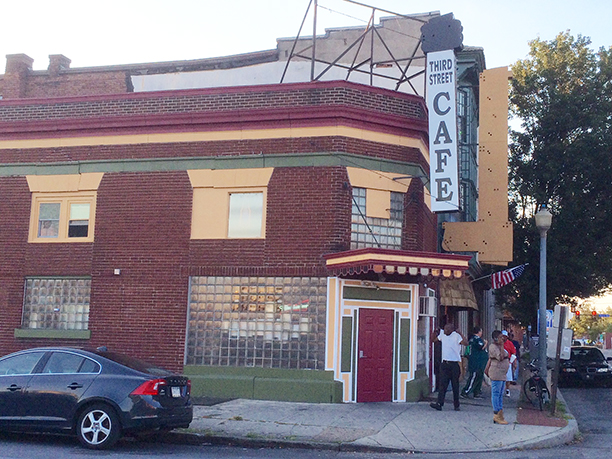
Another Round: Third Street Cafe back in court, this time to defend liquor license.

TheBurg Podcast is released semi-monthly by TheBurg Magazine. It is recorded in the offices of Startup Harrisburg and produced by Lizzy Hardison. Special thanks to Paul Cooley, who wrote our theme music.

Continue Reading

Another Round: Third Street Cafe back in court, this time to defend liquor license

Third Street Cafe, on the corner of N. 3rd and Calder streets in Midtown Harrisburg

After winning a lengthy fight with the city of Harrisburg to keep its business license, an embattled midtown bar is facing a new challenge in court.

It has to convince the Pennsylvania Liquor Control Board to renew its liquor license, despite allegations that it’s failed to uphold terms of a conditional agreement.

Third Street Café, which Harrisburg Mayor Eric Papenfuse deemed a “nuisance bar” and targeted for closure in 2015, is currently operating under an expired liquor license. A hearing held this morning will help the PLCB determine whether or not the establishment on N. 3rd and Calder streets will have its license renewed.

The hearing offered Anthony Paliometros, owner of Third Street Café, the chance to explain citations issued to the bar since 2016, two years after it entered a conditional licensing agreement with PLCB.

Among other provisions, that agreement required the bar’s staff to install new cameras, institute routine security patrols, and maintain a detailed security log and a list of banned patrons.

The terms of the agreement remain attached to Third Street’s liquor license until the PLCB decides to expunge them. The bar last renewed its license in 2016, but it faced a challenge when it sought another two-year renewal this year.

Since 2016, Pennsylvania State Police have cited the bar for failure to display its liquor license and furnish security records. It has also been the site of multiple police calls.

PLCB attorney Jessica Lathrop raised each of those points while making her case against the bar in today’s hearing, but Paliometros testified that circumstances surrounding those infractions have been rectified.

For instance, the liquor license that was previously obscured is now displayed prominently on the café wall under transparent glass, Paliometros said.

He also claimed that his staff had simply misplaced the bar’s security logs. Paliometros signed a waiver of citation after he could not produce records for the PLCB to prove that he had implemented routine security patrols.

Today, he admitted that signing that waiver was a mistake, since the security logs were later recovered. His attorney, James Petrascu, presented them as evidence in today’s hearing.

Lathrop spent most of the hearing interrogating the bar’s history of police action and its perceived lack of security. She called three former Harrisburg police officers as witnesses, all of whom testified about calls they received to the establishment since 2016.

One former officer, Kevin Ruff, responded to reports of a fight and shots fired at Third Street Café in June 2016. He testified that a man he believed to be the bar’s bouncer was visibly intoxicated.

State law prohibits servers and security personnel from drinking on the job. Paliometros testified that his security guard had not appeared intoxicated when he reported for work that night.

“If they come and they’ve been drinking, we send them home,” he said.

Ruff said that the alleged fight inside the bar had disbanded before he arrived. Officers found shell casings and one live round in the street one block east of the bar, but their investigation did not result in any arrests or charges.

Another officer testified that he recovered marijuana from a patron whom he arrested in the bar in 2017, when he was investigating a sighting of a wanted person.

Petrascu acknowledged that bar owners have responsibility “to a certain point” for the behavior of their patrons in and around their establishment. But he questioned whether his client could be held accountable for a patron’s drug possession.

He also objected to the testimony of Lathrop’s last witness, Alice Anne Schwab, director of the Susquehanna Art Museum.

SAM sits directly across the street from Third Street Café, and Schwab said she has seen “countless” visibly intoxicated patrons leave the establishment to urinate.

Petrascu said that Schwab’s testimony fell outside the scope of the specific inquiries raised by the PLCB. What’s more, he said, the witness could not prove that bartenders served the patrons once they became visibly intoxicated.

Hearing examiner Thomas Miller acknowledged that Schwab’s testimony drew them away from PLCB’s initial points of investigation.

“This is a thorny issue,” Miller said. “We’re definitely in a gray area here.”

Lathrop ultimately called Schwab as a rebuttal witness, since her testimony contradicted Paliometros’s claims that his bar does not serve visibly intoxicated patrons. Schwab claimed that drunken patrons would leave the bar with to-go beer and liquor, which the Third Street Cafe is licensed to sell.

The hearing concluded after almost four hours of testimony. Miller must now make a recommendation to the PLCB to either renew or revoke Third Street Cafe’s liquor license. He does not have a deadline to submit his opinion.

Petrascu, who previously served as a PLCB attorney, successfully represented Third Street Café when the owners faced a challenge to their license in 2014. After today’s hearing, he expressed confidence that this appeal would have the same outcome.

Continue Reading

Weekend Roundup with Sara Bozich

Happy Weekend!

Ah, May, the start of summer holidays. This Saturday is both Derby Day AND Cinco de Mayo, so whether you’re sipping on Mint Juleps and betting on the ponies or are face-deep in chips and salsa and margs, you’re set for a good day. (And if the next day is not so nice, read this.)

But FIRST! TONIGHT: SoMa Pop-Up Block Party! We’ve scooted just a bit from S. Third St. to accommodate construction, but you won’t want to miss this great night outside with LIVE MUSIC from Funktion Quintet, beers from Zeroday, Boneshire, and Ever Grain, cold brew from Elementary, and food from our neighbors at Bricco + El Sol. It’s free. BE THERE.

What are you doing this weekend?

(more…)

Continue Reading

Burg Review: Tara Stark–Songs & Community

“Ask, and just about all of those star acts—that weren’t born into wealth/fame—will tell you they started in the DIY scene, doing house shows.”

This is how local singer-songwriter and activist Tara Stark explains the power and wonder of underground music.

In late April, I caught a performance that Stark gave at Harrisburg’s Underground Bike Shop. The venue certainly wasn’t underground in a literal sense. Situated along N. 3rd Street in Midtown, it was a very accessible location, still maintaining a feeling of obscurity and almost a “home-away-from-home” atmosphere.

It was no different inside. Bicycles of various styles, prices and applications were centrally placed on a rack, and there was no shortage of accoutrements and accessories for patrons to window-shop and purchase, if they so desired and could afford.

I arrived at 8 p.m. to see Stark setting up, doing a sound check. After a short, five-minute break, the artist opened with “Some Days,” a jaunty little song that set the tone for how the set would proceed. Full of exuberant strumming and the occasional screaming, it got the entire audience up and moving—a testament to the power of a good song.

The performances weren’t always perfect, more like the DIY punk of the ‘80s or early ‘90s or the “guerilla gigs” somewhat popular in the early 2000s indie scene (in which a band or artist would announce a location and time via social media at random, spontaneous moments).

“When playing live, forget about perfection,” Stark explained. “Learn to love everything that doesn’t go as expected, because the beauty of live performance is that it’s ethereal. No two notes will ring the same, no two rooms will resonate the same, no two crowds will have the same energy, and even on camera, no performance will truly leave that moment. If you do flub, laugh at it.”

As with many original artists, Stark made sure to include tributes to those who have offered inspiration and help. So, I wasn’t too surprised that Stark included a cover of The Killers’ 2004 smash “Mr. Brightside.” But what got me was the personal style. Intriguing rhythmic turns and an almost off-rhythm vocal pattern leant a fresh new groove, reviving a piece of pop that, like Toto’s megahit “Africa,” has become something of an Internet cliché.

But what does Stark feel makes the independent music scene so crucial—not just in Harrisburg, but other places as well?

“First of all, community,” Stark said. “And underground and DIY communities can try new things and push the envelope in ways that the larger, profit-driven musical scene—or ‘the industry’—can’t afford to risk.”

It would be a lie to say that community and those who are a part of it are the only reason anyone makes art. At the end of the day, artists create for themselves, and ultimately, that’s really how their day should begin.

“I’m still playing my music for me,” Stark said. “But it is a hope, and I’m excited to see how just doing my thing could help others find their voice.”

Then Stark said something that, in a way that echoes the sentiments of every creative person, from some kid in Minnesota with a Bandcamp account, to the highest-paid rock musician in the world.

“I want to make something I love and can be proud of. And I hope to inspire folks the way they inspired me.”


Listen to Tara Stark’s music at tarastark.bandcamp.com.

Find Stark on social media: @TaraStarkMusic (Music-only, on all platforms)
or @TheTaraStark (Personal, on all platforms)

Continue Reading

Changes to Sanitation Code, Billing Weighed by Harrisburg Council

Harrisburg’s existing rules governing trash collection may soon get canned.

City Council is considering a new, more comprehensive sanitation ordinance that would usher in stronger enforcement tools and more efficient billing for its trash collection services and lay out clearer rules for city recycling programs, Mayor Eric Papenfuse announced tonight.

It would also waive annual trash fees for the owners of vacant lots and properties, eliminating an intensely unpopular provision of the current ordinance, Papenfuse said.

The revised sanitation code aims to curb the city’s perennial problems of illegal dumping and excessive trash accumulation. It would grant the city stronger enforcement powers by creating two categories of offenses and a new fine structure.

Under the proposed ordinance, serious offenses – including illegal dumping, accumulation of trash exceeding 1,000 pounds, improper waste disposal and failure to register as a private trash hauler – would be considered category 1 violations punishable by a $1,000 fine or up to 90 days in jail.

Category 2 violations are more minor acts that are likely to recur without deterrence, Papenfuse said. These violations, which include failure to bag waste, obstruction of streets and sidewalks or interference with enforcement, would be met with fines starting at $100. Fines would increase up to $500 for each subsequent offense.

The ordinance would also permit the Public Works Department to designate enforcement officers to patrol public streets for violations. It also would authorize police officers to issue citations and enforce the ordinance.

Papenfuse said that the new legislation also would codify the city’s free and mandatory recycling services, including its new glass recycling program.

“This will bring us into the new century in regard to recycling,” Papenfuse said. “We’ve more than tripled recycling in the last few years but very little is laid out in existing code.”

One of the most significant changes in the proposed ordinance is an annual billing structure designed to save money for the city and its residents.

Harrisburg residents currently make monthly payments for trash services. Under the new ordinance, the city treasurer’s office would include trash fees in property tax bills. The separate charges would appear on the same invoice and would be subject to the same due date and discount period.

Residents may opt out of once-yearly billing in favor of monthly direct deposit payments. However, those who pay their trash fees within 60 days of billing would receive a 2-percent discount.

City Treasurer Dan Miller said that streamlined bills would save the city $100,000 in mailing and labor costs each year. He also hopes it will increase the city’s collection rate and improve early-year cash flow.

Miller said that the city has a 98-percent collection rate for its real estate tax, with 70 percent of that revenue coming in during the 60-day discount period.

“We assume trash will be the same, which would increase cash flow and generate more interest for us throughout the year,” he said.

The city will host a series of public meetings to hear input and answer questions about the proposed ordinance. The first will be held on May 16 at 5:30 p.m. at the Public Works building on Paxton Street.

Council tonight also heard from members of the Harrisburg Police Bureau, who are asking for an additional $165,000 to construct a substation on S. 15th Street.

That sum represents a 13-percent increase over the project’s $817,000 budget.

City engineer Wayne Martin said that bids for the project came in above early estimates and insisted that the added cost was “not an unusual” margin for error in publicly bid projects.

Several council members lamented the fact that the project’s timeline has lagged as its costs increased.

“Three years ago, we planned a $300,000 precinct with a turnaround of three to six months,” Councilman Cornelius Johnson said. “Now, it’s more expensive, and it’s only a substation.”

Public Safety Commissioner Thomas Carter said that early plans to retrofit a facility at S. 15th Street became impossible once it was found to be structurally unsound. That structure was razed in December to make way for a new modular building.

Police officials say they don’t have enough manpower to staff a full-time precinct, but they still think a substation would benefit officers and residents. Carter reported that increased police presence in South Allison Hill has helped drive down homicides there this year.

“The cost is what it is, but I know that, since we’ve been concentrating on that area, we have not had homicides,” Carter said.

Continue Reading

School Board can’t un-do action on superintendent contract, solicitor says.

A recent attempt by the Harrisburg school board to reverse action on the superintendent’s contract does not stand under state law, district officials announced today.

Following a judgement from its solicitor, the board must now continue its search for a new superintendent, board president Judd Pittman said this morning.

Sitting superintendent Sybil Knight-Burney may participate in that search process if she wishes to keep her job. Her contract with the district expires on June 30.

Pittman welcomed the solicitor’s decision, saying it offered clarity for a board that has been tensely divided over Knight-Burney’s tenure.

“We need to have a clean break so we can start our search,” Pittman said in an interview last week.

The board voted in March to open a search for a new superintendent, but then rescinded that vote in a surprise action earlier this month.

Board Solicitor Samuel Cooper determined that the attempt to rescind the March vote conflicted with Pennsylvania School Code, which requires boards to take action on superintendent contracts at least 90 days before they expire. Before that deadline, the board must either notify the sitting superintendent that her contract will be renewed for a period of 3-5 years, or that other candidates will be considered for her job.

If the board fails to act before the deadline passes, the superintendent’s contract is automatically renewed for a one-year period.

Some board directors – including Tyrell Spradley, who motioned to rescind the March vote – believed that nullifying the board’s action from March would result in a one-year contract extension for Knight-Burney.

But Cooper’s reading of school code determined that the some of the options before the board were mutually exclusive. When the board chose to act before the 90-day notification deadline, it eliminated the possibility of a one-year contract extension.

However, the decision to launch a superintendent search does not prevent the board from offering Knight-Burney another three to five-year contract. They may do so if she participates in the search process and emerges as the best candidate, or if they decide to abandon the search all together in favor of retaining her for another term.

An expert on school code questioned the board’s rescission vote in an interview last week, offering an interpretation of school code that was consistent with Cooper’s ruling.

“An attempt to rescind that after the deadline has passed is of questionable validity,” said Stuard Knade, chief legal counsel at the Pennsylvania School Board Association. “You can’t un-ring that bell.”

Continue Reading

Full-day kindergarten on the chopping block, tax hikes loom, as Harrisburg District struggles to balance its books.

School Board members at tonight’s budget meeting.

Faced with a structural deficit that threatens to eat its savings by 2020, the Harrisburg School District has proposed cutting back its kindergarten program to half-days indefinitely starting next year.

That’s even if the board authorizes maximum tax hikes over the same time period.

Almost 50 people heard budget projections at a public meeting tonight, where tempers ran high among board members, administrators and Harrisburg residents. Many residents demanded to know why the district’s finances had deteriorated so rapidly, given that administrators had been able to add to the fund balance as recently as 2016, when it reached almost $30 million.

Interim CFO Jim Snell explained that the district’s financial recovery plan had merely deferred difficult decision-making since it was implemented in 2013. The program is set to expire in June, the same month that the school board is required to adopt a final budget for the 2018-19 school year.

Snell explained that the district is facing healthcare and pension costs that are “beyond what they ever imagined.” He cited charter school enrollments and a stagnant real estate tax base as revenue limitations.

The district has not levied a tax hike since 2012, but, this year, administrators are proposing an increase of 1.0008 mills, or 3.6 percent of its current 27.8 millage rate – the maximum rate allowed under the Act 1 Index.

With a median home value of $42,800, the tax hike will cost the average city homeowner an additional $43 a year, said district business manager Bilal Hasan.

Budget projections call for an annual 3.6-percent tax hike every year through 2021.

Even with the additional tax revenue, the district will not be able to pay its employee salaries and benefits without cutting some of its programs.

Since it gutted its staff and academic offerings under its financial recovery plan, the district has very few non-mandatory offerings left to eliminate, Snell said. But Pennsylvania does not require schools to offer full-day kindergarten, making it one of the few areas where the district can cut back.

Reducing kindergarten to half-days would net the district $1.2 million in annual savings and eliminate 14 teaching positions, Hasan said.

Hasan said that no other combination of cost-cutting measures would generate the same amount of savings. Eliminating the entire athletic program would only save $700,000, and Snell said that cutting all other extra-curricular programs would not make up the difference.

Many residents pleaded with the school board and administration to preserve full-day kindergarten.

“The only way we can increase our tax base is by offering the services you want to cut,” said Kia Hansard, a district resident and parent. “How will we get people to move into the city, buy homes and stay if we cut kindergarten?”

Jodi Barksdale, president of the Harrisburg Education Association, said that reducing early learning opportunities put students at a disadvantage for the rest of their educational careers.

“Kindergarten through fourth grade is the foundation of education,” Barksdale said. “If we do not invest all of our efforts into the foundation of our children, we are going to crumble and fall.”

Board members said they would do what they could to keep the kindergarten program intact, but the funding gap before them is significant. Board President Judd Pittman said that district would approach private sources of wealth, such as the Foundation for Enhancing Communities, to appeal for assistance.

Even when combined with maximum tax hikes for the next five years, the proposed cuts are not enough to prevent the district from depleting its fund balance by 2020.

The fund balance stood at $21 million going into the 2017-18 school year. But the district’s expenditures have consistently outpaced its revenues, requiring a yearly drawdown of the general fund to bridge the gap.

Budget discussions will continue at the board’s monthly budget and finance meetings at 5:30 pm on Monday, May 7 and Monday, May 14. The board meets in full on May 21, one month before a final budget is due.


Continue Reading

To Zero: “Vision Zero” aims for no auto-related deaths in Harrisburg.

A past accident at Front and Forster streets in Harrisburg.

Car crashes are falling across Pennsylvania, but they’re on a dramatic rise in Harrisburg.

Vehicle-related fatalities have quadrupled in the city in the last four years, according to PennDOT data, rising from two deaths in 2013 to eight deaths in 2017.

City officials say enough is enough. Harrisburg is adopting a new vehicle safety policy, “Vision Zero,” which aims to eliminate vehicle-related deaths within the next decade, city Engineer Wayne Martin said today.

The city is also undertaking a rapid-response study to improve transportation safety on State Street, the site of five pedestrian deaths in the past 17 months.

Martin couldn’t say what’s caused the rash of pedestrian deaths in Harrisburg, but he hopes the Vision Zero plan will help the city find an answer. He cited reporting from PennLive and TheBurg as an impetus for the city’s new scrutiny on its vehicle safety policies.

“We really have to figure out what’s going on,” Martin said. “The stats are really bad for Harrisburg.”

The Vision Zero policy, which has been adopted by such cities as Bethlehem and Philadelphia, represents a data-driven approach to curtailing vehicle accidents and improving pedestrian and cyclist safety. Harrisburg’s plan will consist of a public outreach and data-gathering period to determine hot spots for crashes and potential danger zones.

Martin said that the city has isolated patches of data from traffic studies. This more ambitious data-gathering project will help the city compile a comprehensive profile of its roadways and traffic patterns, he said.

Project leaders will combine data from official sources, such as hospitals and PennDOT, with input from residents. Martin said that the city needs citizens to report areas with reckless driving to help identify potential danger zones.

“Near-misses and reckless driving are things that don’t show up in police reports,” Martin said. “Lots of municipalities have outreach efforts where residents can record risky behavior.”

The data collected over the next four months will lead to official recommendations and, eventually, to changes in city infrastructure and policy, Martin said. He expects public outreach to take place at every step of the way.

“Nothing will be implemented without community input,” said city Communications Director Joyce Davis.” “There will be outreach and meetings, lots of opportunities for people to dialogue and discuss this.”

Those changes could include adjustments to the size of traffic lanes or the addition of bike lanes or transit lanes on busy thoroughfares.

Martin couldn’t comment on potential changes to police enforcement under the Vision Zero plan. He noted that the Police Bureau is perennially short-staffed and that the city could qualify for grants to fund additional police presence on dangerous roadways.

City officials are finalizing a $335,000 contract with McNees Wallace & Nurick to implement the Vision Zero plan and undertake the State Street study. The budget includes a $94,000 public outreach component that will be conducted by Eluminat, a Washington, D.C.-based firm.

The funds for the project will come from the city’s general fund, Martin said.

Continue Reading

2018 Midstate Table

2018 Midstate Table

Continue Reading

In the Year 2050, 2050: Predictions, progress and unintended consequences.

Illustration by Rich Hauck.

From her perch at Zeroday Brewing Co., a friend recently texted me with a question about Harrisburg’s parking system.

A fellow barstool-sitter wanted to know how long Harrisburg’s lease ran with Standard Parking. So, naturally, she texted me.

“Is it 75 years?” she wrote.

“No,” I responded back. “Forty years. Thirty-six more to go.”

Afterwards, I began to think about the passage of time, how I may or may not be walking the Earth by the time the agreement expires (conclusion: probably not). Then I pondered Harrisburg itself, how it might be different by then.

Predicting the future may be a fool’s game, but this fool is game, if only because I’m fascinated by the changes in this city, current and planned. In addition, I believe that Harrisburg has entered a new phase in its story, the fourth in my estimation (the prior ones being pre-industrial, industrial and post-industrial).

I’m not certain exactly what we’ll call this new era, but I expect it will be driven by Harrisburg’s strong advantages (old, dense housing stock, walkability, beautiful setting, superb location), along with and facilitated by, a heavy dose of technology.


Parking will fade as an issue (in a way).

There’s a huge problem with a 40-year deal, and that problem is, whether or not you even realize it, you’re making a bet on the future. You’re gambling that the conditions on the ground at the time of the agreement will remain substantially unchanged throughout it. But will they?

My guess is that, with the parking deal, they will change. In fact, just four years in, we’re already seeing possible problems that were not evident in 2014.

The agreement rested on the reasonable assumption that demand for parking would remain the same or even increase over time. But that’s probably wrong.

No, I haven’t turned into a Harrisburg hater, one of the legions of trolls who seem to delight in (and exaggerate) every problem the city has. In fact, over the long turn, I’m bullish on both business in and visitors to the downtown.

However, I’m not bullish on the use of private automobiles.

I live downtown, so walk almost everywhere anyway. But, when I meet up with a friend who lives Uptown or outside the city—even as near as Midtown—they take Uber downtown, whereas, until recently, they all were driving and paying for parking. If, five or 10 years down the road, driverless cars become common, this trend will only accelerate.

So, my prediction—more people downtown, but fewer cars. This will be great for downtown businesses, but potentially disastrous for the parking deal.


Harrisburg’s population will increase substantially

Do I hear 5,000, 10,000, 20,000 more people?

In recent years, Harrisburg’s population has stabilized, which may be the first step in reversing decades of decline. This isn’t wishful thinking, but the result of simply seeing what’s happening around me.

Ten years ago, the city’s streets seemed empty, the sidewalks even more so, and downtown and Midtown were thick with once-grand buildings that had fallen to ruin. Change has come in a short timeframe. Many blighted buildings have been put back into productive use, and street life is returning.

The future seems even more promising. Over the just the past few months, Harrisburg University announced a mixed-used high rise, the new federal courthouse received funding and the first new house was sold at MulDer Square, to name just a few projects. There are now ambitious proposals for Paxton Creek, the train station area, Market Square and 2nd Street, which could revitalize entire swaths of the city.

Despite this progress, much of Harrisburg remains in poor shape, with empty lots, underused buildings and not enough people.

The upside here is that there’s great opportunity for infill and expansion. Harrisburg easily can accommodate tens of thousands more people, as long as the demand exists for that housing.

To accomplish this, though, the city will need to reach some type of psychic comfort with development and growth. Outsiders and investment should be welcomed, not treated with disdain.


The city/suburb, east shore/west shore split will ease.

Years ago, when I lived in Washington, D.C., the Potomac River divided that city and its suburbs much like the Susquehanna River does here today. Suburbanites claimed they were afraid to come into D.C. less they be mugged or worse, and early Internet bulletin boards were full of the same racist nonsense and fearmongering that you often see today in the PennLive comment section.

In Washington, much of that has faded. Today, there is far more fluid movement between city and suburb, with the entire area more comfortable in identifying itself as a unified region. Finally, the “National Capital Area” has, indeed, become exactly that.

But what about Pennsylvania’s capital region? As Harrisburg continues to redevelop, I believe that greater unity will be found here, too. The city once again will be regarded as the center of an integrated urban area, not as the hole in the doughnut.


Harrisburg has a destiny to fulfill. Someday, it will take its place as a gem of a small city perfectly situated on a grand river. It will just take some time, patience, capital and the good will, mutual support and understanding of well-intentioned people.

Lawrance Binda is editor-in-chief of TheBurg.

Continue Reading