Weekend Roundup with Sara Bozich

Happy Weekend!

Tonight, thunderstorms-pending, I’ll be heading to Brewhouse for my mom’s annual birthday gathering. She and I have two more dates this weekend as we gather flowers and plants for our respective gardens, an annual tradition (ha). I’m trying to brainstorm what else to try to grow this year besides the requisite tomatoes, peppers, herbs, and squash.


What are you doing this weekend?

(more…)

Continue Reading

CAT to HBG: Tough road, big deficit ahead

Harrisburg’s public transit network has a bleak road ahead of it.

Capital Area Transit (CAT) will end the year with a $700,000 deficit, but new Executive Director Richard Farr can’t explain why.

“It’s like an archeological dig trying to figure out how we got this far in the red with no foreseeable way out,” Farr told Harrisburg City Council on Tuesday night at its legislative session.

Farr said that CAT’s “worst case scenario” would be to reduce service to narrow the deficit. Administrator salaries have been cut to the furthest possible extent, he said, which leaves the company eyeing its other major expenditures – insurance and maintenance – as possible areas to shave costs.

CAT has the highest maintenance costs in the state, Farr said, outpacing major public transit authorities like Philadelphia’s SEPTA system. It also has the third-highest labor costs.

And yet, CAT buses leave customers stranded every day due to driver shortages, Farr said.

CAT executives hope to join an insurance network to help mitigate some of its maintenance costs. But the source of the high labor expenditures remains hazy, especially since the agency has slashed administrator salaries in recent years by leaving high-level positions vacant.

Like most public transit authorities, CAT derives little revenue from fares and other consumer sources. State and federal dollars constitute the bulk of its funding, which make its annual revenues relatively stable and predictable.

“This isn’t a revenue problem, it’s an expenditure problem,” Farr said. “Some of these costs are legacy… but we have a big hurdle we need to work through.”

Farr hopes to avoid service reductions and said he has already averted driver layoffs once since taking the helm of CAT earlier this year.

Even if service reductions are avoided this year, they may be inevitable, said Harrisburg Mayor Eric Papenfuse.

“Eventually, they’ll have to cut service because they’ll have to use next year’s funding to pay this year’s line of credit,” Papenfuse explained.

Farr said he knows that the transit authority needs all hands on deck to avoid worsening its deficit or its service quality by the end of the year. Starting next week, CAT executives will draft a plan to save the transit authority, he said. That plan will eventually be made public.

“We have to earn the trust back of the community,” Farr said. “It will have to be transparent. It will be painful for us. We will hear things we don’t want to hear, but we have to do it.”

Farr also noted some initiatives CAT has undertaken in the past year, such as implementing mandatory annual trainings for all drivers and partnering with the Tri-County Regional Planning Commission on a bus stop optimization study.

The agency also has a $1.3 million grant to update its fare collection technology, so fully electronic fare systems could be on the streets by the end of this year. CAT hopes to roll out a regional transportation fare card as part of that project. That card would give riders access to public transportation systems in neighboring counties, including Lebanon, Lancaster and York.

Continue Reading

Halfway house abandons attempt to move into downtown Harrisburg building

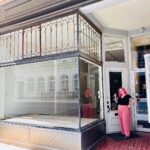
Daystar had proposed moving into this building in downtown Harrisburg.

A halfway house for recovering substance users will not relocate to a historic building in downtown Harrisburg.

On Tuesday, Daystar Center for Spiritual Recovery withdrew its application for a variance from the city’s Zoning Hearing Board, which it needed before it could operate at 123 Forster St., Daystar’s attorney Jeffrey Esch McCombie confirmed this morning. The hearing was due to take place tonight in city hall.

“I believe there are other properties better suited for its use,” McCombie said, declining to specify where those properties may be.

The faith-based recovery program had hoped to relocate from three attached townhouses in Allison Hill to the larger, 11,960-square-foot building near the East Shore Y. It also planned to increase its capacity from 25 to 40 beds.

That plan, however, met with some opposition from area residents, several of whom vocalized their objections at last week’s Planning Commission meeting.

Sign on door at Harrisburg city hall.

At that meeting—and at a previous community meeting held by Daystar at the proposed facility—residents said they were concerned about potential problems that could arise, such as drug use and loitering. Some residents also became alarmed when Daystar officials said that, on Allison Hill, drug dealers targeted their clients.

Residents also were concerned by the density of 40 men, plus staff, in a building originally constructed as a large, single-family residence. By right, city code would permit only eight people to occupy what it calls a “supportive housing” facility, thus requiring the variance.

A Pittsburgh-based realty company currently has the building on the market for $675,000.

This story has been updated to include comment from Daystar’s attorney.

Continue Reading

New HBG school budget keeps kindergarten, proposes cutting 31 staff across district.


Kindergarten cuts might not be coming to Harrisburg after all.

Members of the Harrisburg School District administration unveiled a new budget proposal tonight that would preserve the full-day kindergarten program in favor of cutting 31 district employees. The proposal calls for eliminating nine administrators, 11 teachers, and 11 AFSCME union members for a total of $2.132 million in savings, which would narrow the district’s deficit to $4 million.

The budget still calls for maximum tax hikes for the next three years.

District business manager Bilal Hasan said that over-hiring has contributed to the district’s annual deficits, which are projected to deplete the district’s fund balance by 2020. Thirty-seven teachers who have been hired since 2016 took positions that were not in the district budget, Hasan said.

Interim CFO Jim Snell explained that salaries alone don’t account for the district’s high expenses. Costs like healthcare benefits and pension payments only emerged in long-term budgeting projections, he said.

“When you start to look at the reality of recurring costs over multiple years, that’s when you appreciate the true consequence of those decisions,” Snell said. “Some of those consequences are starting to get in the way and cause financial challenges for us.”

Budget and finance chair Ellis Roy was incredulous when Hasan confirmed the extent of the over-hiring.

“You’re telling me we hired 37 people we had no money to pay for?” Roy said. “We’re self-destructing here.”

Hasan said that the district has not had a position control mechanism in place to monitor its total number of staff positions and vacancies. The administration has implemented a new policy so that no position can be added to the payroll unless it is approved and included in the budget, he said.

Hasan and Snell said that developing a position control program is a lengthy and tedious process that requires collaboration between the district’s human resources, IT and business departments. Employees must code each permanent position with a unique identification number, which can be difficult in a large organization with high turnover, Snell said.

“At any point in time there are staff coming and going, so there was a never a snapshot that said ‘at this moment in time, these are all our positions,’” he said.

The district’s mistake, Snell explained, was anticipating expenditures in line with previous years without accounting for vacant positions that the district wanted to fill. When the administration ramped up its recruiting efforts and hired dozens of new teachers at the beginning of this school year, it unwittingly took on employees that were not included in the budget.

The implementation of a position control system was one of the initiatives outlined in the district’s state-mandated recovery plan, which it adopted in 2013. The task ultimately fell to Hasan, who began developing the program in August 2017 and oversaw its implementation earlier this year.

“This will provide structure and order, and that was not always the case when we were hiring,” Snell said.

The board’s Budget, Finance and Facilities Committee will reconvene next Monday, May 14, at 5:30 p.m. at the Lincoln Administration Building.

Continue Reading

HACC announces plan to leave historic Midtown 2 building

HACC’s Midtown 2 building in Harrisburg

HACC plans to vacate one of its Midtown Harrisburg buildings after its lease expires in four years, the college said late today.

HACC, a community college with campuses in Harrisburg, Gettysburg, Lancaster, York and Lebanon, announced plans to leave Midtown 2, the former Evangelical Press Building, moving its trade and technology programs out of the building between mid-2019 and June 2022, with the expiration of its 15-year lease.

“No programs are being cut, and the transition will occur at times that have the least impact on classes,” said college President John J. “Ski” Sygielski. “Requirements to complete these programs will remain unchanged.”

HACC leases the building from GreenWorks Development, which fully renovated the landmark, century-old building at N. 3rd and Reily streets starting in 2006. HACC moved into the 80,000-square-foot building a year later, signing a long-term lease.

Soon after, HACC also moved much of its administrative staff across the street to GreenWorks’ newly built Campus Square Building, but returned these employees to the main campus at Wildwood several years ago. It plans to continue to occupy a third building, called Midtown 1 at N. 4th and Reily streets, which houses its workforce development, continuing education and welding programs, according to a statement from the college.

The move from Midtown 2 will save the college about $1.9 million in annual rent, maintenance and expenses, according to HACC. A portion of the savings initially will be used to renovate spaces for the relocated programs, HACC said.

GreenWorks could not be immediately reached for comment. The company has had the property on the sales market previously, though it currently does not seem to be an active listing.

Continue Reading

TheBurg Podcast: Dysfunction Junction


This week’s episode of the Burg Podcast takes a deep dive into the recent tumult in the Harrisburg School District, including back-and-forth votes over the superintendent and a burgeoning funding crisis. Lizzy and Larry also discuss the city’s new project to improve road safety and the latest challenge facing an embattled Midtown bar.

You can stream the episode on Soundcloud, or subscribe to TheBurg Podcast in the Apple or Android podcast apps.

Read more about this week’s topics on TheBurgNews.com:

Full-day kindergarten on the chopping block, tax hikes loom, as Harrisburg District struggles to balance its books.

School Board can’t un-do action on superintendent contract, solicitor says.

Burg View: Harrisburg’s School Daze (Editorial)

Burg View: End the Road Carnage Now (Editorial)

To Zero: “Vision Zero” aims for no auto-related deaths in Harrisburg.

Another Round: Third Street Cafe back in court, this time to defend liquor license.

TheBurg Podcast is released semi-monthly by TheBurg Magazine. It is recorded in the offices of Startup Harrisburg and produced by Lizzy Hardison. Special thanks to Paul Cooley, who wrote our theme music.

Continue Reading

Another Round: Third Street Cafe back in court, this time to defend liquor license

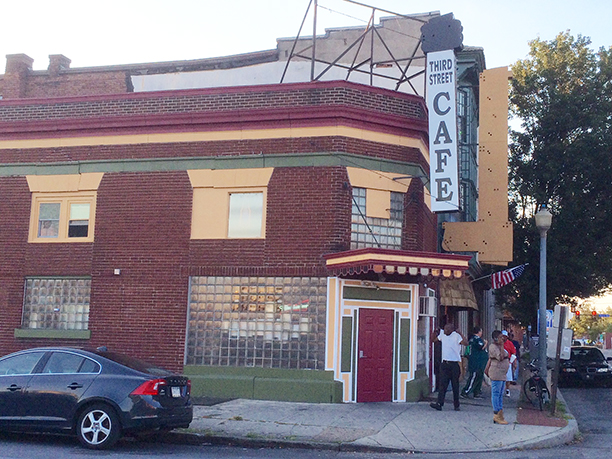
Third Street Cafe, on the corner of N. 3rd and Calder streets in Midtown Harrisburg

After winning a lengthy fight with the city of Harrisburg to keep its business license, an embattled midtown bar is facing a new challenge in court.

It has to convince the Pennsylvania Liquor Control Board to renew its liquor license, despite allegations that it’s failed to uphold terms of a conditional agreement.

Third Street Café, which Harrisburg Mayor Eric Papenfuse deemed a “nuisance bar” and targeted for closure in 2015, is currently operating under an expired liquor license. A hearing held this morning will help the PLCB determine whether or not the establishment on N. 3rd and Calder streets will have its license renewed.

The hearing offered Anthony Paliometros, owner of Third Street Café, the chance to explain citations issued to the bar since 2016, two years after it entered a conditional licensing agreement with PLCB.

Among other provisions, that agreement required the bar’s staff to install new cameras, institute routine security patrols, and maintain a detailed security log and a list of banned patrons.

The terms of the agreement remain attached to Third Street’s liquor license until the PLCB decides to expunge them. The bar last renewed its license in 2016, but it faced a challenge when it sought another two-year renewal this year.

Since 2016, Pennsylvania State Police have cited the bar for failure to display its liquor license and furnish security records. It has also been the site of multiple police calls.

PLCB attorney Jessica Lathrop raised each of those points while making her case against the bar in today’s hearing, but Paliometros testified that circumstances surrounding those infractions have been rectified.

For instance, the liquor license that was previously obscured is now displayed prominently on the café wall under transparent glass, Paliometros said.

He also claimed that his staff had simply misplaced the bar’s security logs. Paliometros signed a waiver of citation after he could not produce records for the PLCB to prove that he had implemented routine security patrols.

Today, he admitted that signing that waiver was a mistake, since the security logs were later recovered. His attorney, James Petrascu, presented them as evidence in today’s hearing.

Lathrop spent most of the hearing interrogating the bar’s history of police action and its perceived lack of security. She called three former Harrisburg police officers as witnesses, all of whom testified about calls they received to the establishment since 2016.

One former officer, Kevin Ruff, responded to reports of a fight and shots fired at Third Street Café in June 2016. He testified that a man he believed to be the bar’s bouncer was visibly intoxicated.

State law prohibits servers and security personnel from drinking on the job. Paliometros testified that his security guard had not appeared intoxicated when he reported for work that night.

“If they come and they’ve been drinking, we send them home,” he said.

Ruff said that the alleged fight inside the bar had disbanded before he arrived. Officers found shell casings and one live round in the street one block east of the bar, but their investigation did not result in any arrests or charges.

Another officer testified that he recovered marijuana from a patron whom he arrested in the bar in 2017, when he was investigating a sighting of a wanted person.

Petrascu acknowledged that bar owners have responsibility “to a certain point” for the behavior of their patrons in and around their establishment. But he questioned whether his client could be held accountable for a patron’s drug possession.

He also objected to the testimony of Lathrop’s last witness, Alice Anne Schwab, director of the Susquehanna Art Museum.

SAM sits directly across the street from Third Street Café, and Schwab said she has seen “countless” visibly intoxicated patrons leave the establishment to urinate.

Petrascu said that Schwab’s testimony fell outside the scope of the specific inquiries raised by the PLCB. What’s more, he said, the witness could not prove that bartenders served the patrons once they became visibly intoxicated.

Hearing examiner Thomas Miller acknowledged that Schwab’s testimony drew them away from PLCB’s initial points of investigation.

“This is a thorny issue,” Miller said. “We’re definitely in a gray area here.”

Lathrop ultimately called Schwab as a rebuttal witness, since her testimony contradicted Paliometros’s claims that his bar does not serve visibly intoxicated patrons. Schwab claimed that drunken patrons would leave the bar with to-go beer and liquor, which the Third Street Cafe is licensed to sell.

The hearing concluded after almost four hours of testimony. Miller must now make a recommendation to the PLCB to either renew or revoke Third Street Cafe’s liquor license. He does not have a deadline to submit his opinion.

Petrascu, who previously served as a PLCB attorney, successfully represented Third Street Café when the owners faced a challenge to their license in 2014. After today’s hearing, he expressed confidence that this appeal would have the same outcome.


Continue Reading

Weekend Roundup with Sara Bozich

Happy Weekend!

Ah, May, the start of summer holidays. This Saturday is both Derby Day AND Cinco de Mayo, so whether you’re sipping on Mint Juleps and betting on the ponies or are face-deep in chips and salsa and margs, you’re set for a good day. (And if the next day is not so nice, read this.)

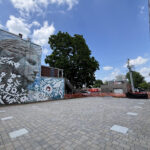
But FIRST! TONIGHT: SoMa Pop-Up Block Party! We’ve scooted just a bit from S. Third St. to accommodate construction, but you won’t want to miss this great night outside with LIVE MUSIC from Funktion Quintet, beers from Zeroday, Boneshire, and Ever Grain, cold brew from Elementary, and food from our neighbors at Bricco + El Sol. It’s free. BE THERE.

What are you doing this weekend?

(more…)

Continue Reading

Burg Review: Tara Stark–Songs & Community

“Ask, and just about all of those star acts—that weren’t born into wealth/fame—will tell you they started in the DIY scene, doing house shows.”

This is how local singer-songwriter and activist Tara Stark explains the power and wonder of underground music.

In late April, I caught a performance that Stark gave at Harrisburg’s Underground Bike Shop. The venue certainly wasn’t underground in a literal sense. Situated along N. 3rd Street in Midtown, it was a very accessible location, still maintaining a feeling of obscurity and almost a “home-away-from-home” atmosphere.

It was no different inside. Bicycles of various styles, prices and applications were centrally placed on a rack, and there was no shortage of accoutrements and accessories for patrons to window-shop and purchase, if they so desired and could afford.

I arrived at 8 p.m. to see Stark setting up, doing a sound check. After a short, five-minute break, the artist opened with “Some Days,” a jaunty little song that set the tone for how the set would proceed. Full of exuberant strumming and the occasional screaming, it got the entire audience up and moving—a testament to the power of a good song.

The performances weren’t always perfect, more like the DIY punk of the ‘80s or early ‘90s or the “guerilla gigs” somewhat popular in the early 2000s indie scene (in which a band or artist would announce a location and time via social media at random, spontaneous moments).

“When playing live, forget about perfection,” Stark explained. “Learn to love everything that doesn’t go as expected, because the beauty of live performance is that it’s ethereal. No two notes will ring the same, no two rooms will resonate the same, no two crowds will have the same energy, and even on camera, no performance will truly leave that moment. If you do flub, laugh at it.”

As with many original artists, Stark made sure to include tributes to those who have offered inspiration and help. So, I wasn’t too surprised that Stark included a cover of The Killers’ 2004 smash “Mr. Brightside.” But what got me was the personal style. Intriguing rhythmic turns and an almost off-rhythm vocal pattern leant a fresh new groove, reviving a piece of pop that, like Toto’s megahit “Africa,” has become something of an Internet cliché.

But what does Stark feel makes the independent music scene so crucial—not just in Harrisburg, but other places as well?

“First of all, community,” Stark said. “And underground and DIY communities can try new things and push the envelope in ways that the larger, profit-driven musical scene—or ‘the industry’—can’t afford to risk.”

It would be a lie to say that community and those who are a part of it are the only reason anyone makes art. At the end of the day, artists create for themselves, and ultimately, that’s really how their day should begin.

“I’m still playing my music for me,” Stark said. “But it is a hope, and I’m excited to see how just doing my thing could help others find their voice.”

Then Stark said something that, in a way that echoes the sentiments of every creative person, from some kid in Minnesota with a Bandcamp account, to the highest-paid rock musician in the world.

“I want to make something I love and can be proud of. And I hope to inspire folks the way they inspired me.”


Listen to Tara Stark’s music at tarastark.bandcamp.com.

Find Stark on social media: @TaraStarkMusic (Music-only, on all platforms)
or @TheTaraStark (Personal, on all platforms)

Continue Reading

Changes to Sanitation Code, Billing Weighed by Harrisburg Council

Harrisburg’s existing rules governing trash collection may soon get canned.

City Council is considering a new, more comprehensive sanitation ordinance that would usher in stronger enforcement tools and more efficient billing for its trash collection services and lay out clearer rules for city recycling programs, Mayor Eric Papenfuse announced tonight.

It would also waive annual trash fees for the owners of vacant lots and properties, eliminating an intensely unpopular provision of the current ordinance, Papenfuse said.

The revised sanitation code aims to curb the city’s perennial problems of illegal dumping and excessive trash accumulation. It would grant the city stronger enforcement powers by creating two categories of offenses and a new fine structure.

Under the proposed ordinance, serious offenses – including illegal dumping, accumulation of trash exceeding 1,000 pounds, improper waste disposal and failure to register as a private trash hauler – would be considered category 1 violations punishable by a $1,000 fine or up to 90 days in jail.

Category 2 violations are more minor acts that are likely to recur without deterrence, Papenfuse said. These violations, which include failure to bag waste, obstruction of streets and sidewalks or interference with enforcement, would be met with fines starting at $100. Fines would increase up to $500 for each subsequent offense.

The ordinance would also permit the Public Works Department to designate enforcement officers to patrol public streets for violations. It also would authorize police officers to issue citations and enforce the ordinance.

Papenfuse said that the new legislation also would codify the city’s free and mandatory recycling services, including its new glass recycling program.

“This will bring us into the new century in regard to recycling,” Papenfuse said. “We’ve more than tripled recycling in the last few years but very little is laid out in existing code.”

One of the most significant changes in the proposed ordinance is an annual billing structure designed to save money for the city and its residents.

Harrisburg residents currently make monthly payments for trash services. Under the new ordinance, the city treasurer’s office would include trash fees in property tax bills. The separate charges would appear on the same invoice and would be subject to the same due date and discount period.

Residents may opt out of once-yearly billing in favor of monthly direct deposit payments. However, those who pay their trash fees within 60 days of billing would receive a 2-percent discount.

City Treasurer Dan Miller said that streamlined bills would save the city $100,000 in mailing and labor costs each year. He also hopes it will increase the city’s collection rate and improve early-year cash flow.

Miller said that the city has a 98-percent collection rate for its real estate tax, with 70 percent of that revenue coming in during the 60-day discount period.

“We assume trash will be the same, which would increase cash flow and generate more interest for us throughout the year,” he said.

The city will host a series of public meetings to hear input and answer questions about the proposed ordinance. The first will be held on May 16 at 5:30 p.m. at the Public Works building on Paxton Street.

Council tonight also heard from members of the Harrisburg Police Bureau, who are asking for an additional $165,000 to construct a substation on S. 15th Street.

That sum represents a 13-percent increase over the project’s $817,000 budget.

City engineer Wayne Martin said that bids for the project came in above early estimates and insisted that the added cost was “not an unusual” margin for error in publicly bid projects.

Several council members lamented the fact that the project’s timeline has lagged as its costs increased.

“Three years ago, we planned a $300,000 precinct with a turnaround of three to six months,” Councilman Cornelius Johnson said. “Now, it’s more expensive, and it’s only a substation.”

Public Safety Commissioner Thomas Carter said that early plans to retrofit a facility at S. 15th Street became impossible once it was found to be structurally unsound. That structure was razed in December to make way for a new modular building.

Police officials say they don’t have enough manpower to staff a full-time precinct, but they still think a substation would benefit officers and residents. Carter reported that increased police presence in South Allison Hill has helped drive down homicides there this year.

“The cost is what it is, but I know that, since we’ve been concentrating on that area, we have not had homicides,” Carter said.

Continue Reading