Sit, Stay, Click: Doggie U combines online, on-site training.

Many people take classes and do professional training through online courses, videos and other distance-learning methods. Now, so can your pooch.

Until recently, most training was done at brick-and-mortar locations or in the home, but that’s beginning to change.

“I can train clients anywhere in the world via video,” said certified dog trainer Amy Powell, owner of Harrisburg-area Doggie U.

Maintaining a virtual business model has allowed Powell to focus efforts on her mission—keeping dogs in their homes with their owners rather than being given up to rescues because of behavioral issues.

“I can get results with behavior modification immediately,” Powell said.

This is not to say that she won’t visit your home. Under certain criteria, she will. Some of her work with rescues is on-site, as well. But the online consulting gives her educational arm greater reach with long-distance dog owners and rescues, and it gives her more time to spend helping more dogs.

During her two decades of dog training, Powell has encountered a lot of common issues: separation anxiety, dominance, aggression, anti-social behavior and OCD (incessant barking, licking, pulling when walking). So, she has developed her own methods, which she teaches online and in person.

“The textbooks aren’t always right,” she said. “I train from my 20 years of experience, which doesn’t necessarily match the textbooks. For example, if a dog jumps up on you, kneeing them or holding their paws is not the most effective way to fix the problem. Rather, walking forward into their pace asserts you as dominant without having to use force.”

Long-time client Sheri Shadle has trusted three of her dogs to Powell over the years.

Amy understands the psychology behind the behavior and is able to explain it in a way so that you understand why your dog behaves in a certain manner,” Shadle said.“Then she develops a training plan to change that behavior.”

Tammy Newcomer, who is herself a people trainer and Powell’s client since 2006, sees a lot of parallels between Amy’s training methods and practical adult learning approaches. Some of it goes beyond training, into “offering support and empathy,” Newcomer said.

“Her support has aided in providing a good environment for my family, furry kids included,” she said.

While Powell specializes in training dogs with problem behaviors, part of her community-building emphasizes properly socializing dogs to help prevent problem behaviors. Doggie U hosts dog walks around dog-friendly area parks, which are promoted on its Facebook page and Meetup.

It’s a chance to socialize dogs and give them space to be their crazy selves, along with a reminder that non-social dogs need more space than others.

“Aggression isn’t genetically linked to breeds,” Powell said. “Certain breeds get bad reps that they don’t deserve. I’ve met more dangerous labs than pit bulls. Ultimately, it’s the responsibility of the owner to make sure they have a social, stable dog.”

Doggie U client Vanessa Foti-Pietrolaj enlisted Powell’s help with her dog Toby’s aggression issues.

“We went from avoiding other dogs and social engagements to having playdates and even puppy-sitting for friends’ dogs,” she said.

Training most of her clients by video allows Powell to turn some of her energies toward decidedly non-video training delivery.

For instance, a revived, mission-related pet training project for Doggie U is HOPE (Hounds of Prison Education) Dogs, which is sponsored by the Central PA Animal Alliance in conjunction with the PA State Correctional Institute at Camp Hill and CPAA member rescues. The program pairs carefully screened inmates with dogs that have moderate behavior and social issues.

Online training has not only helped Powell free up her schedule for other efforts. It also has allowed her clients to train at their discretion, while dogs get the constant reinforcement of her lessons.

“My clients can refer to the videos over and over again,” Powell said. “I can have consistent communication with the owners.”

For more information, visit the Facebook page: Doggie U LLC.
Continue Reading

Creature Comfort: Palliative care, hospice help pet parents face the most difficult time.

When you lose a beloved pet, the memory of that loss stays with you like a scar.

Ask Harrisburg resident Allison Adams Martinez. She had her cat Athena for nearly 17 years.

“She was the world’s best cat, and she was a constant presence in my life through many moves and changes,” she said.

When Athena became ill with kidney disease, Allison and her husband knew the end was near, but they still weren’t prepared. The decision to compassionately euthanize her was the right one, Allison said, but also fraught with sorrow and grief.

This year, Americans will spend more than $60 billion on their pets, according to the American Pet Products Association. So, it should be no surprise that pet palliative care and hospice programs have surged in the past few years. In many ways, these programs replicate human programs, but they also have aspects that are unique to pet care.

“The veterinary hospice movement extends from human hospice,” said Beth Marchitelli, a veterinarian at 4 Paws Farewell Mobile Pet Hospice and Home Euthanasia in Asheville, N.C. “People were benefiting from hospice, and people wanted this for their pets, as well.”

Pet hospice can take a variety of forms and can start days or weeks before an animal’s demise. Generally, care involves consultation with a veterinarian. Then the hospice team works with the family to identify and access services that are most likely to benefit the pet. This commonly involves pain management, as well as opportunities for owners to share final memories with their pet and say goodbye.

Making decisions about a pet at the end of life is a terrible burden, so hospice and palliative care can help bring comfort to owners, as well as to their pets. This happens even when owners know it’s time and that they are doing the right thing.

“They’re still not prepared,” says Anne Johnson, a bereavement support specialist at Cumberland Valley Veterinary Clinic in Hagerstown, Md. “It’s the owner’s worst day.”

Harrisburg resident Jackie Goodwin knows this from experience.

“I had my first airedale for 13 years, and I kept her alive too long,” she said. I wasn’t ready for her to leave, and she suffered as a result. I was very selfish.” 

She learned a lesson from her loss, and when her pet, Chelsea, was terminally ill with kidney failure, she focused on keeping the dog comfortable. 

“My vet always said ‘we,’ and I really appreciated that,” she said. I asked her how I would know when it was ‘time,’ and she said, ‘You’ll know.’” 

And her vet was right, Jackie said.

I noticed that Chelsea wasn’t happy,” she said. She didn’t want to go outside, and she was sleeping all the time.” 

Goodwin was with her dog at the end.

“It was very private and very peaceful, she said.


No Perfect Answer

When a pet is ill or injured, owners don’t want their animal to suffer. In addition to pain control, they want symptoms such as diarrhea and lethargy managed. As with people, this may mean medications, but it also involves environmental modifications such as the installation of ramps and lifts, massage, aromatherapy and acupuncture.

“We’ve starting using toe grips to help prevent slipping and falling, and these have been a game changer,” said Marchitelli.

Heating and cooling pads, as well as chicken broth ice cubes and other products to improve hydration and caloric intake, also are popular.

“There are even some TV programs and videos for pets to stimulate cognition, she said.

Johnson said that some animals, such as those with advanced kidney disease, may benefit from subcutaneous fluid injections. Family members have the option to do it themselves or have the vet administer them.

As the pet’s condition deteriorates, Johnson tries to help them understand that, when an animal is losing weight rapidly, unable to eat and unable to walk or stand, the pet is likely suffering.

“We have a quality-of-life discussion as a gentle way to move the owners in the end-of-life direction,” she said.

The burden of decision-making can be significant for pet parents. They want to do the right thing, but the pet can’t tell them. 

“There is no perfect answer,Marchitelli said. “Their previous experiences with death, their own spiritual orientation, and their feelings about mortality all have an influence.”

However, one shared belief is that the animal shouldn’t suffer. 

“This is an overarching theme, and this is often what guides decision-making,” she said. “People want to know when their pet’s quality of life is compromised.”


Peaceful Spaces

Many veterinary clinics focus on services to help owners through the process.

“We remodeled two years ago and decided to create a special room—a comfortable, quiet place where the whole family could come to say goodbye,” Johnson said. “It’s away from the flow and has a private entrance.”

Often, she noted, people are expecting to take their pet home, and she doesn’t want them to leave empty-handed. Her practice gives these pet owners some literature on grieving, seeds they can plant in their yard or garden, and a pin or ribbon to wear.

Johnson, along with her colleague, Faufat Odebe, became certified as bereavement support counselors through the Association for Pet Loss and Bereavement. Now, they host a twice-monthly bereavement group.

It’s free, and you don’t have be a client here to participate,” Odebe said. We pass around pictures, eat cookies and cry. That is sort of the rhythm.”

The group also holds special events, such as a luminary lighting last year that attracted 70 participants.

Whatever the grieving process, many families still experience guilt when a beloved pet dies.

“With pet owners, it’s difficult because they often have made the decision to end their pet’s life,” Marchitelli said. We have to help them understand that their feelings are normal.”


Where To Go?

There are a few specialized pet hospice programs in Pennsylvania. You can find a list of these, as well as other resources, at the International Association for Animal Hospiceand Palliative Care website.

Otherwise, your own vet is the best source for learning more about palliative care and hospice.

Family members and friends who have gone through a similar experience, or who have suffered the loss of a pet, can also be a referral source for palliative and hospice care,” said Jennifer Mahoney, a clinical assistant professor of medical oncology at the University of Pennsylvania School of Veterinary Medicine.

Continue Reading

All About the Bride: Daniel Thompson puts a lifetime of dreams, experience into his gowns.

Daniel Thomas

Many of us may remember writing notes to our idols as kids.

For some, it was the professional athletes and, for others, it was the actresses and singers. We’d check the mail for weeks after sending it, anxious for a reply. Sometimes, we’d get one—even if the handwriting did look oddly similar to one of our parents’.

For Daniel Thompson, that idol was Priscilla of Boston, an elite wedding dress designer who made her name after making Grace Kelly’s gown. In 10th grade, Thompson optimistically sent off his fan mail, proclaiming his dream to be just like her. To his surprise, he actually received an authentic reply.

“I told her that I wanted to be a bridal designer, and I asked her, ‘What should I do?’” Thompson said. “Well, I couldn’t believe it, that this star—at least to me—actually wrote back.”

Thompson, the owner of Daniel Thompson Bridals in Camp Hill, always knew he wanted to design wedding gowns. After growing up and graduating from high school in Carlisle, he took the advice Priscilla shared in her letter and headed straight for New York City to attend design school.

In New York, Thompson went to Traphagen School of Fashion, a private school that allowed him to concentrate on bridal design his entire time there.

After completing his design courses in 1976, he decided to reach out to his pen pal Priscilla again to thank her again for the words of encouragement she gave to him five years prior—and, of course, to let her know he was on the job market.

“She called me,” he said. “She said, ‘I want to meet you. So, I want you to come to my showroom in New York and show me your portfolio.’”

Thompson did exactly that, and the designer told him that, if he were willing to move to Boston, he’d have a job. He was there less than a week later.

“At the time, [Priscilla] was at the top of the industry,” Thompson said. “I mean, you just couldn’t get any higher than her. I was very lucky.”

After working for Priscilla of Boston for a few years, Thompson was homesick for New York. So, he made his way back and worked for several other companies for about eight years, until he decided to go off on his own. He stayed in the city for a while but eventually returned to Pennsylvania to be closer to family.

Along with the flexibility and freedom that comes with working for yourself, Thompson said he enjoys the human interaction he missed out on in past positions.

“I didn’t have any one-on-one interaction with the brides because I was stuck in the design room,” he said. “And I really like working with the customers.”


Very Special

When Thompson says “personal service,” he means precisely that.

He specializes in creating a unique experience for each bride, offering individual attention to his clients. Brides who visit his Camp Hill store, which he opened last September, will enjoy private meetings throughout the design process, as well as other couture perks.

Everything in Thompson’s extravagant shop was made by his hands with extraordinary care. Though there are around 75 dresses already on the racks at the boutique, brides can come in with their own ideas for a custom gown. Or they can start with a dress from the rack, then request alterations based on their preferences.

“I’ll adapt dresses,” he said. “Sometimes, I’ll put one dress on her because the top is right, then I’ll put another dress over that because the skirt is right. We really create the perfect dress right on her.”

After settling on the general style of the dress, Thompson and the bride discuss fabrics, lace, beading, trains and any other specific feature.

Before making the gown, he creates a mock-up of the dress in muslin fabric, an inexpensive material. This helps the bride see the shape of the dress in person, as well as try it on. Thompson will then make any necessary nips and tucks on the muslin, as well.

“So, we do this wonderful muslin fitting first, which is very couture,” Thompson said. “It’s not what you’ll get at a bridal shop. It’s very, very special.”

The muslin stage allows brides to make changes after seeing Thompson’s designs come to life. They may decide they actually want longer or shorter sleeves, a different neckline, fewer cut-outs or other attributes. So, Thompson can make these adjustments right on the muslin or create a new one, if needed.

Once the muslin fits perfectly and looks just right, he’ll proceed to creating the actual wedding dress. This typically happens in several stages. For example, he may perfect the top of the gown first so the bride can try it on with several different skirt options to decide which is best.

As part of the individualized experience, Thompson will make any alterations to the completed dress free of charge to ensure a perfect fit for the big day. He said it’s not unusual to meet with a bride between eight and 10 times from start to finish.

“It’s very personalized,” he said. “When I’m with a bride, no one else comes in to shop or look around.”

This high-end, tailored atmosphere aligns perfectly with Thompson’s motto, which he proudly displays in the store: “It’s All About the Bride.”

While having more time is always better, Thompson said six months to a year is the average lead time he recommends brides follow for a custom-made dress. Prices typically range from $2,000 to $2,500.

In addition to wedding gowns, Thompson can create “anything fancy”—from bat mitzvah dresses to elegant gowns for mothers of the bride, flower girls, first communion, “sweet sixteen” or even just evening wear.

Whatever the occasion, there’s one common element—Thompson’s undivided attention and expertise.

“I like the personal service very much,” he said. “And, in this industry, that’s important.”

Daniel Thompson Bridals is located at 2133 Market St., 2nd Floor, Camp Hill. Call 717-525-9920 for an appointment.

Continue Reading

Good Dog? Great Dog!: Program supports animal care in underserved communities.

“I bark constantly. I poop on the floor. I don’t pay rent. Somehow, I still have a home.”  

This statement recently appeared above a mug shot of my toy poodle. Although an attempt at humor, the image reveals the stress caused by the undesirable behavior of a dog. For owners who face more extreme circumstances, giving up their family pet may seem like the only viable option.  

Andrew Hyle and Natahnee Shrawder recognized the stress an untrained dog can cause. They also realized that many people face financial situations that prevent them from seeking support or simply don’t know where get help.

Driven by a shared passion for animals, Hyle and Shrawder created Harrisburg’s Great Dog Program, an organization that provides in-home training, education and support to underserved and underrepresented populations completely free of charge.

Hyle founded the program in 2012, teaching free classes at the Allison Hill Community Center, and later, offering in-home support. Hyle said Shrawder, a former state dog warden, brought a much-needed business sense, helping to develop a long-term plan for growth.

“The Great Dog Program was existing, but when Natahnee got involved, it started living,” Hyle said.

Shrawder holds a degree in animal behavior but said her passion comes from her work with area shelters.

“In so many cases, a dog’s behavior is the result of some type of fallout from poor training methods or a lack of resources,” she said.


Science Based

The goal, Hyle said, is to help people who can’t afford training or who are frustrated and feel they are out of options. He also explained that underserved doesn’t always mean low income.

“I don’t care about a person’s monetary status, but I do care about keeping a dog safe and healthy at home,” he said.

He emphasized that a paid trainer should be a struggling owner’s first line of defense.  

“We can help when people feel they have no where left to turn,” he said.

Hyle also said that low-income families should not be denied the opportunity to own a dog.

“What a dog does for a person’s life might mean more than their bank account,” he explained. “If an owner can provide food, we can help with everything else.”

Hyle and Shrawder both are certified through the International Association of Animal Behavior Consultants and have conducted numerous case studies on animal behavior and training. They said they are equipped to work with any breed.

“We have worked with biters to dogs with annoying behaviors,” Hyle said.

Shrawder noted they have never turned a dog away, estimating they helped close to 60 dogs over the past year in areas like Harrisburg, Mechanicsburg, Dillsburg and Carlisle.

Shrawder said their science-based approach emphasizes positive reinforcement.

“We treat each dog as an individual learner with unique needs,” she said.

Hyle added: “We apply the least invasive, minimally adverse approach that will work.”

Anyone seeking help must first complete a six-page client form.

“It helps weed out those who are simply looking to justify surrendering their dog,” Hyle explained. “We want to help people who are frustrated, can’t afford to pay for training, or don’t have the resources to know how to properly care for their dog.”

A three-hour, in-home visit follows, working with the dog and the family, offering pointers on positive training methods and suggestions for environmental changes to promote success.  The level of support varies.

“Often, we will do follow up visits or calls if they’re needed,” Hyle said.

Shrawder said their Facebook page contains printable resources, including training tips and information on pet care. Visitors can also request in-home help.


A Voice

Despite support, owners may still surrender their dog, and Shrawder said they have an extensive network to assist. Alyx Robertson, who serves on the board of directors for Canine Rescue of PA, has worked with Hyle and Shrawder to re-home several dogs.

“They already know the dog, so they know what to look for when finding a new home,”  she said, adding that Shrawder and Hyle often continue to work with the dog after it is placed. “They are great educators, filled with true and hard facts. They know what they’re doing.”

The program also supports area shelters. Laurie Lyon, adoption coordinator for Spiranza Animal Rescue, said unforeseen concerns sometimes arise after an adoption, and she refers Hyle and Shrawder.

“They go into the home, meet the dog where they are, and help get the dog and the owners to where they need to be for success,” Lyon said.

Hyle and Shrawder are still working to obtain nonprofit status so they can apply for grants and accept the monetary donations needed to expand. Hyle said leashes, crates and other pet equipment have been donated, but all operating costs are out-of-pocket. Long-term plans include increasing community education and supporting more families.

“I am not here for the money,” Hyle said. “I just want to help as much as I can.”

Shrawder agreed.

“I’m feeling more fulfilled than I’ve felt in a long time,” she said.

Lyon emphasized that so much can be prevented with proper training, education and resources.  

“We are a voice for the voiceless,” she said. “And the Great Dog Program is a key component of that.”

For more information, email [email protected] or visit the Facebook page: Harrisburg’s Great Dog Program.

Continue Reading

Supplies of Smiles: Caitlin’s Smiles brings solace to hospitalized children.

A child sits on a hospital bed, away from home, sick and stressed. Someone gives her a bright, hand-colored bag holding PlayDoh, crayons and craft supplies. She smiles.

That’s the goal of Caitlin’s Smilesto provide comfort and plenty of smiles to chronically ill children. Located on N. 6th Street in Harrisburg, the organization and its army of volunteers create and distribute bags of craft supplies to children in more than 70 hospitals, from New York to South Carolina.

Among the rustling of Ziploc bags, the measuring of yarn and the counting of pom-poms, students from SciTech High School recently discussed their monthly experience volunteering at the facility.

“I’m a creative person, so this type of thing I like to do,” said Arianna Joseph. And this is for kids who need supportive cards and crafts. To put a smile on their face.”

Caitlin’s Smiles founder Cheryl Hornung is familiar with having a sick child. Her daughter Caitlin, the organization’s namesake, fought cancer for three years, ultimately succumbing to the disease at 8 years old. During her numerous hospitalizations and surgeries, Caitlin found distraction in her arts and crafts.

Hornung said that, whenever Caitlin entered the hospital, she would dig into her backpack and make beaded necklaces and draw pictures, much of which she shared with the staff.

“She was an art machine,” Hornung said. “We always kept a backpack of art supplies and snacks in the car, because we never knew.”

After Caitlins passing, Hornung volunteered at a number of children’s charities but none seemed just right. Since arts and crafts helped Caitlin and her family through the tough times, the creation of Caitlin’s Smiles seemed natural. It also solved a problem.

At many hospitals, children are prevented from going to playrooms during quiet times or are confined to their beds because of their illnesses. Caitlin’s Smiles “Bags of Smiles” supplement what the hospitals offer and allow children to fill time when they are hospitalized.

Also, parents don’t always have the time to stop and pack a bag of toys for their kids when they experience an emergency. They are lucky, said Hornung, just to get clothes packed.

“It takes the pressure off the families, if we have it in the hospital already, she said.

Hospital staff say that giving out Bags of Smiles” is like playing Santa Claus. Marcella Iqbal, a clinical assistant at UPMC Pinnacle in Harrisburg, always lets Hornung know when the hospital runs low.

“Children are nervous and scared, and we try to have a Caitlin’s Smiles bag on the bed when they come in,” she said. “Quite often, they’ll get the Caitlin’s Smiles bag and say, ‘My class helped make them.’”

Volunteers of all ages and abilities are welcome at Caitlin’s Smiles. Last year, volunteers spent 22, 000 hours helping, and the organization has 5,000 people on its volunteer rolls.

“It’s just as important to volunteers to know they are helping someone, especially the special needs groups,” Hornung said. They might not have that opportunity elsewhere.”

Jo Horanic coordinates the school and special needs groups that work at Caitlin’s Smiles. Her connection to the organization is twofold. She loves crafts and kids, and she lost her husband to cancer, an illness that many Bags of Smiles recipients are fighting.

“Rather than be the recipient, they have the chance to give back,she said of the special-needs volunteers.

Hornung said that, in the early days of Caitlin’s Smiles, it was about the end result—children receiving crafts. That vision has morphed into something even greater, giving volunteers a sense of purpose.

Back in the workroom, with walls adorned with butterflies, crayons and castle decals listing sponsor and partner organizations, Deonna Winston wrapped yarn and chatted with Horanic.

A SciTech student, she admitted that, when she first began volunteering, her heart wasn’t fully in it, but that changed when she “understood the impact of it on the kids.”

When asked how Caitlin would feel about what she’s doing, Hornung replied, “She would love it, the new pointy crayons… the piles of beads.”

Indeed, Caitlin’s Smiles has given Hornung a hopeful focus, despite her family’s own sorrow.

“Every day, we hear wonderful stories and see lots of smiles, she said.

Caitlin’s Smiles is located at 3303 N. 6th St., Harrisburg. For more information, including volunteer opportunities, visit www.caitlins-smiles.org.

Continue Reading

“I’m done:” School board members threaten walk out, exchange barbs over spontaneous action on superintendent contract.

Members of the Harrisburg school board last night.

The Harrisburg School Board reached new heights of dysfunction on Thursday night when a surprise vote on the superintendent’s contract devolved into shouting match between its members.

Superintendent Sybil Knight-Burney’s term expires on June 30, and the board must negotiate new terms to avoid leaving her out of a contract come July 1.

But the board voted 5-3 against a resolution that would have bought the parties additional time for negotiations. It left them with just two days to offer the superintendent new terms.

Board Vice President Danielle Robinson said that language in the resolution made her uncomfortable and that it seemed like a veiled attempt to rescind the board’s decision to award Knight-Burney a new contract. She was joined by board directors Melvin Wilson, Ellis Roy, Lionel Gonzalez and Tyrell Spradley in rejecting the provision.

The resolution was developed by the board solicitor with help from the Pennsylvania School Board Association, board President Judd Pittman said. He later expressed “ridiculous, incredible frustration” that his colleagues had voted it down.

Since Knight-Burney’s contract was set to expire on June 30, Pittman advised the board that it needed to codify her new term before then, since failure to act could be considered a breach of contract.

The board decided in April to rehire Knight-Burney for a term of 3 to 5 years.

“We did not set the length of the term in the first vote. We said we would do it later,” Pittman explained. “That time has since come, and now we’re in a position where we need to put forth a motion.”

Gonzalez then put forth a motion to grant Knight-Burney a five-year term. His resolution did not address any other terms of her contract, such as salary or job expectations.

The motion, which did not appear on the meeting agenda, drew the ire of two dozen residents in attendance, who said that the board should not make a consequential decision on short notice, while other terms of the contract were still in negotiation.

“We haven’t discussed this as a board,” board director Carrie Fowler said.

As the board secretary called the vote, a reporter lodged an objection under the state Sunshine Act, which says any action taken by a government body must be preceded by public comment.

Since the motion was added to the agenda mid-meeting, the public did not have the chance to weigh in. Board Solicitor Samuel Cooper later agreed that the public should have the chance to comment.

Pittman called a recess, and in the melee that followed, board directors exchanged heated words while members of the public continued to shout in exasperation. One board director began yelling at the board solicitor, who joined the meeting over the phone.

Acrimony between school directors has been on full display at board meetings in the past months. But as one audience member said, “This is the best one yet.”

Board directors continued to argue after Pittman called the meeting back into order. He attempted to convene an executive session and then tried to go home when other board directors would not join him.

“I’m done,” he said.

Board director Brian Carter did leave the meeting, but later returned to vote on personnel actions.

After more discussion and procedural fumbles, Fowler put forth an amendment to Gonzalez’s motion, proposing a three-year contract for Knight-Burney. The exasperated board passed the motion 8-0.

The board also voted last night to levy a 3.6-percent tax hike and approve a budget eliminating 52 staff positions.

Business Manager Bilal Hasan said that the cuts will be made through attrition, meaning that personnel who retire or resign will not be replaced. As a result, no district employees will lose their jobs, he said.

“We’re cutting positions, not people,” he said.

The tax hike will bring the district’s millage rate to 28.8 mills, an increase of 1.0008 mills from this year. With Harrisburg’s median home value of $42,800, the tax hike will cost the average city homeowner an additional $43 a year.

Board directors Robinson, Wilson, Roy, Gonzalez and Spradley voted to approve the budget. Pittman, Fowler and Carter dissented.

Board director Percel Eiland announced his resignation from the board last week, leaving the body with just eight members.

Continue Reading

Harristown to purchase, renovate historic property that once housed iconic Harrisburg hotel, restaurant

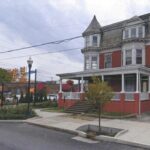
Harristown plans to purchase the historic Fox Hotel, converting it to a small apartment building.

A small but historically important project.

That’s how CEO Brad Jones describes the plan by his company, Harristown Enterprises, to breath life back into the long-empty Fox Hotel in Harrisburg, located at the seam of the downtown and Shipoke neighborhoods.

Jones today confirmed that Harristown expects to purchase the 112-year-old property at S. 2nd and Washington streets from UPMC Pinnacle, turning it into an eight-unit apartment building.

“We’re very interested in preserving the history of that building,” Jones said. “It will become entirely residential.”

Hotelier Otto Fox built the distinctive, cupola-topped, 7,000-square-foot brick structure at 236 S. 2nd St., in 1906. Many Harrisburg residents may best remember the building as home of Santanna’s Seafood House, long one of Harrisburg’s most popular restaurants, which operated on the ground floor starting in the 1930s.

Pinnacle purchased the property in 1987, and it has been mostly empty since. The building has been on Historic Harrisburg Association’s “Preservation Priority” list since 2011, as some grew concerned that it could be razed.

“In terms of preservation, obviously, this is good news,” said historian Jeb Stuart, Historic Harrisburg’s preservation advisor. “We applaud Harristown for this. It is an important part of the built environment in that area.”

Jones said that Harristown and the hospital began discussing a sale last year, following the announcement that a UPMC Pinnacle-affiliated doctor’s office would open inside Strawberry Square, which is owned by Harristown.

Harristown plans to convert all three floors to apartments. The ground floor would become two, two-bedroom, two-bath units of about 800 square feet each. Both the second and third floors would consist of three, one-bedroom apartments measuring about 550 square feet apiece, Jones said.

Rents are expected to range from about $1,000 a month for the one-bedroom units to $1,295 for the two-bedroom units.

The building, Jones said, needs extensive structural repair, as well as a total interior restoration, as it’s been unoccupied for decades. He expects Harristown to invest about $1.4 million into the project.

Jones said he expects to start the project in September, with construction planned to take six to nine months.

Over the last few years, Harristown has bought and renovated numerous rundown and empty buildings downtown, converting them to higher-end apartments. In fact, just today, Harristown closed on the purchase of two buildings downtown—116 Pine St. and 124 Pine St.—both due to become apartment buildings.

Unlike for those buildings, Harristown will not need to file a land use plan for the Fox Hotel conversion, due to its small size, Jones said. So, Harristown, he said, will not require approvals from the city’s Zoning Hearing Board and City Council.


Continue Reading

“Rapid Response” measures proposed, meant to improve pedestrian safety on State Street

Attendees (and some media) from tonight’s Vision Zero meeting in Harrisburg.

The 17,000 drivers who traverse Harrisburg’s State Street every weekday could soon see changes to the busy thoroughfare.

Harrisburg’s Planning Bureau tonight unveiled new data from its State Street “rapid response” project, which aims to curb pedestrian fatalities on the five-lane road that connects the city to Penbrook. Pedestrians could see new safety features on State Street as early as September, said city Engineer Wayne Martin.

Martin also confirmed that the State Street project won’t be curtailed by the recent austerity measures imposed by Harrisburg Mayor Eric Papenfuse, which include a freeze on all non-essential spending and some capital expenditures.

The stretch of State Street east of the Capitol Complex was the site of four pedestrian fatalities and one cyclist fatality in the past year.

The spate of accidents was part of a citywide uptick in traffic-related deaths. Vehicle-related fatalities have quadrupled in the city in the last four years, according to PennDOT data, rising from two deaths in 2013 to eight deaths in 2017.

In April, the city announced a partnership with Eluminat, a Washington-D.C.-based planning firm, and Wallace Montgomery, a construction engineering company in Mechanicsburg, to roll out Vision Zero, a plan to eliminate traffic-related deaths in Harrisburg in 10 years.

The first step of that long-term project is the State Street rapid response, which aims to determine the causes of pedestrian accidents and implement data-driven solutions.

With one pedestrian dying every three months on the five-lane road, the city couldn’t wait any longer to take action, Martin said.

Members of the city’s Vision Zero team presented preliminary data tonight at the fire station at 16th and State streets.

Among other findings, the team determined that almost half of State Street north of the Capitol has “undesirable” low-light levels.

They also found that speed violations increase as vehicles travel eastbound – 90 percent of vehicles travel at below the speed limit while crossing State and Academy Streets, but only 43 percent obey the speed limit by the time they hit 19th and State.

After collecting more public input at tonight’s meeting, the Vision Zero team will recommend low-cost, “quick build” solutions to increase pedestrian safety.

According to Andy Duerr, an associate at Wallace Montgomery, those fixes could include median refuge islands – simple, protected spaces in the center of the road where pedestrians can wait for traffic to pass mid-crossing.

The city could also install more high-powered street lamp bulbs to increase visibility, re-program stoplight sequences or create raised crosswalks to calm traffic.

The team hopes to submit recommendations to the city within the next six weeks. They expect that the new infrastructure won’t cost more than $25,000.

“When I say low cost, I mean low cost,” Martin said. “These are quick-hit, emergency projects.”

Continue Reading

Harrisburg Council disburses federal development funds, approves apartment projects

$250,000 of CDBG money will go to Tri-County HDC, an affordable housing developer that has partnered with the city on the MulDer Square revitalization project. The ribbon cutting for the first MulDer Square house was held in February.

Harrisburg City Council approved its annual allocation of federal development grants to local service groups on Tuesday night, but not before making one significant change to a proposal from the city’s administration.

In a rare close vote, council voted 4-3 to direct a $15,000 grant to Breaking the Chainz, a nonprofit that works with at-risk youth and released offenders.

The funds come from the city’s annual Community Development Block Grant (CDBG), a program of the federal Department of Housing and Urban Development.

The city’s Department of Community and Economic Development, which screens and ranks grant applications, did not recommend Breaking the Chainz for any funding this year. Romulus Brown, a project manager in the city’s housing bureau, said that the group submitted an incomplete application.

But economic development committee chair Dave Madsen advocated for Breaking the Chainz to receive funding. He said that council has previously strayed from its application ranking system to provide funds to worthy organizations and argued that Breaking the Chainz provided valuable youth enrichment activities.

Brown confirmed that Breaking the Chainz was an eligible program under CDBG guidelines. Council tried to award the organization CDBG funds last year, but determined it did not meet program requirements.

This time around, council President Wanda Williams and council members Ben Allatt and Ausha Green agreed with Madsen and voted to carry his amendment. Council members Cornelius Johnson, Westburn Majors and Shamaine Daniels voted against it.

“This organization does great work,” Johnson said before casting his vote. “I just believe our process should be transparent… and we should set clear expectations for a competitive grant process.”

In order to give $15,000 to Breaking the Chainz, council reduced a proposed grant to TLC Work Based Training from $45,000 to $30,000. Other grant recipients include:

  • Christian Recovery Aftercare Ministries (C.R.A.M.): $40,000
  • A Miracle 4 Sure: $50,000
  • Latino Hispanic Community Center: $25,000
  • Fair Housing Council: $25,000
  • PPL/IN HOUSE: $20,000
  • Shades of Greatness: $15,000
  • Heinz-Menaker Senior Center: $25,000
  • Neighborhood Dispute Settlement: $5,000
  • TriCounty HDC: $250,000
  • Habitat for Humanity: $100,000
  • Housing Rehabilitation Programs (city-run): $321,642

As in past years, almost $600,000 of the city’s $2 million CDBG grant will go to debt service. They city is still repaying federal loans it backed for development projects under former Mayor Steve Reed, including the disastrous Capitol View Commerce Center project, which went bankrupt before being completed years later by a new owner.

In addition, $408,000 will go to CDBG administration.

Council also approved two new downtown apartment projects on Tuesday night. The first, proposed by the Executive House Apartments, will convert commercial space at 101 S. 2nd St. into 15 residential units.

Another project, proposed by Harristown Development CEO Brad Jones, will convert an office building on Pine Street into 45 residential units and retail space. Williams, who has been critical of Harristown’s downtown redevelopment efforts, cast a vote against the project.

Continue Reading

Mayor’s communication on Act 47 “irresponsible,” HBG councilman says, as 14 jobs affected by hiring freeze.

City Councilman Ben Allatt, center, had some tough words tonight for Harrisburg’s mayor.

A Harrisburg City Council member had stern words for Harrisburg’s mayor on Tuesday night.

Ben Allatt, council vice president and budget and finance committee chair, criticized the mayor’s recent, failed attempt to secure Harrisburg special tax provisions from the state legislature and his subsequent decision to declare a fiscal crisis in the city.

Allatt called the mayor’s public statements “irresponsible,” saying they caused unnecessary alarm and confusion among residents.

He also criticized the mayor’s falling out with House Speaker Mike Turzai, who blocked a special provision for Harrisburg from coming to vote on Friday.

“The exchanges between the mayor and the speaker were less than professional,” Allatt said. “We do not need greater tension between the city and the state.”

Allatt said he is committed to working with the legislature to help the city exit Act 47, a state program for financially distressed municipalities. Harrisburg’s Act 47 designation expires in September.

Papenfuse declined to respond to Allatt’s remarks. He reiterated that Harrisburg is facing dire financial problems if the state legislature does not grant it special taxing authority and spare it from entering an Act 47 extension.

He also elaborated on the hiring freeze and spending freeze that he declared on Monday. He said that 14 positions have been frozen and will remain unfilled, including seven represented by bargaining units:

  • Data Tech
  • Landscape Specialist
  • Central Support Specialist
  • Park Ranger
  • Auto mechanic
  • Plumber
  • Secretary

The remaining seven positions are categorized as management roles:

  • Background investigator
  • Confidential secretary
  • Analyst
  • Deputy director for planning and zoning
  • Archivist
  • Arborist
  • Deputy fire chief

Papenfuse said that the city expects at least a dozen employees to retire by the end of the year. They will not be replaced as long as the city remains in a hiring freeze, he said.

City officials met today and yesterday to evaluate spending on capital improvement projects, but Papenfuse declined to say which ones could be curtailed.

Papenfuse introduced the austerity measures to prepare Harrisburg for the eventual loss of $12 million in annual revenue from its earned income tax and local services tax. Act 47 allows the city to levy those taxes at extraordinary rates – a power that Harrisburg will lose if it exits the program.

Harrisburg can keep its current taxing authority if it obtains a one-time, three-year extension to stay in Act 47. But that extension will also require the city to adopt a new recovery plan, developed jointly with the state Department of Community and Economic Development.

That plan must be based on current state law, which means it will likely recommend the city draw down its fund balance and cut spending to prepare for a mandatory Act 47 exit in 2022.

Marita Kelley, the city’s Act 47 coordinator, declined to comment today on the details of the recovery plan. It will be released as a draft on July 9.

City officials, including Allatt, have said that Harrisburg cannot pass a balanced budget without augmented taxing authority. The only way for the city to have a sustainable future outside of Act 47, they say, is for the state legislature to pass a special provision exempting Harrisburg from the standard state tax code.

Harrisburg entered a yearlong, $60,000 lobbying contract this year in hopes of securing legislative change.

The city intends to renew its lobbying in September when the legislature returns from recess.

Continue Reading