This Old, Expensive House: Harrisburg has more than 4,000 vacant properties. Those that can be saved from demolition could find a second life as affordable housing units—but at what cost?

Mount Pleasant Project.

In the 30 years that Mel Johnson has managed large construction projects, he’s overseen jobs in airports, schools and sewage systems. But none of them prepared him for his most recent undertaking in Uptown Harrisburg.

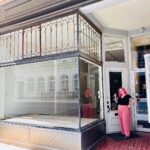
The Harrisburg Fair Housing Council, a nonprofit organization where Johnson serves as executive director, was renovating the top stories of its headquarters on 6th and Maclay streets—a stately former bank constructed around 1900. They hoped to create eight, two- and three-bedroom apartments to rent at a below-market rate, adding much-needed quality, affordable housing in the Uptown neighborhood.

But first, they had to replace the building’s rubber roof. Then they had to reinforce a retaining wall that was liable to collapse from water damage. Due to narrow hallways, they nixed plans to build an elevator and make the apartments ADA-compliant. They rebuilt bay windows and abated asbestos. The cost of these contingent projects mounted, especially when they discovered that pigeons had colonized the abandoned structure, leaving excrement that required $20,000 of waste hauling and sanitization.

Today, three apartments are under lease, and five more are still in the works. Johnson said that the finished units, which have original hardwood floors and all-new, custom-made windows, are beautiful. And even though HFHC expects to sink $1 million into the project by the time it’s done, they’ve managed to keep rent rates affordable. Two-bedroom units go for $750 a month and the three-bedrooms for $850.

But as for the process of restoring the building to a livable state?

“It was absolutely horrendous what needed to be done here,” Johnson said.

Welcome to the world of vacant home renovations, where complications lurking from the roof to the foundation threaten to eat profit margins and disrupt best-laid work schedules. Left alone, a building’s lumber rots, its pipes rust, and its roof sags under snow and rain. Some of these conditions emerge in an inspection, but others aren’t revealed until construction is underway.

In all, Harrisburg has 4,692 vacant units representing 18 percent of its total housing stock, according to census data from 2013. That figure includes more than 400 units on a list of critical properties that the city has targeted for demolition.

Housing advocates across the city want to see some of the salvageable buildings renovated as affordable apartments. But those rehabilitations are costly, made possible only by shrinking pots of grant money from the county to federal levels.


Doing the Math
Developers in the private sector can pass the costs of an expensive renovation along to their tenants. But those who want to convert vacant houses into affordable units know that, somewhere along the way, someone else will have to eat the expense.

More often than not, that someone is the federal government, which doles out housing subsidies through the Department of Housing and Urban Development. Some nonprofit developers in Harrisburg rely on HOME grants and Community and Development Block Grants (CDBG) to raze blighted homes and renovate salvageable ones. The Fair Housing Council also got a sizable grant from the Dauphin County gaming fund for its 6th Street project.

Even with subsidies, contingency fixes can drive up rents. Johnson said that the mounting cost overruns on the 6th Street project did jeopardize the price range that HFHC had originally planned for its units.

In the end, Johnson said, price was a consideration in setting the rents, but it wasn’t the only one. HFHC was able to keep the rents below market value as it originally intended.

“We’re a housing agency, and we still have too many people in this neighborhood living in houses who cannot afford to fix them up, or too many landlords who don’t care about fixing them,” Johnson said. “We are willing to go out and get money for a project like this.”

But the funding that many developers rely on for projects like these is getting increasingly competitive. Funding for HOME and CDBG has fallen 49 percent and 59 percent since 2000, according to the Center on Budget and Policy Priorities.

Those trends show no sign of reversing, and an ever-decreasing availability of grant funds has slowed the pace of affordable housing projects across the country. That creates its own problem in cities like Harrisburg with high vacancy rates. The longer a building sits untended, the more expensive its rehabilitation becomes.

The HFHC building on 6th and Maclay had been empty for some 40 years before its renovation began in 2015, offering an extreme example of what can happen to a vacant building. But a neglected home can begin to deteriorate in as few as five years. And many structures in Harrisburg have been abandoned for much longer.

Sometimes, the cost of redressing severe neglect is enough to make a developer considering building anew.


New vs. Old

A blighted house has two fates: demolition or renovation. Deciding which path to take is a vexing question for both public and private sector developers

Even though some bids for the HFHC project came in at $3 million, Johnson expects it will cost $1 million by the time it’s finished. He estimates that building a new structure would have cost at least $3 million. As a result, he said, the nonprofit came out ahead by pursuing a gut rehab.

But Gary Lenker, executive director of the Tri-County Housing Development Corp., said that building new is almost always more cost effective.

That was what Tri-County HDC decided to do in the Mount Pleasant Housing project, which comprises five new, owner-occupied homes on 16th and Swatara streets in South Allison Hill.

Those homes were built on vacant lots where row homes had been gutted by fires. Razing and rebuilding is usually the best solution to replace unsalvageable homes, but there are constraints that make it difficult to apply on a larger scale.

Much of the South Allison Hill neighborhood is in the National Register of Historic Places, Lenker said. While this designation does not prohibit renovation or demolition of a property, it can place additional regulatory requirements on a project. If public money (such as CDBG grant funds) is involved in the renovation of a historic property, then the owner must complete a review process through the Pennsylvania Historical and Museum commission.

Tri-County got authorization to demolish one burned-out row house on Hummel Street, the site of the $20 million MulDer Square revitalization project. Other homes on the street will be gut-renovated. The first rehabbed home on Hummel Street was sold this spring for a price of $70,000, after housing agencies invested $150,000 in its renovation.

Lenker thinks that the Hummel Street project leaders could stretch their dollars by demolishing houses and building new ones. But he acknowledges the non-material value in saving an old structure.

“New is new, and old is old,” he said. “You want to keep the same look of the old neighborhood, and, if you build new, you can’t replicate it exactly.”

Jackie Parker, Harrisburg’s director of Community and Economic Development, and Bryan Davis, president of the Harrisburg Redevelopment Authority, said that the city approaches demolitions on a case-by-case basis, trying only to raze structures that pose a public health risk.  They agree that the city’s historic housing stock is one of its most valuable assets, even if it is resource-intensive.

“These renovations are expensive, of course, but that’s why we concentrate money from grants and tax credits to offset costs,” Davis said. “As an entity you can’t make your money back when you’re spending a lot to fix a home, but it’s important to the city to preserve the housing we have.”

Harrisburg has adopted other policies to mitigate the costs of expensive renovations. Brad Jones, president of Harristown Enterprises, said that the 10-year tax abatement program that City Council passed in 2016 created an attractive incentive to rehabilitate vacant properties. The private-sector development company has since converted a half-dozen vacant properties in downtown Harrisburg into market-rate apartment units.

As a private developer, Harristown can execute more ambitious projects than its public-sector counterparts. It also works in the downtown business district, where vacant properties are less numerous and more well maintained than in Allison Hill or Uptown Harrisburg.

Jones said that vacant renovations may bring high costs at the outset. But, if they’re done well and offer an attractive, distinctive place to live, they pay off in the long run.

“People look at our projects and say they’re expensive, but, if you save a building, you’ve saved it for another 100 years,” Jones said. “That’s a couple of generations, and these are buildings that will never be built like that again.”

That’s how Johnson regards the former bank at Sixth and Maclay. Demolishing it was out of the question, since removing six vaults in the building would have cost $1 million apiece, he said. But he’s still happy that a structure that long sat empty now has a second life.

“You have to look at overall picture — we saved a building,” Johnson said. “It would have collapsed by this time otherwise. I’m not saying I want to do it again, but we saved this.”

August 2: This article was edited to clarify the limitations imposed on properties with historical designations. While the National Register of Historic Properties does not constrict the actions of private property owners, it does require developers using public funds to undergo a review process through state and local preservation agencies, according to Preservation Pennsylvania, a nonprofit organization.

Continue Reading

Pet Stop: It’s treats & toys at Urban Tails.

In recent years, Market Street in Camp Hill has experienced what might be called a “boutique boom.”

And now the furry, four-legged among us can join in on the action.

In March, Urban Tails opened, featuring pet toys, goods and, perhaps most importantly, a signature line of treats.

The idea began when Michael Ferguson began considering swapping his job as a painter for something less physically demanding. He and wife Emily then brainstormed a concept, spurred on by their love of animals and her love of baking.

Soon, Emily was in the kitchen experimenting with homemade pet snacks.

“I decided to give them out to friends and neighbors for feedback,” she said.

The treats were a hit, which inspired the couple to explore the costs of a commercial-grade kitchen. Unfortunately, there just weren’t enough hours in the day for Emily to make the treats while juggling a full-time job and family. So, she opted to delegate the task, reaching out to an existing bakery in the all-natural dog and cat food industry.

She collaborated with the bakery to develop recipes, which led to her successful line of “Urban Tails” treats.

The couple introduced their business to the region last year by way of the HBG Flea, a monthly Harrisburg market that often serves as a launching pad for new businesses. The concept was so popular that, after a three-month period, the Lower Allen Township couple was confident enough to “embark” upon a brick-and-mortar endeavor.

“Everyone liked the idea, and the demand was there,” said Emily.

When the Fergusons took over the space, which previously operated as a hookah lounge, they realized there was much work to be done.

“We took February and March off to concentrate on the renovation,” Emily said. “We painted, cleaned, decorated, redid the floors and added a sealant so they are accident-proof and pet-friendly.”

Foremost, the couple wanted to earn the trust of the consumer by providing all-natural, eco-friendly pet products made in the United States. Their inventory includes a selection of private-label treats, eco-friendly toys, collars, pet clothing and chews that go beyond the boring bone. One of the most popular stops is a table near the front of the store that displays a unique smorgasbord of treats averaging $1 to $4.

“That’s our raw bar,” said Michael, with a chuckle.

Among the choices are ethically harvested lamb horns from Iceland, Himalayan cheese treats, pig ears, duck necks, chicken necks and cod skin, to name a few. Pets have been known to fight over something called “Bully Sticks,” billed as a treat that is a natural alternative to undigestible rawhide.

The Fergusons also carry a line of cannabis products to help treat maladies like hot spots, inflammation, arthritis and anxiety. According to Emily, the products are becoming more popular as success stories make the rounds.

Katie Manning of Camp Hill discovered Urban Tails at the HBG Flea and followed them to their new location.

“At the time, we had an older cat that was almost 18,” she said. “She had some digestive problems, and they suggested a powder that really helped a lot. I’ve tried a variety of their products, from treats to toys. My cats find the treats to be highly addictive.”

Manning said that she likes the convenience of a neighborhood pet store and appreciates the high-quality merchandise.

“My one cat just tears things up, and she hasn’t managed to destroy anything I’ve bought there yet,” she said.

To encourage social interaction, the Fergusons have established a room for animal-related community gatherings. The couple said they may consider establishing a pet-related partnership for renting out the space in the future, but, for now, the room, which features an adorable selection of pet photographs by CarisaK Photography, is being used for doggie socials and by charitable organizations for activities like adoption events.

“Last week, the Susquehanna Service Dogs visited,” said Emily. “My daughter read to one dog for an hour, and the organization distributed information to the public and demonstrated what the dogs are capable of doing.”

She added that the business is truly a family affair. Daughters Caitlin, 7, and Lily, 11, often hand out business cards or help around the shop.

For Emily and Michael, the pet business has been “pawsitively” rewarding.

“We’re happy to be a part of the community and to provide customers with products they know they can trust,” said Michael.

Urban Tails is located at 2155 Market St., Camp Hill. For more information, call 717-831-8490 or visit www.urbantailstreats.com or their Facebook page.


Continue Reading

Sketching Harrisburg: Italian artist opens city-centric exhibit at Art Association.

Guglielmo Botter may be Italian-born in and living in Treviso, a small city near Venice. But he is also an American, thanks to his late mother’s family, with dual citizenship.

Someday, Botter would like to relocate to the United States, but for now, he spends a great deal of time making sketches of landmarks in numerous American towns and cities—finishing the drawings back in Italy and exhibiting them in their home locations.

Among the cities whose landmarks he has drawn are Harrisburg and Lancaster, where his work will be shown in two separate exhibits beginning in August.

“My great-grandfather Francesco left the Italian Alps in 1892 at the age of 16 to find a better life in the United States, and, after landing at Ellis Island, he decided to settle in the Pittsburgh area,” Botter said. “He worked hard as a miner for many years until 1900, when he finally got his U.S. citizenship. That same year, he was joined by his young Italian girlfriend, whom he married on Christmas Eve 1900.”

Botter’s grandmother was born in West Lebanon, Pa., holding American citizenship.

“She grew up in the suburbs of Pittsburgh and soon distinguished herself for her artistic talents, so much so that she got a scholarship from Penn State University,” Botter said. “However, she preferred to return to Italy to attend the Academy of Fine Arts in Venice, where she fell in love with an Italian fresco artist who taught there.”

But Botter’s mother retained a “longing for America,” he said. “Always in my youth, she advised me to try my professional way overseas.”

Botter completed studies as an architect in 1997, but after several years, had to close his office because of the serious economic crisis that hit Italy in 2010. In agreement with his wife and two young daughters, he decided to listen to his mother’s advice and crossed the ocean again—this time as a fine artist.

Botter and family arrived in Pittsburgh in 2012 to a warm welcome. His drawings of the city constituted his first exhibit in the States and received publicity in the press.

He branched out over the coming years to make drawings of other cities in Virginia, Maryland, New York, Ohio, Kentucky and Indiana.

He’d like to add Washington D.C., Philadelphia, and Williamsburg, Va., to his list.

This August, Botter also will exhibit in New Kensington, Pa., at the Penn State University Campus Art Gallery. There, he will hang his drawings alongside some of his mother’s paintings.

“My goal is to cover the country, from the East Coast to the West,” Botter said.

He comes back every summer for two-and-a-half months and, sometimes, for an additional short trip in the fall to sketch the cities that strike his fancy. He plans new exhibits every year, using the winter to seek connections through the Web.

While he continues to live in Italy, Botter said he’s looking for the right opportunity to move to Pittsburgh, following in his family’s footsteps.

“I am very sorry my parents can’t enjoy my success in the ‘land of opportunity’—both have passed away—but I feel their presence every time I get something good there,” he said.

His exhibits in Harrisburg and Lancaster will feature 16 drawings each.

“I have a special relationship with the cities I have designed in the past,” said Botter. “Before starting to sketch, I need to visit the place, walking around for a couple of days. I need to understand the shape of the city and to find the best views for my work.”

In addition to his drawings, Botter will often sell such merchandise as postcards, note cards, calendars, tote bags and even ceramic items at his exhibits.

What attracted the Art Association of Harrisburg to his work?

“They’re quality drawings, which, technically speaking, are rendered well,” said Rachel O’Connor, AAH’s curator. “There’s a nice push and pull between relaxed and precise line work. They’re also visually interesting, in that they’re reminiscent of looking at an artist’s sketchbook and seeing quick but accurate studies of a city.”

The viewer, she said, gets to see Harrisburg through the artist’s eyes.

“They show buildings and streets that he thinks are important, or at least noteworthy,” she said. “One of the many missions of the visual arts (and all art) is to widen people’s perspectives. Exhibiting Guglielmo’s work does that quite literally.”

The Art Association staff was also struck by Botter’s personality, O’Connor said.

“He is very tenacious when it comes to his art, which is a quality that I consistently see (and greatly admire) in artists,” she said. “He feels a special connection to Pennsylvania through his family history, and he’s determined to make a name for himself here.”


“From Italy to Harrisburg: Street Drawings by Guglielmo Botter” runs Aug. 4 to Oct. 22 at the Art Association of Harrisburg Gallery, 21 N. Front St., Harrisburg. For more information, visit
www.artassocofhbg.com.

Botter’s exhibit in Lancaster runs Aug. 3 to Sept. 30 at the City Hall Gallery, 120 N. Duke St., Lancaster. Visit www.lancasterpublicart.com/city-hall-gallery.

Continue Reading

Walk This Way: Harrisburg’s streets are unusually dangerous for pedestrians. What can be done?

Illustration by Jonathan Bean.

Evelyn Hunt pointed to the street map sprawling across long tables.

Post-it notes in pink or blue were scrawled with such phrases as “Heavy foot traffic” and “Raised intersection?” Hunt put her finger on the north side of 19th and State streets.

“For some reason, more of the accidents happen on this side versus the other,” she said.

Immediately, a consultant slid a pack of pink Post-its toward her. Wordlessly, he was inviting her to add her observation to the comments accumulating on the map.

In an effort impressive for its swiftness, a phalanx of municipal, regional and state officials is examining how to make Harrisburg-area roads safe for all users. Starting with a particularly deadly stretch from Camp Hill to Harrisburg, the push is on to help motorists, pedestrians and bicyclists move in harmony.


To Zero

The cliché about dangerous roadways is that somebody has to die before government finally steps in.

Maybe five deaths since 2017 along one speedway of a Harrisburg road inspired a shared epiphany. Maybe the senseless death of Cynthia Wilson, apparently crossing State Street for a quick trip to the store, was the last straw. Amid the outcry, the city turned to a Vision Zero Action Plan, vowing for zero roadway fatalities by 2030.

Traditional transportation planning incorporates the three elements of mobility, accessibility and safety, said Harrisburg’s city Engineer Wayne Martin. But safety has taken the proverbial back seat.

“There’s now a national and international shift toward safety being the number-one priority,” he said.

Which explains the sudden elevation of State Street, and hazards citywide, in the public policy agenda.

“Believe me when I say the statistics on State Street should be enough to get past any concerns for travel-time delays and things like that,” Martin said.


Process & Plan

Urban traffic deaths might seem anomalous—after all, city streets aren’t beltways—but the killer component is speed differential, said Martin. Today’s cars are increasingly safe for occupants, but the more drivers exceed speed limits—which peaks on State Street at the close of the work day, according to a Vision Zero finding—the higher the speed difference between the vehicle and the unfortunate walker or bicyclist.

“We know that the auto industry is going to be more advanced,” Martin said. “So, we need to focus on these other road users, because they’re more susceptible.”

Enter Vision Zero. It’s a process and action plan in one. Officials scrutinize crash data and anecdotal evidence to uncover the problem spots. Vision Zero task force meetings attract the full array of agencies responsible for and using city streets: city administration, police, engineering, Capital Area Transit, Harrisburg school district. Because the state owns many of the roadways under scrutiny, including State Street and Front Street, PennDOT is at the table.

“The challenge is, we’re trying to move large volumes of traffic, especially the commuters coming in during the morning,” said PennDOT spokesperson Greg Penny. “How do you balance the interest of moving large volumes of traffic with the interest of providing safety to bicyclists and pedestrians?”

Vision Zero’s rapid response component targets the most troublesome areas first. Road data provide hard evidence, while input from residents, motorists and pedestrians offers real-life perspective. Hence, surveys conducted during rush hours, and community input meetings with maps and Post-it notes, like the one attended by Evelyn Hunt.

“We can look at all the statistics we want about crashes and timing of signals and vehicle volumes and speeds, but that’s not going to pick up a near-miss,” said Martin. “That’s not going to pick up aggressive behaviors. You’re really going to get that from community members.”

Initial solutions are inexpensive and quick to implement, especially compared to pricey, drawn-out construction projects. Upgrades such as line painting “can be done cheaply,” Martin said. State Street’s center lane is a legacy of streetcar days, and its luxurious, 12-foot lanes inspire drivers to put pedal to metal.

“Those lanes don’t have to be 12 feet,” said Martin. “We can definitely get away with 11 or 10. You start narrowing those lanes, it’s a shorter distance for pedestrians to cross, and it slows vehicles down.”

For pedestrians, quick fixes can include uniform lighting to eliminate dark spots, crossing signals flashing countdowns instead of those ambiguous hands and time-delayed signals that provide pedestrians a few seconds to step into crosswalks and be visible to left-turning motorists.

And because pedestrians sometimes—make that often—need encouragement to use crosswalks instead of jaywalking their way through live-action Frogger games, medians can be planted with prickly rose bushes.


Camp to Allison Hill

When it comes to traffic corridors, motorists and pedestrians don’t care who’s responsible for maintenance and safety. The Tri-County Regional Planning Commission is a regional coordinator dispersing federal transportation dollars, and its Harrisburg Area Transportation Study, or HATS, formulates transportation plans for Cumberland, Dauphin and Perry counties.

A HATS study that now includes Forster Street through State and 15th streets actually started life as a look at the Camp Hill bypass—officially, Cumberland Boulevard. Residents unnerved by the December 2016 death of their friend Diana Davidson, killed by a speeding drunken driver, discovered an alarming string of crash data and asked HATS for a review.

“There are not sidewalks the entire length of our walking community,” said Brett Miller, a Camp Hill resident who, with resident Sherry Bowman, created the Camp Hill Cumberland Boulevard Task Force. With Davidson in mind, the group vows to “make sure this never, ever happens to anybody else,” Miller said.

Harrisburg then asked that the study extend through Forster Street and State Street, with an eye on projects that could alter traffic patterns and deter collisions, whether car-on-car or car-on-pedestrian.

Expected to wrap up in late 2018, the study “will include some medium- and longer-term things to be looking at,” including the “road diets” that slim down wide lanes, said TCRPC Executive Director Steve Deck.

“Some of the ideas we’re proposing are things tried out in other areas and found to be effective. Not perfect, but effective,” he said. “I think people will see some significant improvements even with some short-term stuff that’s happening this year.”

The study earmarks about $300,000 for traffic safety improvements, Deck said. Collaboration among municipalities and agencies is inspired by safety concerns—a “no brainer,” he said. “While there’s some competition in what to do next, typically these organizations want to work together to improve safety.”

Miller speaks highly of the local, regional and state officials involved.

“I applaud the officials who stood up and took notice and did something, because they’re trying to be proactive instead of reactive,” she said. “We’ve talked to people in this field who say they’ve never seen anything move so quickly.”


Enforcement & Education

Nationwide, 49 states allow local police to enforce speed limits using radar. The outlier? Pennsylvania. A bill to put Pennsylvania in step with the other 49 passed the state Senate in November 2017 but, so far, has stalled in the House of Representatives.

Its passage into law is a Vision Zero goal. The topic is “a sore subject with most municipal police offices,” said Harrisburg Police Bureau spokesperson Capt. Gabriel Olivera. The department uses other enforcement methods, including timing devices and speedometers, but personnel shortages mean that officers are stretched too thinly for regular traffic stops.

“We are responding to many, many calls throughout the day,” said Olivera. “Because we’re responding to all the calls, it doesn’t allow us the ability to stay in one location to enforce traffic.”

Miller would appreciate a stronger dose of education about motorist, pedestrian and bicyclist safety—in homes, schools and municipalities. Common sense helps, too, she said.

“Until the experts figure out exactly what can be done to make the road and safety better, please adhere to the crossing signals, the crosswalks and the underpasses because it really does make a difference,” she said.

Indeed, both motorists and pedestrians would do well to reacquaint themselves with the rules of the road, according to numerous people interviewed for this story. After all, anyone who’s spent time in Harrisburg likely has noticed infractions by all parties, with epidemics of both speeding and jaywalking.

Front Street has become a particular focus of concern since PennDOT made changes to that state-owned road a couple of years ago. Crosswalks were added at more intersections, but that seems to have caused greater confusion than actual safety improvements. After all, what happens when you add multiple crossing points to a street that many drivers still treat as a high-speed corridor—a highway—into the city?

To wit, a few months back, a security video went viral that showed a woman being hit and thrown by an SUV at Front and Herr streets as one lane of traffic stopped to allow her to cross at an intersection, but the other lane did not.

Lower Paxton Township resident John Norton has been on the other side of that problem.

He got caught in a five-car pileup this spring, caused by a motorist stopping to allow a pedestrian to cross Front Street. He has also seen near-misses, whether between cars and pedestrians or fender-benders. Few people, he said, understand that state law requires pedestrians to actually occupy a crosswalk before motorists must yield.

“All we did back in the day was pretty simple,” said Norton, who long lived in a Front Street apartment and walked his dog in Riverfront Park nearly every day. “We stood by the side of the road until it was safe to cross, and then we’d cross. During rush hour, we sometimes had to wait five or 10 minutes. What’s the tragedy in that?”

Continue Reading

Arm Candy: Cuff Links–the strongest link in your look.

While chatting between bites of a bagel at a recent conference, my boss, Judy Rader (Exelon Generation VP of communications) commented on my cufflinks—light bulbs. The energy company brass suggested I write about them for my next column.

Kissing-up aside, she has a point. I’ve never broached the topic here. They’re not exactly a new trend. Nonetheless, I do have an affinity for this contraption that conjoins my cotton-covered wrists. So, I present—an ode to cufflinks.

I vividly remember my grandfather plopping a Ziploc baggie in my hand with a bunch of tarnished thingies. I had no idea what they were. My dad showed me what they were from a Sinatra album cover. I figured out I had inherited a collection of art deco cufflinks.

I didn’t go through some awkward teenage Rat Pack phase. Problem was—department stores didn’t sell French-cuff shirts. Not until a slick Don Draper stepped on screen, wearing those same art deco cufflinks, did retailers reinvent our mainstream again.

Throughout history, simple versions of the cufflink held sleeve cuffs together. Usually ties, clasps or ribbons were used to tunnel the cuffs. European aristocrats of the 1800s changed formalwear forever, which included ornate and gemstone cufflinks to complete starched cuffs and collars.

Towards the 20th century, Paris shirt-maker Charvet offered buttonless barrel cuffs that used affordable silk knots. This is how the “French cuff” became widely available to the common man. The fashion infiltrated American culture, but again, mostly for the wealthy. The Great Depression and WWII followed. Excess wasn’t largely celebrated until the 1950s and ‘60s, when prosperity, futurism and guys like Sinatra became icons of cool. Art Nouveau worn on wrists.

I used those ol’ Nouveau cufflinks during proms in high school, when I wore tuxes. I once splurged on a French cuff shirt at a hometown men’s store for college formals and job interviews. Still, these shirts were expensive and hard to find. When I began my TV news career, I could order the shirts online. As my time on the tube increased, so did my cufflink repertoire. It was my way to add creativity and a detail that other guys weren’t doing. People noticed.

While covering the 2008 presidential campaign, future Veep Joe Biden chuckled at a pair of bananas peeking through my outstretched arm holding a microphone. They matched my yellow tie that day. Cufflinks became an icebreaker during interviews. Harrisburg mayors Linda Thompson and Eric Papenfuse would take lighthearted inventory, asking, “What are you wearing today?” I put the fun in functional (ba-dum-tis).

Cufflinks are now easy to find. Cuffdaddy.com, Etsy and Amazon seem to have endless variations for any profession or hobby. Scour antique stores, and you’ll score ones like my grandfather gave me. Boardrooms don’t have to be boring! Even off-air, I still wear them and people still notice. Between the gifts, gotta-haves and souvenirs over the years, I enlisted the assistance of a vintage chocolate mold to house each pair of memories.

No creative cocktail recipe this time around. Instead, in honor of my late grandfather and dad, just grab a glass of Jack and wear cufflinks while you sip. Nothing is cooler than that.

Dave Marcheskie, a former reporter and anchor for abc27 News, is our Sharp Press Man.


Continue Reading

Cost of Doing Business: For many Harrisburg businesses, the BPT is a tough tax to swallow.

Ryan Colquhoun, a broker and partner of Harrisburg Property Management Group, dreamt of a view of the Susquehanna River from his office.

Logistical factors, such as ease of access to his Harrisburg properties and anticipated taxes, were also under consideration during his real estate search. Colquhoun and his team manage 700 to 800 units in the city alone, and that number is growing, with additional properties in the surrounding suburbs.

“We wanted to be on Front Street,” he said. “We loved being along the river, but the property and real estate taxes in Harrisburg are very, very high.”

Eventually, they decided to locate upriver in Susquehanna Township. But that didn’t free them of all Harrisburg taxes. Because they still did business in the city, they remained subject to another tax, one that many new companies are surprised to learn about—the business privilege tax (BPT).

Back in 1965, Pennsylvania passed the Local Tax Enabling Act (LTEA) to raise additional revenue for local government services. This granted second- and third-class cities, boroughs and other municipalities the power to tax for general revenue purposes, including levying taxes on gross receipts for the “privilege” of doing business within a locality—making Pennsylvania one of only a handful of states to have such a tax.

Out of about 2,900 entities that have the power to tax in Pennsylvania, only about 350 levy a mercantile tax or a BPT. Historically, a mercantile tax has been levied on retailers and wholesalers, while businesses that provide services, such as consulting, are responsible for the BPT. Colquhoun happens to do business in two of the municipalities (Harrisburg and Swatara Township) in central Pennsylvania that levy such a tax. Others locally include Paxtang, Penbrook and jurisdictions within York and Adams counties.

“Primarily, it’s a lot of the old third-class cities that still retain a BPT—obviously because we’re all hurting for different revenue sources,” said Michael Hughes, tax and enforcement administrator for Harrisburg. “We’re in a worse spot than a lot of municipalities because the Capitol is here—they don’t pay property taxes on those properties. And we have an array of nonprofits based here because it is the capital city. We have to try and maintain every revenue source we can.”\

In 2018, the BPT is projected to account for 10 percent of the city’s general fund revenue, about the same amount as last year.

“For every new business coming in, another one probably had left,” Hughes said. “There’s really a balance. The market is only going to bear so many restaurants downtown.”

For those providing a service in Harrisburg, the total rate imposed by the BPT is 3 mills or $3 per $1,000 of gross volume of business, up to gross receipts of $3.3 million. For gross receipts in excess of that, the rate imposed is 1 mill or $1 per $1,000.

For retailers, the rate of the similar mercantile tax is 1½ mills or $1.50 per $1,000, up to gross receipts of $3.3 million. For gross receipts above that, the rate is ¼-mill, or 25 cents per $1,000.

“It is a nefarious tax because townships are very aggressive,” said Vito Cosmo, managing director of state and local taxes at accounting firm Grant Thornton in Philadelphia. “The bedroom communities of the 1960s and 1970s are now thriving mini-metropolises of their own.”

Cosmo estimates that, in the past few years, one-third of his clients have sought help due to confusion around LTEA taxes.

Since 1965, the guidelines around the tax have been adjusted multiple times. Some of these adjustments have clarified the law, while others have caused further ambiguity.

“I think smaller- and medium-sized companies get very surprised,” Cosmo said. “Companies are getting whipsawed all over the place.”

For instance, each jurisdiction has its own rules.

“It’s not homogenous,” he said. “Businesses, unless they have a really good CPA, or a large accounting firm like Grant Thornton, they’re going to have a lot of difficulty handling this.”


Additional Cost

Hughes and his team realize that the BPT, and taxes in general, can be confusing.

He said that they welcome the opportunity to educate business owners, event organizers and residents on the tax code and do so frequently. He suggests calling the municipality before starting a business, hosting an event, or doing business within that municipality to ensure compliance.

For businesses that operate in more than one of these localities, things can get complicated—and expensive.

For instance, Colquhoun doesn’t pay a BPT in Susquehanna Township, as it doesn’t levy the tax, but he is liable for paying it in Harrisburg and Swatara Township.

“I understand taxes and fees have a purpose,” Colquhoun said. “If the municipality needs funding, they need to get it from somewhere, and businesses are a way to move on that. When you look at it, it can become quite substantial when you’re doing any volume of business. I talk to other business owners, and taxes in the city are certainly something that should be looked at when determining a location.”

Businesses that rely on foot traffic have a different perspective. They need to be where the action is.

Timishia Goodson, co-owner of Raising the Bar in the Broad Street Market, does not find such taxes to be burdensome, viewing them as necessary for calling Harrisburg home for her full-service bakery.

“It’s just a cost of doing business in Harrisburg,” she said. “Anytime in the market, there are probably 300 or 400 people roaming around. So, we definitely rely on foot traffic.”

For professional services that do not rely on foot traffic, is the cost of doing business in Harrisburg too high?

“I definitely think it’s discouraging for businesses, and it’s certainly regressive for those that are purchasing the services of those businesses,” Colquhoun said. “If there’s an additional tax that’s on the business, that’s an additional cost to the end user or consumer.”


Bottom Line

Brittany Holtz, founder of Studio B Power Yoga, owns three studios—in Lower Paxton, Derry and Annville townships. These studios are not in places that levy a mercantile or business privilege tax.

She has dreams of one day opening a studio in Harrisburg proper, but said that taxes would need to be taken into consideration. She also questioned if such taxes discourage businesses from setting up in Harrisburg.

“I’m born and raised in this area, and I always found it interesting that we don’t have more progressive businesses here,” she said. “We’re close to big cities, we have great restaurants, and we are the capital. But it seems like people and businesses are moving out of Harrisburg. I want to see them move in.”

Hughes said that he understands that large businesses with substantial gross receipts may need to take the tax and necessary business licenses into consideration.

“A $50 license fee and potentially a couple thousand dollars in taxes, it’s not putting people out of business,” Hughes said. “With a bigger company, sure, sometimes you need to make a financial decision.”

However, Hughes pointed out, moving out of the city may not mean complete alleviation of the BPT, as Harrisburg Property Management Group discovered. For example, attorneys or contractors who are based in the surrounding suburbs are still responsible for Harrisburg’s BPT when completing construction projects in the city or doing business within the city’s courthouses.

“It’s a very labor-intensive tax to collect,” Hughes said. “That’s why no one really wants it.”

Looking ahead, Hughes believes that, with large construction projects on deck, such as the new federal courthouse and Harrisburg University’s high-rise, the city may experience an uptick in BPT revenue.

As far as the future of the BPT itself, Hughes doesn’t see it being removed from the general fund revenue budget anytime soon.

“The legislature attempted to make changes, but got pushback from a lot of third-class cities,” Hughes said.

Without a replacement revenue source, municipalities that levy the tax were unhappy with the idea.

“We can’t afford to take a hit of 10 percent of the budget,” he said. “That’s the bottom line. I don’t see it going away.”

Continue Reading

Bean Toss: Throw some garden goodness into your pasta.

Those of you who have read this column in TheBurg for a while likely have heard about my husband’s picky ways when it comes to vegetables.

Corn on the cob, peas, mushy asparagus and zucchini, and, “Broccoli again?” are among the many undesirables on his list. But a special non-favorite is “beany beans,” those shipped green beans in the dead of winter with tough strings and a woody interior (you know the type).

But I am a green bean lover. My mother made big pots of ham, green beans and potatoes in the summer—not very summery maybe, but in those days, that’s when fresh string beans were available. She cooked green beans with her spaghetti sauce and added boiled potatoes. This was almost hearty enough to be a main dish. And, on warm summer nights, we often enjoyed a cold green bean salad with olive oil, vinegar and chopped fresh mint.

During a recent trip to my favorite farmers market, I found beans my mother could only dream of. There were the familiar green string beans, yellow wax beans, haricot verts (very thin beans also known as French beans), purple beans and the often-hard-to-find Roma beans. Roma beans are large, flat beans also grown in green, yellow and purple varieties. All were at their peak of freshness and ready to be taken home for some new recipes. No need for those watery frozen beans with little bits of almond we often find on the buffet circuit and at rubber-chicken dinners.

Our friends who lived in Italy for several years have often spoken of a classic dish called “Trenette al Pesto,” which originates in a beautiful region of Italy called Liguria. Liguria is a crescent-shaped region in northwestern Italy. Its Mediterranean coastline, bordering France, is often referred to as the “Italian Riviera.” “Trenette al Pesto,” as the name implies, is pesto-based pasta made with fresh green beans and “new” potatoes, the epitome of the summer harvest. Pasta with green beans? Who knew?

The recipe that follows includes making the pesto from scratch, which is not difficult. But if you are able to buy a good, ready-made pesto sauce, you can use that as well.

Ingredients for the Pesto

  • 1½ cups firmly packed fresh basil leaves
  • 3 tablespoons pine nuts (can omit for a “nutless” version)
  • 1 clove fresh garlic
  • Salt to taste
  • 1/3 cup extra virgin olive oil
  • 1 cup freshly grated Parmesan cheese
  • 2 tablespoons unsalted butter at room temperature

Remaining Ingredients

  • ½ lb. new potatoes peeled and cut into ½-inch chunks
  • ½ lb. thin green beans
  • 1 lb. linguine

Directions

To make the pesto in a food processor or blender:

  • Combine the basil, pine nuts (if using), garlic and pinch of salt. Process until finely chopped.
  • With the machine running, gradually add the olive oil in a thin stream and process until smooth.
  • Add the cheese and butter and pulse a few times more.
  • Set the pesto aside.

To cook the potatoes, beans and pasta:

  • Bring a large pot of salted water to a boil.
  • Add the green beans and potatoes and cook until just tender, about 8 minutes. Use a skimmer to remove them when cooked and place them in a warm boil. (Do not overcook as the potatoes will fall apart.)
  • Add the pasta to the boiling water and cook according to package directions until al dente.
  • When cooked, drain the pasta but save about 1 cup of the cooking liquid.

Assembly

Add the pasta and the pesto to the vegetables in the serving bowl and gently toss together. Add a little cooking water as needed to thin the sauce. Add a little extra grated cheese on top, if you prefer.

All you need is a plate of fresh, sliced summer tomatoes with oil, vinegar, sea salt and pepper to complete your dinner.

This is ultimate summer eating for everyone who loves to eat seasonally, including even those who don’t like “beany beans.”

Continue Reading

Critters & Crustaceans: A grown-up’s shore vacation awaits along the Chesapeake Bay.

As a kid, your idea of a great beach vacation may have meant playing in the sand and the ocean by day, on the boardwalk by night.

But you’re an adult now, so your tastes have matured, right?

Fortunately, you don’t have to abandon your love of sea and sun—you just need to make some adjustments. A short drive away from central PA, you’ll find dozens of quiet, quaint towns situated on beautiful waterways, many with a grown-up vibe.

Rock Hall, Md., is one of those.

The small, waterfront town on Maryland’s eastern shore offers visitors a respite from the hustle and bustle. Fishing, sailing, birding, hiking, swimming and biking are among the outdoor activities available in the area.

Those who visit early in the summer season may feel as if they have the entire town to themselves. When I arrived in early June, there wasn’t a soul in sight, not even a lifeguard. If you prefer a livelier atmosphere, mark your calendars for Aug. 10 when the town comes alive with the annual “Pirates and Wenches Fantasy Weekend.”

Whatever your scene, chances are that Rock Hall will fit the bill, just as long as you’re a fan of the great outdoors.


Wildlife Abounds

Upon arriving in Rock Hall, you’ll certainly notice the town’s charm.

Petite, candy-colored buildings dominate the town center, where shopkeepers sell a variety of items ranging from clothing to gifts, accessories, ice cream and confections. Additional shops and cafes are located just a few steps away on Main Street.

For a unique retail experience, check out Rock Hall Marine Consignment to get a glimpse into the world of boating. There, you’ll find an array of duck decoys, along with a multitude of boat accessories. I even saw a model of a miniature duck blind for sale.

Speaking of wildlife—about 10 miles from Rock Hall, near historic Chestertown, is the Eastern Neck National Wildlife Refuge, a 2,285-acre island that offers areas for fishing and trails for hiking and biking. The park headquarters operates out of a 1900s-era log cabin, where friendly volunteers are on hand to answer questions. Wildlife abounds in this unspoiled area, and you’ll likely to see kingfishers, ducks, turkeys, turtles, loons, wood ducks, songbirds, peregrines and more. Don’t leave before checking out the butterfly garden, which, along with the rest of the refuge, is open daily 7:30 a.m. to sunset.


Nature’s Show

If you’re like me, the only thing better than being near the water is being on the water.

So, I chatted with Capt. Andrew Seligman, who commandeers the Shardana, which sails from Rock Hall’s Osprey Point Marina. The boat accommodates up to six passengers and is equipped with three bedrooms, two bathrooms and a full galley, where seasoned chefs prepare delicious dishes.

Groups are invited to create their own customized tours, which could include stopping for a swim, soaking in the sights of a spectacular sunset, or enjoying an onboard cookout. Overnight guests have the option of exploring towns like St. Michaels and Solomon’s Island or docking in cities like Annapolis, D.C., or Philadelphia.

“We made our decision from the very onset to build a sailboat that would provide memorable experiences for seasoned sailors, but also create a ‘magic carpet ride’ for those people new to sailing who want to enjoy the serenity and excitement of being on a sailboat, plying the waters of the Chesapeake Bay,” said the co-owner, Capt. Davis Jones.

Nature, of course, offers its own show along the way, with a variety of wildlife appearances—herons, osprey, cormorants and the occasional bald eagle.

For a different take of life on the sea, Rock Hall hosts the annual “Pirates and Wenches Fantasy Weekend,” occurring this year from Aug. 10 to 12. The waterfront-themed party includes live music, pirate performers, contests, rum tastings, sing-a-longs, a 5K run/walk, costume contests and the popular “decorated dinghy” contest. This is the 11th year for the event, which attracts both locals and out-of-towners.


Stay a Spell

You could do Rock Hall as a day trip, but you probably will want to make a weekend out of it, as there’s so much to do in the area.

Fortunately, the Inn at Haven Harbor offers comfortable rooms in five buildings scattered about town. Included in the room rate are amenities ranging from free bike and kayak rentals to pool access, free breakfast and Wi-Fi, a fitness room, laundry facilities, picnic pavilions, a children’s playground and a beach area with a fire pit. Guests who feel like engaging in a little competition can take part in anything from lawn chess to shuffleboard, croquet and bocce ball.

During my stay, I rented the Lazarette room. Clean, comfortable and pet-friendly, the attractively decorated, one-bedroom cottage allows a guest to live like a local, with all the amenities of home. The full-sized kitchen is especially convenient for those who prefer to prepare their own meals.

But, seriously, who wants to cook during a short jaunt out of town?

Situated along the water, the Waterman’s Crab House draws tourists for its ideal location. Enjoy a bite while sitting outside along the water and listening to live music.

In my opinion, the best crabs in the area can be found in a simple joint called Ford’s Seafood. This is where the locals go, which is enough of a recommendation right there. What Ford’s lacks in ambiance, it more than makes up for in quality.

For fine dining, visit the Osprey Point Restaurant, located along the Swan Creek Marina at the Osprey Point Inn, where the chef serves up American cuisine with a local focus, with dishes like scallops, duck, crab cakes and tuna. After dinner, enjoy a walk on the pier among the many boats docked at the marina.

After dinner, grab an ice cream and enjoy what Rock Hall is most known for—its beautiful sunsets. So, are you relaxed yet?

To learn more about Rock Hall, Md., visit www.rockhallmd.com.

Continue Reading

Summer Hits a High Note: After a long hiatus, outdoor opera returns this month to Harrisburg.

The notes of tenors, baritones and mezzo-sopranos once rang out each summer through the trees and fields of one of Harrisburg’s beautiful parks.

Long-time residents may remember the Harrisburg Opera Association’s free outdoor concerts in Reservoir and Riverfront parks, now some 20 years past.

This month, the tradition returns as a revived HOA ventures uptown to Italian Lake Park for “Looking Forward,” a concert featuring a wide range of musical genres, including classic and contemporary opera, musical theater, cabaret and folk.

Italian Lake’s idyllic setting offers natural beauty to complement the 70-minute performance, an open-air venue that contrasts sharply with the typical ornate opera house, said HOA President and Treasurer Lee Swartz. In that spirit, performers are inviting their audience to clothe themselves in luau and picnic attire instead of tuxedoes and ball gowns, and to bring lawn chairs and blankets.

The return of outdoor opera marks the return of HOA itself, which has been on hiatus since 2010. Through the event, HOA will restore opera to Harrisburg with “well known, professional artists, including those who have sung at the highest levels of the art, including the Metropolitan Opera and European venues,” Swartz said.

Spearheading the revival is Tami Swartz, HOA’s recently appointed executive director and artistic director. It was, she said, the right time to bring regional, professional opera back to Harrisburg.

“While this city has many professional arts venues, we have not had a professional opera company in the higher regional category for the last eight years,” she said.

A Harrisburg native and Juilliard graduate, Tami Swartz has performed internationally, regionally and off-Broadway. Devoted, long-time opera fans in Harrisburg may remember her from roles such as Cho-Cho-san in “Madama Butterfly,” Gilda in “Rigoletto” (HOA) and Tuptim in “The King and I” (Allenberry Playhouse).

Swartz’s professional collaborators for this performance are Michael Gamon, Adam Klein, Hannah Shea, Greg Strohman and Timothy Lafontaine.

In addition to directing and producing, Klein has performed in notable opera houses all over the United States and parts of Canada since 1971. Baritone Lafontaine also has an impressive CV, performing throughout the country and internationally.

A resident of Susquehanna Township and 2014 graduate of the Harrisburg Academy International Baccalaureate Program, mezzo-soprano Shea has sung with the Harrisburg Singers and the Susquehanna Young Women’s Chorale.

“Having grown up as a young person interested in classical music, I would have loved to have seen concerts like this available and supported in the community,” Shea said. “It’s so exciting to see opera coming back to Harrisburg’s music scene. I can’t wait to share some beautiful music with my hometown.”

For this performance, Gamon, director of the Center for the Creative Arts at Harrisburg Academy, will talk about each selection before it is performed. While opera is known for Italian, French and German works, many of the “Looking Forward” selections will be in English.

“This event means I can give beautiful art back to the people and spread some much needed light to my fellow Harrisburgers,” Tami Swartz said. “I have always wanted to make this an opera company for all the people who live here.”

Strohman stressed that regional operas like HOA serve an immensely important role for developing artists and rising stars.

“We’re looking forward to many excellent productions from the Harrisburg Opera Association over the coming years,” he said.


“Looking Forward” takes place starting at 4 p.m. on Aug. 19 at Italian Lake Park, N. 3rd and Division streets, Harrisburg. For more information about the Harrisburg Opera Association, visit www.harrisburg-opera.org or their Facebook page.


Continue Reading

Community Kitchen: At Right on Reily, your meal comes with a side of neighborhood.

Dylan Simon

In a way, Dylan Simon is coming back home.

Ten years ago, Simon worked at the former Nonna’s Delicisio on Reily Street in Harrisburg. Then, last month, he opened his own restaurant, Right on Reily, in the exact same spot, bringing fresh ingredients and a new look to the Midtown location.

Simon moved with his mother from West Hanover to Harrisburg when he was a teenager. They settled on Green Street, which made for a short commute to his job at nearby Nonna’s. He immediately fell in love with the space and knew then that he eventually wanted to own his own business.

After high school, Simon pursued his dreams by studying education and small business management at HACC. But he’s also had real-world experience by working in the restaurant industry his entire professional life. His passion erupted while working at Rubicon, where he was a bartender for several years.

“I just learned so much from the people I worked with,” Simon said, crediting Rubicon manager Ashlyn Hawkins and fellow bartender and friend Valoree Skiles, both of whom played a role in helping Simon name Right on Reily.

He was closing at the end of the night with Hawkins and a few servers at Rubicon when they asked him if he had named his new venture. He had a couple of ideas but really wasn’t sold on any of them. He took out the trash and returned to his find co-workers still working on thinking up something appropriate.

“I feel like ‘right on’ should be in there somewhere,” Hawkins exclaimed, as Simon often uses that 1970s pop culture slang in conversation.

“Right on Reily just came to us,” Hawkins said. “Dylan was gone with the trash for all of three minutes and, when he came back, we said, ‘We got it.’ We told him, and he was sold.”

Right on Reily serves bistro-style food six days a week. The 45-seat, BYOB space boasts a post-modern décor with soft-colored walls that contrast with a bold painting of a rooster on the front counter, a mural created by local artist Katie Trainer. A large mirror flanks a pew that he acquired from a church in Maryland, with two five-foot tables for a unique seating experience. The restaurant is powered by wind and solar energy, making your visit not only delicious but environmentally friendly.

House-cured and smoked meat sandwiches, fresh salads and seasonal soups are just a few menu delights. At least a quarter of the menu features vegan and vegetarian dishes.

All of the dishes are inspired by Simon’s extensive knowledge of food products, something that always impressed Skiles.

“When I was first getting to know Dylan, I had just come from shopping at a local foods store that was selling Iranian saffron,” she said. “I brought up how exotic and expensive the saffron was, how these single threads sold in small glass jars had made their way around the world to end up here in Pennsylvania. Dylan then began to talk, in detail, about the Pennsylvania Dutch local cultivation of saffron. I was so impressed with his knowledge of food, and he has been impressing me ever since.”

Simon has partnered with Broad Street Market businesses Raising the Bar and Elementary Coffee for all of his baked goods and coffee selections and with local farmers and Lancaster Farm Fresh for many of his ingredients. Next year, he’ll work with Tri County Community Action to gather produce from Harrisburg-wide co-op community gardens.

On Reily Street, Simon is partnering with neighbors Zeroday Brewing Co. and the Midtown Cinema on specials and events. The restaurant will be available for private parties and catering, too.

Simon is offering takeout with Uber Eats and will serve brunch from noon to 4 p.m. every Sunday for late risers.

“We’ll be doing a bring-your-own bloody [Mary] brunch and mimosas,” he said. “I’ll have the mixers for each table, and customers can bring their own alcohol.”

Right on Reily will be working with the Harrisburg school district to offer mini-educational tours to students to provide them with the opportunity to learn what it takes to run a business and what it takes to prepare healthy and fresh food.

Simon is as excited about opening his own business as he is in making a difference.

“It’s all about synergy,” he said. “This is not just going to be some place to go to eat and drink. It’s about making a difference. It’s about community.”


Right on Reily is located at 263 Reily St., Harrisburg. To learn more, visit its website, its Facebook page or call 717-695-6296.

Continue Reading