Weekend Roundup with Sara Bozich

Happy Weekend!

I’m coming off a semi-impromptu beach trip to see one of my bestests, and we have a busy weekend ahead of us. Let’s see here: Book club (if I can swing it), the first of three (3!) Fantasy Football drafts at Harrisburg Golf Simulator, trip to Elk County for a family reunion (bunny burgers en route). I’m already tired.

weekend roundup

What are you doing this weekend?

(more…)

Continue Reading

Music, food, hoops, games headline Harrisburg’s inaugural Weekender Fest.

Representatives from the city, the Harrisburg Housing Authority and event organizers announced the Weekender Fest on Tuesday.

Harrisburg revelers won’t have to wait until Labor Day to get their festival fix this year.

Mayor Eric Papenfuse and Councilman Cornelius Johnson on Tuesday announced the city’s first-ever Weekender Festival, which will be held Aug. 17 to 19 in Reservoir Park. The free event is jointly hosted by the Harrisburg Housing Authority, the city, Levels Ready Entertainment and The Singer’s Lounge.

The Weekender will bring together existing community events and organizations to showcase local talent in Harrisburg’s largest historical park, Johnson said.

“This is a prime example of how we can work with partners and use resources together to make something great for residents,” he said.

The festival will begin Friday, Aug. 17 with a community education and health fair at Hall Manor. Harrisburg Housing Authority will also host a barbecue with free food for the first 300 participants. Field games, a live DJ and an open mic will provide entertainment for families and children.

The Harrisburg Music Festival will kick off on Saturday with performances by Sa-Roc, Tobe Nwigwe, Zariya and DJ Diamond Kuts. Now in its seventh year, the festival, hosted by Levels Ready Entertainment, draws close to 1,000 people to Reservoir Park annually with free performances by national performing artists.

The Weekender will conclude on Sunday with an all-day basketball tournament hosted by Unity Hoops and performances by The Singers Lounge, a consortium of local soul singers. TSL hosts monthly showcases in different venues throughout the city, but their event at The Weekender will be free to the public.

Sunday’s performers include Zariya, a 14-year-old, award-winning singer songwriter, as well as a surprise guest.

Harrisburg has waived permitting fees for the event and will provide support staff throughout the weekend, Papenfuse said. Otherwise, all funds and in-kind donations for the festival were raised by the Harrisburg Housing Authority.

Entrance to The Weekender events is free, but attendees can obtain tickets online through Eventbrite. Oche Bridgeford, director of communications and compliance for the Harrisburg Housing Authority, said that electronic ticket-holders will receive last-minute updates about weather delays or lineup changes. Festival organizers have arranged alternative locations in case it rains, Bridgeford said.

Event organizers are preparing for 10,000 attendees over the course of the weekend. Johnson hopes that the festival will become an annual event.

In other local festival news, Dauphin County’s annual Cultural Festival has been moved indoors, due to the threat of rain on Friday. It now will be held at the Zembo Shrine, N. 3rd and Division streets, from 5 p.m. to 10 p.m., featuring a variety of food, music, dance and other entertainment.


The Weekender Festival will be held Aug. 17 to 19 at Reservoir Park, Harrisburg. For more information, visit www.weekenderhbg.eventbrite.com.

The Dauphin County Cultural Festival will be held this Friday, Aug. 3, at the Zembo Shrine Event Complex, 2801 N. 3rd St., Harrisburg. For more information, visit www.dauphincounty.org.

Continue Reading

Tell Me a Story: Community, one tale at a time.

Illustration by Rich Hauck.

Bill Cologie is a print guy.

When you walk into his newsstand, Transit News, all your senses tell you that you’ve just entered a tiny temple to ink on paper.

Magazines line the walls, and paperbacks fill up shelf space. You can almost smell the page pulp and feel the anticipation of what lies ahead as you flip through a new thriller or romance.

Bill resolutely remains in business inside Harrisburg’s train station despite the fact that he depends upon two technologies that seem quaintly of another time—passenger rail and the printed word.

Bill has run his stand for 27 years, but, in recent months, felt his small business threatened by a state Department of Transportation plan to remodel the station, which did not include space for Transit News.

I first heard of Bill’s problem at a meeting of Capitol Area Neighbors, a community group of downtown Harrisburg residents, where I serve on the board. As we sat at a long table at Aleco’s, eating pizza and discussing this or that neighborhood issue, a fellow downtown denizen mentioned Bill’s plight. What could we, as a group, do?

Someone suggested contacting PennDOT. Another person wondered if PennLive would be interested.

“TheBurg will write that story,” I said.

And we did.

Our story led to more media coverage, and, meanwhile, Bill urged his customers to contact PennDOT, which then met with him and pledged to include Transit News as part of its next design draft.

“It has been incredibly gratifying to read the messages sent to PennDOT and to see how much Transit News means to so many,” Cologie said in a letter to his supporters.

Score one for community. In fact, recently, community action has been on something of a roll in Harrisburg.

Just months earlier, a group of students had found out that HACC planned to cut six elective arts courses, including several—ceramics, glassblowing—that are hard to find elsewhere in the area. They mounted a petition drive that garnered some 20,000 signatures, and TheBurg also wrote that story, bringing the issue to greater public notice.

Within a week, HACC administrators had agreed to meet with the students and, in the end, restored five of the six courses.

“We heard you, and we listened,” said HACC President John J. “Ski” Sygielski.

As newspapers fall on hard times, I sometimes wonder what will happen to stories like these in the future. If TheBurg weren’t around, would Bill’s story go untold? Would HACC students have had a tougher time getting their classes restored?

Just last month, we told of a few local men who plan to open Pennsylvania’s first black-owned brewery, and that story became one of the most-read in our 10-year history. I recently ran into them, and they graciously thanked us for telling their story, which, like in Bill’s case, led to a ton more media coverage.

“I didn’t realize you guys had such reach,” said co-founder Shaun Harris. “Someone from Erie contacted us.”

They since have set up a Kickstarter page to raise money for their new brewery. If you’re so inclined, please make a donation.

My favorite recent community story actually has its roots in the rather distant past.

Almost a decade ago, when TheBurg began, one of the first columns that I wrote featured a group that called itself, “Right Site Harrisburg.” These residents had taken on a monumental task, getting the federal government to do something it definitely did not want to do—locate its new courthouse on a forlorn patch of grass and gravel outside of downtown Harrisburg.

And they succeeded. Their effort, I wrote at the time, was a stunning example of how grassroots activism could lead to change. But, honestly, I was surprised then, and remain surprised today, that this group of just regular people could unite all the major players—from neighborhood groups to the Harrisburg Chamber to political representatives—behind their plan, which, together, put pressure on the U.S. Judiciary and General Services Administration.

The groundbreaking just took place in June so that, in about three years, a new courthouse will rise from the rubble (literally), seeding an entire area that is ripe for redevelopment.

But, for the community, that wasn’t the end of the story. When I covered the groundbreaking, I was shocked to find that no one from Right Site Harrisburg had been asked to the invitation-only event. In fact, during the hour-long ceremony, full of VIPs and self-congratulation, their vital contribution was ignored entirely. One now-elderly woman, a key member of the group, was turned away at the entrance by heavily armed guards from the U.S. Department of Homeland Security. Her name was not on the list.

This slight prompted me to write a short piece that, while it could never undo the injustice, perhaps brought a small measure of recognition to these forgotten people—without whom this day never would have arrived.

Journalism, today, finds itself in a world of pain. Reporters face dramatic cutbacks in staff and coverage, destructive mandates from distant corporate parents, relentless abuse from the highest levels of government and, as we saw in Annapolis in June, sometimes literal attack.

Most journalists simply want to tell good stories and make positive contributions to their communities, often working long hours for little pay to do so. Certainly, TheBurg shares this purpose.

I’m delighted that, from time to time, we can step back and see the small ways in which we may have helped make a difference, even if it’s just one guy in one newsstand in one train station in central Pennsylvania.


Lawrance Binda is editor-in-chief of TheBurg.

Continue Reading

Take a Bow: With a new charter, arts-focused CASA continues its run as one of Harrisburg’s premier schools.

Photo by Ben Miller.

Back in 2011, the CASA story did not seem headed for a happy ending.

Enrollment was down 40 percent, school districts were withdrawing funding, and the arts-oriented high school had lost its program director.

But in seven short years, the plot has turned dramatically in favor of the Capital Area School for the Arts. In April, CASA received a five-year charter renewal in a school district that typically does not embrace charter schools.

“This is a huge validation of the past four years—all the kids we’ve reached, all the work we’re doing,” said Tim Wendling, CASA’s principal and CEO.

Wendling arrived at CASA in 2013 after it had just received its first charter, following a dozen years as a struggling magnet school. It’s one of just three brick-and-mortar charter schools in the Harrisburg school district, which must approve charter applications.

Applying for a charter is a painstaking process. The charter renewal for CASA contained 3,500 pages of documents, including information about curriculum, test scores, school design, operations and management and future plans. Visits and questions from district officials were part of the process, as well.

Why was CASA’s charter renewal approved?

“We are meeting and exceeding the goals that were set down in the first charter,” said Wendling. “[We’re] a premier provider of arts education in the city.”

CASA’s performance numbers bear this out. The school’s graduation rate is 94 percent, and student proficiency scores are strong—87 percent in biology, 93 percent in literature and 78 percent in algebra.

Those scores don’t necessarily arrive with the students, who are accepted to CASA based solely on an audition. The school has no information on students’ academics, attendance or behavioral history until after they are accepted to the school.

Once enrolled, CASA students often begin to thrive academically because they like going to school, Wendling said.

“We have 200 very different kids,” he said. “This place is perfect for them. They all fit in.”

The school’s six disciplines include creative writing, dance, film and video, music, theater and visual arts, providing many places for students to excel both in academics and arts.

Lois Lehrman Grass, long a supporter of the arts in Harrisburg, has been a part CASA since its inception in 2001, seeing the school grow from leasing empty rooms to its current state-of-the-art facility in Strawberry Square.

“Everybody who has a wonderful talent should be in a safe environment to be able to do what they do,” Grass said.

She said the creation of the school was not a “one-man band” but involved many people working together. The same could be said of the charter renewal, she said.

“It was more than a little nerve-wracking,” said Grass, a fixture at the school who is greeted affectionately by staff and students as she walks down the bustling hallways.

So, what’s in store for CASA now that it’s met this milestone?

“No big changes,” Wendling said. “We want to take this great thing we started and keep making it better.”

CASA plans to stay in Strawberry Square, in keeping with the school’s mission to use the city as a classroom, Wendling said.

Having the school in the city is mutually beneficial. Students and parents who don’t live in or frequent the city can “come and see Harrisburg’s true self,” he said. And Harrisburg residents get to see high school students in a different, creative light— filming, painting by the river, taking pictures in the downtown, etc.

“[CASA] is an art school that has the city of Harrisburg as our landscape,” said David Skerpon, a board member.

Besides maintaining its arts focus, CASA plans to continue building on its strong academic foundation, focusing on math and science, Wendling said. The school also wants to continue to foster its “fantastic collaboration” with the local arts community.

“We hope to see that we are even more integrated with the art scene than we are today,” Skerpon said.

That integration includes internships with Gamut Theatre Group and Open Stage of Harrisburg, film viewings at Midtown Cinema and art exhibitions at the Art Association of Harrisburg and the Susquehanna Art Museum.

One new thing is the College and Career Readiness Program, designed to connect and direct students to the opportunities available after graduation. Students will select “pathways” of study that take into account their interests and strengths.

Even though CASA has just received a new charter, there’s little time to rest, Wendling said. In about a year, administrators will begin contemplating the next charter renewal process. CASA, after all, can’t afford to take a break, as there’s always another group of talented students waiting in the wings.

“When you look at the 200 kids and try to picture them somewhere else, you can’t,” Wendling said. “This is the perfect school for them.”


Capital Area School for the Arts will hold its CASA Celebration Soiree, celebrating its charter renewal and honoring founders Lois Lehrman Grass and Dr. Glenn Zehner, on Sept. 20 at Whitaker Center, 222 Market St., Harrisburg. For more information about the event and about CASA, visit www.casa-arts.org.

Continue Reading

Beautiful Things: Item by item, Chantel Eloundou shares the splendor of Africa.

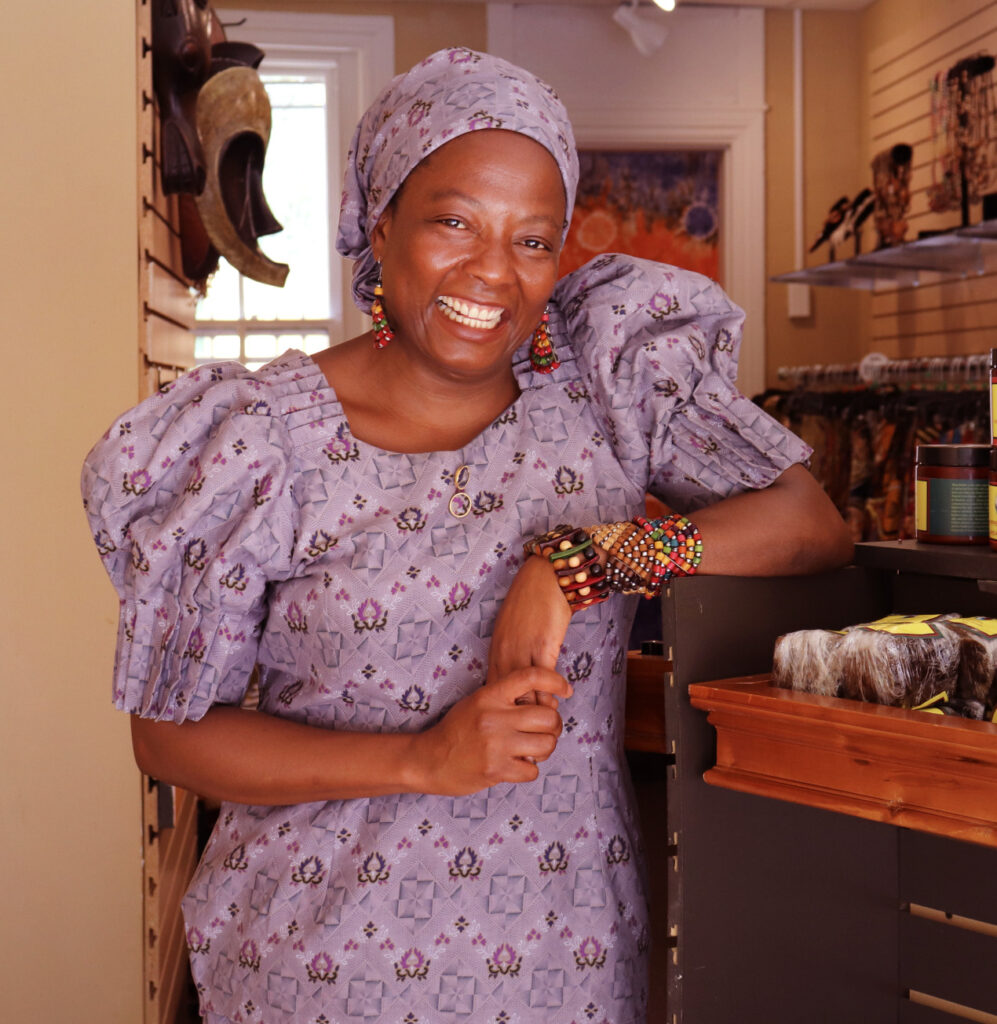
As a young nursing student in New York, Chantel Eloundou never imagined she would work in business, let alone run her own shop.

Yet, this past June, she found herself straightening racks of skirts and dusting off the counters of her new store, called Nyianga.

The Midtown shop has unisex clothing, dashikis and headwraps in vibrant patterns and hues. Each piece has a mixture of warm and cool colors, made with Cameroonian cotton, bazin fabric and linen.

Even though “nyianga” translates to “fashion” in Eloundou’s native tongue, the shop has much more. Along with the clothing and wraps, Nyianga features jewelry, masks, raw shea butter, oils, authentic African black soap and even dolls. Most items are designed by Eloundou and handcrafted in her home country of Cameroon by family and friends.

“[Nyianga] gives me the opportunity to present Africa in a different way that is sometimes shown in the media,” she said. “These beautiful things, people make it, and Africa is also [beautiful].”

Eloundou got her first taste at selling at a Christmas flea market in 2015. She had a few pieces of jewelry sent from Cameroon and decided to sell them. She went home with only $37 in her pocket but, still, she knew she was on to something. She felt a calling.

She had more pieces flown in and eventually found a place in the Broad Street Market, where she worked as a pop-up vendor every Friday and Saturday. For two years, she sold in the market, slowly building a customer base and learning the ropes of running a small business. Her jewelry was nearly sold out every week, she said. She knew her customers wanted more, so she added clothes to the mix and, eventually, masks, artwork, shea butter and soaps.

Eventually, a women came up to Eloundou and said she was looking to open a jewelry store and asked if the two could work together.

“I was really afraid to move forward,” Eloundou said. “I thought it wasn’t going to go anywhere, but my fate or the world or whatever—I didn’t know I was going to be in this building, but here I am.”

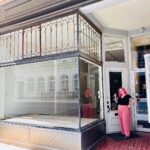
“Here” is a snug storefront on N. 3rd near Reily Street. Old-time Harrisburg residents may best remember it as a storehouse for amusements, with games piled high inside a shabby exterior, blocking the large picture window.

In early 2013, Mayor Eric Papenfuse and his wife, Catherine Lawrence, bought the building, eventually restoring it to create new retail space. And, right next door, her jewelry-selling friend set up shop. Thus, Nyianga was created.

Everywhere

Eloundou calls herself a student of her own business. Instead of pulling the shop in a certain direction, she lets it lead her, and she learns along the way. She credits her customers for broadening her business to where it is today.

“I’m learning things—I learned so much,” she said. “This business, I discovered, I can talk about it from the morning until the next morning, which I didn’t know I could do.”

Through her journey, Eloundou has connected with customers who have shared their stories with her. Though Nyianga has customers from all walks of life, the store has a large African-American following. Some speak to her of their African roots, while Messiah College students have shared stories of traveling to Africa on mission trips. Some customers have even talked about the recent “Black Panther” movie—which brought in so much business that Eloundou sold out of headwraps.

“The African-American community kind of searches for their roots in Africa,” she said. “Everybody wants to know where they come from. I know where I come from. When the stress stikes me, I can think of my Cameroon roots, and I remember those memories. One phone call home can set my balance, but not everybody has that.”

These are the communities that drew Eloundou to Midtown and eventually kept her there.

“There’s nothing like Midtown Harrisburg,” she said. “There is something that is unique here.”

In the years to come, Eloundou hopes to increase the items in her store, which may necessitate looking for a larger location, but she still hopes to stay in Midtown. She said that, through her journey to the Broad Street Market and then opening her shop, she has learned not to let fear keep her from pushing herself.

“Whatever will come out of [Nyianga], I will embrace it,” Eloundou said. “I cannot set limits to my entrepreneurship. From the fashion to the arts, I am everywhere.”

Nyianga is located at 1432 N. 3rd St., Harrisburg. To view the clothing, accessories and more, visit www.nyianga.com and follow on Facebook and Instagram @NyiangaJewelry.

Continue Reading

Take Note: Once a month, big band sounds return to Harrisburg.

For a brief period in the 1930s, big band jazz was the popular music of America.

Bands led by the likes of Duke Ellington, Count Basie, Tommy Dorsey, Glenn Miller and Benny Goodman toured the nation and generated hit after hit. Audiences flocked to ballrooms to dance and swing to this high form of art.

But those days seem long gone in this modern era of hip-hop, rock and electronica. Today, big bands are confined to the margins, with minimal cultural impact.

As a jazz aficionado, I was elated when my friend Donna Julian informed me that a big band plays every month in Harrisburg. And she assured me that this group is really, really good.

I attended my first River City Big Band show in February, at—where else?—River City Blues Club and Dart Room on Cameron Street. The sheer power of the 16-piece ensemble blew me away. The improvised solos, the intricate blend of harmonies and the joyous energy mesmerized me. I’ve been to every concert since.

The band got its start in 2014 when club manager Jonas Hair invited Harrisburg-based jazz pianist Steve Rudolph to form a band and play regular gigs at the new venue. Rudolph next called his long-time friend Bill Perbetsky, an accomplished trumpet player and recently retired music director at Susquehanna Township High School.

“Steve and I sat down and put together our dream band,” Perbetsky said. “It basically formed in three weeks.”

The band plays every third Monday of the month, with occasional invitations to play at private or special events. It’s a rehearsal band, meaning the musicians never rehearse. They show up and read charts (musical scores) selected by Perbetsky and Rudolph.

“We don’t rehearse because all of the guys are very busy and have their own commitments to work, family and schools,” Rudolph said. “But they’re all incredible sight readers who have a deep knowledge of the history of big band music. When we put a chart in front of them, it will sound professional the first time through.”

The charts are written for four trumpets, four trombones, five saxophones, piano, bass and drums. Cathy Chemi of Lititz sings vocals every other month, when her husband Skip Stine joins the band on trumpet.

The ensemble plays tunes by renowned jazz composers and popular songwriters. But they also perform originals composed specifically for the group. Rudolph estimates they have about 200 charts in their repertoire.

“We try to keep it fresh, and we’re constantly gathering new charts,” said Rudolph. “Usually, there are two or three new charts each month.”

Several core band members play every month. But other musicians rotate in and out. Many of them teach music at the high school or collegiate level and come from as far away as Philadelphia, State College, Lock Haven, Williamsport and Towson, Md. Perbetsky contacts band members before a gig to find out who’s available.

The tunes generally run five to 10 minutes, so, during a two-hour set, the audience hears a wide range of material that includes swing, ballads, Latin and funk. Most band members get a chance to solo at least once or twice a night.

The downstairs room seats about 130 people. Saxophonist Tom Strohman, a music professor at Lebanon Valley College, says the venue reminds him of a New York jazz club.

“There’s a certain intimacy and a certain camaraderie between the audience and the band that happens when everybody’s that close to each other,” he said. “There’s a certain vibe that happens there. That’s one of the selling points of the whole experience.”

The concerts start at 7 p.m. But if you want to hear the band, I recommend arriving early, as shows are usually jam-packed. There’s a $10 cover charge, and the proceeds are split evenly between the band members.

“Nobody gets paid a whole lot on this gig,” Rudolph said.

The band members aren’t there for the money. It’s about the opportunity to work with other great musicians and play great music in front of an enthusiastic audience.

“We just come at you with what we have that night,” Perbetsky said. “We’re raw, we’re honest, and we just love playing.”

And, with consistently high attendance month to month, there’s no end in sight for the River City Big Band.

“We try to honor the traditions of the music and still stay on top of what’s going on in the big band world,” Rudolph said. “We try to pick music that’s fun to play but still make an artistic statement. We want to keep the tradition of big band jazz alive in this area.”


River City Blues Club & Dart Room is located at 819 S. Cameron St., Harrisburg. For more information, visit www.rivercityhbg.com.

Continue Reading

This Old, Expensive House: Harrisburg has more than 4,000 vacant properties. Those that can be saved from demolition could find a second life as affordable housing units—but at what cost?

Mount Pleasant Project.

In the 30 years that Mel Johnson has managed large construction projects, he’s overseen jobs in airports, schools and sewage systems. But none of them prepared him for his most recent undertaking in Uptown Harrisburg.

The Harrisburg Fair Housing Council, a nonprofit organization where Johnson serves as executive director, was renovating the top stories of its headquarters on 6th and Maclay streets—a stately former bank constructed around 1900. They hoped to create eight, two- and three-bedroom apartments to rent at a below-market rate, adding much-needed quality, affordable housing in the Uptown neighborhood.

But first, they had to replace the building’s rubber roof. Then they had to reinforce a retaining wall that was liable to collapse from water damage. Due to narrow hallways, they nixed plans to build an elevator and make the apartments ADA-compliant. They rebuilt bay windows and abated asbestos. The cost of these contingent projects mounted, especially when they discovered that pigeons had colonized the abandoned structure, leaving excrement that required $20,000 of waste hauling and sanitization.

Today, three apartments are under lease, and five more are still in the works. Johnson said that the finished units, which have original hardwood floors and all-new, custom-made windows, are beautiful. And even though HFHC expects to sink $1 million into the project by the time it’s done, they’ve managed to keep rent rates affordable. Two-bedroom units go for $750 a month and the three-bedrooms for $850.

But as for the process of restoring the building to a livable state?

“It was absolutely horrendous what needed to be done here,” Johnson said.

Welcome to the world of vacant home renovations, where complications lurking from the roof to the foundation threaten to eat profit margins and disrupt best-laid work schedules. Left alone, a building’s lumber rots, its pipes rust, and its roof sags under snow and rain. Some of these conditions emerge in an inspection, but others aren’t revealed until construction is underway.

In all, Harrisburg has 4,692 vacant units representing 18 percent of its total housing stock, according to census data from 2013. That figure includes more than 400 units on a list of critical properties that the city has targeted for demolition.

Housing advocates across the city want to see some of the salvageable buildings renovated as affordable apartments. But those rehabilitations are costly, made possible only by shrinking pots of grant money from the county to federal levels.


Doing the Math
Developers in the private sector can pass the costs of an expensive renovation along to their tenants. But those who want to convert vacant houses into affordable units know that, somewhere along the way, someone else will have to eat the expense.

More often than not, that someone is the federal government, which doles out housing subsidies through the Department of Housing and Urban Development. Some nonprofit developers in Harrisburg rely on HOME grants and Community and Development Block Grants (CDBG) to raze blighted homes and renovate salvageable ones. The Fair Housing Council also got a sizable grant from the Dauphin County gaming fund for its 6th Street project.

Even with subsidies, contingency fixes can drive up rents. Johnson said that the mounting cost overruns on the 6th Street project did jeopardize the price range that HFHC had originally planned for its units.

In the end, Johnson said, price was a consideration in setting the rents, but it wasn’t the only one. HFHC was able to keep the rents below market value as it originally intended.

“We’re a housing agency, and we still have too many people in this neighborhood living in houses who cannot afford to fix them up, or too many landlords who don’t care about fixing them,” Johnson said. “We are willing to go out and get money for a project like this.”

But the funding that many developers rely on for projects like these is getting increasingly competitive. Funding for HOME and CDBG has fallen 49 percent and 59 percent since 2000, according to the Center on Budget and Policy Priorities.

Those trends show no sign of reversing, and an ever-decreasing availability of grant funds has slowed the pace of affordable housing projects across the country. That creates its own problem in cities like Harrisburg with high vacancy rates. The longer a building sits untended, the more expensive its rehabilitation becomes.

The HFHC building on 6th and Maclay had been empty for some 40 years before its renovation began in 2015, offering an extreme example of what can happen to a vacant building. But a neglected home can begin to deteriorate in as few as five years. And many structures in Harrisburg have been abandoned for much longer.

Sometimes, the cost of redressing severe neglect is enough to make a developer considering building anew.


New vs. Old

A blighted house has two fates: demolition or renovation. Deciding which path to take is a vexing question for both public and private sector developers

Even though some bids for the HFHC project came in at $3 million, Johnson expects it will cost $1 million by the time it’s finished. He estimates that building a new structure would have cost at least $3 million. As a result, he said, the nonprofit came out ahead by pursuing a gut rehab.

But Gary Lenker, executive director of the Tri-County Housing Development Corp., said that building new is almost always more cost effective.

That was what Tri-County HDC decided to do in the Mount Pleasant Housing project, which comprises five new, owner-occupied homes on 16th and Swatara streets in South Allison Hill.

Those homes were built on vacant lots where row homes had been gutted by fires. Razing and rebuilding is usually the best solution to replace unsalvageable homes, but there are constraints that make it difficult to apply on a larger scale.

Much of the South Allison Hill neighborhood is in the National Register of Historic Places, Lenker said. While this designation does not prohibit renovation or demolition of a property, it can place additional regulatory requirements on a project. If public money (such as CDBG grant funds) is involved in the renovation of a historic property, then the owner must complete a review process through the Pennsylvania Historical and Museum commission.

Tri-County got authorization to demolish one burned-out row house on Hummel Street, the site of the $20 million MulDer Square revitalization project. Other homes on the street will be gut-renovated. The first rehabbed home on Hummel Street was sold this spring for a price of $70,000, after housing agencies invested $150,000 in its renovation.

Lenker thinks that the Hummel Street project leaders could stretch their dollars by demolishing houses and building new ones. But he acknowledges the non-material value in saving an old structure.

“New is new, and old is old,” he said. “You want to keep the same look of the old neighborhood, and, if you build new, you can’t replicate it exactly.”

Jackie Parker, Harrisburg’s director of Community and Economic Development, and Bryan Davis, president of the Harrisburg Redevelopment Authority, said that the city approaches demolitions on a case-by-case basis, trying only to raze structures that pose a public health risk.  They agree that the city’s historic housing stock is one of its most valuable assets, even if it is resource-intensive.

“These renovations are expensive, of course, but that’s why we concentrate money from grants and tax credits to offset costs,” Davis said. “As an entity you can’t make your money back when you’re spending a lot to fix a home, but it’s important to the city to preserve the housing we have.”

Harrisburg has adopted other policies to mitigate the costs of expensive renovations. Brad Jones, president of Harristown Enterprises, said that the 10-year tax abatement program that City Council passed in 2016 created an attractive incentive to rehabilitate vacant properties. The private-sector development company has since converted a half-dozen vacant properties in downtown Harrisburg into market-rate apartment units.

As a private developer, Harristown can execute more ambitious projects than its public-sector counterparts. It also works in the downtown business district, where vacant properties are less numerous and more well maintained than in Allison Hill or Uptown Harrisburg.

Jones said that vacant renovations may bring high costs at the outset. But, if they’re done well and offer an attractive, distinctive place to live, they pay off in the long run.

“People look at our projects and say they’re expensive, but, if you save a building, you’ve saved it for another 100 years,” Jones said. “That’s a couple of generations, and these are buildings that will never be built like that again.”

That’s how Johnson regards the former bank at Sixth and Maclay. Demolishing it was out of the question, since removing six vaults in the building would have cost $1 million apiece, he said. But he’s still happy that a structure that long sat empty now has a second life.

“You have to look at overall picture — we saved a building,” Johnson said. “It would have collapsed by this time otherwise. I’m not saying I want to do it again, but we saved this.”

August 2: This article was edited to clarify the limitations imposed on properties with historical designations. While the National Register of Historic Properties does not constrict the actions of private property owners, it does require developers using public funds to undergo a review process through state and local preservation agencies, according to Preservation Pennsylvania, a nonprofit organization.

Continue Reading

Pet Stop: It’s treats & toys at Urban Tails.

In recent years, Market Street in Camp Hill has experienced what might be called a “boutique boom.”

And now the furry, four-legged among us can join in on the action.

In March, Urban Tails opened, featuring pet toys, goods and, perhaps most importantly, a signature line of treats.

The idea began when Michael Ferguson began considering swapping his job as a painter for something less physically demanding. He and wife Emily then brainstormed a concept, spurred on by their love of animals and her love of baking.

Soon, Emily was in the kitchen experimenting with homemade pet snacks.

“I decided to give them out to friends and neighbors for feedback,” she said.

The treats were a hit, which inspired the couple to explore the costs of a commercial-grade kitchen. Unfortunately, there just weren’t enough hours in the day for Emily to make the treats while juggling a full-time job and family. So, she opted to delegate the task, reaching out to an existing bakery in the all-natural dog and cat food industry.

She collaborated with the bakery to develop recipes, which led to her successful line of “Urban Tails” treats.

The couple introduced their business to the region last year by way of the HBG Flea, a monthly Harrisburg market that often serves as a launching pad for new businesses. The concept was so popular that, after a three-month period, the Lower Allen Township couple was confident enough to “embark” upon a brick-and-mortar endeavor.

“Everyone liked the idea, and the demand was there,” said Emily.

When the Fergusons took over the space, which previously operated as a hookah lounge, they realized there was much work to be done.

“We took February and March off to concentrate on the renovation,” Emily said. “We painted, cleaned, decorated, redid the floors and added a sealant so they are accident-proof and pet-friendly.”

Foremost, the couple wanted to earn the trust of the consumer by providing all-natural, eco-friendly pet products made in the United States. Their inventory includes a selection of private-label treats, eco-friendly toys, collars, pet clothing and chews that go beyond the boring bone. One of the most popular stops is a table near the front of the store that displays a unique smorgasbord of treats averaging $1 to $4.

“That’s our raw bar,” said Michael, with a chuckle.

Among the choices are ethically harvested lamb horns from Iceland, Himalayan cheese treats, pig ears, duck necks, chicken necks and cod skin, to name a few. Pets have been known to fight over something called “Bully Sticks,” billed as a treat that is a natural alternative to undigestible rawhide.

The Fergusons also carry a line of cannabis products to help treat maladies like hot spots, inflammation, arthritis and anxiety. According to Emily, the products are becoming more popular as success stories make the rounds.

Katie Manning of Camp Hill discovered Urban Tails at the HBG Flea and followed them to their new location.

“At the time, we had an older cat that was almost 18,” she said. “She had some digestive problems, and they suggested a powder that really helped a lot. I’ve tried a variety of their products, from treats to toys. My cats find the treats to be highly addictive.”

Manning said that she likes the convenience of a neighborhood pet store and appreciates the high-quality merchandise.

“My one cat just tears things up, and she hasn’t managed to destroy anything I’ve bought there yet,” she said.

To encourage social interaction, the Fergusons have established a room for animal-related community gatherings. The couple said they may consider establishing a pet-related partnership for renting out the space in the future, but, for now, the room, which features an adorable selection of pet photographs by CarisaK Photography, is being used for doggie socials and by charitable organizations for activities like adoption events.

“Last week, the Susquehanna Service Dogs visited,” said Emily. “My daughter read to one dog for an hour, and the organization distributed information to the public and demonstrated what the dogs are capable of doing.”

She added that the business is truly a family affair. Daughters Caitlin, 7, and Lily, 11, often hand out business cards or help around the shop.

For Emily and Michael, the pet business has been “pawsitively” rewarding.

“We’re happy to be a part of the community and to provide customers with products they know they can trust,” said Michael.

Urban Tails is located at 2155 Market St., Camp Hill. For more information, call 717-831-8490 or visit www.urbantailstreats.com or their Facebook page.


Continue Reading

Sketching Harrisburg: Italian artist opens city-centric exhibit at Art Association.

Guglielmo Botter may be Italian-born in and living in Treviso, a small city near Venice. But he is also an American, thanks to his late mother’s family, with dual citizenship.

Someday, Botter would like to relocate to the United States, but for now, he spends a great deal of time making sketches of landmarks in numerous American towns and cities—finishing the drawings back in Italy and exhibiting them in their home locations.

Among the cities whose landmarks he has drawn are Harrisburg and Lancaster, where his work will be shown in two separate exhibits beginning in August.

“My great-grandfather Francesco left the Italian Alps in 1892 at the age of 16 to find a better life in the United States, and, after landing at Ellis Island, he decided to settle in the Pittsburgh area,” Botter said. “He worked hard as a miner for many years until 1900, when he finally got his U.S. citizenship. That same year, he was joined by his young Italian girlfriend, whom he married on Christmas Eve 1900.”

Botter’s grandmother was born in West Lebanon, Pa., holding American citizenship.

“She grew up in the suburbs of Pittsburgh and soon distinguished herself for her artistic talents, so much so that she got a scholarship from Penn State University,” Botter said. “However, she preferred to return to Italy to attend the Academy of Fine Arts in Venice, where she fell in love with an Italian fresco artist who taught there.”

But Botter’s mother retained a “longing for America,” he said. “Always in my youth, she advised me to try my professional way overseas.”

Botter completed studies as an architect in 1997, but after several years, had to close his office because of the serious economic crisis that hit Italy in 2010. In agreement with his wife and two young daughters, he decided to listen to his mother’s advice and crossed the ocean again—this time as a fine artist.

Botter and family arrived in Pittsburgh in 2012 to a warm welcome. His drawings of the city constituted his first exhibit in the States and received publicity in the press.

He branched out over the coming years to make drawings of other cities in Virginia, Maryland, New York, Ohio, Kentucky and Indiana.

He’d like to add Washington D.C., Philadelphia, and Williamsburg, Va., to his list.

This August, Botter also will exhibit in New Kensington, Pa., at the Penn State University Campus Art Gallery. There, he will hang his drawings alongside some of his mother’s paintings.

“My goal is to cover the country, from the East Coast to the West,” Botter said.

He comes back every summer for two-and-a-half months and, sometimes, for an additional short trip in the fall to sketch the cities that strike his fancy. He plans new exhibits every year, using the winter to seek connections through the Web.

While he continues to live in Italy, Botter said he’s looking for the right opportunity to move to Pittsburgh, following in his family’s footsteps.

“I am very sorry my parents can’t enjoy my success in the ‘land of opportunity’—both have passed away—but I feel their presence every time I get something good there,” he said.

His exhibits in Harrisburg and Lancaster will feature 16 drawings each.

“I have a special relationship with the cities I have designed in the past,” said Botter. “Before starting to sketch, I need to visit the place, walking around for a couple of days. I need to understand the shape of the city and to find the best views for my work.”

In addition to his drawings, Botter will often sell such merchandise as postcards, note cards, calendars, tote bags and even ceramic items at his exhibits.

What attracted the Art Association of Harrisburg to his work?

“They’re quality drawings, which, technically speaking, are rendered well,” said Rachel O’Connor, AAH’s curator. “There’s a nice push and pull between relaxed and precise line work. They’re also visually interesting, in that they’re reminiscent of looking at an artist’s sketchbook and seeing quick but accurate studies of a city.”

The viewer, she said, gets to see Harrisburg through the artist’s eyes.

“They show buildings and streets that he thinks are important, or at least noteworthy,” she said. “One of the many missions of the visual arts (and all art) is to widen people’s perspectives. Exhibiting Guglielmo’s work does that quite literally.”

The Art Association staff was also struck by Botter’s personality, O’Connor said.

“He is very tenacious when it comes to his art, which is a quality that I consistently see (and greatly admire) in artists,” she said. “He feels a special connection to Pennsylvania through his family history, and he’s determined to make a name for himself here.”


“From Italy to Harrisburg: Street Drawings by Guglielmo Botter” runs Aug. 4 to Oct. 22 at the Art Association of Harrisburg Gallery, 21 N. Front St., Harrisburg. For more information, visit
www.artassocofhbg.com.

Botter’s exhibit in Lancaster runs Aug. 3 to Sept. 30 at the City Hall Gallery, 120 N. Duke St., Lancaster. Visit www.lancasterpublicart.com/city-hall-gallery.

Continue Reading

Walk This Way: Harrisburg’s streets are unusually dangerous for pedestrians. What can be done?

Illustration by Jonathan Bean.

Evelyn Hunt pointed to the street map sprawling across long tables.

Post-it notes in pink or blue were scrawled with such phrases as “Heavy foot traffic” and “Raised intersection?” Hunt put her finger on the north side of 19th and State streets.

“For some reason, more of the accidents happen on this side versus the other,” she said.

Immediately, a consultant slid a pack of pink Post-its toward her. Wordlessly, he was inviting her to add her observation to the comments accumulating on the map.

In an effort impressive for its swiftness, a phalanx of municipal, regional and state officials is examining how to make Harrisburg-area roads safe for all users. Starting with a particularly deadly stretch from Camp Hill to Harrisburg, the push is on to help motorists, pedestrians and bicyclists move in harmony.


To Zero

The cliché about dangerous roadways is that somebody has to die before government finally steps in.

Maybe five deaths since 2017 along one speedway of a Harrisburg road inspired a shared epiphany. Maybe the senseless death of Cynthia Wilson, apparently crossing State Street for a quick trip to the store, was the last straw. Amid the outcry, the city turned to a Vision Zero Action Plan, vowing for zero roadway fatalities by 2030.

Traditional transportation planning incorporates the three elements of mobility, accessibility and safety, said Harrisburg’s city Engineer Wayne Martin. But safety has taken the proverbial back seat.

“There’s now a national and international shift toward safety being the number-one priority,” he said.

Which explains the sudden elevation of State Street, and hazards citywide, in the public policy agenda.

“Believe me when I say the statistics on State Street should be enough to get past any concerns for travel-time delays and things like that,” Martin said.


Process & Plan

Urban traffic deaths might seem anomalous—after all, city streets aren’t beltways—but the killer component is speed differential, said Martin. Today’s cars are increasingly safe for occupants, but the more drivers exceed speed limits—which peaks on State Street at the close of the work day, according to a Vision Zero finding—the higher the speed difference between the vehicle and the unfortunate walker or bicyclist.

“We know that the auto industry is going to be more advanced,” Martin said. “So, we need to focus on these other road users, because they’re more susceptible.”

Enter Vision Zero. It’s a process and action plan in one. Officials scrutinize crash data and anecdotal evidence to uncover the problem spots. Vision Zero task force meetings attract the full array of agencies responsible for and using city streets: city administration, police, engineering, Capital Area Transit, Harrisburg school district. Because the state owns many of the roadways under scrutiny, including State Street and Front Street, PennDOT is at the table.

“The challenge is, we’re trying to move large volumes of traffic, especially the commuters coming in during the morning,” said PennDOT spokesperson Greg Penny. “How do you balance the interest of moving large volumes of traffic with the interest of providing safety to bicyclists and pedestrians?”

Vision Zero’s rapid response component targets the most troublesome areas first. Road data provide hard evidence, while input from residents, motorists and pedestrians offers real-life perspective. Hence, surveys conducted during rush hours, and community input meetings with maps and Post-it notes, like the one attended by Evelyn Hunt.

“We can look at all the statistics we want about crashes and timing of signals and vehicle volumes and speeds, but that’s not going to pick up a near-miss,” said Martin. “That’s not going to pick up aggressive behaviors. You’re really going to get that from community members.”

Initial solutions are inexpensive and quick to implement, especially compared to pricey, drawn-out construction projects. Upgrades such as line painting “can be done cheaply,” Martin said. State Street’s center lane is a legacy of streetcar days, and its luxurious, 12-foot lanes inspire drivers to put pedal to metal.

“Those lanes don’t have to be 12 feet,” said Martin. “We can definitely get away with 11 or 10. You start narrowing those lanes, it’s a shorter distance for pedestrians to cross, and it slows vehicles down.”

For pedestrians, quick fixes can include uniform lighting to eliminate dark spots, crossing signals flashing countdowns instead of those ambiguous hands and time-delayed signals that provide pedestrians a few seconds to step into crosswalks and be visible to left-turning motorists.

And because pedestrians sometimes—make that often—need encouragement to use crosswalks instead of jaywalking their way through live-action Frogger games, medians can be planted with prickly rose bushes.


Camp to Allison Hill

When it comes to traffic corridors, motorists and pedestrians don’t care who’s responsible for maintenance and safety. The Tri-County Regional Planning Commission is a regional coordinator dispersing federal transportation dollars, and its Harrisburg Area Transportation Study, or HATS, formulates transportation plans for Cumberland, Dauphin and Perry counties.

A HATS study that now includes Forster Street through State and 15th streets actually started life as a look at the Camp Hill bypass—officially, Cumberland Boulevard. Residents unnerved by the December 2016 death of their friend Diana Davidson, killed by a speeding drunken driver, discovered an alarming string of crash data and asked HATS for a review.

“There are not sidewalks the entire length of our walking community,” said Brett Miller, a Camp Hill resident who, with resident Sherry Bowman, created the Camp Hill Cumberland Boulevard Task Force. With Davidson in mind, the group vows to “make sure this never, ever happens to anybody else,” Miller said.

Harrisburg then asked that the study extend through Forster Street and State Street, with an eye on projects that could alter traffic patterns and deter collisions, whether car-on-car or car-on-pedestrian.

Expected to wrap up in late 2018, the study “will include some medium- and longer-term things to be looking at,” including the “road diets” that slim down wide lanes, said TCRPC Executive Director Steve Deck.

“Some of the ideas we’re proposing are things tried out in other areas and found to be effective. Not perfect, but effective,” he said. “I think people will see some significant improvements even with some short-term stuff that’s happening this year.”

The study earmarks about $300,000 for traffic safety improvements, Deck said. Collaboration among municipalities and agencies is inspired by safety concerns—a “no brainer,” he said. “While there’s some competition in what to do next, typically these organizations want to work together to improve safety.”

Miller speaks highly of the local, regional and state officials involved.

“I applaud the officials who stood up and took notice and did something, because they’re trying to be proactive instead of reactive,” she said. “We’ve talked to people in this field who say they’ve never seen anything move so quickly.”


Enforcement & Education

Nationwide, 49 states allow local police to enforce speed limits using radar. The outlier? Pennsylvania. A bill to put Pennsylvania in step with the other 49 passed the state Senate in November 2017 but, so far, has stalled in the House of Representatives.

Its passage into law is a Vision Zero goal. The topic is “a sore subject with most municipal police offices,” said Harrisburg Police Bureau spokesperson Capt. Gabriel Olivera. The department uses other enforcement methods, including timing devices and speedometers, but personnel shortages mean that officers are stretched too thinly for regular traffic stops.

“We are responding to many, many calls throughout the day,” said Olivera. “Because we’re responding to all the calls, it doesn’t allow us the ability to stay in one location to enforce traffic.”

Miller would appreciate a stronger dose of education about motorist, pedestrian and bicyclist safety—in homes, schools and municipalities. Common sense helps, too, she said.

“Until the experts figure out exactly what can be done to make the road and safety better, please adhere to the crossing signals, the crosswalks and the underpasses because it really does make a difference,” she said.

Indeed, both motorists and pedestrians would do well to reacquaint themselves with the rules of the road, according to numerous people interviewed for this story. After all, anyone who’s spent time in Harrisburg likely has noticed infractions by all parties, with epidemics of both speeding and jaywalking.

Front Street has become a particular focus of concern since PennDOT made changes to that state-owned road a couple of years ago. Crosswalks were added at more intersections, but that seems to have caused greater confusion than actual safety improvements. After all, what happens when you add multiple crossing points to a street that many drivers still treat as a high-speed corridor—a highway—into the city?

To wit, a few months back, a security video went viral that showed a woman being hit and thrown by an SUV at Front and Herr streets as one lane of traffic stopped to allow her to cross at an intersection, but the other lane did not.

Lower Paxton Township resident John Norton has been on the other side of that problem.

He got caught in a five-car pileup this spring, caused by a motorist stopping to allow a pedestrian to cross Front Street. He has also seen near-misses, whether between cars and pedestrians or fender-benders. Few people, he said, understand that state law requires pedestrians to actually occupy a crosswalk before motorists must yield.

“All we did back in the day was pretty simple,” said Norton, who long lived in a Front Street apartment and walked his dog in Riverfront Park nearly every day. “We stood by the side of the road until it was safe to cross, and then we’d cross. During rush hour, we sometimes had to wait five or 10 minutes. What’s the tragedy in that?”


Continue Reading