Harvest Hoopla: In Dillsburg, the annual Farmers Fair celebrates agriculture, community.

Illustration by Aron Rook.

In a century that has witnessed constant change, Dillsburg has kept true to a rural tradition that began more than a century ago.

Held every harvest season, Farmers Fair is a lot like the musical “State Fair,” minus the random vocal interludes. Cross that with eccentric pickle-themed events and agricultural education, and you’ve got Farmers Fair.

The annual celebration holds a little something for everyone, as six days of events stretch throughout the third week of October. For Dillsburgers, the only drawback may be the tough parking due to the large crowds.

“The best representation of Farmers Fair is in Community Hall,” said Laura Taylor, who has served on the fair’s planning committee for four years. “We see the best produce, canned goods, artwork, flowers, quilts.”

If you hit Community Hall at the right hour, you can sample ice cream, cider and bologna chunks.

Bev Motich, 20-year veteran of the fair committee and current treasurer, works in Community Hall all week.

“My favorite part is starting out with an empty room on Tuesday and seeing it fill up with all of the exhibit entries that people have worked all year to grow and craft,” she said.

The majority of entry categories are over a century old—things like best apple pie, heaviest pumpkin and canned mixed pickle. A smattering of new categories has been added over the years as new crops have been developed (think trendy new peppers, some claiming to be the new hottest pepper around), Another fairly recent addition is crop art, which are mosaic pictures made entirely of seeds.

“For about three years, we had a veggie art category,” Motich said. “Its biggest fans were fruit flies. Instead of investing in a case, we retired the category.”

On the planning committee since 2001, 1st Vice President Paul Tucker wants to “bring events to Farmers Fair that encourage farming education.”

With a clear nod to agricultural education, the local schools involve students through entries in the art contest, crafts, dioramas of farm scenes and homemade clothes.

“Most of the vendor food booths are sponsored by community groups like Scouts, Dillsburg Library and sports team boosters,” Motich said. “Many kids work to support fundraisers for their groups.”


Just Outstanding

The popular “Fantastic Parade” on Saturday night is an opportunity for student groups like 4H, Future Farmers of America and Distributive Educational Clubs of America (DECA) to enter farm-based floats.

Many floats for this capstone event feature harvest or Halloween themes, church groups and even live animals. Often, head-turning tractors and monster trucks pull the floats along, and plenty of antique cars turn heads all by themselves.

Lifetime Dillsburg resident and former farmer Lewis Albert, Jr., remembers being part of the parade at 10 years old, back in 1940.

“My dad drove us in an old touring car with an open top,” he said.

Much later in 2003, he and his wife Marcella waved from a classic car after being crowned senior king and queen.

Most of Albert’s support for Farmers Fair has been cleaning up with the Boy Scouts and fundraising through his 54-year membership in the Lions Club by selling tickets to sit in the bleachers during the parade.

While the antique cars and tractors are Albert’s favorite exhibits, the freak vegetable entries in Community Hall hold his fascination.

“It’s just outstanding how they can grow a pumpkin to 400 or 600 pounds,” Albert said. “I was lucky if I could grow a pumpkin that weighed two pounds.”

According to Carl Shearer, president of the planning committee, the crosscut sawing competition draws quite the crowd. The horseshoe pitching contest and homemade ice cream churn-off are other ways for locals to display their strength and endurance.

Naturally, a moniker like “Dillsburg” inspires pickle-themed competitions.

“We have a special dill pickle contest in Community Hall and a pickle pitch with foam pickles,” Motich said.

Having to do more with tradition than with farming skills, the Fair Queen Pageant attracts much attention from the community.

“Our Farmers Fair queen contest always has a farm-related theme and looks for people who are active in FFA,” Motich said.

Not much has changed over the century-plus run of Farmers Fair.

“We like to try a few new things, but the fair committee is always conscious of trying to keep activities farm-related and appropriate for our community,” Motich said. “This year, we’re hosting a national chili cook-off competition for the first time, hoping to add some new interest.”

One change has resulted in paying for professional musical acts to provide entertainment.

“Compared to previous years, more high schools are not allowing their marching bands to march in the parade,” said Annie Cooke, chair of the Fantastic Parade. “The bands have homecoming, band competitions, other scheduling conflicts. So, instead, we’re paying bigger acts to play music in the parade.”

Every year, the Farmers Fair tradition is the culmination of an entire town’s engagement. Some are planning and fundraising for nine months. Some use that time to make a quilt or perfect their whoopie pie recipes. Some work the week of the event at kids’ game booths or the huge open-air market. Others sweep the streets afterward.

“One thing I’m especially proud of is the huge amount of support we get from local businesses and the community for Farmers Fair,” Motich said.

The Dillsburg Farmers Fair takes place Oct. 15 to 20 at Community Hall and other locations in Dillsburg. For more information, visit www.dillsburgfarmersfair.org.


Continue Reading

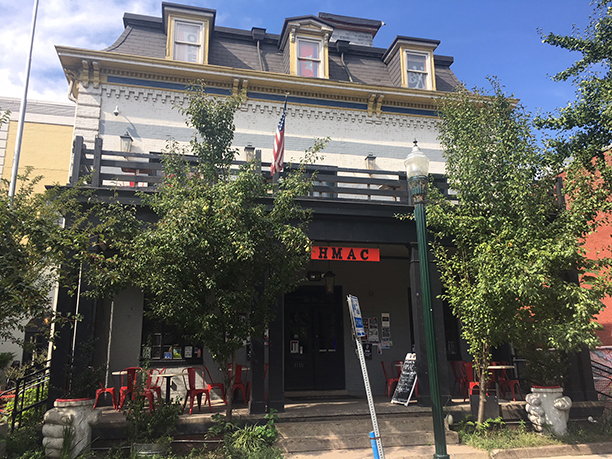
HMAC finds first potential buyer in York-area investor.

One month after its owners filed for Chapter 11 bankruptcy, the House of Music, Arts and Culture (HMAC) has a potential local buyer.

Christopher Werner, a Dover, Pa., resident who owns a sports memorabilia company, has formed a limited liability company and taken the first steps to purchase the midtown Harrisburg business, which houses a full-service kitchen, bar and two performing stages.

HMAC managing partner John Traynor revealed the offer at a creditors meeting held this morning in U.S. Bankruptcy Court for the Middle District of Pennsylvania, in the Ronald Reagan Federal Courthouse.

The meeting was open to all of HMAC’s three dozen creditors, including Werner, who already has $150,000 of unsecured claims invested in HMAC. His investment makes him HMAC’s second-largest unsecured creditor, according to bankruptcy filings.

Werner has submitted a “speculative” term sheet outlining basic terms and conditions of the sale, said Robert Chernicoff, HMAC’s bankruptcy lawyer.

Chernicoff did not submit the term sheets to the bankruptcy court. He said he would rather wait until Werner signs an agreement of sale or letter of intent.

Neither Traynor nor his attorney disclosed the dollar amount of Werner’s offer. Chernicoff said it could be a “stalking horse bid” – a low-ball, initial offer that sets a price floor and drums up interest from other buyers.

Attempts to reach Werner on Thursday were unsuccessful.

Traynor said HMAC’s owners will still market the business and entertain offers from national buyers. He hopes to close on a sale in early 2019.

Traynor has previously said he would prefer to find a local buyer.

“My desire is personal – I want to see HMAC flourish as a community asset,” he said this morning, as he was questioned by U.S. Trustee Office attorney Gregory Schiller.

HMAC was valued at $5 million in a 2012 appraisal, Traynor said. According to Chernicoff, its assets include a $1 million matching funds grant that HMAC was promised in December 2017.

HMAC has not claimed any reimbursements from that grant, which is administered by Pennsylvania’s Office of the Budget. Traynor said he has until the end of the year to submit invoices for eligible projects.

HMAC’s assets also include its liquor license, which Chernicoff valued at $150,000.

Traynor recently defended that license in court, since the Pennsylvania Liquor Control Board challenged its renewal earlier this year.

This morning’s meeting, which was required under federal bankruptcy code, offered HMAC’s three dozen creditors the chance to question Traynor under oath. But only one creditor, a solicitor representing the City of Harrisburg, appeared in person. A representative from United Bank in Fort Lauderdale, Fla., also attended over the phone.

It’s not unusual for creditors meetings to be sparsely attended. Chernicoff said the turnout of two creditors and one reporter was more than he expected.

The hearing also allowed Traynor to testify about the conditions that led HMAC’s owners to voluntarily file for Chapter 11 bankruptcy protection in August.

Under oath, Traynor gave statements consistent with those he provided to the media in recent weeks. He said that that HMAC’s revenues dipped after a July social media storm led customers and performing artists to boycott the business.

“Just prior to filing, we had some social media issues which caused us a great deal of stress, and we suffered losses to our monthly operating cash flow,” Traynor said.

HAMC became the target of online discussions in July after a woman claimed that she was drugged at its bar and later raped.

The Harrisburg Police Bureau investigated the woman’s allegation and charged a Harrisburg man with her assault. But police officials said that HMAC was not responsible for the crime, which happened in a private home, hours after the establishment closed.

According to Traynor, the woman’s allegations were “conflated” with other grievances against him and his business.

Traynor said the business revenues dropped $100,000 in August. They lost an additional $200,000 when performing artists cancelled shows that were booked months in advance.

HMAC must turn $80,000 in monthly gross revenues to break even, he said. They’re on track to bring in $65,000 or $70,000 in September.

“We’re slowly recovering and working on our programming,” Traynor said.

Traynor told TheBurg earlier this month that he intends to press charges against individuals who allegedly urged bands to terminate contracts with HMAC. Chernicoff said this morning that those suits have not yet been filed.

Chernicoff said that little distinguishes HMAC’s case from the other restaurant bankruptcy filings he’s overseen.

“Restaurants have a habit of coming back [from bankruptcy,]” Chernicoff said. “It’s a tough industry, and you can easily have issues with cash flow.”

He estimated that 70 percent of small business filings end in a sale. Though he conceded that HMAC would be a “difficult” business to market, he hopes that Werner’s interest will generate interest among other prospective buyers.

Continue Reading

Weekend Roundup with Sara Bozich

Happy Weekend!

Final SoMa Block Party of the season, weather permitting (we’re calling it by 10 a.m., so stay tuned — Or, we do it in a week). 

Otherwise, it’s a big football weekend, and while earlier in the week I was eager to get out to an Oktoberfest type event, it’s been a busy, event-filled week, so I’m thinking home projects and cooking soup are more the name of the game. Pasta Fagioli anyone?

What are you doing this weekend?

(more…)

Continue Reading

Harrisburg re-launches Environmental Advisory Council.

Volunteers plant a rain garden at the Cloverly Heights playground in Harrisburg. Stormwater management projects are one area that the city’s new Environmental Advisory Council will study.

After more than two years of dormancy, Harrisburg’s Environmental Advocacy Council is back in action.

City Council repopulated the all-volunteer body on Tuesday night when it voted unanimously to approve five appointees nominated by council members and the city’s administration. One appointee, Rafiyqa Muhammad, is a holdover from the former EAC that dissolved in 2016.

She’s joined by new members Tanya Dierolf, Christine Proctor, Molly Cheatum and Melanie Cook.

Council nominated two members of the new EAC, and the city’s administration offered three.

The five-member body will advise the mayor and other city officials on matters related to the environment and sustainability. As an advisory group, it does not have the power to manage or disburse money, but it will make recommendations on how to spend the money collected by Harrisburg’s “host fee.”

Harrisburg collects more than $250,000 a year in fees for hosting a regional incinerator, which is owned by the Lancaster County Solid Waste Management Authority (LCSWMA.) State law allows cities with regional waste sites to assess a $1 per ton fee on the waste processed there. That money must then be used to make environmental improvements in the city.

Christopher Nafe, the city’s new sustainability coordinator, will manage the EAC and attend all of its meetings, Mayor Eric Papenfuse said.

Papenfuse hopes that having a designated city hall staff member will help the EAC avoid the dysfunction that felled it in 2016, when three of its five members resigned in a joint letter to the mayor.

“The atmosphere of the EAC has become so dysfunctional that it is not possible to accomplish business in a professional manner,” the March 24, 2016 letter reads. “Too much time has been taken up by disagreements and disrespect for fellow EAC members.”

With the resignations, the remaining two members of the EAC – Muhammad and Bill Cluck – did not have a quorum and could not conduct business. Cluck resigned a month later, according to a PennLive report, leaving Muhammad as the only remaining member.

Nafe hopes that the new EAC will advise the city on existing and new initiatives. Those include working with the Tree Advisory Council, which monitors the city’s tree population, and developing educational programs at the city’s new composting facility in Susquehanna Township.

Harrisburg has also invested heavily in its parks and public spaces in the past year, which creates ample opportunity for the EAC to recommend new projects or amenities, Papenfuse said.

In addition to the ongoing renovations at five city playgrounds, Harrisburg is also re-opening its greenhouse in Reservoir Park. Volunteer labor and in-kind donations have allowed the Public Works Department to bring the greenhouse back from years of neglect. Papenfuse hopes the facility will be functional by the end of the year.

“There are a lot of ways a good committee can advise the mayor on policy,” Papenfuse said. “I think this is a good thing for the city.”

Continue Reading

Burg View: Let Them Vote

The Pennsylvania Capitol

Earlier today, a joint House committee held a hearing, one in which Harrisburg’s very future is at stake.

That’s no exaggeration.

PA House bill 2557 would allow Harrisburg to keep its current taxation levels, thus allowing it to exit Act 47, the state’s program for financially distressed municipalities.

If the bill passes, Harrisburg’s decade-long fiscal nightmare would effectively end, and the city could move on confidently toward a brighter future, building on its long, slow redevelopment.

If the bill fails—who knows? The city’s financial storm could continue for another three years, when the state forces Harrisburg out of Act 47 for good.

At that point, the options are grim. The state has proposed vast increases in city property taxes. Harrisburg countered with a commuter tax. Neither option is acceptable or likely to pass. The city also could slash services, though anyone who lives here can tell you that service levels are already too low.

Harrisburg could even end up back in state receivership or do what it failed to do eight years ago—declare bankruptcy. In other words, the city likely would be plunged back into financial crisis.

Meanwhile, a solution—retaining the status quo—is profoundly logical and at hand. The House bill would permit exactly that, so those who work in Harrisburg (residents and commuters alike) would continue to pay an extra $100 a year in local services tax over what’s currently allowed under state law for third-class cities.

Yes, that’s the prevailing issue—an extra $2 a week from workers to help the city pay for supporting and servicing some 50,000 commuters, which doubles Harrisburg’s population each day. One hundred bucks a year so police show up when you call them, so EMTs arrive when your car crashes, so roads are cleared of snow so you can reach your office, so restaurants are inspected, etc., etc.

The bill also would allow the city to keep its 2-percent earned income tax rate, which mostly affects just Harrisburg residents, while nixing any proposal for a dedicated commuter tax.

This solution has been in place for the past few years, and it seems to be working well.

Moreover, it’s the solution favored by most of our area’s representatives, including two Republicans who represent many of the region’s commuters, Sen. John DiSanto and Rep. Greg Rothman. Gov. Tom Wolf also supports the bill.

They all well remember the dark days of 2010-12, when the city, stripped of its workforce and effectively bankrupt, seemed incapable of performing even the most basic municipal functions, when the city’s very survival was at issue.

But time is of the essence. The legislature is in session for only seven more days, giving a limited window for the bill to come up for a vote.

Therefore, we urge Speaker Mike Turzai to allow a vote on House bill 2557.

We understand that he doesn’t like the bill and, if so, he can and should vote against it. But one man, however powerful, should not single-handedly determine the fate of a city so distant from his own Allegheny County home, thwarting the wishes of the local community here and the will of the legislature as a whole.

For the sake of Harrisburg, House bill 2557 must be allowed to come up for a vote.

Lawrance Binda is editor-in-chief of TheBurg.

Continue Reading

State & The City: Harrisburg mayor makes case to retain tax rates, exit Act 47.

Harrisburg Mayor Eric Papenfuse, flanked by police Commissioner Thomas Carter and fire Chief Brian Enterline, testified today before a joint committee hearing of the state House of Representatives.

Is Harrisburg all that different from other mid-sized cities in Pennsylvania?

Members of the state House of Representatives have eight more session days to say “yes” or “no” by voting on a bill that would let Harrisburg exit Act 47, a state-run oversight program for cash-strapped municipalities.

House bill 2557, which is co-sponsored by state Reps. Greg Rothman and Patty Kim, would let Harrisburg keep the extraordinary taxing privileges it gained under Act 47 and prohibit it from enacting a commuter tax.

The bill would essentially carve out special taxing provisions for the capital city, granting it immunity from the tax limits set out in the Pennsylvania’s Third Class City code.

“Today, you can ensure the future success of the Harrisburg region, if the legislature will continue to work together with the city, our workers, our residents, the business community and state leaders to advance reasonable, common-sense solutions like those offered by HB 2557,” Harrisburg Mayor Eric Papenfuse told a joint hearing of the House finance, local government and urban affairs committees, which convened a hearing on the bill in the state Capitol this morning.

Papenfuse told members that the bill would help restore the city to financial health by allowing it to retain its current local services and earned income taxes, which bring in some $12 million annually.

“House bill 2557 works because it doesn’t ask for anything that the city doesn’t already have,” Papenfuse said.

However, some members were skeptical that Harrisburg deserved unique taxing power.

“When we look at treating one city differently, it brings up concerns, especially since we have had cities leave Act 47 successfully,” said finance committee member Frank Keller, R-Union County.

Some of Keller’s colleagues echoed that sentiment during the two-hour hearing, as they questioned Harrisburg officials about the city’s financial progress since it entered Act 47 in 2010, about $400 million in debt.

The city erased some of that debt by selling the Harrisburg incinerator, leasing its parking assets and transferring control of its water and sewage systems to Capital Region Water. But debt service still siphons off 15 percent of Harrisburg’s revenues every year.

City officials say they can’t balance their budget without the extraordinary taxing power granted by Act 47. Almost half of the city’s land is owned by tax-exempt entities, and some 50,000 commuters enter the city for work each day.

To pay for roads, emergency services and other public goods, the city is forced to squeeze revenue from its 49,000 residents, half of whom live below the poverty line.

That dynamic creates a structural deficit that has plagued Harrisburg for decades, Papenfuse testified this morning.

Given the city’s debt obligations, Rep. William Keller wanted to know why the city’s expenses have grown since Papenfuse took office in 2014.

“We weren’t paying our bills in 2012 and 2013,” Papenfuse said. “When you start paying bills, you increase your spending.”

Papenfuse said he inherited millions of dollars’ worth of unpaid invoices when he started his first term in January 2014. The city’s public works and emergency services departments were also woefully understaffed.

The mayor said the city started filling vacancies when he took office. But as payroll costs grew, bills for outsourced and overtime labor shrank, he said.

Papenfuse was also asked to defend the consecutive years of surpluses that Harrisburg generated under his leadership.

The mayor explained that the city underspent its budget so it could save cash for capital improvements, such as road paving and building repairs.

Harrisburg can’t borrow money to fund those projects because it does not currently have a credit rating, he said.

The city has entered talks with Ambac Insurance Corp., the primary holder of its general obligation debt, about restructuring payments and interest rates. But Papenfuse said those discussions are currently on hold.

“Ambac is looking at the state and wondering if Harrisburg will have long-term financial stability,” Papenfuse said. “We’re essentially stuck in these negotiations until we act on House bill 2557.”

Despite the mayor’s testimony, some lawmakers remained skeptical of Harrisburg’s growing expenses. Rep. Martina White argued that Harrisburg had a higher personnel headcount than larger townships in her Philadelphia-area district.

“I’d urge Harrisburg to take a look around,” White said.

Other committee members encouraged Harrisburg to adopt a Home Rule charter or pursue more PILOT payments from tax-exempt entities. Papenfuse said city officials were exploring both options.

When one lawmaker asked Marita Kelley, Harrisburg’s Act 47 coordinator, if the city’s spending was on the right path, she confirmed that the local officials have taken a “tough approach to manage expenses and keep expenses in check.”

If the legislature does not pass the bill before their session ends next week, Harrisburg must remain in Act 47 under a three-year extension plan. That plan, which will be authored by Kelley and approved by City Council, will likely call for property tax increases beginning in 2020.

Rothman said that property tax increases would drive businesses and homeowners out of the city. He testified that his bill would create a more hospitable environment for economic development while giving taxpayers a break.

In addition to prohibiting a commuter tax, HB 2557 would cut Harrisburg’s local services tax rate by $6 a year, from $156 to $150.

The new LST rate is still far beyond the $52 annual rate allowed under the state tax code. But Rothman’s bill would let Harrisburg keep the $150 rate indefinitely, along with its 2 percent earned income tax (EIT) rate.

Under Rothman’s proposal, Harrisburg would have to submit annual financial reports to the state and undergo a full budget review in five years. The bill also contains a provision to phase out the LST and EIT rates as Harrisburg’s revenue base grows.

Rothman hopes that his bill will encourage more businesses and residents to move into the capital city. As they do, and Harrisburg’s tax revenues increases, any surplus funds will be put into the city’s pension trust.

Once that trust meets 85 percent of its actuarial value, the LST and EIT rates would decrease.

That could take at least 20 years, according estimates provided by Christine Goldbeck, executive director of the House urban affairs committee.

After the hearing, Kim, Rothman’s co-sponsor, said that the bill’s fate was in the hands of House Speaker Mike Turzai. He will decide what legislation comes up for a vote during the House’s eight remaining session days in September and October.

Turzai blocked a similar provision for Harrisburg from coming up for a vote in June. Kim reported today that he has warmed to the idea since then, thanks to pressure from colleagues, city officials and city-funded lobbyists.

If the House approves the bill, it will go on to the Senate, where Kim expects easy passage.

Continue Reading

House bill would prohibit commuter tax, extend current taxing authority for Harrisburg

A state lawmaker has introduced legislation that could be Harrisburg’s ticket out of act 47.

House Bill 2557, sponsored by state Rep. Greg Rothman of the 87th legislative district, would grant Harrisburg the power to levy its current tax rates indefinitely. The city raised its local services tax (LST) and earned income tax (EIT) in 2012 and 2016, respectively, exercising a privilege granted by Act 47, a state-run oversight program for financially distressed municipalities.

Rothman announced the bill in a press release issued late this afternoon.

The tax hikes were meant to be temporary, and would disappear if the city exits Act 47.

But they bring in a combined $12 million for Harrisburg, and local officials say the city can’t function with lower tax rates.

City officials have lobbied state lawmakers for months to allow the city to keep its current taxing authority past 2021, when it must exit Act 47. Rothman’s bill would let it to do just that.

The bill would also prohibit the city from taxing the income of non-resident commuters – a proposal that Harrisburg Mayor Eric Papenfuse floated this summer, amid concern that the city would lose its LST and EIT rates under an Act 47 exit plan.

The mayor’s proposal would have levied a 2 percent income tax on everyone who works in Harrisburg.

Since Harrisburg residents already pay that rate, it would only affect commuters from surrounding municipalities who pay lower taxes to their hometowns. Residents of Susquehanna Township, for instance, who pay a 1 percent income tax, would pay the same amount to the city of Harrisburg.

That proposal wasn’t endorsed by the state Department of Community and Economic Development, which is drafting Harrisburg’s Act 47 exit plan.

Rothman, whose district includes much of Cumberland County, said in a press release that a commuter tax would encourage people to seek jobs outside of the city, thereby limiting economic development in Harrisburg.

“The economy of Harrisburg affects the surrounding suburbs and we should work to ensure that it is healthy for the long term,” said Rothman. “However, we don’t need a commuter tax levied on the workers in Harrisburg and its imposition would be devastating to attracting and maintaining private investment to the city.”

Rothman will testify at a joint public hearing on Act 47 on Tuesday, Sept. 27.

Continue Reading

Former mayoral candidate among 17 seeking seat on Harrisburg City Council

A former city council president and mayoral candidate is one of 17 applicants vying for a seat on Harrisburg City Council.

Gloria Martin-Roberts, who lost last year to incumbent Mayor Eric Papenfuse, has applied to fill a seat formerly held by Cornelius Johnson, who resigned this month to take a new job in Atlanta.

Martin-Roberts served two terms on council, including one as president, before deciding not to seek reelection in 2011. She ran for the 103rd legislative district seat in the state’s House of Representatives in 2012 and lost to state Rep. Patty Kim. Martin-Roberts has also served on Harrisburg’s school board.

She announced her mayoral campaign in November 2016 and received 2,048 votes in the May 2017 Democratic primary. Papenfuse earned 2,663 votes. She also ran a last-minute write-in campaign in the general election.

Martin-Roberts isn’t the only Papenfuse challenger seeking a council seat. Jennie Jenkins, who mounted an unsuccessful mayoral campaign last year, has also submitted an application.

Other hopefuls include Devan Drabik, a former city employee who now works for Visit Hershey-Harrisburg; Airis Smallwood, a musician and daughter of former school board president Jennifer Smallwood; Bill Cluck, an environmental lawyer and local activist who served on the Capital Region Water board when it took over the scandal-plagued Harrisburg Authority; and Joshua Burkholder, a former Democratic congressional candidate who also has previously applied for an open council seat.

Candidates had until noon today to apply for Johnson’s former seat. The Harrisburg city clerk disclosed the full list of applicants this afternoon:

  • Devan Drabik
  • Eric Hicks Sr.
  • Shane Gallagher
  • Chris Yellowdy
  • Danielle L. Bowers
  • Elizabeth P. Hobbs
  • Josiah Yonker
  • Stephen Hickey
  • Damion Scott
  • Joshua F. Barker
  • William J. Cluck
  • Airis Smallwood
  • Gloria Martin-Roberts
  • Lakichia Lee Carrier
  • Joshua Burkholder
  • Jennie Jenkins
  • Aaron N. Holt

City clerk Kirk Petroski said that the city’s Human Resources department will vet all applications starting on Monday. The applicants eligible to serve on council will be invited to an Oct. 3 selection meeting, where each one will be given two minutes to speak before the seven-member body.

Once council members have heard from all applicants, they will nominate candidates to move on to an interview round. A nominee must receive a majority of votes to be appointed to a seat.

The new appointee will chair the Building and Housing Committee and serve through the end of 2019.

Continue Reading

School Beat: Harrisburg police visit city schools to foster positive relations with kids, community.

Harrisburg police today spent time with students at Scott Elementary School as part of the bureau’s community policing program.

It’s back to school season for the Harrisburg Police Bureau.

Under a new partnership with the Harrisburg School District, members of the city’s community policing unit are trying to project a new image of policing and foster positive interactions with Harrisburg’s children.

The Harrisburg police have hosted six events in public schools since the start of the school year in August, according to community policing coordinator Blake Lynch, with more yet to come.

Lynch, a civilian employee, leads the community policing program with Cpl. Josh Hammer, who oversees the unit’s five officers.

They’ve distributed ice cream to more than 3,000 schoolchildren this year, thanks to an in-kind donation from Hershey Creamery. Today, the community policing unit ate lunch with students at Scott Elementary School on Derry Street and gave out ice cream for dessert.

Lynch says it’s one way the department is building positive connections with the city’s youth – a major goal of police Commissioner Thomas Carter.

“We’re doubling down on building connections in the community,” Lynch said. “We want to create more positive interactions with our youngest citizens, which we hope will translate into more connections with parents and our older generations.”

Lynch said that future school programming will have an educational component. He hopes to return to schools so officers can talk to students about gun safety, community service, bullying, drug prevention and other topics.

He would also like to allow parents to participate in school events.

The school partnership dovetails with the city’s other community policing programs, such as the block party barbecues and National Night Out events that the department held over the summer. All of the food, beverages and materials for these free events come as donations from community partners, Lynch said.

“The city hasn’t spent a single dollar on this,” he said.

Though Harrisburg schools will see more police in the coming months, the partnership with the police bureau shouldn’t be confused with a school resource officer (SRO) program, which places full-time uniformed officers in public schools. Harrisburg has not had resource officers since funding for its SRO program evaporated in 2009.

Continue Reading

Harrisburg Police: Crime is down, helicopters are up, and body cameras are on hold until 2019.

Cpl. Josh Hammer demonstrates body camera equipment at a Sept. 2017 press conference. Police officials say that body cameras won’t hit the streets in Harrisburg until 2019.

Aggregate crime rates in Harrisburg are lower than they were at this point last year, according to law enforcement officials.

Capt. Gabriel Olivera credits the slight crime drop to a number of new strategies in the Harrisburg Police Bureau, including a partnership with the Pennsylvania State Police that allows a helicopter to aid Harrisburg police in street crimes missions.

The Harrisburg Police Bureau entered the partnership with PSP last fall under a three-month pilot period. They extended the partnership through 2018, and most recently deployed the helicopter for an hours-long patrol in Uptown Harrisburg on Tuesday night.

The patrols aren’t announced ahead of time, and some Harrisburg residents say they’re weary of the noise, light and perception of surveillance that the aircraft generates.

Olivera acknowledges the public’s concerns but insists that the helicopter is a valuable law enforcement tool.

“One thing we’re tasked with is public safety, and we’re trying to balance that with inconvenience,” Olivera said. “We’re trying to make sure city and citizens are safe by using every tool at our disposal.”

He also dismissed claims that the helicopter was being used for active surveillance. Pilots only aid the Harrisburg police on targeted missions, he said, and don’t rove the sky indiscriminately looking for criminals.

When the helicopter began aiding Harrisburg police last fall, officers said that aerial patrols helped officers apprehend criminals and seize illegal drugs and firearms.

Harrisburg Mayor Eric Papenfuse said recent missions have been similarly effective. Tuesday’s patrol resulted in two guns being pulled from the streets, he said.

Olivera says the helicopter patrols are “one of many” strategies that HPB has deployed in the last year to bring down crime. He declined to say what the other initiatives were.

“I’d would rather not get into details,” Olivera said. “We want to keep criminals guessing.”

He was also hesitant to offer any firm crime statistics, such as rates for property crime versus violent crime, or the magnitude by which crime has dropped since last year.

“Crime is overall lower,” Olivera said. “But I can’t say by how much… We still have a couple months left in this year, and next month things could change.”

The police bureau has encountered one significant setback this year, however, as the deployment of its city-wide police body camera program has been pushed back into 2019.

It’s been one year since police officials held a press conference to announce a body camera pilot program and an intent to equip all officers with the technology in 2018.

The city set aside $80,000 in this year’s budget to purchase equipment and software. Eight officers spent two months trying out prototype equipment, but Olivera said that they didn’t find a single model that suited all the department’s needs.

Before it can purchase any equipment, the department must issue a request for proposal (RFP) to solicit bids from vendors. That process has been slow, Olivera said, since the department is cobbling together its own specifications for recording equipment and software.

“We want to see if we can get everything we want out of the program, [but] it’s taken a lot longer than we thought it would,” Olivera said.

The department has hired a consultant to help it draft an RFP. Once they finalize it, they must send it out to bid and wait 60 days to receive proposals.

Olivera said they entered the consulting contract before Papenfuse enacted a spending freeze, which stopped non-essential spending in all city departments.

Papenfuse said that police are not exempt from the freeze, but he doesn’t expect them to spend any money on cameras until 2019. The freeze could be lifted by then, since Harrisburg will either exit Act 47, the state oversight program for financially distressed municipalities, or adopt a new Act 47 exit plan.

The police are in the process of acquiring three new motorcycles, according to a RFP posted to PennBid, the statewide bidding market place. Papenfuse said that purchase will be covered by a Dauphin County Gaming Grant.

Continue Reading