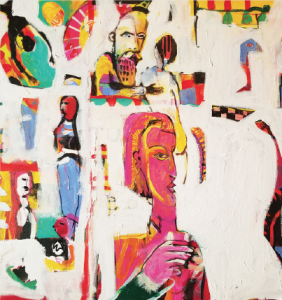
Revolution in Care: Harrisburg native pens book on founding father, Benjamin Rush.

Illustration by Ryan Spahr.

From supermodels to rabbis, the subjects of award-winning investigative journalist Stephen Fried’s six books have been nothing if not diverse.

Now, with “Rush: Revolution, Madness and the Visionary Doctor Who Became a Founding Father,” this Harrisburg native has entered the territory of writers like David McCullough to produce a comprehensive biography of Benjamin Rush, a major figure in American history whose legacy has slipped, unfairly, into the shadows.

Signer of the Declaration of Independence, member of the Constitutional Convention, pioneer in the humane treatment of mental illness, vigorous advocate for racial, religious and gender equality and founder of Dickinson College, lifelong Philadelphian Rush had a unique vantage point from which to observe the birth of the American nation and the growing pains of its early years.

In an interview from his Philadelphia home, “down the street from the American Revolution,” as he describes it, Fried, who teaches journalism at both the University of Pennsylvania and the Columbia University Graduate School of Journalism, explained that he was drawn to Rush as a subject because the story allowed him to marry his interest in the problem of mental illness (he co-authored a 2015 book on the subject with former Rep. Patrick Kennedy) to an account of the American Revolution.

Rush, who was born in 1745 and died in 1813, offered the added benefit to a historian of a life that spanned a profoundly significant era. He was a “very political doctor trying to do important work in Philadelphia, who’s a wide-eyed revolutionary when the big guys come to town and, within two years, he’s one of them,” Fried remarked.

Rush had been engaged prominently in political activity as far back as 1773, when he co-wrote the anti-tax broadside that led to the Boston Tea Party and helped usher Thomas Paine’s pamphlet “Common Sense” into print.

Returning to Philadelphia after his participation in the Revolutionary War, in which he served as surgeon general to Washington’s troops in some of the bleakest days of the conflict, Rush resumed his medical practice, and by the mid-1780s, entered into a period of intense public engagement that included a major address to the American Philosophical Society in 1786. In that talk, Fried explained, Rush “lays down the framework for seeing addiction and mental illness as diseases and not failures of will or religious faith, which is how they were viewed at the time.”

Along with Benjamin Franklin, Rush worked to revive the Pennsylvania Abolition Society. A man of strong Christian faith (in contrast to many of the Deist founders), Rush was someone who, as Fried described it, “believed that religious liberty was bigger than organized religion,” opposing a religious test for public office in the proposed Pennsylvania constitution, as merely one illustration of his broadminded views.

Rush carried on an extensive correspondence with John Adams and was responsible for reconciling Adams and Thomas Jefferson a dozen years after the bitter election battle of 1800. The desire of Rush’s family and these ex-presidents to suppress this intensely personal correspondence, Fried argues, was one of the reasons he’s fallen into relative obscurity.

In letters like these, and a profusion of other writings, from which Fried quotes extensively in his book, Rush passionately articulated, in eloquent, but accessible prose, his vision of equality and liberty for the nascent American society.

“What I love about Rush,” Fried said, his enthusiasm for his subject evident in his voice, “is that the minute there is America, he starts realizing what the challenges will be. He doesn’t write about them as if he’s fixing them or that they will be easily fixed. He lays down the challenges: the challenge between science and religion; the challenge between liberty and good government.”

Central to Rush’s importance, he continued, is “how correctly he identified the main friction points dividing America and how reasonable his approaches to these things are. They still have great value today because he wrestles with them; he’s candid about the need to wrestle with them. The American experiment is that we’re going to wrestle with this. It’s always the best we can do. We wrestle with them and we ask: ‘How is America going to be different than other countries?’”

Fried is excited about returning to his hometown to discuss his book.

“Harrisburg is the greatest place to be from in the world,” he said, noting his many friendships here and the warm support he’s received from the local community for his previous work.

Asked to offer some final thoughts on Rush’s legacy and its contemporary relevance, Fried was emphatic about his enduring importance in American history.

“The message Rush spent most of his career trying to convince people of—of equality, of racial, religious, gender equality—I wish we could say that we had made more progress in these areas, but we haven’t made enough. Rush would probably say he didn’t expect us to, but that he always expected the challenge would be one that we would be open about and try to do better. We didn’t invent a country to have a perfect union. We invented a country to have an increasingly more perfect union. Rush really understood that.”

Stephen Fried will be at Beth El Temple, 2637 N. Front St., Harrisburg, on Oct. 21, at 7 p.m. for a presentation and book signing. General admission tickets are $25 ($20 for students) and include a dessert reception. For more information, email [email protected] or call the office at 717-232-0556. To learn more about Fried and his work, visit stephenfried.com.

Continue Reading

Leaving Act 47: The private sector has revitalized Harrisburg in the past. It can do so again.

Rep. Greg Rothman and Harrisburg Mayor Eric Papenfuse.

The Overlook Mansion on North Front Street stands after 117 years as if it is frozen in time in 1901.

William Reynolds Fleming, a mechanical engineer, built the home for himself and his wife next to the city waterworks. When Virginia Hammond Fleming passed away, she left the property to the Civic Club of Harrisburg, which was founded in 1898 with the mission of beautifying the city and improving civic engagement.

The Civic Club oversaw several citywide improvement projects, including maintaining the public water supply and the upkeep of the local jail. The Civic Club survived through two world wars, when the mansion was used as a supply site for the Red Cross. It remains active to this day.

The organization has been an outlet for generations of private citizens who care deeply about their city and invest their own time, energy and money to ensure their fellow citizens have pristine living conditions.

Almost a century after the Civic Club was founded, five of my colleagues joined me in creating a similar organization. Together we founded the Harrisburg Young Professionals in 1998. This year, we are celebrating the 20th anniversary of HYP and are proud to have watched it grow into a thriving organization.

After we returned home from college, my friends and I noticed that the city we once knew for its popular bars and restaurants was becoming run down. The YMCA, the local Presbyterian Church, the Gazebo Room, Lombardo’s and Harry’s Bar, which had been staples of the community, were barely recognizable.

To combat this, as president of HYP in 1999, I focused our group on encouraging hundreds of people to move back into the city and create jobs. Mayor Stephen Reed called for all hands on deck to help bring Harrisburg back to life, and the business community heard the call.

As a real estate broker, I was determined to revitalize the real estate in the city. RSR Realtors was involved in the expansion of Restaurant Row, Market Square Plaza and Capitol Heights residential.

This private-sector stimulus, combined with the signing of legislation by Gov. Tom Ridge in 2000 for the city rescue of the schools and the later implementation of Act 47, catapulted the city onto a healthy pace of economic growth.

Act 47 required Harrisburg to comply with certain recommendations issued by the Intergovernmental Cooperation Authority, which allowed the ICA to withhold all or part of the city’s revenue if these were not met. It also put a taxing authority in place for an enhanced earned income tax (EIT) and local services tax (LST).

This fall, the General Assembly will be voting on whether the city will be allowed to exit Act 47 while keeping the taxing authority.

Since stepping down as president of RSR Realtors and becoming a state representative for the 87th district, I have continued my work to help the city of Harrisburg come back to life. Although I represent the suburbs of Cumberland County, many of my constituents commute into the capital for work. They are only a portion of the more than 40,000 commuters who work in Harrisburg. I also understand the impact that a capital has on its surrounding neighborhoods in terms of crime rates and real estate value, among other factors.

I want the city of Harrisburg to succeed in the long term. My bill, House Bill 2557, would allow the city to continue its taxing authority while being free of Act 47. This would ensure that no job-killing tax hikes, such as the proposed 100-percent property tax increase and 2-percent commuter tax, would be necessary. Harrisburg would also be more attractive for businesses and investors because it would no longer be an Act 47 municipality once under state receivership.

The city has sold the troubled incinerator and its parking system, and the Harrisburg Water Authority was transferred to Capital Region Water. It has worked to renegotiate union contracts with police officers, firefighters and AFSCME.

While these solutions have aided in ridding the city of its debt, residents have been facing tax increases, especially from the Harrisburg School District.

This is detrimental to a city when 50 percent of the real estate is tax exempt, mostly due to state ownership, and when one-third of its population has salaries less than $30,000. With half of the city’s population near or below the poverty line, we must eliminate the current harsh climate for economic opportunity.

My bill would ensure that the city’s credit rating would improve and that residents, businesses and commuters would be given tax relief.

Scranton and Pittsburgh were able to diversify their tax structures when they were in an economic crisis, and, as a result, have attracted new industries to their communities, including natural gas.

For over a century, the residents and neighbors of Harrisburg worked hard to grow the city. To finish the work of revitalizing it, we must allow the private sector to develop free from heavy regulations and taxes.

As a member of the General Assembly, I have partnered with state Rep. Patty Kim of the 103rd district in helping the city. I have long admired Rep. Kim’s passion for Harrisburg. She has been a crucial advocate for the city and believes that our bill is key to its future prosperity.

The capital of Pennsylvania should be its shining city on a hill, overflowing with commerce and visitors. It has the potential to be an inspiration to the rest of the commonwealth for how to attract businesses and working families.

It is time to let the city be free to focus on how to ease the burdens facing business and property owners. There is no time to waste.

Let’s work together to make Harrisburg fruitful and inspiring again. We did it before and we can do it again, but this time, for good.


Rep. Greg Rothman represents Pennsylvania’s 87th legislative district.

Continue Reading

Harrisburg, By the Book: Literary roads converge during the 2018 Harrisburg Book Festival.

“How can we take this festival to the next level?”

That was the thought following last year’s Harrisburg Book Festival, even after a long weekend filled with acclaimed authors and thousands of guests, according to Midtown Scholar co-owner Catherine Lawrence.

She and Alex Brubaker, the bookstore manager, pondered how to make the festival even better. Well, a Grammy-nominated artist, an Oprah’s Book Club winner and President Barack Obama’s former speechwriter just might do the trick.

This month, Midtown Scholar hosts the 2018 Harrisburg Book Festival, the sixth such celebration of all-things literary, featuring a wide variety of book readings, signings and discussions, as well as children activities and more.

“We have exceptional novelists, historians, children’s authors,” Lawrence said. “The schedule is packed with the most interesting choices we could find. That is the important part of last year’s book festival that we definitely wanted to continue.”

Opening the festival is New York Times bestselling novelist and Oprah’s 2018 Book Club Selection author Tayari Jones, who will read from her novel, “American Marriage.” Grammy-nominated singer-songwriter—and now published poet—Mary Lambert will read from her new book, “Shame Is an Ocean I Swam Across.”

For the more politically minded, Beck Dorey-Stein, author of “From the Corner of the Oval,” is returning to Midtown Scholar, just months after her first visit. She will talk with another former White House employee and friend, David Litt, an Obama speechwriter who now is head writer for the comedy website and film company, Funny or Die. They will discuss what it was like coming of age in the Obama White House.

Another highlight will be Crystal Hanna Kim, who will read from her debut novel, “If You Leave Me.” Inspired by her grandmother who survived the Korean war, “If You Leave Me” follows the story of a young Korean refugee named Haemi Lee, who fled her home in the midst of the war. In the book, Lee grapples with her home crumbling, taking care of her widowed mother and younger brother and being in love with two other refugees.

“She’s a willful, independent, intelligent young woman,” Kim said. “But she’s living under the duress of poverty, hunger and violence.”

Kim also will converse with her friend and fellow debut novelist Lucy Tan of “What We Were Promised.” The pair will discuss the theme of home and how it is laced throughout their stories.

“I’m really excited to go to Harrisburg,” Kim said. “It seems like it is a really cultural city. And from what I heard, Midtown Scholar seems like such a strong cultural force in the city. I’m really excited to explore and be a part of a strong local community for the weekend.”


A Party

For Midtown Scholar, part of reaching “the next level” is pulling back on the number of events and authors this year. Rather than packing every hour with activities, the festival will space out events to give guests time to explore the bookstore and Harrisburg.

And, despite the major names on the schedule, attendees will have the same up-close-and-personal experience they’ve come to expect gathered around the bookstore’s stage.

“You might go see Tayari Jones in a venue of a thousand-plus attendees, but it’s easy to feel detached from the author,” Brubaker said. “We’re bringing in the same high-quality authors as these internationally renowned festivals—only in a much more intimate and personal setting—an independent bookstore.”

With so many acclaimed writers, Brubaker said that they expect more than 4,000 attendees, double last year’s number.

Aside from the opening and closing keynote speakers, the Harrisburg Book Festival is free and open to the public. For those who are not able to come out to the festival, Midtown Scholar will offer a podcast of the events the following day.

“One of our core missions at the book festival is to recognize that solitary act of reading and connect readers with not only the authors, but other readers in our community,” Brubaker said. “We want to throw a party to celebrate these books, these authors and our readers. We want to celebrate it with thousands of other book lovers across central Pennsylvania.”

The 2018 Harrisburg Book Festival will run Oct. 11 to 14 at Midtown Scholar Bookstore, 1302 N. 3rd St., Harrisburg. For more information, including a complete list of events, visit www.hbgbookfest.com.


Author Sightings

The 2018 Harrisburg Book Festival features numerous book- and literary-themed events, including appearances by the following writers and authors:

  • New York Times bestselling novelist Tayari Jones (opening keynote)
  • Grammy-nominated singer/songwriter and poet Mary Lambert
  • National Book Critics winner and New York Times bestselling critic Carol Anderson
  • New York Times bestselling historian Liza Mundy
  • President Barack Obama’s speechwriter David Litt and stenographer Beck Dorey-Stein
  • Caldecott honoree Lauren Castillo
  • Emerging novelists Crystal Hana Kim and Lucy Tan
  • Joe Beddia, whose pizza was named Bon Appetit Magazine’s “Best Pizza in America”
Continue Reading

Artist in Focus: P.D. Murray

Some amazing artists call the Harrisburg area home, and we feature their work in TheBurg each month. However, we feel that we still don’t do justice to the incredible painters, illustrators, photographers and sculptors that reside in central PA.

Therefore, from time to time, we plan to feature the work of a single artist in our pages. In so doing, we hope to give greater recognition to these talented individuals and better highlight the artwork created right here in our area.

So, please enjoy this first selection from P.D. Murray, who is also our cover artist this month. Murray has been painting for more than 30 years and has become known for his distinctive modern expressionist style. You can see more of his work by visiting the Millworks in Harrisburg or by going to www.pdmurray.art.

Continue Reading

Travels in Beer: Harrisburg, Bavarian breweries collaborate, innovate–and you can taste the result.

Sure, you know pilsner. It’s that watery stuff stocked in beer coolers every Super Bowl Sunday, right?

Think again. When University of the Sciences beer professor Matthew Farber walks into a brewpub, he orders a pilsner as a test “because it’s a simple, clean, difficult-to-master style.”

“Because it’s so simple and clean, it becomes very elegant,” said Farber, director of the Philadelphia school’s brewing science certificate program. “Any flaws or problems are very apparent. To make it well means that a brewer has really good control of his or her process and raw materials.”

Now, a flavorful pilsner and an Oktoberfest beer steeped in Bavarian tradition are on tap in Midtown Harrisburg, while a 160-year-old German brewery prepares to launch an IPA to a cautiously curious market back home. All are products of a two-way collaboration between the Millworks Brewery and Keesmann Brewery of Bamberg, Germany.

It all started with Millworks owner Joshua Kesler.

Ancestry-wise, Kesler is typically American—“a little bit of this and a little bit of that,” he said.

He studied German in college because Spanish was booked up. Or because German was later in the morning. Whichever, he made it an avocation for the chance to “engage with people in their mother tongue. That was the one I picked, and I’m sticking with it.”

Through a friend in Germany, Kesler met Stefan Keesmann, owner of Keesmann Brewery in northern Bavaria. Kesler (German translation: “cheesemaker”) suggested a brewing and cooking collaboration to Stefan and his son Lukas Keesmann (also “cheesemaker”). The Keesmanns had entertained similar thoughts.

Thus, Stefan and Lukas Keesmann came to Harrisburg for a consultation in early July. Kesler and Millworks brewmaster Jeffrey Musselman returned the favor and ventured to Germany later in the summer.

The Millworks’ first resulting pour was its “Collaboration Pilsner,” a delicious take on the classic lager that’s dreamy with the kale salad, the cheeseburger and probably anything else on the Millworks’ menu. Musselman, 10 years in the business, said he increasingly appreciates a “well-made, simple beer, and that’s the way the Germans approach their beers.”

Putting a Millworks spin on a classic German pilsner included dry hopping a newish German hops called mandarina Bavaria, for a “marriage between an old-school pilsner but also using a hop variety that’s relatively new and more pleasing to the modern American craft drinker,” Musselman said.

The German purity law, the Reinheitsgebot, decrees that only beverages brewed with barley (or wheat), yeast, water and hops can be called “beer.” A malty imperial stout tastes nice, the Keesmanns told Kesler and Musselman, but it’s not beer.

“If you drop a cherry in it, you can’t call it beer,” said Kesler.

Musselman certainly loves the American arms race for the craziest tap in town, but his Germany visit affirmed the Millworks philosophy of beer as social catalyst.

“Beer over there is not seen as a luxury item,” Musselman said. “It’s part of their daily routine. It’s part of living a good life. That was the really cool thing I took home from the trip. It was neat to see people just enjoying a beer with friends at a beer garden and hanging out and talking and enjoying the good life.”


Traditional as Possible

American beer is deeply rooted in German traditions and techniques, brought to the New World by early immigrants.

By the mid-19th century, the city of Lancaster earned the nickname “Little Munich” for its profusion of breweries catering to German-Americans thirsty for home-style lagers instead of English ales.

Prohibition and post-World War II industry consolidation severed many of those ties.

Today’s American brewers can learn a thing or two from their German counterparts, said Farber. The United States is poised to reach 7,000 breweries this year, with two opening per day since 2012, and an emphasis on quality is now sharing priority with the rush to innovate.

“There’s such great attention to the technical aspects of brewing in Germany,” Farber said.

That combination of German tradition and American innovation now is also on tap at the Millworks, which recently released its Oktoberfest, a beer actually closer to a German springtime marzen.

A true German Oktoberfest beer is a light-colored lager, but Americans expect autumn color. Musselman said it’s “malt-forward” for “those bready, caramel notes.” All ingredients, including the hops, are German, hewing to a brew “as traditional as possible and also appealing to the American demographic.”

“When I have a sip of that beer, it immediately transports me to southern Germany,” Kesler said. “I start looking for the closest wurst I can find.”

Germany’s beer culture is “baked into their way of life,” he added. “It’s not that someone’s a beer drinker. Everyone’s a beer drinker.”


Both Ways

In Germany, new beers encounter skepticism, and yet, brewers must innovate incrementally to differentiate in a market where all brewers make the same products with the same ingredients, under the same rules.

Younger Germans are “picking up this IPA bug” in their travels, Kesler said, and American craft brewers are making inroads in the market. So the Keesmanns weren’t cautious about collaborating, but they were taking a risk. They approached the collaboration “trying to figure out what type of American-style microbrew would resonate with their very traditional customer base,” Kesler said.

The Keesmanns told Musselman they wanted to brew an IPA. The resulting New England IPA will reach German stores and restaurants next April. Juicy in taste and hazy in appearance, it allows Keesmann to reach that younger demographic while hewing to German brewing traditions.

And because Keesmann Brewery, like the Millworks, is food-oriented, the collaboration brings new dishes to each establishment, Kesler said. German dishes on the fall menu pairing with Millworks’ Oktoberfest include a schweinshaxe.

And that means?

“I hate to say it out loud, because it doesn’t sound great, but it’s pork knuckle,” Kesler said. “It’s this fantastic presentation of a huge hock. It’s pork tender with crispy skin on the outside. It feeds two people. It’s fun to pick away at while you’re drinking a big beer.”

And what else would the Millworks offer on the culinary side but smoked brisket? The Keesmanns and their families loved their taste of the Millworks specialty, and next year, chef Lance Smith will travel to Keesmann Brewery, guiding setup of an “American-style barbecue blowout in their beer garden.”

That visit also will go both ways, as the Keesmanns return to Harrisburg in March to help create a to-be-determined beer. Aiming for release with the Millworks’ rooftop beer garden opening on May 1, Kesler welcomes suggestions for the new beer’s style.

Farber knows of just a few other intercontinental collaborations, one being between the 2SP Brewing Co., in Delaware County, Pa., and a brewery in Japan, where there are “some interesting trends.” He also noted that Sierra Nevada collaborated with the world’s longest-operating brewery, the Bavarian Weihenstephan, to produce its Braupakt hefeweissbier.

The Millworks-Keesmann collaboration is “a great idea,” he said. “Innovation meets tradition.”

Musselman and Kesler hope to make the initiative a regular effort, with each team regularly crossing the ocean to swap brewing and culinary notes. Musselman, for one, is wondering about his hefeweizen, declared good by the Keesmanns, but not a true German hefeweizen.

“There absolutely is a lot to learn to really dial these beers into the German tradition,” he said.

The Millworks is located at 340 Verbeke St., Harrisburg. For more information, visit www.millworksharrisburg.com.

Continue Reading

Culture Club: Telugu Association is dedicated to beautiful language, good deeds.

The air was filled with excitement and the enticing smell of Indian cuisine as the sun began to set in Harrisburg.

Car after car arrived at the Scottish Rite Cathedral, quickly filling the parking lot as hundreds of women gathered to celebrate the kickoff of Mother’s Day weekend on a pleasant Saturday in May.

Women of all ages had gathered for the first annual JUL (Just Us Ladies) event hosted by the Harrisburg Telugu Association (HTA) to celebrate community, culture and female empowerment.

The origins of HTA started with a few dozen families who shared a love of Telugu, one of six languages recognized by the Indian government as “classical.”

A smile spread across HTA President Laxman Buddineni’s face as he described the language he holds dear.

“The alphabet contains 52 letters, and all words end in a vowel,” he said. “Some call it the ‘Italian of the East’ because it is beautiful and melodic, as is any poetic language.”

Buddineni went on to explain that India has 14 official and 256 unofficial languages.

“There are many gods in the Hindu culture, and poems praising the gods are written in Telugu,” he said.

To promote and preserve the language, HTA sponsors a Sunday school at the HARI Temple in New Cumberland, where students learn to read and write the ancient language, which is predominately spoken in the southern part of India.

HTA emerged from humble beginnings, starting out in 2002 with a few dozen families.

“Our goal was to reach out to needy people, promote the culture and preserve Telugu,” said HTA board member Venkataramireddy Sanivarapu.

Today, the nonprofit has grown to include 1,000 families, with 18 committee members.

“There’s a lot of satisfaction in helping people who come to Harrisburg negotiate their way around the community,” said board member Baba Sontyana. We work hand-in-hand with many nonprofits.”


Smiles & Laughter

During the Just Us Ladies event, attendees spent time socializing and visiting a variety of vendors who had filled the halls selling items like clothing, jewelry and accessories.

Many stood in line chatting while waiting to partake in an appealing array of appetizers before making their way to a packed ballroom to hear uplifting speeches delivered by notables like state Rep. Patty Kim and Dr. Sue Mukherjee, an assistant vice chancellor for Pennsylvania State System of Higher Education.

Speeches were followed by a fashion show, dance performances, a DJ, dinner and an audience-participation activity, which energized the crowd and tested knowledge of Bollywood favorites. A line from a song was sung for the audience, and attendees were tasked with providing the next line. Smiles and laughter filled the auditorium, and, soon, groups of ladies were on their feet singing and dancing, competing to be the first to recognize the next line.

Buddineni said that the event was created to raise money for causes at home and abroad. Thanks to Just Us Ladies, orphans in India will benefit from the $3,000 raised during the event. Harrisburg’s Shalom House received a matching amount.

Denise Britton, Shalom House executive director, said that the money would be put to use helping area women with basic health and wellness needs, shelter, life coaching and education. The organizers, inspired by the rousing success of the event, have decided to make it an annual affair.


Long-Held Values

Just Us Ladies may be the newest event, but there are many others.

HTA kicks off the new year each Jan. 2 with Ugadi, a grand, full-day celebration that attracts about 200 performers and 700 spectators.

“We wear cultural clothing and celebrate our heritage with programs designed to depict Indian art forms,” said Buddineni.

Additional activities throughout the year include a summer sports program, an annual picnic, an Adopt-a-Highway event that includes a daylong cleanup, and a floral festival called Bathukamma, when the ladies of the community gather together to celebrate the patron saint of womanhood. The group wraps up the year with a Thanksgiving food drive, where members raise money and youth volunteers serve Harrisburg seniors.

Sambasiva Ellanki, general secretary, said that the group is accepting new members and can always use more volunteers.

“Finding people with free time is a big challenge,” Ellanki said. “Everyone is busy.”

Another challenge is financial, a situation that is shared by many nonprofits.

Annual membership dues are kept deliberately low at $35 a family to attract as many people as possible. Currently, the group is working on finding grants to help keep the organization on financially stable footing.

Buddineni is optimistic that the situation will work itself out.

“We have a few commissioners in the state who are trying to find out more information on applying for grants as a minority nonprofit,” he said.

Until then, the group plans to continue to forge ahead, working with other nonprofits, helping newcomers to America integrate into the community, promoting socialization and family life, preserving the Telugu language and imparting long-held values to future generations.


To learn more, visit the Harrisburg Telugu Association website at www.ourhta.com or their Facebook page.

Continue Reading

Start Here Now: The ripple effect of volunteering.

When I was 10 years old, a 7-year-old boy named Rayshaun spent the summer at our home through the Fresh Air Fund.

The Fresh Air Fund allows children from New York City’s low-income communities to enjoy summer experiences in the countryside through visits with volunteer host families. Sean Combs, better known as “P Diddy,” recently revealed on “Jimmy Kimmel Live!” that he participated in the Fresh Air Fund as a child. In Lancaster, Pa., Diddy said, he milked cows, picked berries and got a chance to appreciate life outside of the hustle and bustle of the city.

“It really teaches you how to just relate with each other,” he said.

The first summer Rayshaun spent with my family, he had never played in grass before, and he thought the floor was more comfortable than a bed. Through the next several years, he learned to swim, fish, play baseball, hit a golf ball but, most importantly, be a kid. We would spend our summers making new memories together, working on reading and writing skills, as well as just sharing a stable family environment. Rayshaun is now 22 years old, a college graduate and an important member of our family.

Recently, I attended the opening retreat for Leadership Harrisburg Area Class of 2019.

During the retreat, we discussed servant leadership, color-code personality assessments, community service and nonprofits in our area. We also talked about our region as a whole by reviewing county information from the U.S. Census Bureau’s 2012-16 “American Community Survey” five-year estimates.

Even though I grew up in this area, seeing some of the statistics still shocked me. As I mentioned, my family was involved with the Fresh Air Fund, which helps children in New York City. However, when you look at the statistics, the poverty rate is lower in New York City than in Harrisburg. In New York, 20.3 percent of people live in poverty, while poverty affects 31.7 percent of people in Harrisburg. Also, 36.2 percent of New York residents over the age of 25 have a bachelor’s degree or higher, which is double the education level of Harrisburg residents.

Helping children and communities anywhere is important, and we loved our experience with the Fresh Air Fund, but what about places right outside of our own windows?

Research shows that, while over 90 percent of us want to volunteer, only 1 out of 4 Americans actually do. Studies also show that children whose parents volunteer were significantly more likely to do so themselves. From my personal experience, I have valued volunteering because my parents wove it into our lives. They never directly said, “You have to volunteer.” But watching them live with the desire to help others was very influential in my life.

We have all heard the excuses before: “I’m not sure how to get involved,” or, “I don’t have the time.”

My advice would be to just start here now. My employer, Gunn-Mowery, LLC, has an “Upside of Giving” committee. In the past few months alone, we have donated shoes to a local school, spent a day organizing clothes at Dress for Success, painted rooms at the Methodist Home for Children, volunteered at the Special Olympics, painted faces at the Girls on the Run 5K and cooked a meal at the Ronald McDonald house. Those are just a few examples of volunteer opportunities, and there are so many others.

My late grandfather, Sen. Hal Mowery, was a state leader, well-respected businessman, diligent advocate for children, education, healthcare and business and an exemplary, community-minded citizen. He often used the quote from Margaret Mead, “Never doubt that a small group of thoughtful, committed citizens can change the world. Indeed, it is the only thing that ever has.”

I urge you to go alone, get your friends together or assemble a small group from work. Even better, make it a family outing and expose your children to volunteerism at a young age. Just as a simple action has the ability to alter society, a single volunteer can help improve our community. Start here now.

Jamie Mowery Lewis is a marketing executive for Gunn-Mowery, LLC, a community publisher for TheBurg.


Continue Reading

September News Digest

HMAC Files Chapter 11

A month after a sexual assault allegation engulfed the House of Music, Arts & Culture (HMAC) in a social media maelstrom, its owners filed for bankruptcy and plan to sell their business.

HMAC (formerly the Harrisburg Midtown Arts Center) will continue its normal operations as its owners restructure debt obligations to more than three dozen creditors, said John Traynor, who owns HMAC with his husband, Gary Bartlett, and two other partners.

Their company, Bartlett, Traynor & London LLC, last month filed for Chapter 11 bankruptcy in the U.S. District Court for the Middle District of Pennsylvania. They believe that they have a buyer for the business, according to the filing documents. HMAC listed more than $5 million in total assets, chief among them the sprawling, historic building at 1110 N. 3rd St.

Traynor hopes to transition to new management and ownership by 2019.

“This allows us to reorganize, take a breath, and work with creditors,” Traynor said. “I think HMAC could use a fresh start, and Chapter 11 will help facilitate that.”

Traynor and his partners have developed HMAC for a decade and, in 2009, opened the first phase, Stage on Herr, a bar and concert venue. In all, they’ve since spent millions of dollars renovating the 34,000-square-foot property, which served as the city’s Jewish Community Center starting in 1924 and later housed Harrisburg’s Police Athletic League.

Today, HMAC is comprised of three separate performance venues, as well as a full-service bar and kitchen. It hosts shows by local and national performance artists, corporate events, weddings and community gatherings.


Renovated Playgrounds Reopen

Summer break may be over, but playtime is just beginning in Harrisburg.

Mayor Eric Papenfuse last month cut the ribbon on the newly renovated Cloverly Heights Playground, one of four play areas that were recently revamped with new equipment and green infrastructure.

After being closed all summer, playgrounds at Cloverly Heights, Norwood and Holly streets, Penn and Sayford streets and Royal Terrace are opening to the public.

The four sites have been outfitted with all-new play amenities, and each one has unique features, Papenfuse said.

Three of the sites also have storm water management enhancements thanks to Capital Region Water.

“Our parks are the city’s greatest assets,” Papenfuse said. “I’m glad we’re bringing all of our playgrounds up to the level that our community would like to see.”

The city will complete renovations at a fifth playground, at 4th and Dauphin streets, next year.

The citywide playground renovations were part of a $2 million partnership among Harrisburg, Capital Region Water, Impact Harrisburg, the state Department of Conservation and Natural Resources and the state Department of Community and Economic Development.

The ribbon cutting represented the culmination of a project three years in the making. The five playground sites were first targeted for renovations in 2015, but renovations stalled while the city pursued funding and collected public input.


Another Purchase for Harristown

A downtown Harrisburg building project has changed significantly, as a developer now has plans to purchase and renovate the building next door.

Harristown Enterprises expects to close this fall on the purchase of 17 S. Market Sq., currently the home of the SkarlatosZonarich law firm, said Harristown CEO Brad Jones. A full renovation of the century-old, 33,809-square-foot building will follow.

“We’re still evaluating the uses of that building,” Jones said. “We think it’s going to become a mixed-used project.”

Last year, Harristown bought the neighboring building, a small, dilapidated, early 19th-century office and retail building at 21 S. 2nd St., which notably once housed the Coronet restaurant.

It razed that building, with expectations to construct a new office building and attach it internally to the SkarlatosZonarich property. However, according to Jones, the plan changed after continuing discussions with the law firm.

“As we began to talk more, they indicated they were more interested in selling the building,” Jones said.

As a result, SkarlatosZonarich now will sell their Market Square building to Harristown and relocate to the Bowman Tower in Strawberry Square, which is also owned by Harristown.

In January, the firm’s 35 employees will move into about 11,000 square feet of office space, about double their current footprint, following a $1 million renovation, Jones said. After the relocation, Strawberry Square will have an office vacancy rate of only about 5 percent, he said.

Jones said that plans are still in flux for the redevelopment project at Market Square, but he expects a mixed use of residential, office and retail, with residential more likely for 17 S. Market Sq. and office more likely for 21 S. 2nd St.


Parker Departs City

A senior Harrisburg official left her post last month to work in the private sector.

Jackie Parker, who has headed the city’s Department of Community and Economic Development (DCED) since 2014, left her position to take a job with a medical marijuana company, she told TheBurg.

Parker joined the city administration when Mayor Eric Papenfuse took office in 2014. She previously served as the mayor of Lebanon, Pa., and as deputy secretary of the Pennsylvania Department of Community and Economic Development.

As the city’s DCED director, Parker was the point person for economic development projects, Papenfuse said. She managed employees in the bureaus of housing, planning, business development and parks and recreation.

Papenfuse said today that he does not plan to replace Parker. The mayor announced a city hall hiring freeze in June, but he also hopes to reorganize DCED in the wake of Parker’s departure.

He expects to prepare a reorganization plan ahead of his 2019 budget presentation in November.

“She’s been a wonderful, committed leader for the city,” Papenfuse said. “I think she’s irreplaceable.”


Trash Billing Proposal Revived

Unpaid trash fees are costing Harrisburg an average of $200,000 a month—a problem that city Treasurer Dan Miller thinks can be fixed by billing residents once a year for disposal services.

Miller proposed an annual trash billing structure earlier this year as part of an overhaul of Harrisburg’s sanitation laws. But City Council nixed the measure, saying it would stress the cash flow of low-income and fixed-income residents.

The city currently bills residents $32 a month for trash collection. It also has a monopoly on commercial accounts in the city.

Miller appeared before council last month to renew the case for annual billing. He’s proposing that Harrisburg include a line item for trash fees on every property’s annual real estate tax bill, which is mailed out in January. The trash collection fee would be subject to the same 2 percent, 60-day discount period as the real estate tax.

The city currently has a 98-percent collection rate on its real estate taxes. Miller hopes that trash fee collections would increase by streamlining the two bills into one. It would also save an estimated $100,000 a year in mailing costs.

Collecting up-front payments is key, Miller said, since the treasurer’s office doesn’t have many means to pursue delinquent accounts.

According to Miller, Harrisburg lost enforcement authority over delinquent trash bills when it restructured under the Harrisburg Strong Plan, the financial recovery plan it adopted in 2013.

Before the Strong Plan, Harrisburg had an in-house collections arm in its Operations Revenue Department (ORD). When the department could not collect bills from delinquent accounts, it could turn off the water at those properties to spur a payment.

But the Strong Plan dissolved the ORD and transferred Harrisburg’s water assets to Capital Region Water. As a result, the city lost the ability to terminate water services at delinquent properties.

“People discovered that, if they didn’t pay their bill, their trash was still collected and nothing else happened,” Miller said. “Maybe their bill went up [from interest], but nobody was doing anything about it.”


So Noted

Knead Bar Pies opened last month inside of Zeroday Brewing Co., 250 Reily St., Harrisburg. This is the second location for Knead, which also has a stand in the Broad Street Market, serving a different style of pizza. Pending approval of a liquor license transfer, Knead is planning a third location, Knead Slice Shop, at N. 3rd and Boas streets, a storefront long occupied by Mercado’s Pizzeria.

Paxton Ministries
and Monarch Development Group last month broke ground on Paxton Place, an affordable senior housing development at 1100 S. 20th St., Harrisburg. The $8.6 million development, featuring a 37-unit apartment building, should be completed in fall 2019.

Penn State Health last month appointed Deborah A. Berini as president of the Milton S. Hershey Medical Center. Berini most recently served as chief operating officer at the University of Texas Medical Branch Health System. She replaces Alan Brechbill, who has assumed the role of executive vice president for hospital operations for Penn State Health.

Salvation Army of Harrisburg last month broke ground on it new regional headquarters located at S. 29th Street and Rudy Road. When complete, the 39,000-square-foot facility will house the Salvation Army’s education and human services programs, which reach more than 18,000 adults and children in Dauphin, Perry and Cumberland counties.

Stash Vintage and The Midtown Dandy are teaming up to open a vintage clothing store in downtown Harrisburg, they announced last month. The two retailers will move into the storefront at 11 S. 3rd St. later this fall once improvements are made to the space, which is owned by Harristown Enterprises.


Changing Hands

Allison St., 1506: S. Maurer to J. Davison, $71,000

Boas St., 213: B. Wagner to L. & S. Godinez, $105,900

Brookwood St., 2466: Carrodo LLC to PA Deals LLC, $45,000

Conoy St., 110: M. & S. McLees to H. Peyrot, $153,000

Crescent St., 332½: Dynaspek Holdings LLC to K. Stoute, $50,000

Croyden Rd., 2981: J. Arvelo to Leonard J. Dobson Family Limited Partnership, $30,401

Cumberland St., 113: J. Townsend to J. Calla, $173,000

Derry St., 1603½: S. Vielle to R. Garcia, $37,000

Emerald St., 219: D Jay Investments LLC to M. Goldthwait, $31,600

Fulton St., 1713: A. Beck to M. Fagan, $125,000

Graham St., 310: N. Lindemyer to V. Arrington, $99,000

Green St., 1704: B. & C. Hansen to Z. Houseal, $209,900

Green St., 1914: L. Copus to K. Bogard, $194,900

Green St., 2316: Skye Holdings LLC to U&N Properties, $35,000

Holly St., 1844: V. Rivas to F. Eras, $40,000

Hunter St., 1610: M. Toro to P. Anandan, $44,000

Kensington St., 2044: PTSH Properties LLC to K. Cardona, $33,500

Kensington St., 2225: D. & S. Fenton and Harrisburg Property Management Group to F. Sisic, $54,000

Lewis St., 210: B. & C. Zandieh to T. Keller, $67,000

Logan St., 2329: I. Mirambeaux to D. Reyes-Martinez, $35,000

Maclay St., 332: JTA Consulting Group LLC to D. Jolley, $70,000

Market St., 2018: US Bank NA Trustee & Ocwen Loan Servicing LLC to C. Ovalles, $40,767

North St., 214: A. Lawson to J. Hunt & K. Lambert, $129,000

Norwood St., 920: J. & R. Lowery to J. Arocho, $91,180

N. 2nd St., 901 & 903: W. & J. Hobbie to WG PA Holdings LLC & B. Golper, $365,000

N. 2nd St., 909: C. Simmons to C. Adam, $165,000

N. 2nd St., 1223: B. Jones to A. Holt & S. Hayes, $153,000

N. 2nd St., 2425: S. & M. Hwang to A. Waltz, $168,000

N. 2nd St., 3008: H. & K. Bey to S. & R. Bogash, $234,900

N. 2nd St., 3209: Benchmarq Holdings LLC to H. & L. Robinson, $109,900

N. 3rd St., 1628: C. Frater to Heinly Homes LLC, $100,000

N. 3rd St., 1640: V. Jenkins to Heinly Homes LLC, $76,500

N. 3rd St., 1806: HBG Rents LLC to C. Shokes, $242,000

N. 3rd St., 3020: D. Porter to PA Deals LLC, $32,000

N. 4th St., 2410: PA Deals LLC to K. Moulds, $70,000

N. 5th St., 2251: K. Rolston to B. Kerstetter, $210,000

N. 5th St., 3118: Federal Home Loan Mortgage Corp. to Willowscott Investments LLC, $34,000

N. 5th St., 3132: K. Hall to Willowscott Investments LLC, $62,000

N. 6th St., 2947: Deutsche Bank National Trust Co. Trustee to D. Wenger, $61,425

N. 6th St., 2987: C. De la Riva to E. & P. Grier, $125,000

N. 6th St., 3151: A. Banks to E. Crawford, $69,900

N. 14th St., 1116: Just Sold Another One LLC to Gator Management Group LLC, $31,000

N. 16th St., 1326, 1328: W. Washington to F. Johnson, $95,000

N. Front St., 1525, Unit 212: D. Taylor to R. Viti & T. Luckenbaugh, $149,550

N. Front St., 1525, Unit 510: M. & L. Paszak to H. Evren & M. Saygin, $99,900

N. Front St., 2833: N. & P. West to A. & G. Shahbaz, $289,000

N. Front St., 3207: Remus Real Estate to 3207 N. Front St LLC, $390,000

Parkway Blvd., 2513: A. Maiga to A. Buglione, $30,000

Penn St., 1508: M. Parmer to C. Bury, $137,900

Penn St., 1608: R. Viti & T. Luckenbaugh to D. Hooker & B. Lister, $165,000

Penn St., 2117: JLP Holdings LLC to Wells Fargo Bank NA, $34,518

Penn St., 2233: J. Thomas to T. & R. Kenney, $109,900

Radnor St., 249: Federal Home Loan Mortgage Corp. to M. Chappelle, $115,620

Rudy Rd., 2339: Good Deal Properties LLC to W. MacMichael, $39,500

Rumson Dr., 2786: J. & K. Cabezas to PA Deals LLC, $40,000

S. 13th St., 435: SWM Properties LLC to F. & P. Harden, $70,000

S. 13th St., 1496: A. Roberts to DPM Development LLC, $41,500

S. 14th St., 1402: D. & E. Stanton to City of Harrisburg, $41,000

S. 14th St., 1431: R. Epps to City of Harrisburg, $57,000

S. 14th St., 1434: W. Collins to City of Harrisburg, $45,000

S. 14th St., 1456: G. Bullock & L. Gratkowski to City Harrisburg, $56,000

S. 16th St., 17: D. Springer to W. Cherelus, $33,000

S. 18th St., 1319: K. Shemory to J. Nguyen & T. Pham, $100,000

S. 27th St., 634: S. Moore to D. Mateo, $50,000

S. 27th St., 731: S. & M. Pandolfi to P. Menanga & J. Bidjeke, $135,000

S. Front St., 557: K. Stennett to K. Tatum, $128,000

State St., 1717: A. & R. Sharp to M. Demonda, $130,000

State St., 1823: C. & N. Bickel to M. Butler, $69,917

Susquenhanna St., 1730: Signature Rehab Services LLC to G. Harris, $111,200

Swatara St., 1905: H. Abukaffaya to A. Grove-Erazo, $37,000

Vine St., 119: W. Zutell to Wild Patch LLC, $80,000

Walnut St., 104: C. Hinson to MIV Properties LLC, $85,000

Walnut St., 1854-1860: T. Van, H. Van & T. Vo to H. Van, $85,000

Woodbine St., 236: M. Elganzoory to Lambar LLC, $34,000

Wyeth St., 1409: D. & M. Myers to H. Swanson, $117,000


Harrisburg property sales for August 2018, greater than $30,000. Source: Dauphin County. Data is assumed to be accurate.


Continue Reading

Stories & Identities: “Colette” explores the fascinating life of the famous French novelist.

“My name is Claudine. I live in Montaigne. I was born there in 1884. I shall probably not die there.”

So pens Colette (Kiera Knightley), the young woman from the late 1800s/early 1900s for whom director Wash Westmoreland’s “Colette” is named after. Colette has found herself married to Willy, a man whose claim to fame is his writing—though it is not, in fact, his.

Moving to Paris from the country to marry Willy (Dominic West), Colette is thrown into a world that takes a while to grow on her. While Willy loves riches, flirting and fame, Colette is content with the silence of the countryside and is not impressed with Willy’s friends, who flaunt their “personality with a capital P” (their airs are perfectly symbolized by a bedazzled turtle that Colette sees at a party Willy takes her to).

So, when Willy announces that their finances are low and asks Colette to write a novel about her school days so that he can publish it under his name, she jumps at the opportunity to do something worthwhile.

Ironically, Colette’s writing sells volumes more than any of Willy’s works ever did, and Willy begs her (and at times, forces her) to keep writing “Claudine’s” story. As Willy continues to squander away the profits of the book sales and stir more and more discontent in Colette’s life, she begins to explore her surroundings, and—more importantly—herself, in the context of queer identity and pushing gender norms.

Written by Westmoreland and Richard Glatzer, the story follows the true story of Sidonie-Gabrielle Colette, who continued on to write many books after the “Claudine” series, under her own name. The dialogue is bright and biting at times, with rich performances from both Knightley and West, their onscreen chemistry relaying their strange, adverse relationship. Supporting performances by Eleanor Tomlinson and Denise Gough as Colette’s love interests bring the film even more life, and though the cinematography is nothing more than straightforward, the story more than makes up for that.

“Colette” is coming soon to Midtown Cinema. Don’t miss the opportunity to see this fascinating tale.


Midtown Cinema
October Events

National Theatre Live
“Julie”
Monday, Oct. 1, 7 p.m.

“King Lear”
Monday, Oct. 22, 7 p.m.

“Frankenstein”
Sunday, Oct. 28, 7 p.m.
Monday, Oct. 29, 7 p.m.


“Halloween” (1978)
Friday, Oct. 5, 8:30 p.m.
Friday, Oct. 26, 8:30 p.m.
Wednesday, Oct. 31, 8 p.m.


Moviate
“Mike Kuchar: Filmmaker In-Person”
Wednesday, Oct. 10, 7 p.m.

“The Hungan” (1991)
Sunday, Oct. 21, 7 p.m.


Down in Front!
“Werewolf” (1995)
Friday, Oct. 12, 9:30 p.m.


Vidjam of Horror
Sunday, Oct. 14, 7 p.m.


3rd in the Burg $3 Movie
“Bram Stoker’s Dracula” (1992)
Friday, Oct. 19, 9:30 p.m.


“Rocky Horror Picture Show”
Saturday, Oct. 27, 8 p.m. & 10:30 p.m.

Continue Reading

Angels Among Us: Vickie’s Angel Foundation helps central PA families battling cancer.

Mickey Minnich wears a silver bracelet inscribed with the phrase, “One day at a time.”

It’s a reminder, he said, to stay focused on the moment, helping one family at a time as they face cancer. Over the past 15 years, his organization, Vickie’s Angel Foundation (VAF), has raised more than $2.6 million, helping more than 1,500 families throughout a nine-county area of central Pennsylvania.

The nonprofit grew from a humble beginning—as a remembrance walk in memory of Minnich’s wife Vickie, who passed away in 2003 after a brief but intense battle with cancer.

“When Vickie became an angel, what saved me was working and doing something positive,” Minnich said. “The walk we did the first year maybe had 100 people. It just grew from there, into a significant fundraiser and our signature event.”

Vickie’s Angel Walk is now one of 22 fundraising events held throughout the year to support the organization. One hundred percent of all fundraising directly helps families in need. Volunteers do all the administrative work, and sponsors, called “guardian angels,” cover the organization’s other costs.

Minnich, who turned 80 in September, is a former Harrisburg-area high school teacher, guidance counselor and football coach—in addition to being a father, grandfather and a devoted husband who saw Vickie through her cancer diagnosis and treatment. He says all of these experiences helped him establish VAF.


Unexpected Costs

In, 2004, its first full year, VAF provided $30,000 to families facing cancer. Now, the organization averages $30,000 per month.

Through an application process, families affected by cancer can request financial help—not with medical costs—but with household bills that help maintain quality of life and family life.

Minnich said that cancer-stricken families often fall on hard times because income is diminished, there are unexpected medical bills or travel-related treatment costs, and families fall behind on rent, utilities, car payments and other necessities. He estimates that more than half of the organization’s funds directly go to rent or mortgage payments, literally keeping a roof over the heads of patients and their families.

“How can you not throw your heart out to someone struggling with cancer, trying to pay their bills?” he said. “We serve as a financial bridge. We pay the most pressing bills for a temporary time because we want families to focus on healing.”

But the buck doesn’t stop there. Board members gather for weekly conference calls with families, to listen and help.

“We’re more than a check,” Minnich said. “I’ve been in that world. Every cancer is personal. We want families to know we care.”

Marc Palovitz, 48, of Camp Hill, said that he discovered VAF after finding himself “on the receiving end.”

Believing he had gallstones, he instead was diagnosed with stage-four pancreatic cancer and liver cancer this past March. Palovitz said that he is grateful to a social worker at Hershey’s Penn State Cancer Institute who suggested that he contact VAF for support.

“Thank God, because the response time from when I called them was the next day,” Palovitz recalled. “They had an application to me. I sent it back, and, within 72 hours, they said, ‘Your rent is paid. What other bills do you have?’”

Palovitz, undergoing aggressive chemotherapy treatments and facing an unknown prognosis, had to leave his job managing a rental center in Dillsburg. He shares custody of his two teenage children with his ex-wife. Without his rent payments being made, he isn’t sure what he’d do.

“I wouldn’t be able to have my children over here,” he said. “How would I see my kids?”


With Purpose

Two of VAF’s highest-profile fundraisers are held in October and November—the annual Vickie’s Angel Walk and the SMT Turkey Trot 5K. Both events are held at New Cumberland Borough Park.

Minnich said that 800 to 1,200 people typically participate in the walk, gathering sponsors and honoring loved ones who battled or are battling cancer. But he says the event is much more than a walk.

“Every year, three families speak about their experiences with cancer and VAF, including the themes of love, faith and hope,” he said. “It’s meaningful—something special like a family reunion.”

The SMT Turkey Trot 5K is one of the area’s biggest Thanksgiving morning runs. The event raised about $40,000 last year and a grand total of more than $400,000 over the past 12 years, according to Minnich.

Race director Mari Lynn Dare of Etters said that she began organizing the event in memory of her mother and lifelong New Cumberland resident Shirley Mae Taylor, who passed away in 2003 after a battle with cancer. By the event’s third year, Dare decided to donate all proceeds to VAF.

“We picked Thanksgiving as the date because my mom was very family-oriented,” Dare said. “It’s morphed into something I did to keep my mom’s memory alive into a Thanksgiving tradition that people really enjoy. Every year, it gets bigger, and I keep thinking it’s going to cap off, but we had close to 2,700 participants last year.”

Dare, 53, an accomplished runner who has finished 70 marathons, said that it was only natural that she honor her mom’s memory while providing a race for fellow runners—all benefiting families dealing with cancer.

“A lot of people choose to do our race because it’s going to a good cause and helping people who truly need it,” Dare said.

More than 100 volunteers provide race support, and local businesses donate and sponsor all post-race festivities, including kettles of hot chicken corn soup donated by Nick’s 114 Café, Thanksgiving-themed pies and baked goods donated by Giant.

As for Minnich, he’s been known to don a Pilgrim costume for special appearances on the racecourse. He said that Thanksgiving morning in New Cumberland is a one-of-a-kind holiday.

“I’ve never seen so many happy people running in my life,” he said.


Vickie’s Angel Walk is set for Oct. 13; the 14th Annual SMT Turkey Trot 5K is set for Nov. 22 (
smtturkeytrot.org). For more information about Vickie’s Angel Foundation, visit vickiesangelfoundation.org or call 717-774-3800.

Continue Reading