Senate passes Harrisburg Act 47 bill, ending city’s financial distress and preserving taxes for five years

State senators take their seats just before voting on HB 2557.

A bill passed by the state Senate this evening will preserve Harrisburg’s current tax rates and let it exit Act 47, a state oversight program for financially distressed municipalities.

The Senate voted 48-1 with no discussion to pass House Bill 2557, which will allow Harrisburg to maintain its current local services tax (LST) and earned income tax (EIT) for five years after it exits state oversight. The bill also prohibits the city from enacting a commuter tax and convenes a five-member Intergovernmental Cooperation Authority (ICA) to monitor Harrisburg’s finances.

The legislation will take effect immediately after Gov. Tom Wolf signs the bill into law. The state House of Representatives passed it by a 185-5 vote on Monday.

After tonight’s vote took place, Harrisburg Mayor Eric Papenfuse thanked the lawmakers who supported its passage, including its sponsor, Rep. Greg Rothman, R-Cumberland County, and Harrisburg’s lawmakers in the House and Senate, Rep. Patty Kim and Sen. John DiSanto.

“While I wish we had been able to achieve a permanent solution for the city and the region, Harrisburg’s immediate fiscal crisis has lifted,” Papenfuse said. “I look forward to working with the new members of the Intergovernmental Cooperation Authority – as it’s time to roll up our sleeves and continue to work for the long-term success of Harrisburg and the capital region.”

The bill is the culmination of a 10-month lobbying effort by Harrisburg officials, who have long said the city needs stronger taxing powers to support the capital city. It will allow Harrisburg to preserve about $12 million in annual revenue that would be lost in a traditional Act 47 exit.

Act 47 allows Harrisburg to levy a 2 percent EIT on all residents and a $156 LST, even though state law caps EIT rates at 1 percent and LST at $56 per year. Without HB 2557, Harrisburg would be forced cut its EIT in half and slash its LST by two-thirds when it exits state oversight.

Local officials say those rates are untenable in Harrisburg, which supports large swaths of tax-exempt properties and a daily population of 50,000 commuters. Mayor Eric Papenfuse told lawmakers last month that the city’s emergency services and infrastructure would be in jeopardy if the city had to cut its taxes.

With HB 2557 in place, Harrisburg will also be spared high property tax increases that were prescribed in a three-year Act 47 exit plan.

The city did make one significant sacrifice in the final bill, which was amended last week to put a five-year time limit on the enhanced taxing power.

The original legislation only required Harrisburg to retire its tax rates once its surpluses partially funded a post-retirement benefit fund for its employees. Projections estimated that could take up to 20 years.

The amendment was made by the House Local Government Committee, and state Rep. Kim called it “the best we can do” in a Republican-controlled legislature. She hopes that the five-year timeframe will still give Harrisburg enough time to increase its tax base.

Local officials are cautiously optimistic that will be the case. City Councilman Ben Allatt said that a growing population and pipeline of development projects are already augmenting the city’s tax rolls, albeit slowly. He’s not sure if it will be enough to put the city the city in full financial stability in just five years.

“Any extension of our taxing authority is helpful, but it remains to be seen if this solves the structural deficit,” Allatt said. “My initial knee-jerk reaction is that it does not. It may close the gap, but only time will tell exactly how much.”

He hopes the city can renegotiate debt obligations over the next five years, which could significantly reduce its expenses in the future. Officials have also said that shedding its Act 47 designation will make Harrisburg more attractive to private investors.

Even though the bill passed by a wide margin in both bodies of the General Assembly, it encountered opposition from lawmakers who wanted Harrisburg to cut its tax rates. Others said the bill created a precedent of special treatment for distressed cities.

The Senate’s lone dissenting vote came from state Sen. Judy Schwank, D-Berks County. Schwank’s district includes the city of Reading, which has been in Act 47 since 2009.

Before the vote, Schwank said she couldn’t support a measure that assists one distressed city without addressing problems plaguing other municipalities across the state.

“I don’t begrudge Harrisburg anything. I think it’s a great city, but I object to piecemeal approach that we’re taking,” Schwank said. “If you have enough political capital to enact a process for your own city… it should be universal across the state.”

In a press conference held just after the vote took place, Kim said she sympathized with Schwank’s objection.

“This highlights the fact that we need uniform policy across the state to help third-class cities,” Kim said.

A 2017 report by the Pennsylvania Economy League found that municipal fiscal distress was accelerating across the state, and recommended offering more taxing flexibility to local governments.

This story was updated to include comments Patty Kim made at a Wednesday night press conference.

Continue Reading

Housing Study: Harrisburg faces shortage of rental housing now, expected to get worse

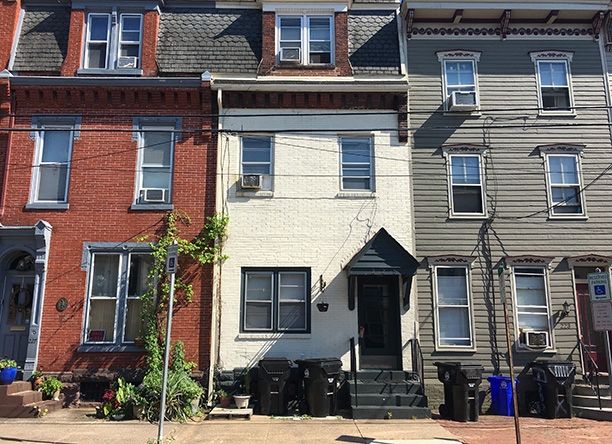
A set of typical Harrisburg rowhomes

The results of Harrisburg’s first citywide housing study are in, and they predict a shortfall of more than 200 rental units at all price points over the next three years.

Representatives from the consulting firm that prepared the study presented their main findings to City Council tonight. The authors said demand for rental housing in Harrisburg will outpace supply through 2020, even as development projects put new units on the market.

As a result, Harrisburg will face a shortage of approximately 244 rental units across the city – a figure that accounts for the city’s existing housing stock, new units coming onto the market and old units becoming uninhabitable. The study also considers population projections, which anticipate that Harrisburg will gain 300 households in the next three years, mostly in Allison Hill and Uptown Harrisburg.

The study didn’t offer any policy recommendations, but city hall officials intend to use its findings to develop long-term development strategies and housing policy proposals. Here are five of the main takeaways from the 100-page study:


Affordable housing and subsidized housing aren’t the same thing.

Developers and policymakers use three standard terms to describe different types of rental housing. Market rate properties are those where tenants pay rent in full, without any public subsidies or rental assistance. Rent is set by a landlord based on location, amenities and demand in the local market.

If a property has restricted rents, or is only open to renters making a certain income, it’s an affordable property. Some affordable housing properties are owned by local governments or nonprofits, but cities can also put zoning restrictions on private projects to make them affordable.

The final category, subsidized properties, offer rental assistance programs based on a renter’s income. This category includes public housing projects, such as Harrisburg’s Hall Manor.


Harrisburg is a low-rent city, but it’s also a low-income city.

The average apartment rents for $831 in Harrisburg. That’s low compared to other parts of Dauphin County, but it’s high for most Harrisburg residents. Nearly half of renter households in Harrisburg have incomes under $25,000. The median renter income is just $22,000 a year.

Housing affordability isn’t defined by the market value of rent, but by how much housing costs consume a person’s overall income. Affordability guidelines, which are set by the federal Department of Housing and Urban Development, say no household should spend more than 30 percent of its income on rent. By that standard, 40 percent of renter households in Harrisburg are cost-burdened. Data show a need for more rental units in the “very low” and “extremely low” income bands.


Demand for rental units will be highest in the Allison Hill and Uptown neighborhoods.

Population growth in Allison Hill and Uptown is expected to exceed other neighborhoods in the city over the next three years. But there’s only one apartment project planned in Allison Hill, which will add 48 units, and there are no upcoming projects slated for Uptown.

Without new housing supply, the scarcity of affordable units in those neighborhoods is expected to worsen. Only one-third of families in Allison Hill who qualify for affordable housing assistance currently receive it, the study says. Demand is even higher in Uptown Harrisburg, where 22 percent of income-qualified rental households get assistance.

“There’s great opportunity for development in both neighborhoods, not just for affordable housing but all rental housing,” said Robert Lenfeld of Real Property Research Group, the Columbia, Md.-based firm that authored the study.


The rental market is tight across Harrisburg, but particularly in Allison Hill.

Harrisburg has more than 4,000 vacant houses and commercial buildings. Abandoned, blighted buildings create eyesores and pose public safety risks, but when it comes to rental units – those that are part of the active housing market – some vacancy is a good thing, said Lenfeld. Fewer than 3 percent of Harrisburg’s rental units are currently vacant. Any figure below 5 percent indicates a tight housing market where renters have limited housing choice and landlords hold a large share of power.

“You want to have some vacancy in a market to ensure elasticity so people can move around and landlords don’t increase rents,” Lenfeld said.

Vacancy rates across the city range from .5 percent in Allison Hill to 4.3 percent in Midtown. South Harrisburg had no vacant units, but it also has the city’s largest share of subsidized rentals. Those rentals aren’t included in vacancy figures, Lenfeld said, since “you never run out of demand for subsidized units.”


Harrisburg’s rental population is aging.

The city’s population of senior citizens is expected to increase 2.4 percent each year through 2020. Seniors can choose to live in any rental unit on the market, but many elect to live in age-restricted properties that offer elevators, common spaces and other amenities that meet their needs. Not all age-restricted properties are affordable—in Harrisburg, only 165 units meet both classifications.

In Harrisburg, the distribution of age-restricted properties limits the housing choice of senior citizens. There are no age-restricted properties in South Harrisburg, whereas downtown has two high-rise towers that contain all of the city’s affordable, age-restricted housing stock. The Paxton Place development will add 37 new, affordable apartments for senior citizens when it’s completed next year. That’s good news for seniors in Allison Hill, but those who wish to find affordable housing in Midtown, Uptown or South Harrisburg will have to keep waiting.

Continue Reading

Harrisburg School Board meets new CRO, leaves charter school closure in limbo at October meeting

Chief recovery Officer Janet Samuels (left) and CFO James Snell (middle.)

Administrative turnover continues at the Harrisburg School District, which recently welcomed a new chief recovery officer and learned it would lose its top financial advisor.

Janet Samuels, the district’s new chief recovery officer, made her first appearance at a board meeting tonight after starting her job on Oct. 1. Samuels, a retired superintendent of Norristown Area School District, was appointed by the Pennsylvania Department of Education (PDE) to update and implement the district’s long-term recovery plan.

One of the first initiatives before Samuels is the selection of a full-time, permanent chief financial officer for the district, as interim CFO James Snell announced tonight that he would leave his post at the end of the year. The district’s recovery plan says it must have a full-time CFO.

Snell was appointed interim CFO at the start of the 2017-18 school year. He has only worked for the district as a part-time contractor, earning $100 an hour for 30 hours a week.

PDE told superintendent Sybil Knight-Burney in June that she must replace Snell with a full-time, permanent employee. Snell’s contract has been renewed each month as the district searches for his replacement.

Tonight, the board approved a new contract with Snell through Dec. 31. But he said he intended to resign his position when that contract expires.

“If I had 40 or 50 hours a week to give, I wouldn’t be making this comment,” Snell told the board. “But it’s not an option for me and I think the district needs more than what I’m able to provide.”

The district’s human resources department posted a help wanted ad to industry job boards this summer, but amended it and re-posted it recently, according to interim HR director Barbara Richard.

They hope to have a new candidate in by the new year. If they can’t find one, the district will appoint an interim director or see if it can operate without a CFO while the search continues, said Lance Freeman, an HR consultant.

The June letter from PDE also instructed the district to find a new business manager. Richard did not know if the district was still advertising that job. Bilal Hasan currently serves as acting business manager, but he does not have the professional certifications or experience required by the recovery plan.

Without mentioning any employees by name, Snell said tonight that he supported the district hiring a permanent business manager from within its own ranks.

“I do think the district is best served in the long run by growing and cultivating leadership from within, as opposed to turning to grey haired business managers to get you through a few years at a time,” Snell said.

The district’s last business manager, Kenneth Medina, was removed from his position last year and is currently suing the district to get his job back.

The school board also voted tonight to begin proceedings to close Premier Arts and Science Charter School, one of three charters operating in the district.

The board learned in August said the school reported inaccurate attendance figures and other data to the district and the state. Since districts reimburse charters per pupil they enroll, the inflated attendance figures allowed Premier to overcharge the district for the 2017-2018 school year.

The school has also logged low test scores and failed to meet many of the qualifications outlined in its 2013 charter application, according to a report.

A resolution to appoint a hearing officer to oversee the non-renewal proceedings failed to get a vote from the majority of the board. The motion got affirmative votes from board directors Judd Pittman, Danielle Robinson, Ellis Roy and Lola Lawson. Brian Carter voted against it, and Patricia Whitehead Myers, who worked for Premier until this summer, recused herself.

Board directors Carrie Fowler, Melvin Wilson and Lionel Gonzalez were absent.

After the meeting, solicitor Samuel Cooper declined to comment on where the vote tally left the proceedings. The board has already voted not to renew the school’s charter, but the non-renewal proceedings will determine how to close the school and transfer its 200 displaced students.

Continue Reading

Harrisburg’s Act 47 bill clears House vote; now heads to Senate.

A bill that will let Harrisburg exit financial recovery passed through the state House of Representatives this afternoon and now goes to the Senate for a final vote.

House Bill 2557, which would grant Harrisburg enhanced taxing privileges for five years and prohibit the city from enacting a commuter tax, passed with 185 yay votes and 5 nays. Lawmakers made just one technical amendment to the bill’s language before calling the vote.

The House vote was one of the last remaining hurdles facing the legislation, which lawmakers expect will have an even easier reception in the Senate.

But with only two more session days scheduled in October, there’s no guarantee that the Senate will act on HB 2557 by the end of the month.

If the bill becomes law, Harrisburg will be allowed to exit Act 47, the state oversight program for financially distressed municipalities, while still levying an enhanced local service tax (LST) and earned income tax (EIT).

Harrisburg was permitted to increase those taxes under Act 47. They bring in a combined $11.8 million for the city each year. Under current state law, Harrisburg would have to relinquish those tax rates when it exits the oversight program. But Harrisburg officials say they cannot cover basic expenses without the additional revenue.

The bill’s sponsor, Rep. Greg Rothman of Cumberland County, said after the vote that Harrisburg’s Act 47 exit will create a better climate for private sector investment.

“Since 1812, Harrisburg has hosted the capital city,” Rothman said after the vote. “To have a healthy body, we need a healthy heart… and we look forward to a revitalization of the city of Harrisburg.”

The legislation also convenes an Intergovernmental Cooperation Agency, a five-member board that will oversee Harrisburg’s finances. That provision was added to the bill last week, along with the five-year expiration date on the enhanced tax rates.

If the Senate does not pass HB 2557 this month, Harrisburg will have to adopt an Act 47 exit plan, which will dictate its budgets for the next three years. The latest draft of that plan calls for massive property tax hikes in 2020 — a proposal that residents, business leaders and local officials have roundly condemned.

Continue Reading

TheBurg Podcast: “Gut and Replace” Edition.

This Friday, there’s a chill in the air and a new episode of TheBurg Podcast ready for your ears.

City government is lying in wait as an Act 47 bill lingers in the statehouse. This week, Lizzy and Larry talk about amendments to that bill, which would let Harrisburg exit Act 47 – but, as always, there’s a catch. They also discuss the recent appointment of a new city council member, as well as a report analyzing the Third Street corridor.

Fruit enthusiasts, stay tuned ’til the end for an update on Lizzy’s hunt for Pawpaws.

Listen to the episode here, or subscribe to TheBurg Podcast in the Apple or Android podcast apps:

Read more about the topics discussed in this week’s episode:

House committee passes bill that would let Harrisburg exit Act 47, retain current tax levels for 5 years

Legislative staffer appointed as newest member of Harrisburg City Council.

ULI Report: Harrisburg’s 3rd Street corridor good, but could be great.

TheBurg Podcast is released semi-monthly by TheBurg Magazine. It is recorded in the offices of Startup Harrisburg and produced by Lizzy Hardison. Special thanks to Paul Coolley, who wrote our theme music.

Continue Reading

Harrisburg improves score on LGBTQ equality index

Harrisburg city hall

Harrisburg has substantially improved its score on an equality index formulated by the Human Rights Campaign, it was announced today.

For 2018, the city tallied a score of 81 out of 100 points on the group’s Municipal Equality Index Scorecard, which evaluates how inclusive municipal laws, policies and services are for the LGBTQ population.

In 2016, the city had a score of 68 points and, in 2017, 56 points.

According to the report, the reinstatement of the Harrisburg Human Relations Commission in late 2017 led to much of the improvement–a full 10 points.

“I commend the Human Relations Commission and all of our city workers who are helping to improve the quality of life for all of our residents and who are making Harrisburg a more inclusive and welcoming city,” Mayor Eric Papenfuse said, in a statement.

Harrisburg scored especially well in the categories of non-discrimination laws and of employment with the city.

The report demonstrated that Harrisburg could improve its score even more if it did two things: had an LGBTQ liaison in the mayor’s office and had an LGBTQ police liaison or task force.

Click here to read the full evaluation of Harrisburg.

Continue Reading

Weekend Roundup with Sara Bozich

Happy Weekend!

We’re pretty excited about Très Bonne Année this weekend. This year we’re only doing the Gala, but that means a fancy dress and hair and wonderful food and wine. And friends. And good times. Then on Sunday, I’m off to a baby shower. Hopefully, Andy and Jimi can hold down the football watching fort for me.

What are you doing this weekend?

(more…)

Continue Reading

House committee passes bill that would let Harrisburg exit Act 47, retain current tax levels for 5 years

Members of the House Local Government Committee met today to vote on HB2557.

A House committee today passed a bill that would terminate Harrisburg’s Act 47 status, letting the city retain its current, enhanced taxing authority for the next five years.

An amended version of House Bill 2557, which would let Harrisburg exit Act 47, the state oversight program for distressed cities, and keep its current tax rates through 2023, was passed 24-1 by the House Local Government Committee.

The bill can now up for a vote before the House, and then the Senate.

The original legislation introduced by Rep. Greg Rothman, R-Cumberland County called for Harrisburg to retain its current taxing authority in perpetuity. Under Act 47, Harrisburg has levied a local services tax (LST) and earned income tax (EIT) that are higher than what is allowed under state law.

But the bill that the committee approved this afternoon was amended over the weekend to include two new provisions: one to retire the special taxing provisions for Harrisburg in five years, and another convening a special oversight committee to monitor the city’s finances.

Rep. Patty Kim, who represents Harrisburg and parts of Dauphin County, said the bill Rothman wrote “was what Harrisburg wanted and needed. But in order for us to gain enough support… we made a lot of concessions.”

One of those concessions is submitting to an Intergovernmental Cooperation Authority (ICA) — an oversight committee governed by five voting members, all appointed by state lawmakers. The Harrisburg City Controller will sit on the board but may not vote.

The ICA will receive a $100,000 annual operating budget from the general assembly. Kim said its duties and operations are so far vague, but would be modeled after an ICA convened for Pittsburgh, which exited Act 47 earlier this year.

“This is the best we can do, and this is what a compromise looks like,” Kim said.

Speaking to reporters after the meeting, however, Kim called the amendments a “gut and replace” tactic.

Committee members approved the amendment unanimously before voting on the bill, which only garnered one dissenting vote — from Rep. Gary Day, R-Berks County.

“Cities that have spent years managing themselves into Act 47 should work within the Act 47 framework,” Day said. “I think to be able to come out of Act 47 but maintain the enhanced taxing authorities sets a dangerous precedent for all municipalities.”

Harrisburg’s enhanced taxes bring in a combined $11.8 million for the city each year. Mayor Eric Papenfuse testified at a joint committee hearing last month that Harrisburg cannot fund basic services without them.

The local services tax, which takes $156 a year from every person who works in the city, has allowed Harrisburg to shift some of its tax burden from its 48,000 residents to the 50,000 commuters who enter the city each day for work. Papenfuse has said that the daytime population of the city stresses its infrastructure and emergency services, which are otherwise funded by Harrisburg’s small, largely impoverished tax base.

The mayor was restrained in his comments about the amendment at a city council meeting tonight.

“We’ll wait and see what happens,” Papenfuse said. “I don’t think it should pass in its current form, but we’ll wait and see.”

If the General Assembly does not pass the bill before its session days conclude next week, Harrisburg must adopt an Act 47 exit plan. That state-sponsored document will dictate Harrisburg’s budget until 2021, when its Act 47 status expires.

The latest draft of Harrisburg’s Act 47 exit plan called for massive property tax increases in two years to replace the revenue that would be lost without the LST and EIT. Residents, elected officials, and business leaders have called that proposal unworkable.

Kim said that the bill’s easy passage in committee bodes well for a final vote by the House.

“I was told my colleagues would vote for this [amended bill],” she said.

This post was updated on Tuesday night to include comments from Mayor Eric Papenfuse.

Continue Reading

Changing Places: New polling station on tap for some voters in Midtown Harrisburg

The Neighborhood Center on a past Election Day.

If you live in Midtown Harrisburg, you may need to change where you cast your ballot next month.

The Dauphin County Elections Bureau announced today that it has moved voting for the 12th Ward from the Neighborhood Center of the United Methodist Church, located at N. 3rd and Kelker streets, to the Laurel Towers Apartments a few blocks away at 1531 N. 3rd St.

For several years, the Neighborhood Center has served as the polling place for both the 11th and 12th wards, as the building sits at the boundary between the wards. However, according to the county, the bureau needed to make the move after the center changed the configuration of its voting areas.

“In November of 2017, the center, which is situated in the 11th Ward, moved both precincts out of its secured area, where each precinct had use of separate rooms for polling sites, into one meeting room just before entry into the secure portion of the building,” according to a release from Dauphin County. “Due to limited space for both election districts, the Elections Bureau must move one of the election districts to a new site.”

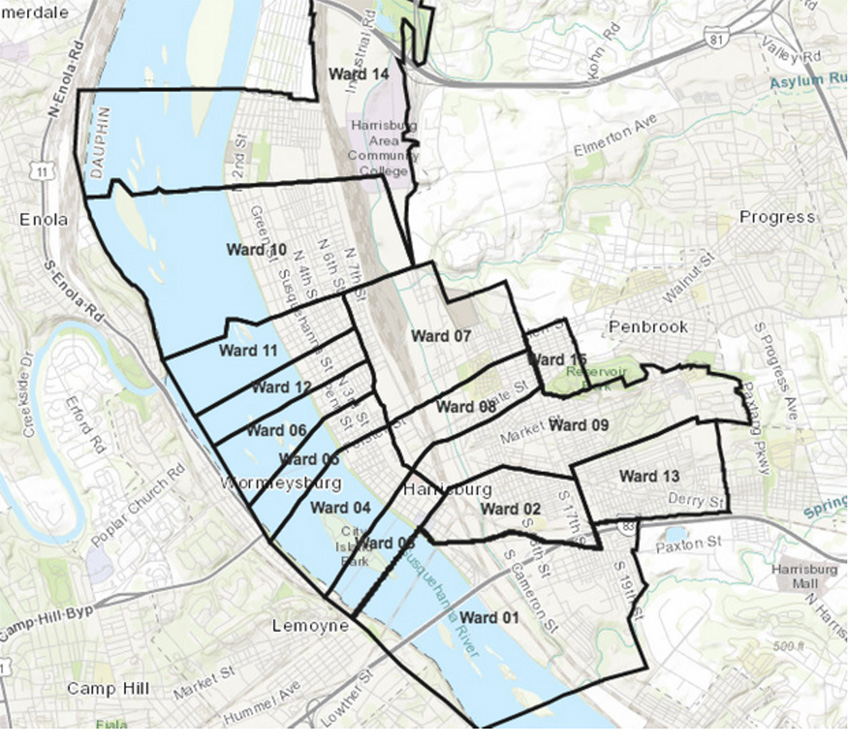
Most of Midtown Harrisburg is divided into wards 5, 6, 7, 11 and 12. Wards 11 and 12 encompass much of the northern parts of Midtown, separated at Kelker Street.

Ward boundaries in Harrisburg

The Elections Bureau today announced other changes to polling areas in Dauphin County. These include:

  • Londonderry Township, 2nd Precinct, moved from the Londonderry Township Building to the Londonderry Fire Co.
  • Lower Paxton Township, 4th Precinct, moved from Christ Evangelical Lutheran Church to American Legion Post 272
  • Lower Paxton Township, 25th Precinct, moved from Sports City to the Village at Lauren Ridge
  • West Hanover Township, 3rd Precinct, moved from West Hanover Elementary School to the Office of MDJ Lowell Witmer

Voters in the new districts will be receiving postcards informing them of the changes, according to the county. A complete list of polling places in Dauphin County is also available by clicking here.

Continue Reading

ULI Report: Harrisburg’s 3rd Street corridor good, but could be great

One of the commercial centers of the 3rd Street corridor–N. 3rd and Verbeke streets in Midtown Harrisburg.

Harrisburg’s 3rd Street corridor is headed in a positive direction, though it remains a work in progress in terms of redevelopment, economic activity and walkability.

That’s the general conclusion of a just-completed study by the Washington, D.C.-based Urban Land Institute (ULI), a nonprofit research and educational organization that recently examined the corridor from Reily Street in Midtown to Chestnut Street downtown.

“The 3rd Street corridor possesses a great deal of momentum and potential for continued development,” states the report, titled “TLC for Harrisburg’s Third Street Corridor.” “Strategically bridging the gap between the downtown and Midtown neighborhoods can put Harrisburg on the map as a vibrant capital city with a strong urban core.”

ULI visited Harrisburg for two days in April, walking the two-mile stretch then interviewing stakeholders who live, work and own businesses there. Their analysis and report were sponsored by Harristown Development, which owns Strawberry Square, as well as many buildings on S. 3rd Street between Market and Chestnut streets.

The 14-page report lauds the recent redevelopment and adaptive reuse that has occurred along the stretch, praising such places as the Susquehanna Art Museum, Midtown Scholar Bookstore, Midtown Cinema, the Broad Street Market and the Millworks.

However, it states that much work still needs to be done so that the corridor can achieve a fuller potential. It cites three specific challenges:

  • “Dead Zones”: Many buildings have been restored, but many have not. There is still too much blight and too many empty storefronts along the corridor, creating areas of inactivity.
  • Forster Street: Forster Street is too wide, busy and inhospitable, cutting off downtown from Midtown and deterring pedestrian activity.
  • Aesthetics: Aesthetics are inconsistent. Some areas appear pleasant, while others do not, both in terms of streetscape and the condition of structures.

The busy intersection of N. 3rd and Forster streets, cited in a recent report as an impediment to improving the 3rd Street corridor in Harrisburg.

The study then offers a variety of recommendations, such as incentivizing homeownership, encouraging pop-ups in empty storefronts, increasing police visibility, enforcing maintenance codes, improving the streetscape and better connecting downtown and Midtown.

Two suggestions stand out as especially ambitious.

The first recommends improving the intersection of N. 3rd and Forster streets by employing traffic-calming measures, making it more pedestrian-friendly and possibly reducing the number of lanes. The second proposes forming a “Third Street Coalition,” which would help promote, brand and advocate for the corridor.

“[The study} accomplished what I thought it would, which is to highlight the corridor and promote collaboration,” said Brad Jones, CEO of Harristown. “It highlighted a lot of the progress here, but showed there’s a lot of opportunity to grow and improve this corridor.”

Click here to read the report: Harrisburg Third St Corridor TAP Report, web final 2

Disclosure: TheBurg is located along the 3rd Street corridor. Editor-in-Chief Lawrance Binda offered input for this study as a “stakeholder participant.”

Continue Reading