State grants medical marijuana permits to two new Harrisburg dispensaries.

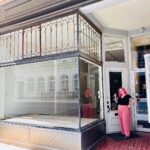
Harvest of SouthCentral PA LLC was granted a permit to open a medical marijuana dispensary at 2500 N. 6th Street in Uptown Harrisburg, the site of the historic Camp Curtin fire station. (Image courtesy of Creative Commons.)

Two medical marijuana facilities have been approved to open their doors in Harrisburg in 2019, thanks to permits granted today by the state Department of Health.

Harvest of South Central PA, LLC and Local Dispensaries, LLC received permits to operate sales facilities in uptown Harrisburg and South Allison Hill, according to a press release issued by Gov. Tom Wolf’s office this morning.

In all, the state granted 23 permits to dispensaries across the state as part of the second phase of its medical marijuana program, which was signed into law in April 2016. The new facilities will bring the total number of dispensaries in Pennsylvania to 79.

Once they’re fully operational, the dispensaries can sell state-approved products to card-carrying medical marijuana patients. Pennsylvania dispensaries are currently allowed to stock marijuana oils, pills, topical creams and tinctures, as well dried flower and other plant forms that patients can smoke or vaporize.

The Arizona-based Harvest listed the address of its new dispensary as 2500-2504 N. 6th Street in Uptown Harrisburg, the site of the historic Camp Curtin fire station.

That property is currently occupied by Camp Curtin BBQ. The restaurant’s owners could not be reached for comment today.

Ben Kimbro, director of public and strategic affairs for Harvest LLC, could not confirm any real estate transactions taking place ahead of the dispensary’s arrival.

Kimbro said his company must consider local zoning and permitting regulations when evaluating sites for their dispensaries, as well as proximity to potential patients.

He said the facility will open in 2019, once Harvest has obtained local permits and completed site design plans, and could create up to 20 new jobs.

Harvest employees manage product inventory and consult with patients, Kimbro said. All “patient specialists” receive an intensive education in physiology and marijuana terminology so they can help patients find the best products for their ailments.

Harvest was also granted permits for facilities in Reading, Scranton, Shamokin, Johnstown and New Castle, Pa.

“We see Pennsylvania writ large as a great market,” Kimbro said. “Its population centers, the ages of its population and the patients Pennsylvania has chosen for the program — all of it appeals to us a lot.”

The Lehigh Valley-based Local Dispensaries LLC proposed a location at 137 S. 17th Street in South Allison Hill, an undeveloped lot across from the Hamilton Health Center.

Harrisburg mayor Eric Papenfuse said that city officials have met with representatives from both organizations, and welcomed the news that they would open for business in underdeveloped corners of Harrisburg.

“Their business plans are solid, and both projects will create much-needed jobs while spurring economic development in corridors of the city that need it,” Papenfuse said.

Local Dispensaries could be immediately reached for comment today.

A third applicant from the south-central region, GTI Pennsylvania LLC, was also granted a permit for a new facility in Mechanicsburg.

GTI currently operates RISE Steelton, the closest dispensary to Harrisburg. Dispensaries in Enola and Carlisle opened last year under Phase I of the medical marijuana rollout.

“The permitting of these locations as part of Phase II of the medical marijuana program will ensure more people have access to medical marijuana close to home,” Secretary of Health Dr. Rachel Levine said today. “This step continues the growth of our scientific, medically-based medical marijuana program.”

The Department of Health received 180 applications for its Phase II permits, which it evaluated using a scorecard with more than a dozen criteria.

In addition to business and facility plans, dispensary permit applicants must explain how they will transport, store and secure their product inventory. They must also submit diversity plans and show that their facility will have a positive impact on its community.

Applicants must also pay a non-refundable application fee of $5,000, as well as $30,000 permitting fee and proof of $150,000 in start-up capital.

Pennsylvania’s medical marijuana program allows patients suffering from 21 serious medical conditions – including glaucoma, HIV/AIDS, Huntington’s disease, Crohn’s disease and multiple sclerosis – to purchase marijuana products at licensed dispensaries.

Patients must obtain a medical marijuana identification card from one of 945 approved physicians. About 66,000 Pennsylvanians have active identification cards, according to the Department of Health.

This story was updated at 5 p.m. on Tuesday, Dec. 18 to include comments from Ben Kimbro.
Continue Reading

Local attorney, non-profit executives appointed to Harrisburg’s financial oversight board.

Democratic state lawmakers have appointed three members of Harrisburg’s newly created Intergovernmental Cooperation Authority (ICA), which is charged with overseeing the city’s finances beginning in 2019.

Audry Carter, Kathy Speaker MacNett and Tina Nixon were all appointed to the five-member oversight board this month, according to government spokespeople.

As members of the ICA, they will control a $100,000 annual budget, approve a five-year financial plan for Harrisburg, and review annual budgets and quarterly financial reports for the city through 2023.

Appointing power to the ICA lies with five members of state government: the governor, president pro tempore of the Senate, minority leader of the Senate, speaker of the House and minority leader of the House.

President Pro Tempore Joe Scarnati and House Speaker Mike Turzai are expected to make their appointments in the new year.

The ICA was a requirement of House Bill 2557, which allowed Harrisburg to retain its taxing authority for five years after exiting Act 47, a state oversight program for financially distressed cities. The ICA will dissolve when Harrisburg’s taxing authority expires in 2023.

Appointees must live or own a business in the city and must have financial management experience. They cannot work for state government, which significantly limits the number of eligible residents in Harrisburg.

Italian Lake resident Audry Carter was appointed by Gov. Tom Wolf, his spokesman confirmed on Monday. Carter’s resume lists her as the principal of her own consulting firm, which provides management and fundraising guidance in the nonprofit, educational and healthcare fields. She has also managed fundraising campaigns and donor relations programs at hospitals and universities.

She currently serves as the vice chair of the Pennsylvania College of Art and Design and as the president of TheBurg Foundation, which provides marketing grants to nonprofits and acts as a fiduciary agent for several community organizations.

Speaker MacNett, a labor relations attorney at Harrisburg-based Skarlatos-Zonarich law firm, was appointed by House Minority Leader Frank Dermody. A resident of downtown Harrisburg, Speaker MacNett sits on the steering committee of Capital Area Neighbors and is on the board of the Harrisburg Catholic Elementary School.

Senate Minority Leader Jay Costa appointed Tina Nixon, vice president of mission effectiveness and chief diversity officer at UPMC Pinnacle in Harrisburg. Before she joined Pinnacle in 2015, Nixon was the CEO of the YWCA of Greater Harrisburg. Her resume touts more than 25 years of experience in fundraising, marketing and communications in the nonprofit sector.

Nixon was appointed by Gov. Tom Wolf to serve on the Pennsylvania Commission on Women and also sits on the board of the Pennsylvania STEAM Academy, a charter school that has applied to open in the Harrisburg school district in 2019.

ICA members are appointed to serve five-year terms, but they can be replaced if there is electoral turnover among appointing authorities.

The state secretary of the budget and Harrisburg’s finance director will also sit on the ICA as non-voting members.

Once it’s fully populated, the ICA must hire an executive director, who will earn up to a $100,000 salary. The director has 60 days to draft a formal agreement between the ICA and Harrisburg, granting board members broad access to the city’s financial data.

When the ICA and the city enter their agreement, Harrisburg can petition the state Department of Community and Economic Development to release it from Act 47.

Harrisburg officials expect that day will come in spring 2019.

Continue Reading

Harrisburg School Board director Melvin Wilson passes away.

Harrisburg School Board president Danielle Robinson (left) and former director Melvin Wilson (right.)

The president of the Harrisburg School Board choked back tears tonight as she announced that board director Melvin Wilson died over the weekend.

Wilson passed away suddenly on Sunday, Dec. 16, board president Danielle Robinson said. She did not disclose his cause of death.

“He will be missed,” Robinson said during her emotional announcement, which she delivered at the beginning of the board’s December meeting.

Wilson won a seat on the Harrisburg school board in 2015 and was up for reelection in 2019.

During his tenure, he served as the board’s delegate to the Capital Area Intermediate Unit, Harrisburg Area Community College and the Dauphin County Technical School.

A bouquet of flowers lay at Wilson’s empty seat at tonight’s board meeting.

The board recognized him with a prayer and moment of silence, as they also mourned the recent deaths of two students, Kobe Santiago and Donnell Williams, and a member of the district’s teaching staff.

State law requires the Harrisburg School Board to appoint Wilson’s replacement within 30 days. Robinson did not announce any details of the appointment process tonight.

Continue Reading

Following church consolidation, Derry Street UMC leaders fight for right to stay in South Allison Hill.

Derry Street United Methodist Church at 1508 Derry Street is one of 10 Methodist churches in Harrisburg scheduled to close its doors on April 21, 2019.

Derry Street United Methodist Church may draw 80 to 100 worshippers to Sunday morning services on any given week – a far cry from its membership a few decades ago, when many Methodist churches counted hundreds or thousands of congregants.

But by Bill Jamison’s estimate, the church on 15th and Derry streets serves more people now than ever before.

Through its nonprofit Allison Hill Ministries, the church houses a free after-school program and summer enrichment camp for children, a food pantry, clothing closet, parenting and ESL classes and a community garden.

Founded in the 1860s in the heart of South Allison Hill, Derry Street UMC ministers to one of the poorest and most diverse pockets of Harrisburg. Its neighbors are black and brown; they’re immigrants, migrants and refugees speaking Spanish, Arabic, Mandarin; and the vast majority live in deep poverty.

Jamison and other leaders at Derry UMC aren’t sure where these patrons will go under a new plan from the Susquehanna United Methodist Conference, which announced this week it would close church buildings and consolidate its 10 congregations in Harrisburg.

The announcement came after the conference found that fewer than 400 people regularly attend services at any of the 10 congregations in the city, according to conference Communications Director Shawn Gilgore.

In a letter to congregants on Monday, the conference said that Methodist churches have watched their congregations age and shrink in size over the past decade. Combined with the costly upkeep of church buildings, paltry membership rates made it impossible to sustain properties and clergy for multiple congregations across the city.

Conference leaders are asking Harrisburg Methodists to attend the 29th Street Methodist Church in Paxtang, 14 blocks east of Derry Street UMC, while its leaders prepare to dispose of 10 church properties across the city. They expect all those churches, including Derry Street UMC, to close on April 21.

But members of the Derry Street UMC community aren’t sure they can relocate their programs without alienating patrons. They’ll hold a call to action meeting this Sunday, Dec. 15, at 10 a.m. in their church sanctuary.

Representatives from the Susquehanna Conference will be in attendance, Gilgore confirmed, as Derry Street parishioners make the case for keeping their ministries at 1508 Derry St.

“People around here are going to suffer”

The Susquehanna Conference began to develop its consolidation plan this summer, according to Gilgore. Though it was met with some apprehension when it was announced this week, he said that most of the response from the community has been positive.

“We definitely understand this is a bold step,” Gilgore said. “But we want people to know the ministry of the church in Harrisburg is not ending. We need to take a step back and say, ‘In 2019 and in the future, what can we do to best position ourselves in the city?’”

Eventually, the conference hopes to establish a single house of worship with five campuses in uptown, midtown and downtown Harrisburg, Allison Hill and Penbrook, Gilgore said.

These campuses could be located in mixed-use spaces with community partners, rather than traditional church buildings, he said.

Gilgore said that each congregation in Harrisburg has input on the consolidation. But Jamison, who’s worked from Derry Street UMC for 10 years as the leader of Allison Hill Ministries, said his church community was “dumbfounded” by the conference’s decree.

He also rejected the view, expressed in the Dec. 10 letter, that “churches in Harrisburg have neglected to maintain relationships with the neighborhoods we once served,” and insisted that it’s wrong to evaluate a church today based on its Sunday morning crowds.

In its transformation from a place of worship to a neighborhood social safety net, Derry Street UMC exemplifies the trends that churches have followed in recent decades as religious affiliation among Americans has plummeted. Many churches today offer a gamut of programs — such as soup kitchens, 12 Step meetings, parenting classes and day care — that extend far beyond Sunday mornings.

From the basement of Derry Street UMC, Jamison’s Allison Hill Ministries offers an after-school program that serves 32 children every day, as well as a free summer camp that enrolls 40 children a year. Students follow a curriculum designed by Jamison that includes such topics as oceanography, anthropology and Native American history, and take field trips to museums in New York, Washington, D.C., and Philadelphia.

Most of the students are enrolled in Harrisburg’s Scott and Melrose elementary schools, which are both walking distance from the church.

More than 170 families patronize the church’s food pantry each month, Jamison said, and a typical Thursday finds 200 people lining up for fresh produce from its Pan Pantry program. People who need food or clothing can sort through donations to the church’s clothes closet. Just this morning, a woman speaking Spanish came to the church basement to retrieve a donated high chair.

“The word I got was, ‘If they are hungry, feed them. If they are naked, clothe them,’” Jamison said, evoking a well-known Bible verse from the book of Matthew. “But that means you have to be where the hungry are. You have to be where the naked will go. We’re here because this is where the need is.”

James Byrd, who stopped by Derry Street today to collect two donated bowling balls from its clothes and furniture closet, said that the church draws most of its patrons from within walking distance. He’s not sure they’ll maintain a relationship with the Methodist Church if they have to travel to 29th Street.

The church counts many seniors among its members, he said, and many of the people it serves cannot afford bus fare or cars. Others may be fearful of venturing to a new neighborhood.

“A lot of people around here are going to suffer,” Byrd said. “How are people going to get to a new location? What will we do for children using after-school programs? I know for a fact this church does a lot for this small community.”

While the Susquehanna Conference counts attendance at Sunday morning services, it doesn’t track enrollment in other church-based programs, Gilgore said.

He added that the Susquehanna Conference supports all existing church ministries and will provide logistical and financial assistance to those that must relocate. They’ve already found a new home for a Camp Curtin Methodist Church soup kitchen in the neighborhood’s YMCA, he said.

Gilgore also said that the conference plans to offer transportation to new church locations under the consolidation plan. Details of those arrangements will be under development throughout the spring.

As Jamison sees it, Derry Street UMC’s location isn’t just practical. He thinks its constancy buoys a population that’s all too familiar with upheaval and disruption.

“Old buildings are a pain, but one of our strengths is that we’ve been on this corner for 150 years. We’re a landmark,” Jamison said. “One of the nice things is that there’s some edifice, some tradition that we can hold on to and find stability – particularly in a migrant community.”

Since the Susquehanna Conference owns the Derry Street church property, its leaders have final say on its fate. Jamison called himself a realist, not a pessimist, and said he isn’t sure the campaign to save the Derry Street church will succeed.

“In my experience, when hierarchies make up their mind, they have the say,” Jamison said. “But we’ll see if I’m right or wrong.”

Continue Reading

Harrisburg School Board hears charter application for midtown elementary school.

Pennsylvania STEAM Academy has proposed opening a k-2 charter school in the HACC Midtown 2 building on N. 3rd Street in 2019, with plans to expand with k-8 offerings.

A new elementary charter school could open its doors in Midtown Harrisburg next year, if it gets the approval it seeks from the Harrisburg school board.

The Pennsylvania STEAM (Science, Technology, Engineering, Arts and Math) Academy tonight presented a charter application to the school board at a public hearing in the district’s Lincoln Administration Building.

Only three board members attended the hearing, which was recessed after 90 minutes and will reconvene in January.

The presentation was led by former Pennsylvania Secretary of Education Carolyn Dumaresq, a founding board member of the PA STEAM Academy. Dumaresq explained that the school would offer small classes and a rigorous curriculum in STEM fields, as well as a deep emphasis on language arts and literacy.

If Harrisburg grants the five-year charter application, the STEAM Academy would open at the HACC Midtown 2 Academic Building, 1500 N. 3rd St., in fall 2019 for grades K-2. The school would add a grade of instruction every year, allowing the incoming cohort of 2nd-graders to progress through 6th grade by the time the charter expires in 2024.

HACC currently occupies Midtown 2, but the 15-year lease on the building expires in June 2022, and HACC announced in March that it would not renew it. The college plans to start moving some programs out of the building as early as next year.

As a public charter school, enrollment at PA STEAM Academy would be free, paid for by students’ school districts. Harrisburg students would have first priority for the 120 enrollment slots. If the school received applications for more students than it could serve, it would select students through a lottery system.

Enrollment would only be open to students from other districts if the school could not fill its seats from within Harrisburg.

The school would also have a research component, Dumaresq said, serving as a testing ground for innovative curriculum programs that could raise student achievement across all of the Harrisburg school district.

“We would be able to look at our programs, look at student achievement, and say ‘this works’ and take the model [to other schools],” Dumaresq said. “A school district the size of Harrisburg can’t implement things this big all at once.”

Dumaresq said that STEAM Academy would only implement curriculum programs that have already shown promise in other schools. The academy would also leverage partnerships with colleges and universities, nonprofits and local businesses and government agencies, she said.

Students would start their school day at 8:15 a.m. and dismiss at 3:45 p.m., according to a sample daily schedule provided during the presentation. They would receive 120 minutes of language arts instruction, one hour each for math, science and engineering instruction, and 40 minutes for creative arts.

Students would also take classes in computer science and coding, social studies and Spanish language, Dumaresq said.

Eventually, the school hopes to serve grades K-8. Dumaresq said that the board does not intend to offer high school instruction, since they envision the STEAM academy as a feeder into Harrisburg’s Sci-Tech High School.

The STEAM academy submitted its charter school application to the Harrisburg school board on Nov. 13. The board had 45 days to schedule a public hearing and now has 45 more days to hold a second hearing and a vote, according to Pennsylvania’s Act 14.

School board directors will be able to ask questions of the charter school board at the next hearing in January. Tonight’s hearing allowed the STEAM Academy board to present their application and field questions.

During a public comment session before the meeting, Harrisburg Mayor Eric Papenfuse spoke strongly in favor of the charter application, citing pubic demand for quality schools and the “clear strength” of the application.

Harrisburg school board President Danielle Robinson said that scheduling conflicts prevented more of her colleagues from attending tonight’s hearing. They all have printed copies and PDFs of the charter application, she said, and will also receive transcripts from tonight’s hearing.

Since the board was only receiving information tonight, and not deliberating or voting, the lack of a quorum of members did not constitute a violation of the Sunshine Act, according to the hearing’s presiding officer Allison Peterson of the Levin Law Group.

The school board will vote on the STEAM Academy charter in February, Robinson said. If the board rejects it, Dumaresq said that she would appeal their decision to the Pennsylvania Charter School Appeal Board, which she chaired as state secretary of education.

Dumaresq has behind her a star-studded board of directors, whose members include lobbyists, developers, veteran educators and executives in the finance and nonprofit sectors. The following roster of board members, founding members and charter development consultants was provided at tonight’s presentation:

• Jenny Gallagher-Blom, director of operations at the Salvation Army of Harrisburg
• Kirk Hallet, founder and director of the Joshua School and the Joshua Center
• Susan Kegerise, former superintendent of Susquehanna Township School District
• Doug Neidich, CEO of GreenWorks Development, owner of the HACC Midtown 2 building
• Tina Nixon, an executive at UPMC Pinnacle
• Rocco Pugliese, president of Pugliese Associates
• David Skerpon of the Education Policy and Leadership Center
• Ron Tomalis, a former education advisor to Gov. Tom Corbett
• Michael Wilson
• Kathleen Blouch, a curriculum consultant
• Yvonne Hollins, executive director of the Boys and Girls Club of Harrisburg
• Robert O’Donnell, senior fellow at the Commonwealth Foundation
• David Schmidt

The Harrisburg school district currently grants charters to three schools: Sylvan Heights Science Charter School, the Capital Area School for the Arts (CASA) and Premier Arts and Science Charter School.

The board voted in August to revoke the charter of Premier Arts and Science after lawyers found the school had inflated its enrollment and overbilled the district.

The last new charter application before the board was for an arts-focused school that would have opened in the former Bishop McDevitt campus on Market Street. It failed 6-3 in a February 2017 board vote.

Tonight, Harrisburg Superintendent Sybil Knight-Burney said she had not yet done an intensive reading of the STEAM Academy application, but said it looked “very promising.”

Continue Reading

Pre-built police substation arrives in South Allison Hill.

The fully assembled Harrisburg Police Substation at 15th and Drummond Streets in South Allison Hill. Tractor trailers delivered the modular building in segments today, which where lifted on to the building foundation by a crane.

Four oversized-load tractor-trailers delivered the new Harrisburg police substation to its site in South Allison Hill this morning, where the prefabricated units will be assembled ahead of the station’s anticipated opening in early 2019.

The modular units began arriving at the site at S. 15th and Drummond streets at 10:30 a.m. and were assembled by early afternoon. Once the units are fully affixed to the foundation, crews will outfit the interior with plumbing and electricity.

Construction should be completed on Feb. 11, Mayor Eric Papenfuse said.

The new substation, built on the site of a long-shuttered police precinct that was demolished this summer, will house the city’s community policing unit during the day, as well as uniformed patrol officers assigned to South Allison Hill through the evening and early morning, Papenfuse said.

“This area has always been a hotspot for crime,” Papenfuse said, adding that the location would bolster the city’s economic development projects in the nearby MulDer Square neighborhood.

The $20 million MulDer Square project aims to revitalize a section of South Allison Hill near the Mulberry Street Bridge by rehabbing dilapidated housing into affordable homes and apartments.

The city hopes that a stronger police presence in the neighborhood will encourage more investment and home ownership, Papenfuse said.

The South Allison Hill substation has been in the works since 2016, when the police bureau first said they would re-open a defunct precinct on S. 15th Street. Since then, they scrapped plans to renovate the existing, long-shuttered precinct building and also scaled back a proposal to staff the precinct 24 hours a day.

City Council allocated almost $1 million in the 2018 budget for the construction of a modular substation building, which offered lower costs and faster turnaround than on-site construction, city Engineer Wayne Martin said. The steel-and-brick modules were built in New Holland, Pa., and have a 99-year lifespan.

Harrisburg police closed roads in Harrisburg and limited parking along Derry Street this morning to accommodate the four tractor-trailers hauling the modules to the substation site, where a concrete foundation was already laid. Crews then used a crane to lift the modules into place atop the foundation.

The city hopes to acquire an adjacent parcel for an additional surface parking lot, Papenfuse said today. He expects to make that proposal to council in the new year, once design work is complete.

Continue Reading

Weekend Roundup with Sara Bozich

Happy Weekend!

It’s been a week. Or two. Mercury is not in retrograde apparently, but *something* is going on. That said, I look forward to relaxing weekend. I’m gonna try anyway.

On Friday, we have the GK Visual Holiday Open House — we’re hosting a casual and fun open house starting at 2 p.m. tomorrow at our office in Midtown. Join us!

Saturday is Market Day, and lately I’ve been enjoying taking (rewarding) Bo to the Curiosity Connection at The State Museum of Pennsylvania afterwards, so we may do that. At some point I’ll have to try to start wrapping Christmas gifts. And that night, we’re headed to a holiday party!


What are you doing this weekend?

(more…)

Continue Reading

December Puzzle Solution Keys

Continue Reading

Burg Blog: On Average

Harrisburg’s historic Walnut Street Bridge

Are you feeling exceptionally average?

Ordinary? Middling? Nothing special?

If you live in and around Harrisburg, there’s a good reason for that today and, well, every day, according to a new study by Echelon Insights, an Alexandria, Va.-based research and data analytics firm.

The company just released the results of its “Middle America Project,” which ranked Dauphin County as, statistically, the most typical county in the United States.

“Dauphin County is home to Pennsylvania’s state capital of Harrisburg and is statistically the closest to resembling America as a whole,” states the report.

Echelon drilled down into a host of demographic and other data and gave each of America’s 3,000-plus counties (and similar jurisdictions) a “Middle America score” based upon how closely they compared to national averages.

According to the study, Dauphin County is 99.91 percent “more typical” than all other counties, making it the most-typical county in the country. It mirrors the nation’s averages on a wide range of comparative data—from median household income to median age to education levels.

Echelon said it used “more than a dozen measures” to arrive at its “Middle America score,” which, for Dauphin County, totaled 2,781 points, the most of any county. According to the report, Dauphin County:

  • Has a median income of $54,968 vs. the national median of $57,805
  • Has a college graduation rate of 29.3 percent vs. the national rate of 30.3 percent
  • Has church congregation membership of 47.8 percent vs. the national average of 48.8 percent
  • Voted for Hillary Clinton in the 2016 election by a margin of 2.9 points versus the nationwide tally of 2.1 points.

Another Pennsylvania county—Lehigh—took second place, with a “Middle America score” of 2,772. Scott County, Iowa, Shawnee County, Kansas, and Peoria County, Ill., rounded out the top five spots.

Locally, Lancaster County was closest to Dauphin County on the “Middle America” ranking, coming in at No. 51. Cumberland County was ranked 109, York County 318, Lebanon County 533, Adams County 633 and Perry County 2,024.

What is the least average place in America? According to the study, that title goes to Webster County, W.Va., with a “Middle America score” (along with Hancock County, Tenn., and Douglas County, Mo.) below 400.

However, it wasn’t just poorer, more rural areas that had low scores and rankings.

The same was true on the higher end, with wealthy counties outside of Washington D.C., like Arlington County, Va., Falls Church, Va., and D.C. itself, ranking low, along with places like San Francisco County, Calif., and New York County, N.Y.

So, what does this mean for us—the terribly average residents of the Harrisburg area?

The study implies that we could become national lab rats, as researchers and reporters venture forth from their protected cloisters in D.C., New York, Boston and Chicago to study us in our natural habitat. Will they be shocked to discover we’re not all wearing beige, drinking Bud Lite and watching 3.5 hours of TV daily?

Perhaps, with a wink and nod, we should embrace our new status as the most average place in America.

Come study us. Eat in our way-above-average restaurants. Drink our way-above-average beer and coffee. Visit our way-above-average farmers market. Gaze upon our way-above-average architecture and river. Read our way-above-average community magazine.

As goes Harrisburg, so goes the nation!

Lawrance Binda is editor-in-chief of TheBurg.

Continue Reading

Harrisburg Police Bureau loses majority of new officers over four-year period, Mayor says.

Mayor Eric Papenfuse swore in nine new police officers to the Harrisburg Police Bureau this January. He reported that 41 of the 71 officers who joined HPB since 2014 have left the force.

Harrisburg officials revealed tonight that low salaries and demanding work conditions have led to a “staggering” 58 percent attrition rate in the city’s police bureau over four years.

In a budget hearing at city hall tonight, Mayor Eric Papenfuse reported that of the 71 officers that Harrisburg Police Bureau hired since 2014, 41 have left the force.

The bureau’s current complement stands at 138 officers, according to chief information officer Gabriel Olivera.

Another 33 officers are eligible for retirement in 2020, which could leave the city with a staffing crisis if it can’t improve retention, Papenfuse said.

The bureau does conduct exit interviews with its outgoing officers. According to Deputy Chief Derric Moody, many of them are lured away from the city by the higher salaries and better benefits packages offered by neighboring townships.

Harrisburg’s police salaries start in the $40,000 range, he said, compared to $80,000 in townships on the West Shore.

Public safety Commissioner Thomas Carter said that the pace of police work in Harrisburg is demanding. The force fields 80,000 calls a year, he said, and low manpower across the department leaves little time between assignments.

Moody said most young officers who join the force are eager to learn valuable policing skills in an urban setting. But they also know they can command higher earnings in a different department.

“There’s a big difference between ‘What am I going to learn?’ and ‘What am I bringing home?’” Moody said. “For the size of our department, we can’t compete with smaller ones.”

City officials haven’t proposed increasing police salaries in the new budget cycle.

Moody said that the department does conduct local and regional recruitment efforts and is trying to bolster its ranks of minority officers. But he said that minority officers are in high demand in departments across the country, where leaders are also battling a growing lack of interest in the policing profession.

The bureau plans to host more events to drum up interest in policing careers among local youth, Moody said. He expects to see more officers in city schools in the new year, thanks to a growing community policing program led by community policing coordinator Blake Lynch and Corp. Josh Hammer.

“It’s still a fragile relationship, but these police are able to interact [with students],” Moody said. “It’s just one angle we’re looking at.”

Police leaders also hope that equipping their 90 uniformed patrol officers with body cameras in the new year will help improve public trust in the police force.

The 2019 budget includes a $150,000 allocation for body cameras and data storage equipment. That figure includes a $70,000 allocation in the 2018 budget that the department did not spend.

City officials hoped to launch the body camera program this year. Papenfuse reiterated tonight that the process of testing equipment and drafting a request for proposals (RFP) “took longer than we anticipated.”

The department is having its RFP reviewed by the city’s legal and IT departments, Papenfuse said, and will issue it to vendors by the end of the year.

The police bureau will also open its new substation in South Alison Hill in 2019. The modular station will be delivered to the station site on S. 15th Street this Thursday.

The substation will house the community policing officer, Papenfuse said, as well as officers assigned to the Alison Hill neighborhood from the evening to early morning hours.


Continue Reading