Mayor vetoes city council planning provision for AutoZone.

AutoZone will purchase the vacant lot at 645 Maclay St. from Harrisburg-area developer The Vartan Group, pending approval of its proposals by the city.

Harrisburg Mayor Eric Papenfuse has issued the third veto of his administration, this time against a City Council action that paves the way for a new car parts store in Uptown Harrisburg.

Papenfuse overturned council’s December vote to void unused alleys on a lot at 7th and Maclay streets, which is currently owned by a Vartan Group subsidiary.

The street vacation would wipe so-called “paper streets” off of city planning maps, allowing Vartan to consolidate two tax parcels and sell the property to AutoZone, a Memphis-based auto parts retailer.

AutoZone hopes to build a full-service retail location on the property. The 1-acre lot is currently vacant, save for decorative shrubs spelling out the Vartan logo.

Voiding the paper streets is just the first step in the project’s development process.

Once it purchases the property, AutoZone must submit land use development plans to Harrisburg’s planning commission and city council.

Papenfuse made clear his opposition to the project this fall. He said the site would be better served by dense, mixed-use development than a single-use retail structure.

He urged council in November to withhold the street vacation until AutoZone submitted satisfactory design plans. But council voted 7-0 to grant the vacation request.

Today, Papenfuse said that vetoing that action will give council a second chance to exert pressure on an out-of-town corporation and establish review criteria for similar requests in the future.

Amid an uptick in development projects in recent months, council members have called on developers to make meaningful investments in the local economy, whether by employing local laborers on their job sites or by including affordable units in housing projects.

Papenfuse thinks that council can use street vacations as a valuable bargaining chip with developers. Any leverage council has now will disappear when the project advances as a land use proposal, he said.

Under Pennsylvania’s municipal code, a city cannot deny a property owner’s land use proposal if it conforms with zoning codes. Doing so arbitrarily would open the door to costly legal appeals.

But since the municipal code does not dictate standards for voiding paper streets, city council can use its approval power to coerce terms from developers, Papenfuse said.

For instance, council could ask developers to abide by certain labor conditions or to include a certain number of affordable units in their development plans in exchange for a street vacation, Papenfuse said. But any process council adopts “would need to be clear and fair to all.”

“I think there is an opportunity for city council to establish a review criteria for street vacations linked to the land development process that will help the city achieve some of its goals with regard to contracting and affordable housing,” Papenfuse said. “Historically, I don’t think there has been a clear process, but now we’re going to see renewed development… I would argue they should put a process in place.”

City solicitor Neil Grover declined to comment on the mayor’s legal argument.

The Maclay Street lot is six blocks from the site of a new federal courthouse and state Archives building — two long-awaited projects that are hoped to spur development along the blighted 6th and 7th street corridors.

In November, Vartan Group CEO Ralph Vartan said the AutoZone store would be Harrisburg’s first, market-rate construction project by a national retailer in decades, other than a dollar store in Allison Hill.

The city’s planning bureau endorsed Vartan’s request to vacate the alleys bisecting the lot. Since no property owner can obstruct public streets, even unused ones, it’s unlikely the AutoZone project can proceed until the streets are void.

City council has scheduled a vote to overturn the mayor’s veto at a legislative session tomorrow.
Continue Reading

South Allison Hill businesses restore old storefronts with local grants.

A former bank building at 1300 Market Street will receive thousands of dollars in improvements this year thanks to a facade improvement grant from Tri-County Community Action.

Four historic storefronts in South Allison Hill are due to get facelifts in 2019, thanks to $60,000 worth of grants from a neighborhood nonprofit.

Tri-County Community Action is launching the third year of the South Allison Hill business façade improvement program, a historic preservation and business development effort that helps commercial property owners boost their building’s curb appeal.

Property owners can apply for up to $15,000 to make improvements to the exterior of their retail or office space. The project is part of an ongoing effort to bolster retail corridors on Derry and Market streets, according to TCCA neighborhood revitalization manager Julie Walter.

Walter said that most entrepreneurs in South Allison Hill have low or moderate incomes, and many are immigrants. The façade improvement grants offer a much-needed cash infusion that helps them maintain expensive historic properties.

“This is all about keeping buildings up to code, making sure they last, and supporting small businesses and bringing people into the neighborhood,” Walter said.

Derry and Market streets were among Harrisburg’s busiest commercial corridors in the first half of the 20th century. But discriminatory lending practices and the “white flight” to the suburbs decimated urban retail starting in the 1950s.

As middle-class white residents left urban areas, retail businesses followed, leading to a rise in suburban shopping centers and a decline in downtown storefront retail.

Harrisburg’s first suburban-style shopping plaza, Kline Village, was constructed in 1951. (It recently sold to a New York-based owner who hopes to fill its many vacant storefronts.)

The lull in retail activity led to some deterioration in South Allison Hill’s commercial property stock. Some historical storefronts languished from decades of neglect; others were altered by sloppy renovations.

Today, many of the storefronts along Derry and Market streets house cafés, grocery stores, bodegas and hair and nail salons. Some have been converted into office space, such as the site of the Latino Hispanic American Community Center at 1317 Derry St.

One of the aims of TCCA’s facade improvement program is to restore the historic properties to their original condition.

In the 1930s, the current LHACC office space housed Ellis Confectionary, a family-owned business offering homemade candy and ice cream. Thanks to a TCCA grant, the property recently got new doorbells, lighting fixtures and windows thanks to match details shown in archival images.

TCCA also helped renovate a property at 1325 Derry St., the old site of Kitzmiller’s Pharmacy that later housed Tacos La Barca taqueria. A TCCA grant allowed the property owners to paint the façade and remove patches of vinyl siding.

Another grant funded a dramatic renovation of a bodega at 1422 Derry Street, which is currently being renovated to become a new restaurant. The facade improvements included a fresh coat of paint and new lighting and windows.

1422 Derry Street before (left) and after (right) it was renovated using funds from the facade improvement program.

Grantees must follow TCCA’s design guide when making changes to their properties. Walter also researches historic images of properties to guide renovations.

TCCA launched the façade improvement program in 2016 with funds from the Wells Fargo Regional Foundation, which allowed them to update two buildings. They awarded two grants in 2017 and 2018, using money from Impact Harrisburg and the Neighborhood Assistance Program, an initiative under the Pennsylvania Department of Community and Economic Development.

The grant capacity will double in 2019 when TCCA gives four awards to neighborhood businesses.

TCCA has already given one award to the owners of 1300 Market St., a historic bank building that houses Capital Area Head Start. The funds will allow the owner to clean the building’s stone façade and repoint some discolored masonry.

Façade improvement grants require a simple, one-page application and a low match amount, Walter said. Recipients only have to invest $1,000 in branding to receive up to $15,000 in capital investments.

TCCA staff travel door-to-door on Market and Derry streets to invite business owners to participate in the program. Entrepreneurs who do not own their storefronts must provide a letter from their landlord sanctioning the improvements.

One challenge facing the program is getting out-of-town landlords to sign off on renovations, according to TCCA outreach coordinator Jarvis Brown. But he said most landlords welcome an offer of easy money to increase their property value.

To learn more about Tri-County Community Action’s façade improvement program, visit their website or review the grant application.

Continue Reading

Year-long apartment project set to begin in downtown Harrisburg

Harristown soon will begin an apartment conversion at these two Pine Street buildings.

Work is set to start on one of Harrisburg’s largest residential projects in recent years–the conversion of two downtown office buildings to rental housing.

Brad Jones, CEO of Harristown Enterprises, said his company, in the coming weeks, will begin demolition and construction work at 116 and 124 Pine St., two mid-century office buildings that, together, will have 74 new apartments.

“This is a big project, so we’re happy to get it started,” Jones said.

He expects construction to take all year, with completion in February 2020.

Harrisburg-based Harristown bought the bank-owned building at 116 Pine St. last year for $1.2 million. It will feature 49 one- and two-bedroom units in 54,600 square feet of aggregate space.

The company purchased 124 Pine St. last year from Keystone Human Services, which is relocating, for $1 million. The 30,000-square foot building will feature 25 one- and two-bedroom units with retail space on the ground floor.

Harristown expects to invest some $12 million into the project, along with partners Select Capital Commercial Properties and Don Mowery, Jones said. The architect is Camp Hill-based By Design Consultants, the general contractor is Mechanicsburg-based R.S. Mowery, and the lender is Mid Penn Bank.

Jones estimates that the project will create 125 construction jobs and that, ultimately, the buildings will house more than 100 residents downtown.

Jones said that he expects rents to average about $1,150 per month for one-bedroom units and $1,450 for two-bedroom units. The project includes 19 off-street parking spaces, which will be leased separately.

Harristown also has begun work on the historic Fox Hotel, a 112-year-old building on the corner of S. 2nd and Washington streets in Shipoke, converting it to an eight-unit apartment building.

Plans there call for a mix of one- and two-bedroom units in the 7,000-square-foot structure originally built by hotelier Otto Fox and that long housed Santanna’s Seafood House on the ground floor.

Last year, Harristown acquired the property, which had been empty for decades, from UPMC Pinnacle.

Continue Reading

Harrisburg Police offer new timeline for body camera deployment.

Cpl. Josh Hammer demonstrates body camera equipment at a Sept. 2017 press conference. Police officials say that body cameras won’t hit the streets in Harrisburg until 2019.

The Harrisburg Police Bureau is eyeing a late spring launch for its department-wide body camera program, according to city hall documents released this week.

The police bureau issued a Request for Proposals (RFP) to potential vendors on Wednesday, inviting them to submit cost estimates and specifications for 100 body-worn police cameras and a video storage system.

Bidders must provide detailed descriptions of their camera equipment and IT services, as well as a budget narrative that includes a unit price for cameras and accessories, a price for cloud-based video storage, and a fixed yearly rate for maintenance and support.

The RFP does not state a budget for the new program. The bureau was given $150,000 in Harrisburg’s 2019 budget to purchase body camera equipment, a figure that included $80,000 in unspent funds from 2018.

City officials announced in September 2017 that they would equip the city’s uniformed patrol officers with body cameras the following year.

The program was delayed, however, as police officials tried to determine which specifications they needed in recording and video storage equipment.

Eight officers spent two months in 2017 and 2018 testing prototype equipment in a short-term pilot phase. Police Capt. Gabriel Olivera said in September that no single model suited all the department’s needs.

As a result, Olivera said, it took longer than anticipated to draft an RFP describing equipment specifications.

The resulting RFP outlines dozens of technical characteristics the police will use to evaluate potential equipment—from camera size, weight and portability to options for storage and video playback.

According to the bidding documents, city officials are seeking a storage system that will index footage by officer name, date and time of recording, and type of crime. The cameras must also have built-in audio and video redaction capabilities.

The RFP has already been shared on the city website and be posted in the legal notice section of local newspapers next week, mayor Eric Papenfuse said. Bids are due on Feb. 8.

Proposals will be evaluated by a panel of city representatives, who will select a “short list” of qualified vendors to be invited to city hall for an in-person interview and equipment demonstration.

The panel will evaluate equipment based on ease of use, cost and the vendor’s ability to provide training and technical support.

Vendors that meet the evaluation criteria will be invited to participate in a 30-day testing period starting on Feb. 18.

The city intends to approve a final vendor on March 22 and award a full contract by May 10.

Most public contracts are guaranteed to the lowest responsible bidder, or the reliable vendor who can perform the service on the lowest budget. That won’t be the case for this contract, Papenfuse said.

Legal language in the RFP will allow the city to award contract to the firm of their choice, regardless of cost.

Before the city can deploy the equipment, however, it must hammer out a deal with the Fraternal Order of Police (FOP) that codifies its standards for using cameras and releasing footage.

Papenfuse said that Harrisburg has not formally entered negotiations with FOP but has engaged the union in informal conversations. Those talks will continue as the city develops a new five-year financial plan with its Intergovernmental Cooperation Authority, a five-member oversight board that will be populated this year.

Any agreement with FOP must comply with Act 22, a statute passed by the state legislature in 2017 dictating the times when officers must activate and deactivate their cameras.

Act 22 allows police to record conversations in private residences – something civilians can’t do under the state wiretap law. However, footage recorded under Act 22 is not subject to Right to Know laws.

Police departments have final say over what camera footage will be made public.

Continue Reading

New York realty company buys Kline Plaza, hopes to revitalize shopping center.

Kline Plaza in Harrisburg

Harrisburg’s Kline Plaza sold last month to a New York-based realty company, which hopes to bring new life to the aging shopping center.

Nassimi Realty LLC, based in Manhattan, bought the mid-20th century, low-slung retail and office complex for $8.7 million on Dec. 24, according to Dauphin County property records.

Kevin Nassimi, vice president of leasing, said that the family-run company was interested in the property because “this is what we do.”

“The agent for the seller brought us the opportunity, and it made sense for us,” he said.

The company specializes in multi-unit retail and currently owns 25 million square feet of shopping center space in the eastern United States, including four other properties in Pennsylvania, Nassimi said.

Kline Village, located on S. 25th Street near the city line with Penbrook, is anchored by Giant Food, which recently signed a 10-year lease extension, and includes a Fine Wine and Good Spirits store, a Rent-a-Center and a Family Dollar, in addition to several other stores, a gas station and a state Department of Health walk-in location.

Nassimi purchased the property for about half the price of the last sale. According to Dauphin County, KOP Kline Plaza LLC, another New York-based realty investment group, bought the complex for $17.3 million in 2004.

Kevin Nassimi attributed the much lower sales price to 10 current vacancies in the 240,000-square-foot complex, including two office tenants that recently left.

“That’s a big hit financially,” he said. “That’s a tall task.”

Many Kline Plaza storefronts are empty.

He said that a top priority would be finding tenants for the empty space. To that end, the company will focus on signing “discount-oriented retailers” that can offer goods and services to people who live in the area, he said.

He said the company would consider a wide variety of tenants for the empty office space, which most recently was occupied by government agencies.

Kline Plaza was built in 1950 as the Harrisburg area’s first suburban-style shopping center.

Continue Reading

Weekend Roundup with Sara Bozich

Happy Weekend!

Well, hello 2019. Have ya’ll made resolutions? You can peep ours here if it interests you. I love the fresh start and look at a new year — even if things still kind of feel the same, especially emerging from this post-holiday haze. In our area, there’s no time to waste, as the 103rd Pennsylvania Farm Show kicks off with the opening of the Food Court tomorrow (and I’ll slinging milkshakes for a good cause), then in full force Saturday through next weekend.

There will be notable fewer events this time of year as belts tighten and the air chills. But! We’ll be here each week with the picks we can deliver. Plus, we have a lot of BIG plans for 2019, so be sure you’re on our email list and following on social media. We don’t want you to miss a thing.

What are you doing this weekend?

(more…)

Continue Reading

TheBurg Podcast: Year in Review

Here’s to you, Harrisburg.

TheBurg’s editor Larry Binda and City Reporter Lizzy Hardison are back for one final episode of TheBurg Podcast in 2018. They wrap up the last year in Harrisburg news — from weather events and school board drama to road projects and Act 47 victories.

Stream the episode here, or subscribe to TheBurg Podcast in the Apple or Android podcast apps:

Read Larry’s full 2018 year in review column in the newest issue of TheBurg, which is out on newsstands now.

TheBurg Podcast is released semi-monthly by TheBurg Magazine. It is recorded in the offices of Startup Harrisburg and produced by Lizzy Hardison. Special thanks to Paul Coolley, who wrote our theme music.

Ed note: This podcast was recorded on Friday, Dec. 28, but got stuck in production until Monday, Dec. 31 due to a breaking news event. We hope you enjoy it nonetheless!

Continue Reading

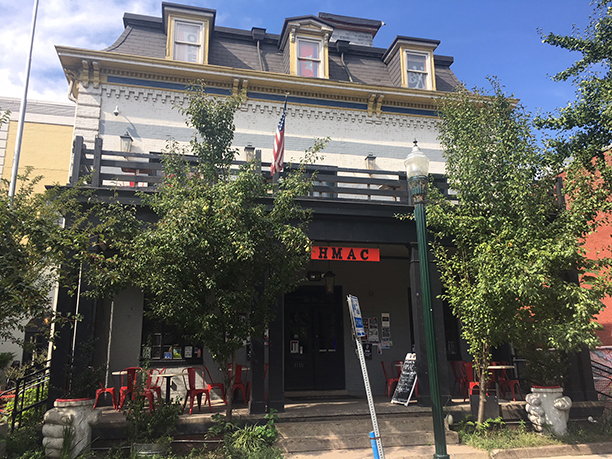
HMAC owner names 15 defendants in defamation lawsuit.

Making good on a promise he issued this summer, the owner of a Harrisburg bar, restaurant and entertainment venue has filed a lawsuit against more than a dozen people who he claims defamed him and his business on social media websites.

John Traynor, owner of the House of Music, Arts and Culture (HMAC) on N. 3rd Street, filed a civil suit on Friday with the Dauphin County prothonotary against 14 individuals and one online news blog.

The suit charges all defendants with one count of defamation against HMAC, one count of defamation against Traynor himself, and one count of tortious interference of business relationships.

The plaintiffs, which include Traynor and HMAC’s parent company, Traynor, Bartlett & London LLC, seek a minimum award of $50,000 in compensation and punitive damages on each count.

The suit says the defendants “acted individually and/or in concert to publish false, malicious and defamatory statements about HMAC and John Traynor on social media websites, public websites and other internet websites” starting in November 2017.

Some of the statements detailed in the suit accuse Traynor of sexual assault. Others characterize HMAC a “safe haven” for rapists and sexual predators.

The lawsuit says that the “absolutely false” claims harmed the public reputations of Traynor and HMAC and interfered with business operations.

The action comes three months after HMAC’s owners filed for Chapter 11 bankruptcy and announced they would sell their business. This fall, Traynor blamed the business’s financial troubles on a social media firestorm that ignited in July, when an HMAC customer claimed that she was drugged inside the bar and later raped at another location in Harrisburg.

That woman, who is named as a defendant in the civil suit, said that HMAC’s staff failed to recognize her as a victim of date rape drugs and asked her to exit the bar, leaving her vulnerable to her attacker.

She posted those allegations on HMAC’s public Facebook page on July 28 and deleted them within an hour, Traynor said. Her original post is included as evidence in the suit Traynor filed this morning.

The Harrisburg Police Bureau investigated the assault and charged a suspect, Michael Ray Wright, with the woman’s rape on July 30. Over the course of their investigation, they found that HMAC’s staff could not have prevented the attack.

But a screenshot of the woman’s post circulated in online community groups. It was also the subject of a story on the Philadelphia-based blog YC.news, which, along with its proprietor, was named a defendant in today’s complaint.

In the Midtown Harrisburg Facebook group, the post generated hundreds of comments, including ones alleging unscrupulous business practices by HMAC and Traynor.

Traynor said that the accusations led some patrons to boycott HMAC, which houses a full-service bar and restaurant in addition to its performance venues.

He also said some of HMAC’s critics contacted bands and booking agents, urging them to cancel shows they had scheduled at the venue.

The episode damaged HMAC’s reputations and revenues, Traynor said. He told TheBurg in September that he would sue those people for tortious interference of contract and defamation.

According to one media law expert, a statement is considered defamatory in a court of law if it is false, causes harm to one’s reputation and causes monetary or emotional damages.

If a plaintiff in a defamation case is a public figure, he or she must prove that defendants acted with “actual malice” by knowingly making false statements that would cause the plaintiff harm.

That burden of proof disappears when the person bringing a defamation suit is a private citizen.

“It’s a less difficult case to make if you’re not a public figure,” said Melissa Melewsky, media law counsel at the Pennsylvania NewsMedia Association. “There doesn’t have to be intent to harm. There only has to be actual harm.”

Some harmful statements are considered protected speech if they are found to be opinions. But statements that accuse someone of a crime are “per se defamatory” if they are not true, Melewsky said.

On Friday, Traynor maintained that all the statements against him were baseless and that they “jeopardized” the livelihood of HMAC’s owners and employees.

Traynor’s lawyer did not return a request for comment.

Most civil suits are settled before they can go before a jury, Melewsky said. The next step is for defendants to answer to the charges against them, at which point both parties will begin to gather evidence in a pre-trial “discovery” phase.

HMAC appeared in court this fall to defend its liquor license before a Liquor Control Board hearing examiner. The PLCB has not yet ruled on the renewal of the license, which expired earlier this year.

Ed Note: In this story, we originally attached a copy of the complaint. We took down the document to further vet it after being alerted that it may contain certain sensitive information.

Continue Reading

January Puzzles and Answer Keys


Continue Reading

Here’s the Scoop: Urban Churn to open ice cream shop in Harrisburg.

Owner Adam Brackbill stands outside the future home of Urban Churn.

It’s a sweet contradiction.

Harrisburg is home to Hershey’s Ice Cream, one of the region’s largest producers, but residents have few choices if they just want to walk down the street for a scoop or a cone.

Adam Brackbill is set to change that.

Come spring, Brackbill plans to open an Urban Churn scoop shop and production center on the 1000-block of N. 3rd Street, in the heart of Midtown Harrisburg.

“I’ve had my eye on that location for years,” said Brackbill, who also co-owns the st@rtup Harrisburg co-working space in Midtown. “You can call it fate or coincidence or whatever, but that place opened up just as I needed to move.”

Brackbill launched Urban Churn after locals told him that the Harrisburg area needed more—and better—ice cream options. The idea intrigued him, as his family had a tradition of making ice cream during family gatherings, including some creative, non-traditional flavors.

So, in 2013, he launched Urban Churn, making handcrafted ice cream in a snug area tucked behind Midtown Cinema on Reily Street. The product caught on, and he soon got orders from numerous area retailers and restaurants, including Arooga’s as the restaurant chain began expanding.

A stand inside the Broad Street Market followed, where, on warm days, a long line often forms for the richly flavored ice cream that includes both traditional flavors like vanilla, chocolate and strawberry and novelties like mango habanero, wasabi, cucumber and melon and a New Year’s-inspired sauerkraut flavor, which has gained some national press.

Needing larger production space, Brackbill moved his operations to a suburban warehouse, but that facility proved to be too big. So, for his next move, he decided to focus on what he really wanted—a central location that would offer room for both production and retail.

Brackbill now expects to open in March at 1004 N. 3rd St., which briefly housed the Savage Habit boutique and, before that, Crabby Choice, which sold Hershey’s ice cream. In addition to 12 flavors (10 permanent, two rotating), the shop will feature homemade waffle cones, shakes, floats, ice cream sandwiches and an Urban Churn specialty, the affogato, an ice cream and espresso treat made with locally roasted coffee beans.

The interior, he said, will be warm and welcoming, with bright colors, a wall mural and long tables to accommodate families and encourage conversation.

“Ice cream is a family thing,” he said. “No one gets a sad face when they eat ice cream.”

Brackbill plans to retain his stand in the Broad Street Market, which he considers his test laboratory for new flavors.

Before he can open his store, though, he needs to make extensive improvements to the building, including upgrades to both the plumbing and electricity. To that end, he launched a crowd-funding initiative today.

“The amount of support we’ve had by the public has been the most encouraging part of this business,” he said. “We know that people will continue to support us so we can get things right.”

Urban Churn expects to open in late March at 1004 N. 3rd St., Harrisburg. For more information on Urban Churn, visit www.urbanchurn.com or the Facebook page. Click here to donate to Urban Churn’s new location crowd-fundraising project.

Continue Reading