E-sports organization selects Harrisburg as host city for 2019 convention

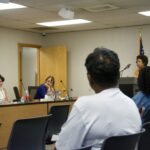
HU President Eric Darr speaks during today’s press conference announcing the 2019 NACE convention.

First, Harrisburg got an e-sports team; now it’s getting an e-sports convention.

This summer, the city will host the 2019 National Association of Collegiate Esports (NACE) Conference, a three-day gathering that will attract 300 to 400 university-level administrators, directors, coaches and others associated with the quickly growing field of e-sports.

At a press conference today at Whitaker Center, NACE Executive Director Michael Brooks said that Harrisburg was selected from more than 100 applicants to be the host city.

“Harrisburg University’s exceptional e-sports program and state-of-the-art facilities made Harrisburg a natural fit,” he said. “The city and surrounding community have been unwavering in their support of e-sports with HU really leading the charge.”

The conference, which takes place, July 17-19, will tackle a variety of subject areas related to e-sports, such as facilities, capabilities, scholarships and legislation, Brooks said. Events will take place primarily at Harrisburg University and at Whitaker Center, which houses the practice and competition areas for HU’s e-sports team, the Storm.

“You’re seeing Harrisburg emerge as a hub for e-sports,” said HU President Eric Darr. “This doesn’t happen without community support and community engagement.”

At 130,000 square feet in total, HU and Whitaker Center have the largest e-sports venue in North America, said Ted Black, Whitaker Center’s executive director.

“This facility doesn’t exist anywhere else in North America,” he said

Mayor Eric Papenfuse said that all the players—the city, Dauphin County, HU and Whitaker Center—worked hard to bring the convention to Harrisburg.

“They’re coming here because of our parks . . . because of our facilities, because of our restaurants,” he said. “We’re really looking forward to hosting the convention this summer.”

Last year, the convention was held in Atlanta.

At the press conference today, Darr added that HU plans to host the second annual Harrisburg University Esports Festival later this year. Last year, the inaugural HUE Fest featured a weekend of e-sports tournaments, a block party and a day of music.

Continue Reading

Weekend Roundup with Sara Bozich

Happy Valentine’s Day, lovers!

We have a bunch of recommendations from you, including how to celebrate at home, a millennial-friendly budget version, and cocktails to attempt. I’m making heart-shaped pasta I bought at Aldi, opening some good wine, and binging the rest of Russian Dolls. We’re actually going out for dinner on Saturday because I a) am a big fat liar, and b) never get to do anything.

Friday is 3rd in the Burg, which is a fun way to celebrate the love for Harrisburg, your friends, and sweetheart. See below for what’s going on.

What are you doing this weekend?

(more…)

Continue Reading

A story of heroism, remorse (and a tank), coming soon to Midtown Scholar.

Next week, you may see an unusual sight in Midtown Harrisburg: a Sherman tank parked right on N. 3rd Street.

Don’t worry—it won’t be there in any official capacity.

The demilitarized tank will serve as an apt prop to help illustrate the life of Army veteran Cpl. Clarence Smoyer, whose life is recounted in a new book, “Spearhead: An American Tank Gunner, His Enemy and a Collision of Lives in World War II.”

The 95-year-old Smoyer, a coal country native, will be on hand at Midtown Scholar Bookstore, along with the author, Adam Makos, and the tank’s owner, Gettysburg resident and collector Frank Buck.

“We’re very excited they’ve chosen Harrisburg for the book launch,” said bookstore Manager Alex Brubaker. “Originally, they were going to launch in Washington, D.C., but they got such a response from Pennsylvania, where Smoyer is from, that they shifted it to here.”

The book recounts Smoyer’s experience as one of the war’s premier tank gunners, known for his uncanny accuracy, according to the book.

Following the near-disastous Battle of the Bulge, Smoyer’s 3rd Armored Division was given a new weapon, the state-of-the-art Pershing tank, just one of 20 deployed in the European theater.

Soon, Smoyer’s unit led the invasion into Cologne, Germany’s “fortress city,” in the largest urban battle of the European war, much of it caught on film by a U.S. Army combat cameraman. For this, he earned the nickname, “Hero of Cologne,” destroying a German Panther tank right at the Cologne Cathedral.

Smoyer’s unit also was featured in the 2014 film “Fury,” which starred actor Brad Pitt and told of the unit’s role in the final days of the war, deep inside Nazi Germany.

In 2012, working off a tip, the book’s author, Makos, found Smoyer living in Allentown, one of the last living members of his unit. He then learned of the latter-day friendship Smoyer had forged with his long-ago enemy—a German soldier behind the gun of an opposing Panzer IV tank.

Makos also learned of the deep remorse that Smoyer felt for the fate of a young German woman, Katharina Esser, whose accidental death during the Battle of Cologne was filmed, footage that Smoyer had watched repeatedly and that had rekindled horrible memories from the war. Smoyer eventually returned to Cologne, where he met the woman’s family, the visit featured recently on “CBS Sunday Morning.”

“This is such a great story,” Brubaker said. “It’s so special that they’re coming right here to the bookstore to launch this book.”

Clarence Smoyer and Adam Makos will appear and sign books on Tuesday, Feb. 19, 11 a.m. to 2 p.m., at Midtown Scholar Bookstore, 1302 N. 3rd St., Harrisburg. The tank will be parked outside of the bookstore. For more information, visit www.midtownscholar.com.

Continue Reading

First Stop, Harrisburg: Fetterman kicks off statewide “listening tour” for recreational cannabis.

Lt. Gov. John Fetterman listened as Dauphin County residents spoke up on the legalization of recreational marijuana.

A packed room and dozens of speakers greeted Lt. Gov. John Fetterman in Harrisburg tonight, as he kicked off his statewide listening tour on the proposed legalization of recreational marijuana.

Despite a snowy evening and long security lines, some 300 people filed into the auditorium of the Harrisburg Jewish Community Center for the first of 67 such events, as Fetterman begins to wind his way through every county in the commonwealth.

For about two hours, Fetterman, joined on stage by state Rep. Patty Kim, listened patiently and respectfully as speaker after speaker rose either in support of or in opposition to the proposal, often sharing with him emotional stories from their lives.

One young man named Darryl said that he was arrested and jailed for possession of marijuana and possession of drug paraphernalia and now can’t find a full-time job because of those convictions.

“That’s why I’m struggling so badly, because of a stupid possession charge,” he said. “It’s time to end this.”

To that end, a few speakers recommended not only legalization but expungement of criminal records for those previously convicted.

Les Stark, executive director of Reading-based Keystone Cannabis Coalition, a pro-legalization advocacy group, said that, in Pennsylvania, about 25,000 people a year are arrested for marijuana possession.

“How many lives have been ruined in Harrisburg alone?” he asked. “Over the next 10 years, will we ruin the lives of 250,000 more Pennsylvania citizens?”

Several speakers identified themselves as users of medical marijuana, which is legal, and testified to the effectiveness of cannabis for treating their conditions.

One man said he was a disabled veteran who suffers from post-traumatic stress disorder. The use of marijuana, he said, has helped relieve his anxiety and is a better choice for treating pain than opioids.

“My life has been changed for the better,” he said. “I can’t say more emphatically that I am for this.”

While most attendees spoke in favor of legalization, some did not.

Several speakers said they feared that legalizing recreational marijuana would lead to greater threats to public safety—from the potential of more car accidents to the possible greater use of harsher drugs.

“My main concern is that I have a grandchild turning 16,” said one man. “My concern is that I believe recreational marijuana is a mind-controlling substance. I’m afraid for her to be driving out on the highway when some other driver’s mind is being controlled by marijuana.”

A few speakers cited their experiences in Colorado, where recreational marijuana has been legal since 2012. One woman said that her sister, a Colorado resident, has complained that marijuana use there has become ubiquitous, while a man, who said he supports legalization, said that Pennsylvania should study and learn from the Colorado experience, which, he said, has been mostly positive.

“On the bad side, does it get into the hands of teens?” he said. “Yes, it gets into the hands of teens.”

Other speakers accused the state of wanting to legalize recreational marijuana as a revenue-raising tool.

“I’m not against medical marijuana, but I am against use of recreational marijuana,” said one man. “I believe the administration just wants to create a new revenue source to tax and spend.”

Throughout the lengthy event, Fetterman said little from his seat on the stage, listening attentively as people spoke their minds.

At one point, he asked would-be speakers to allow a woman, who was holding an infant, to move to the front of the long line. The woman, who said she drove in from Hummelstown, offered a moving story about surviving AIDS then, relatively late in life, giving birth to her baby.

“Medical cannabis helped me survive by the skin of my teeth,” she said. “It can’t be denied to others.”

The listening tour continues on Tuesday at the Newport Public Library in Perry County, then, on Wednesday, moves on to Cumberland County to American Legion Post 109 in Mechanicsburg.

For Fetterman tonight, it was one county down, 66 to go.

Continue Reading

Weekend Roundup with Sara Bozich

Happy Weekend!

A chiller weekend but not chilled. I could really go for some wings one night, I think.

While Saturday morning is for my usual routine and football is officially closed for the season, we’re excited to hang with friends Saturday night and have zero on the schedule for Sunday.

What are you doing this weekend?

(more…)

Continue Reading

More Murals Please: 2019 HBG Mural Fest planned for late summer.

One of the many murals painted during the first HBG Mural Fest in 2017.

Two summers ago, Harrisburg became a far more colorful city, as 18 murals sprung up in the downtown and Midtown neighborhoods.

Now, the group responsible for this surge of large scale, outdoor art is planning a repeat performance, as Sprocket Mural Works has begun organizing the 2019 HBG Mural Fest.

So, the call is out for sponsors, artists and volunteers, with a goal of mounting another 10 murals over 10 days in the late summer.

“We would like to fill in the gaps of our mural trail,” said co-organizer Megan Caruso. “We want to fill in the gaps so we can have a more mural-dense area.”

The trail, Caruso said, begins near the Harrisburg train station and runs for about two miles roughly up 3rd Street, with some additional stops in Shipoke and along the river walk. She said that, while the first HBG Mural Fest laid a great foundation, more density is needed so that people easily can walk from one mural to another.

A mural takes shape during the first HBG Mural Fest.

Caruso said that she’d like to follow the example of Philadelphia, whose mural trail has become a true tourist attraction.

“In Harrisburg, people could get off the train and start their tour right there,” she said, adding that she’d also like to mount at least one mural on Allison Hill. “We want Harrisburg to be a mural-dense city, so they have to be concentrated.”

Sprocket’s impact on tourism has already been noted, as Visit Hershey & Harrisburg last year honored Sprocket with one of its annual tourism awards, “The Best New Event Award.”

This year, the Mural Fest will begin on Aug. 30 and will culminate with a block party on State Street downtown on Gallery Walk day, Sept. 8. Like in 2017, the 10-day festival will include many accompanying events, such as receptions, a community paint day, a bike tour and educational events.

In 2017, the greatest spectacle may have been watching the world-class artists go about their work, as crowds of people gathered around as the murals took shape. Caruso expects the same this year.

“People love to watch the art come to life,” she said.

According to Caruso, Sprocket is still in the process of signing up sponsors for the murals, so they welcome additional support from the community. So far, sponsors include companies such as LCSWMA and Premier Eye Care Group.

Caruso said that the 2017 event exceeded her expectations. Although 10 murals were planned, the group ended up painting 18.

“Hopefully, we’ll stick to 10 murals this year!” she said.


The 2019 HBG Mural Fest will run Aug. 30 to Sept. 8. For more information, including how to become a sponsor, donate or volunteer, visit www.sprocketmuralworks.com.

Disclosure: Megan Caruso is creative director for TheBurg.

Photos for Dani Fresh.

Continue Reading

Harrisburg police demonstrate new protective gear, following donation from UPMC Pinnacle

Harrisburg Police Commissioner Thomas Carter introduced the bureau’s new protective gear, featured on the table.

Harrisburg police today showed off a pile of new protective gear, equipment it purchased with a grant from UPMC Pinnacle.

At a press conference this morning, the city’s police bureau shared samples of new vests, helmets and steel plates, part of about 120 pieces of protective gear that will help protect officers from lethal, high-caliber weapons, according to police Commissioner Thomas Carter.

In total, UPMC Pinnacle donated more than $40,000 for the equipment purchase. That figure includes about $20,000 raised last June from the “3.2 to Protect the Blue” race, which was organized by UPMC Pinnacle emergency room nurses, with the UPMC Pinnacle Foundation donating much of the remainder.

“I had no idea of the dedication and love that these people showed our officers,” said Carter, flanked by UPMC nurses and Harrisburg police officers.

The new gear includes 60 helmets, 40 “body armor level 3 ballistic” protective vests with steel plates and 20 additional steel plates, which can be inserted into the vests. The purchase was made through Royersford, Pa.-based Body Armor Megastore, which contributed another 10 armor body vest sets.

Carter said that the need for the equipment arose last year following the death of U.S. Deputy Marshal Christopher Hill during a raid on a house in Allison Hill. The bureau realized that its helmets and vests were not adequate to protect against today’s powerful firearms, he said.

“UPMC Pinnacle ED [emergency department] physicians and nurses have a great bond with the Harrisburg Police Department,” said Kathy Hogan-Flinn, nursing director of emergency services at UPMC Pinnacle. “Upon learning that they needed money to purchase protective trauma vests and equipment, our nurses sprang into action, and the ‘3.2 to Protect the Blue’ was born.”

Deputy Police Chief Deric Moody said that his officers will not wear the equipment regularly, but will keep it nearby in case it’s needed.

“The equipment will remain in vehicles most times,” he said. “If an officer is dispatched to a threat, they will have it on really quick.”

After the press conference, Mayor Eric Papenfuse stressed that the equipment was not the full body armor “riot gear” that the bureau requested in 2017, after high-profile clashes throughout the city between “anti-Sharia” protestors and “antifa” counter-protestors. That gear was already purchased following a $68,000 allocation from City Council, he said.

Both Harrisburg and UPMC Pinnacle representatives today said that they hoped the gear would help prevent gun-related injuries and deaths among officers.

“They see the tragic effect of gun violence in our country,” Papenfuse said, of the UPMC Pinnacle emergency room nurses. “So, they banded together.”

Continue Reading

In hearing, Harrisburg school district lays out concerns with charter school application

PA STEAM Academy charter school hopes to open in this building in Midtown Harrisburg.

Harrisburg school district administrators tonight presented their assessments of an application for a proposed charter school, asking the school’s founders about everything from financing to curriculum.

The Pennsylvania STEAM (Science, Technology, Engineering, Arts and Math) Academy submitted the application in November and presented it to the Harrisburg school board at a public hearing in January.

The school hopes to open later this year in the historic Midtown 2 (Evangelical Press) building at N. 3rd and Reily streets, which is currently occupied by HACC.

Tonight, district administrators questioned various aspects of the charter school’s application.

The first presenter, Chief Academic Officer Jaimie Foster, focused her report on curriculum, assessment and school design. She highlighted what she perceived to be the school’s lack of a professional development calendar and written curriculum for science, social studies and Spanish.

Other presenters included Director of Special Education Yolanda Goodwin-Humphrey, Coordinator of Assessment, Data and Child Accounting Mary Lou Sypolt, Federal Programs Administrator Damali Brunson-Murray, Interim Director of Human Resources Barbara Richards and Acting Business Manager Bilal Hasan.

Examining the finances of the charter school, Hasan said that he found that expenses exceeded revenue for multiple school years. For the 2022-23 school year, for example, Hasan said that expenses would exceed revenue by more than $31,000.

At first, charter school representatives refuted Hasan’s findings, but later conceded that there were some miscalculations in their data.

Financing, the most significant issue of the night, also carried into the question-and-answer period. Allison Peterson of the Levin Legal Group, representing the school district, asked about such expenses as $50 laptops, $117,000 budgeted for full-time special education and ESL staff and why there was a promissory note, an issue that was left unclear.

At the end of the two-hour-plus-long hearing, Carolyn Dumaresq, a former Pennsylvania secretary of education who is a founding board member of the PA STEAM Academy, thanked administrators for their review and for pointing out “what they believe were some inconsistencies.”

Later, she said that she understood that some areas needed to be clarified. She added that some of the missing information is in the appendices of the application.

She also said that she believed that some questions were “a little unfair,” such as one about the “Future Ready PA Index,” a newly launched state Department of Education measure of school performance. The index wasn’t included in the application because it didn’t come out until after the application was submitted, she said.

“I think that some of the concerns are all answerable,” Dumaresq said. “So, I’m kind of glad that we have the document now, and we can see that.”

The charter school has seven calendar days to submit a concluding document. The document doesn’t need to follow a set form and can include anything the school wants to say about why they believe they meet the requirements of the charter school law. It can’t include any revised documents or supplemental information, but must be based on what the charter school has already submitted.

Dumaresq said the charter school is planning on addressing some of the concerns brought up tonight so the Harrisburg school board can “feel comfortable” that their concerns were satisfied.

There was only one board member present at tonight’s meeting, President Danielle Robinson. The rest were sick or out-of-town. Robinson said she she’d like to see the concluding document and understand the information from both sides before making a decision.

If the school board grants the five-year charter application, the PA STEAM Academy would open at the HACC Midtown 2 Academic Building, 1500 N. 3rd St., in fall 2019 for grades K-2. The school would add a grade of instruction every year, allowing the incoming cohort of 2nd-graders to progress through 6th grade by the time the charter expires in 2024.

HACC currently occupies Midtown 2, but the 15-year lease on the building expires in June 2022, and HACC announced in March that it would not renew it. The college plans to start moving some programs out of the building as early as next year.

As a public charter school, enrollment at PA STEAM Academy would be free, paid for by students’ school districts. Harrisburg students would have first priority for the 120 enrollment slots. If the school received applications for more students than it could serve, it would select students through a lottery system.

Enrollment would only be open to students from other districts if the school could not fill its seats from within Harrisburg.

Continue Reading

Weekend Roundup with Sara Bozich

Happy Weekend!

OMG how is it still January?? Jimi went me a meme yesterday that was like, “January was a tough year but we made it” but we DIDN’T yet! However, I am celebrating the conclusion — and celebrating making it — of January tonight with a wine dinner at the Hilton with my husband. Literally the last, oh I don’t know 3 times we arranged for a sitter, I’ve either had to cancel or had to come home after an hour, so WE’LL SEE. (I see you, seasoned parents, laughing at me.)

Tomorrow maybe we will maybe we won’t take a field trip to Carlisle. On Saturday, it’s my Broad Street Market and State Museum special, this time with a friend! Later in the afternoon, I’ll be joining Diane McCormick at Midtown Scholar to talk about her new book! Join us!

Sunday is the Super Bowl! Go Rams! Our friends at Big Bottom Brewery have some crazy good specials, especially for dining in and checking out their new brews.

What are you doing this weekend?

(more…)

Continue Reading

Religious Movement: Christians in the Harrisburg area are eschewing old church buildings to meet in bars, homes, and renovated commercial properties. What’s driving the change?

On a still Sunday night in January, the Stage on Herr buzzed with alternative rock as concert lights blared on an empty stage. A handful of 20 and 30-somethings, drinks in hand, made small talk as they waited for the evening’s program to start.

They weren’t there for a concert or dance party, which you can find at the Midtown performance venue almost any night of the week. Instead, they were settling in for church.

The Hummelstown-based church The Bridge has held Sunday evening services at Stage on Herr, one of the performance venues within the House of Music, Arts and Culture (HMAC), for the past year. They know that a bar and rowdy concert venue isn’t a typical place to hold a worship service. But according to its leaders, that’s not a problem.

“There’s no boundary on what a church has to look like in our world,” said Alyson Wert, The Bridge’s midtown campus pastor. “When we were looking for a venue, no space was off limits, and no idea was off the table.”

The Bridge is hardly the first church to plant itself in a quirky venue or swap out organ music for contemporary praise songs. A growing number of congregations have left historic church buildings in favor of non-traditional, mixed-use spaces in recent years, participating in what religious leaders say is a broader re-invention of white, evangelical and mainline churches for an increasingly secular American public.

As a recent announcement by Harrisburg’s United Methodist Conference shows, even long-established churches are starting to look for a change in scenery.

The Susquehanna Conference of the UMC said in December that it would consolidate 10 congregations across Harrisburg as it prepares to sell off their historic church buildings. The congregations will meet in one location starting this spring, and church leaders eventually hope to open five new worship locations around the city.

It’s unlikely that any of the new campuses will have steeples or stained glass. Conference leaders are scouting out community centers, schools and entertainment venues instead.

“Basically, it’s taking church out of the context it’s always been in,” said Shawn Gilgore, communications director for the Susquehanna Conference. “We’re looking for spaces and places that that aren’t intimidating to people who are looking for a spiritual community.”

As other churches in the Harrisburg area have already shown, there’s almost no limit on what space can become a house of worship. Since 2005, Harrisburg’s Brethren in Christ Church has met in a converted car dealership on Derry Street. The rapidly growing, Lancaster-based church LCBC—shorthand for Lives Changed by Christ—recently announced plans to purchase an ice skating rink in Mechanicsburg and convert it into a campus with a 700-seat sanctuary. (Its leaders declined to comment for this story.)

Up on Allison Hill, Wildheart Ministries holds fiery, jam-band style worship in an Instagram-worthy mansion on S. 13th Street. The circa-1900 estate is also command central for Wildheart’s community service projects and houses missionaries working in Allison Hill.

Gilgore estimates that the movement of churches out of traditional church buildings has swelled in the past decade. For many churches, the motivations are just as much spiritual as they are financial.

NEW POSSIBILITIES

Data from the Pew Research Center show that the American public is becoming less religious with each passing year. Devout Baby Boomers and Generation Xers still log regular attendance at Christian worship services, but a growing minority of Americans say they do not identify with any organized faith. As a result, overall church membership—especially in white, evangelical churches—has dwindled over the past two decades.

Coupled with the 2008 financial crisis, stagnant or declining membership numbers have forced many churches to find creative ways to cut costs.

The UMC Conference in Harrisburg, for instance, calculated that it had just 400 members across its 10 church locations before it announced its consolidation plans in 2018. That figure was a far cry from its membership rolls a few decades ago, when a single church would likely count hundreds of parishioners.

With only a small congregation to support its maintenance, a historic church building can siphon precious resources from clergy salaries or outreach programs.

These factors have led the UMC conference to drastically reimagine what a church can look like. Unloading 10 of its church properties and leasing newer, smaller spaces will give the church more flexibility to ramp up ministerial programs across the city, Gilgore said.

That’s what happened for Harrisburg’s Brethren in Christ Church, which in 2005 moved from a church building in Bellevue Park to a converted car dealership on Derry Street. The church’s new facility was four times larger than the previous one, opening up new possibilities for worship and outreach.

“Our ministry just went on steroids,” said senior pastor Hank Johnson. “We were doing a lot at the old church, but our capabilities just shot up—not just because of [space], but because new people came in with new ideas.”

Johnson also said that divorcing a church from its physical home can help a congregation ask tough questions about belief and religious belonging. After all, what makes a church a church when all the physical trappings of its sanctuary are gone?

For BIC members, Johnson said, the answer to that question lay in helping their underserved neighbors. The move to Derry Street helped them interrogate their priorities and led to a new wave of outreach programs.

For instance, BIC had long dreamed of providing free medical care to impoverished Harrisburg residents, according to Lynda Gephart, the church’s pastor of congregational life. That never came to fruition at their old space on Chestnut Street. But the energy that arose from their new location, she said, bred a partnership with a mobile medical clinic. To this day, it visits the church once a month to offer patrons free medical and dental care.

Gephart pointed to another, more mundane factor that drove BIC’s real estate hunt: parking. Many inner-city churches struggle to provide patrons with enough of it, she said, but a commercial property or strip mall storefront often comes with acres of surface lots.

Indeed, it’s hard for a church to grow if its congregants can’t find a convenient way to get there. But other religious leaders say that traditional church buildings also can stifle a congregation by alienating non-believers or skeptics.

When The Bridge first launched its Midtown campus in 2016, it held services in an old church building at Green and Cumberland streets. The space met the congregation’s needs well enough, but leaders said they wanted to be in a multi-purpose space that was trafficked by a larger segment of the community.

They scouted locations in Midtown, including the Broad Street Market, the Midtown Scholar and empty storefronts. In the end, they landed in HMAC, where they can host services either in the Capital Ballroom or the Stage on Herr.

Pastor Justin Douglas said that church leaders didn’t blink at the prospect of worshipping in a bar, which, on any other night of the week, may host a death metal band or drag show.

If anything, Douglas said, the unconventional location is a natural fit for a church that prides itself on questioning many long-held Christian rituals.

The Bridge doesn’t offer communion every week, for example, and its leaders don’t operate in a strong hierarchy. They don’t accept monetary offerings during services, for fear of alienating members who can’t afford to give (those who wish to support the church can give online instead.)

But as Douglas sees it, the reimagining of church spaces is part of a broader reconfiguration of Christianity—one that’s taking place as religious leaders try to attract younger, more socially conscious congregants who, for personal or political reasons, may be skeptical of Christian institutions.

He said that many churches today have alienated younger members by taking hardline stances on issues like LGBT rights or abortion. Removing a church from a physical church building, Douglas said, can signal to current and prospective members that a congregation is ready to meet its members where they are—physically, politically and spiritually.

If that means setting up shop in a neighborhood watering hole, he said, so be it.

“I don’t care if you have an alcoholic beverage in your hand in the Stage on Herr instead of a pew in a church with a stained-glass window,” Douglas said. “The destination for us and other churches is the same. But the vehicle can look very different.”

As the UMC Conference starts to scout new locations this spring, its leadership team will try to follow the same method of meeting people in places that are familiar to them, including ones that are secular.

The goal, according to Gilgore, is to make a day of worship feel like a seamless part of a person’s busy routine — not a disruptive chore on a Sunday morning.

“I think people nowadays are looking for new ways to do things they’ve always done,” Gilgore said. “We’re saying, ‘You can still do church this way, but here’s a way that is less intimidating, more welcoming, more community-driven way that’s more like what you do on the other six days of the week.’ We’re taking the church out to the people, in whatever way that takes place.”


Continue Reading