Bull’s-Eye in a Bottle: Winery at Long Shot Farm is Cumberland County’s first vineyard winery.

Tina Weyant has a distinct childhood memory—helping her grandfather, a distiller in Germany, put labels on bottles.

Her grandparents lived on a property encompassing an old monastery with a cellar under the church. It was surrounded by vineyards.

Today, Weyant, 57, has come full circle. For the first time since childhood, she again is surrounded by vineyards. She and husband Jeff own Cumberland County’s first vineyard winery, the Winery at Long Shot Farm.

“We’ve been fermenting fruit, making wine as a hobby for a long time,” said Weyant. “With all of our kids out of the house, we decided to buy a little farm and start a vineyard on the side.”

She described their Lower Frankford Township property as “a vineyard winery” because, although it’s the county’s first winery, technically there are two other businesses operating under winery licenses—a Mechanicsburg meadery and a Carlisle cidery. Wine, mead and cider are all fermented, not brewed.

“As agriculturally rich as our county is, and the fastest-growing county in the state, it’s surprising there wasn’t a winery with a vineyard [until now],” said Aaron Jumper of the Cumberland Valley Visitors Bureau.

But the Weyants took a shot. A long shot, you might say. Armed with a vision, they purchased the 13-acre property 10 years ago and began planting—first blackberries, then grapes.

A white hybrid grape named chardonel was one of the first varieties they planted.

“We’re trying to get good flavors from European grapes, with the humidity resistance of American grapes,” Weyant said, explaining the purpose of hybrid grape crosses.

One son owns a 30-acre farm up the road. A daughter owns 20 acres behind the winery. Collectively, the family tends more than 10 acres of grapes to support winemaking operations.

It’s a family affair—all five children (ranging in age from 21 to 36), own part of the business. All, including spouses and eight grandchildren, are involved “in one way or another,” said Weyant.

“Everyone helps with the harvest and winemaking—it gets intense,” she said. “When the grapes are ripe, you want to capture that and work quickly.”

That’s only natural for a family whose roots are in agriculture.

“I met my husband in agronomy class at Penn State,” she said.

The couple, 30-year residents of the Carlisle area, previously operated a dairy farm, and they’re lifelong gardeners.

Although Tina earned a bachelor’s degree in agriculture, she went on to obtain her master’s in international studies/political science, which she applies in her “day job” as executive director of the World Trade Center in Harrisburg—a position she’s held for 27 years. But her hobby turned serious a few years ago when she earned an associate’s degree in winemaking at HACC.

Meantime, Jeff focused on preparing the property.

He re-pointed all the stonework on their large, 1800s-era barn. A $74,550 grant from the visitor’s bureau provided the shot-in-the-arm needed to convert the barn into a tasting room complete with a deck overlooking the vineyards. To the left, you can see South Mountain in the distance. Dominating the vista to the right is North Mountain, or Blue Mountain. Straight ahead, through the vineyard and to the west, are exquisite sunsets during the winery’s Saturday evening hours.

“To see the winery come to fruition and be part of it, is very exciting,” said Jumper. “We started awarding grants in 2010 basically as a way to help tourism development in Cumberland County. The requirements are that projects either need to increase visitation or enhance the visitor experience.”

To date, the bureau has awarded nearly $2 million in grant money. The program is funded by occupancy (hotel) taxes.

The Winery at the Long Shot Farm is the 29th location on the visitors bureau’s growing Cumberland Valley Beer Trail. It’s the only winery among a cluster of craft breweries.

Pennsylvania ranks seventh nationwide with 270 wineries, which together produce more than 1 million gallons of wine annually. It’s also the fifth-largest grower of grapes in the nation and includes five prestigious American Viticultural Areas (AVAs) noted for specific grape-growing climates or features. The Winery at Long Shot Farm is the only Pennsylvania winery within the Cumberland Valley AVA along South Mountain, stretching from Washington County, Md., into Franklin and Cumberland counties.

Ten wines are currently available, ranging from whites and reds to rosé and fruit wines, including a sweet blackberry wine. Weyant said that the three most popular wines are the white chardonel, the off-dry rosé blend of chambourcin and vidal blanc grapes called Valley Blush, and a red wine called Fletched. In keeping with the “long shot” theme, Fletched mixes three flavors—blackberries, vidal and chambourcin grapes. In archery, an aerodynamic fletched arrow is comprised of three feathers.

Daughter Sam, an artist who also leads the winery’s paint and wine events, designed the winery’s bow-and-arrow logo.

The family’s future plans include events with food trucks, construction of a pavilion and, naturally, more wines. Tina Weyant said that she’s “playing” with Niagara grapes coming into production, as well as Austrian white and purple Concord grapes.

“There’s some science involved, but there’s so much else,” she said, “There’s so much that can happen in nature, so many variables, so much magic that can happen in a bottle.”


The Winery at the Long Shot Farm is located at 1925 McClures Gap Rd., Carlisle, with hours Friday to Sunday. For more information see the winery’s Facebook page.

Continue Reading

A Place to Belong: McCormick Library pilots a new approach to homeless, troubled patrons.

A schizophrenic woman, barred from returning to a homeless shelter. A man talking to “someone that wasn’t visible.”

When librarians get to know their patrons, they recognize signs of distress. Now, a unique intramural partnership bridges the Dauphin County Library System and county Human Services to create new avenues in crisis response.

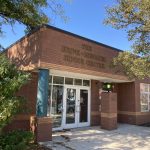
Under the initiative, staff members at McCormick Riverfront Library in downtown Harrisburg have been trained in available county services, including drug and alcohol, crisis intervention, children and youth and mental health. When a patron–or a “member” in library lingo–appears to be in need, staffers call Human Services, which sends a caseworker equipped to help.

The partnership parallels a new effort to offer services focused on the customer—the library visitor. Enforcement of rules remains in place, but with an empathetic nod to the varied perspectives of patrons, including the homeless.

In June, staff systemwide were trained by Chicago homeless shelter director Ryan Dowd in the empathy-based approach he developed to help libraries deal with homeless patrons. When librarians understand that homeless people see things differently, they learn to use terms, tone and body language that prevent situations from escalating into conflict.

Most people see the “obvious things” attracting the homeless to libraries—“warm in the winter and cool in the summer,” Dowd told TheBurg. However, libraries are “about everything that homelessness is not,” offering quiet, activities and “a reprieve from homelessness.”

With the partnership, library officials hope that patrons see Human Services as “a less scary entity, with people that are approachable,” said library Public Services Director Lori Milach. “They shouldn’t be concerned that the government is after them should they have requests for services.”

There’s no need to read the minds of library patrons or profile them by appearance. Patrons are “very open with us,” said McCormick Riverfront Library Manager Lisa Howald.

“Lots of folks will just talk to us about what’s going on with them,” she said. “Part of what I love about working here is the relationships we have with our patrons.”

Relationships drive the initiative.

In the case of the patron conversing with an invisible partner, library staff recognized that he wasn’t his normally chipper self, said McCormick Riverfront Library Supervisor Chris Black. He consulted with Human Services and determined that the situation “could be considered a crisis because the behavior isn’t what we were used to seeing from that individual.”

A Human Services staffer arrived for a chat, but “this person decided they were fine and weren’t really actively seeking help,” Black said. “A lot of times, that’s what we’ll find.”


Egalitarian

The initiative bolsters a Human Services office open to “all the help we can get,” said Director Randie Yeager.

“I don’t care what route we take to get folks connected, as long as they know what resources are available, how to access them, and talk to whoever they’re comfortable talking to,” she said. “There are many, many paths.”

The effort started as a pilot in spring 2019, with plans to expand into Dauphin County Library System’s eight sites.

Librarians say that their new roles converge neatly with their career choices. Libraries “provide the resources that people want to use, whether it’s books or multimedia or computer access or programs,” said Howald. “We’re a completely public and democratic institution. Anyone can walk in here and use our services, and anyone does.”

The importance of human interaction is embedded in library science studies, said Milach.

“With everything we do, they’re all about making that human connection, and the importance of that is because libraries are one of the last places to have that human connection,” she said.

Dauphin County libraries are among those nationwide re-envisioning their spaces as community centers, program-packed destinations and the “third space” that people crave in the internet age, Dowd said. Dauphin County Library System recently announced acquisition of the historic mansion next door to that McCormick Riverfront Library, freeing space that dovetails with a strategic vision for increased STEM and arts programming, as well as the growing Human Service partnership.

Librarians are “really egalitarian” and not just with lip service, said Dowd.

“The libraries I go into are way more crowded than 10 years ago,” he said.

Public investments in libraries are crucial, especially during economic downturns, “because people seek out resources, opportunities, jobs and the ability to connect in a way they probably couldn’t afford to connect,” said Dauphin County Commissioner George Hartwick. The county must “understand who the people are that we serve,” and the library initiative—which has not generated additional costs, participants say—serves that goal.

“We don’t want more burden on taxpayers, and we also want to figure out a way to coordinate and develop services that are not going to be in siloes,” Hartwick said.

Library personnel have developed trust with homeless patrons and others in need, and “wherever that trust exists, it’s a great place to make sure that the information and resources are available,” he said.

Because libraries touch every segment of the community, said Yeager, they “help break down the stigma of needing some type of assistance in any realm.”

Black realizes that he is making a difference, guiding community members toward better quality of life amid their day-to-day struggles to survive. The library, he believes, is “one of the last bastions of freedom, where everyone is welcome to partake in the information that we have.”

“All human beings are looking for a connection with fellow human beings,” he said. “They don’t want to feel like outsiders. They want a place where they feel like they belong.”


The McCormick Riverfront Library is located at 101 Walnut St., Harrisburg. For more information, visit
www.dcls.org/mrl.

Continue Reading

What’s the Problem? Getting a closer look at injuries with musculoskeletal ultrasounds.

The key to fast and effective treatment is an accurate and timely diagnosis. When a patient comes to our Sports Medicine office with pain, before we can do anything, we need to know: Is it a strain? Is something torn? Is this pain a part of a larger problem?

Fortunately, we are armed with a wide range of leading-edge tools to help us make an accurate diagnosis so we can start effective treatment as soon as possible.

One of the most effective—and easiest to use—tools is a musculoskeletal (or MSK) ultrasound. An MSK ultrasound uses existing ultrasound technology, but it is a specialized exam that looks specifically at soft tissue acute and chronic conditions. MSK ultrasound technologists have special training in looking at muscles, some ligaments, nerves and tendons.

Ultrasound is a test that uses reflected sound waves to produce an image of muscles, tendons, ligaments, nerves and joints throughout the body. It does not use X-rays or other types of possibly harmful radiation.

In addition to being safe, it’s easy and painless. This procedure requires little to no special preparation for patients. Just wear loose clothing and remove any jewelry. In some cases, you may be asked to wear a gown.

Otherwise, ultrasound imaging is faster than magnetic resonance imaging (MRI), usually completed within 15 to 30 minutes. And it does not require the patient to remain completely still, nor is it claustrophobic for patients.

Ultrasound images are typically used to help diagnose:

  • Tendon tears or tendinitis
  • Muscle tears, masses or fluid collections
  • Ligament sprains or tears
  • Inflammation or fluid in the joints
  • Early stages of rheumatoid arthritis
  • Carpal tunnel syndrome

Ultrasound is also used to allow sports medicine physicians to do injections safely and more accurately. Injections are used to deliver anesthetics, anti-inflammatories, regenerative medicine treatments and other medications precisely to affected areas.


How It’s Performed

For ultrasound testing, a gel or oil is applied to the skin to help transmit the sound waves. A small, handheld instrument called a transducer is passed back and forth over the area of the body that is being examined. The transducer sends out high-pitched sound waves (above the range of human hearing) that are reflected back to the transducer.

A computer analyzes the reflected sound waves and converts them into a picture that is called a sonogram, echogram or ultrasound.

Depending on the body part examined, you may be seated on an examination table or a swivel chair. For some exams, you may need to lie face-up or face-down on an examination table.

There is usually no discomfort. However, if scanning is performed over an area of tenderness, you may feel pressure or minor pain.

Once the imaging is complete, the clear gel will be wiped off your skin. Then you’re done.

A radiologist, a doctor trained to supervise and interpret radiology exams, will analyze the images. The radiologist will send a signed report to the doctor who requested the exam. Your doctor will then share the results with you. In some cases, the radiologist may discuss results with you after the exam.

MSK ultrasound is becoming a widely used tool for most sports medicine doctors. Athletes often need to obtain a quick and accurate diagnosis. This type of imaging can be used for very common injuries found in sports such as muscle strains, tendon issues, joint pain, bursitis and some bone injuries.

Research shows that MSK ultrasound is very effective to monitor the severity and progress of an injury. As a result, it’s become an important tool to determine if an athlete can return to play.


Important Tools

X-ray and MRIs will continue to be important tools used by orthopaedic specialists and sports medicine professionals. MRIs are excellent for visualizing internal structure of bones or certain joints. X-rays will continue to be used to examine dense tissues in the body, such as bones.

However, MSK ultrasound testing remains a very effective diagnostic tool that is widely available, easy-to-use and less expensive than most other imaging methods. It is safe and does not use radiation, but gives doctors a clear picture of soft tissues.

If you are suffering a sports-related orthopaedic condition and injury, our specialists—using hands-on examination and latest diagnostic tools—will diagnose your condition and develop the best care plan to get you back on your feet.


Kush Patel, MD, and Steven Collina, MD, are sports medicine physicians with the UPMC Pinnacle Bone and Joint Center. For more information, visit www.UPMCPinnacle.com/MSK.

Continue Reading

Making Change: Nearly six decades old, the Harrisburg Coin Club is banking on youth, a new venue.

Kevin Tyler calls coin collecting “the world’s oldest hobby.”

He may be right.

After all, the earliest known currency was struck around 211 B.C.

“They were very crude looking and pounded on a rock,” Tyler said.

The Harrisburg Coin Club isn’t quite that old. It was founded in March 1950 and incorporated in November 1966.

Currently, the club comprises 30 members and meets monthly for numismatic trivia quizzes, member presentations and auctions, show and tell, and hands-on numismatic activities. It also holds yearly picnics in June, holiday gatherings in December and, perhaps most importantly, the annual September coin show.

And, this year, for the first time in its 59-year history, the Harrisburg Coin Show has been expanded into a two-day event instead of just one, and it takes place in a new venue. This year’s event is scheduled for Sept. 28 and 29 at the Scottish Rite Masonic Temple in Harrisburg, a change from its previous location of Linglestown Fire Company #1.

“The nice thing is that we moved the show closer to Harrisburg. We are the capital city’s coin show,” Harrisburg Coin Club President Dan Nettling said. “We wanted to change it to a two-day show because our dealers wanted it. We have one dealer who comes all the way from Watertown, N.Y. Others come from Maryland, Virginia, Ohio and from all over Pennsylvania.”

In total, the show will feature more than 70 display tables, three coin grading companies, a live online auction, and a new Harrisburg Kidz Korner with free T-shirts, games and a “table with a big pile of pennies” for children to peruse, said club Vice President Kevin Tyler, who also handles the club’s public relations and marketing.

The club is focusing on attracting more young people to the annual show because “coin collecting has always been more of a mature hobby due to costs,” Tyler noted.

“That’s the misrepresentation, that has to be an expensive hobby,” he said. “Youths can collect coins that are in circulation. We want to get the youths involved. We’re an educational, nonprofit organization. We believe in teaching the history of numismatics.”

Like many collectors, Tyler’s interest was sparked at an early age.

“I was born and raised in Gettysburg,” he said. “My first coins were Eisenhower dollars that a personal friend of my family gave to me when I was 2 years old. I’m very passionate about the Lincoln cents because Lincoln has always been associated with Gettysburg.”

Nettling said he’s also attracted to “the historical aspects” of coin collecting.

“I’m a historian,” he said. “I collect both coins and medals that commemorate something historic.”

Nettling has been a member of the Harrisburg Coin Club since 1963, or as he put it, “for most of my life.”

The Oberlin native started collecting coins as a student at Swatara Junior High and continued the hobby into adulthood. When he left the area for 25 years for college and the military, his parents made sure to acquire local medals for him that were stuck during that period.

The Harrisburg Coin Club strikes its own limited-edition medals that commemorate various years of its coin show runs. For its first show in 1963, the club minted a silver medal depicting the state Capitol building on one side and the Rockville Bridge on the flip side. In 2006, the club designed a coin that celebrated the 100th anniversary of the Capitol building. The 100th anniversary of St. Patrick’s Cathedral was commemorated in 2007.

For 2019, the club is minting coins featuring a 57th-year design on one side and a depiction of the Scottish Rite Cathedral on the opposite side. The edition is limited to a run of 300 with sequential numbering struck on the side of each coin.

“There’s so much to learn with coins and coin collecting,” Nettling concluded. “It’s the world’s oldest hobby.”


The Harrisburg Coin Show is scheduled for Sept. 28 to 29 at Scottish Rite Masonic Temple, 2701 N. 3rd St., Harrisburg. Hours are 9 a.m. to 4 p.m. Sept. 28 and 10 a.m. to 3 p.m. Sept. 29. Early bird passes also are available. For information, visit www.harrisburgcoinclub.com.

The Harrisburg Coin Club meets the first Thursday of each month at 7 p.m. at the Steelton-Swatara Masonic Lodge, 350 N. Harrisburg St. (state Route 441), Oberlin.

Continue Reading

The Write Stuff: Putting pen to paper in central PA.

As a writer, I’m often asked the question: “How can I get my work published?”

I actually believe that there are other, more important questions for would-be writers to explore.

How do I continuously improve my writing skills? Where are the best venues to network? How do I professionally position myself with editors and publishers? Consider these activities critical to building your professional brand and getting published.


Improve Your Skills 

Like in any professional field, writers need to keep themselves informed about industry trends while honing their own skills. As local thriller author and travel writer Don Helin said, “Writing is an art, but publishing is a business.”

Check out local college-level writing classes through HACC or four-year universities. Karen Hendricks, owner of Hendricks Communications, recommended pursuing a degree in communications or journalism.

“Communications is an important and underrated skill,” she said. “It’s an excellent investment, no matter your field.”

Explore the resources at your local library. Locally, Camp Hill’s Fredericksen Library is a programming powerhouse for writing courses. Local publisher/author Bill Peschel, who broke into writing through newspapers, found free Gale courses at the Hershey Public Library. He cited a particularly eye-opening class by author Steve Alcorn on how the three-act structure works with the scene-and-sequel method.

Horror writer and Sunbury Press editor Cathy Jordan has facilitated classes at both libraries. She also recommended “A Novel Idea,” a monthly series of workshops through Perry County Council of the Arts. Published authors and other industry professionals facilitate the sessions.

You’ll also find concentrated workshops and lectures on writing, publishing and pitching your work at writers’ conferences. Ayleen Gontz helps organize the annual, statewide Pennwriters conference, which covers all genres and skill levels.

“The conference features New York City agents and editors, so it’s worth investing your weekend,” she said. “If you volunteer to help, you can spend extra time networking with them.”


Networking 

Through networking at literary events, you will make valuable connections that can help further your goals. Hendricks, who writes for several area publications, stays in touch by attending publications’ staff meetings and social events.

“You have to be intentional about networking with other writers,” she said. “The energy from other writers connects you with opportunities and nurtures your career.”

Jordan recommended joining the writing association focused on your genre and attending their conventions.

“A writers’ convention is the perfect venue to learn something new,” she said. “They have great classes, and the new friends and contacts you make can point you in the right direction for your genre.”

Critique groups meet regularly to review each other’s works in progress and offer feedback and mentoring.

Novelist Dennis Royer has been active in critique groups for almost two decades. He cited three considerations for getting the most out of the experience. Find a group that has a variety of experience levels and genres, that has members who give genuine and honest feedback, and that runs like a business meeting.

“You’re attending to learn how to write better, so you want honest feedback from attendees who are there to learn,” he said. “It shouldn’t just be a social gathering where you’re looking for pats on the back.”

If no local network resonates with your style and schedule, find one online.

“You don’t have to be an extravert, but you do have to find your network,” Jordan said.


Getting Started

Although there is no one path for writing careers, writers tend to be more collaborative and supportive rather than competitive.

“It’s not only about selling books, but building a community,” Helin said.

Popular ways to establish yourself are through your career, professional associations and volunteer work.

“My advice is to just write,” Royer said. “Don’t worry about how bad your writing might be. Everyone starts somewhere. Join a critique group, and attend conferences and workshops.”

The more you absorb feedback while you network, the better your writing—and the better you’ll be able to tell your story in a way that only you can tell it.

“There isn’t one perfect way of telling a story,” Peschel said. “How you best tell it is your own voice. There’s nothing magical about it.”

Finding a mentor is another part of a good start, and that relationship will help you grow your writing. Through the local PA Horror Writers Association chapter, Jordan found her mentor—a Bram Stoker Award winner!

Susan Ryder, a feature writer and communications professional for two local churches, advised beginning writers to “talk to people, ask questions, and introduce yourself to people.”

At first, you may not have your own ideas about writing topics, but that’s OK.

“Be willing to write what an editor needs, even if it may not interest you,” Ryder said. “It will give you practice and offer opportunities to pitch stories.”

Once you feel confident, try pitching to local venues. Make sure you’re aligning with the “flavor” of the publication. Ryder suggested studying a few back issues to help tailor your pitch.

Try entering contests. It’s an excellent way to garner a title.

Janet Cincotta maintains a weekly blog to keep her memoir-writing on track. In 2015, she won the Central PA Magazine short story contest. Conferences also hold writing contests.

Listening to critiques and working with editors requires a thick skin.

“Expect feedback and story edits, and listen to your editor,” Ryder said.

And, if your work is turned down, don’t take it too hard, Jordan advised.

“Although rejection sucks, don’t take it personally,” she said. “Sometimes, those letters have good advice.”

And don’t let all this intimidate you.

“If you have a story to tell, don’t let it go untold,” Royer said.


Writer Resources

Critique Groups

Pennwriters Area 5 Critique Group
4th Wednesday, 6 p.m.
Foundation Hall
1 Benjamin Plaza, New Cumberland
Contact: Carrie Jacobs at [email protected]

Gettysburg Writing Brigade
Every Wednesday, 7:30 p.m.
O’Rourke’s Eatery
44 Steinwehr Ave., Gettysburg
Contact Jim Rada at [email protected]

Children’s Book Writers Critique Group
3rd Wednesday, 2 p.m.
New Cumberland Area Public Library
1 Benjamin Plaza, New Cumberland

Write On
2nd Saturday of every month, 10:30 a.m.
New Cumberland Area Public Library
1 Benjamin Plaza, New Cumberland
Contact Sue Kerr at 717-802-2594

Midtown Writers Group
3rd Sunday of every month, 1 p.m.
Midtown Scholar Bookstore
1302 N. 3rd St., Harrisburg
www.Midtownscholar.com

Mechanicsburg Creative Writing
3rd Saturday, 7 p.m.
212 E. Locust St., Mechanicsburg

Non-Fiction Authors Association Central PA Chapter
2nd Tuesday, 6 p.m.
Spire AVL Studios
99 Garden Parkway, Carlisle
www.nonfictionauthorsassociation.com

The Genuine Writer
2nd and 4th Thursday, 6 p.m.
Whole Foods Market
1563 Fruitville Pike, Lancaster

Central PA Writers Workshop TM
2nd and 3rd Sunday
Check meetup app for roving location

Lancaster Christian Writers
3rd Wednesday, 9:30 a.m.
Lancaster Alliance Church
210 Pitney Rd., Lancaster
www.Lancasterchristianwriterstoday.blogspot.com


Literary Meetings

Nathaniel Gadsden’s Spoken Word Café
Most Fridays, 7 p.m.
Midtown Scholar Bookstore
1302 N. 3rd St., Harrisburg
www.Midtownscholar.com

Almost Uptown Poetry Cartel
Thursdays, 7 p.m.
Midtown Scholar Bookstore
1302 N. 3rd St., Harrisburg
www.Midtownscholar.com

Central PA Romance Writers
1st Saturday, 10:30 a.m.
Simpson Public Library, Mechanicsburg
www.Cprw.rwa.org


Conferences

Pennwriters Conference (all genres)
Annual conference in May
www.pennwriters.org/conferences

Hippocamp Conference (creative non-fiction)
Annual conference in August
www.hippocamp.hippocampusmag

Lancaster Christian Writers
Annual conference 1st Saturday in April
www.Lancasterchristianwriterstoday.blogspot.com

Catholic Writers Guild Conference
Annual conference in summer
www.Catholicwritersguild.org

The Write Stuff
Greater Lehigh Valley Writers Group
Annual conference in March
www.greaterlehighvalleywritersgroup.wildapricot.org


Adult Ed Classes (non-university)

Perry County Council of the Arts
A Novel Idea
1st Saturday starting in March
Landis House
67 N. 4th St., Newport
www.perrycountyarts.org/a-novel-idea

Gale writing courses at the Hershey Public Library
www.Hersheylibrary.org

Writing classes at the Fredericksen Library
www.cumberlandcountylibraries.org/FRE

Continue Reading

August News Digest

Harrisburg Changes Funds Process

Harrisburg agreed last month to switch up the process of how it distributes its annual allocation of federal housing funds.

City Council unanimously passed ordinances that will substantially change how nonprofit organizations apply for the U.S. Department of Housing and Urban Development’s Community Development Block Grant (CDBG) funds.

Previously, community groups—called “sub-recipients”—applied for grants that were individually approved by council.

Now, the sub-recipients will have to respond to a “request for proposals” that is being issued by the city. All interested applicants then will have to attend a mandatory workshop on Sept. 10 at the city Public Works building and submit their final applications by Sept. 20.

Moreover, organizations will have to apply from two separate funding buckets.

Of the $1.94 million in total CDBG funding, the city is setting aside $100,000 for “public service activities,” which includes most programming activities. It then has allocated another $407,261 for “public improvement/public facilities,” which includes most facility and building projects.

In the past, funds for these activities had been combined into a single application process and source of funds. However, HUD recently instructed the city to separate operational projects from infrastructure projects.

“The primary reason for this change is so we can get those dollars separated properly,” said Franchon Dickinson, director of the city’s Building and Housing Department. “Nonprofits can apply for both public services and public facilities dollars, but have to apply separately.”

The city will favor applications that show that a service is new or has demonstrated a quantifiable increase in a level of service over the last 12 months, said Dickinson. In addition, she said that HUD prefers to fund senior enrichment programs or programs geared towards special needs populations.

Dickinson said that a scoring matrix will be used to judge applications and determine who will receive funding. City Council then will approve the contracts with the sub-recipients, said city Business Administrator Marc Woolley.

Other CDBG allotments included:

  • $593,423 for debt service, as the city continues to pay down a federal loan it guaranteed under former Mayor Steve Reed for the disastrous Capitol View Commerce Center project
  • $387,670 for grant administration
  • $250,000 for homeowner rehabilitation
  • $200,000 for emergency demolition

Dickinson said that the city is now conducting a reconciliation of disbursals in recent years, matching allocations with expenditures. It’s possible, she said, that additional funds could be available following the results of that reconciliation.


Residents Criticize Proposed Water System Sale

Harrisburg City Council is considering holding one or more meetings on the proposed privatization of the city’s water and sewer system.

Last month, council President Wanda Williams told a crowd attending a legislative session that she planned to schedule public meetings on the city’s proposal to sell the system to a private operator.

“We probably won’t just have one meeting,” she said. “We’ll probably have two or three.”

Her statement came following numerous public comments criticizing the proposed sale.

Harrisburg is currently asking qualified, private entities to respond to a “request for information” (RFI) to gauge interest in acquiring the system. Companies have until Sept. 16 to submit responses, with interviews slated for the following week.

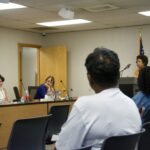
At the council meeting, about a half-dozen residents spoke, uniformly saying that they opposed privatizing the water/sewer system, which would eliminate the current operator, the municipal authority Capital Region Water (CRW).

“I just wanted to speak out early and often against the idea of privatizing the city water authority, with the understanding that this is the first step to that potential process,” said one Green Street resident. “I’m categorically against the idea of privatizing the water authority.”

Both city Engineer Wayne Martin and Business Administrator Marc Woolley told council members that the request for information was a preliminary step and did not mean that city has decided to privatize the system.

“The information that we’re gathering is just that—gathering information—about the water system and any potential disposition of assets,” Woolley said. “But we have not decided what we’re going to do.”


Stop Sign Removals Cause Concern

Should Harrisburg proceed with a plan to remove stop signs at two intersections on N. 3rd Street?

At two City Council meetings last month, numerous residents spoke out against the planned removal of signs at the corners of Boyd, Harris, Kelker and Emerald streets.

“There are multiple playgrounds there,” said 3rd Street resident Laura Harding. “I see kids running across the street every day, multiple times a day without checking both ways.”

Currently, the intersections stop traffic in all directions. The planned removals are only for 3rd Street. The stop signs halting traffic traveling on the side streets would remain.

Residents’ remarks echoed similar concerns voiced on local social media pages, and council members said residents also had contacted them.

In early August, residents began to notice a second sign attached to several stop sign poles, notifying people that the signs would be eliminated, prompting concerns about safety at those intersections.

Some social media posts also posited a theory that the sign removals were part of the planned conversion of much of N. 2nd Street to two-way traffic, presumably because traffic displaced from 2nd Street would flow faster along the 3rd Street corridor.

However, according to city Business Administrator Marc Woolley, that is not the case. He said that the decision to remove those stop signs was made back in 2016 when the final design for the 3rd Street multimodal project was approved and that it had nothing to do with 2nd Street.

The city, he said, decided that those stop signs would no longer be necessary because the 3rd Street redesign, which includes numerous bump-outs at intersections, would have enough of a calming effect on through-traffic. And that, he said, has happened.

“It was determined that these were overused stop signs,” he said. “The bump-outs did
work.”

At the second council meeting concerning the issue, council members said they were exploring ways to retain the stop signs.


HMAC Plans Improvements

The Harrisburg Midtown Arts Center (H*MAC) has offered details of its newest phase of construction, which will include a basement dance club and a new restaurant concept.

Co-owner Chris Werner said that some construction has already begun to improve the 34,000-square-foot venue’s façade and roof, but that most work on the project will take place over the coming months.

“We’re really excited to finally complete this unique project, which has been in the works for decades, and serve it up the community for its enjoyment,” he said.

In May, Werner, along with co-owners Chuck London and Javier Diaz, bought the mixed-used entertainment and restaurant space and the business from owners Bartlett, Traynor & London LLC for $6 million. Last year, the prior owners declared Chapter 11 bankruptcy, which former co-owner John Traynor blamed partly on a social media firestorm aimed at the venue.

Werner said that the first major change will be renovations and rebranding at The Kitchen & Gallery Bar, which has been renamed The Green Room. He said that a Philadelphia-based restaurant consultant, JT Hearn, will lead a culinary team that will roll out a new food and drink menu that will focus on “innovative” and locally sourced items. In addition, the restaurant and bar space will include new furniture and décor.

The two existing entertainment spaces will also see significant changes, Werner said.

Stage on Herr, which was H*MAC’s original venue when it opened in 2009, will be redesigned and rebranded as Stage Right. The 350-person nightclub and gallery will feature a wider stage, stadium seating and sound system upgrades.

Upstairs, the Capitol Room will include a new balcony, two new bars and new bathrooms, as well as new green rooms and other amenities for performers, Werner said. Above that, H*MAC plans to finish the rooftop, building out a beer garden.

The most significant change will be in the basement, which was built as an indoor pool when H*MAC served as the Harrisburg Jewish Community Center then, later, as the Harrisburg Police Athletic League.

According to Werner, the pool room will be converted to a “psychedelic” dance club dubbed “The Deep End.” Artists will be able to create installations inside the pool area, viewable from holes above it.

“It will be a throwback to the days of dance clubs, while bringing the best of EDM and dance music to Harrisburg,” Werner said.

In late 2017, H*MAC received a $1 million state Redevelopment Assistance Capital Program grant, which will finance much of the work, Werner said.


Broad Street Market Seeks “Friends”

Do you consider yourself a “friend” of the Broad Street Market?

If so, Josh Heilman wants to hear from you.

Heilman is the market’s new executive director, and, as one of his first major initiatives, he has launched a long-planned “Friends of the Market” program.

The new initiative allows residents to help the market through a yearly donation or by volunteering for certain events and activities. The goal of the program is to bring additional revenue to the Broad Street Market for renovations, events, merchandise and more.

“We’re looking to get monetary donations and volunteer time,” Heilman said. “The market kind of needs some work. So, we’re looking for some extra sources of revenue.”

The immediate donations are going toward two different projects: installation of banners that will surround the market and replacing the string roof lights on each building, which have been out for some 20 years.

Volunteers, also called “market ambassadors,” will be asked to help with landscaping, painting and any special events. According to Heilman, the market is planning to roll out a merchandise table by Christmas, which the volunteers will also help run. They’ll sell tote bags and eventually T-shirts and answer any questions people have about the market.

Members get an exclusive Broad Street Market tote bag, which serves as a member ID, access to special market events such as their upcoming barbeque in September, and discounts to certain stands in the market. Right now, Sweet 717 and R.G Hummer Meats & Cheese are offering 10 percent off to all members.

For more information on how you can become a “Friend of the Market,” visit broadstreetmarket.org/friends.


Sales Data Mixed

Home prices edged up, while the number of units sold dipped, according to July data from the Greater Harrisburg Association of Realtors (GHAR).

GHAR reported that, for July, 694 housing units sold in Dauphin, Cumberland and Perry counties compared to 743 units in July 2018, while the median sales price rose slightly to $190,000 from $187,500.

In Dauphin County, the number of units sold was nearly flat at 335, as was the median sales price at almost $175,000. In Cumberland County, 330 units sold compared to 362 in the year-ago period, while the median price rose to $213,450 from $205,690 last year.

Perry County sales fell to 29 units versus 44 in July 2018. However, the median price rose to $164,000 compared to $156,450 a year earlier.


So Noted

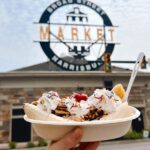
Broad Street Market in Harrisburg has been named a “Great Public Space” by the PA Chapter of the American Planning Association. The association’s “Great Places” program also singled out Ligonier Diamond Park in Westmoreland County and Main Street Bethlehem for recognition.

Harrisburg School District started the 2019-20 academic year last month, the first under newly appointed district Receiver Dr. Janet Samuels and her recovery team. In an address to faculty and staff, Samuels pledged competence, kindness and a renewed focus on student academic achievement.

Harrisburg School District last month approved a resolution to re-start the nonrenewal process for Premier Arts and Science Charter School. In 2018, the previous administration started the process to deny the school a new charter, but never completed it. The current administration plans to begin public hearings “as soon as possible,” as a step to deny Premier another five-year charter.

Harrisburg Symphony Orchestra has initiated a national search for a new executive director after Jeff Woodruff announced his retirement. Woodruff plans to retire at the end of the 2019-20 season following 17 years at the helm of Harrisburg’s professional orchestra.

UPMC Pinnacle last month opened the doors of its new UPMC Memorial hospital at 1701 Innovation Dr. in west York. In so doing, it closed its former facility 325 S. Belmont St., York. The new hospital is a five-level, 102-bed facility. The 220,000-square-foot hospital provides acute and emergency medical care, maternity services, cardiology and vascular services, chronic disease management and surgical services.

Vintage Vault Gallery has opened at 300 Bridge St., New Cumberland, offering furniture, apparel and other items, with an emphasis on mid-century design. It’s the second location for owner David Morrison, who also runs the Vintage Vault Gallery in Middletown.

Wakeen Enterprise, a Harrisburg-based business consultancy and marketing company, last month announced the acquisition of Lancaster-based The Premise Studio. The acquisition will help Wakeen expand its creative and branding capabilities, according to the company.


Changing Hands

Bellevue Rd., 1932: Demara Properties LLC to C. Nsiah, $35,000

Berryhill St., 2242: G. & M. Toro to M. Giambanco & A. Lebron, $64,000

Boas St., 404: M. Riley to R. Stanley, $70,000

Briggs St., 1617: M. Lewis to Amos Financial LLC, $31,000

Crescent St., 302: Penn Home LLC to SG Homes of PA LLC, $30,000

Derry St., 1312: Keystone Community Development Corp. to E. Roberts LLC & I Am That I Am, $120,000

Derry St., 1531: Z. Mohammad to E. Cortes, $30,000

Derry St., 2428A: General Electrical SVC CO Inc. to 101 S. 17th Street LLC, $62,000

Derry St., 2811: Crist Holdings LLC to A. Banton, $75,000

Division St., 240: Stephen Weinberger Trustee & Bette Weinberger Trustee to J. & A. Jones, $200,000

Emerald St., 236: HHTP1 LLC to R. Picado, $64,900

Emerald St., 237: M. Fannie to M. Freeman, $35,000

Fulton St., 1939: Wells Fargo Bank NA to P. Sisemore & K. Hugo, $43,000

Green St., 1121: T. McLaughlin to S. Urban & R. Capellaro Jr., $128,500

Green St., 1415: D. Shreve to V. Schmidt, $132,000

Green St., 1607; C. Frater to Fratelli Property Investments LLC, $110,000

Green St., 1712: S. Jusufovic to M. Silver & H. Glaser, $220,000

Green St., 1900: J. Bovender & J. Van Horn to A. & S. Lowry, $203,000

Green St., 2012: T. & B. Alton to E. Lane, $159,000

Green St., 3116: S. Quigley to J. Laumer, $106,000

Greenwood St., 2516: KMM Development LLC to M. Smith, $105,000

Hamilton St., 334: Harrisburg Homes Investment LLC to PA Deals LLC, $67,500

Harris St., 234: Big Leaf Properties LLC to K. Rhett, $219,000

Hoffman St., 3225: L. Cappellano to S. Feltman & J. Beck, $129,900

Hummel St., 245: Tri County HDC LTD to J. Soberanis, $79,900

Jefferson St., 2662: Dobson Family Partnership to H. Rhodes, $69,900

Kelker St., 218: C. Proctor & J. Mesa Cruz to A. Czopek, $175,500

Kensington St., 2035: J. Stoltzfus to C. Rameau, $35,900

Kensington St., 2216: S. Roland to R. & C. Murphy, $60,250

Kensington St., 2318: RDR Property Management LLC to G. Yolov, $60,000

Maclay St., 1017: J. Pagliaro Estate & S. Pagliaro to PEG Commercial LLC, $850,000

Market St., 1000: Pennsylvania Housing Finance Agency to 812 Market Inc. PMI, $200,000

Muench St., 220: Q. Vandermeersch to M. Marzzacco & A. Godfrey, $199,900

Mulberry St., 1954: S. & E. Schwartz to E. Guider, $91,500

Naudain St., 1642: Wells Fargo NA to Moxie Properties LLC, $30,000

North St., 1613: JustGeoff Partners LLC to Y. Refae, $35,000

N. 2nd St., 29: C. Yi to L & C Holdings LLC, $297,000

N. 2nd St., 1825: CPenn Properties Old Uptwon LLC to E. Chattah, $67,000

N. 2nd St., 1913: C. Hanshaw to Lansanah Home Services Group, $78,000

N. 2nd St., 3005: H. Sharifi to F. Ramirez, $35,000

N. 2nd St., 3011: R. Finkel to Central Pennsylvania Home Buyers LLC, $105,000

N. 3rd St., 904: J. & S. Tang to Ramsden & Ramsden LLC, $215,000

N. 3rd St., 1904: Green Street Properties LP to A. & A. Hughes, $178,000

N. 4th St., 1320: Harrisburg Homes Investment LLC to PA Deals LLC, $65,000

N. 4th St., 2703: K. Shenk to S. Gonzalez, $99,000

N. 4th St., 3116: G. & J. Desgres to T. Keller, $102,000

N. 4th St., 3215: W. Prough to G. & S. Erdman, $50,000

N. 5th St., 1734: R. Rohlif to 4JL LLC, $112,500

N. 5th St., 2510: M. & D. Blount to R. Diaz, $45,000

N. 5th St., 2623: SL Realty to E. Mendoza, $46,000

N. 5th St., 3014 & 3016: L. Powell to L. Busko, $100,000

N. 6th St., 3153: PA Deals LLC to D. Borelli, $69,900

N. 7th St., 2612: V. Galasso to R. Martinez & R. Rasmussen, $58,000

N. 16th St., 814: Bretland Enterprises LLC to D. Boyle, $30,000

N. Cameron St., 100: D. Deitchman, L. Hatter & Brickbox Enterprises LTD to Hatzlucha LLC, $4,650,000

N. Front St., 27: W. & R. Balaban to Dauphin County Library System & McCormick Riverfront Library, $295,000

N. Front St., 305: P1-30, P32-50, P52-59, P65-68, P97-101, P110-119, P260-270, P280-300, P302, P16A, P33A, P294A, P298A, UT400, UT500 & UT600: Harrisburg Riverfront Development & Cumberland Property to 305 Front Street Investors LLC, $7,800,000

Penn St., 1107: J. Musselman to B. Mathers, $155,000

Penn St., 1308: Adonis Real Estate LLC to Invigaron LLC, $280,000

Penn St., 1506: R. Miller to J. Owens, $130,000

Penn St., 1914: L. Maurer to S. Desai Sturgis & J. Sturgis Jr., $168,500

Penn St., 2935: R. Solano to M. Kanpol, $134,900

Penn St., 2441: M. Frater to S. & T. Johnson, $46,000

Race St., 558: Cash Now LLC to M. Kramer, $114,900

Reily St., 223: J. Chadwick to W. & A. Adams, $166,500

Reily St., 265: A. Kost & E. Morrison to R. Wodele, $132,000

Seneca St., 230: Members 1st Federal Credit Union to M. Temba, $50,000

Showers St., 611: NP Ventures LLC to K. & P. Steele, $150,200

S. 13th St., 445: H. Yap to R. Smolsky, $75,000

S. 13th St., 1541: L. Clemente to Y. Refae & H. Esmaeil, $35,000

S. 14th St., 229: P. Watson to Citibank NA Trustee, $94,500

S. 18th St., 1125: Midfirst Bank to HT Properties LLC, $39,500

S. 19th St., 411: Midatlantic IRA & Niall Harry IRA to Q. & T. Forbes, $59,900

S. 27th St., 724: Freedom Mortgage Corporation to W. Zhang, $45,140

State St., 1626: Harrisburg Homes Investment LLC to America’s Choice Remodeling of HBG LLC, $60,000

State St., 1817: A. Marshall to F. Mora, $64,000

Susquehanna St., 1701: R. Covington & T. Pean to I. Preston, $156,000

Susquehanna St., 1912: N. Carter to C. Mincemoyer, $156,000

Swatara St., 2047: Building LLC to Sr Homes LLC, $44,000

Swatara St., 2230: R. & J. Woll to H. Marca & M. Alvarez, $78,000

Valley Rd., 2308: Bean Charlotte Spence GST Trust II to A. & E. Hendrickson, $220,000

Vineyard Rd., 216: J. & W. Legaspi to R. & M. Loucas, $169,500

Watson St., 2817: E. Hurlock to LJ Realty Trust, $37,500

Harrisburg property sales for July 2019, greater than $30,000. Source: Dauphin County. Data is assumed to be accurate.


Continue Reading

Musical Notes–Mix Month

September’s here, which means that folks are settling back into their routines. Luckily, Harrisburg’s got a lot of great shows this month to smooth out the return to the workweek.

The annual Dauphin County Jazz & Wine Festival, on Sept. 6 and 7, will certainly help you ease out of summer. There will be performers from the local to the national level, some of PA’s top wineries, and plenty of local craft and food vendors. Fort Hunter is the perfect place for a picnic and performance, so be sure to grab a blanket and some lawn chairs to enjoy two nights of entertainment.

A week later, on Sept. 15, don’t miss the fundraiser, “Music & Healing,” sponsored by the World Surgical Foundation. Their goal is to raise awareness and funding for WSF’s healing work through the power of music with a collaboration with renowned musicians Odin Rathnam and Robert Koenig.

The Pride of the Susquehanna is still sailing strong, featuring two shows this month, Acoustic Stew on Sept. 15 and Shine Delphi on Sept. 29. Enjoy happy hour on the dock starting at 5:30 p.m., then the ship sets sail at 7:30 p.m. for a relaxing tour of our beautiful river.

As usual, we’ve also got some killer indoor shows that you don’t want to miss. So, kick back and get to know some of these talented top picks this month.


THE SUGARHILL GANG, 9/7, 7PM, XL LIVE, $15
Well folks, XL Live has done it again. Continuing to bring quality shows to HBG, hip hop pioneers the Sugarhill Gang will grace the stage with their classic sound. Maybe you like their dancy song, “Apache,” or maybe you know them from their 1979 debut single, “Rappers Delight,” an instant hit with more than 15 million records sold worldwide. If you don’t know either song, they’re both catchy as heck and definitely worth looking up for a peek into this early phenomenon. Many hip hop and rap artists today credit the band for introducing a new culture and form of music, and they’re the first rap group to tour and promote themselves extensively on a global scale. Their songs have been sampled and performed by many famous artists, including Busta Rhymes, Pitbull and 50 Cent. So, there’s a chance you’ll recognize them even if you’re not directly familiar with their music. So much more could be said of this revolutionary band, but this is one show you can’t read about—you’ve got to see for yourself.


TROMBONE SHORTY & ORLEANS AVENUE, 9/15, 8PM, WHITAKER CENTER, $49.50-79.50
I always appreciate a group that can create unique music with influences from many genres. So, of course, Trombone Shorty & Orleans Avenue drew my attention right away. Just when you think you know what you’re listening to, Troy “Trombone Shorty” Andrews and his band throw you a curveball with everything from a sudden jazzy trumpet solo to some heavy synthesizer to some funky keys to a ripping guitar line. The music’s energy strikes audiences as very lively, to say the least. Hailing from New Orleans, the home of soul and amazing music generally, Trombone Shorty & Orleans Avenue truly do their hometown justice with their spirited and playful sound. This one’s definitely going to turn dancy, so make sure you wear comfy shoes while you boogie on down!


THE STRUTS, 9/27, 7PM, XL LIVE, $40
Harrisburg University keeps their rad shows rolling this month with glam rockers, The Struts, playing at XL Live. Hailing from Derbyshire, England, this rock quartet got their start in 2009 playing mostly in the U.K. When you listen to their music, you can almost hear the influences of other British bands that had an impact on their sound, like Queen, Def Leppard and Oasis, but with a touch of American rock influences from Aerosmith, The Killers and Michael Jackson. Growing their career while touring throughout England and France in 2014, they opened for another one of their main influences, the Rolling Stones, in Paris. Not long after, their killer live reputation began to spread. Sold-out shows proved that people wanted the combination of the band’s tight sound and the mesmerizing talent of frontman Luke Spiller. They’re still active, cranking out hits and playing memorable shows all over the place. So, be sure to catch their performance while ya can.


Mentionables:

Treehouse & Quasi Kings, Sept. 5, The Abbey Bar;
Stabbing Westward, Sept. 7, H*MAC Capitol Room;
Inwake, Sept. 14, River City Blues Club;
Trina, Sept. 21, XL Live;
Pocket Vinyl, Sept. 23, J.B. Lovedraft’s;
Psychotica, Sept. 26, H*MAC Stage on Herr;
Scythian, Sept. 27, The Abbey Bar;
Don Johnson Project, Sept. 28, River City Blues Club

Continue Reading

Charm City Scurry: In Baltimore–poverty, inequality, rodents.

“Before the world became the world, it was an egg. Inside the egg was dark. The rat nibbled the egg and let the light in. And the world began.”

It’s a startling way to begin a documentary about rats, isn’t it? And yet, in Theo Anthony’s aptly named “Rat Film,” the introductory narration isn’t the only thing that’s startling. If you sit down to watch this documentary, expect to take in one of the strangest snapshots of a city to ever grace the silver screen. The film takes a closer look at the rat problem in Baltimore—but also so much more than the rat problem in Baltimore.

You will meet a bizarre assortment of people in this documentary, ranging from rat exterminators to rat hunters to people who keep rats as pets. Interspersed with these niche character sketches, Anthony gives us little history lessons. First we learn about the residential segregation ordinances—things like “redlining,” which served the purpose of keeping black residents from getting mortgages in nicer neighborhoods. And then, with those ordinances becoming illegal, we learn about pacts made within neighborhoods to prevent black residents from moving in.

Which doesn’t sound like a documentary about rats, and yet it never sways from its title topic because the history lessons don’t stop there.

We learn the history of rat extermination, with black neighborhoods that were used as test neighborhoods for rat poison treatments, and the reports that poisoning the rats is actually a futile, expensive effort.

“Ain’t never been a rat problem in Baltimore,” one of the film’s subjects muses. “It’s always been a people problem.”

And as the documentary unfolds, it wholeheartedly backs this statement up. The focus is environmental, systemic racism.

The rats don’t make distinctions about race or class. They take up residence where they are able, and that usually ends up being in vacant buildings, places with disrepair and easy passage—places that, as one rat exterminator notes, “The most uneducated people are. The ones who have the least resources. The people who have no dreams, no aspirations, just survival. That’s basically where you’re gonna find them.” And yet, the city focuses on rat extermination first.

“Rat Film” gives a fascinating, unique exploration of Baltimore. Check out the screening of this gem of a documentary on Sept. 29, paired with several storytellers from [Untitled] relating tales inspired by the film. There will also be a Q&A with Dan Deacon, who composed the score for the film. This is definitely a screening you will want to make it to.

“Rat Film” plays on Sept. 29 at Midtown Cinema, 250 Reily St., Harrisburg. For more information, visit www.midtowncinema.com.


SEPTEMBER EVENTS
At Midtown Cinema

Down in Front! Presents
“Sorority House Massacre II”
Friday, Sept. 13, 9:30 p.m.

“Margaret Atwood: Live in Cinemas”
Sunday, Sept. 15, 7 p.m.

3rd in the Burg $3 Movie
“Spirited Away”
Friday, Sept. 20, 9:30 p.m.

“Snoopy, Come Home”
Sunday, Sept. 29, 2 p.m.

Dan Deacon Q&A
Score composer for “Rat Film”
Sunday, Sept. 29, following screening

[Untitled] at the Cinema
“Rat Film”
Sunday, Sept. 29, 7 p.m.

Continue Reading

The Painted Word: Mural Festival, Gallery Walk open Harrisburg’s autumn art season

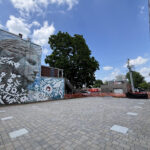
Early bird: A mural is already in progress across the street from the state Capitol, with many more coming soon during the 2019 Harrisburg Mural Festival.

All the lines from the 1950s TV show, “The Adventures of Superman,” apply: “faster than a speeding bullet” (14 murals in 10 days), “able to leap tall buildings” (artists on scaffolds)… “look up in the sky, it’s…” – the Harrisburg Mural Festival.

When you stop to think about it, Mural Fest is a super feat of artistic achievement, and like with Superman, the public is grateful for its vision. No kryptonite here, just Sprocket Mural Works in high gear (no pun intended).

The power of art speaks for itself. Started in 2014 as a valiant volunteer brigade, Sprocket Mural Works evolved from an idea to 2017’s initial Mural Fest that featured 18 new murals, with local, regional, national and international artists participating in the event.

The 2019 Harrisburg Mural Festival, which starts on Aug. 30, will yield 14 more grand works, as a select group of art-busting aficionados unleash their collective power, ready for the public to tour them by end of the festival, on Sept. 8.

On that day, a block party will set up near the state Capitol, along with mural tours, live music, food vendors, a pop-up biergarten and more, including an artist’s market sponsored by the Harrisburg Flea.

Harrisburg photographer Dani Lucas perhaps put it best when, speaking about the 2017 Mural Festival, she said, “It is one thing to say that murals are tools for civic engagement. It is another to witness it on such a grand scale.”

As just mentioned, the mural festival wraps up on Sept. 8, which happens to coincide with another artistic blockbuster, the 31st citywide Gallery Walk.

The Gallery Walk lineup this year totals 19 sites, fitting for 2019, if only in that the stars are aligned. It begs the question, did Carrie Wissler-Thomas, founder and coordinator of the art walk, plan it that way?

No matter, as the venues are as eclectic as they come. Starting with the catalyst for art in Harrisburg is the Art Association’s 93rd anniversary. The Pennsylvania State Museum and the Susquehanna Art Museum round out three main art institutions in the city, all taking part. At the outside perimeter of Gallery Walk lies the Latino Hispanic American Community Center across the Mulberry Street Bridge and, also pushing the boundary, is the Olewine Nature Center at Wildwood Park. Four churches feature art: St. Stephen’s Riverfront Gallery, Zion Lutheran Church, Pine Street Presbyterian Church and Salem United Church of Christ.

Wissler-Thomas shared that Riverfront Gallery’s exhibit, “Icons in Transformation,” by artist Ludmilia Pawlowska, is a must-see for its depiction of contemporary religious iconography.

Young artists abound at the Capital Area School for the Arts (CASA). Midtown Scholar Bookstore, the Dauphin County Historical Society and the Historic Harrisburg Resource Center all bring their own unique dimensions to the event. And City House Bed & Breakfast doesn’t take its art lying down either.

As is its tendency, The Millworks offers food, fashion and an on-site brewery, in addition to its three-story artist’s enclave. The LGBT Center of Central PA creates a common ground for art and art lovers, welcoming the public to view the world through cultural and social engagement. Penn National Insurance and Old City Hall, as well as the Sprocket Mural Works block party, bring the total to 18 venues.

Last, but certainly not least, is the sole independent gallery participating that puts the “V” in Verbeke. That’s shorthand for Vivi on Verbeke, home to Harrisburg’s hippy couple of Bohemian bonhomie, Vivian Sterste and Jackson (Jeb) Boyd. You will find them at 258 Verbeke, out on their “perfect for people watching” bench in front of their pottery/art gallery. They’ll be offering humble hospitality to all who enter their powerhouse palace of art apart.

So, plan to come downtown, Midtown and all around Harrisburg on Sunday, Sept. 8, and party till the cows come home (so 2007) at the Harrisburg Mural Festival block party and Gallery Walk. Be ready to walk and talk and also leap tall buildings. See you there.

The 2019 Harrisburg Mural Festival runs Aug. 30 to Sept. 8 at numerous venues around Harrisburg. For more information, see the brochure in TheBurg’s August issue, at select locations or visit TheBurg’s website or Sprocket Mural Works. The 31st annual Gallery Walk takes place Sept. 8 at many venues throughout Harrisburg. For more information, visit the Gallery Walk website.

Continue Reading

Smooth Ride: Harrisburg unveils the newly paved river walk

Bike Harrisburg’s Dick Norford (center) cuts the ribbon to officially open the new lower river walk, joined by Dauphin County Commissioner Mike Pries, Harrisburg Mayor Eric Papenfuse and Harrisburg Engineer Wayne Martin.

A few years ago, Dick Norford of Bike Harrisburg convinced the city’s mayor to participate in the annual Tour de Belt.

All went well until the bike ride around Capital Area Greenbelt hit the city’s lower river walk.

“It was a bumpy ride, to say the least,” Mayor Eric Papenfuse said today. “It was wonderful fun but very dangerous.”

That ride convinced Papenfuse that something needed to be done to fix the century-old lower river walk, which, over the years, had deteriorated so much that the concrete had completely crumbled in spots.

He turned the project over to city Engineer Wayne Martin, who applied for—and received—a $1.5 million federal Transportation Alternative Program grant, which is designed to assist and promote non-motorized transportation. The city kicked in about $160,000, and that was enough to largely repave the two-mile stretch from Shipoke to Maclay Street.

This morning, the city cut the ribbon on the project, joined by a group of bicyclists, who took a ceremonial first ride on the newly laid white concrete, which shone brilliantly in the sunshine.

Norford explained that the river walk and steps were part of Harrisburg’s City Beautiful movement of the early 20th century, which gave the city numerous parks, as well as paved roads and a functioning sewer system.

In fact, the walk itself came into existence to shield a sewer interceptor, which runs beneath it.

“This is such a vital link because the Greenbelt is not just a beautiful recreational trail,” Norford said. “When a city is more inviting to walking and biking, it’s a better place to work, a better place to live and a better place to play.”

Bicyclists ride along newly paved river walk near the Walnut Street Bridge.

The project actually began several years ago, when the walk along the Shipoke waterfront—badly damaged from the 2011 flood—was replaced. Work kicked in again last fall, took a break for the winter and started up again in spring.

The project laid new concrete along much of the 10,275-linear-foot walk from Shipoke to Maclay Street, though, in a few places, old walk was repaired, not replaced, due to funding restrictions.

The project only replaced the river walk itself, not the stairs leading to the Susquehanna River. Fixing the steps, Martin said, is a massively expensive project, though the city might be able to patch some areas.

Papenfuse also mentioned that the city weeded the steps, which had become overgrown in spots, in time for the city’s Kipona festival, which begins on Saturday and, he said, will attract more than 100,000 visitors over the three-day event.

“They’ll get to experience the wire-walkers and the food vendors and all the fun,” he said. “But they’ll also get to see our marvelous new river walk.”

Continue Reading